Article

Estimating Groundwater Abstractions at the Aquifer Scale Using GRACE Observations


by
Alexandra Gemitzi
1,* and
Venkat Lakshmi
2
1
Department of Environmental Engineering, Faculty of Engineering, Democritus University of Thrace, 67100 Xanthi, Greece
2
School of Earth Ocean and Environment, University of South Carolina, Columbia, SC 29208, USA
*
Author to whom correspondence should be addressed.
Geosciences 2018, 8(11), 419; https://doi.org/10.3390/geosciences8110419

Submission received: 21 September 2018 / Revised: 1 November 2018 / Accepted: 12 November 2018 / Published: 14 November 2018

Abstract

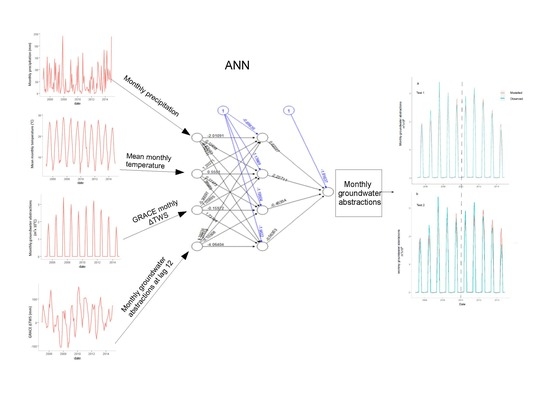
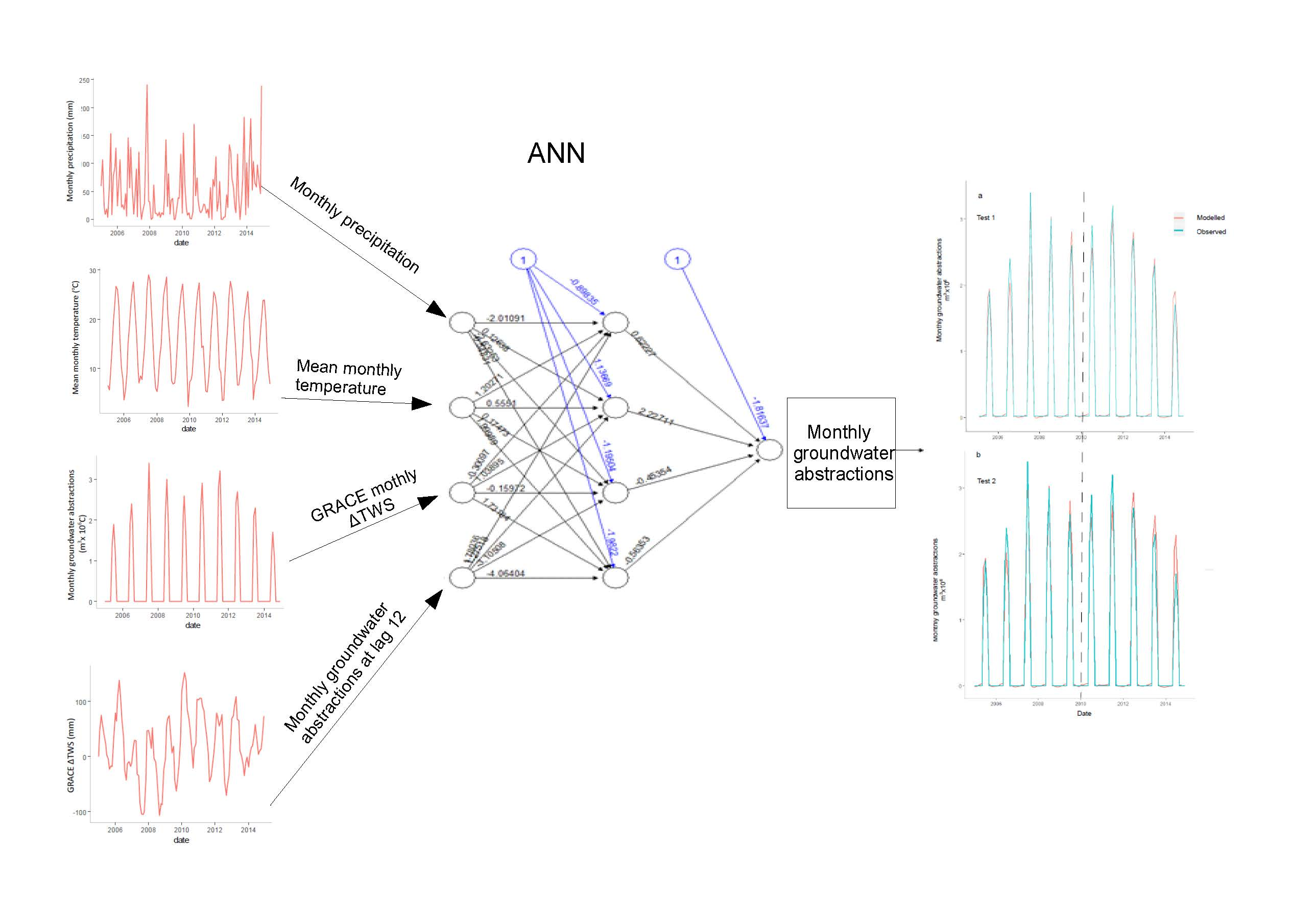
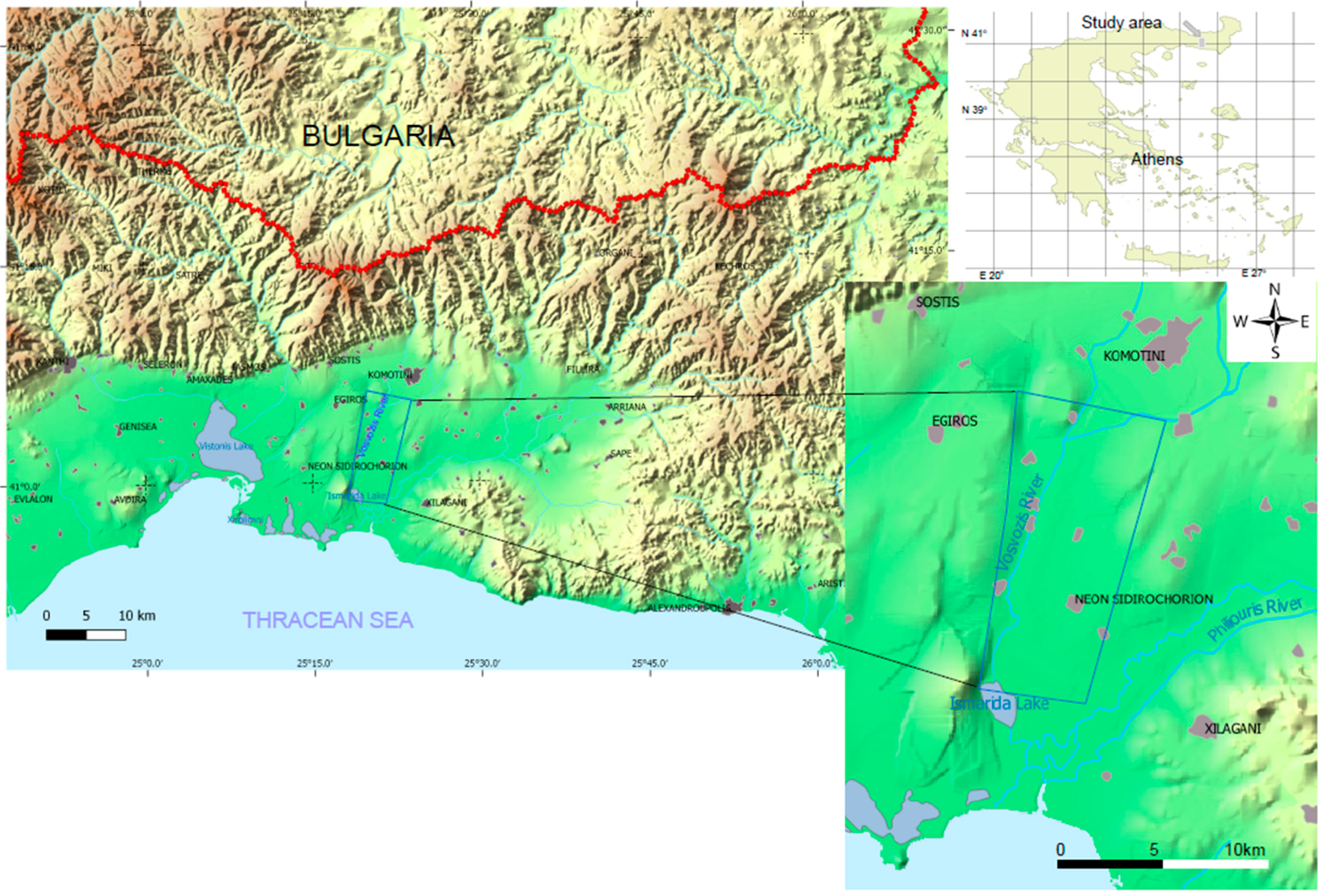
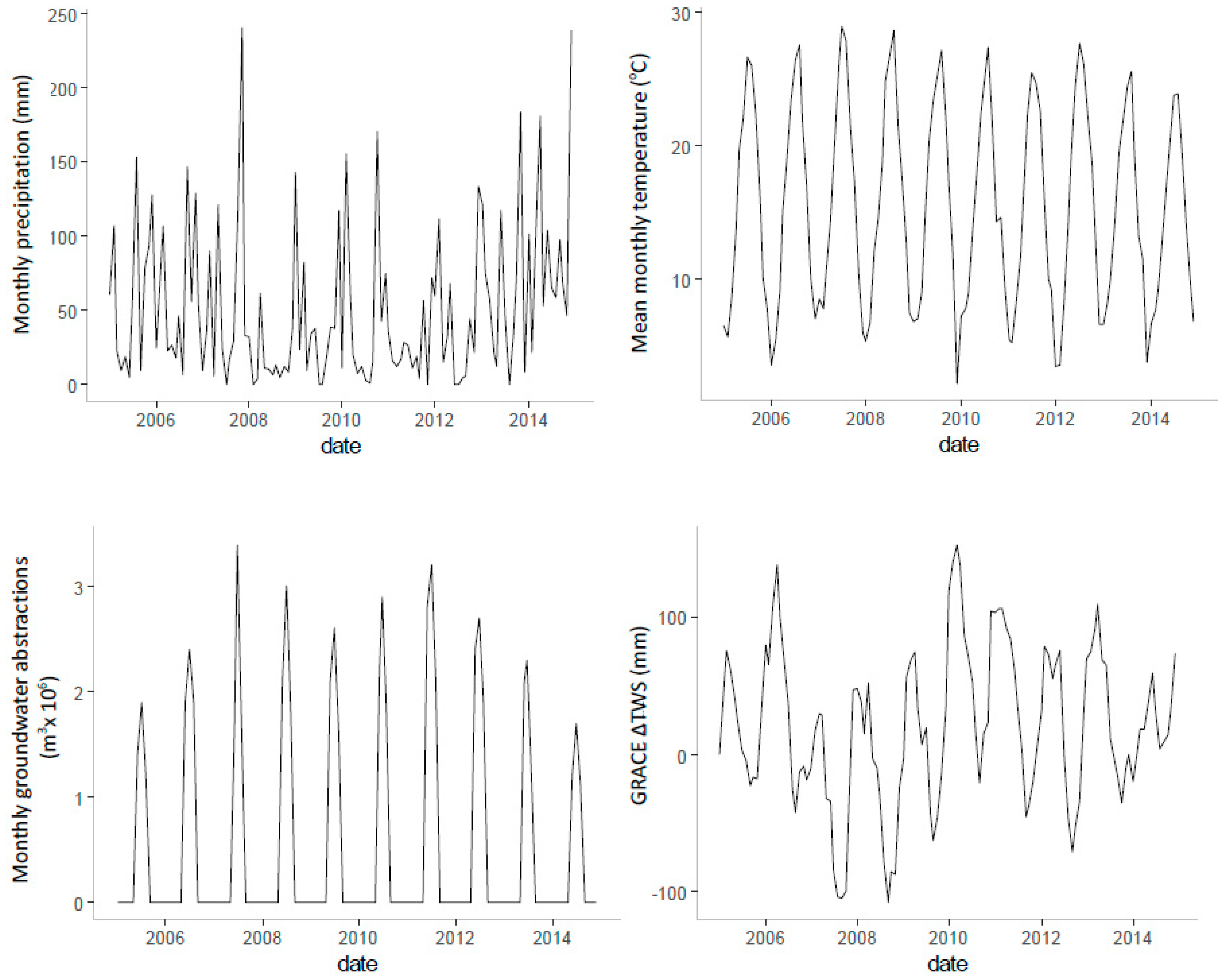
Groundwater monitoring requires costly in situ networks, which are difficult to maintain over long time periods, especially in countries facing economic recession such as Greece. Our work aims at providing a methodology to estimate groundwater abstractions at the aquifer scale using publicly available remotely sensed data from the NASA’s Gravity Recovery and Climate Experiment (GRACE) together with publicly available meteorological observations that serve as input variables to an Artificial Neural Network (ANN) method. The methodology was demonstrated in an alluvial aquifer in NE Greece for a 10-year period (2005–2014), where irrigation agriculture poses a serious threat to both groundwater resources and their dependent ecosystems. To generalize the developed model, an ensemble of 100 ANNs was created by the initial weight randomization approach and output was computed by averaging the output of each individual model. Scaled Root Mean Square Error and Nash–Sutcliffe coefficient were used to test the model efficiency. Both of these performance metrics indicated that monthly groundwater abstractions can be estimated efficiently and that the developed methodology offers an inexpensive substitute for in situ groundwater monitoring when in situ networks are not available or cannot operate properly.
Keywords: groundwater abstraction; GRACE; remote sensing; Greece; water resources; artificial neural networks groundwater abstraction; GRACE; remote sensing; Greece; water resources; artificial neural networks
Graphical Abstract