1. Introduction
With about 167 billion barrels of oil that can be economically recovered under current economic and technological conditions, Canada is the fourth-largest oil producer in the world. Ninety-seven percent of Canada’s proven oil reserves are found in oil sands [
1]. Using trucks and shovels, about 20% of Alberta’s oil sands deposits can be extracted and transported to facilities where steam is used to separate and recover bitumen from sand [
1,
2].
Oil sands tailings are mixtures of water, residual bitumen, silts, clay, trace metals, salts, and other hydrocarbons that are produced during the bitumen recovery process from oil sands. For each barrel of bitumen produced during the recovery process, roughly 0.25 m
3 of fine tailings and 1 m
3 of sand are produced [
3]. Sand separates and deposits to form beaches next to dykes during the tailings deposition process, while the remaining slurry is deposited in the pond’s center as fluid fine tailings (FFTs). Fluid fine tailings are defined by Directive 85 as any fluid waste from bitumen extraction facilities that has an undrained shear strength of less than 5 kPa and more than 5 percent suspended solids by mass [
2]. They contain fines dominated by clay minerals, primarily illite and kaolinite, as well as illite–smectite mixed layers [
4]. Fluid fine tailings are highly dispersive and require an extensive period to dewater and consolidate; in the absence of mediators, it may take decades for them to settle and acquire the necessary strength. The total volume of FFT in the Athabasca oil sands region has increased as a result, reaching 1392 Mm
3 by the year 2022 [
2]. In order to comply with closure and regulatory requirements, these deposits must be managed.
According to a number of studies on different sand–fines mixtures, the proportions of sand and fines in these mixtures have a significant impact on forecasting their geotechnical behavior [
5,
6,
7,
8,
9,
10]. The general conclusion has been that the maximum density of the mass increases as the fines/clay fraction rises, up to the point where voids begin to become overfilled with fines. After this, the granular structure begins to expand, and the susceptibility of the fines–water system determines the geotechnical properties.
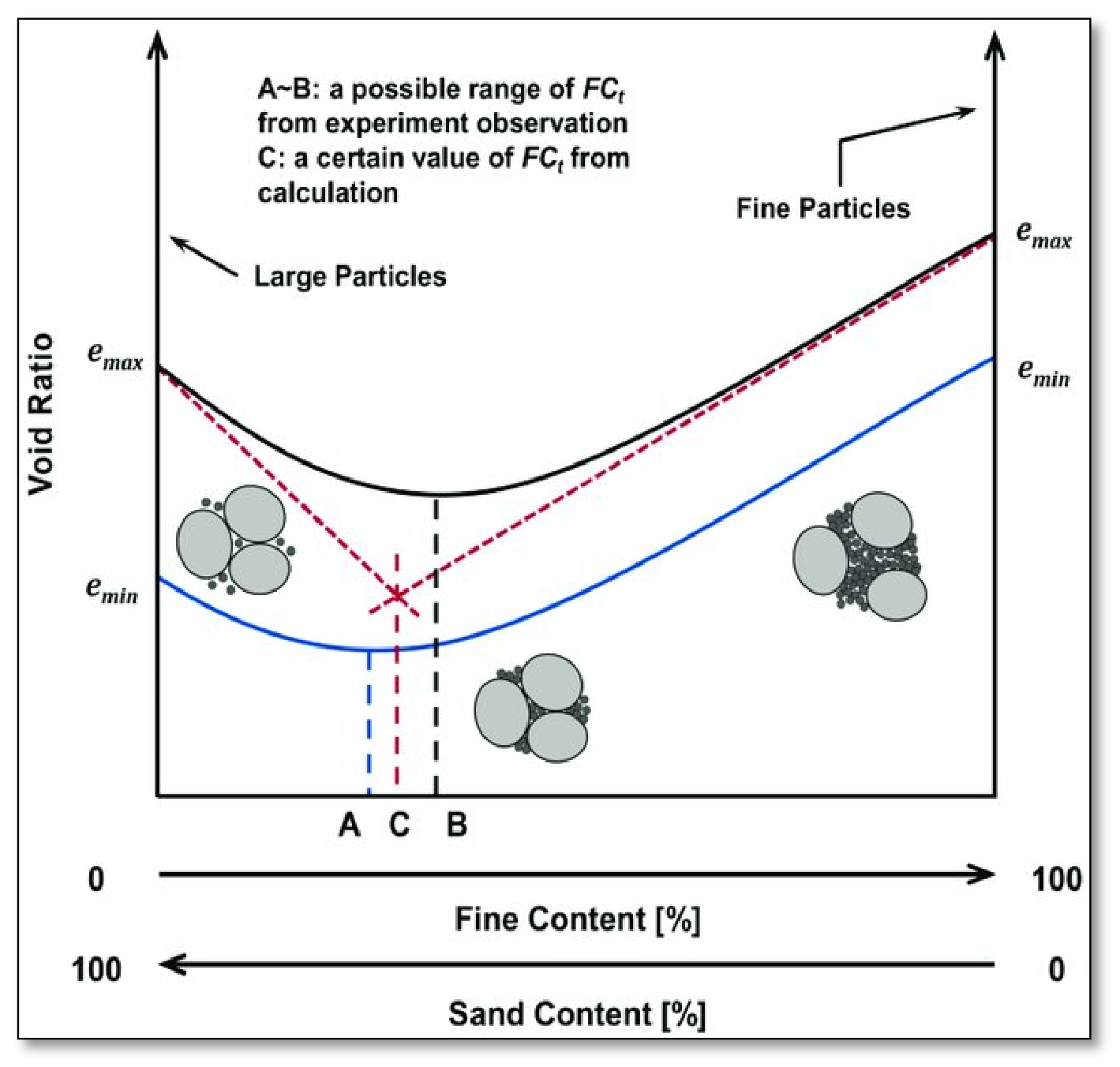
According to these studies, mixtures of sand and fines would behave like sand at low fines contents and like fines at high fines content. Transitional or threshold fines contents are the global fines contents at which the minimum and maximum global void ratios of the mixture shows a trough, as shown in
Figure 1. It is the limit at which behavior shifts from sand-like to fines-like. Depending on the measured engineering properties, such as compressibility, cohesion, frictional angle, etc., the threshold fines content for the same sand–fines mixture may vary [
11].
The behavior of the soil and the point at which it changes from sand-like to fines-like can also be influenced by other variables like the kind of clay mineral that is present, the distribution of particle sizes, and the organic content of the soil. Therefore, when determining this limit, it is crucial to take into account the particular experimental properties being measured as well as the properties of the soil in question. The determination of this limit for specific deposits is essential to predict their engineering behavior. Oil sands tailings deposits are divided into four main categories by the Unified Oil Sands Tailings Classification System: sand, sandy fines, transition, and fines zones [
12]. Fines are defined as solid particles smaller than 44 µm in size. The sand–fines ratio (SFR) and fines content defining tailing deposits in the transition zone range from 1 to 3 and 25% to 50%, respectively.
The transition zone includes some of the tailings deposits found in oil sands mine sites today, such as some thickened tailings (TTs) [
13,
14], composite tailings (CTs) and non-segregating tailings (NSTs) that result from co-deposition of sand and FTs to prevent segregation and speed up consolidation [
13,
15]. There is currently little research on transitional oil sands tailings deposits, making it challenging to forecast their consolidation and filterability behavior. Depending on the quantity and characteristics of the fines present, they might be too fine to behave as cohesionless and incompressible soils or too sandy to behave as cohesive and compressible soils.
The fines fraction is one of the determining factors, according to earlier research on the consolidation behavior of sand–fines mixtures. After examining the compressibility of crystalline powders with various particle sizes, Huffine and Bonilla [
16] came to the conclusion that fine particles experience a larger volume change than large particles. Additionally, an experimental study on the compressibility of sand–fines mixtures by Lade et al. [
5] showed that compressibility increased as fines increased from 0% to 100%. Fan et al. [
17] conducted an experimental study on sand–silt tailings mixtures with fines ranging from 0 to 100 percent and demonstrated a significant drop in hydraulic conductivity with an increase in fines up to 50 percent, which then stayed constant with fines above 50 percent. A similar study by Fan et al. [
17] demonstrated that compressibility increased with fines throughout the range, albeit with varying responses, which is comparable to the pattern noted by Watabe et al. [
18] on clay–sand blends. Watabe et al. [
18] came to the conclusion that any increase in sand content would decrease compressibility without affecting hydraulic conductivity for sand–clay mixtures with high fines content. On the other hand, an increase in fines will significantly reduce hydraulic conductivity for mixtures with low fines content, resulting in sand skeletal structure, while compressibility is essentially unaffected According to a study by Bandini and Sathiskumar [
19] on sand–silt mixtures containing 0 to 25 percent, the coefficient of consolidation and hydraulic conductivity decreased as fines increased up to 25 percent. Similarly, studies on sand and non-plastic silts mixtures by Thevanayagam [
20] and Sathees [
21] showed that the coefficient of consolidation and hydraulic conductivity decreased as fines increased up to 15%, but the coefficient of compressibility was not significantly affected by silts. Jeeravipoolvarn et al. [
22] used fine tailings–sand mixtures with 18% and 52% fines content in a 10 m standpipe test and concluded that the internal surcharge effect of the added sand causes fine tailings mixed with sand to undergo faster self-weight consolidation than fine tailings alone.
Few studies have examined the effects of clay mineral activity on the compressibility and hydraulic conductivity of sandy fines soils, aside from the influence of the quantity of fines included. Swelling clays like montmorillonite, a 2:1 clay mineral, have demonstrated low hydraulic conductivity and high swelling potential due to their large specific surface area, while kaolinite, a 1:1 clay mineral, has demonstrated less compressibility and higher hydraulic conductivity [
23,
24].
Although it is generally expected that the permeability and filterability of transitional oil sand tailings will decrease with an increase in fines content until a threshold point is reached, beyond which they would remain nearly constant, it is still crucial to understand how these mixtures’ clay mineral properties affect their permeability. Similarly, clay mineral properties are crucial for deposit compressibility prediction, even though previous research has indicated that an increase in fines below the threshold limit does not appear to have a significant effect on compressibility due to the existence of sand skeletal structure, while an increase in fines above the threshold value will result in increased compressibility.
The impact of fines fraction and clay mineral activity on the consolidation behavior of transitional oil sands tailings is not well understood based on current research. In order to properly predict the performance of these tailings, this study aims to examine the impact of fines and their index properties on the filterability and consolidation behavior of these tailings.
3. Results and Discussion
The following are the findings from the lab and modeling work initially completed in the main author’s PhD research work [
25].
3.1. Particle Size Distribution (PSD)
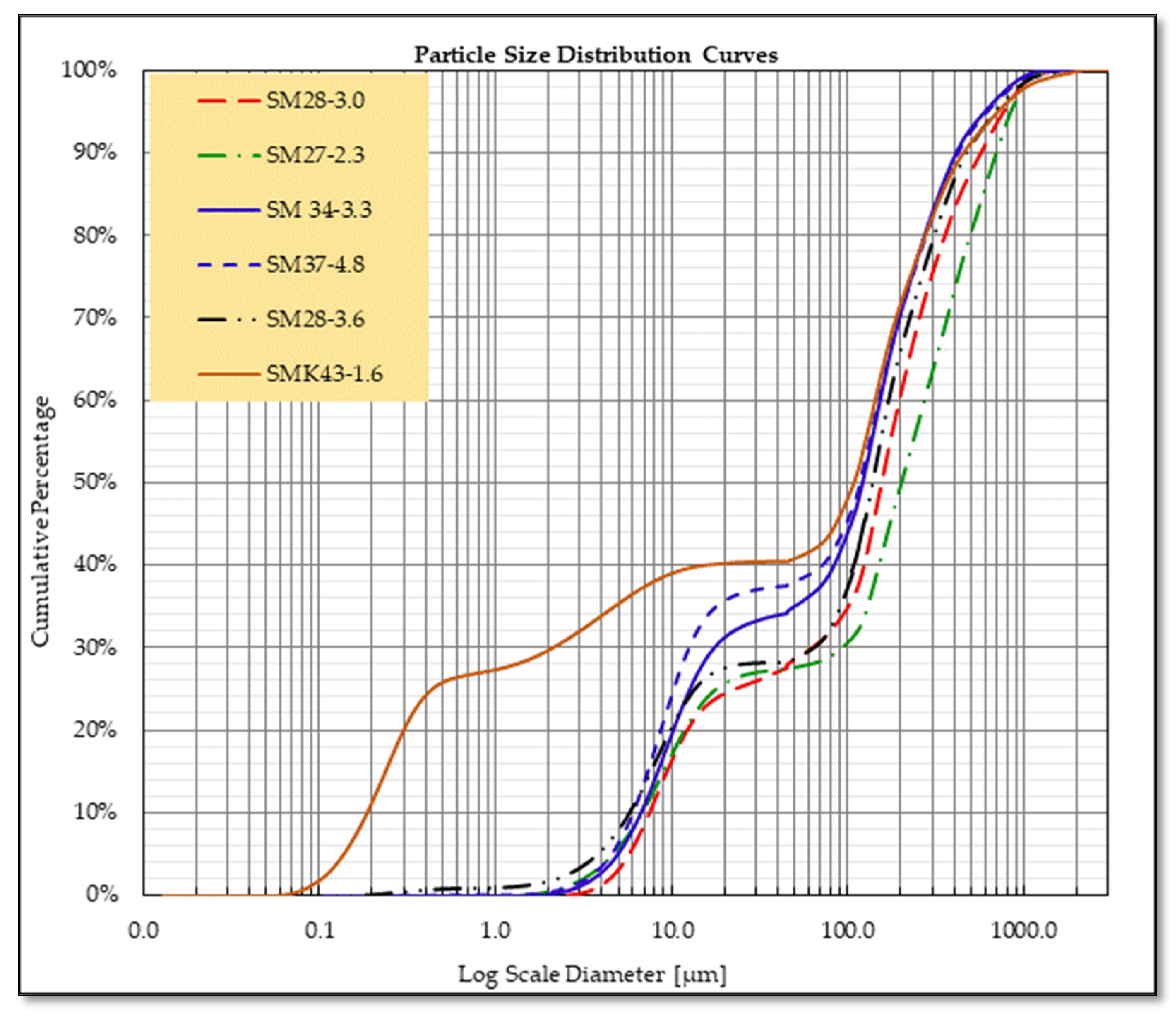
The particle size distribution of the five samples used in this investigation was determined, and the resulting curves are shown in
Figure 4. Samples with SFRs between 2.6 and 1.3 and fines contents between 27.5 percent and 43 percent were designed.
Table 2 displays various percentiles of particle size for the tested samples.
3.2. Atterberg Limits
Additionally, samples were evaluated for their Atterberg limits, which are compiled in
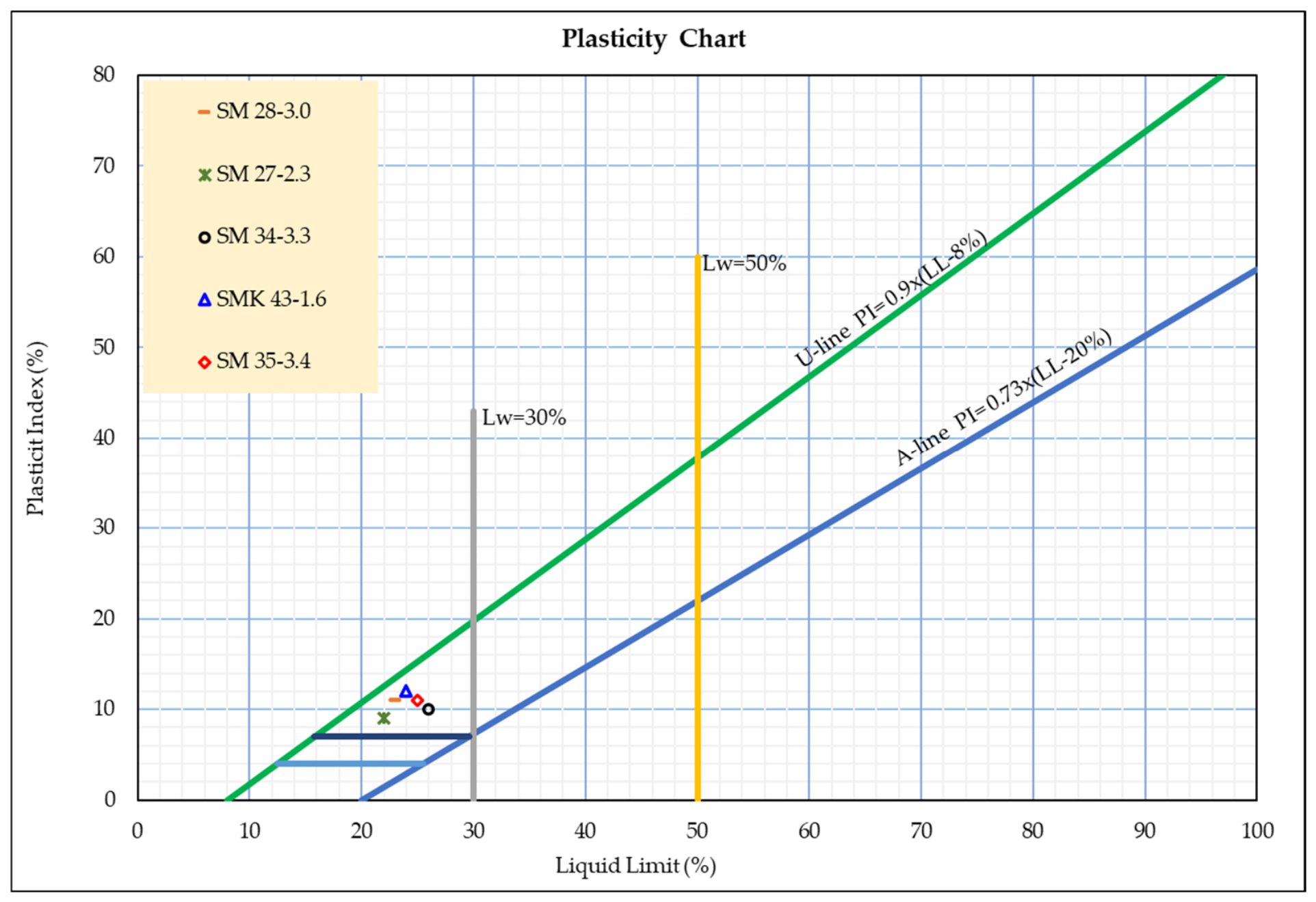
Table 2. As seen on the plasticity chart presented in
Figure 5, all samples did plot above the A-line, which distinguishes between clays and silts; soils above and below the line are classified as clay and silts, respectively. Additionally, they plotted in a zone before a vertical line that represents a 50% liquid limit (LL) that divides low-plasticity (LL < 50%) and high-plasticity (LL > 50%) soils with fine grains. As a result, these samples are classified as low-plasticity soils/samples.
3.3. Fines and Influence on Filterability
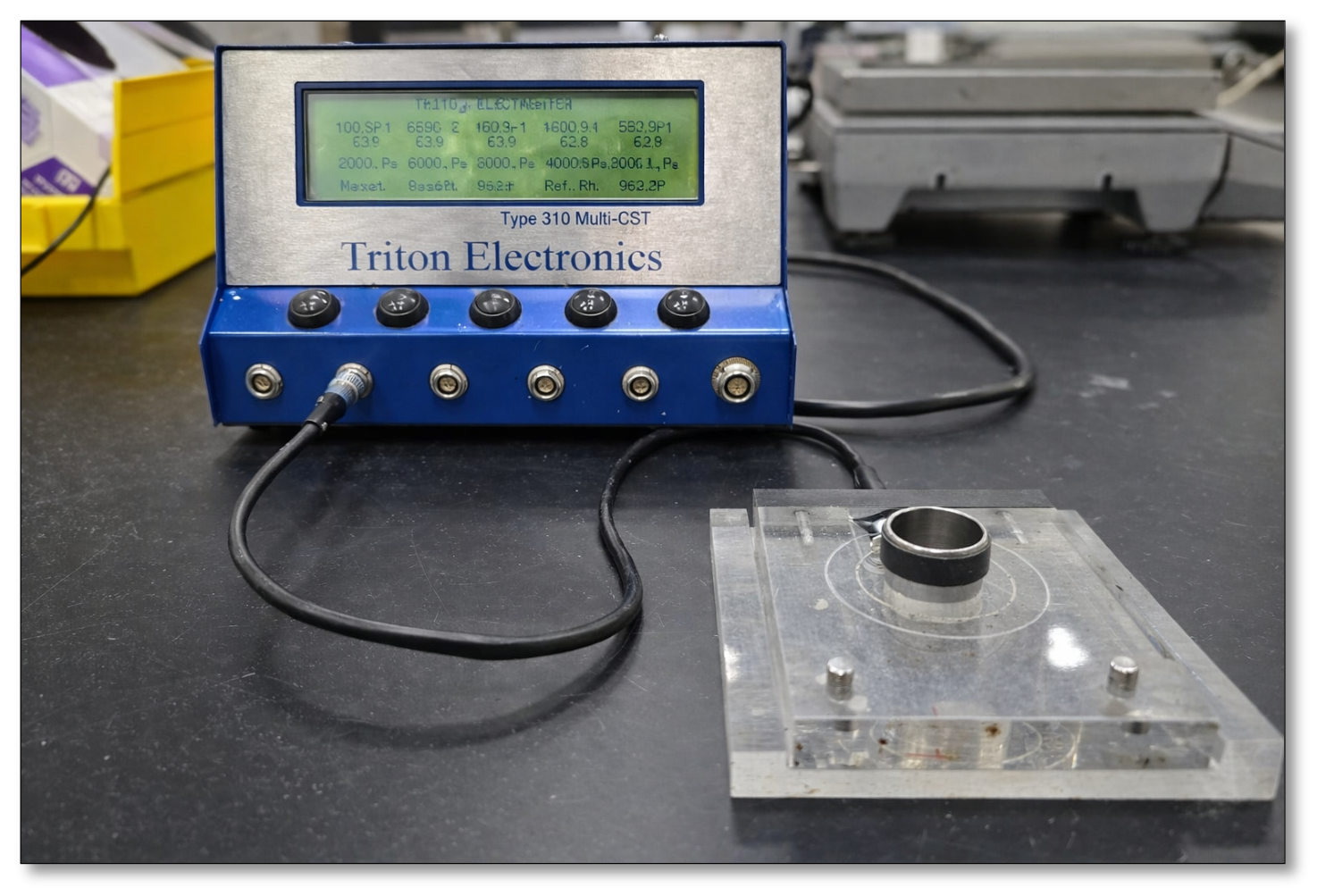
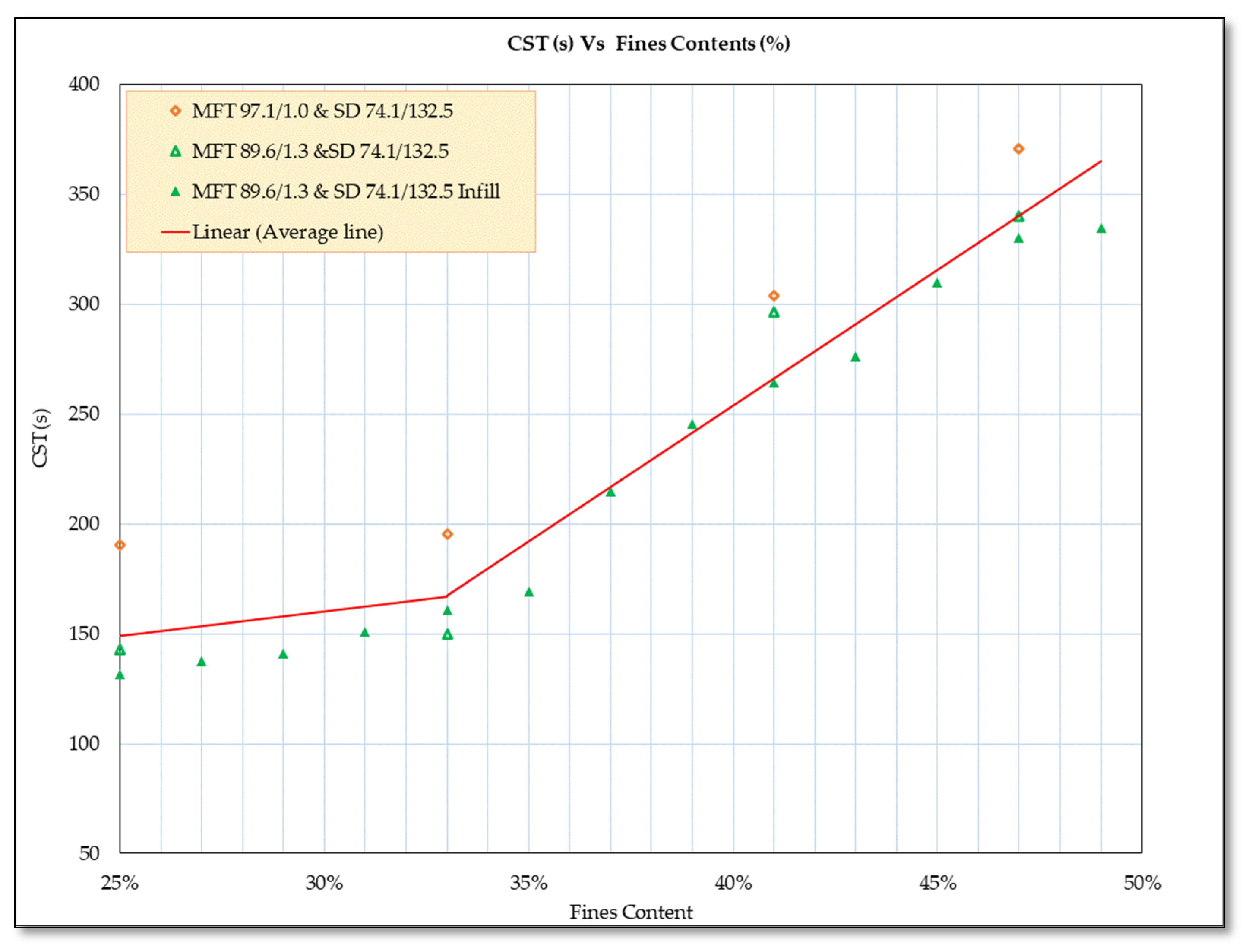
In order to identify the inflection point in dewaterability plots, which can be regarded as threshold fines contents for hydraulic conductivity and consolidation of transitional oil sands tailings, capillary suction time (CST) and filterability tests were performed on samples with closer fines content intervals. The capillary suction time for sand–MFT mixtures with varying fines contents is displayed in
Figure 6. Both MFT 97.1/1.0 and SD 74.1/132.5 mixtures and MFT 89.6/1.3 and SD 74.1/132.5 mixtures exhibit a small increase in CST between samples with 25 percent and 33 percent fines, but samples with fines contents greater than 33 percent exhibit a significant increase in CST. These two samples’ trends indicate that the inflection point lies between 33% and 41% of fines. A second round of testing was conducted for MFT 89.6/1.3 and SD 74.1/132.5 mixtures at a lower fines content interval between samples (two percent fines interval) due to the large interval between data points at 33 percent and 41 percent. The results are also displayed in
Figure 6, with data series named MFT 89.6/1.3 and SD 74.1/132.5 infill. This time, the trend between this mixture and the MFT 89.6/1.3 and SD 74.1/132.5 mixture aligned fairly well, narrowing the choice for the inflection point to be between 35 and 37 percent fines content.
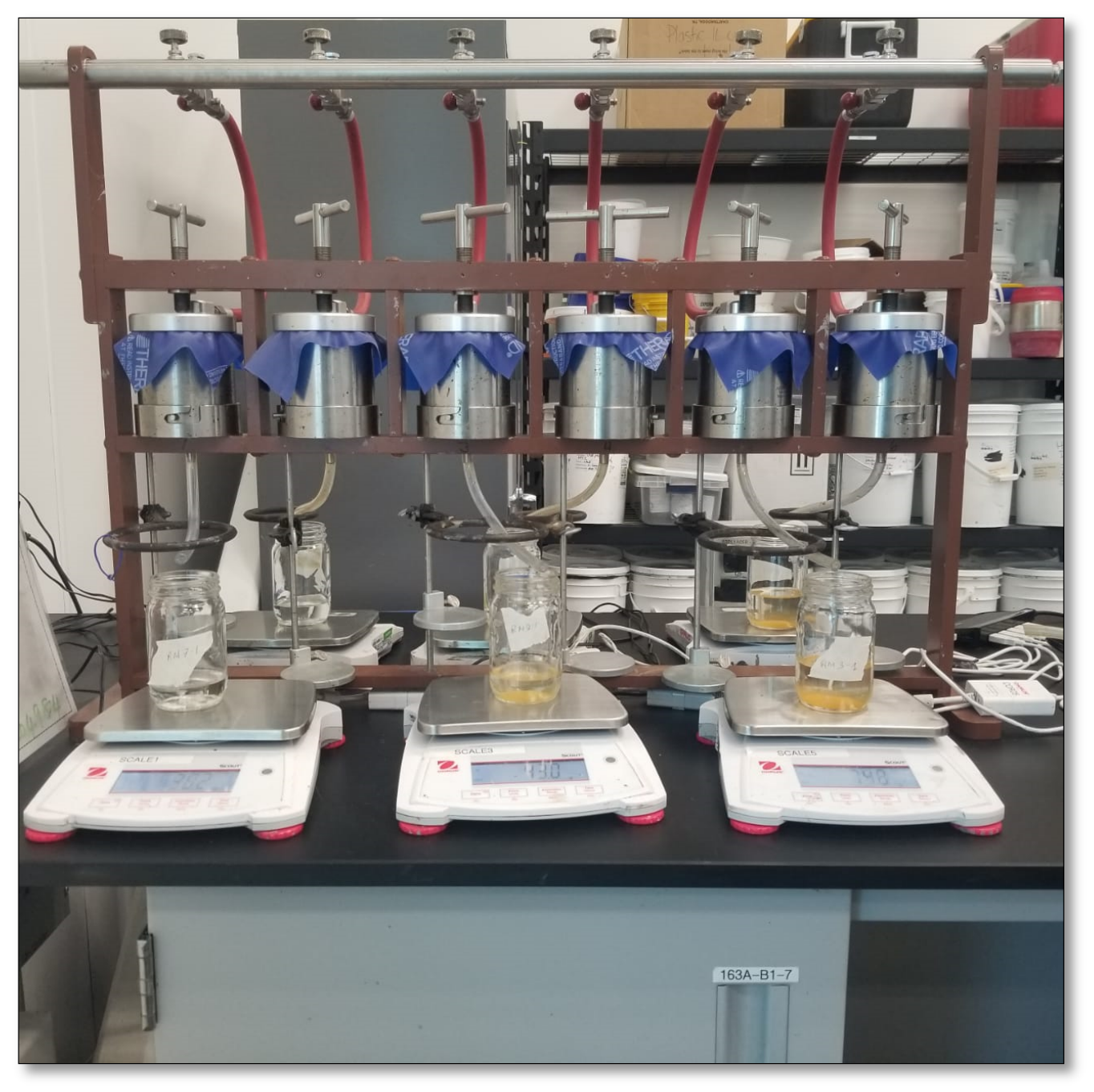
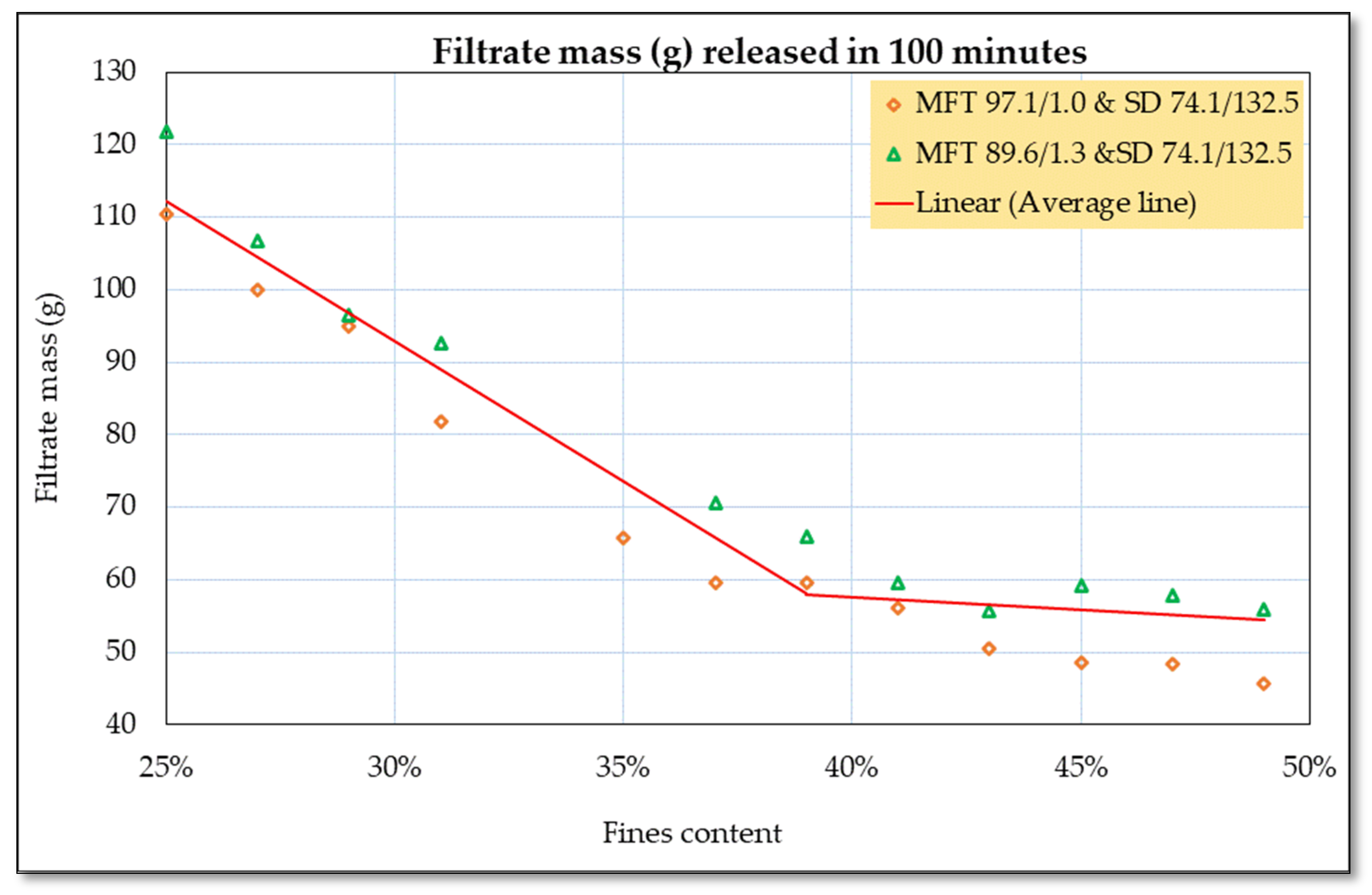
The amount of water released from samples with varying fines contents during a 100 min SRF test using a 300 g sample under 80 Psi compressed nitrogen gas is displayed in
Figure 7. As the fines content rises, the amount of water released in 100 min decreases. The amount of water released in 100 min decreases as fines content increases, and the rate of water release decrease is higher when samples contain more than 39 percent fines; moreover, there is a noticeable decrease in the rate of water release between 39 and 41 percent fines and it continues to decrease until almost no more water release occurs.
It is vital to note that the determined threshold values should be interpreted as functional indicators rather than absolute field parameters because they are derived from small lab-scale samples that were tested under controlled laboratory conditions.
3.4. Hydraulic Conductivity and Compressibility
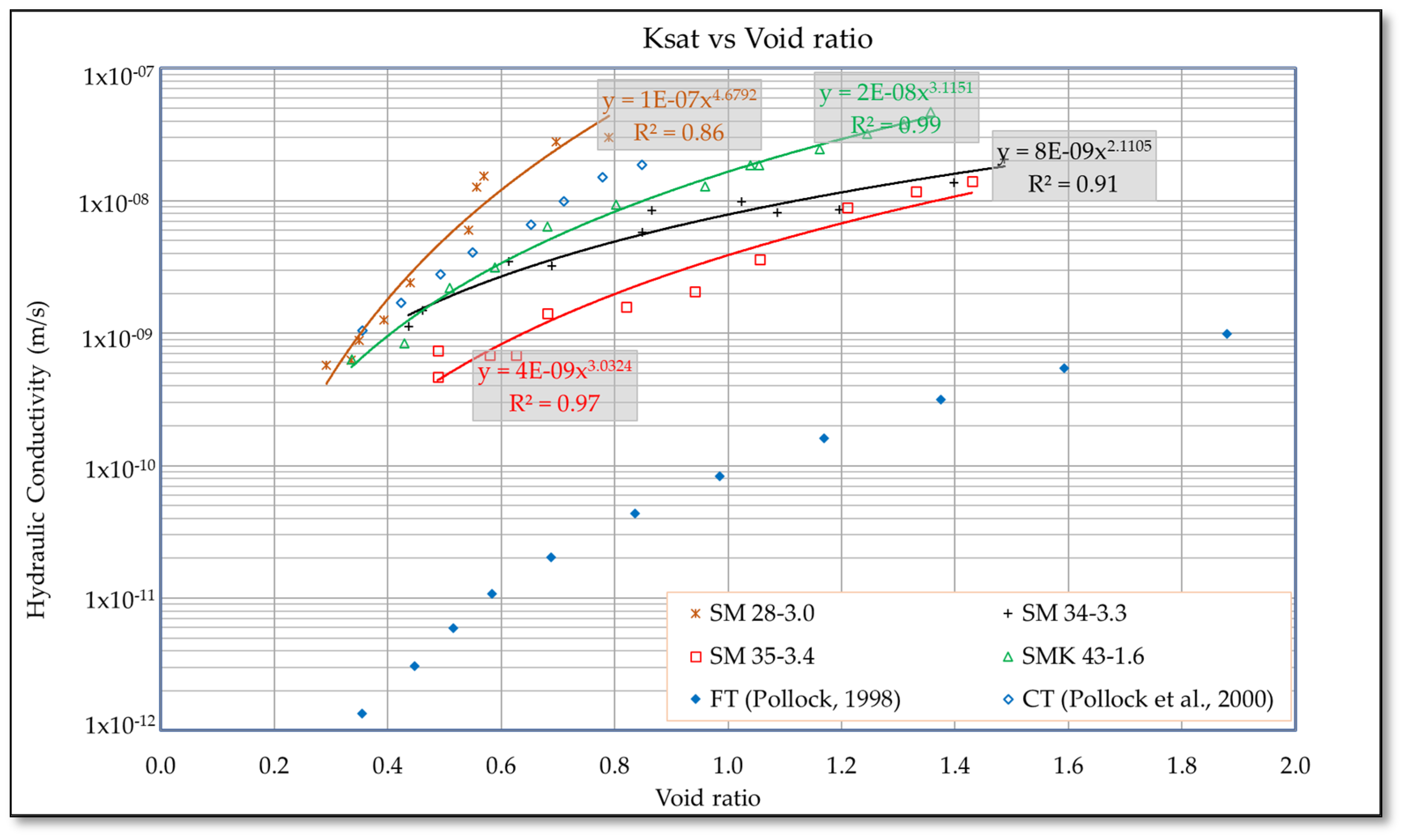
The hydraulic conductivity versus void ratio plots for the examined samples are displayed in
Figure 8. Multi-step loading and an increase in effective stresses were attributed to the decline in void ratios. This led to compaction and a decrease in the void spaces between soil particles.
Figure 8 shows the results of Falling Head tests used to measure hydraulic conductivity corresponding to the void ratio at the end of each loading. The sample SM28-3.0 exhibits the highest hydraulic conductivity when compared to the other samples at the same void ratio. This sample has enough voids to behave like sand with high hydraulic conductivity because 28 percent of the fines are less than the threshold values, according to the findings in the threshold values of fines required to feel voids of these materials, as described in
Section 3.3 of this study. In contrast, samples SM34-3.3, SM35-3.4, and SMK 43-1.6 exhibit lower hydraulic conductivity because their fines contents fall within the threshold value range. Despite having a much higher fines content, sample SMK 43-1.6 exhibits higher hydraulic conductivity than samples SM34-3.3 and SM35-3.4. This may be associated with its low activity and lowest water-holding capacity. Similarly, the lower hydraulic conductivity observed in sample SM35-3.4 relative to SM34-3.3 may be associated with its higher sodium adsorption ratio (SAR), although the effects of SAR cannot be completely separated from fines content and clay activity within this experimental framework. It is likely that higher SAR promoted greater particle dispersion and reduced pore connectivity. Since XRD and SEM analyses were not conducted, these interpretations should be considered inferential and based on observed behavior together with established theoretical understanding reported in the literature. The initial void ratio does not seem to be a determining factor of hydraulic conductivity for these materials at various stresses according to the hydraulic conductivity–void ratio plot. Rather, as effective stress increases, hydraulic conductivity decreases, which can be explained by each sample’s micropore structure. Effective stress causes the soil particles to become tightly packed and rearranged, which narrows the interconnected pore channels that allow water to pass through.
Figure 8 illustrates that there is no relationship between the samples’ initial void ratio differences and the rate at which hydraulic conductivity decreases from high void ratio (low stress) to low void ratio (high effective stress).
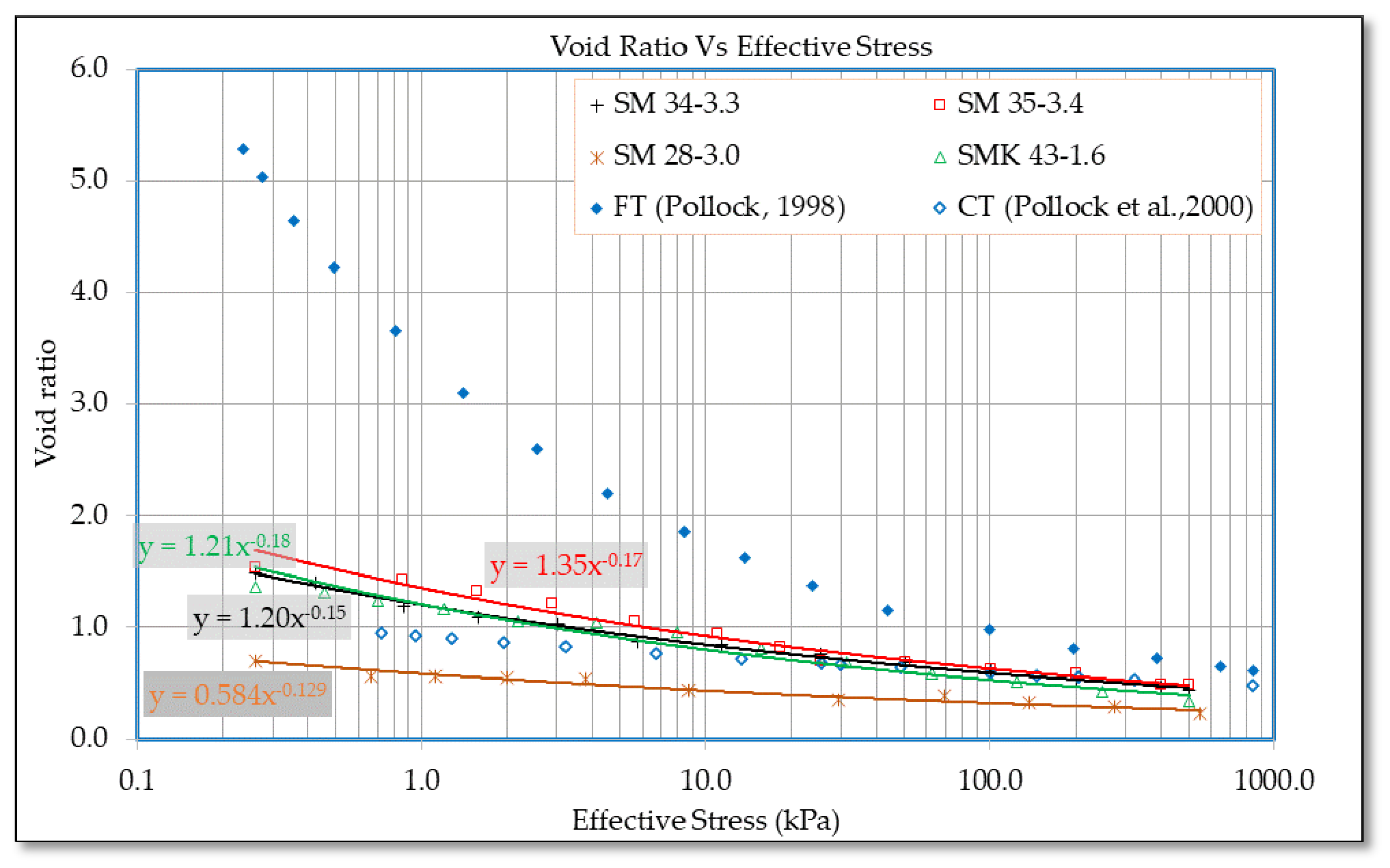
Figure 9 shows the void ratio–effective stress relationships for the oil sands tailings in the transition zone. Similar results to those found in the compressibility of fine tailings [
55,
56] show that the compressibility of these materials is dependent on the initial void ratio. Different samples start at different void ratios at low effective stress, but as stresses rise, their void ratios continue to decrease and converge. Transitional oil sands tailings in this study have shown uniform void ratio change with stress, in contrast to other earlier findings in the compressibility of fine tails that demonstrated pre-consolidation behavior and increased void ratio changes in stress levels of less than 10 kPa and delayed void ratio changes beyond that point. This can be explained by the fact that consolidation of these mixtures started at lower void ratios and higher solids contents; as demonstrated by Suthaker’s [
56], Jeeravipoolvarn et al.’s [
22] and Jeeravipoolvarn’s [
55] studies on fine tailings (30 percent solids) and cyclone overflow (33 percent solids), respectively. At this point, a card-house structure has already been built, necessitating high effective stress to reduce friction and particle bonding for compressibility. According to Watabe et al.’s [
18] experimental research on the compressibility of sand–clay mixtures, the sand fraction has a greater influence on compressibility than the fines fraction. In comparison to samples SM 34-3.3, SM 35-3.4, and SMK 43-1.6, which demonstrated higher and nearly uniform compressibility changes with stress increases, sample SM 28-3.0 demonstrated the lowest compression rate with effective stress increase. This phenomenon can be explained by the fact that SM 28-3.0 has the lowest amount of fines (28 percent fines), which is below the threshold value and permits the least compressible sand skeletal structure. In contrast, the other samples have fines that are close to or above the threshold value, which results in higher compressibility because there is no interaction between the sand particles.
3.5. Finite-Strain Consolidation Modeling
The transitional oil sands tailings’ coefficients of permeability and compressibility from large strain consolidation tests were used to run one-dimensional finite-strain consolidation models. Since these deposits may be deposited under a variety of boundary conditions, filling rates, and pond dimensions, the goal is to compare the consolidation and strength gain behavior as well as the impact of index properties for these deposits rather than to determine how long it might actually take them to reach final settlements.
The boundary conditions for this hypothetical pond-type analysis are an impermeable bottom and a constant water cap with a thickness of 0.5 m. A pond with consistent dimensions of 40 m in height and 4 square kilometers in area was the subject of 500 years of modeling. The analysis is predicated on a daily filling rate of 80 mega kilograms, zero filling rate after maximum height, and the absence of a single surcharge episode.
The input data for modeling the consolidation behavior of transitional oil sands tailings is derived from the hydraulic conductivity and compressibility constitutive relationships found in the large strain consolidation test data shown in
Figure 8 and
Figure 9, which are used to provide input data to model the consolidation behavior of transitional oil sands tailings. The performance of these transitional deposits was compared to other deposits in the fines and sandy categories using previous experimental data from Pollock [
53] and Pollock et al. [
54] on fine tailings with 92 percent fines and composite tailings with 20 percent fines, respectively. The FSConsol one-dimension consolidation software, which was created based on Gibson et al.’s [
46] finite-strain consolidation theory, was used to model these samples. The study’s simulations did not take into account environmental factors like evaporation and freeze–thaw cycles, as well as time-dependent effects like creep and aging, which could also have an impact on how these deposits behave.
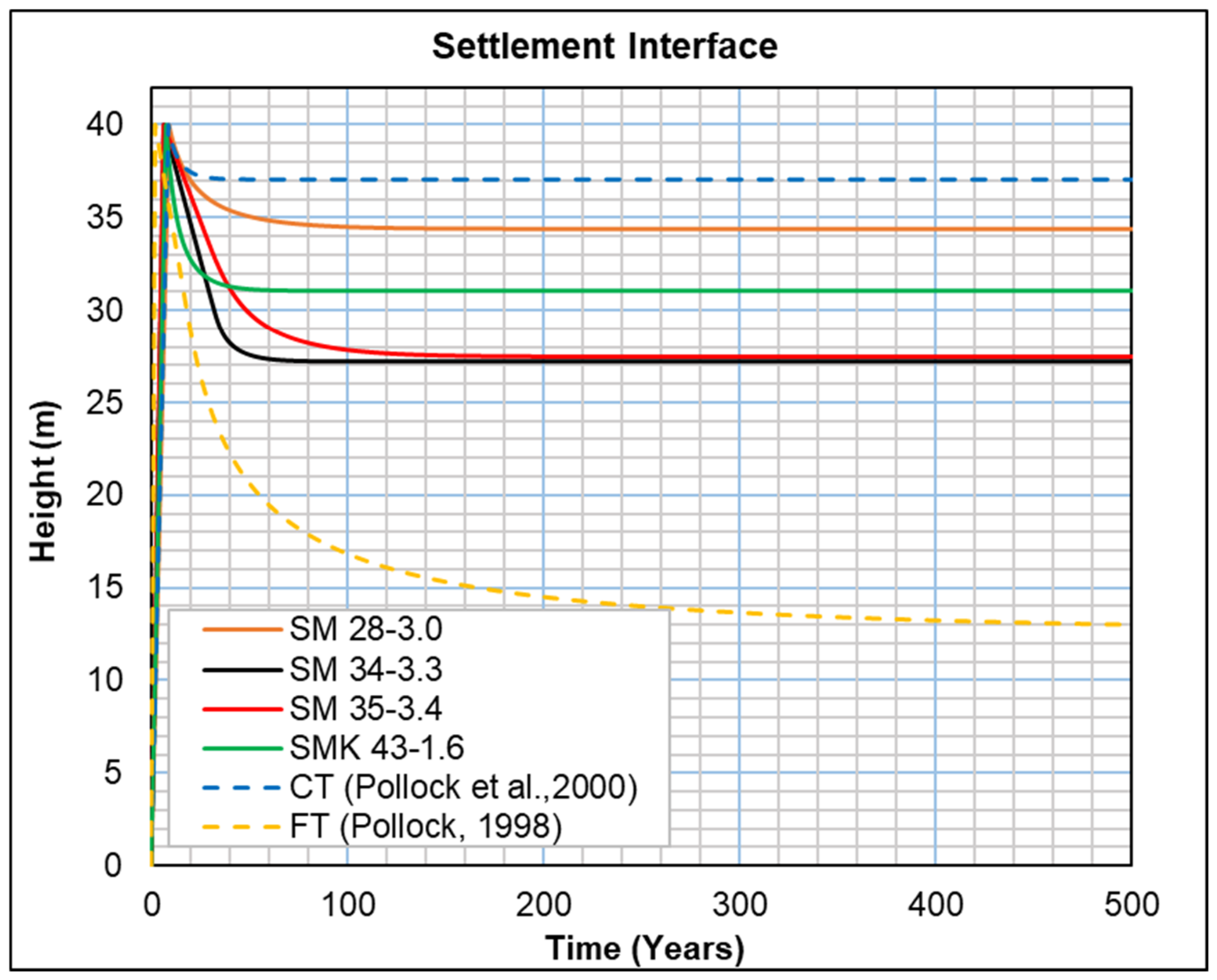
With the exception of sample SMK 43-1.6, which appears to settle less than samples SM 34-3.33 and SM 35-3.4 despite containing more fines, the settlement interface of all samples increases with the amount of fines contained, which is depicted in
Figure 10. The phenomenon can be explained by the fact that kaolinite is less active than illite, an average clay in fluid tailings used in other samples. Because of its layered structures and weaker bonding between layers, illite is typically expected to be more compressible than kaolinite, resulting in significant rearrangement and compression under load. This is in contrast to the behavior of more stable, densely packed kaolinite structures, which have lower compressibility and can sustain applied loads.
By adding sodium chloride (NaCl) to sample SM 34-3.3, sample SM 35-3.4 was created, changing the sodium adsorption ratio from 4.6 to 21.5 while maintaining the same other characteristics. In comparison to sample SM 35-3.4, sample SM 34-3.3 exhibits a marginally higher maximum settlement that is reached in a marginally shorter amount of time, as seen in
Figure 10. Increased SAR indicates that sodium dominates the soil more than calcium and magnesium, which makes the soil more dispersive because sodium is less able to collapse the diffuse double layer than calcium and magnesium. Due to its dispersive nature and convoluted flow path, hydraulic conductivity decreases.
Diffuse double layer (DDL) theory explains how the sodium adsorption ratio (SAR) affects the hydraulic behavior of the mixtures. A higher concentration of sodium encourages the diffuse double layer that surrounds clay particles to expand, strengthening repulsive forces and causing particle dispersion. Hydraulic conductivity is lowered as a result of this dispersed structure’s decreased pore connectivity. Lower SAR conditions, on the other hand, encourage flocculation, which improves drainage properties. Since SAR effects are intrinsically linked to clay activity and fines content in this study, it was not possible to fully isolate their independent contributions. Although direct mineralogical and microstructural verification was outside the scope of this study, these interpretations are based on established clay behavior theories and observed experimental trends. It is important to note that mixing fine tailings with coarse sand improves deposit settlement. Operators would want to achieve minimal settlement for easier capping and reclamation of the facilities. While fluid tailings settle by 64% of the pond’s initial height, fines–sand mixtures settle only by 15% to 33% of the initial height. Samples SM 34-3.3 and SM 35-3.4, which contain fines amounts within a range that noted threshold points from the filterability study conducted in this research, show a significant improvement for oil sands tailings deposits: settlement is reduced by more than half (50%) of fluid tailing. Additionally, consolidation modeling of the same samples (SM 34-3.3 and SM 35-3.4) reduces settlement completion times by over 50% compared to the time required for fluid tailings to settle.
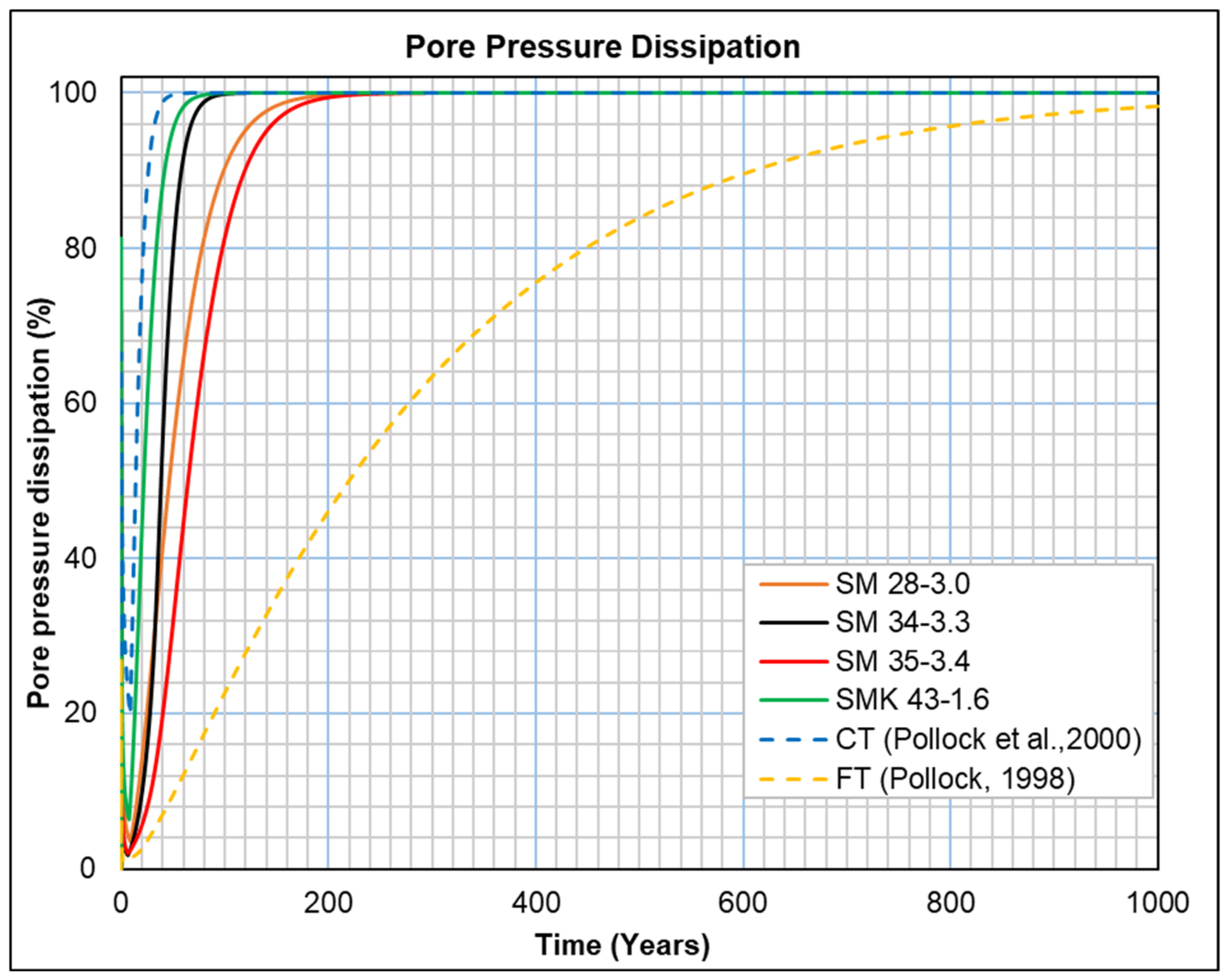
Figure 11 shows the rate of pore pressure dissipation. Full pore pressure dissipation denotes the point at which the material will have reached its maximum strength and consolidation. It has been demonstrated that transitional tailings samples SM 28-3.0, SM34-3.3, SM 35-3.4, and SMK 43-1.6 can achieve 90 percent pore pressure dissipation in 40 to 120 years, which is less time than fluid tailings (more than 640 years) but longer than composite tailings in the sandy category (roughly 30 years). The sample SMK 43-1.6 has been shown to dissipate pore pressure the fastest, despite having more fines than other samples. This can be explained by the fact that this sample has the highest hydraulic conductivity due to having the lowest activity and water-retaining capacity. Once more, taking into account samples SM 34-3.3 and SM 35-3.4, a sand–fines mixed oil sands tailings deposit containing approximately the threshold fines amount would reach 90% pore pressure dissipation in less than one-sixth the time required for a conventional fluid tailings deposit.
It is noteworthy that the finite-strain consolidation modeling approach used in this study assumes homogeneous material conditions, one-dimensional deformation, and idealized drainage boundaries. Furthermore, it is based on controlled laboratory-derived constitutive relationships. Because the governing parameters are derived from experimental measurements, the model is still physically representative even though these assumptions simplify the complex behavior of tailings in the field. Therefore, rather than making direct field-scale predictions, the modeling results are meant to offer comparative insights into the impact of fines content on consolidation performance.
4. Conclusions
This study investigates how the amount of included fines, their characteristics (clay activity), and the water chemistry (sodium absorption ratio (SAR)) affect the filterability and consolidation behaviors of transitional oil sands tailings. Understanding these characteristics is essential for the sustainable management of similar deposits because they determine settlement and strength gain over time, which in turn define reclamation plans, as well as the amount and timing of recovering supernatant water released from these deposits for reuse. The study has identified transitional oil sands tailings with properties similar to samples used in this study to be those of low-plasticity materials. It can be argued that these mixtures are best at a threshold fines content of 35 ± 2 percent, or roughly 1.9 ± 0.3 SFR. Below this point, the voids in the mixtures are unfilled, allowing water to flow through them more quickly; above that point, the voids begin to fill, followed by sand particles floating in the fines matrix, which hinders water flow. For the best deposit performance, the industry must take this into account when determining the blending ratios at the mixture deposition point.
The results suggest that clay activity, sodium adsorption ratio (SAR), and effective stress collectively influence the hydraulic conductivity behavior of transitional oil sands tailings in addition to fines content. The observed trends are consistent with established theories describing physicochemical interactions in clay–water systems. However, because mineralogical characterization and controlled isolation of SAR effects were beyond the scope of this study, these mechanisms should be interpreted as inferred rather than directly verified. Water flow is slowed by the layered structure of active and expansive clays, which are characterized by small particle sizes and a large negatively charged surface area that has a strong affinity for water molecules. Monovalent cations (Na+) are more prevalent than divalent cations (Ca2+ and Mg2+) when the SAR value is high. As a result, clay particles disperse and cause pore space collapse and clogging, which slows down the rate of water flow through convoluted flow paths. These materials’ compressibility is found to depend on their initial void ratios; this behavior is comparable to that of fine tailings.
It has been demonstrated that improved hydraulic conductivity improves the performance of transitional oil sands tailings. In comparison to traditional fluid tailings deposits, mixtures containing approximately threshold fines will reduce settlement time and depth by more than 50% and the waiting time for full pore pressure dissipation by more than 80%. This will ultimately lead to tailings management that is more cost-effective, ecologically conscious, and compliant with regulations.
This study has a number of limitations. Field monitoring data has not been used to validate the threshold fines content and consolidation behavior, which was established based on laboratory-scale testing. Clay mineralogy was not quantitatively characterized using techniques such as X-ray diffraction (XRD), and microstructural observations using techniques like Scanning Electron Microscopy (SEM) were not carried out to provide direct evidence for the suggested mechanisms. Furthermore, controlled testing did not isolate the effects of SAR. Notwithstanding these drawbacks, the research offers insightful information about the coupled hydro-mechanical behavior of tailings from transitional oil sands deposits.
Further investigation into the materials to address the limitations will enhance the understanding of these deposits.