1. Introduction
One of the major challenges in river and reservoir management is the accumulation of sediments in front of hydraulic structures, such as diversion barrages. Over time, sedimentation alters flow dynamics and river morphology, thereby decreasing operational efficiency and reducing storage capacity. This issue can be more pronounced in alluvial rivers with high sediment loads and regulated flow conditions. Reservoirs lose approximately 0.5% to 1% of their design capacity annually because of sedimentation, thereby affecting long-term operation and leading to significant negative impacts on the economy and environmental consequences.
In Iraq, particularly at the Samarra Barrage on the Tigris River, this problem is evident. In 1957, the Samarra Barrage was constructed to protect the Tigris River against flooding and to control river flows. Given the significant sediment loads transported by the tributaries of the Tigris River, particularly the Lesser Zab River, silt accumulation has developed upstream of the barrage because of backwater effects and reduced flow velocity. Consequently, the barrage functions not only as a hydraulic structure but also as a sediment trap [
1].
In recent years, decreased water flow into the Tigris River has intensified silt deposition because of reduced flow velocities upstream of the barrage. This accumulation leads to increased sediment thickness upstream of the Samarra Barrage, which has reached approximately 8 m in some areas, thereby affecting flow capacity, barrage operation, and flood management. This study addresses sedimentation upstream of the Samarra Barrage and examines sediment management through flushing strategies.
Numerous previous studies have investigated sedimentation in reservoirs and its mitigation strategies. Morris and Fan (1998) [
2] provided an overview of sediment management techniques, including dredging and flushing, whereas Fan and Morris (1992) [
3] examined the impact of lowering water levels on sediment resuspension and the preservation of storage capacity. Sumi et al. (2017) [
4] used numerical modeling to evaluate the efficiency of flushing, whereas Goulart et al. (2023) [
5] investigated the effect of sediment size distributions on flushing simulations. Omran and Almansori (2024) [
6] examined the behavior of sediments around the Kufa Dam in Iraq and highlighted the complex nature of the phenomenon and the shortcomings of existing models. In terms of modeling, two-dimensional (2D) models such as Nays2DH (Shimizu et al. (2014) [
7], as implemented in iRIC) are useful in representing flow patterns and sediment movement with good computational efficiency.
In response to this problem, a number of strategies, such as upstream drainage basin management, sediment bypass dredging, and hydraulic flushing, have been developed for managing sediments, with hydraulic flushing being one of the most economical and technically efficient methods. Hydraulic flushing focuses on removing silt deposited in front of hydraulic structures using high-velocity water flows. It includes three main types: drawdown flushing, which lowers the upstream reservoir water level to generate high flow velocities for sediment removal, similar to natural river flow; pressure flushing, which maintains a high water level while keeping gates open to remove sediments in a limited area near the barrage; and venting of turbidity currents, which removes suspended sediments as they move toward the barrage.
Numerical models are used to study hydraulic flushing. They have been proved to function as a virtual laboratory and are more effective in studying these processes than the physical models or field experiments, which are often costly and difficult to implement. Lai et al. (2024) [
8] identified best practices for their application. They noted that the models are divided into three categories: First, one-dimensional (1D) models, such as HEC-RAS, are appropriate for long-term studies and for narrow rivers with well-defined axial flow. Second, 2D models, such as Nays2DH and Delft3D, provide accurate representations of flow and sediment distribution across the cross-sections. Third, three-dimensional (3D CFD) models, such as NaysCUBE, are the most capable of representing complex processes, including those occurring near bottom gates during pressure flushing operations; however, they require high computational capacity.
With regard to the Tigris River, Namaa et al. [
9] developed a 2D model using HEC-RAS to study the hydraulic characteristics and estimate the sediment transport capacity (STC) of the river reach between the Makoul and Samarra Dams, an over 130 km reach with discharges of 292 and 11,577 m
3/s. The results revealed that flow velocities in most sections exceed local and global averages. Moreover, suspended sediment load dominates, whereas bed load transfer constitutes a very small portion, indicating the nature of fine sediment deposition in this area. The maximum sediment transport potential occurs 11 km upstream of Samarra Dam during high flow, while the minimum occurs near Al-Hajjaj District during low flow. The Toffaleti sediment transport function with the Van Rijn fall velocity method was found most suitable for this reach.
In terms of numerical modeling, a Physiographic Soil Erosion and Deposition model was developed to represent sediment accumulation and dynamics. The mentioned model was utilized by many researchers in their studies [
10,
11,
12,
13] to simulate the deposition and removal of sediments in front of the hydraulic structures. This model provides a robust framework that connects sediment movement, flow variability, and morphological progress, making it useful for studying the effects of discharge stages and hydraulic structures.
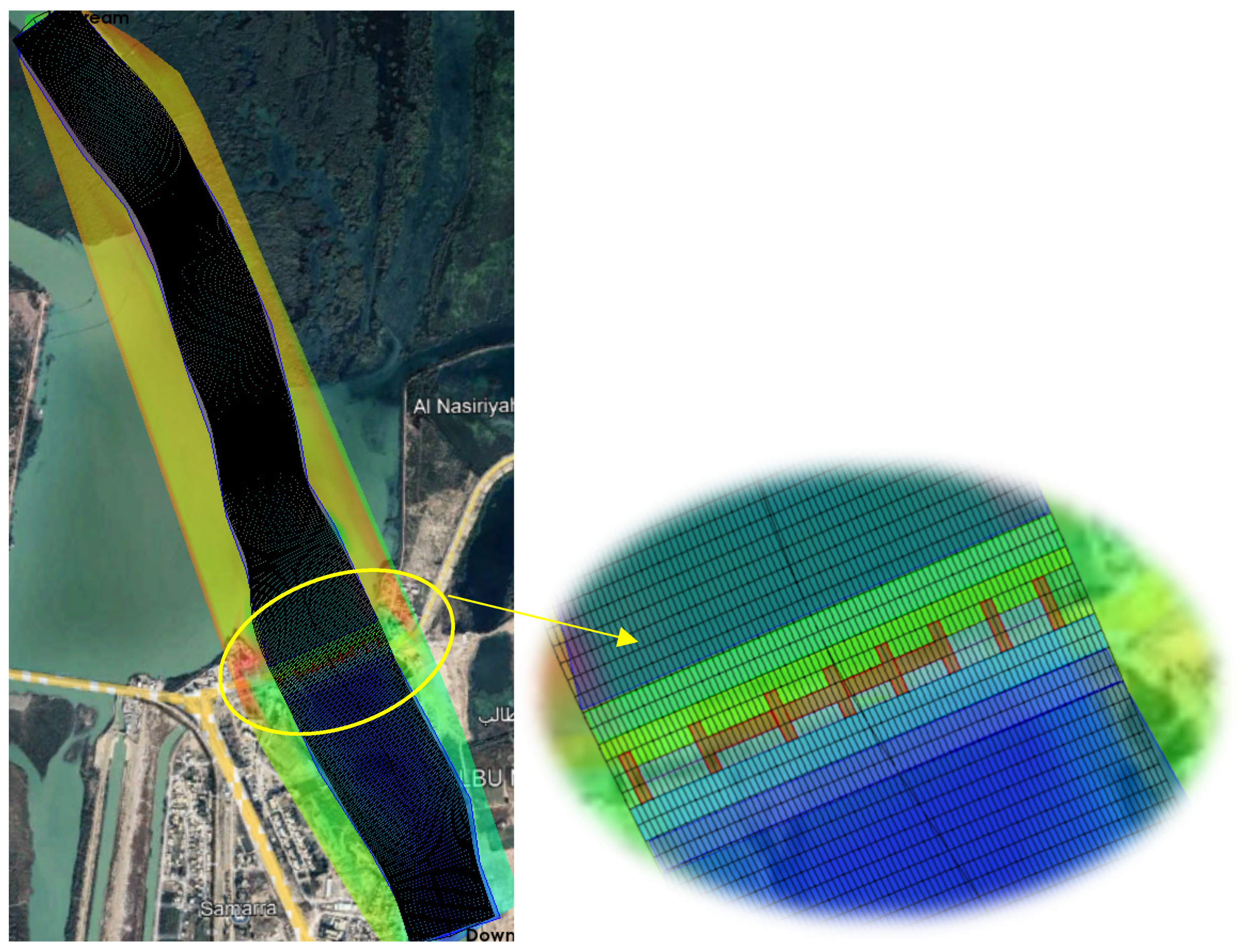
In this research, two numerical models were adapted, each covering a certain purpose. Nays2DH was used to simulate a full gate opening scenario, with some gates kept open and others closed. This scenario serves as a baseline understanding of sedimentation processes and flow stages. However, Nays2DH has limitations in representing the structures of vertical flow and partial opening of the gates; thus, using the NaysCUBE solver was necessary. This 3D model was used to simulate the partial gate openings, flushing process, and controlled outflow release. Together, these two models provide a comprehensive understanding of sediment accumulation and dynamics near the Samarra Barrage. They also support decision-making in gate operation, particularly in balancing water storage, controlling sediment accumulation, and ensuring long-term infrastructure sustainability.
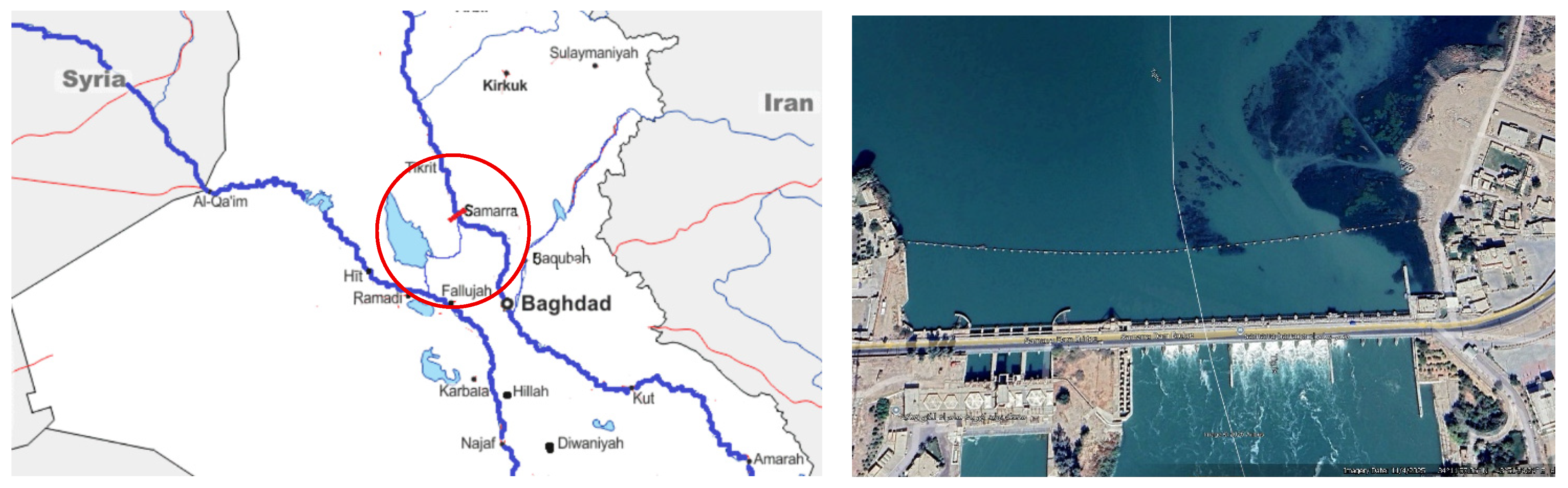
The Samarra Dam is located approximately 120 km north of Baghdad, near the city of Samarra on the Tigris River (at coordinates 34°11′27″ N and 43°51′19″ E). The main purpose of this low-height hydraulic structure is to divert excess floodwaters from the Tigris River through a constructed canal into the Al-Tharthar Depression, a natural reservoir covering 2000 km
2, located at coordinates 34°16′29″ N and 43°18′28″ E. In addition to flood control, the dam is used for irrigation and houses a hydroelectric power station with a capacity of 87 MW [
5].
Figure 1 shows the location and design of the dam and its associated water bodies.
2. The Basic Equations of Flow
The fundamental partial equations in an orthogonal coordinate system (
x,
y) are given as follows [
14,
15]:
The momentum equation is
where
The main parameters in the governing equations include the following: u and v are the flow velocity components in the x and y directions, respectively; t is time; and h is the water depth. The acceleration due to gravity is g, and the gradient of water surface in the x direction is . The flow is resisted by drag forces, Fx and Fy, and by bed shear stress components, τx and τy. These forces are measured using the eddy viscosity () and the bed friction coefficient (Cf). Dx and Dy are diffusion terms.
The sediment continuity equation (Exner equation), which couples the flow dynamics with changes in bed level, governs the morphological evolution of the riverbed in addition to the flow equations.
where
represents the riverbed elevation,
λ the porosity of the bed material, and
qbx and
qby the bedload transport rates in the
x and
y directions. Sediment transport rates are calculated in 2D and 3D models using the empirical formulas of Ashida and Michiue, which are functions of the local flow conditions (shear stress and velocity).
4. Model Results
4.1. Model Validation
Field measurements from surveys and previous studies [
9,
16,
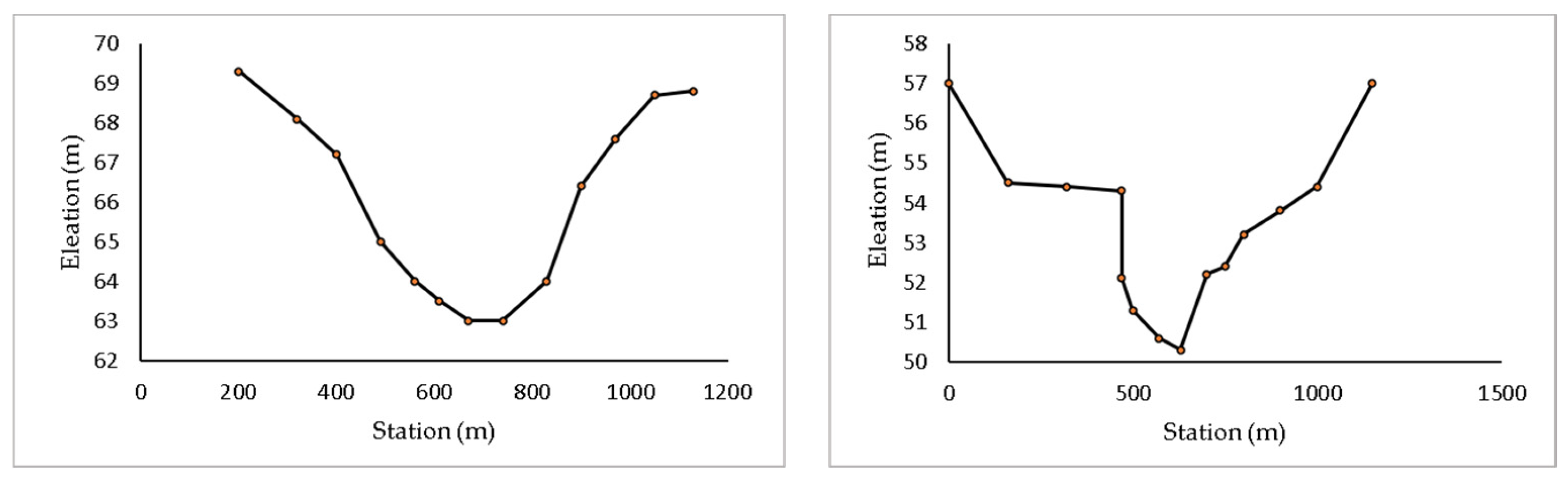
18] were used for a 4 km reach of the Tigris River upstream of the Samarra Barrage to validate the results obtained from the hydrodynamic model in terms of water surface and bed elevation.
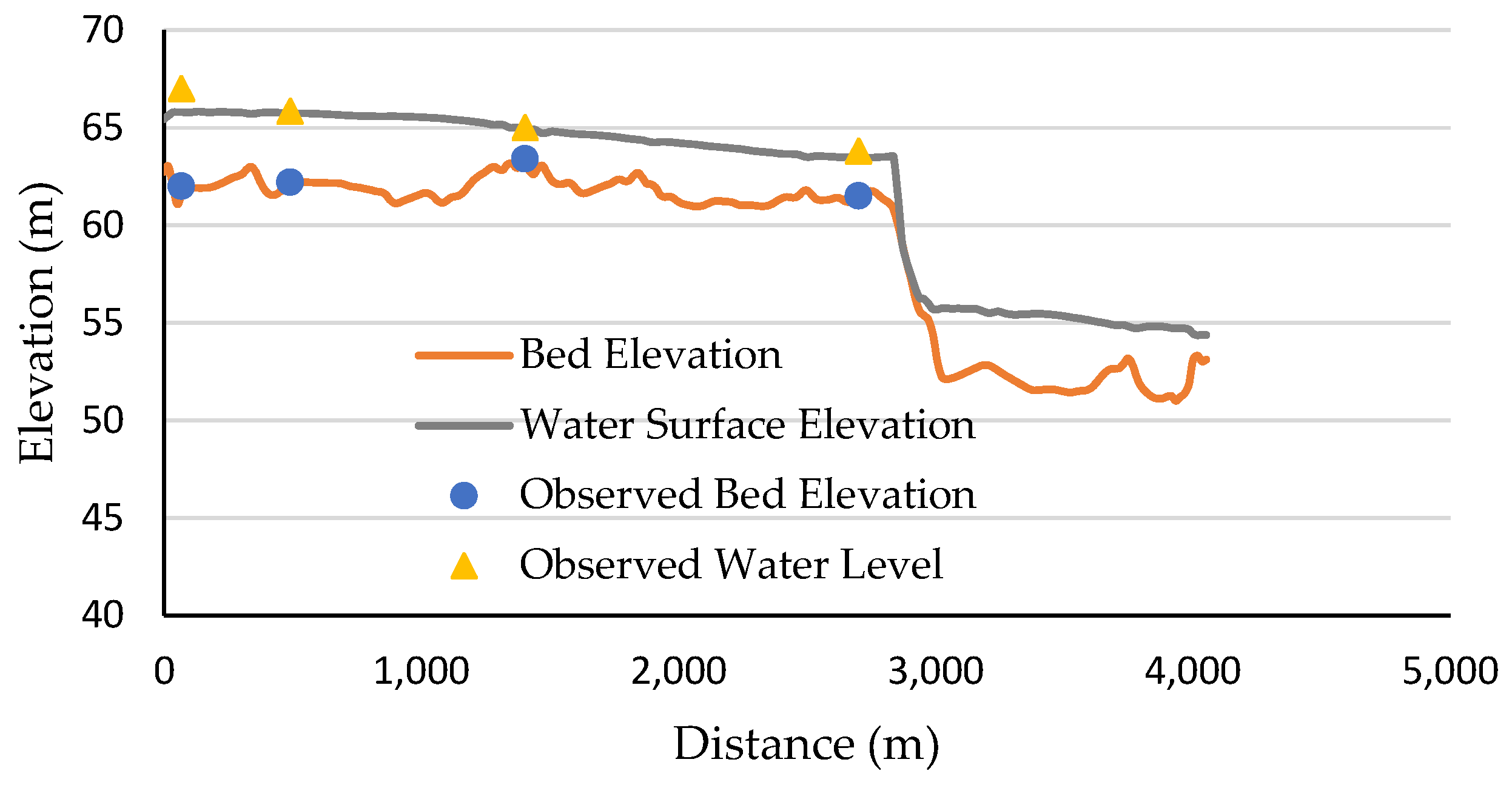
Comparison was performed under the closest available hydraulic conditions by matching the discharge with recorded barrage releases. For the downstream reach, computed water surface elevations and bed levels fell within the reported minimum and maximum observed ranges. This observation indicates that the model can reproduce hydraulic and morphological conditions in this relatively stable reach (
Figure 5). By contrast, the upstream reach is dynamically unstable because of operational variations in barrage gate openings, fluctuating inflow discharges, and continuous sediment transport processes. Therefore, efforts were made to reproduce realistic hydraulic conditions close to actual barrage operations and gate openings to allow comparison with available data.
Figure 6 shows the comparison between predicted and observed water surface elevation and bed elevation.
Table 2 demonstrates an excellent agreement between simulated and observed values for most statistical indicators used. The mean absolute error values were 0.50 m for bed elevation and 0.28 m for water surface elevation, whereas the root mean square error showed similar magnitudes (0.50 and 0.29 m, respectively). The Nash–Sutcliffe Efficiency coefficients reached 0.991 for bed elevation and 0.997 for water surface elevation, indicating that the model explains more than 99% of the variance in the measured data. For both variables, minimal systematic error was achieved, with the percent bias remaining below 1%. A strong linear correlation was also observed, with the coefficient of determination exceeding 0.99 for both parameters.
The predicted water surface elevations presented in
Figure 5 show close agreement with the observed cross-sectional profiles, particularly in the reach immediately upstream of the barrage, where simulated water levels coincide with field data within an acceptable margin of error. This relationship confirms the reliability of the chosen hydraulic parameters and the robustness of the numerical model in simulating real-world flow conditions. These statistical metrics confirm the model’s capability to represent the morphological characteristics and hydraulic performance of the study reach accurately. Therefore, the base model provides a reliable foundation for flushing analysis and subsequent sedimentation studies. The results presented in this section correspond to case 1 in
Table 3, where the considered 2D and 3D simulation scenarios are summarized.
4.2. Sediment Erosion and Deposition Patterns
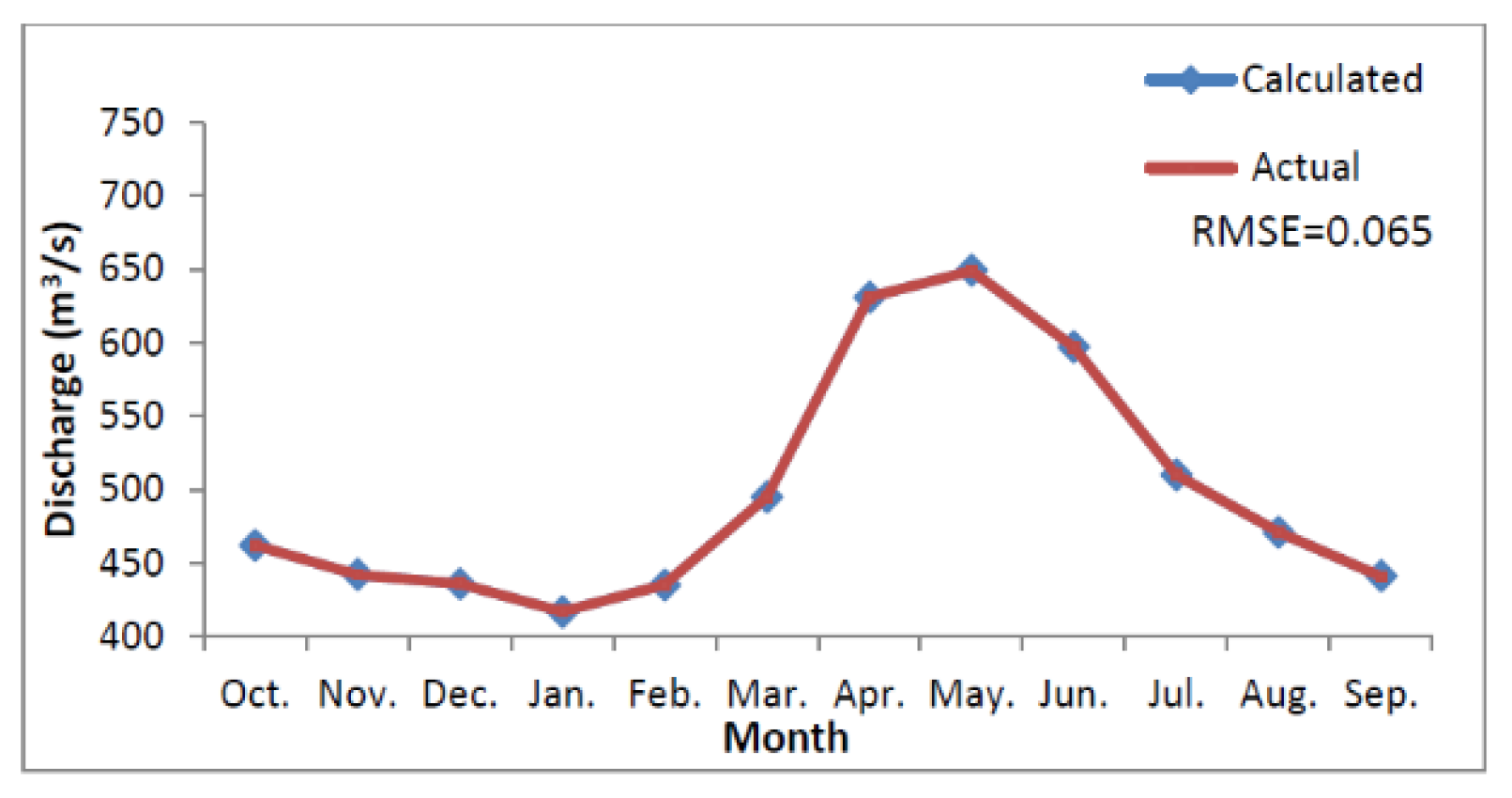
Realistic barrage operation was achieved by using varying discharges ranging from 300 m
3/s to 700 m
3/s in the simulation.
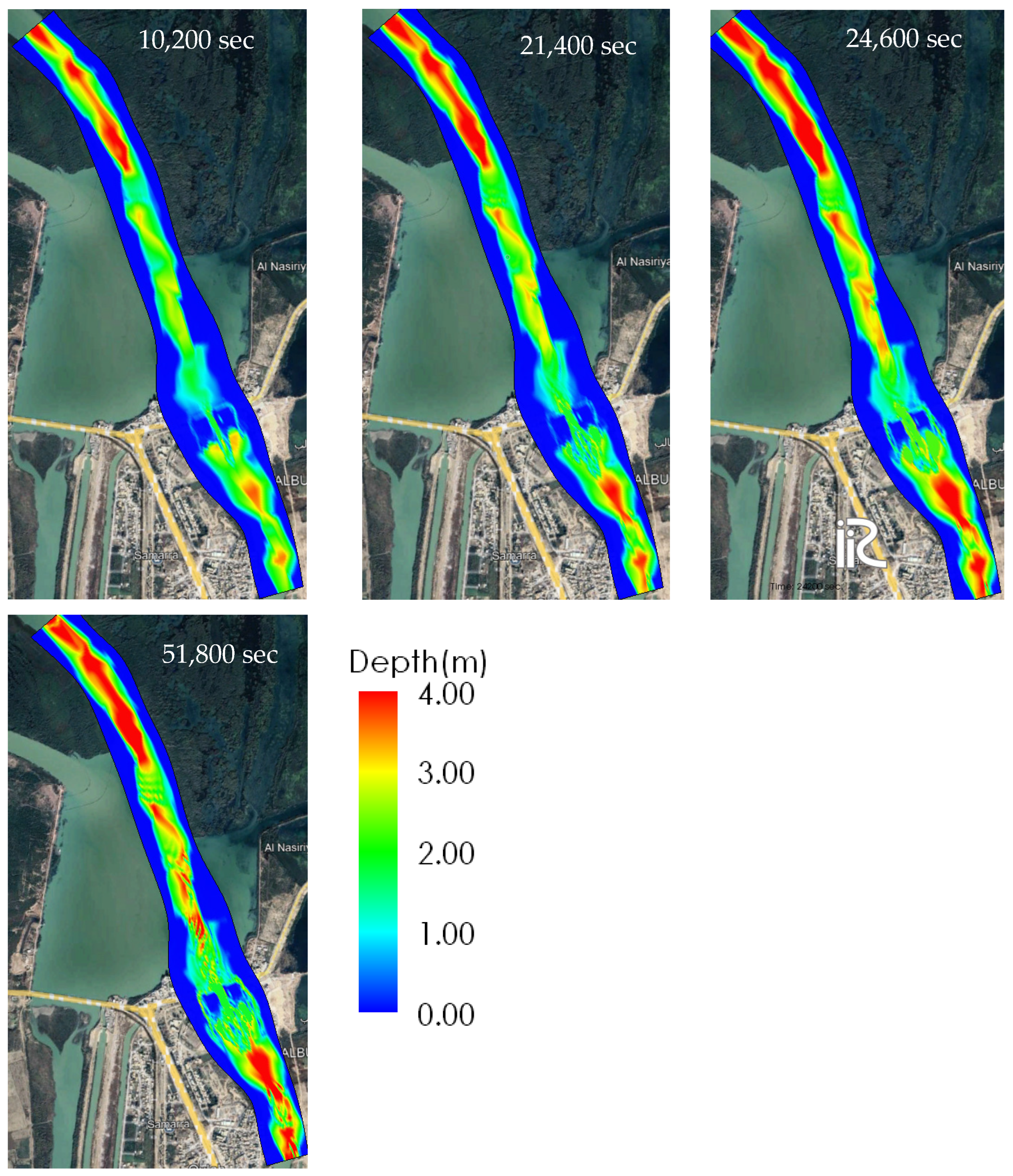
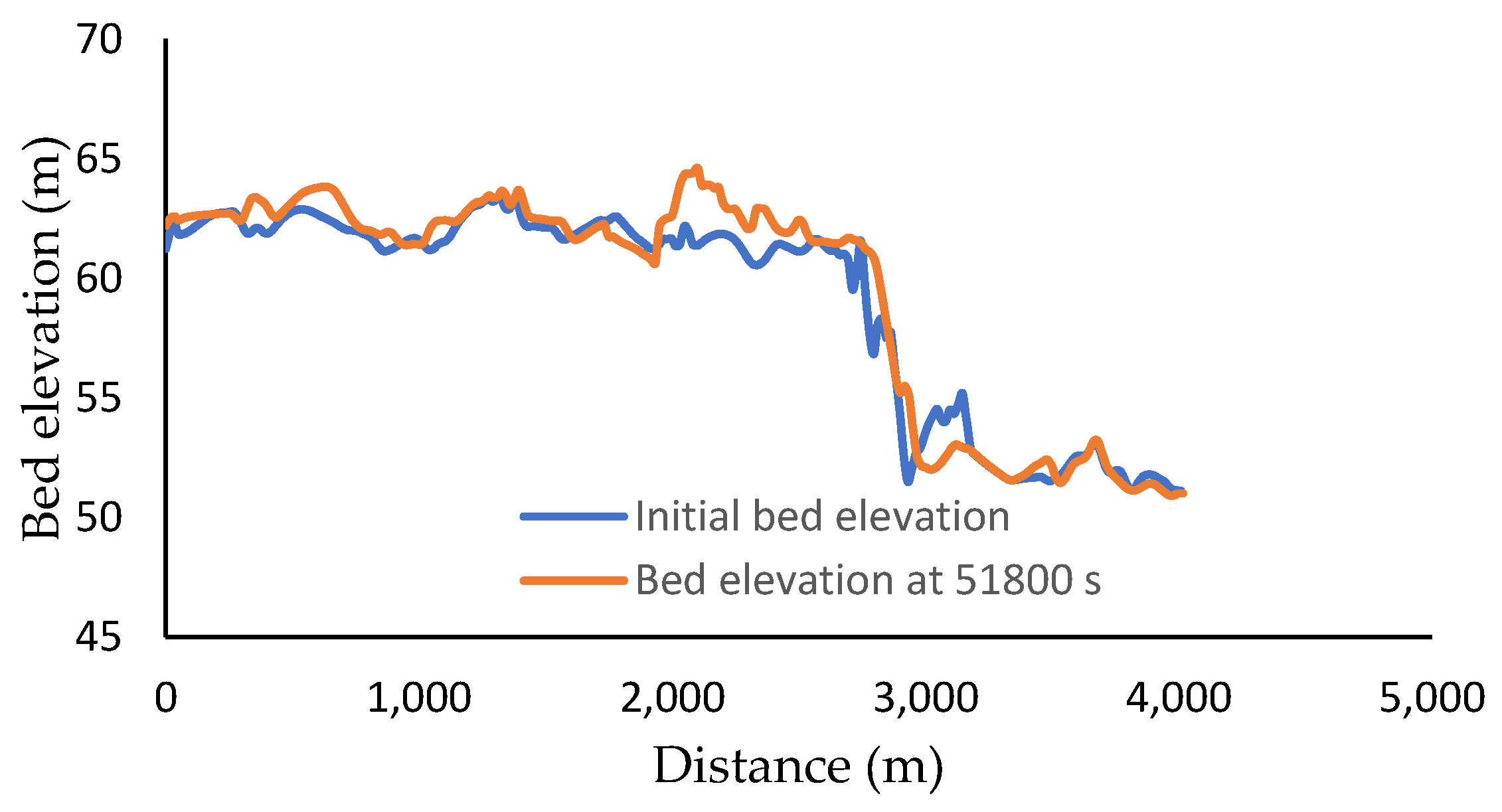
Figure 7 illustrates the longitudinal distributions of water depth and bed elevation at different time steps (Case 2 in
Table 3(a)). The results show an increase in water depth far upstream and downstream of the barrage, with localized bed erosion observed downstream. This increment may be attributed to not only the increase in flow but also the decrease in bed level, exhibiting localized bed erosion, as shown in
Figure 8. A clear pattern of sediment deposition in the area adjacent to the barrage’s upstream can be distinguished. The reduction in the local bed slope and flow velocity causes sediment accumulation near the barrage, thereby promoting further aggradation. Conversely, bed scours reflect enhanced sediment entrainment capacity, resulting in high velocities and shear stresses. As the flow approaches the barrage, local acceleration increases shear stress, resulting in scour near the structure.
These patterns became increasingly pronounced with increasing discharge, particularly at 700 m
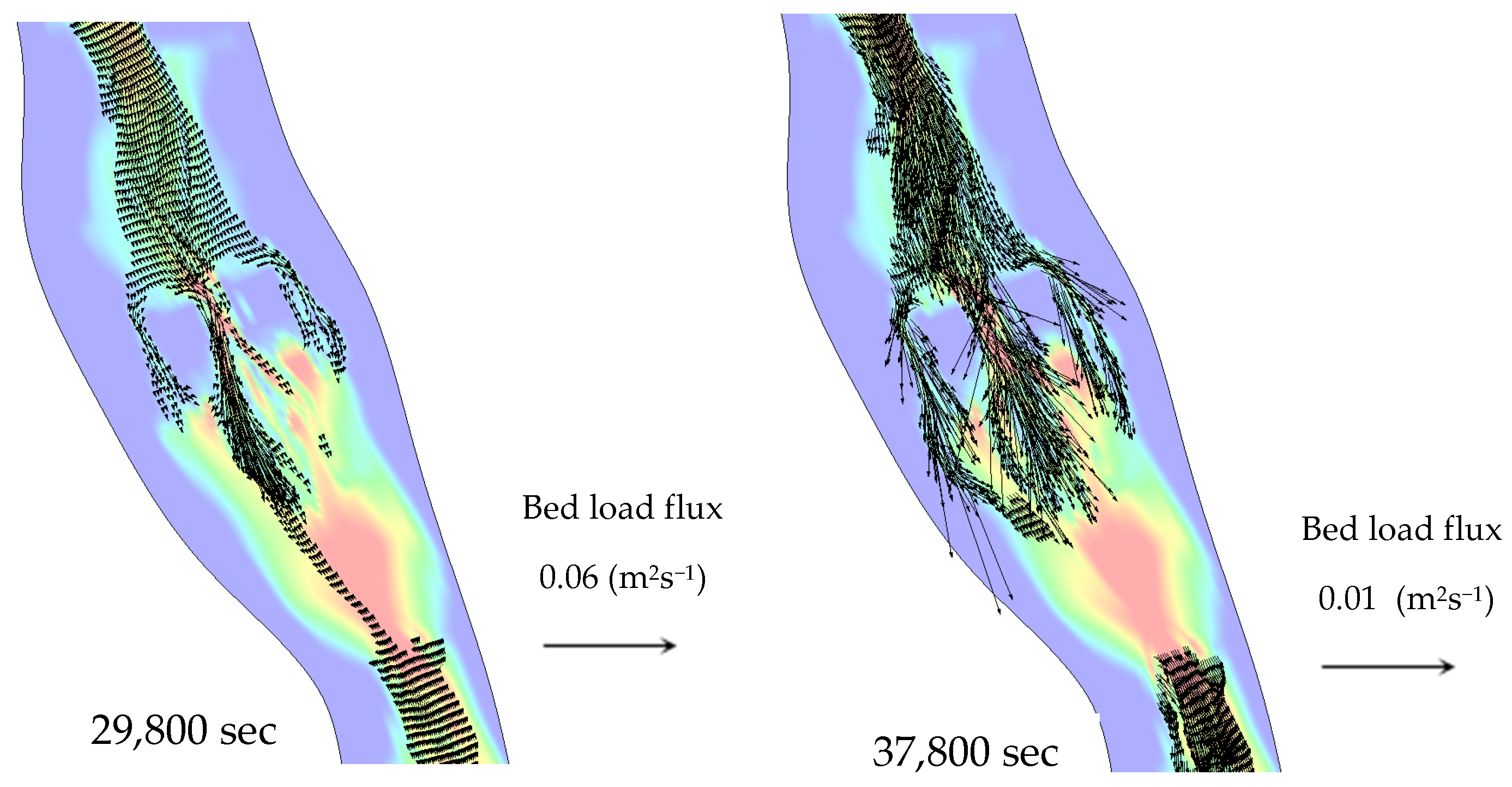
3/s, indicating increased sediment transport efficiency and high flow competence. This behavior is reflected in the observed increase in bed load flux compared with low discharge cases (
Figure 9). However, in this figure the high-discharge case appears to have a smaller flux than the low-discharge, this is due to their lengths are scaled automatically by the software. This observation is consistent with sediment transport theory, where high discharges exceed the critical shear stress required for particle entrainment. The model’s ability to depict the sediment processes under controlled flow conditions accurately is supported by its consistency with documented sediment dynamics in backwater zones and by the agreement between simulated bed changes and the adopted river topography [
19,
20]. Thus, the model is confirmed to be reliable for subsequent sediment transport simulations and flushing analysis.
4.3. Different Gate Operations for 2D Model
The behavior of sediment transport under various gate opening configurations and discharges (300–700 m
3/s) strongly depends on hydraulic forcing and flow redistribution near the barrage. According to the model dimension, the simulation tests are divided into two tables.
Table 3a lists the 2D simulation (results discussed here), whereas
Table 3b lists the 3D simulation with continued numbering.
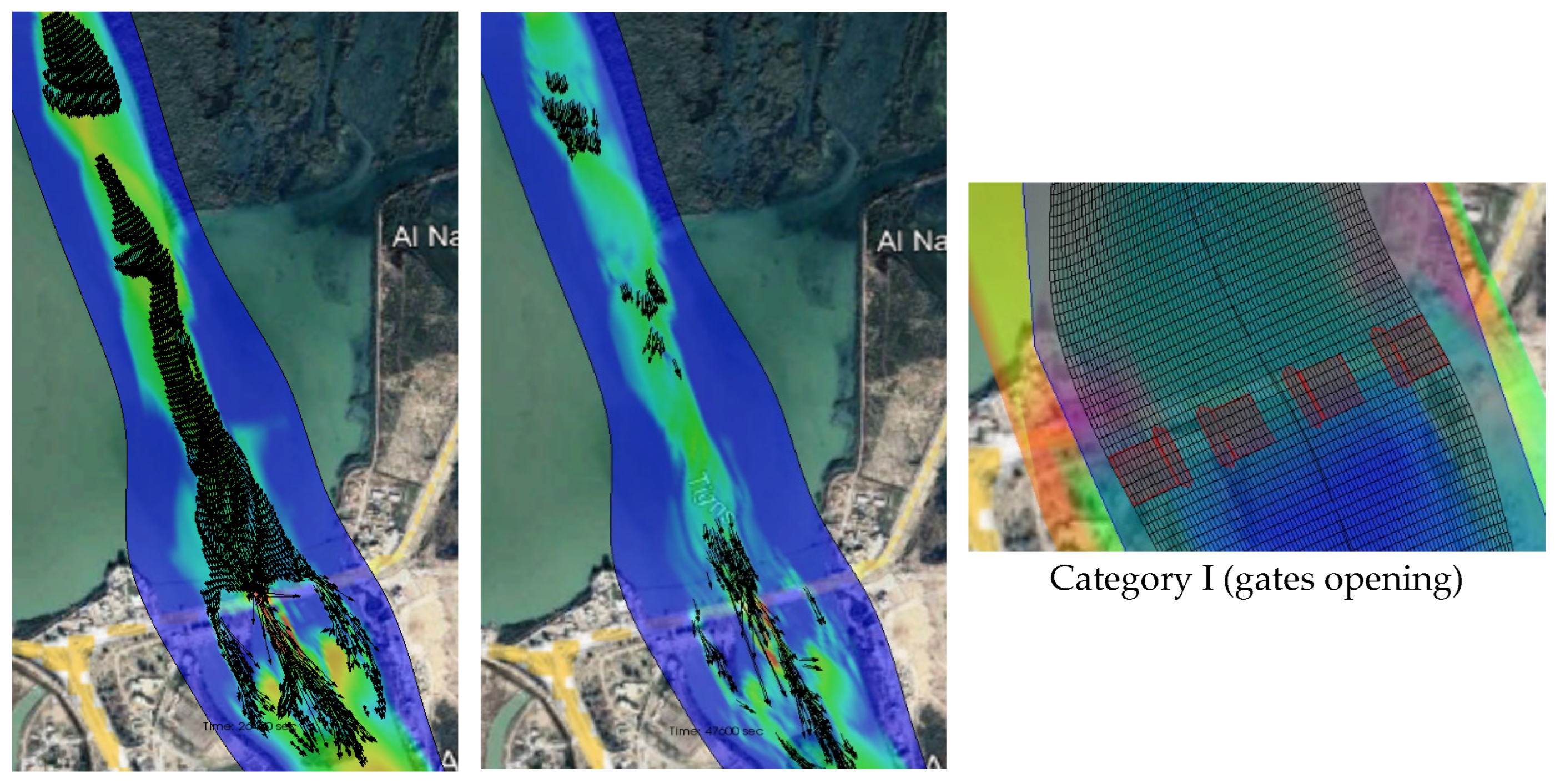
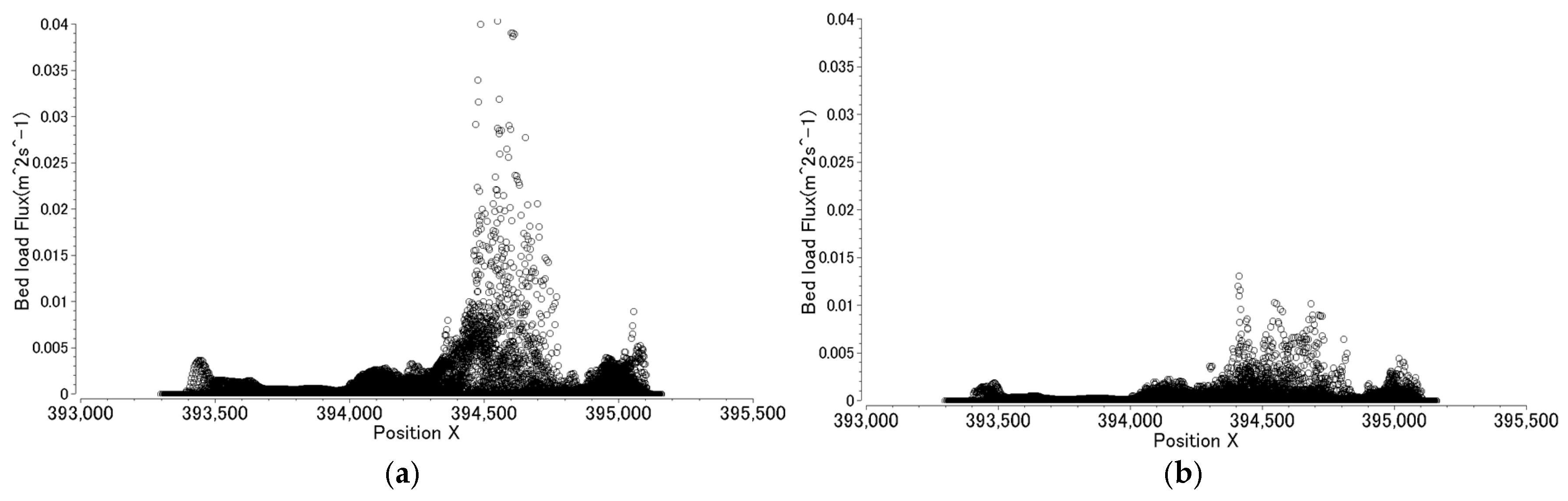
Figure 10 illustrates the sensitivity of sediment transport paths to discharge magnitude for Category I simulation results (Case 2 in
Table 3(a)). This figure shows that bed load flux at Q = 700 m
3/s is higher than that at Q = 300 m
3/s. This observation indicates improved transport capacity in the high-flow period due to high velocity and bed shear stress.
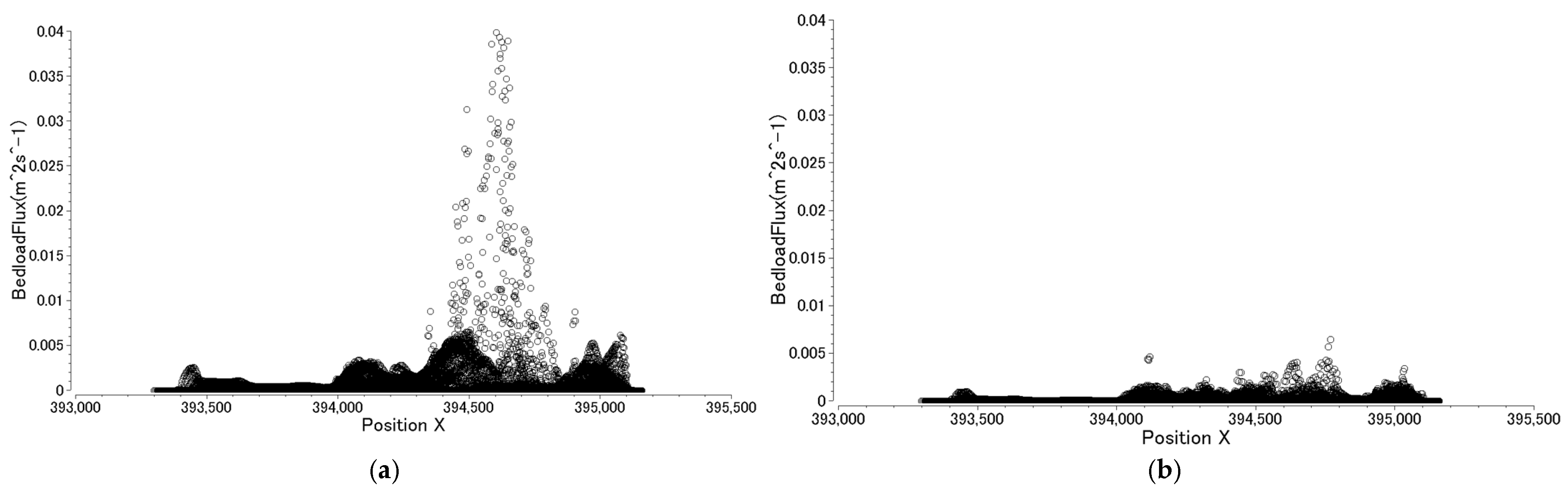
In
Figure 11a, spatial heterogeneity along the channel is evident from the longitudinal variation in bed load flux. Zones of intensified bed load flux develop immediately upstream and extend downstream from the barrage gates. These zones correspond to areas of accelerated flow. At X ≈ 394,400 m (the dam location), the bed load flux increases abruptly as the flow is concentrated through the open gates. Downstream of the barrage (X > 394,500 m), the flux remains high and may increase further because of the velocities of the released flow, promoting bed scour and enhancing STC. By contrast, reduced upstream flux values enhance sediment deposition (
Figure 11b).
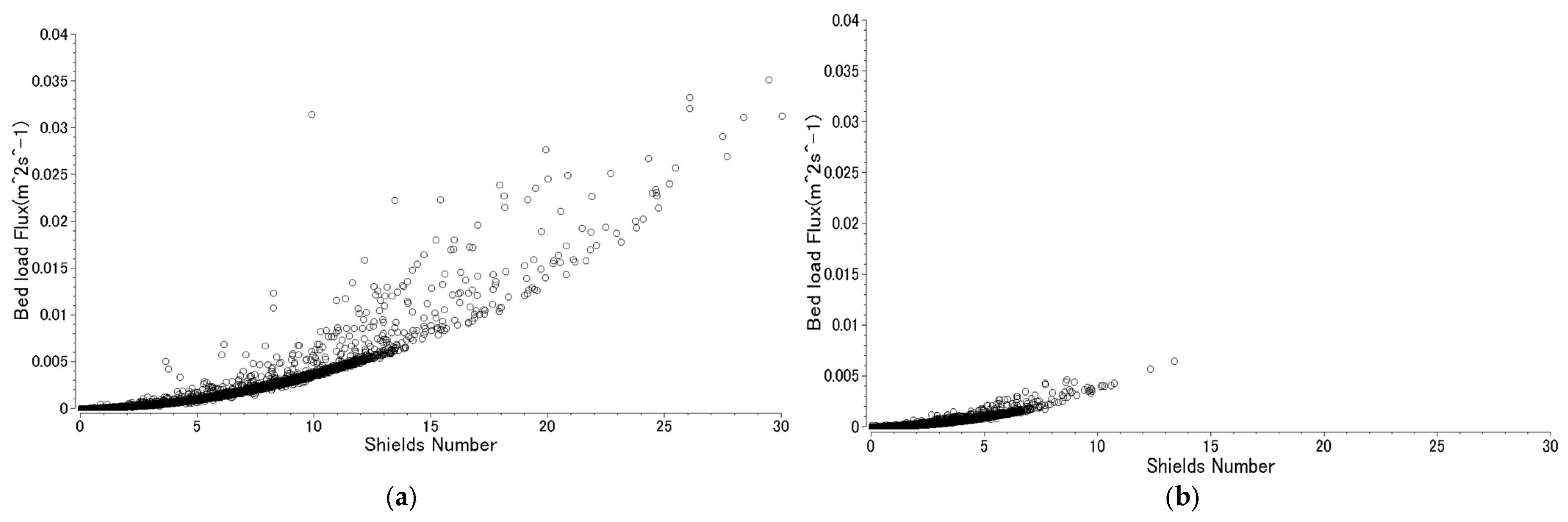
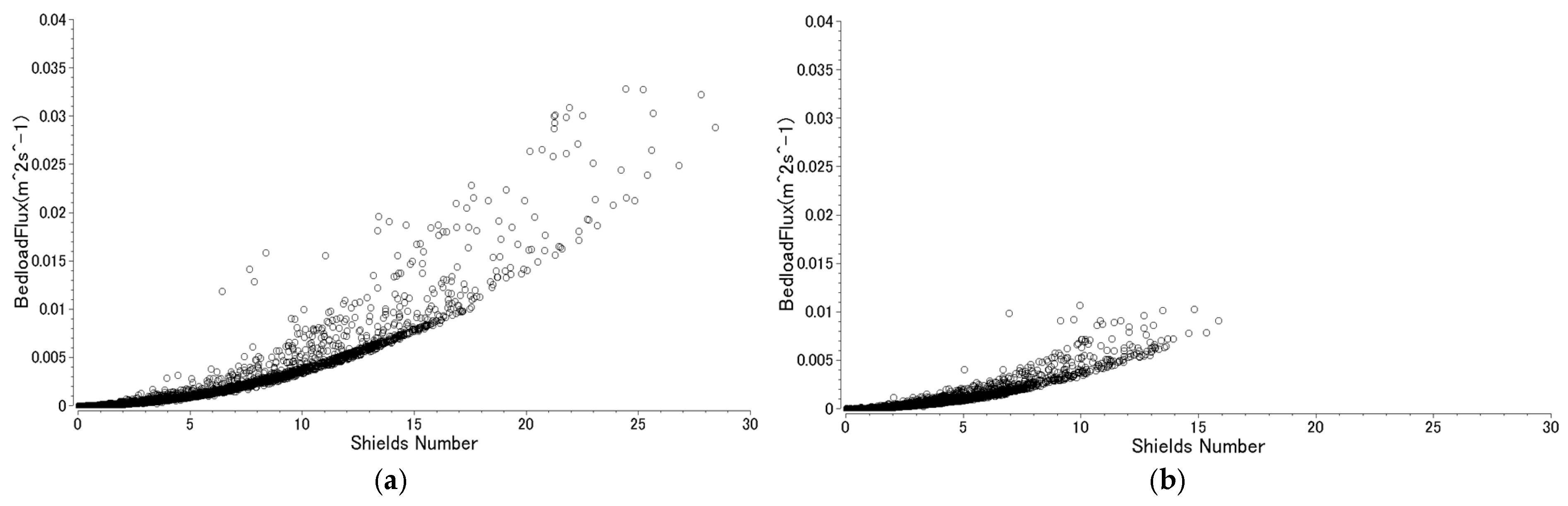
The relationship between the Shields number and bed load flux (
Figure 12) verifies the physical validity of the model. Sediment transport begins once the Shields number reaches its critical threshold, after which the bed load flux increases nonlinearly. The model captures realistic sediment movement, as evidenced by the scatter of data points, which reflects spatial variability in local hydraulic conditions.
The higher values of Shields number (up to 15) observed in
Figure 12 can be explained by the following:
- -
Fine bed material: As Tigris River is characterized as an alluvial river, the sediment reach upstream of Samarra Dam is predominantly fine sand and silt [
9]. The grain size (d
50) used in the model is 0.00025 m (0.25 mm). This significantly reduces the Shields number (θ = τ/((
)gd)), making θ sensitive to changes in bed shear stress (τ).
- -
High flow values with local shear stress concentration: The simulations include high-flow scenarios (e.g., Q = 700 m3/s), during which water flows through fully or partially opened gates. This creates localized zones with very high bed shear stress as a result of high velocity. The 2D model (Nays2DH) captured this phenomenon. By divided by the small grain size diameter, it yields high Shields numbers.
While the extreme values θ seem to be high compared to reach in natural rivers under average conditions, they are plausible in the immediate vicinity of barrage during flushing operations with maximum sediment transport capacity.
Overall, Category I represents an efficient configuration for moving bed material under high-discharge conditions.
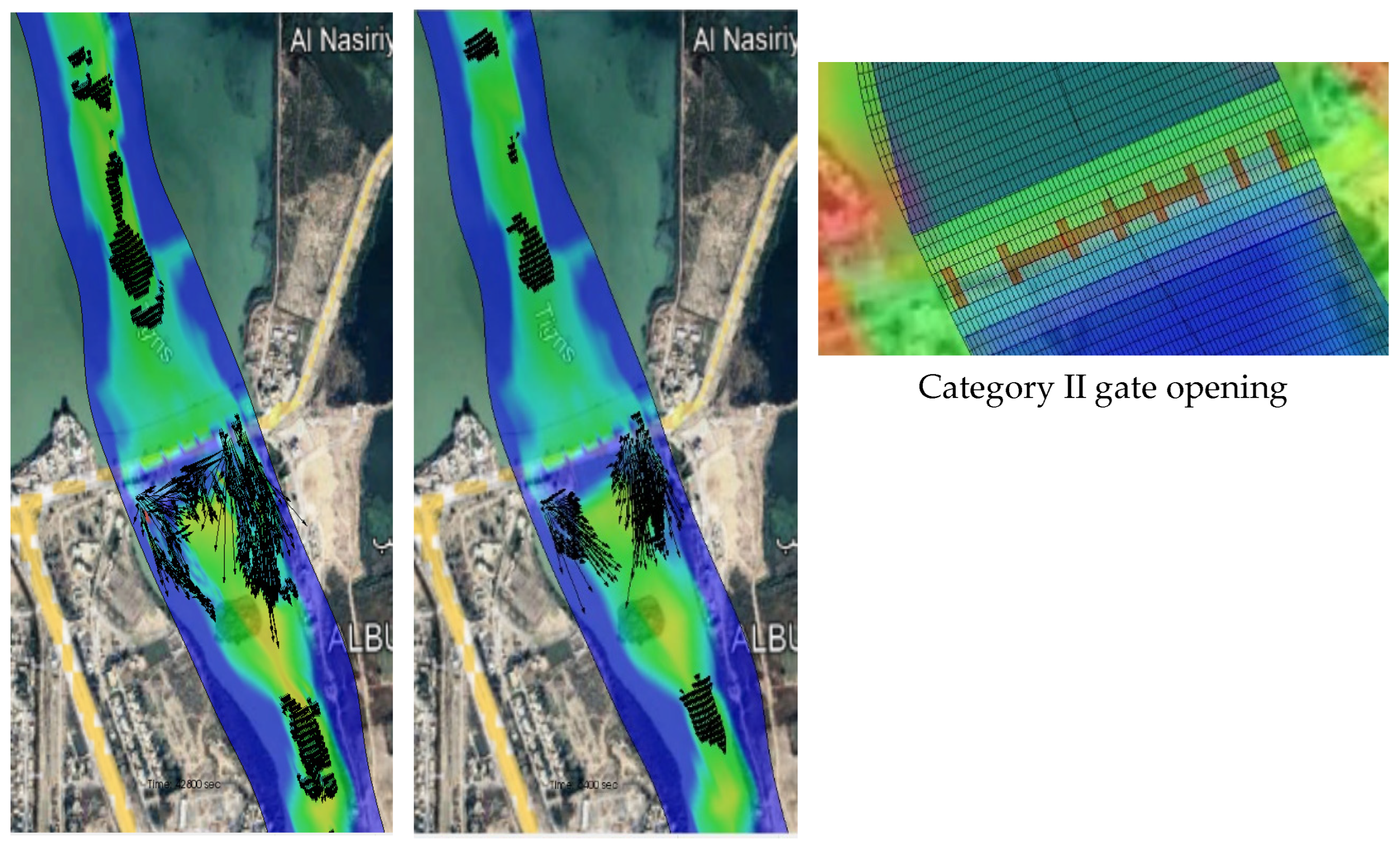
Bed load flux increases significantly at Q = 700 m
3/s compared with Q = 300 m
3/s for Category II (Case 3 in
Table 3(a)), as shown in
Figure 13. However, the intensity and spatial distribution of Category II differ from those of Category I, reflecting altered flow concentration patterns.
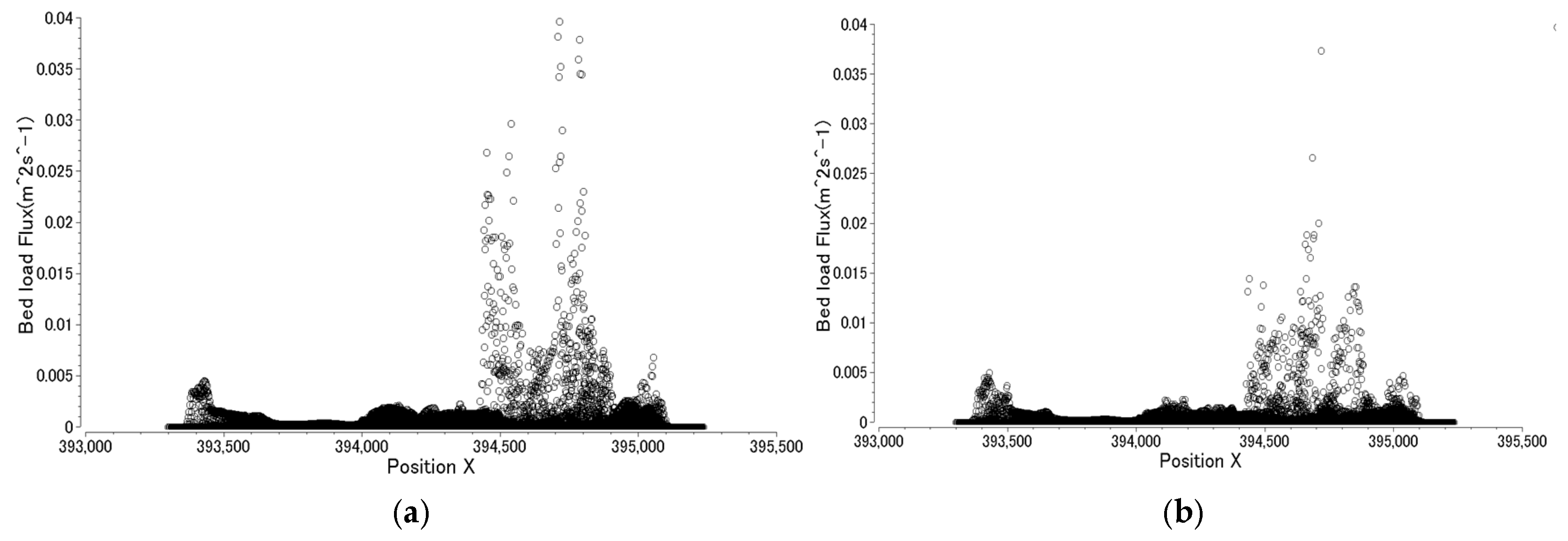
The longitudinal pattern of bed load flux exhibits increased irregularity along the channel (
Figure 14). High-flux zones adjacent to certain gate openings suggest strong jet-like flows and localized increases in bed shear stress. Moreover, the velocity reduction continues, thereby lowering transport rates in upstream areas.
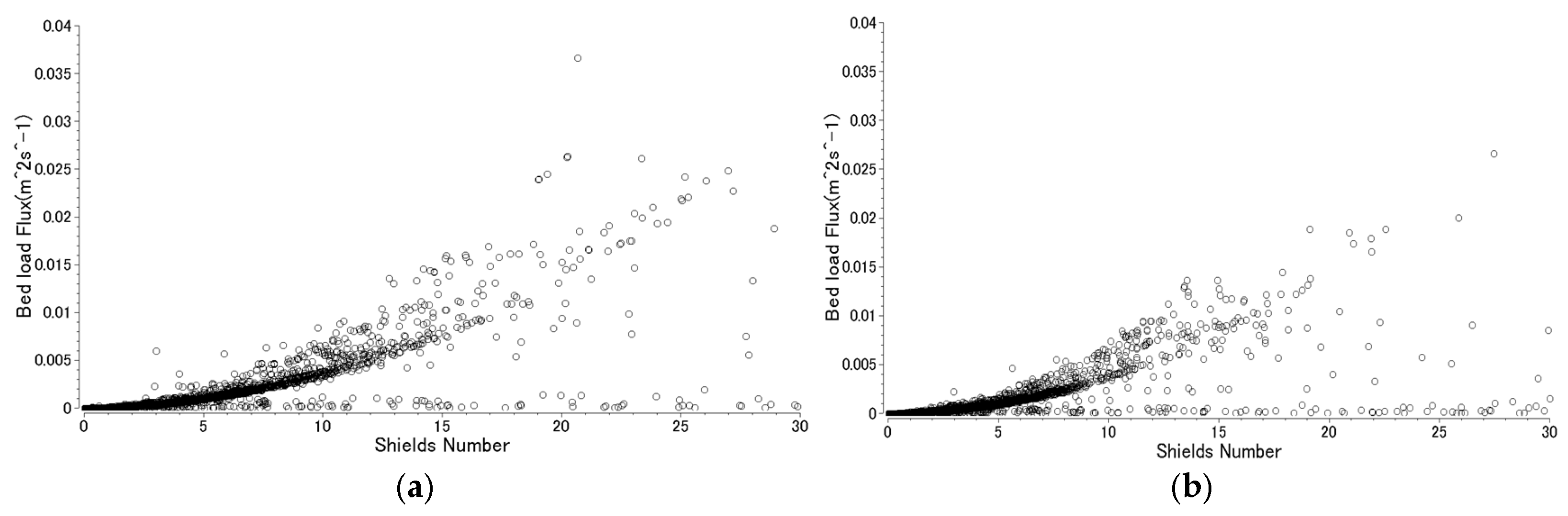
The bed load flux depends on the Shields number, as shown in
Figure 15. Active transport occurs only after the critical threshold is exceeded. The scatter in the data in Category II is more pronounced than that in Category I, indicating high variability in flow structure and sediment movement. In particular, Category II gates affect the bed stability near the structure, promoting localized scour rather than uniform sediment movement.
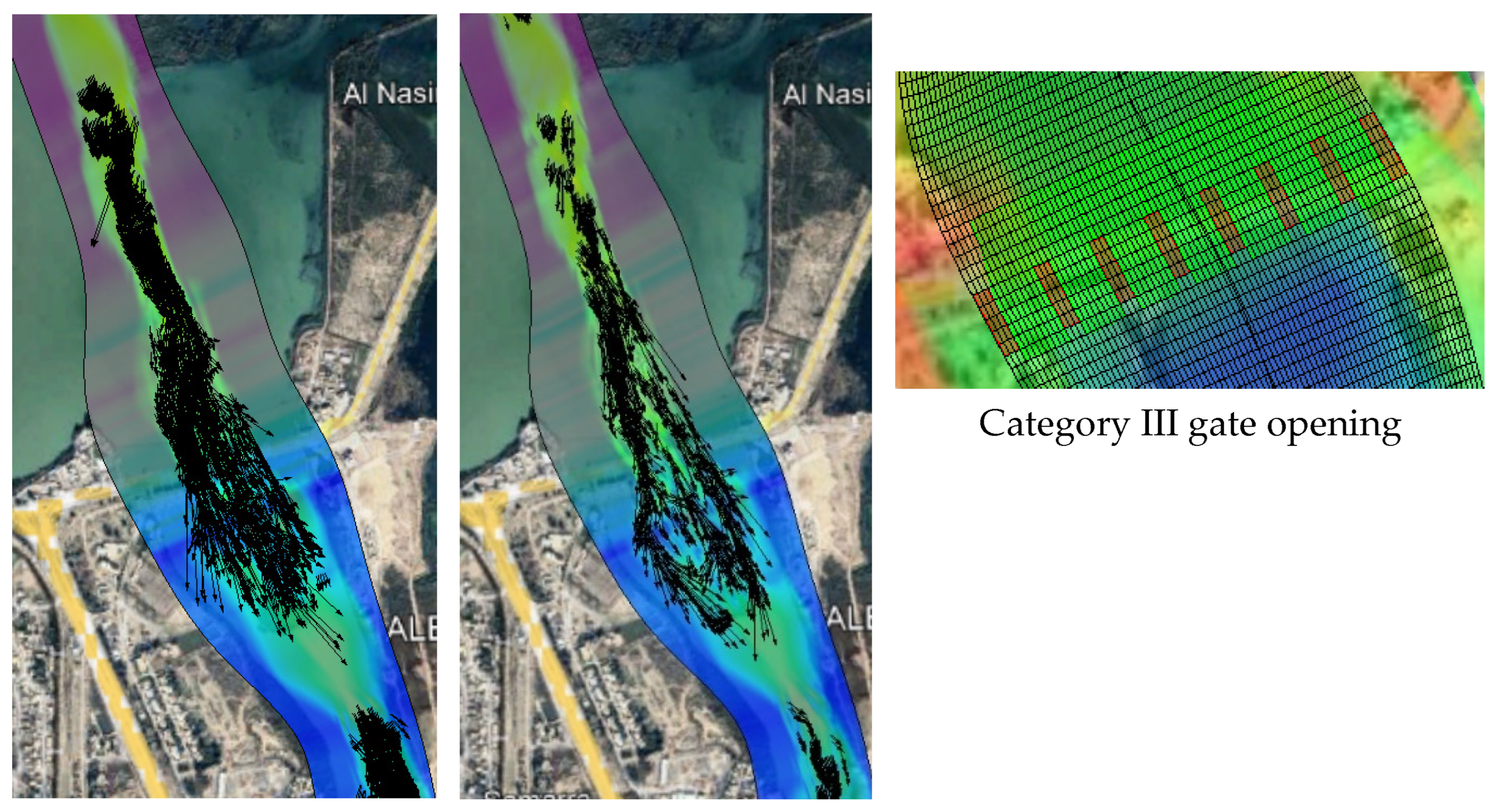
The sediment transport response for Category III (Case 4 in
Table 3(a)) gate configurations is the most pronounced among the various operating conditions considered. As shown in
Figure 16, the bed load flux reaches its maximum values under high-discharge conditions (Q = 700 m
3/s) compared with that under low-flow conditions. This observation indicates that appropriate gate operation can effectively concentrate flow energy, thereby maximizing the capacity of sediment transport.
Figure 17 shows the longitudinal patterns of bed load flux, indicating a high transport rate along the downstream reach. The distribution of flow velocity and shear stress in Category III becomes more uniform than those in Categories I and II. This flow pattern enhances continuous sediment removal and reduces the formation of stagnation zones.
A clear nonlinear pattern is observed in the Shields number relationship (
Figure 18), where bed load flux increases rapidly once the Shields number exceeds the critical value. Compared with the case in Category II, the smaller scatter in Category III indicates more stable hydraulic conditions and a stronger coupling between sediment response and flow energy. These results suggest that Category III is hydraulically advantageous for sediment flushing operations, particularly under high inflow conditions.
Although Category III demonstrates the maximum sediment transport capacity, it represents a severe operational condition that requires adequate inflow availability. Full gate opening is currently not operationally practical because of the recent decrease in water inflows. It may also result in severe water losses. Consequently, this configuration should be considered only as a theoretical upper limit for sediment flushing efficiency or as a measure applicable during rare flood events. Therefore, under limited conditions of inflow conditions, priority should be given to diverting the excess water toward the Al-Tharthar Depression to enhance storage capacity and flood control, rather than fully opening all barrage gates.
4.4. Understanding Scattered Data in Sediment Transport Analysis
The scatter of data points shown in the preceding figures that plot bed load flux (qs) against the Shields parameter (θ*) illustrates the natural randomness in sediment transport in rivers, particularly in the vicinity of barrages. Sediment transfer is not fully predictable. In addition to flow strength, other factors govern whether a sediment grain is mobilized or remains in place. These factors include recent depositional or erosional history, the presence of ripples (small bedforms), and the local distribution of bed materials, all of which play a major role in controlling sediment dynamics.
This scatter is a positive indication, as it reflects the model’s sensitivity in capturing the variations and small-scale dynamics that would be lost in a 2D averaged model. As flow carrying capacity increases, sensitive sediment transport becomes increasingly sensitive to local conditions. This trend is consistent with field observations, showing that scatter increases with high flow strength. Overall, the scatter serves as a useful diagnostic tool for evaluating the reliability and performance of various operation techniques.
4.5. Flushing Case (3D Simulation of Partial Gate Operations)
The NaysCUBE solver was used to model the 3D flow and sediment dynamics around the partially opened gates of the Samarra Barrage accurately. In contrast to depth-averaged (2D) models such as Nays2DH, NaysCUBE provides a highly detailed representation of morphodynamical processes, as it is a fully 3D unsteady flow solver capable of directly simulating complex flow structures around hydraulic obstacles and the associated bed evolution.
Two key operational scenarios were studied to replicate a realistic management cycle.
- -
Aggradation Phase: Sediment deposition upstream of the barrage can be achieved by maintaining the inflow discharge lower than the outflow discharge (Case 5 in
Table 3(b)).
- -
Flushing Phase: A controlled flushing event is simulated to mobilize and remove deposited sediments by setting the inflow discharge equal to the outflow discharge (Cases 6 and 7 in
Table 3(b)).
4.6. Input Parameter for Flushing Case
The same basic input parameters, including the Manning coefficient, sediment grain size, and the nonlinear k-ε turbulence model, were used for the 3D simulations (NaysCUBE-3D) as for the 2D model. However, the discharge and downstream boundary conditions were modified to represent two operational scenarios: (1) sediment accumulation, achieved by setting the outflow discharge (Q
out = 350 m
3/s) lower than the inflow (Q
in = 550 m
3/s), and (2) flushing, implemented by setting Q
in = Q
out = 700 m
3/s. These downstream conditions can only be represented in NaysCUBE by modeling the outlet as a dam release. Additionally, ten vertical layers were used to capture morphological changes in the riverbed. All other parameters are summarized in
Table 3(b).
For simulations incorporating time-varying discharge and adaptive gate operations, a sequential hot-start procedure was used to replicate operational stages and sediment-transport dynamics. In this approach, the results from a completed simulation (including flow velocities, water depths, and bed elevations) were saved and used as initial conditions for subsequent runs. Boundary conditions such as gate openings and inlet discharge can be modified without reintroducing initial transients by restarting the run from a previously stabilized state. This approach is particularly effective for simulating long-term operational periods or scenarios in which abrupt changes in boundary conditions could otherwise result in numerical instability, such as sudden drawdown or water overtopping.
The total simulation time for these adaptive scenarios was determined dynamically. This approach was achieved by extending the simulations using the hot-start feature until the results stabilized, particularly when the system had not reached a new equilibrium during the initial run period. This approach ensured numerical robustness and the ability to capture long-term dynamic morphological feedback between flow, sediment transport, and dam operations. Therefore, a two-stage adaptive framework combining a stable, fixed-duration initialization with an adaptive phase activated via the hot-start feature was successfully achieved.
4.7. Analysis of Results
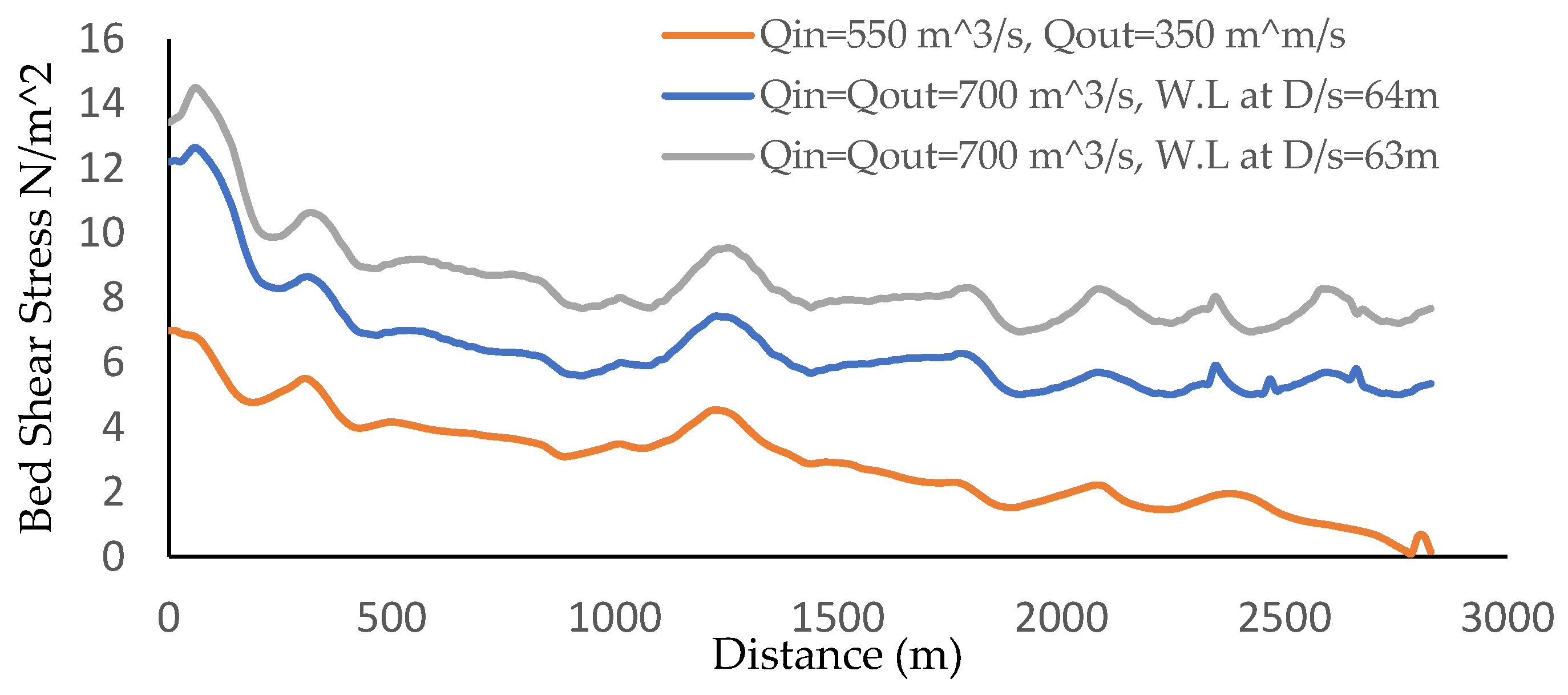
The longitudinal distribution of bed shear stress under various hydraulic conditions along the modeled reach (upstream of the barrage) is shown in
Figure 19. High discharge and low water levels stipulated at the downstream border (the barrage position) enhance bed shear stress, which is the main cause of sediment entrainment. The observed upstream sediment deposition pattern can be explained by the bed shear stress approaching zero at the barrage location under sedimentation conditions (Q
in = 550 m
3/s, Q
out = 350 m
3/s).
Conversely, bed shear stress increases by up to approximately 25% along the reach, particularly near the structure, under flushing conditions when outflow equals inflow (Qin = Qout = 700 m3/s). This increase can be attributed to a reduction in tailwater level, which enhances the water surface slope and flow velocity, thereby increasing the shear stress acting on the bed. However, reducing the water level at the barrage by 1 m (from 64 m to 63 m) with a constant discharge (700 m3/s) results in a noticeable increase in bed shear stress across the domain. This behavior occurs because lowering the boundary water level steepens the hydraulic gradient upstream, thereby accelerating flow velocity and consequently increasing the shear stress exerted on the bed.
High bed shear stress improves the river’s capacity to transport sediment by exceeding the critical shear stress needed for particle entrainment [
21,
22]. According to sediment transport theory described in modern sediment transport theory [
23], transport rates increase nonlinearly once the critical shear stress barrier is exceeded. This mechanism explains why regulated drawdown of water levels at the barrage during flushing operations can effectively move deposited sediments within the upstream reach.
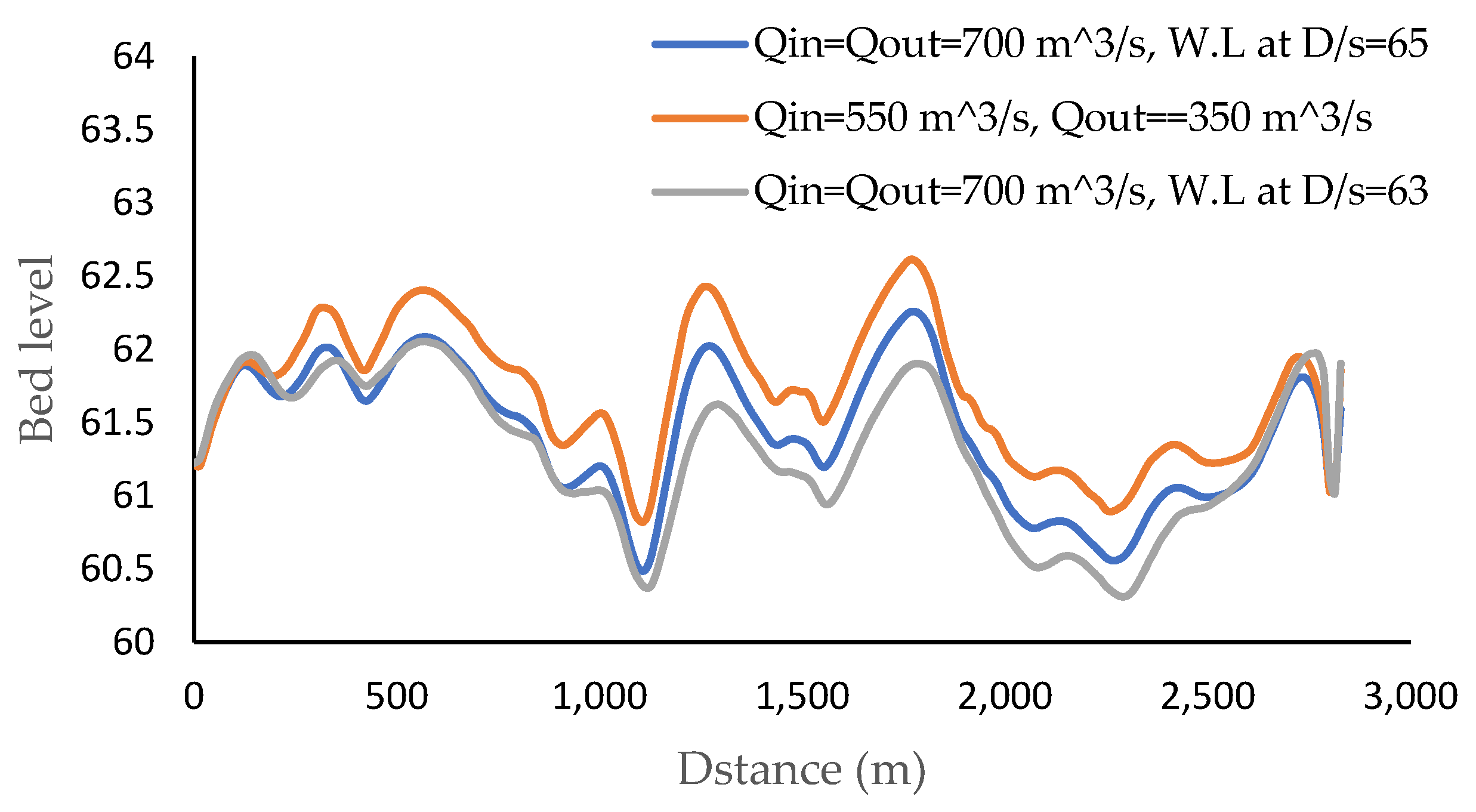
Figure 20 and
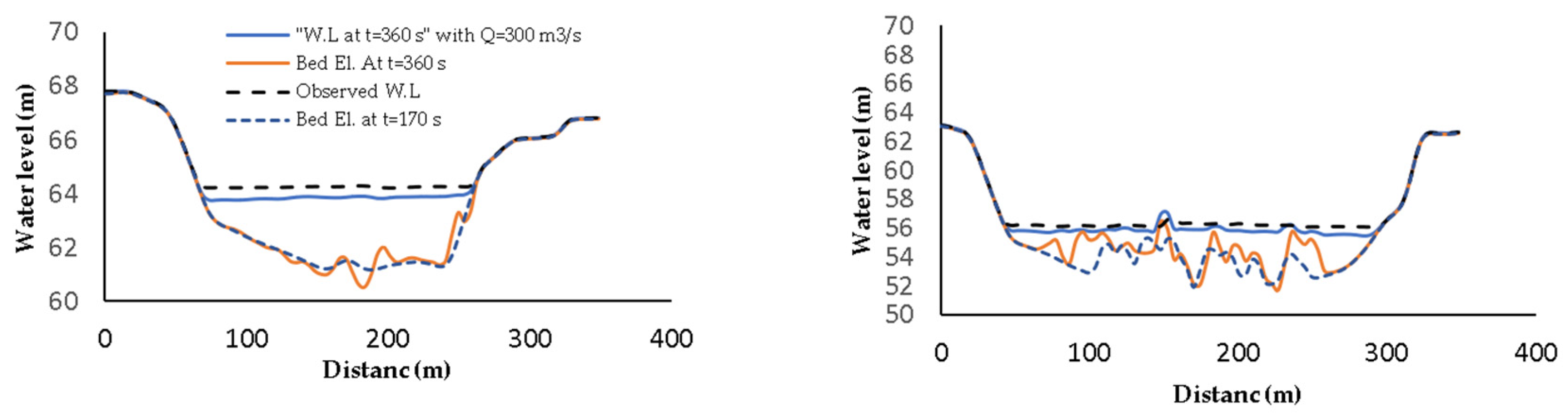
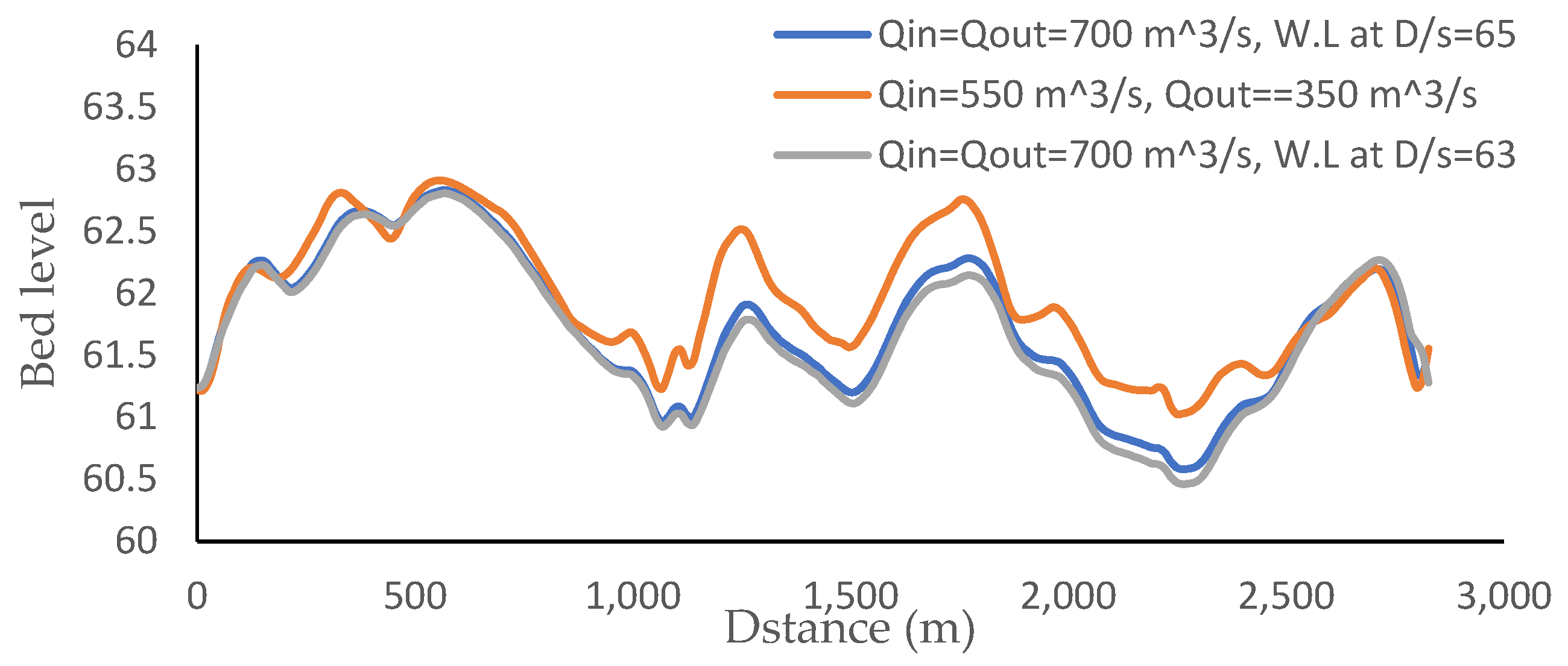
Figure 21 show the bed level vs. distance at cross-sections j = 52 and j = 42. These cross-sectional profiles illustrate the morphodynamic response of the system. During the accumulation phase (low inflow), an increase in bed level is observed, indicating sediment deposition. In the flushing phase (balanced increased discharge), the bed level decreases or shows signs of erosion, confirming sediment removal. The comparison between the two cross-sections reveals the longitudinal variability in deposition and scour patterns.
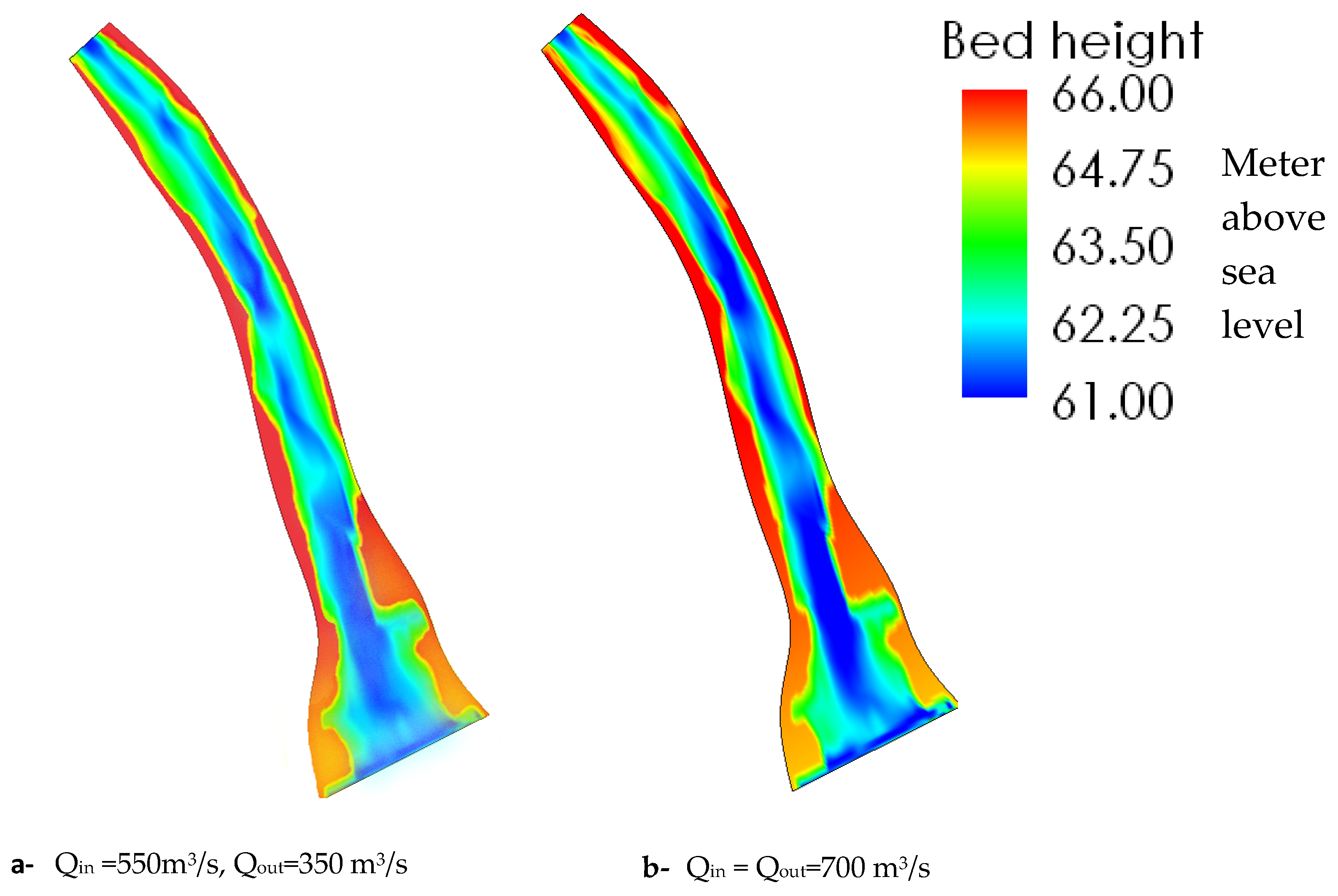
Figure 22 shows a comparison of bed height between the accumulation and flushing scenarios. The difference map effectively illustrates the net change in sediment volume by clearly identifying zones of scour during flushing (negative change) and zones of deposition (positive change).
This comparison provides quantitative evidence of how gate operation directly controls upstream morphological progression. The 200 m3/s deficit in Scenario A (550 vs. 350) m3/s creates backwater conditions conducive to silt accumulation, whereas the higher, balanced discharge in Scenario B (700 vs. 700) m3/s promotes sediment flushing. These results support the use of controlled flow flushing for sediment management without requiring full gate opening.
5. Conclusions
The sediment dynamics upstream of the Samarra Barrage were modeled in this study using two solvers available in iRIC, namely, NAYS2DH and NAYS_CUB. All models created by these two solvers performed adequately. NAYS_CUB enabled a realistic representation of vertical flow structures during flushing and partial openings, whereas NAYS2DH supported full gate simulations. Given the backwater effects, sediment deposition was localized and extended approximately 1–2 km upstream of the barrage.
The average bed level increased by nearly 0.5 m during low-flow conditions (350 m3/s), whereas local erosion immediately upstream and downstream of the gates reached approximately −0.3 m during high-flow conditions (700 m3/s). Noticeable differences were observed among gate operation strategies. Category III achieved the highest flushing efficiency; however, it is not practical under current inflow constraints. Category I provided moderate sediment conveyance with little water loss, while Category II created uneven shear stress with possible localized scour, and Category III achieved the highest flushing efficiency; however, it is not practical under current in-flow constraints. Bed shear stress increased by up to approximately 25% when the tailwater level was lowered from 64 m to 63 m, improving sediment transport without requiring additional discharge. However, operational priorities should emphasize water storage in the Al-Tharthar Depression, combined with regular short flushing events using partial gate openings (40–60%) because of decreased Tigris inflows. Although reducing outflow to promote storage leads to enhanced deposition, maintaining outflow close to inflow during high-flow events helps limit sediment accumulation. Overall, this study provides a comprehensive framework for sediment–structure interactions to support gate management strategies that balance sediment control and water storage.