Article

Characteristics and Genetic Mechanisms of Diagenetic Anomalies in Upper Paleozoic Coal-Bearing Strata of the Longdong Area, Ordos Basin


1
School of Earth Science and Engineering, Shandong Institute of Petroleum and Chemical Technology, Dongying 257061, China
2
Efficient Exploration and Development of Oil and Gas Reservoirs and the Integration of Geology and Engineering, Shandong Provincial Engineering Research Center, Dongying 257061, China
3
Shandong Key Laboratory of Shale Oil Exploration and Development in Continental Faulted Basin, Dongying 257015, China
4
Key Laboratory of Deep-Time Geography and Environment Reconstruction and Applications of Ministry of Natural Resources, Chengdu University of Technology, Chengdu 610059, China
*
Authors to whom correspondence should be addressed.
Geosciences 2026, 16(4), 162; https://doi.org/10.3390/geosciences16040162
Submission received: 3 February 2026 / Revised: 1 April 2026 / Accepted: 10 April 2026 / Published: 17 April 2026
(This article belongs to the Section Sedimentology, Stratigraphy and Palaeontology)

Abstract

Diagenetic anomalies within the Upper Paleozoic coal-bearing strata of the Longdong area, Ordos Basin, represent a complex interplay between thermal maturation and fluid evolution, yet their governing mechanisms remain poorly understood. This study integrates petrographic analysis, X-ray diffraction, vitrinite reflectance (Ro) measurements, and fluid inclusion microthermometry to evaluate the discrepancy between organic thermal maturity and mineralogical diagenetic records. The results indicate that the mudstones achieved high thermal maturity, with mean Ro and Tmax values of 2.3% and 555.1 °C, respectively. However, the associated sandstones exhibit anomalous mineral assemblages, characterized by persistent high levels of illite/smectite (I/S) mixed-layer minerals and authigenic kaolinite, which are inconsistent with the anticipated advanced diagenetic stage. Furthermore, homogenization temperatures (Th) of fluid inclusions are significantly lower than expected, implying a localized suppression of illitization. We propose that this atypical diagenetic trajectory is governed by sluggish fluid–rock interactions in a confined diagenetic environment. Specifically, the dissolution of feldspars during acidic diagenesis provided a localized Al3+ supply, favoring kaolinite precipitation, while the limited availability of reactive feldspar precursors and pore-fluid retention effectively stalled the progression of illitization. These findings demonstrate that reactant availability and reaction kinetics can decouple mineralogical evolution from organic thermal maturation in coal-bearing sequences. This study provides a novel mechanistic framework for interpreting anomalous diagenetic signatures in heterogeneous sedimentary basins, offering significant implications for reservoir quality prediction in deep-seated, thermally mature strata.

1. Introduction

The complex diagenetic history of coal-bearing strata often results in significant reservoir heterogeneity and permeability reduction in deep basins [1,2,3]. In Chinese sedimentary basins, such as the Tarim and Sichuan basins, the diagenetic evolution of tight sandstone reservoirs is typically governed by a combination of mechanical compaction, thermo-chemical processes, and fluid–rock interactions [1,2]. However, the presence of organic-rich source rocks, which generate carboxylic acids and CO2 during thermal maturation, adds a layer of complexity to the diagenetic trajectory, often leading to the coexistence of disparate mineral assemblages and the distortion of standard diagenetic maturity indicators [3].
In the Ordos Basin, the Carboniferous–Permian coal-bearing strata are significant targets for gas exploration [4,5,6,7]. Despite extensive investigations in the Longdong area, the classification of diagenetic stages remains highly contentious. Previous studies have yielded conflicting interpretations: some suggest a mesodiagenetic stage [8,9,10], while others argue for a transition to the late-diagenetic stage based on high thermal maturity indicators [11,12]. These discrepancies suggest that conventional diagenetic indicators, such as clay mineral assemblages and vitrinite reflectance (Ro), may not consistently reflect the true diagenetic evolution in this specific coal-bearing setting.
These contradictions highlight a critical knowledge gap: the lack of a mechanistic understanding of how coal-derived fluids and local water–rock interaction kinetics “decouple” diagenetic records from conventional burial-thermal models. This study aims to reconcile these discrepancies by characterizing the anomalous diagenetic indicators in the Longdong area. Specifically, we focus on: (1) identifying the mineralogical and geochemical signatures of these diagenetic anomalies and (2) elucidating the genetic mechanisms—specifically the roles of fluid chemistry and reaction kinetics—that contribute to this “atypical” evolution. By resolving these issues, this research provides a new perspective on the compaction mechanisms and gas enrichment patterns in deeply buried, thermally mature coal-bearing reservoirs.

2. Geological Setting

The Ordos Basin is a large multi-cyclic sedimentary basin characterized by stable subsidence, depocenter migration, and tectonic stability. It is known for its large size, gentle slope, shallow water, and multiple sources [13]. It is the second-largest basin in China, covering an area of over 300,000 km2 and rich in mineral resources. The Upper Paleozoic strata in the basin are developed from bottom to top, successively including the Upper Carboniferous Benxi Formation (Ben-1, Ben-2, and Ben-3), the Lower Permian Taiyuan Formation (Tai-1 and Tai-2), the Shanxi Formation (Shan-1 and Shan-2), the Middle Permian Upper and Lower Shihezi Formations (He-1 to He-8), and the Upper Permian Shiqianfeng Formation (Qian-1 to Qian-5). In terms of sedimentation, it represents a complete cycle of marine-to-continental transgression–regression [14,15,16]. The Benxi Formation is mainly composed of river delta sediments, with coal seams interbedded and thin limestone layers. The Laevigatosporites vulgaris spore pollen assemblage is developed, reflecting the transitional environment between sea and land. The Taiyuan Formation is mainly characterized by terrestrial and marine sedimentation, with thick limestone layers, coal seams, and interbedded sandstone and mudstone. The Perocanoidospora clatrataThymospora thiessenii pollen assemblage is developed, indicating that its environment is from shallow sea to delta. The Shanxi Formation is mainly composed of river and lake sediments, with thick coal seams and well-developed Rhizonates solirisGulisporites cochlearius pollen assemblages, reflecting the main continental environment. The Shihezi Formation and Shiqianfeng Formation are mainly composed of river and lake sediments, containing special beds of sandstone and mudstone, indicating a completely continental environment [13]. Among them, the Shihezi Formation mainly develops the Sinitisporites shansiensisCorisacites quadratoides pollen assemblage, while the Shiqianfeng Formation mainly develops the Lueckisporites virkkiaeJugasporites schaubergides pollen assemblage [17].
The Late Paleozoic is one of the most active geological periods of global volcanic activity. Although the Ordos region is known for its relatively stable craton blocks, volcanic activity is very frequent in its surrounding areas. In the late Caledonian period, the Ordos region experienced a hundred million years of weathering and erosion before sinking again. The front edge of the northern continental margin of the North China block subducted strongly towards the southern edge of the Siberian block, accompanied by intense volcanic eruption activity [18,19,20]. According to the Daqingshan section, the Carboniferous and Permian volcanic eruptions reached up to 12 periods and 39 layers, with a total thickness of 2160 m, including five periods of 12–15 layers from Benxi to Taiyuan, three periods of nine layers from Shanxi, and four periods of 11–15 layers of tuff deposits from the Lower Shihezi. These volcanic materials are inevitably carried and deposited into the sedimentary waters inside the basin by water or atmospheric media, becoming an important component of clastic rocks. The presence of volcanic material not only adds to the material composition of sandstone but also has a significant impact on the reservoir performance of sandstone due to changes in volcanic material during basin tectonic evolution and burial diagenesis processes [21,22,23].
Regionally, since the Benxi period, marine transgression has occurred, leading to sediment deposition, developing a set of coal-bearing sandstone and mudstone interbedded with several sets of thin-layer limestone deposits [14]. By the Taiyuan period, it progressed to the epicontinental sea deposition stage, where marine transgression continued to expand, and in the end, seawater began to withdraw from the basin [15,16]. By the Shanxi period, seawater had almost completely withdrawn from the basin, with only a small number of marine strata remaining in the southeastern part of the basin, which is a remnant of the epicontinental offshore seaway. The differences in depositional patterns between the east and west essentially disappeared, while the differential subsidence and differentiation of depositional facies belts between the north and south gradually intensified [9].
The sedimentary thickness of the Upper Paleozoic in the southwestern part of the Ordos Basin is 900 m, with a depth of mainly 3500 m, consisting of shallow middle and shallow gas reservoirs [21,22,23]. The current average ground temperature gradient is 2.93 °C/100 m, the average geothermal flow value is 61.78 mW/m2, the water type is CaCl2 type, and the maximum mineralization degree is 120.17 g/L [24,25].
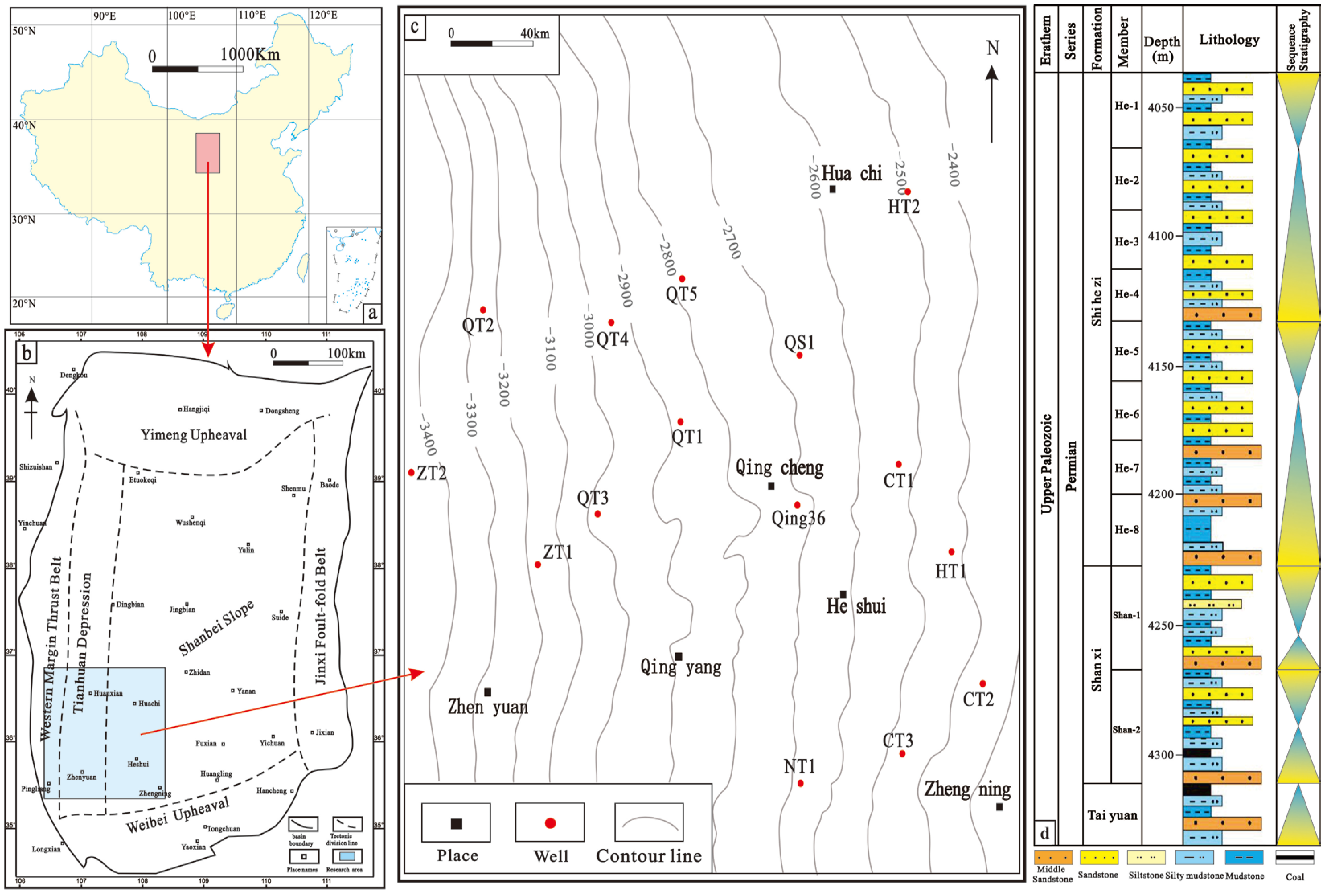
The Longdong region is located in the southwest of the basin, with the Qingyang gas field situated in the central part of the region. Its gas source is the coal-bearing source rocks of the Upper Paleozoic (Figure 1). This set of coal-bearing rocks is buried relatively deep, with the maximum depth revealed by exploration wells exceeding 4500 m. The extensive coal-bearing source rocks, widely distributed sandstone reservoirs, and gently westward-dipping regional structural background have led to the widespread development of large sandstone lithological gas reservoirs in the Upper Paleozoic of the basin [26].

3. Materials and Methods

3.1. Thin Section Analysis

Fifty-five thin sections were impregnated with blue epoxy in a vacuum; they were stained with alizarin red-S and potassium ferricyanide, and carbonate minerals were identified according to Dickson [27]. The stain standards were 0.1 g alizarin red-S, 0.5 g potassium ferricyanide, and 100 mL 0.2% HCl; samples were treated for about 1 min. They were examined using an Olympus optical microscope (BX-53P, Olympus (China) Investment Co., Ltd., Beijing, China) equipped with the Image-Pro Plus 6.0 software. These thin sections underwent image analysis following China’s oil and gas industry standard SY/T 5477—2024 [3]. At least 300 point counts were performed on each thin section to determine detrital grain composition and types. These experiments were conducted at the Carbon Neutrality Joint Research Institute of the National Key Laboratory of Heavy Oil.

3.2. X-Ray Diffractometry

Whole-rock mineral and clay mineral compositions were determined using X-ray diffraction (XRD) analysis with an Ultima IV X-ray diffractometer (Nippon Science&Technology Co., Ltd., Tokyo, Japan) (Cu Kα radiation, 40 kV, 40 mA). Core samples were ground into 200-mesh powder and dried at 60 °C for 24 h to remove moisture, and interpretation procedures used by Moore and Reynolds [28] and Hillier [29] were adopted. For whole-rock mineral analysis, samples were scanned from 5° to 70° 2θ at a step size of 0.02° and a scanning speed of 4°/min, and mineral contents were quantified using the Rietveld refinement method with the TOPAS 4.2 software. For clay mineral analysis, oriented clay slides were prepared via the sedimentation method; air-dried, ethylene glycol-solvated, and heated (550 °C for 2 h) slides were scanned from 2° to 30° 2θ to identify clay mineral types (illite–smectite (I/S) mixed layers, illite, kaolinite, and chlorite), and relative contents were calculated using the peak area normalization method. These experiments were conducted at the National Key Laboratory of Oil and Gas Reservoir Geology and Development Engineering (Chengdu University of Technology).

3.3. Scanning Electron Microscopy

Scanning electron microscopy (SEM) was performed on core samples using the Quanta 250 FEG (FEI Corporation, Hillsboro, OR, USA) in the State Key Laboratory of Oil and Gas Reservoir Geology and Exploitation in Chengdu University of Technology to identify the morphology of minerals and pores. Samples were cut parallel to bedding into 5 mm × 5 mm × 2 mm chips. The 5 mm × 5 mm surfaces were polished using an argon-ion milling system to obtain a flat and smooth observation surface. Field-emission SEM observations were performed at a working distance of 4 mm and an accelerating voltage of 5 kV to image pore structures and mineral components. These experiments were conducted at the Carbon Neutrality Joint Research Institute of the National Key Laboratory of Heavy Oil.

3.4. The Maximum Pyrolysis Peak Temperature

After repeated ultrasonic cleaning in deionized water and subsequent drying, the samples were artificially ground in an agate mortar to less than 80 mesh. The maximum pyrolysis peak temperature (Tmax) was measured using the Rock-Eval 6 (VINCI Technologies, Nanterre, France) rock pyrolysis analyzer. Pyrolysis of 0.1–1 g samples was conducted at a temperature of 540 °C for a duration of 2 h. The peak temperature of S2 obtained from rock-eval pyrolysis analysis, known as Tmax, was determined. These experiments were conducted at the National Key Laboratory of Oil and Gas Reservoir Geology and Development Engineering (Chengdu University of Technology).

3.5. Fluid Inclusions

The testing and analyses of the samples were all completed at the Analysis and Testing Center of the State Key Laboratory of Heavy Oil at China University of Petroleum (Beijing). The instruments used were a Linkam THMS600 (Linkam Scientific Instruments Ltd., Salfords, UK) temperature and humidity stage and a supporting microscope (Nikon90i, Nikon, Tokyo, Japan). The temperature measurement range was −196~600 °C, with a measurement accuracy of ±0.1 °C. The laboratory temperature was 27 °C, and the humidity was 40%. The fluid inclusion samples were first made into thin sections; then, petrographic observations were conducted under a microscope, including the distribution, size, phase state, color, etc., of the inclusions; finally, the temperature stage was used to determine the homogenization temperature and freezing-point temperature of the associated saltwater inclusions with the hydrocarbon inclusions. For gas–liquid two-phase inclusions, the temperature was measured using the freezing method to calculate the salinity of the fluid inclusions [30,31].

4. Results

4.1. Petrography

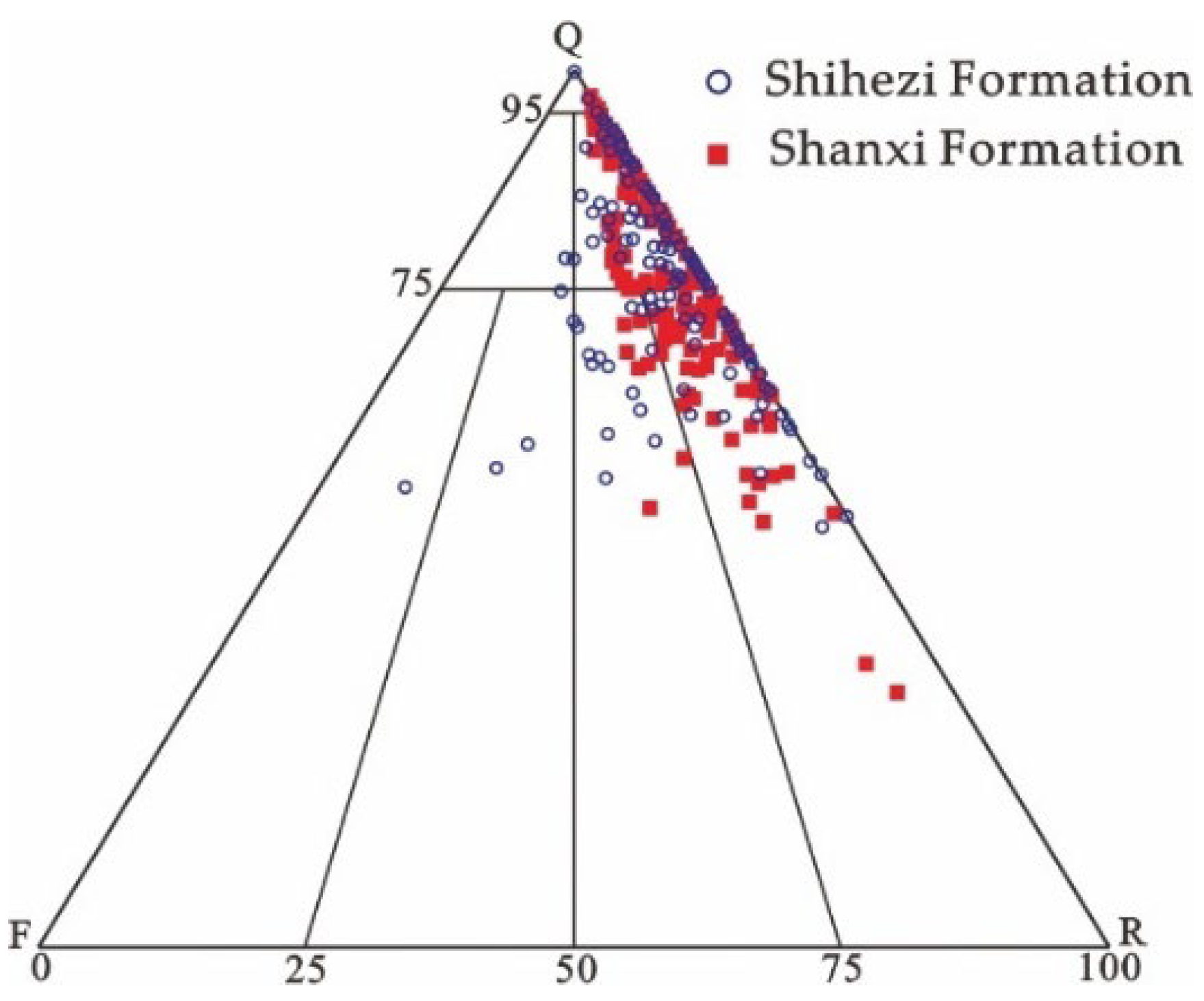
The lithology of the Upper Paleozoic in Longdong area is mainly composed of fine sandstone, followed by medium sandstone and coarse sandstone, with a small amount of clay. The roundness of debris particles is mainly sub-angular, followed by sub-angular and sub-circular. Sandstone has good sorting properties, accounting for over 90% of the total sandstone, with only a few sandstones having relatively poor sorting. Based on the identification of microscopic thin sections, it is found that the Upper Paleozoic sandstones in the Longdong area of the Ordos Basin are primarily composed of quartz (77.82–81.45%) and lithic fragments (20.28–17.02%), with negligible feldspar (1.53–1.90%). According to Folk’s classification scheme [32], the rock types are mainly quartzarenite, lithic quartzarenite, and litharenite (Figure 2). The rock debris is primarily composed of metamorphic rock fragments such as quartzite and phyllite, accounting for more than 65% of the total rock debris; igneous rock debris, such as eruptive rocks and cryptocrystalline rocks, comes next, accounting for about 20% of the total rock debris; sedimentary rock debris is the least. The types of cements are diverse, and their contents vary greatly, mainly including clay mineral cements (kaolinite, illite), carbonate cements (ferrocalcite and ferrodolomite), and siliceous cements. In some sandstones, residual volcanic tuffaceous materials fill intergranular pores.
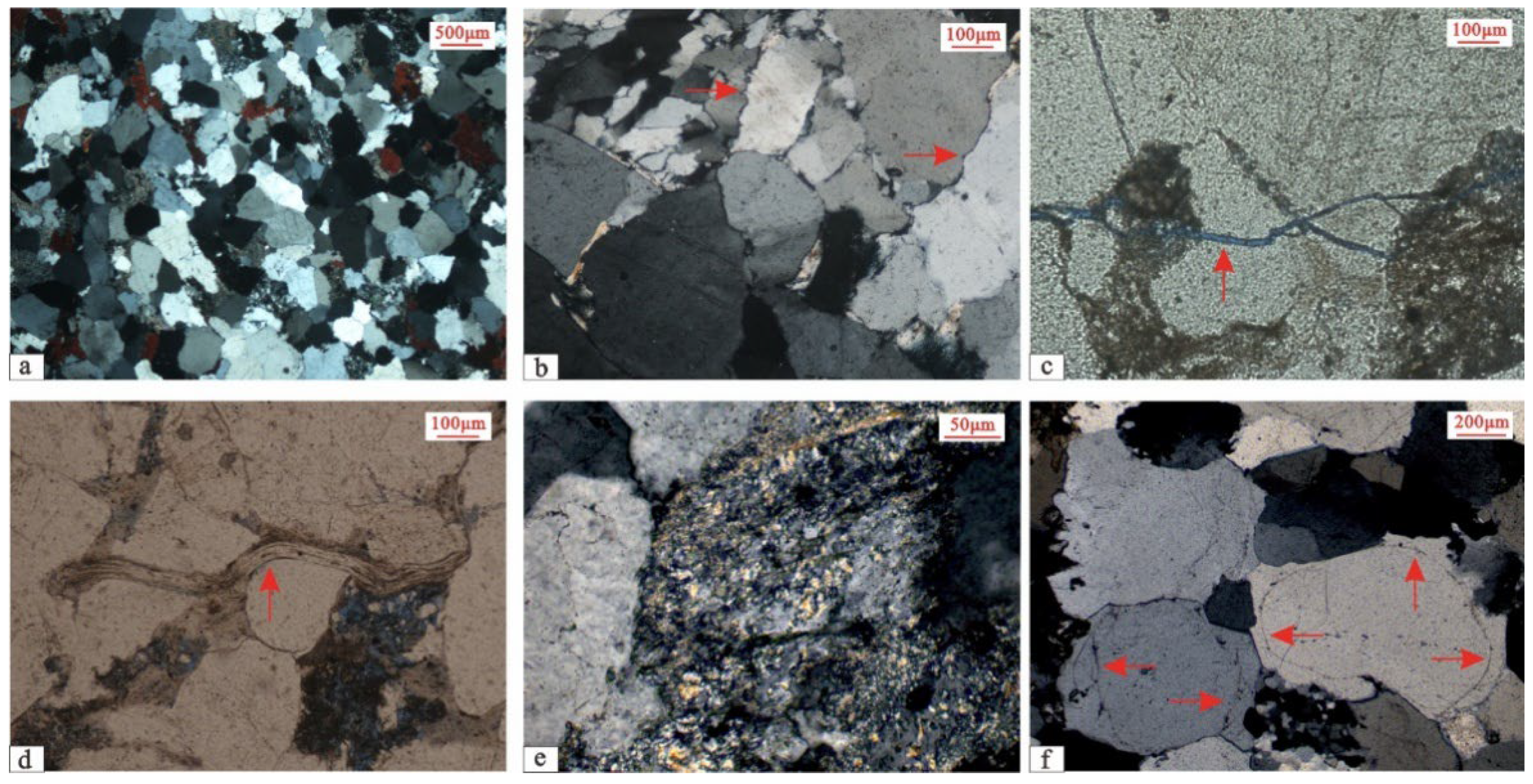
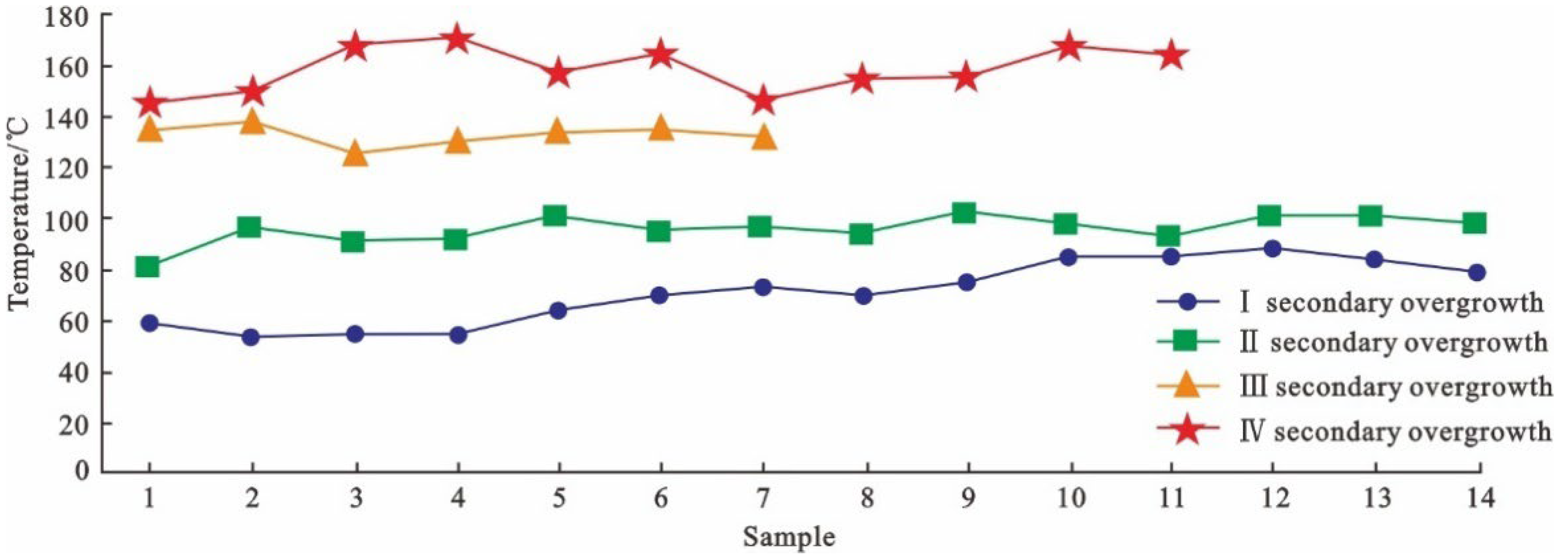
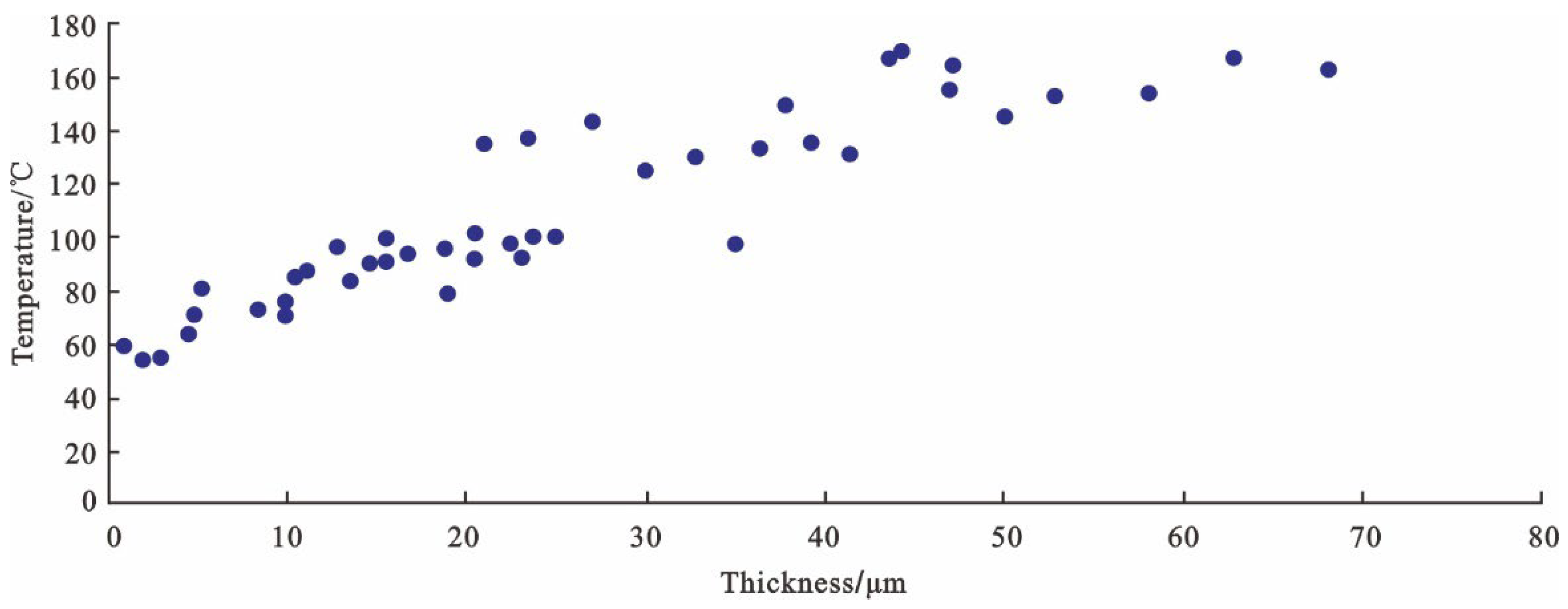
Through the identification of thin sections of Upper Paleozoic rocks in the Longdong area, it was discovered that the contact modes of sandstone framework in the Upper Paleozoic are primarily long-edge contact and stylolite contact (Figure 3a,b), with biotite bending and directional distribution of particles (Figure 3d), and quartz enlargement edges developing up to grade IV (Figure 3f). Through statistics on the enlargement grades and thicknesses of the secondary enlargement rims of quartz determined by inclusion temperature measurement, it was found that the temperature for the formation of grade IV enlargement rims exceeds 140 °C (Figure 4), and as the diagenetic temperature continues to rise, the thickness of the secondary enlargement rims of quartz tends to gradually increase (Figure 5). Ferrous calcite cementation and microfractures are commonly observed in thin sections (Figure 3c). The clay mineral assemblage consists of I/S, illite, kaolinite, and chlorite, and sandstones exhibit local sericitization with low-grade metamorphic characteristics (Figure 3e).

4.2. Organic Matter Characteristics

The reservoir bodies of ultra-deep and tight sandstone types are typical characteristics of the Qingyang gas field, and they are also the difficulties and hotspots in reservoir geology research [12]. The maximum burial depth of the reservoir in the Shan-1 Member of the Upper Paleozoic in the southern part of the basin is currently 4500 m. If the erosion of about 800 m during the burial process in geological history is added, the reservoir experienced a burial depth of 5300 m [12]. As early as the initial stage of natural gas exploration, a small number of exploratory wells confirmed the presence of a dry gas distribution area with Ro > 2.0% average along the Yan’an–Qingyang line in the southern part of the basin [9]. With the continuous improvement of exploration degree and geological research depth, the Upper Paleozoic Yishan Slope in the southern part of the basin, south of the Dingbian–Jingbian line, was further precisely delineated as an abnormal distribution area with Ro > 2.0%. The core area of the anomaly has Ro > 3.0%. The Qingyang gas field is located immediately west of the core area of the anomaly, where the Upper Paleozoic source rocks have high maturity, with Ro values reaching up to 3.2% and averaging 2.3%. The organic matter is in the overmature evolution stage [12].
Through testing diagenetic parameters such as vitrinite reflectance (Ro), clay mineral assemblage, and morphology of Upper Paleozoic source rocks in the Qingyang gas field, the results indicate that the Ro value of these source rocks ranges from 2.1% to 3.0%, with an average of 2.5%. The highest diagenetic temperature reached 170 °C, and sericitization with shallow metamorphic characteristics occurred locally. By analyzing the maximum pyrolysis temperature (Tmax) of Upper Paleozoic source rocks from 22 samples collected from nine exploration wells in the study area, it was found that the burial depth of the samples ranged from 3714.5 m to 4853.06 m. Among these samples, only one had a Tmax of 485 °C, while the rest had Tmax values greater than 490 °C, with the highest reaching 607 °C and an average of 555.1 °C (Table 1). The average methane content in the natural gas was 96.90%, indicating a dry gas reservoir.

4.3. Clay Mineral Analysis

The statistical results (Table 2) of the X-ray diffraction test data for clay minerals in the He8 Member to Shan-2 Member of Well ZT2 indicate that the types of clay minerals in the Upper Paleozoic of the study area are mainly illite, kaolinite, chlorite, and I/S. The I/S are all ordered mixed-layer zones, with smectite content ranging from 15% to 35%. In the He-8 Member, the main component is I/S, followed by kaolinite and illite, with a small amount of chlorite, and smectite layer content ranging from 25% to 30%. In the Shan-1 Member, the main component is I/S, followed by illite, with a small amount of kaolinite and chlorite, and smectite layer content ranging from 20% to 25%. In the Shan-2 Member, the main component is I/S, followed by kaolinite and illite, with a small amount of chlorite, and the smectite layer content is the lowest, ranging from 15% to 25%. Furthermore, the smectite layer content gradually increases from the Shan-2 Member to the He-8 Member. The clay mineral assemblage in the He-8 Member and Shan-2 Member is I/S + kaolinite + illite + chlorite (a small amount), while the clay mineral assemblage in the Shan-1 Member is I/S + illite + kaolinite (a small amount) + chlorite (a small amount).

4.4. Homogenization Temperature of Fluid Inclusions

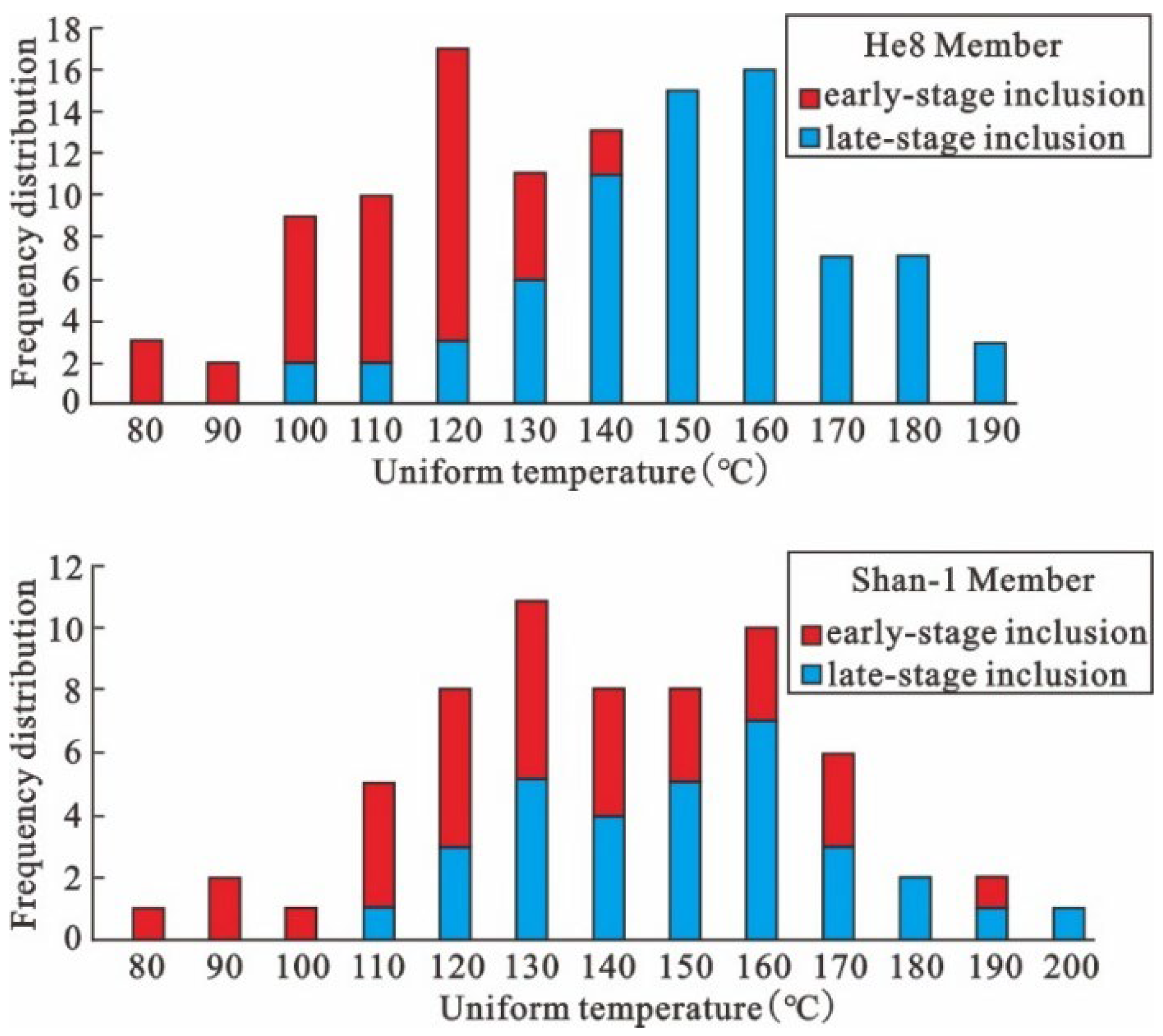
Using the Linkam THMS600 cryostat, measurements were conducted on liquid hydrocarbon–brine inclusions in calcite and siliceous cements in sandstones of the He-8 Member and Shan-1 Member of the Upper Paleozoic in the Longdong area. The homogenization temperature frequencies of the inclusions were statistically analyzed (Figure 6) to determine the temperature during the diagenetic period [33]. Testing was performed on 113 inclusions in the He-8 Member, revealing that there were 31 early inclusions with a peak homogenization temperature frequency at 120 °C, and 72 late inclusions with a peak homogenization temperature frequency at 160 °C. Testing on 64 inclusions in the Shan-1 Member revealed that early and late inclusions were equally distributed, with early inclusions exhibiting a peak homogenization temperature frequency at 130 °C and late inclusions at 160 °C, both of which are lower than the temperature during the late diagenetic period, which is 170 °C.
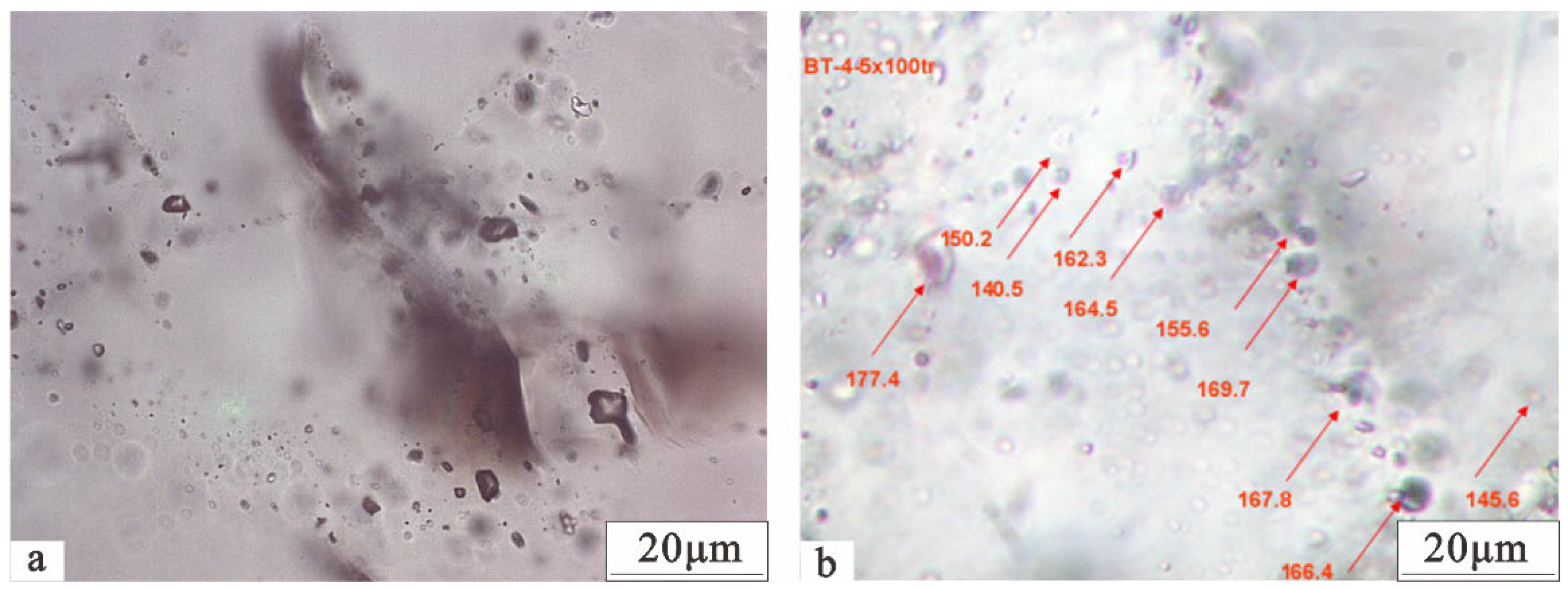
The homogenization temperature of liquid hydrocarbon-bearing saline inclusions within quartz grains in the Shan-1 Member sandstone of Well ZT1 was tested (Figure 7a). It was found that the homogenization temperature of the inclusions ranged from 104 °C to 150 °C, with an average temperature of 137.0 °C. Non-fluorescent saline inclusions and hydrocarbon-bearing saline inclusions were observed in the cracks of quartz grains in the He-8 Member sandstone of Well HT1 (Figure 7b). Temperature measurements of these saline inclusions revealed temperatures ranging from 140.5 °C to 177.4 °C; the homogenization temperature of the hydrocarbon-bearing saline inclusions was 145.6 °C. Temperature measurements of the inclusions from the two wells indicated that the temperature during the diagenetic stage was less than 170 °C.
Through salinity testing of fluid inclusions in the cement of the Upper Paleozoic in the Longdong area of the Ordos Basin (Table 3), it was found that the salinity within the inclusions ranges from 3.87 wt% to 8.95 wt%, with an average of 5.76 wt%, which falls within the medium salinity category.

5. Discussion

During the late diagenetic stage, the paleotemperature ranges from 170 to 200 °C. The clay minerals in the rocks are primarily illite and chlorite, accompanied by sericite and biotite. The illite–chlorite zone is characterized by the disappearance of I/S. The authigenic minerals mainly consist of carbonate minerals and albite, with kaolinite disappearing [3]. However, some indicators of the late diagenetic stage in the Upper Paleozoic in the study area are relatively abnormal. For example, there is a significant presence of kaolinite in the relative clay mineral content, the I/S is present, and its content is high, and the homogenization temperature of inclusions is lower than the normal diagenetic temperature during the late diagenetic stage.

5.1. The Reason for the Abundant Presence of Kaolinite

The formation of authigenic kaolinite is the result of the interaction between acidic fluids and aluminosilicate minerals such as feldspar. Authigenic kaolinite is widely developed in the Upper Paleozoic reservoirs in the Longdong area of the Ordos Basin. Its single crystals are euhedral or subhedral pseudohexagonal plate-like, and aggregates occur in forms such as book-leaf, accordion, worm-like, and fan-like. Most of them are loosely accumulated in secondary feldspar dissolved pores or intergranular pores. According to the statistical analysis of X-ray diffraction test data from Shan-2 Member to He-8 Member of Well ZT2 (Table 2), the content of I/S is relatively high, ranging from 28% to 70%, with illite content ranging from 11% to 44%, and kaolinite content reaching 6% to 40%, with an average content of up to 21%.
(1) Material source of kaolinite
In clastic rock sequences, kaolinite is generally composed of three elements, Al, Si, and O, primarily provided by feldspar, quartz, and various clay minerals.
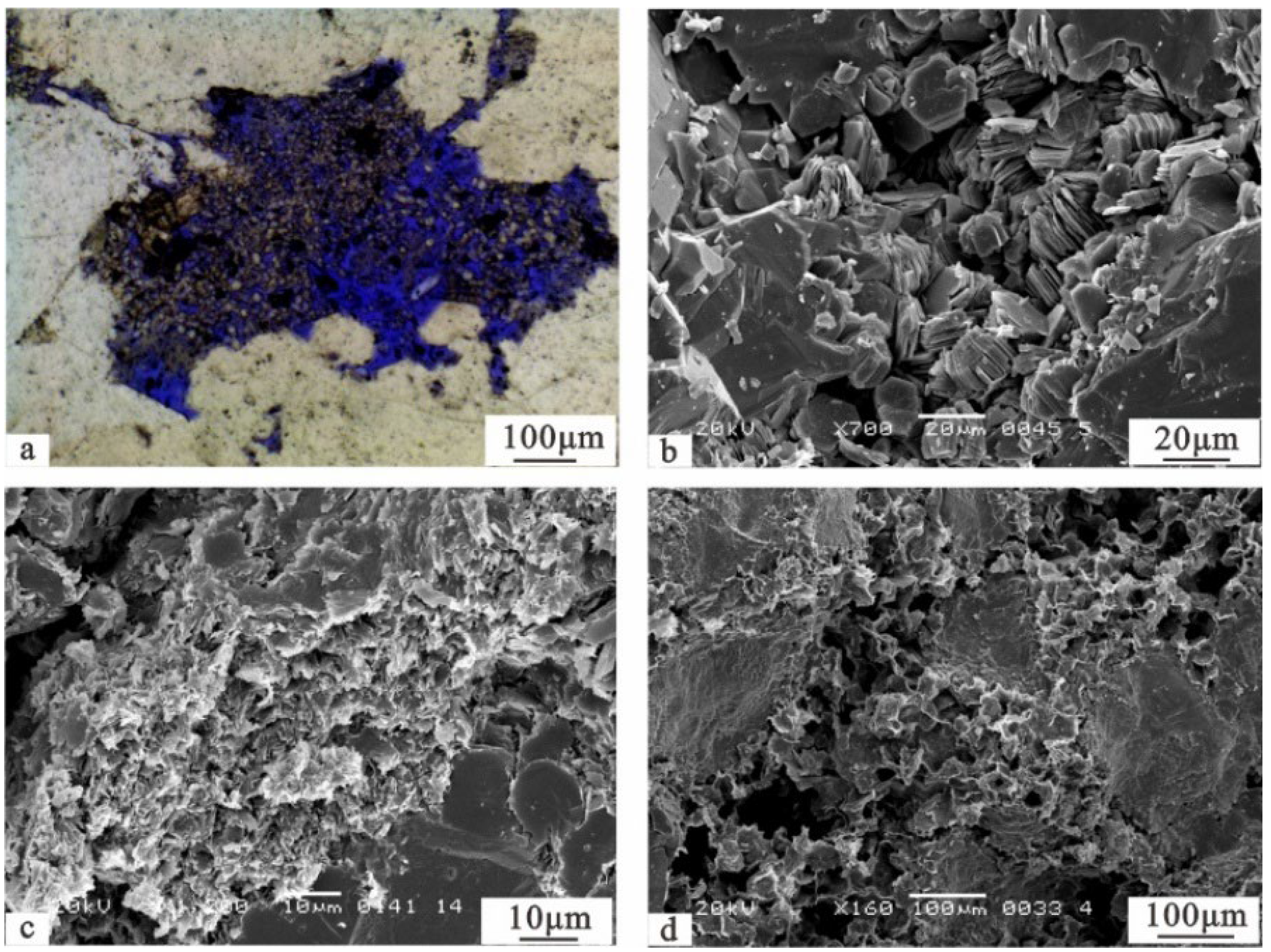
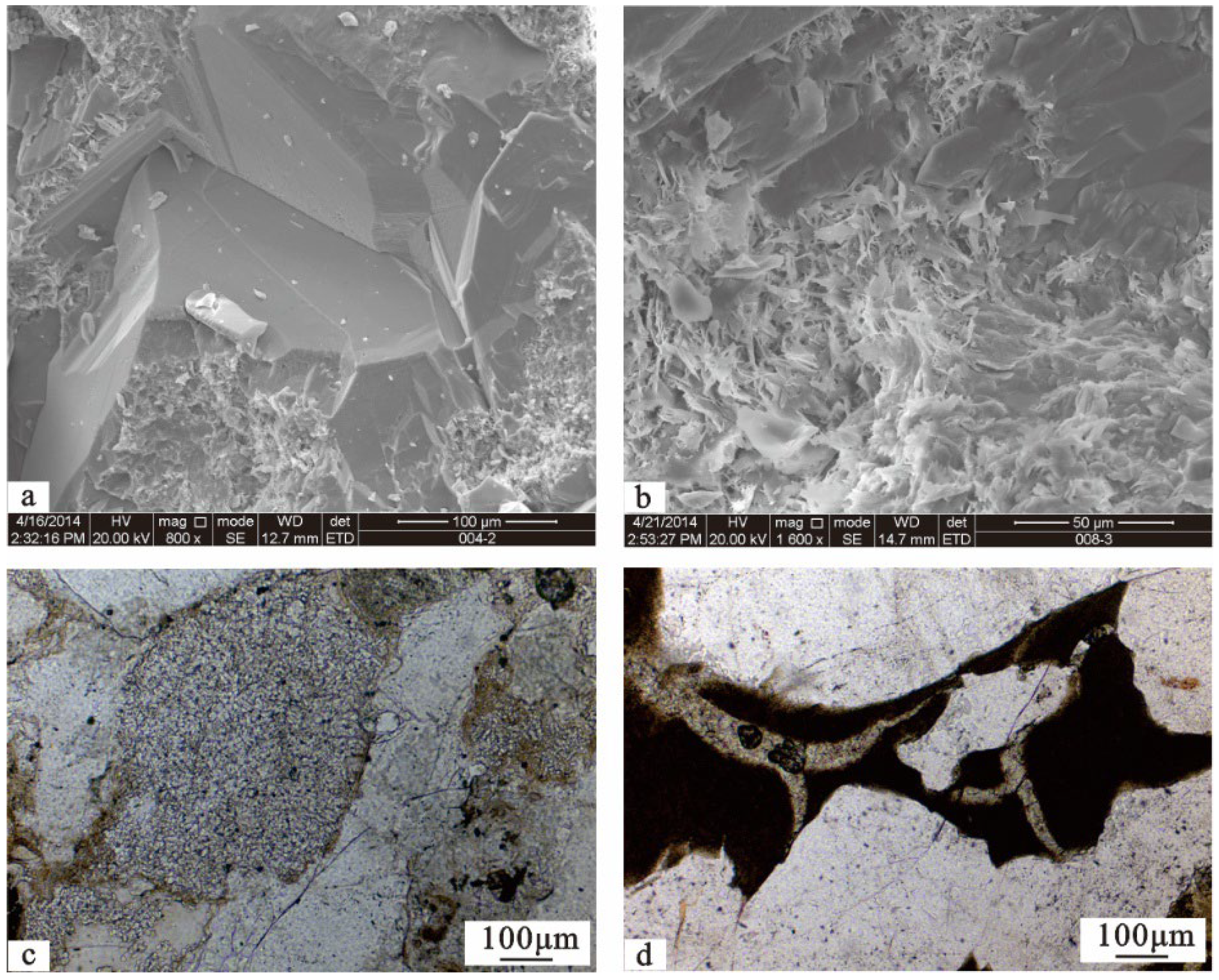
The results of rock thin-section identification and scanning electron microscopy reveal that kaolinite commonly coexists with feldspar dissolution phenomena, with kaolinite filling the dissolved pores of feldspar (Figure 8a). Therefore, the dissolution of aluminosilicates such as feldspar is the primary source of Al3+ in authigenic kaolinite. Generally, Na-rich plagioclase begins to dissolve first, followed by Ca-rich plagioclase, while relatively stable potassium feldspar mostly dissolves last [34].
Sodium feldspar   +   H +   +   H 2 O     kaolinite   +   S i O 2   +   N a +
Anorthite   +   H +   +   H 2 O     Kaolinite   +   S i O 2   +   C a 2 +
Potassium feldspar   +   H +   +   H 2 O     kaolinite   +   S i O 2   +   K +
During the diagenetic process, the dissolution of feldspar minerals provides a large amount of Al3+, which contributes to the formation of authigenic kaolinite and is the reason for the high content of kaolinite.
(2) Source of acidic fluid
Autogenic kaolinite is the product of water–rock reactions between acidic fluids and aluminosilicate minerals, thus making acidic diagenetic fluid crucial for its formation [35,36,37,38]. Currently, there are two proposed sources of acidic fluids: infiltration of CO2-rich meteoric water and organic acids formed by the thermal evolution of organic matter [35,36,37]. Given that the Upper Paleozoic strata in the Ordos Basin are buried deeper than 2000 m, it is generally believed that acidic fluids did not originate from the infiltration of CO2-rich meteoric water. Moreover, the Upper Paleozoic strata have reached the late stage of diagenetic evolution, with source rocks undergoing a high degree of thermal evolution. Therefore, it is postulated that the diagenetic acidic fluids in the Upper Paleozoic strata of the Longdong area in the Ordos Basin primarily originate from organic acids formed during the thermal evolution of organic matter.
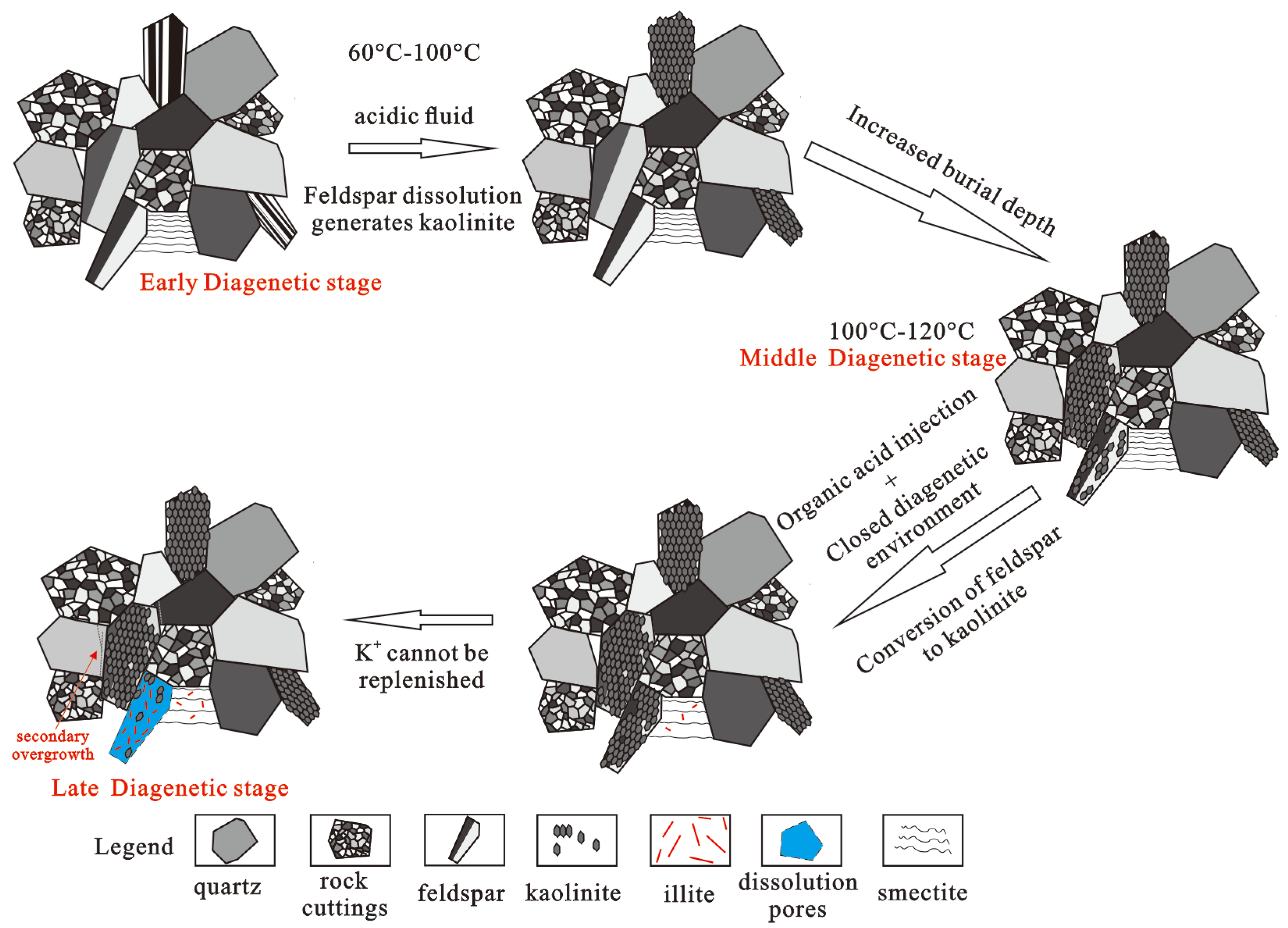
Previous studies have shown that the optimal temperature for the transformation of feldspar into kaolinite is between 120 °C and 140 °C [35]. Beyond this temperature, under conditions of sufficient K+, kaolinite begins to transform into illite. From the temperature measurements of inclusions, it can be seen that the most suitable period for the transformation of feldspar into kaolinite is during the early diagenetic stage. Plagioclase and potassium feldspar continuously transform into kaolinite under the action of organic acids. During the early diagenetic stage, smectite consumes K+ and transforms into illite, and the transformation of smectite into illite is more likely to occur [35]. Petrographic data show that the content of feldspar in the Upper Paleozoic sandstone in the Longdong area of the Ordos Basin is extremely low (<2%), and the content of potassium feldspar is very low. As diagenesis continues and the diagenetic temperature rises, there is not enough K+ available for kaolinite to undergo illitization, which also leads to a higher content of kaolinite in the strata.
Based on the above findings, in the late diagenetic stage of the coal-bearing strata in the Longdong area of the Ordos Basin, during the burial process, acidic gases mainly composed of CO2 are released as the organic matter gradually matures, making the pore fluid acidic. Meanwhile, during the hydrocarbon generation process, a large amount of kerogen is decomposed into organic acids in source rocks. As acidic diagenetic fluids enter the reservoir, they dissolve easily soluble materials from the original sediment. Oil and gas carry acidic fluids into sandstones, causing the dissolution of feldspar and other aluminosilicates. A large amount of corroded residual feldspar can be observed in the sandstone thin sections of the study area. These corroded feldspars provide a significant amount of Al3+ during the diagenetic process. The abundant Al3+ provides favorable material conditions for the formation of authigenic kaolinite, resulting in the formation of pore-filling authigenic kaolinite (Figure 8b and Figure 9). The low content of potassium feldspar also hinders the illitization of kaolinite.

5.2. The Reason for the High I/S Content

Braide et al. summarized the model of smectite transformation into illite [38]. The transformation process involves the reaction between smectite, potassium, and aluminum, resulting in the conversion of smectite into illite and the removal of siliceous minerals. The presence of K+ and Al3+ is essential for the transformation of smectite into illite (Figure 9a,b).
Smectite   +   A l 3 +   +   K +     Illite   +   S i 4 +
The I/S is a transitional product resulting from the transformation of smectite into illite. The majority of the potassium (K+) required for this transformation originates from the dissolution of potassium-rich minerals within the rock, with potassium feldspar being the primary source of K+.
Previous studies on strontium isotopes and carbon–oxygen isotopes in the Upper Paleozoic sandstone reservoirs in the Longdong area of the Ordos Basin have shown that diagenetic fluids are influenced by both deep-sourced materials and organic matter [39]. The deep-sourced materials primarily originate from volcanic contemporaneous materials, while the organic matter primarily exerts its influence through organic acids produced during thermal evolution. The Upper Paleozoic in the Ordos Basin is gentle with small dip angles, and the water–rock interaction is not active [12]. As a result, the diagenetic fluids lose their external driving force and cannot migrate, leading to a relatively sealed environment [12]. There are many dissolved minerals in the secondary pores, which crystallize and precipitate as authigenic minerals in this sealed environment. These re-crystallized and precipitated minerals occupy the secondary pores within the reservoir, with little change in the overall porosity ratio of the reservoir. This situation, where the overall porosity remains unchanged, is known as the fluid retention effect [40]. Due to the fluid retention effect of diagenetic fluids, the water–rock interaction in the reservoir is not active, preventing timely ion exchange within the diagenetic fluids and hindering the transformation of montmorillonite into illite. In the Longdong area of the Ordos Basin, the area of feldspar dissolution, there is precipitation from authigenic clay minerals and authigenic carbonate minerals occupying the pores (Figure 8a–c). We interpreted that this phenomenon is caused by the inability of diagenetic fluids to migrate, leading to the retention of ions in the vicinity of the dissolution area.
Petrographic data reveal that the feldspar content in the Upper Paleozoic sandstone in the Longdong area of the Ordos Basin is extremely low (<2%), and the potassium feldspar content is even lower. The material environment with low K+ severely restricts the normal transformation of montmorillonite into illite. Statistical results of X-ray diffraction test data for clay minerals in the He-8 Member to Shan-2 Member of Well ZT2 indicate the presence of a large amount of authigenic kaolinite in the clay minerals. However, due to the diagenetic temperature being below 120 °C, the authigenic kaolinite consumes a large amount of Al3+, making it difficult for montmorillonite to transform into illite. When the diagenetic temperature reaches 120 °C to 140 °C, montmorillonite transforms into illite. However, due to limited K+ and fluid retention effects, only a portion of the montmorillonite undergoes illitization. During diagenetic evolution, the limited content of potassium-rich minerals such as potassium feldspar in the strata is insufficient to provide for the complete transformation of montmorillonite and kaolinite into illite [41]. As a result, montmorillonite and kaolinite are retained, leading to the widespread presence of I/S (Figure 8d and Figure 10).
The high content of I/S in clay minerals during the late diagenetic stage may be related to the deep diagenetic transformation of tuffaceous rock fragments [42]. There is a large amount of contemporaneous volcanic material in the Upper Paleozoic coal-bearing strata in the Longdong area, and the diagenetic paleotemperature range of the Upper Paleozoic strata is lower than that of the normal late diagenetic stage. The deeper smectite is still in the I/S stage, and the argillation of a large amount of tuffaceous rock fragments in clay minerals is also an important factor leading to the increase in the absolute content of smectite (Figure 9c,d).

5.3. The Homogenization Temperature of the Inclusion Is Relatively Low

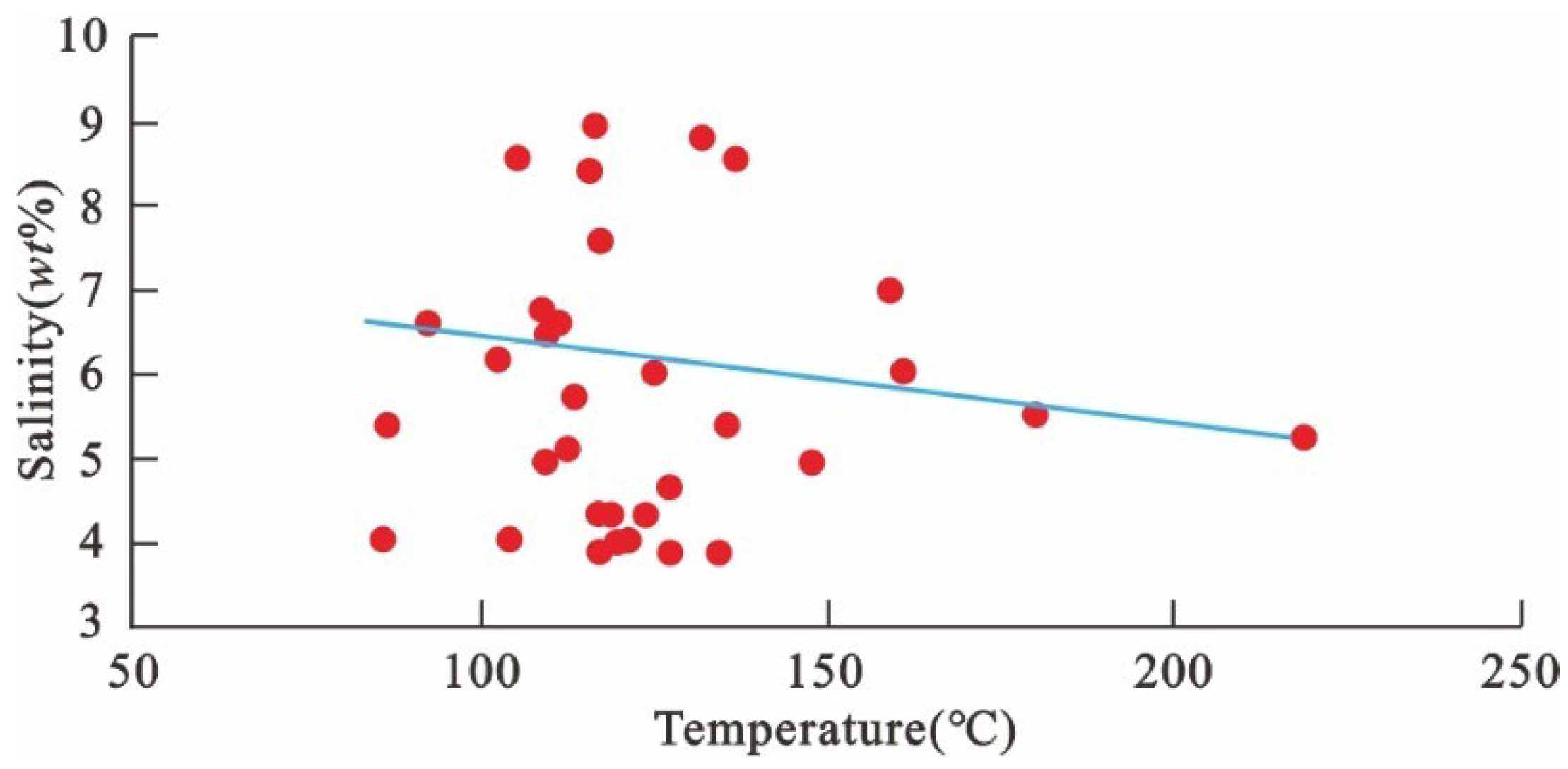
The homogenization temperature characteristics of fluid inclusions in the tight sandstone reservoirs of the Upper Paleozoic in the Ordos Basin exhibit a lower range of diagenetic paleotemperatures during the later diagenetic stages (Figure 3). Previous studies have found that there is a negative correlation between salinity and homogenization temperature in saline inclusions, with higher salinity indicating lower temperature [43]. Liu et al. [10] found that the salinity of fluid inclusions in the He 8 and Shan 1 Members ranges from 0.18 wt% to 21.75 wt%, which is considered moderate; the salinity range of fluid inclusions in the Shanxi Formation is 5.71 wt% to 8.28 wt%, indicating that they were formed in slightly saline water [44].
As can be seen from Figure 11, there is an overall negative correlation between salinity and temperature in the study area. This also indicates that the reason why the homogenization temperature of most inclusions is lower than that during the late diagenetic stage is due to the moderate salinity of the inclusions.
Moreover, through the study of I/S and kaolinite, it is known that the water–rock interaction in the diagenetic system of the Upper Paleozoic is not active, which results in the temperature during the late diagenetic stage not being extensively recorded. Therefore, most of the measured temperatures remain in the middle diagenetic stage, with only a few temperatures being in the late diagenetic stage.

5.4. Significance of Diagenetic Anomalies and Comparison with Geological Analogues

The significance of the diagenetic anomalies (e.g., the unexpected preservation of anomalous porosity at depths exceeding 4000 m) in the study area can be better understood when compared with similar cases of organic-rich sandstones globally. In typical clastic reservoirs, increasing burial depth inevitably leads to severe compaction and extensive quartz cementation, deteriorating reservoir quality. However, in our study area, the proximity of sandbodies to mature, organic-rich source rocks fundamentally altered the diagenetic pathway.
This phenomenon shares remarkable similarities with the diagenetic evolution observed in the Middle Miocene syn-rift sequence of the central Gulf of Suez, Egypt [45]. As demonstrated by Lee et al. (2025), in confined depositional environments where clastic sequences are closely interbedded with organic-rich mudstones, the thermal maturation of kerogen releases significant amounts of organic acids and CO2 into the adjacent sandstones [45]. In our study area, a comparable mechanism is evident. The expulsion of acidic fluids dissolved early carbonate cements and unstable feldspars, creating secondary macroporosity. Furthermore, the coating of detrital grains by early-migrated hydrocarbons and authigenic clay rims effectively inhibited late-stage syntaxial quartz overgrowths, a critical factor for preserving porosity at deep depths.
Therefore, the diagenetic anomalies observed here are not localized, isolated events of limited significance, but rather manifestations of a broader geological theory: the organic–fluid–rock interaction model in deep burial settings. By drawing parallels with the Gulf of Suez analogue [45], it becomes evident that the spatial configuration of depositional facies (source-reservoir contact) strictly dictates the distribution of diagenetic anomalies. Recognizing this pattern is of immense predictive value for hydrocarbon exploration in similar deep-burial, organic-rich basins worldwide, highlighting the global significance of the diagenetic model proposed in this study.

6. Conclusions

Based on the petrological, mineralogical, and fluid inclusion analysis of the Upper Paleozoic coal-bearing strata in the Longdong area, Ordos Basin, the following key findings and implications are concluded:
Diagenetic Anomaly Mechanisms: The Upper Paleozoic reservoirs exhibit an apparent mismatch between their late diagenetic stage status and the anomalous presence of high-content kaolinite and illite/smectite (I/S) mixed-layer minerals. This study demonstrates that this is not a product of burial depth alone but is controlled by the combination of acidic fluid leaching (causing feldspar dissolution) and limited ion supply (K+ deficiency) due to low K-feldspar content. Furthermore, the tuffaceous lithology acts as a persistent source for smectite precursors, thereby retarding the completion of the smectite-to-illite transition.
Thermal History and Fluid Evolution: The homogenization temperatures (Th) of fluid inclusions, which appear lower than the expected late-diagenetic threshold, are primarily attributed to the inhibited water–rock interaction and fluid retention effects during the late-stage burial. This suggests that the thermal regime in the Longdong area was likely buffered by localized fluid stagnation, preventing the equilibration of fluid inclusions with the regional geothermal gradient.
Geological Significance: These findings refine the understanding of diagenetic pathways in coal-bearing systems. We propose that in tectonically stable basins like the Ordos, reservoir quality is not solely dictated by burial-driven compaction but is heavily modified by “diagenetic buffering” caused by primary lithological composition (e.g., volcanic input) and fluid hydrodynamics. This model provides a new perspective for predicting reservoir quality in similar gas-bearing coal measures, highlighting the critical role of primary tuffaceous components in controlling long-term diagenetic evolution.

Author Contributions

Conceptualization, W.Y., L.G., J.W., F.W. and J.T.; methodology, F.W. and J.T.; validation, formal analysis, investigation, resources, data curation, and writing—original draft preparation, W.Y. and L.G.; writing—review and editing, visualization, supervision, and project administration, J.C. All authors have read and agreed to the published version of the manuscript.

Funding

Funding The research was co-funded by the Shandong Provincial Natural (Grant No. ZR2025QC385); the Open Fund (DGERA 20241002) of the Key Laboratory of Deep-Time Geography and Environment Reconstruction and Applications of the Ministry of Natural Resources, Chengdu University of Technology, Supported by the Scientific Research Startup Fund of Shandong Institute of Petroleum and Chemical Technology (Grant No. 2024kyqd004); and the Major Special Project for Scientific and Technological Innovation in Dongying City (Grant No. 2024ZDJH76).

Data Availability Statement

All data and materials during this study are included in this manuscript.

Acknowledgments

Authors Wei Yu, Li Gong, Jiao Wang and Jie Chen are all employed by the College of Petroleum Engineering, Shandong Institute of Petroleum and Chemical Technology, and the Shandong Key Laboratory of Shale Oil Exploration and Development in Continental Faulted Basin. Feng Wang and Jie Chen are employed by the Chengdu University of Technology. They declare no conflicts of interest.

Conflicts of Interest

The authors declare no conflicts of interest.

Abbreviations

The following abbreviations are used in this manuscript:
I/SIllite–smectite mixed layers
P1sShanxi Formation
C3tTaiyuan Formation
P2hShihezi Formation

References

  1. Zhang, R.; Wang, J.; Ma, Y.; Chen, G.; Zeng, Q.; Zhou, C. Sedimentary microfacies and palaeogeomorphology as well as their controls on gas accumulation within the deep-buried Cretaceous in Kuqa Depression, Tarim Basin, China. J. Nat. Gas. Geosci. 2016, 1, 45–59. [Google Scholar] [CrossRef] [Scilit]
  2. Jin, Z.; Zhang, J.; Tang, X. Unconventional natural gas accumulation system. Nat. Gas. Ind. B 2022, 9, 9–19. [Google Scholar] [CrossRef] [Scilit]
  3. State Economic and Trade Commission. SY/T 5477—2024; The Division of Diagenetic Stages, in C1astic Rocks. Petroleum Industry Press: Beijing, China, 2024.
  4. Song, X.; Qin, Y.; Ma, H.; Wu, M.; Ma, L. The effect of sedimentary microfacies on wettability of tight sandstone in coal-bearing strata: A case from Ordos Basin, China. Pet. Sci. Technol. 2018, 36, 1958–1967. [Google Scholar] [CrossRef] [Scilit]
  5. Dai, J.-X.; Ni, Y.-Y.; Zhou, Q.-H.; Yang, C.; Hu, A.-P. Significances of studies on natural gas geology and geochemistry for natural gas industry in China. Pet. Explor. Dev. 2008, 35, 513–525. [Google Scholar] [CrossRef] [Scilit]
  6. Zou, C.N.; Zhu, R.K.; Wu, S.T.; Yang, Z.; Tao, S.Z.; Yuan, X.J.; Hou, L.H.; Yang, H.; Xu, C.C.; Li, D.H.; et al. Types, characteristics, genesis and prospects of conventional and unconventional hydrocarbon accumulations: Taking tight oil and tight gas in China as an in-stance. Acta Pet. Sin. 2012, 33, 173–187, (In Chinese with English abstract). [Google Scholar]
  7. Zou, C.; Fu, S.; Hu, J.; Hou, L.; Chen, A.; Xia, Y.; Liu, H.; Yu, Y.; Chen, H. Geological characteristics and controlling factors of deep tight gas sandstone reservoirs in the Upper Paleozoic of the western Ordos Basin, northwest China. Front. Earth Sci. 2025, 13, 1523033. [Google Scholar] [CrossRef] [Scilit]
  8. Liu, X.H.; Zhou, L.F.; Hou, Y.D. Study of gas charging in the Upper Paleozoic of Ordos Basin using fluid inclusion. Acta Pet. Sin. 2007, 28, 37–42, (In Chinese with English abstract). [Google Scholar]
  9. Yan, J.P.; Liu, C.Y.; Zhang, W.G.; Li, B. Diagenetic characteristics of the lower porosity and permeability sandstones of the Upper Paleozoic in the south of Ordos Basin. Acta Geol. Sin. 2010, 84, 272–279, (In Chinese with English abstract). [Google Scholar]
  10. Liu, X.H.; Feng, M.Y.; Luo, J.L.; Lin, T. Characteristics of fluid inclusions in reservoirs in the eighth member of the Shihezi Formation and the first member of the Shanxi Formation in Uxin Ju area, the Ordos Basin and their significance. Oil Gas Geol. 2010, 31, 360–367, (In Chinese with English abstract). [Google Scholar]
  11. Cui, G.; Xu, S.; Wei, Q.; Yang, Y.; Hu, J.; He, T. The influence of diagenesis on the quality of tight sandstone reservoirs in Longdong, Ordos Basin. J. Pet. Explor. Prod. Technol. 2024, 14, 3331–3348. [Google Scholar] [CrossRef] [Scilit]
  12. Fu, J.; Wei, X.; Luo, S.; Zuo, Z.; Zhou, H.; Liu, B.; Kong, Q.; Zhan, S.; Nan, J. Discovery and geological knowledge of the large deep coal-formed Qingyang Gas Field, Ordos Basin, NW China. Pet. Explor. Dev. 2019, 46, 1111–1126. [Google Scholar] [CrossRef] [Scilit]
  13. Yu, W.; Luo, A.X.; Wang, F.; Deng, X.; Liu, Z.; Liu, X. Determination basis of lakeshore line and sedimentary characteristics of Chang 9 oil-bearing layer of Yanchang Formation in Longdong Area. Fault-Block Oil Gas Field 2017, 24, 766–770, (In Chinese with English abstract). [Google Scholar]
  14. Guo, S.Y.; Zhang, G.Q.; Chen, S.W. Stratigraphic division of the Upper Carboniferous-Lower Permian in Daniudi gasfield, the Ordos Basin. Oil Gas Geol. 2009, 30, 697–705, (In Chinese with English abstract). [Google Scholar]
  15. Niu, X.B.; Yu, J.; Xu, W.L.; Wang, K.L.; Wen, X.Y.; Sun, Y.S.; Zhang, J.Y. Reservoir-forming geological conditions and exploration directions of Upper Paleozoic coal-rock gas in the Ordos Basin. Natural Gas Industry 2024, 44, 33–50, (In Chinese with English abstract). [Google Scholar] [CrossRef]
  16. Meng, X.L.; Lan, Y.F.; Zhang, H.B.; Wu, Y.; Liu, X.L.; Xia, S.C. Reservoir Forming Characteristics and Main Factors of Productivity of Deep Tight Sandstone in the South of Ordos Basin. In International Field Exploration and Development Conference; Springer: Singapore, 2021. [Google Scholar] [CrossRef] [Scilit]
  17. Chen, A.Q.; Chen, H.D.; Ling, L.B.; Xu, S.I.; Zhu, Z.J.; Li, J. Difference of the upper paleozoic lithostratigraphic gas reservoirs in ordos basin, China. J. Chengdu Univ. Technol. (Sci. Technol. Ed.) 2010, 37, 120–126. [Google Scholar]
  18. Xiao, X.; Zhao, B.; Thu, Z.; Song, Z.; Wilkins, R. Upper Paleozoic petroleum system, Ordos Basin, China. Mar. Pet. Geol. 2005, 22, 945–963. [Google Scholar] [CrossRef] [Scilit]
  19. Ouyang, S.; Hou, J.P. On Characteristics of the Cathaysian Palynoflora. Acta Palaeontol. Sin. 1999, 38, 261–283, (In Chinese with English abstract). [Google Scholar]
  20. Su, N.N.; Song, F.; Qiu, L.W.; Zhang, W. Diagenetic evolution and densification mechanism of the Upper Paleozoic tight sandstones in the Ordos Basin, Northern China. J Asian Earth Sci. 2020, 205, 104613. [Google Scholar] [CrossRef] [Scilit]
  21. Jia, A.; Meng, D.; Wang, G.; Ji, G.; Guo, Z.; Feng, N.; Liu, R.; Huang, S.; Zheng, S.; Xu, T. Development technologies and models of different types of gas reservoirs in Ordos Basin, NW China. Pet. Explor. Dev. 2025, 52, 779–794. [Google Scholar] [CrossRef] [Scilit]
  22. Zhang, Y.; Jiang, S.; He, Z.; Wang, Y.; Chen, G. Characteristics of heterogeneous diagenesis and modification to physical properties of Upper Paleozoic tight gas reservoir in eastern Ordos Basin. J. Pet. Sci. Eng. 2021, 88–89, 109243. [Google Scholar] [CrossRef] [Scilit]
  23. Zhang, J. Petroleum System Analysis and Migration Pathways in the Late Paleozoic Source Rock Strata and Sandstone Reservoirs in the Ordos Basin. Energies 2025, 18, 210. [Google Scholar] [CrossRef] [Scilit]
  24. Zhang, J.; Li, X.; Zhang, X.; Zou, X.; Yang, Y.; Kang, S. The Pore Structure and Fractal Characteristics of Upper Paleozoic Coal-Bearing Shale Reservoirs in the Yangquan Block, Qinshui Basin. Fractal Fract. 2025, 9, 467. [Google Scholar] [CrossRef] [Scilit]
  25. Wang, Y.; Ren, J.; Wang, H.; Luo, J.; Zhou, L.; Wei, J. Sedimentary–Tectonic Evolution and Paleogeographic Characteristics of the Paleozoic in the Ordos Basin. J. Mar. Sci. Eng. 2026, 14, 112. [Google Scholar] [CrossRef] [Scilit]
  26. Fu, J.H.; Wei, X.S.; Ren, J.F. Distribution and genesis of large-scale Upper Paleozoic lithologic gas reservoirs on Yi-Shaan Slope. Pet. Explor. Dev. 2008, 35, 664–667, 691. [Google Scholar] [CrossRef] [Scilit]
  27. Dickson, J.A.D. Carbonate identification and genesis as revealed by staining. J. Sediment. Res. 1966, 36, 491–505. [Google Scholar] [CrossRef] [Scilit]
  28. Moore, D.M.; Reynolds, R.C. X-Ray Diffraction and the Identification and Analysis of Clay Minerals; Oxford University Press: Oxford, UK, 1997. [Google Scholar]
  29. Hillier, S. Quantitative analysis of clay and other minerals in sandstones by X-ray powder diffraction (XRPD). In Clay Mineral Cements in Sandstones; Worden, R., Morad, S., Eds.; International Association of Sedimentologist, Special Publication; Blackwell Publishing Ltd.: Oxford, UK, 2003. [Google Scholar]
  30. Hall, D.L.; Sterner, S.M.; Bodnar, R.J. Freezing point depression ofNaCl-KCl-H2O solution. Econ. Geol. 1988, 83, 197–202. [Google Scholar] [CrossRef] [Scilit]
  31. Lu, H.Z.; Fan, H.R.; Ni, P. Fluid Inclusions; Science Press: Beijing, China, 2004; pp. 1–486. [Google Scholar]
  32. Folk, R.L.; Andrews, P.B.; Lewis, D. Detrital sedimentary rock classification and nomenclature for use in New Zealand. N. Z. J. Geol. Geophys. 1970, 13, 937–968. [Google Scholar] [CrossRef] [Scilit]
  33. Zhu, R.; Li, R.; Wu, X.; Qin, X.; Zhao, B.; Liu, F. The Evolution of Diagenetic Fluids and Accumulation Characteristics of Tight Sandstone Reservoir in Upper Paleozoic, Southwestern Ordos Basin. Geofluids 2021, 2021, 5541540. [Google Scholar] [CrossRef] [Scilit]
  34. Wang, Y.N.; Lin, L.B.; Yu, Y.; Li, Y.H.; Guo, Y.; Deng, X.L. Characteristics of kaolinite in tight sand reservoirs of Member 4 of Upper Triassic Xujiahe Formation in west Sichuan depression and its influence on physical properties of reservoirs. J. Chengdu Univ. Technol. (Sci. Technol. Ed.) 2019, 46, 354–362, (In Chinese with English abstract). [Google Scholar]
  35. Huang, S.J.; Huang, K.K.; Feng, W.L.; Tong, H.P.; Liu, L.H.; Zhang, X.H. Mass exchanges among feldspar, kaolinite and illite and their influences on secondary porosity formation in clastic diagenesis: A case study on the Up-per Paleozoic, Ordos Basin and Xujiahe formation, western Sichuan depression. Geochimica 2009, 38, 498–506, (In Chinese with English abstract). [Google Scholar]
  36. Shen, Z.H.; Ruan, Z.; Yu, B.S.; Han, S.; Bai, C.; Chang, Q.; An, T. Diagenetic Fluid and Its Impact on Sandstone Reservoirs in the Southern Boxing Sag, Dongying Depression, Bohai Bay Basin, China. Geofluids 2022, 2022, 4981422. [Google Scholar] [CrossRef] [Scilit]
  37. Zhang, Y.C.; Zeng, J.H.; Qu, Z.; Chen, J. Development characteristics and genetic mechanism of authigenic kaolinite in sandstone reservoirs of the Dongying Sag, Bohai Bay Basin. Oil Gas Geol. 2015, 36, 73–79. [Google Scholar]
  38. Braide, S.P.; Huff, W.D. Clay mineral variation in Tertiary sediments from the eastern flank of the Niger Delta. Clays Clay Miner. 1986, 34, 211–224. [Google Scholar] [CrossRef] [Scilit]
  39. Zheng, D.; Pang, X.; Jiang, F.; Liu, T.; Huyan, Y. Characteristics and controlling factors of tight sandstone gas reservoirs in the Upper Paleozoic strata of Linxing Area in the Ordos Basin, China. J. Nat. Gas Sci. Eng. 2019, 75, 103135. [Google Scholar] [CrossRef] [Scilit]
  40. Wei, X.S.; Fu, Q.; Dan, W.D.; Zhao, S.; Pang, J.; Chu, M. Diagenesis fluid stagnation effect and genesis of tight sandstone reservoir in Yanchang Formation, Ordos Basin. Acta Pet. Sin. 2018, 39, 858–868. [Google Scholar] [CrossRef]
  41. Li, Y.; Gao, X.D.; Meng, S.Z.; Wu, P.; Niu, X.; Qiao, P.; Elsworth, D. Diagenetic sequences of continuously deposited tight sand-stones in various environments: A case study from upper Paleozoic sandstones in the Linxing area, eastern Ordos basin, China. AAPG Bull. 2019, 103, 2757–2783. [Google Scholar] [CrossRef] [Scilit]
  42. Wang, F.R.; He, S.; Yang, Z.; Xiao, Q.L. A study on abnormal transformation of smectite clay minerals—Taking Junggar basin as an example. Pet. Geol. Recovery Effic. 2006, 13, 25–30, (In Chinese with English abstract). [Google Scholar]
  43. Mi, J.K.; He, K.; Tao, S.Z.; Yang, C.; Sun, M.M. Geochemical comparison between the gas in bulk fluid inclusions and reservoir gas produced in Paleozoic formation, Ordos Basin, China. J. Geochem. Explor. 2016, 171, 133–140. [Google Scholar] [CrossRef] [Scilit]
  44. Cao, Q.; Wei, X.; Chen, Z.; Zhao, J.; Tang, M. Hydrocarbon Charge History of the Upper Paleozoic, Ordos Basin as Revealed by Fluid Inclusions. Front. Phys. 2022, 10, 836977. [Google Scholar] [CrossRef] [Scilit]
  45. Lee, E.Y.; Fathy, D.; Xiang, X.X.; Spahić, D.; Ahmed, M.S.; Fathi, E.; Sami, M. Middle Miocene syn-rift sequence on the central Gulf of Suez, Egypt: Depositional environment, diagenesis, and their roles in reservoir quality. Mar. Pet. Geol. 2025, 174, 107305. [Google Scholar] [CrossRef] [Scilit]
Figure 1. The location of the research area (a,b), the structural outline of the top of the Shanxi strata (c), and the Upper Paleozoic stratigraphic column (d) [13,14,15,16,17,21,26].
Geosciences 16 00162 g001
Figure 2. Ternary diagram showing the framework grain composition of the Upper Paleozoic sandstones in the Ordos Basin [32]. Quartz (Q), Feldspar (F), Rock debris (R).
Geosciences 16 00162 g002
Figure 3. Late diagenesis marks of Upper Paleozoic coal measures in Longdong area. (a) Long 14, 3903.6 m, P2h8, long-edge contact. (b) Long 14, 3903.6 m, P2h8, concave–convex–suture line contact. (c) Long 5, 4028 m, P1s1, micro-fracture. (d) Long 2, 4764 m, P1s1, biotite. (e) HT1, 3708.1 m, P1s1, partial clastic sericitization deep. (f) HT2, 3933.62 m, P2h8, grade III–IV quartz secondary enlargement edge.
Geosciences 16 00162 g003
Figure 4. Relationship between homogenization temperature of Upper Paleozoic inclusions and overgrowth order of quartz in Longdong area.
Geosciences 16 00162 g004
Figure 5. Relationship between homogenization temperature of Upper Paleozoic inclusions and overgrowth thickness of quartz in Longdong area.
Geosciences 16 00162 g005
Figure 6. Homogenization temperature of inclusions.
Geosciences 16 00162 g006
Figure 7. Characteristics of Upper Paleozoic salt water inclusions and clay minerals in Longdong area. (a) ZT1, 4381.17 m, P1s, sandstone liquid hydrocarbon–brine inclusion; (b) HT1, 3633.56 m, P2h, sandstone brine inclusion.
Geosciences 16 00162 g007
Figure 8. Characteristics of Upper Paleozoic salt water inclusions and clay minerals in Longdong area. (a) QT4, 4374.8 m, P1s, kaolinite-filled feldspar dissolution pores. (b) Long 38, 4386.2 m, P1s, book-like kaolinite aggregates filled in feldspar intergranular pores. (c) QT5, 4282 m, P1s, sheet-like illite aggregates filled in intergranular pores. (d) QT1, 4263.1 m, P1s, illite–smectite mixed-layer aggregates filled between clastic particles and in intergranular pores.
Geosciences 16 00162 g008
Figure 9. Characteristics of diagenesis and transformation in the Upper Paleozoic in Longdong area. (a) L1, 3467.56 m, P1s1, quartz undergoes secondary enlargement, with the edges of the particles being eroded and filled with authigene clay, resulting in fewer micropores. (b) QT4, 4375.50 m, P1s1, part of the quartz has slight secondary enlargement, and the particles are filled with book-shaped authigene kaolinite filamentous illite, with few micropores. (c) S275, 3930.78 m, P2h8, mud and gravel containing medium coarse lithic sandstone, tuffaceous and partially detrital kaolinite. (d) X1, 3648.4 m, P2h8, altered tuffaceous quartz sandstone with gravel and uneven grain debris, mainly filled with chloritization of altered tuffaceous material, growing authigene chlorite along tuffaceous contraction joints.
Geosciences 16 00162 g009
Figure 10. Schematic diagram of clay mineral transformation process.
Geosciences 16 00162 g010
Figure 11. Relationship between salinity and homogenization temperature.
Geosciences 16 00162 g011
Table 1. Tmax statistics of Upper Paleozoic source rocks in Longdong area.
WellFormationDepth (m)Tmax (°C)Average Temperature (°C)
Long1C3t4333587591
4333.88595
Long2P1s24843.26524526.3
4848.39524
4851.48533
4853.06524
Ling1P1s23714.5558564
C3t3718.45570
CT1P1s23968595571.5
C3t3975599
3994.6485
3996.78607
QT1P1s24268.52588589.5
4317591
QT2P1s24793.34493505.5
4795.01518
QT4P1s24389.79547546.5
4390.9546
QT5P1s24288.22565557.5
4300552
ZT1P1s24436.1531556
C3t4445.51581
Table 2. X-ray diffraction data of clay minerals in Shan-2 Member to He8 Member of Well ZT2.
MemberDepth (m)Relative Content of Clay Minerals (%)S
I/SIKC
He85006.7242.025.026.07.025
5007.6050.013.029.08.035
5021.5559.021.013.07.035
5036.5544.011.037.08.030
P1s15077.5846.044.06.04.020
5080.2858.023.013.06.025
5090.9970.018.07.05.020
P1s25115.0052.022.019.07.025
5117.4528.026.040.06.015
Table 3. Salinity measurement results of Upper Paleozoic fluid inclusions in Longdong area.
NumberTypeTemperature (°C)Salinity (wt%)
1gas–liquid two-phase inclusion104.34.03
1gas–liquid two-phase inclusion117.54.34
1gas–liquid two-phase inclusion109.74.96
1gas–liquid two-phase inclusion148.24.96
1gas–liquid two-phase inclusion218.55.26
2gas–liquid two-phase inclusion179.95.56
2gas–liquid two-phase inclusion111.26.59
2gas–liquid two-phase inclusion117.33.87
3gas–liquid two-phase inclusion102.56.16
3gas–liquid two-phase inclusion160.96.01
3gas–liquid two-phase inclusion92.36.59
4gas–liquid two-phase inclusion134.63.87
4gas–liquid two-phase inclusion116.38.41
5gas–liquid two-phase inclusion118.84.34
5gas–liquid two-phase inclusion116.98.95
5gas–liquid two-phase inclusion108.86.74
6gas–liquid two-phase inclusion135.75.41
6gas–liquid two-phase inclusion131.98.81
6gas–liquid two-phase inclusion120.44.03
6gas–liquid two-phase inclusion117.17.59
7gas–liquid two-phase inclusion113.65.71
8gas–liquid two-phase inclusion86.34.03
8gas–liquid two-phase inclusion158.97.02
8gas–liquid two-phase inclusion127.53.87
9gas–liquid two-phase inclusion109.96.45
9gas–liquid two-phase inclusion127.44.65
10gas–liquid two-phase inclusion105.38.55
10gas–liquid two-phase inclusion112.55.11
10gas–liquid two-phase inclusion125.26.01
11gas–liquid two-phase inclusion123.94.34
12gas–liquid two-phase inclusion86.65.41
13gas–liquid two-phase inclusion136.98.55
14gas–liquid two-phase inclusion121.64.03
Disclaimer/Publisher’s Note: The statements, opinions and data contained in all publications are solely those of the individual author(s) and contributor(s) and not of MDPI and/or the editor(s). MDPI and/or the editor(s) disclaim responsibility for any injury to people or property resulting from any ideas, methods, instructions or products referred to in the content.