
Review

From Geology to Robotics: A Review of Next-Generation Autonomous Drilling Technologies for Critical Mineral Exploration

by
Nikolaos Avrantinis
*,
Panagiotis Koukakis
and
Pavlos Avramidis
Department of Geology, University of Patras, 265 04 Patras, Greece
*
Author to whom correspondence should be addressed.
Geosciences 2026, 16(4), 139; https://doi.org/10.3390/geosciences16040139
Submission received: 9 January 2026 / Revised: 2 March 2026 / Accepted: 23 March 2026 / Published: 27 March 2026

Abstract

The growing global demand for critical raw materials (CRMs) essential to renewable energy, electromobility, and digital technologies has accelerated the need for advanced exploration methods capable of operating in increasingly challenging geological environments. Traditional drilling systems, designed primarily for shallow mineral and hydrocarbon exploration, face limitations in heterogeneous and consolidated formations where rock heterogeneity, variable mechanical strength, and borehole instability restrict operational efficiency. This review bridges geological science and robotic engineering by analyzing the evolution of next-generation autonomous drilling technologies integrating sensor systems, artificial intelligence (AI), and real-time geotechnical feedback. The current work explores how robotic drilling systems can autonomously adapt to variable lithologies, optimize penetration rates, and ensure borehole stability through intelligent sensing and control. The paper reviews the geological, geomechanical and ore deposit characteristics of CRMs, discusses state-of-the-art drilling optimization strategies, and highlights advances in measurement while drilling (MWD), logging while drilling (LWD), and geochemical analysis techniques. It also suggests a list of sensor techniques for possible future integration in autonomous subsurface robotic systems. It concludes by emphasizing the need for integration between subsurface geological modeling and intelligent drilling robotics as a pathway toward sustainable and efficient CRM exploration.

1. Introduction

The strategic importance of critical raw materials (CRMs) for modern economies cannot be overstated. Elements such as lithium, cobalt, tungsten, and rare earth elements (REEs) are essential for clean energy systems, high-performance electronics, and defense applications. The European Union’s CRM policy framework identifies supply vulnerability and limited domestic production as key risks that must be mitigated through enhanced exploration, responsible extraction, and recycling initiatives [1]. However, the discovery of new CRM deposits increasingly requires drilling into deeper and more complex geological environments where traditional technologies are inefficient, costly, environmentally problematic and sometimes unsafe.
Recent technological advances in mechatronics, robotics, and sensor miniaturization are transforming how subsurface environments can be explored. Current research trends point toward the development of autonomous robotic drilling systems equipped with advanced sensing, navigation, and data-fusion capabilities [2]. These next-generation systems are designed to penetrate consolidated and mixed formations, avoid obstacles, and continuously monitor borehole stability, all while minimizing surface disturbance and operational cost.
Deep drilling for CRMs presents a multidisciplinary challenge that bridges geology, geotechnical engineering, materials science, and robotics. The complex interplay between geological heterogeneity, the mechanical behavior of rocks, and sensor-based feedback control determines the success of autonomous exploration systems. Consequently, this review integrates geological and engineering perspectives to provide a holistic understanding of next-generation drilling technologies.
The objectives of this paper are threefold:
  • To summarize the geological and ore deposit characteristics of CRM materials relevant to autonomous drilling design.
  • To review state-of-the-art technological developments in autonomous drilling systems and sensor integration.
  • To identify emerging research directions toward fully intelligent, adaptive deep drilling for mineral exploration.

2. Geology of Ore Deposits

2.1. Geological Context of CRMs

CRMs occur in a wide range of geological settings, reflecting diverse ore-forming processes such as magmatic differentiation, hydrothermal fluid circulation, and metamorphic remobilization. Understanding these geological frameworks is essential to design drilling technologies that can adapt to site-specific rock properties and mechanical behaviors.
A list of CRMs, along with their corresponding ore deposits and related countries of origin, are presented in Table A1 (see Appendix A).
The mineralogical composition and structural fabric of these deposits dictate mechanical properties such as uniaxial compressive strength (UCS), Young’s modulus, and fracture density, which in turn influence several drilling-related parameters such as the rate of penetration (ROP), rotational speed, thrust, and borehole stability. For example, in peridotitic environments, serpentinization processes can reduce rock strength while increasing anisotropy and fracture permeability. In contrast, schist-hosted tungsten systems present alternating layers of strong quartz veins and weak mica-rich schists, leading to mechanical contrasts that challenge conventional drilling tools.
Detailed knowledge of lithology and alteration patterns therefore forms the baseline for geotechnical/geomechanical characterization. Integrating geological data with mechanical testing and remote sensing enables predictive models that determine drill bit selection, thrust settings, ROP, torque, rotational speed and trajectory planning, all crucial for autonomous operation.

2.2. Geotechnical and Geomechanical Parameters

Geotechnical/geomechanical parameters quantify how geological materials respond to stress and strain during drilling. Key properties include unconfined compressive strength (UCS), tensile strength, cohesion, friction angle, Poisson’s ratio, and Young’s modulus [3]. These determine the deformability and strength of the rock mass, influencing both bit wear and borehole stability.
Important parameters that characterize the subsurface formations within the geotechnical and geomechanical framework are listed in Table 1.
These characteristics govern design parameters such as cutterhead/drill bit type, thrust force, torque, and rotational speed. In practice, the integration of geological and mechanical datasets allows adaptive control of drilling performance using real-time sensor feedback.

2.3. Deposits and Zonation

Ore deposits are generally not well-defined in terms of structure, shape, chemical (or other) gradient, or morphology. For example, a single ore deposit can exhibit multiple morphologies even within the same material. This is illustrated by the magnesite deposits at Kop Mountain in Northeast Turkey, where both sedimentary and vein-type magnesite occur [4]. A similar case is observed on Evia Island, Greece, where magnesite formation was facilitated by the reactivation of dunite channels, allowing fluids to circulate along older zones of weakness and precipitate magnesite [5].
Another important aspect is the presence of material zonation, referring to variations in composition or chemical properties within a deposit; from this point onward, the terms “zonation” and “gradient” will be used interchangeably to describe these variations. Such zonation is commonly observed in many deposit types, where the concentration of a particular mineral systematically varies from the core toward the margins of the deposit. Porphyry copper deposits provide a clear example of such zonation, which occurs both vertically and laterally. In these deposits, the core is enriched in high-grade copper minerals such as chalcopyrite (CuFeS2) and bornite (Cu5FeS4). Moving outward from the central ore body, copper concentrations gradually decrease, while other minerals, such as pyrite (FeS2), become increasingly dominant [6].
Zoning can develop around a specific area of interest, not only within a single material but also across different materials. This variation allows for the monitoring of mineral gradients or metal ratios, which can provide valuable guidance in locating the main deposit [7]. According to [8], zonation can occur concentrically, extending up to 50 m at the marginal boundaries of a vein. In some cases, the distribution of alteration minerals can be used to vector toward mineralization, as their zonation patterns often indicate the location of the main ore body.
Vertical and horizontal chemical gradients in ore deposits reflect distinct geochemical processes that influence mineralization. Vertical gradients are primarily controlled by variations in temperature, pressure, and fluid composition with depth, leading to zoned mineral deposition, as commonly observed in epithermal and porphyry systems. These changes are typically associated with magmatic events, where mineralizing fluids are predominantly magmatic in origin, often with only limited contributions from meteoric water [9]. In addition, metal deposition is most often related with subsequent cooling, sulfidation, neutralization, and boiling of the hydrothermal fluids. Conversely, horizontal gradients arise from lateral fluid migration, structural controls, and differences in host rock composition, as commonly observed in skarn deposits. Vertical gradients control mineral zoning from deep-seated sources to surface oxidation, while horizontal gradients govern metal dispersion and the lateral continuity of ore bodies. Understanding both types of gradients is essential for comprehending ore formation and developing effective exploration strategies.
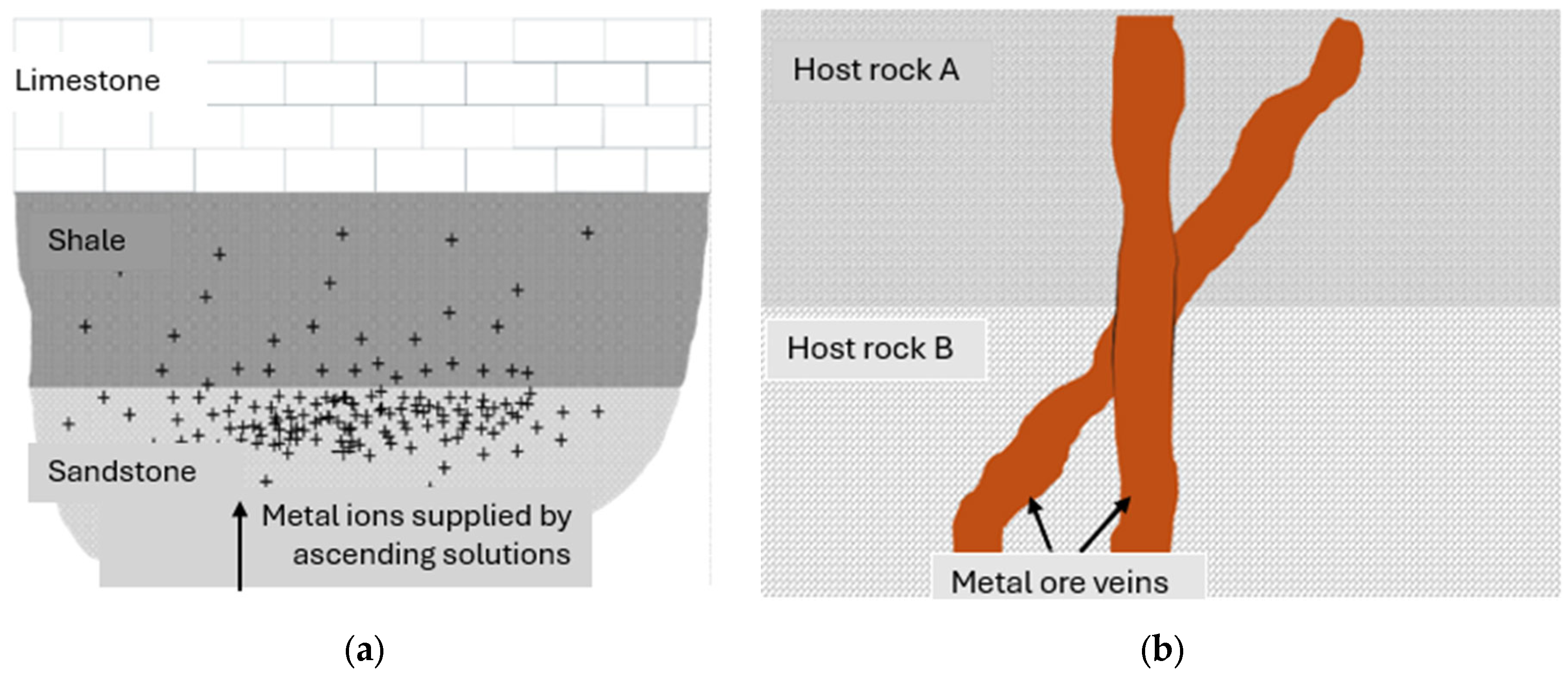
Non-zonated ore deposits are characterized by a uniform distribution of minerals throughout the host rock, without distinct layers or mineralogical patterns. These deposits often form in environments where conditions like temperature, pressure, and fluid composition remain consistent across the entire deposit [10]. Examples include certain sedimentary rock-hosted ores, such as iron ore or coal, residual deposits like laterite nickel, and magmatic carbonatite deposits, which host CRMs like niobium and REEs [11]. Because mineralization is spread evenly, non-zonated deposits can sometimes be easier to exploit over large areas, but they may present challenges in exploration due to the lack of obvious indicators for locating the richest portions of the deposit [12]. Identifications of “hidden” mineralogical changes with depth can potentially be identified through spectral analysis of geochemical data [13]. Zonated and non-zonated mineralization is shown in Figure 1.
The complex morphology and zonation of ore deposits present both challenges and advantages for subsurface robotic mineral exploration. Irregular deposit shapes and unpredictable structural changes make efficient navigation and drilling path optimization difficult. However, zonation and chemical gradient can also serve as valuable guides, enabling the robotic explorer to follow metal/mineral ratios to locate high-value materials more effectively [7,15]. An example of this are the porphyry copper deposits that often show concentric zoning of metals (copper-rich cores grading outward to molybdenum, zinc, or lead zones). By leveraging real-time geochemical data analysis, the robotic explorers can adapt their drilling strategies dynamically, increasing efficiency and precision. While non-zonated deposits may require more extensive sampling due to their uniform mineral distribution, zoned deposits provide a natural vectoring system that, if properly utilized, enhances the explorer’s ability to track and target the richest portions of the deposit autonomously [8,10].

2.4. Ore Deposit Types

Mineral deposits have historically been classified in various ways according to several geological parameters, such as host rock, geological setting, and mode of formation. However, geologists generally prefer classifications based on the genesis of the deposit, which also incorporate aspects of composition, morphology, associations, and genetic conditions of formation [8,16].
The geotechnical and geomechanical properties of deposits, such as rock strength, fracture density, and permeability, play a critical role in determining mining feasibility [17]. Additionally, the depth at which a deposit occurs influences the choice of extraction techniques and the degree of geotechnical stability required, with deeper deposits demanding more advanced methods and increased safety considerations [18].
Below, four different types of ore deposits are classified based on genetic processes and associated rock types. Subcategories, zonation, and occurrences of CRMs are highlighted for each deposit type.

2.4.1. Magmatic Deposits

Magmatic ore deposits, which form during the crystallization of igneous rocks or along their contacts, are especially significant for subsurface robotic exploration because they serve as primary sources of CRMs such as copper, nickel, platinum, palladium, and feldspar [19].
Porphyry deposits, the most common type of magmatic ore deposit, are typically large, low-grade systems that produce substantial amounts of copper but require extensive processing. They generally occur at depths of 1–5 km. Porphyry systems exhibit pronounced metal zonation, with copper concentrated in the core and surrounded by phyllic, argillic, and propylitic alteration zones, each enriched in different metals [20]. These deposits are characterized by rock-mass fragmentation and the cyclical enrichment of hydrous magmas with metals at deep crustal levels, followed by efficient transport via hydrothermal fluids.
Skarn deposits form through the alteration and mineralization of carbonate-rich country rocks by magmatic fluids, producing high-grade copper, silver, and gold mineralization. Skarns often exhibit metal and mineral zonation, with zones proximal to the intrusion enriched in copper, while more distal zones contain minerals such as wollastonite and tungsten [21,22].
Pegmatite deposits, characterized by coarse-grained textures, are important sources of critical minerals, including REEs and lithium. Despite their typically small size, they are economically significant. Pegmatites display extensive diversity in bulk geochemistry, mineralogy, grain size, textures, and internal zonation, often reflecting chemical interactions with surrounding wall rocks [23,24]. Zonation is generally more pronounced in larger pegmatites, where lithium or REEs commonly occur in the core, surrounded by feldspar or quartz-rich zones [25].
Orthomagmatic ore deposits occur within igneous rocks or along their contacts, where melt and/or fluid transport facilitates mineral precipitation. Their complex morphology and variable depths make precise navigation challenging. The extreme hardness and heterogeneity of magmatic rocks accelerate wear on drilling components, requiring modifications to drill bit design and the use of durable materials such as polycrystalline diamond compact (PDC) or tungsten carbide.
Given that many magmatic deposits form several kilometers below the surface, exploration equipment must withstand high-pressure environments, necessitating reinforced chassis and advanced cooling systems to prevent overheating.
Despite the challenges, magmatic deposits offer advantages for autonomous robotic exploration. Their structured mineral zonation allows explorers to detect geochemical gradients in real time and adjust drilling trajectories toward high-value ore zones. Moreover, the strong, competent rock in many magmatic deposits enhances wellbore stability, reducing the risk of collapse compared to weaker formations, such as sedimentary or pyroclastic rocks. Additionally, the typically low permeability of magmatic rocks minimizes groundwater inflow, reducing water-related complications during drilling [26,27,28,29].

2.4.2. Hydrothermal Deposits

Hydrothermal deposits form through the precipitation of minerals from high-temperature (~350 °C), mineral-rich fluids circulating through rocks. They represent significant sources of CRMs. These fluids, often driven by direct magmatic volatile contributions, dissolve and transport minerals, which precipitate upon cooling or when the fluids become supersaturated [30].
Hydrothermal deposits exhibit varying degrees of zonation, depending on fluid evolution, temperature gradients, host rock interactions, and deposit depth. Some hydrothermal systems may lack clear zonation due to fluid mixing, multiple mineralization events, or extensive remobilization. Deposit depth also strongly influences mineral stability, alteration intensity, and metal enrichment [31].
Vein deposits, commonly enriched in gold, silver, copper, and zinc, often display pronounced zonation, with high-grade ore concentrated in central vein structures and lower-grade halos forming outward. Depth affects mineral precipitation, with deeper veins typically hosting higher-temperature minerals such as quartz and sulfides, while shallower zones contain more oxidized mineral assemblages [32].
Volcanogenic massive sulfide (VMS) deposits are characterized by distinct zonation, with well-defined vertical and lateral metal distributions forming the so-called “stockwork zone” [33]. Copper-rich cores typically develop near hydrothermal vent sites and transition outward to zones dominated by lead and zinc, corresponding to the high-temperature mineral assemblage. Mineral assemblages are strongly influenced by depth: shallower VMS deposits may undergo extensive oxidation and secondary enrichment under lower-temperature conditions (<300 °C), whereas deeper systems generally preserve their primary sulfide mineralogy [34].
Epithermal deposits, which form at relatively shallow depths (typically less than 1.5 km), can exhibit significant variability. High-sulfidation systems are often characterized by a well-defined vertical distribution of polymetallic minerals, including copper, gold, and silver, whereas low-sulfidation systems tend to be more homogeneous, with widespread but less zoned mineralization. The vertical extent of epithermal deposits is influenced by fluid mixing, either between hydrothermal fluids of differing compositions or between fluids from different sources, which plays a critical role in the precipitation of metals and minerals [35,36].
Sedimentary exhalative (SEDEX) deposits typically display stratiform zonation, with metals precipitated in distinct layers. Lead–zinc sulfides accumulate on the basin floor, while iron and manganese oxides form in overlying layers. The depth of basin deposition strongly affects metal transport and precipitation; deeper marine basins favor more extensive metal accumulation due to prolonged hydrothermal activity [37].
Exploration of hydrothermal deposits using autonomous robotic explorers presents several technical challenges. Hydrothermal systems vary in hardness: VMS or SEDEX deposits are relatively softer, while quartz-rich veins or skarns are harder and more abrasive, accelerating tool wear. Addressing this variability may require modifications to drill bit design or adjustments to cutter geometry. In addition, the depth and structural complexity of hydrothermal systems, including intricate vein networks, complicates navigation.
Despite these challenges, hydrothermal deposits provide natural geochemical gradients that can guide exploration toward ore-rich zones. Regarding wellbore stability, conditions in competent hydrothermal rocks are comparable to those in magmatic systems. The presence of strong, coherent rock enhances wellbore integrity, reducing the risk of collapse or the explorer becoming stuck [27,30,31,38,39].

2.4.3. Metamorphic Deposits

Metamorphic rocks exhibit varying degrees of zonation depending on temperature, pressure, and fluid interactions during metamorphism. Regional metamorphism often produces well-defined metamorphic zonation, with index minerals, such as chlorite, biotite, garnet, staurolite, kyanite, and sillimanite, appearing in predictable sequences as metamorphic grade increases [40]. Contact metamorphism, associated with igneous intrusions, generates zones where mineral assemblages change outward from the heat source: high-temperature minerals such as andalusite and cordierite form near the intrusion, while progressively lower-temperature minerals, including biotite and chlorite, occur farther away [41].
Non-foliated metamorphic rocks, such as marble and quartzite, are typically isotropic and lack strong zonation due to recrystallization. However, chemical variations can produce subtle compositional layering, particularly in impure carbonate protoliths [42]. In some cases, porphyroblastic metamorphic rocks may exhibit mineral zonation, with minerals such as beryl, tungsten-bearing scheelite, or REE-rich monazite and allanite forming under specific pressure-temperature conditions [43]. High-grade metamorphic terrains can experience extensive recrystallization, which may obliterate primary zonation and result in more homogeneous mineral distributions. These variations highlight the complexity of metamorphic processes and their role in concentrating valuable mineral resources [40].
Exploration of metamorphic deposits presents several challenges. Variations in rock strength and fracturing affect operational stability: weak formations such as schists increase the risk of cave-ins or subsidence, whereas harder formations like marble may require adjustments to the design or materials of the cutterhead. The complex morphology of folded, faulted, and sheared rocks introduces unpredictable conditions, complicating navigation and stability. Additionally, the brittle nature of foliated metamorphic rocks can cause uneven wear on cutters and drill bits. Optimizing cutter design can improve cutting precision and reduce equipment failure.
Depth is also critical in contact metamorphism settings, where deep-seated intrusions create high-pressure conditions. Explorer designs incorporating reinforced bodies or more durable materials can help withstand these pressures. Metamorphic rocks often display strong chemical gradients, which can guide precise resource identification. Furthermore, their low porosity and permeability minimize fluid-related complications during drilling [27,41,44].

2.4.4. Sedimentary Deposits

Sedimentary rocks exhibit varying degrees of zonation, primarily influenced by depositional environment, diagenesis, and fluid interactions. Clastic sedimentary rocks, such as shale and sandstone, often display grain-size and mineralogical zonation, with coarser, quartz-rich layers grading into finer-grained, clay-rich zones that can concentrate minerals such as graphite, feldspar, and phosphate [45].
Chemical sedimentary rocks, including limestone and dolostone, may exhibit compositional zonation due to variations in carbonate precipitation, resulting in magnesium-rich dolomite layers or silica-enriched chert nodules within carbonate sequences [46]. Evaporites, such as rock salt, typically show strong chemical and mineralogical zonation, as evaporating brines precipitate minerals in a systematic sequence: early carbonates give way to sulfates (e.g., gypsum) and later-forming halides (e.g., rock salt, sylvite), which can also concentrate boron and bauxite [47].
Organic sedimentary rocks, including coal and oil shale, often display stratigraphic zonation, where organic-rich layers concentrate heavy and light REEs along with vanadium, while interbedded inorganic layers may host additional trace elements [48]. Deep-sea sedimentary environments can exhibit metalliferous zonation, with manganese nodules and cobalt-rich crusts forming concentric layers that reflect changes in seawater chemistry and sedimentation rates over time [49]. Elements such as gallium, germanium, and beryllium can also become selectively enriched in specific sedimentary horizons via processes like adsorption onto clay minerals or incorporation into authigenic precipitates [50].
Sedimentary deposits present both advantages and challenges for the autonomous subsurface robotic explorers. The loose, unconsolidated nature of placer deposits may initially seem easier to mine, but it increases the risk of wellbore collapse. Heterogeneous material distribution, with interbedded layers of varying composition, produces a mixed subsurface that complicates drilling. To address this, a hybrid cutterhead design, integrating cone bits for hard layers and drag bits for soft layers, can be employed.
Evaporite deposits are relatively soft, allowing faster drilling; however, their high abrasiveness necessitates durable materials such as tungsten carbide to mitigate tool wear. Additionally, sedimentary deposits are often associated with high-salinity environments, increasing the risk of corrosion to the explorer’s components. Fractured coal seams heighten the likelihood of instability and unexpected voids, while the potential presence of methane gas introduces explosion hazards [27,45,51,52].

3. Technological Advances in Autonomous Drilling

3.1. Requirements for Next-Generation Drilling Systems

With the geological conditions and associated drilling challenges now characterized, attention can shift to the system-level requirements that autonomous robotic explorers must satisfy. These requirements provide the foundation for designing drilling systems capable of operating safely, efficiently, and reliably across a wide range of subsurface environments.
Modern mineral exploration requires drilling systems that can function autonomously in diverse geological environments characterized by variable rock strength, fracturing, and fluid conditions. Sixteen key requirements were identified for next-generation autonomous drilling explorers, encompassing mechanical penetration, navigation, sensing, and data transmission capabilities.
In this subsection the requirements related to the drilling capabilities of the autonomous robotic explorers will be given. Specifically, a list of capabilities will be identified upon which robotic explorers will be designed and built. The explorers must be capable of conducting the processes listed in Table 2. At this point, it must be mentioned that Tunnel Boring Machine (TBM) technology is referenced throughout this chapter because many of its mechanical designs, sensing systems, and operational strategies are directly transferable to autonomous drilling robots. TBMs represent mature, field-proven solutions for excavating heterogeneous and challenging ground conditions, making them a valuable technological analog for the development of next-generation autonomous drilling explorers. Finally, it must be highlighted that China has made remarkable technological advances in Tunnel Boring Machine (TBM) development, exemplified by the “Beishan No. 1” TBM [53], the world’s first hard rock machine specifically designed for high-gradient spiral tunnels. This innovative TBM integrates breakthroughs in efficient rock fragmentation in extremely hard rock, precise 3D control of spiral excavation, small-radius curve tunneling, and continuous muck transportation. Equipped with advanced cutterheads, high-thrust drives, and intelligent monitoring systems, it not only tackles challenging geological conditions but also supports in situ research and real-time operational optimization. The success of Beishan No. 1 underscores China’s growing leadership in TBM technology and its ability to deliver world-class equipment for complex underground construction projects.
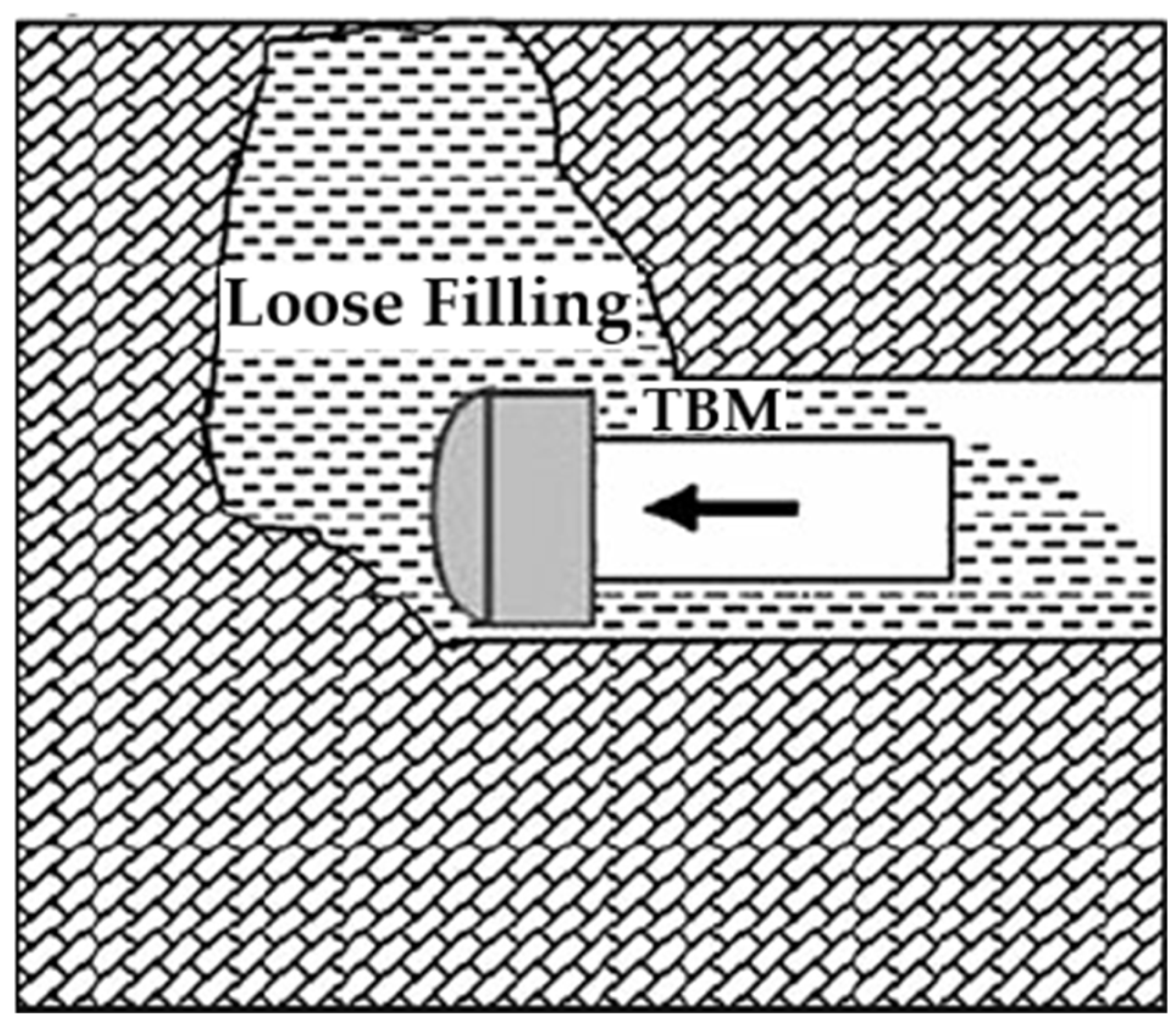
In the above list it has been assumed that penetrating a cohesionless and/or unconsolidated (loose) soil will not be feasible due to different causes such as collapse of the borehole, improper support of the pads for stabilizing the robot and exerting thrust forces, and inability to retrieve the system to the surface (Figure 2). In this report, consolidation refers to both phenomena of load-induced consolidation and cementation-driven consolidation since both processes can lead to denser, stiffer and stronger soil formations from a geotechnical perspective. However, by quantifying cohesion either in soils or rocks (i.e., shear test, Uniaxial/Unconfined Compression Test (UCT), triaxial compression test), both of the aforementioned causes of consolidation are considered.
It is important to note that the technology and methods used in this technical report constitute a synthesis of oil and gas and Tunnel Boring Machine (TBM) technologies.
Each of these requirements imposes constraints on mechanical design, material selection, and sensor integration. Unlike conventional rigs, robotic explorers must balance high torque and thrust output with compact form factors, low energy consumption, and minimal human oversight.
Designing such systems demands interdisciplinary expertise, blending geotechnical mechanics with robotics and embedded sensing technologies. In this report, requirements 1, 6, 8, and 10 (from Table 2), along with their corresponding specifications, will be analyzed, as they are the most pertinent to geology. The remaining requirements will be addressed in a future study.

3.1.1. Penetrate Cohesive-Consolidated Soil, Rock and Mixed Ground (Heterogeneous Formations)

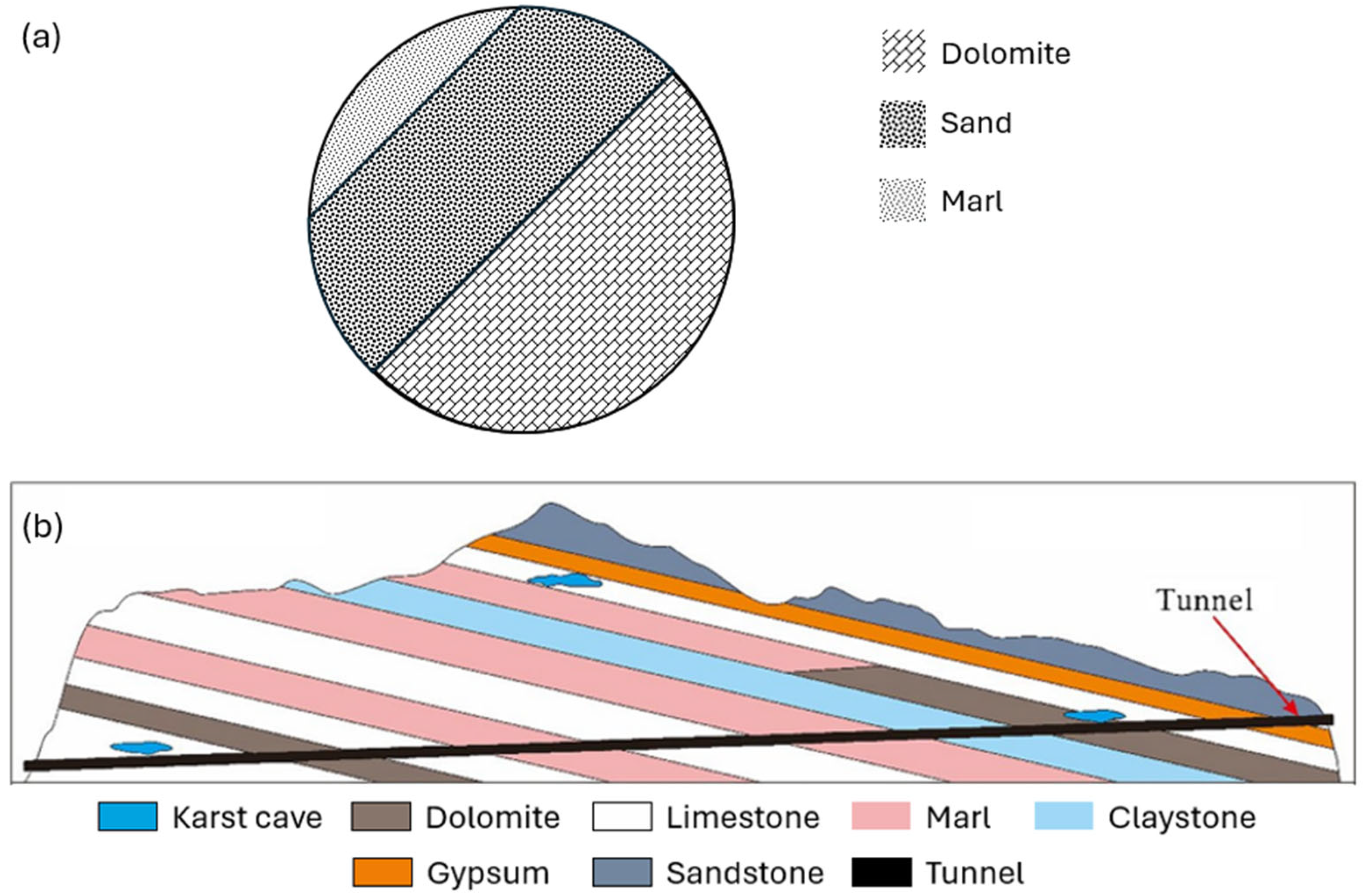
It must be stressed that this requirement (requirement 1) is a general one that aims at highlighting the complexity of geological materials. Soils can exhibit different degrees of cohesion and consolidation, adopting geomechanical and geotechnical properties similar to rocks. For example, the classification of geological formations as hard soils and soft rocks [55] shows this subtle differentiation based on cohesion and consolidation. The ability of the robotic explorers to penetrate fragmented and mixed ground formations is a critical feature. The difficulty and the problems presented in penetrating mixed ground conditions is of central importance in the TBM scientific community and is related to excavating mixed-face ground formations [56]. In TBM tunneling, mixed-face conditions are encountered when two or more geological formations occur simultaneously at the face of the excavation (Figure 3a). Although this phenomenon might be confronted by the robotic explorers as well (on a different scale, of course), additional predictive measures must be considered when mixed ground conditions refer to the occurrence of different geomechanical–geotechnical property zones (different-consolidation-degree soils, soft rocks, fractured rocks and hard rocks) along the tunnel profile (Figure 3b).
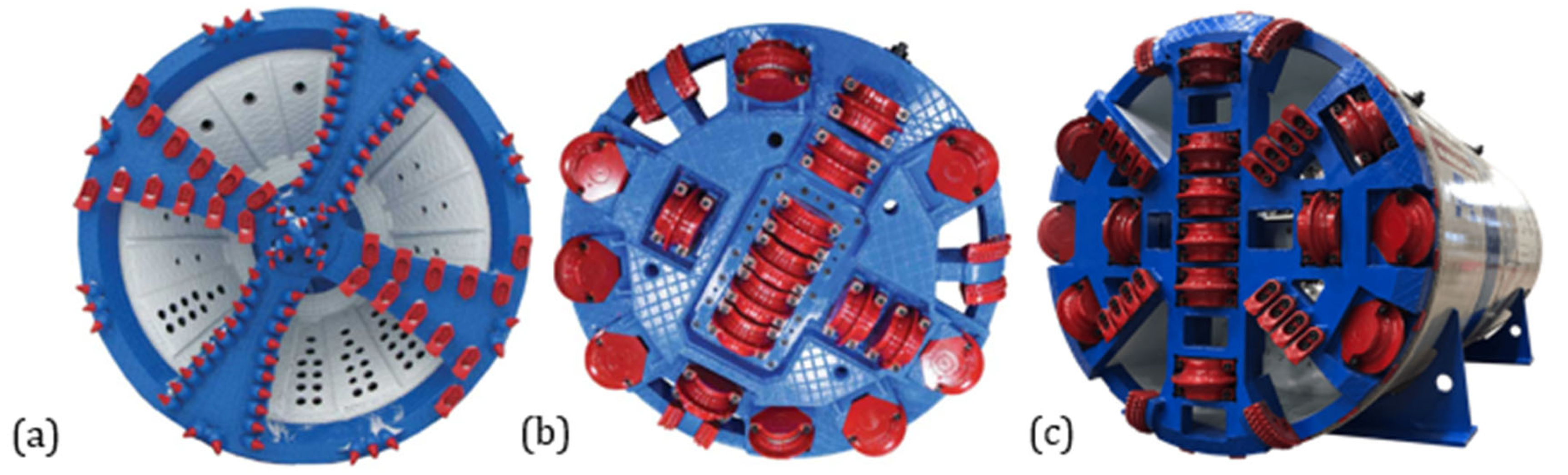
Common issues encountered in TBM constructions, due to mixed ground conditions, include abnormal cutter wear, cutterhead blocking, face stability, muck transport, and tunnel rock stability [56,57]. Hence, not only the geological conditions but also the design characteristics of the boring machine and the operational parameters will have to be considered for mitigating the issues encountered. From this perspective, different solutions have been proposed in relation to optimizing TBM operation and reinforcing the ground. However, given that the robotic explorers will work autonomously, the latter mitigation measure will not be feasible. In the case of attaching an additional, to-the-power-supply cable, only flexible pipe for providing appropriate conditioning agents and foams could offer a short-term cohesion increase in loose soils and short-term stabilization of the face. Utilizing foams and slurry could offer other advantages, as well, such as lower cutter wear and greater cooling effect in rocks [56]. Regarding the former mitigation measure, that is, the optimization of TBM operating parameters, several practices are applied, including thrust and/or Revolutions Per Minute (RPM) reduction, for reducing cutterhead vibrations, and closely monitoring abnormal changes in penetration parameters like sudden increase/decrease in penetration rate, sudden increase/decrease of thrust and/or torque, vibrations of the cutterhead, and abnormal noise levels. As also pointed out in [56], monitoring these parameters provides indications of the ground conditions and effective measures can be taken by fine-tuning the corresponding operational parameters (RPM, penetration rate, thrust, torque). Properly adjusting these variables for optimizing drilling performance is the subject of requirement 10 (see Table 2) and of its corresponding specifications, which will be analyzed in the following section. Further, of high importance is the design of the TBM’s cutterhead in relation to the characteristics of the geological subsurface to be penetrated. The mechanical design of drilling systems is heavily influenced by the interaction between the bit and the rock. Factors such as bit geometry, cutter material, thrust, and rotational speed determine both penetration rate and energy efficiency. Traditional rotary percussion systems are optimized for specific rock types, but heterogeneous formations require more adaptable approaches. For example, cutterheads for soft ground make use of cutter teeth, cutter bits and scrapers (Figure 4a), while cutterheads for hard ground or rock utilize disc cutters (Figure 4b). For mixed ground conditions, cutterheads equipped with cutter bits, clay spades and disc cutters are utilized (Figure 4c).
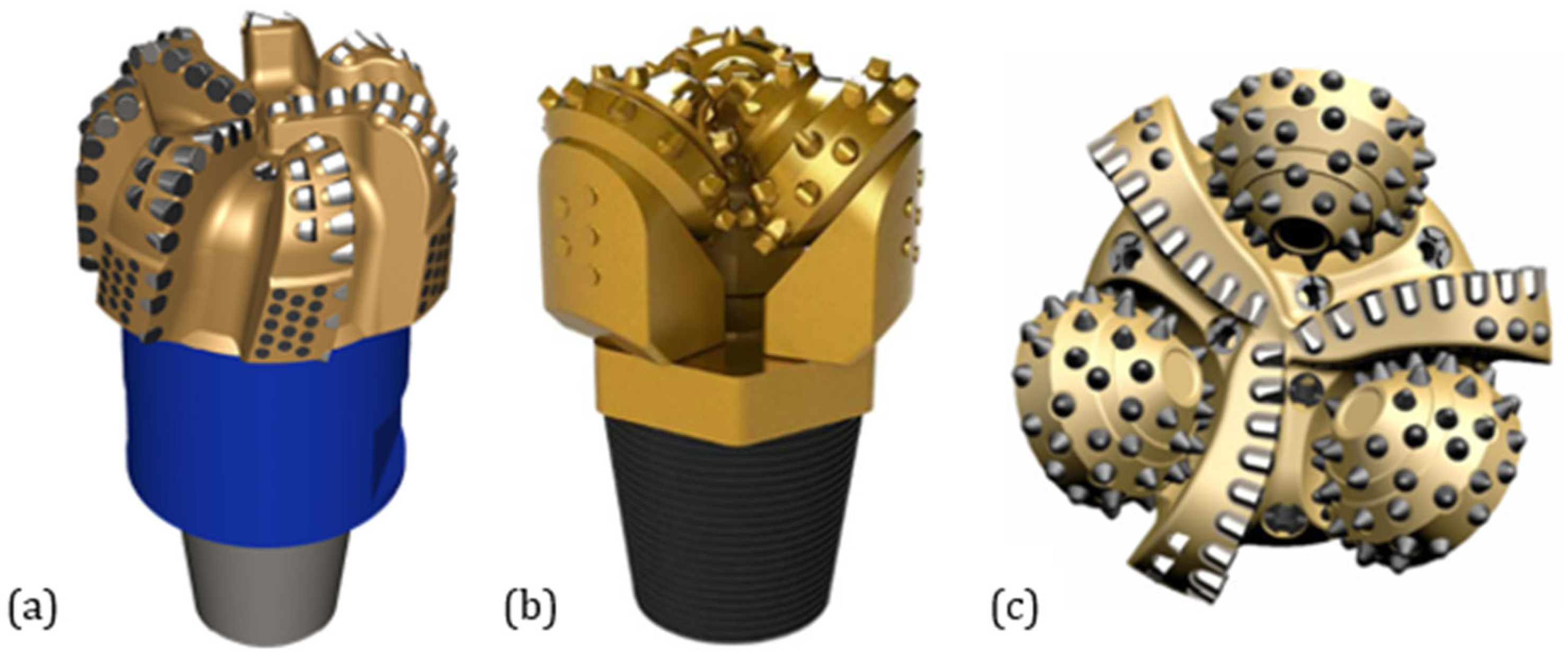
Correspondingly, in the oil and gas industry, drilling through highly heterogeneous formations, similar to TBM tunneling, can cause several contingencies related to wellbore instability, abrasiveness, abnormal vibrations, stick and slip, losses, low ROP, sloughing rock, and reduction in drilling performance [60,61]. Mitigation measures for penetrating through heterogeneous formations include using high-torque low-speed motors, high-density mud and hybrid bit technology (Figure 5) [60,61]. Hybrid bit technologies, such as those combining Polycrystalline Diamond Compact (PDC) and Tungsten Carbide Inserts (TCI), are increasingly utilized. These designs combine the cutting efficiency of PDC elements with the toughness of TCI inserts, providing greater durability in variable lithologies.
In next-generation robotic drilling systems, bit and cutterhead design must account not only for mechanical performance but also for integration with embedded sensors. For example, torque, thrust, and vibration sensors can be embedded within the bit assembly to provide continuous feedback. Data collected from these sensors inform algorithms that adjust operational parameters dynamically, achieving optimal balance between penetration rate and tool longevity. Measuring operational parameters in real time can provide minimum torque fluctuation, improved toolface control, reduced torsional vibration and minimum wear of the cutters.
Overall, the parameters that will play a crucial role in compiling the specifications of the current requirement include the following:
  • geomaterial cohesion,
  • geological strength index (GSI),
  • UCS,
  • friction angle,
  • Young’s modulus,
  • Poisson’s ratio,
  • tensile strength,
  • type of cutterhead/drill bit,
  • geometry of the cutterhead,
  • position and number of drill bits,
  • disc cutters vs drug cutters,
  • thrust,
  • torque,
  • rotational speed,
  • ROP.

3.1.2. Avoid Obstacles

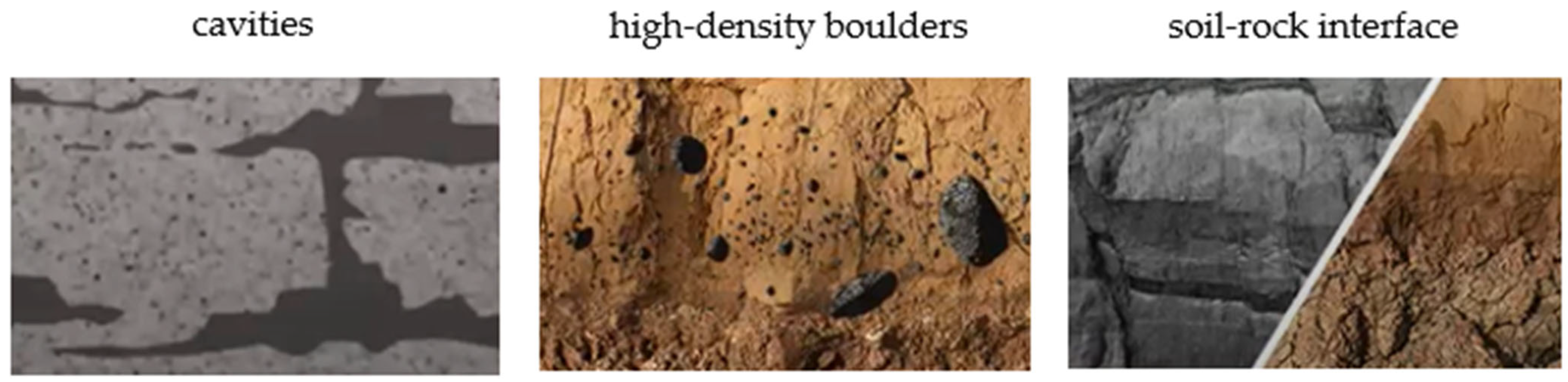
Avoiding obstacles while drilling will be an integral function of the robotic explorers. Real-time detection of obstacles such as cavities, elevated pressure areas and very high-density areas will improve operational efficiency and minimize financial and environmental damage. Real-time look-ahead systems implemented on TBMs involve the utilization of sonic and seismic techniques/sensors for detecting distinctive geological features like those presented in Figure 6.
Upon the detection of obstacles, the actuation mechanisms will activate the proper route planning algorithms for deviating from the previous direction plan and adopt a new route. Such detection methods, using the vibrations from the working TBM as the source of seismic waves, have already been recorded in the literature [65]. Correspondingly, in the oil and gas industry, Schlumberger has developed a multiple sonic-while-drilling system using information from compressional and shear (sonic) wave velocity information for identifying key petrophysical parameters such as porosity, lithology, gas saturation, fluid typing and fracture identification [66]. Another logging while drilling (LWD) technology used in the oil and gas industry, which can possibly be “transferred” to the autonomous robotic explorers, includes the application of electromagnetic sensors [67,68] from which cavities and high-density areas can be detected.
The ability of autonomous drilling robots to avoid obstacles relies on acquiring various measurements, which must be integrated with real-time data processing techniques. The key measurements include:
  • shear and sonic velocities ( V s , V p ),
  • gamma rays,
  • electromagnetic radiation,
  • thrust,
  • torque,
  • rotational speed,
  • ROP.

3.1.3. Monitor Borehole Stability

Ensuring the stability of the borehole drilled by the autonomous robotic explorers is of paramount importance for avoiding loss of expensive equipment and ensuring minimum environmental impact. Factors that influence borehole instability relate both to the characteristic properties of the ground and to the parameters of the drilling operation. For example, in the oil and gas industry, common borehole stability issues are linked to drilling shale formations, unconsolidated formations, highly fractured formations, High-Pressure High-Temperature (HPHT) formations, and formations in which anisotropic and increased in situ stresses dominate [69].
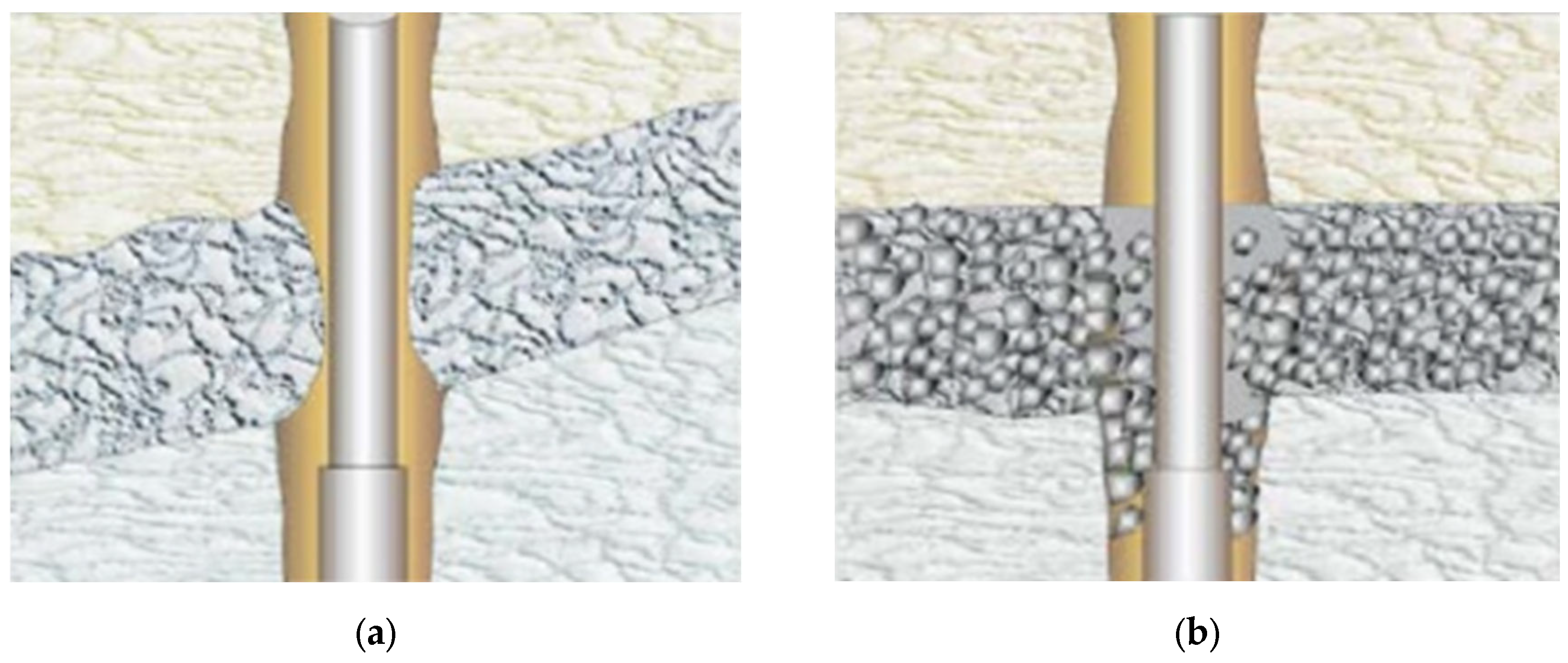
The chemical and mechanical properties of shale can lead to borehole closure either due to swelling or due to mobile layers, which behave like plastic materials and squeeze into the borehole (Figure 7a). Similarly, shale sloughing can cause borehole enlargement, which can create problems in the LWD system. Further, unconsolidated, loose formations can fall into the borehole and block the drilling string (Figure 7b).
Formations with a dense network of fractures, small-scale fractures, and joints exhibit weakened mechanical characteristics that can lead to borehole collapse. Borehole collapse due to weak fractured formations can also be triggered by the vibrations caused by the drilling system. Additionally, formation mechanical instability caused by elevated in situ stresses near faults, folds or other geological features can lead to borehole collapse and blockage of the drilling apparatus. Moreover, the orientation of the network of joints and/or fractures compared to the inclination and azimuth orientation of the borehole constitutes another factor affecting borehole stability [69].
The first step towards minimizing the likelihood of borehole instability issues is conducting a preliminary geological investigation. Utilizing existing information from the study area, such as seismic data, well logs, and core samples will help to identify the different lithologies and the stratigraphy of the area, and assess mechanical and petrophysical parameters such as Poisson’s ratio, Young’s modulus, UCS, pore pressure, cohesion, angle of internal friction, and specific weight, respectively. Additionally, geo-modeling techniques can be used for estimating abnormal in situ stresses. However, for ensuring borehole stability, real-time monitoring of the drilling operation is vital. Measuring different operational parameters like torque, thrust and ROP can provide information about the strength and degree of consolidation of the formation being drilled. For example, ref. [70] developed a technique for identifying weak formations and boundaries between different materials using real-time measurements. Particularly, their study found that, in weak materials, the ROP is increased and the mean, median and primary distribution ranges of thrust and torque were decreased in comparison to stronger materials. Furthermore, they observed that the thrust and torque signals exhibited distinct patterns when the drill bit was penetrating material boundaries, indicating the transition between different media. In another study by [71], an acoustic system for monitoring borehole stability was developed. Specifically, an acoustic source was integrated into an imaging system that was able to provide images having a resolution of 5 mm at distances up to 2 m into the formation. Additionally, their system was capable of detecting cracks migrating from the formation towards the borehole. Finally, real-time high-resolution imaging can provide information regarding the stability of the drilled borehole.
Respectively, in the TBM industry, tunnel stability is of paramount importance, due to the additional factor of the direct involvement of manpower during the tunnel construction. The study conducted by [72] indicated several geological and operational parameters affecting the distribution of rock stress and displacement around the cutterhead. That is, these parameters had an impact on tunnel stability. Operational parameters included thrust, torque and ROP of the TBM, while geological parameters included UCS, joint spacing and Rock Quality Designation (RQD). Particularly, their simulations indicated that thrust, among the operational parameters, exhibited the highest influence on the distribution of stresses and displacement around the cutterhead. UCS and rock mass stability comprise two of the most important parameters in TBM projects. Ref. [73] developed an in situ penetration test apparatus for TBMs. Their system can assess both the stability and strength of the rock mass by conducting a series of force penetration tests.
For monitoring borehole stability in real-time and predicting possible factors that undermine the stability of the borehole, techniques related to the following parameters could be utilized:
  • shear and sonic velocities ( V s , V p ),
  • gamma-gamma rays,
  • high-resolution imaging.
Artificial intelligence (AI)-based control systems can process these sensor inputs to predict and prevent failures. Predictive algorithms employ machine learning models trained on historical data to recognize instability signatures and adjust the operational parameters accordingly.

3.1.4. Optimize Drilling Performance

Optimizing drilling performance in any kind of drilling operation (e.g., mine exploration, oil and gas, TBM tunneling) is probably the most significant requirement since it is closely related to improving efficiency, reducing time and cost, and improving safety. It can be said that drilling performance incorporates most of the other requirements in a unified framework. The primary objective of drilling optimization is to maximize the ROP while ensuring minimal bit wear, well bore stability and system integrity. However, drilling optimization is generally focused on predicting and optimizing the ROP for achieving optimum performance in relation to time and cost. Penetration rate prediction equations make use of several both controllable and uncontrollable parameters such as bit type and diameter, rotational speed, thrust, and rock properties including geological, geotechnical and geomechanical parameters [74]. Ref. [74] used several different variables for predicting the ROP using nonlinear regression analysis. The controllable parameters included (a) bit diameter, (b) weight on bit (WOB) and (c) rotational speed, whereas the uncontrollable parameters included (a) UCS, (b) tensile strength, (c) point load strength, (d) P-wave velocity, (e) elastic modulus, (f) density and (g) quartz content. Particularly, the model of [74] achieved a coefficient of determination R 2 = 0.87 for rotary drills, while multiple regression analysis showed that ROP is mostly affected by bit diameter, WOB, rotational speed and UCS. Further, the drillability, similar to the ROP, can be defined as the ease of drilling a rock mass at a certain time to a certain length [75]. Drillability can be quantified using a dimensionless parameter, the drilling rate index (DRI), which was developed by the Norwegian University of Science and Technology [75]. Particularly, the DRI is calculated using Sievers’ J-miniature drill test ( S j ) and brittleness value ( S 20 ), generating a scale from 0 to 100 with higher values indicating a higher drilling efficiency. Both tests indirectly measure the surface hardness of rocks and rock resistance to crack growth and crushing, respectively. However, due to the time-consuming experimental procedures needed to estimate the D R I , correlations between the D R I and UCS and Brazilian tensile strength (BTS) have been shown to yield promising results [75]. For example, the following relationship,
D R I = 145.70 1.35 σ c i ,
where σ c i is the UCS of the intact rock, developed by [17], achieved a coefficient of determination of R 2 = 0.85 . Similar relationships were developed in the aforementioned work for magmatic, metamorphic and sedimentary rocks, making use of parameters such as density, UCS, tensile strength and shore hardness.
Drillability index of the rock mass (RDi) is another parameter used for assessing the drillability of geological formations. In particular, among several rock mass parameters that affect drilling, ref. [76] used texture and grain size, UCS, Mohs hardness, joint spacing, joint filling, and angle between joint dipping and borehole orientation. Their classification method resulted in values with a 0–100 scale corresponding to the following drilling rate categories:
  • RDi 7–20 → Slow,
  • RDi 20–40 → Slow–medium,
  • RDi 40–60 → Medium,
  • RDi 60–80 → Medium–fast,
  • RDi 80–100 → Fast.
Further, in the latter study, they indicated that since UCS is difficult to measure in the field, point load index and Schimdt hammer can alternatively be used. Moreover, it is worth noting that according to their results, UCS is the most crucial rock property affecting penetration into rock material.
By using several analytical and empirical relations, rock drillability can be predicted utilizing parameters such as ROP, rotational speed, WOB, toque, bit face area, friction, bit diameter and UCS [77]. Most importantly, ref. [77] developed an empirical equation for predicting UCS using sonic velocity data:
U C S = 0.00069 · V p 1.385 ,  
where V p is the velocity of the primary sonic waves. Although many different relations between U C S and V p exist in the literature, it is important to use the proper relationship or adjust a particular relation to match the characteristic properties of the formation under investigation. Estimating UCS using sonic velocity measurements is of paramount importance for the autonomous drilling robots since real-time UCS evaluation would be feasible.
In the oil and gas industry, optimization of drilling performance has been approached by means of minimizing Mechanical Specific Energy (MSE), which can be defined as the energy required to remove a unit volume of rock:
M S E = W O B A b + 120 π · R P M · T A b · R O P ,
where T is the torque at bit and A b is the bit area [78]. Additionally, Equation (3) is minimized when the values are equal to the confined compressive strength (CCS), indicating maximum drilling efficiency:
M S E m i n = C C S ,
Therefore, when the MSE is roughly close to the CCS of the drilled rock, peak drilling efficiency has been reached.
In a practical field case, the optimization of drilling parameters using MSE models for a vertical well, drilled with a positive displacement motor (PDM), demonstrated the critical role of WOB, RPM, and torque in achieving maximum ROP. By continuously monitoring MSE against the CCS of the formation, operators identified the optimum WOB for a given RPM, ensuring the bit operated at peak efficiency. For example, when WOB exceeded the optimum range, MSE values surged well above the CCS, indicating bit founder and reduced ROP due to vibrations and inefficient energy transfer. Conversely, adjusting WOB and RPM to maintain MSE roughly equal to CCS allowed the bit to drill efficiently, minimizing trips and mechanical wear. This case highlights how MSE parameters provide an objective, real-time assessment of drilling performance, linking mechanical inputs directly to formation properties and demonstrating the importance of integrating geomechanical and geotechnical characteristics in practical drilling optimization [78].
Mechanical drilling parameters, such as WOB, torque, RPM, thrust, and ROP, are closely linked to the geomechanical and geotechnical properties of the subsurface. The efficiency of energy transfer from the bit to the rock depends on rock strength, hardness, fracture toughness, and confining stress. For example, higher WOB or torque may increase ROP in soft formations, but in hard, brittle, or highly fractured rocks, excessive WOB can cause bit founder, vibrations, or premature bit wear. Similarly, RPM must be optimized according to the formation type: low RPM may limit penetration in soft rocks, while high RPM in hard or abrasive rocks can generate heat and reduce bit efficiency. The subsurface’s compressive strength, cohesion, internal friction, and drilling-induced stress response directly dictate the optimum combination of these mechanical parameters, as the rock’s resistance to cutting determines the minimum energy required to achieve effective penetration. Understanding the geomechanical and geotechnical characteristics allows engineers to tailor WOB, torque, RPM, and thrust to maximize ROP, minimize energy losses, and reduce drilling complications, ensuring safe and efficient drilling operations.
In the TBM industry, predicting the advance rate, which refers to the speed at which the TBM progresses through the ground, can take the form of using empirical equations utilizing parameters such as thrust, torque, rotational speed, and RQD [79]. In a more elaborate study on TBM optimization techniques, ref. [80] predicted the advance rate using several optimization techniques based on artificial neural networks (ANN) combined with both an imperialist competitive algorithm (ICA) and particle swarm optimization (PSO) [80]. As inputs to their models, they used properties both of the intact rock and the rock mass, together with machine specifications. Regarding the rock mass, they used parameters such as (1) RQD, (2) rock mass rating (RMR), (3) permeability, (4) quartz content, (5) joint condition, (6) joint spacing and (7) distance between the planes of weakness. For characterizing rock material, they used UCS, rock brittleness and the Brazilian tensile strength (BTS), while, concerning the machine specifications, they used RPM, cutterhead power, thrust force, cutter diameter, specific energy and cutterhead torque. Ref. [80] found that the hybrid technique of PSO-ANN outperformed the other systems achieving a coefficient of determination R 2 = 0.961 . Finally, in a study related to unmanned interplanetary exploration [81], they used a support vector machine (SVM) for evaluating the drillability of the formation and fine-tuning the drilling parameters to adapt to the current drilling conditions. Specifically, rotary torque and penetrating force (thrust) were used to assess drillability, whereas rotary speed and penetrating velocity were adjusted as drilling parameters to adapt to different formations.
For optimizing drilling performance in real time, measurements related to the following parameters would be needed:
  • sonic velocities (for estimating UCS),
  • torque,
  • rotational speed,
  • thrust,
  • ROP.
Through integration with AI and sensor feedback, these indices can support intelligent control systems capable of dynamically adjusting operational parameters to maintain optimal drilling performance.
Finally, it is important to note that the analysis and processing of information from multiple sensors will be carried out by specialized hardware and software platforms operating in real time. These mechanisms may take the form of intelligent processing algorithms embedded in microcontrollers, running on parallel processing units. The type of algorithms and intelligent techniques and their implementation on microprocessors will be described in future reports.

4. Sensor Technologies and Monitoring Systems

4.1. Overview of Sensing Requirements

Autonomous deep drilling systems rely on multi-modal sensing to perceive geological, mechanical, and environmental conditions in real time. Sensors provide the data foundation for situational awareness, performance optimization, and safety control. In the context of the current study, sensing systems are designed to perform the following core functions:
  • Characterize formation properties (mechanical, lithological, and chemical).
  • Detect obstacles, fractures, or cavities ahead of the drill bit.
  • Monitor mechanical parameters such as torque, thrust, vibration, and temperature.
  • Support autonomous decision making by feeding data into AI-based control algorithms.
Because these systems must operate in compact, high-pressure, and high-temperature environments, sensor miniaturization and ruggedization are crucial. Moreover, integrating multiple sensing modalities, such as acoustic, electromagnetic, optical, and spectroscopic, enables comprehensive subsurface characterization and data redundancy for enhanced reliability.

4.2. Sensing for Penetrating Heterogeneous Formations

In the TBM tunneling industry, mixed-face ground is defined as the simultaneous occurrence, at the excavation face, of two or more geological formations with conspicuously different fracture intensity or weathering grades [56]. In this report, the terms “mixed ground” or “heterogeneous formations” refer to formations with variable mechanical properties. These variations may occur simultaneously across the borehole face or successively, depending on the orientation and dip of the strata (see Figure 3).
Although it would be desirable to have the ability to measure in real time all the parameters listed in Table 2, this is not feasible to date due to lack of proper sensor techniques. However, some of the geomechanical parameters can be estimated using real-time measurements. Formation density can be estimated using gamma-gamma ray sensors. UCS can be estimated using sonic velocity data ( V p ) and utilizing empirical equations adapted to local lithology characteristics (Equation (2)) [77]. Additionally, Young’s modulus ( Ε i ) and Poisson’s ratio (ν) can also be estimated by combining sonic velocity data ( V p , V s ) with empirical equations for converting the dynamic moduli into the static counterparts [82]. For example, the two following relationships provide the dynamic Young’s modulus ( E d y n ) and Poisson’s ratio ( ν d y n ), respectively:
E d y n = ρ V s 2 ( 3 V p 2 4 V s 2 ) ( V p 2 V s 2 ) ,
ν d y n = V p 2 2 V s 2 2 ( V p 2 V s 2 ) ,
where V p is the velocity of the primary waves and V s is the velocity of the secondary sonic waves. Moreover, relations (7) and (8) can be utilized to estimate other characteristic moduli of the geomaterial such as shear modulus (G), and first Lamé parameter (λ) [82]:
V p = λ + 2 G ρ ,
V s = G ρ ,
where ρ is the formation density, λ is the first Lamé parameter, and G is the shear modulus. Also, the bulk modulus (K) can be estimated by using common relationships between elastic moduli. Furthermore, the bulk density (ρ) of a formation can be estimated by the following relationship [83]:
ρ = 0.23 · V p 0.25 ,
to highlight the fact that the aforementioned measurements will correspond to the mechanical properties of the rock mass in cases of heterogeneous and/or low GSI values. At this point, it is worth noting that the size and weight of LWD acoustic systems used in the oil and gas industry make them impossible to embed to autonomous subsurface robotic units. Further, the system developed by [71] is of a size that will not be compatible with the size of the robotic explorers, but this remains to be researched further. Acoustic sensors implemented in small-sized systems utilize optical fibers as distributed acoustic sensors [84]. This technology could possibly be used in autonomous robotic explorers.
Finally, the strength of the drilled formation (e.g., UCS) can be estimated using measurements from operational parameters such as thrust, torque, ROP and RPM [85].

4.3. Sensing for Avoiding Obstacles

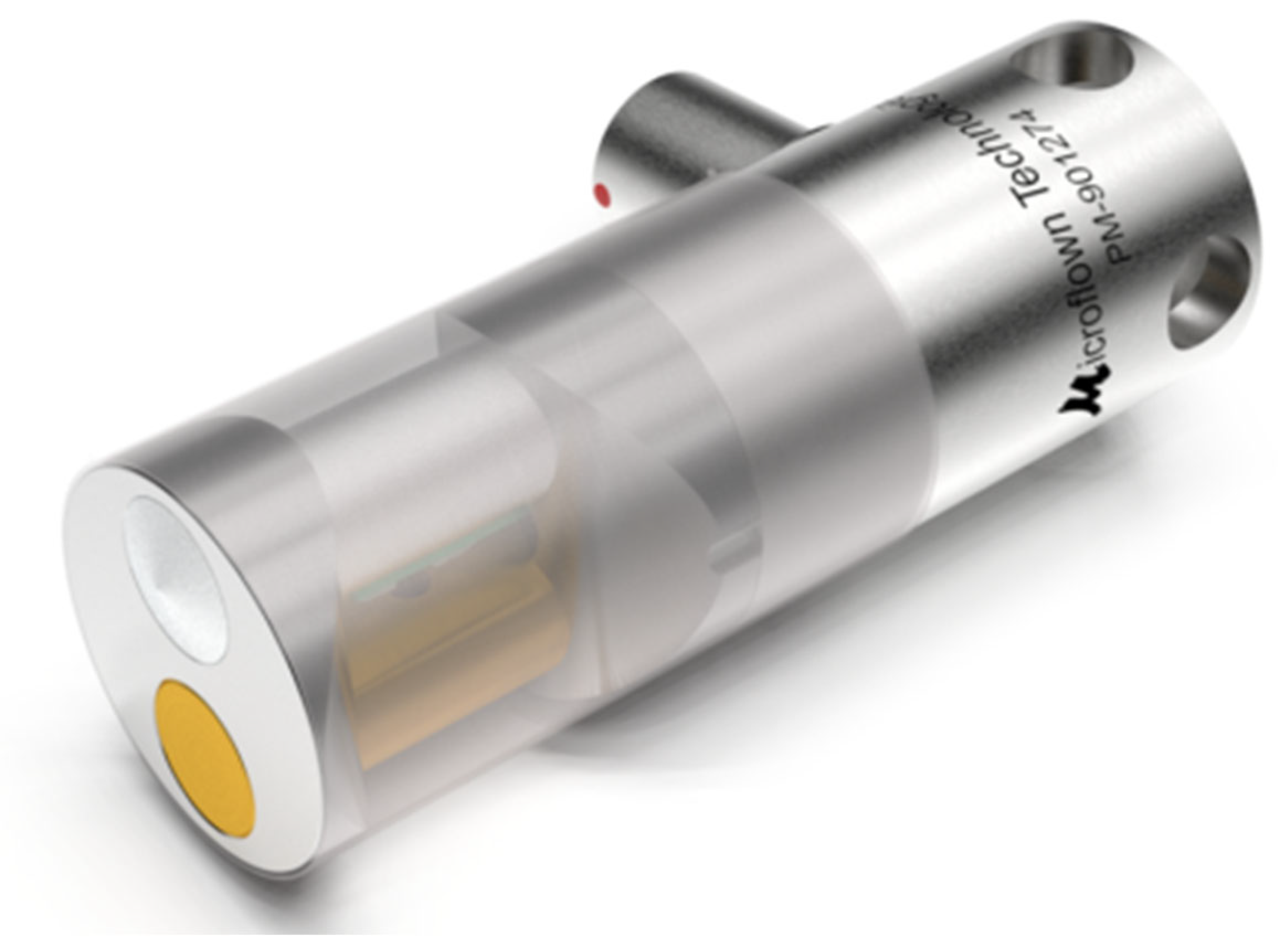
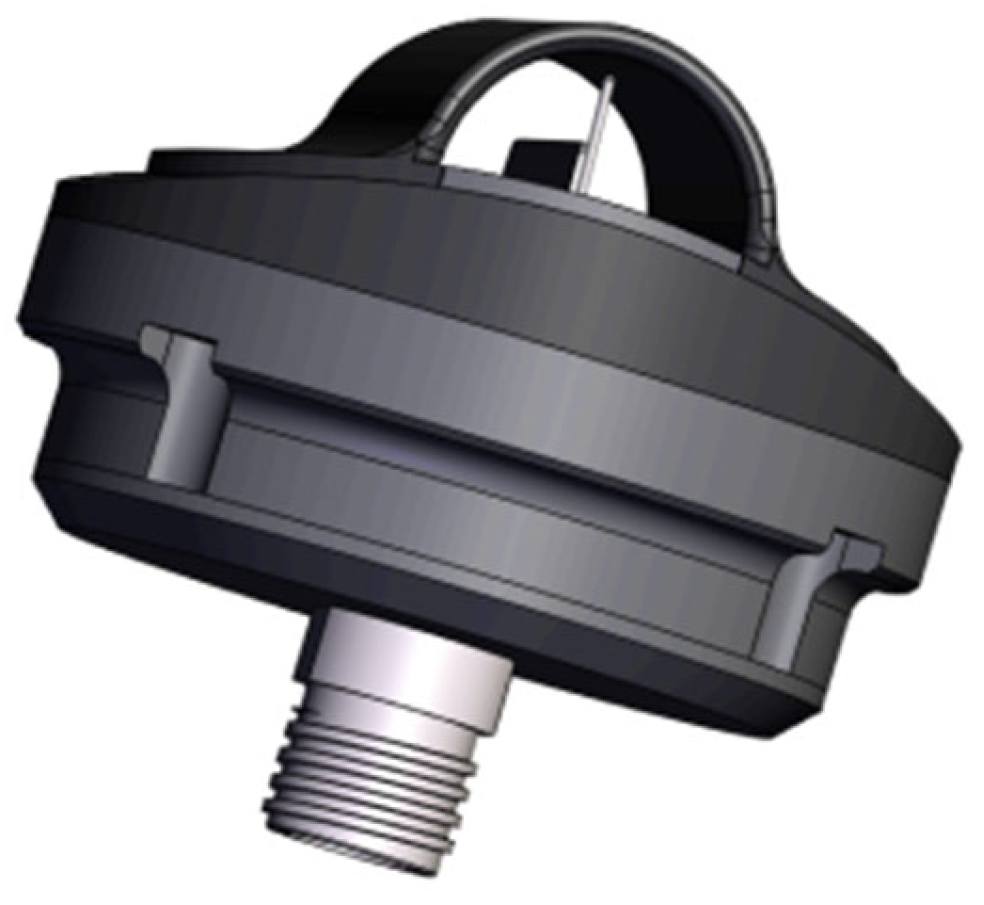
As discussed earlier, avoiding obstacles in drilling and tunneling operations is mainly tackled using acoustic sensors, measuring the velocities of waves V s and V p , and deducing the relative density ahead of the drilling face [71,86]. 1D acoustic particle velocity sensors, such as those offered by Microflown Technologies, could possibly measure formation velocities (Figure 8). However, to ensure reliable performance, a proper water-insulating casing should be developed. Additionally, significant modifications and calibration would be required to optimize the sensor’s functionality for use in borehole environments. Currently, this particular sensor is not suitable for use as a downhole tool. Further, it must be highlighted that shear waves ( V s ) can travel only through solids, which can be used for identifying areas filled with gases or liquids in case the investigation is above the aquifer level. In addition, gamma-gamma ray sensors can be used to estimate the density of the formation near the drill head. Finally, operational parameters such as thrust, torque, rotational speed and ROP can be used to indicate the presence of elevated or reduced density areas.

4.4. Sensing for Monitoring Borehole Stability

Similarly to avoiding obstacles, borehole stability can be assessed using acoustic sensors for identifying loose material and cavities by estimating the relative density of the surrounding walls. For example, a sonic monitoring system was developed by [71], consisting of a single acoustic source and an array of receivers (Figure 9). Specifically, the acoustic system developed by [71] has the additional ability of detecting cracks migrating from the drilled formation towards the borehole. However, as also mentioned earlier, the size of the particular system does not allow its integration to the robotic explorers. Further investigation is required for modifying and/or developing a suitable acoustic sensor system. Finally, gamma-gamma ray sensors can be used for estimating formation density and ensuring borehole stability.

4.5. Sensing for Optimizing Drilling Performance

Optimizing drilling performance requires maximizing the ROP while (1) minimizing bit wear, (2) ensuring wellbore stability, and (3) maintaining system integrity. Achieving this balance demands the simultaneous processing of multiple geological and operational parameters. These parameters help fine-tune variables such as thrust, torque, RPM, and ROP based on the mechanical properties of the ground, including UCS, Young’s modulus, Poisson’s ratio, RMR, and GSI. Although rock mass classification methods like RMR and GSI systems can be conducted only in the field via preliminary geological investigations, geomechanical variables such as UCS, Young’s modulus and Poisson’s ratio can be indirectly estimated using sonic velocities ( V p ) along with empirical equations. It is important to note that, in addition to traditional sonic sensors, laser ultrasonic systems are also available for estimating the elastic properties of rocks under in situ conditions [88]. However, these systems are still at the research stage, and no portable equivalent currently exists. That is, prediction of the formation strength can be conducted and, thus, fine-tuning of the operational parameters will be performed in time. An alternative method for fine-tuning the drilling parameters, instead of monitoring the ground’s mechanical properties, is to monitor some of the operational parameters (e.g., torque, ROP) and fine-tune the rest parameters (e.g., RPM and thrust). Further, for validation purposes, both aforementioned techniques can be used and eventually combined. Finally, one sensor technique that can provide valuable insights into several robotic behaviors is seismic systems, such as the one offered by Geospace Technologies [89]. Specifically, the OptoSeis downhole system, a fiber-optic tool, is capable of detecting subsurface features, measuring formation velocity, conducting strain and temperature sensing, and analyzing rock and fluid properties. However, its size makes it impractical for integration into autonomous subsurface systems.

4.6. Sensing for Geochemical Analysis

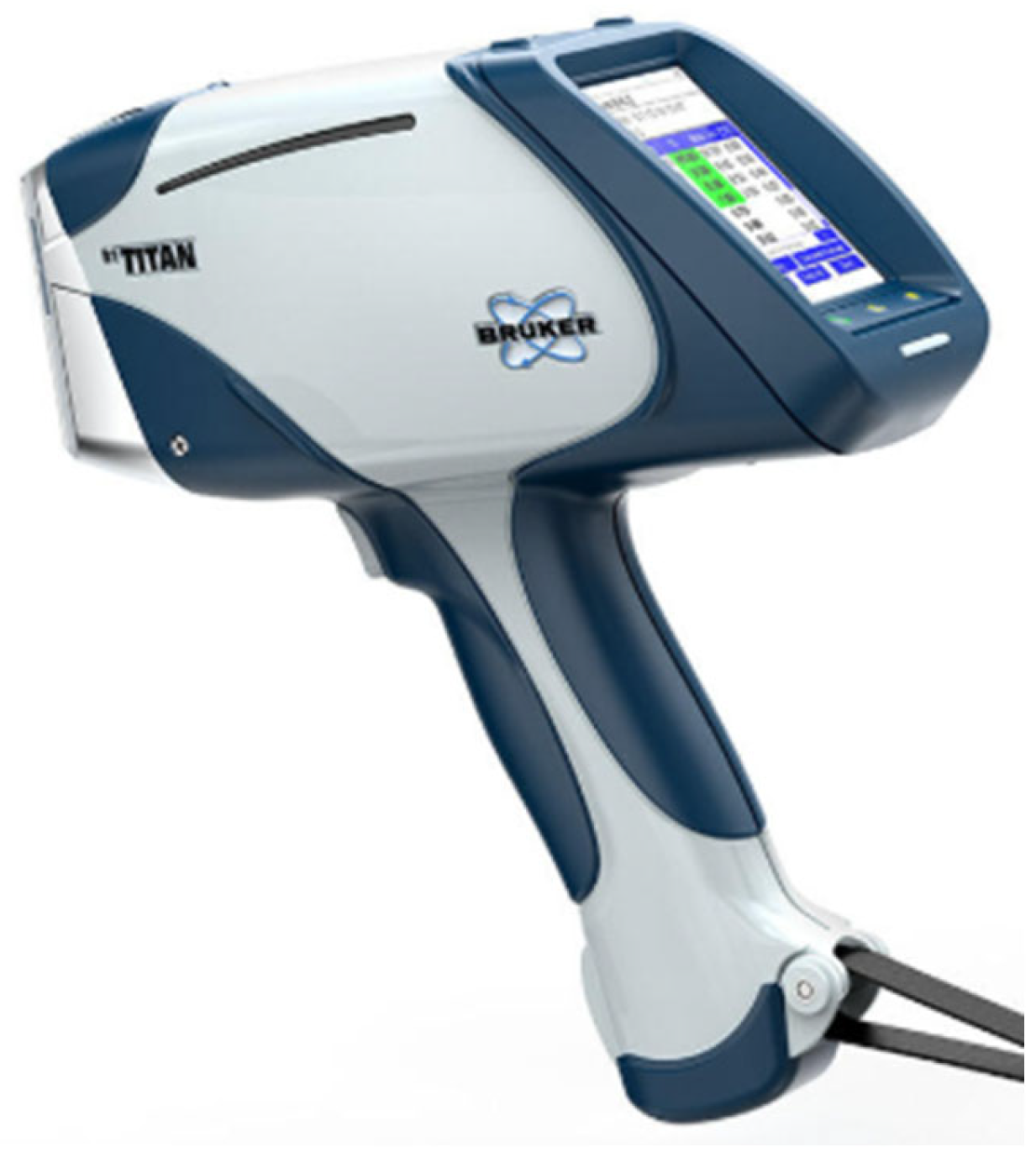
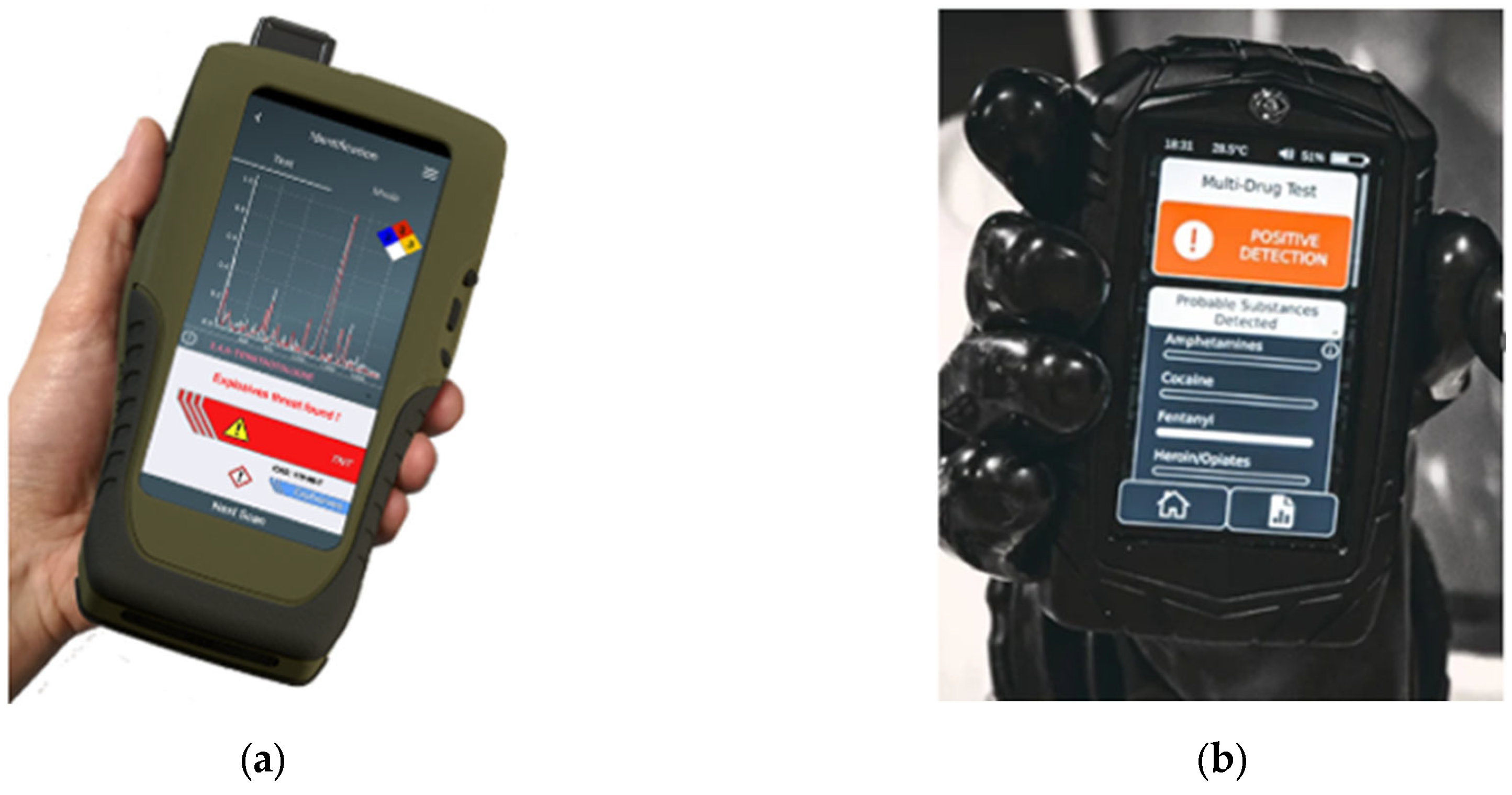
In this section, sensor technologies used for elemental analysis of soils and rocks will be presented. Further, additional sensor techniques for possible identification of the elements and minerals of interest will also be outlined. These technologies are directly linked to source seeking and orebody contour drilling processes, which form the basis of optimal route decision making. Both X-Ray Fluorescence (XRF) and Laser-Induced Breakdown Spectroscopy (LIBS) techniques can be used for analyzing the elemental composition of samples. A handheld XRF instrument can be seen in Figure 10.
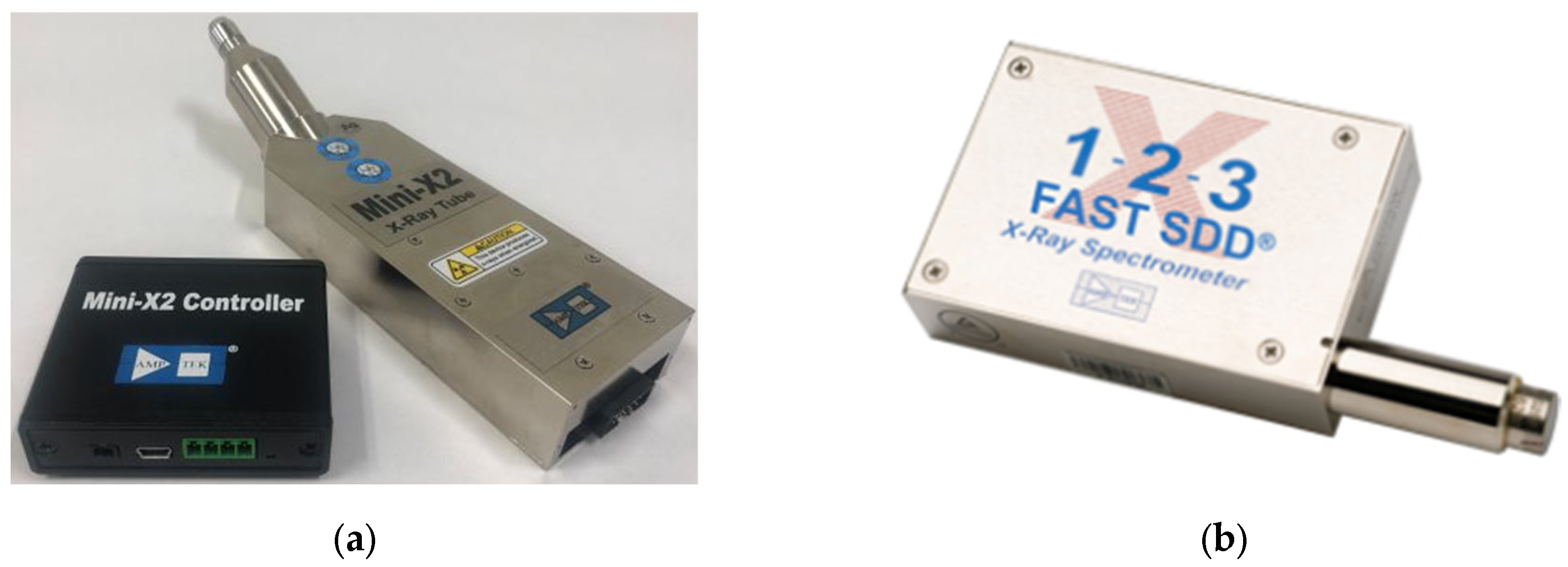
Although the XRF elemental analysis can be performed within a reasonable timeframe for autonomous subsurface drilling systems, the instrument’s current dimensions (25 cm × 28 cm × 9 cm) prevent its integration with the robotic explorers. However, other potable XRF systems, such as the one by AMETEK [91], have smaller dimensions with an X-ray tube of 11 cm × 6 cm × 6 cm (Figure 11a), a controller and an XRF detector with dimensions of 5 cm × 6 cm × 6 cm (Figure 11b).
However, besides the difficulty of finding the proper space on the drilling robots for attaching such a device, proper insulation should be developed so that the XRF system could function under elevated hydrostatic pressures.
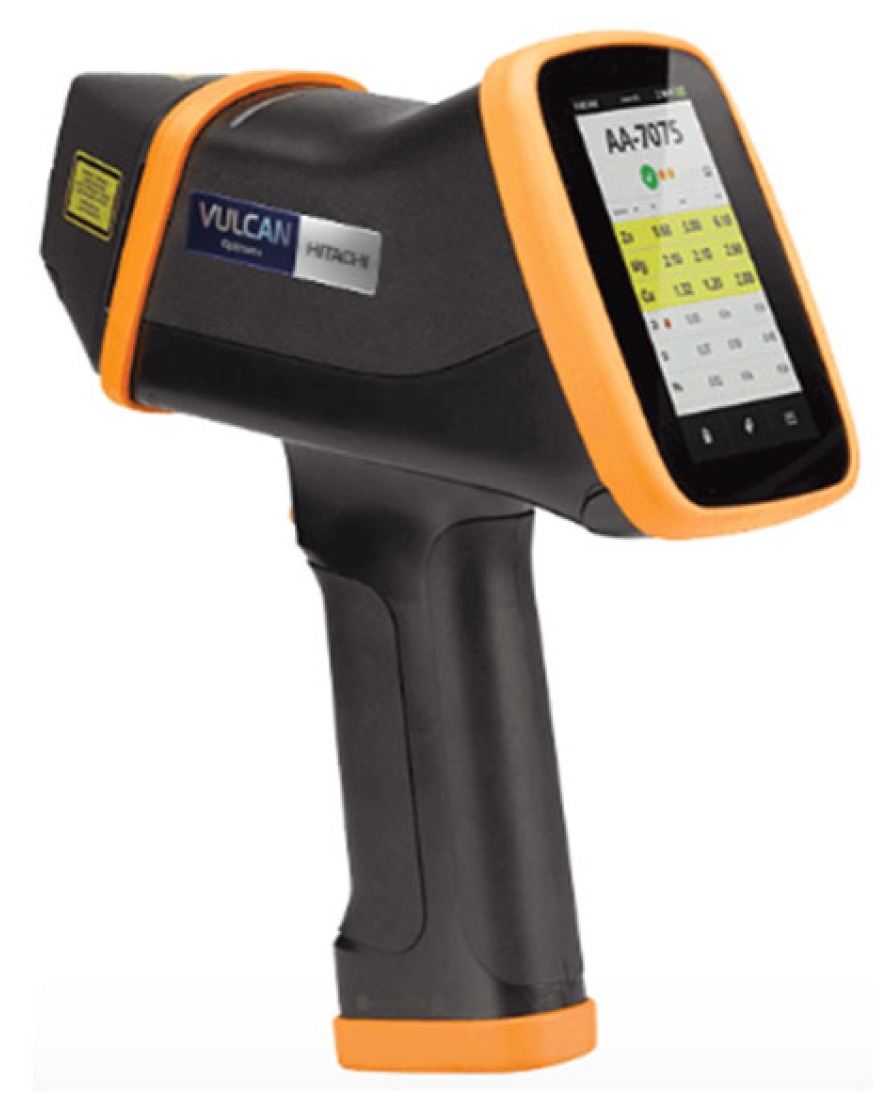
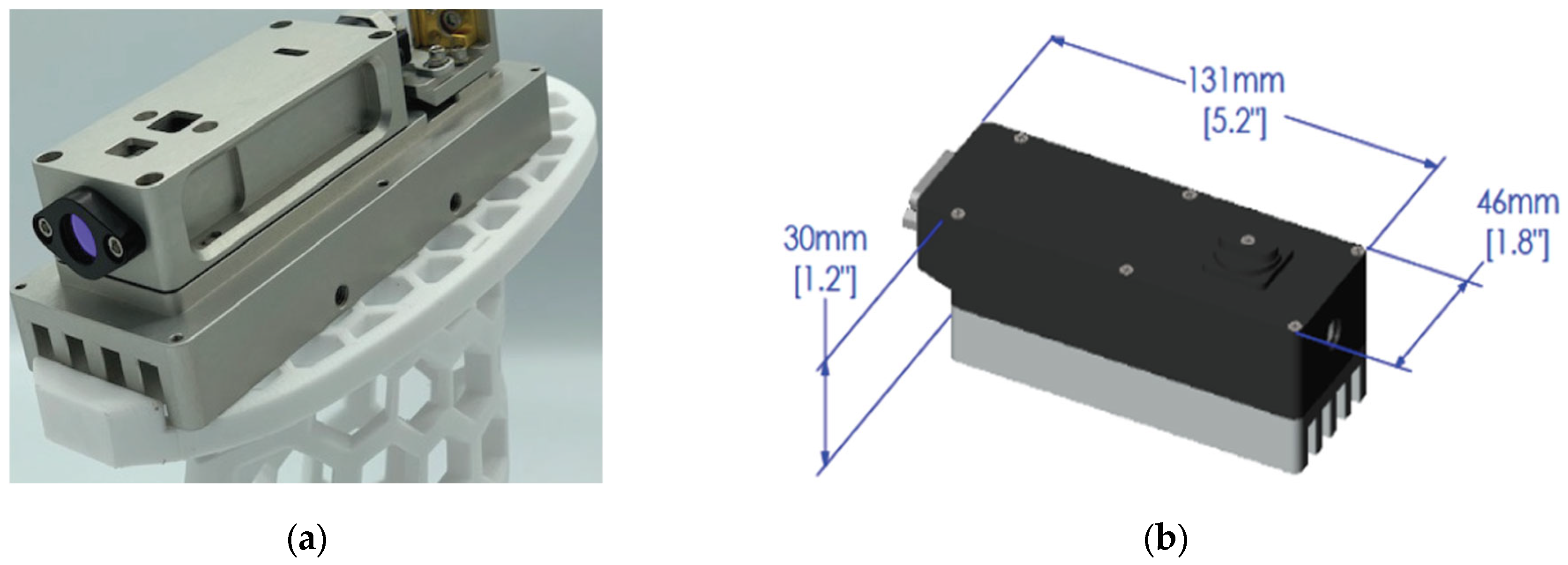
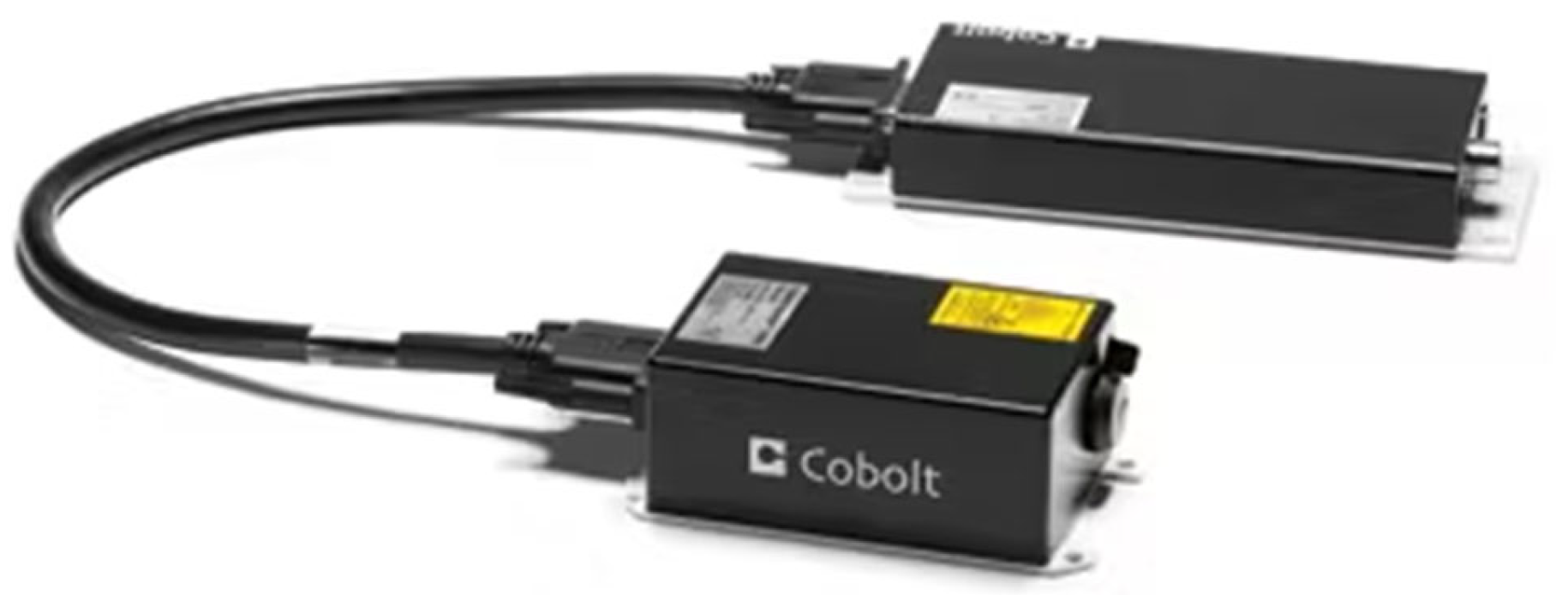
On the other hand, handheld instruments that use Laser-Induced Breakdown Spectroscopy (LIBS) offer an alternative to XRF. Two prohibitive factors, in relation to embedding such a device on robotic explorers, is the size of the system and the fact of requiring a detailed and time-consuming calibration using samples of known composition. Nevertheless, there exist in the market portable LIBS devices with a size of 28 cm × 11.5 cm × 5.5 cm, which are calibrated for specific applications (Figure 12). Further, a laser source for use in LIBS systems with compact design and dimensions, developed by Avantes, is shown in Figure 13. It can be seen that the dimensions of the laser source could possibly allow its integration with the robotic explorers. However, it must be noted that the spectrometer and electronic units (with unknown dimensions) need extra space. However, both the spectrometer and the electronic units could operate on the surface using cable connections. Another laser source with compact design is the Cobolt Tor laser by Hubner Photonics (Figure 14). The size of the laser head measures 125 × 70 × 45 mm. Again, the spectrometer and power source units could operate on the surface facilities.
Overall, similar to XRF devices, the LIBS analyzers must address challenges related to size and resistance to elevated hydrostatic pressures.
Mineral identification methods could provide valuable insights into the source seeking and contour following capabilities of the autonomous drilling explorers. X-ray diffraction (XRD) and Raman spectroscopy systems are highly effective tools for mineral identification. Historical applications of these techniques include their use in the Curiosity and Perseverance rovers, which utilized portable XRD and Raman spectroscopy systems for mineral analysis. Although there is no handheld or compact XRD system available, several portable Raman spectrometers do exist (Figure 15).
Both systems displayed in Figure 15 are of compact design with sizes of 22.5 × 3.8 × 10.9 cm and 9.3 × 5.7 × 4 cm, respectively (Figure 15a,b). Since these systems have not been calibrated for mineral identification, proper calibration and modification would be needed. Additionally, proper casing and insulation would be required for operation under high hydrostatic pressures.
Additional geophysical analysis techniques that can be used for the identification of specific minerals and mineral structures include ultraviolet (UV) and near-infrared (NIR) spectroscopy systems. These systems can identify different materials by measuring the absorbance, reflectance and transmittance of a particular region of the electromagnetic spectrum when a light (within the corresponding spectrum) shines onto a rock sample. The size of such sensors renders them as possible candidates for integration onto the robotic explorers without any modification. However, the development of water-tight casings would be a necessity.
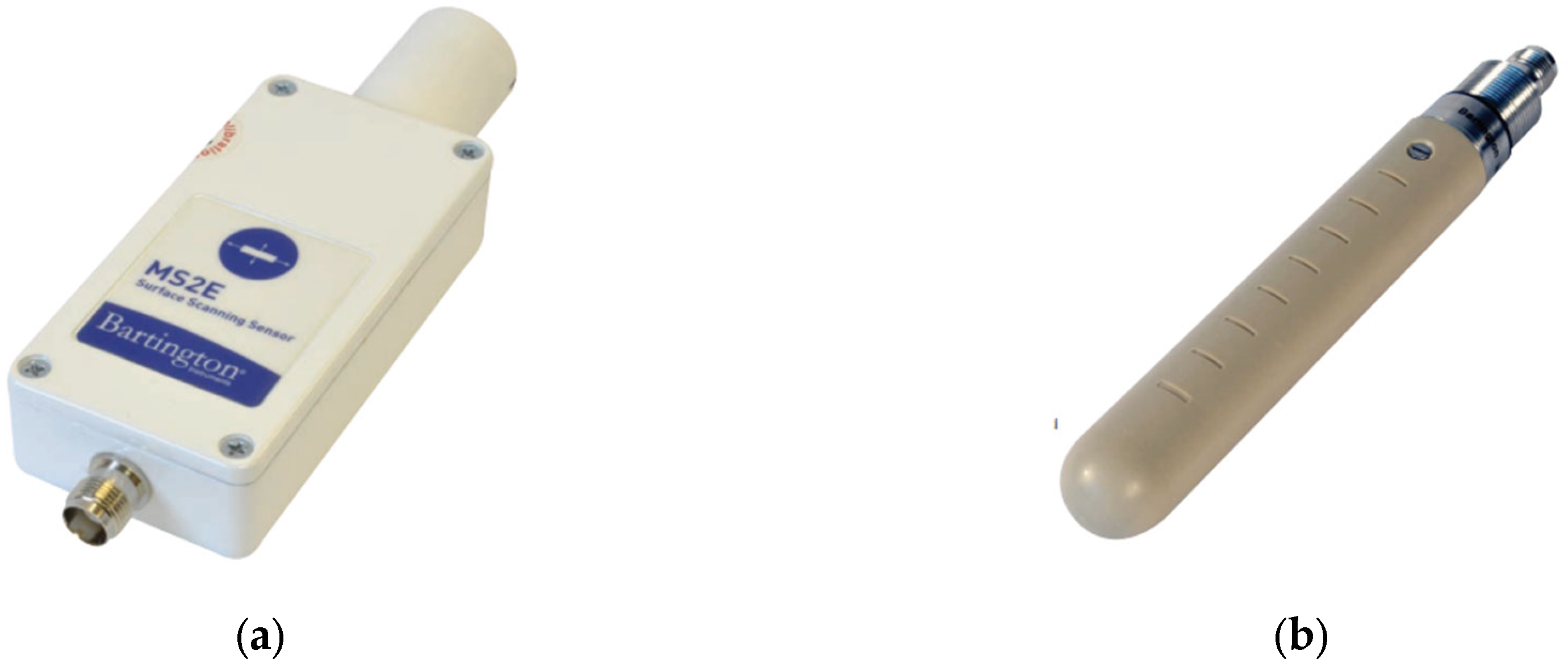
In addition to using elemental analysis techniques to detect the element of interest, other geophysical methods can also be employed for this purpose. For instance, magnetic susceptibility can be used to differentiate between diamagnetic, paramagnetic and ferromagnetic minerals. An example of this application, leveraging the k-means clustering algorithm, is presented in [97]. A sensor of this type is illustrated in Figure 16.
Moreover, besides the sensor for laboratory use (Figure 16a), there exists a downhole magnetic susceptibility sensor offered by the same company (Figure 16b). The downhole sensor measures the magnetic susceptibility in a radial pattern and can identify strata as narrow as 1.25 cm in thickness. The downhole sensor has a diameter of 2.15 cm and a length of 15.3 cm, which means that it could fit in the subsurface robots. However, proper insulation should be developed for use under hydrostatic pressure, as the sensor is only water resistant.
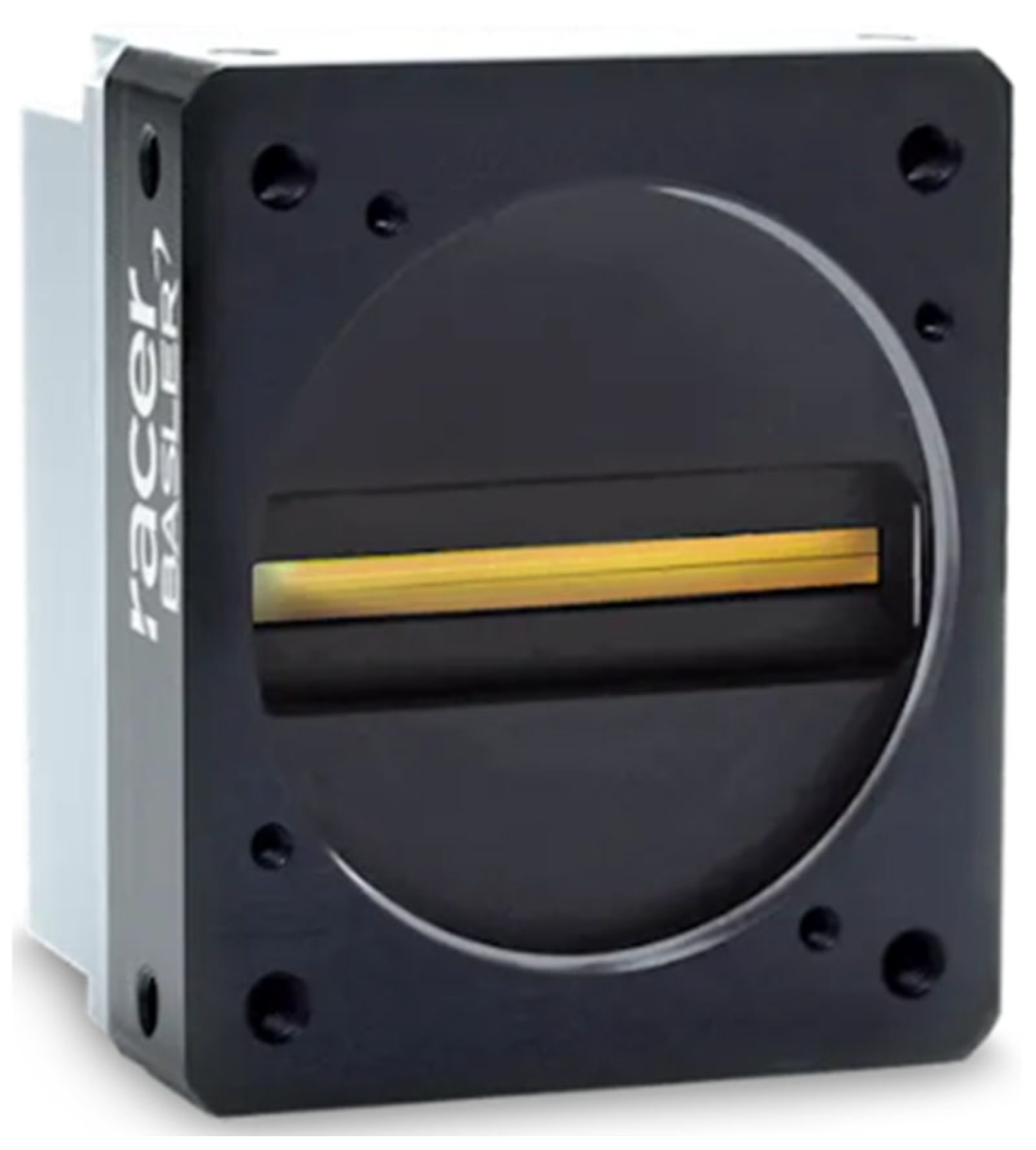
Finally, line-scan camera systems provide a means to capture visual or spectral data from subsurface materials, facilitating their identification and differentiation (Figure 17). The line-scan camera of Figure 17 has dimensions of 34 mm × 56 mm × 62 mm (L × W × H). Depending on the robot’s size, the specific camera or another similar system could fit into the robot’s design. However, appropriate casing would be required to ensure functionality in high-hydrostatic-pressure environments. Moreover, a light source should also be embedded near the camera system to ensure adequate illumination of the geomaterial.

4.7. Other Sensors

The subsurface autonomous robots must also be equipped with conductivity-temperature-depth (CTD) sensors to monitor the environmental conditions of the formations they are drilling through. Acquiring CTD data during drilling is crucial for ensuring system integrity and the robust functionality of the systems. One such sensor designed for AUVs is the MODEL 503 CTD by NBOSI Ocean Sensors (Figure 18).
The MODEL 503 CTD sensor has a diameter of 7.62 cm and a height of 5.08 cm. The temperature measurement range is between –5 °C to 60 °C, while the pressure limit reaches 1000 bar. Further, optic fiber CTD sensors have been developed in the literature with a sensor size in the order of mm [101]. However, no fiber-optic CTD sensor has been available on the market to date.
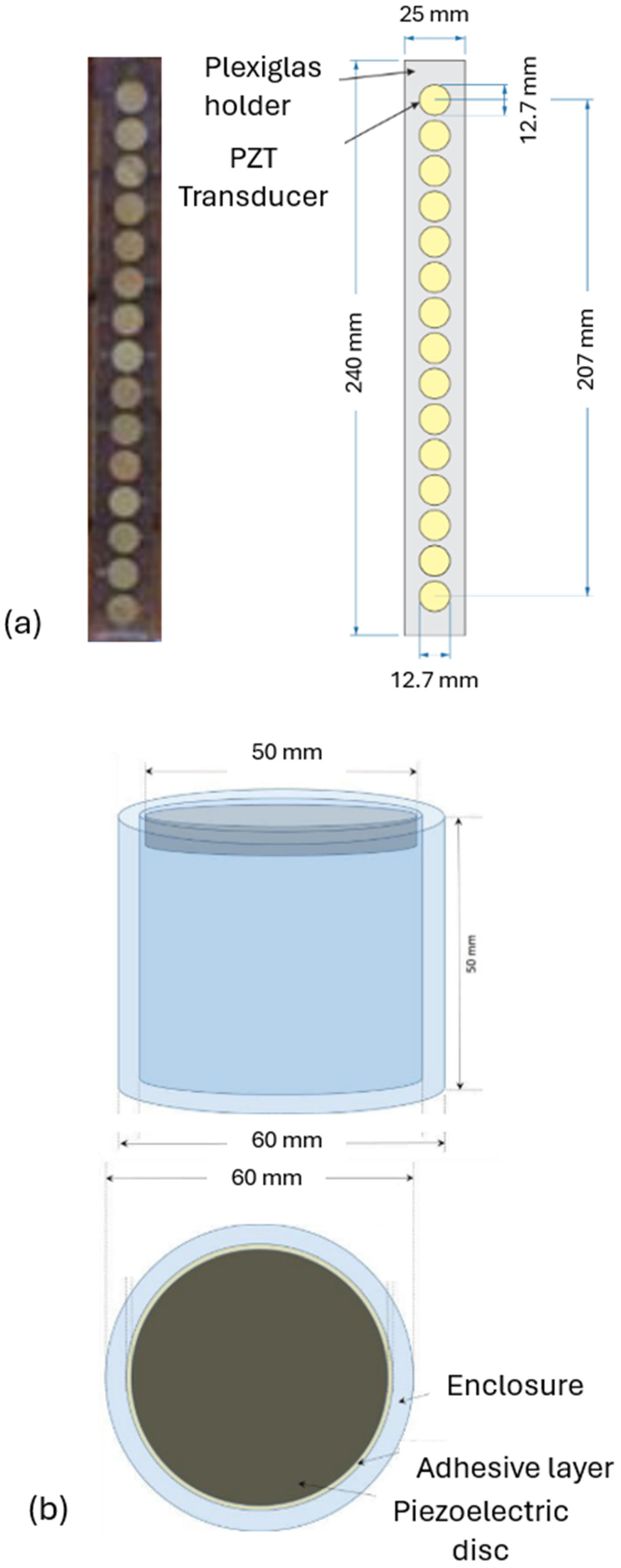
Table 3 presents indicative sensing devices used for acquiring geochemical, geomechanical and geophysical characteristics, along with their key specifications, including dimensions, resistance to elevated hydrostatic pressure, weight, potential hazardous radiation, and relevant references.

4.8. Sensor Fusion and Digital Twins

The integration of heterogeneous sensor data is essential for building coherent geological and mechanical models. Sensor fusion combines data from multiple modalities, acoustic, EM, gamma, and mechanical, into unified representations of the subsurface environment. The resulting multi-sensor models support the creation of digital twins, virtual replicas of the drilling system and surrounding geology. Digital twins can simulate real-time interactions between the tool and rock, enabling predictive control and failure prevention. In autonomous drilling, the digital twin functions as a continuously updated knowledge base, guiding operational decisions and optimizing trajectory planning.

5. Discussion and Future Perspectives

5.1. Interdisciplinary Integration: Bridging Geology and Robotics

The evolution of autonomous drilling technologies represents a fundamental convergence between traditionally distinct disciplines such as geology, rock mechanics, materials science, robotics, and data science. This interdisciplinary fusion lies at the heart of the next generation of mineral exploration systems [102]. As geological variability dictates mechanical behavior, and mechanical feedback informs geological interpretation, the boundary between exploration and engineering becomes increasingly blurred.
Linking geological modeling to robotic control systems enables drilling platforms to “understand” their environment and adapt to it autonomously. The integration of geotechnical parameters (e.g., UCS, GSI, Poisson’s ratio) into mechanical control algorithms ensures that operational parameters are continuously optimized in response to geological conditions.
However, this integration requires robust standardization of data formats and interoperability across sensor types. Geological data acquired through sensors such as acoustic, electromagnetic, and spectroscopic devices must be converted into compatible inputs for machine learning models.

5.2. Impacts on Applications to Critical Mineral Exploration

The integration of autonomous drilling technologies into critical mineral exploration has the potential to transform the efficiency, safety, and environmental footprint of CRM discovery. By leveraging real-time sensing, AI-driven control, and adaptive drilling strategies, robotic systems can optimize penetration rates and maintain borehole stability in heterogeneous and challenging geological formations that are traditionally difficult to access. This capability enables more precise targeting of high-grade ore zones, reduces the need for extensive surface infrastructure, and minimizes waste generation and environmental disturbance. Moreover, continuous subsurface monitoring and geochemical analysis during drilling provide richer datasets for resource modeling and decision making, accelerating exploration timelines and reducing costs. Collectively, these advancements not only enhance the technical feasibility of exploring deep and complex deposits but also support sustainable and responsible CRM development, addressing the growing global demand for materials critical to clean energy, digital technologies, and strategic industries.

5.3. Technical Challenges and Limitations

Despite significant progress in sensor technology and autonomous control, several challenges must be addressed before next-generation autonomous drilling systems become fully operational.
  • Miniaturization and Robustness:
While laboratory prototypes of sensors such as LIBS and XRF exist, their miniaturization for integration into small robotic systems remains a technical hurdle. Moreover, these sensors must withstand extreme environmental conditions such as high pressure, temperature, abrasive wear, and working below the water table, without compromising accuracy or data transmission.
  • Power Management:
Autonomous drilling systems operate in energy-limited environments, particularly in deep or confined boreholes where recharging or power tethering is impractical. Efficient power management through intelligent scheduling and low-power electronics is therefore critical. Research into high-density batteries, energy harvesting, and power-efficient microcontrollers is ongoing to extend mission duration.
  • Data Transmission:
As also highlighted previously, downhole communication continues to constrain system autonomy. Wireless transmission through rock or water-bearing formations is subject to severe attenuation and signal scattering. Hybrid telemetry systems and local edge processing can mitigate these issues, but a truly reliable, high-bandwidth solution remains an open challenge.
  • Calibration and Uncertainty:
Sensor data are inherently noisy and dependent on calibration conditions. Factors such as temperature, rock composition, and pressure can alter measurement baselines, especially for spectroscopic sensors. Developing adaptive calibration procedures and incorporating uncertainty quantification into control algorithms will improve system robustness.
  • System Complexity:
Integrating multiple sensing and actuation subsystems increases mechanical and computational complexity. Fault detection, redundancy management, and maintenance accessibility must be carefully designed to ensure reliability under field conditions. Modular architecture with standardized interfaces is a promising direction toward simplifying maintenance and system upgrades.

5.4. Environmental and Sustainability Considerations

The shift toward intelligent, sensor-driven autonomous drilling has significant implications for sustainability in mineral exploration. Traditional exploration techniques often involve large-scale surface disturbance, heavy infrastructure, and substantial energy consumption. Autonomous drilling robots, by contrast, can operate with minimal environmental footprint, targeting ore zones with high precision and reducing unnecessary excavation.
Moreover, in situ sensing reduces the need for extensive core recovery and surface transport, thereby lowering CO2 emissions associated with logistics. These benefits align with the principles of the European Green Deal and the Sustainable Development Goals (SDGs) for responsible consumption and production.
Beyond environmental performance, sustainability also encompasses social acceptance. Intelligent exploration systems can reduce human exposure to hazardous environments and promote safer, more transparent exploration practices. Real-time sensor data can be integrated into environmental monitoring frameworks, ensuring regulatory compliance and stakeholder trust.

5.5. Future Research Trends

Over the next decade, the development of autonomous drilling robots for CRM exploration is expected to advance along several targeted research directions that address both subsurface challenges and robotic system performance.
(a)
Miniaturized Multi-Parameter Sensors:
The integration of emerging materials such as graphene, photonic crystals, and silicon carbide will enable smaller, energy-efficient sensors with high sensitivity to mechanical stress, temperature, and chemical composition. These sensors will allow autonomous explorers to continuously monitor rock heterogeneity, detect mineralization zones, and adjust drilling parameters in real time.
(b)
Distributed Fiber-Optic Sensing:
Fiber-optic sensors, including those based on Bragg gratings, can measure strain, temperature, and vibration along the full length of the borehole. Embedded within drilling robots, these sensors will provide continuous profiling of both the geological environment and system health, supporting predictive maintenance and dynamic drilling optimization.
(c)
AI-Driven Adaptive Autonomy:
Deep reinforcement learning combined with digital twin simulations will allow robots to autonomously adapt their drilling strategies based on real-time geological feedback. By learning from interactions with heterogeneous rock layers, material zonation, and fluid conditions, these systems will optimize penetration rates, tool selection, and energy consumption for CRM extraction.
(d)
Advanced Materials and Additive Manufacturing:
Additive manufacturing will facilitate rapid production of site-specific drill bits, housings, and lightweight structural components, reducing downtime and improving adaptability to varied deposit conditions. Smart materials with self-healing or tunable stiffness properties could further enhance durability and performance under abrasive, high-salinity, or fractured environments.
(e)
Planetary and Cross-Domain Insights:
Research in autonomous drilling for terrestrial CRM exploration can inform extraterrestrial missions and vice versa. Technologies developed to operate reliably in remote, high-risk, and unpredictable subsurface conditions on Earth, such as unknown lithologies, fractured formations, or high-salinity zones, can directly support drilling on the Moon, Mars, or asteroids, fostering innovation in control systems, energy efficiency, and robotic resilience.

5.6. The Role of Artificial Intelligence in the Future Ecosystem

AI is expected to become the central “brain” of next-generation subsurface exploration ecosystems. Beyond simple control optimization, AI will orchestrate multi-agent systems, integrating drilling robots, surface communication hubs, and data analytics platforms. Cloud-based data assimilation and federated learning will allow distributed systems to share knowledge across exploration sites while maintaining data security.
Explainable AI (XAI) will also play a crucial role in ensuring transparency and trust. As AI decisions increasingly influence costly or risky operations, human operators must be able to interpret algorithmic reasoning. Visualization interfaces that translate AI-driven control actions into human-understandable insights will facilitate safer collaboration between humans and machines.

5.7. Robustness of Next-Generation Technologies

The long-term viability of autonomous drilling technologies is supported by the maturity and widespread adoption of their enabling components across multiple high-risk industries. Artificial intelligence and artificial neural networks (ANNs) are already operational in oil and gas drilling optimization, where real-time rate-of-penetration control and predictive maintenance systems have reduced non-productive time [103]. Digital twin technologies are routinely deployed in aerospace [104], manufacturing [105], and underground mining to simulate equipment behavior [106], forecast failures [107], and optimize operations under complex physical conditions. Autonomous robotic systems have demonstrated long-term operational reliability in deep-sea exploration [108], planetary rovers [109], and underground mining vehicles [110], operating in harsh, inaccessible environments. Similarly, advances in the high-density lithium-ion and solid-state battery technologies used in robotic systems have enabled long-duration autonomous missions [111]. The proven scalability, commercial investment, and cross-sector deployment of these technologies strongly indicate their persistence and availability for next-generation critical mineral exploration systems.

5.8. Long-Term Vision

The long-term vision of sensor-driven, robotic autonomous drilling extends far beyond CRM exploration. The same principles underpin future technologies for geothermal energy harvesting, carbon sequestration, and planetary subsurface missions. In each case, the fundamental challenge remains the same, to acquire high-resolution, real-time information from inaccessible environments and act upon it autonomously.
By embedding intelligence and adaptability directly into drilling systems, humanity moves closer to a new era of subsurface autonomy, where exploration becomes an interplay between geological discovery and robotic reasoning. The “geology-to-robotics” paradigm outlined in this review thus provides not only a technological framework but also a conceptual blueprint for future sustainable resource discovery.

6. Conclusions

This review has examined the interdisciplinary landscape of next-generation autonomous drilling technologies through the combined lenses of geology and robotics. It has emphasized that the transition “from geology to robotics” is not merely an engineering evolution but a systemic transformation in how subsurface environments are explored and understood.
The main conclusions can be summarized as follows:
  • Geological and Geomechanical Understanding is Foundational:
Characterizing lithological variability, stress regimes, and geomechanical parameters remains essential for designing adaptive drilling systems. Geological heterogeneity defines mechanical behavior, influencing borehole stability, penetration rate, and tool wear.
2.
Sensors Enable Intelligence and Autonomy:
Acoustic, electromagnetic, magnetic susceptibility, gamma ray, and spectroscopic sensors provide the critical data streams that allow drilling systems to perceive and interpret their environment. The integration of these sensors into robotic explorers forms the sensory backbone of autonomous exploration.
3.
Optimization through Artificial Intelligence:
Machine learning and reinforcement learning algorithms have emerged as powerful tools for real-time optimization of drilling parameters, predictive maintenance, and stability assessment. When coupled with digital twins, these AI systems create feedback loops that enable continuous learning and adaptation.
4.
System Integration and Power Efficiency are Key Challenges:
Miniaturization, power management, and reliable data transmission remain technical bottlenecks. Addressing these challenges requires innovation in materials, electronics, and energy-efficient design. Hybrid telemetry and on-board edge processing represent promising directions.
5.
Toward Sustainable and Responsible Exploration:
Autonomous drilling technologies can dramatically reduce the environmental footprint of mineral exploration. By minimizing surface disruption, enabling precise targeting, and integrating environmental sensors, robotic systems align with global sustainability and safety goals.
6.
Future Vision—Subsurface Autonomy:
The future of subsurface robotic exploration lies in fully autonomous, sensor-driven systems capable of understanding and interacting with their geological surroundings in real time. These systems will extend exploration capabilities to extreme environments on Earth and beyond, supporting the sustainable supply of CRMs necessary for a green and digital transition.
Despite significant advances in autonomous drilling technologies, several limitations remain. Most systems have been demonstrated primarily in laboratory or controlled environments, and their performance under extreme geological conditions, such as high temperatures, high pressures, and fractured or heterogeneous rock formations, remains insufficiently validated. The integration of multi-sensor data with AI control algorithms is still in its early stages, with challenges including sensor fusion, latency reduction, robust decision making under uncertainty, and the added complexity of signal analysis in harsh environments, where noise can obscure critical measurements. Miniaturization of sensors and components, while necessary for subsurface deployment, introduces additional technical constraints, including limited energy availability and computational capacity. Communication reliability in deep subsurface or remote environments is also a significant challenge, and ensuring human and personnel safety in partially or fully autonomous operations remains a priority. Furthermore, the deployment of these systems must address environmental monitoring, regulatory compliance, and public acceptance, which are not yet fully standardized.
Future research should focus on robust field testing of autonomous drilling systems in diverse and extreme geological settings to validate both performance and adaptability. Advances in sensor fusion and AI algorithms are needed to enable real-time predictive and adaptive control based on heterogeneous and noisy data. Innovations in energy-efficient system design, including power management, materials, and on-board processing, will be critical to extend operational duration and minimizing environmental impact. Finally, sustainable deployment strategies that integrate environmental sensors and decision-making frameworks are essential to ensure that exploration activities align with ecological and regulatory standards while maintaining safety for personnel.
In essence, next-generation deep drilling technologies mark a paradigm shift where geological intelligence meets robotic autonomy. By merging advanced sensing, data analytics, and AI-based control, the field is progressing toward a future in which deep Earth exploration is safer, faster, and more environmentally responsible.

Author Contributions

Conceptualization, N.A., P.K. and P.A.; writing original draft preparation, N.A. and P.K.; writing-review and editin, N.A., P.K. and P.A.; supervision, P.A.; funding acquisition, P.A. All authors have read and agreed to the published version of the manuscript.

Funding

This research was conducted in the frame of the MINOTAUR project that has received funding from the European Union’s Horizon Europe Research and Innovation Program under Grant Agreement No. 101178775.

Data Availability Statement

No new data were created or analyzed in this study. Data sharing is not applicable to this article.

Conflicts of Interest

The authors declare no conflicts of interest.

Abbreviations

The following abbreviations are used in this manuscript:
ANNArtificial Neural Networks
BTS Brazilian Tensile Strength
CCSConfined Compression Strength
CRMsCritical Raw Materials
DRIDrilling Rate Index
EUEuropean Union
GPRGround Penetrating Radar
GSIGeological Strength Index
HPHTHigh-Pressure High-Temperature
ICAImperialist Competitive Algorithm
IRIntact Rock
LIBSLaser-Induced Breakdown Spectroscopy
LWDLogging While Drilling
MSEMechanical Specific Energy
MWDMeasurement While Drilling
PDCPolycrystalline Diamond Compact Bit
PSOParticle Swarm Optimization
RDiDrillability Index of the Rock Mass
REEsRare Earth Elements
RM Rock Mass
RMRRock Mass Rating
ROPRate of Penetration
RPMRevolutions Per Minute
RQDRock Quality Designation
SDGSustainable Development Goals
SEDEXSedimentary Exhalative
SVMSupport Vector Machine
TBMTunnel Boring Machine
TCI Tungsten Carbide Insert Bit
UCSUniaxial/Unconfined Compressive Strength
UCTUniaxial/Unconfined Compression Test
VMSVolcanogenic Massive Sulphide
WOBWeight On Bit
XRFX-Ray Fluorescence

Appendix

Table A1. List of CRMs, respective deposit types, cut-off grades and deposit locations.
ElementDeposit TypeZonation/Chemical GradientLocationCut-Off GradeEU LocationsReferences
Magnesium (Mg)Sedimentary (magnesite, dolomite)Gradient (stratiform or disseminated)Brazil, India, China, Turkey~20–25% MgO equivalent [4,5,112,113]
Metamorphic (talc)Gradient (stratiform)China, India, USA, Brazil, Australia>50% talc in the deposit
Hydrothermal (magnesite, dolomite, talc)VeinBrazil (talc) Greece, Austria (magnesite, dolomite), Italy (talc)
Brine Japan, Israel, USA0.5–1%
Bauxite (Al)Lateritic bauxiteGradient (stratiform) Australia, Guinea, Brazil, China>40% Al2O3 and <5% SiO2 [114,115,116]
Karst bauxite Gradient (stratiform) Jamaica, China>40% Al2O3 and <5% SiO2Greece
Copper (Cu)PorphyryDisseminatedPeru, Chile0.2–0.5% [7,20]
Sediment stratiform (SSC)Gradient (stratiform)Central Africa Poland
Volcanogenic Massive Sulfide (VMS)GradientCanada, Australia
Skarn Peru
Lithium (Li)Hard rock pegmatitesVeinAustralia, Canada, China0.3–0.5% Li2O [25,117]
Brine Chile, China, Argentina150 mg/L
FeldsparAlkaline igneous rock and pegmatitesVeinBrazil, India, China15–25% feldspar [118,119,120]
HydrothermalVeinJapan20–30% feldsparItaly
Sedimentary GradientBrazil, China20–30% feldspar
Cobalt (Co)Sediment-hosted stratiformCo-Ni zoning, increasing Fe-Mn oxides with depthDemocratic Republic of Congo (DRC), Zambia0.1–0.5% CoPoland[121]
Magmatic Co-rich base, Ni-PGE enrichment at top Finland, Norway, Sweden
Lateritic
Tungsten (W)SkarnW-enriched zones near granite contacts, Fe-Ca silicate gradientsChina, Canada0.3–0.5% WO3 Austria[122,123]
VeinHigh-grade W in quartz veinsBolivia Portugal, UK
PorphyryW-Mo enrichment in core, Cu-Au in outer shellChina
Antimony (Sb) Vein High concentration in core, gradual outward transition to pyrite and quartzUSA, China Greece[124,125]
SkarnHigh concentration in core, gradual outward transition to other mineral typesRussia, China
SEDEXVertical zonation in association with other sulfides (sphalerite, galena)China, Canada
Baryte (Ba)Sedimentary (stratiform)Layers within shale, limestone, or sandstoneChinaAround 30% BaSO4 [126]
VeinHigh concentration in core with a decrease in concentration outwardUSA Italy
Bismuth (Bi)SkarnOccurrence at the interface of the intrusionChina, Vietnam [127]
Vein Canada
Beryllium (Be)PegmatiteProgression from beryllium-rich zones to granite or feldspar mineralization outward.USA, China [128,129]
SkarnHigh concentrations close to the intrusion USA, China
Gallium (Ga)Bauxite byproductConcentrations increasing downwards through the bauxite profileAustralia, China [130]
Polymetallic ores (zinc, tin ores)Concentrated in deeper parts of the depositChina, Russia
Hafnium (Hf)Magmatic Typically part of minerals like bastnasite and monaziteRussia [131,132]
Placer deposits (heavy mineral sands)Highest concentrations typically found in the coarser grains of zircon-rich sandsAustralia, South Africa France
Heavy REEsMagmatic (carbonatite)Higher concentrations of HREEs in certain parts of the carbonatite body, especially in the centerBrazil, China [133,134,135]
PegmatiteTypically concentrated in the core of the depositAustralia, USA
Alluvial depositsSecondary deposits formed by the weathering and erosion of primary REE-rich oresIndia, Brazil
Light REEsIon adsorption claysLREEs are often enriched in the weathered layersChina, Vietnam
PegmatiteTypically concentrated in the core of the depositAustralia, USA
Alluvial depositsSecondary deposits formed by the weathering and erosion of primary REE-rich oresIndia, Brazil
Nickel (Ni)Laterite depositsHigher concentration of nickel in the deeper, more weathered layersAustralia Greece[136,137]
Magmatic (sulfide) Concentrations increase toward the center of the depositCanada, Russia
Boron (B)Sedimentary (stratiform)Lenticular layers between claystones or other sedimentaryUSA, Turkey [138,139]
Sedimentary (evaporites)Precipitation of borate minerals in closed-basin lakesTurkey
Brine China, USA
Coking CoalSedimentary (stratiform)Successive layers between sandstone and shaleChina, Australia Poland, Czech Republic[140,141,142]
Germanium (Ge)Sedimentary-hosted in zinc sulfide (sphalerite) depositsStratiform sphalerite layersChina, USA [143,144,145]
Sedimentary-hosted in coal depositsCoal layersChina, Russia, USA
Minor component in sediment stratiform copper deposits (SSC)Ge-enriched
chalcopyrite veins in black shale
Poland
Manganese (Mn)SedimentaryHigh-grade oxide ores in lower Mn zone, carbonate-rich ores in upper Mn zoneSouth Africa, Gabon, Australia 20% Mn [146,147,148]
HydrothermalHigh-purity veins, Mn-carbonates in outer zoneChina, USAUkraine
LateriticEnriched Mn-oxides in upper zones; Mn-clay horizons in lower zonesCôte d’Ivoire, Brazil
GraphiteMetamorphic (flake graphite)Upper Zone: weathered graphite-rich regolith;
Middle Zone: high-purity crystalline flake graphite;
Lower Zone: disseminated graphite in schist/gneiss
China, Canada, Madagascar2–5% total graphitic carbon [149,150,151,152]
HydrothermalPure crystalline graphite veins in metamorphic host rocksIndia
SedimentaryAmorphous graphite in layers of different purityChina
Phosphate rockSedimentaryHigh-grade (30–40% P2O5) ores in upper zones, lower purity in lower zonesMorocco [153,154]
MagmaticHigh grades in core zone (40–50% P2O5)Brazil
Niobium (Nb)MagmaticCarbonatite-hosted, higher concentration in core zones (>2% Nb2O5) with lowering concentration outwardsBrazil, Canada [155,156,157]
Silicon metal (Si)Magmatic (pegmatite)High-purity quartz deposits; nearly pure SiO2 (>99.99%) in core zone going to feldspar in intermediate zone and mixed silicate minerals in the outer zoneChina, Brazil, Norway France, Germany[158]
Scandium (Sc)LateriticSurface zone with scandium-enriched iron oxides with lower scandium content in the deeper zonesChina [159,160,161]
Magmatic (carbonatite)Scandium-rich apatite–magmatite ores occur in the core zone, while scandium is dispersed in the outer zoneRussia
Strontium (Sr)SedimentaryCore Zone: thick celestine layers (>85% SrSO4);
Intermediate zone: celestine mixed with limestone or gypsum;
Outer Zone: disseminated celestine in carbonate rocks
China, Mexico Spain[118,162,163]
Platinum group metals (PGMs)Magmatic (layered mafic intrusions)Top layers: enriched in chromite and minor PGMs;
Middle layers: sulfide-rich zones with high PGM concentrations;
Bottom layers: lower PGM content
South Africa, USA [164,165,166]
Magmatic (sulfide)Core Zone: High palladium (Pd), platinum (Pt) and Ni-Cu (nickel-copper) sulfides;
Peripheral Zone: lower PGM content, more iron sulfides
Russia
Sedimentary (placer)Heavy mineral-rich layers: concentrated platinum grains in river gravels;
Lighter sand layers: less PGM content, more quartz and feldspar
Russia
Titanium metal (Ti)Magmatic Titanium-bearing minerals are concentrated in specific layers within large igneous bodies. Core Zone: high-grade titanomagnetite-ilmenite ore;
Outer Zone: disseminated titanium minerals within host rock;
Peripheral Zone: gradual transition into non-titanium-bearing gabbros
China, Norway>0.5% TiO2 [167,168,169,170,171]
Sedimentary (placer)Stratified structure, with layers rich in Ti interspersed with lighter sand layersChina, India, Australia
Vanadium (V)Magmatic (layered mafic intrusions)Lower Zones: Fe-rich magnetite with low vanadium content;
Middle Zones: titanomagnetite-rich, highest vanadium concentrations;
Upper Zones: more titanium-rich, lower vanadium grades
South Africa, China, Russia, Brazil0.45% V2O5 [172,173,174,175,176]
SedimentaryOrganic-rich layers: highest vanadium content, associated with clay minerals;
Oxidized layers: lower vanadium content, more iron oxides
China
Tantalum (Ta)Magmatic (pegmatite)Core Zone: high-grade tantalum minerals (tantalite, microlite);
Intermediate Zone: lithium-bearing minerals;
Outer Zone: quartz-feldspar-rich, with minor rare metals
Australia, Democratic Republic of Congo, Canada [177,178,179]
Magmatic (carbonatite)Core Zone: high niobium (Nb)-Ta content;
Outer Zone: enriched in rare earths (REE minerals like bastnäsite)
Australia, Democratic Republic of Congo, Brazil
Helium (He)SedimentaryHelium-rich natural gas fields. Core Zone: high helium concentration (≥0.3%) in deep gas fields;
Intermediate Zone: moderate helium levels (0.1–0.3%), mixed with methane and nitrogen;
Outer Zone: low helium content (<0.1%)
USA, Qatar, Algeria [180]
FluorsparHydrothermalVeins. Core Zone: high-grade fluorite; Intermediate Zone: fluorite with calcite or quartz; Outer Zone: lower-grade or disseminated fluoriteRussia, Mexico, Mongolia [181,182,183,184]
SedimentaryCentral Zone: high-grade fluorite in limestone;
Outer Zone: disseminated fluorite in dolomite
Spain
Arsenic (As)Hydrothermal (veins)Byproduct of gold mining. Vein Core: high-grade arsenopyrite and gold ore;
Intermediate Zone: realgar, orpiment, and quartz veins;
Outer Zone: disseminated arsenic in altered rock
China [185,186,187,188,189]
Hydrothermal (VMS)Associated with copper, zinc, and lead sulfide ores. Central Zone: arsenopyrite with chalcopyrite, sphalerite, and pyrite;
Surrounding Zone: disseminated arsenic in altered volcanic rocks
Canada

References

  1. European Commission. Critical Raw Materials Resilience: Charting a Path Towards Greater Security and Sustainability; Publications Office of the European Union: Luxembourg, 2020. [Google Scholar]
  2. MINOTAUR Consortium. T1.2—Requirements to Next-Generation Deep Drilling Technologies (M1–M6); MINOTAUR Consortium: Athens, Greece, 2024. [Google Scholar]
  3. Hoek, E.; Brown, E.T. Practical estimates of rock mass strength. Int. J. Rock Mech. Min. Sci. 1997, 34, 1165–1186. [Google Scholar] [CrossRef]
  4. Kadir, S.; Kolayli, H.; Eren, M. Genesis of sedimentary- and vein-type magnesite deposits at Kop Mountain, NE Turkey. Turk. J. Earth Sci. 2013, 22, 98–114. [Google Scholar] [CrossRef]
  5. Grieco, G.; Cavallo, A.; Marescotti, P.; Crispini, L.; Tzamos, E.; Bussolesi, M. The Formation of Magnesite Ores by Reactivation of Dunite Channels as a Key to Their Spatial Association to Chromite Ores in Ophiolites: An Example from Northern Evia, Greece. Minerals 2023, 13, 159. [Google Scholar] [CrossRef]
  6. Lowell, J.D.; Guilbert, J.M. Lateral and Vertical Alteration-Mineralization Zoning in Porphyry Ore Deposits. Econ. Geol. 1970, 65, 373–408. [Google Scholar] [CrossRef]
  7. Imamalipour, A.; Mousavi, R. Vertical geochemical zonation in the Masjed Daghi porphyry copper-gold deposit, northwestern Iran: Implications for exploration of blind mineral deposits. Geochem. Explor. Environ. Anal. 2018, 18, 120–131. [Google Scholar] [CrossRef]
  8. Mcqueen, K.G. Ore Deposit Types and Their Primary Expressions; University of Canberra: Canberra, Australia, 2005. [Google Scholar]
  9. Liu, Y.; Hollings, P.; Sun, J.; Brzozowski, M.J. Hydrothermal evolution from porphyry- to epithermal-style mineralization in the Naozhi deposit, NE China. Ore Geol. Rev. 2022, 150, 105131. [Google Scholar] [CrossRef]
  10. Ridley, J. Ore Deposit Geology; Cambridge University Press: Cambridge, UK, 2013. [Google Scholar]
  11. Evans, A.M. Ore Geology and Industrial Minerals: An Introduction; Wiley-Blackwel: Oxford, UK, 1993. [Google Scholar]
  12. Guilbert, J.M.; Park, C.F. The Geology of Ore Deposits; Waveland Press: Long Grove, IL, USA, 2007. [Google Scholar]
  13. Mahdiyanfar, H.; Farzamian, M. Identification of hidden mineralized and non-mineralized zones using spectral analysis of geochemical data. Int. J. Min. Geo-Eng. 2021, 79–87. [Google Scholar]
  14. Park, C.F.; MacDiarmid, R.A. Ore Deposits; W.H. Freeman and Company: San Francisco, CA, USA, 1975. [Google Scholar]
  15. Knappett, J.; Craig, R.F. Craig’s Soil Mechanics; Routledge: Abingdon, UK, 2019. [Google Scholar] [CrossRef]
  16. Gandhi, S.M.; Sarkar, B.C. Essentials of Mineral Exploration and Evaluatio; Elsevier: Amsterdam, The Netherlands, 2016. [Google Scholar]
  17. Yenice, H.; Özdoğan, M.V.; Özfırat, M.K. A sampling study on rock properties affecting drilling rate index (DRI). J. Afr. Earth Sci. 2018, 141, 1–8. [Google Scholar] [CrossRef]
  18. Skrzypkowski, K.; Zagórski, K.; Zagórska, A.; Sengani, F. Access to Deposits as a Stage of Mining Works. Energies 2022, 15, 8740. [Google Scholar] [CrossRef]
  19. Richards, J.P. Magmatic to hydrothermal metal fluxes in convergent and collided margins. Ore Geol. Rev. 2011, 40, 1–26. [Google Scholar] [CrossRef]
  20. Sillitoe, R.H. Porphyry Copper Systems. Econ. Geol. 2010, 105, 3–41. [Google Scholar] [CrossRef]
  21. Meinert, L.D. Skarns and Skarn Deposits. Geosci. Can. 1992, 19, 115–132. [Google Scholar]
  22. Meinert, L.D.; Dipple, G.; Nicolescu, S. World Skarn Deposits. Econ. Geol. 2005, 100, 299–336. [Google Scholar]
  23. London, D. A petrologic assessment of internal zonation in granitic pegmatites. Lithos 2014, 184–187, 74–104. [Google Scholar] [CrossRef]
  24. Müller, A.; Simmons, W.; Beurlen, H.; Thomas, R.; Ihlen, P.M.; Wise, M.; Roda-Robles, E.; Neiva, A.M.; Zagorsky, V. A proposed new mineralogical classification system for granitic pegmatites—Part I: History and the need for a new classification. Can. Mineral. 2022, 60, 203–227. [Google Scholar] [CrossRef]
  25. Bradley, D.C. ADM and LMS. Mineral-Deposit Model for Lithium-Cesium-Tantalum Pegmatites. In Mineral Deposit Models for Resource Assessment; ADM and LMS: Reston, VA, USA, 2017. [Google Scholar]
  26. Turkmen, S.; Ozguler, E.; Ertunc, A. Engineering properties of the magmatic rocks at the Pamukluk Dam site, Turkey. Bull. Eng. Geol. Environ. 2001, 60, 19–22. [Google Scholar] [CrossRef]
  27. Brady, B.; Brown, E. Rock Mechanics; Springer: Berlin/Heidelberg, Germany, 2006. [Google Scholar]
  28. Salih, S.J.; Alshkane, Y. Statistical Analysis of Mechanical and Physical Properties of Igneous Rocks. J. Garmian Univ. 2018, 5, 174–189. [Google Scholar] [CrossRef]
  29. Danciu, C.; Marchiș, D.; Cucăilă, S. The Influence of Physical Parameters on the Mechanical Characteristics of Some Volcanic Magmatic Rocks of the Andesite Type. Min. Rev. 2021, 27, 30–41. [Google Scholar] [CrossRef]
  30. Hedenquist, J.W.; Lowenstern, J.B. The role of magmas in the formation of hydrothermal ore deposits. Nature 1994, 370, 519–527. [Google Scholar] [CrossRef]
  31. Pirajno, F. Hydrothermal Processes and Mineral Systems; Springer: Berlin/Heidelberg, Germany, 2009. [Google Scholar]
  32. Groves, D.I.; Goldfarb, R.J.; Gebre-Mariam, M.; Hagemann, S.G.; Robert, F. Orogenic gold deposits: A proposed classification in the context of their crustal distribution and relationship to other gold deposit types. Ore Geol. Rev. 1998, 13, 7–27. [Google Scholar] [CrossRef]
  33. Jamieson, J.W.; Hannington, M.D.; Petersen, S.; Tivey, M.K. Volcanogenic Massive Sulfides. In Encyclopedia of Marine Geosciences; Springer: Dordrecht, Netherlands, 2014; pp. 1–9. [Google Scholar] [CrossRef]
  34. Franklin, J.; Gibson, H.L.; Jonasson, I.; Galley, A. Volcanogenic massive sulfide deposits. Econ. Geol. 2005, 100, 523–560. [Google Scholar]
  35. Hedenquist, J.W.; Gonzalez-Urien, E.; Arribas, A. Exploration for Epithermal Gold Deposits. Soc. Econ. Geol. 2000, 13, 245–277. [Google Scholar] [CrossRef]
  36. Rottier, B.; Kouzmanov, K.; Casanova, V.; Bouvier, A.S.; Baumgartner, L.P.; Wälle, M.; Fontboté, L. Tracking fluid mixing in epithermal deposits—Insights from in-situ δ18O and trace element composition of hydrothermal quartz from the giant Cerro de Pasco polymetallic deposit, Peru. Chem. Geol. 2021, 576, 120277. [Google Scholar] [CrossRef]
  37. Leach, D.L.; Taylor, R.D.; Fey, D.L.; Diehl, S.F.; Saltus, R.W. A Deposit Model for Mississippi Valley-Type Lead-Zinc Ores; Geological Survey: Reston, VA, USA, 2010. [Google Scholar] [CrossRef]
  38. Ece, Ö.I.; Ercan, H.Ü. Global Occurrence, Geology and Characteristics of Hydrothermal-Origin Kaolin Deposits. Minerals 2024, 14, 353. [Google Scholar] [CrossRef]
  39. Pereira, M.L.; Zanon, V.; Fernandes, I.; Pappalardo, L.; Viveiros, F. Hydrothermal alteration and physical and mechanical properties of rocks in a volcanic environment: A review. Earth Sci. Rev. 2024, 252, 104754. [Google Scholar] [CrossRef]
  40. Yardley, B.W.D.; Cleverley, J.S. The role of metamorphic fluids in the formation of ore deposits. Geol. Soc. Lond. Spec. Publ. 2015, 393, 117–134. [Google Scholar] [CrossRef]
  41. Winter, J.D. Principles of Igneous and Metamorphic Petrology; Pearson: Boston, MA, USA, 2014. [Google Scholar]
  42. Wenk, H.-R.; Yu, R.; Vogel, S.; Vasin, R. Preferred Orientation of Quartz in Metamorphic Rocks from the Bergell Alps. Minerals 2019, 9, 277. [Google Scholar] [CrossRef]
  43. Nagurney, A.B.; Caddick, M.J.; Pattison, D.R.M.; Michel, F.M. Preferred orientations of garnet porphyroblasts reveal previously cryptic templating during nucleation. Sci. Rep. 2021, 11, 6869. [Google Scholar] [CrossRef]
  44. Abdaqadir, Z.; Alshkane, Y. Physical and Mechanical Properties of Metamorphic Rocks. J. Garmian Univ. 2018, 5, 160–173. [Google Scholar] [CrossRef]
  45. Boggs, S., Jr. Principles of Sedimentology and Stratigraphy; Pearson Prentice Halt: Upper Saddle River, NJ, USA, 2006. [Google Scholar]
  46. Tucker, M.E.; Wright, V.P. Carbonate Sedimentology; Blackwell Publishing: Oxford, UK, 1990. [Google Scholar]
  47. Warren, J. Evaporites; Springer: Dordrecht, Netherlands, 2016; pp. 1–8. [Google Scholar] [CrossRef]
  48. Dill, H.G. The “chessboard” classification scheme of mineral deposits: Mineralogy and geology from aluminum to zirconium. Earth Sci. Rev. 2010, 100, 1–420. [Google Scholar] [CrossRef]
  49. Hein, J.R.; Koschinsky, A. Deep-Ocean Ferromanganese Crusts and Nodules. In Treatise on Geochemistry; Elsevier: Amsterdam, The Netherlands, 2014; pp. 273–291. [Google Scholar] [CrossRef]
  50. Kesler, S.E.; Simon, A.F. Mineral Resources, Economics and the Environment; Cambridge University Press: Cambridge, UK, 2017. [Google Scholar]
  51. Hoek, E.; Marinos, P.G.; Marinos, V.P. Characterization and engineering properties of tectonically undisturbed but lithologically varied sedimentary rock masses. Int. J. Rock Mech. Min. Sci. 2005, 42, 277–285. [Google Scholar] [CrossRef]
  52. Yan, C.; Deng, J.; Yu, B. Wellbore Stability in Oil and Gas Drilling with Chemical-Mechanical Coupling. Sci. World J. 2013, 2013, 720271. [Google Scholar] [CrossRef] [PubMed]
  53. Wang, J.; Qi, M.; Long, B.; Ma, H. Technical innovation in the “Beishan No. 1” hard rock tunnel boring machine for high-gradient spiral tunnels. Front. Eng. Manag. 2024, 11, 175–179. [Google Scholar] [CrossRef]
  54. Zarei, H.R.; Uromeihy, A.; Sharifzadeh, M. Identifying geological hazards related to tunneling in carbonate karstic rocks—Zagros, Iran. Arab. J. Geosci. 2012, 5, 457–464. [Google Scholar] [CrossRef]
  55. Kanji, M.A. Critical issues in soft rocks. J. Rock Mech. Geotech. Eng. 2014, 6, 186–195. [Google Scholar] [CrossRef]
  56. Ma, H.; Yin, L.; Gong, Q.; Wang, J. TBM tunneling in mixed-face ground: Problems and solutions. Int. J. Min. Sci. Technol. 2015, 25, 641–647. [Google Scholar] [CrossRef]
  57. Li, F.; Hu, Z.; Zhang, Y.; An, X.; Ren, X. Tunnel surrounding rock stability analysis based on geological condition reconstruction and karst development prediction. Arab. J. Geosci. 2022, 15, 1533. [Google Scholar] [CrossRef]
  58. Available online: https://trenchlesstechnology.com/ (accessed on 3 March 2025).
  59. Available online: https://www.akkerman.com/ (accessed on 3 March 2025).
  60. Thomson, I.; Krasuk, R.; Silva, N.; Romero, K. Hybrid Drill Bit Improves Drilling Performance in Heterogeneous Formations in Brazil. In Brasil Offshore; SPE: Richardson, TX, USA, 2011. [Google Scholar] [CrossRef]
  61. Alfonzo, N.; Carlos Minda, J.; Gonzalez, H. Integral drilling technique for heterogeneous formation sections: Converting challenges into success. In American Association of Drilling Engineers; Saudi Aramco: Dhahran, Saudi Arabia, 2024. [Google Scholar]
  62. Available online: https://www.drillwerk.com/ (accessed on 5 March 2025).
  63. Available online: https://www.sml-pdcbit.com/ (accessed on 6 March 2025).
  64. Available online: https://www.pdcbit.net/ (accessed on 6 March 2025).
  65. Nilot, E.A.; Fang, G.; Elita Li, Y.; Tan, Y.Z.; Cheng, A. Real-time tunneling risk forecasting using vibrations from the working TBM. Tunn. Undergr. Space Technol. 2023, 139, 105213. [Google Scholar] [CrossRef]
  66. Available online: https://www.slb.com/ (accessed on 6 March 2025).
  67. Inggs, M.R.; Langman, A.; Kothari, K.M.; du Toit, L.J.; Hanson, D.R. Drill head mounted obstacle avoidance radar. In Proceedings of the IGARSS 2005—IEEE International Geoscience and Remote Sensing Symposium, Seoul, Korea, 25–29 July 2005. [Google Scholar]
  68. Liu, R.-M.; Zhang, W.-X.; Chen, W.-X.; Liang, P.-F.; Li, X.-H.; Tong, Z.-X. Factors and detection capability of look-ahead logging while drilling (LWD) tools. Pet. Sci. 2025, 22, 850–867. [Google Scholar] [CrossRef]
  69. Aregbe, A.G. Wellbore Stability Problems in Deepwater Gas Wells. World J. Eng. Technol. 2017, 5, 626–647. [Google Scholar] [CrossRef]
  70. Wu, Z.; Fan, Y.; Chen, H. Experimental Study on Drilling Signal Characteristics of PDC Drill Bit in Media of Different Strengths and Identification of Weak Media. Sensors 2024, 24, 7852. [Google Scholar] [CrossRef] [PubMed]
  71. Chavez, C.; Davis, E.S.; Chillara, V.; Sinha, D.N.; Pantea, C. Development of a 3D Acoustic Borehole Integrity Monitoring System. In Proceedings of the 2019 IEEE International Ultrasonics Symposium (IUS), San Diego, CA, USA, 21–24 October 2019. [Google Scholar]
  72. Zhang, K.; Zhao, X.; Zhang, Z. Influences of tunnelling parameters in tunnel boring machine on stress and displacement characteristics of surrounding rocks. Tunn. Undergr. Space Technol. 2023, 137, 105129. [Google Scholar] [CrossRef]
  73. Xie, W.Q.; Zhang, X.P.; Tang, S.H.; Liu, X.L.; Li, X.F.; Zhang, Q.; Yan, F.Y.; Xu, C.; Liu, Q.S. Fast perception of rock mass strength and integrity in TBM tunnelling using in-situ penetration test. Tunn. Undergr. Space Technol. 2023, 141, 105358. [Google Scholar] [CrossRef]
  74. Kahraman, S. Rotary and percussive drilling prediction using regression analysis. Int. J. Rock Mech. Min. Sci. 1999, 36, 981–989. [Google Scholar] [CrossRef]
  75. Yenice, H. Determination of Drilling Rate Index Based on Rock Strength Using Regression Analysis. An. Da Acad. Bras. De Ciências 2019, 91, e20181095. [Google Scholar] [CrossRef]
  76. Hoseinie, S.H.; Aghababaei, H.; Pourrahimian, Y. Development of a new classification system for assessing of rock mass drillability index (RDi). Int. J. Rock Mech. Min. Sci. 2008, 45, 1–10. [Google Scholar] [CrossRef]
  77. Kelessidis, V.G. Rock drillability prediction from in situ determined unconfined compressive strength of rock. J. South. Afr. Institue Min. Metall. 2011, 111, 429–436. [Google Scholar]
  78. Chen, X.; Yang, J.; Gao, D. Drilling Performance Optimization Based on Mechanical Specific Energy Technologies. In Drilling; InTech: Rijeka, Croatia, 2018. [Google Scholar] [CrossRef]
  79. Mu, B.; Yang, W.; Zheng, Y.; Li, J. Excavation rate “predicting while tunnelling” for double shield TBMs in moderate strength poor to good quality rocks. Int. J. Rock Mech. Min. Sci. 2022, 149, 104988. [Google Scholar] [CrossRef]
  80. Armaghani, D.J.; Koopialipoor, M.; Marto, A.; Yagiz, S. Application of several optimization techniques for estimating TBM advance rate in granitic rocks. J. Rock Mech. Geotech. Eng. 2019, 11, 779–789. [Google Scholar] [CrossRef]
  81. Tang, J.; Quan, Q.; Jiang, S.; Liang, J.; Deng, Z. Intelligent Drilling and Coring Technologies for Unmanned Interplanetary Exploration. In Drilling; InTech: Rijeka, Croatia, 2018. [Google Scholar] [CrossRef]
  82. Fjaer, E.; Holt, R.M.; Horsrud, P.; Raaven, A.M.; Risnes, R. Petroleum Related Rock Mechanics; Elsevier B.V: Amsterdam, The Netherlands, 2008. [Google Scholar]
  83. Schon, J.H. Physical Properties of Rocks; Elsevier: Amsterdam, The Netherlands, 2011. [Google Scholar]
  84. Wild, G.; Hinckley, S. Optical Fibre Bragg Gratings for Acoustic Sensors. In Proceedings of the Australian Acoustical Society, NSW Division; Australian Acoustical Society: New South Wales, Australia, 2010. [Google Scholar]
  85. Yu, B.; Zhang, K.; Niu, G. Rock Strength Determination Based on Rock Drillability Index and Drilling Specific Energy: Numerical Simulation Using Discrete Element Method. IEEE Access 2021, 9, 43923–43937. [Google Scholar] [CrossRef]
  86. Liu, L.; Shi, Z.; Tsoflias, G.P.; Peng, M.; Wang, Y. Detection of karst voids at pile foundation by full-waveform inversion of single borehole sonic data. Soil Dyn. Earthq. Eng. 2022, 152, 107048. [Google Scholar] [CrossRef]
  87. Available online: https://www.microflown.com/ (accessed on 7 May 2025).
  88. Simpson, J.; van Wijk, K.; Adam, L.; Smith, C. Laser ultrasonic measurements to estimate the elastic properties of rock samples under in situ conditions. Rev. Sci. Instrum. 2019, 90, 093903. [Google Scholar] [CrossRef] [PubMed]
  89. Available online: https://www.geospace.com/ (accessed on 3 June 2025).
  90. Available online: https://www.bruker.com/en.html (accessed on 3 June 2025).
  91. Available online: https://www.amptek.com (accessed on 3 June 2025).
  92. Available online: https://hha.hitachi-hightech.com/en/ (accessed on 3 June 2025).
  93. Available online: https://www.avantes.com/ (accessed on 3 June 2025).
  94. Available online: https://hubner-photonics.com (accessed on 3 June 2025).
  95. Available online: https://www.rsdynamics.com/ (accessed on 3 June 2025).
  96. Available online: https://detectachem.com/ (accessed on 3 June 2025).
  97. Avrantinis, N.; Koukakis, P.; Sarris, I.; Gatos, K.G.; Tsoupas, G.; Kavallari, E.; Avramidis, P. A low-cost method for ore identification using a magnetic susceptibility sensor: A case study on magnesite. In Earth Resources and Environmental Remote Sensing/GIS Applications XVI; Schulz, K., Nikolakopoulos, K.G., Michel, U., Teodoro, A.C., Gagliardi, V., Eds.; SPIE: Bellingham, WA, USA, 2025; p. 65. [Google Scholar] [CrossRef]
  98. Available online: https://www.bartington.com/ (accessed on 3 June 2025).
  99. Available online: https://www.baslerweb.com/en/cameras (accessed on 3 June 2025).
  100. Available online: https://cdn.prod.website-files.com/ (accessed on 3 June 2025).
  101. Wang, J.; Zhou, X.; Miao, Y.; Jiang, G.; Tong, L.; Tao, P.; Yu, Q.; Peng, W. Integrated and compact fiber-optic conductivity-temperature-depth (CTD) sensor for marine detection. Opt. Laser Technol. 2023, 164, 109523. [Google Scholar] [CrossRef]
  102. Nikolakopoulos, G.; Koval, A.; Fumagalli, M.; Konieczna-Fuławka, M.; Santas Moreu, L.; Vigara-Puche, V.; Verma, K.; Waard, B.D.; Deutsch, R. Autonomous Drilling and the Idea of Next-Generation Deep Mineral Exploration. Sensors 2025, 25, 3953. [Google Scholar] [CrossRef]
  103. Abdel Azim, R. Application of artificial neural network in optimizing the drilling rate of penetration of western desert Egyptian wells. SN Appl. Sci. 2020, 2, 1177. [Google Scholar] [CrossRef]
  104. Yin, Z.H.; Wang, L. Application and Development Prospect of Digital Twin Technology in Aerospace. IFAC-Pap. 2020, 53, 732–737. [Google Scholar] [CrossRef]
  105. Soori, M.; Arezoo, B.; Dastres, R. Digital twin for smart manufacturing, A review. Sustain. Manuf. Serv. Econ. 2023, 2, 100017. [Google Scholar] [CrossRef]
  106. Nobahar, P.; Xu, C.; Dowd, P.; Shirani Faradonbeh, R. Exploring digital twin systems in mining operations: A review. Green. Smart Min. Eng. 2024, 1, 474–492. [Google Scholar] [CrossRef]
  107. Leong, W.Y. Digital Twin Models for Real-Time Failure Prediction in Industrial Machinery. ASM Sci. J. 2025, 20, 1–8. [Google Scholar] [CrossRef]
  108. Fun Sang Cepeda, M.; Freitas Machado, M.D.S.; Sousa Barbosa, F.H.; Santana Souza Moreira, D.; Legaz Almansa, M.J.; Lourenço de Souza, M.I.; Caprace, J.D. Exploring Autonomous and Remotely Operated Vehicles in Offshore Structure Inspections. J. Mar. Sci. Eng. 2023, 11, 2172. [Google Scholar] [CrossRef]
  109. Miao, Q.; Wei, G. A Comprehensive Review of Path-Planning Algorithms for Planetary Rover Exploration. Remote Sens 2025, 17, 1924. [Google Scholar] [CrossRef]
  110. Konieczna-Fuławka, M.; Koval, A.; Nikolakopoulos, G.; Fumagalli, M.; Santas Moreu, L.; Vigara-Puche, V.; Müller, J.; Prenner, M. Autonomous Mobile Inspection Robots in Deep Underground Mining—The Current State of the Art and Future Perspectives. Sensors 2025, 25, 3598. [Google Scholar] [CrossRef] [PubMed]
  111. McNulty, D.; Hennessy, A.; Li, M.; Armstrong, E.; Ryan, K.M. A review of Li-ion batteries for autonomous mobile robots: Perspectives and outlook for the future. J. Power Sources 2022, 545, 231943. [Google Scholar] [CrossRef]
  112. Pohl, W. Comparative Geology of Magnesite Deposits and Occurrences; Gebrüder Borntraeger: Berlin, Germany, 1989. [Google Scholar]
  113. Treger, M.; Balaz, P. Economic assessment of magnesite and talc deposits in the Slovak Republic. Miner. Slovaca 2001, 33, 527–534. [Google Scholar]
  114. Williams, R.J. Karst-associated bauxite deposits of Parnassos-Ghiona, Central Greece: Ore Genesis and Structural Evolution. Ph.D. Thesis, University of Brighton, Brighton, UK, 2014. [Google Scholar]
  115. Zainudeen, N.M.; Mohammed, L.; Nyamful, A.; Adotey, D.; Osae, S.K. A comparative review of the mineralogical and chemical composition of African major bauxite deposits. Heliyon 2023, 9, e19070. [Google Scholar] [CrossRef]
  116. Binnemans, K.; Jones, P.T.; Blanpain, B.; Van Gerven, T.; Pontikes, Y. Towards zero-waste valorisation of rare-earth-containing industrial process residues: A critical review. J. Clean. Prod. 2015, 99, 17–38. [Google Scholar] [CrossRef]
  117. Zheng, M.P.; Xing, E.Y.; Zhang, X.F.; Li, M.M.; Che, D.; Bu, L.Z.; Han, J.H.; Ye, C.Y. Classification and mineralization of global lithium deposits and lithium extraction technologies for exogenetic lithium deposits. China Geol. 2023, 6, 547–566. [Google Scholar]
  118. Available online: https://mineralseducationcoalition.org/ (accessed on 3 June 2025).
  119. Tarawneh, K.; Al Nawafleh, H.; Shakkour, O.; Dana, J. Exploration and Evalution Investment Opportunities of Feldspar Ore in Jordan. Geol. Geophys. 2012, 55, 80–86. [Google Scholar]
  120. Zhang, Y.; Hu, Y.; Sun, N.; Liu, R.; Wang, Z.; Wang, L.; Sun, W. Systematic review of feldspar beneficiation and its comprehensive application. Min. Eng. 2018, 128, 141–152. [Google Scholar] [CrossRef]
  121. Slack, J.F.; Kimball, B.E.; Shedd, K.B. Cobalt; Geological Survey: Reston, VA, USA, 2017. [Google Scholar] [CrossRef]
  122. Han, Z.; Golev, A.; Edraki, M. A Review of Tungsten Resources and Potential Extraction from Mine Waste. Minerals 2021, 11, 701. [Google Scholar] [CrossRef]
  123. Yang, X. Beneficiation studies of tungsten ores—A review. Min. Eng. 2018, 125, 111–119. [Google Scholar] [CrossRef]
  124. Kanellopoulos, C.; Sboras, S.; Voudouris, P.; Soukis, K.; Moritz, R. Antimony’s Significance as a Critical Metal: The Global Perspective and the Greek Deposits. Minerals 2024, 14, 121. [Google Scholar] [CrossRef]
  125. Seal, R.R., II; Schulz, K.J.; DeYoung, J.H., Jr.; Sutphin, D.M.; Drew, L.J.; Carlin, J.F., Jr.; Berger, B.R. Antimony; Geological Survey: Reston, VA, USA, 2017. [Google Scholar] [CrossRef]
  126. Penaloza, I.; Tita, A.; McNew, E.; Chu, P. Barite resources, production and recovery using froth flotation: A review. Min. Eng. 2023, 203, 108327. [Google Scholar] [CrossRef]
  127. Deady, E.; Moon, C.; Moore, K.; Goodenough, K.M.; Shail, R.K. Bismuth: Economic geology and value chains. Ore Geol. Rev. 2022, 143, 104722. [Google Scholar] [CrossRef]
  128. Lyalina, L.M.; Selivanova, E.A.; Zozulya, D.R.; Ivanyuk, G.Y. Beryllium Mineralogy of the Kola Peninsula, Russia—A Review. Minerals 2018, 9, 12. [Google Scholar] [CrossRef]
  129. Zhang, Z.; Rao, C.; Wang, R.; Che, X.; Wang, Q.; Wu, R.; Wang, Y.; Huang, X. Beryllium mineralisation in high-sulphur-fugacity fluids in the Dawan Be (Mo) deposit, Southeast China. Chem. Geol. 2023, 636, 121636. [Google Scholar] [CrossRef]
  130. Lu, F.; Xiao, T.; Lin, J.; Ning, Z.; Long, Q.; Xiao, L.; Huang, F.; Wang, W.; Xiao, Q.; Lan, X.; et al. Resources and extraction of gallium: A review. Hydrometallurgy 2017, 174, 105–115. [Google Scholar] [CrossRef]
  131. Jones, J.V.; Piatak, N.M.; Bedinger, G.M. Zirconium and Hafnium; U.S. Geological Survey: Reston, VA, USA, 2017. [Google Scholar] [CrossRef]
  132. Ecclestone, C. Hallgarten Company Sector Review Hafnium Review Awaiting the Nuclear Renaissance; Hallgarten & Company: London, UK, 2020. [Google Scholar]
  133. Shuai, Z.; Zhu, Y.; Gao, P.; Han, Y. Rare earth elements resources and beneficiation: A review. Min. Eng. 2024, 218, 109011. [Google Scholar] [CrossRef]
  134. Chen, P.; Ilton, E.S.; Wang, Z.; Rosso, K.M.; Zhang, X. Global rare earth element resources: A concise review. Appl. Geochem. 2024, 175, 106158. [Google Scholar] [CrossRef]
  135. Sobri, N.A.; Yunus, M.Y.B.M.; Harun, N. A review of ion adsorption clay as a high potential source of rare earth minerals in Malaysia. Mater. Today Proc. 2023, 77, 1545–1552. [Google Scholar] [CrossRef]
  136. Butt, C.R.M.; Cluzel, D. Nickel Laterite Ore Deposits: Weathered Serpentinites. Elements 2013, 9, 123–128. [Google Scholar] [CrossRef]
  137. Elias, M. Nickel Laterite Deposits-Geological Overview, Resources and Exploitation. Available online: https://www.researchgate.net/publication/281422746_Nickel_laterite_deposits_-_geological_overview_resources_and_exploitation (accessed on 22 March 2026).
  138. Wang, X.; Ning, H.; Guo, Y.; Li, L.; Liu, W.; Deng, T. Resources of boron-containing compounds: Extraction, utilization and perspective. Chem. Eng. J. 2025, 505, 159122. [Google Scholar] [CrossRef]
  139. Brioche, A.S. Minerals Yearbook—BORON; U.S. Geological Survey: Reston, VA, USA, 2019. [Google Scholar]
  140. Sivek, M.; Jirásek, J. Coking coal—Really a critical raw material of the European Union? Resour. Policy 2023, 83, 103586. [Google Scholar] [CrossRef]
  141. Meshram, P.; Purohit, B.K.; Sinha, M.K.; Sahu, S.K.; Pandey, B.D. Demineralization of low grade coal—A review. Renew. Sustain. Energy Rev. 2015, 41, 745–761. [Google Scholar] [CrossRef]
  142. Available online: https://www.britannica.com/ (accessed on 12 June 2025).
  143. Oszczepalski, S.; Speczik, S.; Zieliński, K.; Chmielewski, A. The Kupferschiefer Deposits and Prospects in SW Poland: Past, Present and Future. Minerals 2019, 9, 592. [Google Scholar] [CrossRef]
  144. Foltyn, K.; Zygo, W.; Węgrzynek, D.; Kozub-Budzyń, G.A.; Duck, P.; Węgrzynowicz, J. Germanium-bearing minerals in the Cu-Ag Kupferschiefer deposit in Poland. In Society for Geology Applied to Mineral Deposits; SGAMD: Kraków, Poland, 2023. [Google Scholar]
  145. Frenzel, M.; Ketris, M.P.; Gutzmer, J. On the geological availability of germanium. Min. Depos. 2014, 49, 471–486. [Google Scholar] [CrossRef]
  146. Supriya, R. Manganese metallogenesis: A review. Ore Geol. Rev. 1988, 4, 155–170. [Google Scholar] [CrossRef]
  147. Metwally Hamza, R.; Hany, R. Geochemistry of Manganese Ore Deposits of Mn-hosting Top-10 Countries with A Case Study of Egypt: A Review. Afr. J. Adv. Pure Appl. Sci. 2023, 2, 139–149. [Google Scholar]
  148. Available online: https://www.privacyshield.gov (accessed on 12 June 2025).
  149. Available online: https://www.globenewswire.com (accessed on 12 June 2025).
  150. Gautneb, H.; Tveten, E. The Geology, Exploration and Characterisation of Graphite Deposits in the Jennestad Area, Vesterålen, Northern Norway; NGU Bull 436; Norwegian Geological Survey: Trondheim, Norway, 2000; p. 67. [Google Scholar]
  151. Simandl, G.J.; Paradis, S.; Akam, C. Symposium on Strategic and Critical Materials; British Columbia Ministry of Energy and Mines, British Columbia Geological Survey: Victoria, BC, Canada, 2015; pp. 163–171. [Google Scholar]
  152. Summerfield, D. Australian Resource Reviews Graphite; Geoscience Australia: Canberra, Australia, 2017. [Google Scholar]
  153. Banerjee, S. Phosphate Ore Grades and Concentrates from Igneous and Sedimentary Phosphate Rocks and Their Associated Mining Operations; Queen’s University & Université du Québec à Chicoutimi: Kingston, ON, Canada, 2024. [Google Scholar]
  154. Geissler, B.; Mew, M.C.; Weber, O.; Steiner, G. Efficiency performance of the world’s leading corporations in phosphate rock mining. Resour. Conserv. Recycl. 2015, 105, 246–258. [Google Scholar] [CrossRef]
  155. John, F. Papp. Niobium and Tantalum; U.S. Geological Survey: Reston, VA, USA, 2011. [Google Scholar]
  156. Mitchell, R.H. Primary and secondary niobium mineral deposits associated with carbonatites. Ore Geol. Rev. 2015, 64, 626–641. [Google Scholar] [CrossRef]
  157. Available online: https://www.ga.gov.au/scientific-topics/minerals/mineral-resources-and-advice/australian-resource-reviews/niobium (accessed on 22 March 2026).
  158. Available online: https://www.crmalliance.eu/silicon-metal (accessed on 13 June 2025).
  159. Available online: https://scandiummining.com/ (accessed on 13 June 2025).
  160. Chassé, M.; Griffin, W.L.; O’Reilly, S.Y.; Calas, G. Scandium speciation in a world-class lateritic deposit. Geochem. Perspect. Lett. 2017, 3, 105–114. [Google Scholar] [CrossRef]
  161. Wang, Z.; Li, M.Y.H.; Liu, Z.-R.R.; Zhou, M.-F. Scandium: Ore deposits, the pivotal role of magmatic enrichment and future exploration. Ore Geol. Rev. 2021, 128, 103906. [Google Scholar] [CrossRef]
  162. Mesa, D.; Gowda, V.; Ortega, F.; Bhadani, K.; Ariza-Rodriguez, N.; Asbjörnsson, G.; Brito-Parada, P.R. Strontium minerals as critical raw materials—Market dynamics, processing techniques, and future challenges. Min. Eng. 2025, 220, 109065. [Google Scholar] [CrossRef]
  163. Gao, Y.; Sun, Y.; Wang, D.; Chen, B.; Gu, W. Geological and Geochemical Constraints on the Origin of the Sr Mineralization in Huayingshan Ore District, Chongqing, South China. Minerals 2023, 13, 279. [Google Scholar] [CrossRef]
  164. Hughes, A.E.; Haque, N.; Northey, S.A.; Giddey, S. Platinum Group Metals: A Review of Resources, Production and Usage with a Focus on Catalysts. Resources 2021, 10, 93. [Google Scholar] [CrossRef]
  165. Xiao, Z.; Laplante, A.R. Characterizing and recovering the platinum group minerals––a review. Min. Eng. 2004, 17, 961–979. [Google Scholar] [CrossRef]
  166. Mungall, J.E.; Naldrett, A.J. Ore Deposits of the Platinum-Group Elements. Elements 2008, 4, 253–258. [Google Scholar] [CrossRef]
  167. Available online: https://geologyscience.com/ (accessed on 17 September 2025).
  168. Sarapää, O.; Kärkkäinen, N.; Ahtola, T.; Al-Ani, T. High-Tech Metals in Finland. Mineral Deposits of Finland; Elsevier: Amsterdam, The Netherlands, 2015; pp. 613–632. [Google Scholar] [CrossRef]
  169. El Khalloufi, M.; Drevelle, O.; Soucy, G. Titanium: An Overview of Resources and Production Methods. Minerals 2021, 11, 1425. [Google Scholar] [CrossRef]
  170. Subasinghe, H.C.S.; Ratnayake, A.S. General review of titanium ores in exploitation: Present status and forecast’. Comun. Geol. 2022, 109, 21–33. [Google Scholar]
  171. Maldybayev, G.; Korabayev, A.; Sharipov, R.; Al Azzam, K.M.; Negim, E.S.; Baigenzhenov, O.; Alimzhanova, A.; Panigrahi, M.; Shayakhmetova, R. Processing of titanium-containing ores for the production of titanium products: A comprehensive review. Heliyon 2024, 10, e24966. [Google Scholar] [CrossRef]
  172. Available online: https://vr8.global/ (accessed on 17 September 2025).
  173. Bowell, R.J. An Introduction to Vanadium Chemistry, Occurrence and Applications; Nova Science Publishers, Inc: Hauppauge, NY, USA, 2019. [Google Scholar]
  174. Simandl, G.J.; Paradis, S. Vanadium as a critical material: Economic geology with emphasis on market and the main deposit types. Appl. Earth Sci. 2022, 131, 218–236. [Google Scholar] [CrossRef]
  175. Yang, J.; Wang, Y.; Gao, X.; Zuo, R.; Song, L.; Jin, C.; Wang, J.; Teng, Y. Vanadium: A Review of Different Extraction Methods to Evaluate Bioavailability and Speciation. Minerals 2022, 12, 642. [Google Scholar] [CrossRef]
  176. Boni, M.; Bouabdellah, M.; Boukirou, W.; Putzolu, F.; Mondillo, N. Vanadium ore resources of the African continent: State of the Art. Ore Geol. Rev. 2023, 157, 105423. [Google Scholar] [CrossRef]
  177. Available online: https://www.ga.gov.au/scientific-topics/minerals/mineral-resources-and-advice/australian-resource-reviews/vanadium (accessed on 22 March 2026).
  178. Ginzburg, A.I.; Ovchinnikov, L.N.; Solodov, N.A. Genetic types of tantalum ore deposits and their economic importance. Int. Geol. Rev. 1972, 14, 665–673. [Google Scholar] [CrossRef]
  179. Wei, X.; Xia, L.; Liu, Z.; Zhang, L.; Li, Q. A review of tantalum resources and its production. Trans. Nonferrous Met. Soc. China 2023, 33, 3132–3156. [Google Scholar] [CrossRef]
  180. Danabalan, D.; Gluyas, J.G.; Macpherson, C.G.; Abraham-James, T.H.; Bluett, J.J.; Barry, P.H.; Ballentine, C.J. The principles of helium exploration. Pet. Geosci. 2022, 28, petgeo2021-029. [Google Scholar] [CrossRef]
  181. Available online: https://www.mindat.org/ (accessed on 20 September 2025).
  182. Simandl, G.J. Fluorspar Market Review and Selected Fluorite Deposits in British Columbia, Canada; British Columbia Geological Survey: Victoria, BC, Canada, 2009. [Google Scholar]
  183. Bide, T.; Gunn, G.; Brown, T.; Rayner, D. Mineral profile Fluorspar. In Definition, Mineralogy and Deposits; British Geological Survey: Keyworth, UK, 2011. [Google Scholar]
  184. Michele, M.E. Fluorspar; U.S. Geological Survey: Reston, VA, USA, 2020. [Google Scholar]
  185. Available online: https://www.smenet.org/ (accessed on 20 September 2025).
  186. Yang, S.X.; Blum, N. Arsenic as an indicator element for gold exploration in the region of the Xiangxi Au-Sb-W deposit, NW Hunan, PR China. J. Geochem. Explor. 1999, 66, 441–456. [Google Scholar] [CrossRef]
  187. Drahota, P.; Filippi, M. Secondary arsenic minerals in the environment: A review. Env. Int. 2009, 35, 1243–1255. [Google Scholar] [CrossRef]
  188. Eliopoulos, D.G.; Economou-Eliopoulos, M. Arsenic Distribution in Laterite Deposits of the Balkan Peninsula. In Proceedings of the XIX CBGA Congress; Aristotle University of Thessaloniki: Thessaloniki, Greece, 2010; pp. 325–332. [Google Scholar]
  189. Bowell, R.J.; Alpers, C.N.; Jamieson, H.E.; Nordstrom, D.K.; Majzlan, J. The Environmental Geochemistry of Arsenic—An Overview—. Rev. Miner. Geochem. 2014, 79, 1–16. [Google Scholar] [CrossRef]
Figure 1. Schematic cross-section of different ore deposit occurrences. (a) Metal ions (+) precipitate at sedimentary rock boundaries, creating a chemical gradient that may facilitate exploration drilling (zonation). (b) Non-zonated metal ore veins cut through different host rocks at various angles, with no chemical gradient present outside the main vein body (schematic, not to scale; modified after [14]).
Geosciences 16 00139 g001
Figure 2. Schematic illustration of borehole collapse in cohesionless or loose soil, highlighting the risks to robotic drilling operations (schematic, not to scale; modified after [54]). The black arrow indicates the TBM advance direction.
Geosciences 16 00139 g002
Figure 3. Illustration of geological heterogeneity in tunneling: (a) Mixed ground conditions at the excavation face; (b) variability of geomechanical and geotechnical properties along the tunnel profile (schematic, not to scale; Figure 3b modified after [57]).
Geosciences 16 00139 g003
Figure 4. Common TBM cutterhead types: (a) Soft ground, (b) hard ground, (c) mixed ground (cutterhead diameter ~2.5 m; reproduced from [58,59]). Red indicates the cutters, while blue indicates the cutterhead frame.
Geosciences 16 00139 g004
Figure 5. Common drill types used in the oil and gas industry: (a) Polycrystalline Diamond Compact Bit (PDC), (b) Tungsten Carbide Insert Bit (TCI), (c) hybrid bit (drill bits diameter ~0.2 m; reproduced from [62,63,64], respectively).
Geosciences 16 00139 g005
Figure 6. Typical geological features encountered during TBM tunneling, highlighting obstacles such as cavities, high-pressure zones, and dense formations that must be detected by real-time look-ahead systems (schematic not to scale; modified after [65]).
Geosciences 16 00139 g006
Figure 7. Borehole stability challenges encountered during drilling: (a) Closure caused by mobile shale layers, (b) blockage due to loose or unconsolidated formations (schematic, not to scale; reproduced from [69]).
Geosciences 16 00139 g007
Figure 8. Sound intensity probe by Microflown Technologies (diameter: 12.7 mm, length: 40.7 mm; reproduced from [87]).
Geosciences 16 00139 g008
Figure 9. Acoustic borehole monitoring system (reproduced from [71]): (a) Receiver array, (b) acoustic source.
Geosciences 16 00139 g009
Figure 10. The portable XRF device S1 TITAN 500 (length: 250 mm, height: 280 mm, width: 90 mm; reproduced from [90]).
Geosciences 16 00139 g010
Figure 11. (a) Amptek Mini-X2 X-Ray tube (length: 70 mm, height: 20 mm, width 60 mm). (b) FAST SSD XRF detector (length: 100 mm, height: 25 mm, width: 70 mm; reproduced from [91]).
Geosciences 16 00139 g011
Figure 12. Hitachi handheld LIBS analyzer (height: 280 mm, length: 115 mm, width: 55 mm; reproduced from [92]).
Geosciences 16 00139 g012
Figure 13. (a) Avantes laser source, (b) dimensions of laser source (reproduced from [93]).
Geosciences 16 00139 g013
Figure 14. Cobolt Tor laser source by Hubner Photonics (controller (top): length 190 mm, width: 72 mm, height: 28 mm; laser head (bottom): length: 125 mm, width: 70 mm, height: 45 mm). Reproduced from [94].
Geosciences 16 00139 g014
Figure 15. Raman spectrometers: (a) RS DYNAMICS microRaman (length: 225 mm, width: 109 mm, height: 38 mm); (b) DETECTACHEM SEEKER APEX (length: 93 mm, width: 57 mm, height: 40 mm) (reproduced from [95,96]).
Geosciences 16 00139 g015
Figure 16. Bartington magnetic susceptibility sensors: (a) Laboratory sensor (length: 150 mm, width: 50 mm, height: 25 mm); (b) downhole sensor (diameter: 21.5 mm, length: 153 mm) (reproduced from [98]).
Geosciences 16 00139 g016
Figure 17. Basler line scan camera (length: 34 mm, width: 56 mm, height: 62 mm; reproduced from [99]).
Geosciences 16 00139 g017
Figure 18. MODEL 503 CTD sensor (diameter: 76.2 mm, height: 50.8 mm; reproduced from [100]).
Geosciences 16 00139 g018
Table 1. Important geotechnical/geomechanical parameters for assessing the mechanical properties of the rock/soil (IR: intact rock, RM: rock mass).
SymbolDefinitionUnitsIRRM
GSIGeological strength index-
γSpecific weightkN/ m 3
σ c i Unconfined compressive strength (UCS)MPa
σ c m Uniaxial compressive strength (UCS)MPa
cCohesionMPa
ΦFriction angleDegrees
Ε i Young’s modulusGPa
KHydraulic conductivitym/sec
νPoisson’s ratio-
σ t Tensile strengthMPa
Table 2. Key capabilities and performance criteria that autonomous robotic explorers must satisfy during drilling operations.
1Penetrate cohesive-consolidated soil, rock and mixed ground (heterogeneous formations)
2Efficiently remove cuttings
3Achieve a sufficient turning angle
4Source seeking (follow the ore gradient if there is one) → guide the explorer towards the ore body
5Ore body contour drilling (follow a specific concentration of the ore) → map the spatial extension of the ore body
6Avoid obstacles (cavities, elevated pressure areas, very high-density areas)
7Monitor drill bit condition
8Monitor borehole stability
9Monitor system integrity
10Optimize drilling performance (improve efficiency, reduce time/cost, improve safety)
11Acquire a digital twin of the core
12Efficient recovery of the explorer
13Sufficient space for attaching sensors
14Efficiently transmit the data to the surface
15Efficient stabilization for exerting thrust
16Capability to operate within aquifer zones and under elevated hydrostatic pressures
Table 3. Summary of several important sensor characteristics. A green tick () indicates compliance with the specified characteristic, while a red cross (❌) indicates non-compliance.
SensorPhotoDimensions (mm)Resistance to Elevated Hydrostatic PressureWeight (g)Hazardous RadiationReference
SonicGeosciences 16 00139 i00150 (d) × 257 [71]
Geosciences 16 00139 i002
PU MINI
12.7 (d) × 40.718.8[87]
XRFGeosciences 16 00139 i003
S1 TITAN 500
250 × 280 × 901500[90]
Geosciences 16 00139 i00470 × 60 × 20,
100 × 70 × 25
1500
500
[91]
Mini-X2 X-Ray tubeFAST SSD XRF detector
LIBSGeosciences 16 00139 i005
Vulcan
280 × 115 × 551500[92]
Geosciences 16 00139 i006
Avantes laser source
131 × 30 × 462500[93]
Geosciences 16 00139 i007
Cobolt Tor
190 × 72 × 28,
125 × 70 × 45
[94]
Magnetic susceptibilityGeosciences 16 00139 i008
MS2E
150 × 50 × 25300[98]
Geosciences 16 00139 i009
Downhole sensor
21.5 (d) × 1532500[98]
Line-scan cameraGeosciences 16 00139 i01035 (d) × 84300[99]
RamanGeosciences 16 00139 i011
MicroRaman
225 × 38 × 109 650 [95]
Geosciences 16 00139 i012
DETECTACHEM SEEKER APEX
93 × 57 × 40 [96]
CTDGeosciences 16 00139 i013
MODEL 503
70.6 (d) × 50.1 232 [100]
GPRGeosciences 16 00139 i01469 (d) [67]
SeismicGeosciences 16 00139 i01563 (d) × 98211,340[89]
Disclaimer/Publisher’s Note: The statements, opinions and data contained in all publications are solely those of the individual author(s) and contributor(s) and not of MDPI and/or the editor(s). MDPI and/or the editor(s) disclaim responsibility for any injury to people or property resulting from any ideas, methods, instructions or products referred to in the content.