
Article

Acid-Generating and Acid-Neutralizing Reactions in the Pyrite-Rich Waste Rock Composing the Main Waste Stockpile at the Red Dog Mine, Alaska, USA


1
Department of Earth and Spatial Sciences, University of Idaho, Moscow, ID 83844, USA
2
Department of Chemical and Biological Engineering, University of Idaho, Moscow, ID 83844, USA
3
Department of Forest, Rangeland and Fire Sciences, University of Idaho, Moscow, ID 83844, USA
4
Tailings & Water, Red Dog Operations, Teck Alaska Incorporated, Anchorage, AK 99517, USA
5
Department of Chemistry, Grinnell College, Grinnell, IA 50112, USA
*
Author to whom correspondence should be addressed.
Geosciences 2026, 16(3), 125; https://doi.org/10.3390/geosciences16030125
Submission received: 5 February 2026 / Revised: 10 March 2026 / Accepted: 11 March 2026 / Published: 17 March 2026
(This article belongs to the Topic Environmental Pollution and Remediation in Mining Areas)

Abstract

Mining at the Red Dog Mine generated a 60 million-tonne waste rock stockpile that produces acid rock drainage with pH values typically below 3. The drainage chemistry is controlled by the competing kinetics of acid-generating iron sulfide weathering and acid-neutralizing carbonate and phosphate dissolution. To evaluate the interaction of these reactions, waste rock was collected from the stockpile by drilling a borehole from the surface to a depth of 52 m, terminating at the shale bedrock. A temporal paste pH test was conducted to extend the utility of the static paste pH test to a continuous (30 min) measurement of pH and ORP over a 24-h period. The 24-h paste pH results revealed multiple acid-generating and acid-neutralizing reactions: pH values ranged from 3.31 to 6.96. Mineralogical analysis indicated initial acidic conditions in 12 of the depth intervals (upper and lower zones) were due to the release of stored acidity from soluble iron sulfate minerals. Subsequent pH increases were driven by calcite dissolution and likely phosphate and clay mineral acid-neutralizing reactions. Conversely, late-stage pH decreases in the lower middle zone indicated the presence of highly reactive/available iron sulfide surfaces, which allowed for earlier acid generation compared to less reactive/available iron sulfide minerals in other zones. The utility of this temporal paste pH test and associated mineral analysis is to understand the mineralogical controls on early temporal acid generation to guide batch reactor testing of remaining acid potential under saturated conditions. This sequential approach provides critical information for predicting long-term acid generation and information management of the stockpile for mine site remediation and closure.

1. Introduction

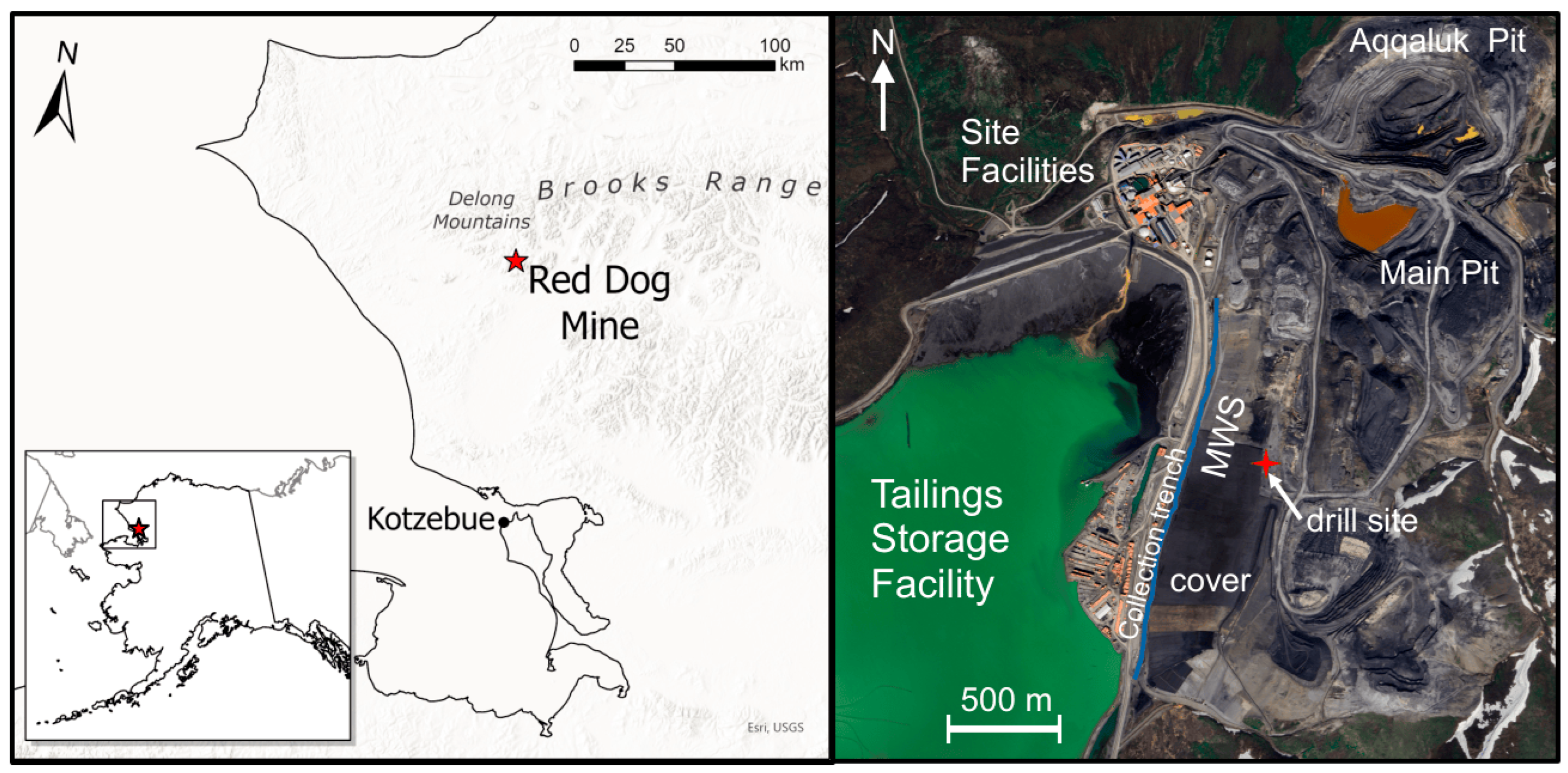
The mining of high-grade, argentiferous sphalerite–galena ore at the active Red Dog Mine in the De Long Mountains in Alaska (Figure 1) has resulted in the construction of a state-approved, 60 million-tonne Main Waste Stockpile (MWS), which was completed in 2012 (subsequent waste is being stored in another stockpile). The MWS is strongly acid-generating and has produced acid rock drainage (ARD) with a pH as low as 1.2 and a total dissolved solids concentration as high as 130,000 mg/L. The mine operator, Teck Resources, completed an ARD collection trench at the toe of the MWS in 2013 and installed a cover over ~90% of the pile from 2021 to 2025 as part of the stockpile mitigation strategy to reduce ARD. The acid-generating waste rock composing the MWS is from the mine’s Main Pit (mined from 1989 to 2012) and the Aqqaluk Pit (mined from 2010 onward). Weathering of iron sulfide minerals, primarily pyrite [FeS2], produces the ARD that flows towards the adjacent Tailings Storage Facility (TSF) and influences the mine operator’s ability to discharge the water to the environment. As part of Teck Resources’ continual risk assessment, a multi-component study of the MWS is being conducted by Teck Resources and the University of Idaho to evaluate the past and future generation of ARD from the MWS. The first component of the study estimated that up to half the acid-generating potential of the stockpile’s waste rock is still available [1]. This second component of the study consists of the examination of temporal paste pH results and the acid-generating and acid-neutralizing mineralogy of the waste rock. The goal of this portion of the study is to evaluate the presence of the acid-generating and acid-neutralizing minerals and relate them to the temporal results of the paste pH tests as a precursor to the prediction of future acid generation as part of a subsequent component of the overall study.

1.1. Red Dog Geology and the Main Waste Stockpile

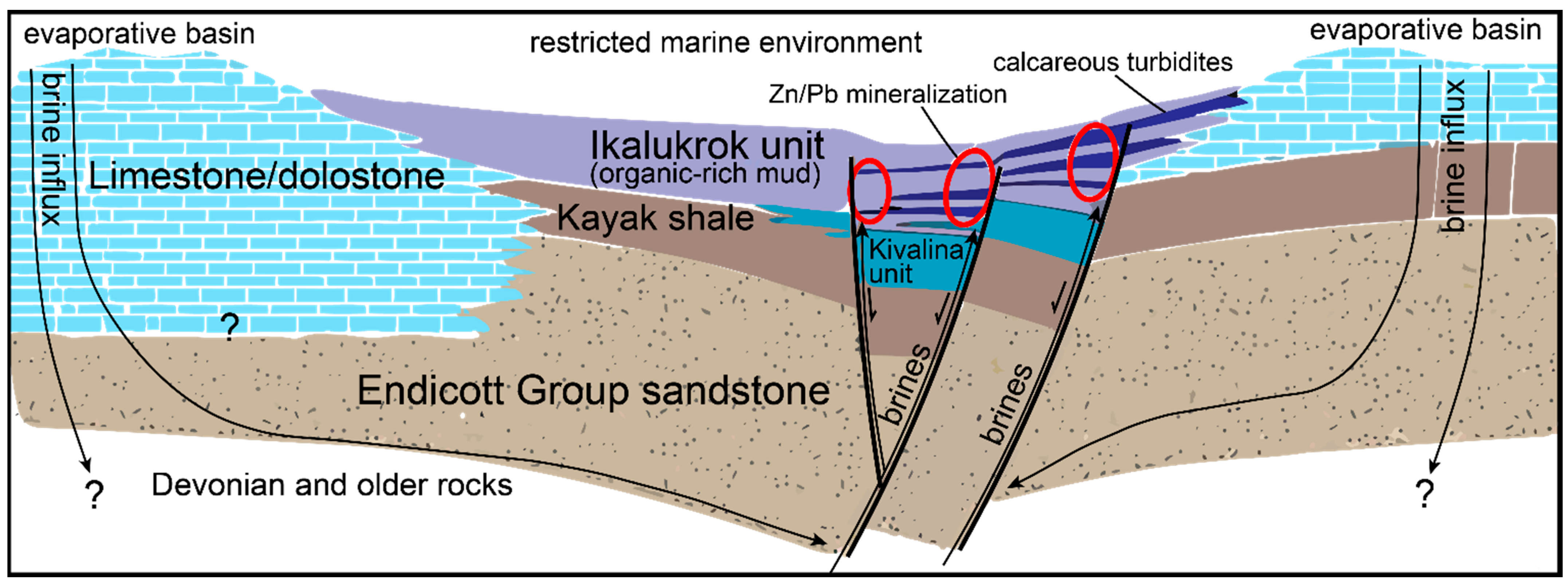
At the Red Dog Mine, Teck Resources mines a high-grade, sphalerite–galena ore from a Mississippian–Pennsylvanian black shale present in the Kuna Formation of the Lisburne Group [2]. The restricted marine environment of the Kuna Basin (Figure 2) emplaced the organic-rich muds of the Kuna Formation’s Ikalukrok unit atop the Kivalina unit and the Endicott Group’s Kayak shale that experienced hydrothermal intrusions along normal faults that penetrate into the underlying Endicott Group sandstones and older Devonian rocks [3,4]. The mineralized zone(s) consists of sulfidic and non-sulfidic barite [BaSO4] layers and sulfidic and silicified shales [3] that are part of the massive sedimentary exhalite package that emplaced the sulfide minerals [5]. In order of abundance, the primary sulfide minerals include sphalerite [(Zn,Fe)S], pyrite [FeS2 (cubic)], marcasite [FeS2 (orthorhombic)], and galena [PbS]. The resulting ore and waste rock are referred to as the Main, Aqqaluk, Qanaiyaq, and Paalaaq deposits (associated pit names except for Paalaaq, which has yet to be developed). The target ore is primarily located in the Ikalukrok unit [3], which contains disseminated sulfide grains, sulfide veins, and semi-massive/massive sulfide lenses [5].

1.2. Acid Rock Drainage from the Main Waste Stockpile

Annually, 300 to 800 mm of precipitation [7] falls across the MWS, of which a portion infiltrates and produces ARD with a pH typically between 2 and 3 and total dissolved solids concentrations typically between 10,000 and 80,000 mg/L [1]. Monitoring of infiltration/percolation at multiple stations across the mine site in 2010–2011 indicated net percolation of 63 to 92 mm, or 16% to 24% of recorded precipitation [8]. From 2013 to 2020, total ARD along the toe of the MWS (seeps and groundwater in the collection trench) averaged 0.75 m3/min with substantial annual fluctuations (range of 0.1 to 1.5 m3/min). With the phased installation of the MWS cover, the ARD decreased to an average of 0.4 m3/min and a range of 0 to 1.1 m3/min between 2021 and 2024 [1]. Previous investigations indicated maximum peak drainage after the spring snowmelt [9] with the MWS trench able to collect 60% to 80% of the annual ARD emanating from the stockpile [10].

1.3. Study Objective

The objective of this component of the study was to discriminate acid-generating and acid-neutralizing reactions from temporal paste pH results and mineral analysis that will assist in understanding the remaining acid potential of the waste rock, which will undergo batch reactor tests as part of a subsequent component of the study. The hypothesis of this second component of the study is for substantial remaining acid potential in the waste rock and mixed weathered states of the FeS2 by depth that can influence further acid generation or acid neutralization. This study analyzes waste rock from a single borehole drilled into the MWS. This approach allowed us to evaluate potential acid-generating and acid-neutralizing reactions by depth for waste rock that has undergone different levels of weathering during the decades-long construction of the stockpile. The collected waste rock does not represent a system-wide state of the acid-generating and acid-neutralizing mineralogy because of stockpile heterogeneity, but the collected waste rock is representative of the primary minerals available to influence or restrict ARD generation.

1.4. Acid Generation and Neutralization Reactions in the Waste Rock

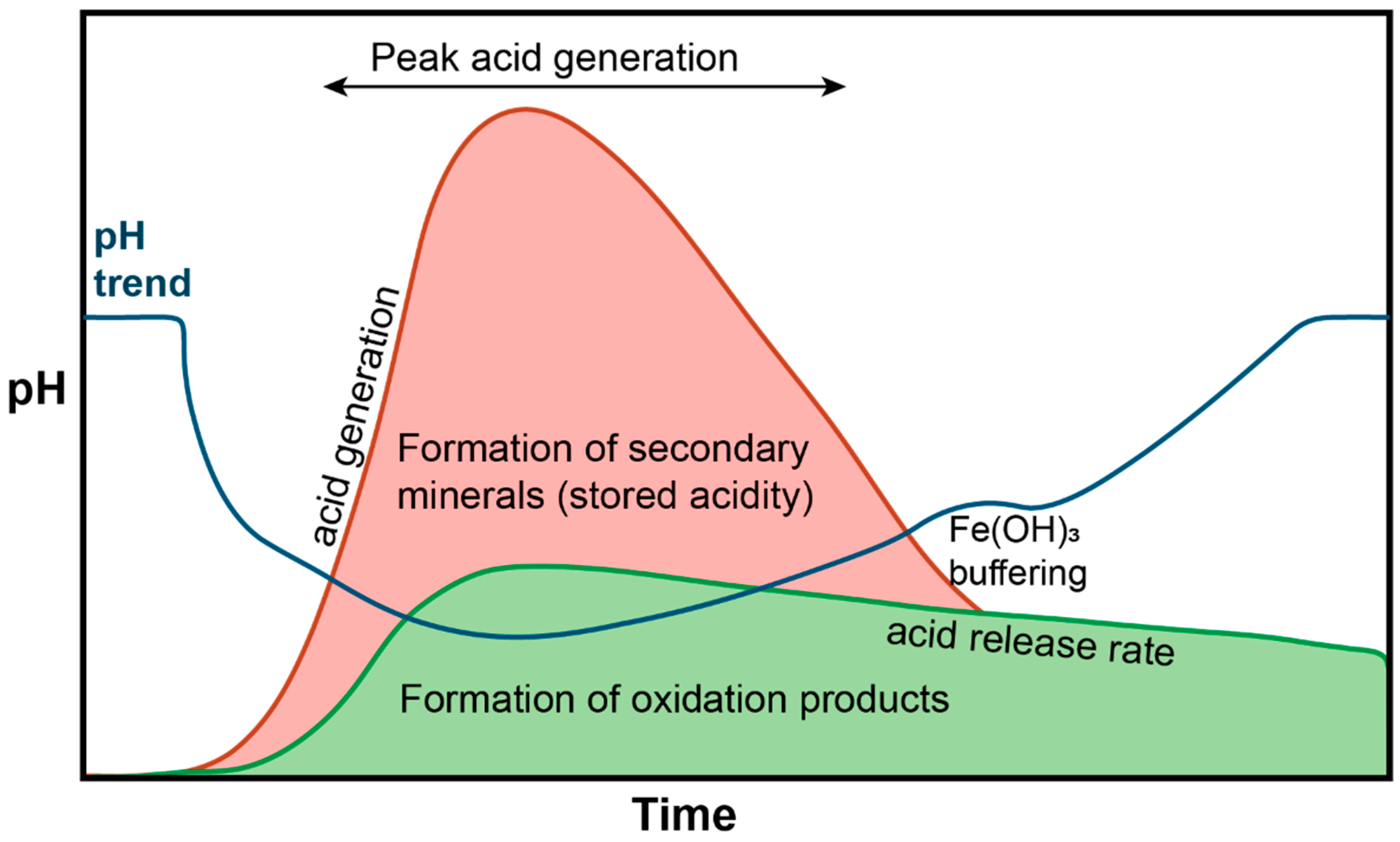
Oxidative dissolution of FeS2 has various rate-limiting/enhancing factors, such as the formation of S intermediaries and Fe (oxyhydr)oxide layers (rims) and Fe2+/Fe3+ cycling and availability, which influence acid production and weathering rates [11,12,13]. With the oxidative dissolution of the Red Dog FeS2 and the presence of Fe3+ in solution (Equations (1)–(4)), acidity can accumulate in the surrounding solution and reach a peak acidity (Figure 3) that will decrease with alteration in the environmental conditions (e.g., decreased water and O2) and loss of available sulfide surface area and solution Fe [13,14,15,16]. An example of this ARD evolution at the MWS is the ARD trend from the last portion of the stockpile to be covered (2024–2025) that indicated a relatively stable pH from 2013 to 2023, followed by a decrease in pH [1]).
F e S 2 + 7 2 O 2 + H 2 O = F e 2 + + 2 S O 4 2 + 2 H +
F e S 2 + 14 F e 3 + + 8 H 2 O = 15 F e 2 + + 2 S O 4 2 + 16 H +
F e S 2 + 15 4 O 2 + 7 2 H 2 O = F e O H 3 ( s ) + 2 S O 4 2 + 4 H + ( o r   2 H 2 S O 4 )
F e S 2 + 7 2 O 2 + 8 H 2 O = F e S O 4 · 7 H 2 O ( s ) + 2 H + + S O 4 2 ( o r   H 2 S O 4 )

1.5. Secondary Acid-Generating Reactions

The evolution of ARD pH is influenced by corresponding ferrous (Fe2+) and ferric (Fe3+) Fe reactions (e.g., Equations (5)–(7)) where solution Fe cycles oxidation states (and produces or consumes acid) or precipitates in ferric (oxyhydr)oxide and sulfate/hydroxysulfate minerals [17]. The stability of the Fe products is dependent on the environmental conditions (e.g., temperature, pH, and/or solution wetting or drying) with the potential for dissolution of previously precipitated Fe sulfates and hydroxysulfates, such as the highly soluble melanterite [FeSO4•7H2O] (Equations (8) and (9)) and the less soluble jarosite [KFe3(SO4)2(OH)6] (Equation (10)) [16,18]. Each of these types of minerals (melanterite = melanterite or metal(II) sulfate group [MSO4•7H2O], jarosite = jarosite group or series of the alunite supergroup [AD3(XO4)2(OH)6]) have been identified in the MWS [19]. The Fe sulfate and jarosite forms can change solubilities with variations in pH, which can produce different temporal contributions to subsequent acid generation. Upon rewetting, highly soluble sulfate salts (oxidation products (Figure 3)) are expected to dissolve rapidly, followed by the slower dissolution of the hydroxysulfate minerals and FeS2 [18,19,20,21]. The stored (latent) acidity of Fe sulfates and hydroxysulfates (Equations (8)–(10)) can be released with a decrease in overall acid generation (past peak generation) and increased solution pH, which will dissolve such minerals [18,19,22,23,24].
F e 2 + a q + O 2 + 4 H + = F e 3 + ( a q ) + 2 H 2 O
F e 3 + ( a q ) + 3 H 2 O = F e ( O H ) 3 ( s ) + 3 H +
3 F e 3 + + K + + 2 S O 4 2 + 6 H 2 O = K F e 3 S O 4 2 ( O H ) 6 ( s ) + 6 H +
F e S O 4 · 7 H 2 O s = F e 2 + + S O 4 2 + 7 H 2 O
F e 2 + + 2 H 2 O = F e ( O H ) 2 + 2 H +
K F e 3 S O 4 2 ( O H ) 6 + 3 H 2 O = 3 F e ( O H ) 3 + K + + 2 S O 4 2 + 3 H +

1.6. Acid-Neutralizing Reactions

Typically, carbonate minerals, such as calcite [CaCO3], are the primary acid neutralizers/buffers (Equations (11) and (12)) because silicate reaction rates can be up to 108 times slower than those of carbonate minerals [25,26]. The Red Dog ore body is low in carbonate minerals because of sulfide replacement, but calcite was emplaced during the late-stage development of the ore and is also associated with the barite [3,5] and shale layers [27,28,29]. Additionally, phosphate minerals, such as the apatite minerals [Ca5(PO4)3(OH, F, Cl)], are present in the Kuna Basin shale formations [27,29,30], and can play a role in acid neutralization (Equations (13) and (14)) [31,32,33,34,35,36,37]. For a pH range of 4 to 6, the rate of calcite dissolution is a second-order relation with Ca and H+ [38], but at low pH values (<4), the dissolution rate is proportional to the H+ concentration [39]. While slower than calcite dissolution, apatite dissolution is also pH-dependent, with faster rates at lower pH, particularly below pH of 2 [32,40]. The expectation is that remaining carbonate and phosphate minerals may have low availability in the waste rock (not previously consumed because of locked particles), but a test such as paste pH, particularly a temporal paste pH test, with milled samples can indicate the presence of these acid-neutralizing minerals. Such liberation of acid-neutralizing minerals provides the maximum short-term buffering possible for the waste rock.
C a C O 3 = C a 2 + + C O 3 2
2 H + + C O 3 2 = H 2 C O 3
C a 5 ( P O 4 ) 3 F + 3 H + = 5 C a 2 + + 3 H P O 4 2 + F
H P O 4 2 + H + = H 2 P O 4
Lastly, the high clay (shale) content of the MWS waste rock may act as an acid neutralizer through ion-exchange processes and presence of intruded calcite in clays [41,42,43], but aluminosilicate minerals commonly only contribute to acid neutralization after acidic conditions are established [44]. The presence of calcite precipitates in clay minerals can present significant neutralization potential compared to common aluminosilicate minerals [43]. The black shale of the Kuna Formation consists of a black fissile to siliceous shale [2,45] with a relatively high organic carbon content of >2% [2,46]. Although clays can act as slow acid neutralizers, the high organic carbon content has the potential to contribute to acid generation with the formation of low-weight organic acids and the opening of pores with loss of the organic carbon that can expose FeS2 minerals [47,48,49]. For neutral to acidic conditions, the inter-layer cations of the phyllosilicate clay minerals are mobilized through H+ substitution reactions while acidic to strongly acidic (pH < 3) conditions will induce framework (Al octahedral and Si tetrahedral layers) dissolution and release of Al and Si phases into solution [50]. Additionally, the protonation of clay surfaces can preferentially occur at oxygen-containing groups (e.g., edge groups) that are enhanced with framework dissolution [51,52].

1.7. Weathered State of the Waste Rock Iron Sulfide Minerals

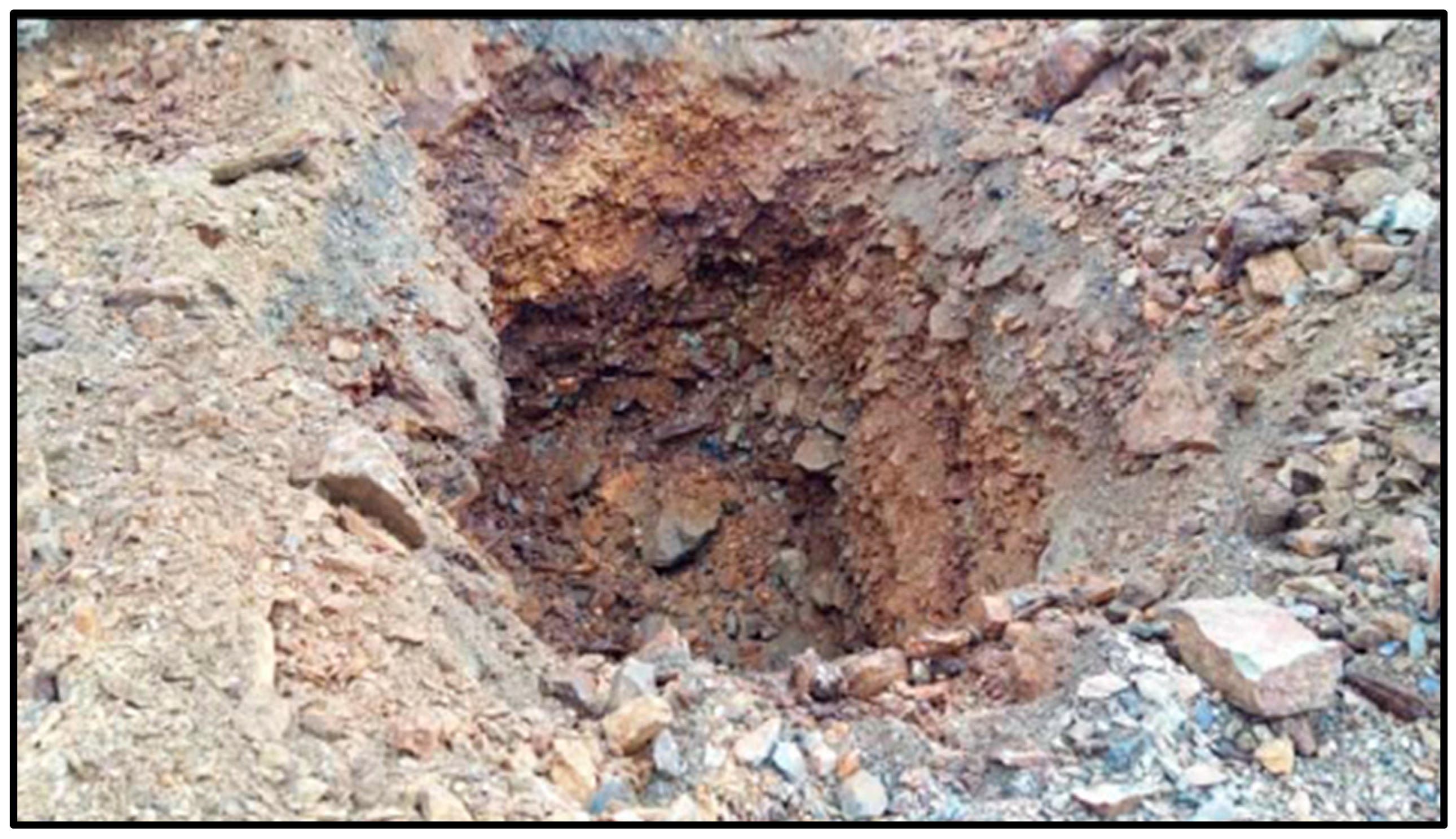
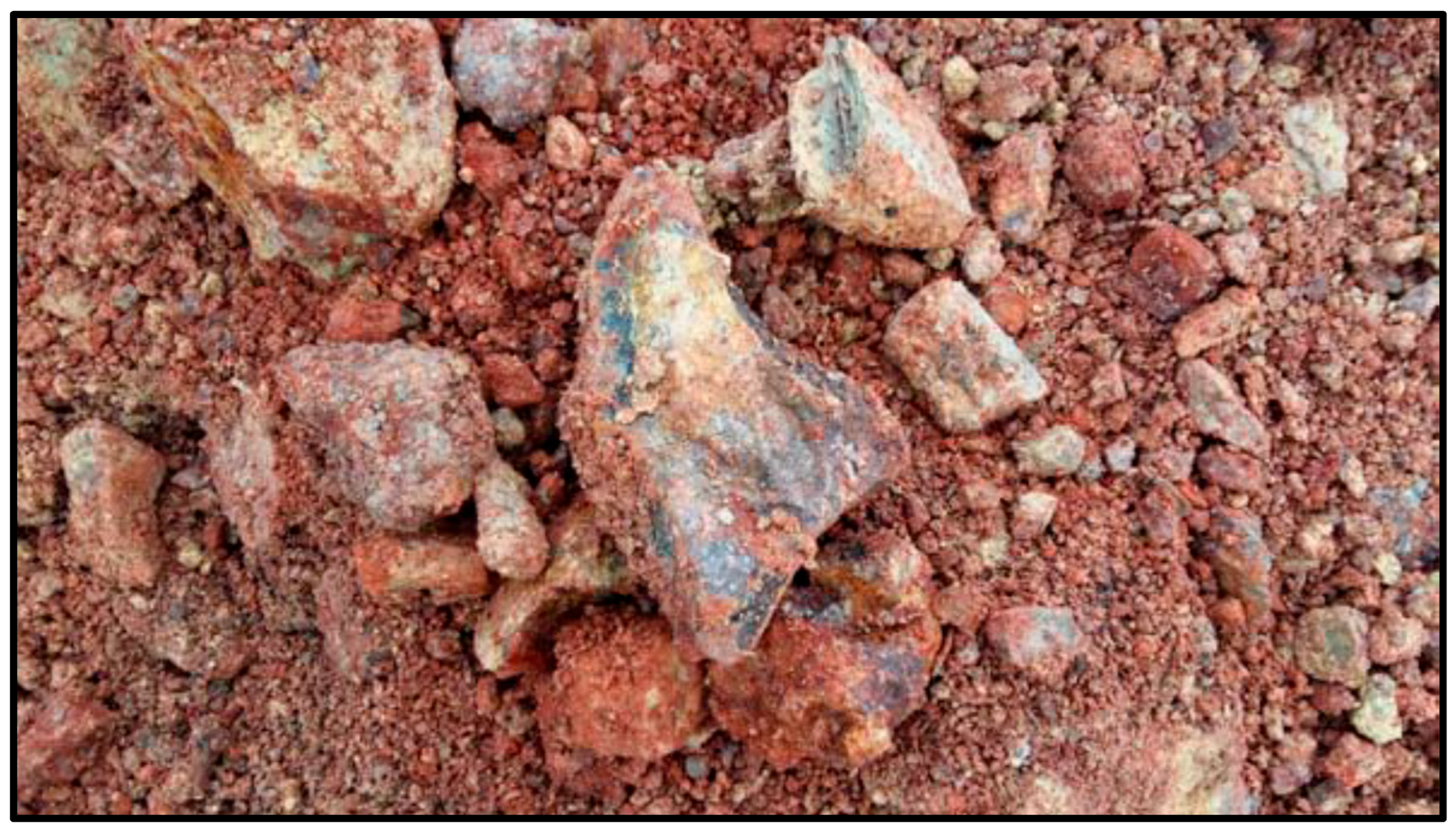
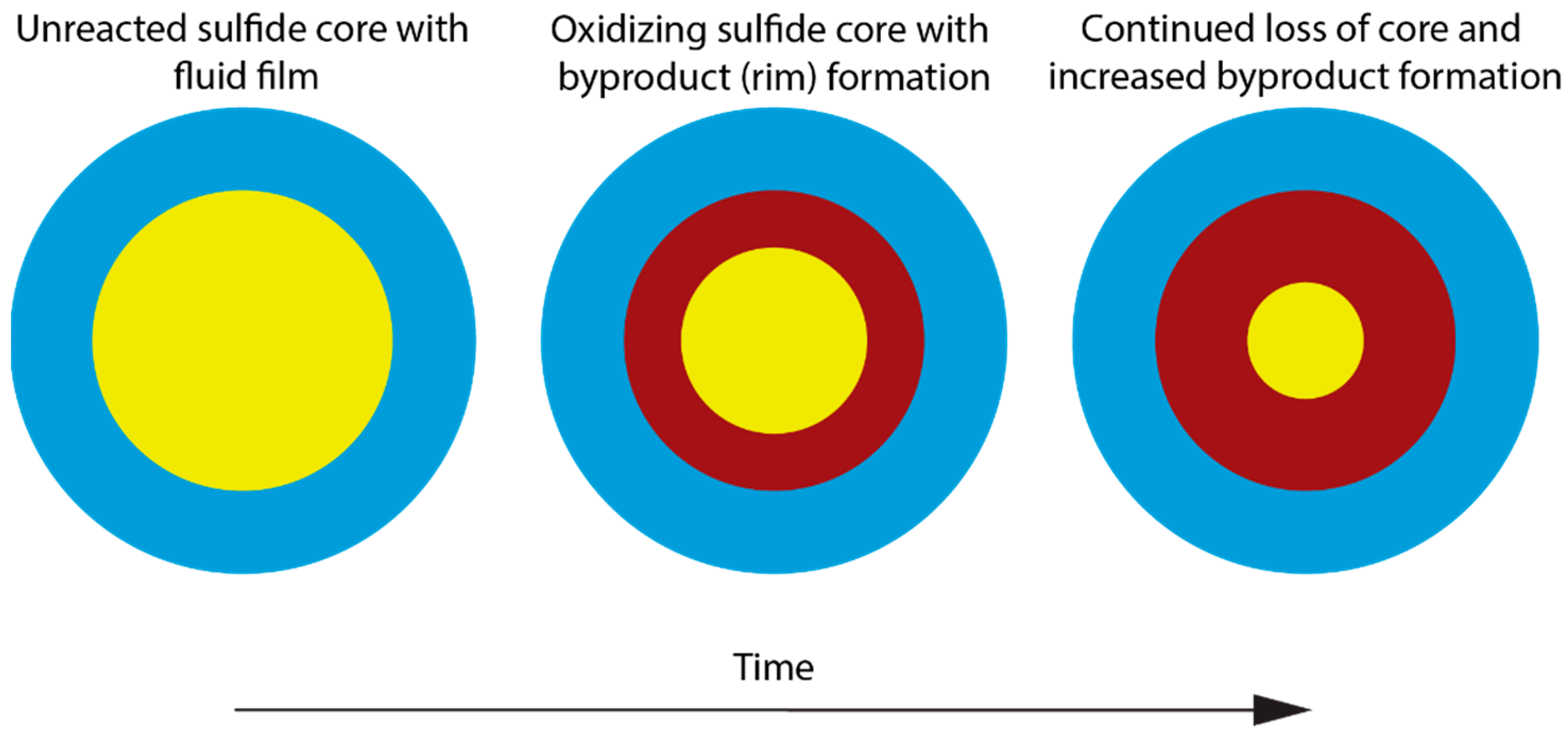
The weathering of Fe sulfide minerals in the MWS can produce large amounts of insoluble and slightly soluble Fe-bearing secondary phases consisting of various ferric (oxyhydr)oxides (e.g., ferrihydrite [Fe(OH)3] and goethite [α-FeO(OH)]), metal sulfates, and hydroxysulfates [53] that may be found as rims/rinds or adjacent to the sulfide mineral [14,31,54,55,56]. The presence of oxidation products at or near the weathering FeS2 is influenced by the environmental conditions and bacterial activity [13,53,54,56,57,58]. Collection pits previously dug at the MWS have indicated substantial iron staining and the visible presence of oxidization products, including melanterite and jarosite minerals (Figure 4 and Figure 5). The weathered state of the FeS2 can provide an indication of the prior weathering of the FeS2 as described by the shrinking core concept of sulfide weathering (Figure 6) [14,59]. Highly weathered FeS2 may or may not have substantial oxidized products present as rims/rinds or adjacent precipitates depending on the acidity of the resulting solution that may keep the elements mobile. An Fe (oxyhydr)oxide precipitate, such as goethite or hematite [Fe2O3], can be stable in the oxidizing environment if high acidity does not hinder precipitation [56], but jarosite typically forms under highly acidic (pH < 3) and oxidizing conditions [60,61]. Additionally, S products are influenced by environmental conditions, such as the greater presence of sulfoxy anions, thiosulfate, and polythionates at pH > 4 [15]. Overall, there is an expectation of the interplay of the oxidation reactions that produce the ARD in the MWS, but there are primary minerals of the waste rock, such as the limited carbonate minerals, and secondary or byproduct minerals, such as the formation of Fe sulfates, that can also influence the temporal pH and net acid generation with weathering of the waste rock.

2. Materials and Methods

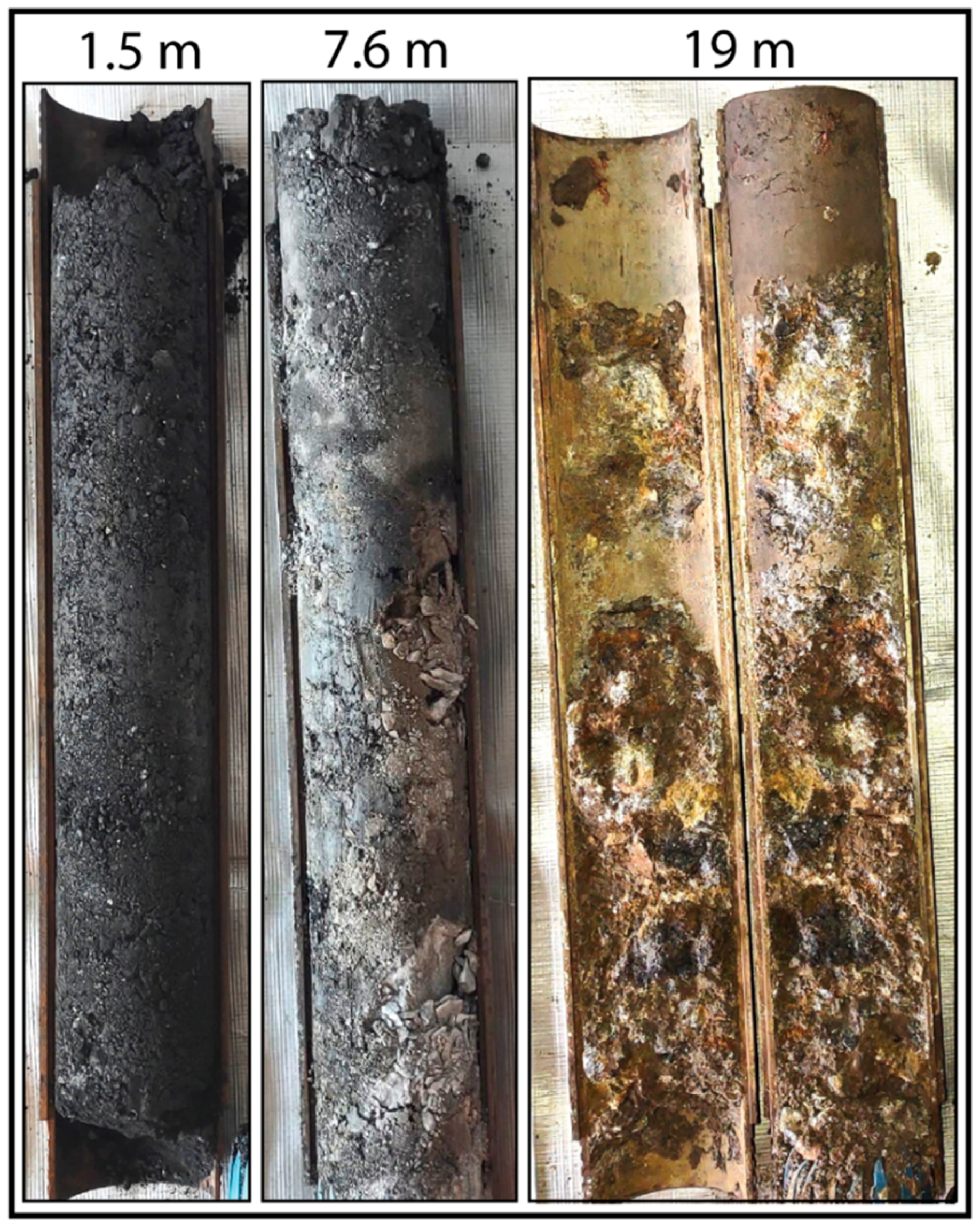
For this study, waste rock samples were collected in July–August 2024 from the top to base of the MWS through drilling of a single borehole with a hollow-stem auger and split spoon sampler (Figure 7). The auger was used to penetrate the waste rock followed by the driving of the 0.45 m × 0.6 m (internal width) split spoon for sample collection about every 0.75 m (penetration and sample collection varied due to waste rock competency, size, porosity, and compaction in the split spoon). A total of 72 waste rock samples were collected during this drilling at a location near the center of the MWS. The waste rock samples were stored on site in individual sample bags and consolidated in buckets at the MWS (ambient temperature) until completion of the drilling. Upon completion of the sampling, the sample buckets were stored in the mine site warehouse (ambient temperature) until they were shipped to the University of Idaho (received in September 2024), where they were stored at 5 °C until processed. In October 2024, each sample was dried at 50 °C to remove moisture while minimizing mineral alteration and then returned to the 5 °C storage area. The samples were composited into 21 depth intervals of 2.5 m (samples are referenced by the top of the interval (e.g., 5 m to 7.5 m = 5 m)) from 0 m to 50 m. This consolidation was necessary because of variable drill rates and mass recovery during split spoon sampling. The intervals were screened to <6.3-mm grain sizes to meet kinetic testing requirements for waste rock [65]. The resulting interval samples were homogenized and subsampled for paste pH analysis, which included pulverizing by a ball mill to <300 µm using a MSE PRO Mini High Energy Vertical Planetary Ball Mill (FLS, Atlanta, GA, USA) with an alumina jar and yttria-stabilized zirconia media.
High-resolution quantitative X-ray diffraction (XRD) was initially attempted on the sample powders to characterize the mineralogical composition. The XRD analysis was able to identify primary minerals (e.g., quartz, barite, pyrite) but it did not indicate useful quantitative or qualitative information regarding secondary minerals (e.g., FeS2 weathering byproducts or calcite) because of the interference of the very high clay content of the shale units. The abundant clay minerals caused severe X-ray scattering that masked the diffractogram responses of the secondary minerals, which is a well-documented limitation of XRD in analyzing samples with high clay content, where severe X-ray scattering, structural disorder, and elevated background noise obscure the diagnostic reflections of trace minerals [66,67,68,69,70]. Because of this analytical limitation, XRD was not pursued as a viable technique for this study. Instead, subsamples were collected for mineralogical characterization through optical microscopy (Olympus BX-60 (Tokyo, Japan)) and scanning electron microscopy (Zeiss Supra 35 Variable-Pressure FEG SEM with Noran System Six EDS (Oberkochen, Germany)). Sample preparation for optical microscopy and SEM included preparation of 30-µm thick (non-aqueous epoxy), polished thin sections mounted with epoxy on high-purity quartz glass.

Paste pH

The paste pH test [71] is a relatively short, static, and non-vigorous (deionized water) test that can indicate the presence of soluble acidic salts and highly reactive acid-generating or acid-neutralizing minerals [72]. The test is typically conducted to record a stable pH reading after mixing the paste but the test can be extended to hours [73] or even days [74]. The paste pH test generally does not indicate a material’s long-term acid generation or neutralization potential given its short duration but is meant to indicate whether the sample contains readily available acidity (pH value < 5) or alkalinity (pH value > 7) [75]. The availability of minerals for reaction because of sample milling is a key distinction of the paste pH test where mineral availability in unmodified waste rock is much less, which alters the temporal balance of acid-generating and acid-neutralizing reactions. Because of this issue, even temporal paste pH results should not be viewed as representative of the weathering of a waste rock, only the potential for such reactions given the presence of the identified minerals in the sample.
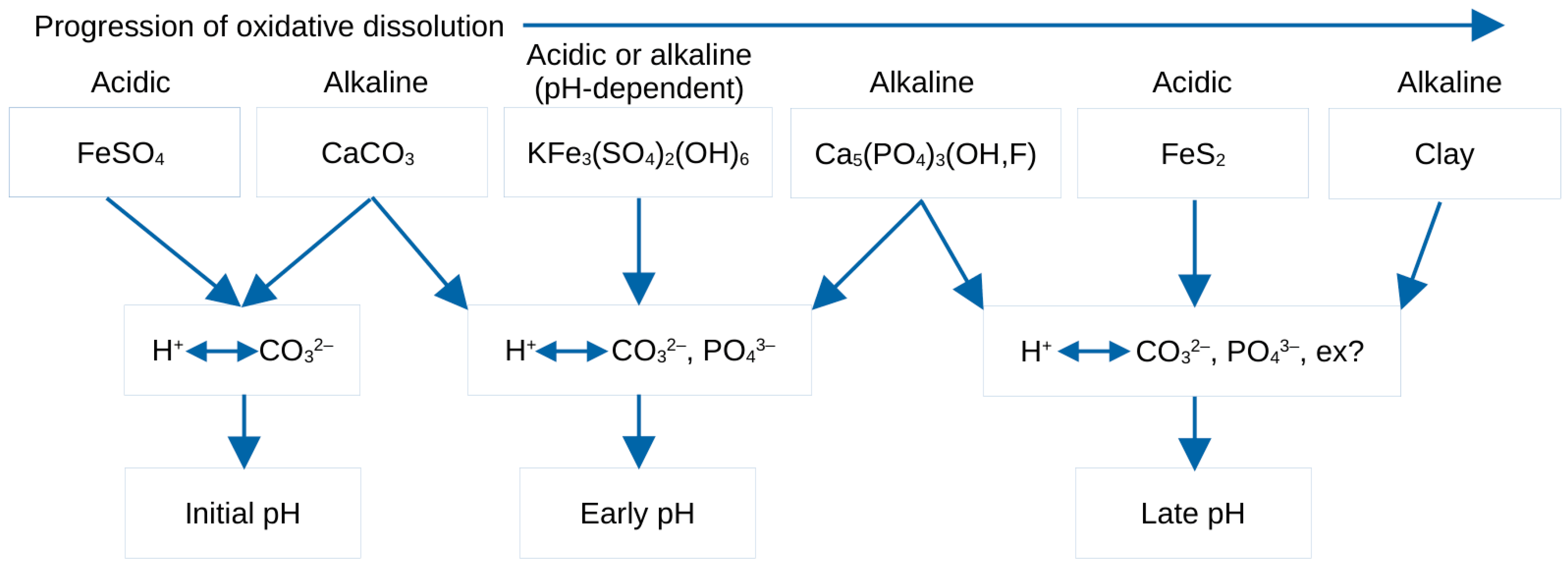
Our use of a relatively longer version of the paste pH test at 24 h and pH measurements every 30 min extends this static test to provide a temporal view of three potential acid-generating reaction series that can decrease the pH of the paste (Figure 8)—dissolution of highly soluble Fe sulfate minerals, dissolution of less soluble hydroxysulfate minerals of the alunite/jarosite series, and early Fe sulfide oxidative dissolution [76]. The initial pH of the paste is a result of the dissolution of sulfate salts that can readily produce acid during wetting because of their high solubility (e.g., 20 g melanterite per 100 g water at 20 °C), as well as dissolution of highly soluble carbonates that can readily neutralize acid [53,76]. The substantial presence and dissolution of an Fe sulfate can rapidly (in minutes) increase acidity from a neutral pH to a pH of about 3 [18]. Subsequent dissolution of less soluble, acid-generating hydroxysulfate minerals, such as jarosite, can contribute acidity, but the dissolution of these compounds is highly dependent on solution pH where such minerals are relatively stable (insoluble) near pH 3.5, but their dissolution rate increases with lower (acid-consuming) and higher pH (hydroxide-consuming/acid-generating), greater temperature, the presence or absence of other metal(loid)s such as arsenic, and the nature of the solution (closed or open) [77,78]. The expectation is that jarosite would not contribute to the early pH results of the test, such as with an Fe sulfate, but it has the potential to increase acidity in less acidic or near-neutral pH conditions during the 24-h test depending on its availability. The oxidative dissolution of an Fe sulfide mineral and its ability to generate acid during a relatively short weathering test is dependent on the available surface area, presence of Fe-oxidizing bacteria, pH of the solution, and concentration of Fe3+/Fe2+ (Fe cycling) in solution [15,20,55,58,79,80]. The probability of acid-generating reactions from oxidative dissolution of FeS2 during the 24-h paste pH tests is considered relatively low unless there are substantial FeS2 surface areas and conducive conditions for acid generation (e.g., pH and Fe3+ presence).
For this study, the 24-h paste pH test was conducted with the measurement of pH and oxidation-reduction potential (ORP) as an initial value after mixing of the paste (few minutes after water introduction) and subsequently every 30 min. The paste consisted of 25 g of milled waste rock and about 11 mL of water (variable depending on sample) in a 50 mL glass beaker where the goal was to create the paste consistency as described in the Sobek method [71] without producing a slurry (e.g., suspended particles). Each paste was analyzed for pH (±0.01 pH) and ORP (±0.2 mV) with calibrated Orion 3-Star meters/probes (data available in the Supplementary Material File). Our paste pH test was implemented to evaluate the more readily available acidity (early portion of the record) and the development of additional acid generation with further mineral oxidation and degradation and/or acid neutralization from dissolution of available acid-neutralizing minerals (Figure 8). For evaluation of the paste pH results, an initial pH ≤ 5.5 (less than the atmospherically equilibrated DI water (typically around pH of 5.6)) suggests that early acidity is a result of stored acidity because of the quick dissolution of Fe sulfate minerals. An initial pH of 5.6 to 6.5 indicates no stored acidity or greater and quickly acid-neutralizing mineral reactions. An initial pH > 6.5 is higher than the likely range of atmospherically equilibrated water [81] and indicates the likelihood of no early acid generation and high availability of readily dissolvable, acid-neutralizing minerals. Subsequent changes to pH following the initial pH are a result of slower acid-generating reactions and/or the consumption of acid by remaining acid-neutralizing minerals.

3. Results

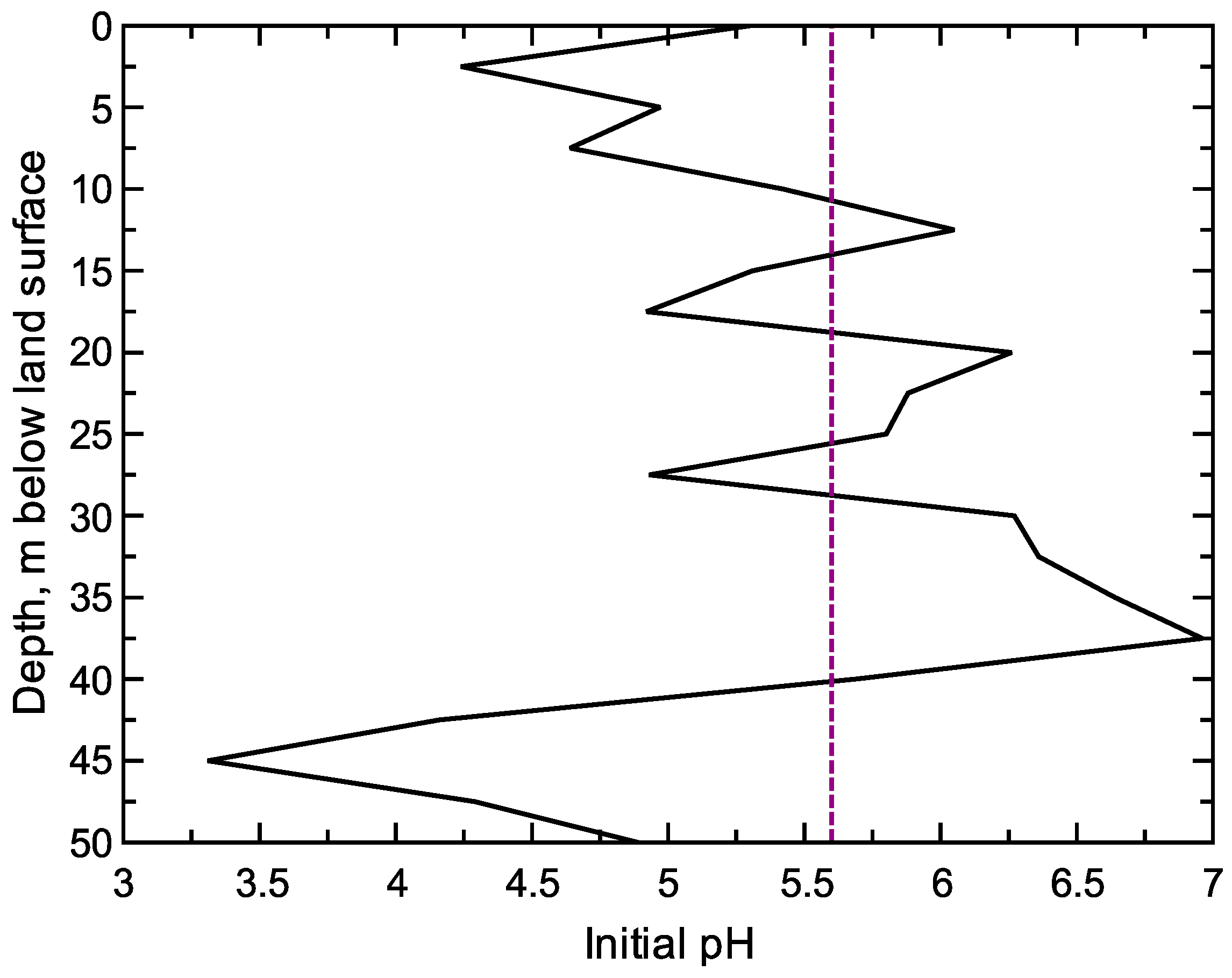
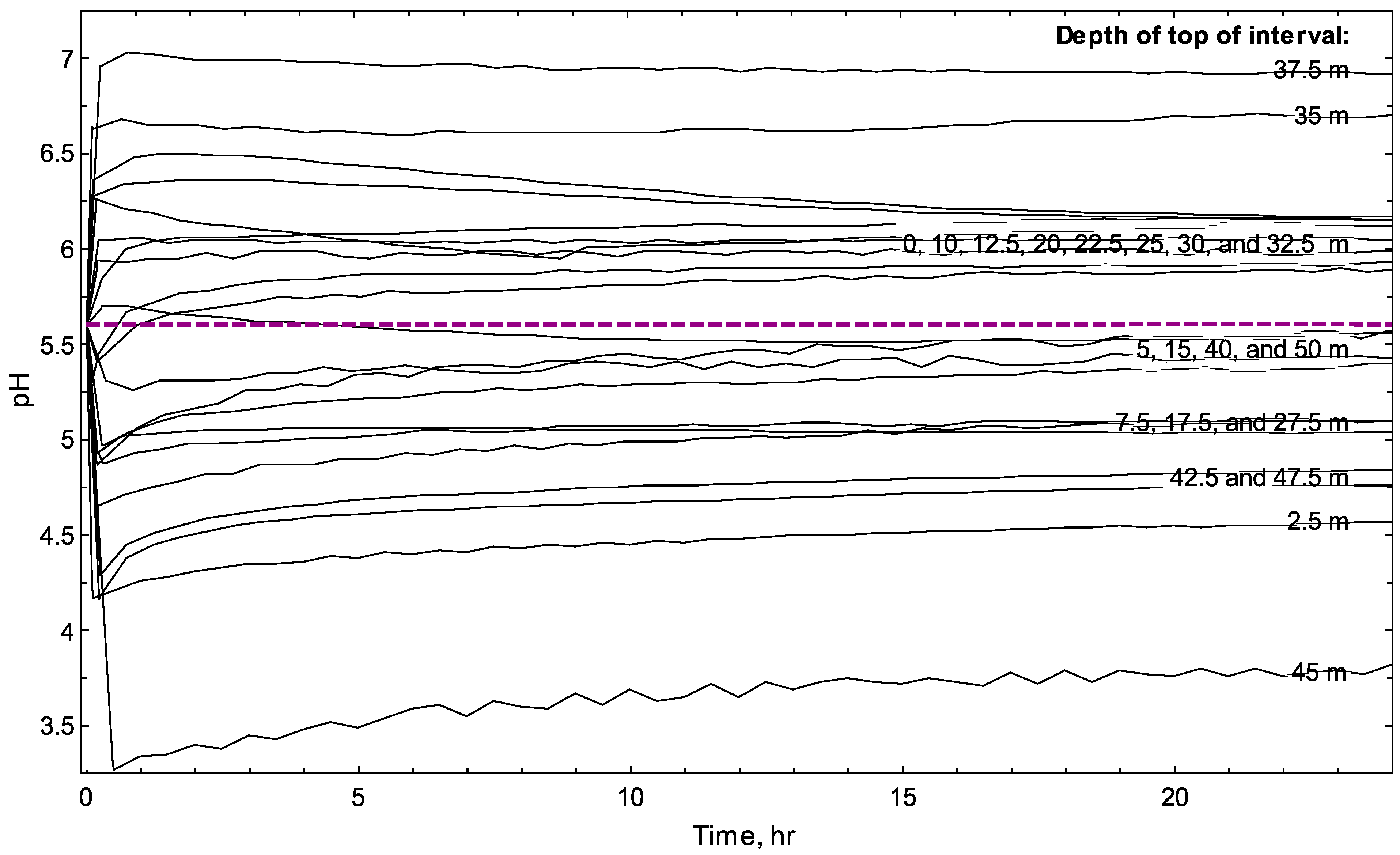
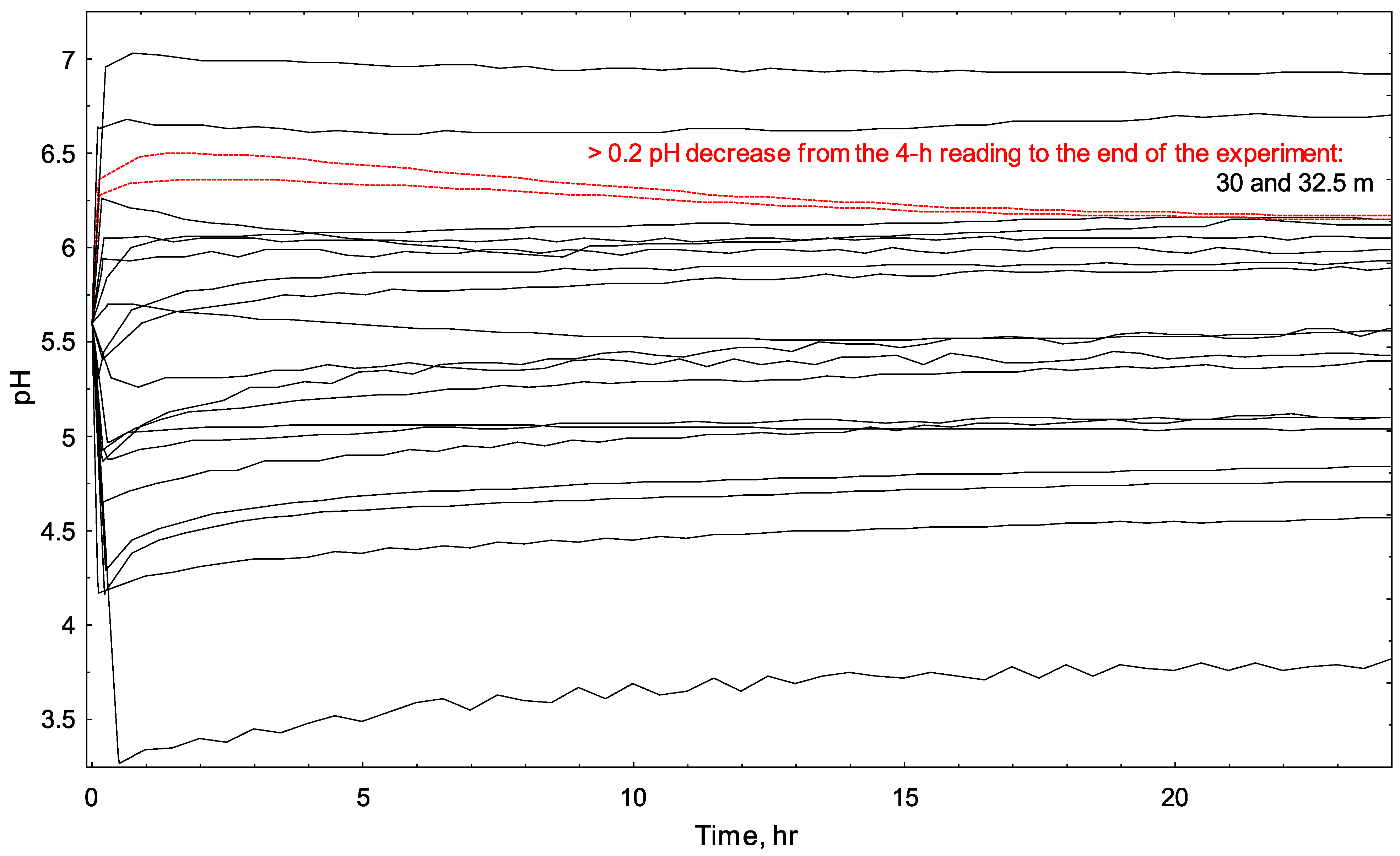
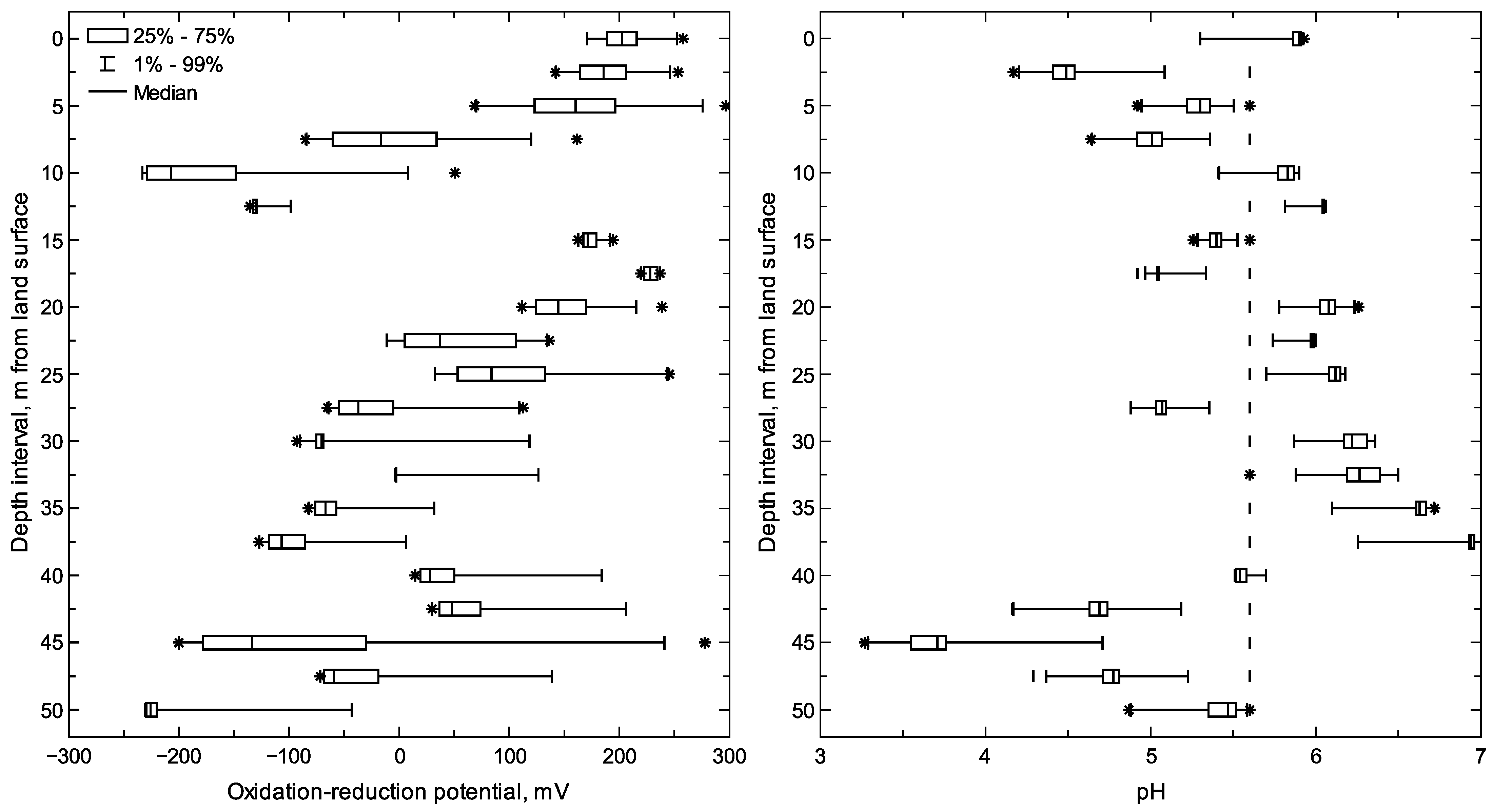
The results of the 24-h paste pH tests indicate a broad range of responses—initial pH values ranging from 3.31 to 6.96 and final values from 3.76 to 6.91 (Figure 9 and Figure 10). Twelve of the 21 intervals produced an initial pH (range of 3.31 to 5.42) lower than the equilibrated water pH of 5.6. The intervals with the lowest initial pH (range of 3.31 to 4.89) clustered in the bottom zone of the stockpile, spanning the 42.5 m to 50 m intervals. The remaining nine intervals that initially increased pH produced a pH range of 5.69 to 6.96. The intervals with the largest initial increases in pH were the 35 m and 37.5 m intervals (Figure 9). Fourteen of the 21 intervals produced higher pH values by the end of the test, while five intervals produced lower pH values, and two intervals produced the same pH value (±0.05). Depth of the sample interval did not directly correspond to high or low initial pH values or the 24-h pH trend. However, the 42.5 m to 50 m zone (bottom zone) produced initial and final pH values ≤ 5.5, and the 40 m interval indicated a pH range of 5.51 to 5.70. Correspondingly, the interval with the lowest pH values throughout the paste pH test (45 m) also had the largest change in ORP from an initial 278 mV and ending value of −200 mV. Above the highly acid-generating bottom zone lies a zone of low acid-generating potential (30 m to 37.5 m or lower middle zone) where all initial pH values were ≥6.25 and all final pH values were ≥6.1. The upper middle zone of the MWS (20 m to 27.5 m) produced paste pH initial values ranging from 4.93 (27.5 m) to 6.26 (20 m). The upper zone (0 m to 17.5 m) produced early acid generation with initial pH values ranging from 4.17 (2.5 m) to 5.41 (10 m) except for the 12.5 m interval that had an initial and final pH value of 6.05.

3.1. One-Hour and 4-Hour Changes in pH

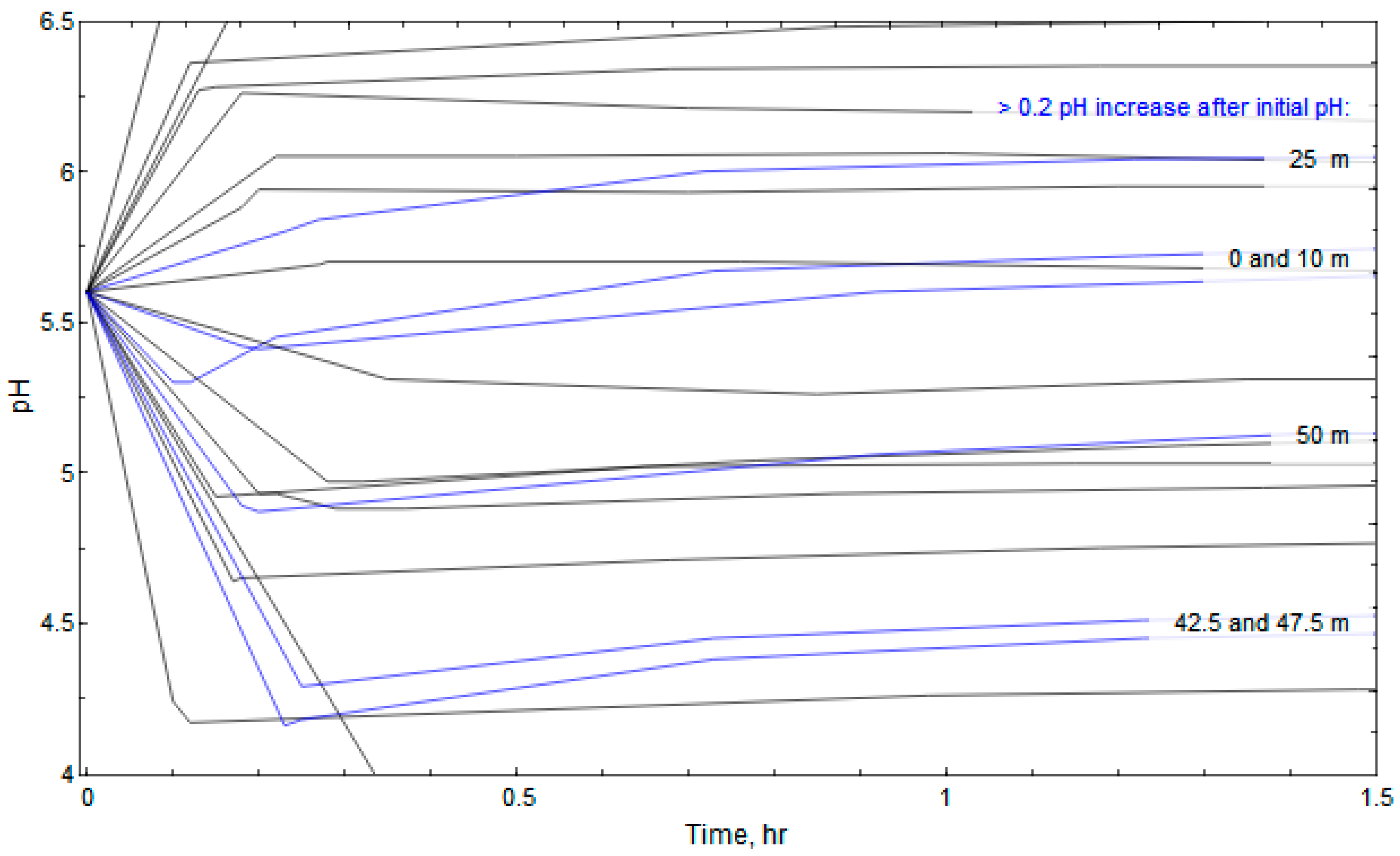
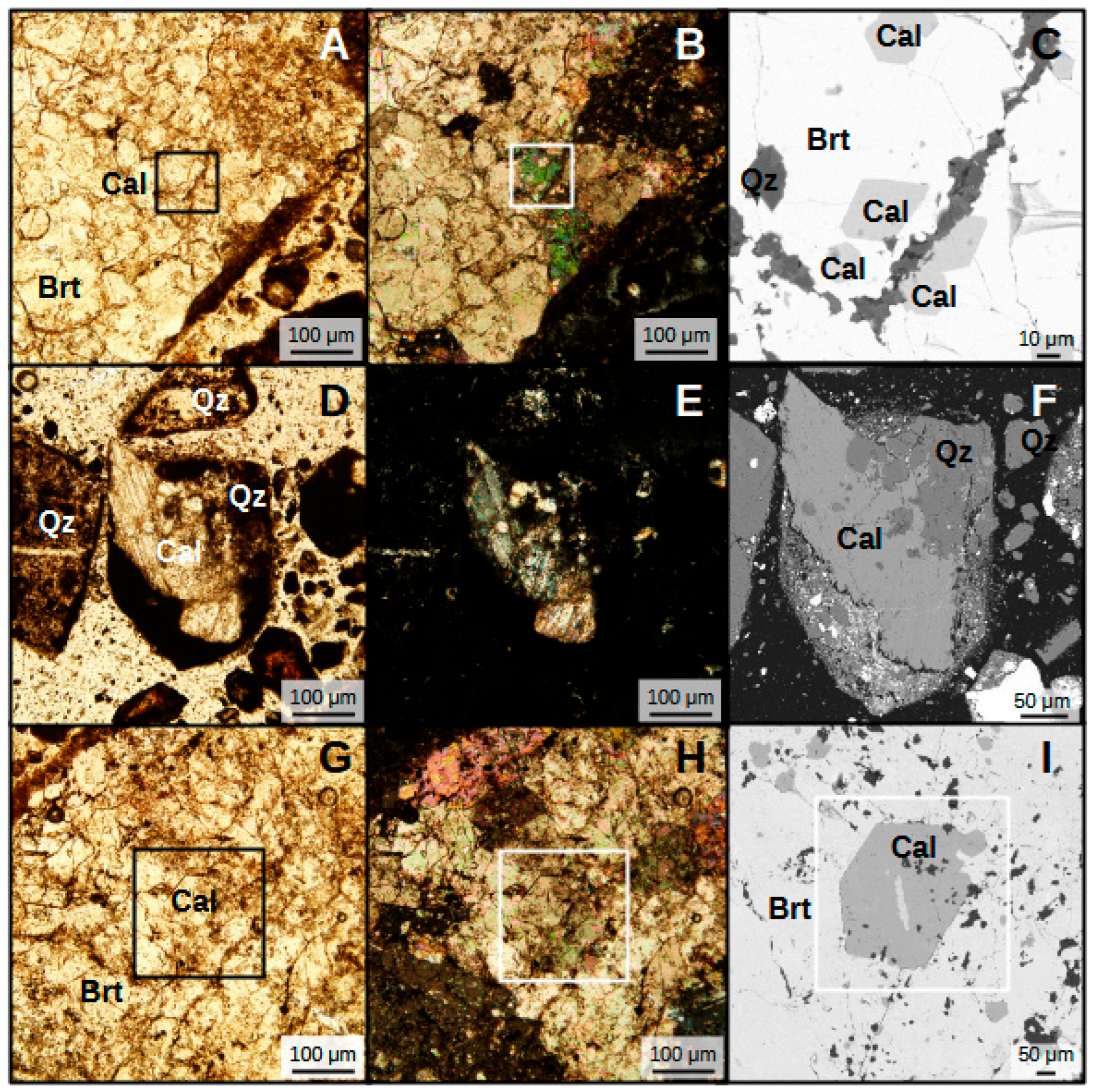
In addition to comparison of the initial and final pH values and changes for each interval, the 1-h and 4-h changes in pH were used to compare the periods of most pronounced change from the initial pH value (first recorded pH value). The pH change observed within the first hour primarily reflects the dissolution of highly reactive buffering minerals, notably trace concentrations of calcite. Apatite, while slower to react, may also influence the early pH period (1-h and 4-h intervals). Intervals 0, 10, 25, 42.5, 47.5, and 50 m all indicated a >0.2 increase (37% decrease in H+ concentration) in pH during the first hour (Figure 11). Given the milling of samples, the assumption is a large availability (low encapsulation) of all mineral grains. This assumption of mineral liberation is likely a primary issue for calcite and apatite that have low presence in the waste rock because of the replacement of these minerals with emplacement of the sulfide minerals [3]. The acid-neutralizing minerals that survived were likely outside of the emplacement zone (less likely to become waste rock) or unavailable for reaction (locked/encapsulated) with the intruding hydrothermal waters. Milling of the waste rock exposes such locked minerals and allows for their contribution to the early buffering of the pH of the paste because of the high reactivity of calcite [38,82]. Such encapsulation of the calcite is visible (Figure 12) in the unmilled thin section samples where such grains were typically co-located with quartz and barite.
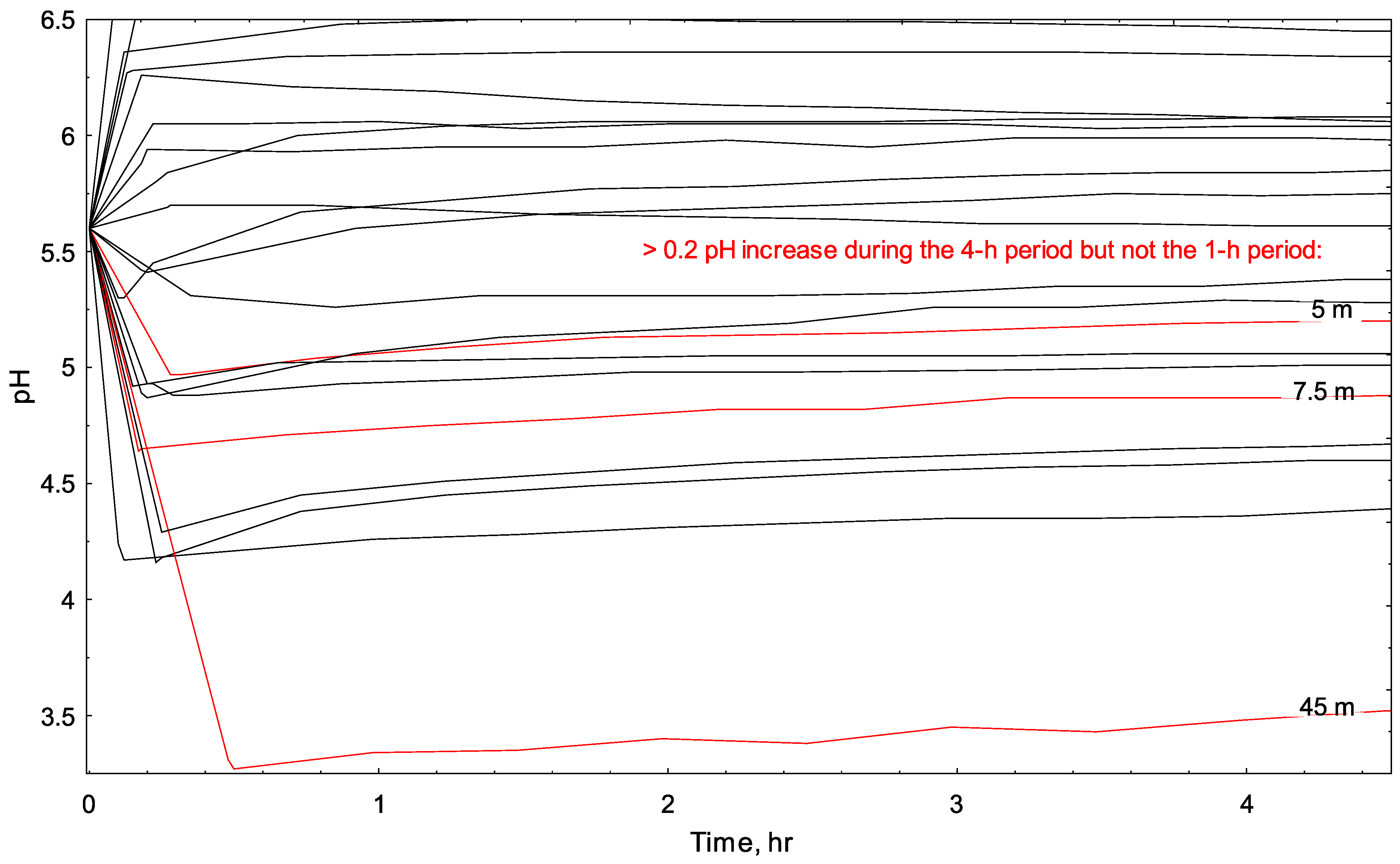
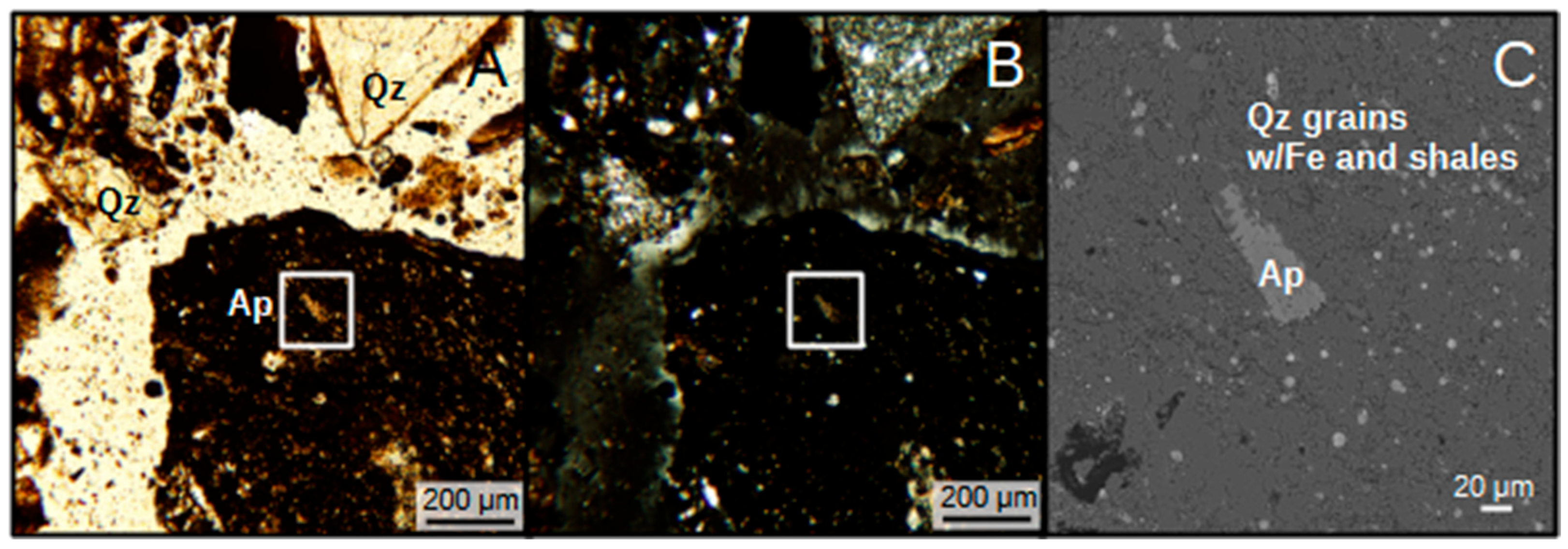
During the 4-h period, the 0, 5, 7.5, 10, 25, 42.5, 45, 47.5, and 50 m intervals indicated a >0.2 increase in pH from the initial pH with only the 5, 7.5, and 45 m intervals indicating the change after the 1-h period (Figure 13). The increase in intervals with substantive pH increases between the 1-h and 4-h periods (5, 7.5, and 45 m intervals) suggests the presence of less reactive buffering minerals (e.g., apatite) and/or limited availability of calcite where its dissolution is restrained by surface area availability (e.g., partially encapsulated). The contribution of apatite minerals to the buffering of the paste pH likely would only occur at lower pH values (<6) since it is highly stable in the pH 6 to 8.5 range. Apatite dissolution increases below this pH threshold, particularly below a pH of 5 [83,84]. The three intervals (5, 7.5, and 45 m) that did not indicate a >0.2 pH increase during the 1-h period but did show such an increase during the 4-h period all had an initial pH < 5 (Figure 9 and Figure 13). An examination of these intervals’ thin sections indicated the presence of apatite grains (Figure 14) or phosphorus detections by the SEM indicative of apatite group minerals.
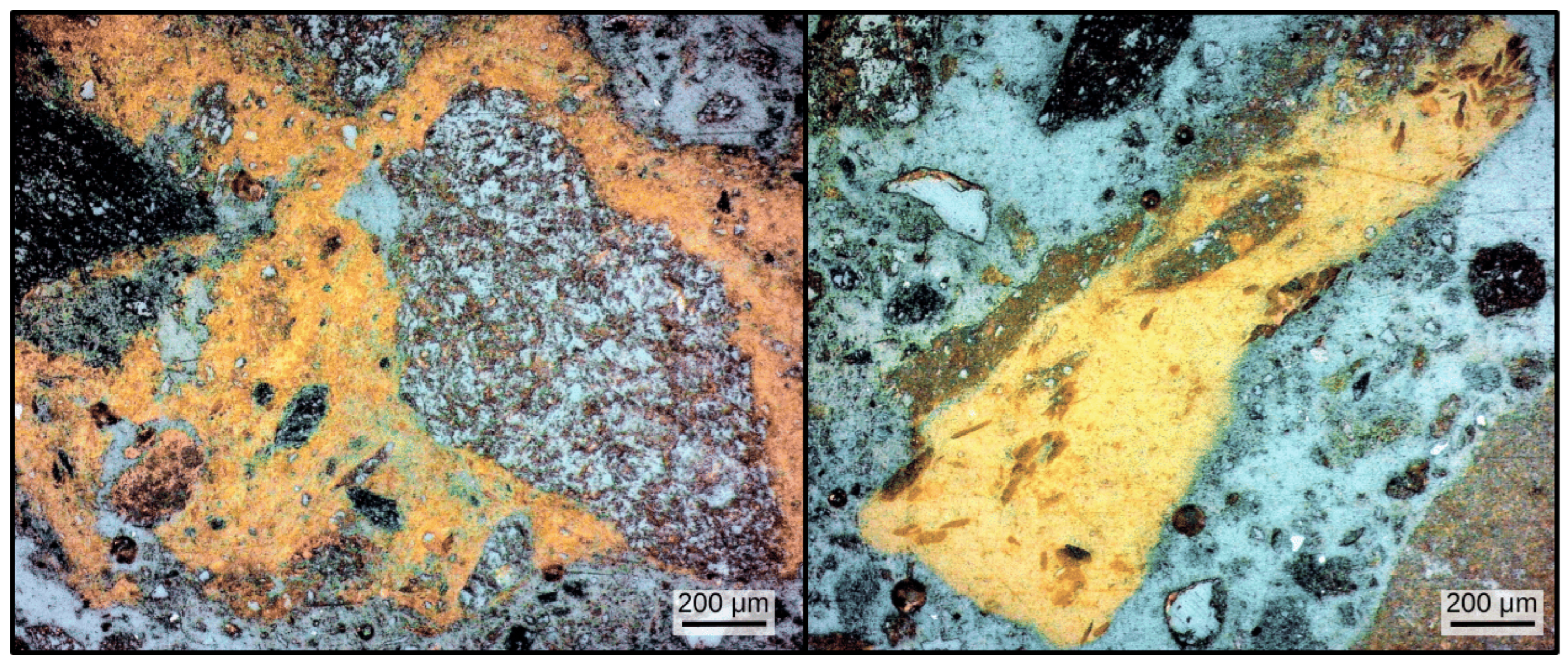
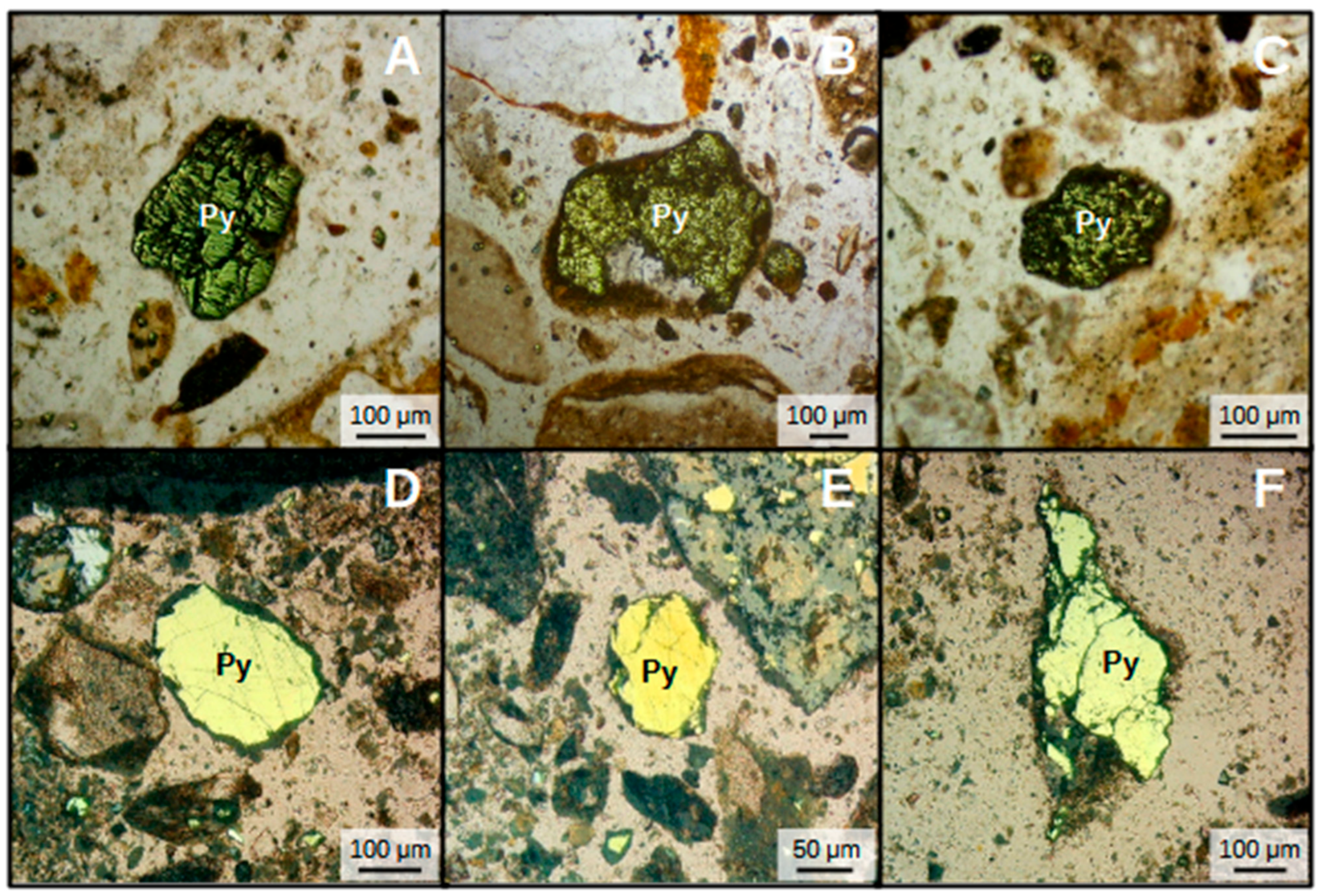
In addition to the potential for apatite acid neutralization during the 4-h period, three intervals (12.5, 35, and 40 m) indicated very small decreases (≤0.08) in pH during this period with one substantiative pH decrease for the 20 m interval that showed a −0.19 decline in pH during this period. An examination of the 20 m interval indicated the presence of large and distributed FeS2 grains with substantial oxidation products (Figure 15) that are likely responsible for this decrease in pH during this early period. The jarosite minerals were present in other intervals, but the large-scale availability of FeS2 mineral surfaces and associated oxidation byproducts in the 20 m interval and the initial high pH (6.26) likely allowed for the dissolution of slower acid-generating byproduct minerals, such as jarosite group minerals, and a contribution to the sample acidity during the 4-h period. This acid generation did not continue after the 4-h period—a minor increase in pH (+0.05) from the 4-h reading to the final reading. The jarosite minerals were highly visible in areas that likely experienced wetting/drying sequences, which allowed for their precipitation, such as the highly visible oxidation products in the 2.5 m interval whose pH remained below 4.5 for the duration of the test (Figure 16).

3.2. 24-Hour Changes in pH

Changes in pH during the 4-h to 24-h period reflect slower reacting minerals, such as continued dissolution of jarosite minerals, oxidative dissolution of the Fe sulfide minerals, or acid neutralization by the phosphate or clay minerals. Intervals 30 m and 32.5 m were the only intervals to indicate a substantial decrease (−0.20 and −0.28, respectively) in pH during this period (Figure 17). Conversely, intervals 2.5, 5, 7.5, 45, and 50 m indicated increases in pH > 0.2 during the 4-h to 24-h period. These increases in pH during this extended period indicate a lack of further acid generation and/or consumption of H+ by ion exchange in the clays [41], acid neutralization by calcite impurities in the clays [42,43], or further apatite dissolution [37] given the assumed consumption of liberated calcite minerals during the initial 4-h period when all of these intervals experienced pH < 5.
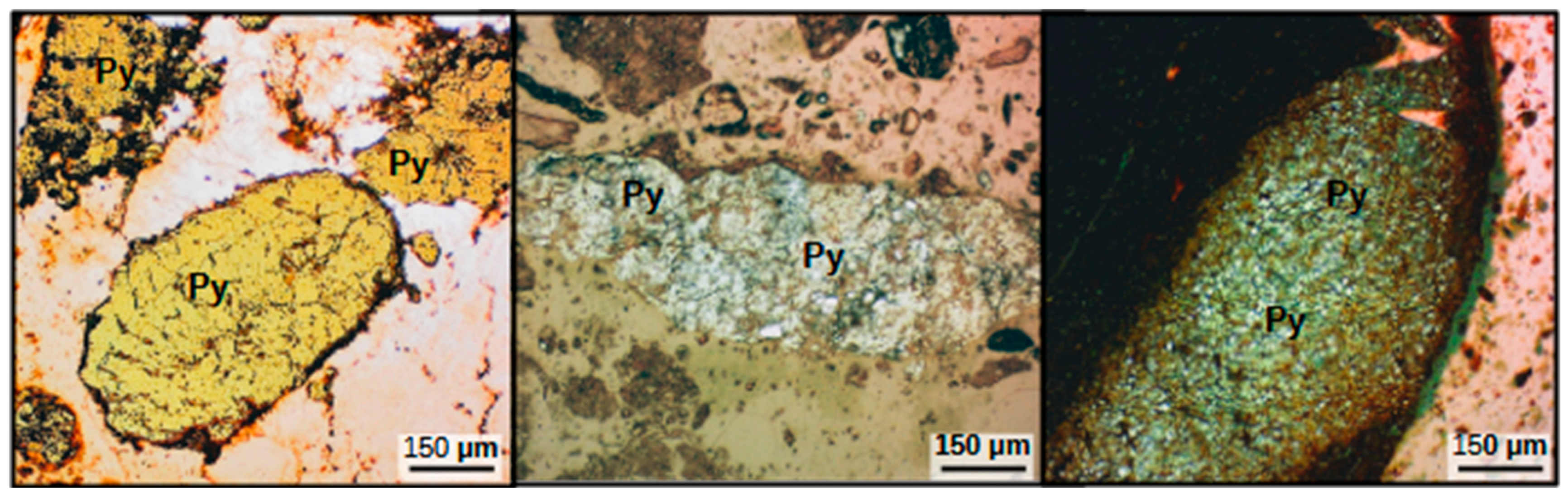
For the Fe sulfide minerals in the 30 m and 32.5 m intervals to contribute to a decrease in pH during the 4-h to 24-h period, the minerals would need to be highly available (limited to no encapsulation) [85], under acidic conditions [86], and/or likely have been previously weathered or have significant edges, such that the grains have readily attackable locations—edges, kinks, and/or pitted areas [85]. Fresh pyrite surfaces (e.g., cleaved along the {100} plane) have electrochemical surfaces where Fe sites are energetically favored over S2 sites [87], but there is a kinetic difference in acid generation with weathering of fresh mineral surfaces compared to mineral surfaces with high availability of attackable locations [85,88]. Such differences in acid generation from Fe sulfide surfaces are influenced by pH conditions, where pH < 4 limits Fe byproduct precipitation on the pyrite surface while higher pH can result in the precipitation of ferric (oxyhydr)oxides and ferric (hydroxy)sulfates on the sulfide surface [89]. The 30 m and 32.5 m intervals indicated initially high pH values (>6.25) followed by decreases in pH during the 4-h to 24-h period (Figure 15) likely as a result of a highly available FeS2 surface area with attackable locations (e.g., previously weathered and/or high impurities/kink sites). The FeS2 grains in the 30 m and 32.5 m intervals tended to have greater fractures, etching, or pitting suggestive of more attackable locations for oxidation and acid production within the 24-h period. A comparison of FeS2 grains in the 32.5 m interval (late acid generation, Figure 15) and the 47.5 m interval (no net acid generation after the initial pH reading, Figure 9 and Figure 10) indicate substantial differences in FeS2 surfaces visible in the thin sections (Figure 18), which indicate acid generation during the 4-h to 24-h period likely only occurred with readily available FeS2 that had substantial attackable locations.

4. Discussion

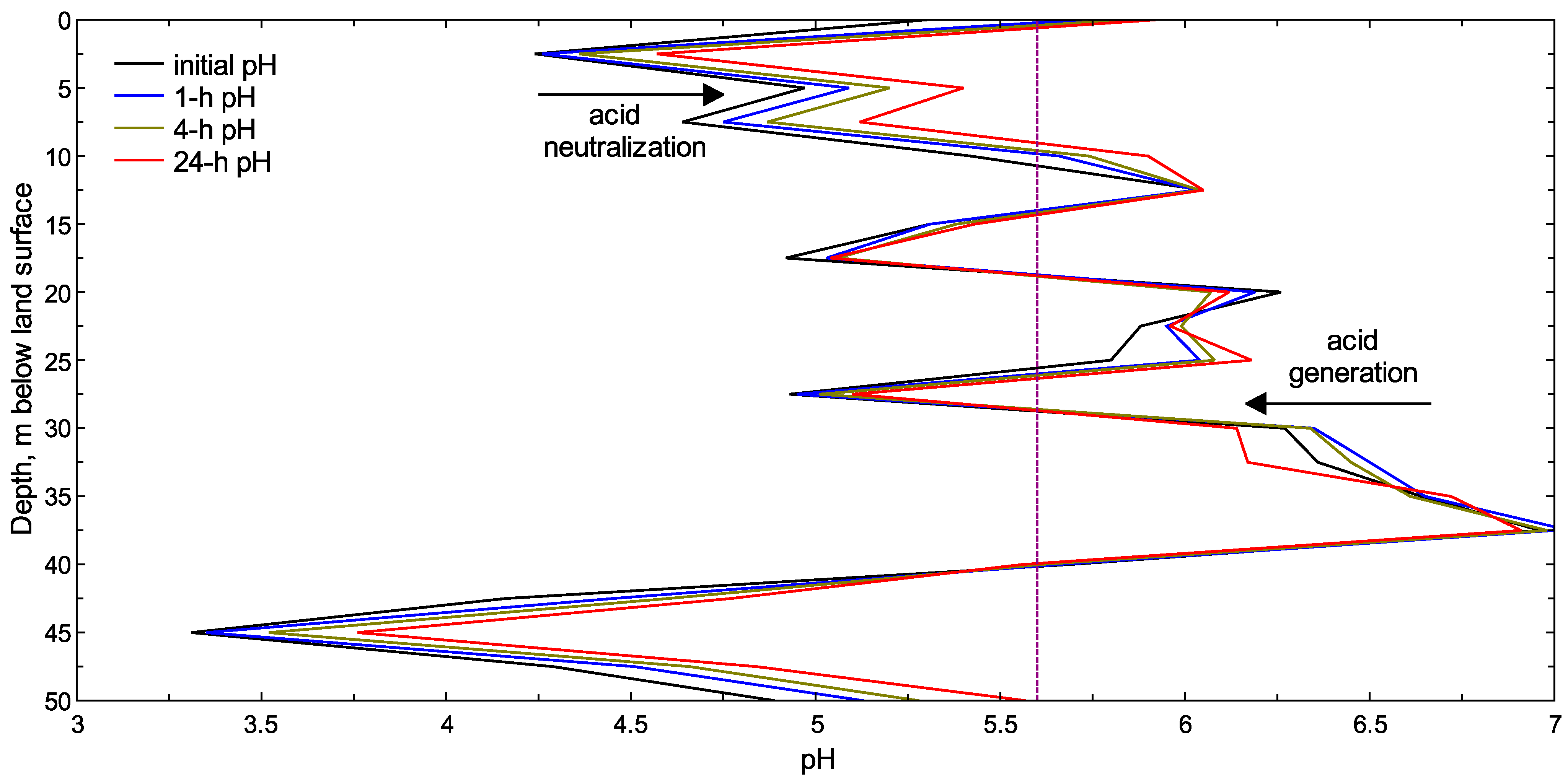
The ARD at Red Dog Mine is a result of long-term weathering and compounding oxidation reactions involving Fe sulfide minerals and byproducts that can produce the highly acidic (pH < 3) drainage, while a paste pH test is a short-duration test that even with a temporal component, such as used in this study, can only identify early acid-generating and acid-neutralizing reactions [71,72,74,90]. Even with such limitations, the temporal trends of the paste pH tests provide a means of examining the influences of potential acid-generating and acid-neutralizing reactions in the MWS (Figure 19 and Table 1). The single borehole is not representative of the MWS, but it provides a view into the primary mineralogical systems (e.g., similar types of waste rock contained across the MWS) and how they have weathered and may weather in the future. Additionally, this type of test (e.g., paste) is not equivalent to stirred reactor cells for determining reaction rates, but instead represents a quick view of aggregating dissolution processes and their effect on pH because of the milled nature of the samples for the paste pH test. Relying on a single borehole limits our ability to extrapolate these specific depth-dependent reactions across the entire MWS. However, identifying the primary acid-generating and acid-neutralizing reactions through mineralogical characterization and paste pH tests establishes a strong baseline to guide and interpret the upcoming phase of batch reactor tests. Areas of the MWS that appear to have the largest stored acidity that can quickly lower the pH were found in the upper (0 m to 7.5 m intervals) and lower (42.5 m to 50 m intervals) zones where the initial pH values ranged from 3.31 to 5.30 (Table 1). These zones tended to have lower pH ranges (Figure 19) with the lowest zone (42.5 m to 50 m intervals) indicating the most readily available acid-generating reactions and lowest overall pH values (Figure 19 and Figure 20). The short duration of the paste pH test was unable to identify acid generation from FeS2 oxidation in the lowest zone of the MWS (expectation of eventual and substantial acid generation given the noticeable presence of relatively unweathered FeS2 (Figure 18)), but the overlying and more weathered intervals in the 30 m to 40 m range produced late acid generation from FeS2 oxidation that started to decrease the pH values near the end of the test (Figure 20 and Table 1). The associated ORP values of the paste pH test did not correspond to a similar grouping of zones, but all depth intervals indicated decreases in ORP from the initial +250 value of the deionized water (highest ORP values of the presented boxplots occurred early in all paste pH tests). The reduction of dissolved O2 in the paste pH tests was expected but the results do not have a direct correlation to acid generation because of other influences on O2 concentrations, such as the oxidation of reduced metals (e.g., Fe2+) present on clay surfaces and the oxidation of non-acid-generating sulfide minerals. Additionally, these tests were not conducted as a closed solution system but were open to an atmospheric head overlying the paste where diffusion of atmospheric O2 was possible.
The mixed acid-generating and acid-neutralizing zones in the middle of the MWS can be discriminated between zones composed of the 10 m to 27.5 m intervals and the 30 m to 40 m intervals (Table 1). The 10 m to 27.5 m zone produced mixed acid-generating and acid-neutralizing reactions throughout the zone and with time (Table 1). This zone tended towards some acid generation during the initial period (6 of 8 intervals with pH < 5.6) followed by limited buffering and acid generation during the 1-h, 4-h, and 24-h periods. This zone tended towards acid neutralization over time where most intervals indicated increasing or similar pH during the 1-h period (6 of 8 intervals), the 4-h period (7 of 8 intervals), and 24-h period (7 of 8 intervals). The only interval in this zone that indicated any consistent net acid generation was the 20 m interval that decreased in pH from the initial pH (6.26) to the 1-h pH (6.19) to the 4-h pH (6.07) but did indicate a slight increase in pH from the 4-h to 24-h pH (+0.05 for a final pH of 6.12). In comparison, the 30 m to 40 m zone indicated high initial pH values (≥6.27 for all intervals) followed by minimal changes in pH until after the 4-h period when four of the five intervals indicated decreases in pH (Table 1). The differences between these two zones suggest prior weathering in the 10 m to 27.5 m zone that produced stored acidity that was released upon wetting followed by a mixture of small changes related to calcite buffering and potentially jarosite weathering with no substantive indication of readily available/reactive FeS2 for acid generation during this relatively short test. Results for this zone are in contrast to the 30 m to 40 m zone that lacked stored acidity and had more available/reactive FeS2 for acid generation later in the test.
With 12 of the 21 intervals indicating an initial decrease in pH during the paste pH test, there appears to be a relative abundance of Fe sulfate minerals or stored acidity in the MWS. The presence of such minerals is likely a result of the relatively low infiltration rates of the shaly waste rock and the potential for drying and mineral precipitation of such byproducts of FeS2 weathering. During drilling, the steel sample spoon was noticeably warm to hot for all intervals below 11 m and the drill hole experienced periods of steam release. Following drilling, a thermistor string was set in the borehole as part of Teck’s environmental monitoring program. Temperatures recorded in October 2024 and May 2025 indicated temperatures > 25 °C from 11 m to the full depth of the borehole with temperatures peaking near 70 °C (27 m). With an assumed heat generation from sulfide oxidation, the infiltrating water could undergo evaporation and induce precipitation of Fe sulfate minerals that are relatively unstable and will readily dissolve with rewetting. The potential evaporation of infiltrating water because of chemical heat generation may have limited the weathering profile of the MWS and confined acid generation to the upper layers following completion of the MWS. Additionally, the prior hypothesis of groundwater near the base of the pile was not apparent and the lowest interval contained a powdery clay sample with little competence (Figure 21). Without the presence of most waste rock minerals (e.g., sulfides, barite, quartz), this lowest sample appears to be the shale bedrock that has undergone decomposition from past weathering and subsequent exposure to elevated temperatures that alter mineral types (e.g., smectite-to-illite transformation) and break compositional bonds that reduce competency [94,95].

5. Conclusions

The generation of waste rock from the mining of high-grade, argentiferous sphalerite–galena at the Red Dog Mine has resulted in the construction of a 60 million-tonne stockpile that releases acid rock drainage with a typical pH < 3. The evolution of the drainage pH is influenced by compounding acid-generating reactions from iron sulfide weathering and acid-neutralizing reactions with the dissolution of carbonate and phosphate minerals. Drilling of the stockpile allowed for the collection of waste rock samples from the top of the stockpile to 52 m below the surface where the waste rock lies atop a shale bedrock. The goal of the study was to extend a typical static paste pH test for a temporal evaluation of early acid-generating and acid-neutralizing reactions to determine the primary reactions associated with this sulfidic waste rock. Results of the 24-h paste pH tests revealed a range of acid-generating and acid-neutralizing reactions from the 21 depth intervals where initial pH values ranged from 3.31 to 6.96 and final values ranged from 3.76 to 6.91. Fourteen of the 21 intervals produced higher pH values by the end of the test, while five intervals produced lower pH values, and two intervals produced the same pH value. The depth of the sample interval did not directly correspond to high or low initial pH values or the 24-h pH trend, but an upper and lower zone indicated greater net acid generation compared to the middle zone of the stockpile.
Many of the intervals (12 of 21) contained stored acidity from iron sulfate minerals that are byproducts from sulfide weathering, which initially lowered the pH of the paste. The temporal results of the paste pH test also indicated subsequent acid-generating reactions, such as the dissolution of jarosite minerals. Increases in the pH during the 24-h test of the paste were attributable to calcite dissolution along with the likely contribution to acid neutralization from phosphate minerals and possibly because of the large presence of clay minerals. The lower portion of the middle zone was the only area to indicate highly available/reactive iron sulfide surfaces that produced late decreases in pH near the end of the tests. The length of the test did not allow for identification of distinctions in net acid generation from iron sulfide weathering between intervals. The extended and temporal pH tests were sufficient to identify the early reaction series associated with acid generation and neutralization of this waste rock and the discrimination of mineralogy assisted in understanding the balance of acid-generating and acid-neutralizing reactions.
Results of this study will guide the interpretation of the evolving acid rock drainage characteristics and further evaluation of the remaining acid potential of the waste rock in the stockpile that will be investigated through batch reactor tests. The application of the 24-h paste pH test with corresponding mineral analyses can identify early acid-neutralizing and acid-generating reactions that would be expected with saturation of this waste rock, but the milled state of the samples obscures the true acid–base characteristics of the waste rock. Such paste pH tests can provide information relevant to identification of potential acid-generating and acid-neutralizing reactions, but they do not have any predictive value for the in situ weathering of waste rock. The goal of such temporal paste pH testing primarily is to inform further testing, such as the batch reactor tests planned as part of this study, which can assist with experiment design and results interpretation. The identification of the early acid-generating and acid-neutralizing reactions is a critical first step for interpreting upcoming batch reactor tests that will be used for the prediction of future acid generation.

Supplementary Materials

The paste pH test information can be downloaded at: https://www.mdpi.com/article/10.3390/geosciences16030125/s1.

Author Contributions

Conceptualization, J.B.L., A.B., D.E.A., T.E.L. and B.E.; methodology, J.B.L., D.E.A. and T.E.L.; validation, J.B.L., A.B. and E.M.; formal analysis, J.B.L. and S.M.; investigation, J.B.L., A.B., D.E.A., T.E.L., E.M., B.E. and S.M.; resources, J.B.L. and E.M.; data curation, J.B.L., A.B. and S.M.; writing—original draft preparation, J.B.L. and A.B.; writing—review and editing, J.B.L., A.B., D.E.A., T.E.L., E.M. and B.E.; visualization, J.B.L. and S.M.; project administration, J.B.L., E.M. and B.E.; funding acquisition, J.B.L., D.E.A., T.E.L., E.M. and B.E. All authors have read and agreed to the published version of the manuscript.

Funding

This work was funded by Red Dog Operations, Teck Alaska Incorporated. Additionally, the individual work of Sarah Mulzet was supported, in part, by the NSF through award # 2348001.

Data Availability Statement

Data is contained within the article.

Acknowledgments

Completion of the work could not have been possible without assistance from Red Dog Operations Tailings and Water personnel. We thank the editors and anonymous reviewers for their valuable suggestions.

Conflicts of Interest

Although Emile Milan and Bridget Eckhardt are part of Teck Alaska Incorporated and the study was funded by Teck Alaska Incorporated, personnel at the Teck Alaska Incorporated and the parent company Teck Resources did not restrict the data availability, the data analysis, or the results interpretation and had no role in the decision to publish the results of the study. The University of Idaho authors declare no conflicts of interest.

References

  1. Langman, J.B.; Balogh, A.; Aston, D.E.; Link, T.E.; Milan, E.; Eckhardt, B. Influence of Phased Cover Placement on the Acid-Generating Main Waste Stockpile at the Red Dog Mine, Alaska, USA. Mining 2025, 5, 74. [Google Scholar] [CrossRef]
  2. Moore, D.W.; Young, L.E.; Modene, J.S.; Plahuta, J.T. Geologic Setting and Genesis of the Red Dog Zinc-Lead-Silver Deposit, Western Brooks Range, Alaska. Econ. Geol. 1986, 81, 1696–1727. [Google Scholar] [CrossRef]
  3. Blevings, S.K.; Kraft, J.L.; Stemler, J.U.; Krolak, T.E. An Overview of the Structure, Stratigraphy, and Zn-Pb-Ag Deposits of the Red Dog District, Northwestern Alaska. In Tectonics, Metallogeny, and Discovery: The North American Cordillera and Similar Accretionary Settings; Colpron, M., Bissig, T., Rusk, B.G., Thompson, J.F.H., Eds.; Society of Economic Geologists: Littleton, CO, USA, 2013; Volume 17. [Google Scholar]
  4. Leach, D.L.; Marsh, E.; Emsbo, P.; Rombach, C.S.; Kelley, K.D.; Anthony, M. Nature of Hydrothermal Fluids at the Shale-Hosted Red Dog Zn-Pb-Ag Deposits, Brooks Range, Alaska. Econ. Geol. 2004, 99, 1449–1480. [Google Scholar] [CrossRef]
  5. Kulas, J.E. Geology of the Red Dog Mine, Western Brooks Range, Alaska; Cominco Alaska Incorporated: Kotzebue, AK, USA, 1992; p. 11. [Google Scholar]
  6. Leach, D.L.; Sangster, D.F.; Kelley, K.D.; Large, R.R.; Garven, G.; Allen, C.R.; Gutzmer, J.; Walters, S. Sediment-Hosted Lead-Zinc Deposits: A Global Perspective. In One Hundredth Anniversary Volume; Hedenquist, J.W., Thompson, J.F.H., Goldfarb, R.J., Richards, J.P., Eds.; Society of Economic Geologists: Littleton, CO, USA, 2005. [Google Scholar]
  7. Eckhardt, B.; Brown, T.; Oester, T. Selection of Climate Change-Informed Design Storm Events for a Tailings Storage Facility at Red Dog Operations, Alaska, USA. In Proceedings of the Tailings and Mine Waste 2023; University of British Columbia. Norman B. Keevil Institute of Mining Engineering: Vancouver, BC, Canada, 2023; pp. 781–792. [Google Scholar]
  8. O’Kane Consultants, Inc. Teck Resources—Red Dog Mine, Oxide Stockpile Full-Scale Cover System, 2010–2011 Annual Performance Monitoring Report; Teck Resources: Red Dog Mine, AK, USA, 2012; p. 33. [Google Scholar]
  9. Golder Associates, Inc. Summary of 2011 Site Work and Recommendations for 2012 Field Monitoring Program, Main Waste Stockpile Cut-Off Feasibility Study, Red Dog Mine, Alaska; Golder Associates, Inc.: Anchorage, AK, USA, 2012; p. 53. [Google Scholar]
  10. Golder Associates, Inc. Summary of Main Waste Stockpile 2013 Services, Red Dog Mine, Alaska; 133-95040; Golder Associates, Inc.: Anchorage, AK, USA, 2014; p. 68. [Google Scholar]
  11. Bao, Z.; Bain, J.; Saurette, E.; Zou Finfrock, Y.; Hu, Y.; Ptacek, C.J.; Blowes, D.W. Mineralogy-Dependent Sulfide Oxidation via Polysulfide and Thiosulfate Pathways during Weathering of Mixed-Sulfide Bearing Mine Waste Rock. Geochim. Cosmochim. Acta 2022, 317, 523–537. [Google Scholar] [CrossRef]
  12. Davis, G.B.; Ritchie, A.I.M. A Model of Oxidation in Pyritic Mine Wastes: Part 1 Equations and Approximate Solution. Appl. Math. Model. 1986, 10, 314–322. [Google Scholar] [CrossRef]
  13. Dos Santos, E.C.; de Mendonça Silva, J.C.; Duarte, H.A. Pyrite Oxidation Mechanism by Oxygen in Aqueous Medium. J. Phys. Chem. C 2016, 120, 2760–2768. [Google Scholar] [CrossRef]
  14. Elberling, B.; Nicholson, R.V.; Scharer, J.M. A Combined Kinetic and Diffusion Model for Pyrite Oxidation in Tailings: A Change in Controls with Time. J. Hydrol. 1994, 157, 47–60. [Google Scholar] [CrossRef]
  15. Moses, C.O.; Kirk Nordstrom, D.; Herman, J.S.; Mills, A.L. Aqueous Pyrite Oxidation by Dissolved Oxygen and by Ferric Iron. Geochim. Cosmochim. Acta 1987, 51, 1561–1571. [Google Scholar] [CrossRef]
  16. Qian, G.; Fan, R.; Short, M.D.; Schumann, R.C.; Li, J.; Li, Y.; Smart, R.S.C.; Gerson, A.R. Evaluation of the Rate of Dissolution of Secondary Sulfate Minerals for Effective Acid and Metalliferous Drainage Mitigation. Chem. Geol. 2019, 504, 14–27. [Google Scholar] [CrossRef]
  17. Bladh, K.W. The Formation of Goethite, Jarosite, and Alunite during the Weathering of Sulfide-Bearing Felsic Rocks. Econ. Geol. 1982, 77, 176–184. [Google Scholar] [CrossRef]
  18. Frau, F. The Formation-Dissolution-Precipitation Cycle of Melanterite at the Abandoned Pyrite Mine of Genna Luas in Sardinia, Italy: Environmental Implications. Mineral. Mag. 2000, 64, 995–1006. [Google Scholar]
  19. Welch, S.A.; Kirste, D.; Christy, A.G.; Beavis, F.R.; Beavis, S.G. Jarosite Dissolution II—Reaction Kinetics, Stoichiometry and Acid Flux. Chem. Geol. 2008, 254, 73–86. [Google Scholar] [CrossRef]
  20. Fowler, T.A.; Holmes, P.R.; Crundwell, F.K. Mechanism of Pyrite Dissolution in the Presence ofThiobacillus Ferrooxidans. Appl. Environ. Microbiol. 1999, 65, 2987–2993. [Google Scholar] [CrossRef]
  21. Murray, J.; Kirschbaum, A.; Dold, B.; Guimaraes, E.M.; Miner, E.P. Jarosite versus Soluble Iron-Sulfate Formation and Their Role in Acid Mine Drainage Formation at the Pan de Azúcar Mine Tailings (Zn-Pb-Ag), NW Argentina. Minerals 2014, 4, 477–502. [Google Scholar] [CrossRef]
  22. Fan, R.; Qian, G.; Li, Y.; Short, M.D.; Schumann, R.C.; Chen, M.; Smart, R.S.C.; Gerson, A.R. Evolution of Pyrite Oxidation from a 10-Year Kinetic Leach Study: Implications for Secondary Mineralisation in Acid Mine Drainage Control. Chem. Geol. 2022, 588, 120653. [Google Scholar] [CrossRef]
  23. Jerz, J.K.; Rimstidt, J.D. Efflorescent Iron Sulfate Minerals: Paragenesis, Relative Stability, and Environmental Impact. Am. Mineral. 2003, 88, 1919–1932. [Google Scholar] [CrossRef]
  24. Trueman, A.M.; McLaughlin, M.J.; Mosley, L.M.; Fitzpatrick, R.W. Composition and Dissolution Kinetics of Jarosite-Rich Segregations Extracted from an Acid Sulfate Soil with Sulfuric Material. Chem. Geol. 2020, 543, 119606. [Google Scholar] [CrossRef]
  25. Gaillardet, J.; Dupré, B.; Louvat, P.; Allègre, C.J. Global Silicate Weathering and CO2 Consumption Rates Deduced from the Chemistry of Large Rivers. Chem. Geol. 1999, 159, 3–30. [Google Scholar] [CrossRef]
  26. Liu, Z.; Dreybrodt, W.; Liu, H. Atmospheric CO2 Sink: Silicate Weathering or Carbonate Weathering? Appl. Geochem. 2011, 26, S292–S294. [Google Scholar] [CrossRef]
  27. Day, S.; Coulter, G.; Falutsu, M. Geochemical Studies to Characterise the Complex Sulfur Mineralogy at Red Dog Pb-Zn Mine; Cominco Alaska Incorporated: Red Dog Mine, AK, USA, 1997; p. 9. [Google Scholar]
  28. Reynolds, M.A.; Gleeson, S.A.; Creaser, R.A.; Friedlander, B.A.; Haywood, J.C.; Hnatyshin, D.; McCusker, J.; Waldron, J.W.F. Diagenetic Controls on the Formation of the Anarraaq Clastic-Dominated Zn-Pb-Ag Deposit, Red Dog District, Alaska. Econ. Geol. 2021, 116, 1803–1824. [Google Scholar] [CrossRef]
  29. SRK Consulting Geochemical Characterization. SRK Consulting Geochemical Characterization of Aqqaluk and Main Waste Stockpile Waste Rock, Red Dog Mine—Final Report; SRK Consulting Geochemical Characterization: Reno, NV, USA, 2020. [Google Scholar]
  30. Patton, W.W.; Matzko, J.J. Phosphate Deposits in Northern Alaska; Professional Paper 302-A; U.S. Geological Survey: Reston, VA, USA, 1959; p. 25. [Google Scholar] [CrossRef]
  31. Evangelou, V.P.; Zhang, Y.L. A Review: Pyrite Oxidation Mechanisms and Acid Mine Drainage Prevention. Crit. Rev. Environ. Sci. Technol. 1995, 25, 141–199. [Google Scholar] [CrossRef]
  32. Guidry, M.W.; Mackenzie, F.T. Experimental Study of Igneous and Sedimentary Apatite Dissolution: Control of pH, Distance from Equilibrium, and Temperature on Dissolution Rates. Geochim. Cosmochim. Acta 2003, 67, 2949–2963. [Google Scholar] [CrossRef]
  33. Guidry, M.W.; Mackenzie, F.T. Apatite Weathering and the Phanerozoic Phosphorus Cycle. Geology 2000, 28, 631–634. [Google Scholar] [CrossRef]
  34. Langman, J.B.; Sinclair, S.; Amos, R.T.; Wilson, D.; Ptacek, C.J.; Sego, D.C.; Smith, L.; Blowes, D.W. Alkalinity Generation from Weathering of Accessory Calcite and Apatite and Acid Drainage Neutralization in an Archean Granitoid Waste Rock. J. Geochem. Explor. 2019, 205, 106341. [Google Scholar] [CrossRef]
  35. Lawrence, R.W.; Scheske, M. A Method to Calculate the Neutralization Potential of Mining Wastes. Environ. Geol. 1997, 32, 100–106. [Google Scholar] [CrossRef]
  36. Sherlock, E.J.; Lawrence, R.W.; Poulin, R. On the Neutralization of Acid Rock Drainage by Carbonate and Silicate Minerals. Environ. Geol. 1995, 25, 43–54. [Google Scholar] [CrossRef]
  37. Spotts, E.; Dollhopf, D.J. Evaluation of Phosphate Materials for Control of Acid Production in Pyritic Mine Overburden. J. Environ. Qual. 1992, 21, 627–634. [Google Scholar] [CrossRef]
  38. Plummer, L.N.; Wigley, T.M.L. The Dissolution of Calcite in CO2-Saturated Solutions at 25 °C and 1 Atmosphere Total Pressure. Geochim. Cosmochim. Acta 1976, 40, 191–202. [Google Scholar] [CrossRef]
  39. Sjöberg, E.L.; Rickard, D.T. Calcite Dissolution Kinetics: Surface Speciation and the Origin of the Variable pH Dependence. Chem. Geol. 1984, 42, 119–136. [Google Scholar] [CrossRef]
  40. Harouiya, N.; Chaïrat, C.; Köhler, S.J.; Gout, R.; Oelkers, E.H. The Dissolution Kinetics and Apparent Solubility of Natural Apatite in Closed Reactors at Temperatures from 5 to 50 °C and pH from 1 to 6. Chem. Geol. 2007, 244, 554–568. [Google Scholar] [CrossRef]
  41. Bonnet, M.; Robin, V.; Parrotin, F.; Grozeva, N.; Seigneur, N.; Batbaatar, M.-E.; Descostes, M. Influence of Clay Minerals on pH and Major Cation Concentrations in Acid-Leached Sands: Column Experiments and Reactive-Transport Modeling. J. Contam. Hydrol. 2024, 264, 104363. [Google Scholar] [CrossRef]
  42. Fodor, M.A.; Ható, Z.; Kristóf, T.; Pósfai, M. The Role of Clay Surfaces in the Heterogeneous Nucleation of Calcite: Molecular Dynamics Simulations of Cluster Formation and Attachment. Chem. Geol. 2020, 538, 119497. [Google Scholar] [CrossRef]
  43. Jambor, J.; Dutrizac, J.; Groat, L.; Raudsepp, M. Static Tests of Neutralization Potentials of Silicate and Aluminosilicate Minerals. Environ. Geol. 2002, 43, 1–17. [Google Scholar] [CrossRef]
  44. Jambor, J.L. The Relationship of Mineralogy to Acid- and Neutralization-Potential Values in ARD. In Environmental Mineralogy: Microbial Interactions, Anthropogenic Influences, Contaminated Land and Waste Management; Cotter-Howells, J.D., Campbell, L.S., Valsami-Jones, E., Batchelder, M., Eds.; Mineralogical Society of Great Britain and Ireland: Twickenham, UK, 2000; Volume 9. [Google Scholar]
  45. Young, L.E. A Geologic Framework for Mineralization in the Western Brooks Range, Alaska. Econ. Geol. 2004, 99, 1281–1306. [Google Scholar] [CrossRef]
  46. Slack, J.F.; Dumoulin, J.A.; Schmidt, J.M.; Young, L.E.; Rombach, C.S. Paleozoic Sedimentary Rocks in the Red Dog Zn-Pb-Ag District and Vicinity, Western Brooks Range, Alaska: Provenance, Deposition, and Metallogenic Significance. Econ. Geol. 2004, 99, 1385–1414. [Google Scholar] [CrossRef]
  47. Drever, J.I.; Stillings, L.L. The Role of Organic Acids in Mineral Weathering. Colloids Surf. Physicochem. Eng. Asp. 1997, 120, 167–181. [Google Scholar] [CrossRef]
  48. Gu, X.; Brantley, S.L. How Particle Size Influences Oxidation of Ancient Organic Matter during Weathering of Black Shale. ACS Earth Space Chem. 2022, 6, 1443–1459. [Google Scholar] [CrossRef] [PubMed]
  49. You, L.; Zhou, Y.; Kang, Y.; Cheng, Q.; Zhang, N. Experimental Evaluation of Oxidation Sensitivity in Organic-Rich Shale Reservoir. J. Pet. Sci. Eng. 2020, 192, 107230. [Google Scholar] [CrossRef]
  50. Shaw, S.A.; Jim Hendry, M. Geochemical and Mineralogical Impacts of H2SO4 on Clays between pH 5.0 and −3.0. Appl. Geochem. 2009, 24, 333–345. [Google Scholar] [CrossRef]
  51. Avena, M.J.; Mariscal, M.M.; De Pauli, C.P. Proton Binding at Clay Surfaces in Water. Appl. Clay Sci. 2003, 24, 3–9. [Google Scholar] [CrossRef]
  52. Liu, X.; Lu, X.; Meijer, E.J.; Wang, R.; Zhou, H. Atomic-Scale Structures of Interfaces between Phyllosilicate Edges and Water. Geochim. Cosmochim. Acta 2012, 81, 56–68. [Google Scholar] [CrossRef]
  53. Jambor, J.L.; Nordstrom, D.K.; Alpers, C.N. Metal-Sulfate Salts from Sulfide Mineral Oxidation. Rev. Mineral. Geochem. 2000, 40, 303–350. [Google Scholar] [CrossRef]
  54. Wilson, D.; Amos, R.T.; Blowes, D.W.; Langman, J.B.; Ptacek, C.J.; Smith, L.; Sego, D.C. Diavik Waste Rock Project: A Conceptual Model for Temperature and Sulfide-Content Dependent Geochemical Evolution of Waste Rock–Laboratory Scale. Appl. Geochem. 2018, 89, 160–172. [Google Scholar] [CrossRef]
  55. Gu, X.; Heaney, P.J.; Reis, F.D.A.A.; Brantley, S.L. Deep Abiotic Weathering of Pyrite. Science 2020, 370, eabb8092. [Google Scholar] [CrossRef]
  56. Nordstrom, D.K. Aqueous Pyrite Oxidation and the Consequent Formation of Secondary Iron Minerals. In Acid Sulfate Weathering; John Wiley & Sons, Ltd.: Hoboken, NJ, USA, 1982; pp. 37–56. [Google Scholar]
  57. Bigham, J.M. Mineralogy of Ochre Deposits Formed by Sulfide Oxidation. In Environmental Geochemistry of Sulfide Mine-Wastes; Jambor, J.L., Blowes, D.W., Eds.; Mineralogical Association of Canada: Quebec, QC, Canada, 1994; Volume 22, pp. 103–132. ISBN 978-0-8412-2772-9. [Google Scholar]
  58. Constantin, C.A.; Chiriţă, P. Oxidative Dissolution of Pyrite in Acidic Media. J. Appl. Electrochem. 2013, 43, 659–666. [Google Scholar] [CrossRef]
  59. Wunderly, M.D.; Blowes, D.W.; Frind, E.O.; Ptacek, C.J. Sulfide Mineral Oxidation and Subsequent Reactive Transport of Oxidation Products in Mine Tailings Impoundments: A Numerical Model. Water Resour. Res. 1996, 32, 3173–3187. [Google Scholar] [CrossRef]
  60. Alpers, C.N.; Nordstrom, D.K.; Ball, J.W. Solubility of Jarosite Solid Solutions Precipitated from Acid Mine Waters, Iron Mountain, California. Sci. Geol. Bull. 1989, 42, 281–298. [Google Scholar] [CrossRef]
  61. Murad, E.; Rojik, P. Jarosite, Schwertmannite, Goethite, Ferrihydrite and Lepidocrocite: The Legacy of Coal and Sulfide Ore Mining. In Proceedings of the Super Soil 2004; University of Sydney: Sydney, Australia, 2004. [Google Scholar]
  62. SRK Consulting. Red Dog Geochemical Characterization-Sample Selections for the Main Waste Stockpile; SRK Consulting: Reno, NV, USA, 2017. [Google Scholar]
  63. Langman, J.B.; Blowes, D.W.; Veeramani, H.; Wilson, D.; Smith, L.; Sego, D.C.; Paktunc, D. The Mineral and Aqueous Phase Evolution of Sulfur and Nickel with Weathering of Pyrrhotite in a Low Sulfide, Granitic Waste Rock. Chem. Geol. 2015, 401, 169–179. [Google Scholar] [CrossRef]
  64. Safari, V.; Arzpeyma, G.; Rashchi, F.; Mostoufi, N. A Shrinking Particle—Shrinking Core Model for Leaching of a Zinc Ore Containing Silica. Int. J. Miner. Process. 2009, 93, 79–83. [Google Scholar] [CrossRef]
  65. American Society for Testing and Materials. Test Method for Laboratory Weathering of Solid Materials Using a Humidity Cell; ASTM International: West Conshohocken, PA, USA, 2018; p. 24. [Google Scholar]
  66. Środoń, J.; Drits, V.A.; McCarty, D.K.; Hsieh, J.C.C.; Eberl, D.D. Quantitative X-Ray Diffraction Analysis of Clay-Bearing Rocks from Random Preparations. Clays Clay Miner. 2001, 49, 514–528. [Google Scholar] [CrossRef]
  67. Hillier, S. Accurate Quantitative Analysis of Clay and Other Minerals in Sandstones by XRD: Comparison of a Rietveld and a Reference Intensity Ratio (RIR) Method and the Importance of Sample Preparation. Clay Miner. 2000, 35, 291–302. [Google Scholar] [CrossRef]
  68. Bish, D.L.; Plötze, M. X-Ray Powder Diffraction with Emphasis on Qualitative and Quantitative Analysis in Industrial Mineralogy. In Advances in the Characterization of Industrial Minerals; Christidis, G.E., Ed.; European Mineralogical Union: Dublin, Ireland, 2010; Volume 9. [Google Scholar]
  69. Moore, D.M.; Reynolds, R.C. X-Ray Diffraction and the Identification and Analysis of Clay Minerals; Oxford University Press: Oxford, UK, 1989; Volume 78. [Google Scholar]
  70. Sadrian, M.R.; Calvin, W.M.; McCormack, J. Contrasting Mineral Dust Abundances from X-Ray Diffraction and Reflectance Spectroscopy. Atmos. Meas. Tech. 2022, 15, 3053–3074. [Google Scholar] [CrossRef]
  71. Sobek, A.A.; Schuller, W.A.; Freeman, J.R.; Smith, R.M. Field and Laboratory Methods Applicable to Overburdens and Mine Soils; U.S. Environmental Protection Agency: Washington, DC, USA, 1978; p. 218. [Google Scholar]
  72. Price, W.A. Prediction Manual for Drainage Chemistry from Sulphidic Geological Materials; CANMET, Mining and Mineral Sciences Laboratories: Ottawa, ON, Canada, 2009; p. 579. [Google Scholar]
  73. Hamanaka, A.; Sasaoka, T.; Shimada, H.; Matsumoto, S.; Kusuma, G.J.; Deni, M.C.N. Mitigation of Acid Mine Drainage Using Blended Waste Rock in Near-Equatorial Climates—Geochemical Analysis and Column Leaching Tests. Physchem 2024, 4, 470–482. [Google Scholar] [CrossRef]
  74. Yucel, D.S.; Baba, A. Prediction of Acid Mine Drainage Generation Potential of Various Lithologies Using Static Tests: Etili Coal Mine (NW Turkey) as a Case Study. Environ. Monit. Assess. 2016, 188, 473. [Google Scholar] [CrossRef]
  75. Coastech Research, Inc. Acid Rock Drainage Prediction Manual: A Manual of Chemical Evaluation Procedures for the Predition of Acid Generation from Mine Wastes; MEND Project; CANMET-MSL Division: Hamilton, ON, Canada, 2008; p. 83. [Google Scholar]
  76. Lapakko, K.A. Metal Mine Rock and Waste Characterization Tools: An Overview; Mining, Minerals, and Sustainable Development; International Institute for Environment and Development: London, UK, 2002; p. 31. [Google Scholar]
  77. Elwood Madden, M.E.; Madden, A.S.; Rimstidt, J.D.; Zahrai, S.; Kendall, M.R.; Miller, M.A. Jarosite Dissolution Rates and Nanoscale Mineralogy. Geochim. Cosmochim. Acta 2012, 91, 306–321. [Google Scholar] [CrossRef]
  78. Kendall, M.R.; Madden, A.S.; Elwood Madden, M.E.; Hu, Q. Effects of Arsenic Incorporation on Jarosite Dissolution Rates and Reaction Products. Geochim. Cosmochim. Acta 2013, 112, 192–207. [Google Scholar] [CrossRef]
  79. Pugh, C.E.; Hossner, L.R.; Dixon, J.B. Oxidation Rate of Iron Sulfides as Affected by Surface Area, Morphology, Oxygen Concentration, and Autotrophic Bacteria. Soil Sci. 1984, 137, 309. [Google Scholar] [CrossRef]
  80. White, W.W.I.; Jeffers, T.H. Chemical Predictive Modeling of Acid Mine Drainage from Metallic Sulfide-Bearing Waste Rock. In Environmental Geochemistry of Sulfide Oxidation; ACS Symposium Series; American Chemical Society: Washington, DC, USA, 1993; Volume 550, pp. 608–630. [Google Scholar]
  81. Mulana, F.; Munawar, E.; Heldiana, H.; Rahmi, M. The Effect of Carbon Dioxide Gas Pressure on Solubility, Density and pH of Carbon Dioxide—Water Mixtures. Mater. Today Proc. 2022, 63, S46–S49. [Google Scholar] [CrossRef]
  82. Arvidson, R.S.; Ertan, I.E.; Amonette, J.E.; Luttge, A. Variation in Calcite Dissolution Rates: A Fundamental Problem? Geochim. Cosmochim. Acta 2003, 67, 1623–1634. [Google Scholar] [CrossRef]
  83. Chaïrat, C.; Schott, J.; Oelkers, E.H.; Lartigue, J.-E.; Harouiya, N. Kinetics and Mechanism of Natural Fluorapatite Dissolution at 25 °C and pH from 3 to 12. Geochim. Cosmochim. Acta 2007, 71, 5901–5912. [Google Scholar] [CrossRef]
  84. Dorozhkin, S.V. Dissolution Mechanism of Calcium Apatites in Acids: A Review of Literature. World J. Methodol. 2012, 2, 1–17. [Google Scholar] [CrossRef]
  85. McKibben, M.A.; Barnes, H.L. Oxidation of Pyrite in Low Temperature Acidic Solutions: Rate Laws and Surface Textures. Geochim. Cosmochim. Acta 1986, 50, 1509–1520. [Google Scholar] [CrossRef]
  86. Bonnissel-Gissinger, P.; Alnot, M.; Ehrhardt, J.-J.; Behra, P. Surface Oxidation of Pyrite as a Function of pH. Environ. Sci. Technol. 1998, 32, 2839–2845. [Google Scholar] [CrossRef]
  87. Rosso, K.M.; Becker, U.; Hochella, M.F. Atomically Resolved Electronic Structure of Pyrite {100} Surfaces: An Experimental and Theoretical Investigation with Implications for Reactivity. Am. Mineral. 1999, 84, 1535–1548. [Google Scholar] [CrossRef]
  88. Chandra, A.P.; Gerson, A.R. The Mechanisms of Pyrite Oxidation and Leaching: A Fundamental Perspective. Surf. Sci. Rep. 2010, 65, 293–315. [Google Scholar] [CrossRef]
  89. Todd, E.C.; Sherman, D.M.; Purton, J.A. Surface Oxidation of Pyrite under Ambient Atmospheric and Aqueous (pH = 2 to 10) Conditions: Electronic Structure and Mineralogy from X-Ray Absorption Spectroscopy. Geochim. Cosmochim. Acta 2003, 67, 881–893. [Google Scholar] [CrossRef]
  90. Weber, P.; Hughes, J.; Conner, L.; Lindsay, P.; Smart, C. Short-Term Acid Rock Drainage Characteristics Determined by Paste pH and Kinetic NAG Testing: Cypress Prospect, New Zealand. J. Am. Soc. Min. Reclam. 2006, 2006, 2289–2310. [Google Scholar] [CrossRef]
  91. Plummer, L.N.; Parkhurst, D.L.; Wigley, T.M.L. Critical Review of the Kinetics of Calcite Dissolution and Precipitation. In Chemical Modeling in Aqueous Systems; ACS Symposium Series; American Chemical Society: Washington, DC, USA, 1979; Volume 93, pp. 537–573. [Google Scholar]
  92. Plummer, L.N.; Wigley, T.M.L.; Parkhurst, D.L. The Kinetics of Calcite Dissolution in CO2-Water Systems at 5 Degrees to 60 Degrees C and 0.0 to 1.0 Atm CO2. Am. J. Sci. 1978, 278, 179–216. [Google Scholar] [CrossRef]
  93. Holmes, P.R.; Crundwell, F.K. The Kinetics of the Oxidation of Pyrite by Ferric Ions and Dissolved Oxygen: An Electrochemical Study. Geochim. Cosmochim. Acta 2000, 64, 263–274. [Google Scholar] [CrossRef]
  94. Ling, K.; Wang, Z.; Cao, Y.; Liu, Y.; Dong, L. Clay Mineral Characteristics and Smectite-to-Illite Transformation in the Chang-7 Shale, Ordos Basin: Processes and Controlling Factors. Minerals 2025, 15, 951. [Google Scholar] [CrossRef]
  95. Yang, L.; Lu, L.; Li, X.; Shan, Y.; Mo, C.; Sun, M.; Hu, J.; Liu, W.; Liang, B.; Xu, J. Clay Mineral Transformation Mechanism Modelling of Shale Reservoir in Da’anzhai Member, Sichuan Basin, Southern China. Front. Earth Sci. 2023, 11, 1205849. [Google Scholar] [CrossRef]
Figure 1. Location of Teck Resource’s Red Dog Mine and an aerial view of the Tailings Storage Facility, Main Waste Stockpile (MWS) with a portion of its cover, and pits at Red Dog Mine in 2023 (modified from [1]). Drill site location is marked atop the MWS.
Geosciences 16 00125 g001
Figure 2. Diagram (not to scale) of the Kuna Basin structure and location of Red Dog deposits within the organic-rich shale deposits (modified from [3,4,6]). The Ikalukrok unit and Kivalina unit are part of the Kuna Formation, while the Kayak shale is part of the Endicott Group.
Geosciences 16 00125 g002
Figure 3. Schematic of the typical evolution of acid rock drainage (modified from [16]).
Geosciences 16 00125 g003
Figure 4. Iron staining from iron sulfide weathering in a test pit dug at the MWS in 2017 [62]. The pit is approximately 2 m wide.
Geosciences 16 00125 g004
Figure 5. Example of iron (oxyhydr)oxide and hydroxysulfate mineral precipitation in a test pit dug by SRK Consulting in 2017 as part of a geochemical investigation of the upper weathered zone of the MWS. This test pit was considered to be strongly oxidized with the presence of hematite, limonite, and jarosite [29]. No scale presented in the report figure.
Geosciences 16 00125 g005
Figure 6. Theoretical shrinking core model of iron sulfide weathering. This idealized view indicates the formation of oxidation product rims (rinds (red)) around the sulfide core (yellow)). The expectation is the continual loss of the sulfur products with complete oxidation and retention of the iron products as the rims [63,64].
Geosciences 16 00125 g006
Figure 7. Examples of split spoon (0.45-m length, 0.06-m internal width) cores collected from the Main Waste Stockpile at the Red Dog Mine, Alaska, with indicated top-of-sample depths. The split spoon heads have been removed and the samplers split open. The depths reference the depth from top of the pile to the top of the core. The 1.5-m core contained damp waste rock that produced the dark color of moisture-laden shale. The 7.6-m core indicated intermittent moisture that produced the patchy gray colors. The 19 m core is representative of iron sulfide weathering and oxidation product formation that often stuck to the core barrel (both sides of the split spoon shown).
Geosciences 16 00125 g007
Figure 8. Potential progression of acid-generating and acid-neutralizing reactions of Red Dog Mine waste rock minerals undergoing oxidative dissolution that could be detected with the 24-h paste pH test. The generated acid (H+) and bases (e.g., CO32–) are presented as drivers of the resulting pH at different temporal periods. “ex?” indicates possible acid neutralization by the clay minerals (e.g., exchange reaction).
Geosciences 16 00125 g008
Figure 9. Initial pH recorded after saturation of the sample (paste) during the 24-h paste pH tests for all sample intervals. Zero-time pH is set to a pH of 5.6 (average recorded pH of deionized water used during the tests) as indicated by the purple dashed line.
Geosciences 16 00125 g009
Figure 10. Trends of pH during the 24-h paste pH tests for all sample intervals. Depth indicators are the top of the sample interval (e.g., 5 m to 7.5 m = 5 m). Zero-time pH is set to a pH of 5.6 (average recorded pH of deionized water used during the tests) as indicated by the purple dashed line.
Geosciences 16 00125 g010
Figure 11. Change in pH during the first hour after the initial pH. Blue highlighted intervals are those that indicated a >0.2 increase in pH following the initial pH recording. Zero-time pH is set to a pH of 5.6 (average recorded pH of deionized water used during the tests).
Geosciences 16 00125 g011
Figure 12. Optical (transmitted (A,D,G) and polarized (B,E,H)) and scanning electron microscopy (C,F,I) images of calcite grains (highlighted by black and white boxes) from intervals 10 m (AC,GI) and 42.5 m (DF). A mix of calcite grain sizes were present and ranged from 10 µm (AC) to >100 µm (DF) in diameter, which were detectable with polarized/cross-polarized light (twinning and high-order colors (B,E,H)) along with visible rhombohedral (C) and hexagonal (C,I) structures in transmitted light (A,D,G) and with the scanning electron microscope (C,F,I). The grains were commonly embedded with quartz (Qz) and barite (Brt). Such grains were visible in all the intervals with substantive pH increases within an hour following the initial pH (Figure 9).
Geosciences 16 00125 g012
Figure 13. Change in pH during the 4-h period after the initial pH. The red highlighted intervals indicated a >0.2 increase in pH during the 4-h period following the initial pH recording but not during the 1-h period. Zero-time pH is set to a pH of 5.6 (average recorded pH of deionized water used during the tests).
Geosciences 16 00125 g013
Figure 14. Optical and scanning electron microscopy images of an apatite grain (white box) from interval 5 m. Such grains were visible through high relief in transmitted light (A), first-order gray color under polarized light (B), and elongated crystals (C) in the intervals with substantive pH increases between the 1-h and 4-h pH readings. Phosphorus/phosphate (SEM/optical) was often found with quartz (Qz) but could be embedded with a mixture of minerals, particularly the mixed shale conglomerations, such as visible in these images.
Geosciences 16 00125 g014
Figure 15. Examples of large, available, weathered pyrite grains from the 20-m interval suggestive of available iron sulfide weathering byproducts and reactive pyrite (high surface availability). Mixed light microscopy.
Geosciences 16 00125 g015
Figure 16. Examples of sulfide weathering products, including jarosite minerals, in the 2.5-m interval. Mixed light optical microscopy, which highlights the ochreous mixed deposits of the iron sulfide weathering byproducts.
Geosciences 16 00125 g016
Figure 17. Change in pH from the 4-h reading until the end of the experiment. The red highlighted intervals indicated >0.2 decrease in pH following the 4-h period. Zero-time pH is set to a pH of 5.6 (average recorded pH of deionized water used during the tests).
Geosciences 16 00125 g017
Figure 18. Examples of pyrite grains from the 32.5 m (AC) and 47.5-m (DF) intervals indicating perceived differences in weathered states of the pyrite grains prior to the paste pH test. The 32.5 m interval indicated more weathered grains with substantial edges (e.g., etching and pitting) that can more quickly contribute to acid generation with further oxidative dissolution compared to the substantially less weathered pyrite grains found in the 47.5 m interval. Substantive light response differences are apparent between the highly weathered and less weathered pyrite because of the scattering of the light with the variable surface of the weathered grains (e.g., etching and pitting).
Geosciences 16 00125 g018
Figure 19. Boxplots of oxidation-reduction potential and pH values recorded during the 24-h paste pH test for each depth interval of the stockpile (“*” outliers). The starting pH of the solution was 5.6 (dashed line).
Geosciences 16 00125 g019
Figure 20. Initial pH, 1-h pH, 4-h pH, and 24-h pH recorded after saturation of the sample (paste) during the 24-h paste pH tests for all sample intervals. Zero-time pH is set to a pH of 5.6 (average recorded pH of deionized water used during the tests) as indicated by the purple dashed line.
Geosciences 16 00125 g020
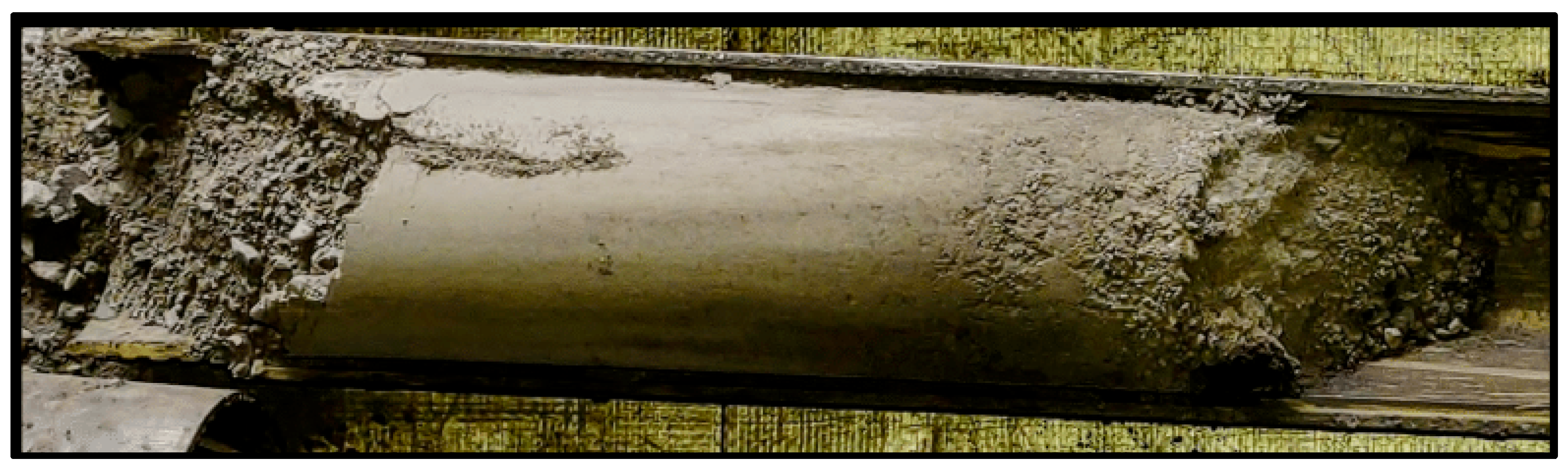
Figure 21. Photo of core from 51 m below the top of the Main Waste Stockpile in the split spoon sampler (0.06 m internal diameter). This sample contained no visible moisture and appeared to be decomposed shale bedrock likely caused by heat accumulation from sulfide oxidation reactions.
Geosciences 16 00125 g021
Table 1. The initial pH, 1-h pH, 4-h pH, and 24-h pH values and their period changes for paste pH tests of the 2.5 m intervals of waste rock collected from the Main Waste Stockpile. Bolded pH changes indicate interval samples that produced > 0.05 decrease in pH from the initial pH (first value) and the 4-h pH. The initial pH represents the first pH recorded after the paste was prepared and the probe was inserted into the sample. The assumed starting pH is the atmospherically equilibrated 5.6 value (Cond. = condition).
Top DepthInitial pHInitial Cond 11-h pH1-h ΔpH1 h Cond 24-h pH4-h ΔpH4-h Cond 324-h pH24-h ΔpH4-h to 24-h ΔpH24-h Cond 4
05.30Acid generation5.72+0.42Calcite buffering5.84+0.54Calcite + apatite buffering5.92+0.62 +0.08Clay buffering with low pH
2.54.244.26+0.024.36+0.124.57+0.33+0.21
54.975.09+0.125.20+0.235.40+0.43+0.20
7.54.644.75+0.114.87+0.235.12+0.48+0.25
105.42Mixed range of acid generation5.66+0.24Some calcite buffering and acid generation5.74+0.32Mixed buffering and acid generation5.90+0.48+0.16Limited buffering and acid generation
12.56.056.03−0.026.04−0.016.050.00+0.01
155.315.310.005.38+0.075.43+0.12+0.05
17.54.925.03+0.115.06+0.145.04+0.12−0.02
206.266.19−0.076.07−0.196.12−0.14+0.05
22.55.885.95+0.075.99+0.115.96+0.08−0.03
255.806.04+0.246.08+0.286.18+0.38+0.10
27.54.934.95+0.025.01+0.085.10+0.17+0.09
306.27No acid generation6.35+0.08Limited change6.34+0.07Limited change6.14−0.13−0.20Mostly FeS2 acid generation
32.56.366.50+0.146.45+0.096.17−0.19−0.28
356.646.65+0.016.61−0.036.72+0.08+0.11
37.56.967.02+0.066.98+0.026.91−0.05−0.07
405.695.66−0.03 5.61−0.085.56−0.13−0.05
42.54.16Acid generation4.45+0.29Calcite buffering4.60+0.44Calcite + apatite buffering4.77+0.61+0.17Clay buffering with low pH
453.313.35+0.043.52+0.213.76+0.45+0.24
47.54.294.51+0.224.66+0.374.84+0.55+0.18
504.895.13+0.245.28+0.395.57+0.68+0.29
1 This initial pH condition (first recording of pH) is a reflection of the presence or lack of iron sulfate minerals precipitated in the waste rock from the acid rock drainage that moved through the Main Waste Stockpile. 2 The 1-h pH condition (1 h after the first recording of pH) is a reflection of the balance between the highly available acid-generating or non-acid-generating conditions, such as calcite buffering, that can quickly provide acid neutralization [18,36,38,39,91]. 3 The 4-h pH condition (4 h after the first recording of pH) reflects the presence, or lack, of carbonate and phosphate minerals that could relatively quickly increase the pH of the paste or the acid generation from dissolution of hydroxysulfate minerals. Calcite and phosphate dissolution is influenced by pH where lower pH conditions will increase mineral dissolution and acid neutralization [32,34,38,84,91,92]. Dissolution of hydroxysulfate minerals, such as jarosite, will generate acid with stronger dissolution at higher pH values [16,60]. 4 The 24-h pH condition (24 h after the first recording of pH) reflects the accumulation of acid-generating and acid-neutralizing processes capable of influencing pH within the stated duration and pH condition. This final recording has the potential to reflect the overall system reactions, including the possible contribution of FeS2 weathering [14,55,93].
Disclaimer/Publisher’s Note: The statements, opinions and data contained in all publications are solely those of the individual author(s) and contributor(s) and not of MDPI and/or the editor(s). MDPI and/or the editor(s) disclaim responsibility for any injury to people or property resulting from any ideas, methods, instructions or products referred to in the content.