
3D Multi-Attribute Ant Tracking for Fault and Fracture Delineation—A Case Study from the Anadarko Basin


Abstract
1. Introduction
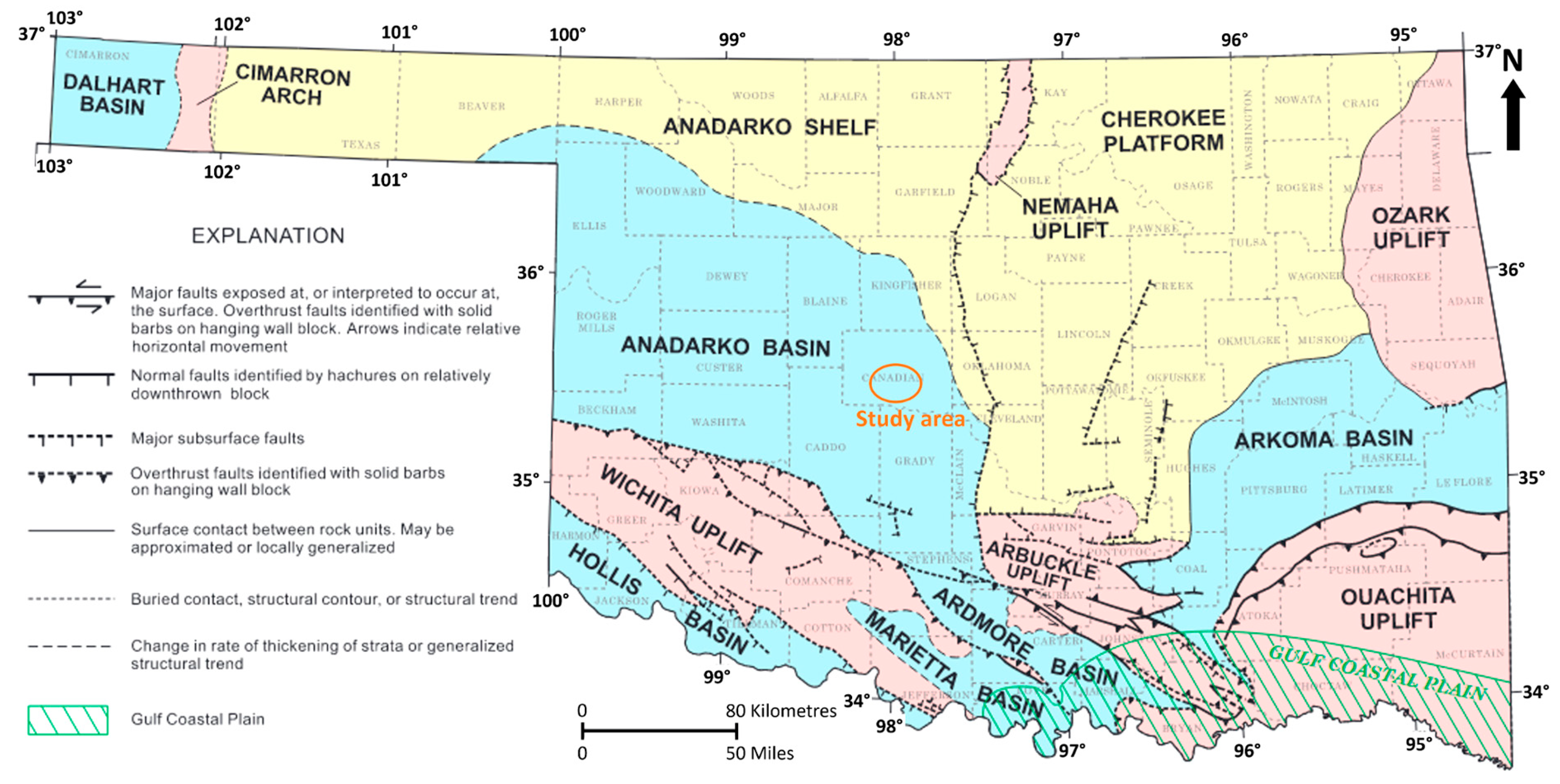
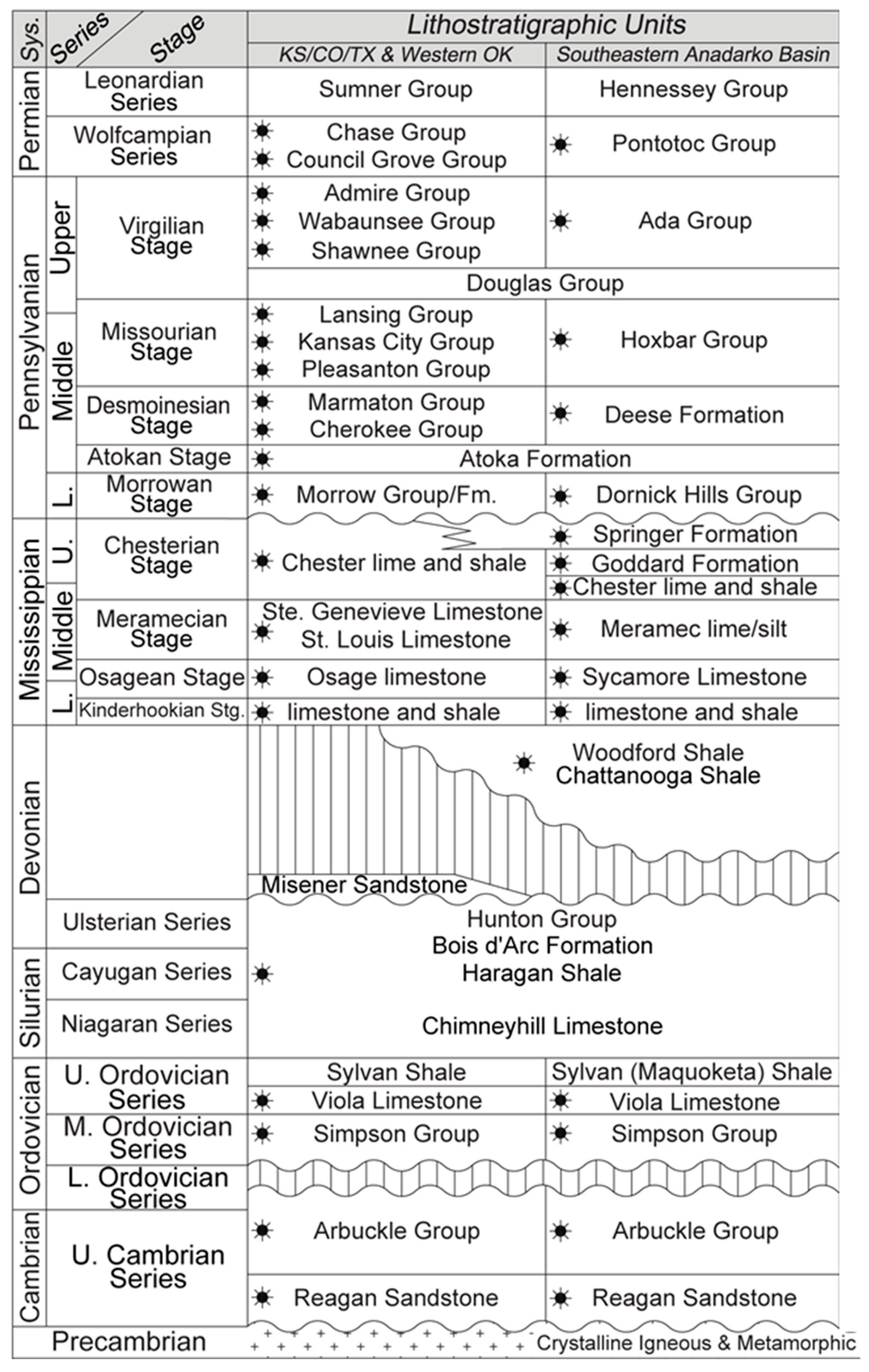
2. Study Area
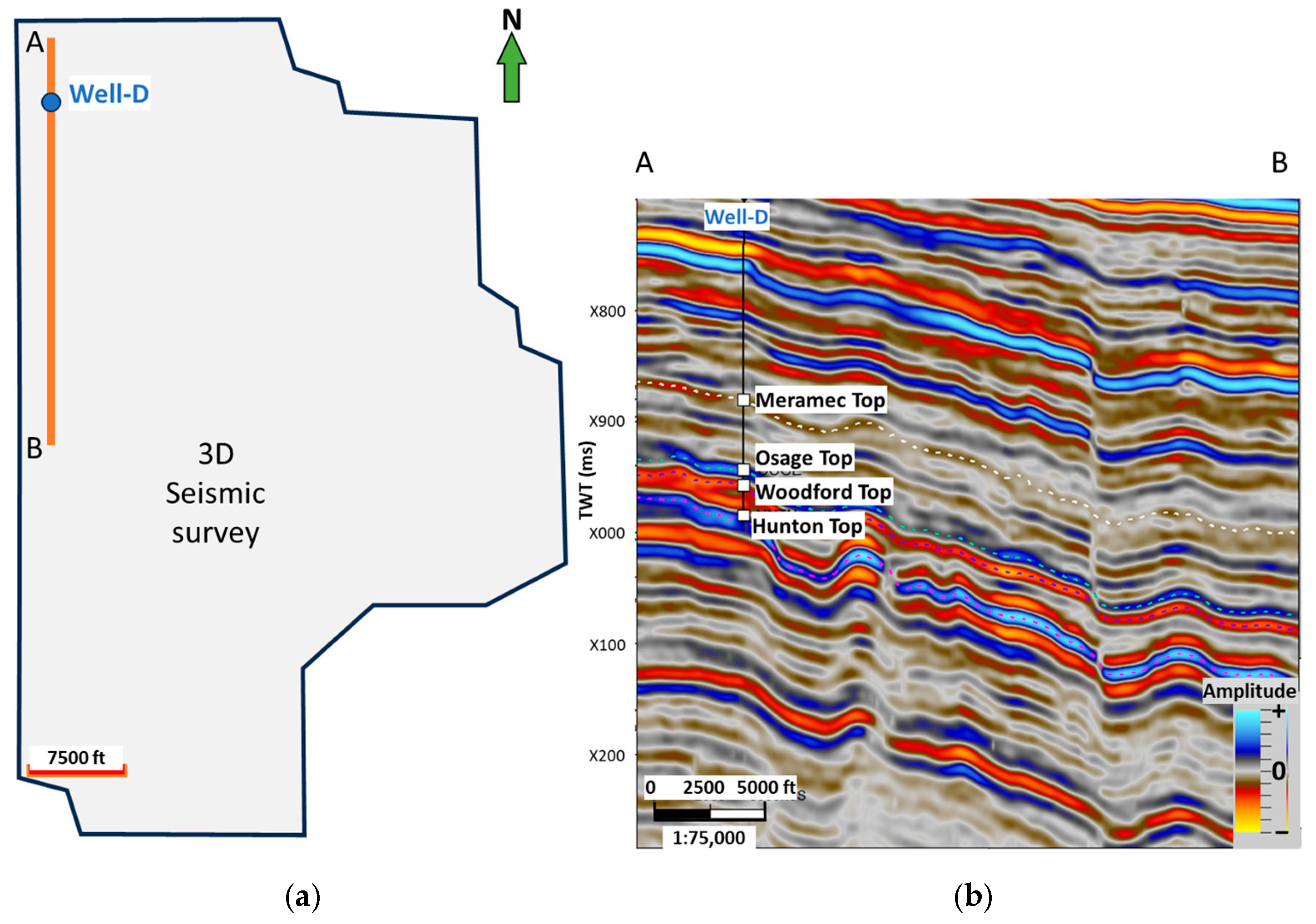
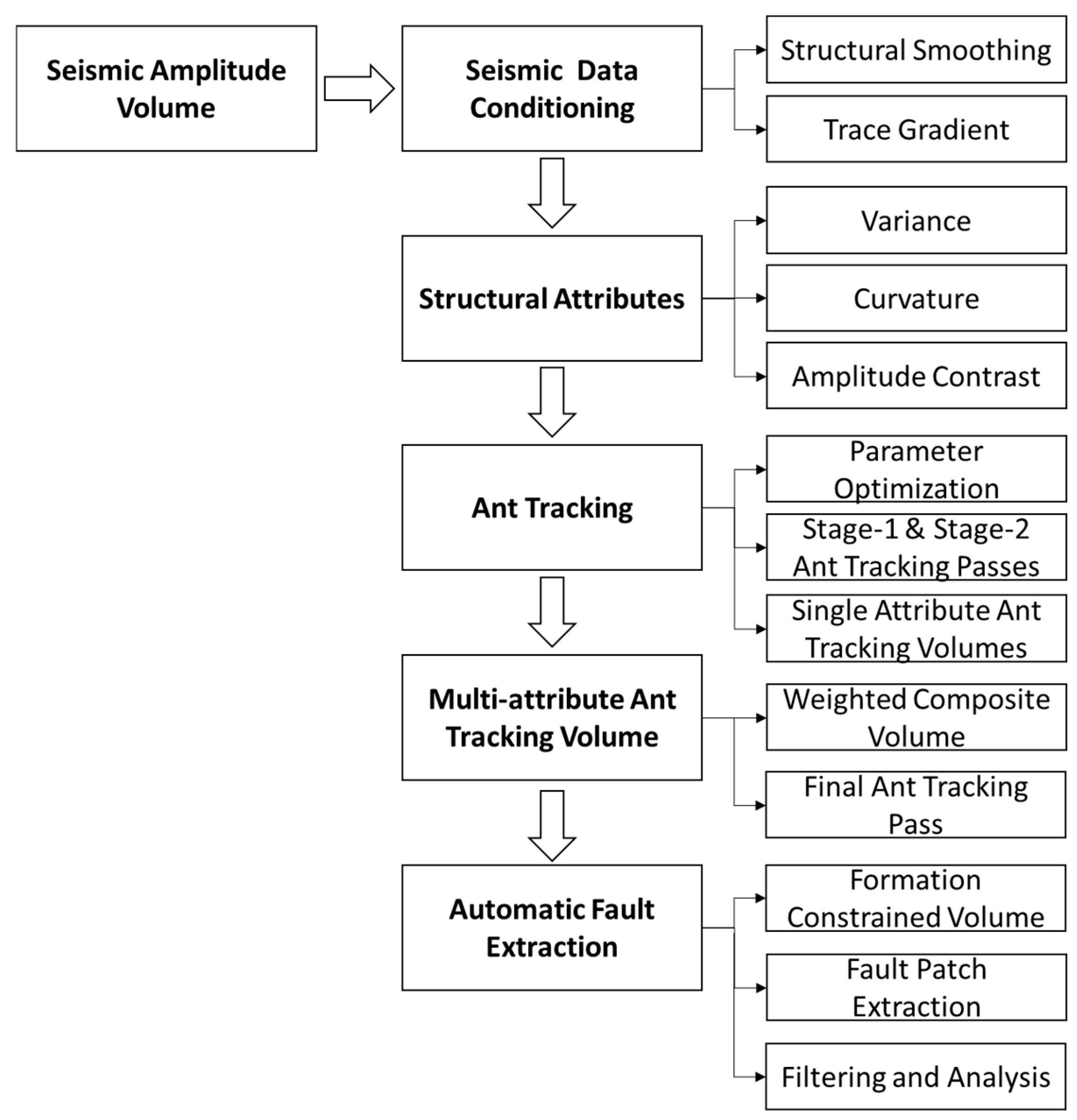
3. Data and Methodology
3.1. Seismic Data Conditioning
3.2. Structural Attributes
3.3. Ant Tracking
3.3.1. Parameter Optimization
- Initial ant boundary: The number of voxels as the territorial radius around each ant.
- Ant-tracking deviation: the maximum deviation from a local maximum while tracking.
- Ant step size: The number of voxels an ant advances for each step.
- Illegal steps allowed: How far an ant can continue without finding an edge value. These are temporary movements into low-discontinuity areas, which allow the ant to continue in order to reconnect the trend if the discontinuity reappears.
- Legal steps allowed: Controls how connected a detected edge must be to distinguish edge from noise. These are preferred movements that follow high-discontinuity trends indicated by the seismic attributes.
- Stop criteria: The percentage of illegal steps allowed throughout a single agent’s life.
3.3.2. Ant-Tracking Volumes from Attributes—Single-Attribute Ant-Tracking Volumes
3.3.3. Composite Ant-Tracking Volume—Multi-Attribute Ant-Tracking Volume
3.4. Automatic Fault Extraction
4. Results
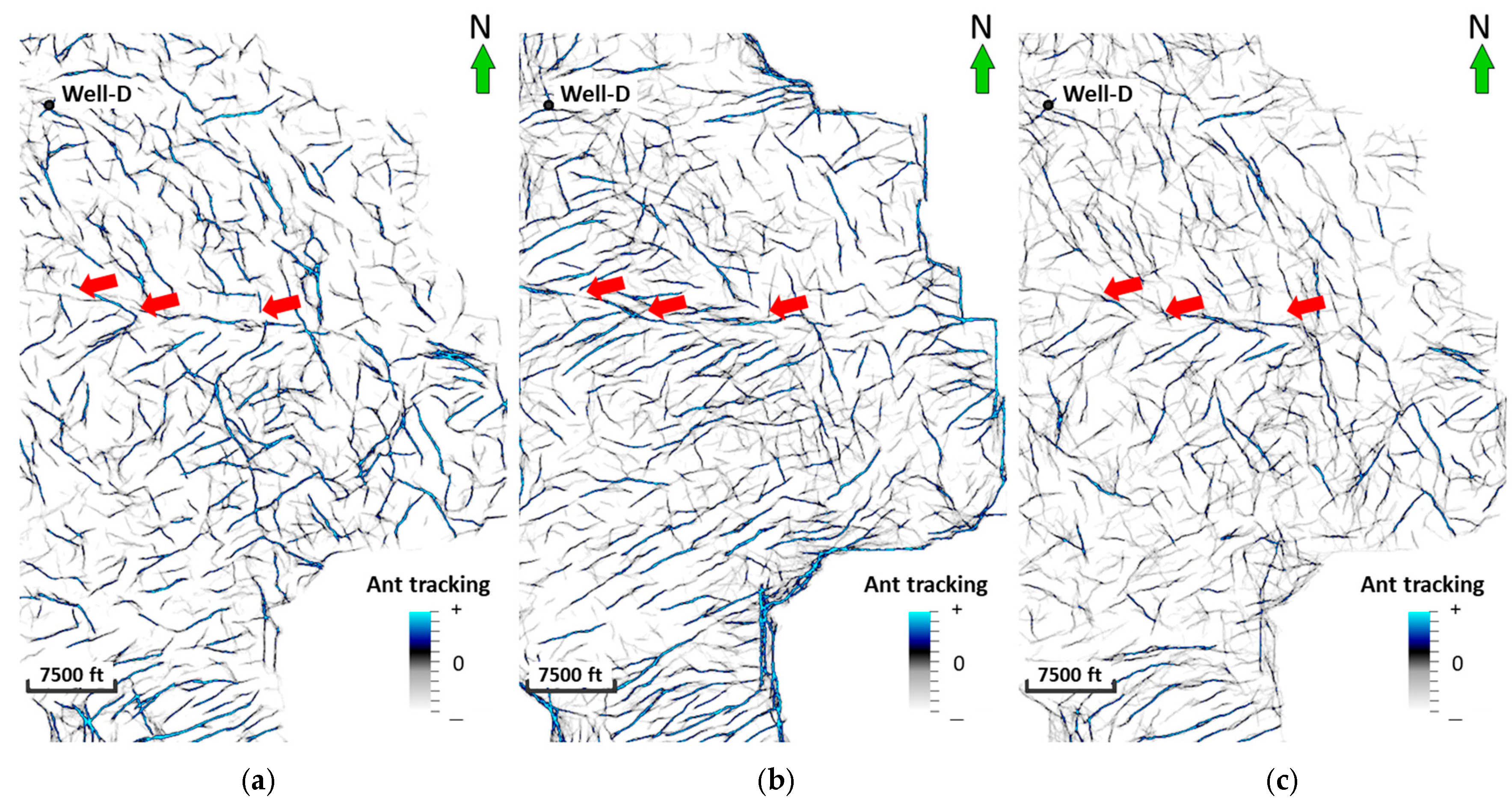
4.1. Single-Attribute Ant-Tracking Volume
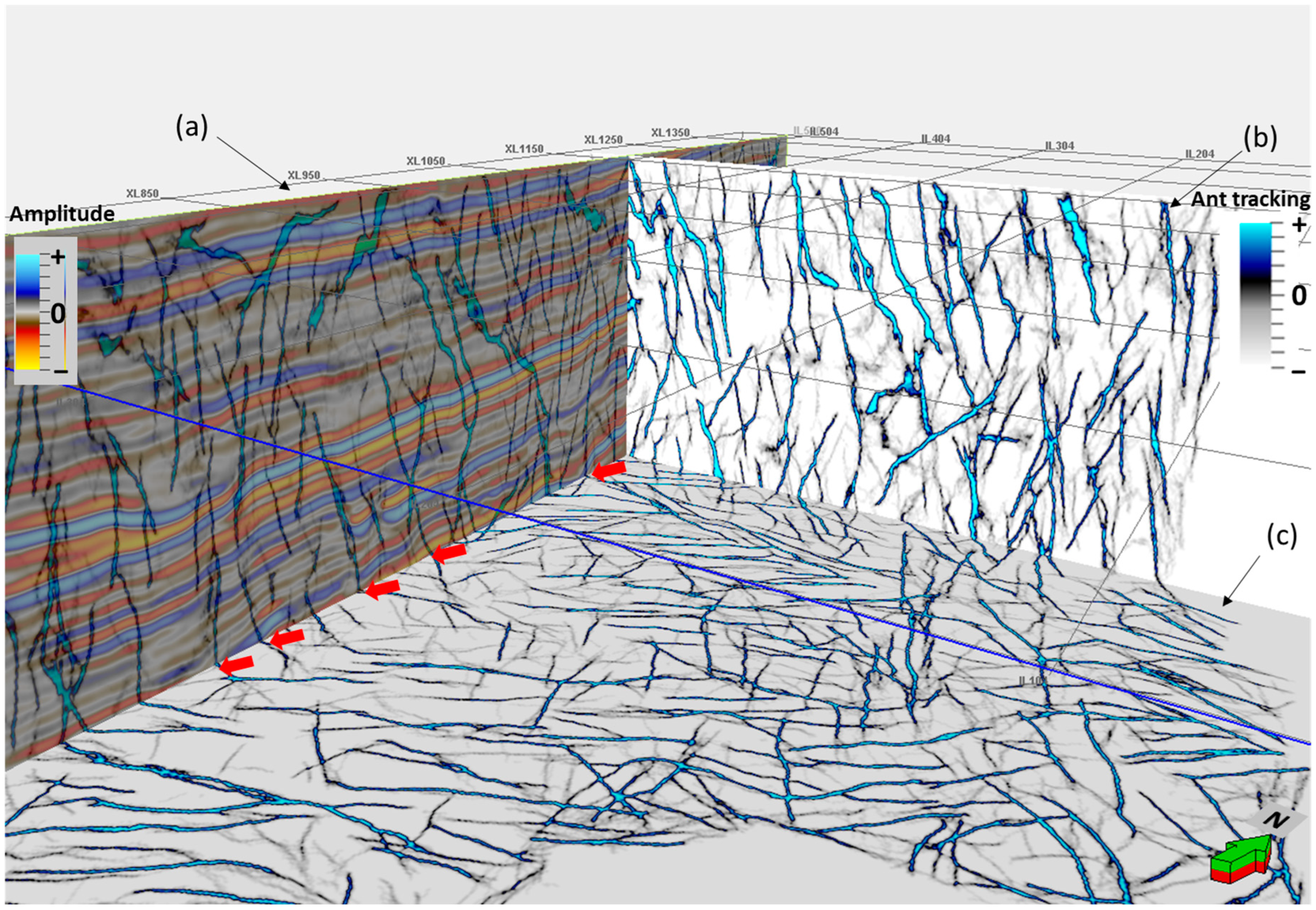
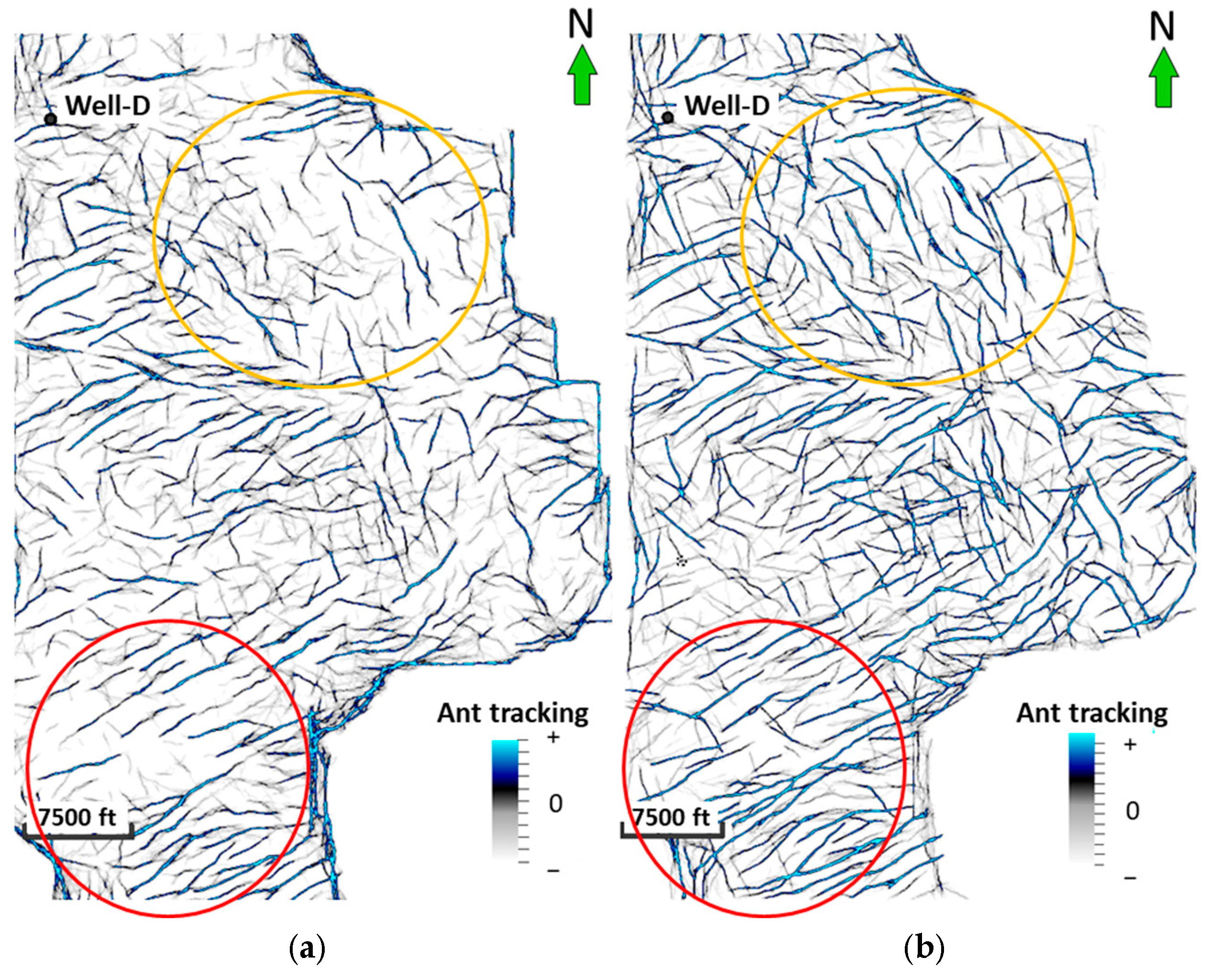
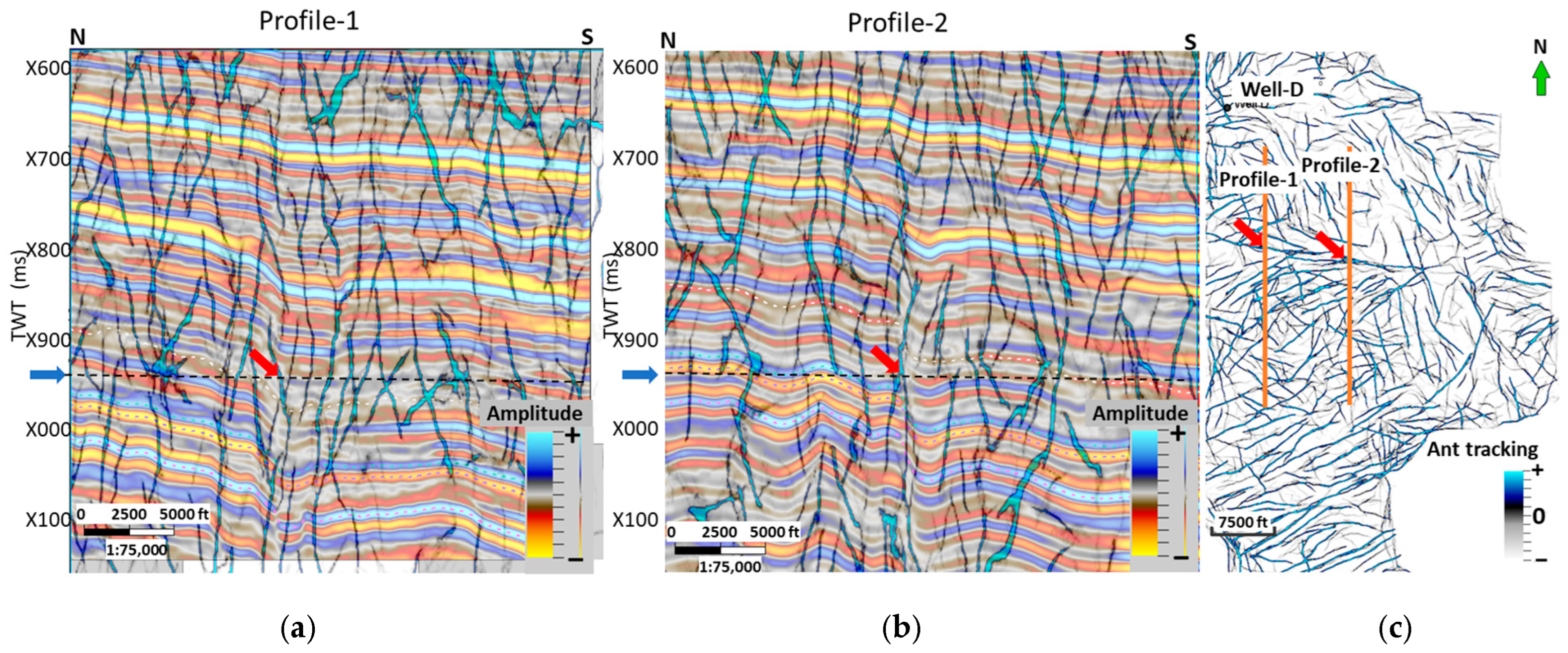
4.2. Multi-Attribute Ant-Tracking Volume
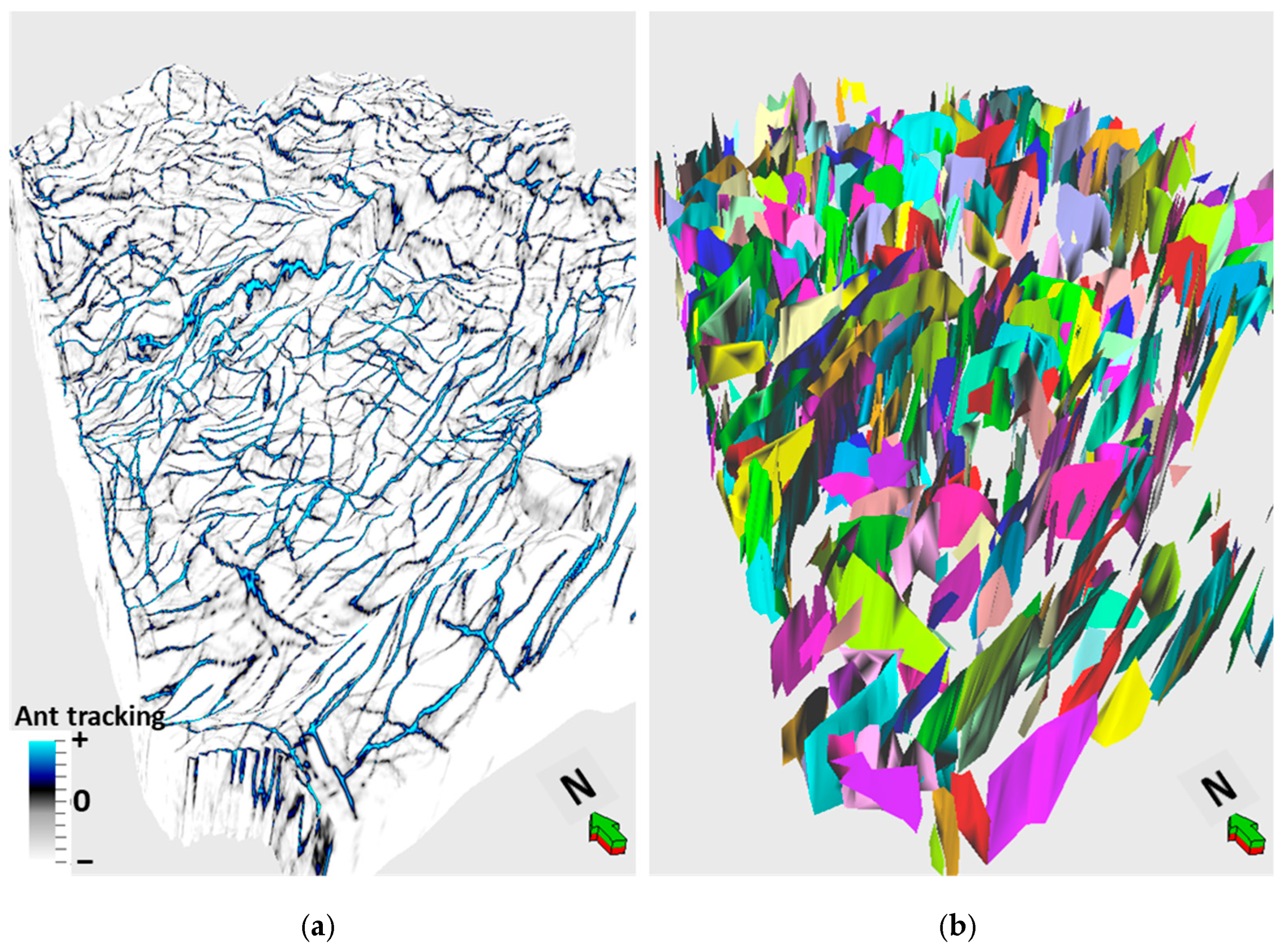
4.3. Automatic Fault Extraction
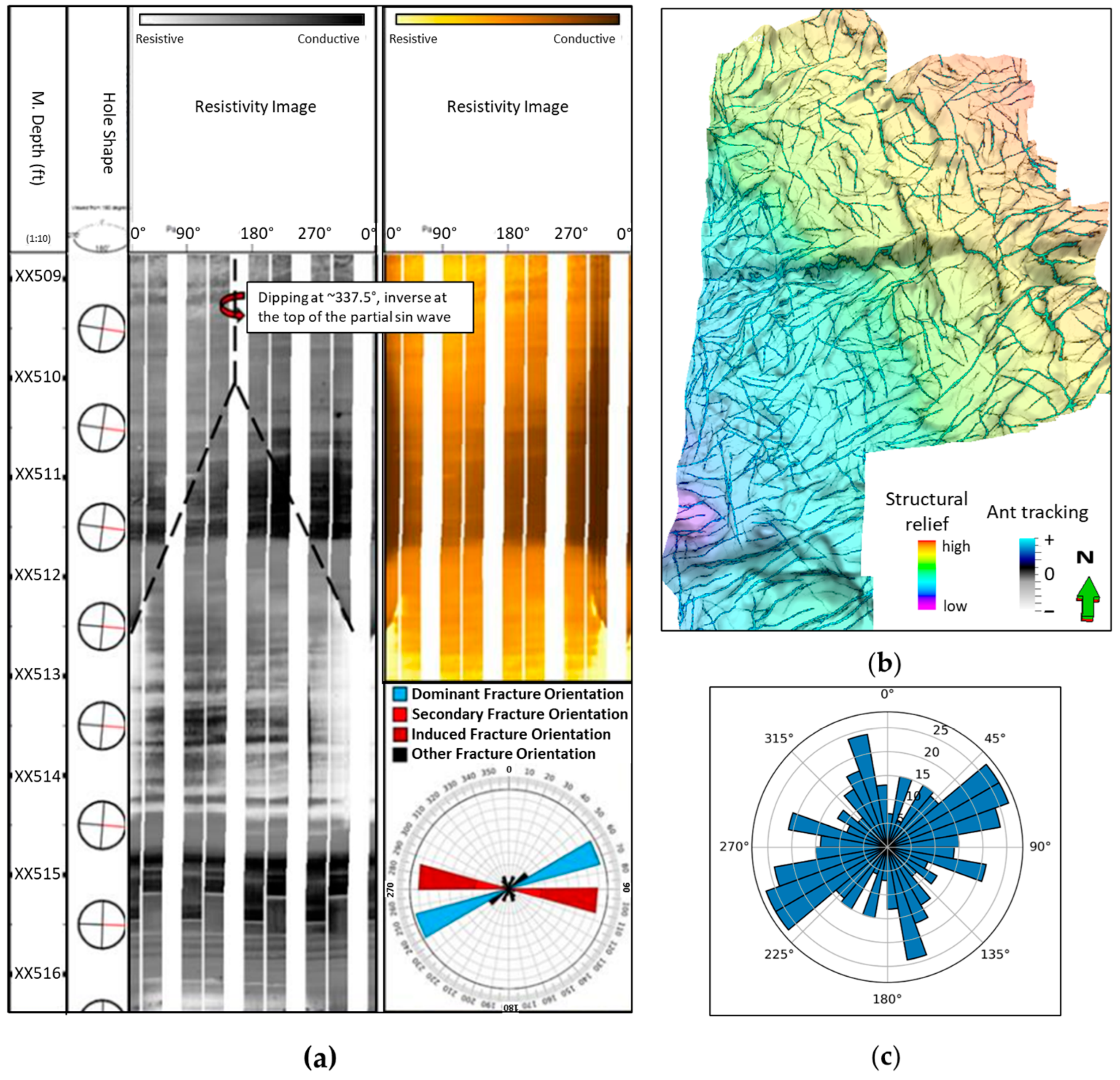
4.4. Comparison of Seismic-Scale Faults and Borehole-Scale Fractures
5. Discussion
Limitations of the Workflow
- Dependence on seismic data and data conditioning:
- The quality of all subsequent attributes and ant-tracking results is inherently tied to the seismic data quality and initial conditioning of the seismic data. Choices such as the parameters of structural smoothing can influence fault sharpness and apparent continuity. Although careful testing was performed, variations in the preprocessing steps may produce subtly different outcomes in highly noisy or structurally complex regions.
- Subjectivity in parameter optimization:
- Parameter optimization relied on iterative testing followed by visual inspection of vertical sections and time slices specific to the 3D seismic dataset used. This approach is common in attribute-based fault interpretation but nonetheless introduces a degree of interpreter subjectivity. Alternative parameter combinations may result in slightly different fault expressions.
- Scale discrepancy between seismic faults and FMI fractures:
- The comparison between seismic-scale fault patches (tens to hundreds of meters) and borehole-scale fracture orientations (centimeters to meters) assumes that the dominant deformation fabric is persistent across scales. The correlation reflects orientation similarity rather than a direct one-to-one structural correspondence.
- Non-structural seismic artifacts:
- Although the filtering and patch-extraction steps were designed to preferentially retain fault-related discontinuities, the resulting fault patches may still contain a limited number of non-structural responses. These include 3D seismic survey-edge effects, any residual processing artifacts, and stratigraphic edges such as channel margins or lithologic boundaries that can generate discontinuity-like responses in attribute volumes.
- Algorithm and software specificity:
- The ant-tracking implementation used in this study is a proprietary algorithm within the SLB Petrel platform. The findings are specific to this implementation. Results obtained using other commercial or open-source algorithms may differ.
6. Conclusions
Supplementary Materials
Author Contributions
Funding
Data Availability Statement
Acknowledgments
Conflicts of Interest
Abbreviations
| CCS | Carbon capture and storage |
| FMI | Formation microimager |
| TWT | Two-way travel time |
| SOA | Southern Oklahoma aulacogen |
| STACK | Sooner trend of the Anadarko Basin in Canadian and Kingfisher counties |
| SCOOP | South-central Oklahoma oil province |
References
- Jolley, S.J.; Fisher, Q.J.; Ainsworth, R.B. Reservoir Compartmentalization: An Introduction. Geol. Soc. Lond. Spec. Publ. 2010, 347, 1–8. [Google Scholar] [CrossRef]
- Lawal, M.A.; Bialik, O.M.; Lazar, M.; Waldmann, N.D.; Foubert, A.; Makovsky, Y. Modes of Gas Migration and Seepage on the Salt-Rooted Palmahim Disturbance, Southeastern Mediterranean. Mar. Pet. Geol. 2023, 153, 106256. [Google Scholar] [CrossRef]
- Gilmore, K.A.; Sahu, C.K.; Benham, G.P.; Neufeld, J.A.; Bickle, M.J. Leakage Dynamics of Fault Zones: Experimental and Analytical Study with Application to CO2 Storage. J. Fluid Mech. 2022, 931, A31. [Google Scholar] [CrossRef]
- Rutqvist, J. The Geomechanics of CO2 Storage in Deep Sedimentary Formations. Geotech. Geol. Eng. 2012, 30, 525–551. [Google Scholar] [CrossRef]
- Pawar, R.J.; Bromhal, G.S.; Carey, J.W.; Foxall, W.; Korre, A.; Ringrose, P.S.; Tucker, O.; Watson, M.N.; White, J.A. Recent Advances in Risk Assessment and Risk Management of Geologic CO2 Storage. Int. J. Greenh. Gas Control. 2015, 40, 292–311. [Google Scholar] [CrossRef]
- Burnside, N.M.; Shipton, Z.K.; Dockrill, B.; Ellam, R.M. Man-Made versus Natural CO2 Leakage: A 400 k.y. History of an Analogue for Engineered Geological Storage of CO2. Geology 2013, 41, 471–474. [Google Scholar] [CrossRef]
- Tingdahl, K.M.; Steen, Ø.; Ligtenberg, J.H. Semi-automatic Detection of Faults in 3-D Seismic Signals. In Proceedings of the SEG Technical Program Expanded Abstracts, San Antonio, TX, USA, 9–14 September 2001. [Google Scholar]
- Chopra, S.; Marfurt, K.J. Seismic Attributes for Fault/Fracture Characterization. In Proceedings of the SEG Technical Program Expanded Abstracts, San Antonio, TX, USA, 23–27 September 2007. [Google Scholar]
- Verma, S.; Chopra, S.; Ha, T.; Li, F. A Review of Some Amplitude-Based Seismic Geometric Attributes and Their Applications. Interpretation 2022, 10, B1–B12. [Google Scholar] [CrossRef]
- Marfurt, K.J.; Kirlin, R.L.; Farmer, S.L.; Bahorich, M.S. 3-D Seismic Attributes Using a Semblance-based Coherency Algorithm. Geophysics 1998, 63, 1122–1479. [Google Scholar] [CrossRef]
- Bahorich, M.; Farmer, S. 3-D Seismic Discontinuity for Faults and Stratigraphic Features: The Coherence Cube. Lead. Edge 1995, 14, 1021–1098. [Google Scholar] [CrossRef]
- Van Bemmel, P.P.; Pepper, R.E. Seismic Signal Processing Method and Apparatus for Generating a Cube of Variance Values 2000. Available online: https://patents.google.com/patent/US6151555A/en (accessed on 3 December 2025).
- Ochoma, U. Seismic Attributes for Enhanced Structural and Stratigraphic Interpretation in Onshore Fuba Field, Niger Delta, Nigeria. MEJAST 2023, 6, 105–117. [Google Scholar] [CrossRef]
- Chopra, S.; Marfurt, K.J. Seismic Attributes—A Historical Perspective. Geophysics 2005, 70, 3SO–28SO. [Google Scholar] [CrossRef]
- Roberts, A. Curvature Attributes and Their Application to 3D Interpreted Horizons. First Break. 2001, 19, 85–100. [Google Scholar] [CrossRef]
- Hart, B.S.; Pearson, R.; Rawling, G.C. 3-D Seismic Horizon-Based Approaches to Fracture-Swarm Sweet Spot Definition in Tight-Gas Reservoirs. Lead. Edge 2002, 21, 28–35. [Google Scholar] [CrossRef]
- Sigismondi, M.E.; Soldo, J.C. Curvature Attributes and Seismic Interpretation: Case Studies from Argentina Basins. Lead. Edge 2003, 22, 1122–1126. [Google Scholar] [CrossRef]
- Samuel, S.A.; Knapp, C.C.; Knapp, J.H. Seismic Facies Classification of Salt Structures and Sediments in the Northern Gulf of Mexico Using Self-Organizing Maps. Geosciences 2025, 15, 183. [Google Scholar] [CrossRef]
- Verma, S.; Bhattacharya, S. Delineation of Complex Fault Network North Slope, Alaska Using Seismic Attributes. In Proceedings of the SEG Technical Program Expanded Abstracts 2019, San Antonio, TX, USA, 15–20 September 2019. [Google Scholar]
- Hameed, S.S.; Hermana, M. Fractured Basement Reservoir Characterization Using Multi Seismic Attributes: A Case Study of Malaysian Basin Field. J. Earth Sci. Technol. 2020, 2, 83–89. [Google Scholar]
- Aqrawi, A.A.; Bø, T.H. Amplitude Contrast Seismic Attribute. U.S. Patent No. US20120257477A1, 17 May 2016. [Google Scholar]
- Kim, M.; Yu, J.; Kang, N.-K.; Kim, B.-Y. Improved Workflow for Fault Detection and Extraction Using Seismic Attributes and Orientation Clustering. Appl. Sci. 2021, 11, 8734. [Google Scholar] [CrossRef]
- Pedersen, S.I.; Randen, T.; Sonneland, L.; Steen, Ø. Automatic Fault Extraction Using Artificial Ants. In SEG Technical Program Expanded Abstracts 2002; Society of Exploration Geophysicists: Salt Lake City, UT, USA, 2002; pp. 512–515. [Google Scholar]
- Xie, Q.; Zhao, C.; Rui, Z.; Guan, S.; Zheng, W.; Fan, H. An Improved Ant-Tracking Workflow Based on Divided-Frequency Data for Fracture Detection. J. Geophys. Eng. 2022, 19, 1149–1162. [Google Scholar] [CrossRef]
- Tran, H.; Bedle, H.; Lubo-Robles, D.; Vera-Arroyo, A. It Is Not Our Fault... yet: A Multiattribute and Swarm Intelligence Analysis for Upper Basement Region for Fault Identification in Decatur, Illinois. In Proceedings of the SEG/AAPG International Meeting for Applied Geoscience & Energy, Houston, TX, USA, 26–29 August 2024. [Google Scholar]
- Zhang, T.; Lin, Y.; Liu, K.H.; Alhakeem, A.; Gao, S.S. Fault Visualization Enhancement Using Ant Tracking Technique and Its Application in the Taranaki Basin, New Zealand. In Proceedings of the SEG International Exposition and 87th Annual Meeting, Houston, TX, USA, 24–29 September 2017. [Google Scholar]
- Marfurt, K.J.; Alves, T.M. Pitfalls and Limitations in Seismic Attribute Interpretation of Tectonic Features. Interpretation 2015, 3, SB5–SB15. [Google Scholar] [CrossRef]
- Ngeri, A.; Amakiri, A. Ant-Tracker Attributes: An Effective Approach to Enhancing Fault Identification and Interpretation. IOSR J. VLSI Signal Process. 2015, 5, 2319–4200. [Google Scholar]
- Basir, H.M.; Javaherian, A.; Yaraki, M.T. Multi-Attribute Ant-Tracking and Neural Network for Fault Detection: A Case Study of an Iranian Oilfield. J. Geophys. Eng. 2013, 10, 015009. [Google Scholar] [CrossRef]
- Acuña-Uribe, M.; Pico-Forero, M.C.; Goyes-Peñafiel, P.; Mateus, D. Enhanced Ant Tracking: Using a Multispectral Seismic Attribute Workflow to Improve 3D Fault Detection. Lead. Edge 2021, 40, 502–512. [Google Scholar] [CrossRef]
- Pedersen, S.I.; Skov, T.; Randen, T.; Sønneland, L. Automatic Fault Extraction Using Artificial Ants. Mathematical Methods and Modelling in Hydrocarbon Exploration and Production. Math. Ind. 2005, 7, 107–116. [Google Scholar]
- Johnson, K.S. Geologic Evolution of the Anadarko Basin. Okla. Geol. Surv. 1989, 90, 3–12. [Google Scholar]
- Perry, W.J. Tectonic Evolution of the Anadarko Basin Region, Oklahoma; U.S. Geological Survey Bulletin 1866-A; US Geological Survey: Reston, VA, USA, 1989; pp. A1–A19. [Google Scholar] [CrossRef]
- Northcutt, R.A.; Campbell, J.A. Geologic Provinces of Oklahoma. AAPG Bull. 1995, 79. Available online: https://www.osti.gov/biblio/159937 (accessed on 27 December 2025).
- Johnson, K.S.; Luza, K.V. Earth Sciences and Mineral Resources of Oklahoma; Oklahoma Geological Survey; Educational Publication 9: Norman, OK, USA, 2008. [Google Scholar]
- Ball, M.M.; Henry, M.E.; Frezon, S.E. Petroleum Geology of the Anadarko Basin Region, Province (115), Kansas, Oklahoma, and Texas; Open-File Report; US Geological Survey: Reston, VA, USA, 1991. [Google Scholar] [CrossRef]
- Turko, M.; Mitra, S. Macroscopic Structural Styles in the Southeastern Anadarko Basin, Southern Oklahoma. Mar. Pet. Geol. 2021, 125, 104863. [Google Scholar] [CrossRef]
- Symcox, C.; Philp, R.P. Heterogeneity of STACK/SCOOP Production in the Anadarko Basin, Oklahoma–Geochemistry of Produced Oils. In Proceedings of the SPE/AAPG/SEG Unconventional Resources Technology Conference, Denver, CO, USA, 22 July 2019; pp. 1249–1262. [Google Scholar]
- Fritz, R.D.; Mitchell, J.R. The Anadarko “Super” Basin: 10 Key Characteristics to Understand Its Productivity. Bulletin 2021, 105, 1199–1231. [Google Scholar] [CrossRef]
- Miller, J.C.; Pranter, M.J.; Cullen, A.B. Regional Stratigraphy and Organic Richness of the Mississippian Meramec and Associated Strata, Anadarko Basin, Central Oklahoma. Shale Shaker 2019, 70, 50–79. [Google Scholar]
- Childress, M.; Grammer, G.M. Characteristics of Debris Flows and Outrunner Blocks—Evidence for Mississippian Deposition on a Distally Steepened Ramp. In Mississippian Reservoirs of the Midcontinent; Grammer, G.M., Gregg, J.M., Puckette, J., Jaiswal, P., Mazzullo, S.J., Pranter, M.J., Goldstein, R.H., Eds.; The American Association of Petroleum Geologists: Tulsa, OK, USA, 2019; Volume 122, ISBN 978-0-89181-399-6. [Google Scholar]
- Gaillot, P.; Brewer, T.; Pezard, P.; Yeh, E.-C. Borehole Imaging Tools—Principles and Applications. Sci. Drill. 2007, 5, 1–4. [Google Scholar] [CrossRef]
- Bedell, J.; Ismail, A.; Grammer, M.; Puckette, J.; Mewafy, F.; Boykin, B. Multiscale Fractures, Stress and Reservoir Quality Characterization: The Mississippian Meramec and Osage Intervals, STACK Play, Central Oklahoma. J. Appl. Geophys. 2023, 219, 105244. [Google Scholar] [CrossRef]
- Petrel, version 2023.3. Software for Analyzing Subsurface Data. Slb: Houston, TX, USA, 2023.
- Sarhan, M.; Safa, M. Application of Seismic Attributes for Detecting Different Geologic Features within Kafr El Sheikh Formation, Temsah Concession, Nile Delta Basin. Sci. J. Damietta Fac. Sci. 2017, 7, 26–34. [Google Scholar] [CrossRef]
- Chopra, S.; Marfurt, K. Curvature Attribute Applications to 3D Surface Seismic Data. Lead. Edge 2007, 26, 404–414. [Google Scholar] [CrossRef]
- Chopra, S.; Marfurt, K. Seismic Curvature Attributes for Mapping Faults/Fractures, and Other Stratigraphic Features. CSEG Rec. Mag. 2007, 32, 37–41. [Google Scholar]
- Al-Dossary, S.; Marfurt, K.J. 3D Volumetric Multispectral Estimates of Reflector Curvature and Rotation. Geophysics 2006, 71, P41–P51. [Google Scholar] [CrossRef]
- Chopra, S. Interpreting Fractures through 3D Seismic Discontinuity Attributes and Their Visualization. CSEG Rec. 2009, 34, 5–14. [Google Scholar]
- Albesher, Z.; Kellogg, J.; Hafiza, I.; Saeid, E. Multi-Attribute Analysis Using Coherency and Ant-Tracking Techniques for Fault and Fracture Detection in La Florida Anticline, Llanos Foothills, Colombia. Geosciences 2020, 10, 154. [Google Scholar] [CrossRef]
- Cox, T. Ant Tracking Seismic Volumes for Automated Fault Interpretation. In Proceedings of the CSPG CSEG Convention, Calgary, AB, Canada, 14–17 May 2007. [Google Scholar]



| Ant-Tracking Parameters | Variance Attribute | Curvature Attribute | Amplitude Contrast Attribute | |||
|---|---|---|---|---|---|---|
| Stage-1 | Stage-2 | Stage-1 | Stage-2 * | Stage-1 | Stage-2 | |
| Initial ant boundary | 3 | 5 | 3 | 7 | 4 | 7 |
| Ant-track deviation | 2 | 2 | 2 | 2 | 2 | 2 |
| Ant step size | 3 | 3 | 3 | 3 | 3 | 3 |
| Illegal steps allowed | 2 | 2 | 3 | 1 | 3 | 1 |
| Legal steps allowed | 2 | 2 | 3 | 3 | 1 | 3 |
| Stop criteria | 10 | 7 | 10 | 5 | 10 | 5 |
| Parameters | Value | Remarks |
|---|---|---|
| Extraction sampling distance | 20 | Minimum distance between extraction seed points in voxels |
| Extraction sampling threshold | Top 10% | Minimum signal level to create extraction points |
| Extraction background threshold | Top 30% | Minimum signal level to incorporate into fault estimate |
| Deviation from a plane | 13 | Distance, in voxels, a fault may deviate from a plane surface fit to the data |
| Connectivity constraint | 2 | Voxel connectivity on one, two, or three faces to be included in the fault patch |
| Minimum patch size (points) | 100 | Fault patches with less than this value will be excluded |
| Patch downsampling (Voxels) | 8 | Controls the density of points within each fault patch |
Disclaimer/Publisher’s Note: The statements, opinions and data contained in all publications are solely those of the individual author(s) and contributor(s) and not of MDPI and/or the editor(s). MDPI and/or the editor(s) disclaim responsibility for any injury to people or property resulting from any ideas, methods, instructions or products referred to in the content. |
© 2026 by the authors. Licensee MDPI, Basel, Switzerland. This article is an open access article distributed under the terms and conditions of the Creative Commons Attribution (CC BY) license.
Share and Cite
Sreedhar, S.V.; Knapp, C.C.; Knapp, J.H. 3D Multi-Attribute Ant Tracking for Fault and Fracture Delineation—A Case Study from the Anadarko Basin. Geosciences 2026, 16, 33. https://doi.org/10.3390/geosciences16010033
Sreedhar SV, Knapp CC, Knapp JH. 3D Multi-Attribute Ant Tracking for Fault and Fracture Delineation—A Case Study from the Anadarko Basin. Geosciences. 2026; 16(1):33. https://doi.org/10.3390/geosciences16010033
Chicago/Turabian StyleSreedhar, Sreejesh V., Camelia C. Knapp, and James H. Knapp. 2026. "3D Multi-Attribute Ant Tracking for Fault and Fracture Delineation—A Case Study from the Anadarko Basin" Geosciences 16, no. 1: 33. https://doi.org/10.3390/geosciences16010033
APA StyleSreedhar, S. V., Knapp, C. C., & Knapp, J. H. (2026). 3D Multi-Attribute Ant Tracking for Fault and Fracture Delineation—A Case Study from the Anadarko Basin. Geosciences, 16(1), 33. https://doi.org/10.3390/geosciences16010033