


Probabilistic Slope Stability Assessment of Tropical Hillslopes in Southern Guam Under Typhoon-Induced Infiltration

 ,
,  ,
,
Abstract
1. Introduction
2. Geotechnical Material Testing and Probabilistic Modeling for Slope Stability
2.1. Site Location and Laboratory Characterization of Soil Properties
2.2. Methodology for Probabilistic Distribution of Soil-Root Properties and Modeling
2.3. Soil–Climate–Vegetation Data and Methodology for Probabilistic Hydro-Mechanical Simulations
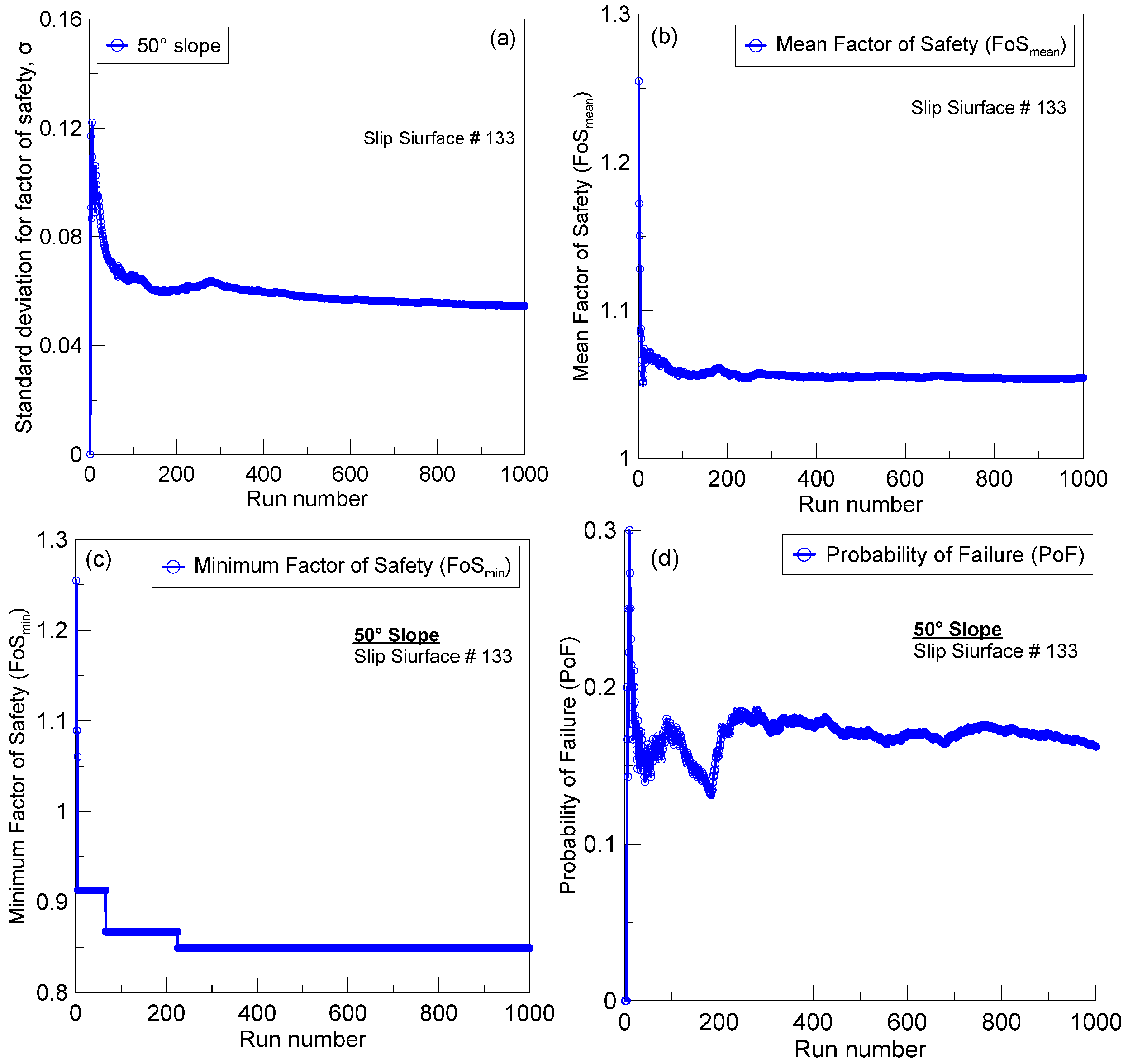
2.4. Convergence Analysis
3. Results of Probabilistic Slope Stability Analysis
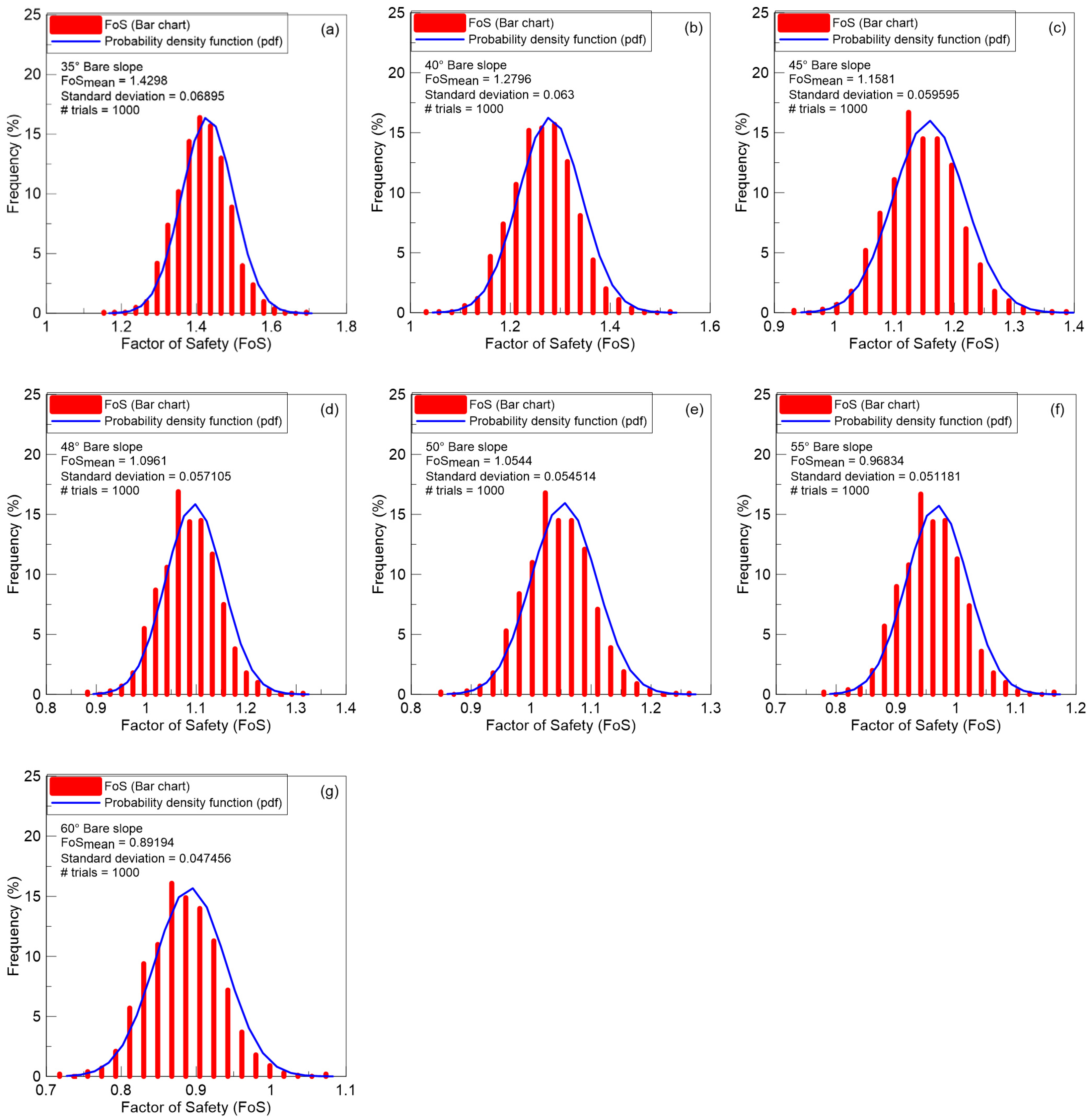
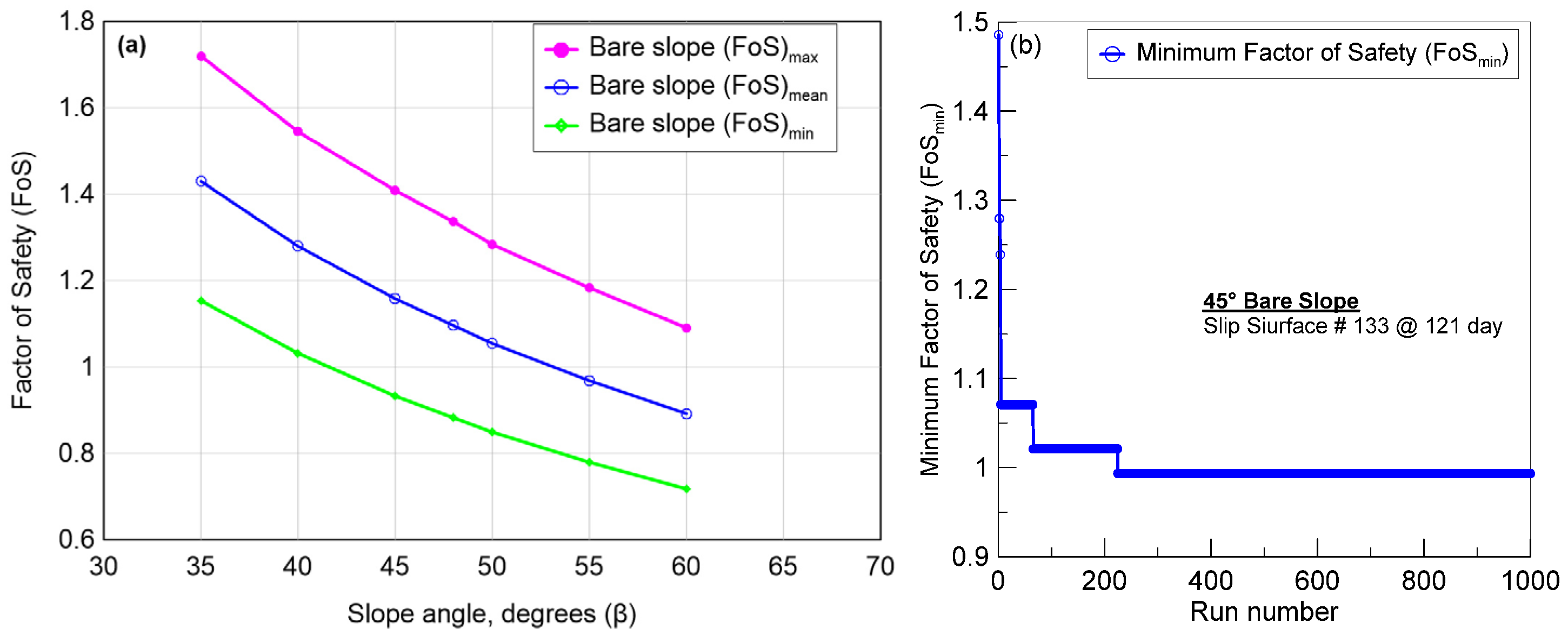
3.1. Probabilistic Slope Stability Analysis for Bare Slope
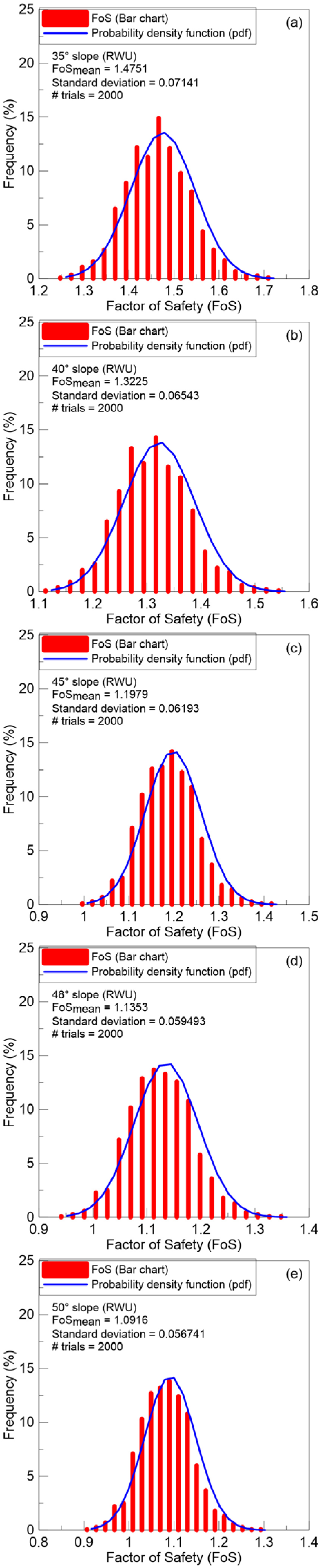
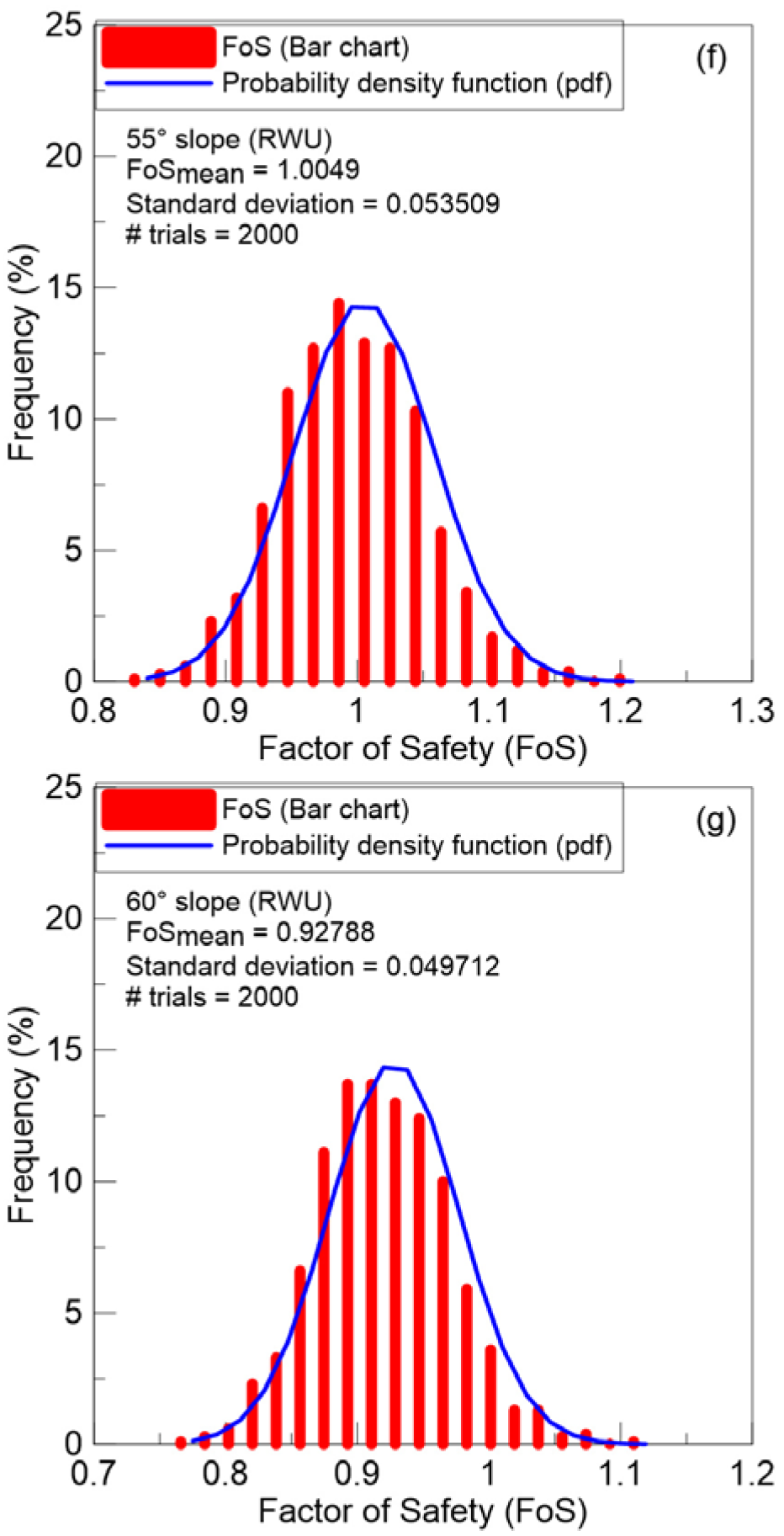
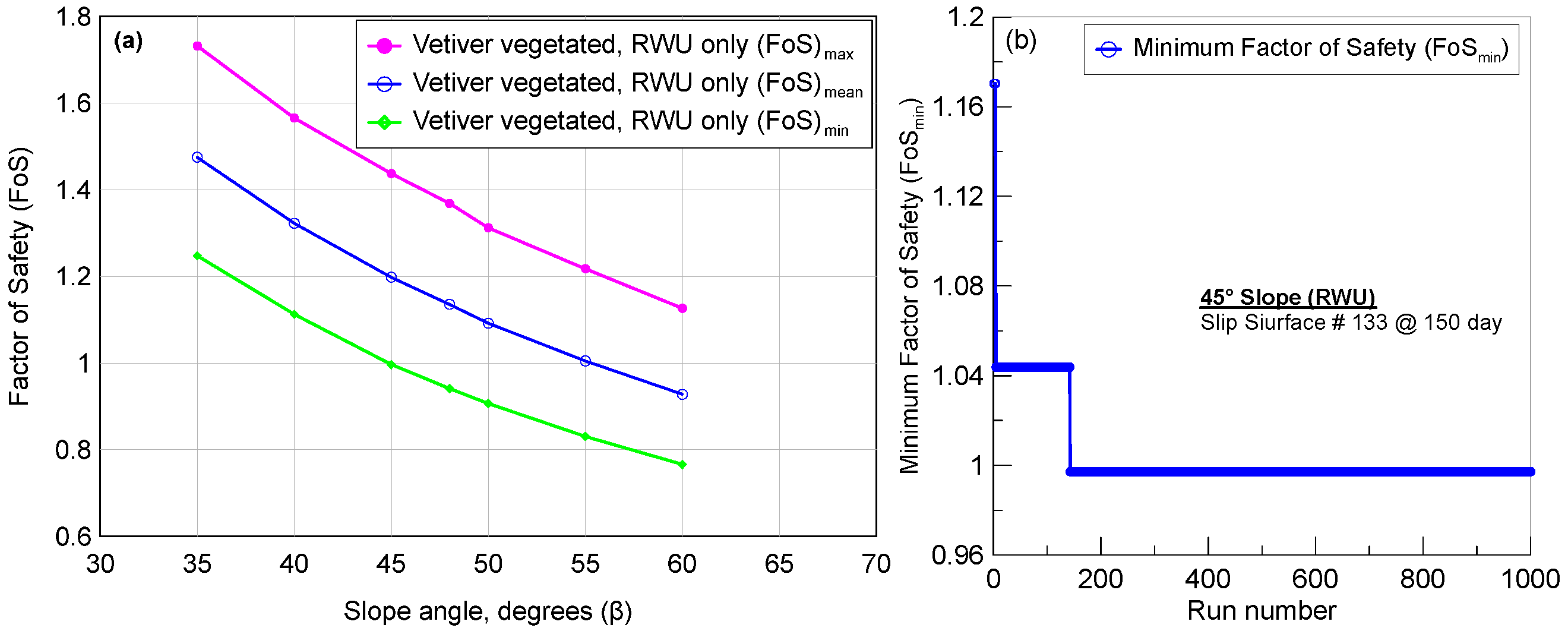
3.2. Probabilistic Slope Stability Analysis for Vegetated Slope with RWU Only
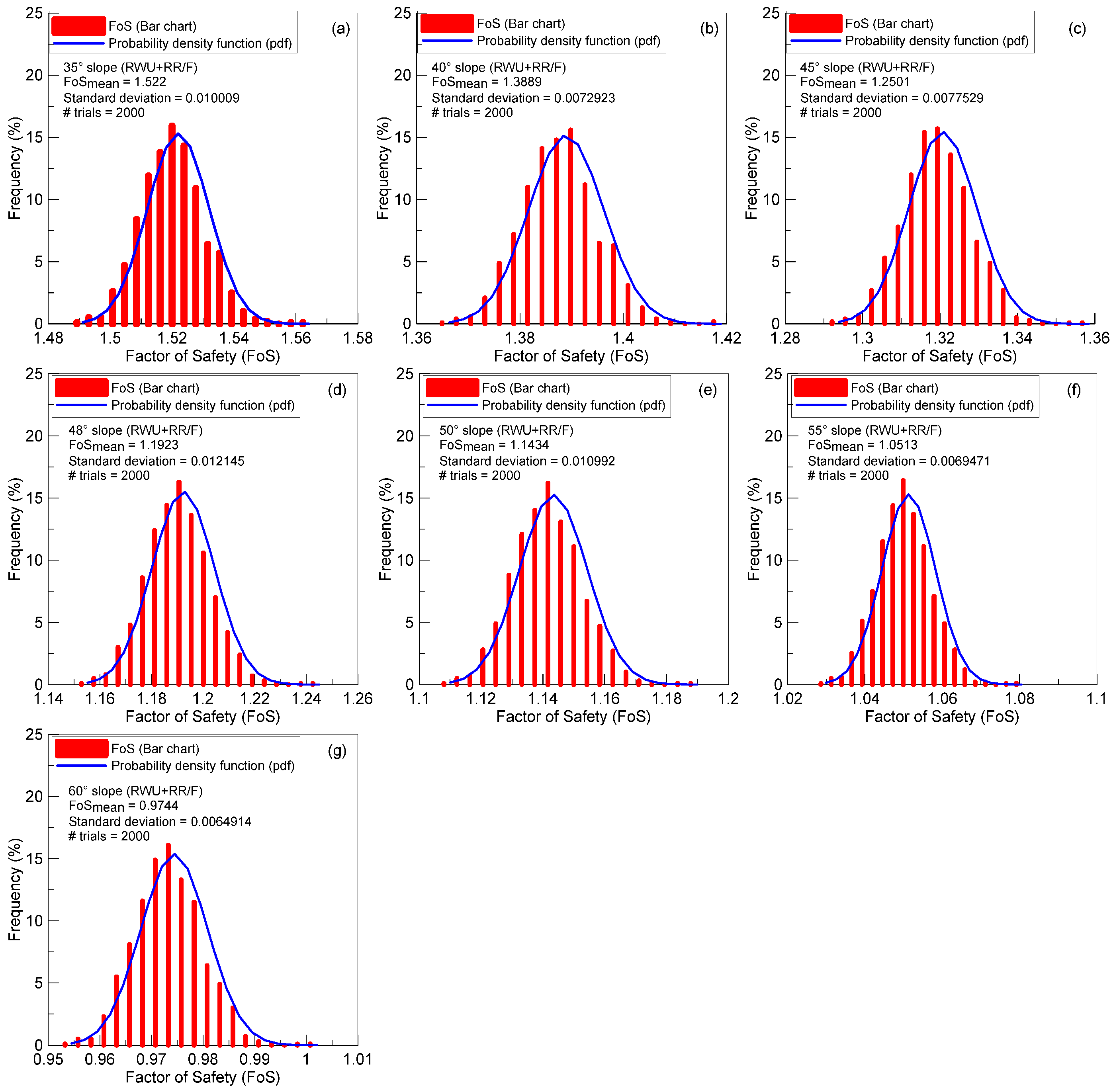
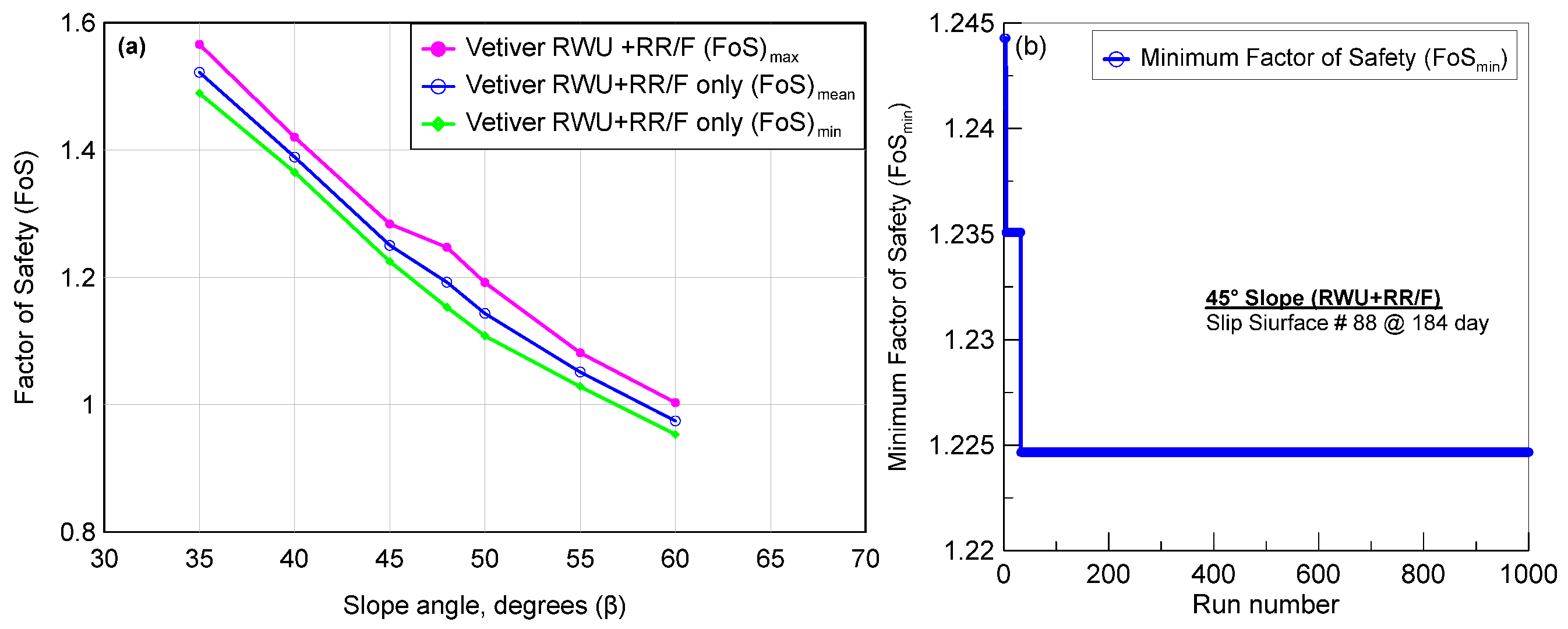
3.3. Probabilistic Slope Stability Analysis for Vegetated Slope with RWU +RR/F
3.4. Risk Analysis Framework Using Probability of Failure
4. Probabilistic Slope Stability Interpretations and Discussions
4.1. Consistency of Factor of Safety Variations Across Slope Angles
4.2. Identifying Timing of Failure Based on Probability of Failure
4.3. Reliability Index–Probability of Failure Relationship Across Slope Conditions
4.4. Effect of Slope Angle on Sensitivity to Soil Property Variability
5. Conclusions
- 1.
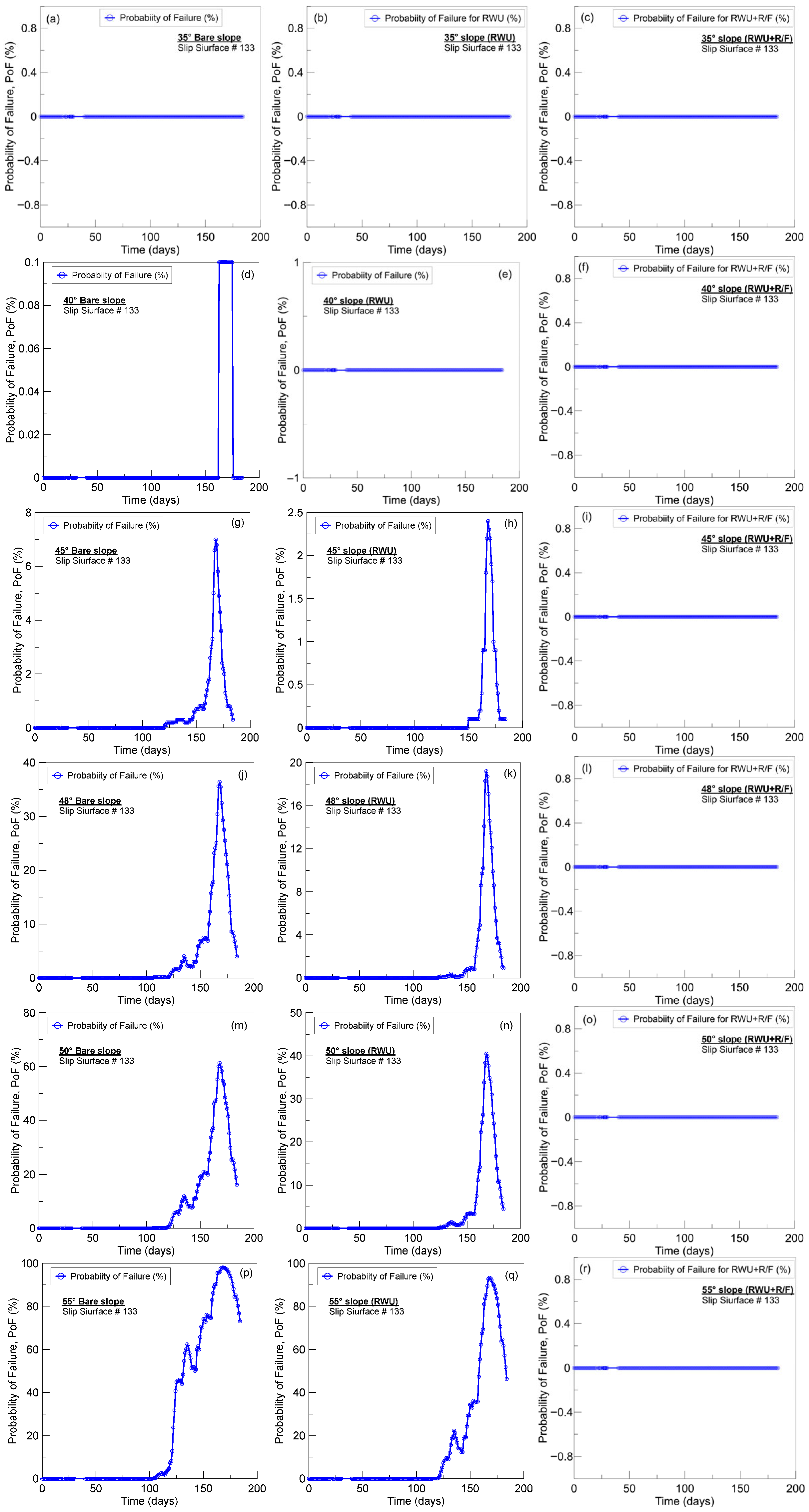
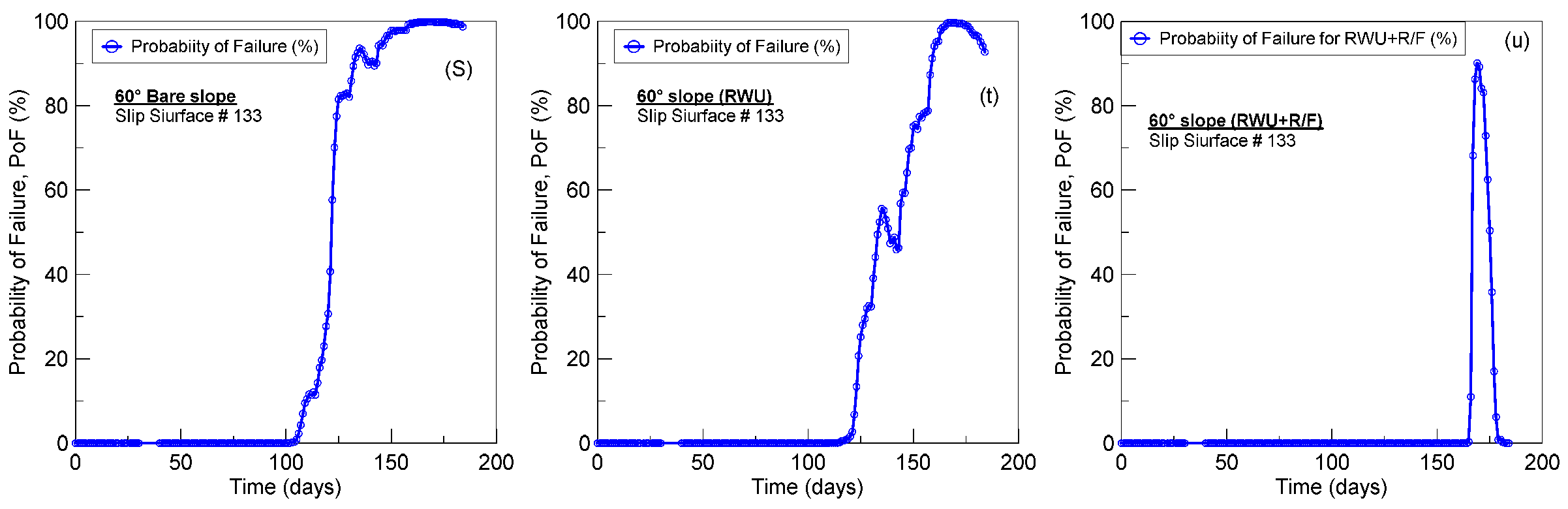
- Earlier predicted failures under probabilistic analysis—For slopes ≥ 45°, probabilistic simulations predicted failure 20–29 days (for 60° and 55° slopes, respectively) earlier for bare slopes compared to deterministic predictions.
- 2.
- Detection of slope failure and its timing:
- (a)
- Bare slopes—with slope angle between 45–50°, which were otherwise safe in deterministic analysis, were found to have a probability to fail under probabilistic analysis, and it was possible to identify the timing of failure via probabilistic analysis.
- (b)
- Vegetation with root water uptake (RWU)—RWU increased stability compared to bare slopes but still resulted in failures up to 28 days earlier (for a 60° slope) under probabilistic conditions.
- (c)
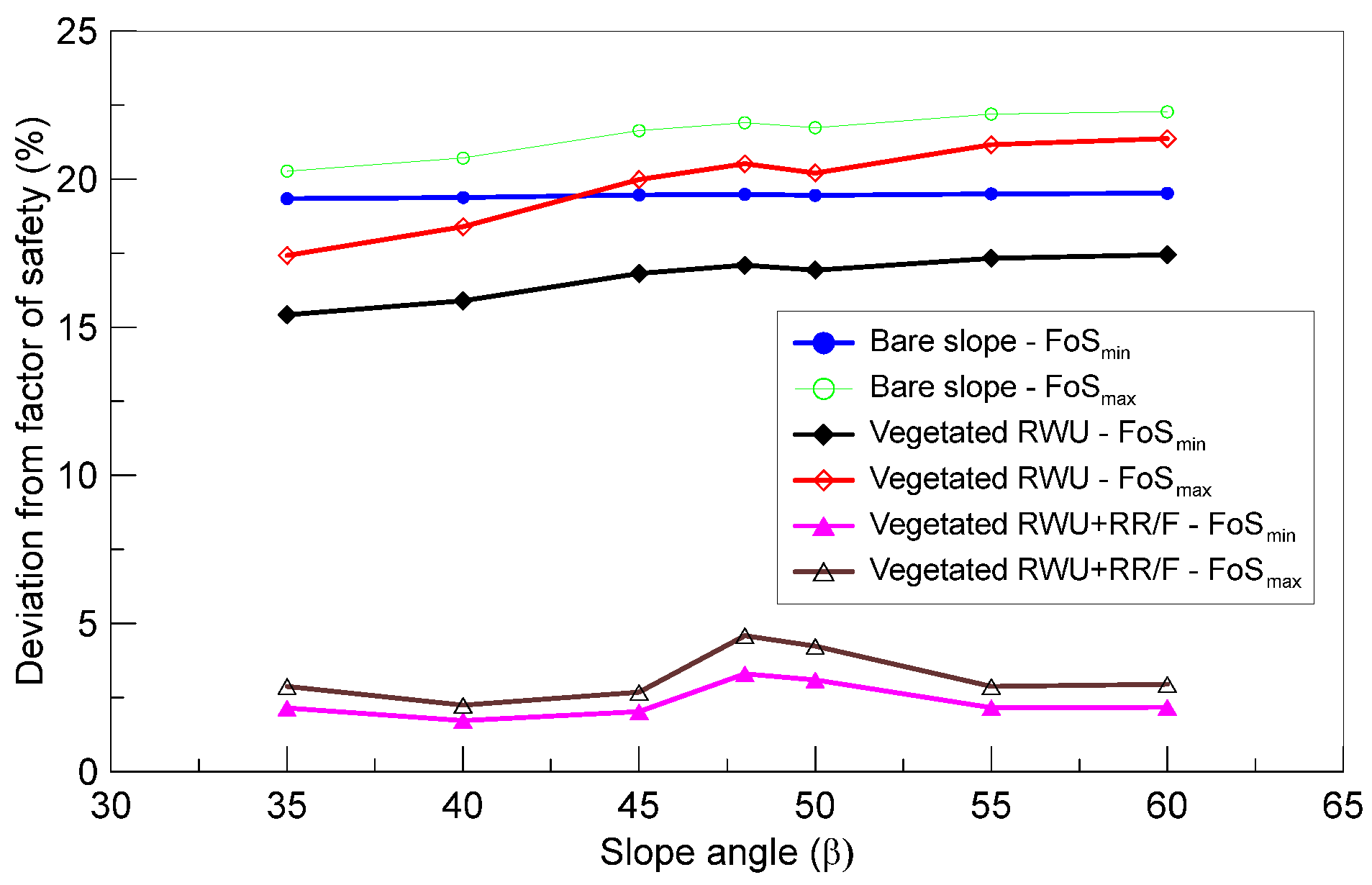
- Vegetation with RWU and root reinforcement (RWU + RR/F)—This scenario did not result in slope failure in up to 50° slope angles. Also, results showed the factor of safety variability reduced to <5% and maintained stability across all slope angles, with no predicted failures.
- 3.
- Synergistic Role of RWU and Root Reinforcement in Sustainable Slope Stabilization—Even after accounting for variability in soil properties, RWU alone increased the mean factor of safety (FoSmean) by roughly 3–4% across slope angles of 35–60%. When RWU was combined with root reinforcement, the improvement was substantially greater, reaching about 7–10%. These findings highlight the combined hydrological benefits of RWU and the mechanical reinforcement provided by roots working synergistically to enhance slope stability, making this approach an effective and sustainable bioengineering practice.
- 4.
- Impact of slope angle—The influence of probabilistic variability in soil properties was most pronounced on slopes ≥ 45°, while gentler slopes showed minimal difference between deterministic and probabilistic predictions.
- 5.
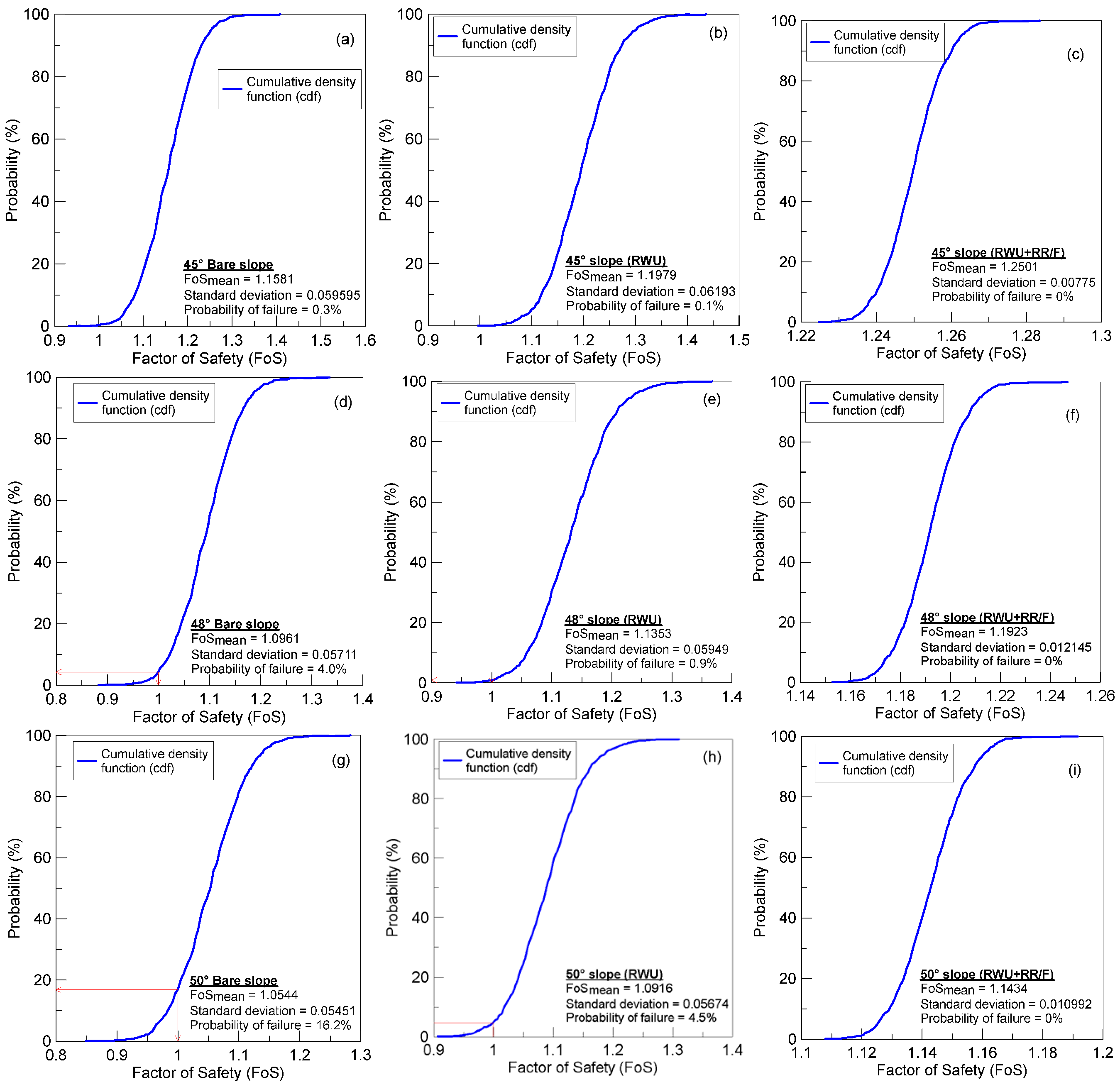
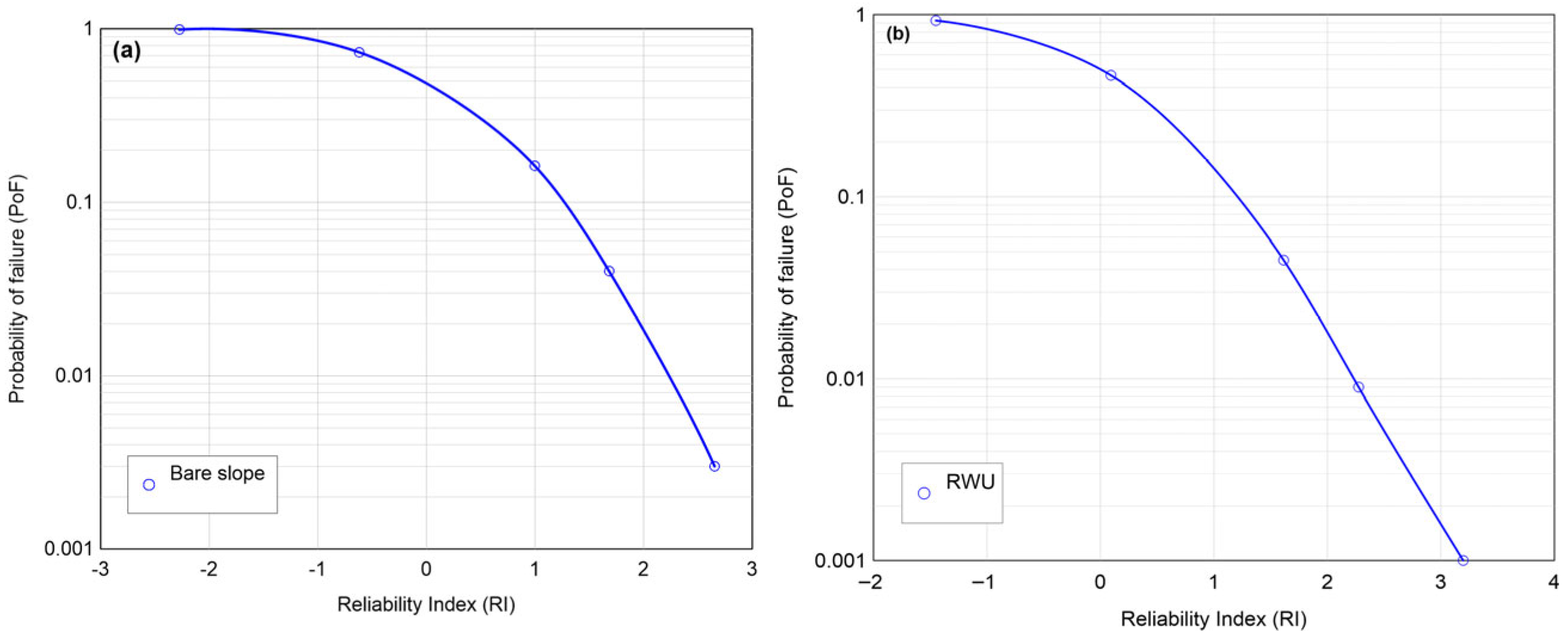
- Reliability index trends—The reliability index (RI) increased nonlinearly as slope angle decreased for both bare and RWU slopes, indicating greater stability at gentler slopes. Bare slopes ranged from RI = 6.2 at 35° to −2.3 at 60°, while RWU slopes had slightly higher RI values (6.7 to −1.5). Slopes with RWU + RR/F showed consistently high RI (7 to 53) and no failures up to 55°slopes, highlighting the strong stabilizing effect of root reinforcement and bioengineering practices.
- 6.
- Probability of Failure and Reliability Index Relationship—PoF decreased as RI increased, with a clear inverse nonlinear trend for bare and RWU cases. At 45°, bare slopes had a PoF = 0.3% (RI = 2.7) and RWU slopes 0.1% (RI = 3.2). Steeper slopes (≥50°) showed sharp PoF increases, reaching nearly 99% for bare and 93% for RWU at 60°. The RWU + RR/F case maintained a zero PoF up to 55° slopes, underscoring root reinforcement’s role in eliminating failure risk. These results confirm that probabilistic PoF–RI analysis provides a more accurate assessment of slope stability than deterministic approaches.
Author Contributions
Funding
Data Availability Statement
Acknowledgments
Conflicts of Interest
References
- Manibusan, S.; Khosrowpanah, S.; Lander, M.A.; Golabi, M.; Patil, U.D. A GIS based assessment of a dynamic watershed in Guam. Hydrology 2019, 7, 1–9. [Google Scholar] [CrossRef]
- Kottermair, M.; Golabi, M.H.; Khosrowpanah, S.; Wen, Y. Spatio-Temporal Dynamics of Badlands in Southern Guam: A Case Study of Selected Sites; Water and Environmental Research Institute of the Western Pacific, University of Guam: Mangilao, Guam, 2011. [Google Scholar]
- Patil, U.D.; Shelton, A.J.; Catahay, M.; Kim, Y.S.; Congress, S.S.C. Role of vegetation in improving the stability of a tropical hill slope in Guam. Environ. Geotech. 2022, 9, 562–581. [Google Scholar] [CrossRef]
- Duncan, J.M. Factors of safety and reliability in geotechnical engineering. J. Geotech. Geoenviron. Eng. 2000, 126, 307–316. [Google Scholar] [CrossRef]
- Morgenstern, N.R.; Price, V.E. The Analysis of the Stability of Generalised Slip Surfaces. Géotechnique 1965, 15, 79–93. [Google Scholar] [CrossRef]
- El-Ramly, H.; Morgenstern, N.R.; Cruden, D.M. Probabilistic slope stability analysis for practice. Can. Geotech. J. 2002, 39, 665–683. [Google Scholar] [CrossRef]
- Chowdhury, R.N.; Xu, D.W. Geotechnical system reliability of slopes. Re-Liabil. Eng. Syst. Saf. 1995, 47, 141–151. [Google Scholar] [CrossRef]
- Huang, J.; Griffiths, D.V.; Fenton, G.A. System reliability of slopes by RFEM. Soils Found. 2010, 50, 343–353. [Google Scholar] [CrossRef]
- Fenton, G.A.; Griffiths, D.V. Risk Assessment in Geotechnical Engineering; John Wiley & Sons: New York, NY, USA, 2008; Volume 461. [Google Scholar]
- Low, B.K. Reliability-based design applied to retaining walls. Geotechnique 2005, 55, 63–75. [Google Scholar] [CrossRef]
- Bhattacharya, G.; Jana, D.; Ojha, S.; Chakraborty, S. Direct search for minimum reliability index of earth slopes. Comput. Geotech. 2003, 30, 455–462. [Google Scholar] [CrossRef]
- Hassan, A.M.; Wolff, T.F. Search algorithm for minimum reliability index of earth slopes. J. Geotech. Geoenviron. Eng. 1999, 125, 301–308. [Google Scholar] [CrossRef]
- de Koker, N.; Day, P.; Zwiers, A. Assessment of reliability-based design of stable slopes. Can. Geotech. J. 2019, 56, 495–504. [Google Scholar] [CrossRef]
- Low, B.K.; Tang, W.H. Probabilistic slope analysis using Janbu’s generalized procedure of slices. Computers and Geotechnics. 1997, 21, 121–142. [Google Scholar] [CrossRef]
- Wang, Y.; Cao, Z.-J.; Au, S.-K. Practical reliability analysis of slope stability by advanced Monte Carlo simulations in a spreadsheet. Can. Geotech. J. 2011, 48, 162–172. [Google Scholar] [CrossRef]
- Rahardjo, H.; Li, X.W.; Toll, D.G.; Leong, E.C. The effect of antecedent rainfall on slope stability. Geotech. Geol. Eng. 2001, 19, 371–399. [Google Scholar] [CrossRef]
- Zhang, J.; Huang, H.-W.; Zhang, L.-M.; Zhu, H.-H.; Shi, B. Probabilistic pre-diction of rainfall-induced slope failure using a mechanics-based model. Eng. Geol. 2014, 168, 129–140. [Google Scholar] [CrossRef]
- Liu, X.; Wang, Y. Reliability analysis of an existing slope at a specific site considering rainfall triggering mechanism and its past performance records. Eng. Geol. 2021, 288, 106144. [Google Scholar] [CrossRef]
- Raia, S.; Alvioli, M.; Rossi, M.; Baum, R.L.; Godt, J.W.; Guzzetti, F. Improving predictive power of physically based rainfall-induced shallow landslide models: A probabilistic approach. Geosci. Model Dev. 2014, 7, 495–514. [Google Scholar] [CrossRef]
- Costa, K.R.C.B.; Dantas APdo, N.; Cavalcante, A.L.B.; de Assis, A.P. Probabilistic approach to transient unsaturated slope stability associated with precipitation event. Sustainability 2023, 15, 15260. [Google Scholar] [CrossRef]
- Xia, Y.; Mahmoodian, M.; Li, C.; Zhou, A. Stochastic method for predicting risk of slope failure subjected to unsaturated infiltration flow. Int. J. Geomech. 2017, 17, 04017037. [Google Scholar] [CrossRef]
- Kang, F.; Han, S.; Salgado, R.; Li, J. System probabilistic stability analysis of soil slopes using Gaussian process regression and Latin hypercube sampling. Comput. Geotech. 2015, 63, 13–23. [Google Scholar] [CrossRef]
- Marra, J.; Simeral, D.; National Oceanic and Atmospheric Administration (NOAA). “Highlights for Hawaii and U.S. Affiliated Pacific Islands June 2023.” Quarterly Climate Impacts and Outlooks–Significant Events–For March to May 2023. 2023. Available online: https://www.drought.gov/sites/default/files/2023-06/Pacific%20Spring%202023.pdf (accessed on 10 November 2024).
- National Weather Service Guam. Super Typhoon Mawar Meteorological Assessment (Technical Report). U.S. National Weather Service. 5 September 2023. Available online: https://www.weather.gov/media/gum/TropicalEventSummary/20230905_NWS_Guam_STY_Mawar_Meteorological_Assessment.pdf (accessed on 7 August 2025).
- Aydlett, B. “Impacts of El Niño on climate and ecosystems in Guam. Pacific Drought Knowledge Exchange.” Report Available Online from National Weather Service of Guam. 2023. Available online: https://www.soest.hawaii.edu/pdke/wp-content/uploads/2023/02/Impacts-of-El-Nino-on-Climate-and-Ecosystems-in-Guam.pdf (accessed on 10 November 2024).
- Yeo, M.H.; Patil, U.D.; Chang, A.; King, R. Changing trends in temperatures and rainfalls in the western Pacific: Guam. Climate 2023, 11, 81. [Google Scholar] [CrossRef]
- Patil, U.D.; Higgs, B.J.; Yeo, M.H.; Chakraborty, S.; Banerjee, A.; Congress, S.S.C. Tropical Hillslopes’ Stability During Heavy Rainfall from Multiple Typhoon Events. In Proceedings of the 4th Pan-American Conference on Unsaturated Soils, Ottawa, ON, Canada, 22–25 June 2025. [Google Scholar]
- Patil, U.D.; Yeo, M.H.; Chakraborty, S.; Congress, S.S.C.; Banerjee, A.; Higgs, B.J. The Resilience of Vetiver-Vegetated Tropical Hillslopes to Heavy Precipitation Events Caused by Successive Typhoon. Geotech. Geol. Eng. 2025; under review. [Google Scholar]
- GeoStudio. Slope Stability Verification Manual; Seequent Limited, the Bentley Subsurface Company: Christchurch, New Zealand, 2025; Available online: https://files.seequent.com/GeoStudio/Manuals/Slope%20Stability%20Verification%20Manual.pdf (accessed on 15 July 2025).
- Wu, T.H.; McKinnell, W.P., III; Swanston, D.N. Strength of tree roots and landslides on Prince of Wales Island, Alaska. Can. Geotech. J. 1979, 16, 19–33. [Google Scholar] [CrossRef]
- GeoStudio. Heat and Mass Transfer Modeling with GeoStudio; Seequent Limited, the Bentley Subsurface Company: Christchurch, New Zealand, 2025; Available online: https://files.seequent.com/GeoStudio/Manuals/Slope%20Stability%20Modeling.pdf (accessed on 15 July 2025).
- Richards, L.A. Capillary conduction of liquids through porous mediums. Physics 1931, 1, 318–333. [Google Scholar] [CrossRef]
- Abdulai, M.; Sharifzadeh, M. Probability methods for stability design of open pit rock slopes: An overview. Geosciences 2021, 11, 319. [Google Scholar] [CrossRef]
- Tan, X.H.; Wang, X.E.; Hu, X.J.; Shen, M.F.; Hu, N. Two methods for pre-dicting reliability index and critical probabilistic slip surface of soil slopes. Geotech. Geol. Eng. 2016, 34, 1283–1292. [Google Scholar] [CrossRef]

| Slope Angle (°) | RI (Bare) | PoF & ToF (Bare) | RI (RWU) | PoF & ToF (RWU) | PoF & ToF (RWU + RR/F) | RI (RWU + RR/F) |
|---|---|---|---|---|---|---|
| 35 | 6.2 | 0% (NA) | 6.7 | 0% (NA) | 0% (NA) | 55.19 |
| 40 | 4.4 | 0% (163) | 4.9 | 0% (NA) | 0% (NA) | 53.02 |
| 45 | 2.7 | 0.3% (121) | 3.2 | 0.1% (150) | 0% (NA) | 36.50 |
| 48 | 1.7 | 4% (104) | 2.3 | 0.9% (122) | 0% (NA) | 30.98 |
| 50 | 1.0 | 16.2% (104) | 1.6 | 4.5% (121) | 0% (NA) | 27.74 |
| 55 | −0.61 | 73.1% (102) | 0.09 | 46.3% (105) | 0% (NA) | 14.49 |
| 60 | −2.3 | 98.7% (101) | −1.5 | 92.7% (104) | 81% (165) | 4.39 |
Disclaimer/Publisher’s Note: The statements, opinions and data contained in all publications are solely those of the individual author(s) and contributor(s) and not of MDPI and/or the editor(s). MDPI and/or the editor(s) disclaim responsibility for any injury to people or property resulting from any ideas, methods, instructions or products referred to in the content. |
© 2025 by the authors. Licensee MDPI, Basel, Switzerland. This article is an open access article distributed under the terms and conditions of the Creative Commons Attribution (CC BY) license (https://creativecommons.org/licenses/by/4.0/).
Share and Cite
Patil, U.D.; Yeo, M.-H.; Chakraborty, S.; Congress, S.S.C.; Higgs, B. Probabilistic Slope Stability Assessment of Tropical Hillslopes in Southern Guam Under Typhoon-Induced Infiltration. Geosciences 2025, 15, 453. https://doi.org/10.3390/geosciences15120453
Patil UD, Yeo M-H, Chakraborty S, Congress SSC, Higgs B. Probabilistic Slope Stability Assessment of Tropical Hillslopes in Southern Guam Under Typhoon-Induced Infiltration. Geosciences. 2025; 15(12):453. https://doi.org/10.3390/geosciences15120453
Chicago/Turabian StylePatil, Ujwalkumar Dashrath, Myeong-Ho Yeo, Sayantan Chakraborty, Surya Sarat Chandra Congress, and Bryan Higgs. 2025. "Probabilistic Slope Stability Assessment of Tropical Hillslopes in Southern Guam Under Typhoon-Induced Infiltration" Geosciences 15, no. 12: 453. https://doi.org/10.3390/geosciences15120453
APA StylePatil, U. D., Yeo, M.-H., Chakraborty, S., Congress, S. S. C., & Higgs, B. (2025). Probabilistic Slope Stability Assessment of Tropical Hillslopes in Southern Guam Under Typhoon-Induced Infiltration. Geosciences, 15(12), 453. https://doi.org/10.3390/geosciences15120453

