Article

Novel Wall Reef Identification Method Using Landsat 8: A Case Study of Microcontinent Areas in Wangiwangi Island, Indonesia


by
Wikanti Asriningrum
1,
Azura Ulfa
1,*,
Edy Trihatmoko
1,
Nugraheni Setyaningrum
1,*,
Joko Widodo
1,
Ahmad Sutanto
1,
Suwarsono
1,
Gathot Winarso
1,2,
Bachtiar Wahyu Mutaqin
3 and
Eko Siswanto
4
1
Research Center for Geoinformatics, National Research and Innovation Agency (BRIN), Bandung 40173, Indonesia
2
Naval Academy (STTAL), West Kelapa Gading, Jakarta 14240, Indonesia
3
Coastal and Watershed Research Group, Faculty of Geography, Universitas Gadjah Mada, Yogyakarta 55281, Indonesia
4
Japan Agency for Marine-Earth Science and Technology (JAMSTEC), Yokosuka 237-0061, Japan
*
Authors to whom correspondence should be addressed.
Geosciences 2025, 15(10), 391; https://doi.org/10.3390/geosciences15100391
Submission received: 5 August 2025 / Revised: 7 September 2025 / Accepted: 14 September 2025 / Published: 10 October 2025

Abstract

This study develops a geomorphological identification methodology for wall reefs in the microcontinental environment of Wangiwangi Island, Indonesia, using medium-resolution Landsat 8 satellite imagery and morphological analysis based on Maxwell’s geomorphological framework. The uniqueness of the wall reef landform lies in the fact that the lagoon elongates on limestone, resulting in a habitat and ecosystem that develops differently from those of other shelf reefs, namely, platform reefs and plug reefs. Using Optimum Index Factor (OIF) optimization and RGB image composites, four reef types were successfully identified: cuspate reefs, open ring reefs, closed ring reefs, and resorbed reefs. A field check was conducted at fifteen observation sites, which included measurements of depth, turbidity, and water quality parameters, as well as an in situ benthic habitat inventory. The analysis results showed a strong correlation between image composites, geomorphological reef classes, and ecological conditions, confirming the successful adaptation of Maxwell’s classification to the Indonesian reef system. This hybrid integrated approach successfully maps the distribution of reefs on a complex continental shelf, providing an essential database for shallow-water spatial planning, ecosystem-based conservation, and sustainable management in the Coral Triangle region. Policy recommendations include zoning schemes for protected areas based on reef landform morphology, strengthening integrative monitoring systems, and utilizing high-resolution imagery and machine learning algorithms in further research.

1. Introduction

Indonesia, an archipelagic nation comprising over 17,000 islands, has a vast marine territory that covers approximately 77% of its total area. This extensive marine environment plays a crucial role in sustaining biodiversity, protecting coastlines, and supporting the productivity of fisheries, making it one of the world’s most ecologically and economically significant regions [1]. Among the diverse marine ecosystems, coral reefs are particularly vital, providing a habitat for approximately 25% of all known marine species despite occupying less than 1% of the ocean floor [2]. Beyond their ecological role, coral reefs serve as natural coastal defenses, reducing wave energy and mitigating erosion, while supporting fisheries and tourism, two key economic sectors in Indonesia. Given their immense value, understanding the various functions of coral reefs is essential for ensuring their protection and sustainable use.
Beyond serving as critical habitats, coral reefs play a multifaceted role in maintaining the health of marine ecosystems and supporting human activities. One of their key ecological functions is oxygen production through photosynthesis by zooxanthellae, which significantly contributes to the global oxygen supply [3]. Additionally, coral reefs help regulate atmospheric carbon levels by sequestering CO2 through calcification and photosynthesis, mitigating the impacts of climate change [4]. Economically, these ecosystems generate substantial benefits for Indonesia, providing resources for fisheries, shoreline protection, and tourism, with an estimated annual value of $1.6 billion [1]. However, despite these crucial contributions, coral reefs face growing threats from destructive fishing practices and climate change [5]. Addressing these challenges requires sustainable management initiatives, such as the Coral Reef Rehabilitation and Management Program (COREMAP), to safeguard these invaluable resources for future generations [6].
Wall reefs are particularly significant among reef formations due to their steep, vertical structures, which create complex microhabitats for a diverse range of marine organisms. These reefs serve as refuge areas and breeding sites for fish populations, sharks, rays, and invertebrates, while also acting as geomorphological barriers against coastal erosion [1]. However, despite their ecological and structural importance, wall reefs remain one of the least studied reef types, particularly in Indonesia, where research on their detection, classification, and modeling is still in its early stages. Unlike fringing or barrier reefs, which have been extensively mapped using remote sensing, wall reefs have received little attention due to their vertical nature, making them challenging to detect and identify using traditional satellite-based approaches.
Wangiwangi Island, a microcontinent located in the Wakatobi region of Indonesia, provides an ideal model for studying wall reef structures. These microcontinents—small fragments of continental crust that have broken off from larger landmasses— often exhibit distinctive biodiversity [7] and geological characteristics [8]. Their intricate geological past and varied landforms support the development of unique reef ecosystems, making these regions well-suited for analyzing wall reef identification through remote sensing techniques. As part of the Coral Triangle, a globally recognized marine biodiversity hotspot, Wakatobi hosts diverse reef formations, including open and closed ring reefs, open mesh reefs, and closed mesh reefs, extending from shallow zones to depths exceeding 42 m [2,9,10,11]. These reefs support high biodiversity, including various coral species, sponges, and ecologically important fish populations. Despite their significance, Indonesia lacks a standardized framework for mapping, classifying, and conserving wall reefs, which limits the effectiveness of marine spatial planning strategies [12].
Over the past three decades, remote sensing technologies have revolutionized the monitoring and management of coral reefs [13]. Although remote sensing has been widely used to map fringing and barrier reefs, wall reefs remain underexplored due to their complex underwater topography. Remote sensing methods have become valuable tools for mapping and observing coastal ecosystems, providing broad-scale perspectives and cost-efficient means to evaluate ecological changes [14]. Early global coral reef mapping integrated aerial photography with remote sensing [15], but recent advances, such as optical satellite imagery (Landsat), enable more precise digital reef mapping. Landsat 8 provides a distinctive blend of spatial resolution, spectral range, and revisit frequency, making it highly useful for monitoring coral reefs. Its imagery serves as an essential resource in environmental observation, with its sufficient spatial resolution enabling the identification of reef structures and the detection of subtle changes in reef cover [16]. Despite these improvements, Indonesia lacks a standardized method for detecting and classifying wall reefs, leaving gaps in conservation and marine management strategies. Landsat data serve as a vital tool for environmental studies and for monitoring changes in both terrestrial and aquatic ecosystems [17]. Previous coral reef classifications often failed to integrate remote sensing with field validation, leading to inaccuracies in reef morphology identification [18]. Wall reefs exhibit unique landform characteristics, providing exclusive habitats for certain fish and flora [19]. Maxwell’s classification scheme recognizes these formations [20], but its applicability to Indonesian reef systems remains unverified [21]. However, the Indonesian Government, through the National Coordination and Mapping Agency, has already determined that a landform of reefs classified using the Maxwell scheme [22] is suitable. Further, wall reef systems are shaped by both natural forces and human interaction, making their classification crucial for geomorphic studies [19].
Structurally, wall reefs are distinct formations characterized by unique ecological features. Despite extensive research on atolls and barrier reefs, studies specifically focusing on wall reefs remain limited, particularly in Indonesia. Remote sensing has played a crucial role in detecting reef structure [22], and its application in reef landform classification is continuously evolving. This research emphasizes the use of remote sensing to identify spectral and structural variations specific to wall reefs, with a focus on reef morphology. Historical studies of ancient reefs indicate that wall reefs were significant shallow-water formations, detectable through modern satellite-based remote sensing, often referred to as “Earth’s X-ray” [23]. This study integrates medium-resolution remote sensing (Landsat 8) with field surveys to develop a systematic approach for detecting and classifying wall reefs. The urgency of this research stems from the lack of an established framework in Indonesia for marine conservation and sustainable reef management.
This research represents the first remote sensing-based wall reef mapping, using Wangiwangi Island as a reference site. By combining spectral analysis using Landsat 8 and OIF with field data on depth, turbidity, water quality, and benthic habitat, this study introduces a hybrid identification approach. Maxwell’s classification system will be evaluated for its applicability to Indonesian reefs, with a focus on identifying wall reef subtypes, such as open ring reefs and closed ring reefs. Furthermore, this study aims to validate Maxwell’s framework and assess its adaptability to Indonesia’s reef environments, contributing to advancements in scientific knowledge, conservation planning, ecotourism, and marine governance within the Coral Triangle.

2. Materials and Methods

2.1. Study Area

Wangiwangi Island is the primary study site due to its diverse coral reef formations, including wall reefs. It is located in the Wakatobi Regency of Southeast Sulawesi, Indonesia, between 5°15′–5°25′ South latitude and 123°30′–123°40′ East longitude. As part of the Wakatobi Islands - alongside Kaledupa, Tomia, and Binongko - Wangiwangi Island spans approximately 241.98 km2 [24], while the broader Wakatobi region covers about 23,359 km2.
This area is situated within the Coral Triangle, a globally recognized hotspot for marine biodiversity. The study area features complex reef structures throughout, including open and closed ring reefs, cuspate reefs, and resorbed reefs, extending from shallow zones to depths exceeding 42 m. Sea depth varies significantly, ranging from 1.5 to 11 m near coral reefs and plunging to 1044 m in deeper parts of Wakatobi National Park.
The geological evolution of the Wakatobi Islands was shaped by regional tectonic uplift during the Plio-Pleistocene, which exposed the land-like limestone reef platform seen today. These islands are part of a karst region characterized by limestone and coral formations. Wangiwangi Island’s topography features high and low relief areas, with sandy beaches, coral-fragment beaches, and cliffed shores, and elevations reaching up to 274 m. Sulawesi, where Wakatobi is located, is a geologically complex region shaped by the interactions of major tectonic plates over time.
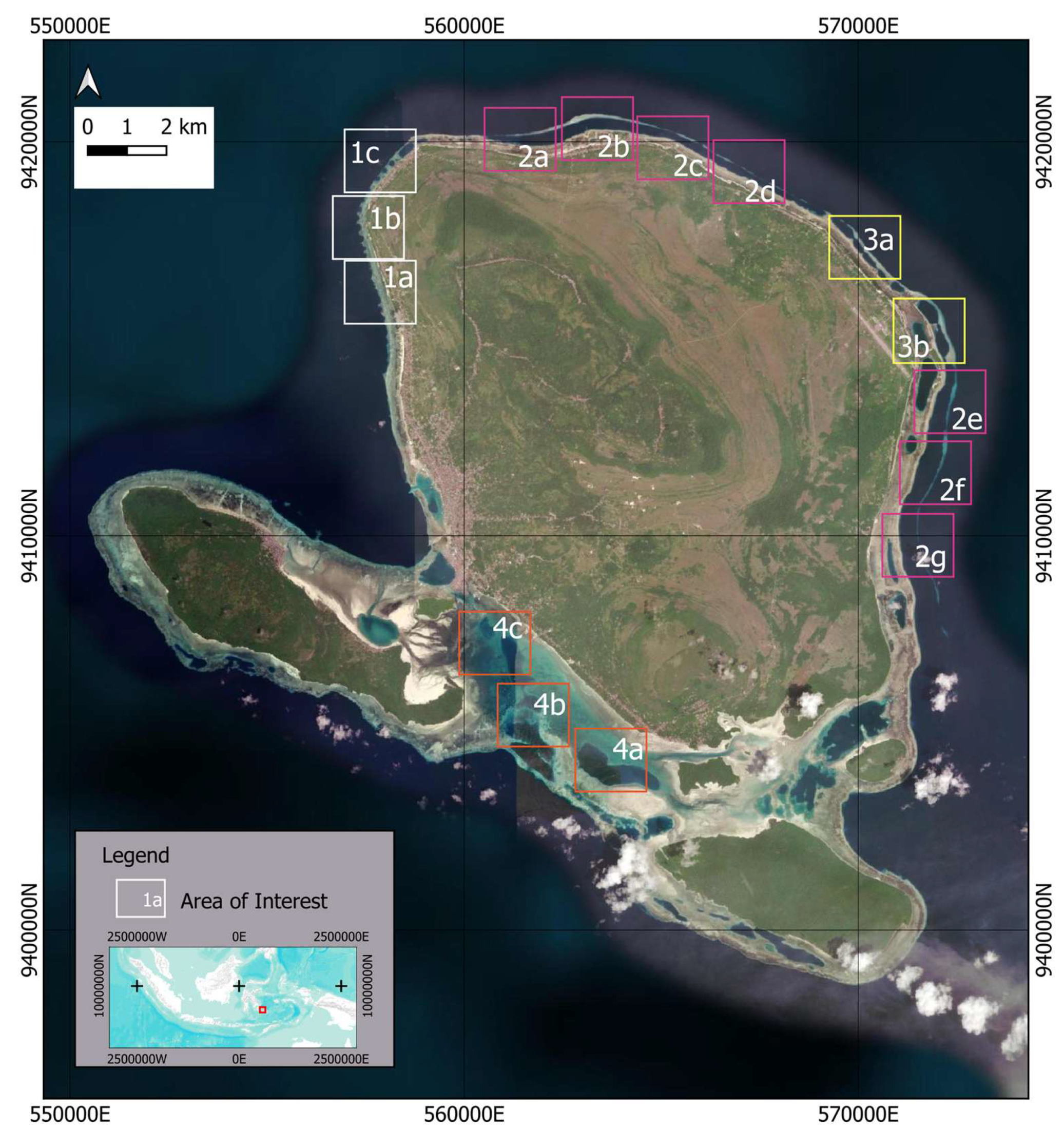
Land use on Wangiwangi Island is diverse, with a focus on coastal tourism and residential development. Popular beaches, such as Waha and Cemara, offer opportunities for swimming and sunbathing; however, some areas experience erosion, necessitating the implementation of coastal protection measures. The island’s distinctive geomorphological characteristics, coupled with high water clarity, make it an ideal destination for ecotourism activities such as snorkeling, diving, and trekking [25]. Given its geographical and ecological significance, Wangiwangi Island serves as an excellent model for studying wall reef structures and their environmental importance (Figure 1).

2.2. Wall Reef Structures Classification

In this research, Maxwell’s classification system will be applied to categorize and analyze the structural characteristics of wall reefs in Indonesia. As one of the foundational frameworks in reef geomorphology, Maxwell’s classification differentiates reefs based on their morphological structure, categorizing them into platform reefs, wall reefs, and plug reef formations [26]. This framework provides a systematic approach to understanding the physical differences between reef types, facilitating a more structured evaluation of their ecological functions, including their roles in biodiversity conservation, coastal protection, and sustainable tourism. By applying this classification, we aim to identify areas of high conservation value and contribute to informed management strategies for marine resources. Additionally, the use of Maxwell’s classification in this research aligns with the Indonesian Government’s formal standardization of the system through the National Coordinator for Survey and Mapping Agency (Bakosurtanal), now known as the Geospatial Information Agency, as outlined in the Official Document of Standardization of Basic Thematic Mapping Quality Control Methodology Specifications in Support of Spatial Planning [26]. This official endorsement reinforces the relevance of Maxwell’s framework in national geospatial data management and coastal resource planning.
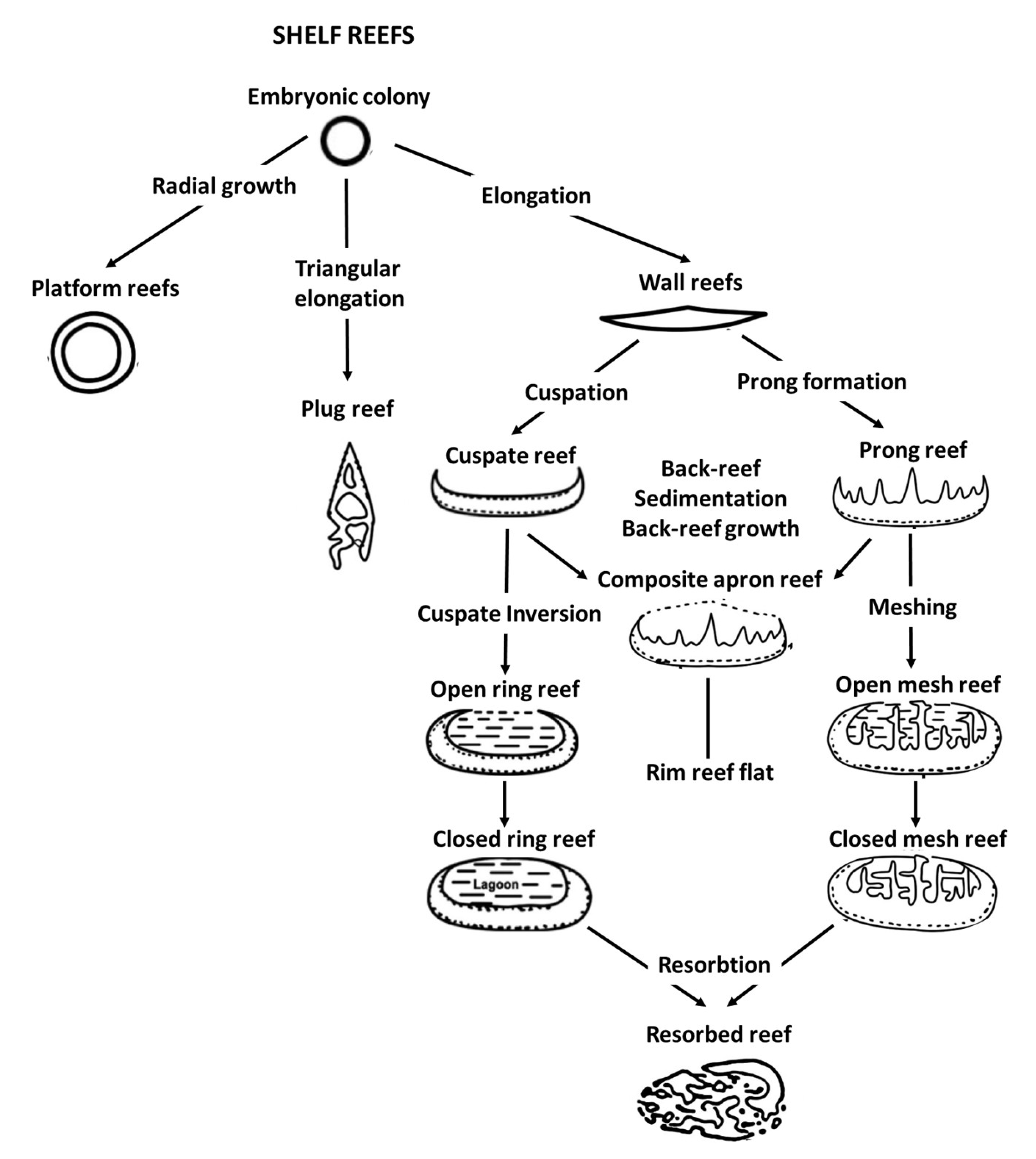
One of the key advantages of Maxwell’s classification is its clarity and accessibility, making it a widely adopted system for reef studies [27]. Its straightforward categorization allows for broad-scale assessments, enabling researchers to compare reef structures across different regions. Despite its simplicity, Maxwell’s classification remains highly versatile, serving as a benchmark for subsequent reef classification models. It has influenced the development of more advanced frameworks, integrating new methodologies such as remote sensing, bathymetric analysis, and machine learning to refine reef detection and identification. Recent advancements in multispectral and hyperspectral satellite imagery have further enhanced the applicability of Maxwell’s system, allowing for the more precise identification of reef morphologies in complex marine environments [12]. The Maxwell classification (Figure 2) describes two groups of reef development: oceanic reefs and shelf reefs. In this study, we focus on the shelf reef group, specifically wall reefs. Within the shelf reef group, reef development is divided into three forms: radial growth, triangular elongation, and elongation. All stages begin with an embryonic colony. Reef development continues following the downward arrow until the final developmental stage in the wall reef, the resorbed reef.
Moreover, Maxwell’s classification promotes consistency in reef terminology, fostering collaboration among researchers and ensuring that findings can be effectively compared across different studies. This uniformity is essential for global reef monitoring efforts, particularly in regions such as the Coral Triangle, where reef diversity is exceptionally high. While some modern classification systems incorporate additional ecological and oceanographic variables, Maxwell’s framework remains a reliable foundation for studies of reef morphology [27].

2.3. Remote Sensing and Data Processing

This study utilizes medium-resolution Landsat 8 satellite imagery surface reflectance from 22 January 2021, path 112, row 064, to detect and identify wall reefs. Before reef detection, land areas were masked using the Normalized Difference Water Index (NDWI) with a threshold value of 0.1, ensuring that only water-covered pixels were included in the subsequent analysis [28]. Spectral analysis was conducted to differentiate between various reef types based on their spectral signatures. To optimize band selection for wall reef identification, this research utilizes the Matrix Correlation (Matrix Corr) function. This geospatial statistical tool evaluates inter-band relationships by assessing correlation coefficients. By analyzing correlation coefficients between different band combinations, Matrix Corr helps determine which image composites provide the optimal distinction between coral reefs, seagrass, and other benthic substrates. This approach ensures that the selected composite maximizes contrast while minimizing inter-band redundancy, leading to more accurate classification results [29].
In addition to spectral correlation analysis, OIF is applied to enhance the visibility of underwater features by reducing the impact of the water column and atmospheric interference. OIF is particularly useful in reef identification, as it quantifies the amount of information contributed by each spectral band combination, allowing for the selection of the most effective composite for distinguishing reef structures. By integrating Matrix Corr and OIF, this study refines the identification process, ensuring that the selected band composite provides the best spectral separation for detecting wall reef subtypes, such as open and closed ring reefs and cuspate reefs, based on their geomorphological characteristics. The OIF equation used follows the below Equation [30]:
O I F = k = 1 3 S k j = 1 3 A b s r j
where
  • S k = Standard deviation of spectral values in each band;
  • A b s r j = Absolute value of the correlation coefficient between any two of the three bands.
The statistical evaluation methods, combined with Landsat 8 multispectral capabilities, enhance the detection of reef structures that water depth variations and sedimentation effects might otherwise obscure. Integrating these analytical techniques improves identification accuracy, supporting the development of a reliable mapping framework for wall reefs in Indonesia. By refining spectral composite selection through Matrix Corr and OIF analysis, this study contributes to more effective remote sensing methodologies for marine spatial planning and coral reef conservation efforts.

2.4. Field Check

Field checks are conducted at key sites within Wangiwangi Island to gather data on depth, turbidity, water quality, and benthic habitat. Depth measurements are taken using a depth sounder. Turbidity is assessed using a turbidity meter, and biodiversity surveys are conducted through visual census techniques and species identification. Equipment used includes underwater cameras for visual documentation, GPS (Global Positioning System) Garmin Montana 680 for precise location tracking, and sampling gear for collecting biological specimens. The fieldwork process involves a systematic sampling strategy to ensure comprehensive coverage of the study area.

2.5. Data Integration

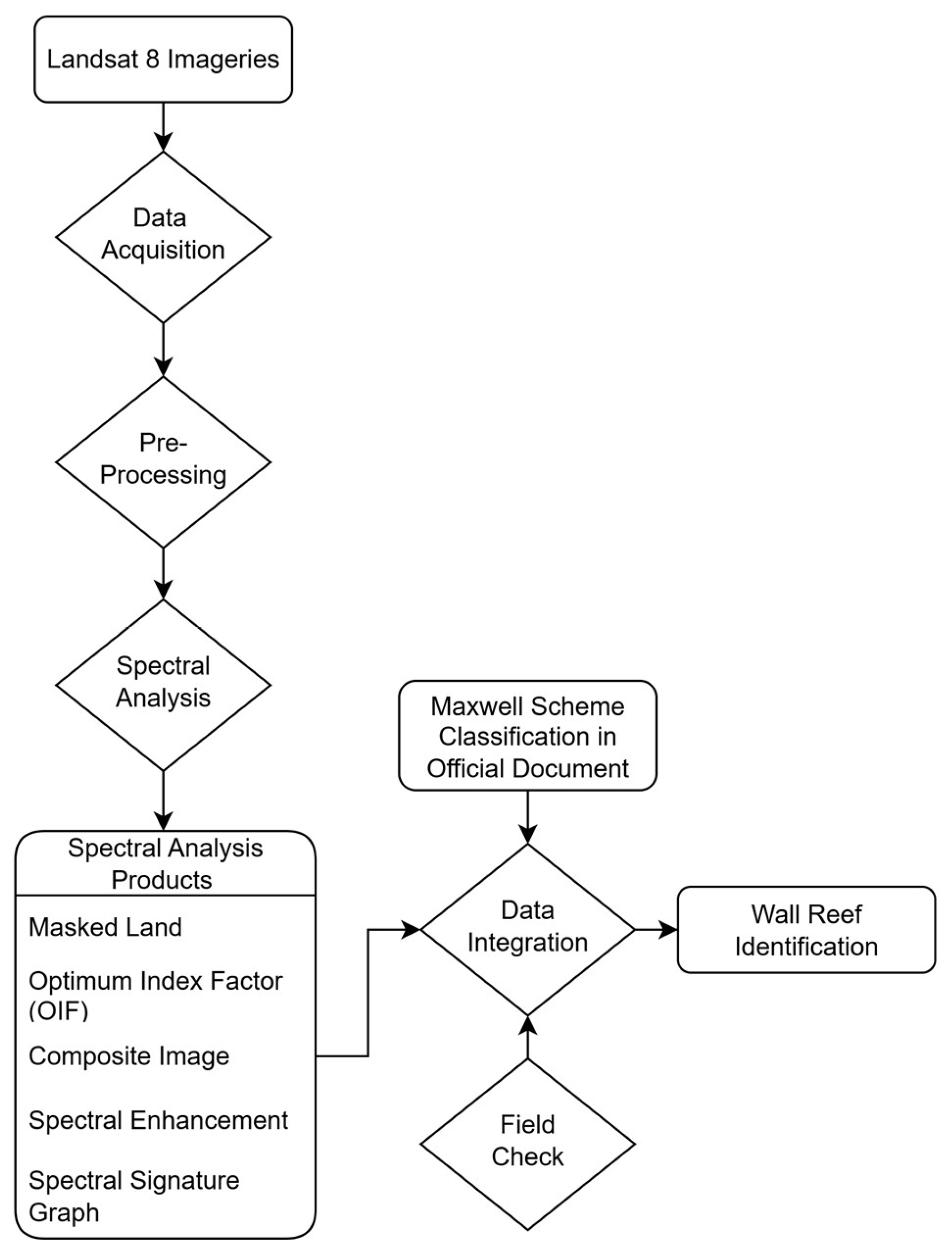
The data integration methodology follows a systematic workflow, as illustrated in the flowchart shown in Figure 3. Field checks are cross-validated with remote sensing results to enhance the accuracy of wall reef identification. The integration involves comparing the spatial distribution and characteristics of reef formations identified through remote sensing with those observed during field checks. This approach allows for the validation of the remote sensing methodology and ensures that the identification framework is grounded in both spectral and ecological data. The integration process also involves assessing the applicability of Maxwell’s classification framework to Indonesian reef structures, providing insights into its suitability and potential need for regional adaptations.

3. Results and Discussion

3.1. Landsat Band Selection and Wall Reef Identification

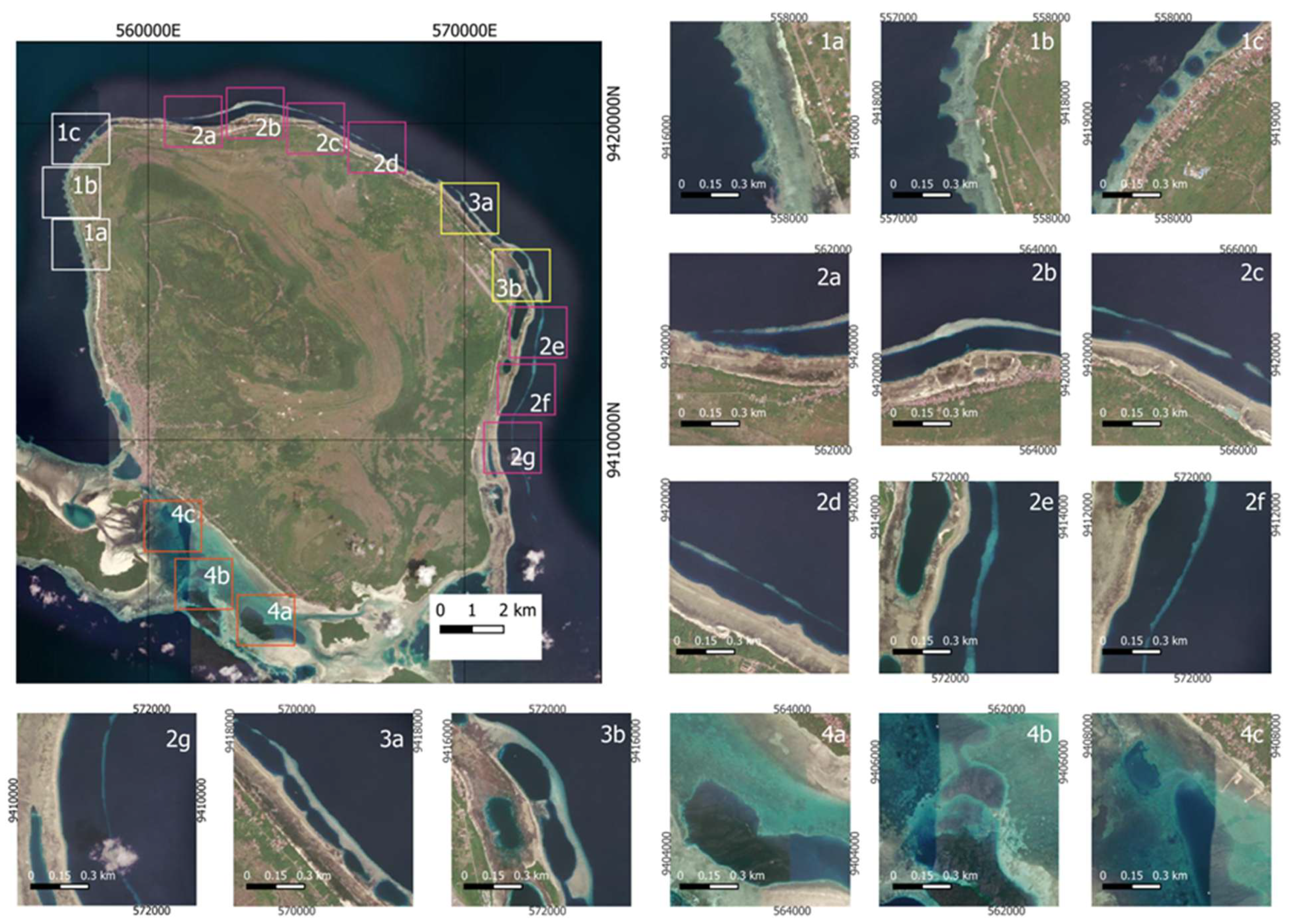
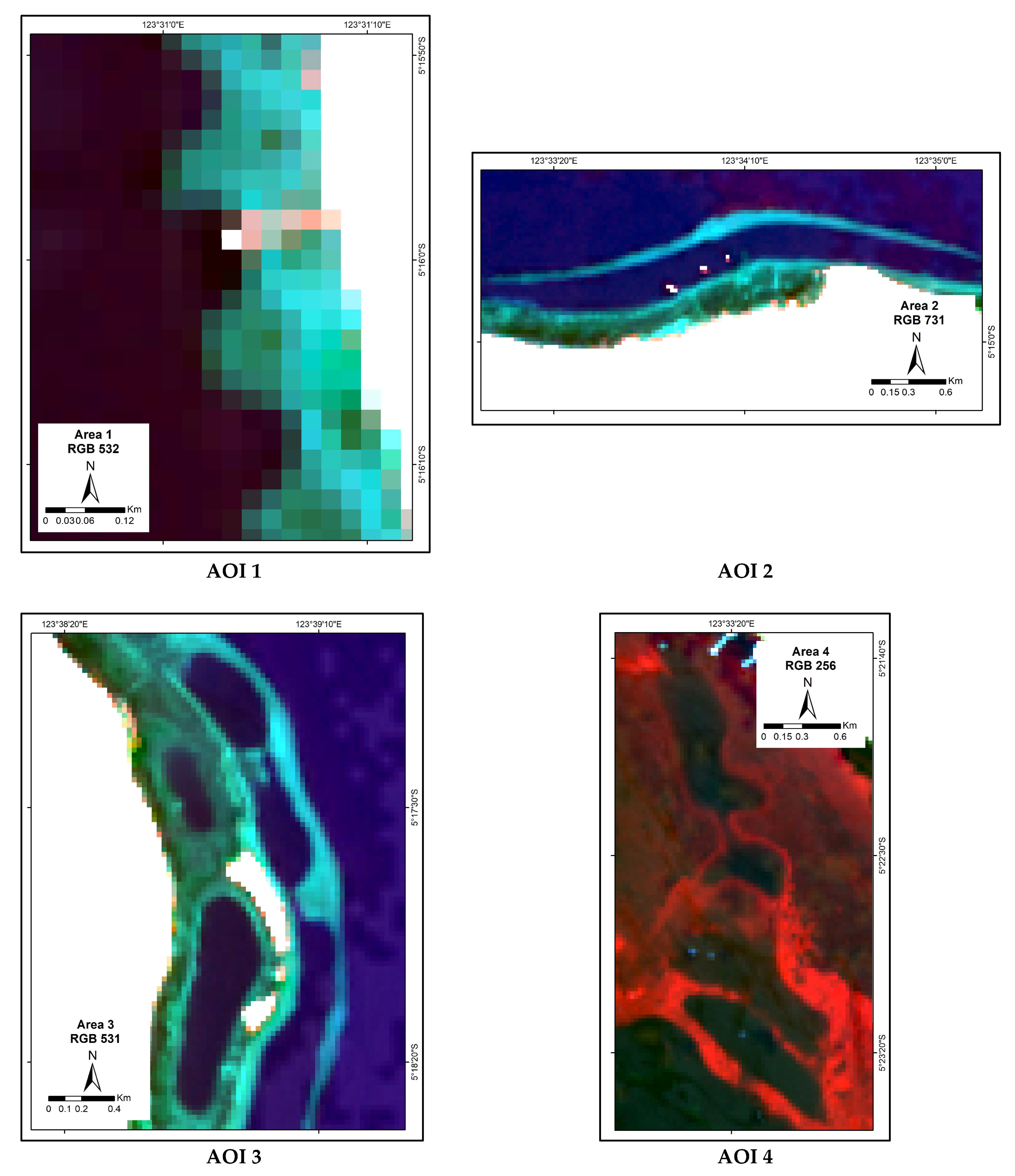
Of the fifteen areas identified during the initial mapping (Figure 1), four were selected as the most representative sites for subsequent verification and analysis (Figure 4). Each selected site corresponds to one of the four wall reef classes under suitable environmental conditions, serving as both a classification reference and a ground observation. Specifically, sample 1b (later designated as AOI 1) corresponds to the open ring reef with partially enclosed circular formations; sample 2b (AOI 2) to the cuspate reef exhibiting narrow, tongue-like extensions; sample 3b (AOI 3) to the closed ring reef featuring fully enclosed atoll-like structures; and sample 4b (AOI 4) to the resorbed reef showing degraded formations with vague boundaries. By linking mapped categories with field-confirmed examples, these four samples provide comprehensive coverage of the primary reef types in the study area and enable a qualitative agreement check between classification and observed conditions. Landsat 8 imagery interpretation using optimized band composites and OIF analysis confirmed the spectral distinctiveness of each reef type across the study area. Maxwell’s classification scheme categorizes reef landforms based on shape, orientation, and associated geomorphic processes, with each type exhibiting distinctive spectral signatures that facilitate remote sensing identification. The spectral distinctiveness of each reef type was confirmed through systematic band selection analysis, establishing the foundation for accurate classification in microcontinental shelf environments.

3.1.1. Matrix Correlation Analysis

Matrix correlation analysis was conducted across all four AOIs to determine statistical relationships between spectral bands and optimize composite band selection. The correlation matrices revealed distinct spectral characteristics for each site, reflecting variations in environmental conditions and substrate composition.
Table 1 presents the matrix correlation coefficients for AOI 1, showing high correlation values between visible bands (B1–B4), ranging from 0.93 to 0.98. In contrast, the infrared bands (B5–B7) demonstrate strong internal correlations, with values ranging from 0.81 to 0.97. The mean digital number values indicate relatively high reflectance across all bands, with Band 3 showing the highest standard deviation of 1354.59, suggesting significant spectral variability within this area.
Similar correlation patterns are observed in AOI 2 (Table 2), though with slightly lower correlation coefficients between visible and infrared bands compared to AOI 1. The visible bands exhibit strong correlations (r = 0.71–0.95), while the infrared bands display consistently high correlations (r = 0.76–0.96). Notably, the standard deviation values are generally lower than AOI 1, particularly in the infrared bands, indicating more homogeneous spectral characteristics.
AOI 3 exhibits the most distinct spectral characteristics (Table 3), with notably lower correlations between visible and infrared bands, particularly for Band 1, which shows correlations as low as 0.11 to 0.14 with the infrared bands. This pattern suggests significant environmental differences, possibly indicating clearer water conditions or different substrate compositions that enhance spectral separation between band groups.
AOI 4 demonstrates unique spectral behavior (Table 4), particularly evident in the negative correlation (−0.04 to 0.02) between Band 2 and infrared bands B5–B6. This anomalous pattern, combined with the highest standard deviation observed in Band 5 (3230.55), indicates substantial spatial heterogeneity within this area, potentially reflecting complex transitions between reef, lagoon, and deep water. The high correlations within visible bands (0.71–0.97) remain consistent with those in other locations, maintaining the expected spectral relationships characteristic of shallow-water environments.

3.1.2. Optimum Index Factor (OIF) Analysis

Based on the matrix correlation analysis, OIF calculations (Table 5) were then performed to identify the three highest-scoring bands in each observation area. For Area 1, the highest scores consisted of Bands 2, 3, and 5. In Area 2, the analysis revealed that the highest scores were for Bands 1, 3, and 7. Area 3 was best represented by the highest scores of Bands 1, 3, and 5, while Area 4 used Bands 2, 5, and 6. Band 3 and Band 5 were most frequently selected across locations due to their effectiveness in enhancing reef contrast and minimal interference in the water column.
The selected RGB composites (532, 731, 531, and 256) were determined through a two-step process: initial selection based on the highest OIF scores, followed by visual assessment of spectral contrast and object discriminability (Figure 5). This approach ensured that the selected band combinations not only maximized statistical information content but also provided optimal visual discrimination for identifying distinct reef morphologies according to Maxwell’s classification framework.

3.2. Spectral Reflectance Patterns and Reef Type Differentiation

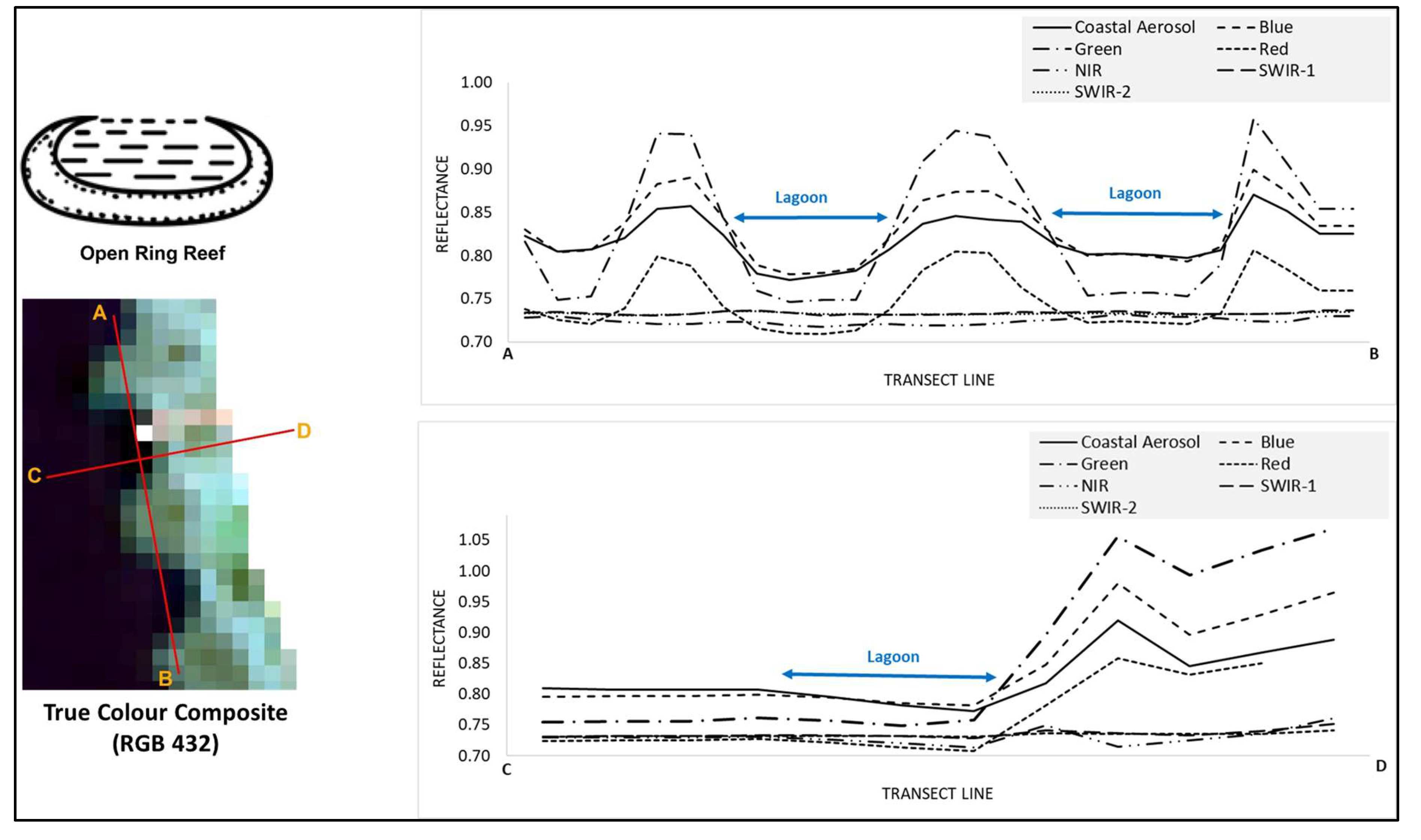
Spectral pattern analysis using Landsat 8 imagery revealed a systematic relationship between reflectance characteristics and reef landform classifications based on the Maxwell scheme. Spectral transect results across the five observation areas showed significant variation in reflectance profiles, which aligned with the identified reef landform classes. The relationship between spectral patterns and the Maxwell classification scheme is evident in the distinctive reflectance characteristics of each reef landform class. In open ring reefs (Figure 6), spectral graphs exhibited high reflectance peaks in the green and near-infrared bands, with consistent fluctuating patterns, reflecting the open ring structure characterized by shallow lagoons and radial growth, as described in the Maxwell scheme.
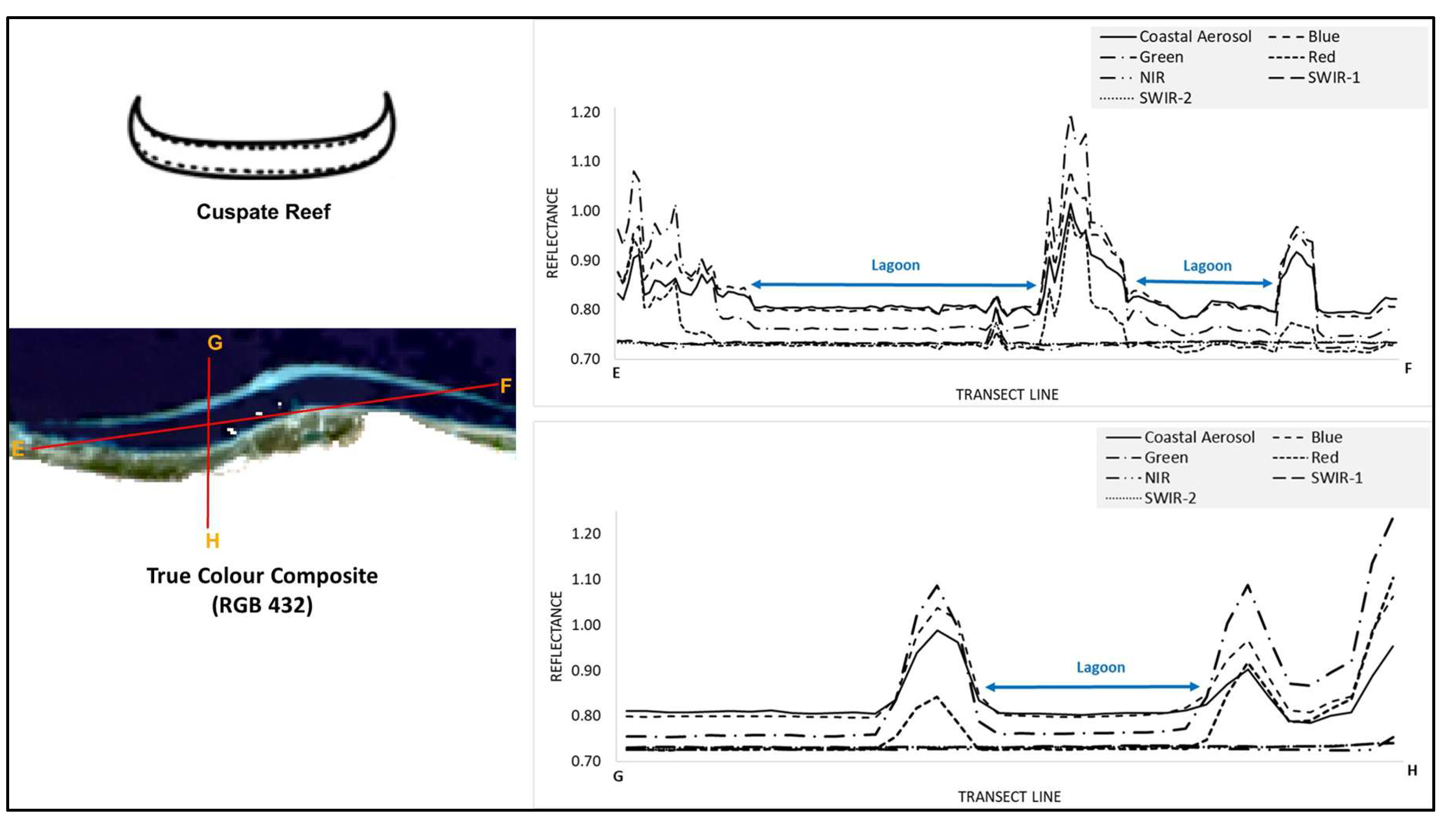
Cuspate reefs (Figure 7) displayed spectral patterns with sharp peaks across multiple bands and significant reflectance variation along the transect, consistent with their pointed and asymmetric morphology. This variability is associated with alternating coral growth intensity, exposure to wave action, and sediment dynamics around cuspate structures.
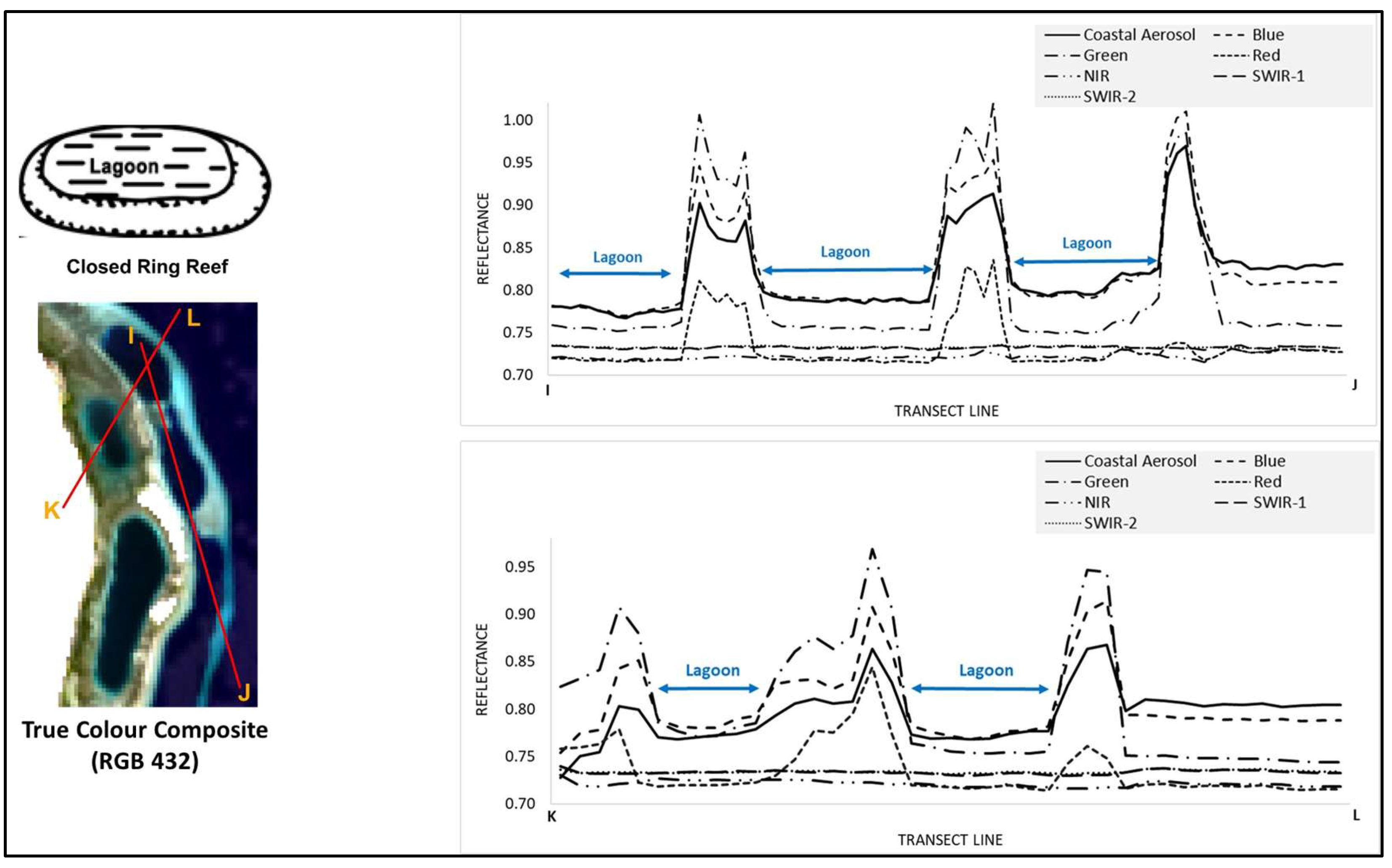
Closed ring reefs (Figure 8), in contrast, showed relatively uniform and moderate reflectance values across most bands, indicating a dense coral structure with limited internal variation. Spectral consistency is associated with compact reef morphology characterized by high coral cover and lower lagoonal complexity.
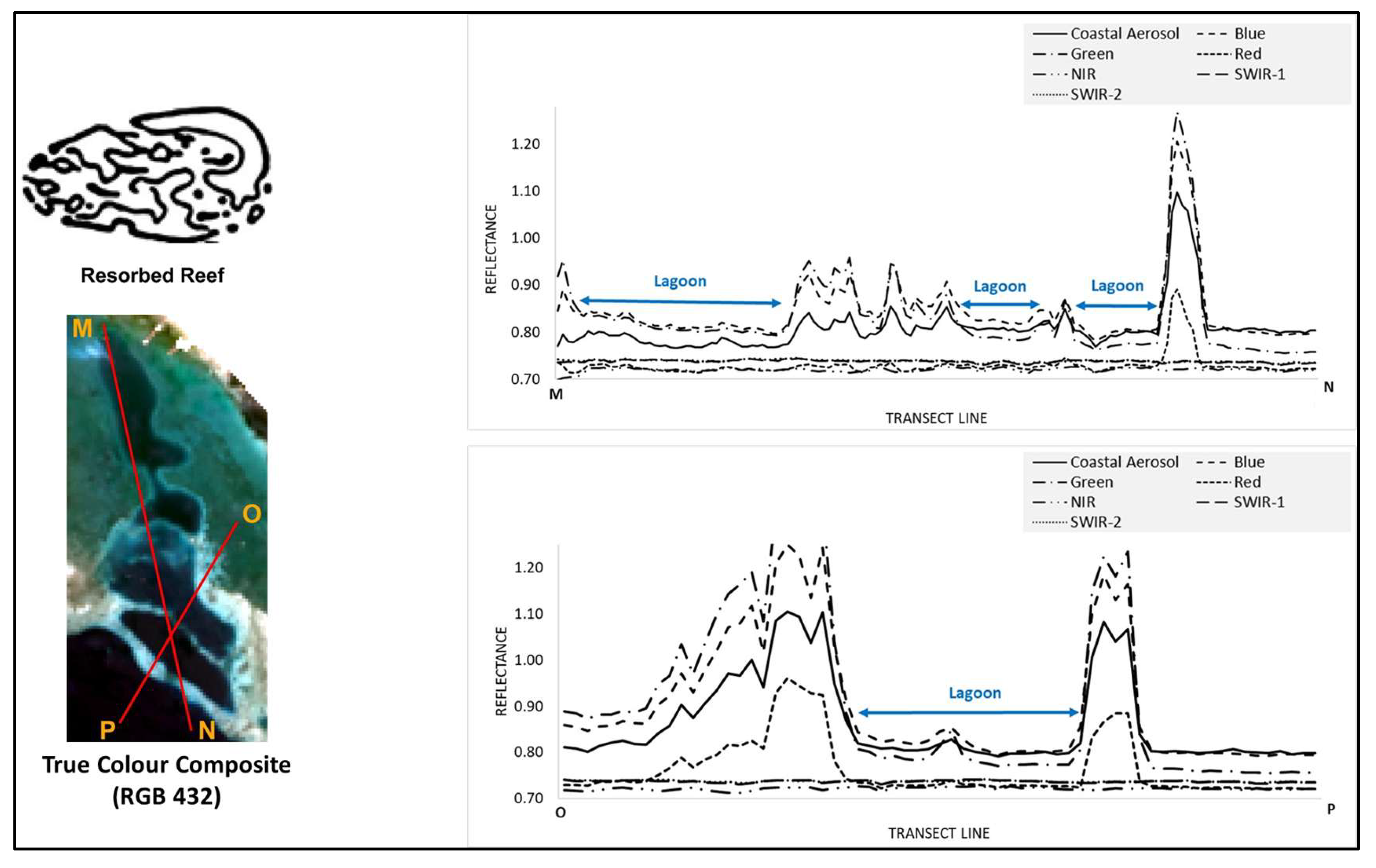
Resorbed reefs (Figure 9) exhibited generally lower and flatter spectral responses, particularly in the visible and near-infrared bands. This pattern reflects degraded reef conditions, characterized by reduced live coral cover and higher turbidity levels resulting from sedimentation. The subdued spectral signature is aligned with the Maxwell description of resorbed or eroded reef structures, where biological activity is diminished and geomorphic features are less distinct.
Overall, the spectral transect profiles support the differentiation of reef landforms using satellite remote sensing, with each class exhibiting unique spectral signatures. These findings reinforce the relevance of integrating spectral analysis with geomorphic classification schemes such as Maxwell’s, particularly for applications in regional reef mapping and monitoring.
Furthermore, the integration of field check and spectral analysis provides a comprehensive approach to assessing reef health and morphology. The combined evidence from both methods enhances the reliability of reef identification models and supports the development of more accurate and scalable coral reef mapping strategies.

3.3. Field Check and Environmental Assessment of Reef Types

To strengthen the satellite-based classification, underwater surveys were conducted to collect data on reef depth, turbidity, water quality, and benthic habitats. Field data collected during dives in September 2023 provided critical information to support the analysis of wall reef landforms, environmental characteristics, and ecological aspects at the study sites. Direct underwater observations enabled the identification of physical and biological factors that are not always detectable through satellite imagery. Field results consistently revealed a strong correlation between the classification of wall reef landforms and observed conditions, as well as the health status of the reef ecosystem. Table 6 summarizes the key environmental parameters and biological features recorded at each observation site, supporting the accuracy of remote sensing-based identification.
The field check results (Table 6) demonstrate a systematic relationship between wall reef morphology and ecological condition, revealing distinct environmental-biodiversity patterns that strongly support Maxwell’s geomorphological classification framework [31,32]. Open ring reefs, occurring at depths of 40–42 m with pristine water conditions (0.0 NTU turbidity, pH 6.48, salinity 34.8 ppt), represent the optimal reef environment, characterized by minimal current flow that facilitates excellent water exchange through multiple lagoon openings while maintaining a water quality conducive to coral growth [33,34]. These conditions support exceptional biodiversity dominated by thriving Acropora colonies, extensive soft coral communities, and megafauna, including sharks, Napoleons wrasse, and manta ray aggregation sites, establishing them as critical conservation priorities and potential climate refugia [35,36].
In contrast, cuspate reefs at 60 m depths exhibit intermediate environmental conditions with slightly elevated temperatures (30.08 °C) approaching thermal stress thresholds and moderate current variability, resulting in distinctive ecological zonation patterns where windward slopes support robust Acropora assemblages, while protected leeward areas harbor diverse soft coral gardens including Tubastraea species, yielding moderate biodiversity levels that reflect their exposure to variable hydrodynamic conditions [37].
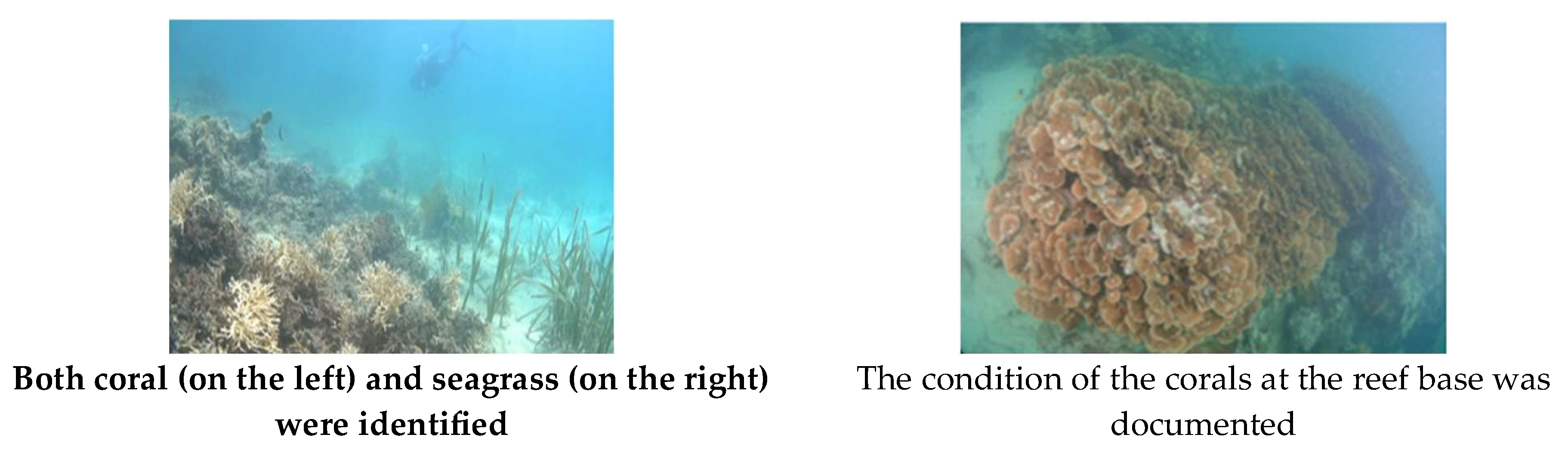
Closed ring reefs present a markedly different environmental profile, occurring in shallow waters (3–14.4 m) with restricted circulation that creates elevated pH conditions (7.31) indicative of limited CO2 exchange and reduced water quality, leading to degraded ecological conditions characterized by coral deterioration, dominance of stress-tolerant damselfish populations, and extensive seagrass beds (Enhalus spp.) that signal anthropogenic impact and eutrophication processes requiring immediate restoration intervention [38,39].
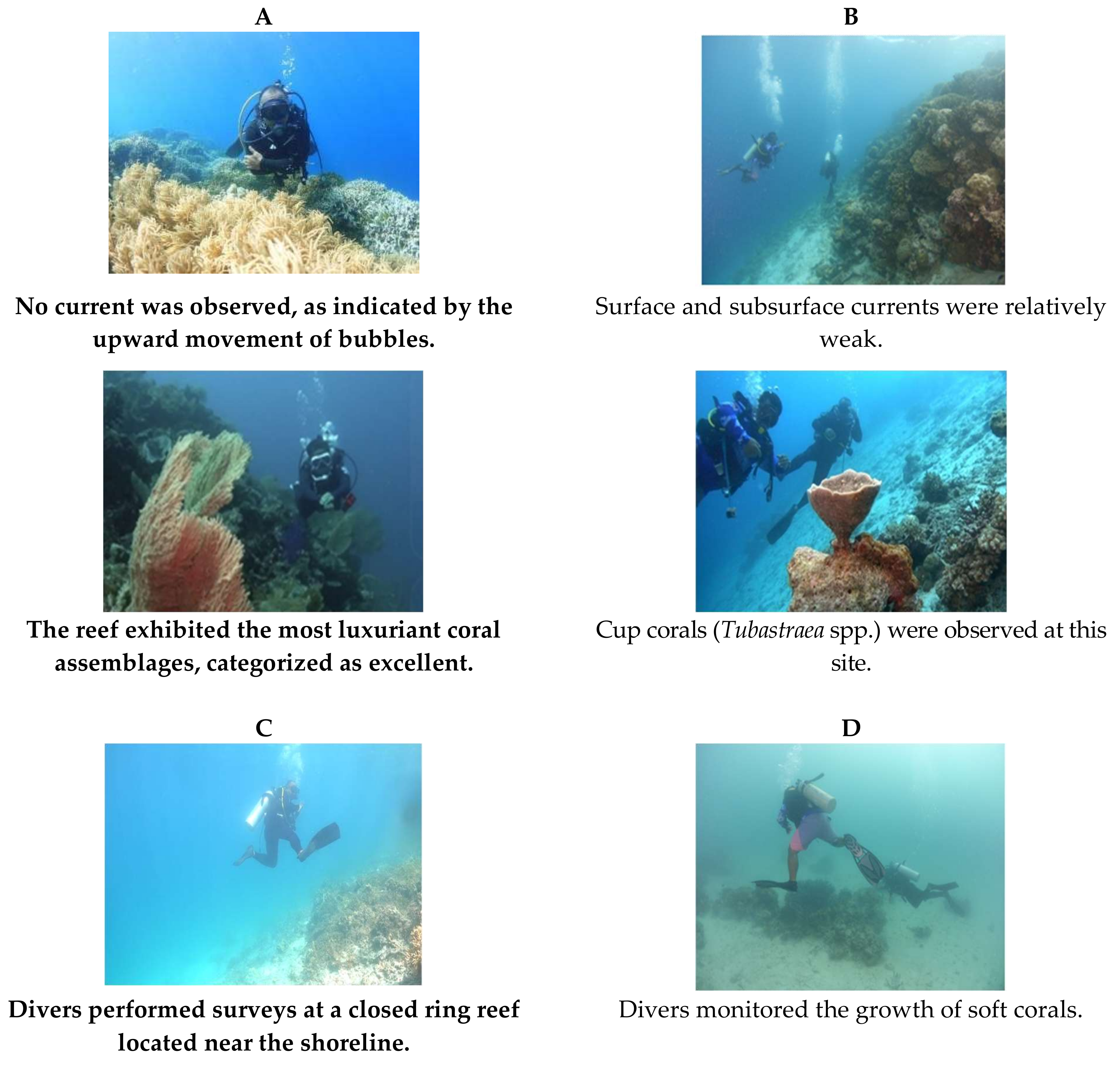
Finally, resorbed reefs at 19 m depths represent naturally degraded systems where calm, sheltered conditions (pH 5.25) reflect active carbonate dissolution processes and substrate instability, supporting minimal biodiversity but demonstrating natural succession dynamics through young Pocillopora colonies colonizing dead Acropora frameworks, indicating ongoing recovery processes that provide valuable insights for restoration ecology research [32,36]. This systematic environmental - morphological - ecological gradient, spanning from pristine high-biodiversity systems to naturally recovering degraded reefs, validates the effectiveness of Maxwell’s classification for distinguishing functionally distinct reef types, and provides a robust scientific foundation for implementing targeted conservation strategies, restoration priorities, and adaptive management protocols that address the specific environmental drivers and ecological characteristics of each morphological category within the broader context of Coral Triangle marine spatial planning and climate change adaptation efforts [40,41,42]. These field data and findings were instrumental in validating the satellite image-based identification results, thereby enhancing the accuracy of wall reef landform mapping. Visual documentation (Figure 10) from selected observation stations, representing various landform types and reef ecosystem conditions, is presented below to provide a more precise depiction of the actual field conditions.

3.4. Wall Reef Classification and Identification Framework

3.4.1. Geomorphology and Classification of Wall Reefs

Wall reefs differ fundamentally from oceanic reefs in their geological foundation and morphological development. While oceanic reefs develop on volcanic foundations or oceanic platforms, wall reefs form on continental or microcontinental shelf areas where limestone substrates provide the structural foundation [15]. This geological difference results in distinctive morphological characteristics: wall reefs typically exhibit steep vertical profiles, enclosed or semi-enclosed lagoons, and complex three-dimensional structures that reflect their development on the shelf.
Our mapping adhered to Maxwell’s classification system, specifically focusing on wall reef formations within microcontinental shelf environments. Maxwell distinguished between oceanic reefs (fringing, barrier, and atoll) and shelf reefs (wall reefs, platform reefs, and plug reefs), with wall reefs being characterized by their development on continental shelves and microcontinental platforms. Maxwell interpreted the variety of coral reefs as points along a continuum of reef development influenced by wind, waves, and sea-level history [43]. Within our study area, Maxwell’s insight that reef development stages are driven by the current wind-wave regime and stable sea level is supported by our observations [27]. For instance, reefs on windward edges show prominent reef crest structures, whereas leeward sides have broader flats and lagoons. These gradational patterns underscore Maxwell’s view of an evolutionary sequence from fringing to atoll under changing environmental conditions [43], with steep seaward faces and a protected leeward zone.
Our findings align closely with recent global reef classifications. According to Andréfouët and Paul [44], Goldberg provided an updated global census of atolls, refining Darwin’s list with high-resolution satellite imagery. All extensive ring reefs detected in our study correspond to atolls or atoll-like features in Goldberg’s database, confirming the consistency of our classification with global inventories. The Millennium Coral Reef Mapping Project and the Allen Coral Atlas have demonstrated that geomorphic categories, such as reef crest, slope, and lagoon, can be mapped from Landsat-scale imagery [32,44,45], which differs slightly from our result. However, a fundamental distinction exists between Maxwell’s geomorphological framework and modern reef classification systems, such as the Allen Coral Atlas. Maxwell’s scheme explicitly differentiates between oceanic reefs and shelf reefs based on their geological foundations, recognizing that continental/microcontinental platforms strongly influence reef morphology and ecological function [27]. In contrast, the Allen Coral Atlas focuses on horizontal habitat zonation regardless of geological context.

3.4.2. Identified Wall Reef Types

The wall reef group types we mapped correspond well to Maxwell’s shelf reef categories, specifically the following: cuspate reef, open ring reef, closed ring reef, and resorbed reef. An open ring reef is a circular reef formation that is partially enclosed and features a shallow lagoon at its center. In Maxwell’s framework, the open ring reef is a variant of a wall reef formed through elongation and radial growth, but it is not fully enclosed. It usually develops in regions with moderate wave activity and tidal movement, which facilitates the flow of water and nutrients between the lagoon and the surrounding sea. In transect A–B (Figure 6), reflectance profiles across the visible (Coastal Aerosol, Blue, Green, Red) and NIR bands reveal periodic peaks corresponding to lagoon regions. These peaks are indicative of shallower, clearer water with substrates such as coral sand or benthic vegetation that increase reflectance, particularly in the green and NIR wavelengths [46,47]. The minimal current matches data from the field, indicating a very low current from the diver’s bubble (Figure 10 AOI 1). Due to the continued presence of water and nutrient flow, the biological reef is in good condition, characterized by high biodiversity, including Acropora colonies, soft corals, massive corals, and large sponges, as well as the sightings of sharks, Napoleon fish, and manta ray fish (Table 6; biodiversity of open ring reef).
A cuspate reef is a narrow, tongue- or prong-shaped protrusion identified in satellite imagery, extending from the mainland toward the open sea. Geomorphologically, this is consistent with Maxwell’s description, where cuspate reefs develop along the edge of the continental shelf and often exhibit steep to vertical slopes, thus falling into the wall reef category [27]. The analysis of the cuspate reef structure using Landsat 8 imagery (RGB 731) reveals the distinctive geomorphology and spectral characteristics of this reef type (Figure 7). The cuspate reef, illustrated in the schematic diagram, features a convex shape with an enclosed or semi-enclosed lagoon, commonly formed by wave-dominated processes and sediment accumulation [48]. In transect E–F, two distinct peaks are observed in the reflectance values, particularly in the Green, Red, and NIR bands (Figure 7). These peaks correspond to shallow reef features and lagoon areas with higher bottom reflectance due to sandy substrates or benthic cover [47].
A closed ring reef is characterized by a fully enclosed, ring-shaped structure resembling a small atoll, but it forms geomorphologically atop a microcontinental arc. Maxwell defines closed ring reefs as symmetrically developed radial growth structures that create a well-defined ring with a prominent central lagoon. It typically forms in more protected areas where wave action and tidal movement are minimal. The minimum wave action and tidal movement resulted in low biodiversity, coral degradation, and the existence of seagrass (Table 6; biodiversity of closed ring reef). The closed ring reef illustrated in this image represents a typical atoll-like geomorphological structure characterized by a continuous reef formation enclosing a central lagoon. The RGB 531 composite image highlights the variation in reflectance between reef crests, deeper lagoon waters, and surrounding open ocean (Figure 8). This type of reef is commonly formed through coral growth, resulting in a fully enclosed central lagoon [48]. The presence of peaks indicates shallow, reflective surfaces, typically composed of coral or carbonate sands, while dips in reflectance represent deeper or water-dominated zones within the lagoon [47].
A resorbed reef represents an advanced stage in wall reef evolution, characterized by extensive carbonate dissolution and intense sedimentation that result in the structural degradation of the reef. Maxwell describes resorbed reefs as low-relief structures resulting from prolonged resorption and sediment accumulation processes. A resorbed reef is a reef formation that has experienced substantial erosion and deterioration, often because of rising sea levels or other environmental influences. It usually appears flattened or broken, with noticeably reduced coral cover and lower structural complexity. The system’s health is reflected in the balance between carbonate production and erosion [49]. This condition is reflected in the field report from the diver, who noted that the area is likely degraded due to reef aging, overgrowth of dead Acropora skeletons, and the presence of young Pocillopora colonies (Table 6)—specifically, the biodiversity of the resorbed reef. The resorbed reef system depicted in the RGB 256 composite image demonstrates a complex and degraded geomorphology often associated with prolonged exposure to physical erosion, biological disturbance, or partial drowning (Figure 9). The schematic diagram characterizes the reef as highly fragmented, with irregular lagoonal features embedded within the reef structure, indicating a potential stage of reef senescence or transition [48].
The correlation between geomorphological classes and ecological condition was clearly demonstrated in the above discussion. An open ring reef, covered by hard coral, soft corals, and large sponges, is home to sharks, Napoleon, a variety of fish, and a ray spawning area. This condition indicates high biodiversity, likely due to the presence of water flow generated by currents and tides. A cuspate reef covered by hard coral, a variety of fish, and anemones indicated moderate biodiversity compared to an open ring reef, because the current was not optimal for reef growth. Low biodiversity resulted from a closed ring reef, due to the minimal water flow caused by the closed lagoon, as indicated by the dead coral, which was dominated by damselfish and seagrass. The worst biodiversity found at the resorbed reef resulted from the aging process of this reef; the water flow increased the dissolution of carbonate at a rate higher than reef growth, as indicated by dead coral, young Pocillopora, and sponges.

3.4.3. Remote Sensing Effectiveness

Previous studies have explored a range of band combinations for coral reef identification, depending on environmental conditions and research objectives. For example, Mumby et al. employed the 543 composites to map broad reef zones in shallow Caribbean waters [50], while Hedley et al. evaluated NIR-Green-SWIR composites for benthic habitat differentiation in optically ideal conditions [51].
Field-based and airborne imaging studies in reef environments, such as those in the Great Barrier Reef and Caribbean systems, have reported that glint and brightness artifacts frequently occur in highly reflective shallow waters, especially during cloud-free periods with high solar angles. Hedley et al. observed that these artifacts significantly affect spectral accuracy in benthic habitat mapping and recommended the use of SWIR bands or glint-correction algorithms to reduce their impact [51].
These comparisons reinforce the understanding that no band combination universally applies; instead, the optimal choice is context-dependent, reflecting variations in reef geomorphology, water clarity, depth, and surface conditions. In this study, the RGB 532 (open ring reef), 731 (cuspate reef), 531 (closed ring reef), and 256 (resorbed reef) composite images were specifically selected to balance subsurface visibility, glint suppression, and reef - land separation, all of which are pertinent to the mapping of steep and ecologically diverse wall reef systems in the study area.

4. Conclusions

This study successfully developed and validated a novel methodology for wall reef identification using Landsat 8 satellite imagery, establishing the first systematic approach for mapping wall reef morphologies in Indonesian microcontinental environments. By integrating OIF analysis with Maxwell’s geomorphological framework, four distinct wall reef types were identified around Wangiwangi Island: cuspate reefs, open ring reefs, closed ring reefs, and resorbed reefs.
Spectral composite analysis revealed optimal band combinations for distinguishing these morphologies: RGB 532 for cuspate reefs, RGB 731 for open ring reefs, RGB 531 for closed ring reefs, and RGB 256 for resorbed reefs. These composites enhanced the spectral contrast between reef structures and surrounding waters, underscoring the capability of medium-resolution satellite imagery to capture geomorphological patterns. Field observations further confirmed the strong correspondence between satellite-based classifications and in situ environmental conditions.
The successful adaptation of Maxwell’s classification system to Indonesian reef environments represents a significant contribution to coral reef science, providing a standardized framework for identifying wall reefs that can be applied across similar microcontinental settings within the Coral Triangle. This approach bridges classical geomorphological theory with modern remote sensing capabilities.
From a conservation perspective, the study provides essential baseline data for spatial planning in the shallow waters of the Wakatobi region. The ability to distinguish reef morphologies with varying ecological conditions enables more targeted and effective conservation strategies.
Furthermore, this research demonstrates that Landsat 8 imagery—despite its 30 m spatial resolution—can effectively discriminate wall reef morphologies when paired with appropriate spectral analysis techniques. This finding highlights its value for cost-effective, large-scale reef monitoring in data-sparse regions where high-resolution imagery may be unavailable or prohibitively expensive.
Nevertheless, several limitations must be acknowledged. The analysis relied on single-date imagery, restricting the assessment of temporal dynamics. The 30 m resolution constrains the detection of fine-scale reef features, and atmospheric interference may introduce classification uncertainties. Future research should incorporate multi-temporal datasets, higher-resolution imagery, and advanced machine learning algorithms to enhance both accuracy and monitoring capabilities over time.

Recommendation

Based on the findings of this study, several strategic recommendations are proposed to guide the sustainable management of wall reef landforms, such as open ring reefs, cuspate reefs, closed ring reefs, and resorbed reefs. Each landform has a specific habitat. This model is particularly suitable for microcontinental regions such as Wangiwangi Island. First, shallow-water spatial planning should adopt a morphology-based zoning approach that aligns reef structure with ecosystem function and conservation priorities. For instance, benthic habitats and turbidity zones—such as open ring reefs—should be prioritized for designation as marine protected areas (MPAs) that support low-impact ecotourism, snorkeling, and biodiversity conservation. Conversely, resorbed reef types, which may exhibit signs of ecological degradation or structural erosion, are better suited for designation as ecological restoration zones. These areas should be subject to enhanced monitoring and recovery protocols aimed at increasing habitat resilience.
Second, to ensure long-term reef health monitoring and data consistency, this study recommends integrating remote sensing data with field-based ecological assessments into a hybrid monitoring system. Such integration would improve the accuracy, efficiency, and temporal resolution of reef classification and habitat tracking. Establishing a national or regional reef monitoring system that combines these tools could enable dynamic assessments of reef type and inform adaptive management in the face of environmental change.
Third, the development of marine ecotourism should be strategically oriented toward wall reef landform types that exhibit high structural integrity and aesthetic value, such as open ring reefs and closed ring reefs. Community-based tourism models should be promoted to enhance local economic benefits while ensuring ecological sustainability. Tourism infrastructure should be planned and developed with a minimal environmental footprint, prioritizing education, conservation awareness, and stakeholder engagement.
Finally, future research should aim to improve the resolution of spatial images and the detail of wall reef identification by incorporating higher-resolution satellite datasets, such as Sentinel-2, PlanetScope, or WorldView. Coupling these datasets with machine learning algorithms or object-based image analysis (OBIA) techniques will likely enhance the discrimination of reef features, allowing for more nuanced identification. Additionally, longitudinal and multi-temporal data should be employed to assess reef health dynamics under the influence of climate variability, ocean warming, and anthropogenic stressors. These methodological advancements will contribute to the development of a scalable and adaptive framework for reef monitoring and sustainable spatial planning in shallow waters across the Coral Triangle and other biodiverse marine regions.

Author Contributions

Conceptualization, W.A. and J.W.; methodology, W.A., G.W. and E.T.; software, A.U., N.S. and A.S.; validation, W.A., G.W., A.S. and S.; formal analysis, A.U. and N.S.; investigation, W.A., E.T., G.W. and S.; resources, W.A., J.W., A.U. and N.S.; data curation, A.U., N.S. and A.S.; writing—original draft preparation, W.A., E.T., A.U., E.S., S. and N.S.; writing—review and editing, S., E.T., G.W., E.S., B.W.M. and J.W.; visualization, A.U., N.S. and A.S.; supervision, W.A., B.W.M., E.S. and J.W.; project administration, A.U.; funding acquisition, W.A. All authors have read and agreed to the published version of the manuscript.

Funding

This research was supported by the Ministry of Environment and Forestry of the Republic of Indonesia (Fiscal Year 2023 and 2024), as well as by the Research and Innovation for Advanced Indonesia (RIIM) research grant from the National Research and Innovation Agency (Badan Riset dan Inovasi Nasional, BRIN).

Data Availability Statement

The datasets generated during the current study are available from the corresponding author upon reasonable request.

Acknowledgments

The authors gratefully acknowledge the Directorate of Environmental Impact Prevention, Regional and Sector Policies, Ministry of Environment and Forestry of Indonesia, for providing financial support, field assistance, and logistical support during field observations. Special thanks are also due to the local field officers who provided invaluable assistance during fieldwork in Wangiwangi Island.

Conflicts of Interest

The authors declare no conflict of interest.

References

  1. Burke, L.; Spalding, M. Shoreline protection by the world’s coral reefs: Mapping the benefits to people, assets, and infrastructure. Mar. Policy 2022, 146, 105311. [Google Scholar] [CrossRef]
  2. Haryanto, A.D.; Darlan, Y.; Isnaniawardhani, V.; Ilmi, N.N. Zonation of Marine Geological Environment of Wangi-wangi Island Waters and Adjacent Area Wakatobi Districs Southeast Celebes Province. Bull. Mar. Geol. 2018, 33, 272116. [Google Scholar] [CrossRef]
  3. Hoegh-Guldberg, O. Climate Change Coral Bleaching and the Future of the World’s Coral Reefs. Mar. Freshw. Res. 1999, 50, 839–866. [Google Scholar] [CrossRef]
  4. Yan, H.; Shi, Q.; Xu, L.; Zhang, H.; Zhao, M.; Tao, S. Carbon budgets of coral reef ecosystems in the South China Sea. Front. Mar. Sci. 2024, 11, 1335662. [Google Scholar] [CrossRef]
  5. Trihatmoko, E.; Nurlinda, N.; Darussalam, A.; Purwitaningsih, S.; Sartohadi, J.; Banowati, E.; Naibaho, B.B.; Husna, V.N.; Juhadi, J.; Aji, A. Preserving coastal ecosystem through micro-zonation analysis of Karimunjawa, Indonesia. Environ. Monit. Assess. 2024, 196, 88. [Google Scholar] [CrossRef]
  6. Hadi, T.A.; Abrar, M.; Giyanto, G.; Prayudha, B.; Johan, O.; Budiyanto, A.; Dzumalek, A.R.; Alifatri, L.O.; Sulha, S.; Suharsono, S. The Status of Indonesian Coral Reefs 2019; Research Center for Oceanography—Indonesian Institute of Sciences: Jakarta, Indonesia, 2020. [Google Scholar]
  7. Fernández-Palacios, J.M.; Kreft, H.; Irl, S.D.H.; Norder, S.; Ah-Peng, C.; Borges, P.A.V.; Burns, K.C.; de Nascimento, L.; Meyer, J.Y.; Montes, E.; et al. Scientists’ warning—The outstanding biodiversity of islands is in peril. Glob. Ecol. Conserv. 2021, 31, e01847. [Google Scholar] [CrossRef]
  8. Zhu, M.; Yan, Z.; Pastor-Galán, D.; Chen, L.; Miao, L.; Zhang, F.; Li, S.; Yang, S. Do microcontinents nucleate subduction initiation? Geology 2023, 51, 668–672. [Google Scholar] [CrossRef]
  9. Clifton, J.; Unsworth, R.K.F. Introduction: Marine Research and Conservation in the Coral Triangle The Wakatobi National Park. In Marine Research and Conservation in the Coral Triangle The Wakatobi National Park; Nova Science Publishers: Hauppauge, New York, NY, USA, 2010; pp. 1–9. [Google Scholar]
  10. Faryuni, I.D.; Saint-Amand, A.; Dobbelaere, T.; Umar, W.; Jompa, J.; Moore, A.M.; Hanert, E. Assessing coral reef conservation planning in Wakatobi National Park (Indonesia) from larval connectivity networks. Coral Reefs 2024, 43, 19–33. [Google Scholar] [CrossRef]
  11. Hopley, D.; Smithers, S.G.; Parnell, K.E. The Geomorphology of the Great Barrier Reef: Development, Diversity and Change; Cambridge University Press: Cambridge, UK, 2007; pp. 1–532. [Google Scholar] [CrossRef]
  12. Mumby, P.J.; Green, E.P.; Edwards, A.J.; Clark, C.D. The cost-effectiveness of remote sensing for tropical coastal resources assessment and management. J. Environ. Manag. 1999, 55, 157–166. [Google Scholar] [CrossRef]
  13. Xu, J.; Zhao, D. Review of coral reef ecosystem remote sensing. Acta Ecol. Sin. 2014, 34, 19–25. [Google Scholar] [CrossRef]
  14. Park, S.; Baek, H.; Choi, C.H.; Han, S.H.; Park, S. Mapping Ecosystem Functional Groups in the Republic of Korea Based on the IUCN Global Ecosystem Typology. Remote Sens. 2025, 17, 1659. [Google Scholar] [CrossRef]
  15. Spalding, M.D.; Ravilious, C.; Green, E.P. World Atlas of Coral Reefs; University of California Press: Berkley, CA, USA, 2001. [Google Scholar]
  16. Kuenzer, C.; Bluemel, A.; Gebhardt, S.; Quoc, T.V.; Dech, S. Remote Sensing of Mangrove Ecosystems: A Review. Remote Sens. 2011, 3, 878–928. [Google Scholar] [CrossRef]
  17. Díaz-Delgado, R.; Cazacu, C.; Adamescu, M. Rapid Assessment of Ecological Integrity for LTER Wetland Sites by Using UAV Multispectral Mapping. Drones 2018, 3, 3. [Google Scholar] [CrossRef]
  18. Asner, G.P.; Vaughn, N.R.; Heckler, J.; Knapp, D.E.; Balzotti, C.; Shafron, E.; Martin, R.E.; Neilson, B.J.; Gove, J.M. Large-scale mapping of live corals to guide reef conservation. Proc. Natl. Acad. Sci. USA 2020, 117, 33711–33718. [Google Scholar] [CrossRef]
  19. Maxwell, W.G.H.; Swinchatt, J.P. Great Barrier Reef: Regional Variation in a Terrigenous-Carbonate Province. GSA Bull. 1970, 81, 691–724. [Google Scholar] [CrossRef]
  20. Maxwell, W.G.H. Atlas of the Great Barrier Reef; Elsevier Pub. Co.: Amsterdam, The Netherlands, 1968; ISBN 0444407073. [Google Scholar]
  21. El-Naggar, H.A. Human Impacts on Coral Reef Ecosystem. In Natural Resources Management and Biological Sciences; IntechOpen: London, UK, 2020. [Google Scholar] [CrossRef]
  22. Miller, R.L.; Del Castillo, C.E.; Mckee, B.A. Remote Sensing of Coastal Aquatic Environments: Technologies, Techniques and Applications; Miller, R.L., Del Castillo, C.E., Mckee, B.A., Eds.; Springer: Dordrecht, The Netherlands, 2005; Volume 7, ISBN 978-1-4020-3099-4. [Google Scholar]
  23. Stanley, G.D. Introduction to Reef Ecosystems and Their Evolution. In The History and Sedimentology of Ancient Reef Systems; Springer: Boston, MA, USA; New York, NY, USA, 2001; pp. 1–39. ISBN 978-1-4615-1219-6. [Google Scholar]
  24. Padar, S.A.; Barkey, R.A.; Zubair, H. Kesesuaian Penggunaan Lahan Permukiman dengan Rencana Tata Ruang Wilayah di Pesisir Pulau Wangi-Wangi Kabupaten Wakatobi. Pranatacara Bhumandala J. Ris. Planol. 2024, 5, 105–115. [Google Scholar]
  25. Novianti, N.; Arifin, T.; Salim, H.L.; Ramdhan, M.; Purbani, D.; Litbang Sumberdaya Laut dan Pesisir, P.; Litbang, B.K. Coral Reef Spatial Distribution in Wangi-wangi Island Waters, Wakatobi. J. Ilmu Teknol. Kelaut. Trop. 2015, 7, 105078. [Google Scholar] [CrossRef]
  26. Faculty of Geography, Universitas Gadjah Mada (UGM); National Coordinator for Survey and Mapping Agency (Bakosurtanal). Pembakuan Spek Metodologi Kontrol Kualitas Pemetaan Tematik Dasar Dalam Mendukung Perencanaan Tata Ruang. Final Activity Report; National Coordinator for Survey and Mapping Agency: Bogor, Indonesia, 2000. [Google Scholar]
  27. Kuchler, D.A. Geomorphological Nomenclature: Reef Cover and Zonation on the Great Barrier Reef; Great Barrier Reef Marine Park Authority: Townsville, Australia, 1986. [Google Scholar]
  28. McFeeters, S.K. The use of the Normalized Difference Water Index (NDWI) in the delineation of open water features. Int. J. Remote Sens. 1996, 17, 1425–1432. [Google Scholar] [CrossRef]
  29. Deb, D.; Verma, U. Correlation-Based Band Selection for Hyperspectral Image Classification. arXiv 2025, arXiv:2501.14338. [Google Scholar] [CrossRef]
  30. Chavez, P.S.; Berlin, G.L.; Sowers, L.B. Statistical Method for Selecting Landsat Mss Ratios. J. Appl. Photogr. Eng. 1982, 8, 23–30. [Google Scholar]
  31. Edinger, E.N.; Risk, M.J. Reef classification by coral morphology predicts coral reef conservation value. Biol. Conserv. 2000, 92, 1–13. [Google Scholar] [CrossRef]
  32. Kennedy, E.V.; Roelfsema, C.M.; Lyons, M.B.; Kovacs, E.M.; Borrego-Acevedo, R.; Roe, M.; Phinn, S.R.; Larsen, K.; Murray, N.J.; Yuwono, D.; et al. Author Correction: Reef Cover, a coral reef classification for global habitat mapping from remote sensing. Sci. Data 2021, 8, 233. [Google Scholar] [CrossRef] [PubMed]
  33. Cyronak, T.; Takeshita, Y.; Courtney, T.A.; DeCarlo, E.H.; Eyre, B.D.; Kline, D.I.; Martz, T.; Page, H.; Price, N.N.; Smith, J.; et al. Diel temperature and pH variability scale with depth across diverse coral reef habitats. Limnol. Oceanogr. Lett. 2020, 5, 193–203. [Google Scholar] [CrossRef]
  34. Guan, Y.; Hohn, S.; Merico, A. Suitable Environmental Ranges for Potential Coral Reef Habitats in the Tropical Ocean. PLoS ONE 2015, 10, e0128831. [Google Scholar] [CrossRef] [PubMed]
  35. De′ath, G.; Fabricius, K. Water quality as a regional driver of coral biodiversity and macroalgae on the Great Barrier Reef. Ecol. Appl. 2010, 20, 840–850. [Google Scholar] [CrossRef] [PubMed]
  36. Hoegh-Guldberg, O.; Poloczanska, E.S.; Skirving, W.; Dove, S. Coral Reef Ecosystems under Climate Change and Ocean Acidification. Front. Mar. Sci. 2017, 4, 158. [Google Scholar] [CrossRef]
  37. Rogers, J.D.; Chung, J. Mapping earthflows and earthflow complexes using topographic indicators. Eng. Geol. 2016, 208, 206–213. [Google Scholar] [CrossRef]
  38. Zweifler, A.; O’Leary, M.; Morgan, K.; Browne, N.K. Turbid Coral Reefs: Past, Present and Future—A Review. Diversity 2021, 13, 251. [Google Scholar] [CrossRef]
  39. de Jong, C.; van Os, I.; Sepúlveda-Rodríguez, G.; de Baat, M.L.; Schoepf, V. High-resolution temporal assessment of physicochemical variability and water quality in tropical semi-enclosed bays and coral reefs. Sci. Total Environ. 2025, 968, 178810. [Google Scholar] [CrossRef]
  40. Lyons, M.B.; Roelfsema, C.M.; Kennedy, E.V.; Kovacs, E.M.; Borrego-Acevedo, R.; Markey, K.; Roe, M.; Yuwono, D.M.; Harris, D.L.; Phinn, S.R.; et al. Mapping the world’s coral reefs using a global multiscale earth observation framework. Remote Sens. Ecol. Conserv. 2020, 6, 557–568. [Google Scholar] [CrossRef]
  41. Obura, D.; Gudka, M.; Rabi, F.A.; Gian, S.B.; Bijoux, J.; Freed, S.; Maharavo, J.; Mwaura, J.; Porter, S.; Sola, E.; et al. Coral reef status report for the Western Indian Ocean (2017). Nairobi Convention; Global Coral Reef Monitoring Network (GCRMN)/International Coral Reef Initiative (ICRI), 2017. Available online: https://www.researchgate.net/publication/323535499_Coral_reef_status_report_for_the_Western_Indian_Ocean_2017_Global_Coral_Reef_Monitoring_Network_GCRMNInternational_Coral_Reef_Initiative_ICRI?channel=doi&linkId=5a9a8ceaa6fdcc3cbac9d0f0&showFulltext=true (accessed on 5 August 2025).
  42. Obura, D.; Aeby, G.; Amornthammarong, N.; Appeltans, W.; Bax, N.; Bishop, J.; Brainard, R.E.; Chan, S.; Fletcher, P.; Gordon, T.A.C.; et al. Coral Reef Monitoring, Reef Assessment Technologies, and Ecosystem-Based Management. Front. Mar. Sci. 2019, 6, 580. [Google Scholar] [CrossRef]
  43. Flood, P. Reef Classification by Maxwell (1968). In Encyclopedia of Modern Coral Reefs; Springer: Dordrecht, The Netherlands, 2011; pp. 854–855. [Google Scholar] [CrossRef]
  44. Andréfouët, S.; Paul, M. Atolls of the world: A reappraisal from an optical remote sensing and global mapping perspective. Mar. Pollut. Bull. 2023, 194, 115400. [Google Scholar] [CrossRef] [PubMed]
  45. Allen Coral Atlas. Allen Coral Atlas. Available online: https://allencoralatlas.org/atlas/#3.41/0.8245/-227.0633 (accessed on 14 June 2025).
  46. Hedley, J.D.; Harborne, A.R.; Mumby, P.J. Technical note: Simple and robust removal of sun glint for mapping shallow–Water benthos. Int. J. Remote Sens. 2005, 26, 2107–2112. [Google Scholar] [CrossRef]
  47. Hochberg, E.J.; Atkinson, M.J. Spectral discrimination of coral reef benthic communities. Coral Reefs 2000, 19, 164–171. [Google Scholar] [CrossRef]
  48. Hopley, D. Encyclopedia of Modern Coral Reefs. In Encyclopedia of Earth Sciences, Series; Hopley, D., Ed.; Springer: Dordrecht, The Netherlands, 2011; ISBN 978-90-481-2638-5. [Google Scholar]
  49. Margheritini, L.; Møldrup, P.; Jensen, R.L.; Frandsen, K.M.; Antonov, Y.I.; Kawamoto, K.; de Jonge, L.W.; Vaccarella, R.; Bjørgård, T.L.; Simonsen, M.E. Innovative Material Can Mimic Coral and Boulder Reefs Properties. Front. Mar. Sci. 2021, 8, 652986. [Google Scholar] [CrossRef]
  50. Mumby, P.J.; Green, E.P.; Edwards, A.J.; Clark, C.D. Coral reef habitat-mapping: How much detail can remote sensing provide? Mar. Biol. 1997, 130, 193–202. [Google Scholar] [CrossRef]
  51. Hedley, J.D.; Mumby, P.J.; Joyce, K.E.; Phinn, S.R. Spectral unmixing of coral reef benthos under ideal conditions. Coral Reefs 2004, 23, 60–73. [Google Scholar] [CrossRef]
Figure 1. Distribution of massive wall reef structures around the Areas of Interest (AOI) in Wangiwangi Is-land: (1a–1c) open-ring reefs characterized by circular geomorphology with an open lagoonal system (indicated by white boxes); (2a–2g) cuspate reefs exhibiting pointed projections influenced by hydrodynamic forcing (indicated by pink boxes); (3a–3b) closed-ring reefs with a continuous rim enclosing the lagoon (indicated by yellow boxes); and (4a–4c) resorbed reefs displaying partial degradation and reworking of the reef framework (indicated by orange boxes).
Geosciences 15 00391 g001
Figure 2. Classification of wall reef structures based on Maxwell’s classification [27].
Geosciences 15 00391 g002
Figure 3. Flowchart of image processing methodology for wall reef landform identification using Landsat 8 and Maxwell’s classification scheme. Directional arrows indicate data flow and processing sequence in the methodology.
Geosciences 15 00391 g003
Figure 4. Selected representative samples of wall reef types from the total 15 potential sites: (1b) open ring reef, (2b) cuspate reef, (3b) closed ring reef, and (4b) resorbed reef.
Geosciences 15 00391 g004
Figure 5. Selected Landsat 8 RGB composites based on the highest OIF scores and visual assessment: RGB 532 for open ring reef (AOI 1), RGB 731 for cuspate reef (AOI 2), RGB 531 for closed ring reef (AOI 3), and RGB 256 for resorbed reef (AOI 4), optimized for reef morphology discrimination.
Geosciences 15 00391 g005
Figure 6. Spectral reflectance profiles across an open ring reef system. Red transects lines A–B and C–D on the satellite image (RGB 432) correspond to the upper and lower graphs, respectively, showing reflectance values for seven spectral bands across different reef environments. Blue arrows indicate lagoon areas with distinct spectral signatures.
Geosciences 15 00391 g006
Figure 7. Spectral reflectance profiles across a cuspate reef system. Red transects lines E–F and G–H on the satellite image (RGB 432) correspond to the upper and lower graphs, respectively, showing reflectance values for seven spectral bands across different reef environments. Blue arrows indicate lagoon areas with distinct spectral signatures.
Geosciences 15 00391 g007
Figure 8. Spectral reflectance profiles across a closed ring reef. Red transects lines I–J and K–L on the satellite image (RGB 432) correspond to the upper and lower graphs, respectively, showing reflectance values for seven spectral bands across different reef environments. Blue arrows indicate lagoon areas with distinct spectral signatures.
Geosciences 15 00391 g008
Figure 9. Spectral reflectance profiles across a resorbed reef. Red transects lines M–N and O–P on the satellite image (RGB 432) correspond to the upper and lower graphs, respectively, showing reflectance values for seven spectral bands across different reef environments. Blue arrows indicate lagoon areas with distinct spectral signatures.
Geosciences 15 00391 g009
Figure 10. Underwater survey documentation showing the four main reef types identified in the study area: (A) Open Ring Reef; (B) Cuspate Reef; (C) Closed Ring Reef; (D) Resorbed Reef. Additional descriptions in the figures show detailed coral formations and field monitoring activities at representative locations.
Geosciences 15 00391 g010aGeosciences 15 00391 g010b
Table 1. The matrix correlation coefficients for Landsat 8 spectral band selection in AOI 1.
B1
(Coastal Aerosol)
B2 (Blue)B3 (Green)B4
(Red)
B5
(Near Infrared)
B6
(SWIR 1)
B7
(SWIR 2)
B110.980.940.930.370.350.33
B20.9810.980.960.360.370.35
B30.940.9810.960.350.380.36
B40.930.960.9610.550.530.5
B50.370.360.350.5510.880.81
B60.350.370.380.530.8810.97
B70.330.350.360.50.810.971
Mean per band8361.578496.918549.417704.597334.617382.747351.09
Std. per band487.27769.861354.59693.45327.48256.98157.12
Table 2. The matrix correlation coefficients for Landsat 8 spectral band selection in AOI 2.
B1
(Coastal Aerosol)
B2 (Blue)B3 (Green)B4
(Red)
B5
(Near Infrared)
B6
(SWIR 1)
B7
(SWIR 2)
B110.940.770.710.410.270.22
B20.9410.930.860.450.310.27
B30.770.9310.950.440.310.28
B40.710.860.9510.550.40.36
B50.410.450.440.5510.840.76
B60.270.310.310.40.8410.96
B70.220.270.280.360.760.961
Mean per band8171.98164.8879407475.747275.987353.497348.09
Std. per band385.59577.661060.83759.87276.77139.1573.52
Table 3. The matrix correlation coefficients for Landsat 8 spectral band selection in AOI 3.
B1
(Coastal Aerosol)
B2 (Blue)B3 (Green)B4
(Red)
B5
(Near Infrared)
B6
(SWIR 1)
B7
(SWIR 2)
B110.920.680.530.140.130.11
B20.9210.90.730.190.190.18
B30.680.910.910.250.260.24
B40.530.730.9110.420.410.38
B50.140.190.250.4210.860.79
B60.130.190.260.410.8610.97
B70.110.180.240.380.790.971
Mean per band8169.928248.498240.487541.277251.877349.317344.04
Std. per band440.13600.551019.91578.5212.16150.0385.08
Table 4. The matrix correlation coefficients for Landsat 8 spectral band selection in AOI 4.
B1
(Coastal Aerosol)
B2 (Blue)B3 (Green)B4
(Red)
B5
(Near Infrared)
B6
(SWIR 1)
B7
(SWIR 2)
B110.970.950.820.110.130.16
B20.9710.970.71−0.04−0.020.02
B30.950.9710.780.070.070.1
B40.820.710.7810.360.380.42
B50.11−0.040.070.3610.950.86
B60.13−0.020.070.380.9510.97
B70.160.020.10.420.860.971
Mean per band8179.878683.369065.517703.348080.977756.437538.28
Std. per band607.99872.111294.27819.313230.551543.89721.16
Table 5. Optimum Index Factor (OIF) scores and selected RGB image composite for Landsat 8 imagery in areas of interest.
AOI Rank 1OIF ScoreRank 2OIF ScoreRank 3OIF ScoreSelected Image Composite
AOI 1 (Open Ring Reef)2, 3, 514552, 3, 613822, 3, 71347RGB 532
AOI 2 (Cuspate Reef)1, 3, 711983, 4, 711843, 4, 61173RGB 731
AOI 3 (Closed Ring Reef)1, 3, 515621, 3, 615021, 3, 71481RGB 531
AOI 4 (Resorbed Reef)2, 5, 663482, 5, 757362, 5, 65584RGB 256
Table 6. Environmental and ecological characteristics of four wall reef morphologies identified around Wangiwangi Island.
AreaLandformDepthTurbidityWater QualityBenthic Habitat
1Open Ring Reef42 m0.0 NTUTDS: 31.60 g/L,
SST 29.7 °C,
pH 6.86,
Salinity 34.8 ppt
Hard coral,
soft corals,
large sponges,
sharks, Napoleon, a variety of fish, and ray spawning areas.
2Cuspate Reef60 m0.0 NTUTDS: 31.30 g/L,
SST 30.08 °C,
pH 5.95,
Salinity 34.6 ppt
Hard coral,
variety of fish and anemones
3Closed Ring Reef 1.4 m0.0 NTUTDS: 31.20 g/L,
SST 30.01 °C,
pH: 7.31,
Salinity: 34.3 ppt
A dead coral,
dominated by damselfish and seagrass
4Resorbed Reef19 m0.2 NTUTDS: 31.5 g/L,
SST 29.85 °C,
pH: 5.25,
Salinity 34.6 ppt
A dead coral,
young Pocillopora, sponge
Disclaimer/Publisher’s Note: The statements, opinions and data contained in all publications are solely those of the individual author(s) and contributor(s) and not of MDPI and/or the editor(s). MDPI and/or the editor(s) disclaim responsibility for any injury to people or property resulting from any ideas, methods, instructions or products referred to in the content.