
Technical Note

Fling-Step Recovering from Near-Source Waveforms Database
by
Erika Schiappapietra
1,
Chiara Felicetta
2 and
Maria D’Amico
2,*
1
Department of Civil and Environmental Engineering, University of Strathclyde, Glasgow G1 1XJ, UK
2
Istituto Nazionale di Geofisica e Vulcanologia, 20133 Milan, Italy
*
Author to whom correspondence should be addressed.
Geosciences 2021, 11(2), 67; https://doi.org/10.3390/geosciences11020067

Submission received: 29 December 2020 / Revised: 29 January 2021 / Accepted: 30 January 2021 / Published: 4 February 2021
(This article belongs to the Special Issue Engineering Analysis of Near-Source Strong Ground Motion)

Abstract

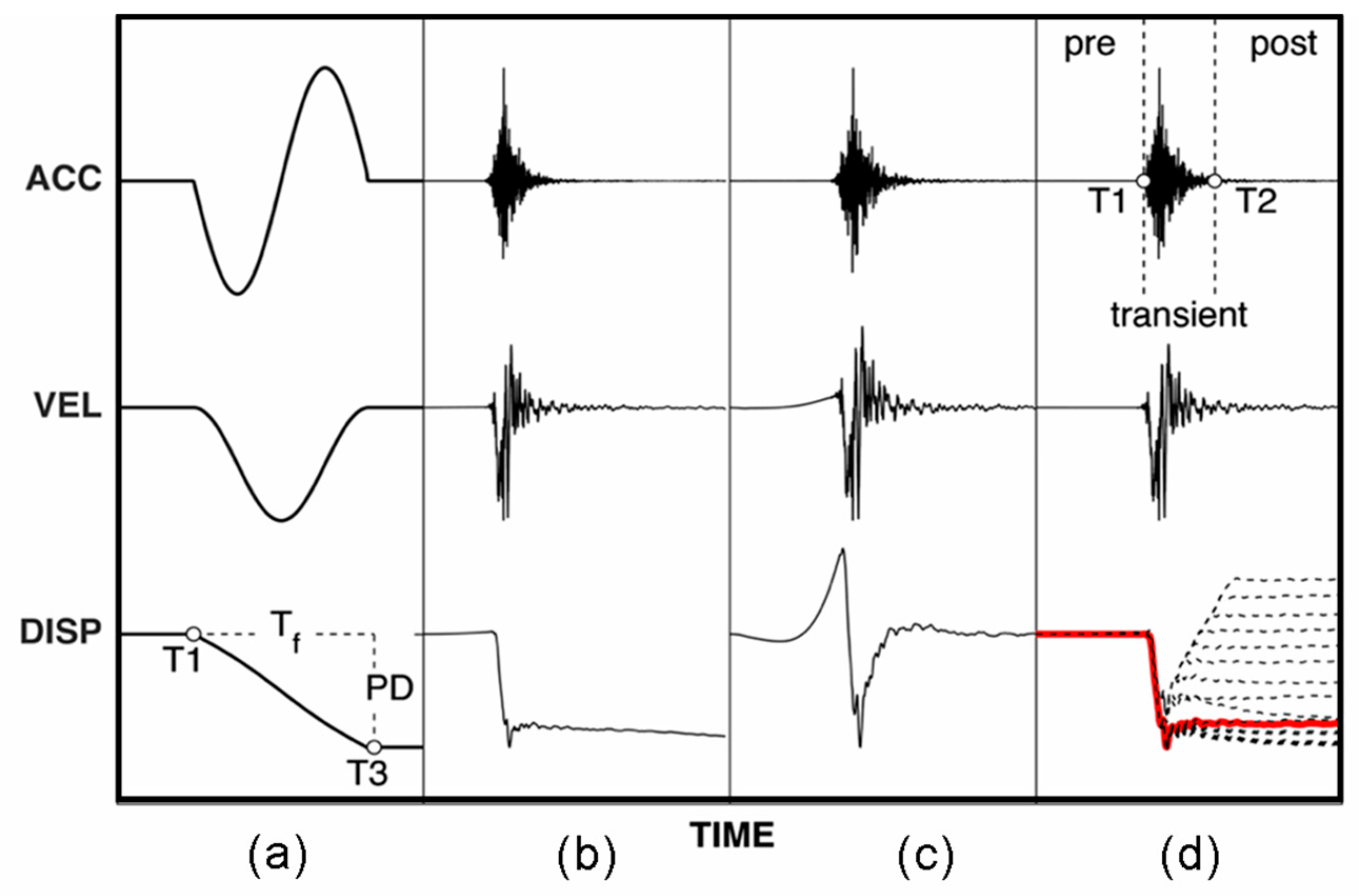
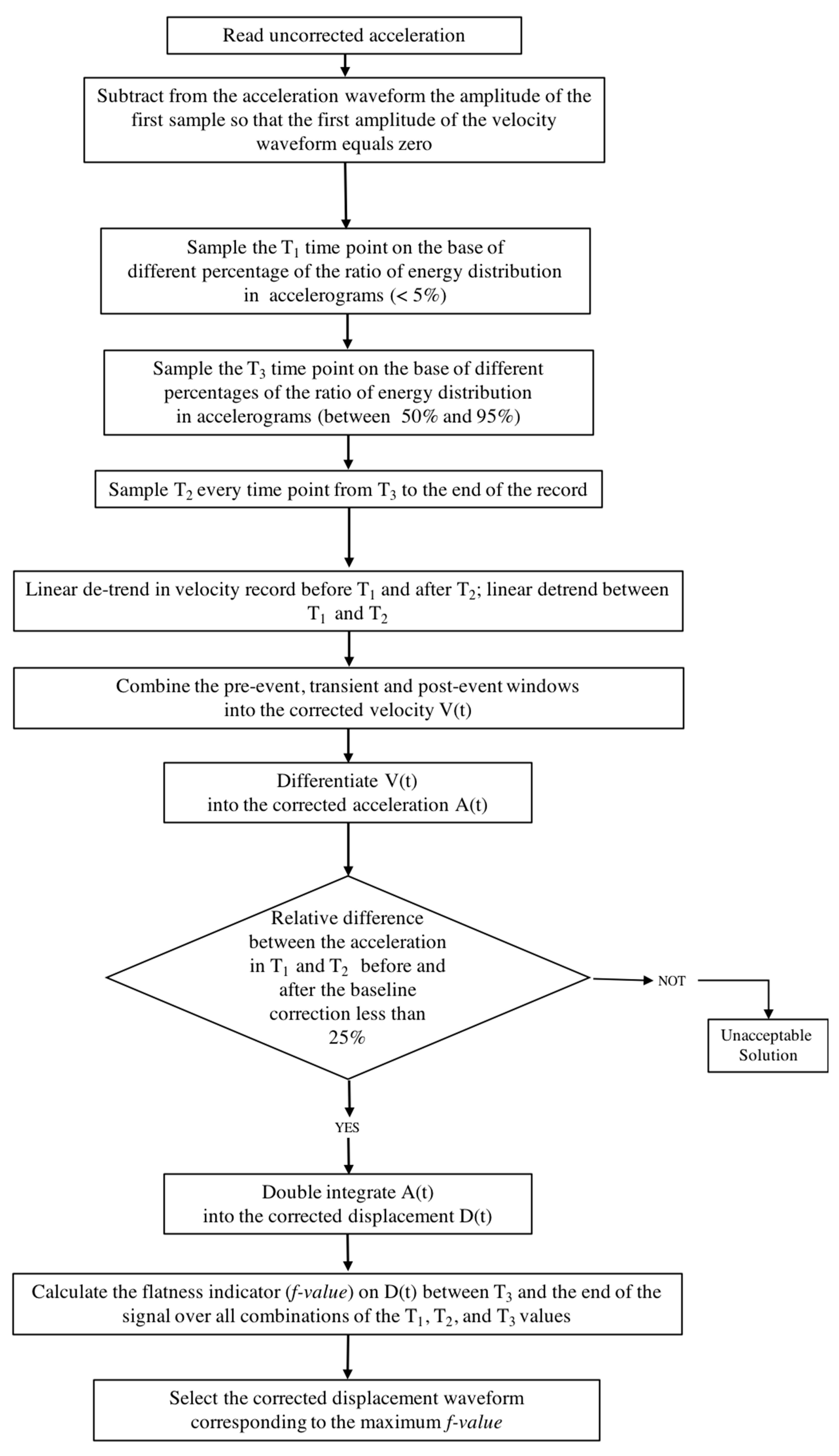
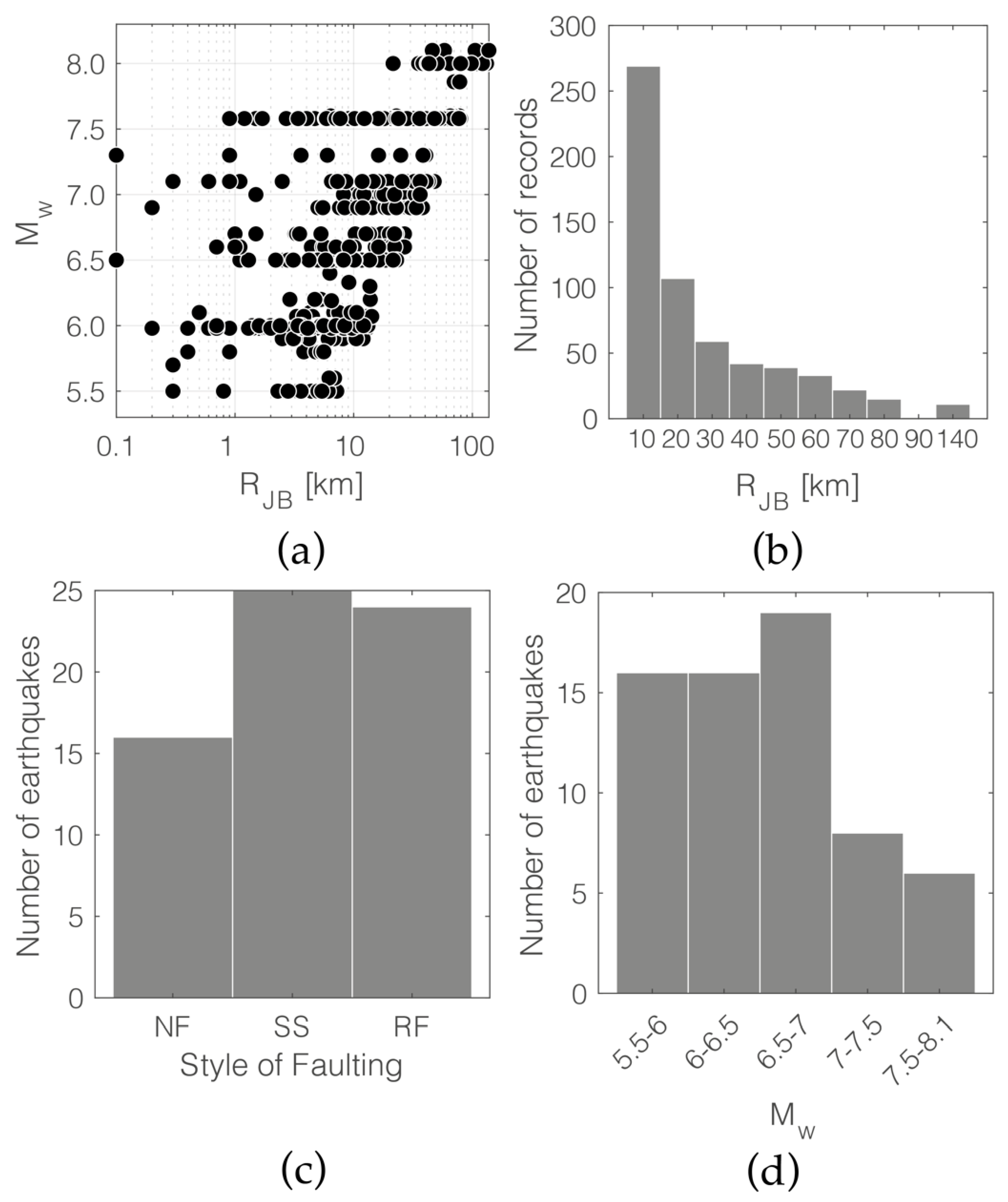
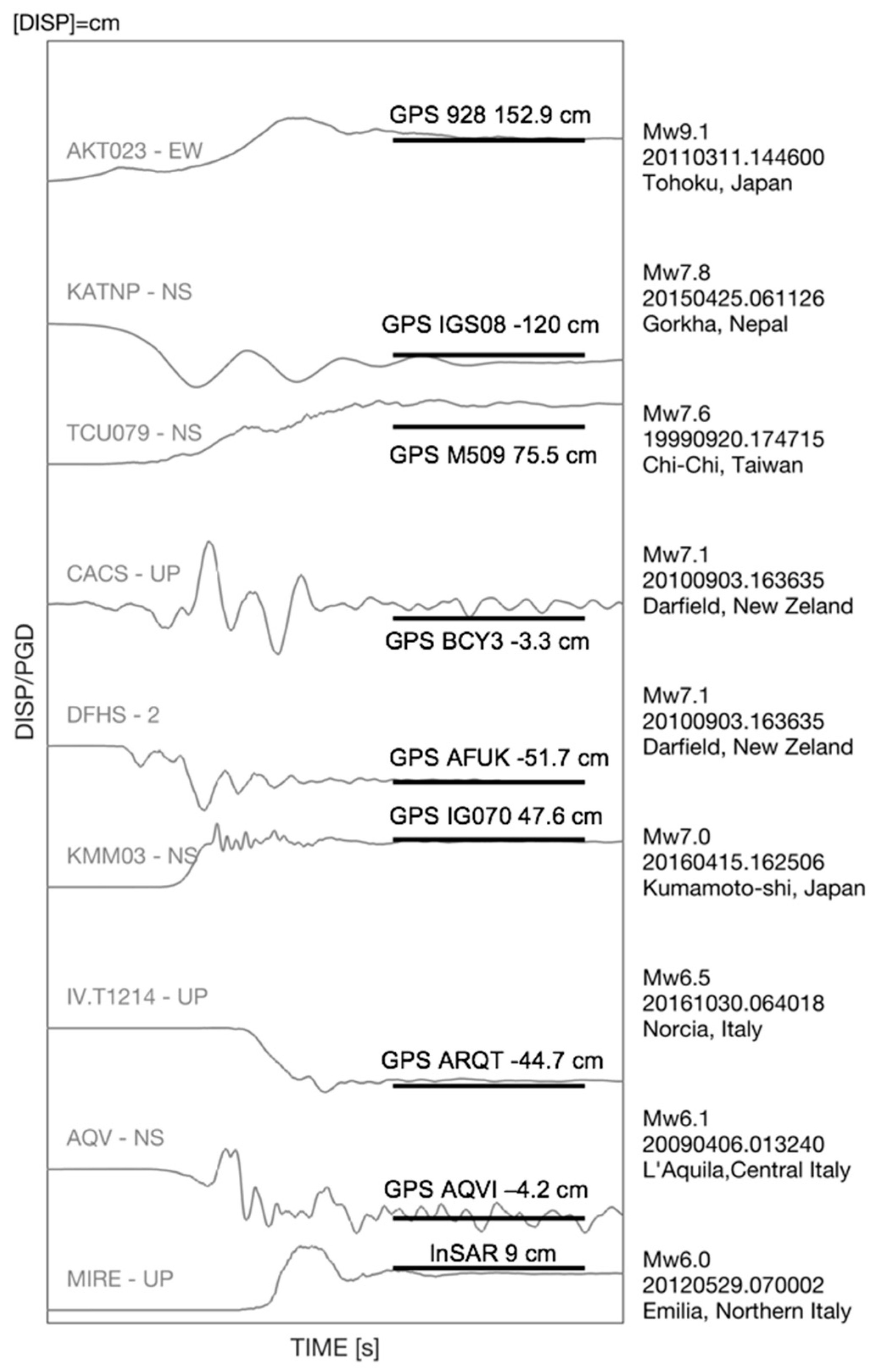
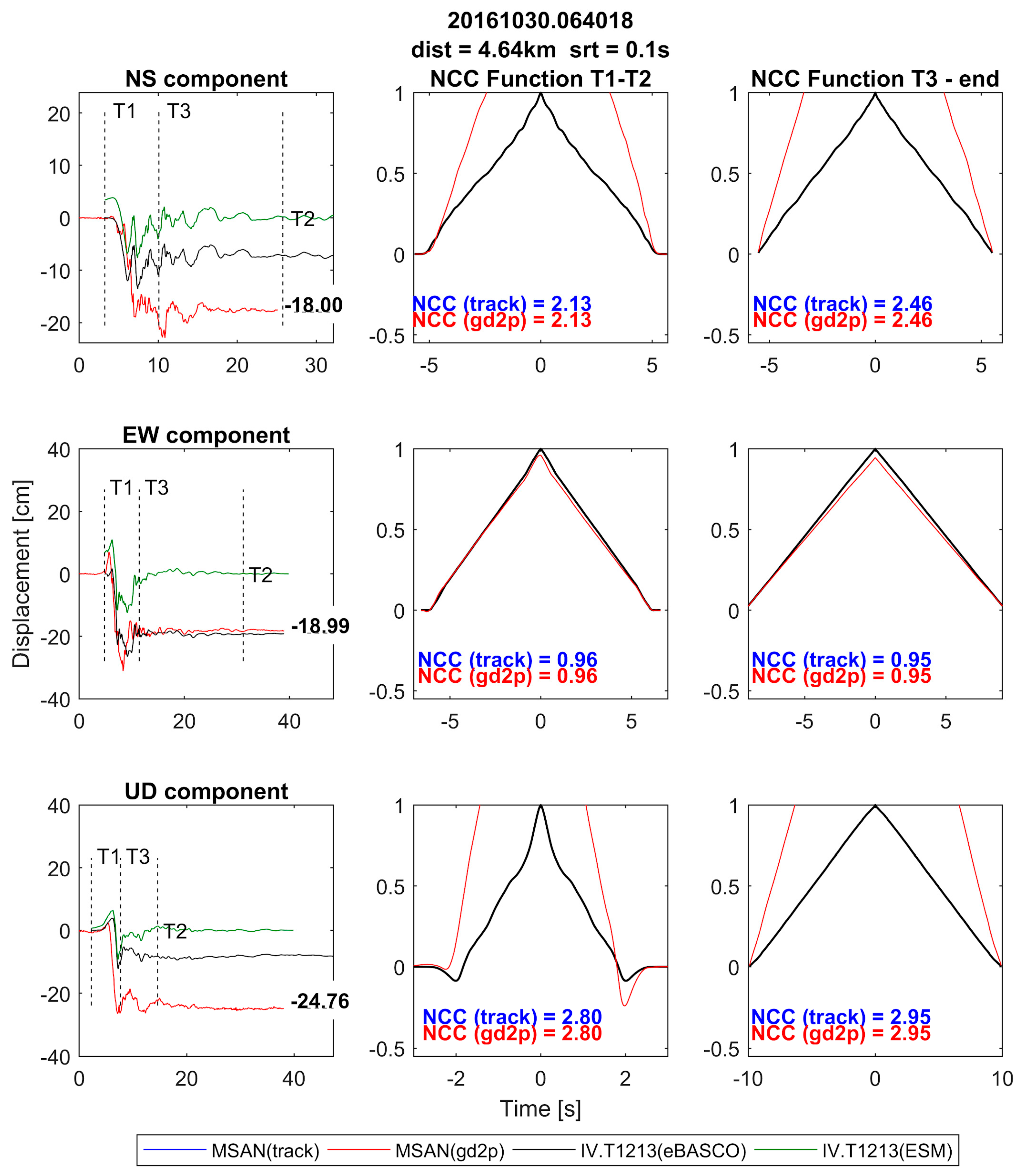
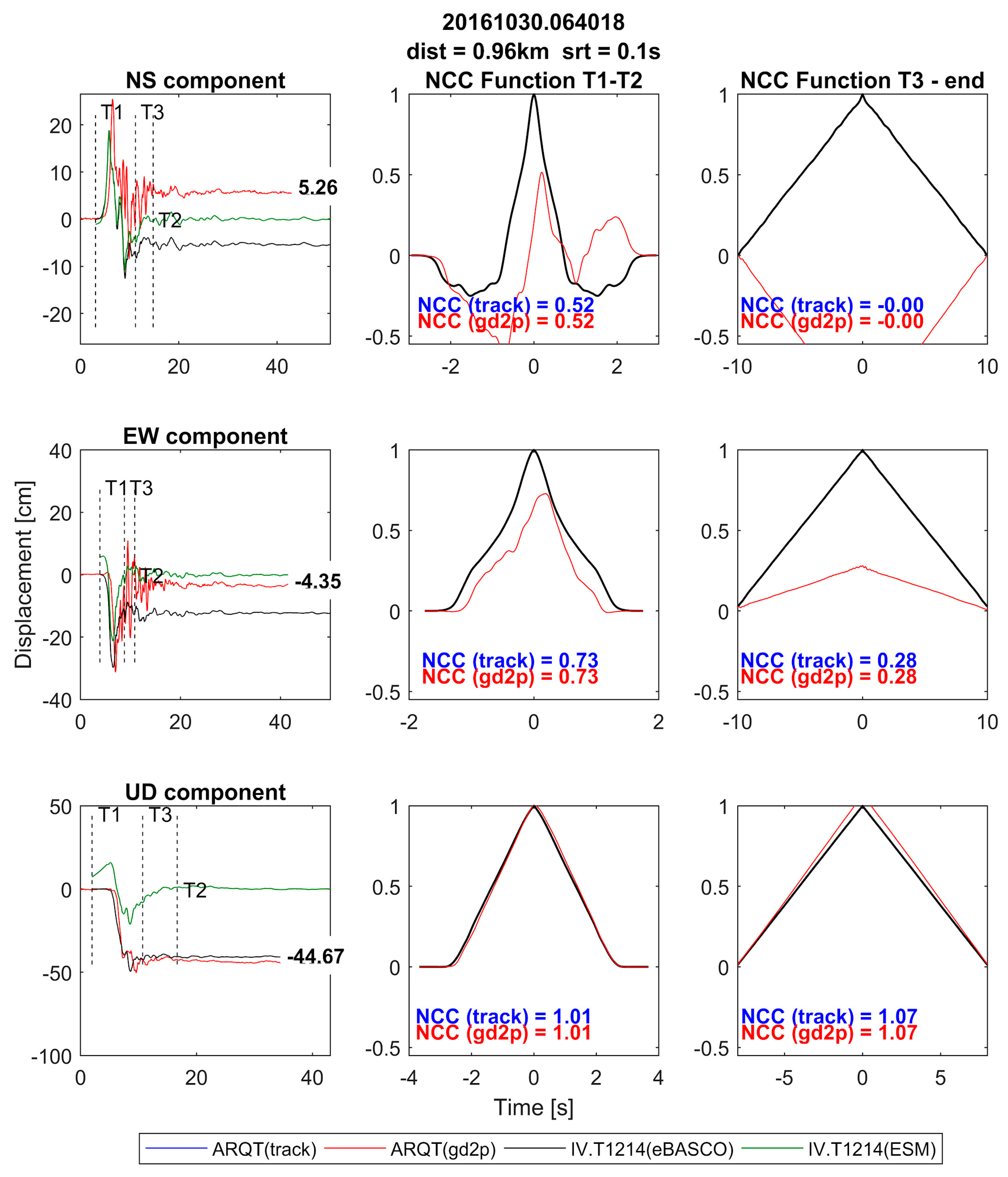
We present an upgraded processing scheme (eBASCO, extended BASeline COrrection) to remove the baseline of strong-motion records by means of a piece-wise linear detrending of the velocity time history. Differently from standard processing schemes, eBASCO does not apply any filtering to remove the low-frequency content of the signal. This approach preserves both the long-period near-source ground-motion, featured by one-side pulse in the velocity trace, and the offset at the end of the displacement trace (fling-step). The software is suitable for a rapid identification of fling-containing waveforms within large strong-motion datasets. The ground displacement of about 600 three-component near-source waveforms has been recovered with the aim of (1) extensively testing the eBASCO capability to capture the long-period content of near-source records, and (2) compiling a qualified strong-motion flat-file useful to calibrate attenuation models for peak ground displacement (PGD), 5% damped displacement response spectra (DS), and permanent displacement amplitude (PD). The results provide a more accurate estimate of ground motions that can be adopted for different engineering purposes, such as performance-based seismic design of structures.
Keywords: strong-motion; near-source; earthquake waveforms; permanent displacement; fling-step; waveforms processing; strong-motion database strong-motion; near-source; earthquake waveforms; permanent displacement; fling-step; waveforms processing; strong-motion database