Social Interactions in Zoo-Housed Elephants: Factors Affecting Social Relationships


School of Animal, Rural and Environmental Sciences, Nottingham Trent University, Brackenhurst Campus, Southwell, Nottinghamshire NG25 0QF, UK
*
Author to whom correspondence should be addressed.
Animals 2019, 9(10), 747; https://doi.org/10.3390/ani9100747
Submission received: 12 September 2019
/
Revised: 25 September 2019
/
Accepted: 26 September 2019
/
Published: 29 September 2019
(This article belongs to the Special Issue Captive Elephant Welfare and Behaviour)
Simple Summary
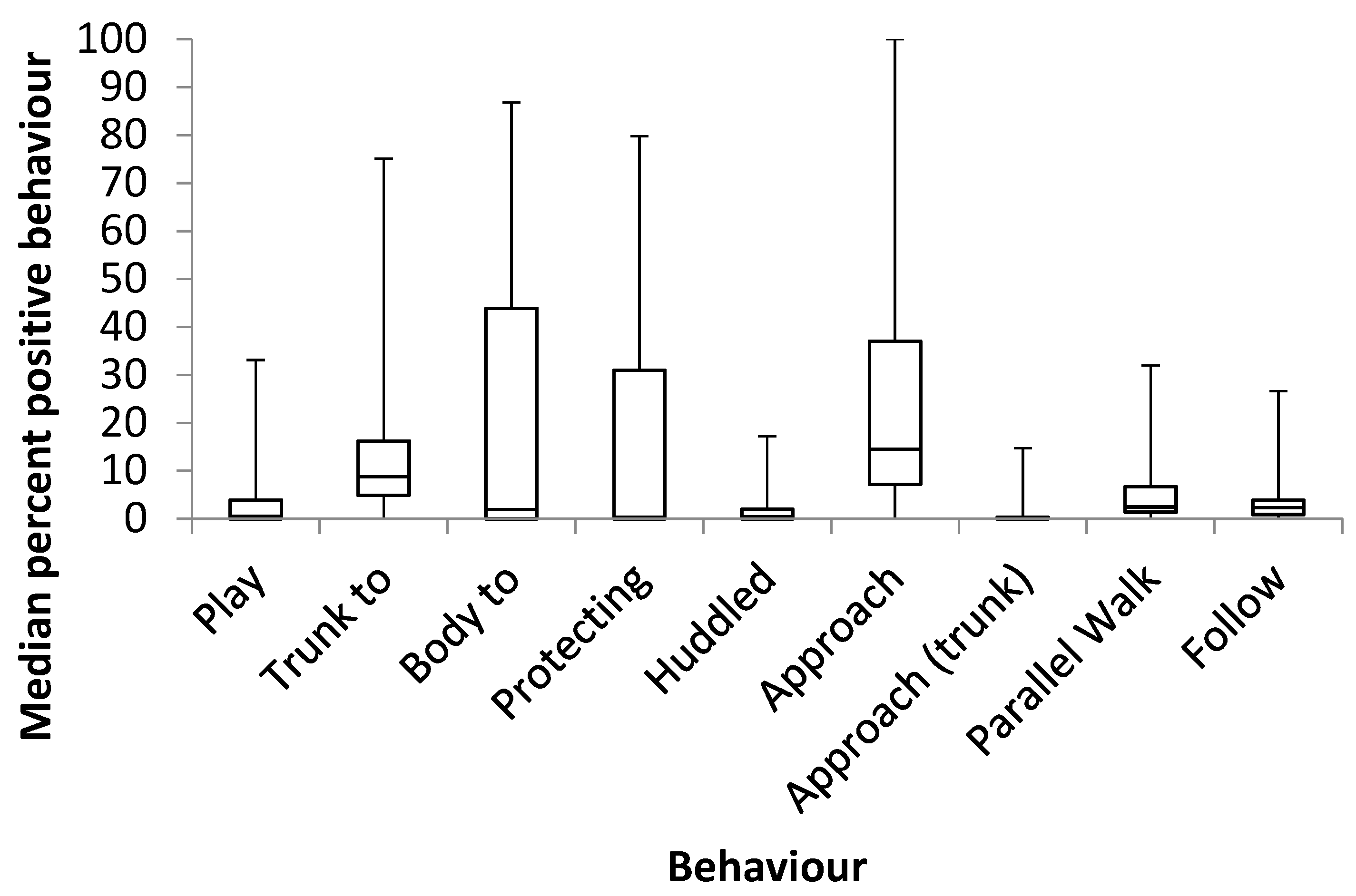
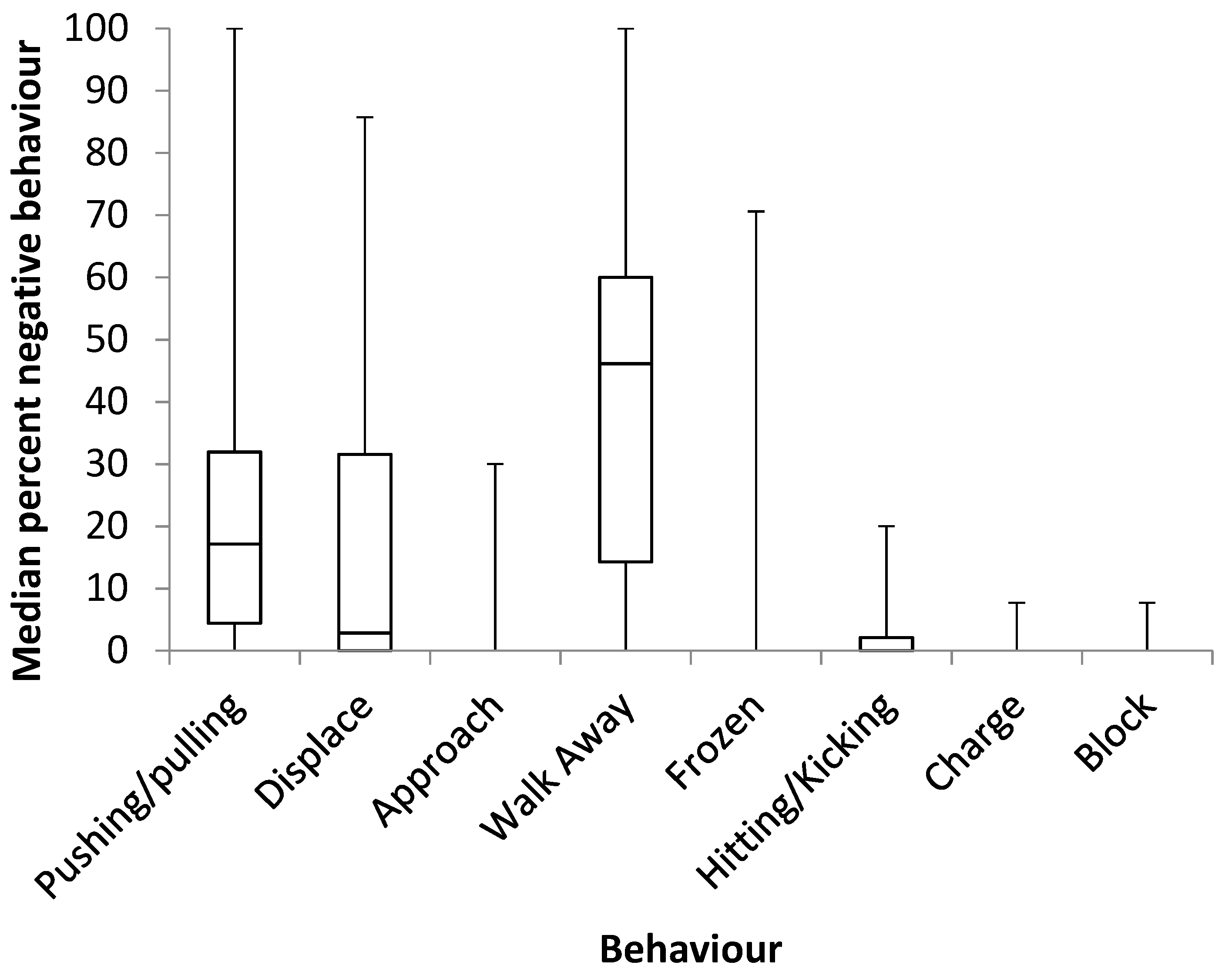
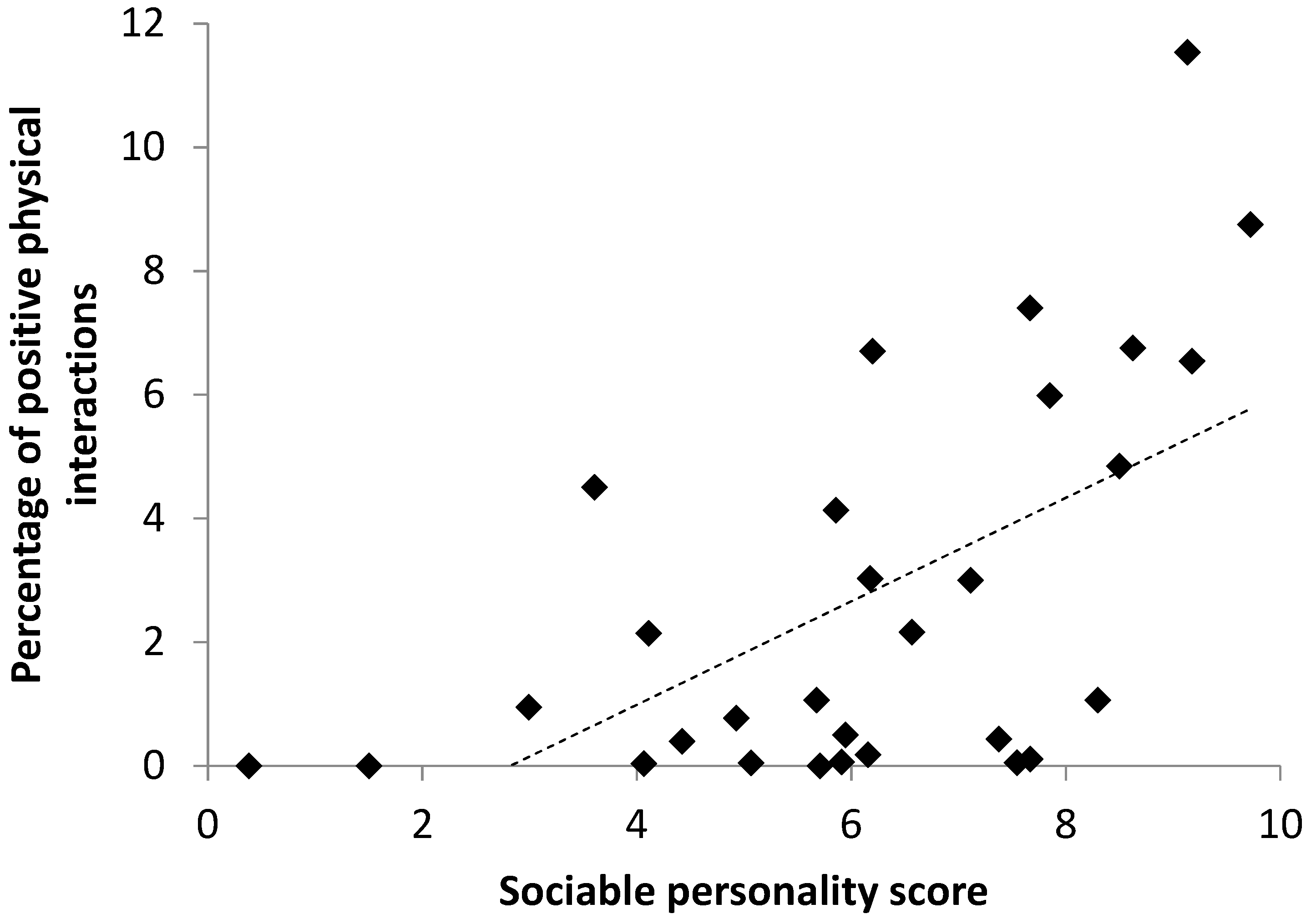
In the wild, elephants live in large, complex social groups. Herds consist of a mixed structure of related females and their calves. One area of concern regarding the maintenance of zoo elephants has been the inability to provide them with social groupings that reflect wild group structure, and whether this impacts on their welfare. Here, we investigated whether a number of factors at the individual (e.g., personality, age or relatedness to others) and zoo (e.g., herd size, presence of calves in the group) level affected the frequency of social interactions in zoo elephant herds. Interactions were defined as positive or negative and then subdivided into physical and non-physical interactions. Social interactions were found to be related to age, personality, presence of calves in the herd, relatedness to other elephants in the herd and species (African or Asian). Calves engaged in the greatest amount of positive interactions but no extreme aggression was observed between any individuals, which was considered indicative of good social management. Increasing understanding about social structures that are affecting elephant relationships enables targeted management plans to be created, in order to provide elephants with the most appropriate social environments. These findings support the recommendations that elephants should be housed in related herds with multiple ages wherever possible, but they also highlight that unrelated elephants can still form compatible and successful social groups.
Abstract
Elephants have complex social systems that are predominantly driven by ecological factors in situ. Within zoos, elephants are held in relatively static social groups and the factors observed driving social relationships in the wild are largely absent. Little research has investigated the effect of social group factors in zoos on elephant social interactions. The aim of this research was to establish whether there is a relationship between social group factors and social behaviour, in order to identify factors that make elephant herds more or less likely to be compatible. Results will facilitate recommendations for optimum social groupings for zoo elephants. Behavioural data quantifying social interactions were collected between January 2016 and February 2017 at seven UK and Irish zoos and safari parks from 10 African and 22 Asian elephants. Social interactions were split into four categories: positive physical, positive non-physical, negative physical and negative non-physical. Social interactions were related to age (positive physical higher and negative non-physical lower in calves than adults), personality (elephants with higher sociability scores engaged in more positive interactions and less negative interactions), presence of calves in the herd (herds with calves had more positive non-physical), relatedness to other elephants in the herd (positive non-physical were higher when relatives were in the group and negative non-physical were higher between unrelated elephants) and species (Asian elephants engaged in more positive non-physical than African elephants). A greater understanding of factors that may contribute to the success of zoo-elephant social groups is important for individual and herd welfare as it will enable evidence-based decisions which have minimal impact on social structures to be executed. This knowledge will enable proactive management approaches to be undertaken and will thus be paramount in ensuring optimal welfare for elephant herds moving forwards.
Keywords:
zoo elephants; social behaviour; welfare; social relationships