Cationic Liposome-Fused Endolysin Lys40 Overcomes Outer Membrane Barriers and Enhances Survival in Salmonella-Infected Chicks
Simple Summary
Abstract
1. Introduction
2. Results
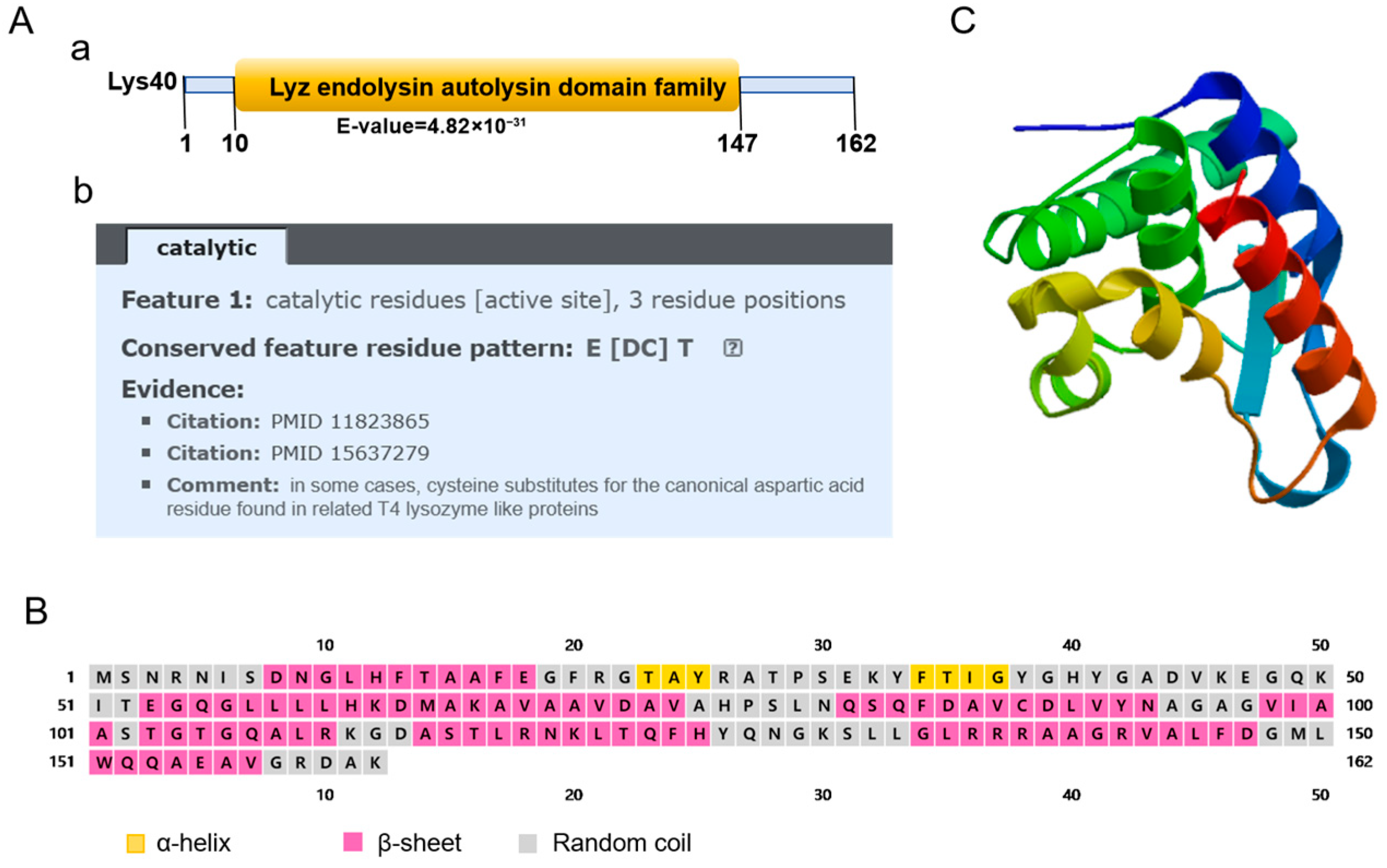
2.1. Amino Acid Sequence Analysis of Lys40
2.2. Construction and Expression of the Lys40 Expression System
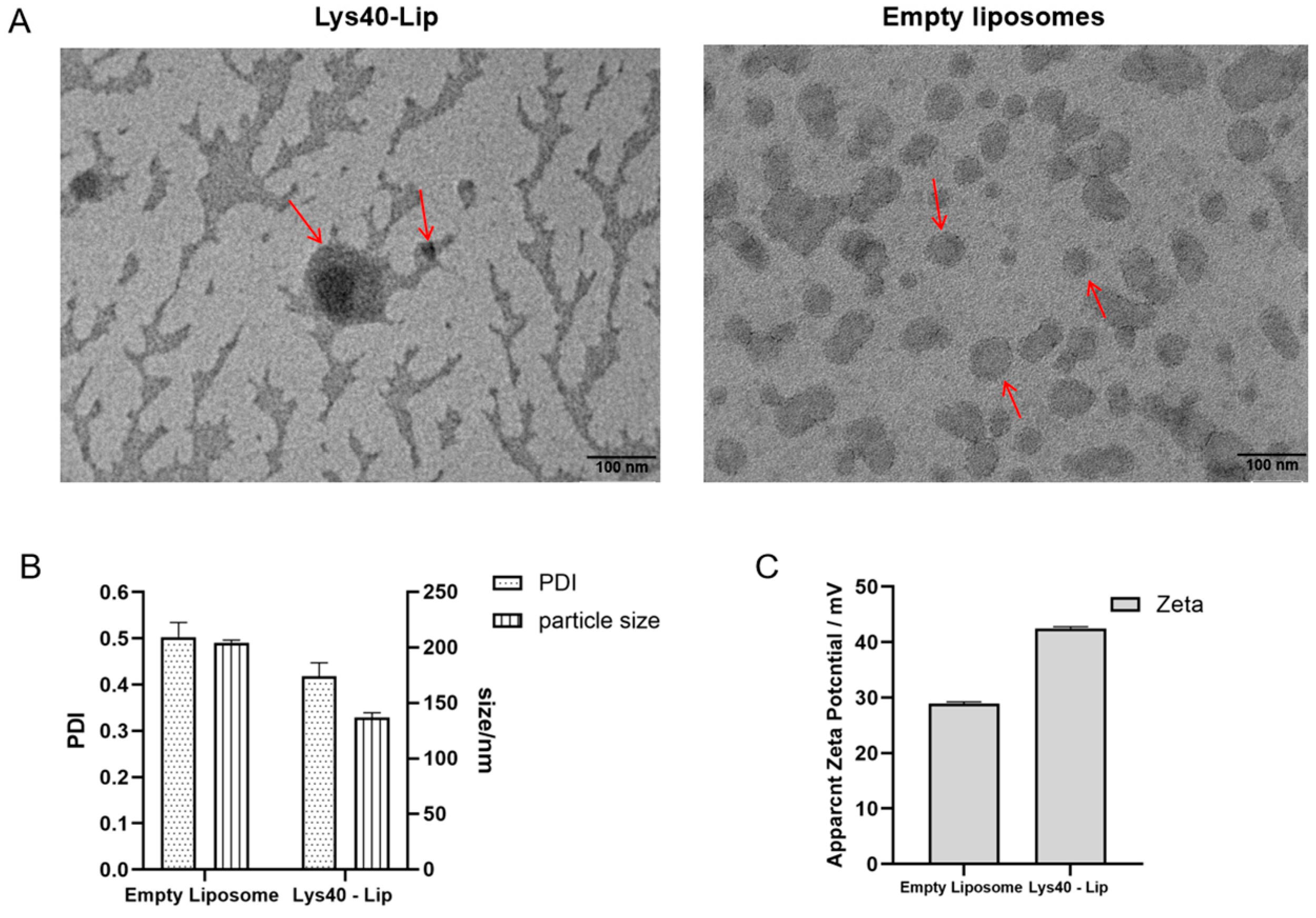
2.3. Morphological Characterization and Size Distribution of Lys40-Lip
2.4. Encapsulation Efficiency Determination of Lys40-Lip
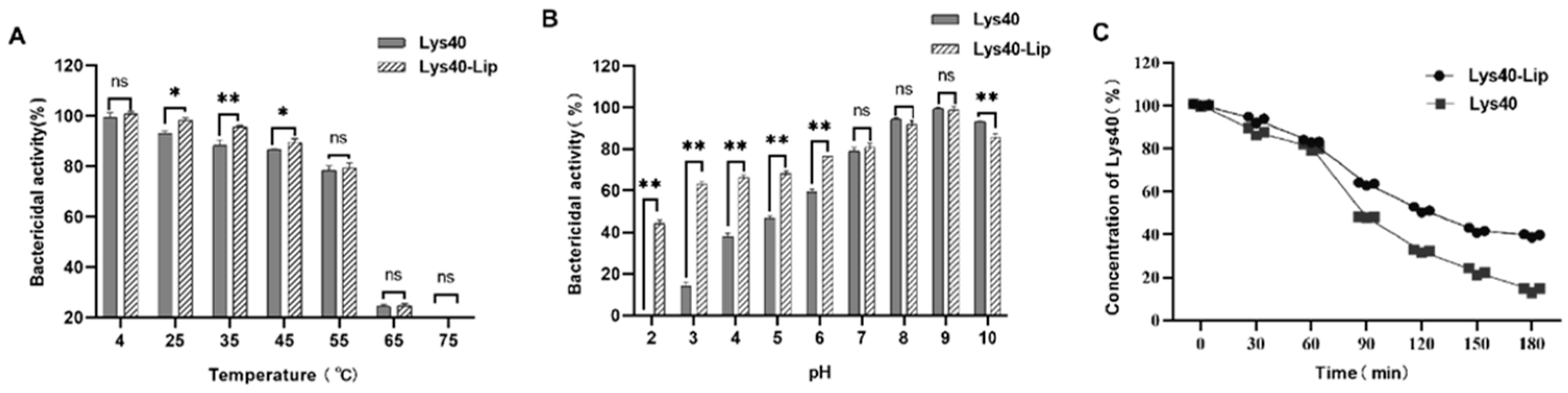
2.5. Stress Resistance of Lys40-Lip Under Varied Temperature, pH, and Simulated Gastrointestinal Conditions
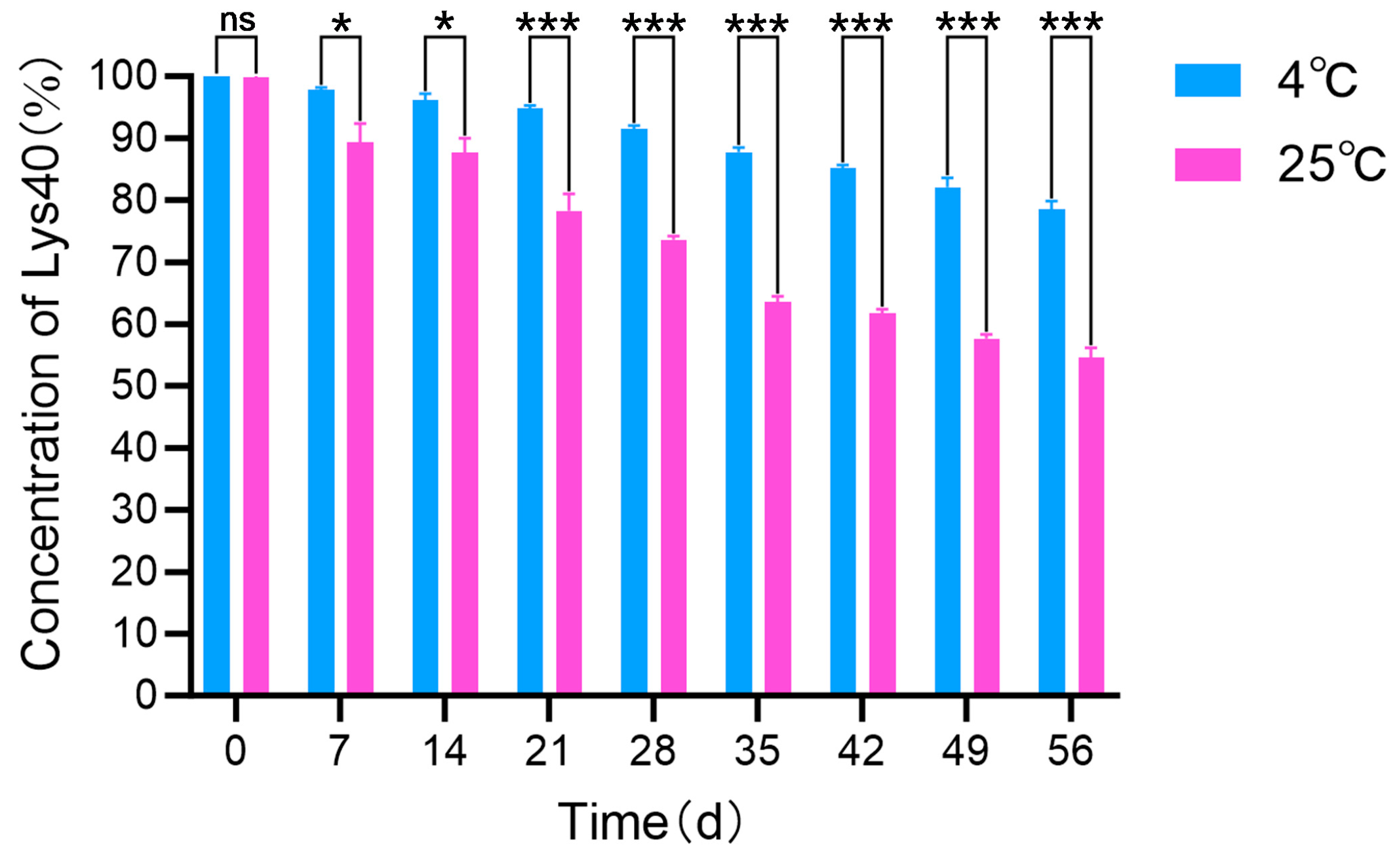
2.6. Storage Stability Evaluation of Lys40-Lip
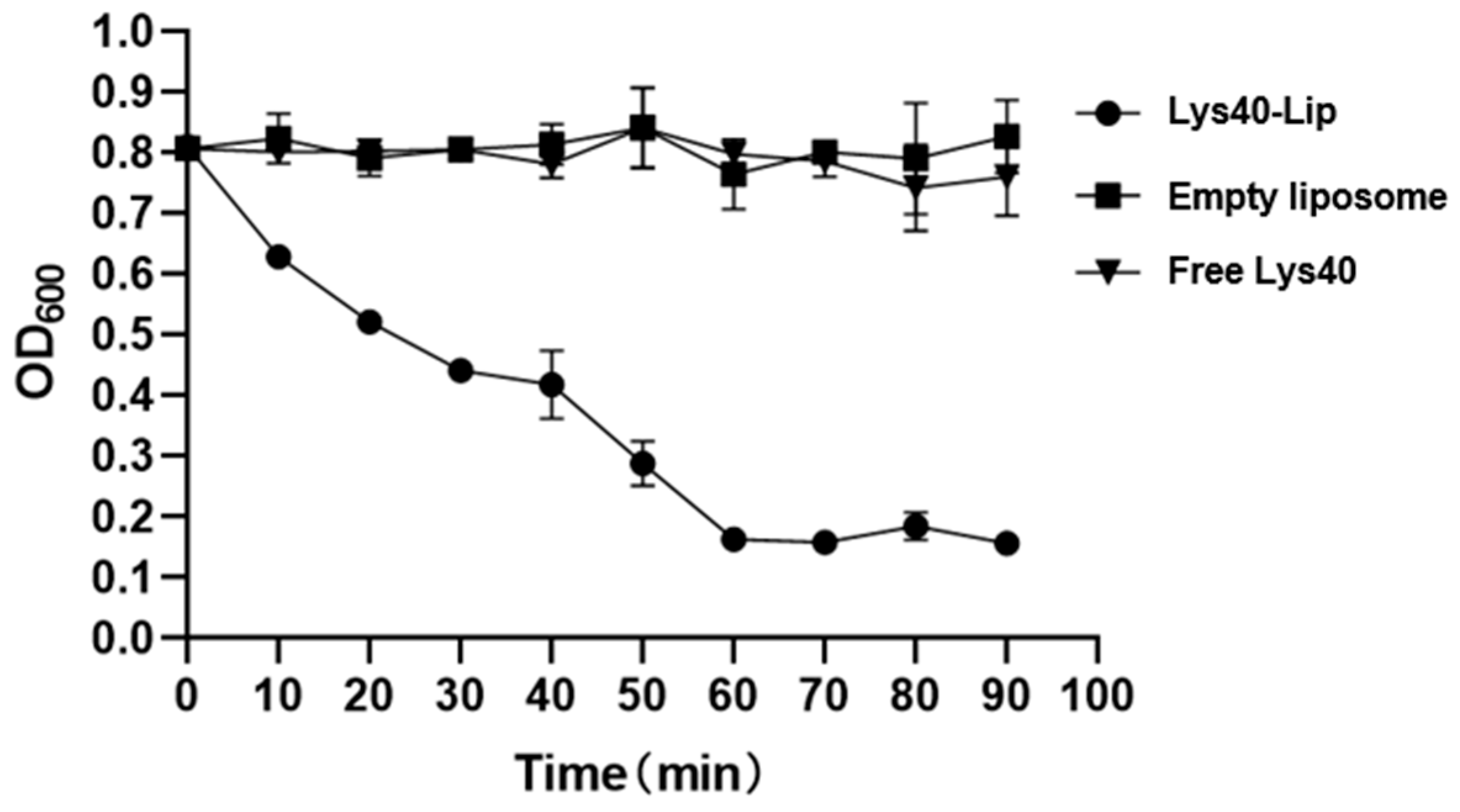
2.7. Antibacterial Activity of Lys40-Lip Against Salmonella enteritidis S4
2.8. Lytic Spectrum of Lys40-Lip
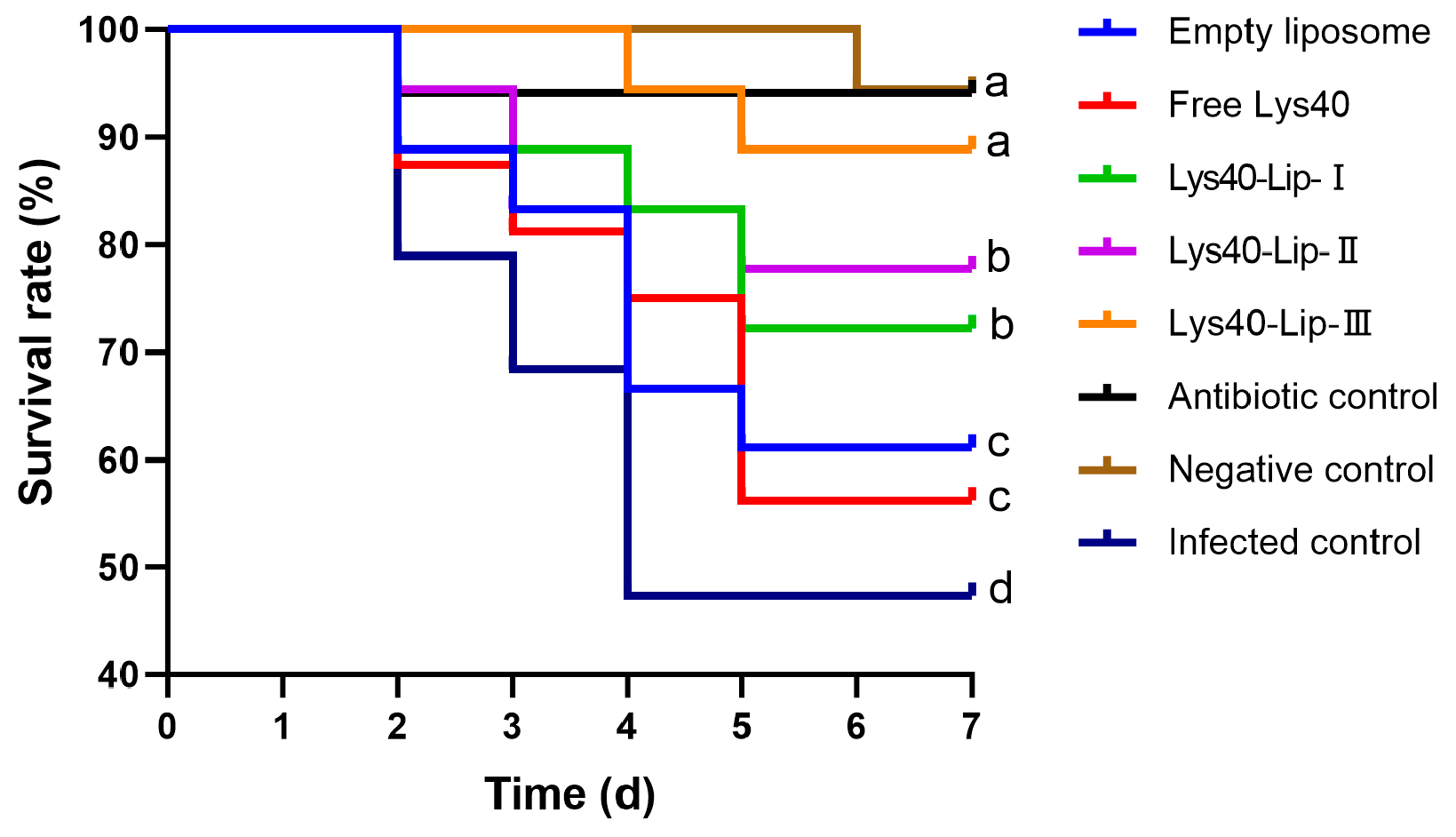
2.9. Effect of Lys40-Lip on Survival Rate in Salmonella enteritidis S4-Infected Chick Model
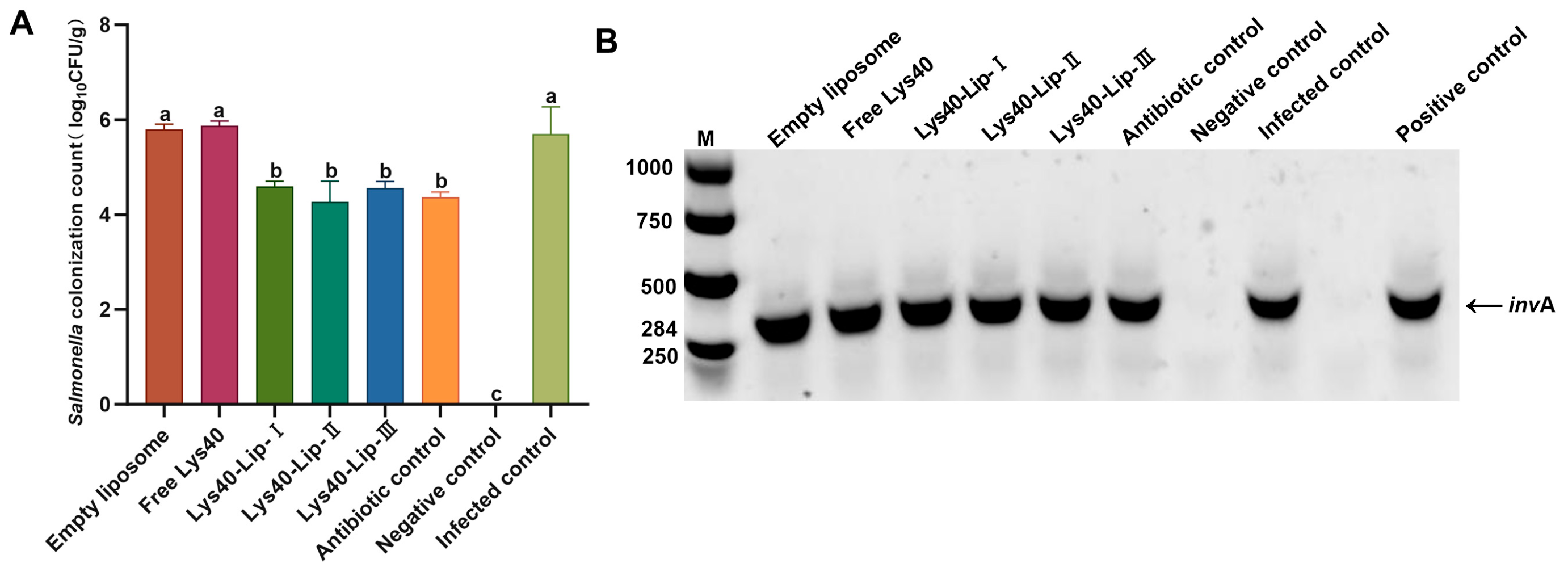
2.10. Effect of Lys40-Lip on Ileal Salmonella enteritidis S4 Load in Infected Chicks
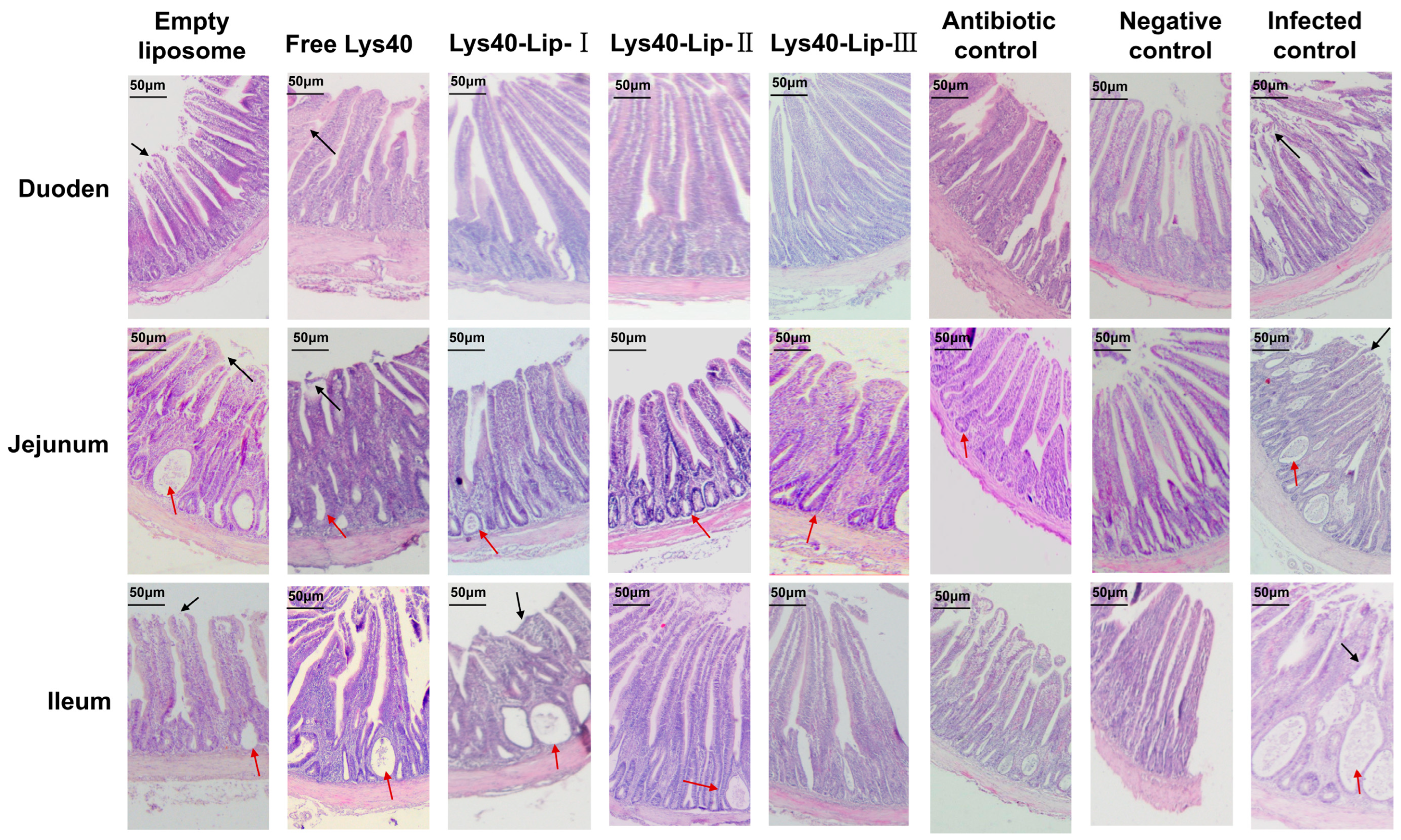
2.11. Protective Effects of Lys40-Lip on Intestinal Structure in Salmonella enteritidis S4-Infected Chicks
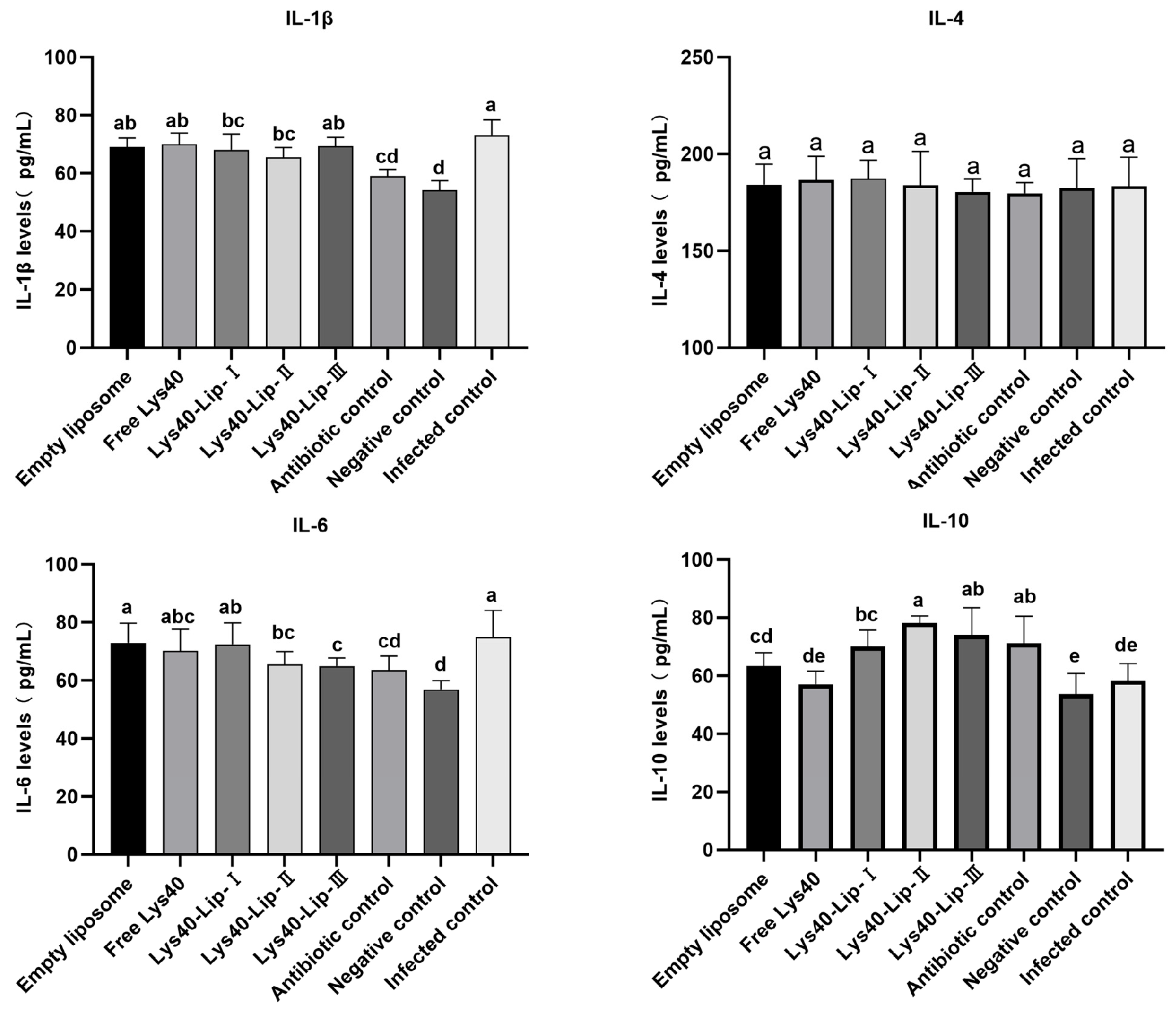
2.12. Effect of Lys40-Lip on Serum Inflammatory Cytokine Levels in Chicks Infected with Salmonella enteritidis S4
3. Discussion
4. Materials and Methods
4.1. Bacterial Strains, Plasmids, and Growth Conditions
4.2. Lys40 Amino Acid Sequence Analysis
4.3. Construction of the Lys40 Expression System and Purification
4.4. Preparation of Lys40-Lip and Determination of Encapsulation Efficiency
4.5. Encapsulation Efficiency Determination of Lys40-Lip
4.6. Morphological Observation and Particle Size Determination of Lys40-Lip
4.7. Stress Resistance of Lys40-Lip Under Varied Temperature, pH, and Simulated Gastrointestinal Conditions
4.8. Storage Stability Evaluation of Lys40-Lip
4.9. Antibacterial Activity of Lys40-Lip Against Salmonella enteritidis S4
4.10. Determination of Lytic Spectrum of Lys40-Lip
4.11. Therapeutic Evaluation of Lys40-Lip in a Salmonella enteritidis S4-Infected Chick Model
4.12. Impact of Lys40-Lip on Chick Survival Rate
4.13. Effect of Lys40-Lip on Ileal Bacterial Load
4.14. Effect of Lys40-Lip on Intestinal Histopathology
4.15. Lys40-Lip Effects of Inflammatory Factors in Serum on Chicks
4.16. Statistical Analysis
5. Conclusions
Supplementary Materials
Author Contributions
Funding
Institutional Review Board Statement
Informed Consent Statement
Data Availability Statement
Acknowledgments
Conflicts of Interest
References
- Sarıçam İnce, S.; Akan, M. Molecular characterization of virulence genes in broiler chicken originated Salmonella enteritidis and Salmonella typhimurium. Ank. Üniversitesi Vet. Fakültesi Derg. 2024, 71, 165–170. [Google Scholar] [CrossRef]
- Zhou, W.Y.; Wen, H.; Li, Y.J.; Gao, L.; Rao, S.Q.; Yang, Z.Q.; Zhu, G.Q. Acquisition, loss, and replication of functional modules promote the genetic diversity of Salmonella bacteriophages. Microbiol. Res. 2023, 275, 127461. [Google Scholar] [CrossRef] [PubMed]
- EFSA. Salmonella Is a Bacterium That Can Cause an Illness Called Salmonellosis in Humans. This Is a Zoonoticdisease, Which Means It Can Be Transmitted Directly or Indirectly Between Animals and Humans. 2025. Available online: https://www.efsa.europa.eu/en/topics/topic/Salmonella?page=3 (accessed on 16 May 2025).
- WHO. WHO Bacterial Priority Pathogens List, 2024: Bacterial Pathogens of Public Health Importance to Guide Research, Development and Strategies to Prevent and Control Antimicrobial Resistance. 2024. Available online: https://www.who.int/publications/i/item/9789240093461 (accessed on 16 May 2025).
- Haddad Kashani, H.; Schmelcher, M.; Sabzalipoor, H.; Seyed Hosseini, E.; Moniri, R. Recombinant Endolysins as Potential Therapeutics against Antibiotic-Resistant Staphylococcus aureus: Current Status of Research and Novel Delivery Strategies. Clin. Microbiol. Rev. 2018, 31, e00071-17. [Google Scholar] [CrossRef]
- Loessner, M.J. Bacteriophage endolysins–current state of research and applications. Curr. Opin. Microbiol. 2005, 8, 480–487. [Google Scholar] [CrossRef] [PubMed]
- Khan, F.M.; Chen, J.H.; Zhang, R.; Liu, B. A comprehensive review of the applications of bacteriophage-derived endolysins for foodborne bacterial pathogens and food safety: Recent advances, challenges, and future perspective. Front. Microbiol. 2023, 14, 1259210. [Google Scholar] [CrossRef] [PubMed]
- Briers, Y.; Walmagh, M.; Van Puyenbroeck, V.; Cornelissen, A.; Cenens, W.; Aertsen, A.; Oliveira, H.; Azeredo, J.; Verween, G.; Pirnay, J.P.; et al. Engineered endolysin-based “Artilysins” to combat multidrug-resistant gram-negative pathogens. mBio 2014, 5, e01379-14. [Google Scholar] [CrossRef]
- Kim, J.; Son, S.M.; Ahn, E.; Park, H.; Ryu, S. Surface charge of the C-terminal helix is crucial for antibacterial activity of endolysin against Gram-negative bacteria. J. Biomed. Sci. 2025, 32, 38. [Google Scholar] [CrossRef]
- Sun, J.; Rutherford, S.T.; Silhavy, T.J.; Huang, K.C. Physical properties of the bacterial outer membrane. Nat. Rev. Microbiol. 2022, 20, 236–248. [Google Scholar] [CrossRef]
- Wojciechowska, M. Endolysins and membrane-active peptides: Innovative engineering strategies against gram-negative bacteria. Front. Microbiol. 2025, 16, 1603380. [Google Scholar] [CrossRef]
- Baliga, P.; Goolappa, P.T.; Shekar, M.; Kallappa, G.S. Cloning, Characterization, and Antibacterial Properties of Endolysin LysE Against Planktonic Cells and Biofilms of Aeromonas hydrophila. Probiotics Antimicrob. Proteins 2023, 15, 646–654. [Google Scholar] [CrossRef]
- Antonova, N.P.; Vasina, D.V.; Rubalsky, E.O.; Fursov, M.V.; Savinova, A.S.; Grigoriev, I.V.; Usachev, E.V.; Shevlyagina, N.V.; Zhukhovitsky, V.G.; Balabanyan, V.U.; et al. Modulation of Endolysin LysECD7 Bactericidal Activity by Different Peptide Tag Fusion. Biomolecules 2020, 10, 440. [Google Scholar] [CrossRef]
- Lai, W.C.B.; Chen, X.; Ho, M.K.Y.; Xia, J.; Leung, S.S.Y. Bacteriophage-derived endolysins to target gram-negative bacteria. Int. J. Pharm. 2020, 589, 119833. [Google Scholar] [CrossRef]
- Oechslin, F.; Zhu, X.; Morency, C.; Somerville, V.; Shi, R.; Moineau, S. Fermentation Practices Select for Thermostable Endolysins in Phages. Mol. Biol. Evol. 2024, 41, msae055. [Google Scholar] [CrossRef]
- van Gent, M.E.; Ali, M.; Nibbering, P.H.; Kłodzińska, S.N. Current Advances in Lipid and Polymeric Antimicrobial Peptide Delivery Systems and Coatings for the Prevention and Treatment of Bacterial Infections. Pharmaceutics 2021, 13, 1840. [Google Scholar] [CrossRef]
- Mankan, E.; Karakas, C.Y.; Saroglu, O.; Mzoughi, M.; Sagdic, O.; Karadag, A. Food-Grade Liposome-Loaded Delivery Systems: Current Trends and Future Perspectives. Foods 2025, 14, 2978. [Google Scholar] [CrossRef]
- Luo, Y.; Mahillon, J.; Sun, L.; You, Z.; Hu, X. Isolation, characterization and liposome-loaded encapsulation of a novel virulent Salmonella phage vB-SeS-01. Front. Microbiol. 2025, 16, 1494647. [Google Scholar] [CrossRef] [PubMed]
- Schmelcher, M.; Donovan, D.M.; Loessner, M.J. Bacteriophage endolysins as novel antimicrobials. Future Microbiol. 2012, 7, 1147–1171. [Google Scholar] [CrossRef] [PubMed]
- Premetis, G.E.; Stathi, A.; Papageorgiou, A.C.; Labrou, N.E. Characterization of a glycoside hydrolase endolysin from Acinetobacter baumannii phage AbTZA1 with high antibacterial potency and novel structural features. FEBS J. 2023, 290, 2146–2164. [Google Scholar] [CrossRef] [PubMed]
- Almeida, B.; Nag, O.K.; Rogers, K.E.; Delehanty, J.B. Recent Progress in Bioconjugation Strategies for Liposome-Mediated Drug Delivery. Molecules 2020, 25, 5672. [Google Scholar] [CrossRef]
- Chen, X.; Liu, L.; Jiang, C. Charge-reversal nanoparticles: Novel targeted drug delivery carriers. Acta Pharm. Sin. B 2016, 6, 261–267. [Google Scholar] [CrossRef]
- Scheeder, A.; Brockhoff, M.; Ward, E.N.; Kaminski Schierle, G.S.; Mela, I.; Kaminski, C.F. Molecular Mechanisms of Cationic Fusogenic Liposome Interactions with Bacterial Envelopes. J. Am. Chem. Soc. 2023, 145, 28240–28250. [Google Scholar] [CrossRef] [PubMed]
- Sikorska, E.; Dawgul, M.; Greber, K.; Iłowska, E.; Pogorzelska, A.; Kamysz, W. Self-assembly and interactions of short antimicrobial cationic lipopeptides with membrane lipids: ITC, FTIR and molecular dynamics studies. Biochim. Biophys. Acta 2014, 1838, 2625–2634. [Google Scholar] [CrossRef] [PubMed]
- Luna, E.; Kim, S.; Gao, Y.; Widmalm, G.; Im, W. Influences of Vibrio cholerae Lipid A Types on LPS Bilayer Properties. J. Phys. Chem. B 2021, 125, 2105–2112. [Google Scholar] [CrossRef]
- Pokorny, A.; Birkbeck, T.H.; Almeida, P.F. Mechanism and kinetics of delta-lysin interaction with phospholipid vesicles. Biochemistry 2002, 41, 11044–11056. [Google Scholar] [CrossRef]
- Grotz, K.K.; Cruz-León, S.; Schwierz, N. Optimized Magnesium Force Field Parameters for Biomolecular Simulations with Accurate Solvation, Ion-Binding, and Water-Exchange Properties. J. Chem. Theory Comput. 2021, 17, 2530–2540. [Google Scholar] [CrossRef]
- Watt, S.R.; Clarke, A.J. Role of autolysins in the EDTA-induced lysis of Pseudomonas aeruginosa. FEMS Microbiol. Lett. 1994, 124, 113–119. [Google Scholar] [CrossRef]
- Mikoulinskaia, G.V.; Odinokova, I.V.; Zimin, A.A.; Lysanskaya, V.Y.; Feofanov, S.A.; Stepnaya, O.A. Identification and characterization of the metal ion-dependent L-alanoyl-D-glutamate peptidase encoded by bacteriophage T5. FEBS J. 2009, 276, 7329–7342. [Google Scholar] [CrossRef]
- Gonçalves, T.; Marques, A.T.; Manageiro, V.; Tanoeiro, L.; Vital, J.S.; Duarte, A.; Vítor, J.M.B.; Caniça, M.; Gaspar, M.M.; Vale, F.F. Antimicrobial activity of prophage endolysins against critical Enterobacteriaceae antibiotic-resistant bacteria. Int. J. Pharm. 2024, 651, 123758. [Google Scholar] [CrossRef]
- Morais, D.; Tanoeiro, L.; Marques, A.T.; Gonçalves, T.; Duarte, A.; Matos, A.P.A.; Vital, J.S.; Cruz, M.E.M.; Carvalheiro, M.C.; Anes, E.; et al. Liposomal Delivery of Newly Identified Prophage Lysins in a Pseudomonas aeruginosa Model. Int. J. Mol. Sci. 2022, 23, 143. [Google Scholar] [CrossRef] [PubMed]
- Bai, J.; Yang, E.; Chang, P.S.; Ryu, S. Preparation and characterization of endolysin-containing liposomes and evaluation of their antimicrobial activities against gram-negative bacteria. Enzym. Microb. Technol. 2019, 128, 40–48. [Google Scholar] [CrossRef]
- Hwang, S.Y.; Kim, H.K.; Choo, J.; Seong, G.H.; Hien, T.B.; Lee, E.K. Effects of operating parameters on the efficiency of liposomal encapsulation of enzymes. Colloids Surf. B Biointerfaces 2012, 94, 296–303. [Google Scholar] [CrossRef] [PubMed]
- Colom, J.; Cano-Sarabia, M.; Otero, J.; Cortés, P.; Maspoch, D.; Llagostera, M. Liposome-Encapsulated Bacteriophages for Enhanced Oral Phage Therapy against Salmonella spp. Appl. Environ. Microbiol. 2015, 81, 4841–4849. [Google Scholar] [CrossRef]
- Deng, H.; Li, M.; Zhang, Q.; Gao, C.; Song, Z.; Chen, C.; Wang, Z.; Feng, X. The Broad-Spectrum Endolysin LySP2 Improves Chick Survival after Salmonella Pullorum Infection. Viruses 2023, 15, 836. [Google Scholar] [CrossRef]
- Lu, P.; Zhang, X.; Li, F.; Xu, K.F.; Li, Y.H.; Liu, X.; Yang, J.; Zhu, B.; Wu, F.G. Cationic Liposomes with Different Lipid Ratios: Antibacterial Activity, Antibacterial Mechanism, and Cytotoxicity Evaluations. Pharmaceuticals 2022, 15, 1556. [Google Scholar] [CrossRef]
- Ning, H.; Zhang, J.; Zhao, Q.; Lin, H.; Wang, J. Development of the phage lysin-loaded liposomes as preservatives for live clams. Int. J. Food Microbiol. 2023, 387, 110059. [Google Scholar] [CrossRef] [PubMed]
- Zhang, B.; Wang, Y.; Wang, F.; Zhang, Y.; Hao, H.; Lv, X.; Hao, L.; Shi, Y. Microencapsulated phage composites with increased gastrointestinal stability for the oral treatment of Salmonella colonization in chicken. Front. Vet. Sci. 2022, 9, 1101872. [Google Scholar] [CrossRef]
- Zhang, K.; Zhao, X.; Cao, Q.; Chong, Q.; Fan, Z.; Zhi, J.; He, J.; Wang, J.; Wang, Z.; Cheng, M.; et al. Antibacterial activity of endolysin LysP70 from Listeria monocytogenes phage. Front. Microbiol. 2025, 16, 1566041. [Google Scholar] [CrossRef]
- Euler, C.W.; Raz, A.; Hernandez, A.; Serrano, A.; Xu, S.; Andersson, M.; Zou, G.; Zhang, Y.; Fischetti, V.A.; Li, J. PlyKp104, a Novel Phage Lysin for the Treatment of Klebsiella pneumoniae, Pseudomonas aeruginosa, and Other Gram-Negative ESKAPE Pathogens. Antimicrob. Agents Chemother. 2023, 67, e0151922. [Google Scholar] [CrossRef]
- Onbaşılar, İ.; Yalçın, S.; Eser, H.; Ramay, M.S.; Yalçın, S.; Özsoy, B.; Elibol, F.K.E.; Taban, S.; Koçoğlu, S.T.; Torlak, E. Combined use of essential oils with organic acids in modifying performance, intestinal health, caecal microflora, and selected blood and bone parameters in broilers. Ank. Üniversitesi Vet. Fakültesi Derg. 2025, 72, 377–386. [Google Scholar] [CrossRef]
- Nabati, A.; Chamani, M.; Foroudi, F.; Sadeghı, A.; Aminafshar, M. Effect of feeding processed Soybean Meal on broiler’s performance, intestinal morphology, cecal microbial population and immune response. Ank. Üniversitesi Vet. Fakültesi Derg. 2025, 72, 57–67. [Google Scholar] [CrossRef]
- Chen, Y.; Zhu, F.; Yu, G.; Peng, N.; Li, X.; Ge, M.; Yang, L.; Dong, W. Bifidobacterium bifidum postbiotics prevent Salmonella Pullorum infection in chickens by modulating pyroptosis and enhancing gut health. Poult. Sci. 2025, 104, 104968. [Google Scholar] [CrossRef] [PubMed]
- Milby-Blackledge, A.; Farnell, Y.; Zhao, D.; Berghman, L.; Laino, C.; Muller, M.; Byrd, J.A.; Farnell, M. Serum cytokine profile of neonatal broiler chickens infected with Salmonella typhimurium. Front. Physiol. 2024, 15, 1359722. [Google Scholar] [CrossRef] [PubMed]






| Strain Type | Phage SP_4 (CFU Reduction, %) | Lys40 (CFU Reduction, %) | Lys40-Lip (CFU Reduction, %) | Empty Liposomes (CFU Reduction, %) |
|---|---|---|---|---|
| Gram-positive strains | ||||
| Enterococcus faecium ATCC 29212 | ns | 82.3 ± 3.1 | 88.4 ± 1.8 | ns |
| Staphylococcus aureus ATCC 29213 | ns | 85.7 ± 2.8 | 90.1 ± 2.0 | ns |
| Streptococcus pneumoniae ATCC 49619 | ns | 78.2 ± 3.5 | 85.6 ± 1.5 | ns |
| Gram-negative strains | ||||
| Salmonella CVCC 529 | ns | ns | 86.3 ± 1.6 | ns |
| Salmonella ATCC 10426 | ns | ns | 89.2 ± 1.9 | ns |
| Salmonella enteritidis S1 | ns | ns | 87.1 ± 1.7 | ns |
| Salmonella enteritidis S2 | 72.4 ± 2.9 | ns | 90.5 ± 2.1 | ns |
| Salmonella enteritidis S3 | 68.1 ± 2.5 | ns | 87.8 ± 1.6 | ns |
| Salmonella enteritidis S4 | 85.3 ± 3.2 | ns | 91.2 ± 2.2 | ns |
| Salmonella enteritidis S5 | ns | ns | 84.9 ± 1.4 | ns |
| Salmonella enteritidis S6 | 66.7 ± 2.3 | ns | 88.7 ± 1.8 | ns |
| Salmonella enteritidis S7 | 73.8 ± 3.0 | ns | 87.4 ± 1.7 | ns |
| Salmonella enteritidis S8 | 70.2 ± 2.7 | ns | 89.6 ± 2.0 | ns |
| Salmonella enteritidis S9 | ns | ns | 85.3 ± 1.5 | ns |
| Salmonella enteritidis S10 | 71.5 ± 1.8 | ns | 88.9 ± 1.9 | ns |
| Escherichia coli ATCC 25922 | ns | ns | 86.7 ± 1.6 | ns |
| Escherichia coli ATCC 43895 | ns | ns | 87.9 ± 1.7 | ns |
| Escherichia coli E1 | ns | ns | 85.2 ± 1.4 | ns |
| Escherichia coli E2 | ns | ns | 89.3 ± 2.0 | ns |
| Escherichia coli E3 | ns | ns | 86.8 ± 1.6 | ns |
| Escherichia coli E4 | ns | ns | 88.1 ± 1.8 | ns |
| Escherichia coli O78 | ns | ns | 90.7 ± 2.1 | ns |
| Intestinal Segment | Parameter | Empty Liposome | Free Lys40 | Lys40-Lip-I | Lys40-Lip-II | Lys40-Lip-III | Antibiotic Control | Negative Control | Infected Control |
|---|---|---|---|---|---|---|---|---|---|
| Duodenum | VH (μm) | 325.2 ± 18.4 a | 342.7 ± 20.1 a | 386.5 ± 22.3 b | 452.3 ± 25.6 c | 468.1 ± 24.8 c | 475.6 ± 23.5 c | 482.4 ± 21.9 c | 298.3 ± 19.7 a |
| CD (μm) | 182.5 ± 12.1 a | 175.3 ± 11.8 a | 158.2 ± 10.5 b | 132.6 ± 9.2 c | 128.4 ± 8.9 c | 125.7 ± 9.1 c | 122.3 ± 8.7 c | 205.6 ± 13.4 a | |
| VH/CD ratio | 1.78 ± 0.12 a | 1.95 ± 0.13 a | 2.44 ± 0.15 b | 3.41 ± 0.18 c | 3.64 ± 0.17 c | 3.78 ± 0.16 c | 3.94 ± 0.15 c | 1.45 ± 0.10 a | |
| Jejunum | VH (μm) | 302.6 ± 17.5 a | 321.4 ± 19.2 a | 375.8 ± 21.6 b | 442.1 ± 24.3 c | 459.3 ± 23.7 c | 468.2 ± 22.8 c | 476.5 ± 21.2 c | 281.5 ± 18.9 a |
| CD (μm) | 190.3 ± 12.8 a | 183.6 ± 12.4 a | 162.5 ± 11.2 b | 135.7 ± 9.5 c | 131.2 ± 9.0 c | 128.4 ± 8.8 c | 124.6 ± 8.5 c | 212.8 ± 14.1 a | |
| VH/CD ratio | 1.59 ± 0.11 a | 1.75 ± 0.12 a | 2.31 ± 0.14 b | 3.26 ± 0.17 c | 3.50 ± 0.16 c | 3.65 ± 0.15 c | 3.82 ± 0.14 c | 1.32 ± 0.09 a | |
| Ileum | VH (μm) | 285.3 ± 16.8 a | 305.7 ± 18.5 a | 362.4 ± 20.9 b | 428.6 ± 23.1 c | 445.2 ± 22.5 c | 453.7 ± 21.9 c | 462.1 ± 20.8 c | 268.9 ± 17.6 a |
| CD (μm) | 198.5 ± 13.2 a | 191.2 ± 12.9 a | 168.3 ± 11.6 b | 140.5 ± 9.8 c | 136.4 ± 9.3 c | 133.6 ± 9.2 c | 130.2 ± 8.9 c | 220.4 ± 14.7 a | |
| VH/CD ratio | 1.44 ± 0.10 a | 1.60 ± 0.11 a | 2.15 ± 0.13 b | 3.05 ± 0.16 c | 3.26 ± 0.15 c | 3.40 ± 0.14 c | 3.55 ± 0.13 c | 1.22 ± 0.08 a |
| Strain Type | Source |
|---|---|
| Gram-positive strains | |
| Enterococcus faecium ATCC 29212 | 1 |
| Staphylococcus aureus ATCC 29213 | 1 |
| Streptococcus pneumoniae ATCC 49619 | 1 |
| Gram-negative strains | |
| Salmonella CVCC 529 | 1 |
| Salmonella ATCC 10426 | 1 |
| Salmonella enteritidis S1 | 3 |
| Salmonella enteritidis S2 | 3 |
| Salmonella enteritidis S3 | 3 |
| Salmonella enteritidis S4 | 2 |
| Salmonella enteritidis S5 | 3 |
| Salmonella enteritidis S6 | 3 |
| Salmonella enteritidis S7 | 3 |
| Salmonella enteritidis S8 | 3 |
| Salmonella enteritidis S9 | 3 |
| Salmonella enteritidis S10 | 3 |
| Escherichia coli ATCC 25922 | 1 |
| Escherichia coli ATCC 43895 | 1 |
| Escherichia coli E1 | 3 |
| Escherichia coli E2 | 3 |
| Escherichia coli E3 | 3 |
| Escherichia coli E4 | 3 |
| Escherichia coli O78 | 2 |
| Group | Treatment | Infection & Dosing Protocol |
|---|---|---|
| A | Empty liposome | Day 5: Oral challenge with 0.5 mL Salmonella enteritidis S4 (9.2 × 10⁹ CFU/mL); Days 6–8: 0.5 mL empty liposomes daily |
| B | Free Lys40 | Identical infection as Group A; Days 6–8: 0.5 mL free Lys40 (100 μg/mL) daily |
| C | Lys40-Lip-I | Identical infection as Group A; Days 6–8: 0.5 mL Lys40-Lip |
| D | Lys40-Lip-II | Identical infection as Group A; Days 6–8: 0.5 mL Lys40-Lip |
| E | Lys40-Lip-III | Identical infection as Group A; Days 6–8: 0.5 mL Lys40-Lip |
| F | Antibiotic control | Identical as Group A; Days 6–8: 0.5 mL enrofloxacin (1 mg/mL) daily |
| G | Negative control | Day 5: 0.5 mL saline; Days 6–8: saline only |
| H | Infected control | Identical infection as Group A; Days 6–8: saline only |
Disclaimer/Publisher’s Note: The statements, opinions and data contained in all publications are solely those of the individual author(s) and contributor(s) and not of MDPI and/or the editor(s). MDPI and/or the editor(s) disclaim responsibility for any injury to people or property resulting from any ideas, methods, instructions or products referred to in the content. |
© 2026 by the authors. Licensee MDPI, Basel, Switzerland. This article is an open access article distributed under the terms and conditions of the Creative Commons Attribution (CC BY) license.
Share and Cite
Huo, Z.; Li, Y.; Zhong, C.; Xie, Z.; Wang, F.; He, Y.; Shi, Y.; Zhang, Y. Cationic Liposome-Fused Endolysin Lys40 Overcomes Outer Membrane Barriers and Enhances Survival in Salmonella-Infected Chicks. Animals 2026, 16, 1193. https://doi.org/10.3390/ani16081193
Huo Z, Li Y, Zhong C, Xie Z, Wang F, He Y, Shi Y, Zhang Y. Cationic Liposome-Fused Endolysin Lys40 Overcomes Outer Membrane Barriers and Enhances Survival in Salmonella-Infected Chicks. Animals. 2026; 16(8):1193. https://doi.org/10.3390/ani16081193
Chicago/Turabian StyleHuo, Zhichuang, Yue Li, Cuihong Zhong, Ziqiang Xie, Fangfang Wang, Yanze He, Yuxiang Shi, and Yongying Zhang. 2026. "Cationic Liposome-Fused Endolysin Lys40 Overcomes Outer Membrane Barriers and Enhances Survival in Salmonella-Infected Chicks" Animals 16, no. 8: 1193. https://doi.org/10.3390/ani16081193
APA StyleHuo, Z., Li, Y., Zhong, C., Xie, Z., Wang, F., He, Y., Shi, Y., & Zhang, Y. (2026). Cationic Liposome-Fused Endolysin Lys40 Overcomes Outer Membrane Barriers and Enhances Survival in Salmonella-Infected Chicks. Animals, 16(8), 1193. https://doi.org/10.3390/ani16081193