Article

Mapping the Scientific Literature on Sheep and Goat Research: General Appraisal and Significance of the Year of Publication

by
Georgia A. Vaitsi
1,
Maria V. Bourganou
2,
Charalambia K. Michael
3,
Natalia G. C. Vasileiou
4,
Eleni I. Katsarou
1,
Angeliki I. Katsafadou
2,
Dimitris A. Gougoulis
1,
Vasia S. Mavrogianni
1,* and
George C. Fthenakis
1,*
1
Veterinary Faculty, University of Thessaly, 43100 Karditsa, Greece
2
Faculty of Public and One Health, University of Thessaly, 43100 Karditsa, Greece
3
School of Veterinary Medicine, European University of Cyprus, Nicosia 2404, Cyprus
4
Faculty of Animal Science, University of Thessaly, 41110 Larissa, Greece
*
Authors to whom correspondence should be addressed.
Animals 2026, 16(8), 1163; https://doi.org/10.3390/ani16081163
Submission received: 22 February 2026 / Revised: 3 April 2026 / Accepted: 8 April 2026 / Published: 10 April 2026

Simple Summary

The present work has focused on mapping of published papers related to sheep and goats by means of bibliometric analysis. The work provided an extensive description and analysis of the scientific output related to sheep and goat research internationally. Work on both species shows strong thematic stability. However, changes have been detected in the origin of the published papers in recent years, as well as in the journals used for dissemination of the results. A trend emerges that potentially in the future, new fields of work can develop, such as, for example, climate adaptation research.

Abstract

The objectives were: (i) mapping of bibliometric characteristics of publications related to sheep and goats internationally, (ii) comparison of publications related to each animal species, and (iii) comparison of characteristics in a 55-year long timespan from 1970 to 2024. The Web of Science was used with the following search terms: [sheep OR ovine OR Ovis aries] or [goat* OR caprine OR Capra hircus].account, and 165,052 papers related to sheep and 67,637 papers related to goats were considered. There was a progressive increase in papers published annually, with a higher proportion of papers related to goats published recently. Most papers were published in Small Ruminant Research (2.2% and 4.4% of papers related to sheep and goats, respectively), the journal with most published papers for 21 (sheep) and 29 (goats) years. Most papers originated from the United States of America, the country with most published papers for 52 (sheep) and 41 (goats) years. Most published papers related to sheep or goats were classified in the Dairy and animal sciences topics-meso. The two predominant topics-micro were Ruminant nutrition and Livestock reproduction for published papers related to sheep and papers related to goats. Overall, 31.7% and 34.9% of papers related to sheep and goats, respectively, were published under open access, with a progressive increase yearly. On average, papers related to sheep had received 0.93 citations annually and papers related to goats 0.73 citations annually.

1. Introduction

Mapping of the output of scientific research helps to analyze, characterize and present relevant complex information and allows researchers to determine associations between ideas and to identify research gaps in the international body of scientific knowledge [1,2,3]. Data from bibliometric mapping can be valuable, in order to identify trends and impact in a given discipline through the study of relevant scientific publications, as well to identify the cognitive structure and internal dynamics of these disciplines [1,2]. Connections and relations can emerge between publications, themes and scientists, and, that way, patterns which could not be observed otherwise from a text alone can be revealed. In such studies, the raw and complex data in the publications and reports of results are condensed and categorized and finally presented under more easily understandable formats. Further, through the longitudinal analysis of data, the evolution of a research area over time becomes obvious [1,4,5]. Also, the results of mapping contribute to minimizing bias and presenting a reliable and evidence-based summary of the situation [6].
Scientists and clinicians can benefit in various ways from such works. Mapping of research can guide them to understand the depth and the breadth of their field of work [7]; thus, they can plan strategically their future work pathways. Additionally, the results often reveal influential institutions and laboratories, as well as key actors in the study themes. All these can influence decisions for potential collaborators or tutors in future steps, which may support important decisions [8].
The objectives of the present work were: (i) mapping of bibliometric characteristics of publications related to sheep and goat studies internationally, (ii) comparison of publications related to each of the two animal species and (iii) comparison of main characteristics in a 55-year long timespan from 1970 to 2024.

2. Methodological Strategy

The Web of Science platform (www.webofknowledge.com; Clarivate Analytics, London, UK) was employed in this work for the search and retrieval of relevant publications, which consisted of the body of documents for evaluation and analysis [2]. The Web of Science Core Collection was used in the search. The enquiries (full topical searches) were performed by the following strings: (i) {TOPIC = [sheep OR ovine OR Ovis aries] AND YEAR PUBLISHED = [1970–2024]} for papers related to sheep, and (ii) {TOPIC = [goat* OR caprine OR Capra hircus] AND YEAR PUBLISHED = [1970–2024]} for papers related to goats. The search was undertaken on 12 September 2025 (‘freeze date’), with an update performed on 22 December 2025. The total time span covered in the study was 55 years.
Then, an analysis of the retrieved body of documents was performed. First, the final date of publication was confirmed and any documents published after the 31 December 2024 were excluded. Thus, only documents published up to the end of 2024 were maintained for further analysis. Thereafter, the types of documents were evaluated and documents other than ‘Articles’ or ‘Reviews’ were excluded. All data were systematically recorded and organized using Microsoft Excel (2019 and 2024) (Microsoft Corporation, Redmond, WA, USA). Subsequently, the following descriptors were obtained and considered [2] for these published papers.
  • Year of publication of the papers;
  • (a) Journal in which the papers were published, and (b) Web of Science categories into which each journal was classified;
  • Language in which the published papers were written;
  • (a) Country of origin of the published papers and (b) organization of affiliation of the papers;
  • (a) Topics-meso and (b) topics-micro, as developed by Clarivate Analytics [9], referred to in the published papers;
  • Accessibility of the published papers under subscription-only or open access;
  • Sustainable development goals (as defined in the 2030 Agenda for Sustainable Development, adopted by the United Nations [10]), served in the published papers;
  • Citations received by the published papers; citations were normalized by considering the year of publication; thus, citations received annually were calculated;
  • Authors of the published papers.
Subsequently, similar searches were performed for other seven species of domestic mammals: buffaloes, camels, cats, cattle, dogs, donkeys, horses, pigs and rabbits (strings detailed in Table S1). Again, only records published between 1970 and 2024 were taken into account and, also, types of documents other than ‘Articles’ or ‘Reviews’ were excluded.
All the data were systematically recorded and organized using Microsoft Excel (versions 2503–2601). Descriptive analyses were made initially. Linear regression analysis was carried out, in order to study associations with the year of publication of the papers. The frequency of the various outcomes was evaluated in tables of cross-categorized frequency data using the Fisher exact test or the Pearson chi-square test. Comparisons between continuous data were performed using the Mann–Whitney test or the Kruskal–Wallis test.

3. Results

In total, 185,544 documents related to sheep and 74,532 documents related to goats were retrieved. Overall, 36 types of documents related to sheep and 33 types related to goats were retrieved (Table S2). Among these, there were 165,052 published papers (159,520 (96.6%) articles and 5533 (3.4%) reviews) related to sheep and 67,637 published papers (65,104 (96.3%) articles and 2533 (3.7%) reviews) related to goats (Table S3).
When compared with other domestic mammal species in accord with the number of published papers related to each, sheep were ranked sixth and goats were ranked eighth species (Figure S1).

3.1. Year of Publication and Proportion of Papers Published over the Study Timespan

There was a clear progressive increase in the number of published papers annually, which consequently led to a significant difference in the slope of increase in the proportion of papers published annually. A higher proportion of papers related to goats was published in more recent years (slope for published papers related to sheep: 0.0005 ± 0.0001, slope for published papers related to goats: 0.0008 ± 0.0001) (Figure 1, Table S4).

3.2. Journals in Which the Papers Were Published

In total, the papers were published in 8239 or 5862 journals for papers related to sheep or to goats, respectively (Table S5). The journal in which most papers related to both sheep and goats were published was Small Ruminant Research. However, a smaller proportion of papers related to sheep than papers related to goats was published in that journal: 2.2% versus 4.4%, respectively (Table 1). There were also differences in the proportions of papers related to sheep or to goats published in the various journals with most published papers (Figure S2).
The numbers of years during which the journals were among the top ten scientific journals throughout the study period are in Figure S3. All in all, there were 85 (1.0%) and 150 (1.7%) journals for publication of papers related to sheep or to goats, respectively, among the top ten journals on annual basis. Small Ruminant Research was the top journal (i.e., the one with most papers published therein) for 21 (papers related to sheep) and 29 (papers related to goats) years (Table S6).
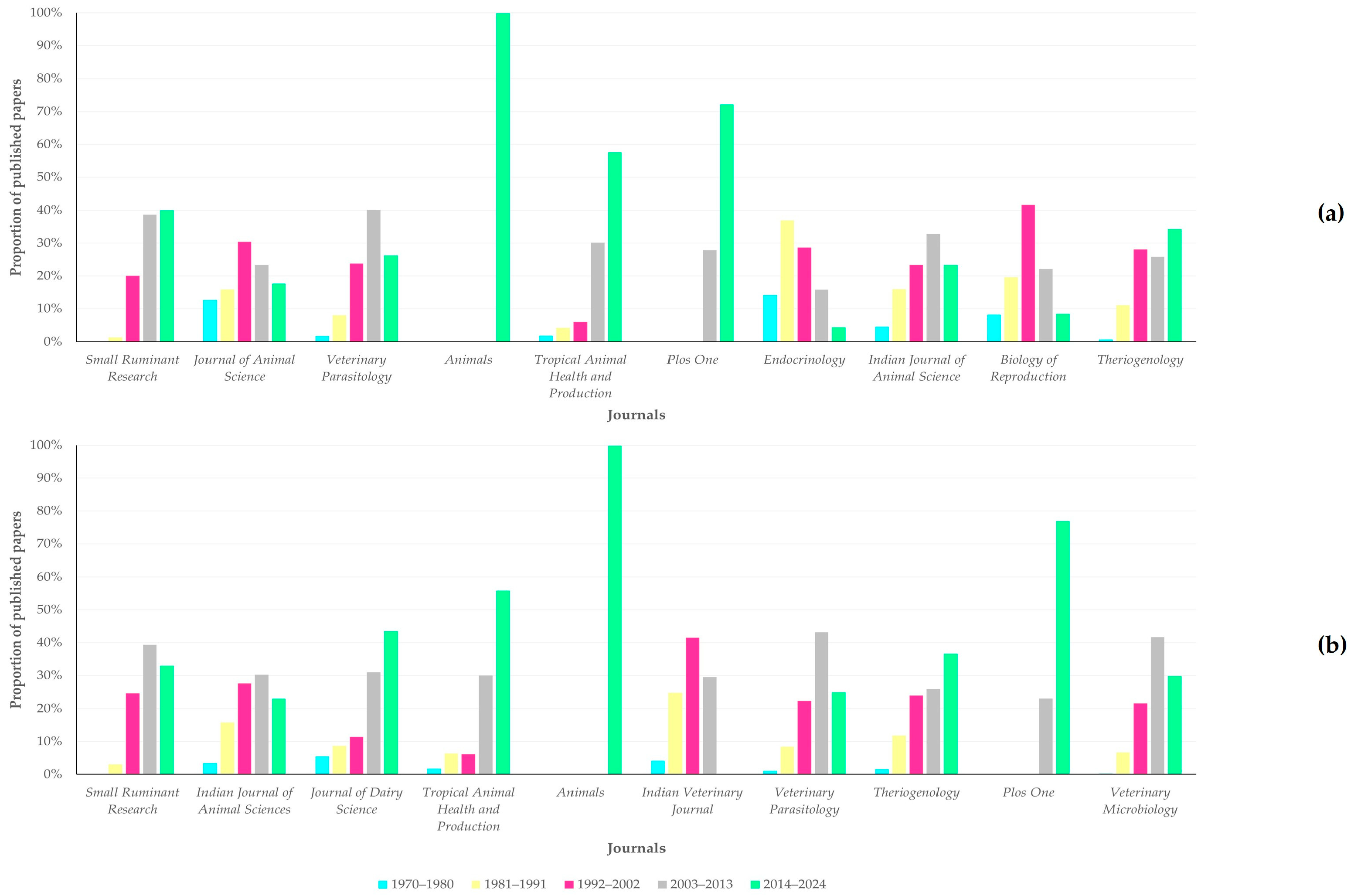
During the period from 1970 to 1980, these included in total 34 and 83 journals for papers related to sheep and goats, respectively; during the period from 2014 to 2024, these included 28 and 30 different journals, respectively (Appendix A, Table S7). One journal for papers related to sheep (specifically, Journal of Animal Science) and four journals for papers related to goats (specifically, Indian Journal of Animals Sciences, Journal of Dairy Science, Tropical Animal Health and Production and Veterinary Parasitology) were among these journals during both periods.

3.3. Web of Science Categories of Journals in Which the Papers Were Published

In total, the journals were classified into 252 or 251 Web of Science categories for papers related to sheep or to goats, respectively (Table S8). These categories represented all 21 groups of Web of Science categories available in the database. The two categories of journals, in which most papers related to both sheep and goats were published, were ‘Veterinary Sciences’ and ‘Agriculture, Dairy Animal Science’. However, a significantly smaller proportion of papers related to sheep than to goats were included into each of these two categories as follows: 22.6% and 16.1% versus 27.8% and 22.5%, respectively (Table 2, Figure S4). There were also differences in the proportions of papers related to sheep or to goats published in various categories.
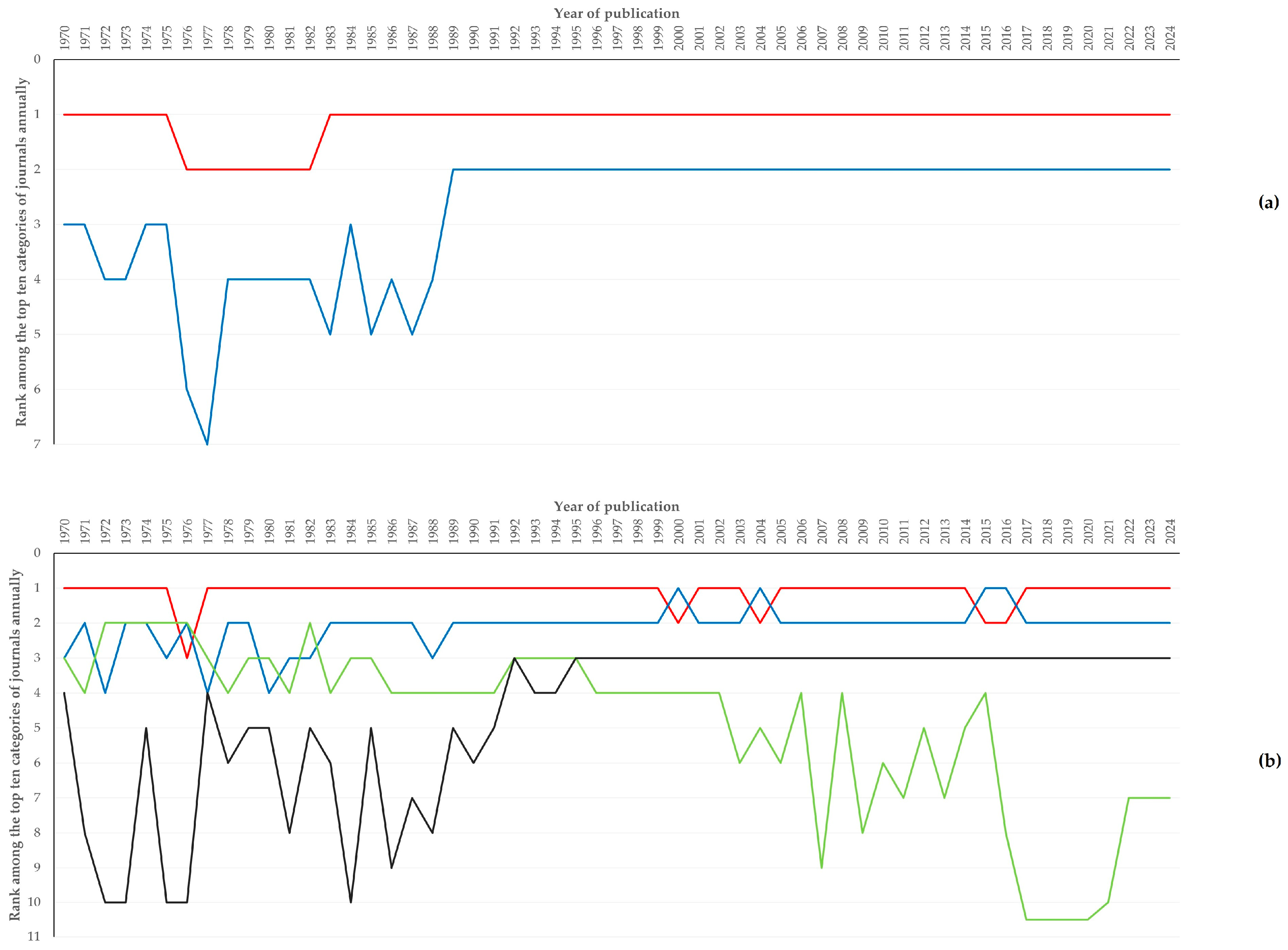
The number of years during which the categories of journals were among the top ten categories throughout the study period are in Figure S5. Cumulatively, there were 28 (11.1%) and 31 (12.3%) categories of journals for publication of papers related to sheep or to goats, respectively, included among the top ten categories on annual basis. Veterinary Sciences was the top category for 48 (papers related to sheep) and 50 (papers related to goats) years (Table S9, Figure 2).
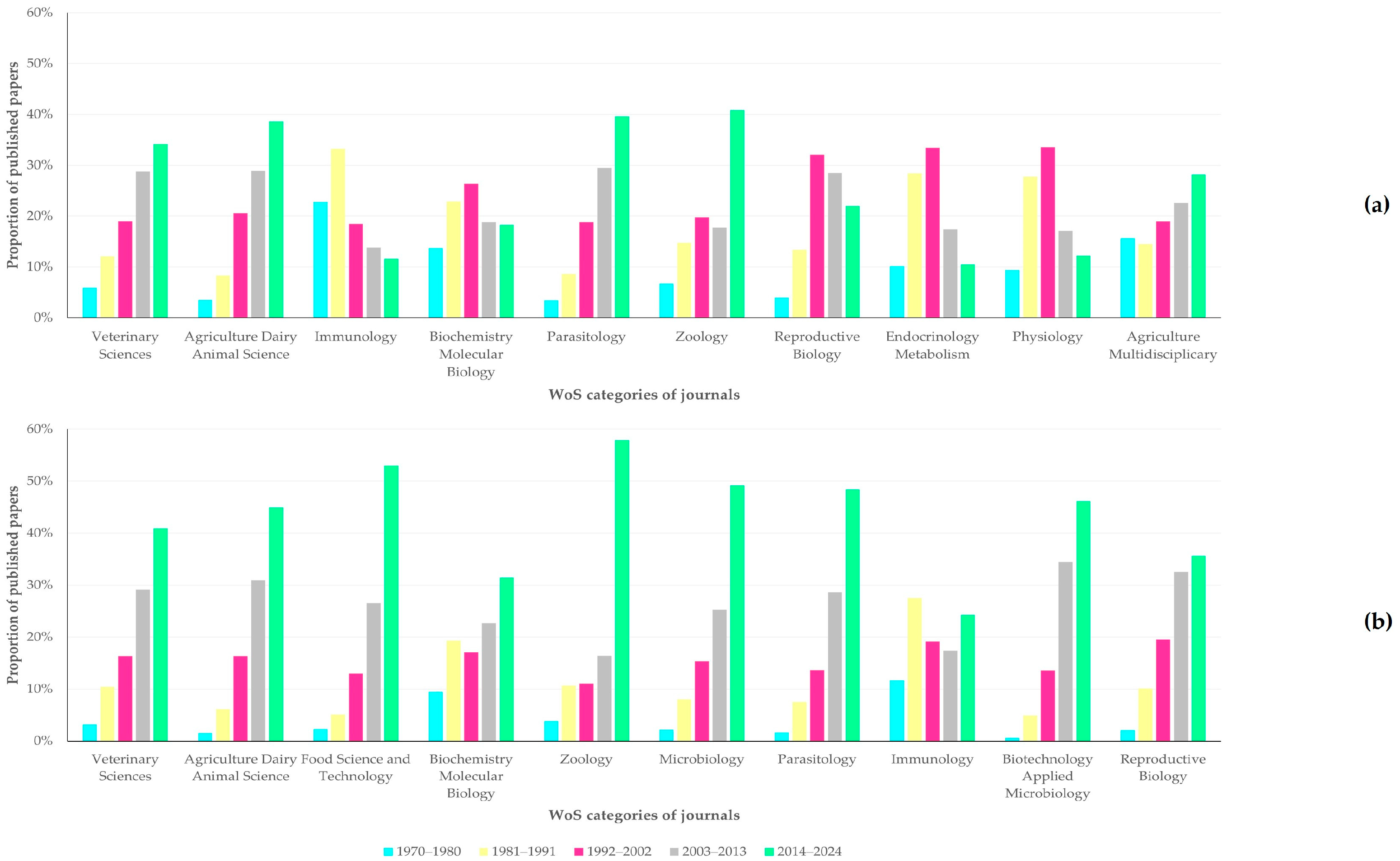
During the period from 1970 to 1980, these included 16 and 22 different categories for papers related to sheep and goats, respectively; during the period from 2014 to 2024, these included 14 and 17 different categories, respectively (Appendix B, Table S10).

3.4. Languages of Published Papers

In the great majority, the published papers were written in English: 95.1% of papers related to sheep and 94.8% of papers related to goats. Other frequently used languages were German (1.3% and 1.1% of papers, respectively), French (1.0% and 1.1%, respectively) and Portuguese (0.9% and 1.3%, respectively). Overall, 35 different languages were used in the published papers (Table S11).
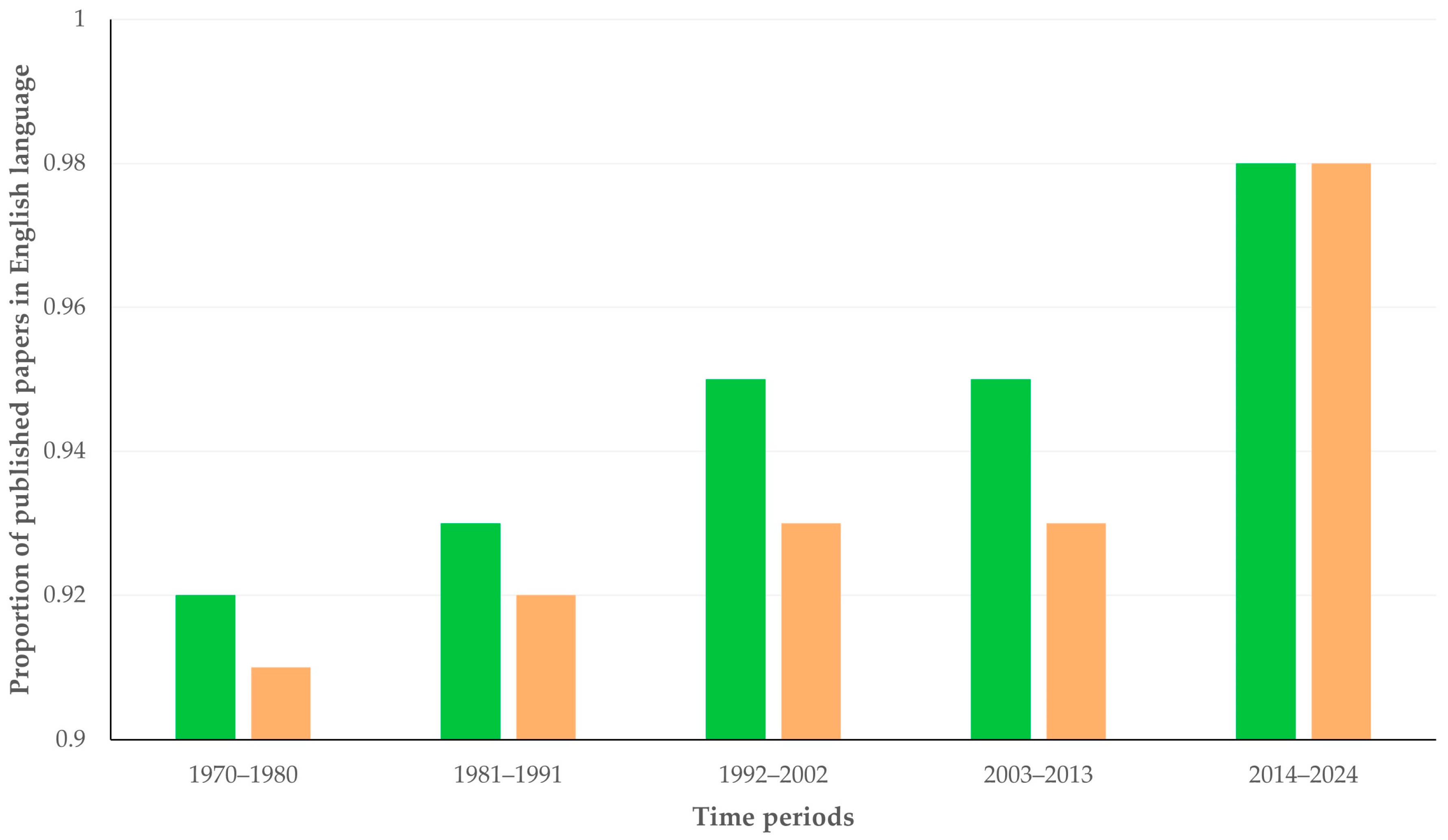
There was a clear progressive increase in the proportion of published papers written in English: from 91.9% (papers related to sheep) and 91.2% (papers related to goats) during the period from 1970 to 1980, to 97.6% and 97.5%, respectively, during the period from 2014 to 2024 (Figure 3).

3.5. Countries of Origin of Published Papers

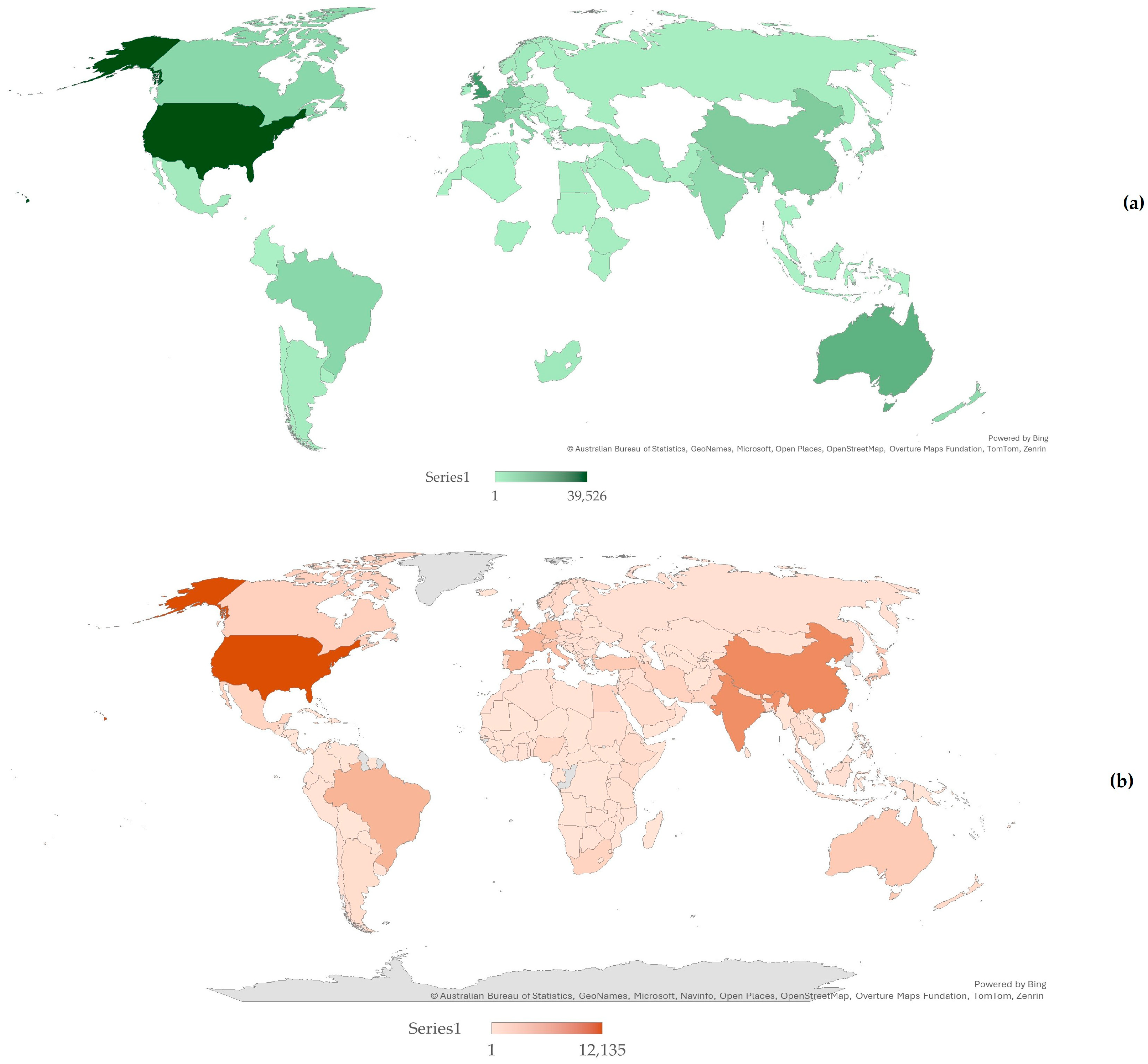
Papers related to sheep originated from 183 countries, whilst papers related to goats originated from 180 countries (Figure 4) (combined, in total, from 186 countries) (Table S12). For both categories of published papers, most originated from the United States of America (n = 39,526 and 12,135, respectively); fewer papers related to sheep originated from the United Kingdom (n = 21,304) or Australia (n = 15,606), whilst fewer papers related to goats originated from China (n = 7280) or India (n = 6944) (Figure S6). There were differences in the proportions of published papers related to sheep or to goats that originated from the various countries of the world.
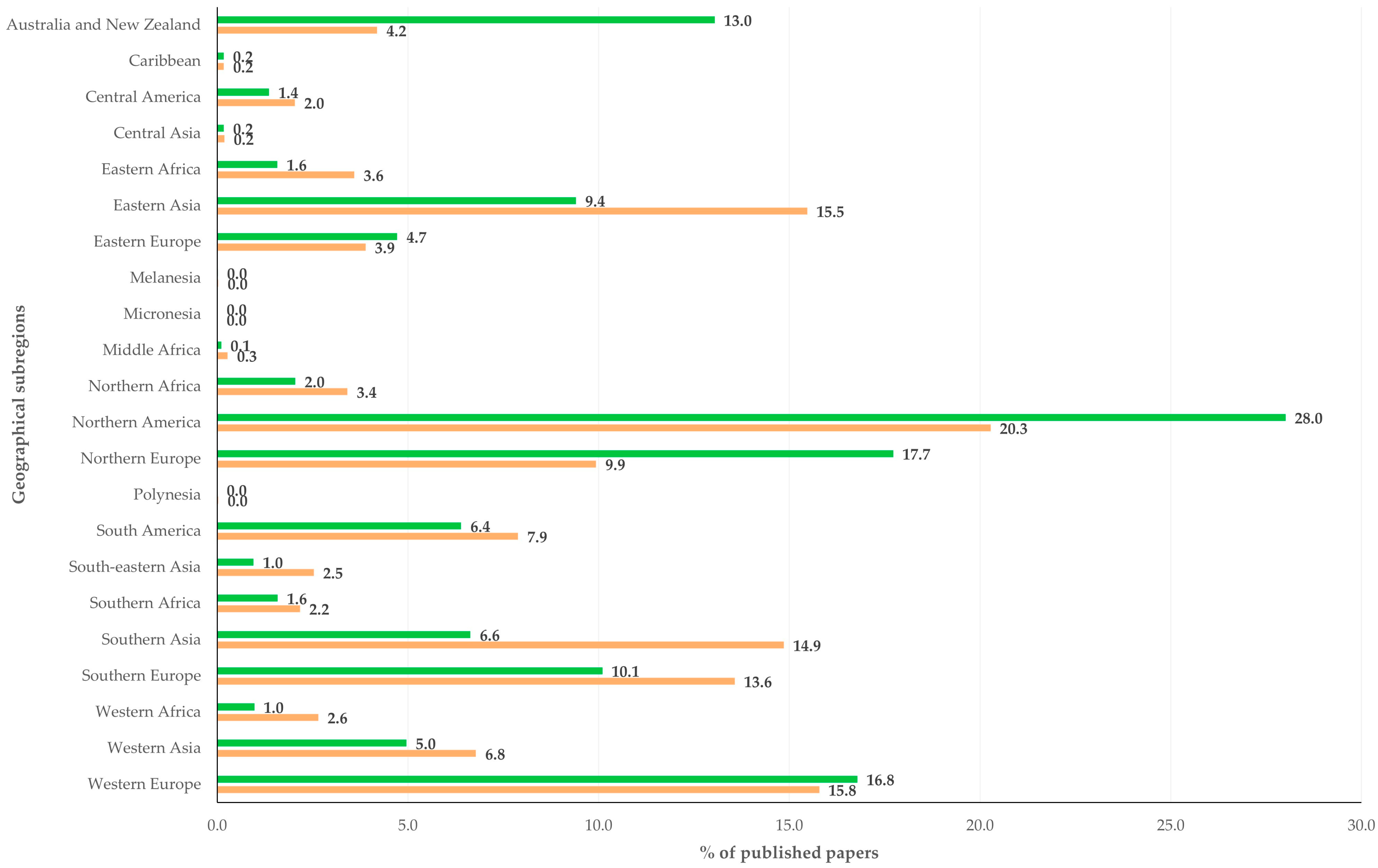
With regard to the origin of the published papers based on geographical subregions, there were significant differences in the proportions of published papers related to sheep or to goats that originated from the various countries of the world. Most papers related to sheep originated from Northern America, Northern Europe and Western Europe; most papers related to goats originated from Northern America, Western Europe and Eastern Asia (Table S13). The proportion of papers related to sheep was higher than that of papers related to goats in the following five geographical subregions (Australia and New Zealand, Northern Europe, Northern America, Western Europe and Eastern Europe); the proportion of papers related to goats was higher than that of papers related to sheep in the other 17 geographical subregions and particularly in Southern Asia, Eastern Asia and Southern Europe (Figure 5).
The number of years during which countries of origin were among the top ten throughout the study period are in Figure S7. There were 24 (13.1%) and 30 (16.7%) countries of origin for published papers related to sheep or to goats, respectively, among the top ten countries of origin on annual basis. United States of America was the top country of origin for 52 (papers related to sheep) and 41 (papers related to goats) years (Table S14).
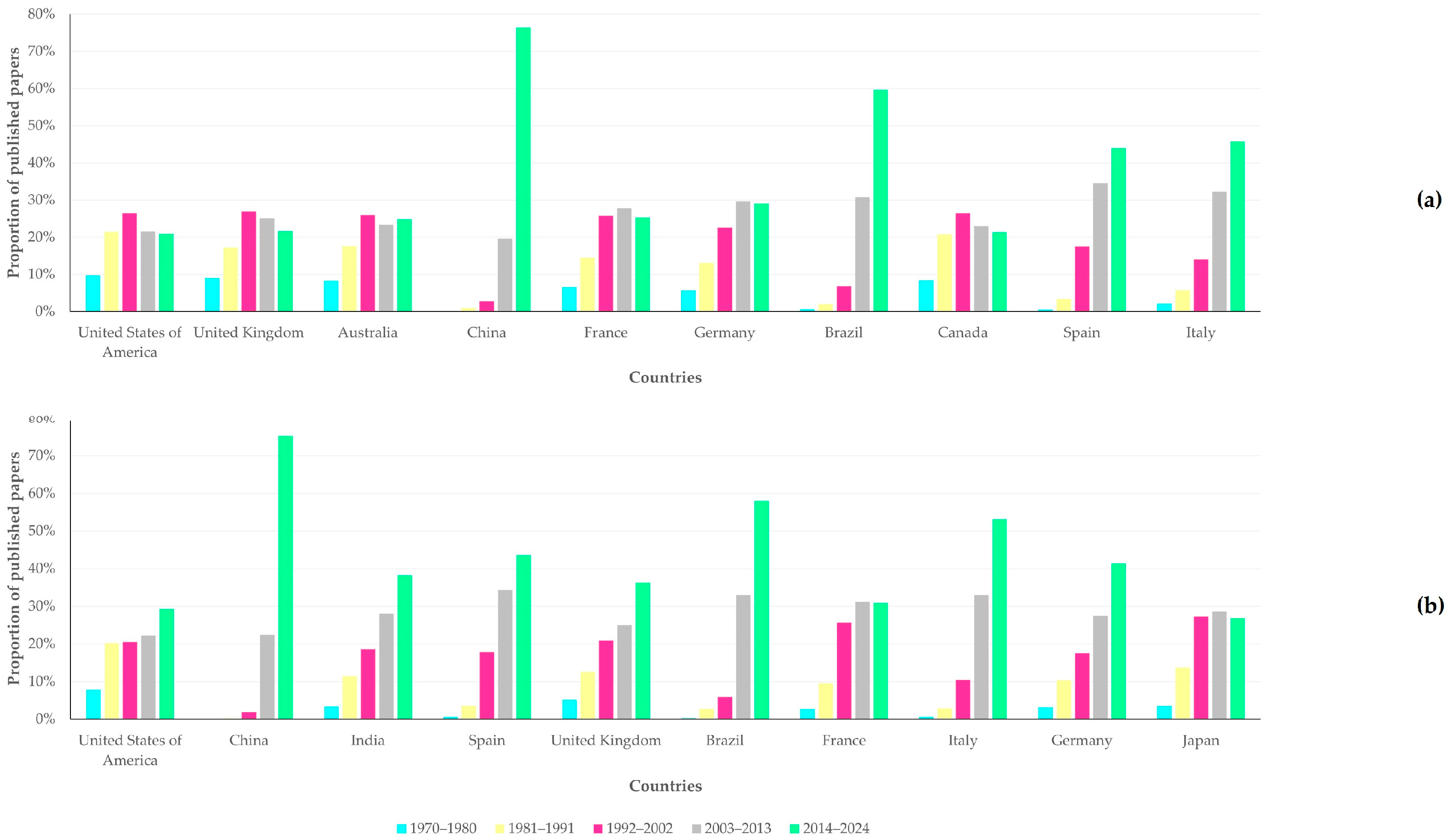
During the period from 1970 to 1980, there were in total 17 and 21 countries among the top ten countries annually for papers related to sheep and goats, respectively; during the period from 2014 to 2024 there were 13 and 14 different countries of origin, respectively (Appendix C, Table S15). Six countries (Australia, France, Germany, India, United Kingdom, and United States of America) were among the top ten countries in both periods for papers related to sheep and to goats; moreover, another two countries (Italy, New Zealand) were also included for papers related to sheep.

3.6. Organizations of Affiliation in Published Papers

There were 40,199 and 24,327 organizations of affiliations listed in published papers related to sheep and goats, respectively. The French National Institute for Research in Agriculture, Food and Environment and the National Centre for Scientific Research, the Indian Council of Agricultural Research and the United States Department of Agriculture were among the ten scientific organizations with most papers related to each of the two species (Table S16). Among the 100 organizations with most published papers, most were universities: 74% and 76% for published papers related to sheep and goats, respectively, whilst 26% and 24% of published papers originated from other types of organizations (e.g., research institutes, government units, etc.). The majority of the 100 organizations with most published papers related to sheep were in the United States of America (n = 22), the United Kingdom (n = 15) and Australia (n = 13); respectively, the majority with most published papers related to goats were in the United States of America (n = 14), Brazil and France (n = 10 in each) (Table S17).

3.7. Topics-Meso in Published Papers

Papers on sheep were classified in 305 and papers on goats on 307 different topics-meso. Most published papers related to sheep or to goats were classified in the Dairy and animal sciences topics-meso (n = 33,137 (20.1%) and 13,436 (19.9%), respectively) (Table 3 and Table S18). There were differences in the proportions of published papers related to sheep or to goats with regard to the topics-meso in the papers.

3.8. Topics-Micro in Published Papers

Papers on sheep were classified in 1760 and papers on goats on 1573 different topics-micro. The two predominant topics-micro were Ruminant nutrition and Livestock reproduction for published papers related to sheep and to goats: 15,361 (9.3%) and 8681 (5.2%) versus 5694 (8.4%) and 3377 (5.0%), respectively (Table 4 and Table S19). There were differences in the proportions of published papers related to sheep or to goats with regard to the topics-micro in the papers.
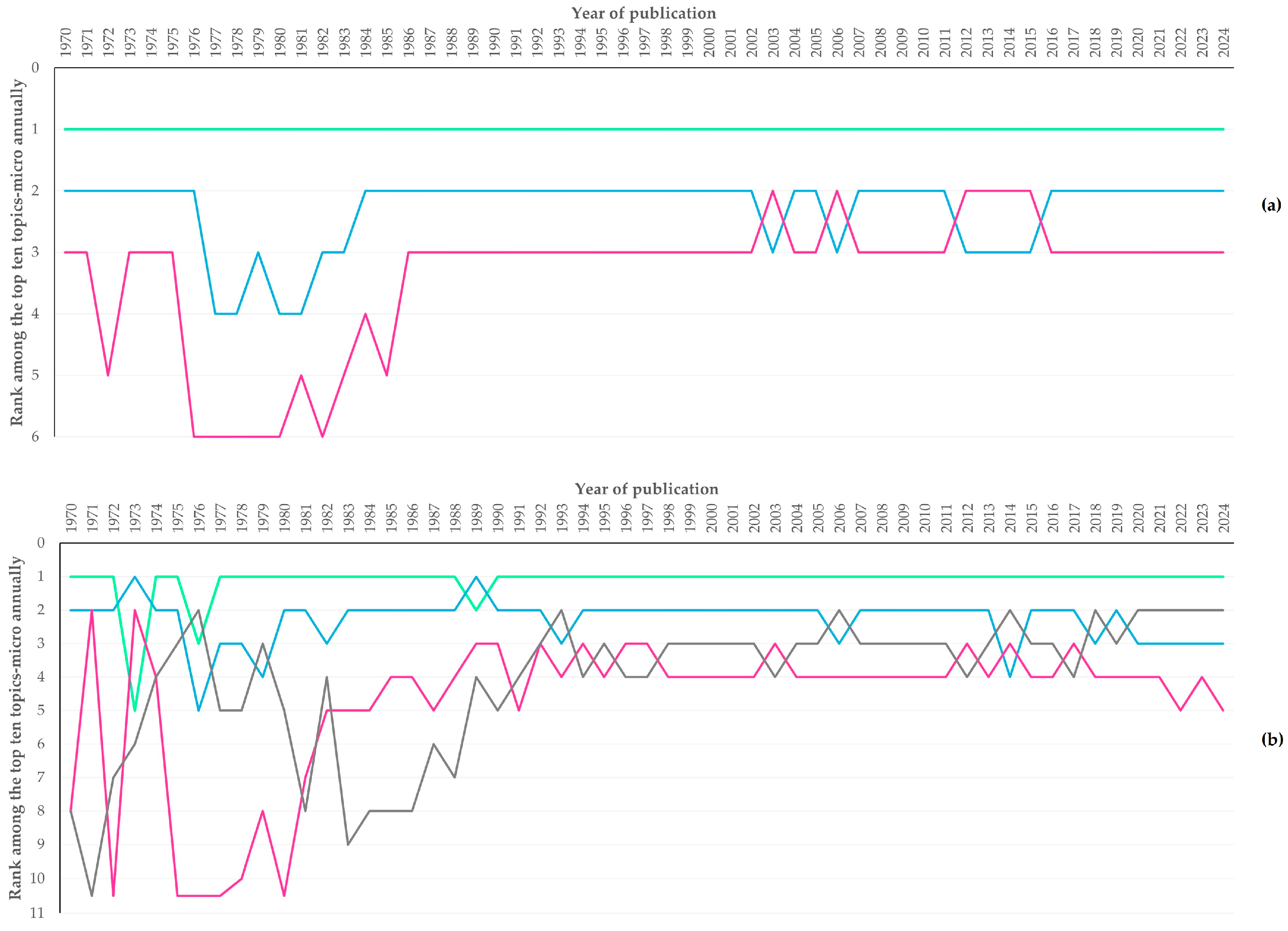
The number of years during which the topics-micro were among the top ten throughout the study period are in Figure S8. There were 43 (2.4%) and 66 (4.2%) topics-micro for published papers related to sheep or to goats, respectively, included throughout this period among the top ten on annual basis. Ruminant nutrition was in top for 55 (papers related to sheep) and 53 (papers related to goats) years during the study period (Table 5, Figure 6).
During the period from 1970 to 1980, these included 25 and 55 different topics-micro for papers related to sheep and goats, respectively; during the period from 2014 to 2024 these included 18 and 19 different topics-micro, respectively (Appendix D, Table S20). Six topics-micro (Anthelmintic resistance, Livestock reproduction, Meat quality, Farm animal welfare, Ruminant nutrition and Toxoplasma gondii) were among the top ten during both periods for papers related to sheep and to goats; another one (Embryo development) was among the top ten for papers related to sheep and another eight (Brucellosis, Dairy product chemistry, Mastitis, Male fertility, Poxvirus immunology, Tick-borne pathogens, Viral disease dynamics, and Wildlife ecology) were among the top ten for papers related to goats.

3.9. Accessibility of Published Papers

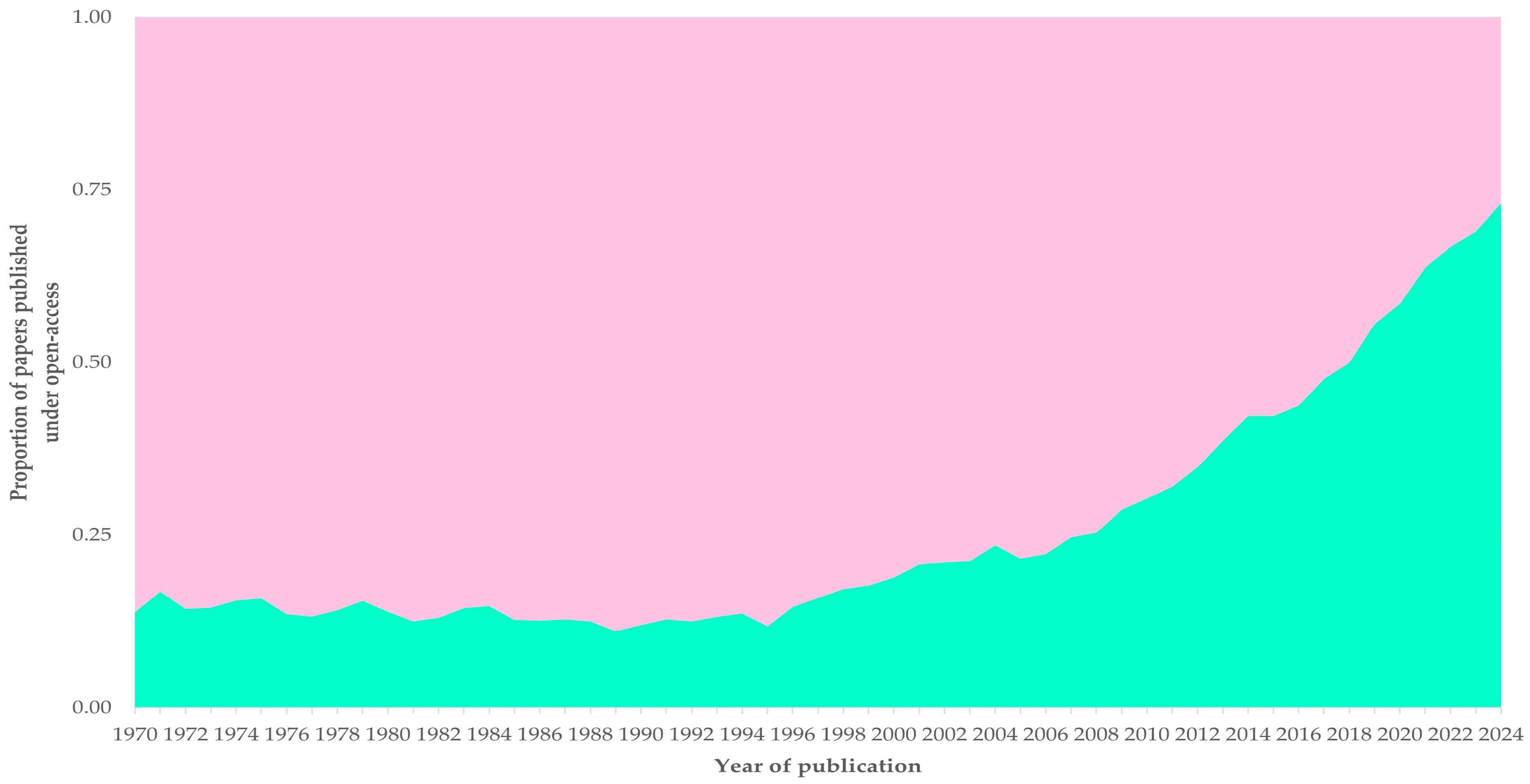
Overall, approximately one-third of all published papers was published under open access: 31.7% (n = 52,349) of papers related to sheep and 34.9% (n = 23,585) of papers related to goats. There was a clearly significant overall increase in the proportion of papers published under open access annually, throughout the study period (1970–2024); slopes were as follows: 0.009 ± 0.001 overall, 0.009 ± 0.001 for papers related to sheep and 0.008 ± 0.001 for papers related to goats (Figure 7 and Figure S9).
During the period from 1970 to 1999, there was no change in the proportion of papers published under open access: slope was −0.001 ± 0.001. An increase in the proportion of papers published under open access was seen from 2000 and thereafter until 2024: slope was 0.023 ± 0.001 with a clear difference between the two periods (Figure 7).

3.10. Sustainable Development Goals in Published Papers

For papers related to sheep and papers related to goats, the primary sustainable goals were ‘Good health and well-being’ (70.3% and 67.1% of all papers, respectively) and ‘Climate action’ (14.5% and 13.5% of all papers, respectively). However, there were differences in the proportions of published papers related to sheep or to goats with regard to the sustainable development goals served in the papers (Table S21).
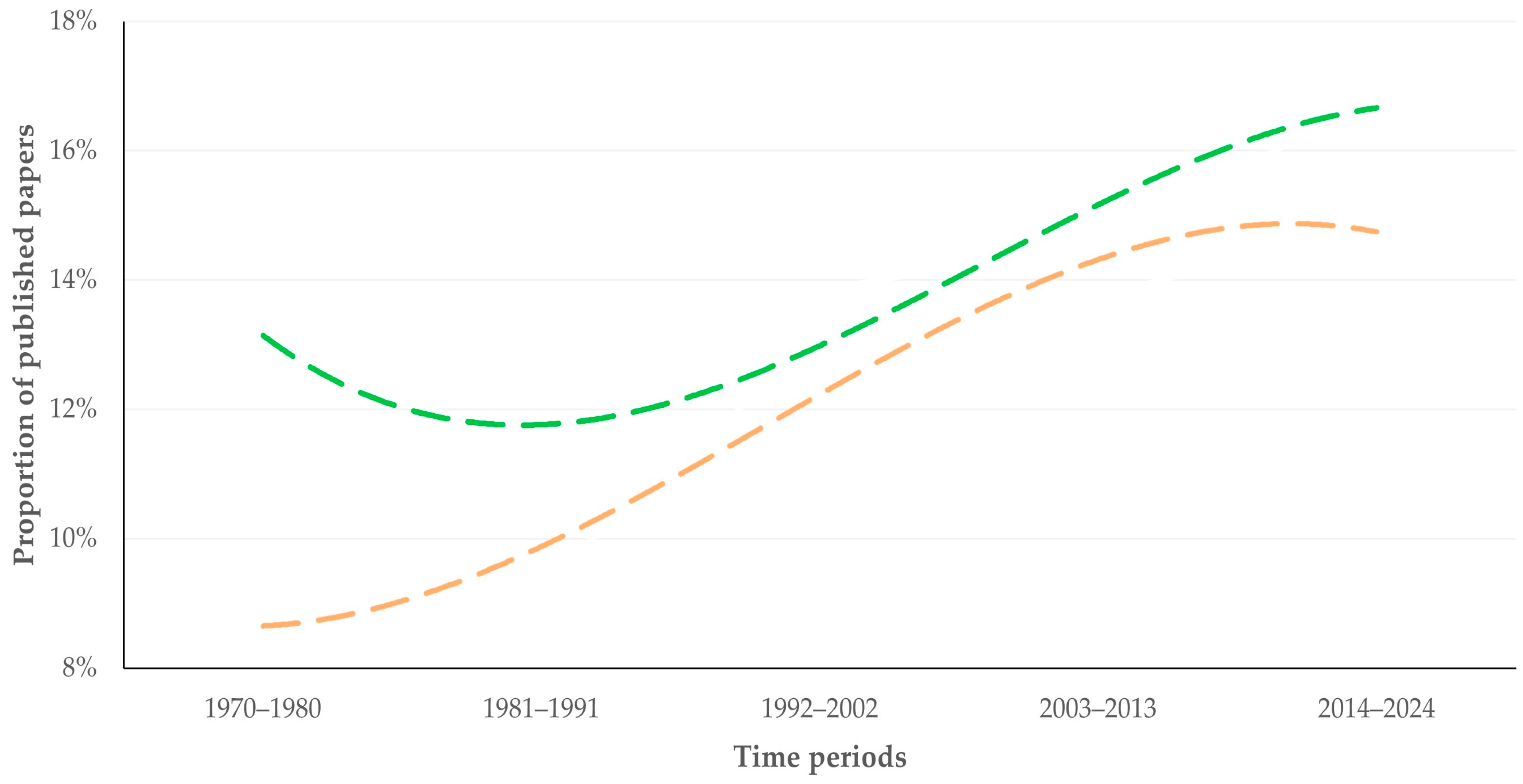
For papers related to sheep and papers related to goats, ‘Good health and well being’ was the primary goal throughout the study period (>65.0% of papers published within each time period), but with a trend of declining proportion (Figure S10). In contrast, there was a trend for increase in the ‘Climate action’ for papers related to sheep (from 13.3% to 16.8%; slope: 0.001 ± 0.004) and to goats (from 8.8% to 14.9% slope: 0.002 ± 0.003) (Figure 8).

3.11. Citations Received by Published Papers

Up to the end of 2024, published papers related to sheep had received a total of 4,211,370 citations. On average, each published paper had received 25.5 citations in total and 0.93 citations annually; of these papers, 37 had received over 1000 citations by the end of 2024. Published papers related to goats had received a total of 1,356,273 citations. On average, each published paper had received 20.1 citations in total and 0.73 citations annually; of these papers, 12 had received over 1000 citations by the end of 2024.
Finally, the h-index for the papers related to sheep was 393 and the h-index for the papers related to goats was 259.
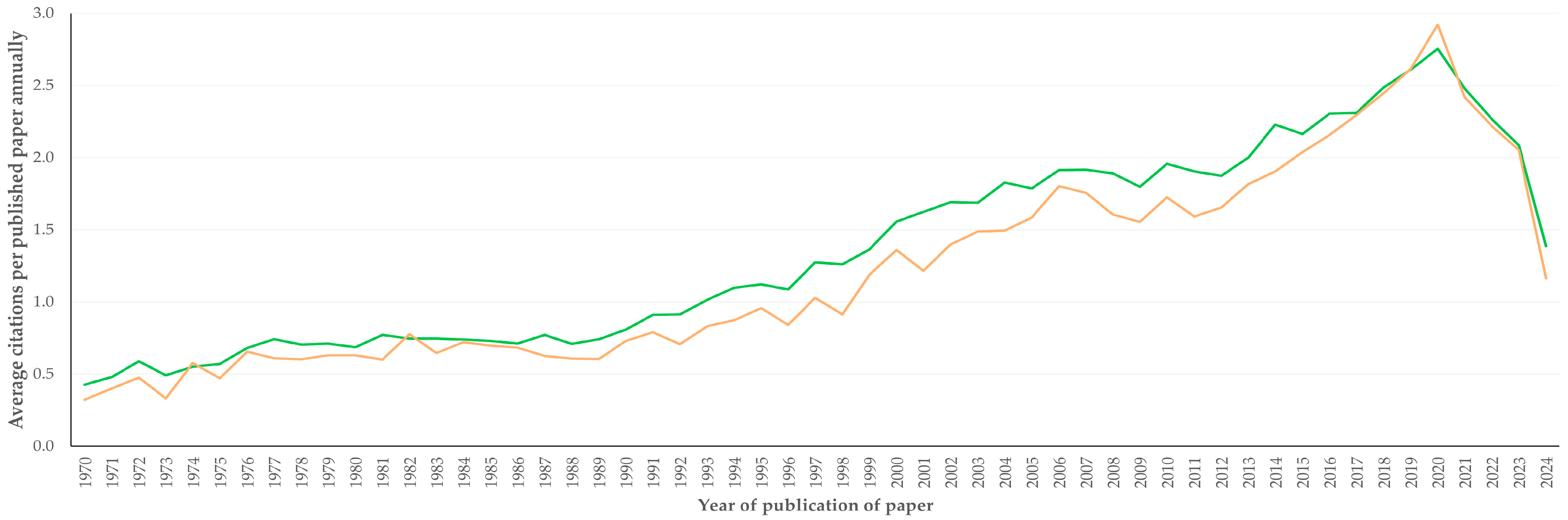
There was a clear progressive increase in citations received annually per paper, which was significant: slopes were 0.040 ± 0.002 and 0.039 ± 0.002, for papers related to sheep and goats, respectively, but with no difference seen between papers related to sheep and papers related to goats (Figure 9). Maximum citations received annually were achieved by papers published during the years 2018, 2019, 2020 and 2021: ≥2.4 citations per paper annually (versus an overall average of 0.9 and 0.7 citations annually for papers related to sheep and goats, respectively, i.e., +170% for papers related to sheep and +230% for papers related to goats). Subsequently to 2021, there was a decrease in citations received annually by published papers (Figure 9).

3.12. Authors of Published Papers

The ten authors with most published papers related to sheep were distinct to the ten authors with most published papers related to goats. The median numbers of papers published by these authors were 213.5 (interquartile range (IQR): 56) and 132.5 (IQR: 22.5), respectively. Moreover, papers by the former authors have received more citations than papers by the latter ones: 7935.5 (IQR: 5645) versus 2766.5 (IQR: 1183), respectively. Further details about the characteristics of the papers published by these 20 authors are in Table 6. Among these authors, for papers related to sheep, most were based in the United States of America (n = 5) and fewer ones in Australia or New Zealand (n = 2 in each) and Greece (n = 1); for papers related to goats, most authors were based in China (n = 4) and fewer in Brazil or the United States of America (n = 2 in each) and in France or India (n = 1 in each). There were several common papers among these authors (Figure S11); their proportion among the total papers published by each of these authors was lower for papers related to sheep than for papers related to goats: 14.0% versus 17.4%.

4. Discussion

4.1. Progressive Increase in Published Papers

The clearly evident progressive increase recorded in the published papers throughout the study period, which covers a 55-year long span, is in line with the rapid growth of scientific output observed internationally [11]. This reflects the growth and the evolution of the respective scientific field, for which important determinants have included the progress in scientific and technological advancements worldwide (for example, improvements in methodological possibilities and development of new tools for use in research work), the availability of research funding, the demand for innovation, the expansion of publishing under open access mode publishing and the development of new scientific journals. The increased scientific output has led to the significant improvements in farming and health management of small ruminants, which have dominated the field during these years and resulted in the increase in production yields (meat, milk, wool, and pelts) from these species. These improvements in farming and health management have also coincided with the reshaping of veterinary and animal science at research and clinical level.
At the other end, it should also be noted that the establishment of scientific publications as a key determinant of academic appointments and promotions, and the resulting pressure for career development, has led to increasing the number of scientific outputs from the same piece of research [12,13,14]. This has also contributed to the increasing number of published papers.
The notably higher recent increase in published papers related to goats indicates a clear change in the interest of scientists in that species. Goats had been previously considered with similarities to sheep, which might have limited specific research specifically relevant to that species. However, in contrast to that perception, goats have fundamental differences to sheep, which are reflected in different management and health problems [15,16,17,18,19,20]. As this has become evident, research specifically relevant to goats has been instigated and performed, which has been reflected in the more lifted slope of increase in published papers related to those animals.
This increased research output also reflects the growing importance of these animals in countries outside the United States and Europe [21]. In China and India, the goat sector has been recognized as an important and rapidly growing part of the rural economy, shifting towards intensification and commercialization [21,22,23,24,25,26]. Moreover, goats have been recognized as preferred animals for use in smallholder farming systems [27]. Finally, some of these published papers may reflect an increased interest in goats as a climate-resilient livestock species, which aligns with the facts that goats are often farmed under extensive or semi-extensive management [28] and that the area of environmental sciences has seen a rapid development of research output since 2015 [29].

4.2. Journals in Which the Papers Were Published—WoS Categories of Journals

The journals in which the papers were published, as well as the categories in which these journals are classified, can provide a strong indication regarding the content of the papers [30]. The journal dynamics throughout the study period can also provide information regarding changes and shifts in the scientific identity of the published papers.
Small Ruminant Research has been a journal dedicated specifically to the promotion and dissemination of work related to sheep and goats since its foundation in 1988 [31]. It has been the dominant journal in the field from the 1990s to 2019; thereafter, Animals has taken over as the top journal for papers related to both species. For these two journals, the proportion of papers published during the last time period (2014–2024) has decreased and increased, respectively. The journal Animals also offers open access publication as standard, and, moreover, it is classified within the first quartile (Q1) in the relevant WoS categories [32]; in contrast, Small Ruminant Research is classified within the second quartile (Q2) therein [31]. We believe that these attributes may play a role in selections made by authors for submission of manuscripts. Indeed, the impact factor of journals has been cited as a variable determining author choices for selecting journals for manuscript submission [33,34]. We also hypothesise that the faster time required for a decision after review (50.0 days for Small Ruminant Research versus 17.5 days for Animals (as quoted in the webpages of the respective journals [31,32])) might have also contributed towards this significant change, which can be useful when meeting deadlines relevant to dissemination of results.
The findings indicate that papers related to sheep cover topics referring to that species as livestock animals and also as biomedical models. In this latter aspect, the predominant areas of work include endocrinology and reproductive biology, which are considered as foundation areas for human obstetrics and gynecology [35,36]. Indeed, sheep have been widely employed as animal models in the study of human reproduction and pregnancy, due to similarities in the structure of placenta and in development of the fetus(es); additionally, sheep are deemed to be superior to the commonly employed animal models in biomedical research (rodents), because they bear mostly single or twin fetuses, which compares well with human pregnancies [37,38,39,40,41]. This becomes evident when considering the journals, in which papers related to sheep have been published, for example, Endocrinology, Biology of Reproduction, as well as the predominant categories of journals, for example, Reproductive Biology, Endocrinology Metabolism, and Physiology.
In contrast, papers related to goats have a greater focus towards production and food technology hygiene than papers related to sheep. These papers have remained more focused and were published in journals within the remit of veterinary and animal sciences.

4.3. Languages of Published Papers

The significant increase in the proportion of papers published in the English language throughout the study reflects the progressive globalization of scientific research and shows the establishment of English as the international language of science [42,43]. In this respect, one should also take into account that the development of large language models, which may be used by authors in the writing of scientific papers, promote the use of English language [44], which may further contribute to the increase in numbers of papers in English.
While use of English language improves dissemination of research and promotes the potential for collaborations between scientists from various parts of the world, it should also be noted the possibility for marginalization of research of mainly local interest [45,46].

4.4. Origin of Published Papers

The results regarding the origin of the published papers reflect the agricultural systems applied on the various countries with regard to the farmed species and also the reliance of these countries on the respective species. The high numbers of sheep farmed in Australia (for wool and meat production), France (primarily for milk production), Italy (primarily for milk production), Spain (for meat and milk production) and the United Kingdom (primarily for meat production) are reflected in the higher number of relevant papers from these countries, as well as in the themes of the relevant papers [47,48]. Moreover, it is also worth mentioning the presence of some emblematic scientific organizations in these countries, among them the Moredun Research Institute and the Rowett Institute (United Kingdom), the Commonwealth Scientific and Industrial Research Organization (Australia), the National Institute for Agricultural Research (rebranded as National Research Institute for Agriculture, Food and Environment) (France), from which important relevant work has originated throughout the study period.
The increased numbers of published papers related to goats from China and India reflect the high numbers of animals in these countries, approximately 130 M and 155 M animals, respectively, which are the highest worldwide [49]. For these two countries, goat farming has a pivotal role in agricultural development [50,51], as discussed above.
The results have indicated a decline in papers related to sheep published by the traditionally leading countries, whilst a significant overall increase was noted in the papers with origin from China. This aligns with the global trend of the significant increase in research output by that country across all scientific disciplines and fields [11]. The increase in published papers related to goats was seen in most countries (although with a steeper slope in papers from China and Brazil), potentially on account of the issues previously discussed.

4.5. Research Themes in Published Papers

The central theme in the published papers related to both animal species and throughout the study period was Ruminant nutrition. Nutrition is a primary determinant for animal productivity; it influences growth rate, milk yield and composition, reproductive performance and wool and hair quality [52]. Also, it regulates a plethora of pathways involved in health-related mechanisms, for example, immunological systems (including innate defences), development of metabolic disorders; also, it plays an important role in the welfare of animals [53,54,55,56]. In ruminants, which have a complex digestive tract, nutritional management is of the utmost importance, in order to maintain high productivity and good health of the animals.
Efficient reproductive management is also important for the financial success of sheep and goat farms, in both meat and dairy production systems [57,58,59,60,61,62,63]. Hence, there is a clear need for high reproductive efficiency in farms, which would guarantee a high proportion of animals that lamb or kid (thus ensuring the start of a lactation period) and an increased number of newborn lambs and kids [64,65,66,67]. The above explain the continuous placement of Livestock reproduction as a main theme of the published papers related to both species and throughout the length of the present study.
We hypothesize that the presence of a higher number of topics-micro for published papers related to sheep than for papers on goats, 1760 versus 1573, respectively, possibly reflects the coverage of topics referring to sheep as livestock animals and as biomedical models, as previously discussed [35,36], in contrast to research in goats, which appears to be focused on work within the remit of veterinary and animal sciences, as well as in food production.

4.6. Accessibility of Published Papers

The ‘democratization of science’ entails ‘the public having greater influence over science and that influence being shared more equally among members of the public’ [68]. As part of this, there has been a significant promotion for the publication of scientific papers under open access.
The ‘open access’ movement started in the early 1990s. Significant milestones in its early years were the Budapest Open Access Initiative (BOAI) and the foundation of the nonprofit organization Creative Commons in the United States, both of which occurred in 2002. Thereafter, the European Union, first among entities of the public sector, supported the movement through the launch of the Open Access in 2008 [69,70,71].
The surge in papers published under open access after 2000 coincides with the above, reflecting the trajectory of the international ‘open science’ approach. Open access publications are particularly valuable for scholars in locations with limited means to access subscription access papers [72], which can be a significant case for research and clinical work on sheep and goats.

4.7. Sustainable Development Goals in Published Papers

Classification of papers in accord with sustainable development goals served has been based on topics-micro, which leverage of the usage of the published papers by other authors [73]. Each goal includes a set of topics based on relevant analyses performed on details of the database [73].
We hypothesize that the ‘Good health and well being’ goal was dominant throughout the study period, which may potentially reflect a veterinary and animals science bias in the database. Moreover, we also indicate the clear increase in the proportion of papers that served the ‘Climate action’ goal is more noteworthy. This appears to be in line with the increased output of published papers on Environmental Sciences [29] during the last 10 years. In this context, the sharper increase in this trend among papers related to goats is also noted, which can be aligned to the overall steeper increase in published papers related to goats.

4.8. Citations Received by Published Papers

Papers related to sheep have clearly made a more significant impact in research than papers related to goats; the former papers received higher total number of citations, higher average number of citations per paper and higher h-index. Papers related to sheep are in general older than papers related to goats; thus, they have had the opportunity to receive more citations. Moreover, this trend can reflect the higher proportion of papers published in English, which allows a wider audience and consequently more citations. Finally, this can be an effect of the increased number of such papers related to topics of biomedical research, which leads to higher citation rates [74,75,76]; these types of papers could have benefited of the significant surge of citations during the period of COVID-19 pandemic [77].
The above are reflected in the differences found in the present results in citation numbers between the top authors for papers related to sheep and papers related to goats: median citations per author 7936 versus 2767, respectively. At the same time, the present results also show a difference in the median time span of papers published by these authors (38 vs. 26 years, respectively) and a difference in the orientation of the research themes (30% vs. 100% within the remit of veterinary and animal science, respectively), which should also be noted.

4.9. Authors

The countries of affiliation of the authors with most published papers further corroborate the points discussed above. For papers related to sheep, most of these authors were affiliated with scientific establishments in the United States of America, in full alignment with the country of origin of most such papers. For papers related to goats, most of these authors were affiliated with scientific establishments in China, again in full alignment with a country of origin with many such papers. Moreover, the topics of the published papers by the top authors related to sheep also corroborate that such papers cover topics referring to that species as livestock animals and biomedical models as well.
The top authors with most published papers related to sheep were distinct to those with published papers related to goats. This can be explained by the different nature of work and the differences between the two animal species in management and health problems [15,16,17,18,19,20], which result in different nature of relevant research. Nevertheless, this difference may also be a function of different scientific communities and networks that overlap infrequently.

5. Conclusions

The work provided an extensive mapping and analysis of the scientific output related to sheep and goat research internationally. Work on both species shows strong thematic stability. However, changes have been detected in the origin of the published papers in recent years, as well as in the journals used for dissemination of the results. A trend emerges that potentially in the future, new fields of work can develop, for example, climate adaptation research.

Supplementary Materials

The following supporting information can be downloaded at https://www.mdpi.com/article/10.3390/ani16081163/s1, Table S1: Search terms used in TOPIC searches in Web of Science for retrieval of papers published from 1970 to 2024, regarding domestic mammal species. Table S2: Types of documents in Web of Science related to sheep or to goats, published from 1970 to 2024; Table S3: PRISMA flow diagram for the identification and exclusion of records from Web of Science database; Figure S1: Bar plot of the number of papers published from 1970 to 2024 related to sheep or goats in comparison to those of another nine domestic mammal species; Table S4: Proportion of published papers among those related to sheep or goats, in accordance with the time period of publication, and respective slopes during these periods; Table S5: The 100 journals, in which most papers related to sheep or goats were published from 1970 to 2024, with respective numbers of published papers; Figure S2: Bar plot of the proportion of published papers related among the 100 journals, in which most papers related to sheep or to goats were published from 1970 to 2024; Figure S3: ‘Butterfly’-type plot of years of inclusion of journals among the top ten for papers related to sheep or to goats published from 1970 to 2024; Table S6: Number of years, for top and second top journals on annual basis for papers related to sheep or goats published from 1970 to 2024; Table S7: Number of years for journals, in which most papers related to sheep or goats were published annually during the years 1970 to 1980 and 2014 to 2024; Table S8: The 100 Web of Science categories of journals, in which most papers related to sheep or goats were published from 1970 to 2024, with respective numbers of published papers; Figure S4: Bar plot of the proportion of papers related to sheep or to goats and published from 1970 to 2024, in accordance with Web of Science categories of journals; Figure S5: ‘Butterfly’-type plot of years of inclusion of Web of Science categories of journals among the top ten for papers related to sheep or to goats published from 1970 to 2024; Table S9: Number of years for top and second top Web of Science categories of journals on annual basis for papers related to sheep or goats published from 1970 to 2024; Table S10: No. of years for Web of Science categories of journals, in which most papers related to sheep or goats were published annually during the years 1970 to 1980 and 2014 to 2024; Table S11: The languages in which papers related to sheep or goats published from 1970 to 2024 were written, with respective numbers of published papers; Table S12: The 100 countries from which originated most papers related to sheep or goats published from 1970 to 2024, with respective numbers of published papers; Figure S6: Filled maps of countries from which originated at least 1% of papers related to sheep or to goats published from 1970 to 2024, in accordance with respective number of papers; Table S13: Numbers of papers related to sheep or to goats published from 1970 to 2024, in accordance with the geographical subregions of the countries of origin and respective proportions among all relevant papers; Figure S7: ‘Butterfly’-type plot of years of inclusion of countries of origin among the top ten for papers related to sheep or to goats published from 1970 to 2024; Table S14: Number of years for top and second top countries of origin on annual basis for papers related to sheep or goats published from 1970 to 2024; Table S15: Number of years for countries of origin, for most papers related to sheep or goats published annually during the years 1970 to 1980 and 2014 to 2024; Table S16: The 100 scientific organizations with which most papers related to sheep or goats published from 1970 to 2024 were affiliated, with respective numbers of published papers; Table S17: List of countries with the 100 scientific organizations with most papers related to sheep or to goats published from 1970 to 2024, with respective number of scientific organizations; Table S18: The 100 topics-meso of most papers related to sheep or goats published from 1970 to 2024, with respective numbers of published papers; Table S19: The 100 topics-micro of most papers related to sheep or goats published from 1970 to 2024, with respective numbers of published papers; Figure S8: ‘Butterfly’-type plot of years of inclusion of topics-micro among the top ten for papers related to sheep or to goats published from 1970 to 2024; Table S20: Number of years for topics-micro in which most papers related to sheep or goats referred to annually during the years 1970 to 1980 and 2014 to 2024; Figure S9: Yearly proportion of papers related to sheep or goats published from 1970 to 2004 under open-access mode; Table S21: Sustainable development goals served in papers related to sheep or goats published from 1970 to 2024, with respective number of published papers; Figure S10: Column plot of the yearly proportion of papers related to sheep or goats published from 1970 to 2004 in accordance with the Sustainable Development Goals served in the papers; Figure S11: Diagrams of joint authorships among the ten authors with most papers on sheep (a) or goats (b) published from 1970 to 2024 (letters within the circles denote authors, but do not correspond to their surnames in order to guarantee private data protection).

Author Contributions

Conceptualization, G.A.V. and G.C.F.; methodology, G.A.V., M.V.B., A.I.K. and G.C.F.; validation, C.K.M., N.G.C.V. and E.I.K.; formal analysis, G.A.V. and M.V.B.; investigation, G.A.V., M.V.B. and G.C.F.; data curation, G.A.V., M.V.B., C.K.M. and E.I.K.; writing—original draft preparation, G.A.V., M.V.B., N.G.C.V., A.I.K., V.S.M. and G.C.F.; writing—review and editing, G.A.V., M.V.B., C.K.M., N.G.C.V., E.I.K., D.A.G., V.S.M. and G.C.F.; visualization, G.A.V., M.V.B., C.K.M. and E.I.K.; supervision, D.A.G., V.S.M. and G.C.F.; project administration: N.G.C.V. and G.C.F. All authors have read and agreed to the published version of the manuscript.

Funding

This research received no external funding.

Institutional Review Board Statement

Not applicable.

Informed Consent Statement

Not applicable.

Data Availability Statement

Data related with this study are available in the Supplementary Material.

Conflicts of Interest

The authors declare no conflicts of interest.

Appendix A

Figure A1. Clustered column plot of the proportion (%) of papers related to sheep (a) or to goats (b) published from 1970 to 2024 in each of the top ten journals, for respective papers, in accordance with the time period within which publication was done.
Animals 16 01163 g0a1

Appendix B

Figure A2. Clustered column plot of the proportion (%) of papers related to sheep (a) or to goats (b) published from 1970 to 2024 in each of the top ten Web of Science (WoS) categories of journals, for respective papers, in accordance with the time period within which publication was done.
Animals 16 01163 g0a2

Appendix C

Figure A3. Clustered column plot of the proportion (%) of papers related to sheep (a) or to goats (b) published from 1970 to 2024 in each of the top ten countries of origin, for respective papers, in accordance with the time period within which publication was done.
Animals 16 01163 g0a3

Appendix D

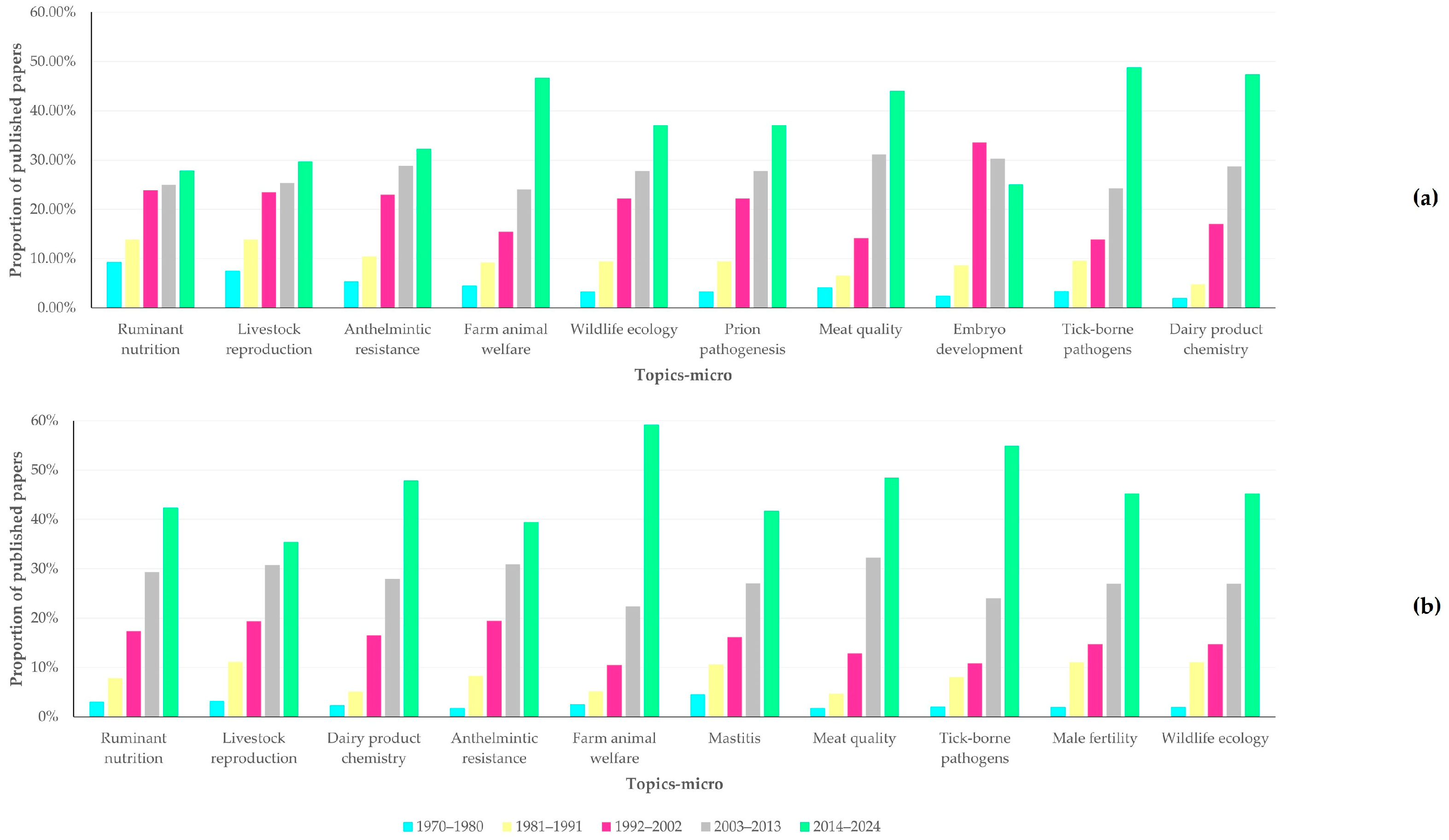
Figure A4. Clustered column plot of the proportion (%) of papers related to sheep (a) or to goats (b) published from 1970 to 2024 in each of the top ten topics-micro, for respective papers, in accordance with the time period within which publication was done.
Animals 16 01163 g0a4

References

  1. Cobo, M.J.; López-Herrera, A.G.; Herrera-Viedma, E.; Herrera, F. An approach for detecting, quantifying, and visualizing the evolution of a research field: A practical application to the fuzzy sets theory field. J. Infometr. 2011, 5, 146–166. [Google Scholar] [CrossRef] [Scilit]
  2. Tibaná-Herrera, G.; Fernández-Bajón, M.T.; de Moya-Anegón, F. Mapping a research field: Analyzing the research fronts in an emerging discipline. In Scientometrics; Jibu, M., Osabe, Y., Eds.; InTech: Zagreb, Croatia, 2018. [Google Scholar] [CrossRef] [Scilit]
  3. Donthu, N.; Kumar, S.; Mukherjee, D.; Pandey, N.; Lim, W.M. How to conduct a bibliometric analysis: An overview and guidelines. J. Busin. Res. 2021, 133, 285–296. [Google Scholar] [CrossRef] [Scilit]
  4. Caruana, E.J.; Roman, M.; Hernández-Sánchez, J.; Solli, P. Longitudinal studies. J. Thorac. Dis. 2015, 7, E537–E540. [Google Scholar] [CrossRef] [Scilit]
  5. Haddaway, N.R.; Bernes, C.; Jonsson, B.G.; Hedlund, K. The benefits of systematic mapping to evidence-based environmental management. Ambio 2016, 45, 613–620. [Google Scholar] [CrossRef] [Scilit] [PubMed]
  6. Sedighi, M.; Jalalimanesh, A. Mapping research trends in the field of knowledge management. Mal. J. Libr. Inf. Sci. 2014, 19, 71–85. [Google Scholar]
  7. Ackermann, F.; Maytorena-Sanchez, E. Overlooked and underused? The benefits and challenges of using causal mapping for project studies. Proj. Leadersh. Soc. 2024, 5, 100161. [Google Scholar] [CrossRef] [Scilit]
  8. Ravasi, D.; Zhu, J.; Wan, W.; Dorobantu, S.; Gruber, M. What makes research collaborations successful? Advice from AMJ authors. Acad. Manag. J. 2024, 67, 583–594. [Google Scholar] [CrossRef] [Scilit]
  9. Potter, I. Introducing Citation Topics; Clarivate: London, UK, 2020; Available online: https://clarivate.com/academia-government/blog/introducing-citation-topics/ (accessed on 20 June 2025).
  10. United Nations. Work of the Statistical Commission Pertaining to the 2030 Agenda for Sustainable Development. Resolution Adopted by the General Assembly on 6 July 2017; United Nations: New York, NY, USA, 2017; Available online: https://docs.un.org/en/A/RES/71/313 (accessed on 15 January 2026).
  11. U.S. National Science Foundation. Publication Output by Region, Country, or Economy and by Scientific Field; United States National Science Foundation: Alexandria, VA, USA, 2023. Available online: https://ncses.nsf.gov/pubs/nsb202333/publication-output-by-region-country-or-economy-and-by-scientific-field#:~:text=In%202022%2C%20six%20regions%2C%20countries,;%20Table%20PBS-1).&text=In%20absolute%20numbers%2C%20the%20growth,;%20Table%20SPBS-2).&text=Share%20S&E%20publications%20for%2010,countries%2C%20or%20economies:%202022 (accessed on 15 January 2026).
  12. Brochard, L.; Brun-Buisson, C. Salami publication a frequent practice affecting readers’ confidence. Intens. Care Med. 2007, 33, 212–213. [Google Scholar] [CrossRef] [Scilit] [PubMed]
  13. Gisvold, S.E. Challenges in scientific publishing—Reflections after 14 years as editor-in-chief. Acta Anaesthesiol. Scand. 2007, 51, 975–978. [Google Scholar] [CrossRef] [Scilit]
  14. De Filippo, D. Spanish scientific output in Communication Sciences in WOS. The scientific journals in SSCI (2007-12). Comunicar 2013, 21, 25–34. [Google Scholar] [CrossRef] [Scilit]
  15. Hoelzle, L.E.; Scherrer, T.; Muntwyler, J.; Wittenbrink, M.M.; Philipp, W.; Hoelzle, K. Differences in the antigen structures of Corynebacterium pseudotuberculosis and the induced humoral immune response in sheep and goats. Vet. Microbiol. 2013, 164, 359–365. [Google Scholar] [CrossRef] [Scilit]
  16. Diakou, A.; Papadopoulos, E.; Panousis, N.; Karatzias, C.; Giadinis, N. Erratum to “Toxoplasma gondii and Neospora caninum seroprevalence in dairy sheep and goats mixed stock farming” [Vet. Parasitol. 198 (3–4) (2013) 387–390]. Vet. Parasitol. 2014, 200, 231. [Google Scholar] [CrossRef] [Scilit]
  17. Hernández-Castellano, L.E.; Moreno-Indias, I.; Sánchez-Macías, D.; Morales-delaNuez, A.; Torres, A.; Argüello, A.; Castro, N. Sheep and goats raised in mixed flocks have diverse immune status around parturition. J. Dairy Sci. 2019, 102, 8478–8485. [Google Scholar] [CrossRef] [Scilit]
  18. Nudda, A.; Cannas, A.; Correddu, F.; Atzori, A.S.; Lunesu, M.F.; Battacone, G.; Pulina, G. Sheep and goats respond differently to feeding strategies directed to improve the fatty acid profile of milk fat. Animals 2020, 10, 1290. [Google Scholar] [CrossRef] [Scilit]
  19. Katsarou, E.I.; Lianou, D.T.; Michael, C.K.; Petridis, I.G.; Vasileiou, N.G.C.; Fthenakis, G.C. Lameness in adult sheep and goats in Greece: Prevalence, predictors, treatment, importance for farmers. Animals 2024, 14, 2927. [Google Scholar] [CrossRef] [Scilit] [PubMed]
  20. Vasileiou, N.; Mavrogianni, V.; Fthenakis, G.C. Understanding the fundamental differences between goats and sheep: Specialization as the key to farm intensification. In Proceedings of the 16th National Greek Veterinary Congress, Thessaloniki, Greece, 31 October–2 November 2025; Volume 1, pp. 230–232. [Google Scholar]
  21. Dubeuf, J.P.; Genis, J.C.; Morand-Fehr, P.; de Asis Ruiz Morales, F. The contribution of goats in the future redesigning of livestock activities and value chains. Small Rumin. Res. 2023, 227, 107065. [Google Scholar] [CrossRef] [Scilit]
  22. Liang, J.B.; Paengkoum, P. Current status, challenges and the way forward for dairy goat production in Asia—Conference summary of dairy goats in Asia. Asian-Australas. J. Anim. Sci. 2019, 32, 1233–1243. [Google Scholar] [CrossRef] [Scilit]
  23. Hegde, N. Goat development: An opportunity to strengthen rural economy in Asia and Africa. Asian J. Res. Anim. Vet. Sci. 2020, 3, 30–47. [Google Scholar] [CrossRef] [Scilit]
  24. Xu, C.; Xu, C.; Cao, Z.; Wu, H.; Wang, B.; Niu, D.; Zheng, M.; Jiang, D.; Xiao, J. The status of the forage utilization industry in China. In Research Progress on Forage Production, Processing and Utilization in China; Yang, F., Guo, X., Ni, K., Eds.; Springer: Singapore, 2022; pp. 183–207. [Google Scholar] [CrossRef] [Scilit]
  25. Godara, K.; Kumar, A.; Biswas, G.; Godara, R.S.; Manzoor, T. Unlocking the potential: The current state of goat farming in India. Vigyan Varta 2024, 5, 45–50. [Google Scholar]
  26. Pouchepparadjou, A.; Umamaheswari, L.; Paradis, S.G.; Swaminathan, N.; Vidhya, C.; Gokul, V. Role of goat farming in livelihood security of rural households in union territory of Puducherry. Indian J. Agric. Econ. 2024, 79, 589–601. [Google Scholar] [CrossRef] [Scilit]
  27. Lu, C. The role of goats in the world: Society, science, and sustainability. Small Rumin. Res. 2023, 227, 107056. [Google Scholar] [CrossRef] [Scilit]
  28. European Food Safety Authority. Scientific opinion on the welfare risks related to the farming of sheep for wool, meat and milk production. EFSA J. 2014, 12, 3933–4060. [Google Scholar] [CrossRef] [Scilit]
  29. Husamah, N.; Cahyono, S.R.R.; Rahardjanto, A.; Permana, T.I.; Lestari, N.; Adlini, M.N. Trends in environmental education and science research: A four-decade bibliometric review. Tadris J. Kegur. Dan Ilmu Tarb. 2025, 10, 135–160. [Google Scholar] [CrossRef] [Scilit]
  30. Boyack, K.W.; Patek, M.; Ungar, L.H.; Yoon, P.; Klavans, R. Classification of individual articles from all of science by research level. J. Inform. 2014, 8, 1–12. [Google Scholar] [CrossRef] [Scilit]
  31. Elsevier. Small Ruminant Research; Elsevier: Amsterdam, The Netherlands, 2026; Available online: https://www.sciencedirect.com/journal/small-ruminant-research (accessed on 24 March 2026).
  32. MDPI. Animals; Multidisciplinary Digital Publishing Institute: Basel, Switzerland, 2026; Available online: https://www.mdpi.com/journal/animals (accessed on 24 March 2026).
  33. Gaston, T.E.; Ounsworth, F.; Senders, T.; Ritchie, S.; Jones, E. Factors affecting journal submission numbers: Impact factor and peer review reputation. Learn. Publish. 2020, 33, 154–162. [Google Scholar] [CrossRef] [Scilit]
  34. Tazegul, G.; Etçioğlu, E.; Emre, E.; Özlü, C. Factors affecting the journal choice for manuscript submission: A qualitative study on Turkish medical researchers. J. Inform. Sci. 2024, 50, 625–634. [Google Scholar] [CrossRef] [Scilit]
  35. Scheerlinck, J.; Snibson, K.; Bowles, V.; Sutton, P. Biomedical applications of sheep models: From asthma to vaccines. Trends. Biotechnol. 2008, 26, 259–266. [Google Scholar] [CrossRef] [Scilit] [PubMed]
  36. Banstola, A.; Reynolds, J.N.J. The sheep as a large animal model for the investigation and treatment of human disorders. Biology 2022, 11, 1251. [Google Scholar] [CrossRef] [Scilit] [PubMed]
  37. Barry, J.S.; Anthony, R.V. The pregnant sheep as a model for human pregnancy. Theriogenology 2008, 69, 55–67. [Google Scholar] [CrossRef] [Scilit]
  38. Abe, T.; Hanazono, Y.; Nagao, Y. Long-term follow-up study on the engraftment of human hematopoietic stem cells in sheep. Exp. Anim. 2014, 63, 475–481. [Google Scholar] [CrossRef] [Scilit]
  39. Andraus, W.; Ejzenberg, D.; dos Santos, R.M.N.; Mendes, L.R.B.C.; Arantes, R.M.; Baracat, E.C.; D’ Albuquerque, L.A.C. Sheep model for uterine transplantation: The best option before starting a human program. Clinics 2017, 72, 172–182. [Google Scholar] [CrossRef] [Scilit]
  40. Morrison, J.L.; Berry, M.J.; Botting, K.J.; Darby, J.R.T.; Frasch, M.G.; Gatford, K.L.; Giussani, D.A.; Gray, C.L.; Harding, R.; Herrera, E.A.; et al. Improving pregnancy outcomes in humans through studies in sheep. Am. J. Physiol. Regulat. Integr. Comp. Physiol. 2018, 315, R1123–R1153. [Google Scholar] [CrossRef] [Scilit]
  41. Gough, G.; Schaefer, G.O.; Lim, K.M.X.; Choolani, M.; Mattar, C.N.Z. The future of clinical studies of in-utero therapy for genetic diseases. Best Pract. Res. Clin. Obs. Gynaecol. 2025, 103, 102678. [Google Scholar] [CrossRef] [Scilit]
  42. Tardy, C. The role of English in scientific communication: Lingua franca or Tyrannosaurus rex? J. Engl. Acad. Purp. 2004, 3, 247–269. [Google Scholar] [CrossRef] [Scilit]
  43. Hamel, R. The dominance of English in the international scientific periodical literature and the future of language use in science. AILA Rev. 2007, 20, 53–71. [Google Scholar] [CrossRef] [Scilit]
  44. Guo, Y.; Conia, S.; Zhou, Z.; Li, M.; Potdar, S.; Xiao, H. Do large language models have an English “accent”? Evaluating and improving the naturalness of multilingual LLMS. In Proceedings of the 63rd Annual Meeting of the Association for Computational Linguistics, Vienna, Austria, 27 July–1 August 2025; Volume 1, pp. 3823–3838. Available online: https://aclanthology.org/2025.acl-long.193.pdf (accessed on 7 April 2026).
  45. Andersen, D.; Hellman, M. Thinking in a foreign tongue: The problem of English language dominance in social research. Nord. Stud. Alc. Drugs 2021, 38, 207–211. [Google Scholar] [CrossRef] [Scilit]
  46. Hunter, N.B.; North, M.A.; Slotow, R. The marginalisation of voice in the fight against climate change: The case of Lusophone Africa. Environ. Sci. Policy 2021, 120, 213–221. [Google Scholar] [CrossRef] [Scilit]
  47. Lianou, D.T.; Fthenakis, G.C. Scientometrics approach to research in ovine mastitis from 1970 to 2019 (with a complete list of relevant literature references). Pathogens 2020, 9, 585. [Google Scholar] [CrossRef] [Scilit] [PubMed]
  48. Bourganou, M.V.; Vaitsi, G.A.; Liagka, D.V.; Michael, C.K.; Katsarou, E.I.; Chatzopoulos, D.C.; Vasileiou, N.G.C.; Papadopoulos, E.; Tsangaris, G.T.; Lianou, D.T.; et al. Appraisal of the use of proteomics methodological approaches and technologies on sheep and goat research and clinical work. Animals 2025, 15, 3050. [Google Scholar] [CrossRef] [Scilit]
  49. World Population Review. Goat Population by Country 2026; World Population Review: Walnut, CA, USA, 2026; Available online: https://worldpopulationreview.com/country-rankings/goat-population-by-country (accessed on 15 February 2026).
  50. Wang, X.; Shen, W.; Wu, P.; Wang, C.; Li, J.; Wang, D.; Yue, W. How food consumption trends change the direction of sheep breeding in China. Animals 2024, 14, 3047. [Google Scholar] [CrossRef] [Scilit] [PubMed]
  51. Pradyut, D.; Shambhavi, R.P.; Rani, A. Importance of goat and sheep rearing in the rising Indian economy. Bio Vet Innov. Magaz. 2025, 2, 21–24. [Google Scholar] [CrossRef]
  52. Ethers, B. The role of nutrition in livestock productivity and performance. J. Fish. Liv. Prod. 2025, 13, 634. Available online: https://www.omicsonline.org/open-access/the-role-of-nutrition-in-livestock-productivity-and-performance.pdf (accessed on 7 April 2026).
  53. Hogan, J.; Phillips, C.J.C. Nutrition and the welfare of ruminants. Ann. Rev. Biomed. Sci. 2008, 10, T33–T50. [Google Scholar] [CrossRef] [Scilit]
  54. McGrath, J.; Duval, S.M.; Tamassia, L.F.M.; Kindermann, M.; Stemmler, R.T.; de Gouvea, V.N.; Acedo, T.S.; Immig, I.; Williams, S.N.; Celi, P. Nutritional strategies in ruminants: A lifetime approach. Res. Vet. Sci. 2018, 116, 28–39. [Google Scholar] [CrossRef] [Scilit] [PubMed]
  55. Baris, A. Impact of feed quality on livestock productivity. J. Livest. Policy 2023, 2, 1–8. [Google Scholar] [CrossRef] [Scilit]
  56. Li, T.; Raja, B.R.; Liao, J.; Zheng, L.; Yin, F.; Gan, S.; Sun, X.; Lyu, G.; Ma, J. The characteristics, influence factors, and regulatory strategies of growth retardation in ruminants: A review. Front. Vet. Sci. 2025, 12, 1566427. [Google Scholar] [CrossRef] [Scilit] [PubMed]
  57. Abecia, J.A.; Forcada, F.; González-Bulnes, A. Hormonal control of reproduction in small ruminants. Anim. Reprod. Sci. 2012, 130, 173–179. [Google Scholar] [CrossRef] [Scilit]
  58. Fthenakis, G.C.; Amiridis, G.S. Preface. Anim. Reprod. Sci. 2012, 130, 125. [Google Scholar] [CrossRef] [Scilit]
  59. Fthenakis, G.C.; Arsenos, G.; Brozos, C.; Fragkou, I.A.; Giadinis, N.D.; Giannenas, I.; Mavrogianni, V.S.; Papadopoulos, E.; Valasi, I. Health management of ewes during pregnancy. Anim. Reprod. Sci. 2012, 130, 198–212. [Google Scholar] [CrossRef] [Scilit]
  60. Ridler, A.L.; Smith, S.L.; West, D.M. Ram and buck management. Anim. Reprod. Sci. 2012, 130, 180–183. [Google Scholar] [CrossRef] [Scilit]
  61. Valasi, I.; Chadio, S.; Fthenakis, G.C.; Amiridis, G.S. Management of pre-pubertal small ruminants: Physiological basis and clinical approach. Anim. Reprod. Sci. 2012, 130, 126–134. [Google Scholar] [CrossRef] [Scilit]
  62. Diavão, J.; Silva, A.S.; Sguizzato, A.L.L.; da Silva, C.S.; Tomich, T.R.; Pereira, L.G.R. How does reproduction account for dairy farm sustainability? Anim. Reprod. 2023, 20, e20230066. [Google Scholar] [CrossRef] [Scilit]
  63. Burgos-Paz, W.O.; Carrascal-Triana, E.; Falla-Tapias, S. Reproductive diseases are key determinants influencing the success of embryo transfer and fixed-time artificial insemination in cattle. Animals 2025, 15, 2627. [Google Scholar] [CrossRef] [Scilit]
  64. Dwyer, C.M. The welfare of the neonatal lamb. Small Rumin. Res. 2008, 76, 31–41. [Google Scholar] [CrossRef] [Scilit]
  65. Notter, D.R. Genetic improvement of reproductive efficiency of sheep and goats. Anim. Reprod. Sci. 2012, 130, 147–151. [Google Scholar] [CrossRef] [Scilit]
  66. Roger, P.A. Welfare issues in the reproductive management of small ruminants. Anim. Reprod. Sci. 2012, 130, 141–146. [Google Scholar] [CrossRef] [Scilit]
  67. Lianou, D.T.; Vasileiou, N.G.C.; Michael, C.K.; Valasi, I.; Mavrogianni, S.; Caroprese, M.; Fthenakis, G.C. Patterns of reproductive management in sheep and goat farms in Greece. Animals 2022, 12, 3455. [Google Scholar] [CrossRef] [Scilit]
  68. Kurtulmuş, F. The democratization of science. In Global Epistemologies and Philosophies of Science; Ludwig, D., Koskinen, I., Eds.; Routeldge: New York, NY, USA, 2021; pp. 145–154. Available online: https://philsci-archive.pitt.edu/18928/1/the%20democratization%20of%20science.pdf (accessed on 7 April 2026).
  69. Mandler, P. Open access: A perspective from the humanities. Insights 2014, 27, 166–170. [Google Scholar] [CrossRef] [Scilit]
  70. Severin, A.; Egger, M.; Eve, M.P.; Hürlimann, D. Discipline-specific open access publishing practices and barriers to change: An evidence-based review. F1000Research 2018, 7, 1925. [Google Scholar] [CrossRef] [Scilit]
  71. Moore, S.A. Revisiting “the 1990s debutante”: Scholar-led publishing and the prehistory of the open access movement. Assoc. Inf. Sci. Technol. 2020, 71, 856–866. [Google Scholar] [CrossRef] [Scilit]
  72. Karlstrøm, H.; Aksnes, D.W.; Piro, F.N. Benefits of open access to researchers from lower-income countries: A global analysis of reference patterns in 1980–2020. J. Inf. Sci. 2026; in press. [CrossRef] [Scilit]
  73. Garcia, M. A More Sustainable Future for All: Introducing the UN Sustainable Development Goals in InCites; Clarivate: London, UK, 2022; Available online: https://clarivate.com/academia-government/blog/a-more-sustainable-future-for-all-introducing-the-un-sustainable-development-goals-in-incites/ (accessed on 21 March 2026).
  74. Urlings, M.J.E.; Duyx, B.; Swaen, G.M.H.; Bouter, L.M.; Zeegers, M.P. Citation bias and other determinants of citation in biomedical research: Findings from six citation networks. J. Clin. Epidemiol. 2021, 132, 71–78. [Google Scholar] [CrossRef] [Scilit]
  75. Ioannidis, J.P.A.; Hozo, I.; Djulbegovic, B. Federal funding and citation metrics of US biomedical researchers, 1996 to 2022. J. Am. Med. Assoc. Netw. Open. 2022, 5, e2245590. [Google Scholar] [CrossRef] [Scilit] [PubMed]
  76. Li, X.; Tang, X.; Lu, W. How biomedical papers accumulated their clinical citations: A large-scale retrospective analysis based on PubMed. Scientometrics 2024, 129, 3315–3339. [Google Scholar] [CrossRef] [Scilit]
  77. Kim, S.J. Explosive increase and decrease in articles, citations, impact factor, and immediacy index during the COVID-19 pandemic: A bibliometric study. Sci. Edit. 2024, 11, 107–113. [Google Scholar] [CrossRef] [Scilit]
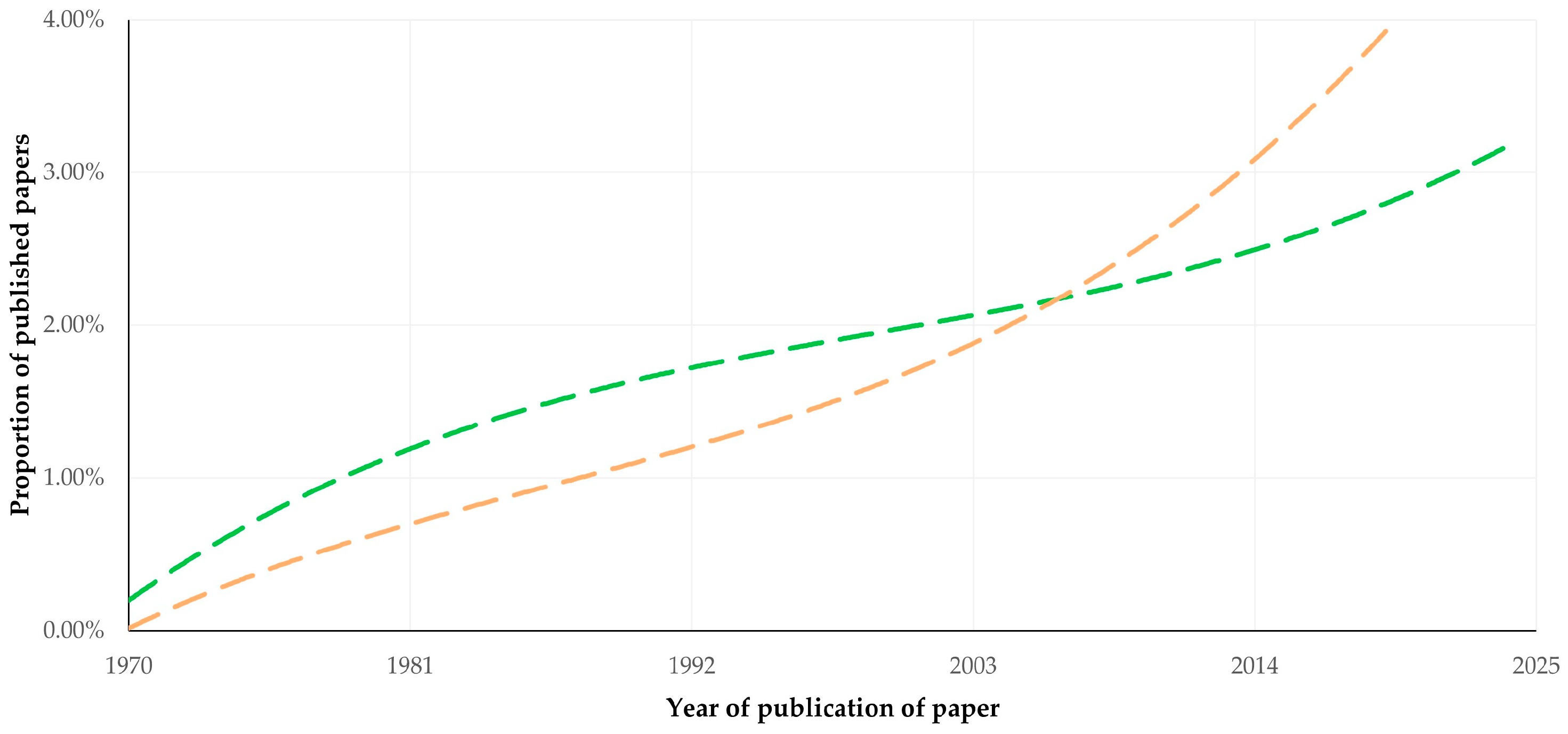
Figure 1. Trendlines for the annual proportion of published papers among all papers related to sheep (green) or to goats (coral) published from 1970 to 2024.
Animals 16 01163 g001
Figure 2. Line plot of the rank among the top categories of journals annually from 1970 to 2024 for papers related to sheep (a) or goats (b) (each line represents the classification of respective categories annually throughout the study period, with the following colour codes: red line: Veterinary Sciences, blue line: Agriculture Dairy Animal Science, green line: Biochemistry Molecular Biology, black line: Food Science Technology).
Animals 16 01163 g002
Figure 3. Column plot of the proportion of papers related to sheep (green) or to goats (coral) in English language, in accordance with the time period of publication.
Animals 16 01163 g003
Figure 4. Filled maps of countries in accordance with total number of papers related to sheep (a) or to goats (b) published from 1970 to 2024.
Animals 16 01163 g004
Figure 5. Proportions of papers related to sheep (green) or to goats (coral) published from 1970 to 2024, in accordance with the geographical subregion of the countries of origin.
Animals 16 01163 g005
Figure 6. Line plot of the rank among the top topics-micro annually from 1970 to 2024 for papers related to sheep (a) or goats (b) (each line represents the classification of respective topics-micro annually throughout the study period, with the following colour codes: green line: Ruminant nutrition, blue line: Livestock reproduction, purple line: Anthelmintic resistance, grey line: Dairy product chemistry).
Animals 16 01163 g006
Figure 7. Stacked area plot of the yearly proportion of papers related to sheep or goats published from 1970 to 2004, in accord with type of accessibility, i.e., published under subscription-only (pink) or open (green) access.
Animals 16 01163 g007
Figure 8. Trendlines for the proportion of published papers that served the ‘Climate action’ sustainable goal among all papers related to sheep (green) or goats (coral) published during each of five time periods from 1970 to 2024.
Animals 16 01163 g008
Figure 9. Line plot of average number of citations received annually per paper related to sheep (green) or to goats (coral) published from 1970 to 2024.
Animals 16 01163 g009
Table 1. Ten journals, in which most papers related to sheep or goats were published from 1970 to 2024, with respective numbers of published papers.
Papers Related to SheepPapers Related to Goats
Journal in Which Publishedn%Journal in Which Publishedn%
Small Ruminant Research35732.2Small Ruminant Research29544.4
Journal of Animal Science25201.5Indian Journal of Animal Sciences16282.4
Veterinary Parasitology22121.3Journal of Dairy Science10351.5
Animals14640.9Tropical Animal Health and Production10111.5
Tropical Animal Health and Production14180.9Animals9071.3
Plos One13940.8Indian Veterinary Journal8651.3
Endocrinology13920.8Veterinary Parasitology7831.2
Indian Journal of Animal Sciences13300.8Theriogenology6420.9
Biology of Reproduction11950.7Plos One6190.9
Theriogenology11840.7Veterinary Microbiology4490.7
Table 2. Ten Web of Science (WoS) categories of journals, in which most papers related to sheep or goats were published from 1970 to 2024, with respective number of papers.
WoS Categories of Journals
Papers Related to SheepPapers Related to Goats
Categoryn%Categoryn%
Veterinary Sciences37,23522.6Veterinary Sciences18,55427.4
Agriculture Dairy Animal Science27,73816.1Agriculture Dairy Animal Science15,24522.5
Immunology95605.8Food Science Technology59918.9%
Biochemistry Molecular Biology89485.4Biochemistry Molecular Biology32984.9
Parasitology71584.3Microbiology27764.1
Zoology70654.3Parasitology27584.1
Reproductive Biology69634.2Zoology27544.1
Endocrinology Metabolism65724.0Immunology24613.6
Physiology65334.0Biotechnology Applied Microbiology23203.4
Agriculture Multidisciplinary63143.8Reproductive Biology21323.2
Table 3. Ten topics-meso of most papers related to sheep or goats published from 1970 to 2024, with respective numbers of published papers.
Topics-Meso
Papers Related to SheepNo. of PapersPapers Related to GoatsNo. of Papers
Dairy and Animal Sciences33,137Dairy and Animal Sciences13,436
Parasitology—General10,635Food Science and Technology3385
Immunology5701Parasitology—General3284
Reproductive Biology5526Reproductive Biology2864
Obstetrics and Gynecology4726Zoonotic Diseases2754
Zoonotic Diseases4126Virology—General1457
Zoology and Animal Ecology3870Inflammatory Bowel Diseases and
Infections
1388
Endocrinology and Metabolism3502Zoology and Animal Ecology1214
Neurodegenerative Diseases2767Sexually Transmitted Infections1187
Bacteriology2432Parasitology—Malaria, Toxoplasmosis and Coccidiosis1127
Table 4. Ten topics-micro of most papers related to sheep or goats published from 1970 to 2024, with respective numbers of published papers.
Topics-Micro
Papers Related to SheepNo. of PapersPapers Related to GoatsNo. of Papers
Ruminant nutrition15,323Ruminant nutrition5668
Livestock reproduction8656Livestock reproduction3357
Anthelmintic resistance7130Dairy product chemistry2915
Farm animal welfare3691Anthelmintic resistance2278
Wildlife ecology2822Farm animal welfare1233
Prion pathogenesis2658Mastitis1195
Meat quality2539Meat quality1115
Embryo development2102Tick-borne pathogens1082
Tick-borne pathogens1998Male fertility1047
Dairy product chemistry1673Wildlife ecology959
Table 5. Top and second top topics-micro of origin on annual basis for papers related to sheep or goats published from 1970 to 2024.
Topics-MicroPapers Related to SheepPapers Related to Goats
Years as Top
Category
Years as Second Top CategoryYears as Top
Category
Years as Second Top Category
Anthelmintic resistance0602
Dairy products chemistry00010
Farm animal welfare0001
Interferons0200
Livestock nutrition042239
Mastitis0002
Peroxisomes0001
Ruminant nutrition550530
Schistosomiasis0001
Somatic hypermutation0514
Table 6. Details regarding the papers related to sheep or to goats published from 1970 to 2024, published by the ten authors with most of such papers.
Ten Authors with Most Published Papers
AttributesPapers Related to SheepPapers Related to Goats
Median no. of papers (IQR 1)214 (56)133 (23)
Median no. of papers as first
author(s) (IQR)
19 (12)14 (14)
Median no. of papers as last author(s)101 (41)45 (29)
Median proportion of collaborative
papers among authors with most papers
14.0%17.4%
Median time span of papers (IQR)38 (11) years26 (9) years
Median total citations received by all
papers published by each author (IQR)
7936 (5645)2767 (1183)
Median no. of citations received per
paper published by each author (IQR)
24.0 (10.5)12.0 (3.0)
Median h-index (IQR)50 (16)26 (8)
Journals in which most papers
were published 2
American Journal of Obstetrics and Gynecology, American Journal of Physiology-Regulatory Integrative and Comparative Physiology, Biology of Reproduction (n = 2 each), Endocrinology, Pediatric Research, Shock, Small Ruminant Research (n = 1 each)Small Ruminant Research (n = 3), Animals, Animal Feed Science and Technology, Journal of Dairy Science, Molecular Biology Reports, Pesquisa Veterinaria Brasileira, Theriogenology, Veterinary Parasitology (n = 1 each)
Predominant topics-meso 3Obstetrics and gynecology (n = 5), Dairy and animal sciences, Wounds and ulcers (n = 2 each), Endocrinology and metabolism (n = 1)Dairy and animal sciences (n = 5), Reproductive biology (n = 3), Complementary and alternative medicine, Parasitology—general (n = 1 each)
Predominant topics-micro 3Neonatal hypoxia effects (n = 3), Preterm birth causes, Livestock reproduction (n = 2), Burns, Gonadotropin-releasing hormone, Mastitis (n = 1 each)Ruminant nutrition (n = 5), Fertility preservation (n = 3), Anthelmintic resistance, Pyrrolizidine alkaloids (n = 1 each)
1 IQR: interquartile range; 2 results indicate no. of authors with that journal as the predominant in their published papers; 3 results indicate no. of authors with that topic as the predominant among in their published papers.
Disclaimer/Publisher’s Note: The statements, opinions and data contained in all publications are solely those of the individual author(s) and contributor(s) and not of MDPI and/or the editor(s). MDPI and/or the editor(s) disclaim responsibility for any injury to people or property resulting from any ideas, methods, instructions or products referred to in the content.