Short-Chain Fatty Acids Regulate Poultry Feed Intake via the Hypothalamus: Receptor-Mediated and Epigenetic Mechanisms

 , , ,
, , ,
Simple Summary
Abstract
1. Introduction
1.1. Emerging Challenges in Poultry Production: Towards Comprehensive Lifetime Health Management Beyond Growth Performance
1.2. The Rise of the Microbiota–Gut–Brain Axis: Definition, Components, and Its Central Role in Stress Response and Behavioral Regulation
1.3. Core Focus of This Review: SCFAs as Indispensable Chemical Messengers in the MGB Axis, Bridging Dietary Nutrition and Brain Function Output
2. The Lifecycle of SCFAs: From Gut Fermentation to Systemic Messengers
2.1. Generation Map: Core Microbiota and Functional Genes Responsible for SCFA Production in the Poultry Gastrointestinal Tract (With Emphasis on the Cecum)
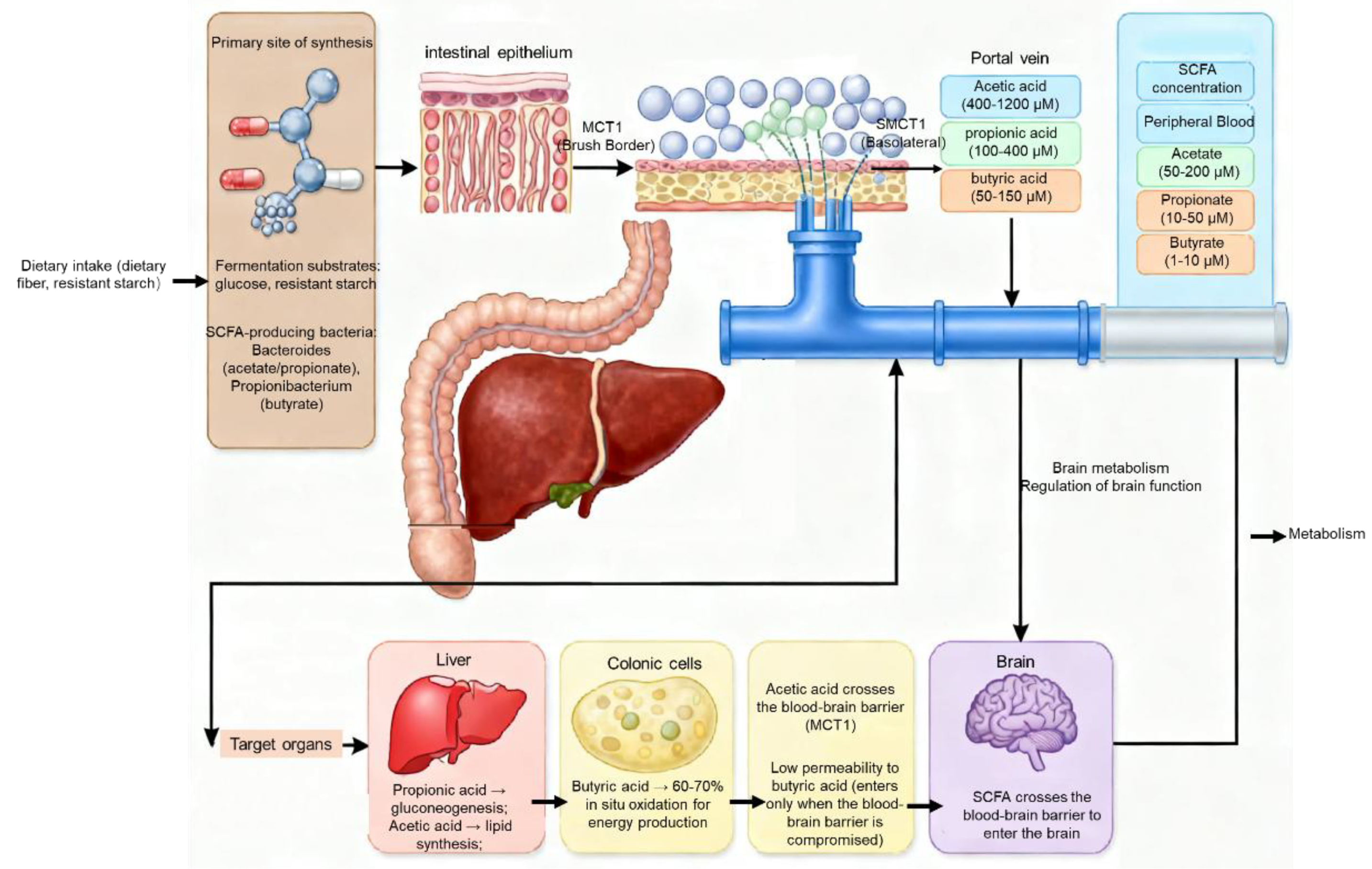
2.2. Fate and Distribution: SCFA Absorption, Portal Vein Transport, Tissue Metabolism, and Systemic Distribution
2.3. Concentration Kinetics: Dynamic SCFA Levels in Poultry and Influencing Factors (Age, Diet, and Environment)
3. Crossing the Barriers: SCFAs as Gut–Brain Messengers—Pathways of Communication
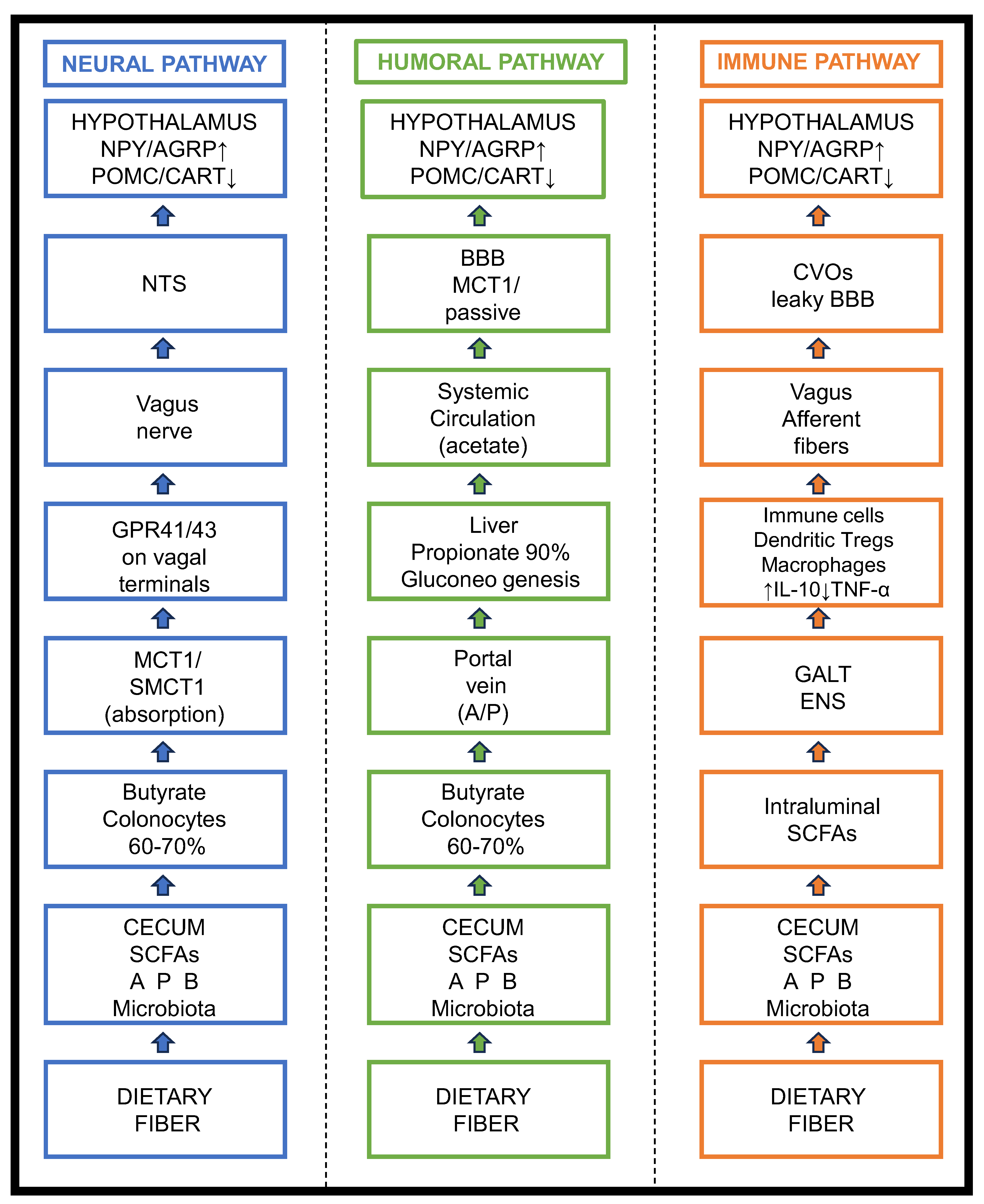
3.1. Neural Pathway: How the Vagus Nerve Senses SCFA Signals and Relays Them to the Nucleus of the Solitary Tract, Ultimately Influencing the Hypothalamus
3.2. Humoral Pathway: How SCFAs Cross the Blood–Brain Barrier to Act Directly on the Central Nervous System
3.3. Immune Pathway: SCFAs Transmit Anti-Inflammatory/Pro-Inflammatory Signals to the Brain Indirectly by Modulating Peripheral Immune Cells and Cytokines
4. Arrival at the Command Center: The Molecular Switch-like Role of SCFAs in the Hypothalamus
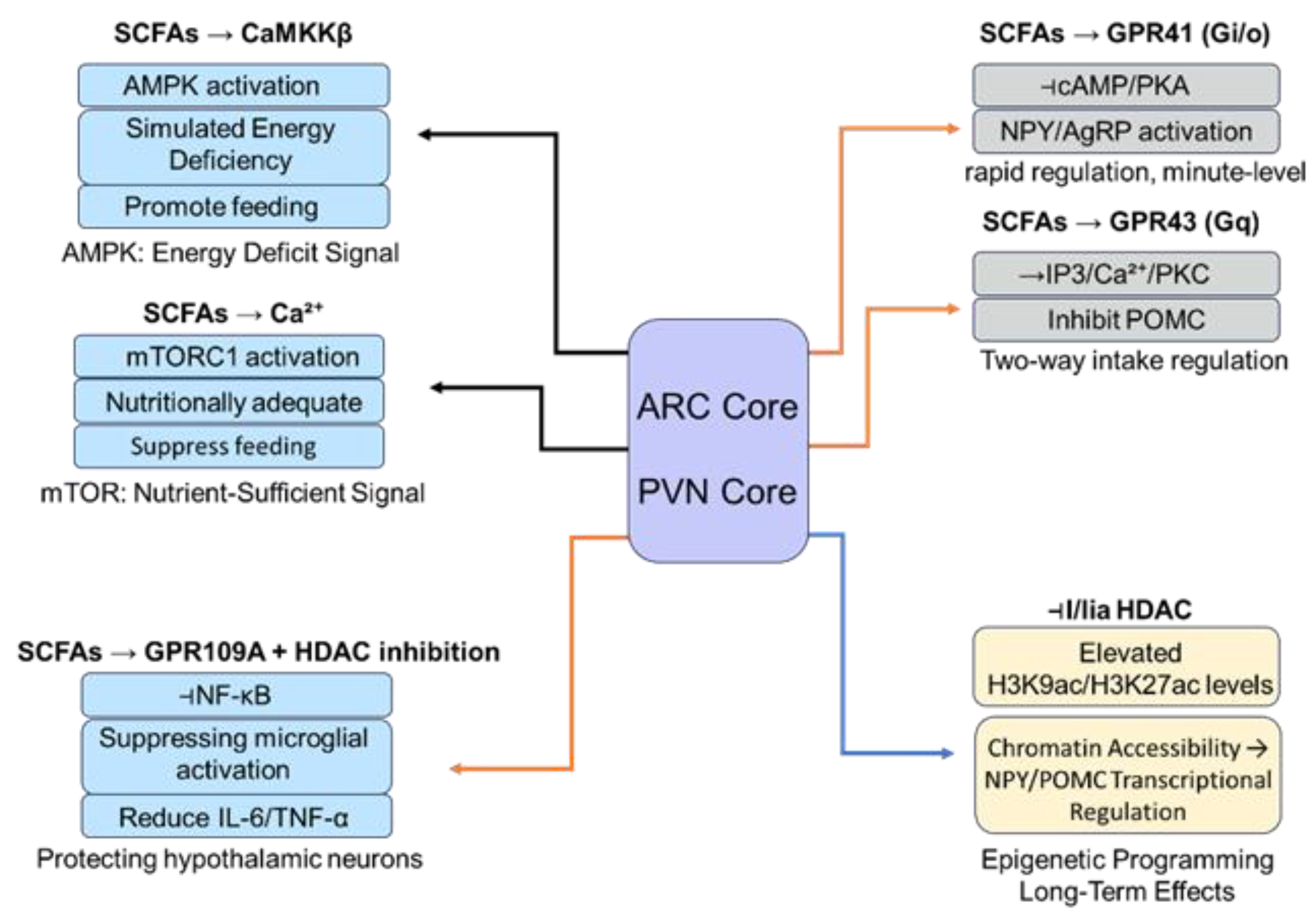
4.1. Receptor-Mediated Rapid Signal Transduction
4.1.1. GPR41/GPR43 Signal Transduction: Coupling to G Proteins, cAMP/PKA, and MAPK/ERK Pathways
4.1.2. Histone Deacetylase Inhibition: SCFAs (Particularly Butyrate) as Epigenetic Regulators Directly Influencing Hypothalamic Gene Expression
4.2. Energy Sensing and Fine-Tuning of Feeding Behavior
4.2.1. Crosstalk with the AMPK/mTOR Energy-Sensing Pathways
4.2.2. Differential Regulation of Key Neuropeptides: Upregulating NPY/AgRP and Downregulating POMC/CART
4.3. The Fire-Extinguisher Role in Neuroinflammation
4.3.1. Suppressing Activation of the Hypothalamic NF-κB Pathway

| Core Dimensions & Specific Points | Neural Pathway | Humoral Pathway | Immune Pathway | References |
|---|---|---|---|---|
| 1. Signal Perception & Decoding | ||||
| Key Receptors/Transporters | GPR41 (Gi/o), GPR43 (Gi/o, Gq), 5-HT3 | MCT1, SMCT1, Passive | GPR43, GPR109A, HDACs | [63,73,80,81,82,83,84] |
| Ligand Preference & Affinity | GPR41: Prop ≈ But > Acet; GPR43: Prop > Acet > But; 5-HT3: 5-HT | Acet > Prop > But; regulated by pH | GPR109A: But; HDAC: But > Prop > Acet | |
| Subcellular Localization & Microdomain | Vagal terminal; neuro-endocrine unit | Enterocyte membrane; brain endothelial | Immune cell membrane/nucleus | |
| 2. Intracellular Signal Transduction Cascade | ||||
| Second Messengers & Kinases | ↓cAMP/PKA, ↑IP3/DAG/PKC, ↑intracellular Ca2+, MAPK/ERK activation | Formation of transmembrane H+/Na+ gradients, changes in intracellular Acetyl-CoA/ATP/NADH levels | ↓cAMP/PKA (GPR43/Gi), ↑IP3/Ca2+ (GPR43/Gq), NF-κB/MAPK pathway inhibition | [64,65,78,79,85,86,87] |
| Ion Channels & Electrophysiology | Voltage-gated Ca2+ channel opening, K+ channel inhibition, action potential initiation | Indirectly affects neuronal excitability via altering energy metabolism; no direct electrical signal | Modulates immune cell Ca2+ signaling, affects cytokine secretion; no direct neural electrical signal | |
| Transcriptional Regulation Nodes | Rapid expression of immediate early genes (e.g., c-Fos) in NTS | Altered activity of metabolic sensing transcription factors (e.g., ChREBP, PPARs); global increase in histone acetylation | Activation of anti-inflammatory transcription factors (e.g., STAT3, AhR); inhibition of pro-inflammatory factor (e.g., NF-κB) nuclear translocation | |
| 3. Cross-Cellular Communication & Interface | ||||
| Cell–cell Dialogue | Enteroendocrine cell → (5-HT/CCK) → Vagal afferent; Vagus nerve → (ACh) → Gut immune cells | Enterocyte → (SCFAs) → Portal circulation; Astrocyte → (lactate/glutamine) → Neuron | Dendritic cell → (IL-10/TGF-β) → T cell; Treg → (IL-10) → Macrophage | [61,62,66,71,72,74,88,89,90] |
| Biological Barrier Crossing | No need to cross cellular barriers, direct transmission via electrical signals | Must sequentially cross gut epithelial barrier and blood–brain barrier; efficiency determines signal strength | Immune cell migration; cytokines enter brain via “leaky” circumventricular organs | |
| Functional Synapses/Junctions | Glutamatergic chemical synapses between vagus nerve and NTS neurons | Physical barrier and selective channel formed by BBB endothelial tight junctions | “Immunological synapses” form between immune cells and neurons/glia for information exchange | |
| 4. Central Targeting & Integration | ||||
| Primary Central Relay Station | Nucleus of the Solitary Tract (NTS, visceral sensory gateway) | Hypothalamic Arcuate Nucleus (near BBB), periventricular regions | Circumventricular Organs (e.g., Area Postrema), Meninges, Choroid Plexus | [67,68,69,75,76,77,91,92] |
| Higher-Order Integration Centers | Hypothalamus (ARC, PVN, LH), Parabrachial Nucleus, Amygdala | Hypothalamus (energy sensing), Hippocampus (learning/memory), Cortex (cognition) | Hypothalamus (neuroendocrine center), Amygdala (emotion) | |
| Specific Cellular Responses | NPY/AgRP neurons (activated), POMC neurons (inhibited), NTS projection neurons (integration) | Astrocytes (metabolic support), hypothalamic glucose-sensing neurons (excitability changes) | Microglia (phenotype polarization), hypothalamic neurons (reduced inflammatory damage) | |
| 5. Neural Circuits & Information Flow | ||||
| Information Flow Direction & Speed | Unidirectional afferent (gut → brain), millisecond-second scale, topographically organized | Diffuse distribution, minute-scale, concentration-dependent, influenced by systemic circulation | Multi-directional, network-based, hour-scale, possesses “immune memory” characteristics | [61,62,63,70,78,79,90] |
| Circuit Hierarchy | Brainstem → Hypothalamus → Limbic system → Cortex, hierarchical processing | Parallel processing: multiple brain regions receive signals simultaneously for integration | Modulatory input: alters functionality of existing neural circuits by changing the microenvironment | |
| Feedback Regulation Mechanisms | Satiety signals ascend via same pathway to terminate feeding; hypothalamic-autonomic output regulates gut function | Central regulation of appetite/behavior alters SCFA substrate intake (long-loop feedback) | Central anti-inflammatory signals descend via cholinergic anti-inflammatory pathway to modulate gut immunity | |
| 6. Epigenetic Reprogramming | ||||
| Histone Modifications | H3K9ac modification of neuropeptide genes in vagal ganglia may regulate long-term sensitivity | Significantly increased H3K9/K27ac at promoters of hypothalamic POMC, NPY genes, persistently altering transcription | Histone hyperacetylation at Foxp3 locus in T cells and Il10 promoter in microglia, stabilizing anti-inflammatory phenotype | [77,87,100,101,102,103] |
| DNA Methylation | - | Altered DNA methylation at promoters of hypothalamic metabolic genes (e.g., LeptinR) | Demethylation at inflammation-related gene regions in immune cells (e.g., TSDR in Tregs) | |
| Non-coding RNA Networks | Altered miR-143/145 expression in vagus nerve may modulate receptor sensitivity | Regulation of metabolism-related circRNA expression (e.g., Cdr1as) in astrocytes | Upregulation of miRNAs (e.g., miR-10a) in Tregs, suppressing inflammatory cytokine production | |
| 7. Physiological Functional Output | ||||
| Rapid Behavioral Adjustment | Immediate feeding initiation/cessation, food-seeking behavior, gastrointestinal reflexes (e.g., gastric emptying) | (Not directly involved in rapid behavior.) Provides metabolic context for behavior. | (Not directly involved in rapid behavior.) Indirectly acts by influencing emotional state. | [16,25,69,70,75,76,91,92] |
| Energy Metabolism Regulation | Short-term appetite control, meal-by-meal fine-tuning of energy intake | Long-term energy set-point programming, systemic energy allocation and storage regulation | Maintains metabolic homeostasis, prevents energy waste from inflammation (e.g., sickness behavior) | |
| Neuroimmunity & Protection | Indirectly modulates peripheral inflammation via cholinergic anti-inflammatory pathway | Enhances neuronal stress resistance by providing energy substrates and epigenetic regulation | Directly suppresses central neuroinflammation, protects hypothalamic neurons from metabolic inflammatory damage | |
| 8. Pathway Interplay & Synergy | ||||
| Signal Amplification | Vagal activation can increase intestinal permeability, promoting SCFA absorption (positive feedback) | High SCFA concentrations directly suppress appetite via humoral pathway, synergizing with neural signals | Anti-inflammatory environment ensures normal function of neurons/glia, enabling more precise responses to SCFAs | [61,62,63,70,78,79,90,119] |
| Signal Complementarity | Provides spatiotemporally precise, fast signals | Provides sustained, systemic metabolic background signals | Provides defensive background tone, ensuring the former two operate in a stable environment | |
| Temporal Synergy | Seconds–minutes scale: responsible for initiation and rapid adjustment | Minutes–hours scale: responsible for state maintenance and medium-term adaptation | Hours–days scale: responsible for long-term functional plasticity and system protection |
4.3.2. Modulating Microglial Function to Maintain Homeostasis of the Neuronal Microenvironment
| Signaling Pathway/Mechanism | Core Molecular Events & Signal Transduction | Functional Output & Physiological Significance | Key Evidence | Regulatory Specificity & Cellular Localization | References |
|---|---|---|---|---|---|
| 1. GPR41 Signaling Axis |
| Rapid promotion of feeding behavior, enhancement of appetite neuropeptide expression, response to intestinal energy metabolic status | Significantly attenuated feeding response to SCFAs in GPR41 gene knockout mice | Primarily expressed in NPY/AgRP neurons, vagal ganglion neurons | [63,64,65,94,95,96] |
| 2. GPR43 Signaling Axis |
| Bidirectional regulation of feeding behavior, maintenance of energy metabolic homeostasis, prevention of hyperphagia | Weakened anorexic effects of SCFAs in POMC neuron-specific GPR43 knockout | Mainly distributed in POMC neurons, intestinal endocrine cells | [63,64,65,97,98,99] |
| 3. Histone Deacetylase Inhibition |
| Epigenetic reprogramming, long-term feeding set point | ChIP-seq demonstrates significant enrichment of H3K9ac at NPY gene promoter region | Genome-wide effects, most prominent in energy-sensing neurons | [100,101,102,103,104,105,106] |
| 4. Energy Sensing AMPK Axis |
| Simulation of energy-deficient state, promotion of energy acquisition behavior, enhancement of catabolism | Intrahypothalamic injection of AMPK agonist (AICAR) mimics SCFAs’ feeding-promoting effects | Specific expression in ARC nucleus neurons, responsive to energy status changes | [107,108,109,110] |
| 5. mTORC1 Nutrient Sensing Axis |
| Transmission of nutrient sufficiency signals, limitation of energy intake, promotion of anabolism | Rapamycin pretreatment blocks anorexic effects of high-dose SCFAs | Primarily activated in POMC neurons, regulated by nutritional status | [107,108,111,112] |
| 6. Neurotransmitter Metabolic Axis |
| Fine regulation of synaptic transmission, influence on neural circuitry of feeding decision-making | 13C-labeled acetate PET imaging shows increased hypothalamic acetylcholine synthesis | Astrocyte-neuron metabolic coupling, presynaptic terminal specificity | [45,76] |
| 7. Reactive Oxygen Species Signaling Axis |
| Coupling of metabolic state and electrical activity, bidirectional regulation of neuronal excitability | N-acetylcysteine pretreatment partially attenuates acute feeding-promoting effects of SCFAs | Mitochondrial specificity, most significant in metabolically sensitive neurons | [124] |
| 8. Neuroimmune Regulation Axis |
| Maintenance of feeding center microenvironment stability, prevention of metabolic inflammatory damage | Butyrate pretreatment significantly alleviates LPS-induced hypothalamic inflammation | Microglial specificity, blood–brain barrier interface cells | [80,81,82,83,84,119,120,121,122,123,124,125,126,127,128,129] |
| 9. Calcium Signaling Integration Axis |
| Integration of multi-pathway signal inputs, maintenance of calcium homeostasis balance | Calcium imaging shows SCFA-induced specific calcium oscillations in hypothalamic neurons | Neuronal soma and dendrite specificity, spatiotemporally specific regulation | [64,65,96,97,98] |
| 10. Cyclic AMP Signaling Axis |
| Fine regulation of transcriptional activity, mediation of long-term synaptic plasticity | FRET detection shows SCFAs alter cAMP dynamics | Neuronal postsynaptic density region, nuclear transcription regulation area | [95,96,97,98,99] |
| 11. Autophagy Flux Regulation Axis |
| Maintenance of protein homeostasis, impact on long-term neuronal function | Electron microscopy reveals altered autophagosome numbers in SCFA-treated hypothalamic neurons | Neuronal axon terminals, metabolically sensitive compartments | [111,112] |
| 12. Circadian Rhythm Regulation Axis |
| Coordination of feeding rhythm and metabolic cycles, maintenance of circadian clock synchronization | Bioluminescence imaging shows SCFAs alter suprachiasmatic nucleus rhythm | Suprachiasmatic nucleus neurons, core rhythm regulation region | [25,112] |
5. From Theory to Practice: Harnessing the Power of SCFAs Through Nutritional Strategies
5.1. Substrate Engineering: Precision Design of Dietary Fiber Sources (Structure, Solubility, and Degree of Polymerization) to Directionally Modulate the SCFA Profile
5.2. Microbiota Engineering
5.2.1. Prebiotics: Screening Specific Oligosaccharides That Efficiently Promote SCFA-Producing Microbiota
5.2.2. Probiotics and Synbiotics: Direct Supplementation of Acid-Producing Bacteria or Combination with Prebiotics
5.3. Exogenous Regulators: The Leverage Effect of Phytochemicals (e.g., Chlorogenic Acid, Resveratrol) in Indirectly Boosting SCFAs by Reshaping the Microbiota
5.4. Challenges and Considerations: Dose–Effect Relationships, Functional Specificity of Different SCFAs, and the Impact of Individual Microbiota Variations
| Strategy Dimension | Intervention Category | Specific Protocols | Target SCFA Profile | Application Stage | Research Evidence & Biological Effects | References |
|---|---|---|---|---|---|---|
| Substrate Engineering | Soluble Fiber |
| Significantly increases butyrate proportion | Brooding Period Stress Period |
| [20,21,22,52,56,57,135,136] |
| Insoluble Fiber |
| Increases acetate proportion | Growing Period Finishing Period |
| [22,53,54,137] | |
| Resistant Starch |
| Sustained and stable butyrate production | Full Production Cycle |
| [22,134] | |
| Microbiota Engineering | Probiotics |
| Increases butyrate production | Stress Period Recovery Period |
| [30,31,32] |
| Prebiotics |
| Modulates SCFA profile | Full Production Cycle |
| [141,142,143,144,145,146] | |
| Synbiotics |
| Significantly enhances butyrate | Critical Stages |
| [152,153] | |
| Exogenous Regulators | Polyphenols |
| Increases total SCFAs | Stress Period |
| [154,155,156,157,158,159] |
| Essential Oils |
| Optimizes SCFA ratio | High-Density Rearing |
| [154,155] | |
| Integrated Application | Precision Programming |
| Dynamic balance | Full Production Cycle |
| [134,152,153,160,161,162,163,164,165,166] |
6. Limitations and Knowledge Gaps in Poultry SCFA Research
6.1. Extrapolation from Mammalian Studies: A Necessary but Cautious Approach
6.2. Species-Specific Differences in Neuroanatomy and Metabolism
6.3. Methodological Challenges in Poultry Hypothalamic Research
6.4. The “One-Bird-One-Strategy” Concept: Vision or Reality?
7. Conclusions and Perspectives
Author Contributions
Funding
Institutional Review Board Statement
Informed Consent Statement
Data Availability Statement
Conflicts of Interest
References
- Cheng, G.; Hao, H.; Xie, S.; Wang, X.; Dai, M.; Huang, L.; Yuan, Z. Antibiotic alternatives: The substitution of antibiotics in animal husbandry? Front. Microbiol. 2014, 5, 217. [Google Scholar] [CrossRef] [PubMed]
- Diarra, M.S.; Malouin, F. Antibiotics in Canadian poultry productions and anticipated alternatives. Front. Microbiol. 2014, 5, 282. [Google Scholar] [CrossRef] [PubMed]
- Ducatelle, R.; Goossens, E.; De Meyer, F.; Eeckhaut, V.; Antonissen, G.; Haesebrouck, F.; Van Immerseel, F. Biomarkers for monitoring intestinal health in poultry: A review. Vet. Res. 2018, 49, 43. [Google Scholar] [CrossRef] [PubMed]
- Zampiga, M.; Calini, F.; Sirri, F. The role of feeding behavior in poultry production: A review. Ital. J. Anim. Sci. 2021, 20, 385–400. [Google Scholar]
- Shang, Y.; Kumar, S.; Oakley, B.; Kim, W.K. Chicken gut microbiota: Importance and detection technology. Front. Vet. Sci. 2018, 5, 254. [Google Scholar] [CrossRef]
- Shini, S.; Huff, G.R.; Shini, A.; Kaiser, P. Understanding stress-induced immunosuppression: Exploration of cytokine and chemokine gene profiles in chicken peripheral leukocytes. Poult. Sci. 2010, 89, 841–851. [Google Scholar] [CrossRef]
- Lillehoj, H.; Liu, Y.; Calsamiglia, S.; Fernandez-Miyakawa, M.E.; Chi, F.; Cravens, R.L.; Oh, S.; Gay, C.G. Phytochemicals as antibiotic alternatives to promote growth and enhance host health. Vet. Res. 2018, 49, 76. [Google Scholar] [CrossRef]
- Cryan, J.F.; O’Riordan, K.J.; Cowan, C.; Sandhu, K.V.; Bastiaanssen, T.; Boehme, M.; Codagnone, M.G.; Cussotto, S.; Fulling, C.; Golubeva, A.V.; et al. The microbiota-gut-brain axis. Physiol. Rev. 2019, 99, 1877–2013. [Google Scholar] [CrossRef]
- Collins, S.M.; Surette, M.; Bercik, P. The interplay between the intestinal microbiota and the brain. Nat. Rev. Microbiol. 2012, 10, 735–742. [Google Scholar] [CrossRef]
- Mayer, E.A.; Knight, R.; Mazmanian, S.K.; Cryan, J.F.; Tillisch, K. Gut microbes and the brain: Paradigm shift in neuroscience. J. Neurosci. 2014, 34, 15490–15496. [Google Scholar] [CrossRef]
- Bailey, M.T.; Dowd, S.E.; Parry, N.M.; Galley, J.D.; Schauer, D.B.; Lyte, M. Stressor exposure disrupts commensal microbial populations in the intestines and leads to increased colonization by Citrobacter rodentium. Infect. Immun. 2010, 78, 1509–1519. [Google Scholar] [CrossRef] [PubMed]
- de Punder, K.; Pruimboom, L. Stress induces endotoxemia and low-grade inflammation by increasing barrier permeability. Front. Immunol. 2015, 6, 223. [Google Scholar] [CrossRef]
- Bharwani, A.; Mian, M.F.; Foster, J.A.; Surette, M.G.; Bienenstock, J.; Forsythe, P. Structural and functional consequences of chronic psychosocial stress on the microbiome and host. Psychoneuroendocrinology 2016, 63, 217–227. [Google Scholar] [CrossRef] [PubMed]
- Foster, J.A.; Rinaman, L.; Cryan, J.F. Stress and the gut-brain axis: Regulation by the microbiome. Neurobiol. Stress 2017, 19, 124–136. [Google Scholar] [CrossRef] [PubMed]
- Davidson, G.L.; Cooke, A.C.; Johnson, C.N.; Quinn, J.L. The gut microbiome as a driver of individual variation in cognition and functional behaviour. Philos. Trans. R. Soc. Lond. B Biol. Sci. 2018, 373, 20170286. [Google Scholar] [CrossRef]
- Frost, G.; Sleeth, M.L.; Sahuri-Arisoylu, M.; Lizarbe, B.; Cerdan, S.; Brody, L.; Anastasovska, J.; Ghourab, S.; Hankir, M.; Zhang, S.; et al. The short-chain fatty acid acetate reduces appetite via a central homeostatic mechanism. Nat. Commun. 2014, 5, 3611. [Google Scholar] [CrossRef]
- Zheng, P.; Zeng, B.; Zhou, C.; Liu, M.; Fang, Z.; Xu, X.; Zeng, L.; Chen, J.; Fan, S.; Du, X.; et al. Gut microbiome remodeling induces depressive-like behaviors through a pathway mediated by the host’s metabolism. Mol. Psychiatry 2016, 21, 786–796. [Google Scholar] [CrossRef]
- Sarkar, A.; Lehto, S.M.; Harty, S.; Dinan, T.G.; Cryan, J.F.; Burnet, P.W. Psychobiotics and the manipulation of bacteria–gut–brain signals. Trends Neurosci. 2016, 39, 763–781. [Google Scholar] [CrossRef]
- Koh, A.; De Vadder, F.; Kovatcheva-Datchary, P.; Bäckhed, F. From dietary fiber to host physiology: Short-chain fatty acids as key bacterial metabolites. Cell 2016, 165, 1332–1345. [Google Scholar] [CrossRef]
- Sonnenburg, J.L.; Bäckhed, F. Diet–microbiota interactions as moderators of human metabolism. Nature 2016, 535, 56–64. [Google Scholar] [CrossRef]
- Makki, K.; Deehan, E.C.; Walter, J.; Bäckhed, F. The impact of dietary fiber on gut microbiota in host health and disease. Cell Host Microbe 2018, 23, 705–715. [Google Scholar] [CrossRef] [PubMed]
- Jha, R.; Berrocoso, J.D. Dietary fiber and protein fermentation in the intestine of swine and poultry: A review. Anim. Feed Sci. Technol. 2016, 212, 36–51. [Google Scholar] [CrossRef]
- Tan, J.; McKenzie, C.; Potamitis, M.; Thorburn, A.N.; Mackay, C.R.; Macia, L. The role of short-chain fatty acids in health and disease. Adv. Immunol. 2014, 121, 91–119. [Google Scholar] [PubMed]
- Stilling, R.M.; van de Wouw, M.; Clarke, G.; Stanton, C.; Dinan, T.G.; Cryan, J.F. The neuropharmacology of butyrate: The bread and butter of the microbiota-gut-brain axis? Neurochem. Int. 2016, 99, 110–132. [Google Scholar] [CrossRef]
- De Vadder, F.; Kovatcheva-Datchary, P.; Goncalves, D.; Vinera, J.; Zitoun, C.; Duchampt, A.; Bäckhed, F.; Mithieux, G. Microbiota-generated metabolites promote metabolic benefits via gut-brain neural circuits. Cell 2014, 156, 84–96. [Google Scholar] [CrossRef]
- Desbonnet, L.; Clarke, G.; Traplin, A.; O’Sullivan, O.; Crispie, F.; Moloney, R.D.; Cotter, P.D.; Dinan, T.G.; Cryan, J.F. Gut microbiota depletion from early adolescence in mice: Implications for brain and behaviour. Brain Behav. Immun. 2015, 48, 165–173. [Google Scholar] [CrossRef]
- Oakley, B.B.; Lillehoj, H.S.; Kogut, M.H.; Kim, W.K.; Maurer, J.J.; Pedroso, A.; Lee, M.D.; Collett, S.R.; Johnson, T.J.; Cox, N.A. The chicken gastrointestinal microbiome. FEMS Microbiol. Lett. 2014, 360, 100–112. [Google Scholar] [CrossRef]
- Apajalahti, J.; Kettunen, A.; Graham, H. Characteristics of the gastrointestinal microbial communities, with special reference to the chicken. World’s Poult. Sci. J. 2004, 60, 223–232. [Google Scholar] [CrossRef]
- Clavijo, V.; Flórez, M.J.V. The gastrointestinal microbiome and its association with the control of pathogens in the chicken. Poult. Sci. 2018, 97, 1006–1021. [Google Scholar] [CrossRef]
- Wei, S.; Morrison, M.; Yu, Z. Bacterial census of poultry intestinal microbiome. Poult. Sci. 2013, 92, 671–683. [Google Scholar] [CrossRef]
- Stanley, D.; Hughes, R.J.; Moore, R.J. Microbiota of the chicken gastrointestinal tract: Influence on health, productivity and disease. Appl. Microbiol. Biotechnol. 2014, 98, 4301–4310. [Google Scholar] [CrossRef]
- Borda-Molina, D.; Vital, M.; Sommerfeld, V.; Rodehutscord, M.; Camarinha-Silva, A. Insights into broilers’ gut microbiota fed with phosphorus, calcium, and phytase supplemented diets. Front. Microbiol. 2016, 7, 2033. [Google Scholar] [CrossRef]
- Rios-Covian, D.; Ruas-Madiedo, P.; Margolles, A.; Gueimonde, M.; de Los Reyes-Gavilan, C.G.; Salazar, N. Intestinal short chain fatty acids and their link with diet and human health. Front. Microbiol. 2016, 7, 185. [Google Scholar] [CrossRef] [PubMed]
- Louis, P.; Flint, H.J. Formation of propionate and butyrate by the human colonic microbiota. Environ. Microbiol. 2017, 19, 29–41. [Google Scholar] [CrossRef]
- Vital, M.; Karch, A.; Pieper, D.H. Colonic butyrate-producing communities in humans: An overview using omics data. mSystems 2017, 2, e00130-17. [Google Scholar] [CrossRef] [PubMed]
- Kogut, M.H. The gut microbiota and host innate immunity: A new frontier in the battle against infectious diseases in poultry. J. Appl. Poult. Res. 2013, 22, 637–646. [Google Scholar] [CrossRef]
- den Besten, G.; van Eunen, K.; Groen, A.K.; Venema, K.; Reijngoud, D.J.; Bakker, B.M. The role of short-chain fatty acids in the interplay between diet, gut microbiota, and host energy metabolism. J. Lipid Res. 2013, 54, 2325–2340. [Google Scholar] [CrossRef]
- Ritzhaupt, A.; Wood, I.S.; Ellis, A.; Hosie, K.B.; Shirazi-Beechey, S.P. Identification and characterization of a monocarboxylate transporter (MCT1) in pig and human colon: Its potential to transport L-lactate as well as butyrate. J. Physiol. 1998, 513, 719–732. [Google Scholar] [CrossRef]
- Cuff, M.A.; Lambert, D.W.; Shirazi-Beechey, S.P. Substrate-induced regulation of the human colonic monocarboxylate transporter, MCT1. J. Physiol. 2002, 539, 361–371. [Google Scholar] [CrossRef]
- Miura, H.; Ono, K.; Ohta, T. Short-chain fatty acids transport in the intestine of the chicken. J. Poult. Sci. 2001, 38, 90–96. [Google Scholar]
- Roediger, W.E. Utilization of nutrients by isolated epithelial cells of the rat colon. Gastroenterology 1982, 83, 424–429. [Google Scholar] [CrossRef] [PubMed]
- Bergman, E.N. Energy contributions of volatile fatty acids from the gastrointestinal tract in various species. Physiol. Rev. 1990, 70, 567–590. [Google Scholar] [CrossRef] [PubMed]
- Wong, J.M.; de Souza, R.; Kendall, C.W.; Emam, A.; Jenkins, D.J. Colonic health: Fermentation and short chain fatty acids. J. Clin. Gastroenterol. 2006, 40, 235–243. [Google Scholar] [CrossRef] [PubMed]
- Mitchell, R.W.; On, N.H.; Del Bigio, M.R.; Miller, D.W.; Hatch, G.M. Fatty acid transport protein expression in human brain and potential role in fatty acid transport across the blood-brain barrier. J. Neurochem. 2011, 117, 735–746. [Google Scholar]
- Wyss, M.T.; Jolivet, R.; Buck, A.; Magistretti, P.J.; Weber, B. In vivo evidence for lactate as a neuronal energy source. J. Neurosci. 2011, 31, 7477–7485. [Google Scholar] [CrossRef]
- Braniste, V.; Al-Asmakh, M.; Kowal, C.; Anuar, F.; Abbaspour, A.; Tóth, M.; Korecka, A.; Bakocevic, N.; Ng, L.G.; Kundu, P.; et al. The gut microbiota influences blood-brain barrier permeability in mice. Sci. Transl. Med. 2014, 6, 263ra158. [Google Scholar] [CrossRef]
- Cummings, J.H.; Pomare, E.W.; Branch, W.J.; Naylor, C.P.; Macfarlane, G.T. Short chain fatty acids in human large intestine, portal, hepatic and venous blood. Gut 1987, 28, 1221–1227. [Google Scholar] [CrossRef]
- Apajalahti, J.; Vienola, K. Interaction between chicken intestinal microbiota and protein digestion. Anim. Feed Sci. Technol. 2016, 221, 323–330. [Google Scholar] [CrossRef]
- Ballou, A.L.; Ali, R.A.; Mendoza, M.A.; Ellis, J.C.; Hassan, H.M.; Croom, W.J.; Koci, M.D. Development of the chick microbiome: How early exposure influences future microbial diversity. Front. Vet. Sci. 2016, 3, 2. [Google Scholar] [CrossRef]
- Videnska, P.; Sedlar, K.; Lukac, M.; Faldynova, M.; Gerzova, L.; Cejkova, D.; Sisak, F.; Rychlik, I. Succession and replacement of bacterial populations in the caecum of egg laying hens over their whole life. PLoS ONE 2014, 9, e115142. [Google Scholar] [CrossRef]
- Torok, V.A.; Hughes, R.J.; Mikkelsen, L.L.; Perez-Maldonado, R.; Balding, K.; MacAlpine, R.; Percy, N.J.; Ophel-Keller, K. Identification and characterization of potential performance-related gut microbiota in broiler chickens across various feeding trials. Appl. Environ. Microbiol. 2011, 77, 5868–5878. [Google Scholar] [CrossRef]
- Józefiak, D.; Rutkowski, A.; Martin, S.A. Carbohydrate fermentation in the avian ceca: A review. Anim. Feed Sci. Technol. 2004, 113, 1–15. [Google Scholar] [CrossRef]
- Jiménez-Moreno, E.; Romero, C.; Berrocoso, J.D.; Frikha, M.; Mateos, G.G. Effects of the inclusion of oat hulls or sugar beet pulp in the diet on gizzard characteristics, apparent ileal digestibility of nutrients, and microbial count in the ceca of broilers. Poult. Sci. 2013, 92, 779–791. [Google Scholar]
- Singh, A.K.; Kim, W.K. Effects of dietary fiber on nutrients utilization and gut health of poultry: A review of challenges and opportunities. Animals 2021, 11, 181. [Google Scholar] [CrossRef] [PubMed]
- Knarreborg, A.; Lauridsen, C.; Engberg, R.M.; Jensen, S.K. Dietary antibiotic growth promoters enhance the bioavailability of α-tocopheryl acetate in broilers by altering lipid absorption. J. Nutr. 2004, 134, 1487–1492. [Google Scholar] [CrossRef]
- Burkholder, K.M.; Thompson, K.L.; Einstein, M.E.; Applegate, T.J.; Patterson, J.A. Influence of stressors on normal intestinal microbiota, intestinal morphology, and susceptibility to Salmonella Enteritidis colonization in broilers. Poult. Sci. 2008, 87, 1734–1741. [Google Scholar] [CrossRef]
- Quinteiro-Filho, W.M.; Ribeiro, A.; Ferraz-de-Paula, V.; Pinheiro, M.L.; Sakai, M.; Sá, L.R.M.; Ferreira, A.J.P.; Palermo-Neto, J. Heat stress impairs performance parameters, induces intestinal injury, and decreases macrophage activity in broiler chickens. Poult. Sci. 2010, 89, 1905–1914. [Google Scholar] [CrossRef]
- Buján, N.; Atxaerandio, R.; Gómez, S.; Garriga, M.; Hernández, P.E. Effect of stocking density on growth performance, digestive stability, and gut microbiota of broiler chickens. Poult. Sci. 2018, 97, 3813–3823. [Google Scholar]
- Li, J.; Hao, H.; Cheng, G.; Liu, C.; Ahmed, S.; Shabbir, M.A.B.; Hussain, H.I.; Dai, M.; Yuan, Z. Microbial shifts in the intestinal microbiota of Salmonella infected chickens in response to enrofloxacin. Front. Microbiol. 2017, 8, 1711. [Google Scholar] [CrossRef]
- Zhou, B.H.; Jia, L.S.; Wei, S.S.; Ding, H.Y.; Yang, J.Y.; Wang, H.W. Effects of Eimeria tenella infection on the barrier damage and microbiota diversity of chicken cecum. Poult. Sci. 2020, 99, 1297–1305. [Google Scholar] [CrossRef]
- Bonaz, B.; Bazin, T.; Pellissier, S. The vagus nerve at the interface of the microbiota-gut-brain axis. Front. Neurosci. 2018, 12, 49. [Google Scholar] [CrossRef]
- Forsythe, P.; Bienenstock, J.; Kunze, W.A. Vagal pathways for microbiome-brain-gut axis communication. Adv. Exp. Med. Biol. 2014, 817, 115–133. [Google Scholar]
- Nøhr, M.K.; Pedersen, M.H.; Gille, A.; Egerod, K.L.; Engelstoft, M.S.; Husted, A.S.; Sichlau, R.M.; Grunddal, K.V.; Poulsen, S.S.; Han, S.; et al. GPR41/FFAR3 and GPR43/FFAR2 as cosensors for short-chain fatty acids in enteroendocrine cells vs FFAR3 in enteric neurons and FFAR2 in enteric leukocytes. Endocrinology 2013, 154, 3552–3564. [Google Scholar] [CrossRef] [PubMed]
- Lal, S.; Kirkup, A.J.; Brunsden, A.M.; Thompson, D.G.; Grundy, D. Vagal afferent responses to fatty acids of different chain length in the rat. Am. J. Physiol. Gastrointest. Liver Physiol. 2001, 281, G907–G915. [Google Scholar] [CrossRef] [PubMed]
- Layden, B.T.; Angueira, A.R.; Brodsky, M.; Durai, V.; Lowe, W.L., Jr. Short chain fatty acids and their receptors: New metabolic targets. Transl. Res. 2013, 161, 131–140. [Google Scholar] [CrossRef] [PubMed]
- Travagli, R.A.; Hermann, G.E.; Browning, K.N.; Rogers, R.C. Brainstem circuits regulating gastric function. Annu. Rev. Physiol. 2006, 68, 279–305. [Google Scholar] [CrossRef]
- Grill, H.J.; Hayes, M.R. Hindbrain neurons as an essential hub in the neuroanatomically distributed control of energy balance. Cell Metab. 2012, 16, 296–309. [Google Scholar] [CrossRef]
- Rinaman, L. Hindbrain noradrenergic A2 neurons: Diverse roles in autonomic, endocrine, and behavioral responses to stress. J. Chem. Neuroanat. 2011, 41, 223–235. [Google Scholar]
- De Vadder, F.; Grasset, E.; Mannerås Holm, L.; Karsenty, G.; Macpherson, A.J.; Olofsson, L.E.; Bäckhed, F. Gut microbiota regulates maturation of the adult enteric nervous system via enteric serotonin networks. Proc. Natl. Acad. Sci. USA 2018, 115, 6458–6463. [Google Scholar] [CrossRef]
- Latue, P.E.; Ariyadi, B.; Kurniawati, A.; Al Anas, M. Positive effect of fermented sorghum on productivity, jejunal histomorphology, and tight junction gene expression in broiler chickens. Poult. Sci. 2025, 104, 104548. [Google Scholar] [CrossRef]
- Böckels, L.; Alexa, D.; Antal, D.C.; Gațcan, C.; Alecu, C.; Kacani, K.; Crețu, R.A.; Piseru, E.A.; Bîlcu, R.V.; Cuciureanu, D.I. The Microbiome–Neurodegeneration Interface: Mechanisms, Evidence, and Future Directions. Cells 2026, 15, 135. [Google Scholar] [CrossRef] [PubMed]
- Oldendorf, W.H. Carrier-mediated blood-brain barrier transport of short-chain monocarboxylic organic acids. Am. J. Physiol. 1973, 224, 1450–1453. [Google Scholar] [CrossRef] [PubMed]
- Pellerin, L.; Pellegri, G.; Bittar, P.G.; Charnay, Y.; Bouras, C.; Martin, J.L.; Stella, N.; Magistretti, P.J. Evidence supporting the existence of an activity-dependent astrocyte–neuron lactate shuttle. Dev. Neurosci. 1998, 20, 291–299. [Google Scholar] [CrossRef]
- Pierre, K.; Pellerin, L. Monocarboxylate transporters in the central nervous system: Distribution, regulation and function. J. Neurochem. 2005, 94, 1–14. [Google Scholar] [CrossRef] [PubMed]
- Tan, X.; Liu, X.; Liu, E.; Liu, M.; Mu, S.; Hang, Z.; Han, W.; Wang, T.; Zhang, Y.; Zhang, J.; et al. Astrocyte-derived lactate/NADH alters methamphetamine-induced memory consolidation and retrieval by regulating neuronal synaptic plasticity in the dorsal hippocampus. Brain Struct. Funct. 2022, 227, 2681–2699. [Google Scholar] [CrossRef]
- Nireeksha; Maniangat Luke, A.; Kumari, N.S.; Hegde, M.N.; Hegde, N.N. Metabolic interplay of SCFA’s in the gut and oral microbiome: A link to health and disease. Front. Oral Health 2025, 6, 1646382. [Google Scholar] [CrossRef]
- Stilling, R.M.; Ryan, F.J.; Hoban, A.E.; Shanahan, F.; Clarke, G.; Claesson, M.J.; Dinan, T.G.; Cryan, J.F. Microbes and neurodevelopment—Absence of microbiota during early life increases activity-related transcriptional pathways in the amygdala. Brain Behav. Immun. 2015, 50, 209–220. [Google Scholar] [CrossRef]
- Rooks, M.G.; Garrett, W.S. Gut microbiota, metabolites and host immunity. Nat. Rev. Immunol. 2016, 16, 341–352. [Google Scholar] [CrossRef]
- Houser, M.C.; Tansey, M.G. The gut-brain axis: Is intestinal inflammation a silent driver of Parkinson’s disease pathogenesis? NPJ Parkinsons Dis. 2017, 3, 3. [Google Scholar] [CrossRef]
- Parada Venegas, D.; De la Fuente, M.K.; Landskron, G.; González, M.J.; Quera, R.; Dijkstra, G.; Harmsen, H.J.M.; Faber, K.N.; Hermoso, M.A. Short chain fatty acids (SCFAs)-mediated gut epithelial and immune regulation and its relevance for inflammatory bowel diseases. Front. Immunol. 2019, 10, 277. [Google Scholar]
- Chang, P.V.; Hao, L.; Offermanns, S.; Medzhitov, R. The microbial metabolite butyrate regulates intestinal macrophage function via histone deacetylase inhibition. Proc. Natl. Acad. Sci. USA 2014, 111, 2247–2252. [Google Scholar] [CrossRef]
- Singh, N.; Gurav, A.; Sivaprakasam, S.; Brady, E.; Padia, R.; Shi, H.; Thangaraju, M.; Prasad, P.D.; Manicassamy, S.; Munn, D.H.; et al. Activation of Gpr109a, receptor for niacin and the commensal metabolite butyrate, suppresses colonic inflammation and carcinogenesis. Immunity 2014, 40, 128–139. [Google Scholar] [CrossRef]
- Maslowski, K.M.; Vieira, A.T.; Ng, A.; Kranich, J.; Sierro, F.; Yu, D.; Schilter, H.C.; Rolph, M.S.; Mackay, F.; Artis, D.; et al. Regulation of inflammatory responses by gut microbiota and chemoattractant receptor GPR43. Nature 2009, 461, 1282–1286. [Google Scholar] [CrossRef] [PubMed]
- Vinolo, M.A.; Rodrigues, H.G.; Nachbar, R.T.; Curi, R. Regulation of inflammation by short chain fatty acids. Nutrients 2011, 3, 858–876. [Google Scholar] [CrossRef] [PubMed]
- Trompette, A.; Gollwitzer, E.S.; Yadava, K.; Sichelstiel, A.K.; Sprenger, N.; Ngom-Bru, C.; Blanchard, C.; Junt, T.; Nicod, L.P.; Harris, N.L.; et al. Gut microbiota metabolism of dietary fiber influences allergic airway disease and hematopoiesis. Nat. Med. 2014, 20, 159–166. [Google Scholar] [CrossRef] [PubMed]
- Arpaia, N.; Campbell, C.; Fan, X.; Dikiy, S.; van der Veeken, J.; deRoos, P.; Liu, H.; Cross, J.R.; Pfeffer, K.; Coffer, P.J.; et al. Metabolites produced by commensal bacteria promote peripheral regulatory T-cell generation. Nature 2013, 504, 451–455. [Google Scholar] [CrossRef]
- Furusawa, Y.; Obata, Y.; Fukuda, S.; Endo, T.A.; Nakato, G.; Takahashi, D.; Nakanishi, Y.; Uetake, C.; Kato, K.; Kato, T.; et al. Commensal microbe-derived butyrate induces the differentiation of colonic regulatory T cells. Nature 2013, 504, 446–450. [Google Scholar] [CrossRef]
- Banks, W.A. Blood-brain barrier transport of cytokines: A mechanism for neuropathology. Curr. Pharm. Des. 2005, 11, 973–984. [Google Scholar] [CrossRef]
- Roth, J.; Blatteis, C.M. Mechanisms of fever production and lysis: Lessons from experimental LPS fever. Compr. Physiol. 2014, 4, 1567–1591. [Google Scholar] [CrossRef]
- Goehler, L.E.; Gaykema, R.P.; Nguyen, K.T.; Lee, J.E.; Tilders, F.J.; Maier, S.F.; Watkins, L.R. Interleukin-1β in immune cells of the abdominal vagus nerve: A link between the immune and nervous systems? J. Neurosci. 1999, 19, 2799–2806. [Google Scholar] [CrossRef]
- Hoogland, I.C.; Houbolt, C.; van Westerloo, D.J.; van Gool, W.A.; van de Beek, D. Systemic inflammation and microglial activation: Systematic review of animal experiments. J. Neuroinflamm. 2015, 12, 114. [Google Scholar] [CrossRef] [PubMed]
- Püntener, U.; Booth, S.G.; Perry, V.H.; Teeling, J.L. Long-term impact of systemic bacterial infection on the cerebral vasculature and microglia. J. Neuroinflamm. 2012, 9, 146. [Google Scholar] [CrossRef] [PubMed]
- Cao, Q.; Shen, M.; Li, R.; Liu, Y.; Zeng, Z.; Zhou, J.; Niu, D.; Zhang, Q.; Wang, R.; Yao, J.; et al. Elucidating the specific mechanisms of the gut-brain axis: The short-chain fatty acids-microglia pathway. J. Neuroinflamm. 2025, 22, 133. [Google Scholar] [CrossRef] [PubMed]
- Kimura, I.; Inoue, D.; Maeda, T.; Hara, T.; Ichimura, A.; Miyauchi, S.; Kobayashi, M.; Hirasawa, A.; Tsujimoto, G. Short-chain fatty acids and ketones directly regulate sympathetic nervous system via G protein-coupled receptor 41 (GPR41). Proc. Natl. Acad. Sci. USA 2011, 108, 8030–8035. [Google Scholar] [CrossRef]
- Brown, A.J.; Goldsworthy, S.M.; Barnes, A.A.; Eilert, M.M.; Tcheang, L.; Daniels, D.; Muir, A.I.; Wigglesworth, M.J.; Kinghorn, I.; Fraser, N.J.; et al. The Orphan G protein-coupled receptors GPR41 and GPR43 are activated by propionate and other short chain carboxylic acids. J. Biol. Chem. 2003, 278, 11312–11319. [Google Scholar] [CrossRef]
- Covington, D.K.; Briscoe, C.A.; Brown, A.J.; Jayawickreme, C.K. The G-protein-coupled receptor 40 family (GPR40-GPR43) and its role in nutrient sensing. Biochem. Soc. Trans. 2006, 34, 770–773. [Google Scholar] [CrossRef]
- Le Poul, E.; Loison, C.; Struyf, S.; Springael, J.Y.; Lannoy, V.; Decobecq, M.E.; Brezillon, S.; Dupriez, V.; Vassart, G.; Van Damme, J.; et al. Functional characterization of human receptors for short chain fatty acids and their role in polymorphonuclear cell activation. J. Biol. Chem. 2003, 278, 25481–25489. [Google Scholar] [CrossRef]
- Tazoe, H.; Otomo, Y.; Kaji, I.; Tanaka, R.; Karaki, S.I.; Kuwahara, A. Roles of short-chain fatty acids receptors, GPR41 and GPR43 on colonic functions. J. Physiol. Pharmacol. 2008, 59, 251–262. [Google Scholar]
- Sina, C.; Gavrilova, O.; Förster, M.; Till, A.; Derer, S.; Hildebrand, F.; Raabe, B.; Chalaris, A.; Scheller, J.; Rehmann, A.; et al. G protein-coupled receptor 43 is essential for neutrophil recruitment during intestinal inflammation. J. Immunol. 2009, 183, 7514–7522. [Google Scholar] [CrossRef]
- Schilderink, R.; Verseijden, C.; de Jonge, W.J. Dietary inhibitors of histone deacetylases in intestinal immunity and homeostasis. Front. Immunol. 2013, 4, 226. [Google Scholar] [CrossRef]
- Grunstein, M. Histone acetylation in chromatin structure and transcription. Nature 1997, 389, 349–352. [Google Scholar] [CrossRef] [PubMed]
- Davie, J.R. Inhibition of histone deacetylase activity by butyrate. J. Nutr. 2003, 133, 2485S–2493S. [Google Scholar] [CrossRef]
- Krautkramer, K.A.; Kreznar, J.H.; Romano, K.A.; Vivas, E.I.; Barrett-Wilt, G.A.; Rabaglia, M.E.; Keller, M.P.; Attie, A.D.; Rey, F.E.; Denu, J.M. Diet-microbiota interactions mediate global epigenetic programming in multiple host tissues. Mol. Cell 2016, 64, 982–992. [Google Scholar] [CrossRef] [PubMed]
- Fukuda, S.; Toh, H.; Hase, K.; Oshima, K.; Nakanishi, Y.; Yoshimura, K.; Tobe, T.; Clarke, J.M.; Topping, D.L.; Suzuki, T.; et al. Bifidobacteria can protect from enteropathogenic infection through production of acetate. Nature 2011, 469, 543–547. [Google Scholar] [CrossRef] [PubMed]
- Kondo, T.; Kishi, M.; Fushimi, T.; Kaga, T. Acetic acid upregulates the expression of genes for fatty acid oxidation enzymes in liver to suppress body fat accumulation. J. Agric. Food Chem. 2009, 57, 5982–5986. [Google Scholar] [CrossRef]
- Gao, T.; Feng, M.H.; Wang, Z.X.; Cao, J.; Chen, Y.X. Microbiota-gut-adipose axis: Butyrate-mediated improvement effect on inflammatory response and fatty acid oxidation dysregulation attenuates obesity in sleep-restricted mice. Microbes Infect. 2023, 25, 105125. [Google Scholar] [CrossRef]
- Blouet, C.; Schwartz, G.J. Hypothalamic nutrient sensing in the control of energy homeostasis. Behav. Brain Res. 2012, 209, 1–12. [Google Scholar] [CrossRef]
- Cota, D.; Proulx, K.; Smith, K.A.B.; Kozma, S.C.; Thomas, G.; Woods, S.C.; Seeley, R.J. Hypothalamic mTOR signaling regulates food intake. Science 2006, 312, 927–930. [Google Scholar] [CrossRef]
- Lin, S.C.; Hardie, D.G. AMPK: Sensing glucose as well as cellular energy status. Cell Metab. 2018, 27, 299–313. [Google Scholar] [CrossRef]
- Hawley, S.A.; Pan, D.A.; Mustard, K.J.; Ross, L.; Bain, J.; Edelman, A.M.; Frenguelli, B.G.; Hardie, D.G. Calmodulin-dependent protein kinase kinase-β is an alternative upstream kinase for AMP-activated protein kinase. Cell Metab. 2005, 2, 9–19. [Google Scholar] [CrossRef]
- Gulati, P.; Thomas, G. Nutrient sensing in the mTOR/S6K1 signalling pathway. Biochem. Soc. Trans. 2007, 35, 236–238. [Google Scholar] [CrossRef] [PubMed]
- Inoki, K.; Kim, J.; Guan, K.L. AMPK and mTOR in cellular energy homeostasis and drug targets. Annu. Rev. Pharmacol. Toxicol. 2012, 52, 381–400. [Google Scholar] [CrossRef]
- Batterham, R.L.; Cowley, M.A.; Small, C.J.; Herzog, H.; Cohen, M.A.; Dakin, C.L.; Wren, A.M.; Brynes, A.E.; Low, M.J.; Ghatei, M.A.; et al. Gut hormone PYY3–36 physiologically inhibits food intake. Nature 2002, 418, 650–654. [Google Scholar] [CrossRef] [PubMed]
- Cowley, M.A.; Smart, J.L.; Rubinstein, M.; Cerdan, M.G.; Diano, S.; Horvath, T.L.; Cone, R.D.; Low, M.J. Leptin activates anorexigenic POMC neurons through a neural network in the arcuate nucleus. Nature 2001, 411, 480–484. [Google Scholar] [CrossRef] [PubMed]
- Shi, Y.C.; Lau, J.; Lin, Z.; Zhang, H.; Zhai, L.; Sperk, G.; Heilbronn, R.; Mietzsch, M.; Weger, S.; Huang, X.-F.; et al. Arcuate NPY controls sympathetic output and BAT function via a relay of tyrosine hydroxylase neurons in the PVN. Cell Metab. 2013, 17, 236–248. [Google Scholar] [CrossRef]
- Plum, L.; Ma, X.; Hampel, B.; Balthasar, N.; Coppari, R.; Münzberg, H.; Shanabrough, M.; Burdakov, D.; Rother, E.; Janoschek, R.; et al. Enhanced PIP3 signaling in POMC neurons causes KATP channel activation and leads to diet-sensitive obesity. J. Clin. Investig. 2006, 116, 1886–1901. [Google Scholar] [CrossRef]
- Kitamura, T.; Feng, Y.; Kitamura, Y.I.; Chua, S.C.; Xu, A.W.; Barsh, G.S.; Rossetti, L.; Accili, D. Forkhead protein FoxO1 mediates Agrp-dependent effects of leptin on food intake. Nat. Med. 2006, 12, 534–540. [Google Scholar] [CrossRef]
- Zhang, X.; Zhang, G.; Zhang, H.; Karin, M.; Bai, H.; Cai, D. Hypothalamic IKKβ/NF-κB and ER stress link overnutrition to energy imbalance and obesity. Cell 2008, 135, 61–73. [Google Scholar] [CrossRef]
- Patnala, R.; Arumugam, T.V.; Gupta, N.; Dheen, S.T. HDAC inhibitor sodium butyrate-mediated epigenetic regulation enhances neuroprotective function of microglia during ischemic stroke. Mol. Neurobiol. 2017, 54, 6391–6411. [Google Scholar] [CrossRef]
- Pirozzi, C.; Francisco, V.; Di Guida, F.; Gómez, R.; Lago, F.; Pino, J.; Meli, R.; Gualillo, O. Butyrate modulates inflammation in chondrocytes via GPR43 receptor. Cell. Physiol. Biochem. 2018, 51, 228–243. [Google Scholar] [CrossRef]
- Yin, L.; Laevsky, G.; Giardina, C. Butyrate suppression of colonocyte NF-κB activation and cellular proteasome activity. J. Biol. Chem. 2001, 276, 44641–44646. [Google Scholar] [CrossRef]
- Chen, J.; Ghazawi, F.M.; Li, Q. Interplay of bromodomain and histone acetylation in the regulation of NF-κB-dependent gene expression. Mol. Cell. Biol. 2010, 30, 845–857. [Google Scholar]
- Kiernan, R.; Bres, V.; Ng, R.W.; Coudart, M.P.; El Messaoudi, S.; Sardet, C.; Jin, D.-Y.; Emiliani, S.; Benkirane, M. Post-activation turn-off of NF-κB-dependent transcription is regulated by acetylation of p65. J. Biol. Chem. 2003, 278, 2758–2766. [Google Scholar] [CrossRef]
- Park, J.S.; Lee, E.J.; Lee, J.C.; Kim, W.K.; Kim, H.S. Anti-inflammatory effects of short chain fatty acids in IFN-γ-stimulated RAW 264.7 murine macrophage cells: Involvement of NF-κB and ERK signaling pathways. Int. Immunopharmacol. 2007, 7, 70–77. [Google Scholar] [CrossRef] [PubMed]
- Norden, D.M.; Godbout, J.P.; Biber, K. The role of microglia in the healthy brain. J. Neurosci. 2016, 36, 6611–6620. [Google Scholar]
- Sun, J.; Wang, F.; Li, H.; Zhang, H.; Jin, J.; Chen, W.; Pang, M.; Yu, J.; He, Y.; Liu, J.; et al. Neuroprotective effect of sodium butyrate against cerebral ischemia/reperfusion injury in mice. Biomed. Res. Int. 2015, 2015, 395895. [Google Scholar] [CrossRef] [PubMed]
- Nair, S.; Sobotka, K.S.; Joshi, P.; Gressens, P.; Fleiss, B.; Thornton, C.; Mallard, C.; Hagberg, H. Lipopolysaccharide-induced alteration of mitochondrial morphology induces a metabolic shift in microglia modulating the inflammatory response in vitro and in vivo. Glia 2019, 67, 1047–1061. [Google Scholar] [CrossRef]
- Morris, G.; Berk, M.; Carvalho, A.F.; Caso, J.R.; Sanz, Y.; Walder, K.; Maes, M. The role of the microbial metabolites including tryptophan catabolites and short chain fatty acids in the pathophysiology of immune-inflammatory and neuroimmune disease. Mol. Neurobiol. 2016, 53, 2934–2951. [Google Scholar] [CrossRef]
- Oishi, Y.; Manabe, I. Macrophages in inflammation, repair and regeneration. Int. Immunol. 2016, 28, 491–498. [Google Scholar] [CrossRef]
- Zhang, W.H.; Jiang, Y.; Zhu, Q.F.; Gao, F.; Dai, S.F.; Chen, J.; Zhou, G.H. Sodium butyrate maintains growth performance by regulating the immune response in broiler chickens. Br. Poult. Sci. 2011, 52, 292–301. [Google Scholar] [CrossRef]
- Jha, R.; Fouhse, J.M.; Tiwari, U.P.; Li, L.; Willing, B.P. Dietary Fiber and Intestinal Health of Monogastric Animals. Front. Vet. Sci. 2019, 6, 48. [Google Scholar] [CrossRef] [PubMed]
- Yang, C.M.; Cao, G.T.; Ferket, P.R.; Liu, T.T.; Zhou, L.; Zhang, L.; Xiao, Y.P.; Chen, A.G. Effects of probiotic, Clostridium butyricum, on growth performance, immune function, and cecal microflora in broiler chickens. Poult. Sci. 2012, 91, 2121–2129. [Google Scholar] [CrossRef]
- Biggs, P.; Parsons, C.M.; Fahey, G.C. The effects of several oligosaccharides on growth performance, nutrient digestibilities, and cecal microbial populations in young chicks. Poult. Sci. 2007, 86, 2327–2336. [Google Scholar] [CrossRef] [PubMed]
- Jha, R.; Mishra, P. Dietary fiber in poultry nutrition and their effects on nutrient utilization, growth performance, gut health, and immune response: A review. J. Anim. Sci. Biotechnol. 2021, 12, 51. [Google Scholar] [CrossRef] [PubMed]
- Slavin, J. Fiber and prebiotics: Mechanisms and health benefits. Nutrients 2013, 5, 1417–1435. [Google Scholar] [CrossRef]
- Scott, K.P.; Martin, J.C.; Campbell, G.; Mayer, C.D.; Flint, H.J. Whole-genome transcription profiling reveals genes up-regulated by growth on fucose in the human gut bacterium “Roseburia inulinivorans”. J. Bacteriol. 2006, 188, 4340–4349. [Google Scholar] [CrossRef]
- Montagne, L.; Pluske, J.R.; Hampson, D.J. A review of interactions between dietary fiber and the intestinal mucosa, and their consequences on digestive health in young non-ruminant animals. Anim. Feed Sci. Technol. 2003, 108, 95–117. [Google Scholar] [CrossRef]
- Roberfroid, M. Prebiotics: The concept revisited. J. Nutr. 2007, 137, 830S–837S. [Google Scholar] [CrossRef]
- Van de Wiele, T.; Boon, N.; Possemiers, S.; Jacobs, H.; Verstraete, W. Inulin-type fructans of longer degree of polymerization exert more pronounced in vitro prebiotic effects. J. Appl. Microbiol. 2007, 102, 452–460. [Google Scholar] [CrossRef]
- Holscher, H.D. Dietary fiber and prebiotics and the gastrointestinal microbiota. Gut Microbes 2017, 8, 172–184. [Google Scholar] [CrossRef]
- Gibson, G.R.; Hutkins, R.; Sanders, M.E.; Prescott, S.L.; Reimer, R.A.; Salminen, S.J.; Scott, K.; Stanton, C.; Swanson, K.S.; Cani, P.D.; et al. Expert consensus document: The International Scientific Association for Probiotics and Prebiotics (ISAPP) consensus statement on the definition and scope of prebiotics. Nat. Rev. Gastroenterol. Hepatol. 2017, 14, 491–502. [Google Scholar] [CrossRef] [PubMed]
- Bindels, L.B.; Delzenne, N.M.; Cani, P.D.; Walter, J. Towards a more comprehensive concept for prebiotics. Nat. Rev. Gastroenterol. Hepatol. 2015, 12, 303–310. [Google Scholar] [CrossRef] [PubMed]
- Patterson, J.A.; Burkholder, K.M. Application of prebiotics and probiotics in poultry production. Poult. Sci. 2003, 82, 627–631. [Google Scholar] [CrossRef]
- Shoaf, K.; Mulvey, G.L.; Armstrong, G.D.; Hutkins, R.W. Prebiotic galactooligosaccharides reduce adherence of enteropathogenic Escherichia coli to tissue culture cells. Infect. Immun. 2006, 74, 6920–6928. [Google Scholar] [CrossRef] [PubMed]
- Muanprasat, C.; Chatsudthipong, V. Chitosan oligosaccharide: Biological activities and potential therapeutic applications. Pharmacol. Ther. 2017, 170, 80–97. [Google Scholar] [CrossRef]
- Markowiak, P.; Śliżewska, K. The role of probiotics, prebiotics and synbiotics in animal nutrition. Gut Pathog. 2018, 10, 21. [Google Scholar] [CrossRef]
- Hill, C.; Guarner, F.; Reid, G.; Gibson, G.R.; Merenstein, D.J.; Pot, B.; Morelli, L.; Berni Canani, R.; Flint, H.J.; Salminen, S.; et al. The International Scientific Association for Probiotics and Prebiotics consensus statement on the scope and appropriate use of the term probiotic. Nat. Rev. Gastroenterol. Hepatol. 2014, 11, 506–514. [Google Scholar] [CrossRef]
- Kareem, K.Y.; Loh, T.C.; Foo, H.L.; Akit, H.; Samsudin, A.A. Effects of dietary postbiotic and inulin on growth performance, IGF1 and GHR mRNA expression, faecal microbiota and volatile fatty acids in broilers. BMC Vet. Res. 2016, 12, 163. [Google Scholar] [CrossRef]
- Rivière, A.; Selak, M.; Lantin, D.; Leroy, F.; De Vuyst, L. Bifidobacteria and butyrate-producing colon bacteria: Importance and strategies for their stimulation in the human gut. Front. Microbiol. 2016, 7, 979. [Google Scholar] [CrossRef]
- Guo, P.; Zhang, K.; Ma, X.; He, P. Clostridium species as probiotics: Potentials and challenges. J. Anim. Sci. Biotechnol. 2020, 11, 24. [Google Scholar] [CrossRef]
- Cousin, F.J.; Jouan-Lanhouet, S.; Dimanche-Boitrel, M.T.; Corcos, L.; Jan, G. Milk fermented by Propionibacterium freudenreichii induces apoptosis of HGT-1 human gastric cancer cells. PLoS ONE 2012, 7, e31892. [Google Scholar] [CrossRef]
- Pandey, K.R.; Naik, S.R.; Vakil, B.V. Probiotics, prebiotics and synbiotics- a review. J. Food Sci. Technol. 2015, 52, 7577–7587. [Google Scholar] [CrossRef] [PubMed]
- Zhang, L.; Wu, W. Effects of Clostridium butyricum and Enterococcus faecium on growth performance, lipid metabolism, and cecal microbiota of broiler chickens. Appl. Microbiol. Biotechnol. 2014, 98, 2687–2695. [Google Scholar]
- Biswas, S.; Kim, I.H. A thorough review of phytogenic feed additives in non-ruminant nutrition: Production, gut health, and environmental concerns. J. Anim. Sci. Technol. 2025, 67, 497–519. [Google Scholar] [CrossRef] [PubMed]
- Liu, H.; Meng, H.L.; Du, M.M.; Lv, H.M.; Wang, Y.; Zhang, K. Chlorogenic acid ameliorates intestinal inflammation by inhibiting NF-κB and endoplasmic reticulum stress in lipopolysaccharide-challenged broilers. Poult. Sci. 2024, 103, 103586. [Google Scholar] [CrossRef]
- Chen, J.; Yu, B.; Chen, D.; Huang, Z.Q.; Mao, X.B.; Zheng, P.; Yu, J.; Luo, J.Q.; He, J. Chlorogenic acid improves intestinal barrier functions by suppressing mucosa inflammation and improving antioxidant capacity in weaned pigs. J. Nutr. Biochem. 2018, 59, 84–92. [Google Scholar] [CrossRef]
- Chen, K.; Zhao, H.; Shu, L.; Xing, H.; Wang, C.; Lu, C.; Song, G. Effect of resveratrol on intestinal tight junction proteins and the gut microbiome in high-fat diet-fed insulin resistant mice. Int. J. Food Sci. Nutr. 2020, 71, 965–978. [Google Scholar] [CrossRef]
- Jiang, W.; Zhu, Y.; Zhang, L. Resveratrol alleviates heat stress-induced impairment of intestinal morphology, microflora, and barrier integrity in broilers. Poult. Sci. 2020, 99, 5479–5488. [Google Scholar]
- Zeng, Z.; Zhang, S.; Wang, H.; Piao, X. Correction to: Essential oil and aromatic plants as feed additives in non-ruminant nutrition: A review. J. Anim. Sci. Biotechnol. 2020, 11, 50. [Google Scholar] [CrossRef]
- Hijová, E.; Chmelárová, A. Short chain fatty acids and colonic health. Bratisl. Lek. Listy 2007, 108, 354–358. [Google Scholar]
- Guilloteau, P.; Martin, L.; Eeckhaut, V.; Ducatelle, R.; Zabielski, R.; Van Immerseel, F. From the gut to the peripheral tissues: The multiple effects of butyrate. Nutr. Res. Rev. 2010, 23, 366–384. [Google Scholar] [CrossRef] [PubMed]
- den Besten, G.; Lange, K.; Havinga, R.; van Dijk, T.H.; Gerding, A.; van Eunen, K.; Müller, M.; Groen, A.K.; Hooiveld, G.J.; Bakker, B.M.; et al. Gut-derived short-chain fatty acids are vividly assimilated into host carbohydrates and lipids. Am. J. Physiol. Gastrointest. Liver Physiol. 2013, 305, G900–G910. [Google Scholar] [CrossRef] [PubMed]
- Schloss, P.D.; Handelsman, J. Toward a census of bacteria in soil. PLoS Comput. Biol. 2006, 2, e92. [Google Scholar] [CrossRef] [PubMed]
- Kers, J.G.; Velkers, F.C.; Fischer, E.A.J.; Hermes, G.D.A.; Stegeman, J.A.; Smidt, H. Host and environmental factors affecting the intestinal microbiota in chickens. Front. Microbiol. 2018, 9, 235. [Google Scholar] [CrossRef]
- Rothschild, D.; Weissbrod, O.; Barkan, E.; Kurilshikov, A.; Korem, T.; Zeevi, D.; Costea, P.I.; Godneva, A.; Kalka, I.N.; Bar, N.; et al. Environment dominates over host genetics in shaping human gut microbiota. Nature 2018, 555, 210–215. [Google Scholar] [CrossRef]
- Knight, R.; Vrbanac, A.; Taylor, B.C.; Aksenov, A.; Callewaert, C.; Debelius, J.; Gonzalez, A.; Kosciolek, T.; McCall, L.-I.; McDonald, D.; et al. Best practices for analysing microbiomes. Nat. Rev. Microbiol. 2018, 16, 410–422. [Google Scholar] [CrossRef]
- Sherwin, E.; Sandhu, K.V.; Dinan, T.G.; Cryan, J.F. May the force be with you: The light and dark sides of the microbiota–gut–brain axis in neuropsychiatry. CNS Drugs 2016, 30, 1019–1041. [Google Scholar] [CrossRef]
- Kogut, M.H.; Arsenault, R.J. Gut health: The new paradigm in food animal production. Front. Vet. Sci. 2016, 3, 71. [Google Scholar] [CrossRef]
- Barko, P.C.; McMichael, M.A.; Swanson, K.S.; Williams, D.A. The gastrointestinal microbiome: A review. J. Vet. Intern. Med. 2018, 32, 9–25. [Google Scholar] [CrossRef]
- Integrative HMP (iHMP) Research Network Consortium. The Integrative Human Microbiome Project. Nature 2019, 569, 641–648. [CrossRef]
- Hudson, B.D.; Tikhonova, I.G.; Pandey, S.K.; Ulven, T.; Milligan, G. Extracellular ionic locks determine variation in constitutive activity and ligand potency between species orthologs of the free fatty acid receptors FFA2 and FFA3. J. Biol. Chem. 2012, 287, 41195–41209. [Google Scholar] [CrossRef]
- Onrust, L.; Ducatelle, R.; Van Driessche, K.; De Maesschalck, C.; Vermeulen, K.; Haesebrouck, F.; Eeckhaut, V.; Van Immerseel, F. Steering endogenous butyrate production in the intestinal tract of broilers as a tool to improve gut health. Front. Vet. Sci. 2015, 2, 75. [Google Scholar] [CrossRef]
- Marcos-Zambrano, L.J.; Karaduzovic-Hadziabdic, K.; Loncar Turukalo, T.; Przymus, P.; Trajkovik, V.; Aasmets, O.; Berland, M.; Gruca, A.; Hasic, J.; Hron, K.; et al. Applications of machine learning in human microbiome studies: A review on feature selection, biomarker identification, disease prediction and treatment. Front. Microbiol. 2021, 12, 313. [Google Scholar] [CrossRef]
- Yegani, M.; Korver, D.R. Factors affecting intestinal health in poultry. Poult. Sci. 2008, 87, 2052–2063. [Google Scholar] [CrossRef] [PubMed]


| Property | Acetate | Propionate | Butyrate | References |
|---|---|---|---|---|
| 1. Basic Properties & Proportion | ||||
| Molecular Weight (Da) | 60.05 | 74.08 | 88.11 | [33,47] |
| Relative Proportion in Cecum (%) | 50–70% | 15–25% | 10–20% | |
| pKa (Governs Ionization) | 4.76 | 4.87 | 4.81 | |
| 2. Synthesis Niche & Pathways | ||||
| Precursor Substrate Preference | Universal sugar fermentation (glucose, xylose); lactate utilization. Broad ecological niche. | Succinate conversion (Bacteroidetes-dominated); lactate disproportionation; amino acid fermentation (enhanced under protein excess). | Specific polysaccharide fermentation (resistant starch, arabinoxylan); relies on cross-feeding (uses acetate, lactate). Specialized, strict anaerobic niche. | [34,35,36] |
| Core Biosynthetic Pathways | Pta-AckA; Wood-Ljungdahl | Succinate; Acrylate | But-CoA transferase; Butyrate kinase | |
| Key Regulatory Factors | Substrate type, H2 pressure | Substrate (sugars/lactate), gut pH | Genetics, acetate, pH, O2 | |
| 3. Producer Community & Function | ||||
| Dominant Cecal Producers in Poultry | Bacteroides spp. (primary polysaccharide degraders); Bifidobacterium (also produces lactate); Akkermansia muciniphila (mucin degrader). | Bacteroides spp. (via succinate pathway); Phascolarctobacterium (obligate utilizer of lactate/succinate); Megasphaera elsdenii (abundance increases under stress). | Faecalibacterium prausnitzii (anti-inflammatory); Roseburia spp. (key dietary fiber degrader); Clostridium butyricum (probiotic strain); Eubacterium rectale. | [30,31,32] |
| 4. Absorption & Portal Kinetics | ||||
| Intestinal Absorption Mechanism | Passive diffusion + MCT1/SMCT1 | MCT1-mediated | MCT1; 60–70% oxidized in colonocytes | [38,39,40,41,47] |
| Portal Vein Concentration (μM) | 400–1200 | 100–400 | 50–150 | |
| 5. Systemic Distribution & Metabolic Fate | ||||
| Peripheral Blood Concentration (μM) | 50–200 | 10–50 | 1–10 (Very low) | [42,43,44,45,46,47] |
| Primary Metabolic Organs/Cells | Liver, muscle, adipose | Liver (gluconeogenesis) | Colonocytes (fuel), Liver (minor) | |
| Core Metabolic Fate & Role | Circulating energy currency; converted to acetyl-CoA for TCA/lipogenesis | Liver glucose precursor; 90% extracted for gluconeogenesis | Colonocyte fuel; HDAC inhibition in periphery | |
| 6. Blood–brain barrier & Central Action | ||||
| Blood–brain barrier Permeability | High (MCT1-mediated + passive diffusion) | Moderate (MCT1-mediated) | Low (Only when BBB permeability is increased) | [44,45,46] |
| Primary Target Cells in CNS | Astrocytes, Neurons | Neurons, Microglia | Microglia, Neurons | |
| Core Central Function & Mechanism | Astrocytes → acetyl-CoA for energy, ACh, histone acetylation | Neurons, microglia; neuroinflammatory modulator | Microglia, neurons; HDAC inhibition, anti-inflammatory |
| Key Scientific Questions/Technical Bottlenecks | Limitations of Current Technologies | Future Feasible Technical Pathways | Expected Outcomes and Deliverables | Potential Impact on Poultry Research and Industry | References |
|---|---|---|---|---|---|
| Spatiotemporal Dynamics and Rhythmic Monitoring of SCFAs | Relying on endpoint measurements fails to capture the dynamic changes in SCFAs within living organisms in response to diet and circadian rhythms. |
|
|
| [47,48,169,170] |
| Cell-Type and Neural Circuit-Specific Mechanisms of SCFAs | The lack of avian-specific genetic manipulation tools makes it difficult to elucidate the specific roles of SCFAs in different neuronal subtypes and glial cells. |
|
|
| [69,75,76,77,169,170] |
| SCFA Crosstalk within the Gut–Brain Axis Signaling Network | Research often focuses on single SCFAs or pathways, lacking integration of SCFAs with other signals like bile acids and tryptophan metabolites. |
|
|
| [61,62,63,64,78,79,90,169,170] |
| Predicting Individual SCFA Response & Precision Nutrition | Inability to predict individual bird’s response to SCFA intervention based on microbiome features, leading to “non-responders”. |
|
|
| [163,164,165,166,173] |
| SCFA-Mediated Mechanisms of Behavior and Welfare Regulation | Disconnect between behavioral phenotyping and molecular mechanisms; lack of direct causal evidence linking SCFAs to specific behaviors (e.g., feather pecking, fear). |
|
|
| [15,17,18,26,69,119] |
| Transgenerational Epigenetic Programming by SCFAs | Limited understanding of how SCFA-induced epigenetic changes are transmitted and affect offspring health (e.g., disease resistance, stress resilience). |
|
|
| [100,101,102,103,104,105,106,169,170] |
| SCFA-Immune System Dialogue Mechanisms | There is insufficient understanding of the molecular details of how SCFAs specifically regulate the differentiation and function of avian immune cells, such as mucosal Tregs. |
|
|
| [80,81,82,83,84,85,86,87,91,92,119,120,121,122,127,128] |
| Precise Regulation of Microbial SCFA Synthesis | Inability to directionally enhance specific SCFA ratios within complex microbiota or achieve targeted enrichment in specific gut segments. |
|
|
| [37,38,39,141,142,143,144,145,146,147,148,149,150,151,152,153,171,172] |
Disclaimer/Publisher’s Note: The statements, opinions and data contained in all publications are solely those of the individual author(s) and contributor(s) and not of MDPI and/or the editor(s). MDPI and/or the editor(s) disclaim responsibility for any injury to people or property resulting from any ideas, methods, instructions or products referred to in the content. |
© 2026 by the authors. Licensee MDPI, Basel, Switzerland. This article is an open access article distributed under the terms and conditions of the Creative Commons Attribution (CC BY) license.
Share and Cite
Wang, Y.; Xiao, X.; Zheng, B.; Bai, D.; Zhang, Y.; Zhen, W.; Zhang, B.; Ma, Y. Short-Chain Fatty Acids Regulate Poultry Feed Intake via the Hypothalamus: Receptor-Mediated and Epigenetic Mechanisms. Animals 2026, 16, 954. https://doi.org/10.3390/ani16060954
Wang Y, Xiao X, Zheng B, Bai D, Zhang Y, Zhen W, Zhang B, Ma Y. Short-Chain Fatty Acids Regulate Poultry Feed Intake via the Hypothalamus: Receptor-Mediated and Epigenetic Mechanisms. Animals. 2026; 16(6):954. https://doi.org/10.3390/ani16060954
Chicago/Turabian StyleWang, Yanli, Xueqing Xiao, Bo Zheng, Dongying Bai, Yi Zhang, Wenrui Zhen, Bingkun Zhang, and Yanbo Ma. 2026. "Short-Chain Fatty Acids Regulate Poultry Feed Intake via the Hypothalamus: Receptor-Mediated and Epigenetic Mechanisms" Animals 16, no. 6: 954. https://doi.org/10.3390/ani16060954
APA StyleWang, Y., Xiao, X., Zheng, B., Bai, D., Zhang, Y., Zhen, W., Zhang, B., & Ma, Y. (2026). Short-Chain Fatty Acids Regulate Poultry Feed Intake via the Hypothalamus: Receptor-Mediated and Epigenetic Mechanisms. Animals, 16(6), 954. https://doi.org/10.3390/ani16060954