1. Introduction
Around the world, sheep and lamb production plays a crucial role in the livestock sector; this is especially true in China, which is the largest global sheep producer with 322.3 million head [
1]. The primary sheep-producing regions are in the semi-arid northwestern regions where severe heat stress (SHS) routinely occurs. According to the World Meteorological Organization, global warming is projected to continue to increase average surface temperatures by 1.5 °C between 2021 and 2040 [
2]. High-temperature environments can lead to heat stress (HS) in ruminants, which results in decreased feed intake and growth performance [
3,
4], elevated rectal temperature (RT) and respiration rate (RR) [
5], and compromised immune system and increased morbidity [
3,
6]. Heat stress occurs when the heat produced by the animal, combined with ambient environmental heat, exceeds the animal’s ability to dissipate this excess heat through respiration, sweating, and panting, particularly under conditions of high temperature and humidity [
7]. Heat stress is a significant environmental stress challenge having adverse effects on growing lamb growth performance, health status, and physiological responses, directly impacting lamb production [
8,
9] and causing disturbances in metabolic processes [
10], endocrine function [
11], and immune responses [
12].
Feed additives, such as antibiotics, have been used to mitigate negative HS effects [
13,
14]. But, excessive antibiotic use can lead to antibiotic residues in animal tissues, increase bacterial resistance, and threaten human safety [
15]. Many countries and regions, such as China, the United States, and the European Union, have completely banned the use of antibiotics in animal feed [
16]. As a result, the development of antibiotic alternatives such as natural feed additives is urgently needed to potentially replace antibiotics. Phytogenic extracts demonstrate great promise as antibiotics alternatives [
17]. Essential oils (EOs), rich in compounds like monoterpenes and phenolics, have demonstrated various beneficial properties, including enhanced antioxidant activity, immune response, and antimicrobial effects [
18,
19,
20]. These plant-based compounds have shown promise in improving the health and productivity of animals in hot climates, suggesting they might serve as effective, natural alternatives to antibiotics for mitigating HS and enhancing growth performance and feed efficiency [
18,
21,
22].
Numerous studies have explored the potential of plant EO to replace the benefits previously offered by antibiotics in managing HS [
18,
22,
23,
24]. Moreover, combining EO from different plants may offer synergistic effects, enhancing their biological activity. Research indicates that EO blends are more effective at inhibiting pathogens than single EO sources [
25,
26,
27].
The essential oil blend (EOB) used in this study contains Zanthoxylum EO, cinnamon EO, capsicum EO, and carriers such as attapulgite. Zanthoxylum EO, the main component, is known for its anti-inflammatory, antibacterial, antioxidant, and antitumor properties [
28,
29,
30]. It is economically beneficial due to its ease of extraction and widespread availability. Cinnamon EO, derived from cassia cinnamon, is rich in cinnamaldehyde and eugenol, compounds with strong antioxidant and antibacterial properties [
31,
32,
33]. Capsicum EO, extracted from capsicum, contains capsaicin, which is known for its antioxidant and anti-HS effects [
34,
35,
36,
37]. Capsaicin is also a known activator of the vanilloid receptor [
34] involved in thermoregulation by inducing blood vessel vasodilation to dissipate heat [
34]. Vasodilation widens blood vessels to potentially carry more blood to the lungs [
38] to increase respiratory evaporation for heat dissipation through panting, etc.
A literature search revealed a paucity of information in the literature evaluating feeding an EOB to growing HS lambs. The hypothesis was that supplementing growing lambs with an EOB would ameliorate HS impacts by enhancing DMI, growth, oxidative, and immune responses. The study objective was to evaluate an EOB fed to growing lambs experiencing mild-to-extreme HS on growth performance, blood metabolites, antioxidant capacity, and physiological responses.
2. Materials and Methods
2.1. Animal and Receiving Procedures
Prior to experimental initiation, all animal care, handling, and experimental procedures described herein were approved by the Animal Care and Use Committee at Northwest Normal University. (NWNU-CLS-2023-001). In addition, lambs were managed, cared for, and fed following the guidelines published in the 4th edition
“Guide for the Care and Use of Agricultural Animals in Research and Teaching” published by ADSA-ASAS-PSA [
39]. The experiment was conducted at the Shan Hu Husbandry Farm in the Ganzhou District of Zhangye City, Gansu Province, China, during the summer of July and August 2023. Ganzhou District, located in the central region of the Hexi Corridor, has a temperate continental climate, with an average annual sunshine duration of 2932–3085 h, annual solar radiation of 147.99 cal/m
2, and an annual temperature range from −18 °C to 46 °C. Lambs were housed in a well-ventilated semi-open barn featuring 3 m
2 per head with a pebble-embedded dirt floor with no additional bedding. Two separate feed troughs were installed with one for grain mix and the second for forage mix consumption, providing approximately 0.75 m linear bunk space per head.
Thirty-two female crossbred (Mongolian × Thin-tailed Han F1) lambs of approximately 3 mo of age (initial BW 18.6 ± 2.43 kg) were selected from a larger group and randomly assigned to 1 of 2 treatments using a completely random design (CRD) [
40]. Lambs were grouped with 4 lambs/pen. A 10 d pre-test period (start 1 July 2023) was used to acclimate lambs to the facilities followed by a 45 d experimental period.
Treatments: (1) Control (CON), grain mix without EOB; (2) EOB, EOB supplement added daily to the grain mix at 4 g/kg. The 4 g/kg EOB grain mix concentration was selected based on a preliminary study using 120 crossbred lambs fed the same EOB mix at 0, 4, 6, and 8 g/kg grain mix. The 4 g/kg inclusion rate demonstrated significantly improved DMI compared to control-fed lambs, while the 6 and 8 g/kg inclusion rates significantly reduced DMI, possibly due to reduced palatability. The lamb’s specific EOB g/d intake will depend on grain mix consumption. The EOB was provided by Northwest Normal University’s Institute of New Rural Development (Lanzhou, Gansu, China) and contained 4.34% Zanthoxylum, 1% capsicum, and 1.06% cinnamon EO, with 93.60% attapulgite (magnesium aluminum phyllosilicate clay, i.e., carrier). The key active EO ingredients were 31.62% linalool, 29.94% sabinene, 21.51% limonene, 6.13% capsaicin, 2.56% cinnamaldehyde, and 1.38% eugenol. The EOB was first adsorbed onto attapulgite (the carrier) and then stored in lightproof sealed bags to minimize exposure to light and air, thereby preventing oxidation and preserving its efficacy. Fresh batches of the EOB-premix were prepared weekly to ensure potency.
The formulated basal ration is given in
Table 1 consisting of a grain mix and a forage mix. The forage mix was a thoroughly mixed blend of lucerne hay, corn stalks, and wheat straw. The basal ration is formulated to meet or exceed the nutritional guidelines for 20 kg growing lambs gaining 200 g/d [
41,
42]. Grain and forage were separately fed 10% orts in two distinct troughs. Forage was provided first, followed by grain one hour later, with this sequence applied at both the 06:00 and 18:00 feedings daily. Before each feeding, orts from the previous feeding were collected and weighed to allow for separate calculations of grain and forage intake. During the entire experimental period, the lambs were allowed ad libitum water consumption with water intake being measured every three days. Body weight (BW) was measured at the beginning and end (0 and 45 d) of the experiment.
2.2. Weather Data
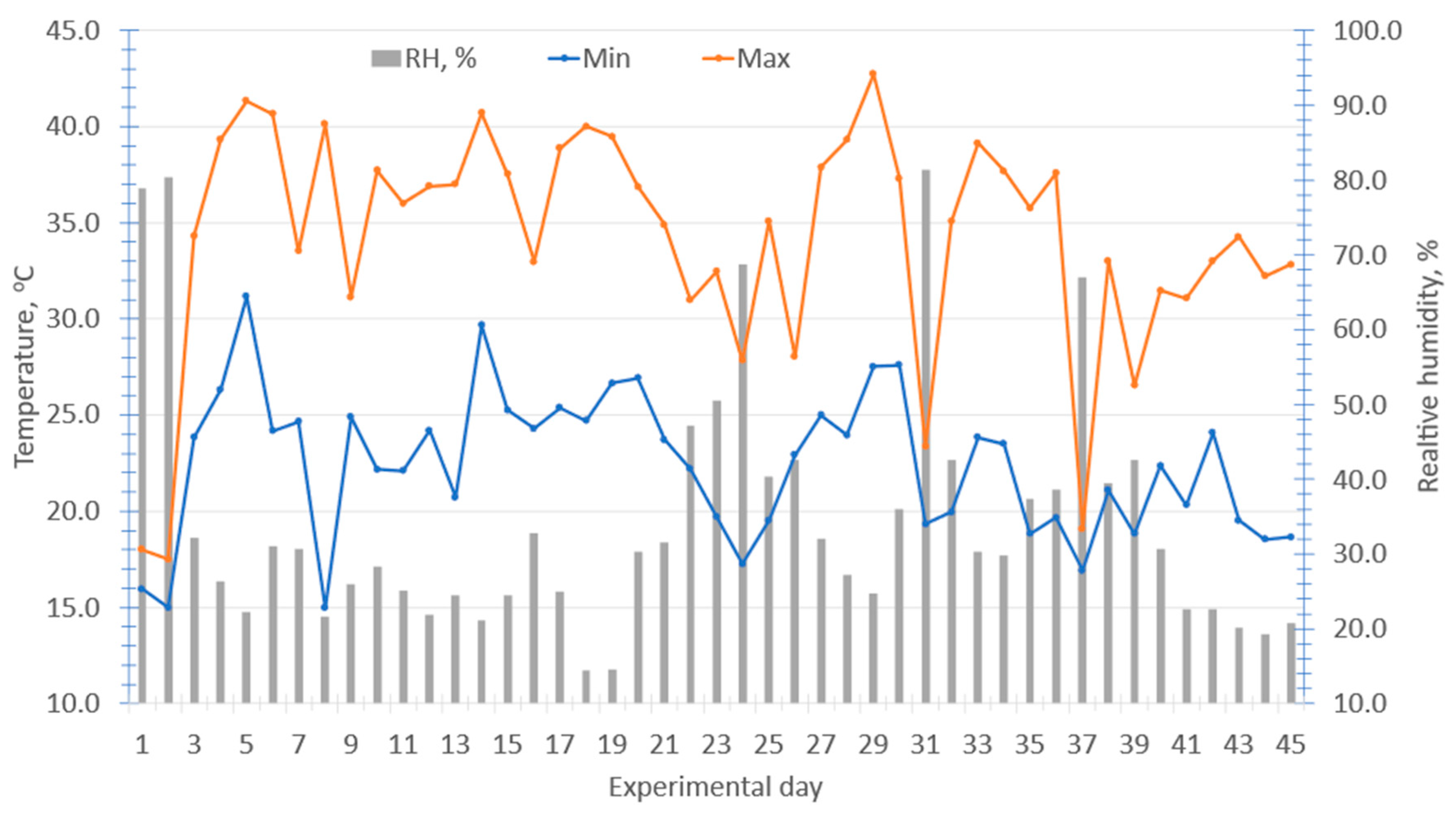
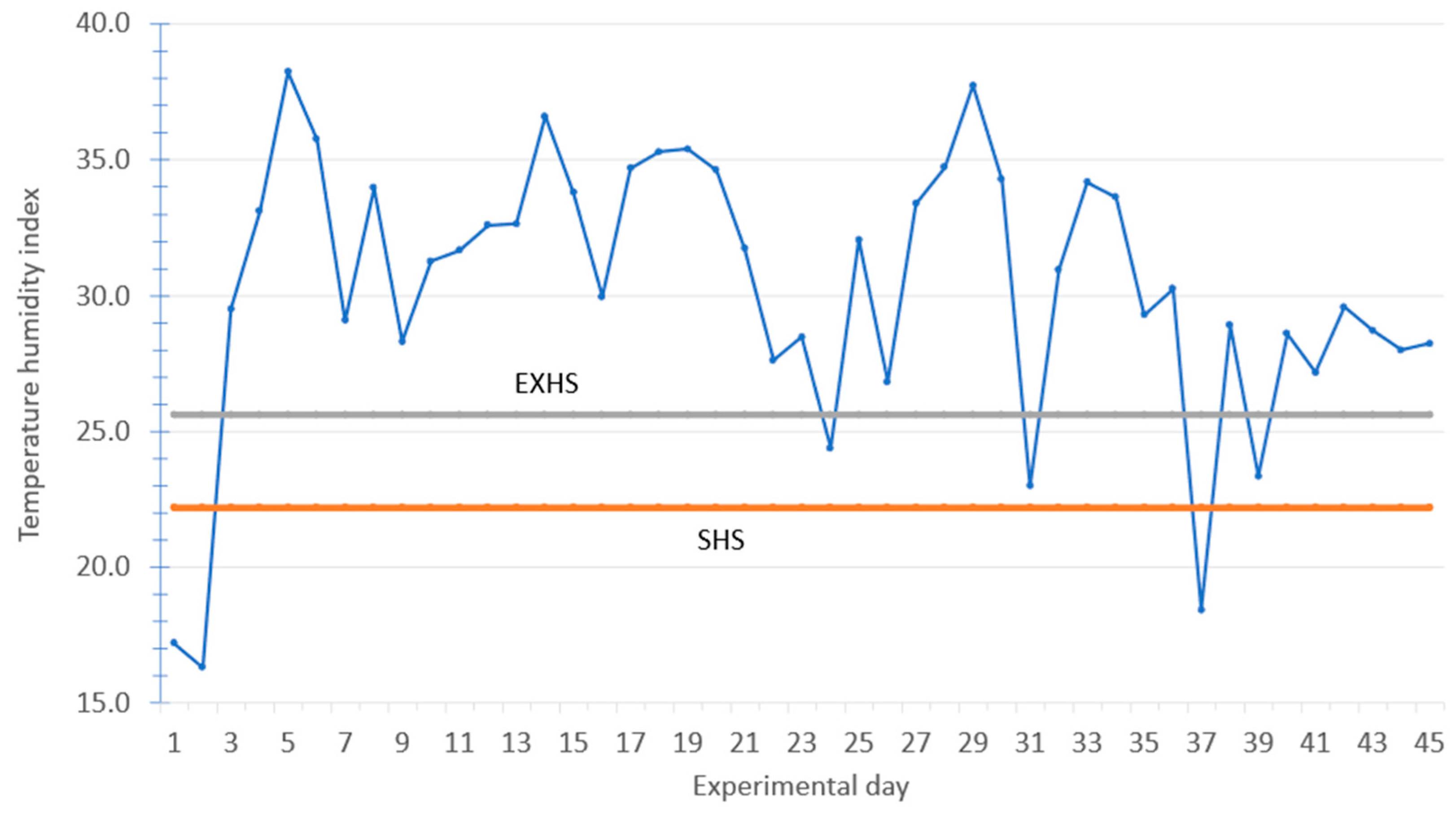
Ambient temperature and relative humidity data were recorded daily within 3 equal distance pen locations at 08:00, 10:00, 12:00 (noon), 14:00, 16:00, 18:00, and 20:00 using a split anemometer (DLX-1603A, Delixi Co., Ltd., Hangzhou, China). The temperature humidity index (THI) was calculated according to formula published by Hung et al. [
43] and Marai et al. [
44],
where T = ambient air temperature (°C) and RH = relative humidity (%/100). A daily THI ≤ 22.2 was considered no HS, while 22.2 < THI ≤ 23.3 was considered moderate HS (MHS), and severe HS (SHS) occurred when 23.3 < THI ≤ 25.6 and extreme HS (EXHS) occurred when THI > 25.6. The THI is a widely recognized metric for assessing the level of weather-induced HS experienced by animals [
45].
2.3. Growth Performance
Lambs were individually weighed on d 0 following a pre-test 10 d acclimation to the facilities and on d 45 prior to the morning feeding (minimal intestinal fill–shrink) using a wireless digital scale (HY-6088, Huaying Scales Co., Ltd., Dongguan, China). Total DMI (grain plus forage) was determined by measuring ad libitum forage and grain DM intakes daily using a digital scale (MT-201, Merlin Scales Co., Ltd., Xiamen, China). Lambs were fed twice/d to achieve 10% orts. Orts were collected at each feeding prior to new feed being supplied. Individual DMI was based total pen DMI divided by 4 lambs. Initial and final individual BW were used to calculated ADG, and total experimental DMI was summed (grain plus forage DMI) to calculated feed efficiency (ADG, g/DMI, g). Residual feed intake was calculated as actual DMI minus predicted DMI based on NRC prediction tables [
41]. Lambs were offered ad libitum access to fresh clean water at all times. However, water intake was measured every 3 d by emptying the water tank with thorough cleaning at 8 a.m. Then, 100 kg of clean water was added to the tank. After 24 h, the following day at 8 a.m. the remaining water was measured using a wireless digital scale (HY-6088, Huaying Scales Co., Ltd., Dongguan, China). Then, average daily water intake (ADWI) was calculated per lamb.
2.4. Physiological Parameters
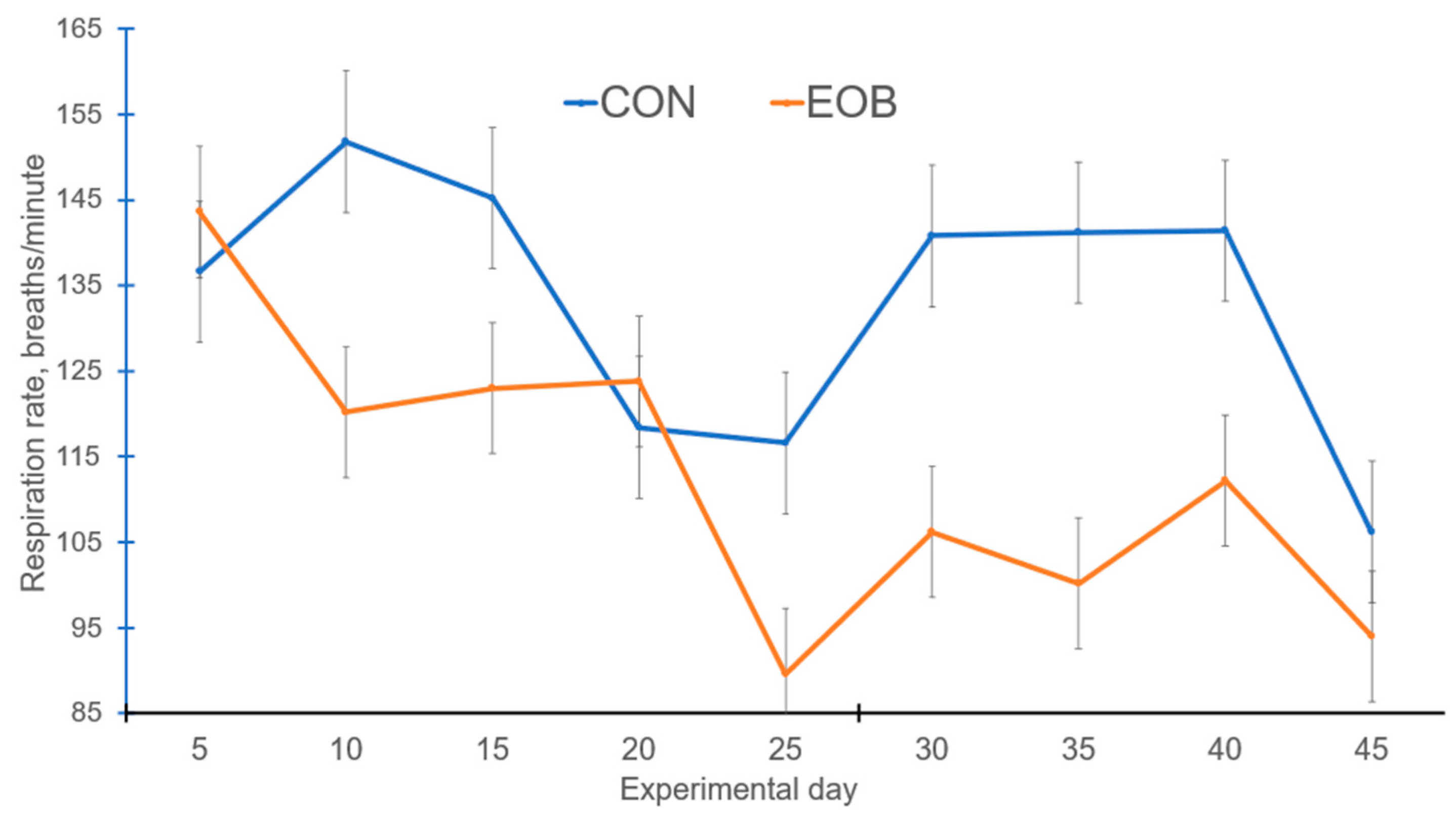
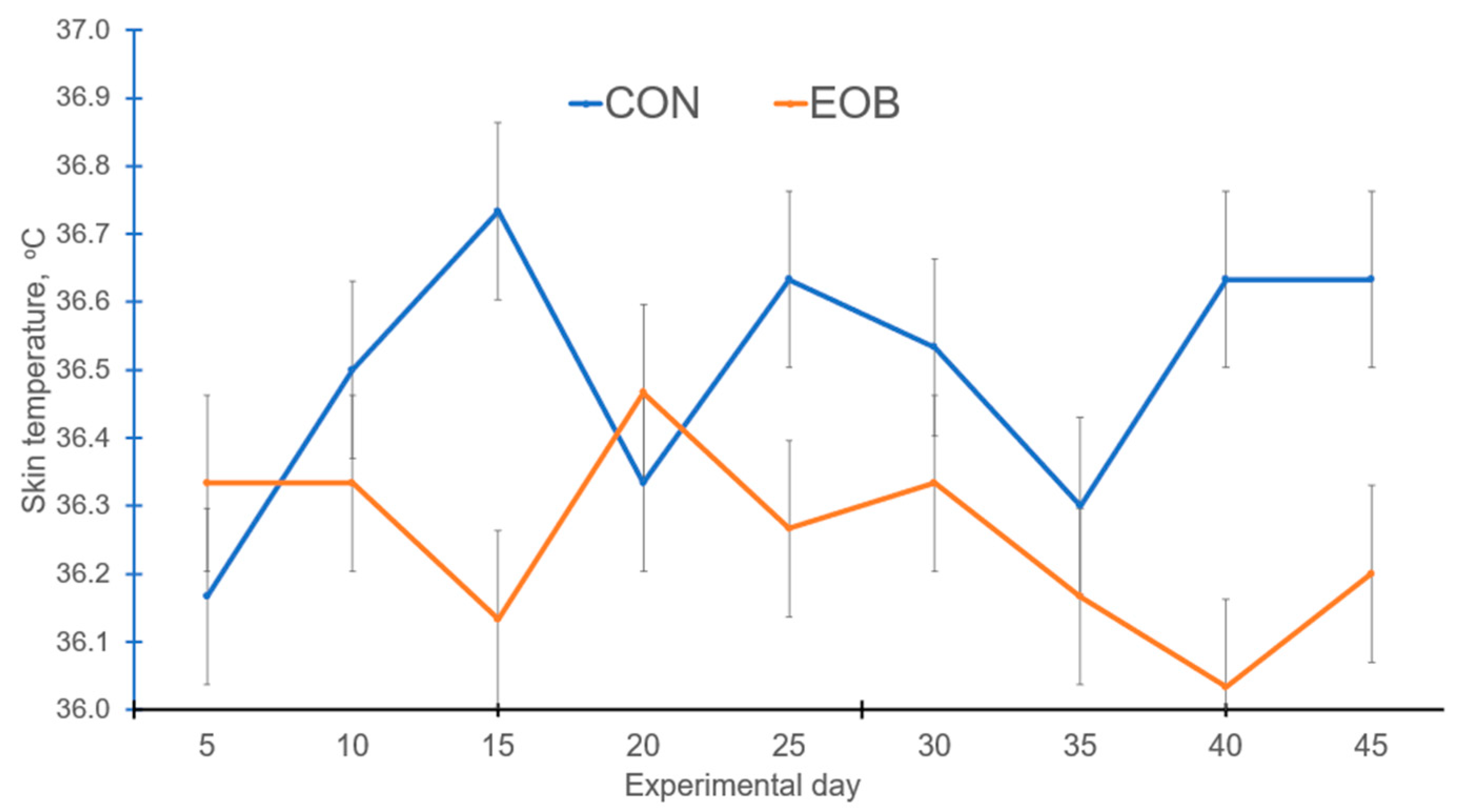
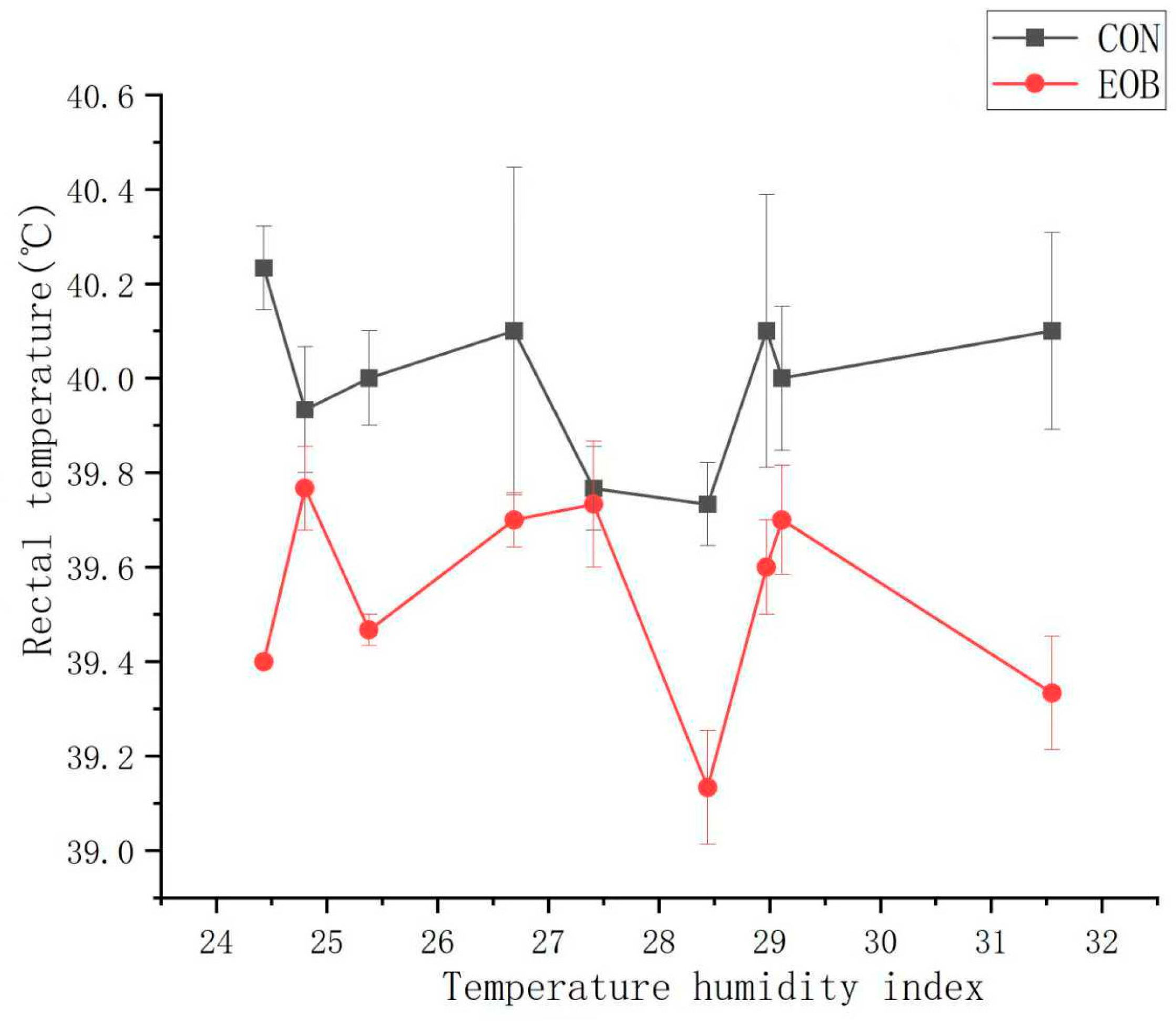
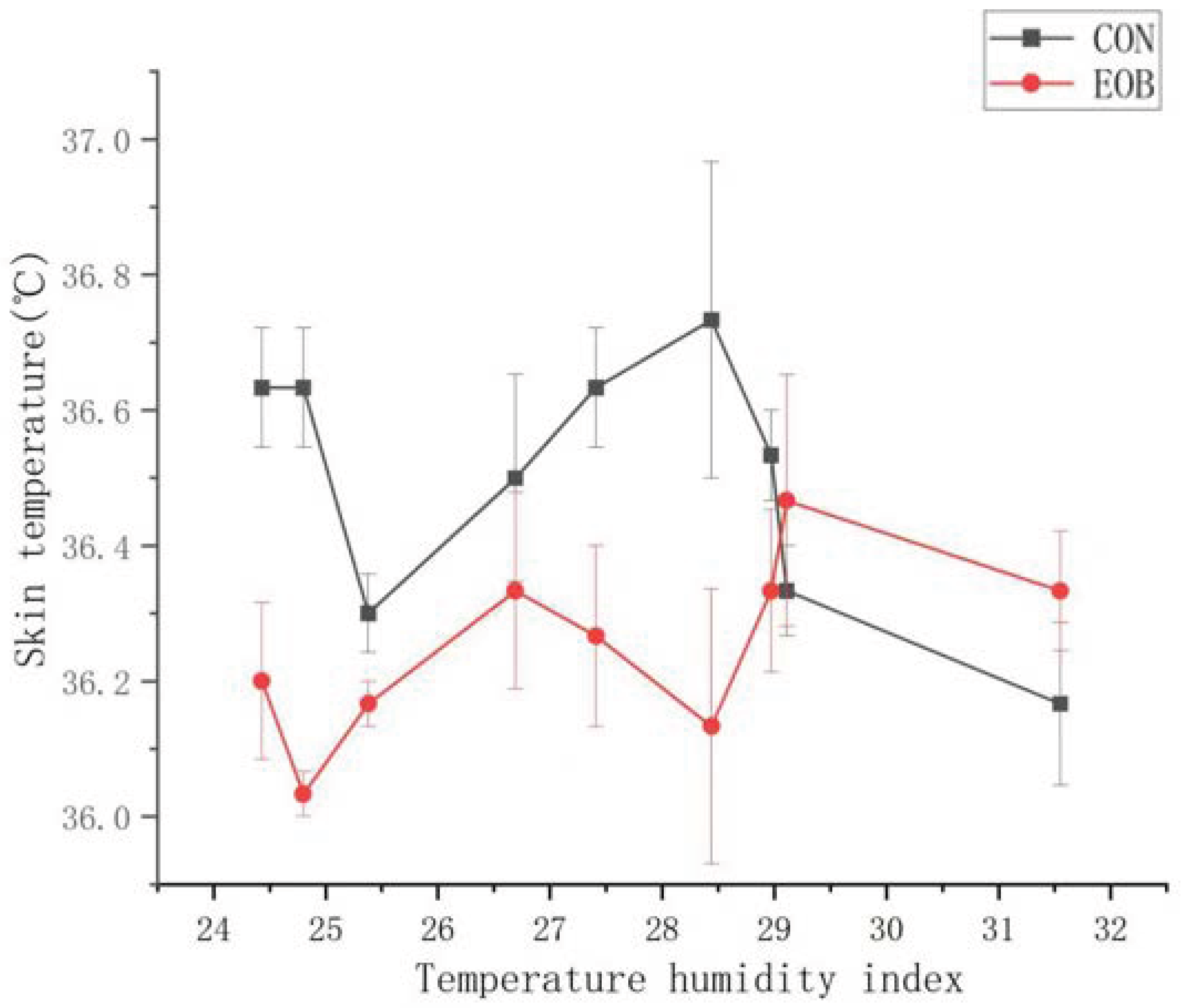
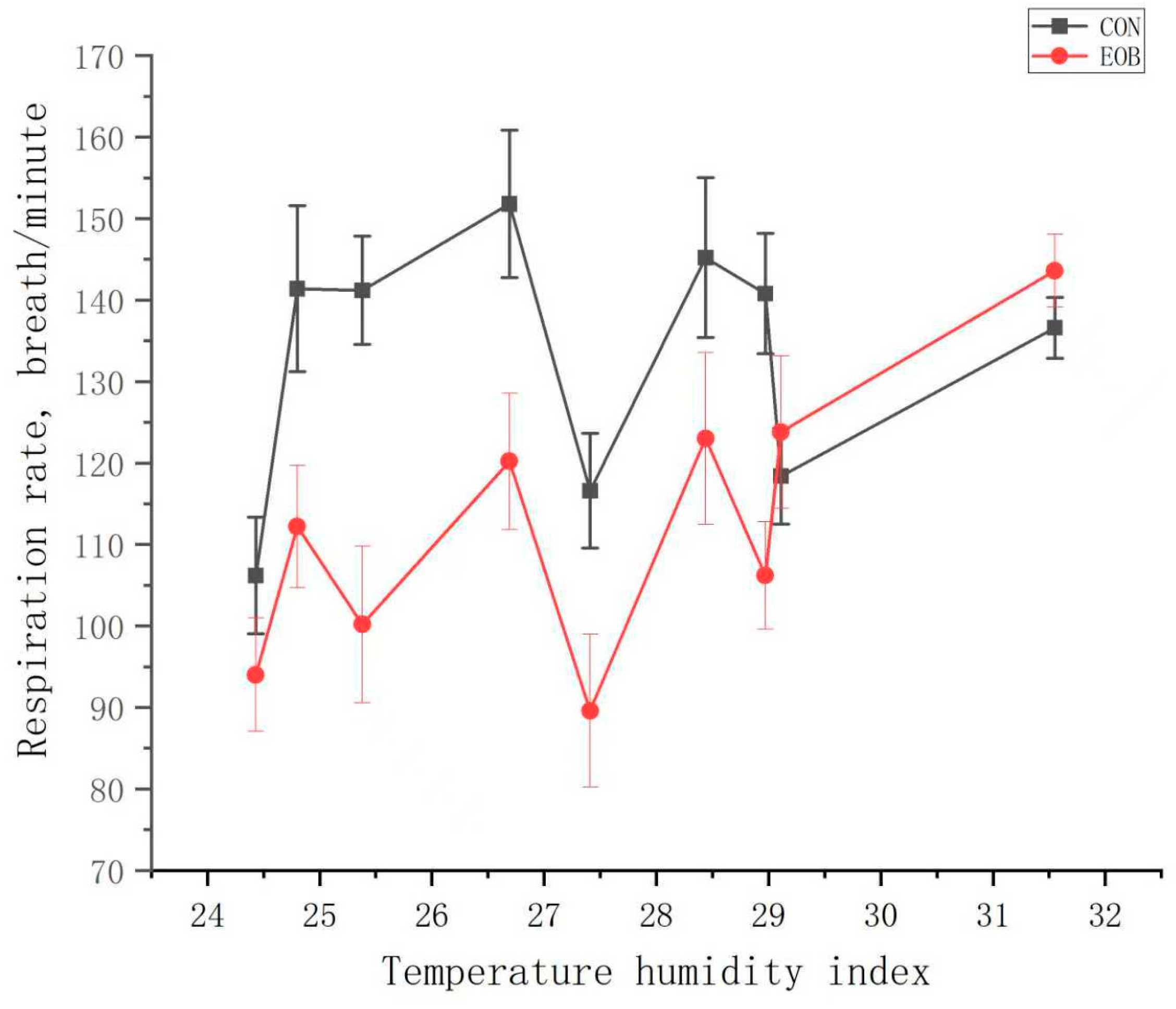
Eight lambs were selected per treatment based on the nearest four lambs being above and four lambs below the treatment mean BW for recording rectal temperature (RT), skin temperature (ST) and respiration rate (RR) at 15:00 every 5 d. The RT was collected via an electronic thermometer (MT-118, NISSEI Ivana Jianbao Electronic Technology Co., Guangzhou, China) inserted 3 cm into the rectum and held for 30 s. The ST was recorded using a hand-held thermometer (E31, Shibekang Medical Equipment Co., Shanghai, China) by placing the thermometer’s sensor end between the wool folds with light pressure on the animal’s hide. The RR (breaths/min) data was collected using a stopwatch and a counter when observing the lamb’s abdomen rising and falling in a quiet state [
43].
2.5. Blood Sampling and Laboratory Analysis
Jugular blood samples were individually collected from each lamb via venipuncture using two 5 mL vacuum tubes using a 0.55 × 20 mm needle (Kangwei Shi Medical Technology Co. Ltd., Shijiazhuang, China). One 5 mL tube contained ethylenediaminetetraacetic acid (EDTA) as an anticoagulant and the other 5 mL tube was a serum separation tube that was anticoagulant-free but contained silicone gel. Blood samples were collected on d 45 prior to the morning feeding. Blood samples were kept on ice and centrifuged (80-2B, Chengyi Instruments Co., Ltd., Suzhou, China) at 1006× g for 15 min outdoors (ambient temperature was 28.3 °C). The separated serum was transferred to poly tubes (Corning Incorporated, Corning, NY, USA) and stored frozen at −80 °C (DW-86L, 7281, Haier Co., Ltd., Qingdao, China) for later analysis.
Serum blood samples were analyzed for total superoxide dismutase (T-SOD), total antioxidant capacity (T-AOC), glutathione peroxidase (GSH-Px), adrenocorticotropic (ACTH), growth hormone (GH), insulin like growth factor 1 (IGF-1), gastrin, cholecystokinin (CCK), immunoglobulins A (IgA), M (IgM), and G (IgG), dopamine (DA), interleukin-6 (IL-6), tumor necrosis factor-α (TNF-α), and interferon-γ (IFN-γ) concentrations via enzyme-linked immunosorbent methods. These concentrations were measured using the corresponding ELISA kits (Nanjing Xinfan Biological Technology Co., Ltd., Nanjing, China) following the manufacturer’s recommended methods. Serum concentrations of blood urea nitrogen, glucose, triglycerides, and cholesterol were determined using an automatic biochemical analyzer (Hitachi 7020, Tokyo, Japan) with commercial kits.
Blood samples collected using an anticoagulant were analyzed within 4 h of collection using a fully automated penta-class blood analyzer (BC-5000 Blood Analysis System; Mindray Inc., Sheng Hong Cheng, Beijing, China) following the manufacturer’s protocols. The following methods were used for complete blood count analysis: (1) Electrical impedance principle (Coulter) for white blood cell counts, red blood cell counts, platelet counts, neutrophil, lymphocyte, monocytes, eosinophils, basophils, neutrophil percentage, lymphocyte percentage, monocyte percentage, eosinophil percentage, basophil granulocyte percentage. (2) Hemoglobin assay employs cyanide-free sodium lauryl sulfate (SLS) hemoglobinometry which meets the MCCLS/CLSO H20-A standard for measuring hemoglobin, hematocrit, mean corpuscular volume, mean corpuscular hemoglobin, mean corpuscular hemoglobin concentration, red blood cell distribution width-standard deviation, platelet distribution width, and procalcitonin concentrations. This instrument meets the America Society for Veterinary Clinical Pathology quality assurance guidelines.
2.6. Forage and Concentrate Nutrient Analysis
Concentrate and forage (hay, corn stalks, and wheat straw) samples were collected every 15 d during the experiment and stored at room temperature. At the end of the experiment, forage and concentrate samples were analyzed for nutrient composition following standard AOAC International methods [
46]: DM (2001.12) was determined using an oven (HB-503-LF, Hanbaek, Republic of Korea); crude protein (CP; 954.01) was analyzed using a Kjeldahl analyzer (K1100F, Hanon, Qingdao, China); neutral detergent fiber (NDF) with amylase (2002.04) and acid detergent fiber (ADF; 973.18) were determined using a fiber analyzer (ANKOM A200, Ankom Inc., Macedon, NY, USA). The metabolizable energy (ME) was calculated according to People’s Republic of China Agricultural Industry Standard (NY/T 816-2021) equations [
42]. Ether extract (920.39) was measured using a Soxhlet extraction apparatus (SOX406, Hanon, Qingdao, China). Ash (942.05) was determined using a muffle furnace (SDMF300, Sandegroup, Changsha, China) at 550 °C. Calcium (Ca; 927.02) and phosphorus (P; 964.06).
2.7. Statistical Analysis
All data were checked for normality and outliers using the UNIVARIATE procedure of SAS (version 9.4, SAS Institute Inc., Cary, NC, USA) before any statistical analyses were conducted. Box and whisker plots and the Shapiro–Wilk test were used to verify that data were normally distributed (
p > 0.10). All data were then subjected to least-squares ANOVA for a completely random design (CRD) [
40] having 2 treatments via SAS’s PROC MIXED procedure. The statistical model used was
where Y
ij = dependent variable, µ = overall mean, T
i = treatment, Day
j = day, T
i × Day
j = interaction of treatment by d, Cov = covariate (initial BW), and e
ij = residual random error. Pen was tested and found to be nonsignificant at
p > 0.50. Therefore, the individual lamb was the experimental unit for all parameters except DMI, which was analyzed on a pen basis. Treatment, day, and the interaction of treatment and day were considered fixed effects, while experimental day was considered a repeated measurement in time having a variance component covariance structure. The use of initial BW as a covariate was only significant (
p < 0.01) for final BW. If parameters were not repeated over days, day was eliminated from the model. When the F-test for treatment was significant (
p < 0.10), the PDIFF statement separated least-squares means; this is based on the least significant difference method (LSD). Differences among treatments were considered highly significant at
p < 0.01, significant at
p < 0.05, and tendencies at 0.05 <
p ≤ 0.10.
4. Conclusions
Supplementing EOB at 4 g/kg to the grain mix for HS growing lambs in the present experiment improved final BW, BW gain, ADG, forage intake, total DMI, and feed efficiency. Feeding EOB to growing HS lambs reduced RR, RT, and ST, which ameliorated HS impacts on the lamb’s physiological condition. Dietary EOB supplementation can ameliorate HS adverse effects on antioxidant performance, immune status, and physiological responses in sheep, thereby improving growth performance and feed efficiency. Ultimately, this study provides a basis for ration EOB inclusion at 4 g/kg concentrate when feeding growing HS lambs.





 ,
,