Next Article in Journal
Phylogeographic Structure Reveals Hidden Diversity Patterns in Tor tambra (Cyprinidae) Across Thai River Systems
Previous Article in Journal
Hepatic Expression of Growth Hormone Receptor (GHrec) and Insulin-like Growth Factor-I (IGF-I) Genes and Cellular Location of IGF-I mRNA in Diploid and Triploid Atlantic Salmon (Salmo salar) Undergoing Parr–Smolt Transformation
Previous Article in Special Issue
Integrative Genomics and Multi-Tissue Transcriptomics Identify Key Loci and Pathways for Hypoxia Tolerance in Grass Carp
 
 
Due to scheduled maintenance work on our servers, there may be short service disruptions on this website between 11:00 and 12:00 CEST on March 28th.
Article

Multi-Organ Transcriptomic Analysis of Greater Amberjack (Seriola dumerili) with Different Growth Rates
1
Guangdong Research Center on Reproductive Control and Breeding Technology of Indigenous Valuable Fish Species, Guangdong Provincial Key Laboratory of Aquatic Animal Disease Control and Healthy Culture, Fisheries College of Guangdong Ocean University, Zhanjiang 524088, China
2
Development and Research Center for Biological Marine Resources, Southern Marine Science and Engineering Guangdong Laboratory (Zhanjiang), Zhanjiang 524025, China
3
China National Fisheries Corporation, Beijing 100160, China
4
Agro-Tech Extension Center of Guangdong Province, Guangzhou 510500, China
*
Author to whom correspondence should be addressed.
These authors contributed equally to this work.
Animals 2026, 16(3), 516; https://doi.org/10.3390/ani16030516
Submission received: 12 January 2026 / Revised: 30 January 2026 / Accepted: 3 February 2026 / Published: 6 February 2026
(This article belongs to the Special Issue Advances in Research on Functional Genes and Economic Traits in Fish)

Simple Summary

The greater amberjack (Seriola dumerili) is a highly valued fish known for its tasty meat, nutritional richness, and rapid growth rate. However, the molecular mechanisms underlying its growth traits remain poorly understood. In this study, transcriptome sequencing was performed on the hypothalamus, pituitary, and liver tissues of 12-month-old greater amberjack with different growth rates. A number of genes and biological pathways that related to growth, cell proliferation, lipid and glucose metabolism, and immune responses were screened. These findings contributes to a deeper understanding of the growth control mechanism in greater amberjack and offers a scientific basis for efficient breeding and species improvement.

Abstract

In order to explore the main regulatory genes and related pathways of growth traits, transcriptome sequencing was performed on the hypothalamus, pituitary, and liver tissues of 12-month-old greater amberjack (Seriola dumerili) with different growth rates. In total, 504 (118 up- and 386 down-regulated), 556 (283 up- and 273 down-regulated), and 699 (224 up- and 475 down-regulated) differentially expressed genes (DEGs) were identified in the hypothalamus, pituitary, and liver tissues, respectively. GO and KEGG pathway analyses revealed significant differences in the expression of several genes involved in growth, metabolism, and immune-related pathways. The mRNA expression levels of genes related to growth (ghrh, ghra, igf1), cell proliferation (fgf19, fgfr4, mapk8b, map2k4b, and map4k3), and lipid metabolism (acsl5, dgat2, lipeb, cyp7a1, and fabp10a) were up-regulated in the fast-growing (FG) group, while the cartl and sst1.1 were down-regulated. Conversely, genes associated with glycolysis (fbp1a, pklr, pgm2), citrate cycle (aclya, idh1), and immune-related pathways (irf1b, cxcl10, tnfb, lysg, ifi44, mapk11, and mapk12b) were up-regulated in the slow-growing (SG) group. These findings indicate that the FG exhibited greater lipid metabolism capacity and cell proliferation ability, while the SG expended additional energy to cope with environmental stress, with hindered growth during immune response. This study enhances our understanding of the genetic mechanisms underlying differences in growth rates and provides essential gene resources for future growth-related molecular breeding programs in greater amberjack.

1. Introduction

Growth is one of the most important economic traits in animal breeding. In aquaculture, variability among individuals significantly hampers productivity and profitability. Therefore, analyzing the potential mechanisms of growth differences among individuals provides critical insights to inform the design of more efficient breeding strategies [1]. The differentiation in the growth and development of animals is influenced by the interplay of various environmental factors, including season, temperature, nutritional manipulation, and the endogenous genetic background [1,2]. Genetic background is a critical consideration when breeding new strains with faster growth rates. Similarly to other vertebrates, both the brain and liver participate in the hypothalamus–pituitary–liver growth axis, which is one of the most crucial pathways in the regulation of fish growth [3]. In this axis, the hypothalamus regulates the release of growth hormone from the pituitary gland, which in turn modulates liver function, including the release and metabolism of insulin-like growth factor. The major genes involved in this axis include growth hormone releasing hormone (ghrh) and somatostatin (ss) secreted by the hypothalamus, growth hormone (gh) secreted by the pituitary gland, and insulin-like growth factor-I (igf1) released by target organs such as the liver [2,4]. Although many studies have demonstrated the functions of these genes in the growth axis, the comprehensive regulatory network connecting these genes to their direct phenotypes and growth rates in various animals remains largely unexplored.
The elucidation of the molecular mechanisms, genes, and signaling pathways involved in growth has significant implications for various growth-related research areas. With the advancement of high-throughput sequencing, numerous studies have concentrated on exploring candidate genes and regulatory pathways associated with fish growth through RNA-seq. Lv et al. employed RNA-seq to analyze the muscle, liver, and brain tissues of rock carp (Procypris rabaudi). Gene Ontology (GO) and Kyoto Encyclopedia of Genes and Genomes (KEGG) enrichment analyses revealed that differentially expressed genes (DEGs) were predominantly involved in the regulation of appetite, lipid transport and metabolism, protein degradation and digestion, and glycolysis/gluconeogenesis [5]. Zhang et al. conducted transcriptome analyses of liver and muscle tissues from black carp (Mylopharyngodon piceus) of varying body sizes and identified several genes involved in growth- and development-related metabolic pathways, including the FoxO, p53, PI3K-Akt, apoptosis, TGF-β, and insulin signaling pathways [6]. Li et al. analyzed the transcriptomes of the muscles of three-month-old rice flower carp (Cyprinus carpio) with different body sizes and discovered several genes associated with the ubiquitin–proteasome pathway and muscle contraction [7]. This method has also been used in other aquatic organism with similar objectives, such as Qingbo (Spinibarbus sinensis) [8], large yellow croaker (Larimichthys crocea) [9], blunt-snout bream (Megalobrama amblycephala) [10], Pacific black-lipped pearl oyster (Pinctada margaritifera) [11], channel catfish (Ictalurus punctatus) [12], and Chinese longsnout catfish (Leiocassis longirostris) [13], etc. Our findings indicate a lack of comparative transcriptomic analyses of endocrine and immune regulation, as well as metabolic patterns, in the hypothalamic–pituitary–liver axis among individuals with growth differences in greater amberjack (Seriola dumerili).
The greater amberjack is an important marine commercial fish species found along the coasts of Hainan Island, Guangdong, Fujian, and Zhejiang in China. Due to its rapid growth, large body size, and high-quality flesh, the greater amberjack exhibits high commercial value and is one of the key aquatic products for export in China [14]. Wild female greater amberjack reach maturity at 1–5 years of age, with a mean age of 1.3 years for 50% of females to mature, indicating their rapid growth, early maturation, and high fecundity [15,16]. However, it has been reported that the growth of the greater amberjack is restricted in individuals reared in captivity. Slow-growing fish present a bottleneck in aquaculture due to the high mortality rates of smaller individuals, which can lead to inefficiencies in aquaculture if they constitute a significant proportion of the stock [17]. Therefore, it is essential to conduct relevant research on the growth characteristics of greater amberjack. Accelerating their growth rate could shorten the culture cycle, reduce farming costs, increase production and provide economic benefits by meeting the high market demand for this species. Nevertheless, current research on greater amberjack primarily focuses on reproductive biology [18,19], stress physiology [20,21], feed nutrition [22], and disease resistance and immunity [23]. There have been few studies on the genetic mechanisms underlying its growth. Furthermore, the foundational research for large-scale selective breeding and trait improvement remains relatively weak. In this study, we collected greater amberjack of two different sizes, obtained hypothalamus, pituitary, and liver tissues, and investigated their growth characteristics at the transcriptome level using RNA-seq. We employed the Illumina NovaSeq 6000 platform to acquire high-quality data, expression profiles, and DEGs from eighteen libraries. The findings of this study will provide foundational information for enhancing the growth traits of greater amberjack and contribute to further functional studies of growth-related genes.

2. Materials and Methods

2.1. Animals and Tissue Sampling

The same batch of artificially bred, 12-month-old F1-generation greater amberjack selected for this study was derived from a breeding population with multiple unrelated parental pairs and originated from the Leizhou Island (Zhanjiang, China). The dissolved oxygen level exceeded 6 mg/L, the salinity was measured at 30.4  ±  0.5‰, the annual variation in water temperature ranged from 19.1 to 30.3 °C, and the pH was 8.4  ±  0.1. The fish were cultured in offshore cages (5 m × 5 m × 4 m), with 400 juvenile fish per cage. They were fed commercial feed twice daily (at 9:00 a.m. and 6:00 p.m.) at 3% of their body weight. After 12 months of rearing, two groups were formed based on phenotype by selecting greater amberjack with different growth rates within the same population of 12 month olds, resulting in fast- and slow-growing groups. Subsequently, 10 fish were randomly selected from each group for precise measurement. The final sample was determined by excluding abnormal individuals and applying strict weight thresholds (FG: 1000–1300 g, SG: 600–800 g). The average body weight, total length, and body height were recorded as 1149.16 ± 28.13 g, 43.74 ± 30.52 cm, and 10.7 ± 0.14 cm for the fast-growth group (FG: n = 7) and 686.76 ± 0.14 g, 37.32 ± 0.63 cm, and 9.11 ± 0.15 cm for the slow-growing group (SG: n = 6), respectively. The phenotype data for each individual are shown in Table 1. Prior to sample collection, the experimental fish were anesthetized using tricaine methane sulfonate (MS-222, Sigma, Saint Louis, MO, USA) at a concentration of 100 mg/L. The hypothalamus, pituitary, and liver tissues were rapidly isolated and preserved in RNAlater® (Beyotime, Shanghai, China) overnight, and then frozen at −80 °C for RNA extraction. To eliminate the influence of sex on growth rates, three female greater amberjack from each group were selected for transcriptome sequencing. The sex of these samples was determined by dissecting the gonads. The hypothalamus, pituitary, and liver of fast-growing fish are designated as FH, FP, and FL, respectively, while those of slow-growing fish are designated as SH, SP, and SL, respectively.

2.2. RNA Extraction, Library Construction, and Sequencing

Total RNA was extracted from hypothalamic, pituitary, and liver tissues of greater amberjack using a Trizol kit (Invitrogen, Carlsbad, CA, USA) according to the manufacturer’s instructions. After contaminating genomic DNA was removed using DNase I (Takara Biotechnology, Tianjin, China), tRNA purity and concentration were measured using a Qubit 2.0 Fluorometer and a NanoDrop 2000 Spectrophotometer (Thermo Fisher Scientific, Waltham, MA, USA), while the RNA integrity was assessed using an Agient 2100 (Agilent Technologies, Palo Alto, CA, USA). The RNA integrity number (RIN) scores for the hypothalamus, pituitary, and liver tissues ranged from 6.2 to 8.6, indicating good overall RNA integrity and meeting the requirements for sequencing. Subsequently, high-quality mRNA was utilized for library construction. The procedures are described as follows: the bio-mRNA of the greater amberjack was enriched using Oligo (dT)-attached magnetic beads and fragmented in fragmentation buffer, with the disrupted mRNA serving as the template. A strand of cDNA was synthesized using a six-base random primer, followed by the addition of buffer solution, dNTP, RNase H, and DNA polymerase I to synthesize the second cDNA strand. The double-stranded cDNA was purified using AMPure Pure Beads and underwent end repair, had a poly(A)-tail added, and was connected to the sequencing adapter, followed by fragment size selection using AMPure XP Beads. Finally, the cDNA library was enriched by PCR. The quantity and quality of the constructed library were examined using the Agilent Bioanalyzer 2100 and Qubit 2.0, respectively. The libraries were sequenced on the Illumina NovaSeq6000 platform (Illumina, San Diego, CA, USA) at Biomarker Technologies Co., Ltd. (Beijing, China), generating 150 bp paired-end data. Three replicates (using one fish as a biological replicate) were obtained for transcriptome sequencing of FH, SH, FP, SP, FL, and SL.

2.3. Data Processing, Assembly, and Functional Annotation

First, the raw data quality was assessed using fastq (version 0.22.0). Adaptor sequences were removed and read pairs were quality filtered using in-house Perl scripts. The data quality control procedures included the following steps: (1) detachment of adaptor, (2) removal of low-quality reads containing more than 10% unknown nucleotides (N) and bases with a quality sore (Q) ≤ 10% (over 50% of the total read length) from the raw data. Concurrently, the Q20, Q30, and GC content of the clean data were calculated. The clean RNA-seq data were subsequently aligned to the greater amberjack reference genome (deposited in the DNA Data Bank of Japan (DDBJ) under accession numbers: BDQW01000001-BDQW01034655 (Biosample ID: SAMD00083043_sdu_WGS.acclist.zip) using HISAT2 (version 2.2.1). StringTie (version v2.2.1) was utilized to assemble the clean reads de novo. The N50 and N75 lengths were 3329 bp and 2156 bp, respectively.
The functions of the genes were determined by annotating them using several public databases, including the non-redundant protein (NR), Pfam (protein family), Swiss Prot (protein), KEGG, and GO annotation public databases. They were identified through NCBI BLASTx (version 2.2.26; https://blast.ncbi.nlm.nih.gov/, accessed on 27 July 2024) with an E-value threshold of 1 × 10⁻⁵ for NR (https://www.ncbi.nlm.nih.gov/refseq/, accessed on 27 July 2024), Swiss-Prot (http://www.uniprot.org/, accessed on 27 July 2024), and KEGG (http://www.genome.jp/kegg/, accessed on 27 July 2024) annotations. Additionally, the Pfam database was scanned using hmmscan (version 3.3.2) with an E-value threshold of 1 × 10⁻⁵. The Blast results were further analyzed with Blast2Go (version 2.5.0; http://www.blast2go.com/, accessed on 27 July 2024) to assign gene ontology to the mapped transcripts.

2.4. Differential Expression Analysis

Following the filtering steps, the raw counts of the remaining genes were normalized using the median of ratios method available in the R package DESeq2 (version 1.30.1). This normalization step corrects for differences in library size and RNA composition across samples. Subsequently, the normalized data were analyzed using DESeq2’s negative binomial model for accurate differential expression detection, which is designed to account for the discrete and over-dispersed nature of sequencing count data. Gene expression levels were quantified via the fragments per kb per million reads (FPKM) method. Principal component analysis (PCA) was conducted on the FPKM scores to evaluate the differences both between and within groups. Differential gene expression was assessed using the Wald test, with thresholds set at “p-value < 0.05” and “|log2Fold-change| > 1” to detect significant differences in transcriptional expression. DEGs exhibiting higher or lower expression levels than the slow-growth group in each tissue were classified as “up-regulated” or “down-regulated” genes, respectively. GO and KEGG enrichment analyses of the DEGs were then performed using the clusterProfiler (version 4.4.4) software based on the Wallenius noncentral hypergeometric distribution, which can be used to adjust for gene length bias in the DEGs. The pathways with a p-value < 0.05 were considered significant.

2.5. Validation of the RNA-Seq Analysis by RT-qPCR

The expression levels of growth-related genes in the hypothalamus, pituitary, and liver of the greater amberjack were detected using qPCR (with 5 biological replicates per group). Additionally, to further validate the reliability of the RNA-seq results, a total of 33 DEGs (14 up-regulated and 19 down-regulated DEGs, respectively) were randomly selected for qRT-PCR validation. This analysis included 3 biological replicates and 2 technical replicates. The samples used for qPCR validation experiments and RNA-seq were from the same batch. The primer sequences for these genes are provided in Table S1. Total RNA was extracted from the FH, SH, FP, SP, FL, and SL samples, and cDNA synthesis was performed using the PrimeScript™ RT Reagent Kit with gDNA Eraser (Takara Biotechnology, Shanghai, China), following the manufacturer’s instructions. qRT-PCR was conducted using a Light Cycler TM96 instrument (Roche, Indianapolis, IN, USA) with the PerfectStart® Green qPCR SuperMix Kit (TransGen Biotech, Beijing, China). A 20 μL reaction mixture was prepared, consisting of 10 μL of 2 × SYBR Green Master Mix, 2 µL of template cDNA, 0.4 μL of each forward and reverse primer 10 μM, and 7.2 μL of RNase-free water. PCR amplification was carried out at 95 °C for 5 min (initial denaturation), followed by 40 cycles at 95 °C for 30 s (denaturation), 58 °C for 20 s (annealing), and 72 °C for 20 s (fluorescence collection). To standardize gene expression, β-actin was utilized as the internal control, and relative gene expression levels were calculated using the 2−∆∆Ct method. The data are recorded as mean ± standard error (SE) (n = 3).

2.6. Statistical Analysis

Statistical analysis of the results was conducted using SPSS Statistics 18.0 software (SPSS Inc., Chicago, IL, USA). Due to the small sample size (n = 13) in this study, the Shapiro–Wilk (S-W) test results were employed to assess normality (the threshold for conformity to a normal distribution is p > 0.05). For traits that conformed to a normal distribution, an independent t-test was used to compare differences between the FGs and SGs. Conversely, for traits that failed to meet the normality assumption (p < 0.05), the Mann–Whitney U test was conducted using the “Non-parametric Tests” module in SPSS; significant differences were considered to exist when p < 0.05.

3. Results

3.1. Analysis of Growth Data Between Fast-Growing (FG) and Slow-Growing (SG) Groups

The body weight, full length, and body height of the fast-growing (FG) and slow-growing (SG) groups are shown in Figure 1. Specifically, the body weight (FG: 1149.1614 ± 28.13 g; SG: 686.76 ± 30.52 g), full length (FG: 43.74 ± 0.32 cm; SG: 37.32 ± 0.64 cm), and body height (FG: 10.70 ±0.38 cm; SG: 9.11 ± 0.15 cm) of the FG were significantly greater than those of the SG (p < 0.01) (Figure 1, Table 1).

3.2. Transcriptome Sequencing and Assembly

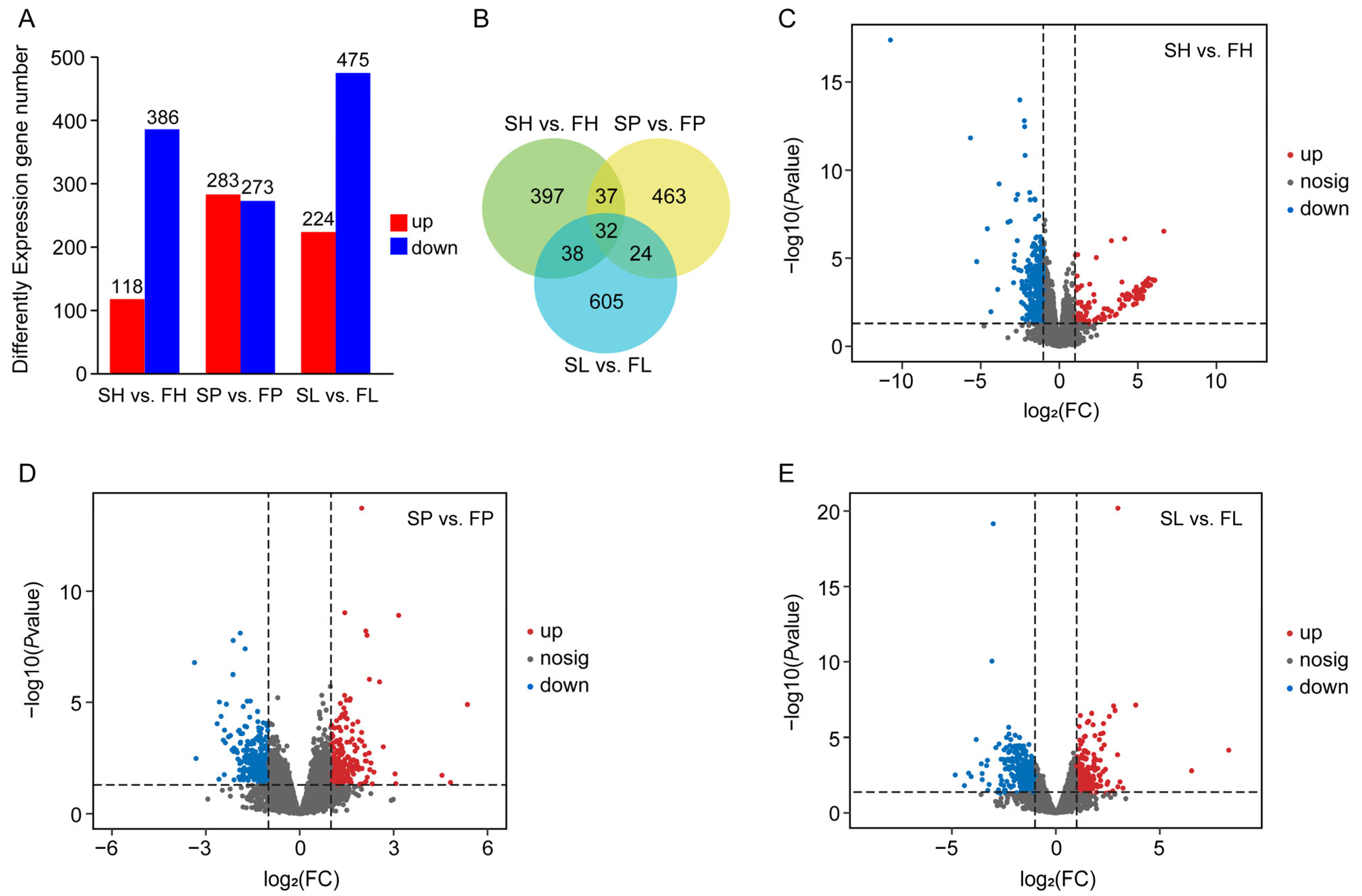
We performed a comparative transcriptome analysis of hypothalamus, pituitary, and liver tissues from 12-month-old greater amberjack in the FGs and SGs. An overview of the sequencing and assembly process is presented in Table 1. After removing low-quality or contaminated reads from the raw data, we obtained 90.25 Gb of clean reads. For the FG, we acquired 64.60 million reads for the H group, 62.43 million reads for the P group, and 68.01 million reads for the L groups, respectively. For the SG, we obtained 66.16 million reads for the H group, 69.62 million reads for the P group, and 72.36 million reads for the L group (Table 2). All samples exhibited Q20 frequencies of bases exceeding 97% and Q30 frequencies greater than 92%, as well as standard GC contents ranging from 46.65% to 50.11% (Table 2), indicating that the data used for subsequent analysis were of high quality. Overall, 772.95 million reads from the 18 sequencing libraries were successfully mapped to the assembled greater amberjack reference sequences, with approximately 88.64–92.23% of reads uniquely mapped to the greater amberjack genome (Table 2). PCA revealed that all biological replicates from each group clustered together, with 47.7%, 21.2%, and 4% of the variations explained by the first, second, and third principal components (PCs), respectively (Figure S1). We identified high-confidence DEGs in the hypothalamus, pituitary, and liver tissues of greater amberjack with varying growth rates, using a standard of |log2FC| > 1 and p < 0.05. The DEGs analysis revealed 504 DEGs between the FH and SH groups, comprising 118 DEGs up-regulated and 386 down-regulated genes (Figure 2A,C). Furthermore, 556 (283 up-regulated and 273 down-regulated) and 699 (224 up-regulated and 475 down-regulated) DEGs were identified between the FP and SP groups (Figure 2A,D), and the FL and SL groups, respectively (Figure 2A,E). A tissue-specific pattern was observed for the majority of DEGs across the three tissues. Notably, 32 DEGs were found to be shared between the SGs and FGs (Figure 2B). The top 10 up- and down-regulated DEGs for each phenotype group are provided in Table S2.

3.3. GO and KEGG Enrichment Analysis of DEGs

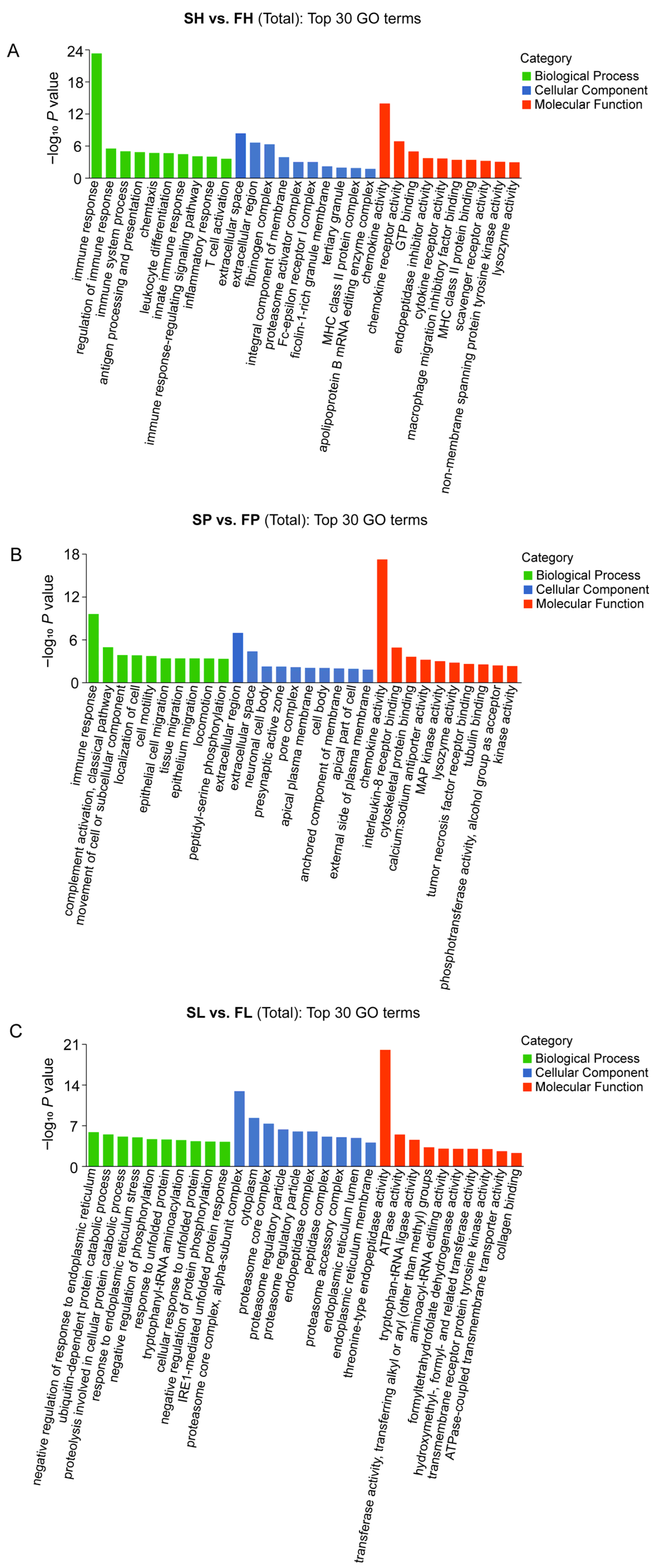
All the DEGs were annotated in the KEGG pathways and GO terms. The GO annotation was utilized to classify the DEGs into three categories: biological processes (BPs), cellular components (CCs), and molecular functions (MFs). A total of 347, 478, and 545 GO terms were significantly enriched in the hypothalamus, pituitary, and liver tissues of the greater amberjack between the fast- and slow-growth groups, respectively. Figure 3 and Tables S3–S5 illustrate the top 30 GO classifications of the DEGs in the three categories. The results of the GO analysis revealed significant alterations in immune response (GO:0006955) (BP), extracellular space (GO:0005615) and extracellular region (GO:0005576) (CC), and chemokine activity (GO:0008009) (MF) in the hypothalamus and pituitary tissues. Notably, the immune-related pathways were highly enriched, suggesting that the immune system may influence fish size. Furthermore, significant changes were observed in the negative regulation of response to endoplasmic reticulum stress (GO:1903573) (BP), proteasome core complex, alpha-subunit complex (GO:0019773) (CC), and threonine-type endopeptidase activity (GO:0004298) (MF) in the liver tissue.
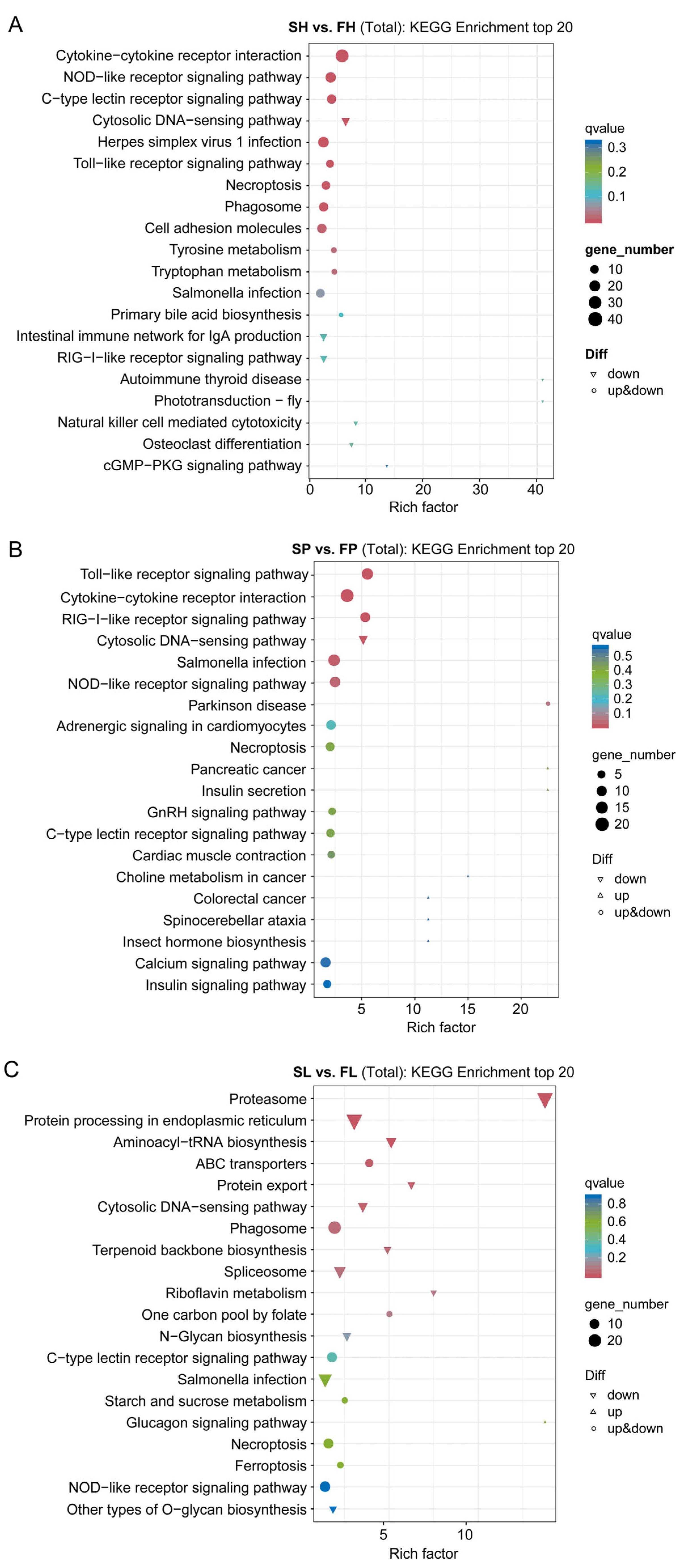
The KEGG enrichment analysis was conducted to compare the DEGs between FH and SH, resulting in the identification of 114 enriched KEGG signaling pathways. Notably, 19 significant changes occurred in signaling molecules and interaction (cytokine–cytokine receptor interaction (ko04060) and cell adhesion molecules (ko04514)), immune system (NOD-like receptor signaling pathway (ko04621), C-type lectin receptor signaling pathway (ko04625), cytosolic DNA-sensing pathway (ko04623), and Toll-like receptor signaling pathway (ko04620), etc.), cell growth and death (necroptosis (ko04217)), and transport and catabolism (phagosome (ko04145)), and metabolism pathways (tryptophan metabolism (ko00380), tyrosine metabolism (ko00350), and primary bile acid biosynthesis (ko00120)), etc. (Figure 4A, Table S6). The number of DEGs in the signal transduction pathway was especially high. Furthermore, the KEGG enrichment analysis of the FP and SP DEGs yielded 128 enriched KEGG signaling pathways, with 13 significant changes noted in the immune system (Toll-like receptor signaling pathway (ko04620), RIG-I-like receptor signaling pathway (ko04622), Cytosolic DNA-sensing pathway (ko04623), and NOD-like receptor signaling pathway (ko04621)), signaling molecules and interaction (cytokine–cytokine receptor interaction (ko04060)), circulatory system (adrenergic signaling in cardiomyocytes (ko04261)), and cell growth and death (necroptosis (ko04217)), endocrine system (GnRH signaling pathway (ko04912) and insulin secretion (ko04911)), etc. (Figure 4B, Table S6). In FL vs. SL, the KEGG enrichment analysis generated 148 KEGG signaling pathways, with 13 significant changes occurred in folding, sorting, and degradation (proteasome (ko03050), protein processing in endoplasmic reticulum (ko04141), and protein export (ko03060), translation (aminoacyl-tRNA biosynthesis (ko00970)), immune system (cytosolic DNA-sensing pathway (ko046230, C-type lectin receptor signaling pathway (ko04625)), transport and catabolism (phagosome (ko04145)), and metabolism (terpenoid backbone biosynthesis (ko00900), riboflavin metabolism (ko00740), one carbon pool by folate (ko00670), and N-Glycan biosynthesis (ko00510)), etc. (Figure 4C, Table S6). Additionally, the top 20 enriched signaling pathways were analyzed, highlighting “Cytokine-cytokine receptor interaction”, “Toll-like receptor signaling pathway”, and “Proteasome” as the most prominent pathways in SH vs. FH, SP vs. FP, and SL vs. FL, respectively (Figure 4, Table S6).

3.4. qPCR of Candidate GH/IGF Axis Related Genes

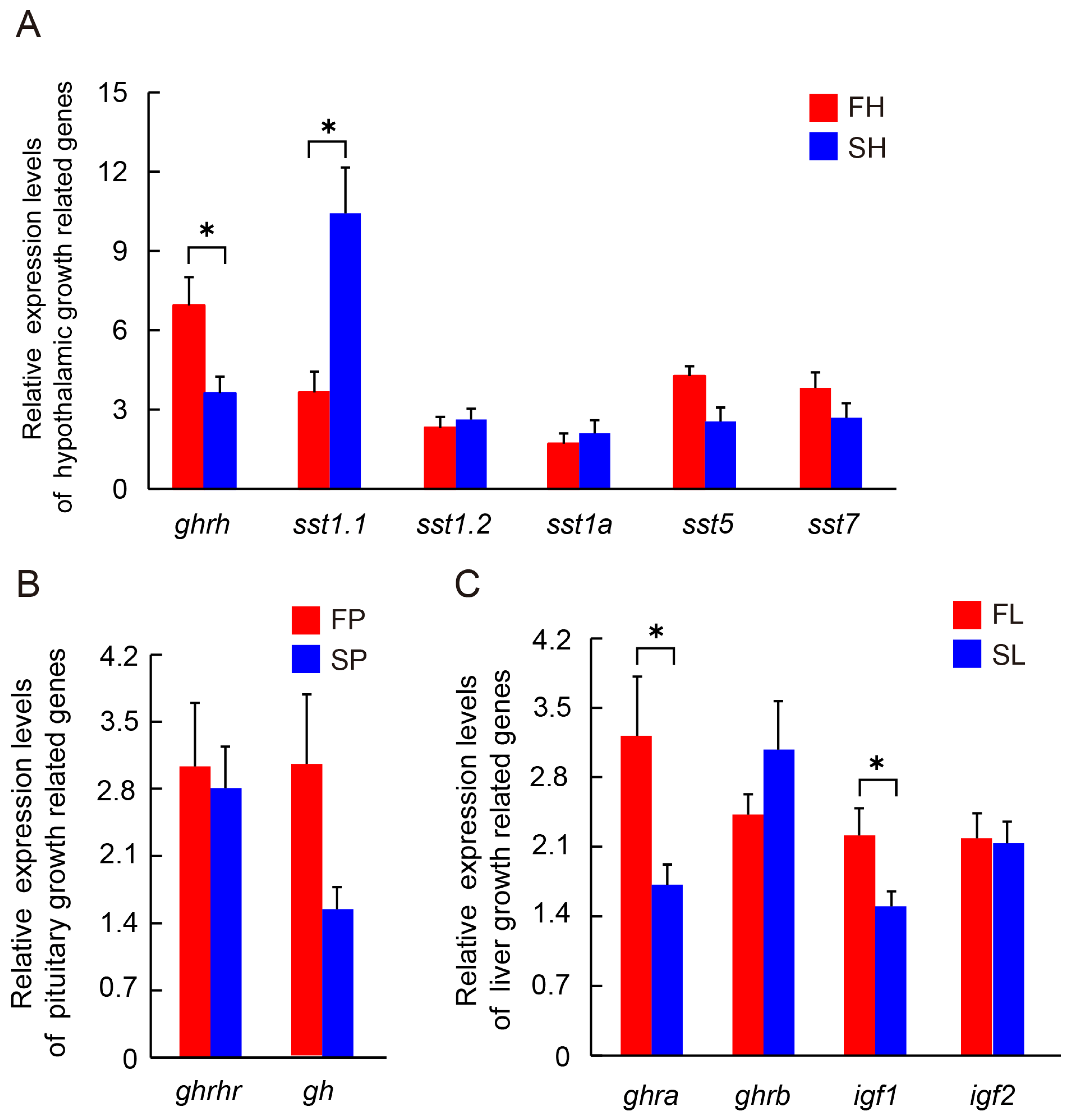
In the hypothalamus, decreased levels of ghrh and increased expression of sst1.1 mRNA were observed in the SG compared to the FG. However, no significant differences were observed in the expression levels of sst1.2, sst1a, sst5, and sst7 mRNA between the two groups (Figure 5A). In the pituitary gland, the expression levels of gh and ghrhr mRNA showed no significant differences between the two groups (Figure 5B). In the liver, the expression of ghrα and igf1 mRNA was significantly reduced in the SG compared to the FG. Furthermore, there was no significant difference in the expression levels of igf2 and ghrb mRNA between the two groups (Figure 5C).

3.5. Validation by qPCR

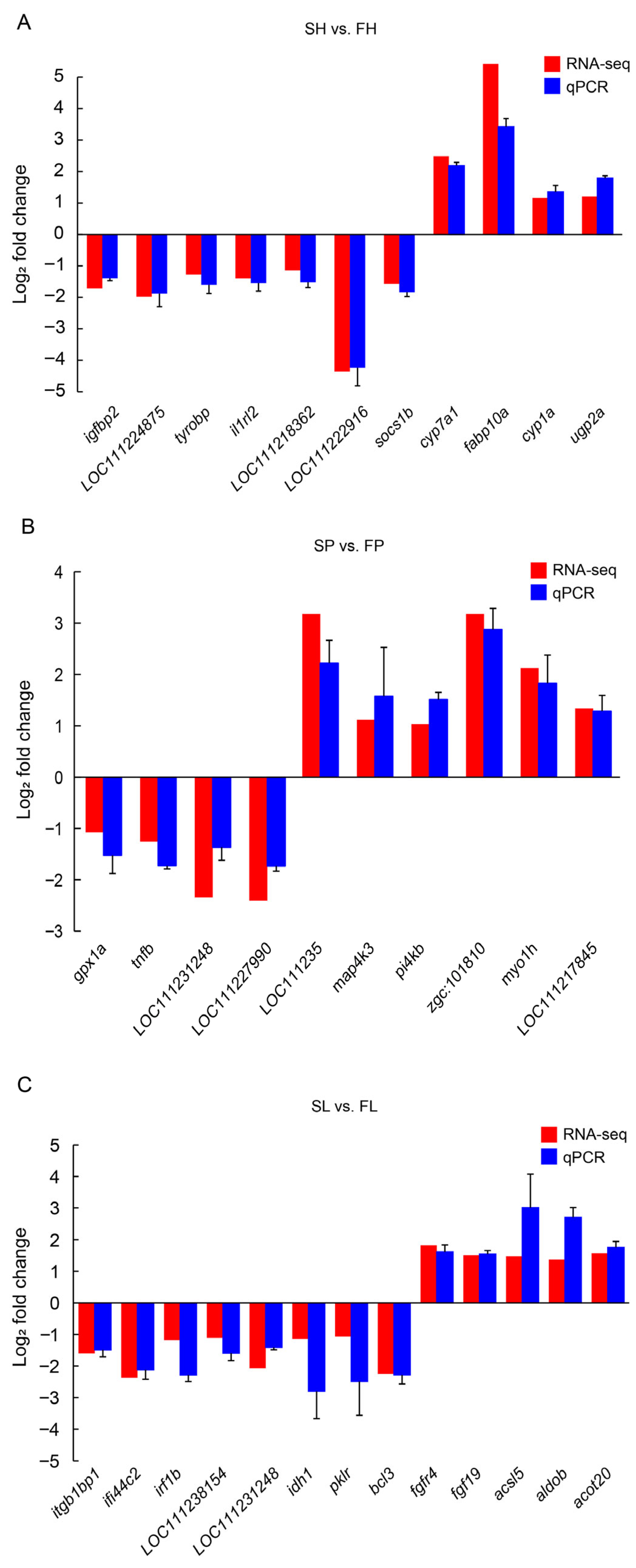
qPCR was performed to assess and validate the expression levels of the 33 DEGs identified through RNA-Seq, alongside one endogenous reference gene. The fold changes obtained from qPCR were compared to those derived from RNA-Seq. The expression trends of the DEGs identified by qPCR closely mirrored those determined by RNA-Seq (Figure 6). The collective data (combined for the hypothalamus, pituitary, and liver) are presented in the scatterplot in Figure S2, which shows a positive correlation between the expression values calculated by each analysis (p < 0.001, R2 = 0.874) (Figure S2). Therefore, RNA-seq is a reliable method for analyzing the differential expression of mRNA.
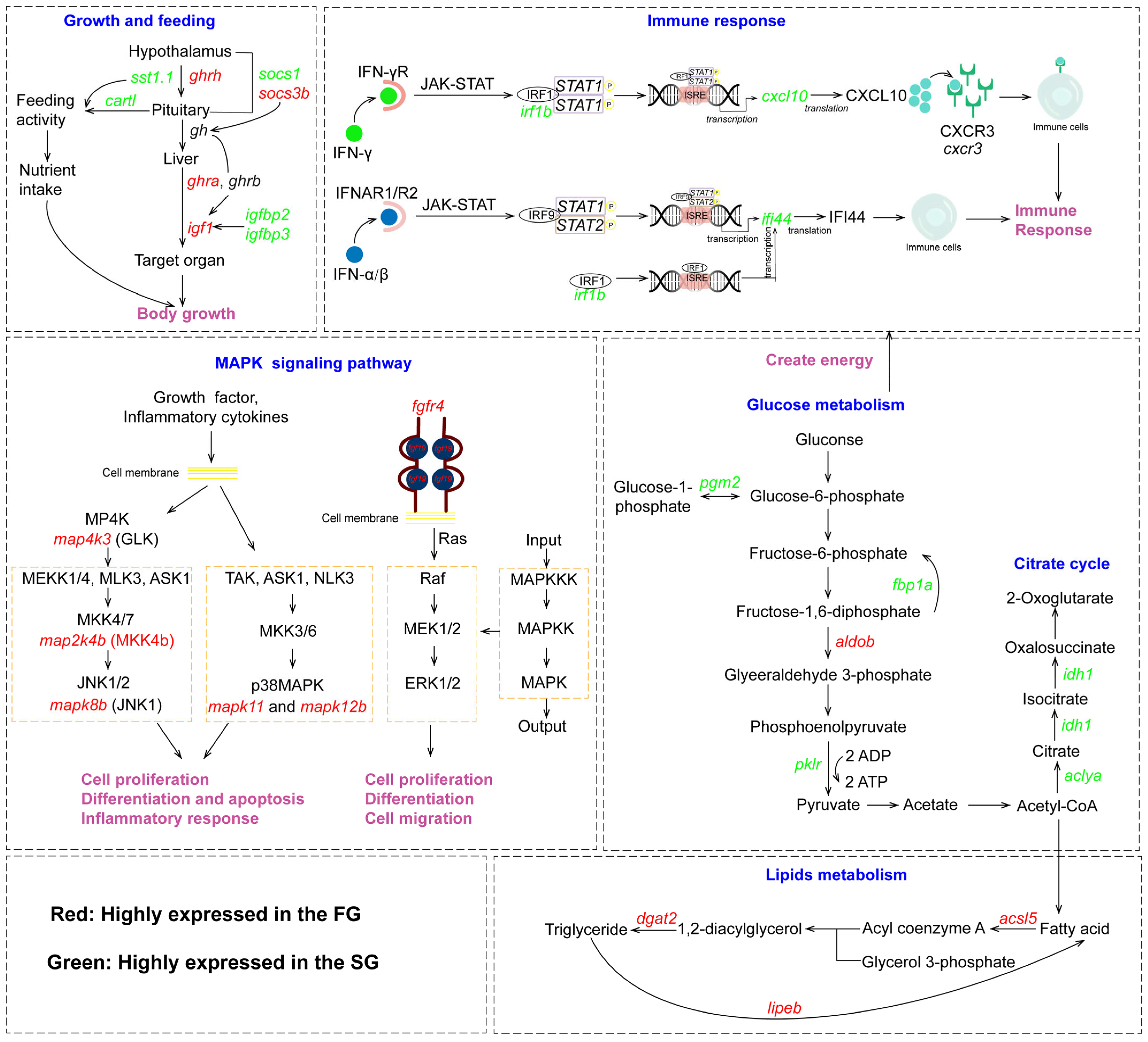
A thorough analysis of the transcriptome provided a comprehensive understanding of the genes involved in the growth of greater amberjack (Figure 7). The results showed that pathways related to growth, metabolism, and immunity were enriched. Genes associated with growth (ghrh, ghra, igf1), cell proliferation (fgf19, fgfr4, mapk8b, map2k4b, and map4k3), and lipid metabolism (acsl5, dgat2, lipeb, cyp7a1, and fabp10a) were up-regulated in the FG compared to the SG. Conversely, glycolysis (fbp1a, pklr, pgm2), citrate cycle (TCA cycle) (aclya, idh1), and immune-related genes (irf1b, cxcl10, ifi44, mapk11, and mapk12b) were up-regulated in the SG compared to the FG, which can activate the immune system and hinder growth during an immune response.

4. Discussion

The growth rate of aquatic animals is regulated by numerous genes and influenced by complex environmental factors. Growth is a significant economic trait in aquaculture and has been prioritized in the development of selective breeding programs [11]. Consequently, elucidating the underlying mechanisms of its regulation from both genetic and economic perspectives is particularly important [24,25]. The brain (including the hypothalamus and pituitary gland) is the most advanced part of the nervous system and regulates various life activities in fish, such as growth, development, digestion, and immunity [26,27]. The liver is a vital organ that plays a crucial role in metabolism and immune function [28]. Variations in fish growth rates may be reflected in the RNA profiles of brain and liver tissues. Therefore, exploring the DEGs in the brains and livers of FG and SG greater amberjack can help identify the mechanisms that significantly influence their growth rates.

4.1. Expression of Growth-Related Genes

The growth and development of fish involve the organic regulation of myocyte proliferation, differentiation, and apoptosis, primarily governed by the GH/IGF system [29]. This system is known to positively regulate growth in vertebrates. It is well established that GHRH in the hypothalamus stimulates GH production in the pituitary, which binds to liver GHR, and increases the production and release of IGF-I from the liver into the systemic circulation of both mammals and fish [30]. IGF-1 is closely associated with growth performance in teleosts, and its up-regulation can promote cell proliferation, differentiation, and protein synthesis by activating downstream PI3K-Akt and MAPK signaling pathways, thereby accelerating somatic growth [31,32]. In our study, the up-regulated expression of ghrh and igf1 in the FG suggests that the somatotropic axis plays a pivotal role in driving growth divergence in greater amberjack, similar to findings in channel catfish [33] and rainbow trout (Oncorhynchus mykiss) [34]. In humans and salmonids, approximately 99% of circulating IGF-1 is bound to IGF-binding proteins (IGFBPs) [35]. These binding proteins extend the half-life of IGF-1 in serum, facilitate or inhibit its binding to receptors in peripheral tissues, and assist in its sequestration across various tissue types [36]. Both IGFBP-2 and -3 can inhibit or potentiate IGF actions. In adult zebrafish, IGFBP-2 significantly inhibited IGF-I-stimulated cell proliferation and DNA synthesis, while total serum IGF-1 levels were reduced in rainbow trout IGFBP-2b knockout lines [36,37]. IGFBP-3 can enhance or inhibit IGF-1 signaling depending on the tissue context and post-translational modifications [37,38,39]. The RNA-seq results indicated down-regulation of igfbp2 and igfbp3 mRNA in the FG, suggesting that these factors may act as negative growth regulators downstream in the GH-IGF-1 axis in greater amberjack. GHRs are transmembrane receptors for growth hormone that play a crucial role in regulating body growth and metabolism. In species such as rainbow trout [40], channel catfish [12], grass carp (Ctenopharyngodon idella) [41], and largemouth bass (Micropterus salmoides) [42], down-regulation of ghrb was observed in the FG, suggesting that ghrb may serve as a negative indicator for rapid growth in fish. It is worth noting that the two types of GH receptors are regulated differently in greater amberjack; ghrα was up-regulated, while ghrb exhibited no significant difference between the FL and SL groups. These findings imply that there is unique functionality associated with the GHR subtypes, with ghrα appearing to play a positive role in promoting rapid growth in greater amberjack.
The growth of fish is influenced by the metabolism and transformation of various nutrients within their bodies, with feeding being a crucial method through which fish acquire these nutrients [43]. Cocaine- and amphetamine-regulated transcript (CART) is a potent anorectic peptide found in both mammals and fish [44,45]. Thus, the activation of cartl in the SG may inhibit the feeding activity of greater amberjack, leading to insufficient nutrient intake, and consequently slower growth and development, which is consistent with findings in Chinese longsnout catfish [13]. Somatostatin (SST) inhibits body growth by suppressing the GH-IGF-1 axis and affects glycolipid metabolism by reducing insulin and glucagon secretion [8,46]. Furthermore, SST regulates feeding behaviors in fish by inhibiting the release of specific gastrointestinal peptides [46]. In this study, sst1.1 mRNA was highly expressed in the SG, indicating that it may influence the growth of greater amberjack by inhibiting GH secretion and feeding activity.

4.2. Molecular Signaling Pathways for Growth

In this study, several prominent pathways, including the mitogen-activated protein kinase (MAPK) and insulin signaling pathways, were shown to be linked with growth regulation and development. The MAPK signal transduction pathway is a ubiquitous and highly conserved mechanism that regulates eukaryotic cell development. c-Jun N-terminal protein kinase (JNK), a subfamily of the MAPK super-family, is activated by sequential protein phosphorylation through a MAP kinase module: MAP3K → MAP2K → MAPK [47,48]. The JNK signaling pathway plays a significant role in various cellular processes, including cell proliferation, differentiation, and apoptosis [47,48]. Moreover, as upstream regulators of the MAP kinase cascade, GLK and other MAP4Ks activate JNK in response to environmental stress and pro-inflammatory cytokines in cultured cell lines [49,50]. In greater amberjack, the expression of mapk8b (JNK1), map2k4b (MKK4b), and map4k3 (GLK) was up-regulated in the pituitary of the FG, indicating that the JNK signaling pathway may play a crucial role in the growth of greater amberjack by regulating cell proliferation and apoptosis. Furthermore, transcriptomic analyses revealed that the fibroblast growth factor 19 (fgf19) and FGF receptor 4 (fgfr4) genes in the MAPK pathway were up-regulated in the liver of larger fish. FGFs are secretory cytokines with diverse biological activities. FGF19, a high-affinity, heparin-dependent ligand for FGFR4, plays an essential role in various biological activities, including cell proliferation, differentiation, growth, and morphogenesis, as well as the regulation of lipid metabolism [51,52]. The expression levels of fgfr4 and fgf19 were up-regulated in the livers of the FG, suggesting that fgf19 acts through fgfr4 to promote cell proliferation and contribute to fish metabolism via the MAPK pathway in fast-growing greater amberjack.
The insulin/insulin-like growth factor signaling pathway (IIS) is highly conserved across vertebrates and invertebrates, regulating multiple physiological processes, including metabolism, growth, and development [53]. The suppressors of cytokine signaling (SOCS) family of proteins serves as crucial negative regulators of cytokine and growth factor signaling pathways [54]. Members of this family establish a classical negative feedback loop, primarily involving the inhibition of the insulin signaling pathway and the JAK-STAT signaling cascade [55,56]. Extensive analyses have implicated both SOCS1 and SOCS3 as significant regulators of GH signal transduction. These SOCS proteins are induced in cells stimulated by GH and their over-expression in cell lines obstructs aspects of GH signaling [13,55]. In the FG, the socs1 mRNA was down-regulated in both the hypothalamus and pituitary, while the socs3b mRNA was up-regulated in the pituitary. This suggests that these two genes may play an essential role in the growth and development of greater amberjack by regulating the GH signaling pathway.

4.3. DEGs Related to Lipids Metabolism

Lipids are high-energy compounds that play a crucial role in the growth and development of fish, as well as in various processes related to digestion, physiology, and metabolism [57]. In this study, several genes associated with lipid synthesis were identified, including acyl-CoA synthetase long-chain family member 5 (acsl5) and diacylglycerol acyltransferase 2 (dgat2) and lipase, hormone-sensitive b (lipe). ACSL5 is a significant regulatory factor that mediates the fatty acid channels between lipid synthesis and the β-oxidation pathway [58]. The overexpression of ACSL5 in hepatoma cells primarily enhances the conversion of fatty acids to triacylglycerol (TG), while the knockdown of ACSL5 in isolated rat hepatocytes leads to reduced TG accumulation and increased fat oxidation [59]. DGAT2 catalyzes the final step of TG synthesis. In mice, the inhibition of DGAT2 has been shown to decrease fatty acid synthesis and reduce TG accumulation and secretion from the liver [60]. Lipe is a critical metabolic enzyme and an important regulator of lipolysis in adipocytes. It catalyzes the release of fatty acids from stored triglycerides in adipocytes, thereby facilitating fat metabolism [61]. In our study, the elevated expression levels of acsl5, dgat2, and lipeb in the FG indicate that these genes may promote FG growth by stimulating lipid synthesis and accelerating lipid breakdown to provide energy. Furthermore, genes related to cholesterol metabolism, such as squalene epoxidase (sqle) and cholesterol 7alpha-hydroxylase (cyp7a1), exhibited significant changes. SQLE, located in the endoplasmic reticulum, is responsible for the initial oxygenation step in sterol biosynthesis and is considered one of the key enzymes in this pathway, significantly influencing the flux of cholesterol synthesis [62]. CYP7A1 is the rate limiting enzyme in the bile acid biosynthetic pathway, converting cholesterol into bile acids, which represent a major output pathway for cholesterol catabolism [63]. In the FG, the high expression of cyp7a1 in the pituitary and the low expression of sqle in the liver indicate an increase in cholesterol catabolism, which is beneficial for promoting lipid digestion and absorption. Fatty acid binding proteins (FABPs) play an important role in regulating the transport and metabolism of lipid-like molecules [64]. In orange-spotted grouper (Epinephelus coioides), an additive diet containing FABP10 can modulate lipid metabolism and contribute to ATP supply in cold environments [65]. This study found that fabp10a was significantly up-regulated in the FG, suggesting that the rapid growth of greater amberjack may requires more active lipid metabolism.

4.4. DEGs Related to Immune Response

Commercially reared animals encounter serial immune challenges throughout their growth. Due to the diversion of nutrients away from growth to support immune-related functions, these immune challenges are significant barriers to achieving the animals’ genetic potential for growth and efficiency of gain [66]. Consequently, the reduced growth observed in the SG may partially result from the considerable energy consumption required to initiate immune responses to environmental stressors. In the SG, genes associated with the immune response were expressed, with numerous genes exhibiting significant activation and up-regulation, such as C-X-C motif chemokine-like 10 (cxcl10), interferon (IFN) regulatory factor 1b (irf1b) and interferon-induced protein 44 (ifi44). CXCL10 (also known as interferon-γ-inducible protein 10), IRF1, and IFI44 are involved in the regulation of innate and adaptive immune responses [67,68,69]. CXCL10 was initially identified as a pro-inflammatory chemokine, functioning primarily as a “chemical beacon” or “recruitment signal”. By binding to its receptor CXCR3, it recruits specific immune cells—particularly T cells and NK cells—to sites of inflammation or infection, thereby playing a pivotal role in immune responses [68]. IRF-1 is a master transcription factor in the interferon-γ pathway that regulates both innate and adaptive immune responses [67]. In murine models, IRF-1 mRNA expression positively correlates with CXCL10 and CXCR3 in hepatocellular carcinoma (HCC) tumors, where HCC-derived IRF-1 activates immune cells to induce apoptosis of tumor cells through the CXCL10/CXCR3 axis [70]. In the greater amberjack, cxcl10 and irf1b are highly expressed in the hypothalamus and liver of the SG, facilitating the production of immune cells to address environmental stress by activating the CXCL10/CXCR3 axis. IFI44 is a member of the type I IFN-inducible gene family, whose expression is induced by IFN-α/β (key regulators of immune activation) and in turn mediates the type I IFN-inducible gene pathway [69,71]. IFN-I can protect the host against some bacterial infections. Additionally, IRF1 can directly bind to the IFN-stimulated response element in the IFI44L promoter, thereby activating IFI44 [72]. Lysozyme (LYS), a nonspecific immune factor with potent antibacterial properties [73], kills bacteria by hydrolyzing the peptidoglycan layer of their cell walls, playing a vital role in innate immunity [74]. Both ifi44 and lysg are highly expressed in the hypothalamus, pituitary, and liver of the SG, indicating their crucial role in resisting bacterial and viral invasion.
Tumor necrosis factor (TNF), a family of cellular signaling proteins involved in systemic inflammation, is one of the most critical pro-inflammatory cytokines, which is necessary for efficient innate and adaptive immune responses [75]. TNF-β, also known as lymphotoxin-alpha (LT-α), is primarily produced by activated T and B lymphocytes [76]. TNF-β participates in the adaptive immune response of Nile tilapia (Oreochromis niloticus) lymphocyte by initiating cell apoptosis [75]. The p38 kinases are one of the four subgroups of the MAPK super-family and play a crucial role in innate immunity. Evidence indicates that the p38b MAPK pathway regulates the expression of several pro-inflammatory cytokines, including TNF-α and IL-1β, through the phosphorylate on various transcription factors and translational regulators [77,78]. This study reveals that tnfb, mapk11, and mapk12b (both p38 MAPK isoforms) were significantly up-regulated in the SG, thereby enhancing the immune response of the pituitary. Following pathogen invasion, immune cells rapidly respond to antigens through swift proliferation and functional execution, which requires nutrients to sustain the underlying cellular pathways, rendering the immune response a highly energy-intensive process [79]. Concurrent with immune activation, we observed up-regulated expression of glycolysis (fbp1a, pklr, pgm2) and citrate cycle (TCA cycle)-related genes (aclya, idh1) in smaller individuals, indicating the activation of energy metabolism pathways. These findings suggest that once the immune system is activated, nutrients and energy typically allocated for growth may be redirected towards the production of immune responses. The up-regulation of immune-related genes indicates elevated stress levels in the SG.
In summary, our study provides a comprehensive transcriptional profile associated with divergent growth phenotypes in sub-adult greater amberjack. These differences likely encompass both sustained regulatory features established during early development and adaptive responses in the current growth state. Fundamental growth-regulatory pathways, such as the GH/IGF axis and insulin/insulin-like growth factor signaling pathways are activated during early embryogenesis and larval development in fish, which can produce long-term growth potential [80,81]. The sustained differential expression of key regulators (e.g., ghrh, ghra, igf1, igfbp2, and igfbp3) in 12-month-old fish may therefore reflect a maintained molecular signature of developmental programming that originated earlier. Concurrently, genes involved in immediate processes such as lipid and cellular energy metabolism, and immune responses showed differential expression between the two groups. These processes are highly correlated with growth rate and are typically considered hallmarks of the current anabolic or catabolic state [8,10,13]. These factors may be more consequential for maintaining, rather than initiating, growth differentials. While our research limits the ability to fully trace the early initiation of growth differences, the current results lay a solid foundation for further exploration of the temporal dynamics of growth-related gene regulation.

5. Conclusions

In conclusion, we conducted comparative transcriptome analyses to explore the functions of the hypothalamus–pituitary–liver axis in growth regulation in greater amberjack. A total of 504, 556, and 699 DEGs were identified in the hypothalamus, pituitary, and liver between the FGs and SGs, respectively. Functional analysis indicated that the FG exhibited an active lipid metabolism capacity, while the SG showed consumption of additional energy in response to environmental stress, with hindered growth due to the generation of immune responses. Furthermore, the FG demonstrated stronger cell proliferation abilities and feeding behavior than the SG. The results of this study enhance our understanding of the genetic mechanisms and regulatory pathways underlying differential growth rates and also provide candidate genes as potential biomarkers for growth in selective breeding programs of greater amberjack.

Supplementary Materials

The following supporting information can be downloaded at: https://www.mdpi.com/article/10.3390/ani16030516/s1. Figure S1. Principal component analysis (PCA) showing the differences between different biological groups. Figure S2. Scatterplot of relative transcript abundance (log2(fold change)) calculated by RNA-seq versus RT-PCR analysis. Table S1. The primers used in this study for qPCR. Table S2. List of the top 10 successfully annotated up- and down-regulated DEGs in the hypothalamus, pituitary, and liver tissues of Fast- (F) and Slow- (S) growing greater amberjack. Table S3. GO analysis of DEGs in the SH vs. FH comparison group in this study. Table S4. GO analysis of DEGs in the SP vs. FP comparison group in this study. Table S5. GO analysis of DEGs in the SL vs. FL comparison group in this study. Table S6. DEGs of significantly enriched KEGG-Categories between fast- and slow-growing greater amberjack.

Author Contributions

Conceptualization, C.Z., R.H., and J.W.; methodology, X.R., R.H., and J.W.; validation, Y.H. and J.W.; formal analysis, X.R., X.L., and H.L. (Haoyi Lin); investigation, H.L. (Hang Li), Q.D., and Q.Z.; resources, Y.H. and C.Z.; data curation, X.R., X.L., P.C., and Q.Z.; writing—original draft, X.R. and X.L.; writing—review and editing, X.R., P.C., R.H., Y.L., and Y.Z.; visualization, Q.D. and H.L. (Hang Li); supervision, H.L. (Haoyi Lin), Y.Z., and Y.L.; project administration, C.Z. and Y.H.; funding acquisition, C.Z. and Y.H. All authors have read and agreed to the published version of the manuscript.

Funding

This research was financed by the fund of Guangdong Ocean University (030301022301), 2025 Research on Breeding Technology of Candidate Species for Guangdong Modern Marine Ranching (2025-MRB-00-001), Southern Marine Science and Engineering Guangdong Laboratory (Zhanjiang) (ZJW-2023-10), Guangdong’s “Sailing Plan”-a Sub Project of Talent Revitalization Plan for Modern Marine Ranching Industry in 2025 (HYJ-YFJH-2025001), Zhan-jiang Science and Technology Plan Project of 2024 (2024R1010), and Zhan-jiang Science and Technology Plan Project of 2025 (2025R02113).

Institutional Review Board Statement

All experiments were performed in accordance with the requirements of the Animal Research and Ethics Committee of the Institute of Aquatic Animals, Guangdong Ocean University (202403004, approved on 8 March 2024).

Informed Consent Statement

Written informed consent was obtained from the owner of the animals involved in this study.

Data Availability Statement

The data that support the findings of this study are available upon reasonable request. The raw reads used in this article have been deposited into the Sequence Read Archive (SRA) of the NCBI database under BioProject accession number: PRJNA1320817: SRR35276430–SRR35276447).

Acknowledgments

We acknowledge all funders of this work. All authors have read and agreed to the published version of the manuscript.

Conflicts of Interest

Author Peipei Chen was employed by the company China National Fisheries Corporation. All authors declare that the research was conducted in the absence of any commercial or financial relationships that could be construed as a potential conflict of interest.

References

  1. Evans, S.; Langdon, C. Direct and indirect responses to selection on individual body weight in the Pacific oyster (Crassostrea gigas). Aquaculture 2006, 261, 546–555. [Google Scholar] [CrossRef]
  2. Fu, B.D.; Wang, X.H.; Feng, X.; Yu, X.M.; Tong, J.O. Comparative transcriptomic analyses of two bighead carp (Hypophthalmichthys nobilis) groups with different growth rates. Comp. Biochem. Physiol. Part D Genom. Proteom. 2016, 20, 111–117. [Google Scholar] [CrossRef] [PubMed]
  3. Reinecke, M. Influences of the environment on the endocrine and paracrine fish growth hormone-insulin-like growth factor-I system. J. Fish Biol. 2010, 76, 1233–1254. [Google Scholar] [CrossRef] [PubMed]
  4. Norbeck, L.A.; Kittilson, J.D.; Sheridan, M.A. Resolving the growth-promoting and metabolic effects of growth hormone: Differential regulation of GH-IGF-I system components. Gen. Comp. Endocrinol. 2007, 151, 332–341. [Google Scholar] [CrossRef]
  5. Lv, H.; Wang, A.; Ling, J.; Li, Y.; He, Y.; Luo, H.; Ye, H.; Yao, W.; Su, S.; He, W. Multi-organ transcriptomics analysis of a slowly growing fish rock carp (Procypris rabaudi) reveals insights into mechanism of growth rate regulation. Comp. Biochem. Physiol. Part D Genom. Proteom. 2024, 52, 101337. [Google Scholar] [CrossRef]
  6. Zhang, J.H.; Shen, Y.B.; Xu, X.Y.; Dai, Y.F.; Li, J.L. Transcriptome analysis of the liver and muscle tissues of black carp (Mylopharyngodon piceus) of different growth rates. Mar. Biotechnol. 2020, 22, 706–716. [Google Scholar] [CrossRef]
  7. Li, Z.; Du, X.S.; Wen, L.T.; Li, Y.; Qin, J.Q.; Chen, Z.; Huang, Y.; Wu, X.; Luo, H.; Lin, Y.; et al. Transcriptome analysis reveals the involvement of ubiquitin-proteasome pathway in the regulation of muscle growth of rice flower carp. Comp. Biochem. Physiol. Part D Genom. Proteom. 2022, 41, 100948. [Google Scholar] [CrossRef]
  8. Zhou, B.; Ling, L.Y.; Wang, B.; Yang, F.; Hou, M.D.; Liu, F.; Li, Y.; Luo, H.; He, W.P.; Ye, H. Hepatopancreas transcriptome analysis of Spinibarbus sinensis to reveal different growth-related genes. Genes 2024, 15, 949. [Google Scholar] [CrossRef]
  9. Gao, Y.; Huang, X.; Liu, Y.; Lv, H.; Yin, X.; Li, W.; Chu, Z. Transcriptome analysis of large yellow croaker (Larimichthys crocea) at different growth rates. Fish. Physiol. Biochem. 2024, 50, 1745–1757. [Google Scholar] [CrossRef] [PubMed]
  10. Liu, Q.; Zou, X.; Zhao, M.; Guan, Q.; Xuan, Z.; Liu, L.; Gao, Z. Integrated transcriptome and metabolome analysis of liver reveals unsynchronized growth mechanisms in blunt-snout bream (Megalobrama amblycephala). BMC. Genom. 2025, 26, 30. [Google Scholar] [CrossRef]
  11. Dorant, Y.; Quillien, V.; Le Luyer, J.; Ky, C.L. Comparative transcriptomics identifies genes underlying growth performance of the Pacific black-lipped pearl oyster Pinctada margaritifera. BMC Genom. 2024, 25, 717. [Google Scholar] [CrossRef]
  12. Luo, W.W.; Chi, S.; Wang, J.R.; Yu, X.M.; Tong, J.O. Comparative transcriptomic analyses of brain-liver-muscle in channel catfish (Ictalurus punctatus) with differential growth rate. Comp. Biochem. Physiol. Part D Genom. Proteom. 2024, 49, 101178. [Google Scholar] [CrossRef]
  13. Li, Y.; Zou, X.; Jin, H.; Zhou, B.; Zhou, J.; Zhang, L.; Li, Z.; Ling, L.; Liu, F.; Gao, Y.; et al. Identification of genes related to growth from transcriptome profiles of the muscle and liver of Chinese longsnout catfish (Leiocassis longirostris). Comp. Biochem. Physiol. Part D Genom. Proteom. 2023, 49, 101180. [Google Scholar] [CrossRef] [PubMed]
  14. Mazzola, A.; Favaloro, E.; Sarà, G. Cultivation of the Mediterranean amberjack, Seriola dumerili (Risso, 1810), in submerged cages in the Western Mediterranean Sea. Aquaculture 2000, 181, 257–268. [Google Scholar] [CrossRef]
  15. Hasegawa, T.; Lu, C.P.; Hsiao, S.T.; Uchino, T.; Sakakura, Y. Distribution and genetic variability of young-of-the-year greater amberjack (Seriola dumerili) in the East China Sea. Environ. Biol. Fishes 2020, 103, 833–846. [Google Scholar] [CrossRef]
  16. Harris, P.J.; Wyanski, D.M.; White, D.B.; Mikell, P.P.; Eyo, P.B. Age, growth, and reproduction of greater amberjack off the Southeastern U.S. Atlantic Coast. Trans. Am. Fish. Soc. 2007, 136, 1534–1545. [Google Scholar] [CrossRef]
  17. Sarropoulou, E.; Sundaram, A.Y.M.; Kaitetzidou, E.; Kotoulas, G.; Gilfillan, G.D.; Papandroulakis, N.; Mylonas, C.C.; Magoulas, A. Full genome survey and dynamics of gene expression in the greater amberjack Seriola dumerili. Gigascience 2017, 6, gix108. [Google Scholar] [CrossRef] [PubMed]
  18. Papadaki, M.; Mylonas, C.C.; Sarropoulou, E. MicroRNAs are involved in ovarian physiology of greater amberjack (Seriola dumerili) under captivity. Gen. Comp. Endocrinol. 2024, 357, 114581. [Google Scholar] [CrossRef]
  19. Yang, J.H.; Ru, X.Y.; Huang, Y.; Wu, J.H.; Yang, T.L.; Chen, P.P.; Li, J.; Zhu, K.F.; Zhu, C.H. Transcriptomic analysis provides new insights into oocyte growth and maturation in greater amberjack (Seriola dumerili). Animals 2025, 15, 333. [Google Scholar] [CrossRef]
  20. Chen, M.Z.; Ru, X.Y.; Peng, Y.H.; Li, X.Y.; Huang, Y.; Zhu, C.H.; Li, G.L.; Shi, H.J. Comparative transcriptome analysis of juvenile greater amberjack (Seriola dumerili) revealed the molecular responses of the kidney to chronic salinity stress. Comp. Biochem. Physiol. Part D Genom. Proteom. 2025, 56, 101572. [Google Scholar] [CrossRef]
  21. Li, L.C.; Tian, Y.L.; Long, H.Z.; Zhang, D.Y.; Hao, R.J.; Li, H.; Wang, C.; Hu, Q.; Ru, X.Y.; Deng, Q.X.; et al. Identification of microRNAs from juvenile greater amberjack (Seriola dumerili) in response to marine heatwaves. Comp. Biochem. Physiol. Part D Genom. Proteom. 2025, 56, 101607. [Google Scholar] [CrossRef]
  22. Tohfuku, T.; Ando, H.; Morishita, N.; Yamashita, M.; Kondo, M. Dietary intake of selenoneine enhances antioxidant activity in the muscles of the amberjack Seriola dumerili grown in aquaculture. Mar. Biotechnol. 2021, 23, 847–853. [Google Scholar] [CrossRef]
  23. Zaccone, R.; Mancuso, M. First report on antibody response of Seriola dumerilii (Risso 1810) challenged with Listonella anguillarum. Fish Shellfish Immunol. 2008, 25, 689–692. [Google Scholar] [CrossRef]
  24. Salem, M.; Vallejo, R.L.; Leeds, T.D.; Palti, Y.; Liu, S.X.; Sabbagh, A.; Rexroad, C.E.r.; Yao, J.B. RNA-Seq identifies SNP markers for growth traits in rainbow trout. PLoS ONE 2012, 7, e36264. [Google Scholar] [CrossRef]
  25. Fu, B.D.; Yu, X.M.; Tong, J.O.; Pang, M.X.; Zhou, Y.; Liu, Q.S.; Tao, W.J. Comparative transcriptomic analysis of hypothalamus-pituitary-liver axis in bighead carp (Hypophthalmichthys nobilis) with differential growth rate. BMC Genom. 2019, 20, 328. [Google Scholar] [CrossRef]
  26. Pang, M.X.; Luo, W.W.; Fu, B.D.; Yu, X.M.; Zhou, Y.; Tong, J.O. Transcriptomic profiles of brain provide insights into molecular mechanism of feed conversion efficiency in crucian carp (Carassius auratus). Int. J. Mol. Sci. 2018, 19, 858. [Google Scholar] [CrossRef]
  27. Dai, Y.F.; Shen, Y.B.; Wang, S.T.; Zhang, J.H.; Su, Y.H.; Bao, S.C.; Xu, X.Y.; Li, J.L. RNA-seq transcriptome analysis of the liver and brain of the black carp (Mylopharyngodon piceus) during fasting. Mar. Biotechnol. 2021, 23, 389–401. [Google Scholar] [CrossRef] [PubMed]
  28. Yang, Y.X.; Han, T.; Xiao, J.; Li, X.Y.; Wang, J.T. Transcriptome analysis reveals carbohydrate-mediated liver immune responses in Epinephelus akaara. Sci. Rep. 2018, 8, 639. [Google Scholar] [CrossRef]
  29. Fuentes, E.N.; Valdés, J.A.; Molina, A.; Björnsson, B.T. Regulation of skeletal muscle growth in fish by the growth hormone-Insulin-like growth factor system. Gen. Comp. Endocrinol. 2013, 192, 136–148. [Google Scholar] [CrossRef] [PubMed]
  30. Wood, A.W.; Duan, C.M.; Bern, H.A. Insulin-like growth factor signaling in fish. Int. Rev. Cytol. 2005, 243, 215–285. [Google Scholar] [CrossRef] [PubMed]
  31. Bikle, D.D.; Tahimic, C.; Chang, W.H.; Wang, Y.M.; Philippou, A.; Barton, E.R. Role of IGF-I signaling in muscle bone interactions. Bone 2015, 80, 79–88. [Google Scholar] [CrossRef]
  32. Castillo, J.; Ammendrup-Johnsen, I.; Codina, M.; Navarro, I.; Gutierrez, J. IGF-I and insulin receptor signal transduction in trout muscle cells. Am. J. Physiol. Regul. Integr. Comp. Physiol. 2006, 290, R1683–R1690. [Google Scholar] [CrossRef]
  33. Peterson, B.C.; Waldbieser, G.C.; Bilodeau, L. IGF-I and IGF-II mRNA expression in slow and fast growing families of USDA103 channel catfish (Ictalurus punctatus). Comp. Biochem. Physiol. Paet A Mol. Integr. Physiol. 2004, 139, 317–323. [Google Scholar] [CrossRef]
  34. Cleveland, B.M.; Gao, G.T.; Leeds, T.D. Transcriptomic response to selective breeding for fast growth in rainbow trout (Oncorhynchus mykiss). Mar. Biotechnol. 2020, 22, 539–550. [Google Scholar] [CrossRef] [PubMed]
  35. Frystyk, J. Free insulin-like growth factors-measurements and relationships to growth hormone secretion and glucose homeostasis. Growth Horm. IGF Res. 2004, 14, 337–375. [Google Scholar] [CrossRef]
  36. Cleveland, B.M.; Izutsu, A.; Ushizawa, Y.; Radler, L.; Shimizu, M. Profiling growth performance, insulin-like growth factors, and IGF-binding proteins in rainbow trout lacking IGFBP-2b. Am. J. Physiol. Regul. Integr. Comp. Physiol. 2025, 328, R34–R44. [Google Scholar] [CrossRef]
  37. Li, J.Z.; Wang, Y.M.; Kang, T.; Li, X.H.; Niu, C.Y. Insulin-like growth factor binding proteins inhibit oocyte maturation of zebrafish. Gen. Comp. Endocrinol. 2019, 281, 83–90. [Google Scholar] [CrossRef] [PubMed]
  38. Duan, C.M.; Xu, Q.J. Roles of insulin-like growth factor (IGF) binding proteins in regulating IGF actions. Gen. Comp. Endocrinol. 2005, 142, 44–52. [Google Scholar] [CrossRef] [PubMed]
  39. Martin, J.L.; Baxter, R.C. Signalling pathways of insulin-like growth factors (IGFs) and IGF binding protein-3. Growth Factors 2011, 29, 235–244. [Google Scholar] [CrossRef]
  40. Danzmann, R.G.; Kocmarek, A.L.; Norman, J.D.; Rexroad, C.E.r.; Palti, Y. Transcriptome profiling in fast versus slow-growing rainbow trout across seasonal gradients. BMC Genom. 2016, 17, 60. [Google Scholar] [CrossRef]
  41. Lu, X.; Chen, H.M.; Qian, X.Q.; Gui, J.F. Transcriptome analysis of grass carp (Ctenopharyngodon idella) between fast- and slow-growing fish. Comp. Biochem. Physiol. Part D Genom. Proteom. 2020, 35, 100688. [Google Scholar] [CrossRef] [PubMed]
  42. Li, S.J.; Liu, H.; Bai, J.J.; Zhu, X.P. Transcriptome assembly and identification of genes and SNPs associated with growth traits in largemouth bass (Micropterus salmoides). Genetica 2017, 145, 175–187. [Google Scholar] [CrossRef] [PubMed]
  43. Wang, J.; Xue, M.; Wu, X.F.; Han, F.; Zheng, Y. Regulation mechanism of selective feed intake of fish when fed different protein source diets: A review. Chin. J. Anim. Nutr. 2014, 26, 833–842. [Google Scholar] [CrossRef]
  44. Murashita, K.; Kurokawa, T.; Ebbesson, L.O.; Stefansson, S.O.; Rønnestad, I. Characterization, tissue distribution, and regulation of agouti-related protein (AgRP), cocaine- and amphetamine-regulated transcript (CART) and neuropeptide Y (NPY) in Atlantic salmon (Salmo salar). Gen. Comp. Endocrinol. 2009, 162, 160–171. [Google Scholar] [CrossRef]
  45. Valassi, E.; Scacchi, M.; Cavagnini, F. Neuroendocrine control of food intake. Nutr. Metab. Cardiovasc. Dis. 2008, 18, 158–168. [Google Scholar] [CrossRef]
  46. Nelson, L.E.; Sheridan, M.A. Regulation of somatostatins and their receptors in fish. Gen. Comp. Endocrinol. 2005, 142, 117–133. [Google Scholar] [CrossRef]
  47. Liu, J.; Minemoto, Y.; Lin, A. c-Jun N-terminal protein kinase 1 (JNK1), but not JNK2, is essential for tumor necrosis factor alpha-induced c-Jun kinase activation and apoptosis. Mol. Cell. Biol. 2004, 24, 10844–10856. [Google Scholar] [CrossRef] [PubMed]
  48. Lin, A. Activation of the JNK signaling pathway: Breaking the brake on apoptosis. Bioessays 2003, 25, 17–24. [Google Scholar] [CrossRef]
  49. Chuang, H.C.; Chang, C.C.; Teng, C.F.; Hsueh, C.H.; Chiu, L.L.; Hsu, P.M.; Lee, M.C.; Hsu, C.P.; Chen, Y.R.; Liu, Y.C.; et al. MAP4K3/GLK promotes lung cancer metastasis by phosphorylating and activating IQGAP1. Cancer Res. 2019, 79, 4978–4993. [Google Scholar] [CrossRef]
  50. Chuang, H.C.; Wang, X.; Tan, T.H. MAP4K family kinases in immunity and inflammation. Adv. Immunol. 2016, 129, 277–314. [Google Scholar] [CrossRef]
  51. Turner, N.; Grose, R. Fibroblast growth factor signalling: From development to cancer. Nat. Rev. Cancer 2005, 10, 116–129. [Google Scholar] [CrossRef] [PubMed]
  52. Wu, A.L.; Coulter, S.; Liddle, C.; Wong, A.; Eastham-Anderson, J.; French, D.M.; Peterson, A.S.; Sonoda, J. FGF19 regulates cell proliferation, glucose and bile acid metabolism via FGFR4-dependent and independent pathways. PLoS ONE 2011, 6, e17868. [Google Scholar] [CrossRef] [PubMed]
  53. Lin, X.; Smagghe, G. Roles of the insulin signaling pathway in insect development and organ growth. Peptides 2019, 122, 169923. [Google Scholar] [CrossRef] [PubMed]
  54. Wang, B.; Wangkahart, E.; Secombes, C.J.; Wang, T.H. Insights into the evolution of the suppressors of cytokine signaling (SOCS) gene family in vertebrates. Mol. Biol. Evol. 2019, 36, 393–411. [Google Scholar] [CrossRef]
  55. Greenhalgh, C.J.; Alexander, W.S. Suppressors of cytokine signalling and regulation of growth hormone action. Growth Horm. IGF Res. 2004, 14, 200–206. [Google Scholar] [CrossRef]
  56. Kawazoe, Y.; Naka, T.; Fujimoto, M.; Kohzaki, H.; Morita, Y.; Narazaki, M.; Okumura, K.; Saitoh, H.; Nakagawa, R.; Uchiyama, Y.; et al. Signal transducer and activator of transcription (STAT)-induced STAT inhibitor 1 (SSI-1)/suppressor of cytokine signaling 1 (SOCS1) inhibits insulin signal transduction pathway through modulating insulin receptor substrate 1 (IRS-1) phosphorylation. J. Exp. Med. 2001, 193, 263–269. [Google Scholar] [CrossRef]
  57. Greene, D.H.; Selivonchick, D.P. Lipid metabolism in fish. Prog. Lipid Res. 1987, 26, 53–85. [Google Scholar] [CrossRef]
  58. Luo, Q.; Das, A.; Oldoni, F.; Wu, P.; Wang, J.; Luo, F.; Fang, Z. Role of ACSL5 in fatty acid metabolism. Heliyon 2023, 9, e13316. [Google Scholar] [CrossRef]
  59. Bu, S.Y.; Mashek, D.G. Hepatic long-chain acyl-CoA synthetase 5 mediates fatty acid channeling between anabolic and catabolic pathways. J. Lipid Res. 2010, 51, 3270–3280. [Google Scholar] [CrossRef]
  60. Rong, S.X.; Xia, M.F.; Vale, G.; Wang, S.M.; Kim, C.W.; Li, S.L.; McDonald, J.G.; Radhakrishnan, A.; Horton, J.D. DGAT2 inhibition blocks SREBP-1 cleavage and improves hepatic steatosis by increasing phosphatidylethanolamine in the ER. Cell Metab. 2024, 36, 617–629.e617. [Google Scholar] [CrossRef]
  61. Zolotov, S.; Xing, C.; Mahamid, R.; Shalata, A.; Sheikh-ahmad, M.; Garg, A. Homozygous LIPE mutation in siblings with multiple symmetric lipomatosis, partial lipodystrophy, and myopathy. Am. J. Med. Genet. Part A 2017, 173, 190–194. [Google Scholar] [CrossRef]
  62. Zhang, D.D.; Wang, D.D.; Wang, Z.; Wang, Y.B.; Li, G.X.; Sun, G.R.; Tian, Y.D.; Han, R.L.; Li, Z.J.; Jiang, R.R.; et al. Estrogen abolishes the repression role of gga-miR-221-5p targeting ELOVL6 and SQLE to promote lipid synthesis in chicken liver. Int. J. Mol. Sci. 2020, 21, 1624. [Google Scholar] [CrossRef]
  63. Hubacek, J.A.; Bobkova, D. Role of cholesterol 7alpha-hydroxylase (CYP7A1) in nutrigenetics and pharmacogenetics of cholesterol lowering. Mol. Diagn. Ther. 2006, 10, 93–100. [Google Scholar] [CrossRef]
  64. Chmurzyńska, A. The multigene family of fatty acid-binding proteins (FABPs): Function, structure and polymorphism. J. Appl. Genet. 2006, 47, 39–48. [Google Scholar] [CrossRef]
  65. Luo, S.W.; Cai, L.; Liu, Y.; Wang, W.N. Functional analysis of a dietary recombinant fatty acid binding protein 10 (FABP10) on the Epinephelus coioides in response to acute low temperature challenge. Fish Shellfish Immunol. 2014, 36, 475–484. [Google Scholar] [CrossRef]
  66. Spurlock, M.E. Regulation of metabolism and growth during immune challenge: An overview of cytokine function. J. Anim. Sci. 1997, 75, 1773–1783. [Google Scholar] [CrossRef]
  67. Mboko, W.P.; Mounce, B.C.; Emmer, J.; Darrah, E.; Patel, S.B.; Tarakanova, V.L. Interferon regulatory factor 1 restricts gammaherpesvirus replication in primary immune cells. J. Virol. 2014, 88, 6993–7004. [Google Scholar] [CrossRef] [PubMed]
  68. Bondar, C.; Araya, R.E.; Guzman, L.; Rua, E.C.; Chopita, N.; Chirdo, F.G. Role of CXCR3/CXCL10 axis in immune cell recruitment into the small intestine in celiac disease. PLoS ONE 2014, 9, e89068. [Google Scholar] [CrossRef] [PubMed]
  69. Wu, C.; Feng, H.; Tian, M.; Chu, B.; Liu, X.; Zeng, S.; Wang, Y.; Wang, H.; Hou, S.; Liang, Q. Identification and validation of diagnostic genes IFI44 and IRF9 in insomnia-associated autoimmune uveitis. Front. Immunol. 2025, 16, 1519371. [Google Scholar] [CrossRef]
  70. Yan, Y.H.; Zheng, L.T.; Du, Q.; Yazdani, H.; Dong, K.; Guo, Y.R.; Geller, D.A. Interferon regulatory factor 1(IRF-1) activates anti-tumor immunity via CXCL10/CXCR3 axis in hepatocellular carcinoma (HCC). Cancer Lett. 2021, 506, 95–106. [Google Scholar] [CrossRef] [PubMed]
  71. Qu, X.X.; Wang, X.; Liu, B.; Chen, M.; Ning, J.H.; Liu, H.; Liu, G.L.; Xu, X.; Zhang, X.T.; Yu, K.; et al. Potential roles of IFI44 genes in high resistance to Vibrio in hybrids of Argopecten scallops. Fish Shellfish Immunol. 2023, 135, 108702. [Google Scholar] [CrossRef]
  72. Li, Y.; Zhang, J.; Wang, C.; Qiao, W.; Li, Y.; Tan, J. IFI44L expression is regulated by IRF-1 and HIV-1. FEBS Open Bio 2021, 11, 105–113. [Google Scholar] [CrossRef]
  73. Liu, Y.; Zha, H.; Yu, S.; Zhong, J.; Liu, X.; Yang, H.; Zhu, Q. Molecular characterization and antibacterial activities of a goose-type lysozyme gene from roughskin sculpin (Trachidermus fasciatus). Fish Shellfish Immunol. 2022, 127, 1079–1087. [Google Scholar] [CrossRef] [PubMed]
  74. Wang, M.; Zhao, X.; Kong, X.; Wang, L.; Jiao, D.; Zhang, H. Molecular characterization and expressing analysis of the c-type and g-type lysozymes in Qihe crucian carp Carassius auratus. Fish Shellfish Immunol. 2016, 52, 210–220. [Google Scholar] [CrossRef]
  75. Li, K.; Qiu, H.; Yan, J.; Shen, X.T.; Wei, X.M.; Duan, M.; Yang, J.L. The involvement of TNF-α and TNF-β as proinflammatory cytokines in lymphocyte-mediated adaptive immunity of Nile tilapia by initiating apoptosis. Dev. Comp. Immunol. 2021, 115, 103884. [Google Scholar] [CrossRef] [PubMed]
  76. Liang, Y.; Zhu, K.C.; You, Y.Z.; Guo, H.Y.; Chen, H.D.; Liu, B.S.; Zhang, N.; Dai, Y.B.; Zeng, F.R.; Lin, H.Y.; et al. Molecular characterization of TNF-β and IFN-γ in yellowfin seabream (Acanthopagrus latus, Hottuyn, 1782) and their immune responses to density stress during transport. Dev. Comp. Immunol. 2023, 147, 104747. [Google Scholar] [CrossRef] [PubMed]
  77. Hansen, T.E.; Jørgensen, J.B. Cloning and characterisation of p38 MAP kinase from Atlantic salmon A kinase important for regulating salmon TNF-2 and IL-1beta expression. Mol. Immunol. 2007, 44, 3137–3146. [Google Scholar] [CrossRef]
  78. Zarubin, T.; Han, J. Activation and signaling of the p38 MAP kinase pathway. Cell Res. 2005, 15, 11–18. [Google Scholar] [CrossRef]
  79. Long, H.Z.; Tian, Y.L.; Zhang, D.Y.; Li, L.; Hao, R.J.; Li, H.; Wang, C.; Ru, X.Y.; Deng, Q.X.; Huang, Y.; et al. Synergistic integration of transcriptomics and metabolomics analyses provides novel insights into the mechanisms underlying unsynchronized growth of greater amberjack (Seriola dumerili). Comp. Biochem. Physiol. Part D Genom. Proteom. 2025, 54, 101441. [Google Scholar] [CrossRef]
  80. Gómez-Requeni, P.; Kraemer, M.N.; Canosa, L.F. Regulation of somatic growth and gene expression of the GH-IGF system and PRP-PACAP by dietary lipid level in early juveniles of a teleost fish, the pejerrey (Odontesthes bonariensis). J. Comp. Physiol. B 2012, 182, 517–530. [Google Scholar] [CrossRef]
  81. Yi, S.K.; Gao, Z.X.; Zhao, H.H.; Zhao, Y.H.; Wang, W.M. The expression analysis of growth-related genes in growth-related tissues in differential growth groups at different developmental stages of Megalobrama amblycephala. Acta Hydrobiol. Sin. 2015, 39, 101–109. [Google Scholar] [CrossRef]
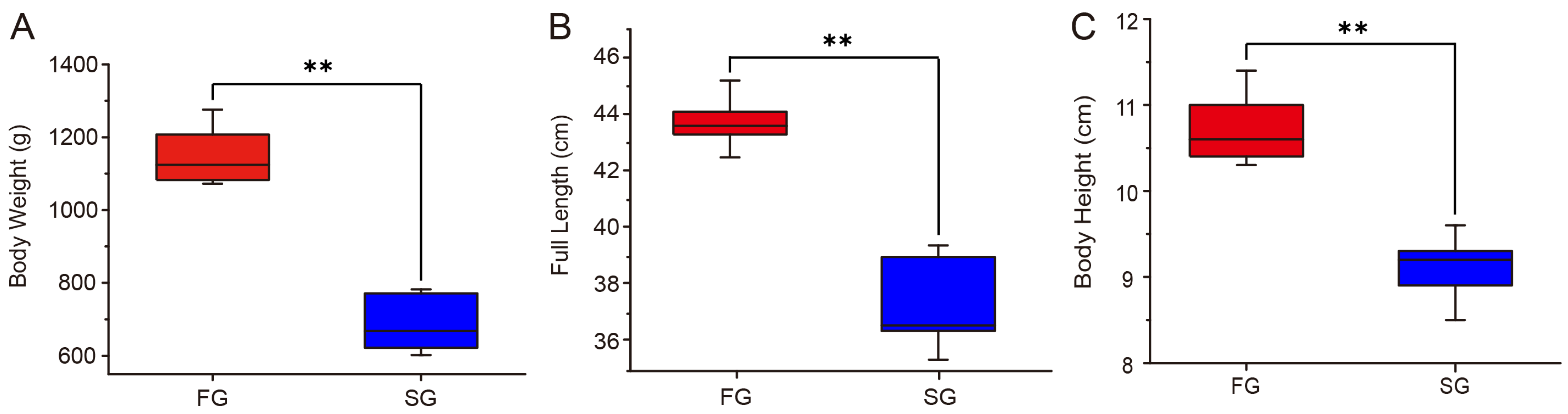
Figure 1. The statistics of body weight (A), full length (B), and body height (C) between the FG and SG. ** indicate statistical differences at p < 0.01. FG represents the fast-growing group (n = 7), and SG represents the slow-growing group (n = 6).
Animals 16 00516 g001
Figure 2. Gene expression in the hypothalamus, pituitary, and liver of greater amberjack with different growth rates. (A) Numbers of DEGs between SH vs. FH, SP vs. FP and SL vs. FL. Here SH and FH were the abbreviations of hypothalamus libraries from the SGs and FGs, SP and FP were the abbreviations of pituitary libraries from the SGs and FGs, and SL and FL were the abbreviations of liver libraries from the SGs and FGs. Red and blue bar charts represent up-regulated and down-regulated DEGs. (B) Venn diagram describes overlapping DEGs among hypothalamus, pituitary, and liver tissues from greater amberjack between the SGs and FGs. (CE) is volcano plot, the red dots represent the up-regulated DEGs, the blue dots represent the down-regulated DEGs, the gray dots represent the no-regulated DEGs. The abscissa represents the logarithm of the difference coefficient, and the ordinate represents the logarithm of the p-value.
Animals 16 00516 g002
Figure 3. Gene ontology (GO) enrichment of DEGs in size-specific fish. (A) SH vs. FH; (B) SP vs. FP; (C) SL vs. FL. The x-axis represents the term name, and the y-axis represents the -log10 p value.
Animals 16 00516 g003
Figure 4. Kyoto Encyclopedia of Genes and Genomes (KEGG) pathway enrichment on DEGs-Bubble chart. (A) SH vs. FH; (B) SP vs. FP; (C) SL vs. FL. The x-axis represents the enrichment score. The Y-axis represents the KEGG pathway terms. The size of the dot represents the number of DEGs annotated in the pathway, and the color of the dot represents the p value of hypergeometric test.
Animals 16 00516 g004
Figure 5. Expression patterns of hypothalamus (A), pituitary (B), and liver (C) axis growth-related genes in growth-differentiated individuals of greater amberjack. Gene expression level was presented as an average normalized ratio (n = 5, ±SE). β-actin serves as the reference gene. * indicate statistical differences at p < 0.05, as determined by Independent-Samples t-Test.
Animals 16 00516 g005
Figure 6. Comparison of gene expression patterns obtained using RNA-seq analysis and qRT-PCR. (A) qPCR of DEGs from hypothalamus between SGs and FGs. (B) qPCR of DEGs from pituitary between SGs and FGs. (C) qPCR of DEGs from liver between SGs and FGs. Gene expression level was presented as an average normalized ratio (n = 3, ±SE). β-actin serves as the reference gene.
Animals 16 00516 g006
Figure 7. Schematic representation of DEGs in growth-related pathways. Red and green colors indicate the up- and down-regulation of DEGs in the FG, respectively.
Animals 16 00516 g007
Table 1. Phenotypic data of the greater amberjack in the fast-growing group (FG) and slow-growing group (SG).
GroupsFull Length (cm)Body Height (cm)Body Weight (g)
Fast growing group/FG
F1 *43.410.31207.34
F2 *42.510.61072.31
F3 *43.610.41123.84
F444.110.61104.7
F545.2111275.9
F643.310.61082.41
F744.111.41177.63
Slow growing group/SG
S1 *36.69.6622.78
S2 *35.48.9602.74
S3 *39.49.3782.31
S437.18.5673.4
S536.49.2668.1
S639.09.2771.24
Note: Individuals marked with * represent transcriptome sequencing and qPCR validation experiments samples.
Table 2. Statistics of sequencing data.
Sample
Name a
Clean Reads (106)Clean Base
(106)
Q20 (%) bQ30 (%) cGC Contents (%)Total Mapped (106) dUniquely Mapped (106) e
FH-122.2066.1598.2195.0646.6742.56 (95.84%)40.00 (90.09%)
FH-221.5163.9898.3995.4447.2541.33 (96.08%)38.13 (88.64%)
FH-320.8962.1798.3895.4646.9140.17 (96.15%)37.46 (89.68%)
SH-124.7373.6198.3595.2846.6547.38 (95.80%)44.12 (89.20%)
SH-222.1065.7998.1594.9046.8142.17 (95.39%)39.38 (89.09%)
SH-319.3357.5398.3795.4047.1637.01 (95.75%)34.60 (89.49%)
FP-120.7361.5998.6796.1848.4039.88 (96.20%)38.17 (92.08%)
FP-221.2863.2998.5495.8048.2441.02 (96.39%)39.11 (91.90%)
FP-320.4260.7898.595.6348.1539.07 (95.66%)37.67 (92.23%)
SP-119.5758.2898.595.6448.4937.43 (95.63%)35.70 (91.19%)
SP-222.9368.3698.3695.3947.0044.09 (96.14%)42.07 (91.72%)
SP-327.1280.7597.1492.0047.5651.23 (94.45%)49.18 (90.67%)
FL-122.7967.8998.4195.5449.3843.74 (95.94%)40.66 (89.19%)
FL-221.2963.3998.595.6950.1140.84 (95.90%)37.95 (89.11%)
FL-323.9371.2998.3895.4648.5645.95 (96.03%)42.59 (89.01%)
SL-121.4163.7398.5595.7248.6941.30 (96.45%)44.12 (89.20%)
SL-224.2072.2398.2795.0949.3146.53 (96.12%)39.38 (89.09%)
SL-326.7579.8197.3992.7249.1751.24 (95.79%)42.76 (90.13%)
a 1, 2, and 3: Three independent biological replicates. b Q20: The percentage of bases with a Phred value > 20. c Q30: The percentage of bases with a Phred value > 30. d The number of clean reads that mapped onto the annotated genome. e The number of clean reads that uniquely mapped onto the annotated genome.
Disclaimer/Publisher’s Note: The statements, opinions and data contained in all publications are solely those of the individual author(s) and contributor(s) and not of MDPI and/or the editor(s). MDPI and/or the editor(s) disclaim responsibility for any injury to people or property resulting from any ideas, methods, instructions or products referred to in the content.