Spatial Associations and Co-Occurrence Networks of Sympatric Species in an Asian Elephant Community
by
Jingshan Wang
1,†, 
Xu Li
1,†,
Yuan Tian
2,
Wenguan Duan
2,
Yuhui Si
1,
Dusu Wen
1,
Weibin Wang
1,* and
Dehuai Meng
1,* 1
Key Laboratory of Conserving Wildlife with Small Populations in Yunnan, Key Laboratory of Forest Resources Conservation and Utilization in the Southwest Mountains of China, Ministry of Education, Southwest Forestry University, Kunming 650224, China
2
Management and Protection Bureau of Yunnan Nangunhe National Nature Reserve, Lincang 677400, China
*
Authors to whom correspondence should be addressed.
†
These authors contributed equally to this work.
Animals 2026, 16(2), 351; https://doi.org/10.3390/ani16020351
Submission received: 14 November 2025
/
Revised: 12 January 2026
/
Accepted: 19 January 2026
/
Published: 22 January 2026
(This article belongs to the Section Ecology and Conservation)
Simple Summary
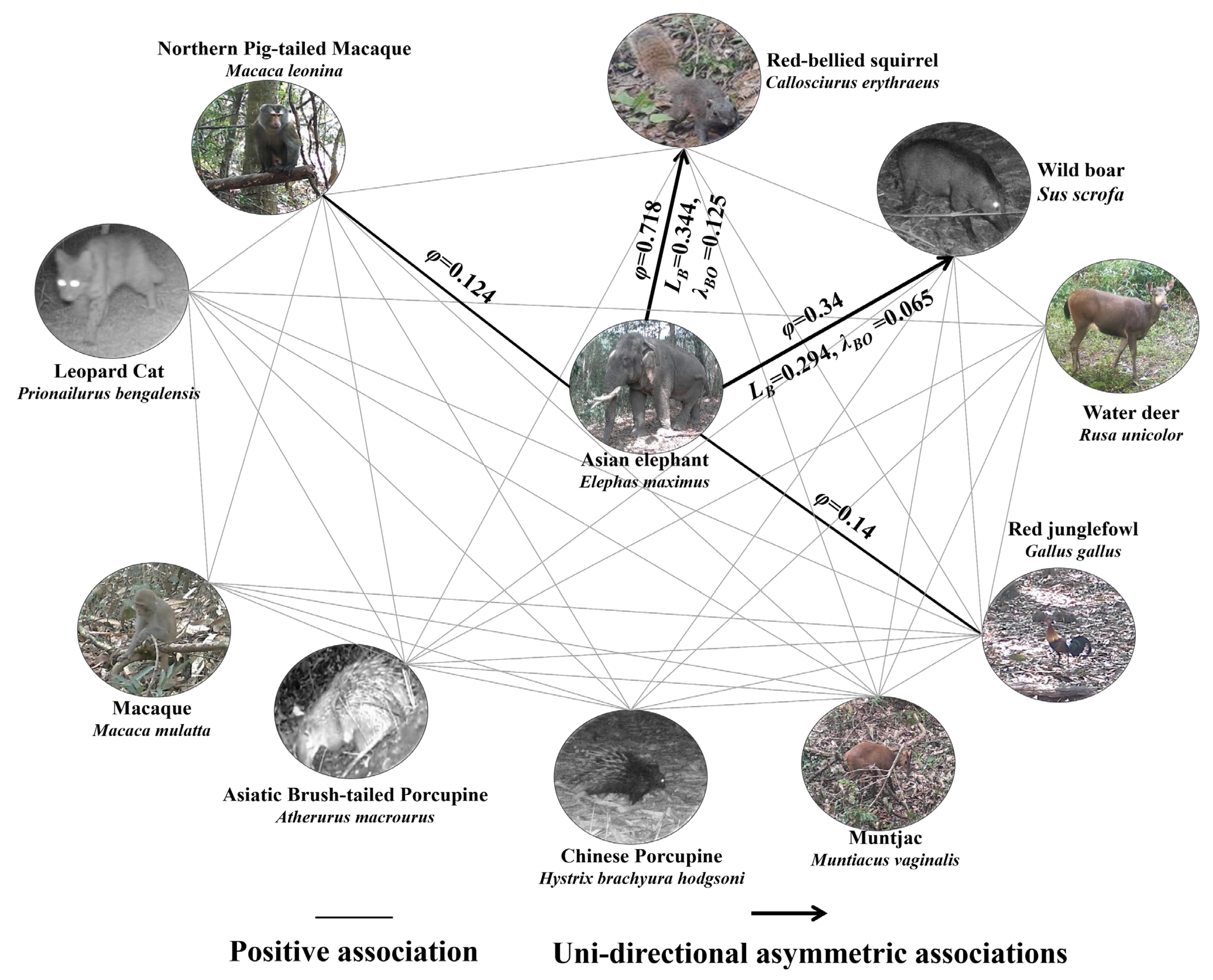
As a keystone species (a species that has a disproportionately large effect on its environment relative to its abundance), Asian elephants play a critical role as “ecosystem engineers” in their forest habitats. In this study, conducted in China’s Nangunhe National Nature Reserve, we explored how Asian elephants interact with other wildlife in a fragmented landscape. Our findings reveal that elephants have the broadest ecological influence, sharing their habitat with numerous other species. Animals such as wild boars and squirrels frequently live near elephant activity zones, possibly benefiting from the environmental changes elephants create. In contrast, species like macaques and junglefowl coexist more independently, occupying different parts of the habitat. This research demonstrates that protecting Asian elephants also supports a network of sympatric species, such as wild boars and red-bellied squirrels, which rely on elephant-modified habitats. This highlights the need to conserve not only individual species but also the web of ecological interactions. Our insights advocate for integrated conservation strategies that maintain these relationships, which will benefit both biodiversity and ecosystem resilience in fragmented landscapes.
Abstract
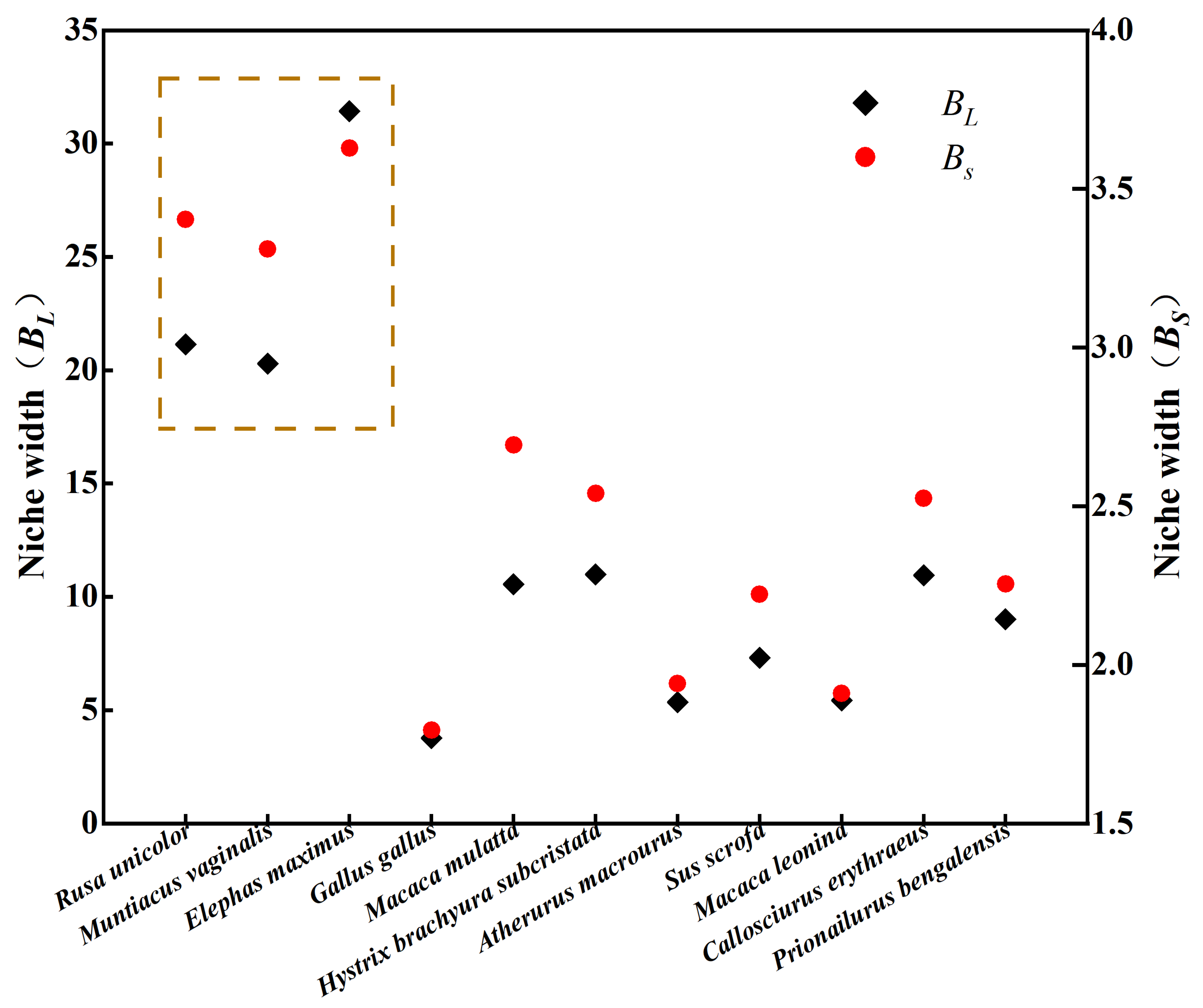
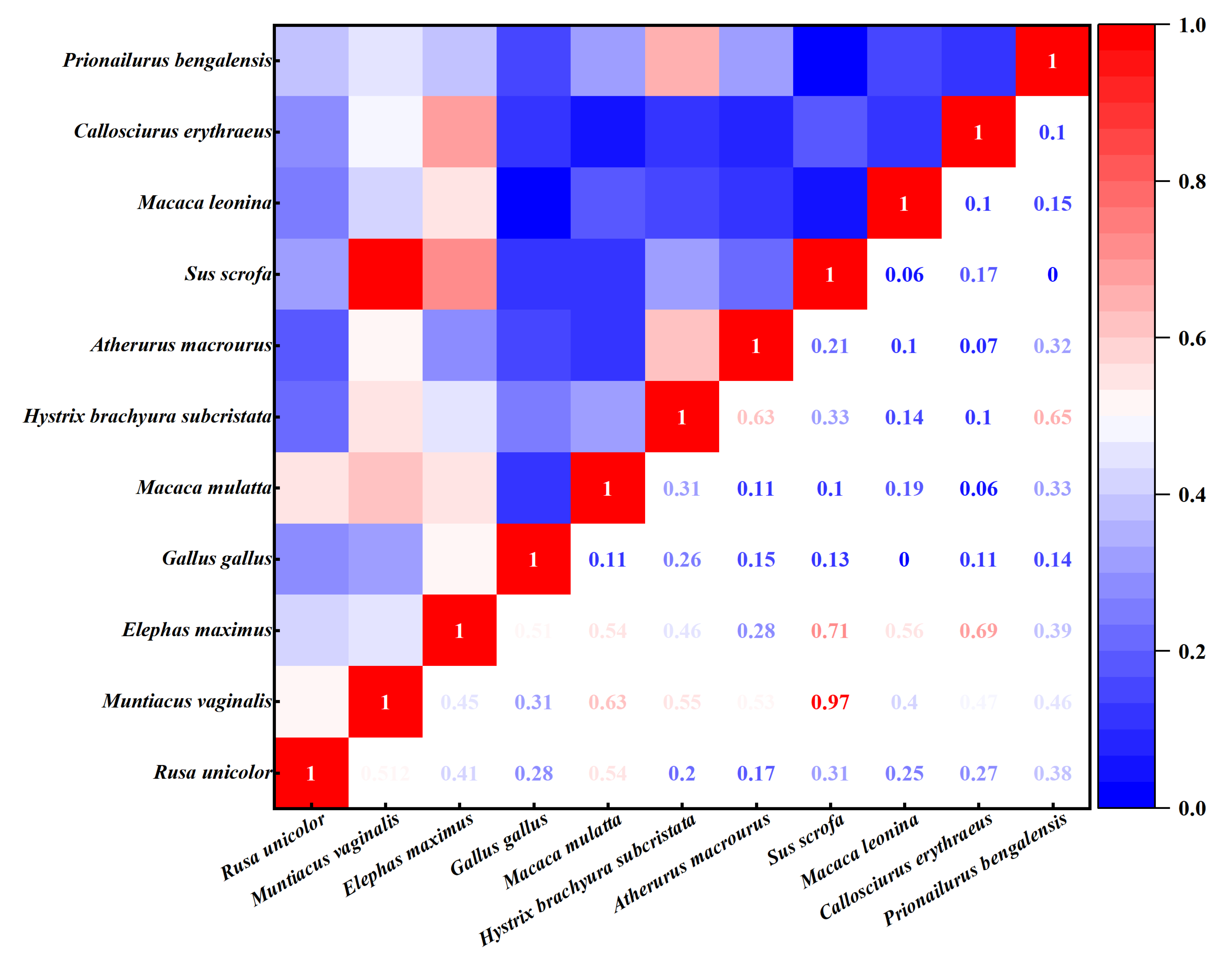
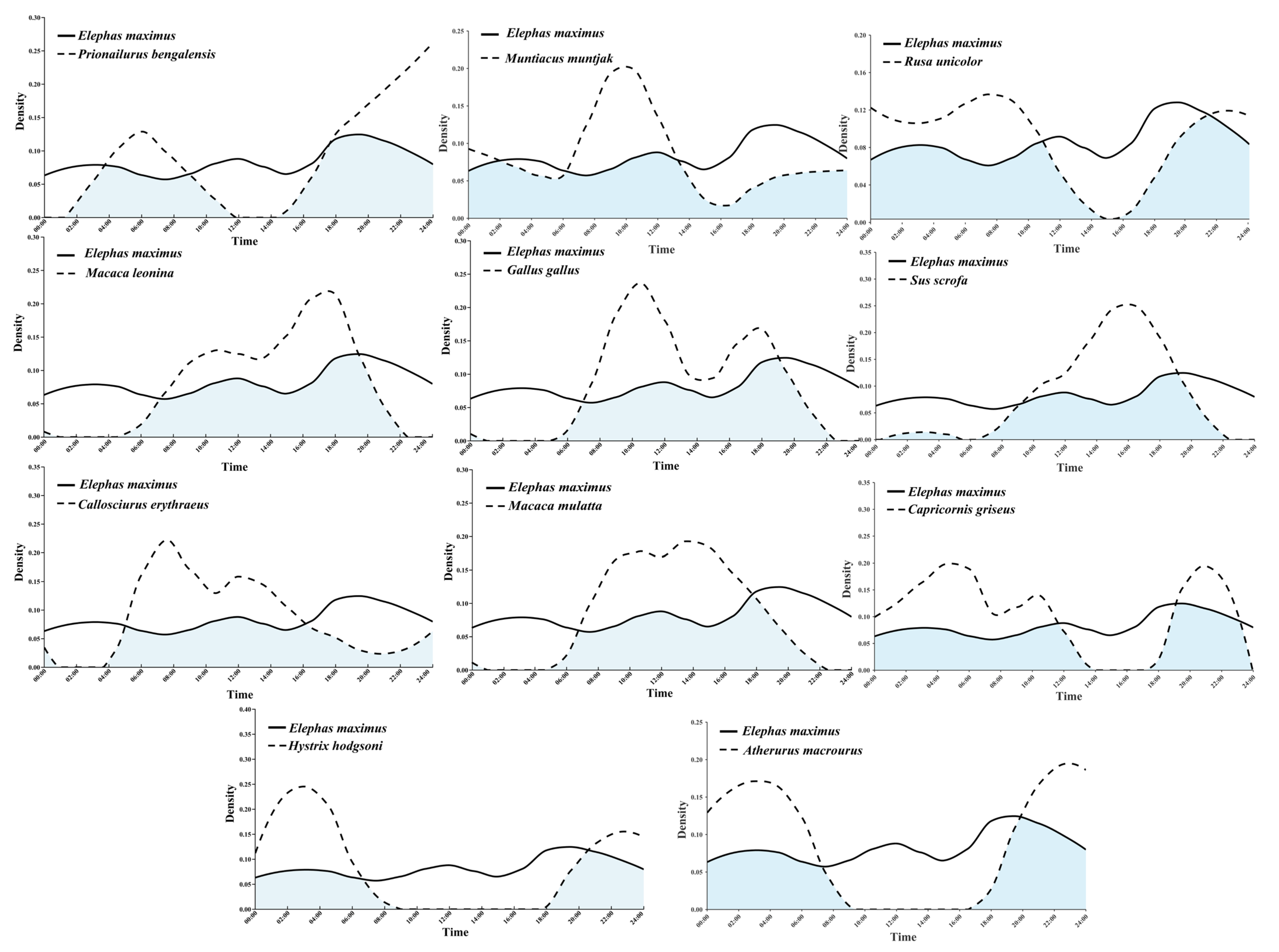
Understanding how species share resources (niche dynamics) and associate with each other is crucial for maintaining stable ecological communities. Using infrared camera traps, we constructed spatial association networks for an isolated Asian elephant population. The Asian elephant (Elephas maximus), a keystone species in tropical forests, faces significant threats from habitat fragmentation and human disturbances, particularly in the isolated population of Nangunhe National Nature Reserve, Yunnan, China. Using infrared camera trapping, niche analysis, and interspecific association models, we examined the ecological role of Asian elephants and their sympatric species networks in fragmented habitats. We identified 44 species, including 11 species with higher relative abundance showing significant ecological correlations with elephants. Asian elephants exhibited the broadest spatial distribution, consistent with their role as ecological engineers due to high environmental tolerance and diverse resource utilization. Sympatric herbivores exhibited moderate spatial co-occurrence. Wild boars (Sus scrofa), red-bellied squirrels (Callosciurus erythraeus), northern pig-tailed macaques (Macaca leonina), and red junglefowl (Gallus gallus) demonstrated significant spatial associations with elephants. Lambda coefficient analysis revealed asymmetric associations reflecting spatial reliance of red-bellied squirrels and wild boars on elephant activity zones. Temporally, Asian elephants exhibited a stable bimodal activity pattern at dawn and dusk. Despite varying degrees of diel overlap with sympatric species, no significant temporal avoidance was detected, suggesting fine-scale coexistence mechanisms beyond the temporal dimension. We argue that conservation strategies are in urgent need of a transformation from single-species protection to the preservation of ecological interaction networks. This study clarifies the dominant position of Asian elephants in the community by mapping the spatial association networks between Asian elephants and sympatric species, and its findings hold substantial guiding significance for the recovery and protection of isolated Asian elephant populations.