4.1. Industrial Application Feasibility of Low-Protein Diet Supplemented with Rumen-Protected Amino Acids
The large-scale development of animal husbandry has boosted the demand for diet raw materials, especially protein raw materials that play a key role in animal growth. China has long faced a supply gap of protein feed resources and relies heavily on international imports. As a core protein feed raw material accounting for about 30% of feed formulations, soybean meals are irreplaceable in livestock diets. It is worth noting that the expansion of intensive breeding has improved production efficiency, but also greatly increased the environmental load brought by livestock waste [
19]. With the expansion of breeding density and scale, the discharge of nitrogen pollutants in feces and urine has increased significantly. Therefore, the feed industry needs to strengthen the independent research and development and utilization of non-grain feed raw materials in the future, so as to improve the self-sufficiency of domestic feed resources and guarantee national food security [
20]. At present, breeders are developing new feed raw materials on a large scale, and applying food processing by-products such as distillers’ grains, sugar residues and tea seed meal to livestock production. In addition, low-protein feeds have been widely applied in goat breeding [
21,
22].
The application of low-protein feeds to control animal protein intake can improve the digestibility and utilization efficiency of nitrogen, thereby effectively reducing nitrogen discharge in the breeding process and significantly alleviating adverse impacts on the environment [
23]. Based on the law of nitrogen metabolism, adopting the ideal protein pattern in feed formulation and balancing amino acids to reduce excessive protein supply can not only lower breeding costs, but also effectively control nitrogen content in feces and urine [
24]. Supplementation with methionine in low-crude-protein diets has no effect on the milk yield, milk fat percentage, milk protein and lactose contents of lactating dairy cows, and can maintain stable whole-body nitrogen balance [
25]. Supplementing rumen-protected methionine and lysine to low-protein diets of lactating dairy cows can increase milk yield without changing milk composition [
26]. Adding 1% glycine to corn–soybean basal diets can improve the growth performance and feed efficiency of weaned piglets [
27]. Cheng et al. [
28] found that supplementary glycine or glycine methyl derivative betaine can significantly reduce average backfat thickness and improve lean meat percentage. Won et al. [
29] reported that single supplementation of 0.79% glycine in diets can improve growth performance of broilers. The above studies confirm the compensatory effect of amino acid nutrition regulation on livestock production performance. Low-protein feed technology adopts precise nutritional matching and amino acid balance technology to reduce the usage of protein raw materials on the premise of meeting animal growth requirements, which can alleviate the shortage of protein feed resources and significantly reduce the environmental impact caused by nitrogen emission. Although low-protein feed technology has achieved preliminary effects in livestock production, it is far from solving China’s current demand for high-quality protein feed. Future research needs to further promote the matching of ideal protein patterns and amino acid levels, combine low-protein diet models with the development of new feed raw materials, and take into account the nutritional characteristics and anti-nutritional factors of different feed sources.
4.2. Effects of Dietary Supplemental Methionine and Glycine on Goat Growth Performance, Slaughter Performance, Serum Biochemical Indices, Meat Quality and Rumen Microorganisms
Animals rely mainly on nutrients from feed during feeding, among which protein is the core nutrient, and amino acids are essential substances for protein synthesis, which play a decisive role in animal growth and development. Reducing dietary crude protein level will inevitably reduce the content of amino acids in feed, leading to insufficient nutrient supply and impaired animal growth performance [
30]. Existing studies have pointed out that supplementing rumen-protected amino acids to low-protein feeds can offset the adverse effects caused by insufficient crude protein on animal growth performance [
31]. Methionine supplementation to low-crude-protein diets does not alter the milk yield, milk fat percentage, milk protein and lactose concentrations in lactating dairy cows, while sustaining steady nitrogen balance [
25]. Supplementation of lysine and methionine at a 1:1 ratio in diets can increase the content of unsaturated fatty acids and improve mutton flavor [
32]. Regulating the ratio of lysine to methionine in low-crude-protein diets for Tibetan sheep exerts no adverse effects on the intestinal fermentation homeostasis of Tibetan sheep, while effectively improving the nitrogen utilization efficiency and the jejunal intestinal barrier function [
14]. In summary, supplementing amino acids to low-protein diets can alleviate the adverse impacts caused by insufficient crude protein, and improve body nitrogen metabolism and production performance. The present trial further verified the above effects by supplementary rumen-protected methionine and glycine.
Reducing dietary crude protein (CP) is an effective strategy for improving nitrogen-use efficiency and reducing nitrogen losses in ruminant production, but excessive CP reduction may compromise the post-ruminal supply of metabolizable amino acids and consequently limit animal performance. In this experiment, the dietary crude protein level of fattening goats was reduced from 13.4% to 11.0%, with separate or combined supplementation of rumen-protected glycine and methionine. Our findings indicated that ADG and FCR of all treatment groups had no significant differences compared with the CON group, indicating that supplementary rumen-protected glycine and methionine can compensate for the adverse effects of insufficient dietary crude protein on Yudong black goats. Most dietary protein is degraded by ruminal microorganisms. Therefore, the capacity of rumen-protected glycine and rumen-protected methionine to sustain growth under low-crude-protein conditions may reflect improved amino acid balance and metabolic utilization efficiency. Slaughter performance can be evaluated by indicators such as dressing percentage and longissimus muscle area [
33]. In this experiment, the dressing percentage of all groups exceeded 44%; the longissimus muscle area of the MAG group was significantly higher than that of the CON group. This indicates that supplementary rumen-protected glycine and methionine can make up for the loss of slaughter performance caused by low dietary crude protein. Studies on pigs also showed that glycine can increase longissimus muscle area to a certain extent without significant difference, and the significant improvement in the MAG group may be due to the synergistic effect between glycine and methionine, which is related to the mixing ratio of the two amino acids [
34]. Collectively, the results reflect the complementary utilization effect of the two amino acids. However, gradient supplementation trials were not conducted in the present study; therefore, the precise mechanisms and optimal supplementation ratio of the two amino acids remain to be further investigated. Glycine and methionine are primarily absorbed and utilized in the small intestine of goats. Serum biochemical indices can reflect the nutrient metabolism, health status and internal and external balance of animals [
35]. Triglycerides, LDL-C, HDL-C and total cholesterol are important indicators for evaluating body lipid metabolism. Serum biochemical responses further suggest that the low-CP diets supplemented with rumen-protected amino acids altered protein and lipid metabolism without causing broad metabolic dysfunction.
Mutton is rich in amino acids and fatty acids, whose contents determine the nutritional value and umami taste of mutton. The higher the proportion of essential amino acids in total amino acids, the better the nutritional value of meat [
36,
37]. In the present study, no significant differences were observed in TAA, EAA and FAA between the MAG group and the CON group. Nevertheless, simultaneous supplementation of glycine and methionine showed the potential to increase the concentrations of isoleucine, tyrosine and C14:0. These findings indicate that reducing dietary crude protein level combined with glycine and methionine supplementation could modulate partial amino acid and fatty acid deposition in muscle without compromising the overall nutritional-related amino acid profile of mutton.
The rumen is a vital digestive and metabolic organ of ruminants, and the abundance and diversity of rumen microbial flora can directly reflect the rumen microecological balance and fermentation metabolism status, which exert important effects on host nutrient digestion and absorption, growth and development and immune function [
38,
39]. Multiple studies have shown that rumen microbial diversity is related to animal breed, age and dietary composition [
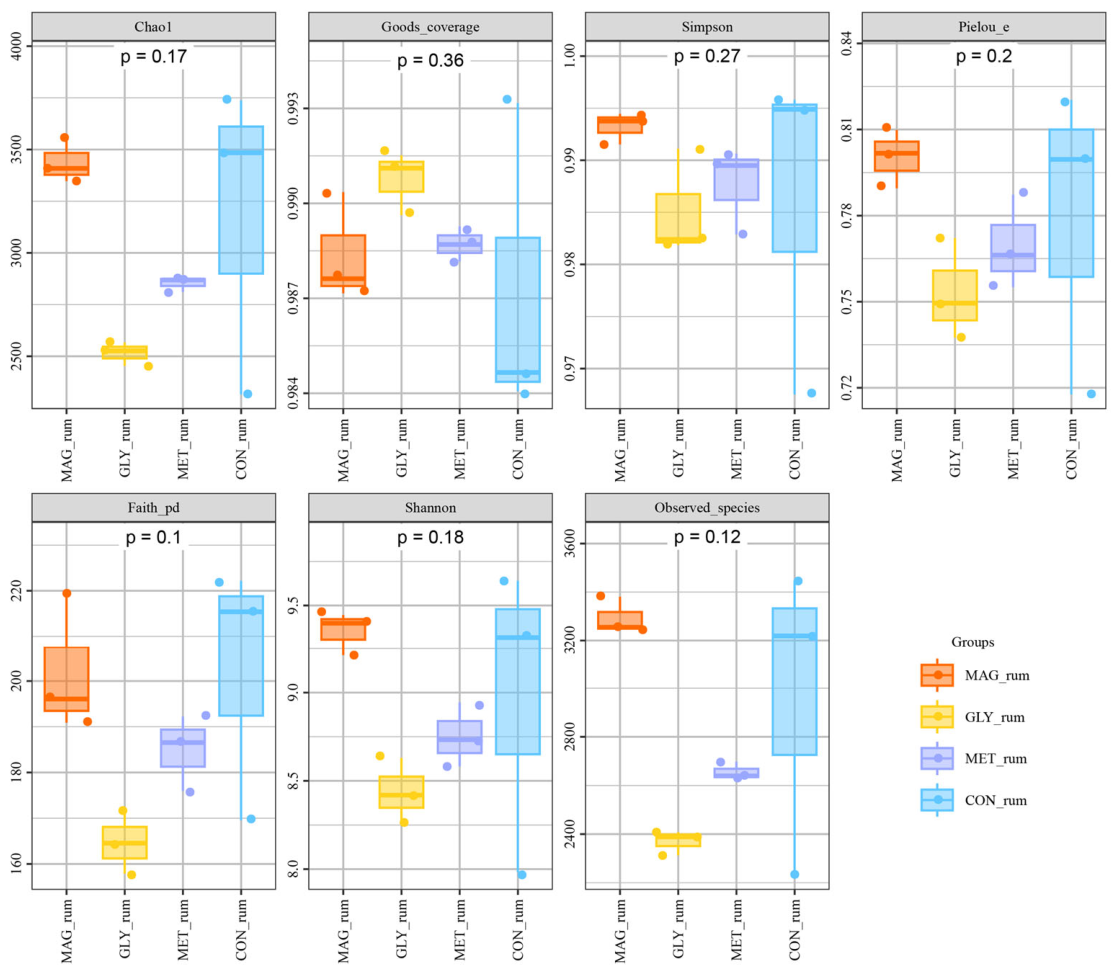
40]. Different concentrations of cysteamine were supplemented into lamb diets, and study found that the Shannon index differed among various treatment groups [
41]. Dietary astragalus polysaccharides supplementation optimizes the rumen microbial community of yaks [
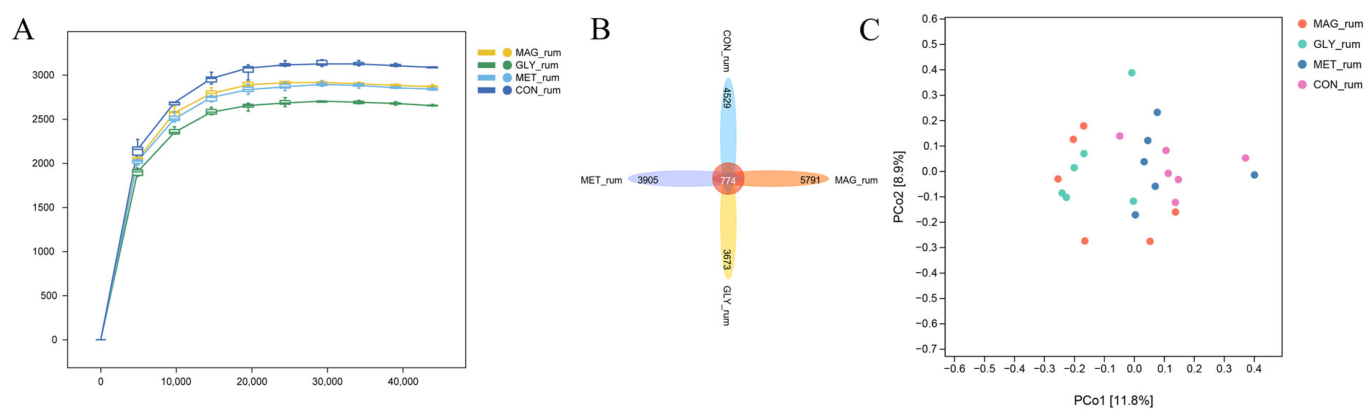
42]. The above studies indicate that changes in dietary formula can alter the richness of rumen microorganisms. The alpha diversity results of this experiment showed that there were no significant differences between low-protein treatment groups and the CON group. This suggests that the dietary intervention did not cause a major disruption of overall microbial richness or evenness. Such stability is biologically plausible because the diets were formulated from broadly similar feed ingredients, and moderate changes in CP do not necessarily produce large shifts in the overall rumen microbial community.
Firmicutes and Bacteroidetes are the dominant phyla in ruminant rumen, and play important roles in degrading fibrous and non-fibrous substances [
43,
44]. The present study found that the relative abundance of most bacterial phyla did not differ significantly across groups. Nevertheless, Bacteroidetes were significantly less abundant in the low-protein treatment groups. As core ruminal bacteria responsible for degrading protein, peptides and non-fibrous carbohydrates, members of Bacteroidetes are highly dependent on nitrogen substrates for growth. The decreased relative abundance of Bacteroidetes under low-protein conditions indicated that insufficient dietary nitrogen supply restricted the proliferation of this phylum.
Prevotella is one of the dominant ruminal bacterial genera and is involved in the utilization of protein, peptides and starch-derived substrates [
45]. The increased abundance of
Prevotella in the MET group may indicate that methionine supplementation modified the availability of nitrogenous substrates or carbohydrate fermentation products, thereby favoring bacteria capable of utilizing these substrates. Previous studies have demonstrated that rumen-protected methionine can alter rumen fermentation, microbial populations, nitrogen utilization, and intestinal development in goats. However, the magnitude and direction of these effects vary depending on methionine source, dosage, basal diet, and the physiological stage of animals [
46]. Similarly, low-CP diets can alter rumen microbial composition while simultaneously improving nitrogen utilization through changes in intestinal amino acid absorption and microbial nitrogen metabolism.
Multiple studies have confirmed that gastrointestinal flora is closely related to animal health [
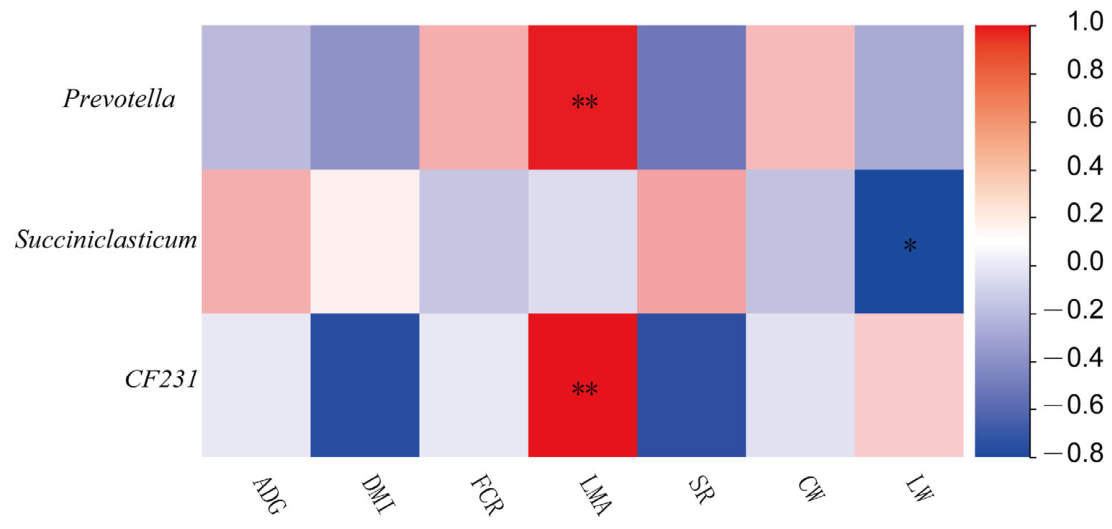
47]. The correlation analysis provides preliminary evidence linking specific rumen bacteria with host growth and carcass traits.
Prevotella and
CF231 were positively correlated with longissimus muscle area, whereas
Succiniclasticum was negatively correlated with pre-slaughter body weight. DMI and dressing percentage were also negatively associated with
CF231. These relationships suggest that specific microbial taxa may be involved in the metabolic processes connecting rumen fermentation with host nutrient deposition. Taken together, the present findings indicate that reducing dietary CP from 13.4% to 11.0% did not compromise growth performance, feed efficiency, carcass traits, or the major amino acid characteristics of the longissimus muscle when rumen-protected glycine and/or methionine were supplemented. The response was not simply associated with an increase in total dietary protein availability; rather, it may have resulted from improved post-ruminal amino acid balance and metabolic complementarity between glycine and methionine. At the same time, the stable alpha diversity but altered abundance of several dominant bacterial taxa suggests that the dietary intervention modified specific components of the rumen microbial ecosystem without causing broad community disruption. These findings support the potential of targeted rumen-protected amino acid supplementation as a nutritional strategy for reducing dietary CP while maintaining productive performance in Yudong black goats, with potential implications for improving nitrogen-use efficiency and reducing unnecessary dietary protein inputs.