Biological Load and Tray Position Shape Larval Yield and Frass Production in a Stacked Hermetia illucens Rearing System
by
 , , , and
Alondra Guerrero-Hernández
1 ,
,
Aurelio Guevara-Escobar
1,* ,
,
Juan Fernando García-Trejo
2,
Ximena Galilea Ruiz-Maldonado
1 and
Ana Angelica Feregrino-Pérez
2 1
Facultad de Ciencias Naturales, Universidad Autónoma de Querétaro, Juriquilla, Querétaro 76230, Mexico
2
Facultad de Ingeniería, Universidad Autónoma de Querétaro, Amazcala, Querétaro 76265, Mexico
*
Author to whom correspondence should be addressed.
Animals 2026, 16(18), 2900; https://doi.org/10.3390/ani16182900
Submission received: 4 August 2026
/
Revised: 9 September 2026
/
Accepted: 11 September 2026
/
Published: 15 September 2026
(This article belongs to the Section Animal System and Management)
Simple Summary
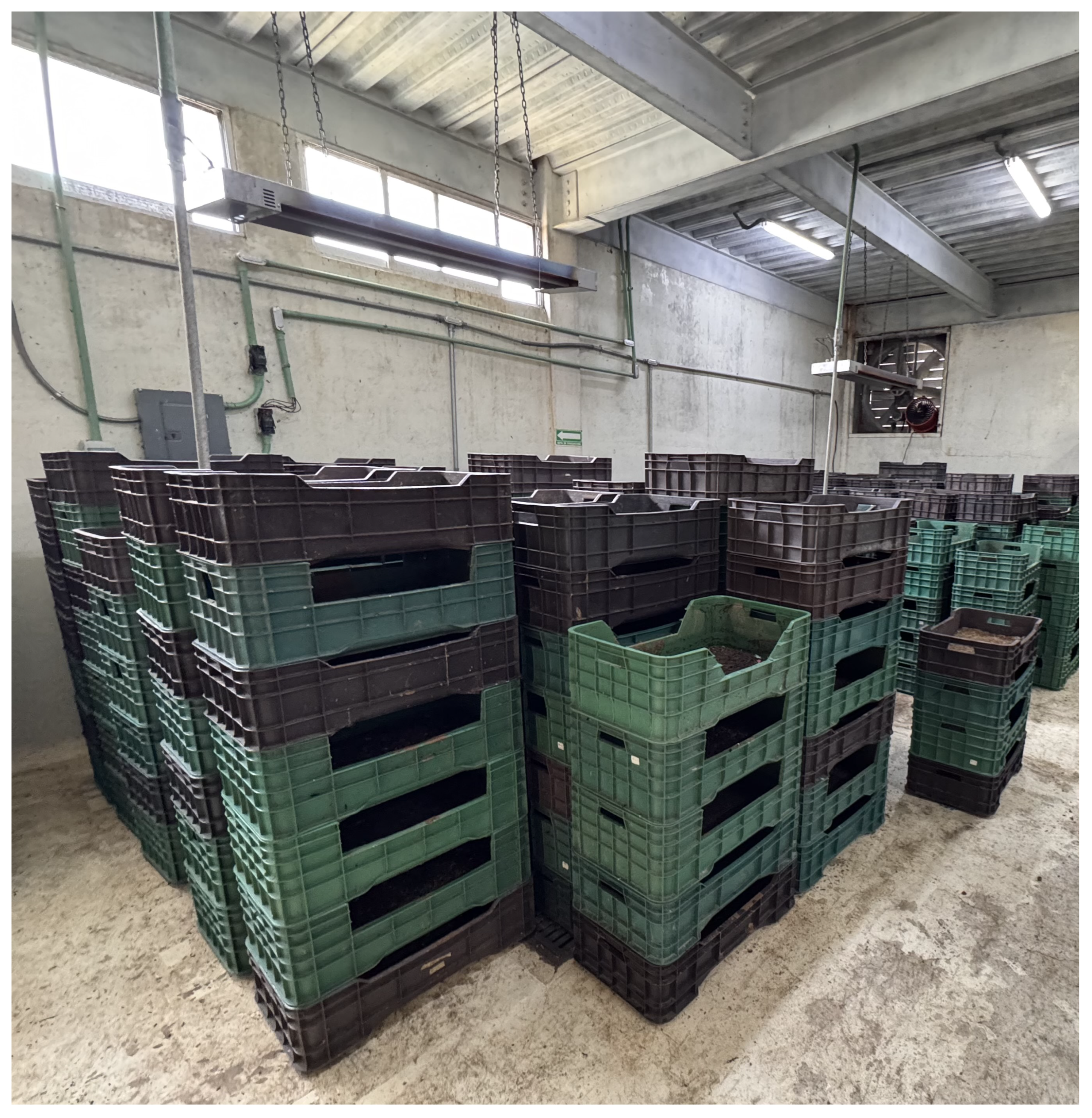
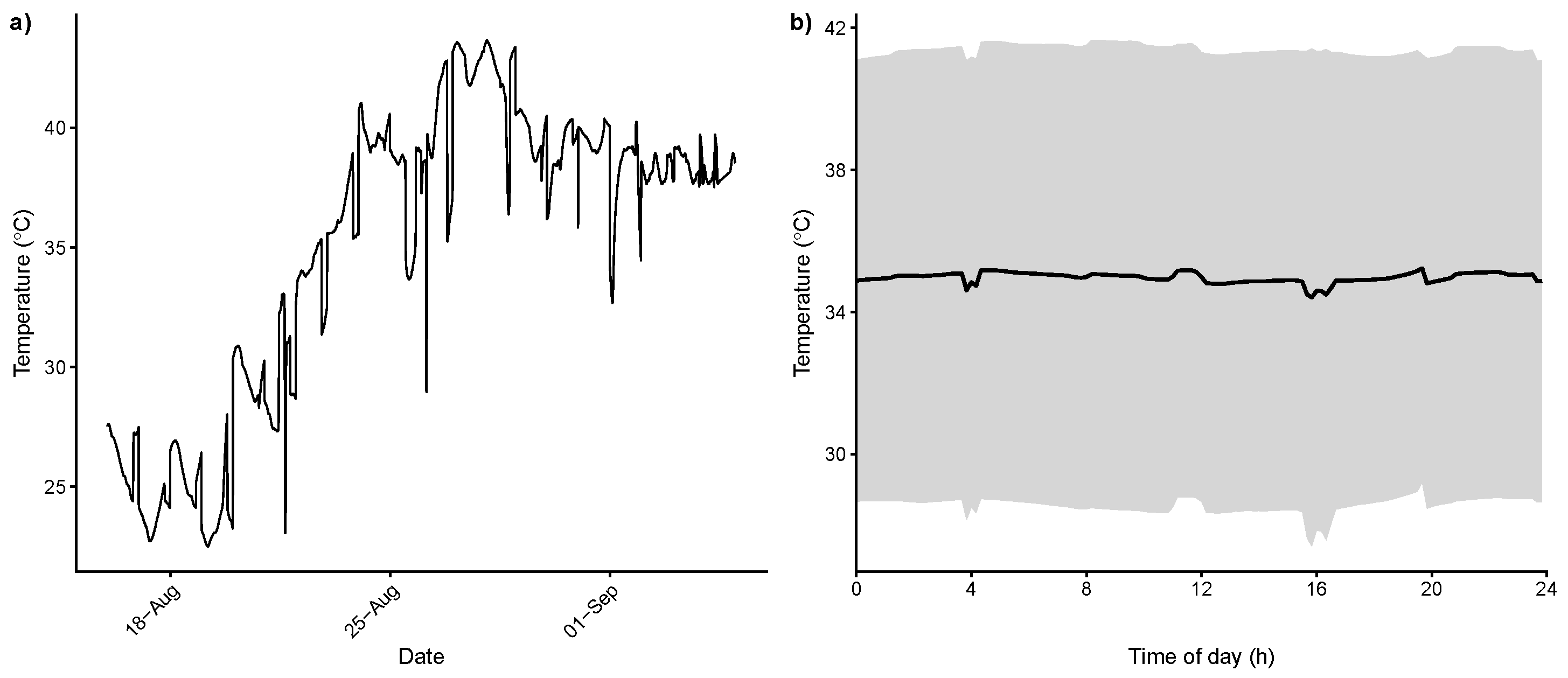
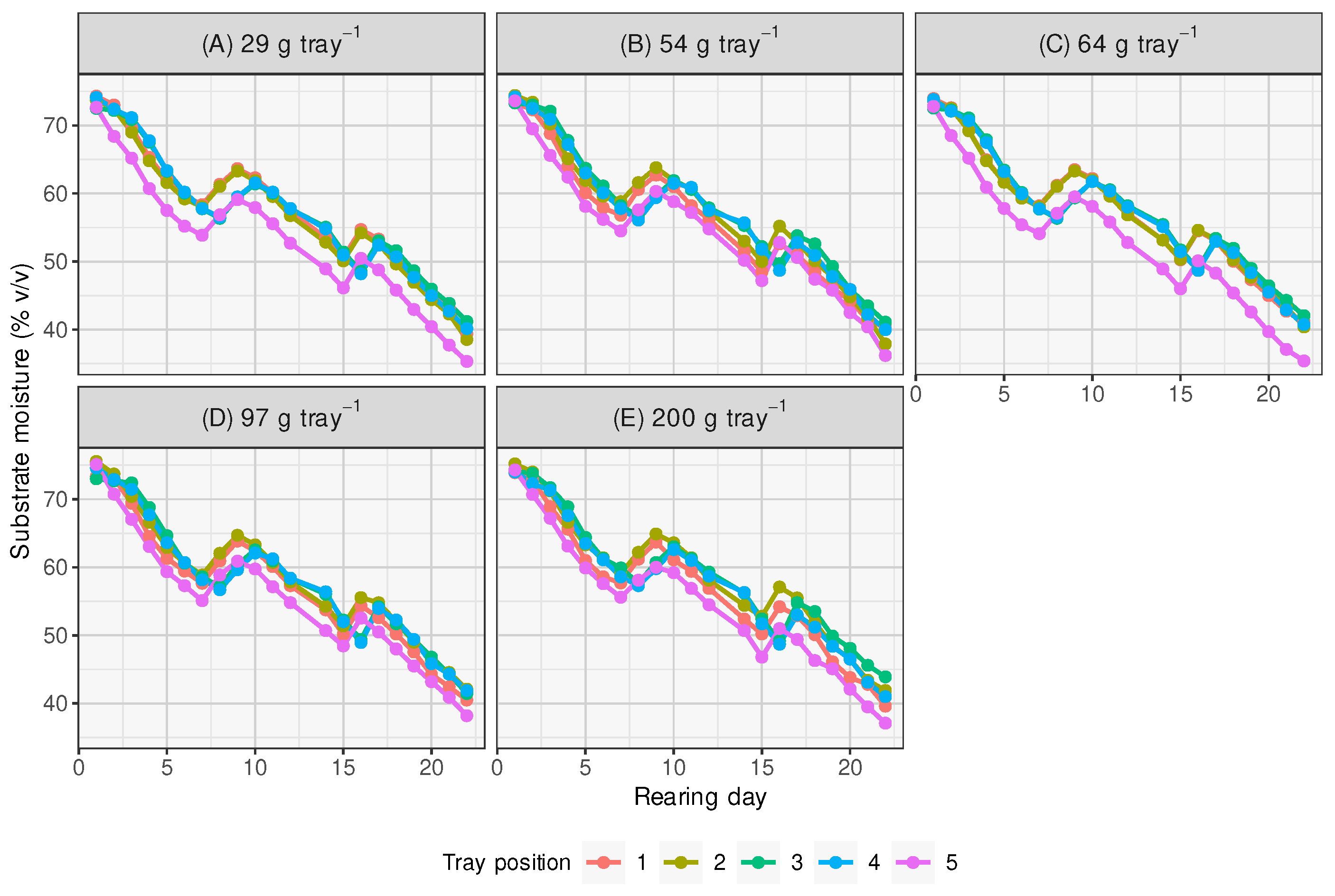
Black soldier fly larvae (Hermetia illucens) are increasingly used to convert organic materials into valuable insect biomass and frass. However, production can vary considerably among trays in stacked rearing systems. This study evaluated whether initial biological load and vertical tray position contribute to this variability under pilot-scale rearing conditions. Forty trays were stocked with 9000 larvae each using five initial larval biomass levels and arranged at five vertical positions within stacks. Initial biological load strongly influenced production, but increasing the starting larval biomass did not result in greater final yield. The lowest initial load produced the greatest wet larval biomass, whereas the highest load produced substantially less. Tray position also affected production, with intermediate positions generally yielding more larval biomass than the lowest position. Moisture conditions varied among trays, whereas temperature differences among positions were limited. These results show that both biological load and the spatial arrangement of trays can create important production heterogeneity and should be considered when designing and managing stacked black soldier fly rearing systems.
Abstract
Industrial black soldier fly (Hermetia illucens) production commonly relies on stacked tray systems, yet little is known about how tray position and biological load influence production heterogeneity. This study evaluated whether different initial biological loads, imposed by varying the initial larval mass while maintaining a constant numerical density, together with tray position, influence larval biomass and dry frass production. Same-age third-instar larvae were seeded at a constant density of 9000 larvae per tray under five biological-load treatments (29, 54, 64, 97 and 200 g tray−1, fresh weight basis). Initial biological load affected wet larval biomass, dry larval biomass, and dry frass production. However, higher initial biological load did not produce proportional gains in final biomass. The lowest initial biological load resulted in the greatest final wet larval biomass (3.54 kg tray−1) whereas the highest initial biological load resulted in only 1.75 kg tray−1 (