Dosage-Associated Maternal Dominance and Tissue-Specific Paternal Expression in a Triploid Hybrid Between Grass Carp and Yellowcheek
by
 ,
,
Shuai Chang
1,2,† ,
,
Xiao-Li Yang
3,†,
Li Zhou
2,4,
Zhi Li
2,
Peng Yu
2,
Meng Lu
2,
Xi-Yin Li
2,4,
Zhong-Wei Wang
2,4,
Xiao-Juan Zhang
2,
Jian-Fang Gui
2,4,* and
Yang Wang
2,4,*
1
College of Fisheries and Life Science, Dalian Ocean University, Dalian 116023, China
2
State Key Laboratory of Breeding Biotechnology and Sustainable Aquaculture, Hubei Hongshan Laboratory, The Innovation Academy of Seed Design, Institute of Hydrobiology, Chinese Academy of Sciences, 7 Donghu South Road, Wuhan 430072, China
3
Hubei Hongshan Laboratory, Huazhong Agricultural University, Wuhan 430070, China
4
University of Chinese Academy of Sciences, Beijing 100049, China
*
Authors to whom correspondence should be addressed.
†
These authors contributed equally to this work.
Animals 2026, 16(15), 2299; https://doi.org/10.3390/ani16152299
Submission received: 21 June 2026
/
Revised: 21 July 2026
/
Accepted: 22 July 2026
/
Published: 24 July 2026
(This article belongs to the Special Issue Molecular Genetics in Aquaculture: Practical Applications for Sustainable Production)
Simple Summary
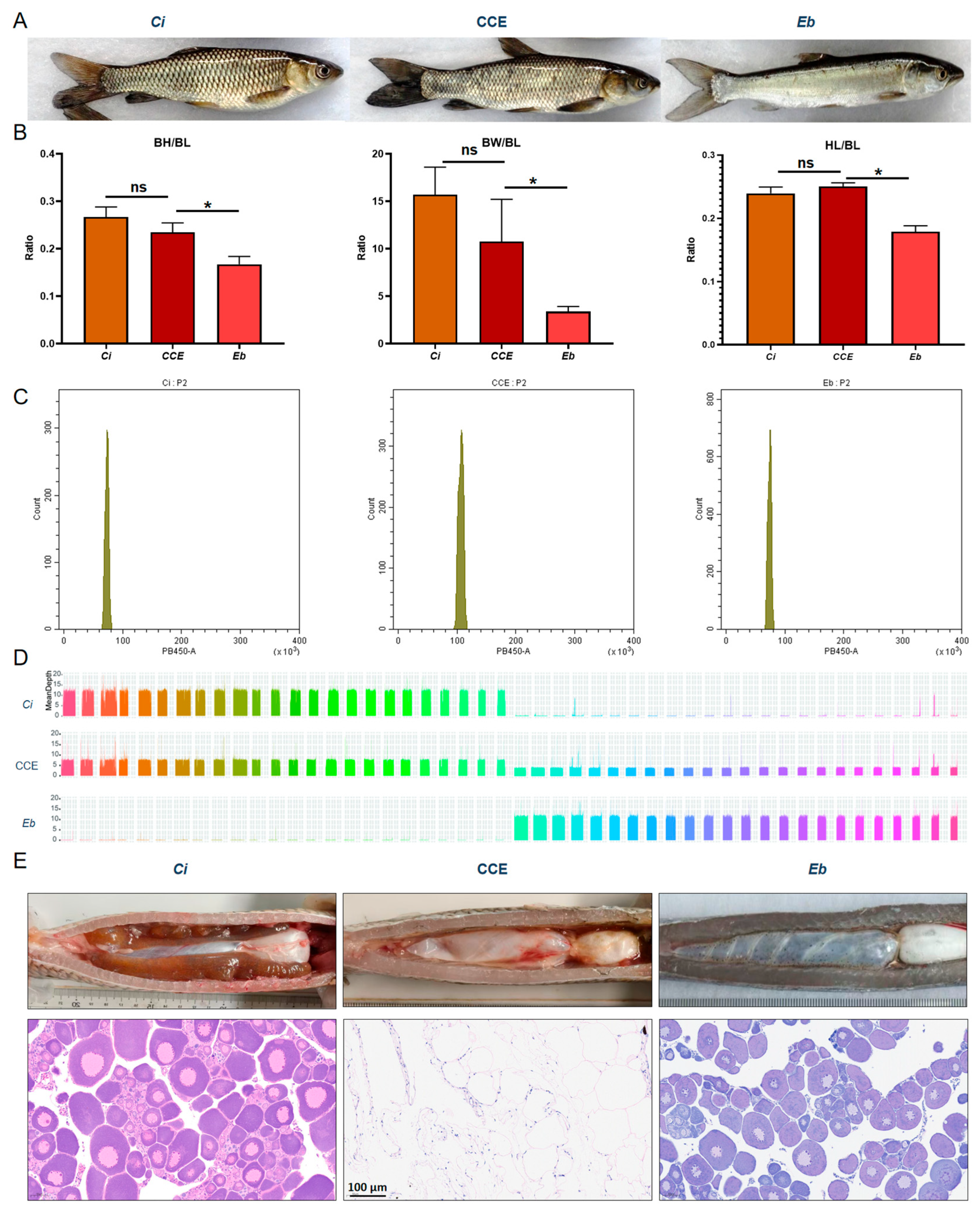
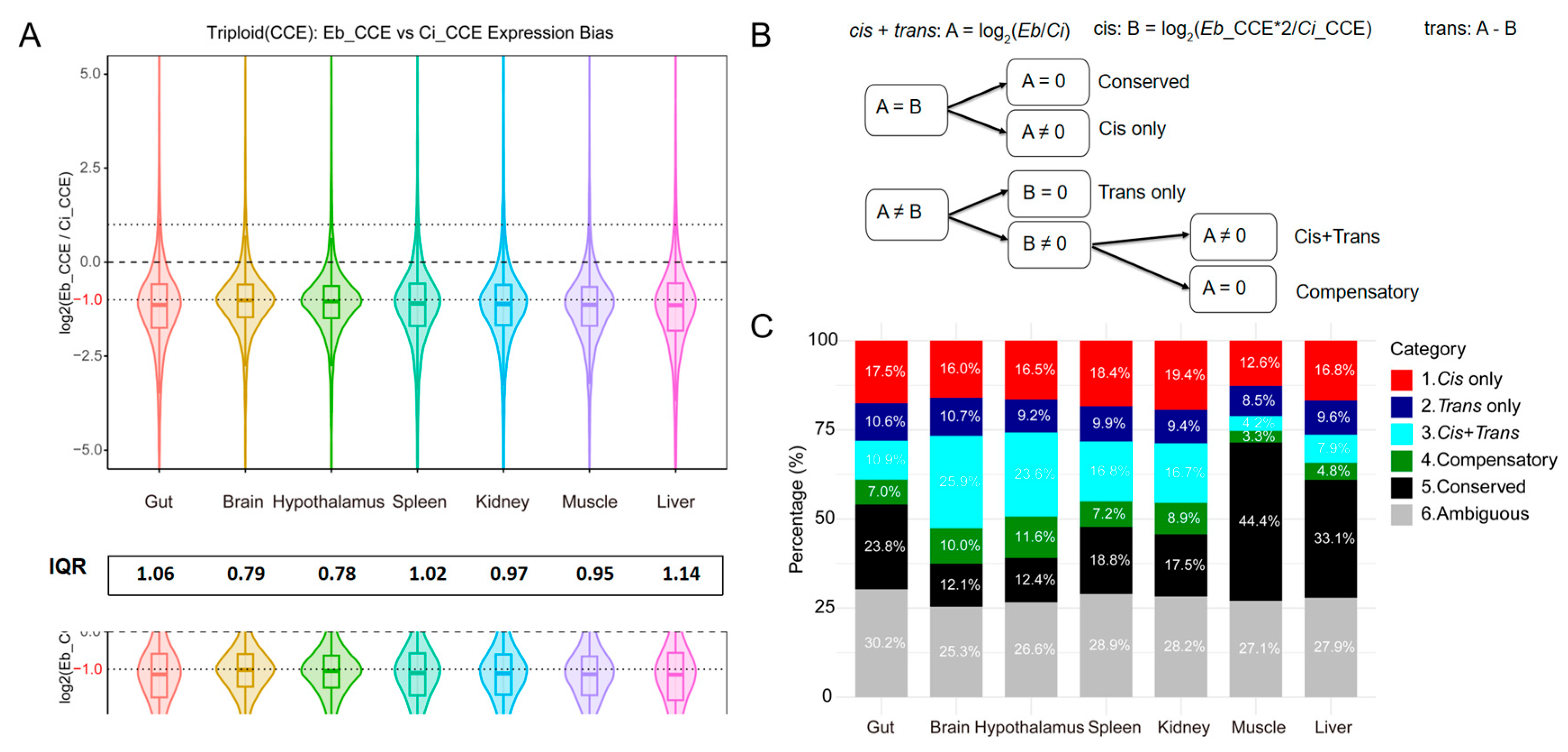
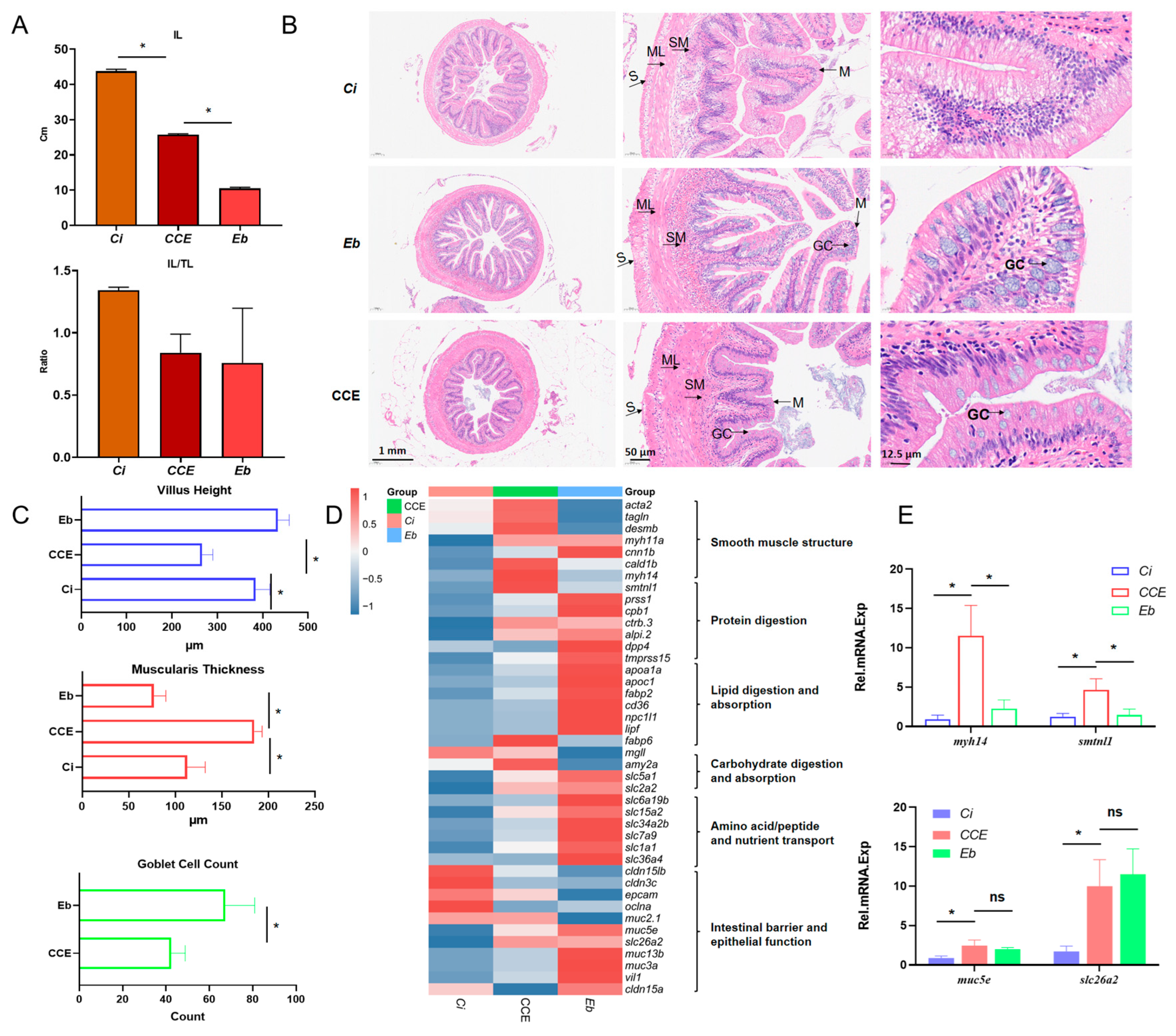
Polyploid fish have been widely applied in aquaculture because certain polyploid lineages exhibit desirable traits, such as sterility and enhanced production performance. In this study, we produced a sterile triploid hybrid between grass carp and yellowcheek, named CCE, using hydrostatic pressure treatment, in which fertilized eggs are exposed to high pressure to induce triploidy. We confirmed that CCE contains two maternal chromosome sets from grass carp and one paternal chromosome set from yellowcheek. To understand how the two parental genomes contribute to gene expression in this new triploid hybrid, we analyzed transcriptomes from seven tissues, including brain, hypothalamus, liver, gut, kidney, spleen, and muscle. The results showed that overall gene expression in CCE was mainly similar to that of the maternal grass carp, which is consistent with its higher genomic dosage. However, paternal yellowcheek also contributed to gene expression in a tissue-specific manner. In particular, the gut of CCE showed shorter villi, a thicker muscularis layer, and altered expression of digestion-, nutrient transport-, muscle-, and epithelium-related genes. These changes suggest tissue-level divergence after hybridization and triploidization, although their functions remain unclear. Overall, this study provides a multi-tissue reference for parental genome interactions in newly formed triploid fish and sterile polyploid fish development.
Abstract
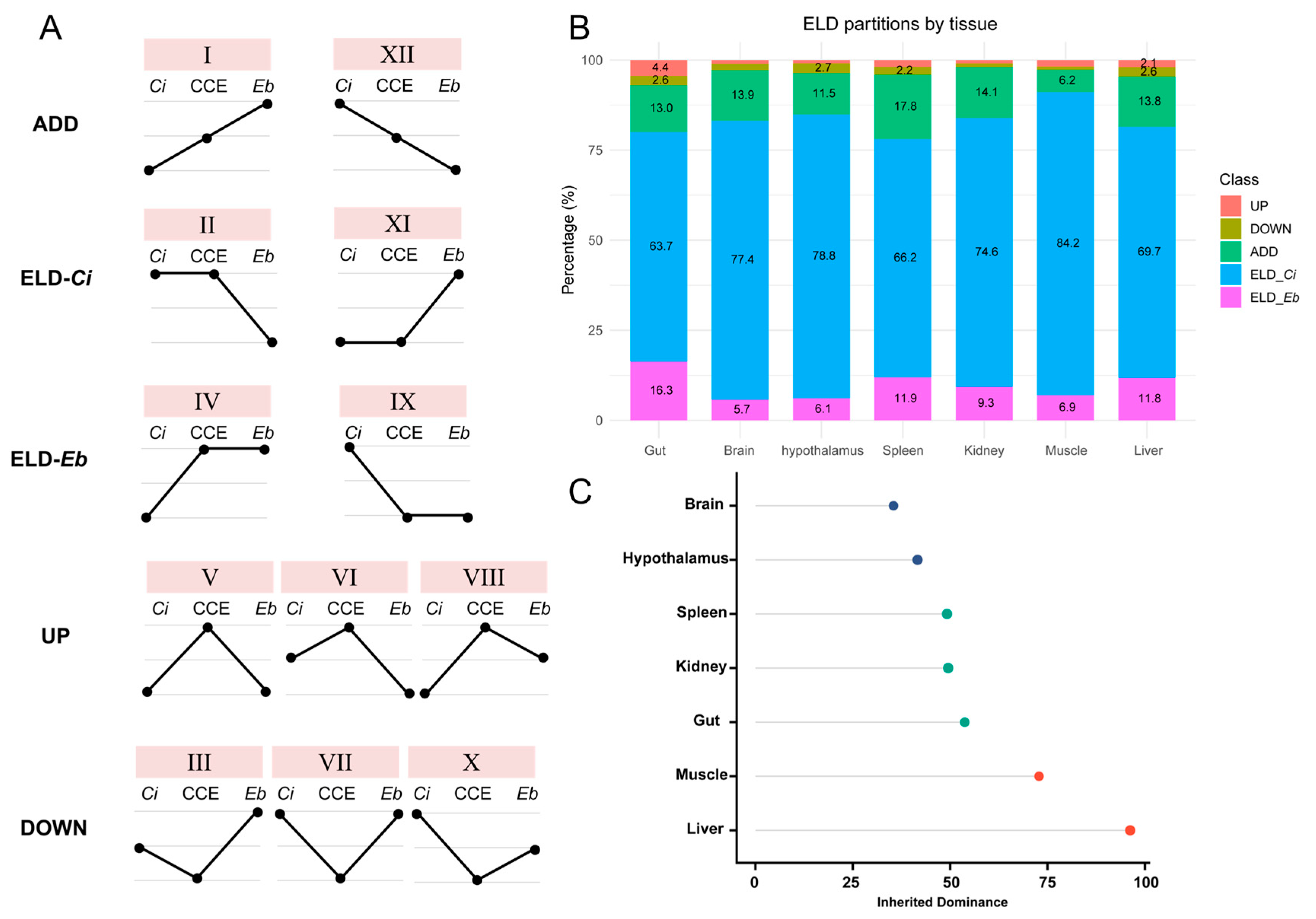
Allopolyploidy can generate rapid phenotypic change, yet its early transcriptomic consequences in a newly generated triploid hybrid remain poorly understood in animals. Here, we establish a sterile triploid hybrid between grass carp (Ctenopharyngodon idella) and yellowcheek (Elopichthys bambusa), designated CCE, using an optimized hydrostatic pressure protocol that achieved 100% triploidy with high embryonic viability. Whole-genome resequencing supported an approximately 2:1 maternal-to-paternal genomic dosage. Transcriptomes from seven tissues revealed that maternal expression-level dominance (ELD-Ci) was the predominant expression-inheritance pattern (63.7–84.2%), consistent with a passive, dosage-dependent mode of regulation. Paternal expression-level dominance (ELD-Eb) was detected in all tissues but with marked tissue specificity: most ELD-Eb genes in the liver and muscle showed expression levels similar to those of the paternal yellowcheek parent before hybridization (96.2% and 72.8%, respectively), whereas the brain and hypothalamus contained more ELD-Eb genes not directly explained by parental differences. Finally, in the gut, CCE had shorter villi than both parents, a thicker muscularis layer than both parents, and fewer goblet cells than Eb. Genes related to digestion, absorption, and nutrient transport were more highly expressed in Eb and retained an Eb-like expression pattern in CCE. By contrast, several smooth muscle-related genes, including myh14 and smtnl1, showed non-additive upregulation beyond the parental range, in parallel with the thickened muscularis layer. Together, these findings provide new insights into how parental genome dosage and tissue-specific regulation shape gene expression divergence in newly formed animal allopolyploids.