1. Introduction
The Caucasian rock lizards of the genus
Darevskia Arribas, 1999, are widely distributed across the Caucasus ecoregion and include at least six recognized parthenogenetic species together with approximately 32–35 sexually reproductive species, most of which are distributed in the Armenian Highlands [
1,
2,
3]. Among the parthenogenetic species of this genus,
Darevskia sapphirina (Schmidtler, Eiselt & Darevsky, 1994) and
D. bendimahiensis (Schmidtler, Eiselt & Darevsky, 1994), together with
D. uzzelli (Darevsky & Danielyan, 1977), are endemic to eastern Türkiye since their original descriptions [
4,
5]. The type locality of
D. uzzelli is situated approximately 25 km south of Kars in northeastern Türkiye. These are small lizards well adapted to climbing on rocks, with a maximum snout–vent length (SVL) of about 65 mm [
6]. Due to its restricted distribution and ongoing habitat decline,
D. uzzelli is currently listed as Endangered on the IUCN Red List of Threatened Species [
7].
Darevskia uzzelli is a hybrid parthenogenetic species [
8,
9] that originated during the Pleistocene [
1,
10]. Genetic studies indicate that
D. uzzelli and
D. unisexualis (Darevsky, 1966) are the closest relatives, sharing a maternal lineage from
D. raddei nairensis (Darevsky, 1967) [
9,
10]. Two other rare parthenogenetic species from Türkiye,
D. sapphirina and
D. bendimahiensis, likely represent a single taxon and are thought to have originated from another maternal subspecies,
D. raddei vanensis, similar to
D. uzzelli [
10,
11].
The known range of
D. uzzelli is restricted to northeastern Türkiye [
12]. Its habitats consist of rocky steppes and river gorges that are geographically continuous from Türkiye into western Armenia, separated by the Akhuryan River. Therefore, Darevsky and Danielyan [
4] hypothesized that these lizards could have crossed this riverine boundary and may also occur in Armenia. During fieldwork conducted between 2020 and 2025 in the Akhuryan River valley near the village of Jradzor in Armenia, our team identified individuals coexisting with the parthenogenetic species
D. armeniaca,
D. unisexualis, and
D. dahli. Preliminary morphological and microsatellite genotyping of these individuals suggested that they belong to
D. uzzelli [
13]. The present study aims to verify the taxonomic status of these individuals and to analyze their genetic and morphological variation in comparison with Turkish populations and reference paratype samples of
D. uzzelli.
2. Materials and Methods
Two adult female rock lizards with SVLs = 64 and 61 mm, putatively identified as
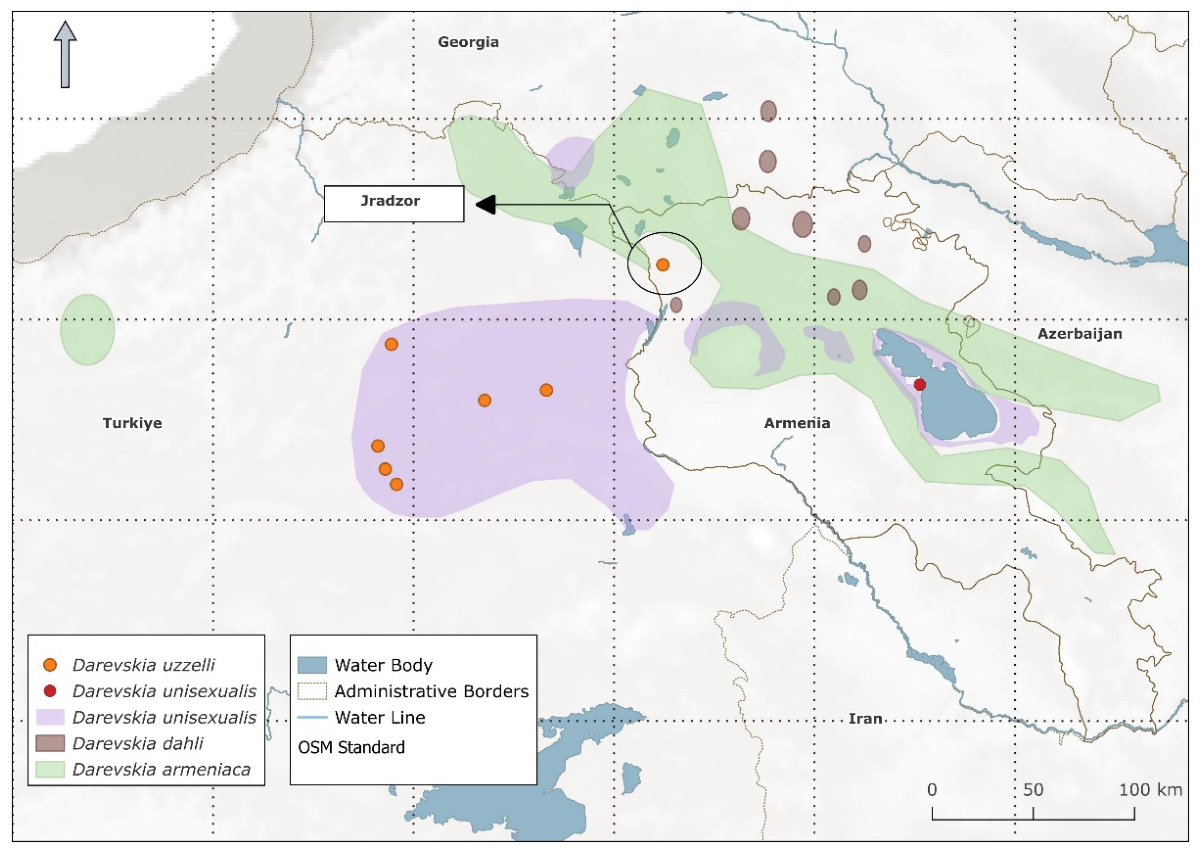
D. uzzelli, were captured on 28 June 2020 and 25 May 2025, in the Shirak province of western Armenia, near Jradzor village in the Akhuryan River valley (N40.915131, E43.763127, WGS84) by M.S. Arakelyan and E.A. Galoyan (
Figure 1). The female captured in 2025 was temporarily maintained under captive-breeding conditions at the Severtsov Institute of Ecology and Evolution and produced a clutch. The specimens were preserved in 70% ethanol and deposited in institutional collections of the Faculty of Biology, Yerevan State University (YSU 200623-15), and Zoological Museum of Moscow State University (ZMMU Re-18310), respectively.
At the mentioned locality, three other parthenogenetic rock lizard species were morphologically and genetically identified, namely
D. armeniaca,
D. dahli, and
D. unisexualis [
13]. The studied specimens were compared morphologically with specimens of
D. uzzelli from Türkiye and with the closest parthenogenetic relative of this species,
D. unisexualis from Armenia. Reference specimens included seven
D. uzzelli paratypes from the Zoological Institute of the Russian Academy of Sciences, Saint Petersburg (ZISP-10815, 1–4, Zanzak, Erzurum, 27 July 1910, P.V. Nesterov; ZISP-18819, 25 km south of Kars, 26 May 1967, R.J. Clark & E.D. Clark; ZISP-21212, 1–2, 15 km southeast of Horasan, 1996, I.S. Darevsky), 12
D. uzzelli from Türkiye (N133/2002, YSU-310, 1–12, 28 km southeast of Horasan, Erzurum, 3 September 2002, Çetin Ilgaz and Yusuf Kumlutaş), and 39 specimens of
D. unisexualis (YSU-230, 1–39, Noratuz village, Lake Sevan, Armenia, 6 June 2010, M.S. Arakelyan) (
Figure 1).
A total of 18 morphological measurements and scalation characters were examined following [
14,
15]. Here, we present only the key characters included in the
Section 3: MBSN–number of dorsal scales counted along a transversal line at mid-body; VSN–number of ventral scales along a longitudinal line from the first row that clearly shows four sub-rectangular ventral scales up to the collar; CSN–collar scale number; GSN–gular scale number from the angle between the maxillar scales to the collar; FPN–femoral pore number; SDLN–number of subdigital lamellae from the 4th toe; SCSN–number of supraciliar scales; SCGN–number of supraciliary granules; SMN–number of scales between the masseteric shield and the supratemporal scale; MTN–number of scales between masseteric and tympanum shields; SLN–number of of supralabial scales preceeding the eye; PA–preanal scale number; PTMN–postemporal scale number; aNDSN–average number of dorsal scales along one abdominal scale near the limb end (10 abdominal scales were counted); TibN–number of scales lying on the dorsal surface of the ankle between the large scales on the right hindlimb; FemN–longitudinal rows of scales on the ventral surface of the thigh between the femoral pores and the outer row of enlarged scales on the right hindlimb; Rost + Frns–rostral separated from frontonasal scale (1 yes/2 no). All counts and measurements were taken on the right side of each lizard. Additionally, SVL (length of body from tip of snout to cloaca) with an accuracy of 0.5 mm with a caliper ruler (MITUTOYO, Kanagawa, Japan) was measured for each lizard.
Statistical analysis of scalation features and plotting were performed with R (version 4.4.2) [
16] in RStudio (v.2024.12.0 + 467). We applied the FactoMineR package (v.2.11) [
17] for Factor Analysis of Mixed Data (FAMD) to analyze morphological variability of the scalation features. This method allows the use of numerical and categorical variables simultaneously and was successfully applied in [
18]. Euclidean distances between the centroid of the samples from Jradzor and other studied populations within the FAMD coordinates were calculated using tidyverse (v.2.0.0) [
19] and cluster (v.2.1.8.1) [
20] packages. Canonical variate analysis was performed using the MASS package (v.7.3-64) [
21]. All data were visualized using ggplot2 (v.3.5.2) [
22] and factoextra (v.1.0.7) [
23] packages.
DNA was extracted from the tail tips of two
D. uzzelli specimens from Jradzor, preserved in 96% ethanol, and from two museum specimens (ZISP-21212) using the Biolabmix D-Cells kit (BIOLABMIX LLC, Novosibirsk, Russia) and the phenol–chloroform method with proteinase K digestion. Three tetranucleotide microsatellite loci (Du323, Du215, Du47G), previously developed for rock lizards [
13,
24,
25], were studied. Parthenogenetic lizards of the genus
Darevskia are characterized by species-specific amplification profiles at these loci, as well as species-specific multilocus genotypes formed by their combinations [
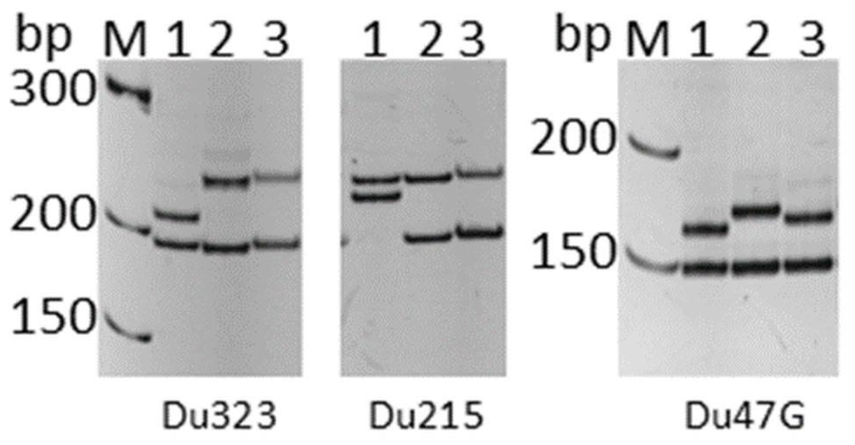
13]. PCR fragments of each locus were extracted from the gel and sequenced by the Sanger method by Evrogen. The amplified fragment sizes were 189 and 223 bp for locus Du323, 192 and 227 bp for Du215, and 148, 168, and 172 bp for Du47G. Alleles were confirmed by bidirectional Sanger sequencing using forward and reverse primers.
In addition, four mitochondrial loci were amplified: cytochrome b (
cyt b; primers L14724 and H15175) [
26], cytochrome oxidase I (COI; primers LCO1490 and HCO2198) [
27], NADH dehydrogenase subunit 4 (ND4; primers ND4 and Gram_A) [
28], and 12S rRNA (primers 12Sal and 12Sbh) [
27]. These markers were selected due to the availability of comparative sequence data for
Darevskia species in GenBank for reliable phylogenetic and population-level comparison. Microsatellite loci were analyzed based on fragment length variation and sequence polymorphisms. Multilocus genotypes were reconstructed from allele combinations across loci, representing clonal lineages characteristic of parthenogenetic reproduction.
Sequences were read, assembled, and aligned in UGENE 49.1 [
29], and subsequently analyzed using NCBI BLAST (BLAST+ 2.17.0: July 22, 2025) for species identification and similarity assessment. The resulting sequences were deposited in NCBI GenBank under accession numbers PX514661–PX514666 and PX845416 (microsatellite alleles) and PX514667–PX514670 (mitochondrial loci) and compared with previously published sequences of
D. uzzelli from Kars (ZISP-21212-2; GenBank: MN613706, MN613799, MN613613) and Erzurum (GenBank: MN211062). The nucleotide sequences of all detected alleles at loci Du215, Du323, and Du47G were compared between
D. uzzelli and
D. unisexualis sequences available in NCBI (GenBank Acc. KX258628–KX258630, KX258637, KX258638, KX258639–KX258641).
3. Results
The results of the analysis of scalation and color patterns in two lizards collected in Armenia showed that they are consistent with the characteristics of the paratypes of
D. uzzelli [
4,
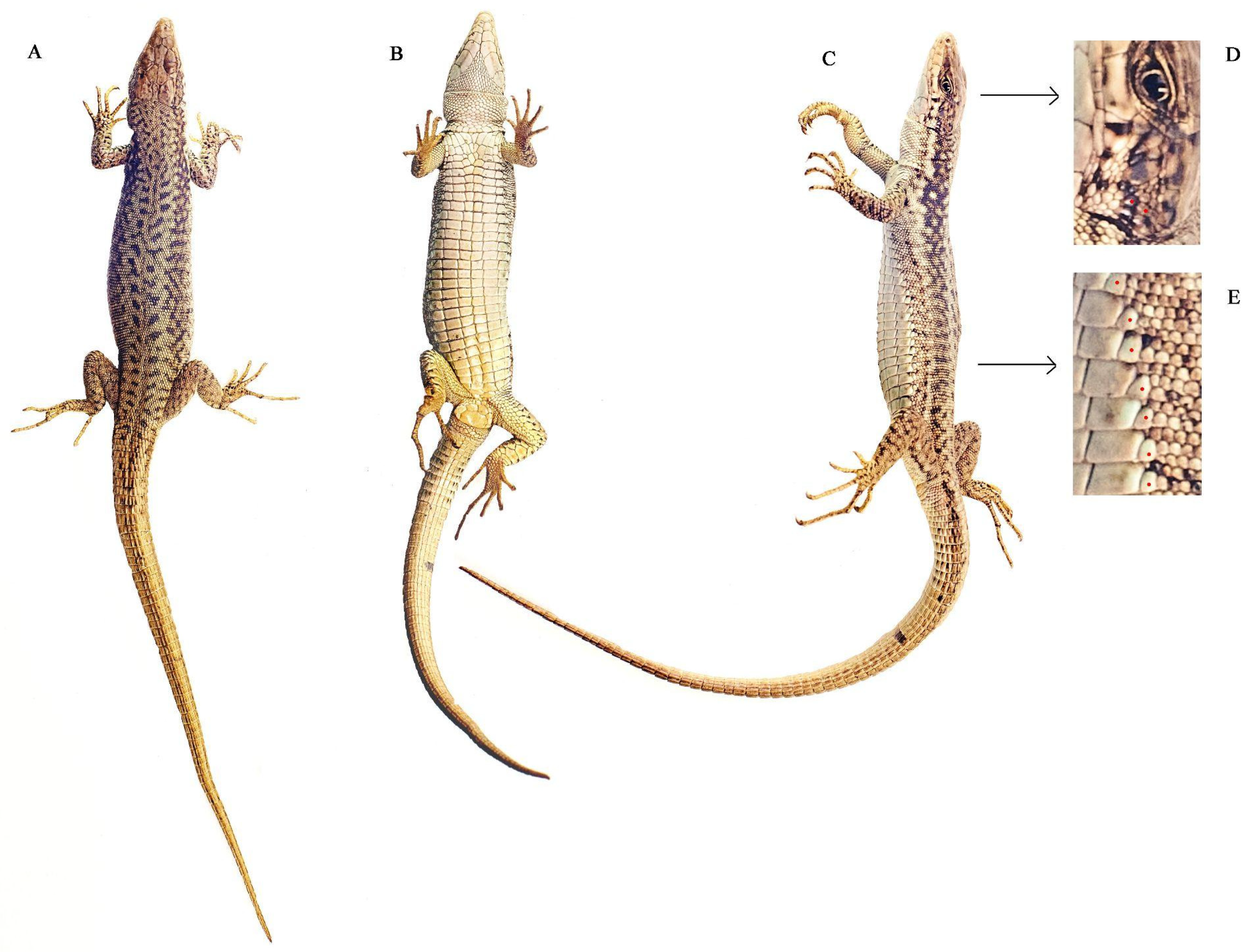
5]. Dorsally, the specimens exhibited a greenish-brown coloration with a prominent, broad dark pattern consisting of distinct blotches along the vertebral line and two dark stripes extending from the tympanum area caudally along the flanks. Ventrally, the belly and throat were white, while the femoral and cloacal regions showed a yellowish color (
Figure 2).
The Armenian two lizards show pholidosis similar to other populations of
D. uzzelli (
Table 1). They are characterized by smooth dorsal scales, the absence of contact between the rostral and frontonasal scales, the presence of enlarged scales between the masseteric and tympanic scales, and two large, approximately equal-sized posttemporal shields. Between the supraocular and supraciliary shields on each side, there are respectively 12 and 14 granules, forming a continuous row. The collar is well developed, smooth-edged, and composed of 12 scales. The ventral scales laterally contact three body scales, of which the posterior one is distinctly enlarged and often triangular in shape. The anal plate is preceded by two enlarged preanal scales. Additionally, all
D. uzzelli lacked mating scars on the belly, which typically indicate an absence of recent mating activity [
14]. One captured female laid a clutch of two eggs on 4 July 2025.
The features of pholidosis of
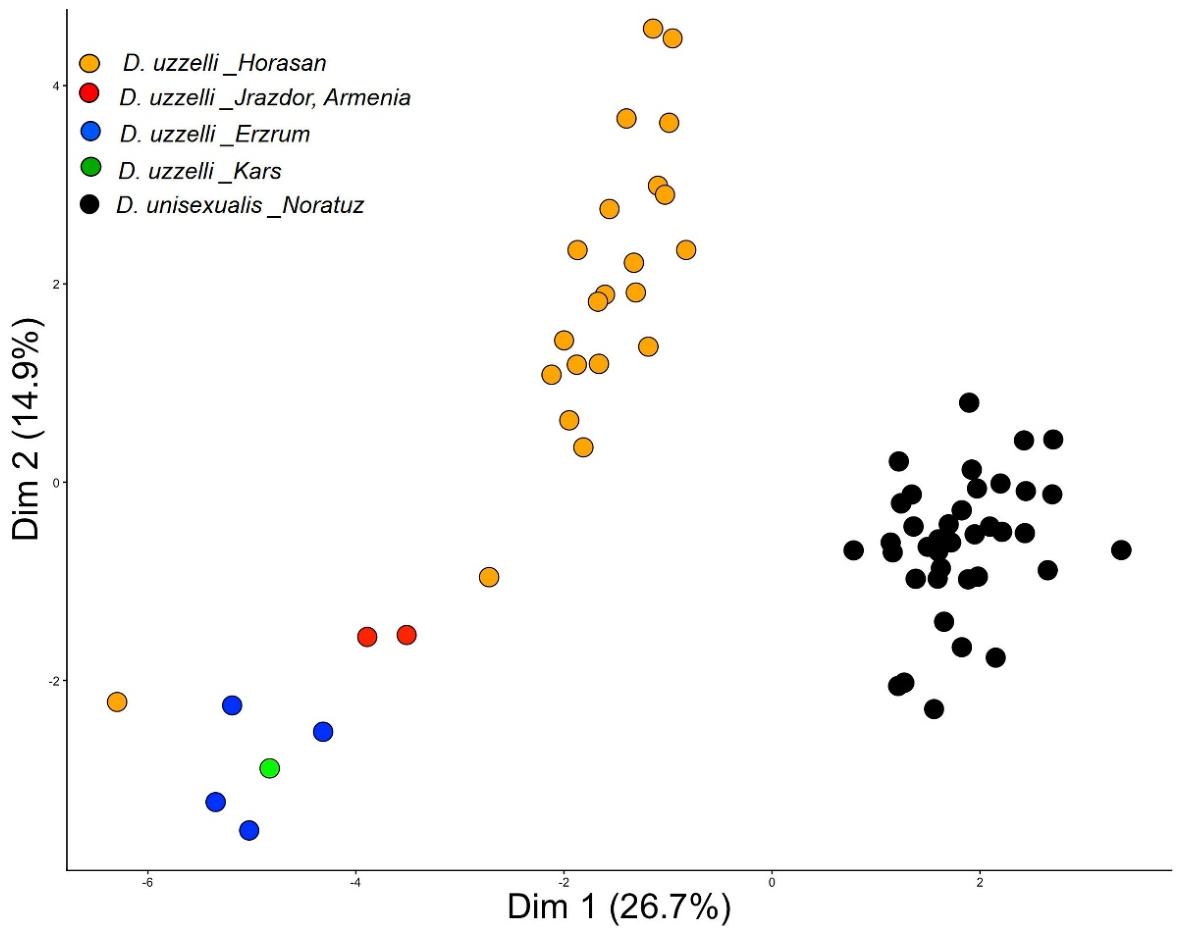
D. uzzelli showed considerable variation both among and within populations (
Table 1,
Figure 3). Factor Analysis of Mixed Data (FAMD) indicated that the first two dimensions explained 26.7% and 14.9% of the morphological variation among the studied groups, respectively. The Armenian population was morphologically closer to the Kars and Erzurum populations than to the Horasan population (Euclidean distances from the centroid: 1.75, 1.84, and 3.96, respectively) and was clearly more distant from
D. unisexualis (Euclidean distance from the centroid: 5.59).
Canonical Variate Analysis (CVA) also confirmed a clear separation between D. unisexualis and D. uzzelli (Shapiro–Wilk test, F = 912.3, p < 0.001). In addition, CVA detected significant morphological differences between the Erzurum and Horasan populations of D. uzzelli (Shapiro–Wilk test, F = 45.209, p < 0.001). Only two individuals from the Horasan population were confused with individuals from Erzurum. Species discrimination based on CVA was 100% accurate.
Mitochondrial sequences (GenBank: PX514667–PX514670) from the Jradzor specimens (ZMMU Re-18310 and YSU 200623-1) matched those of
D. uzzelli from Kars (ZISP-21212-2; GenBank: MN613706, MN613799, MN613613) [
27] and were consistent with sequences reported from Erzurum (GenBank: MN211062) [
10]. No private or novel mitochondrial haplotypes were detected in the Jradzor population for the
cyt b, COI, and 12S loci. For the ND4 locus, a single nucleotide substitution was detected within the 710 bp analyzed fragment; however, this variation was insufficient to define a distinct haplotype.
Microsatellite analyses revealed clear differences between
D. uzzelli and
D. unisexualis in fragment size, microsatellite cluster structure, and point mutations in the flanking regions (
Figure 4). At locus Du323, significant differences in fragment size were due to variation in the number of repeat copies, while alleles of the same size showed no sequence differences. The allele structures at loci Du323 and Du215 in
D. uzzelli (ZISP-21212-2) matched those of the Jradzor specimens and were clearly distinct from
D. unisexualis. At the Du47G locus, alleles from the Jradzor and Kars specimens differed by a single tetranucleotide repeat (
Figure 4).
4. Discussion
Parthenogenesis in vertebrates was first discovered among reptiles in the genus
Darevskia, establishing that all-female populations could exist through natural obligate unisexual reproduction over long evolutionary periods [
1,
2,
10]. Reticulate evolution serves as one of the drivers of diversity in this genus, where new lineages emerge through the merging of ancestral lines via interspecific hybridization [
9,
10,
11]. Consequently, the parthenogenetic species
D. uzzelli arose through interspecific hybridization between “paternal” species
D. valentini and “maternal” species
D. raddei [
8,
9,
10]. Similar to other parthenogenetic species,
D. uzzelli clonal reproduction represents an important model for investigating the mechanisms of hybrid speciation and the long-term maintenance of parthenogenesis in vertebrates [
1,
10].
The discovery of
D. uzzelli in Armenia validates a long-standing biogeographical hypothesis proposed by Darevsky and Danielyan [
4], who predicted the potential occurrence of this species in the region based on the continuity of mountain steppe and river gorge habitats extending from the Kars Plateau in Türkiye into Shirak Province in Armenia. Our finding in the Akhuryan River valley, approximately 80 km from the nearest known Turkish locality in Kars, confirms that the river acts as a corridor rather than a barrier for this species. It is therefore likely that the species’ distribution is more continuous across this landscape than previously understood, with populations potentially connecting the Armenian locality with those in the Araks and Murat River valleys in Türkiye [
30].
The new locality is situated near Jradzor village in Shirak Province, northwestern Armenia, on the right bank of the Hoghmajur River, a tributary of the Akhuryan River in the Armenian Highlands. The surrounding area is characterized by dry, open river valleys, rocky outcrops, and steppe grasslands that provide suitable microhabitats for rock lizards. These habitats typically include abundant sun-exposed stones on slopes. Vegetation is sparse to moderately grassy, with scattered shrubs and low herbaceous cover, forming typical microhabitats that support the daily and seasonal activity cycles of rock lizards. In Türkiye, D. uzzelli is similarly associated with stony substrates that provide shelter, combined with sparsely distributed herbaceous vegetation.
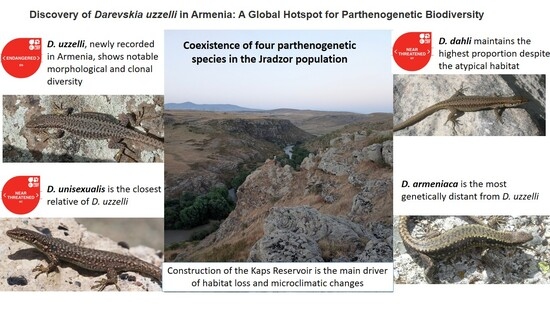
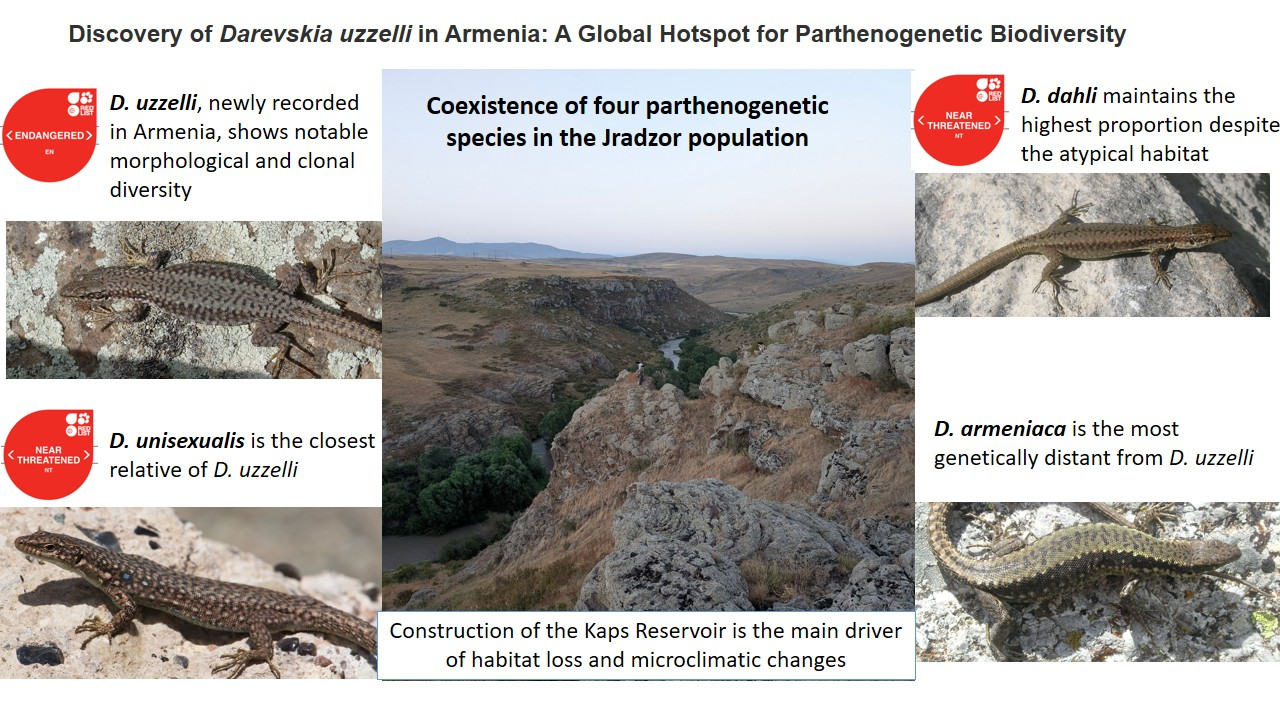
The newly discovered population in Jradzor is unique, as it represents the largest known assemblage of parthenogenetic species at a single site worldwide, where four species live together (
Figure 1). This population also reveals the gap in the currently recognized biogeographic distributions of
D. unisexualis,
D. armeniaca, and
D. dahli species. Although all four parthenogenetic species were recorded together at the Jradzor locality, this area lies outside the currently recognized distribution ranges of these taxa. The newly discovered sympatric assemblage therefore not only extends the known range of
D. uzzelli, but also highlights the need for updated regional surveys and revision of current biogeographic assessments. Typically,
D. uzzelli coexists with its most closely related species,
D. unisexualis, due to their similar microhabitat preferences [
1,
4,
8]. Two of them,
D. armeniaca and especially
D. dahli, tend to inhabit forested areas, reflecting the humid habitat preferences of their paternal species,
D. mixta [
1,
4,
8]. A known three-species assemblage (
D. armeniaca, D. dahli, and
D. rostombekowi) coexists near Dilijan city along the river gorge close to forests, which matches their ecological preferences [
1]. In contrast, the newly discovered four-species composition in Jradzor includes areas not typically preferred by
D. dahli, but it maintains the highest proportion there (
Figure 1). Based on our expert assessment,
D. unisexualis is the next most abundant species at this site, followed by
D. armeniaca and
D. uzzelli.
Pholidotic and genetic data indicate that the Armenian
D. uzzelli specimens fall well within the documented range of variation observed in Turkish populations and correspond more closely to the holotype collected by R. and E. Clark in 1967 (CAS 105689;
Figure S1) and associated paratypes (
Figure 3 and
Figure S1) than to populations from the vicinity of Horasan. The mitochondrial DNA profile of the Jradzor specimen matches that of
D. raddei from Kars, which is also the established maternal ancestor of
D. uzzelli [
9,
27].
Our results clearly distinguish
D. uzzelli morphologically from the closely related parthenogenetic species
D. unisexualis [
9], with which it often coexists in Türkiye [
30]. Three key features can be used to differentiate these species:
D. uzzelli has a greenish-brown dorsal ground color, enlarged dorsal scales along the ventral plates, and a rostral scale that does not contact the frontonasal scale. Because
D. uzzelli is sympatric with
D. dahli in the Jradzor population, the latter can be distinguished by its lighter yellow ventral coloration and a dorsal pattern of well-defined, separate dark blotches that do not merge.
D. armeniaca is the most genetically distant species from
D. uzzelli and exhibits distinct morphological traits [
14].
Our genetic analyses confirmed the identity of the specimens as
D. uzzelli, providing strong support for the morphological identification. One of the key findings of our intraspecific analysis of different populations of
D. uzzelli is the high degree of morphological variation within the species. Comparison of pholidosis between the Armenian and Turkish populations confirms their taxonomic identity while simultaneously revealing considerable diversity both among populations and within each population of
D. uzzelli. This result is particularly important in light of the complex taxonomic history of closely related species from Türkiye.
D. uzzelli was described in 1977 [
4], and later
D. sapphirina was recognized as an independent species within this group [
5]. Currently,
D. sapphirina is considered conspecific with
D. bendimahiensis [
2,
11]. DNA barcoding has confirmed close relationships between
D. uzzelli and
D. unisexualis, as well as between
D. sapphirina and
D. bendimahiensis [
31].
In this context, the significant morphological variability documented in D. uzzelli suggests substantial clonal diversity, which is of particular evolutionary interest in parthenogenetic species. Some variability has been observed in other parthenogenetic species of Darevskia, where morphological diversity reflects underlying clonal variation. The minor allelic variability detected at the Du47G microsatellite locus, represented by a single difference in tetranucleotide repeats, is best interpreted as intraspecific polymorphism, likely resulting from the accumulation of mutations in geographically separated populations. Overall, this level of morphological and genetic variability helps to clarify the taxonomic characterization of the poorly studied D. uzzelli and may also contribute to resolving broader questions related to limited genetic and phenotypic heterogeneity in parthenogenetic reptiles. Further research along the Akhuryan River valley and adjacent areas may help to refine its distribution range, estimate population size, and develop effective conservation strategies for this newly recorded species in Armenia.
The Jradzor area in Armenia is of exceptional scientific and ecological importance as the only known site hosting the highest concentration of parthenogenetic lizards globally. This population is a critical refuge for rare endemics with highly limited distributions, including also
D. dahli and
D. unisexualis [
32,
33]. Notably, this site is the single location for
D. uzzelli in Armenia, which, due to its extreme rarity and restricted range, carries a Critically Endangered (CR) status for inclusion in the new edition of the Red Book of Armenia. These findings require immediate management, as most habitats for these endangered lizards are currently located outside of protected areas and are under intense pressure from human activity. The preservation of this site is particularly urgent because it is currently undergoing the construction of a Kaps Reservoir, a process that causes direct habitat loss and irreversible changes to the microclimate necessary for the lizards’ survival. Protecting this unique place of coexistence is essential for conserving Armenia’s natural heritage.




 ,
,