Article

Long-Term Conservation Management of the Endangered Canarian Lizards Gallotia simonyi and G. bravoana (Fam. Lacertidae) (2006–2024)

by
Miguel A. Rodríguez-Domínguez
1,
Sonia Plasencia-Rodríguez
2,
María M. Suárez-Rancel
3,
Ignacio Domínguez-Espinosa
3,
Albert Martínez-Silvestre
4,
Martha L. Bohórquez-Alonso
5,† and
Miguel Molina-Borja
5,*,†
1
Centro para la Reproducción e Investigación del Lagarto Gigante de El Hierro, Cabildo de El Hierro, 38911 Frontera, Spain
2
Centro de Recuperación del Lagarto Gigante de La Gomera, Valle Gran Rey, Cabildo de La Gomera, 38870 Valle Gran Rey, Spain
3
Facultad de Ciencias, Sección Matemáticas, Universidad de La Laguna, 38200 La Laguna, Spain
4
Centro de Recuperación de Anfibios y Reptiles de Cataluña, Masquefa, 08783 Barcelona, Spain
5
Grupo de Investigación “Etología y Ecología del Comportamiento”, Department Biología Animal, Faculty Ciencias, Sección Biología, University La Laguna, 38200 La Laguna, Spain
*
Author to whom correspondence should be addressed.
Current address: Asociación Bienestar Ambiental, C/Henry Dunant, s/n, 38203 La Laguna, Spain.
Animals 2026, 16(12), 1869; https://doi.org/10.3390/ani16121869
Submission received: 4 March 2026 / Revised: 3 June 2026 / Accepted: 10 June 2026 / Published: 17 June 2026
(This article belongs to the Special Issue Evolution, Diversity, and Conservation of Herpetofauna: Third Edition)

Simple Summary

Accumulated information is presented on captive breeding in outdoor terraria and on reintroduction efforts for the endangered lizards from El Hierro (Gallotia simonyi) and La Gomera (G. bravoana) over the past several decades. For individuals used annually as breeding stock, we report species-specific reproductive parameters: the number of eggs laid (NEL) by females, the incubation procedures, and the number of hatched offspring (HO). We compare these metrics between species and, within each species, across years. Statistically significant differences were detected both between species and among years for these variables. Veterinary examinations indicated that individuals were generally in good condition, with only a few showing abnormal traits. The original wild populations of both species still persist, and preliminary estimates of their potential population sizes have been made. Recent reintroduction attempts into natural sites have been conducted, although success has so far been only partial. A stable population of G. simonyi persists on a small islet in the north-west of El Hierro, and additional individuals (estimated number pending confirmation) remain at two other reintroduction sites. Early reintroduction attempts for G. bravoana were unsuccessful, but some individuals are still present at a more recent release site.

Abstract

Gallotia simonyi and G. bravoana are large lacertids inhabiting the islands of El Hierro and La Gomera, respectively, in the Canary Archipelago. Both species are critically endangered, but over the last several decades, they have been bred in outdoor terraria (G. simonyi since the 1990s and G. bravoana since 2000). In this study: (1) we describe all procedures carried out in the breeding centres and quantitatively analyse the long-term trajectory of breeding success throughout the study period; (2) we examine whether any parental individuals or specific pairs had a stronger influence on the number of successfully hatched offspring; (3) we report the trials of reintroducing individuals into the wild on each island in different years; (4) we provide information on several predator (cat-control) campaigns conducted on each island; (5) we detail the veterinary protocols and the results obtained when assessing the health status of breeding lizards; and (6) we report several educational activities carried out on each island. Gravid females laid eggs in suitable laying boxes; the eggs were then kept inside incubators with controlled temperature and humidity until hatching. Breeding produced 1267 offspring during the years considered for G. simonyi and 499 for G. bravoana. The mean NEL was 8.8 for G. simonyi and 5.2 for G. bravoana, and the mean HO was 6.4 and 3.54, respectively. Both NEL and HO were significantly higher in G. simonyi than in G. bravoana. NEL was significantly influenced by species and year, and by female snout–vent length (SVL) as a covariate, but not by male SVL. HO was significantly affected by year and by both male and female SVL, but not by species. There were significantly higher or lower values of both variables in specific years, but no clear long-term trend. Some breeding pairs had a greater influence on the dependent variables. Reintroduction into the wild has resulted in a currently stable population of G. simonyi on a small islet off the north-western coast of El Hierro, and some individuals are still present at an inland reintroduction site. For G. bravoana, some live specimens have recently been detected at a new reintroduction site. We conclude that: (1) captive breeding has been successfully carried out over the years in both centres; (2) there have been significant differences between the two species in NEL and HO; (3) female SVL was significantly related to both NEL and HO; and (4) reintroduction attempts have been only partially successful in each species. Veterinary monitoring revealed high dehydration tolerance, seasonal fluctuations in microbial flora, previous mineral imbalances that were corrected by improved nutrition, and effective parasite control that maintained overall lizard health. Except for a few individuals, most lizards were in good health.

1. Introduction

The lizards of the genus Gallotia (Fam. Lacertidae) are endemic to the Canary Islands and are a key taxon in the lizard phylogenetic tree [1]. Within this genus there are four species of large lizards: (1) Gallotia stehlini (from Gran Canaria Island), which is not endangered (although the recent introduction of the invasive snake Lampropeltis californiae is threatening some local populations) [2]; (2) G. simonyi (from El Hierro Island), listed as “Vulnerable” by IUCN [3], although the information provided is not updated; (3) G. bravoana from La Gomera Island, listed as “Endangered” by IUCN [4], also not updated; and (4) G. intermedia (from NW and SW Tenerife), considered as “Endangered” by IUCN [5]. The three last species, initially considered extinct, were later rediscovered: G. simonyi in 1975 [6,7]; G. intermedia in 1996 [8], and G. bravoana in 1999 [4,9]. These three species are genetically very closely related [10].
Gallotia simonyi was widely distributed in the past over El Hierro (Canary Islands [11]). Its original natural habitat is the area known as Risco de Tibataje, a Special Natural Reserve [12]. In 1986, a captive breeding programme was initiated, and some specimens were included in two successive LIFE European projects, which provided funds to continue a recovery plan in subsequent years [13]. The first official recovery plan was established by the Autonomous Government of the Canary Islands in 2004 [14]. Very recently, the Canary Islands Government published a new recovery plan [15].
Six individuals were discovered and captured from a very small wild population of G. bravoana in 1999 at Risco de la Merica (a high inland cliff located in southwestern La Gomera [9]). They were initially kept in temporary terraria, and captive breeding was initiated in 2000 [16,17]. The first official recovery plan was published by the Canary Islands government in 2006 [18], and several conservation actions funded by the island’s Cabildo have been undertaken since then (detailed in several sections of the present work).
The first group of G. intermedia individuals was discovered in high coastal cliffs in NW Tenerife [8], and four years later, a new population was discovered on Guaza Mountain (SW part of the island) [19]. Several reports on this species have been submitted to the Autonomous Government of the Canary Islands [20], and an undergraduate thesis was completed on the Guaza population [21], but an official recovery plan (not including captive breeding) was not published until 2017 [22].
Over many years (see below the Methods section), captive breeding in outdoor terraria, veterinary monitoring, and several reintroduction attempts have been carried out for both G. simonyi and G. bravoana. However, according to the most recent IUCN assessment (see above), G. simonyi is still classified as “Vulnerable”. Recent data (compiled in the Results section) show that, apart from the original population at Risco de Tibataje, only a small population persists on the islet of Roque de Salmor, and an unknown number of individuals occur in an inland reintroduced population. In the case of G. bravoana, it is listed as “Endangered” by the IUCN, and our recently compiled data (see Results) indicate a worrying situation: the original population at Risco de La Mérica shows a reduced number of individuals compared with assessments from previous years, and an unknown number of individuals are still surviving at a recent reintroduction site. By comparing breeding success, veterinary data, and reintroduction outcomes for both species, we aimed to identify potential factors underlying their differing conservation status.
The first aim of this work is, for each species, to determine whether there has been any trend in the number of eggs and hatchlings obtained during the study period. The second aim is to identify whether any specific females, males, or pairs have had a disproportionately large influence on the number of successfully hatched offspring. Based on previous published studies on several lizard species [23,24,25,26,27], we predicted that the number of laid eggs should be related to female (or male) body size. Given that adult snout–vent length (SVL) is smaller in G. bravoana than in G. simonyi, we also predicted that the number of eggs laid by females would be lower in the former species. A further prediction was that no clear temporal trend in the number of eggs laid or hatchlings produced would be observed. This prediction was based on the heterogeneous characteristics (body size, ages, etc.) of adult lizards participating in reproduction throughout the study period. Considering that most of the lizards used as breeders during these years were born in captivity, we also expected that some sign of inbreeding might appear, at least in some individuals. Regarding reintroduction trials, we expected that released lizards would contribute to the establishment of viable wild populations. We show here that: (1) captive breeding has been successful, although with interannual variation; (2) there were significant differences in NEL and HO between the two species; (3) female SVL had a significant effect on NEL and HO; (4) reintroduction attempts have so far been only partially successful in each species; and (5) except for a few G. bravoana individuals that showed some abnormal traits, the lizards generally exhibited good health status.

2. Materials and Methods

Reproduction of both species in breeding centres began several decades ago (after 1986 for G. simonyi and from 2000 onwards for G. bravoana). However, we only had limited access to data for G. simonyi during some of the years in the 2006–2024 time period. A similar situation occurred for G. bravoana during 2009–2024 (see details in Table 1). The reasons for excluding data were as follows: no reproductive pairs were established by the breeding centre staff; some individuals were given rest periods; and data were missing from some individuals. The data included in the current article were submitted annually to Consejerías de Medio Ambiente (Environmental Departments within each Island Council) in the form of technical reports prepared by several author teams contributing to the present work [references included below in each text section]. Both Cabildos authorised the work performed at each breeding centre and in natural locations of each island.
The present contribution reports on: (1) body size of males and females participating in reproduction at both El Hierro and La Gomera breeding centres over several decades (as mentioned above); (2) the number of eggs laid by females and the number of hatchlings; (3) the relationships between male or female body size and these two variables; and (4) whether there was a relationship between male-to-female SVL index and the number of eggs or hatchlings. We also include: (5) data from several trials in which adult males and females of each species were reintroduced into wild locations on their respective islands; (6) procedures and results of veterinary examinations performed on individuals of each species to assess lizard health status; and (7) specific educational activities carried out on each island to promote science and to communicate the history of each species and the conservation actions undertaken.

2.1. Individual’s Maintenance

El Hierro giant lizards (G. simonyi) are large lacertids with a maximum SVL of around 200 mm for wild-living lizards [28]—up to 247 mm for males and 218 mm for females kept in terraria (present work). For several decades, groups of males and females have been maintained in separate outdoor terraria (4 × 3 m). These contain leaves and flowers of naturally growing local plants (verode, Kleinia neriifolia; calcosa, Rumex lunaria; tedera, Bituminaria bituminosa), and provide several hiding places in the form of thick cork bark and palm leaves; all terraria are covered with a wire mesh on top to prevent avian predation. Food for the lizards is provided three times per week and consists of local plants (verode, K. neriifolia; tedera, B. bituminosa; cerrajón, Sonchus spp.), supplemented occasionally with alfalfa (Medicago sativa) and insects (crickets Gryllus bimmaculatus and Tenebrio larvae) (see housing details in [29]).
In La Gomera, groups of males and females of G. bravoana (maximum SVL = 202 mm for a male and 190 mm for a female; present work) were also kept in separate terraria (6 × 4 m) with growing local plants (similar to those used in El Hierro, and also including balo, Plocama pendula). In this case, hiding places consisted of plastic tubes (60 × 16 cm, length × diameter) inserted into ground hollows constructed for this purpose; palm leaves were also placed to provide shade. Food was provided following the same time schedule as for G. simonyi.

2.2. Veterinary Surveillance

The health control and veterinary monitoring programme was initiated for both species in 2000 and resulted in the publication of scientific studies during the first ten years of the programme. These studies initially addressed veterinary assistance in conservation actions for the La Gomera giant lizard. In the years following the descriptions of physiological parameters, health assessments were repeated approximately every two years with the aim of ruling out diseases that could affect recovery actions. Emerging pathogen screening was introduced in 2022 and has been conducted on randomly selected lizards of both species. Reovirus, adenovirus, and ranavirus were analysed, and the results were consistently negative.
Blood, cloacal, glandular, and tissue samples from different populations of captive lizards were examined using cytochemistry, microbiological culture, molecular assays, and gas chromatography–mass spectrometry. Biopsies and necropsies were conducted, and selected tissues were histologically examined using Hematoxylin–Eosin staining. In general, lizards were found to be in good condition throughout the years analysed [30,31,32,33]. However, congenital malformations (tail vertebral deviations) have been detected in some individuals since 2016 [34]. Moreover, in the last year, we found several individuals of G. bravoana showing symptoms of inbreeding, such as skin pigment alterations (ivory colouration) and brachygnathia [35].

2.3. Selection of Adults for Reproduction

Adult male and female individuals ranging from four to eleven years old were selected at the beginning of each breeding period to participate in reproduction from among the individuals available at each breeding centre. During the rest of the year, males and females were kept in separate terraria. Each lizard had a microchip (BIO GLASS 8625, Felixcan Syringe Labtag -Mini-, Technology FDX-B, ISO 117845/5 [36], Felixcan, Albacete, Spain) inserted under its neck skin for permanent identification. The corresponding code and SVL, measured each year for each individual, were recorded in an Excel spreadsheet.
Mating pairs were selected according to three requirements: (1) genetic information on the relatedness among individuals was generally not available (except for some individuals of each species in some of the last five years). We therefore used the criterion that males from each pair had a larger body size than that of females; this decision was based on previous publications reporting that, when females select males for mating based on visual traits, the most commonly detected trait is body size [37,38,39]; (2) members of each pair were not directly related (brothers or cousins); and (3) exactly the same mating pairs had not been used in previous years. However, given the limited number of available adult males and females in each breeding centre, some of them had to be used (with different partners) in different years. The same protocol for selecting and maintaining mating pairs was established for both species. Around the first or second week of May each year, each established pair was transferred to separate outdoor terraria (3 × 2 m) to allow them to interact and mate. Details of courtship and copulation patterns and the general reproductive cycle have been published previously for G. simonyi [29] and reported for G. bravoana [16].

2.4. Laying Females, Eggs, and Care of Newborns

Approximately one month after mating, females were manually palpated (by MARD, for G. simonyi, and by SP for G. bravoana) to confirm the presence of developing eggs. When eggs were detected, each female was transferred to an individual outdoor terrarium without a male. Females remained in these terraria until the end of June, when each one was moved to an individual indoor laying terrarium (made from wood, 45 × 50 × 50 cm). Light was provided with a photoperiod of 7L/17D (light beginning at 10:00 h and ending at 17:00 h) using fluorescent tubes with a daylight spectrum, including part of the ultraviolet range (UVA, Reptistar F18W 6500 K, Sylvania, Budapest, Hungary). This photoperiod was set because, in both breeding centres, sunlight reaches the outdoor terraria late in the morning (around 10:00 h during summer). Each terrarium contained a small wooden box (20 × 25 × 35 cm) filled with silica sand. A 40 W bulb was provided as a heat source, and the temperature inside nest boxes ranged between 26 °C and 28 °C with 80% humidity.
Laying boxes were checked daily to determine whether females had laid eggs. When eggs were found, they were carefully transferred to plastic containers (32 × 15 × 7 cm) with a hermetic seal and filled with vermiculite. Eggs were buried (substrate moisture 80–90%) in the same orientation in which they were collected, and the boxes were placed in an incubator at a constant temperature (28–29 °C) and humidity (75–85%). These same temperatures and humidity were used every year [29] and for both species.
After hatching, newborn lizards from each clutch were transferred to wooden terraria (45 × 50 × 50 cm, G. simonyi) or coated aluminium terraria (80 × 40 × 40 cm, G. bravoana). There, they were fed leaves, flowers, buds, and seeds of B. bituminosa, K. neriifolia, Rumex lunaria, pumpkin flowers, lettuce, Tenebrio molitor larvae, and small crickets (Gryllus bimaculatus), with water provided ad libitum. After a 40-day period in these terraria, during which the young were checked to control for any sign of disease or injury, they were moved to outdoor terraria (328 × 457 × 172 mm). The same procedures were followed to monitor female pregnancy and to manage laying, egg care, and newborn care in G. bravoana.

2.5. Reintroductions

In recent decades, several trials have been carried out to reintroduce captive-bred individuals (three–four years old) of each species into a few natural localities on the corresponding islands. The reintroduction at specific sites within each island over several years was decided by the Environmental Office staff of each Cabildo, with the assistance of a professional climbing team. The suitability of each site was determined using the following criteria: the site was very difficult for humans to access and, when possible, was free of feral cats [40]. Reintroduction trial data have been available since 1999 for G. simonyi and since 2013 for G. bravoana. Compiled data on reintroduction dates, sites, and the number of adult individuals released were gathered from our own files and from those of authors who carried out the reintroductions in the field or performed subsequent evaluation in these areas.

2.6. Data Analysis

The number of eggs laid (NEL) and successfully hatched offspring (HO) were recorded for each year and parental pair. We also measured the SVL of all parents and calculated the SVL difference within each pair.
Generalised Linear Mixed Models (GLMMs) were initially applied with parental code as a random effect to account for individual influence on NEL and HO. However, as individual variance was negligible (see Results), we proceeded with the Generalised Linear Models (GLMs) [41,42].
Separate GLMs were fitted for each dependent variable using a Poisson distribution and log link function [43], with species and year as fixed factors and male and female SVL as covariates. An additional GLM was fitted using the male-to-female SVL difference as a covariate. Model selection was based on the Akaike Information Criterion [41]. The sample size was larger for G. simonyi than for G. bravoana. However, for the comparison between the two species in the set of GLMs fitted in this study, the distribution of observations corresponded to an approximate 60/40 split. This level of imbalance falls well within the range generally considered acceptable for GLM-based inference. Limitations associated with sample size imbalance typically arise under substantially more extreme conditions (e.g., strongly skewed distributions such as 90/10 or higher), which may lead to reduced precision or undue influence of the larger group. Given the relatively balanced nature of the dataset, all models were fitted jointly, without the need for weighting or stratification based solely on species sample size.
Finally, Cook’s distances [44] were calculated to identify potentially influential parental pairs in the analysis.

3. Results and Discussion

3.1. Morphological Traits of Lizards

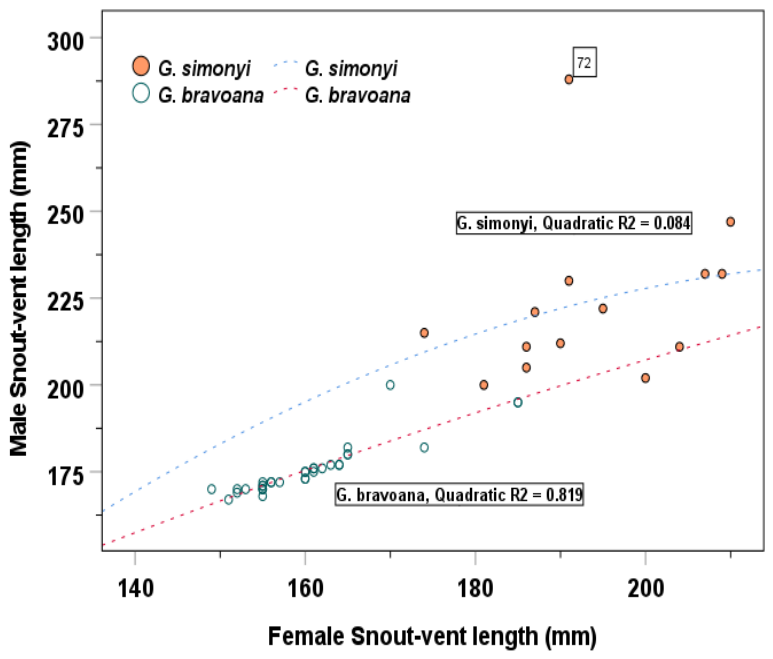
In Table S1a, b, we present the basic SVL statistics from the 198 males and females of G. simonyi and the 133 individuals of G. bravoana that participated in reproduction in each of the years for which data were available. In Gallotia species, sexual maturation can be attained between three (females) and four (males) years [45]. In every sampled year, males always had a longer SVL than females (Table 1), and in most years, there was a significant linear relationship between female and male SVL (Figure 1). A relationship has been found between lizard body size and reproductive success in some species [23]. Therefore, using adult lizards with the longest SVL should, in theory, contribute to greater reproductive output. However, several factors may influence reproductive success in lizards, such as food availability [46,47], environmental temperatures, and others (see below).
As specified in Methods, we selected the breeding pairs of each year such that males had a longer SVL than females. This decision was based on the literature showing that female lizards rarely seem to select males for mating based on a specific trait [37,48,49]; only in some cases are male coloration or body size actively selected by females of some Squamata [38,49,50]. See below (end of Section 3.2) for the influence of female SVL on the number of eggs laid and hatched offspring.

3.2. Numbers of Laid Eggs and Hatched Offspring

In Table S2a,b, we present basic statistics for the number of eggs laid (NEL) and hatched offspring (HO) obtained from the different mating pairs of each species in each of the sampled years. Considering data from all years in each species, the mean NEL was 8.8 for G. simonyi and 5.2 for G. bravoana, and the mean HO was 6.4 and 3.54, respectively. Both NEL and HO were significantly higher in G. simonyi than in G. bravoana (Kruskal–Wallis test; H = 93.41 and 46.40, respectively, for each variable; p < 0.0001 in both cases). Within each species, there was a significant correlation between NEL and HO (Spearman’s rho = 0.674 and 0.686, respectively, for G. simonyi and G. bravoana; p < 0.001 in both cases).
The GLMM used to detect the possible effect of individual code as a random factor on each dependent variable showed that it had a negligible influence: both dependent variables had zero variance except for HO in G. simonyi, for which the effect was non-significant (male codes: z = 0.544, p = 0.586; female codes: Z = 1.345, p = 0.178).
GLM analysis showed that NEL was significantly influenced by species and year, and by female SVL as a covariate, but not by male SVL (Table 1). When we removed male SVL as a covariate, the AIC value was lower (Table 1), indicating that the corresponding model was more appropriate. These results are consistent with the previously reported effect of female SVL on the number of eggs laid in lizards; NEL has commonly been found to be positively and significantly related to female SVL or body mass (BM) in other lacertid species [51], including a previous analysis in G. simonyi [29] and a phylogenetically based study on the genus Gallotia [24].
There was also a significant effect of year, male and female SVL on HO, but not species (Table 2). When the factor species was not considered, the AIC value was lower, indicating, again, a better model (Table 2).
No conclusions could be drawn on any dependent variable when considering male-to-female SVL difference as the only covariate (Table 3).
The effect of the random variable (individual code) could not be analysed as many individuals only appeared once in the data. When considering reproductive pairs, some of them showed a greater influence on the dependent variables (greater Cook distances; Table 4).
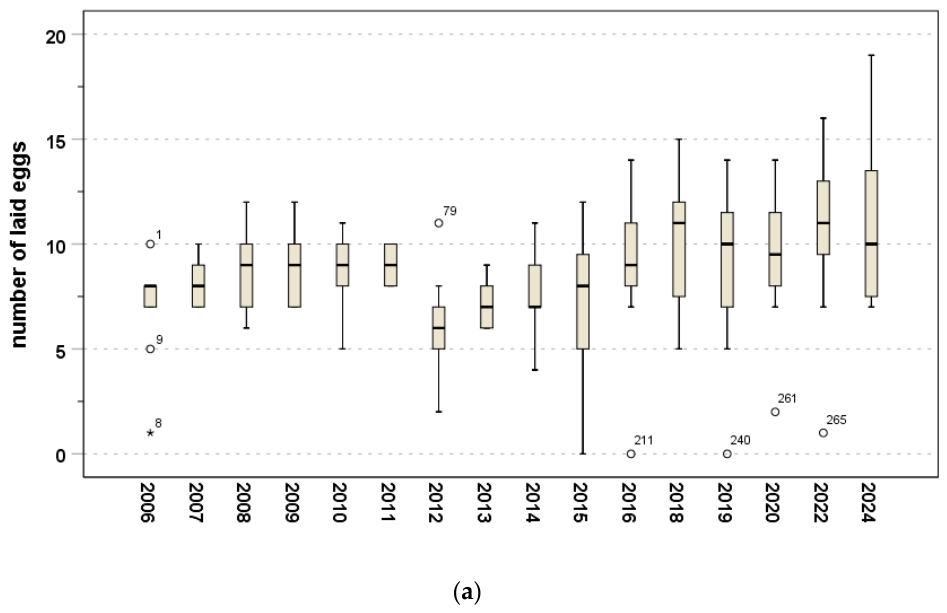
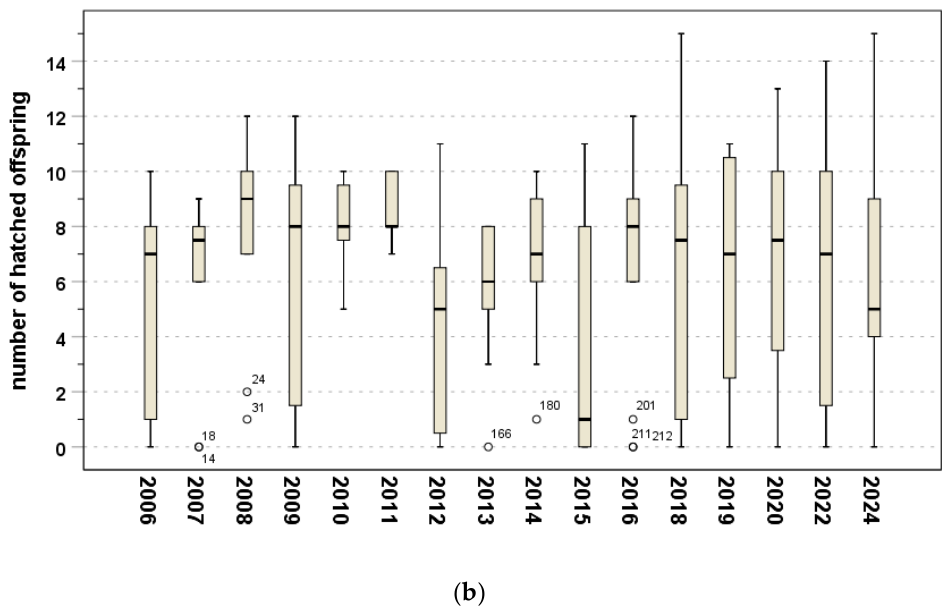
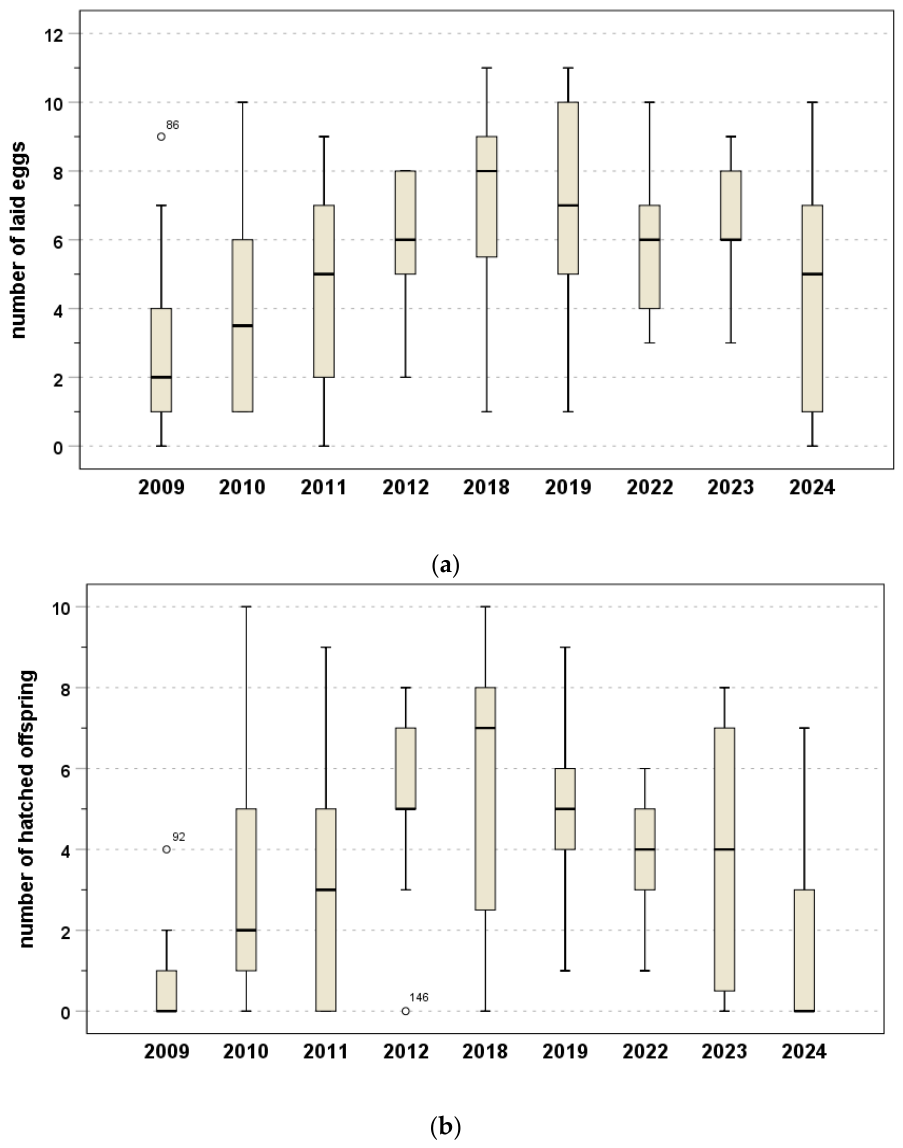
There was inter-year variation in the number of laid eggs and hatched offspring in each species but no clear trend (Figure 2a,b and Figure 3a,b). Values of NEL were higher in 2019, 2023, and 2024 for G. simonyi and during 2012–2018 for G. bravoana (Figure 2a and Figure 3a). Values of HO were higher in 2010 and 2011 for G. simonyi and in 2018 for G. bravoana (Figure 2b and Figure 3b).
The separate GLM analysis of NEL and HO within each species, considering only the factor year, showed significantly lower NEL in 2006, 2012, 2013, and 2015 (Table 5) and lower HO in 2012 and 2015 for G. simonyi (Table 5). For G. bravoana, NEL was significantly lower in 2009 and significantly higher in 2018 and 2019, while HO was significantly lower in 2009 and significantly higher in 2012, 2018, and 2019 (Table 6).
As shown above, in most cases, the number of hatched offspring was lower than the number of eggs laid. The proximal causes of failure of some offspring to hatch were: reduced egg size, minimal increase in egg weight, or absence of any embryo [29]. Moreover, inter-annual variation in HO may be due to several factors such as differences in the specific pairs established for mating, which implies potential effects of (unknown) behavioural mate incompatibility, underlying female gamete selection, or genetic distance between paired individuals [37,52]. Inter-annual variation in NEL and HO may, of course, also depend on climate variation (e.g., different timing of adequate environmental temperatures to initiate spring activity [26,49,53,54].
The fact that the various factors involved in the reproductive output of established pairs throughout the study period resulted in reduced values for G. bravoana in 2024 was a source of concern. This was known by the official staff of the breeding centre and was also reported to the Environmental Office of the Cabildo of La Gomera (officially responsible for the species’s recovery plan). Several improvement measures were implemented (including providing additional nutritional supplements and considering greater genetic distance between parental pairs), and as a result, NEL and HO increased in 2025 (data not fully analysed yet).
In some other lizard species, hatching success and survivorship of free-living juveniles have also been associated with the number of males a female mate with [55,56]. Multiple paternity has been detected in many lizard species [57]. Due to the limited number of available adult males, we could not assess the effect on female fecundity of providing more than one male partner per reproductive season. Moreover, due to constraints in the breeding centres, we could not determine whether changing male partners each year affected female fertility. Under field conditions, female lizards of other species can have more than one male partner per breeding season, and this has an impact on their reproductive success [58,59].
Male body size has been found to be a good predictor of mating success in field studies of many lizard species [48,49]. However, it is not clear whether this is mediated by active female choice or is a consequence of successful males overlapping many female territories, or extra-territorial matings by males.
The possible influence of any other specific male trait remains to be tested. In the ornate dragon Ctenophorus ornatus, relative male head size—an important secondary sexual trait in lizards—influenced hatching success [48], but in this case, male reproductive success was estimated under field conditions and with males having more than a single female partner. Some mammal and bird females invest more in eggs or offspring of one sex, or change the sex ratio of their offspring, when paired with males bearing attractive traits [60,61]; however, the underlying mechanisms are not yet known.
Other factors may also play a role in male and female reproductive success. For example, in Lacerta agilis, males with higher genetic similarity to the female partner were shown to sire a lower proportion of her offspring than more distantly related males [52], suggesting that there may be female selection of the sperm that fertilises her eggs. As female physiology is responsible for allocating reserves to eggs [62], females must respond—in ways that are still unknown—to the traits of their male partners, resulting in higher egg investment and, therefore, a higher number of successfully hatched offspring when paired with attractive males. Selection of fertilising sperm at the level of the ova may be an alternative or complementary mechanism for increasing embryo viability and, therefore, hatching success [52]. In our case, some genetic analyses have been carried out in recent years [63,64,65]; however, data analyses are still underway with the aim of elucidating the potential influence of male–female genetic dissimilarity on NEL, HO or juvenile survival.

3.3. Original Habitats and Reintroductions of Lizards into Other Natural Habitats

3.3.1. Estimation of Lizard Numbers in the Original Habitat (G. simonyi)

Population size in the original habitat of Risco de Tibataje was estimated using the Schnabel method in 2007 and 2019, yielding 354 and 834 lizards, respectively [66,67]. Estimates of lizard numbers prior to 2007 were obtained by different authors, who reported figures ranging between 100 and 200, and 900 lizards in this habitat (several references cited in [68]). The highest estimates obtained are broadly similar. However, given the different methodologies and total areas surveyed in the various studies, a strict comparison cannot be made, and, therefore, we cannot determine population size with precision or describe its dynamics over the study period.
Reintroduction Trials Outside the Original Habitat
In Table S3a, we summarise the number of captive-bred individuals reintroduced at several natural localities on the island since 1999, together with data from subsequent evaluations at each site.
In 1999 and 2000, a total of 36 lizards were introduced onto a small islet (Roque Chico de Salmor) located off the north-western coast of El Hierro (Table S3a [69,70]). A visit to this population in 2004 confirmed the presence of live lizards, including some juveniles [71,72]. Later, an assessment of lizard abundance at this site estimated a population of 126 individuals (95% confidence limits: 62–254) in 0,1 ha (Figure 4; [73]). Other groups of lizards were reintroduced at two additional sites on the island (La Dehesa and El Julan in 2001 and 2003 [73], respectively), but a field survey in 2004 detected only two individuals at La Dehesa and none at El Julan ([71], Table S3a). In 2008, an evaluation using the Schnabel method again estimated only very few lizards at both sites [73]. It was therefore concluded that these two populations were not able to persist on their own.
Since 2013, three sites, different from the previously surveyed, were selected for new reintroductions (Table S3a) [40]. In two of them (Punta Arelmo and Corrales de Agache), 35 and 33 lizards, respectively, were released in 2013 by staff from the Cabildo of El Hierro (Table S3a). In 2019, the climbing team was able to access the second area and, although they could not estimate population size at the time, they collected up to 75 recent lizard faecal samples [74]. This indicated that individuals from the 2013 release were still alive in the area and, therefore, it was decided to reinforce that population by releasing 50 additional lizards in 2020 [75]. A new visit to this site in 2023 again confirmed the presence of fresh lizard faeces, and the staff from the Environmental Council of the Cabildo of El Hierro decided to release 71 more lizards in November 2024 [76]. A census (which could not be conducted earlier due to logistical and funding constraints) is scheduled for the next few months of 2026 in this area to obtain an estimate of the actual population size. In a third location (Punta Miguel), 46 lizards were released in 2016 [77], but in 2018, no signs of lizard presence were detected [78].
Some groups of lizards were trained prior to reintroduction at Corrales de Agache to recognise models of a kestrel and a cat [79]. An evaluation of those lizards could not be conducted in situ due to logistical and funding constraints; however, at least some individuals were confirmed to still be living there (Table S3a). Of course, training for predator recognition can only be considered one of the factors that may have affected the survival of those lizards; the absence of cat predation or the adequacy of resources at the release site may have played a role [80,81].

3.3.2. Estimation of Lizard Numbers in the Original Habitat (G. bavoana)

A field survey in 1999 estimated a population of around 160 lizards in isolated patches totalling less than 20 km2 [82]. In 2016, a visit by a climbing team to the inland cliff of Risco de la Mérica detected a reduction in fresh lizard faeces (compared with those found on previous dates) in the areas where living lizards were previously present [83].
Reintroduction Trials Outside the Original Habitat
In Table S3b, we compile data on the dates and number of lizards reintroduced into the natural environment at several localities on La Gomera Island for this species since 2013 (Figure 5), together with some data from subsequent evaluations at each site. Before that date, an experimental release was conducted with six adult lizards in Los Órganos (Table S3b, [17]).
The first reintroductions of individuals of this species into the wild took place in 2013 and 2014, in Oroja (SE, 18 lizards) and Los Organos (NE, 135 lizards, Table S3b), respectively. However, they were not successful, as in the second site, an evaluation performed in 2016 did not detect any lizards or signs of their activity [83]. A recent reintroduction of 83 lizards was carried out at a different site, Corrales de Heredia (SW of the island) [84]. A census evaluation is scheduled to be undertaken in the coming months of 2026.

3.3.3. Factors Affecting Reintroduction Success

Current results for both species show that reintroduction trials have only been partially successful in establishing self-sustaining lizard populations at some of the selected reintroduction sites. For example, in the case of G. simonyi, a stable population has been achieved from lizards reintroduced onto the small islet (Roque Chico de Salmor) situated close to the north-west coast of El Hierro. There, the most recent evaluation of lizard abundance estimated around 127 individuals [73]. More recently, an unknown number of lizards were still alive in Corrales de Agache (Martín-Carbajal and Martínez-Iglesias, pers. comm.). In the case of G. bravoana, the situation is more critical, as, apart from the individuals kept at the breeding centre (around 300 individuals), there are only two wild populations: the original population in Risco la Mérica and a new reintroduction site (the number of lizards remains unknown).
Some preliminary population viability analyses (PVA, using Vortex 1.0 software) showed for each species that a higher probability of long-term survival of released lizards would occur only when the initial reintroduced population comprised one hundred individuals (or more) and when no strong negative environmental effects impacted that population (our own unpublished data).
In the lizard Ameiva polops, 57 adults were translocated to a Caribbean island after their main predator, the mongoose (Herpestes auropunctatus), was eradicated. The lizards were initially translocated to 100 m2 open-top enclosures on parts of the island, which were opened after 71 days; five years later, the population had increased to 1473 individuals [80]. This procedure is known as a soft-release, and we have recommended its use for both Gallotia species in technical reports previously submitted presented to each Island Cabildo. In Psammodromus algirus (phylogenetically close to Gallotia [1]), the outcome of introducing two captive-bred cohorts (178 and 187 lizards in two consecutive years) was monitored in two woodland fragments of Spain [81]. After 4 years, a stable population was recorded in one of the areas that previously lacked a viable population of this species. Results from both of these studies show that lizard reintroductions can be successful when limiting factors are properly addressed. The selected wild habitats for releasing G. simonyi and G. bravoana apparently provide key resources for lizards, such as diverse vegetation (food resources), shelter (groups of large rocks), and suitable substrates for egg-laying. However, unsuccessful reintroductions may have been caused by incomplete predator eradication, disease acquired after release, or low reproduction rates insufficient to establish a stable population.

3.4. Predator Controls

For several years, feral cat control campaigns were implemented on each island. To that end, traps were placed in (or near) the original habitats and at sites where lizards had been reintroduced. Campaigns between 2001 and 2024 on El Hierro resulted in a total of 472 cats trapped: 139 in Risco Tibataje, 182 in La Dehesa, 143 in El Julan, 6 in Punta de Arelmo, 1 in Punta Agache, and 1 in Punta Miguel. These campaigns were halted in 2024 due to restrictions included in the Spanish Law on Animal Welfare.
On La Gomera, between 2002 and 2015, 220 cats were captured in the vicinity of Quiebracanillas (the base of the original habitat on the La Merica inland cliff), while 14 feral cats were also captured between 2018 and 2024 at the same site. One of the latter was captured three times, and, as it was identified, it was returned to the owners (with the recommendation that it should be kept indoors). Voluntary cat sterilisation campaigns were also publicised and carried out in local human communities of both islands. Gesplan, a public enterprise of the Autonomous Canarian Government, has been responsible for implementing the cat-trapping campaign in the last couple of years.
It is well known that cats are effective lizard predators [85,86], including endangered Canarian lizards [87]. For G. bravoana, some fences were placed near the original habitat and in one of the first reintroduction sites to keep cats out, but they were apparently not successful [17]. Actions have been taken in several parts of the world to mitigate the impact of cats on local fauna [88]; in Australia, these have included trapping, lethal baiting, and even shooting [89]. Lethal baiting has been greatly restricted in Australia, and the most frequently used protocol to control cat populations has been the Trap–Neuter–Return (TNR) strategy [89,90].

3.5. Results of Veterinary Controls

3.5.1. General Sanitary Aspects

The main goal was to understand the species’ physiology to prevent, diagnose, and treat health issues, ensuring successful recovery actions [91]. Comparative haematology, including cytology and blood chemistry [92,93], was performed for both species, revealing strong physiological resilience to arid, low-rainfall environments. Plasma ions and renal markers remained above typical levels for lizards from humid climates, indicating specific adaptations and notable resistance to arid conditions [94].
Studies on cloacal microbiology in both lizard species showed a lower proportion of Gram-positive than Gram-negative bacteria [95]. Identified genera included Citrobacter, Corynebacterium, Enterobacter, Enterococcus, Escherichia, Klebsiella, Pseudomonas, Salmonella, Staphylococcus, and Streptococcus, while Aspergillus, Candida, and Rhodotorula were the only fungi and yeasts detected. These microorganisms are considered normal in healthy lizards, though some may be potentially pathogenic, highlighting the importance of host immune status in disease development. Table 7 summarises the health-related studies for each species.
The analyses independently performed on each species were as follows:

3.5.2. Gallotia simonyi

Lipophilic analyses of femoral gland secretions identified 57 compounds, including steroids (mainly cholesterol), fatty acids (hexadecanoic and octadecanoic acids), aldehydes, alcohols, ketones, squalene, and wax esters. Males showed higher proportions of odoriferous compounds such as fatty acids and aldehydes, while females had more stable compounds like steroids, waxy alcohols, wax esters, and terpenoids. These results improved understanding of the species’ chemical communication and may clarify mechanisms of mate choice or hierarchy formation in the wild [96].
Disease analyses were carried out when needed. Some individuals developed oral tumours later identified as benign gingival hyperplasia [98]. Faecal samples were examined for bacteriological and coprological studies, leading to the detection of a new Salmonella serovar (Salmonella bongori 13,22:z39:–) in the El Hierro Giant Lizard [99]. Nematodes were also naturally present, but without disrupting the parasite–host balance in any of the animals analysed.

3.5.3. Gallotia bravoana

The first individuals captured for the recovery programme exhibited maladaptation syndrome [92], and a high prevalence of erythrocyte protozoa was detected in them [100], all associated with adaptation processes to new conditions and the stress of captivity. Once these issues were corrected, cardiac physiology for this species was established based on electrocardiogram parameters in the well-adapted animals [97].

3.5.4. Health Conclusions

The haematological and biochemical study characterised blood cell types in these species and showed that they tolerate unusually high levels of dehydration compared to continental lizards. Microbiological analyses revealed seasonal cycles in the main bacteria and fungi of the digestive tract and skin, with Gram-negative flora predominating and fluctuating throughout the year. Fungal populations also varied seasonally, peaking in spring, while increased summer sunlight reduced their growth and resulted in the lowest isolation rates.
During 2001–2004, some lizards—particularly those from La Gomera—showed low calcium:phosphorus ratios, low plasma ionised calcium levels, and poor skeletal mineralisation, attributed to secondary hyperparathyroidism of renal or nutritional origin. This condition prompted close monitoring due to its impact on the breeding programme. In recent years, preventive measures, including supplements and balanced nutrition, were implemented, and calcium-related problems did not recur.
To maintain equilibrium with internal parasites, prophylactic antiparasitic treatment with metronidazole and fenbendazole has proven effective, both during captivity and in individuals intended for release into the wild. Finally, mite outbreaks—mainly Ophionyssus galloticolus—occurring in wet years required updated management and disinfection protocols to avoid health impacts.

3.6. Educational Activities

For several years, different educational activities related to each species have been performed with children and adolescents of several schools on each island, although the general public has also been invited. In Table 8, we include the years and the type of audience receiving information on the history and conservation actions related to each species in these events.
Public visits to an interpretation centre in Frontera (El Hierro) were established in 1995. In Table 9, we include the available data since 2006 on the number of visitors per year. At present, there is no interpretation centre on La Gomera; however, the breeding centre has received student visits since 2006 (Table 9).
In general, participants in these activities showed strong interest in learning about these lizards and the history of each species, including their maintenance in terraria for breeding and the efforts to reintroduce them into natural habitats.

4. Conclusions

Females and males of both G.simonyi and G. bravoana have been maintained in breeding centres located on the islands of El Hierro and La Gomera, respectively, in the Canary Archipelago for several decades. They have been kept in outdoor terraria at each centre, and different mating pairs were established annually to obtain offspring that could eventually participate in reintroduction trials involving adult lizards. Breeding during the past 19 years has resulted in a current population of 216 individuals of G. simonyi and 330 of G. bravoana. The number of eggs laid by females and the number of successfully hatched offspring have varied over this period, but without evidence of a clear trend. Both female and male SVL showed a significant relationship with the number of eggs laid and the number of successfully hatched offspring. Only certain specific reproductive pairs influenced female fecundity and hatching success.
Several reintroductions of individuals from each species into different localities on their respective islands have generally not resulted in the establishment of viable populations. In El Hierro, aside from the species’ original habitat, only a stable population of G. simonyi (approximately 126 individuals) persists on a small islet near the north-western shore, and an unknown number of reintroduced lizards remain in an inland locality. In La Gomera, aside from the original habitat of G. bravoana, an unknown number of individuals persist following a recent inland reintroduction. The next census on each island will aim to estimate the number of surviving individuals in these inland sites. Nevertheless, it is noteworthy that both species remain endangered; therefore, increased investment in personnel and infrastructure at both breeding centres is urgently needed to improve management and ensure faster recovery of each species. Special attention must be given to maintaining cat-control campaigns, at least in or near original habitats and reintroduction sites.
Veterinary monitoring of individuals from both species showed that they tolerate unusually high levels of dehydration, while their microbial flora—mainly Gram-negative bacteria and seasonally fluctuating fungi—vary throughout the year. Health assessments revealed past calcium–phosphorus imbalances in some populations, which were resolved through improved nutrition and supplementation. Effective parasite control and updated management protocols, particularly during mite outbreaks in unusually wet years, have contributed to maintaining overall animal health.

Supplementary Materials

The following supporting information can be downloaded at https://www.mdpi.com/article/10.3390/ani16121869/s1. Table S1: Basic statistics for female and male SVL of G. simonyi (a) and G. bravoana (b) of every year; Table S2: Mean (±S.E.), minimum, maximum values, sample size (N) and total number (T) for NEL and HO in each of the years analysed for G. simonyi and G. bravoana; Table S3: Actions and number of reintroduced lizards (total) in different natural habitats and along years for G. simonyi (a) and G. bravoana (b). For some sites and years there are no number of individuals but some observational data.

Author Contributions

M.A.R.-D.: data curation, visualisation, writing—review and editing; S.P.-R.: data curation, visualisation, writing—review and editing; M.M.S.-R.: formal analysis, methodology, software; I.D.-E.: formal analysis, methodology, software; A.M.-S.: investigation, writing—review and editing; M.L.B.-A.: conceptualization, methodology, data processing, writing—review and editing; M.M.-B.: data curation, formal analysis, methodology, visualisation, writing—review and editing. All authors have read and agreed to the published version of the manuscript.

Funding

Before 2006, two LIFE programmes provided funds for the works performed by a previous research team with G. simonyi (references: LIFE94 NAT/E/001238 and LIFE97 NAT/E/004190), with another LIFE programme funding for works with G. bravoana (reference: LIFE06 NAT/E/000199). However, the works and research performed after 2006, included in this work, did not receive any external funding. Scientific advising by members of the Asociación Bienestar Ambiental on lizard management in both centres, as well as the works performed directly there, was funded for several years by the Cabildos of El Hierro and La Gomera. These institutions also funded veterinary analyses and work by the hired climbing team.

Institutional Review Board Statement

We followed the guidelines published by Animal Behaviour (ASAB/ABS 2023; Anim. Behav. 195: I-XI). The studies were conducted in accordance with the Declaration of Helsinki, and lab experiments received official approval from the Ethics and Animal Welfare Committee of the Universidad La Laguna (reference CEIBA2011-0020). They also conform to MDPI editorial policies and ethical policies.

Informed Consent Statement

Not applicable.

Data Availability Statement

Restrictions apply to the availability of these data. Data were obtained directly from authors and collaborators. Data reported in the current review are not deposited in any repository. However, specific data may be available from the authors on request.

Acknowledgments

Part of the work was performed at the University of La Laguna, Department of Animal Biology, until 2016, when it was transferred to the offices of Asociación Bienestar Ambiental. We thank several counsellors (during many years) from the Environmental Department of each Cabildo, for their administrative tasks related to our work, including official resolutions and authorizations. We thank Mariano Hernández-Ferrer for sharing with us some preliminary results of the genetic analysis of blood samples from individuals of both species. Data from reintroductions of both lizard species have been kindly provided by members of the private enterprise Tenerife-Vertical (especially Javier Martín-Carbajal and Ricardo Martínez-Iglesias) and by the biologist David P. Padilla. We especially thank Juan Pedro Pérez (in memoriam), Alfonso Quintero, Víctor González, Denis Guanche, and Eibar Correa-Castañeda for their everyday maintenance labours (at different dates) on individuals of G. simonyi kept in the breeding centre, and Gerardo Bethencourt on those of G. bravoana. We also thank Gisela Burunat-Pérez, who performed the work on pre-release lizard training, and Stephen Di Santo, who conducted a thorough review of the English.

Conflicts of Interest

The authors declare no conflicts of interest. The only funders in the past had no role in the design of the study, in the collection, analyses, or interpretation of data; in the writing of the manuscript, or in the decision to publish the results.

References

  1. Harris, D.J.; Arnold, E.N.; Thomas, R.H. Relationships of lacertid lizards (Reptilia: Lacertidae) estimated from mitochondrial DNA sequences and morphology. Proc. R. Soc. B 1998, 265, 1939–1948. [Google Scholar] [CrossRef] [Scilit] [PubMed]
  2. Piquet, J.C.; López-Darias, M. Invasive snake causes massive reduction of all endemic herpetofauna on Gran Canaria. Proc. R. Soc. B 2021, 288, 20211939. [Google Scholar] [CrossRef] [Scilit] [PubMed]
  3. IUCN. 2024. Available online: https://www.iucnredlist.org/search?query=Gallotia%20simonyi&searchType=species (accessed on 9 June 2026).
  4. IUCN. 2022. Available online: https://www.iucnredlist.org/search?query=Gallotia%20simonyi&searchType=species (accessed on 9 June 2026).
  5. IUCN. 2024. Available online: https://www.iucnredlist.org/species/61505/207650471 (accessed on 9 June 2026).
  6. Böhme, W.; Bings, W. ZurFrage des Überlebens von Lacerta s. simonyi Steindachner. Salamandra 1975, 11, 39–46. [Google Scholar]
  7. Martínez-Rica, J.P. Primeros datos sobre la población de lagarto negro (Gallotia simonyi simonyi Steind.) de la Isla de Hierro. Amphib.-Reptil. 1982, 2, 369–380. [Google Scholar]
  8. Hernández, E.; Nogales, M.; Martín, A. Discovery of a new lizard in the Canary Islands, with a multivariate analysis of Gallotia (Reptilia: Lacertidae). Herpetologica 2000, 56, 63–76. [Google Scholar]
  9. Nogales, M.; Rando, J.C.; Valido, A.; Martín, A. Discovery of a living giant lizard, genus Gallotia (Reptilia: Lacertidae), from La Gomera, Canary Islands. Herpetologica 2001, 57, 169–179. [Google Scholar]
  10. Maca-Meyer, N.; Carranza, S.; Rando, J.C.; Arnold, J.C.; Cabrerra, V.M. Status and relationships of the extinct giant Canary Island lizard Gallotia goliath (Reptilia: Lacertidae) assessed using ancient mtDNA from its mummified remains. Biol. J. Linn. Soc. 2003, 80, 659–670. [Google Scholar] [CrossRef] [Scilit]
  11. Mateo, J.A.; López-Jurado, L.F. Gallotia simonyi. In Distribución y Biogeografía de Los Anfibios y Reptiles en España y Portugal; Pleguezuelos, J.M., Ed.; Monografías de Herpetología: Granada, Spain, 1997; pp. 409–411. [Google Scholar]
  12. GOBIERNO DE CANARIAS. 2003. Available online: https://www.gobiernodecanarias.org/boc/2003/133/005.html (accessed on 9 June 2026).
  13. Pérez-Mellado, V.; Arano, B.; Astudillo, G.; Cejudo, D.; García-Márquez, M.; Llorente, G.; Márquez, R.; Mateo, J.A.; Orrit, N.; Romero-Beviá, M.; et al. Recovery plan for the giant lizard of Hierro Island (Canary Islands), Gallotia simonyi: Presentation and preliminary results. In Herpetologia Bonnensis; Böhme, W., Bischoff, W., Ziegler, T., Eds.; European Herpetological Society: Bonn, Germany, 1997; pp. 285–295. [Google Scholar]
  14. GOBIERNO DE CANARIAS. 2004. Available online: http://www.gobiernodecanarias.org/boc/2004/188/003.html (accessed on 9 June 2026).
  15. GOBIERNO DE CANARIAS. 2026. Available online: http://www.gobiernodecanarias.org/boc/2026/056/929.html (accessed on 9 June 2026).
  16. Mesa-Avila, G.; Molina-Borja, M. Behavior as a tool for welfare improvement and conservation management in the endangered lizard Gallotia bravoana. J. Appl. Anim. Welf. Sci. 2007, 10, 193–206. [Google Scholar] [CrossRef] [Scilit] [PubMed]
  17. Mateo, J.A. El Lagarto Gigante de La Gomera; Cabildo Insular de La Gomera. Turquesa Ed.: Tenerife, Spain, 2007; 452p. [Google Scholar]
  18. GOBIERNO DE CANARIAS. 2006. Available online: https://www.gobiernodecanarias.org/boc/2006/211/011.html (accessed on 9 June 2026).
  19. Rando, J.C.; Betoret, A.; Martín, A.; Barone, R. Discovery of a new population of the spotted lizard of the Canary Islands. Oryx 2004, 38, 134. [Google Scholar]
  20. Rando, J.C.; Valido, A. Distribución, Tamaño de Población y Propuesta de Plan de Recuperación Para el Lagarto Canario Moteado (Gallotia intermedia). Unpublished, Technical inform presented to Cabildo de Tenerife. 2000.
  21. Albaladejo, G. Caracterización de la Población del Lagarto Canario Moteado, Gallotia intermedia, en El Espacio Natural Protegido de la Montaña de Guaza (Tenerife). Unpublished, Graduate work. 2014.
  22. GOBIERNO DE CANARIAS. 2017. Available online: https://www.gobiernodecanarias.org/boc/2017/229/index.html (accessed on 9 June 2026).
  23. Olsson, M.; Shine, R. Does reproductive success increase with age or with size in species with indeterminate growth? A case study using sand lizards (Lacerta agilis). Oecologia 1996, 105, 175–178. [Google Scholar] [CrossRef] [Scilit] [PubMed]
  24. Molina-Borja, M.; Rodríguez-Domínguez, M.A. Evolution of biometric and life-history traits in lizards (Gallotia) from the Canary Islands. J. Zool. Syst. Evol. Res. 2004, 42, 44–53. [Google Scholar] [CrossRef] [Scilit]
  25. Siliceo, I.; Díaz, J.A. A comparative study of clutch size, range size, and the conservation status of island vs. mainland lacertid lizards. Biol. Conserv. 2010, 143, 2601–2608. [Google Scholar] [CrossRef] [Scilit]
  26. Meiri, S.; Avila, L.; Bauer, A.M.; Chapple, D.G.; Das, I.; Doan, T.M.; Doughty, P.; Ellis, R.; Grismer, L.; Kraus, F.; et al. The global diversity and distribution of lizard clutch sizes. Glob. Ecol. Biogeogr. 2020, 29, 1515–1530. [Google Scholar] [CrossRef] [Scilit]
  27. Deme, G.G.; Wu, N.C.; Hao, X.; Sun, B. Environmental seasonality and latitude drive clutch size diversity in female lizards across populations. Ecol. Indic. 2023, 154, 110490. [Google Scholar] [CrossRef] [Scilit]
  28. Romero-Bevia, M.; Mateo, J.A.; Pérez-Mellado, V. Morfometría y estructura de edades y sexos de la población natural de Gallotia simonyi. In El Lagarto Gigante de El Hierro: Bases Para su Conservación; López-Jurado, L.F., Mateo-Miras, J.A., Eds.; Monografías de Herpetología, Asociación Herpetológica Española: Madrid, Spain, 1999; pp. 43–53. [Google Scholar]
  29. Rodríguez-Domínguez, M.A.; Molina-Borja, M. Reproduction in captivity of the endangered Hierro giant lizard Gallotia simonyi machadoi (Sauria: Lacertidae). J. Herpetol. 1998, 32, 498–504. [Google Scholar]
  30. Martínez-Silvestre, A.; Rodríguez-Domínguez, M.A.; Mateo, J.A.; Pastor, J.; Marco, I.; Lavin, S.; Cuenca, R. Comparative haematology and blood chemistry of endangered lizards (Gallotia species) in the Canary Islands. Vet. Rec. 2004, 155, 266–268. [Google Scholar] [CrossRef] [Scilit] [PubMed]
  31. Martínez-Silvestre, A. Informe Clínico. Proyecto de Conservación del Lagarto Gigante de El Hierro (Gallotia simonyi). Unpublished, Technical inform presented to Consejería Medio Ambiente, Canarian Government. 2004.
  32. Martínez-Silvestre, A.; Niebla, J. Informe Clínico, Gallotia simonyi. Unpublished, Technical inform presented to Cabildo de El Hierro. 2014.
  33. Martínez-Silvestre, A. Proyecto de Conservación del Lagarto Gigante de El Hierro (Gallotia simonyi). Unpublished, Technical inform presented to Consejería Medio Ambiente, Cabildo El Hierro. 2019.
  34. Hernández-Aguero, J.A.; Plasencia, S. Sobre la presencia de malformaciones congénitas en Gallotia bravoana en el centro de recuperación del lagarto gigante de la Gomera. Bol. Asoc. Herpetol. Esp. 2016, 27, 54–56. [Google Scholar]
  35. Martínez-Silvestre, A.; Plasencia, S.; Molina-Borja, M.; Bohórquez-Alonso, M.L.; Rodríguez-Domínguez, M.A.; Hernández-Ferrer, M. Evidencias de endogamia en el programa de reproducción del lagarto gigante de La Gomera (Gallotia bravoana). In Proceedings of the XVIII Congreso Luso-Español de Herpetología, Barcelona, Spain, 1–4 October 2025. [Google Scholar]
  36. ISO; International Standard. 11784, ISO 11784. Geneva, Switzerland, 2024.
  37. Tokarz, R.R. Mate choice in lizards: A review. Herpetol. Monogr. 1995, 9, 17–40. [Google Scholar] [CrossRef] [Scilit]
  38. Olsson, M.; Madsen, T. Female choice on male quantitative traits in lizards: Why is it so rare? Behav. Ecol. Sociobiol. 1995, 36, 179–184. [Google Scholar] [CrossRef] [Scilit]
  39. Fitze, P.S.; Cote, J.; Clobert, J. Mating order-dependent female mate choice in the polygynandrous common lizard Lacerta vivípara. Oecologia 2010, 162, 331–341. [Google Scholar] [PubMed]
  40. Trujillo, D. Propuesta de Enclaves Para Efectuar Nuevas Reintroducciones del Lagarto Gigante de El Hierro (Gallotia simonyi). Unpublished, Technical inform presented to the Cabildo of El Hierro. 2013.
  41. Burnham, K.P.; Anderson, D.R. Model Selection and Multi-Model Inference: A Practical Information Theoretic Approach, 2nd ed.; Springer: New York, NY, USA, 2002. [Google Scholar]
  42. Richards, S.A.; Whittingham, M.J.; Stephens, P.A. Model selection and model averaging in behavioural ecology: The utility of the IT-AIC framework. Behav. Ecol. Sociobiol. 2011, 65, 77–89. [Google Scholar]
  43. McCullagh, P.; Nelder, J. Generalized Linear Models, 2nd ed.; Chapman and Hall: London, UK; CRC: New York, NY, USA, 1989. [Google Scholar]
  44. Williams, D.A. Generalized Linear Model Diagnostics Using the Deviance and Single Case Deletions. J. R. Stat. Soc. Ser. C (Appl. Stat.) 1987, 36, 181–191. [Google Scholar] [CrossRef] [Scilit]
  45. Castanet, J.; Báez, M. Adaptation and evolution in Gallotia lizards from the Canary Islands: Age, growth, maturity and longevity. Amphib.-Reptil. 1991, 12, 81–102. [Google Scholar] [CrossRef] [Scilit]
  46. Hews, D. Food resources affect female distribution and male mating opportunities in the iguanian lizard Uta palmeri. Anim. Behav. 1993, 46, 79–291. [Google Scholar] [CrossRef] [Scilit]
  47. Warner, D.A.; Lovern, M.B.; Shine, R. Maternal nutrition affects reproductive output and sex allocation in a lizards with environmental sex determination. Proc. R. Soc. B 2006, 274, 883–890. [Google Scholar] [CrossRef] [Scilit]
  48. LeBas, N.R.; Marshall, N.J. No evidence of female choice for a condition-dependent trait in the agamid lizard, Ctenophorus ornatus. Behaviour 2001, 138, 965–980. [Google Scholar] [CrossRef] [Scilit]
  49. Kwiatkowski, M.A.; Sullivan, B.K. Geographic variation in sexual selection among populations of an iguanid lizard Sauromalus obesus (=ater). Evolution 2002, 56, 2039–2051. [Google Scholar] [CrossRef] [Scilit] [PubMed]
  50. Cooper, W.E., Jr.; Vitt, L.J. Female mate choice of large broad-headed skinks. Anim. Behav. 1993, 45, 683–693. [Google Scholar]
  51. Castilla, A.M.; Bauwens, D. Reproductive characteristics of the lacertid lizard Lacerta lepida. Amphib.-Reptil. 1989, 10, 445–452. [Google Scholar] [CrossRef] [Scilit]
  52. Olsson, M.; Madsen, T. Sexual selection and sperm competition in reptiles. In Sperm Competition and Sexual Selection; Birkhead, T.R., Moller, A.P., Eds.; Academic Press: London, UK, 1998; pp. 503–577. [Google Scholar]
  53. Olsson, M.; Madsen, T. Between-year variation in determinants of offspring survival in the sand lizard, Lacerta agilis. Funct. Ecol. 2001, 15, 443–450. [Google Scholar]
  54. Olsson, M.; Shine, R. The seasonal timing of oviposition in sand lizards (Lacerta agilis): Why early clutches are better. J. Evol. Biol. 1997, 10, 369–381. [Google Scholar] [CrossRef] [Scilit]
  55. Olsson, M.; Shine, R. Advantages of multiple matings to females: A test of the infertility hypothesis using lizards. Evolution 1997, 51, 1684–1688. [Google Scholar] [CrossRef] [Scilit] [PubMed]
  56. York, J.R.; Baird, T.A. Sexual selection on female collared lizards favours offspring production with multiple males. Anim. Behav. 2010, 147, 17–23. [Google Scholar]
  57. Uller, T.; Olsson, M. Multiple paternity in reptiles: Patterns and processes. Mol. Ecol. 2008, 17, 2566–2580. [Google Scholar] [CrossRef] [Scilit] [PubMed]
  58. Trivers, R.L. Sexual selection and resource-accruing abilities in Anolis garmani. Evolution 1976, 30, 253–269. [Google Scholar] [CrossRef] [Scilit] [PubMed]
  59. Hews, D. Examining hypotheses generated by field measures of sexual selection on male lizards. Evolution 1990, 44, 1956–1966. [Google Scholar] [CrossRef] [Scilit]
  60. Kempenaers, B.; Verheyen, G.R.; Dhondi, A.A. Extrapair paternity in the blue tit (Parus caeruleus): Female choice, male characteristics, and offspring quality. Behav. Ecol. 1997, 8, 481–492. [Google Scholar] [CrossRef] [Scilit]
  61. Krištofík, J.; Darolová, A.; Majtan, J.; Okuliarová, M.; Zeman, M.; Herbert Hoi, H. Do females invest more into eggs when males sing more attractively? Postmating sexual selection strategies in a monogamous reed passerine. Ecol. Evol. 2014, 4, 1328–1339. [Google Scholar] [CrossRef] [Scilit] [PubMed]
  62. Sinervo, B.; Licht, P. Proximate constraints on the evolution of egg size, number, and total clutch mass in lizards. Science 1991, 252, 1300–1302. [Google Scholar] [CrossRef] [Scilit] [PubMed]
  63. Hernández-Ferrer, M.; González-Carracedo, M.A.; Fregel-Lorenzo, R.I.; Acosta-Almeida, T.; Pérez-Pérez, J.A.; Pino-Yanes, M.M.; Lorenzo-Díaz, L.F. Caracterización Genética de Una Muestra de La Población Reproductora del Centro de Cría de La Especie Gallotia simonyi de La Isla de El Hierro. Unpublished, Technical inform presented to Cabildo of that Island. 2020.
  64. Hernández-Ferrer, M.; Zamora-Jordán, N.; Martínez-Martínez, P.; González-Carracedo, M.A.; Fregel-Lorenzo, R.I.; Acosta-Almeida, T.; Pérez-Pérez, J.A.; Pino-Yanes, M.M.; Lorenzo-Díaz, L.F. Caracterización Genética de Una Muestra de La Población Reproductora del Centro de Cría de La Especie Gallotia bravoana (Antes gomerana de La Isla de La Gomera. Unpublished, Technical inform presented to Cabildo of that Island. 2022.
  65. Hernández-Ferrer, M.; González-Carracedo, M.A.; Fregel-Lorenzo, R.I.; Acosta-Almeida, T.; Pérez-Pérez, J.A.; Pino-Yanes, M.M.; Lorenzo-Díaz, L.F.; Muñoz-Delago, L.; Zamora-Jordán, N. Caracterización Genética de Una Muestra de La Población Reproductora del Centro de Cría de La Especie Gallotia bravoana de Las Isla de La Gomera, 2023. Unpublished, Technical inform presented to Cabildo of that Island. 2023.
  66. Trujillo, D. Distribución y Tamaño de La Población Natural del Lagarto Gigante de El Hierro Gallotia simonyi (Steindachner, 1889) en La Fuga de Gorreta. Unpublished, Technical inform, Gobierno de Canarias, Consejería de Medio Ambiente y Ordenación, Territorial, Dirección General del Medio Natural. 2008. [CrossRef] [Scilit]
  67. Martín-Carbajal, J.; Martínez-Iglesias, R. Estimas del Tamaño de Poblaciones de Gallotia simonyi en El Gaterón y en el Rodadero (Risco de Tibataje), Tenerife-Vertical, Unpublished, Technical inform presented to the Cabildo of El Hierro. 2019.
  68. Pérez-Mellado, V.; Romero-Bevia, M.; de la Torre, A.; Vicedo, M.; García-Sirvent, J. Hábitat, distribución actual y tamaño de la población de Gallotia simonyi en la isla de El Hierro (Islas Canarias). In El Lagarto Gigante de El Hierro: Bases Para su Conservación; López-Jurado, L.F., Mateo-Miras, J.A., Eds.; Monografías de Herpetología; Asociación Herpetológica Española: Madrid, Spain, 1999; Volume 4, pp. 27–41. [Google Scholar]
  69. Rodríguez-Domínguez, M.A.; Castillo, C.; Sánchez-Perera, S.; Coello, J.J. El Lagarto Gigante de El Hierro; Ediciones Turquesa: Tenerife, Spain, 2000; 320p. [Google Scholar]
  70. Silva-Armas, J.L.; Santana, M.; Silva, J.A.; Arechavaleta, M.; Fariña, B.; Fox, E.; Afonso, O. El Estado de Conservación de Las Poblaciones Reintroducidas del Lagarto Gigante de El Hierro (Gallotia simonyi) y La Viabilidad de Liberar Ejemplares de Esta Especie en El Roque Grande de Salmor. Gesplan, S.A. Unpublished, technical inform, Cabildo of El Hierro. 2003.
  71. Molina-Borja, M.; Bohórquez-Alonso, M.L.; González-Ortega, C.; Rodríguez-Domínguez, M.A. Informe de Las Poblaciones del Lagarto Gigante de El Hierro (Gallotia simonyi machadoi) en Las Zonas de Reintroducción y de La cría en cautividad en El Centro de Reproducción de Frontera. Unpublished, Inform presented to Cabildo of El Hierro. 2004.
  72. González-Ortega, C.; Rodríguez-Domínguez, M.A.; Bohórquez-Alonso, M.L.; Molina-Borja, M. Informe Sobre Las Poblaciones Reintroducidas del Lagarto Gigante de El Hierro y Actividades en El Centro de Reproducción. Unpublished, Inform presented to Cabildo of El Hierro. 2005.
  73. Trujillo, D. Censo y Distribución de Las Poblaciones Reintroducidas del Lagarto Gigante de El Hierro Gallotia simonyi (Steindachner, 1889), en La Dehesa, El Julan y El Roque Chico de Salmor. Unpublished, Technical inform presented to Autonomous Canarian Government, Consejería de Medio Ambiente y Ordenación Territorial, Dirección General del Medio Natural. 2008; 39p.
  74. Martín-Carbajal, J.; Padilla, D.P. Primer Acceso por Tierra a la Zona de Suelta de Gallotia simonyi en Los Corrales de Agache. Tenerife-Vertical, Unpublished, Technical inform presented to the Cabildo of El Hierro. 2019.
  75. Martín-Carbajal, J. Suelta de 50 Ejemplares de Gallotia simonyi en Los Corrales de Agache. Unpublished, summarized inform presented to Autonomous Canarian Government, Consejería de Medio Ambiente y Ordenación Territorial, Dirección General del Medio Natural. 2020.
  76. Martín-Carbajal, J.; Martínez-Iglesias, R. Informe de La Liberación de 71 Lagartos de Gallotia simonyi en Corrales de Agache. Tenerife-Vertical, Unpublished, Technical inform presented to the Cabildo de El Hierro. 2024.
  77. Portero-Álvarez, A.; Martín-Carbajal, J. Suelta en El Medio Natural de 46 Individuos de Lagarto Gigante de El Hierro (Gallotia simonyi). Unpublished, Technical inform presented to Cabildo of El Hierro. 2016.
  78. Bohórquez-Alonso, M.L.; Molina-Borja, M. Informe de Los Trabajos Realizados en Relación con Objetivos del Plan de Recuperación del Lagarto Gigante de El Hierro (Gallotia simonyi). Asociación Bienestar Ambiental. Unpublished, Technical inform presented to Cabildo of El Hierro. 2018.
  79. Burunat, G.; Suárez-Rancel, M.; Molina-Borja, M. Predator avoidance training of the endangered lizard from El Hierro (Canary Islands): A new management strategy before reintroduction into the wild. Behav. Process. 2018, 157, 192–198. [Google Scholar] [CrossRef] [Scilit] [PubMed]
  80. Fitzgerald, L.A.; Treglia, M.L.; Angeli, N.; Hibbitts, T.J.; Leavitt, D.J.; Subalusky, A.L.; Lundgren, I.; Hillis-Starr, Z. Determinants of successful establishment and post-translocation dispersal of a new population of the critically endangered St. Croix ground lizard (Ameiva polops). Restor. Ecol. 2015, 23, 776–786. [Google Scholar]
  81. Santos, T.; Pérez-Tris, J.; Carbonell, R.; Tellería, J.L.; Díaz, J.A. Monitoring the performance of wild-born and introduced lizards in a fragmented landscape: Implications for ex situ conservation programs. Biol. Conserv. 2009, 142, 2923–2930. [Google Scholar] [CrossRef] [Scilit]
  82. Curbero, C. Final report (LIFE 06 NAT/E//0001999). In Programa de Recuperación de Gallotia bravoana y de su Área de Distribución; Cabildo Insular of La Gomera: Canary Islands, Spain, 2010; 62p. [Google Scholar]
  83. Martín-Carbajal, J.; Portero-Álvarez, A. Seguimiento de Las Poblaciones Reintroducidas de Lagarto Gigante de La Gomera (Gallotia bravoana). Unpublished, Technical inform presented to the Cabildo of La Gomera. 2016.
  84. Padilla, D.; Martín-Carbajal, J. Censo y Reintroducción del Lagarto Gigante de La Gomera (Gallotia bravoana). Unpublished, Technical inform presented to Cabildo of La Gomera. 2022.
  85. Bonnaud, E.; Medina, F.M.; Vidal, E.; Nogales, M.; Tershy, B.; Zavaleta, E.; Donlan, C.J.; Keitt, B.; Le Corre, M.; Horwath, S.V. The diet of feral cats on islands: A review and a call for more studies. Biol. Invasions 2011, 13, 581–603. [Google Scholar] [CrossRef] [Scilit]
  86. Li, B.; Belasen, A.; Pafilis, P.; Bednekoff, P.; Foufopoulos, J. Effects of feral cats on the evolution of anti-predator behaviours in island reptiles: Insights from an ancient introduction. Proc. R. Soc. B 2014, 281, 20140339. [Google Scholar] [CrossRef] [Scilit] [PubMed]
  87. Medina, F.; Nogales, M. A review on the impact of feral cats (Felis silvestris catus) in the Canary Islands: Implications for the conservation of its endangered fauna. Biodivers. Conserv. 2009, 18, 829–846. [Google Scholar]
  88. Webber, B.L. Increasing Knowledge to Mitigate Cat Impacts on Biodiversity; The Western Australian Biodiversity Science Institute: Perth, WA, Australia, 2020. [Google Scholar]
  89. Kennedy, B.P.A.; Cumming, B.; Brown, W.Y. Global strategies for population management of domestic cats (Felis catus): A systematic review to inform best practice management for remote indigenous communities in Australia. Animals 2020, 10, 663. [Google Scholar] [CrossRef] [Scilit] [PubMed]
  90. Luzardo, O.P.; Vara-Rascón, M.; Dufau, A.; Infante, E.; Travieso-Aja, M.M. Four years of promising Trap–Neuter–Return (TNR) in Córdoba, Spain: A scalable model for urban feline management. Animals 2025, 15, 482. [Google Scholar] [PubMed]
  91. Hernández-Divers, S.J.; Lafortune, M.; Martínez-Silvestre, A.; Pether, J. Assessment and conservation of the giant gomeran lizard (Gallotia bravoana). Vet. Rec. 2003, 152, 395–399. [Google Scholar] [CrossRef] [Scilit] [PubMed]
  92. Martínez-Silvestre, A.; Mateo, J.A.; Silveira, L.S. Evaluación hematológica del síndrome de maladaptación en un lagarto gigante de La Gomera (Gallotia bravoana/simonyi gomerana). Clín. Vet. Pequeños Anim. 2002, 22, 168. [Google Scholar]
  93. Martínez-Silvestre, A.; Marco, I.; Rodríguez-Domínguez, M.A.; Lavin, S.; Cuenca, R. Morphology, cytochemical staining, and ultrastructural characteristics of the blood cells of the giant lizard of El Hierro (Gallotia simonyi). Res. Vet. Sci. 2005, 78, 127–134. [Google Scholar] [CrossRef] [Scilit] [PubMed]
  94. Martínez-Silvestre, A.; Silva, J.L.; Silveira, L. Hematología y bioquímica sanguínea del lagarto gigante de El Hierro (Gallotia simonyi) en cautividad. Rev. Esp. Herpetol. 2002, 16, 5–10. [Google Scholar]
  95. Martínez-Silvestre, A.; Silveira, L.; Mateo, J.A. Microbiología cloacal en lagartos gigantes amenazados de las Islas Canarias (género Gallotia) en cautividad. Rev. Esp. Herpetol. 2003, 17, 29–37. [Google Scholar]
  96. Martín, J.; Martínez-Silvestre, A.; López, P.; Ibáñez, A.; Rodríguez-Domínguez, M.A.; Verdaguer, I. Lipophilic compounds in femoral secretions of males and females of the El Hierro giant lizard Gallotia simonyi (Lacertidae). Biochem. Syst. Ecol. 2015, 61, 286–292. [Google Scholar] [CrossRef] [Scilit]
  97. Martínez-Silvestre, A.; Mateo, J.A.; Pether, J. Electrocardiographic parameters in the Gomeran giant lizard, Gallotia bravoana. J. Herpetol. Med. Surg. 2003, 13, 22–25. [Google Scholar] [CrossRef] [Scilit]
  98. Martínez-Silvestre, A.; Orós, J.; Silva, J.L. Proliferación hiperplásica gingival en un lagarto gigante de El Hierro (Gallotia simonyi). Bol. Asoc. Herpetol. Esp. 2001, 12, 29–31. [Google Scholar]
  99. Herrera-León, S.; Saco, M.; Martínez-Silvestre, A.; Silveira, L.; Echeita, A.; Usera, M.A. Molecular characterization of a new serovar of Salmonella bongori 13,22:z39:–isolated from a lizard. Res. Microbiol. 2005, 156, 597–602. [Google Scholar] [PubMed]
  100. Martínez-Silvestre, A.; Mateo, J.A.; Silveira, L.; Banner, B. Presencia de protozoos intraeritrocitarios en el lagarto gigante de La Gomera. Bol. Asoc. Herpetol. Esp. 2001, 12, 90–92. [Google Scholar]
Figure 1. Relationship between female (x axis) and male SVL (y axis) within each species in one of the sampled years. Dotted lines: fitted regression lines. Point marked with 72 corresponds to a particular pair of G. simonyi in which the male SVL was much larger than that of the female.
Animals 16 01869 g001
Figure 2. Medians, 75% percentiles, and minimum and maximum values of the number of eggs laid (a) and hatched offspring (b) in G. simonyi from each sampled year. Case numbers and points outside bars are extreme values, and * is an outlier.
Animals 16 01869 g002aAnimals 16 01869 g002b
Figure 3. Medians, 75% percentiles, and minimum and maximum values of the number of eggs laid (a) and hatched offspring (b) in G. bravoana from each sampled year. Case numbers and points outside bars are extreme values.
Animals 16 01869 g003
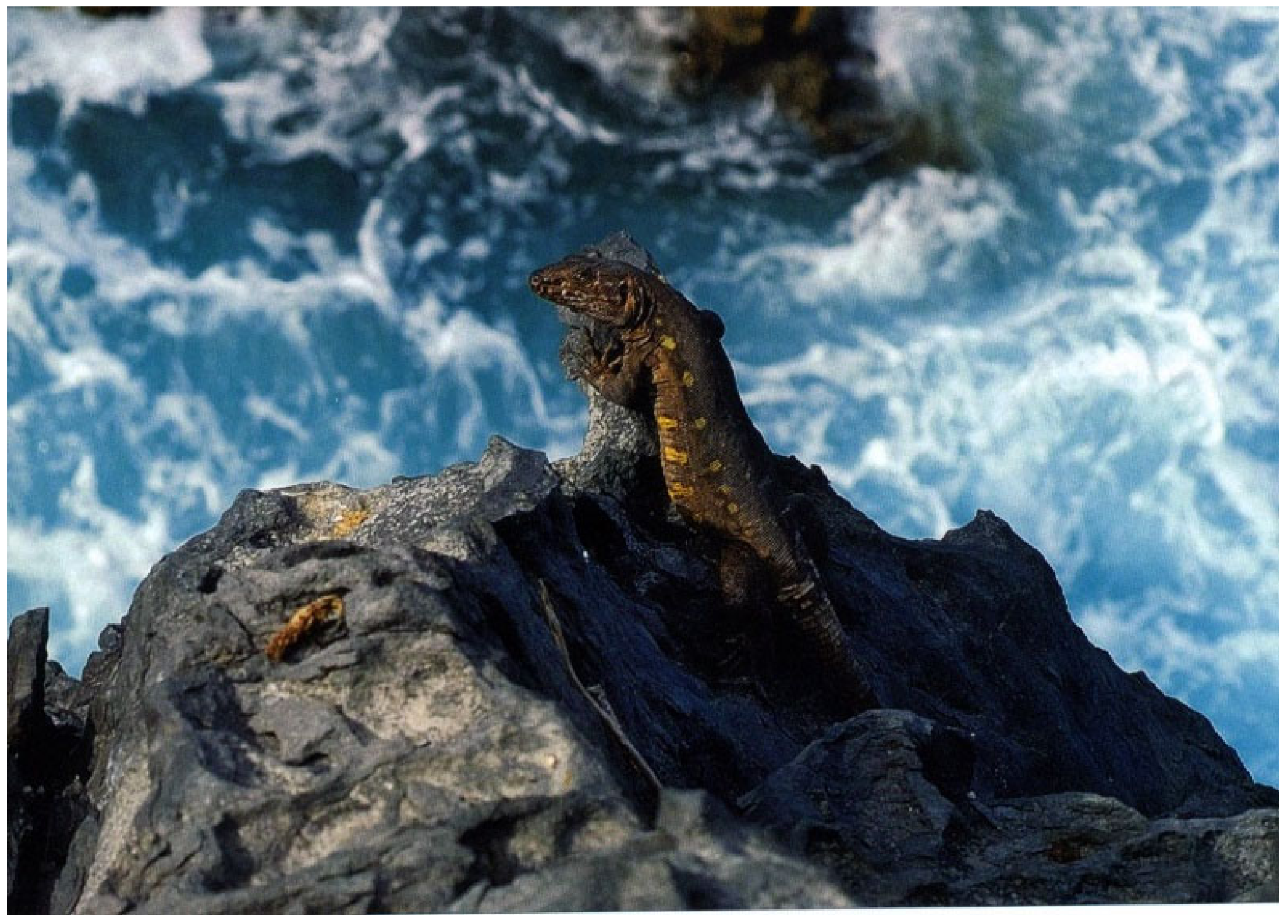
Figure 4. An adult female of G. simonyi from Roque Chico Salmor. Photograph by M.M.B.
Animals 16 01869 g004
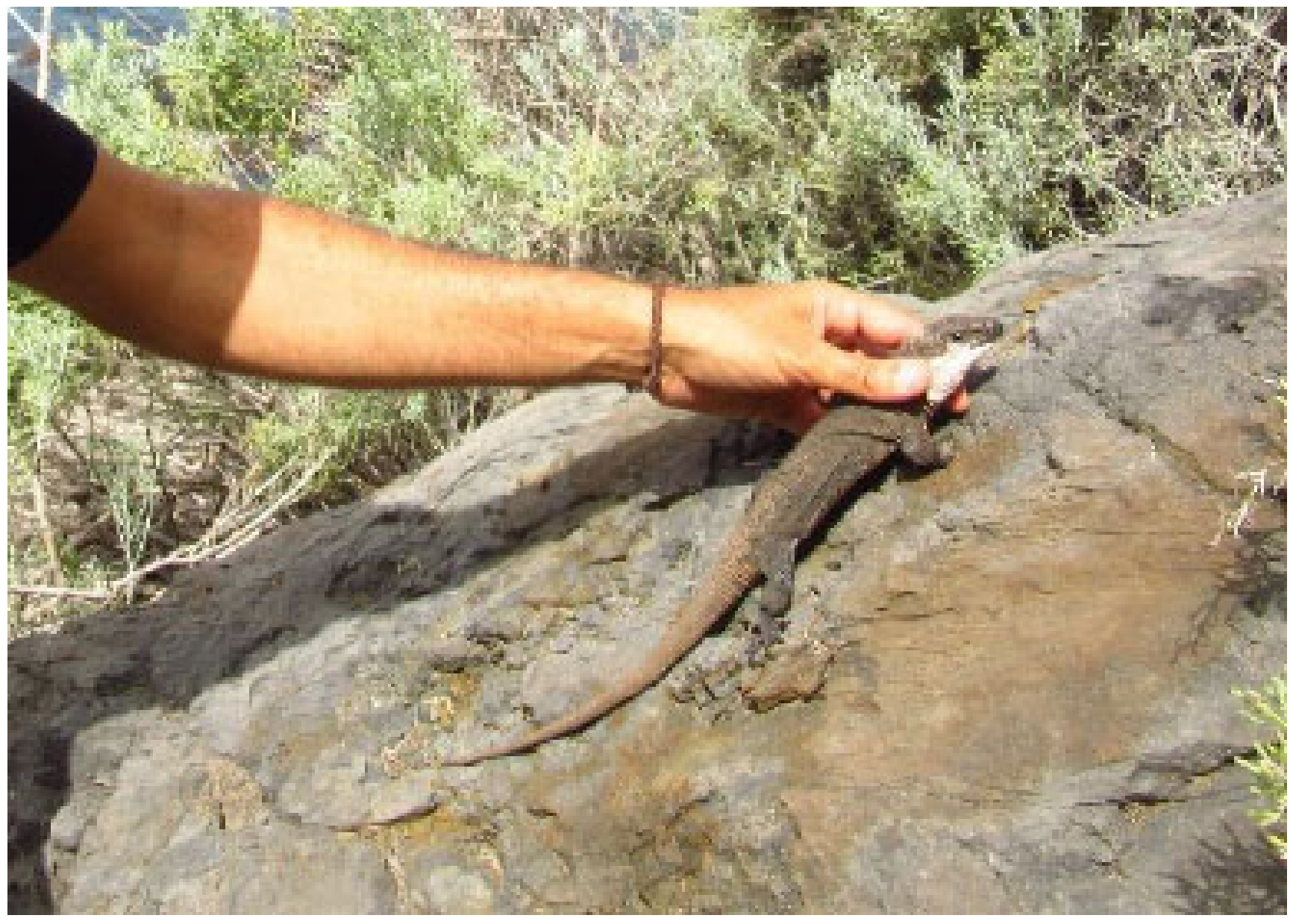
Figure 5. An individual of G. bravoana being released into a wild area of La Gomera during 2022. Photograph by Tenerife-Vertical.
Animals 16 01869 g005
Table 1. GLM statistics parameters obtained for the analyses of the number of eggs laid considering species, year, and male and female SVL as covariates (a) and eliminating the male SVL covariate (b).
(a)
OriginWald’s Chi-2dfp
(Intersection)0.86410.353
Species9.79510.002
Year37.592160.002
Male SVL0.70310.402
Female SVL12.53010.014
AIC: 1762.44
(b)
OriginWald’s Chi-2dfp
(Intersection)1.73210.188
Species14.3151<0.001
Year40.77216<0.001
Female SVL12.5301<0.001
AIC: 1761.13
Table 2. Parameters of GLM using HO as the dependent variable, with (a) or without (b) species as one of the factors.
(a)
OriginWald’s Chi-2dfp
(Intersection)4.55810.033
Species0.70510.401
Year47.60616<0.001
Male SVL7.03110.008
Female SVL6.34210.012
AIC: 2050.10
(b)
OriginWald’s Chi-2dfp
(Intersection)22.0921<0.001
Year48.09516<0.001
Male SVL10.8951<0.001
Female SVL9.40910.002
AIC: 2048.80
Table 3. GLM statistics parameters obtained for the analyses of the number of laid eggs (a) and number of hatched offspring (b) of the two species, considering male-to-female difference in SVL as the only covariate.
(a)
OriginWald’s Chi-2dfp
(Intersection)1483.3311<0.001
Species106.0051<0.0001
Year48.91416<0.0001
Male-to-female SVL
difference0.02410.877
(b)
OriginWald’s Chi-2dfp
(Intersection)707.7941<0.001
Species72.4641<0.001
Year46.80116<0.001
Male-to-female SVL
difference1.51010.219
Table 4. Cook distances for specific male–female reproductive pairs with greater influence on the dependent variables in G. simonyi (a) and G. bravoana (b). Codes in bold signal those pairs having greater influence on one or two dependent variables.
(a)
Male CodeFemale CodeCook’s DistanceCook’s Distance
(NEL)(HO)
00510A48 0.099
347159350.0270.062
53301518 0.053
0333 f633A 0.050
0235 (cf 0230)0917 0.049
95784858 0.042
143069190.041
00504858 0.041
94577594 0.041
433069190.040
53510010(433A) 0.039
00510A480.038
98502821 0.038
086Bhembra 10.037
0140F0A480.036
3-455448580.030
005001000.023
40407C700.017
005048580.016
(b)
Male CodeFemale CodeCook’s DistanceCook’s Distance
(NEL)(HO)
16244376 0.169
8092374D 0.154
819559450.139
79035076 0.116
82500886 0.108
8092374D0.098
80843405 0.080
0886374D0.060
567757430.057
146711850.057
604952800.052
99982258 0.052
825011850.051
825008860.050
O51733490.048
829903130.047
81958810 0.046
14671185 0.045
22185511 0.044
15036025 0.042
Table 5. Results from GLM analysis testing the effect of year on NEL (a) and on HO (b) of G. simonyi. Years in bold correspond to those having significantly higher or lower NEL or HO.
(a)
Exp (B)Wald’s Chi-2dfp
(Intersection)10.733906.8821<0.001
20060.6428.80210.003
20070.7554.2710.039
20080.8202.24410.134
20090.7763.95110.047
20100.8152.65310.103
20110.7654.79910.028
20120.57111.8221<0.001
20130.6737.26810.007
20140.7197.05110.008
20150.6779.88910.002
20160.8571.76610.184
20180.9430.27510.60
20190.8262.65910.103
20200.8791.2910.256
20220.9900.00910.927
20241
(b)
Exp (B)Wald’s Chi-2dfp
(Intersection)6.533345.2361<0.001
20060.7821.88710.17
20070.9490.10410.747
20081.1630.97910.322
20090.9690.04110.839
20101.2502.44010.118
20111.0060.00210.968
20120.6704.14710.042
20130.8500.8710.351
20141.0500.11310.736
20150.57111.1601<0.001
20161.0710.24110.623
20181.0140.0110.921
20190.9900.00510.943
20201.0710.24910.618
20220.9850.01110.917
2024
Table 6. Results from GLM analysis testing the effect of year on NEL (a) and on HO (b) of G. bravoana. Years in bold correspond to those having significantly higher or lower NEL or HO.
(a)
Exp (B)Wald’s Chi-2dfp
(Intersection)4.615140.3431<0.001
20090.6175.34910.021
20100.8310.89810.343
20110.9850.0110.92
20121.3332.83810.092
20181.4584.70410.03
20191.505.91810.015
20221.2882.46210.117
20231.3463.14210.076
20241
(b)
Exp (B)Wald’s Chi-2dfp
(Intersection)2.30820.9791<0.001
20090.26711.0341<0.001
20101.3361.39110.238
20111.3922.55710.11
20122.33315.0761<0.001
20182.40315.4581<0.001
20192.13311.7261<0.001
20221.8788.60210.003
20231.6715.08910.024
Table 7. Tests performed in different years and on randomly selected individuals of Gs (Gallotia simonyi) and Gb (Gallotia bravoana).
Test/StudyYearSpeciesResults
(Gs, Gb)
Microbiology2003Gs + GbPublished data
New Salmonella (Martínez-Silvestre et al., 2003; Herrera-León et al., 2005)
PCR (Arenavirus, Reovirus, Ranavirus)2022, 2024, 2025Gs + GbNegative [non-published]
Haematology2001, 2002, 2003, 2004Gs + GbPublished data [92,93,94]
Femoral gland
cromatography GsPublished data [96]
Electrocardiography2003GbPublished data [97]
2022, 2024, 2025Gs
Necropsies and2004, 2022,Gs + GbPublished data [98]
histology2025
Table 8. Divulgation talks given on the endangered giant lizards of La Gomera and El Hierro between 2019 and 2024.
YearCentreAudience
2019Cabildo El HierroEnvironmental agents
2019Cabildo El HierroTouristic guides (Interpretation Centre)
2019C.E.I.P. Ruiz de Padrón
(La Gomera)40 children (primary 3rd and 4th)
2024C.E.O. Nereida Díaz Abreu
(La Gomera)120 children (primary. 1st, 2nd, 3rd)
2024I.E.S. San Sebastián (La Gomera)60 children (1st year Obligatory Secondary Teaching)
2024C.E.I.P. Tigaday (El Hierro)90 children (primary 3rd and 4th)
2024Casa de la Cultura La GomeraGeneral public
2024Centre Initiatives Tourism, El HierroGeneral public
Table 9. Number of people per year visiting Frontera Interpretation Centre since 2006. Source: Empresa Insular de Servicios Meridiano.
G. simonyi
Number of People Year Number of People YearNumber of People Year
10,246202010,375201313,1282006
12,754202110,655201411,5522007
16,744202212,999201510,5762008
18,005202312,350201679342009
21,014202415,122201774772010
20,753202521,528201877732011
17,134201985202012
G. bravoana
020207920131302006
30202113020141852007
6720228020152302008
72202313520163502009
6720247520176402010
8220256620183802011
8520194402012
Disclaimer/Publisher’s Note: The statements, opinions and data contained in all publications are solely those of the individual author(s) and contributor(s) and not of MDPI and/or the editor(s). MDPI and/or the editor(s) disclaim responsibility for any injury to people or property resulting from any ideas, methods, instructions or products referred to in the content.