4.1. Inter-Specific Differences and Functional Adaptation of Oil Droplets
In the photoreceptor cells of various reptiles, a distinctive structure known as the oil droplet is present. These droplets are found in turtles and most lizards, but are absent in crocodiles, geckos, and snakes [
38]. Oil droplets are crucial for improving color discrimination by limiting the spectral sensitivity of visual pigments in the outer segments of cones [
39]. Their elevated refractive index aids in capturing photons by directing incoming light onto the outer segment [
40]. Victory et al. [
35,
41] examined five adult yellow-legged gulls (
Larus michahellis) and confirmed that their retinas possess a double fovea and five types of cone oil droplets. The oil droplets show a central high-density horizontal band and a dorsoventral gradient, specializations that are adapted to ecological needs such as foraging and navigation in open seas.
In fresh retinal flat-mounts from the diurnal lizards
E. roborowskii and
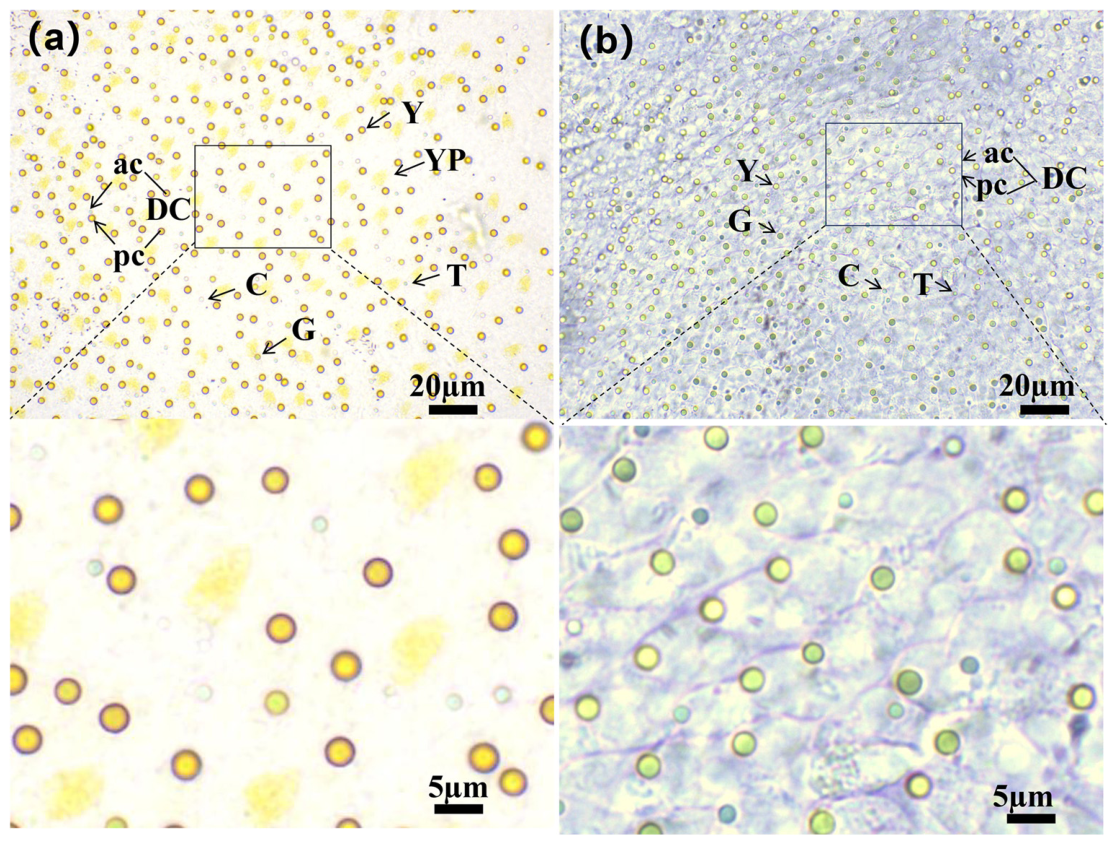
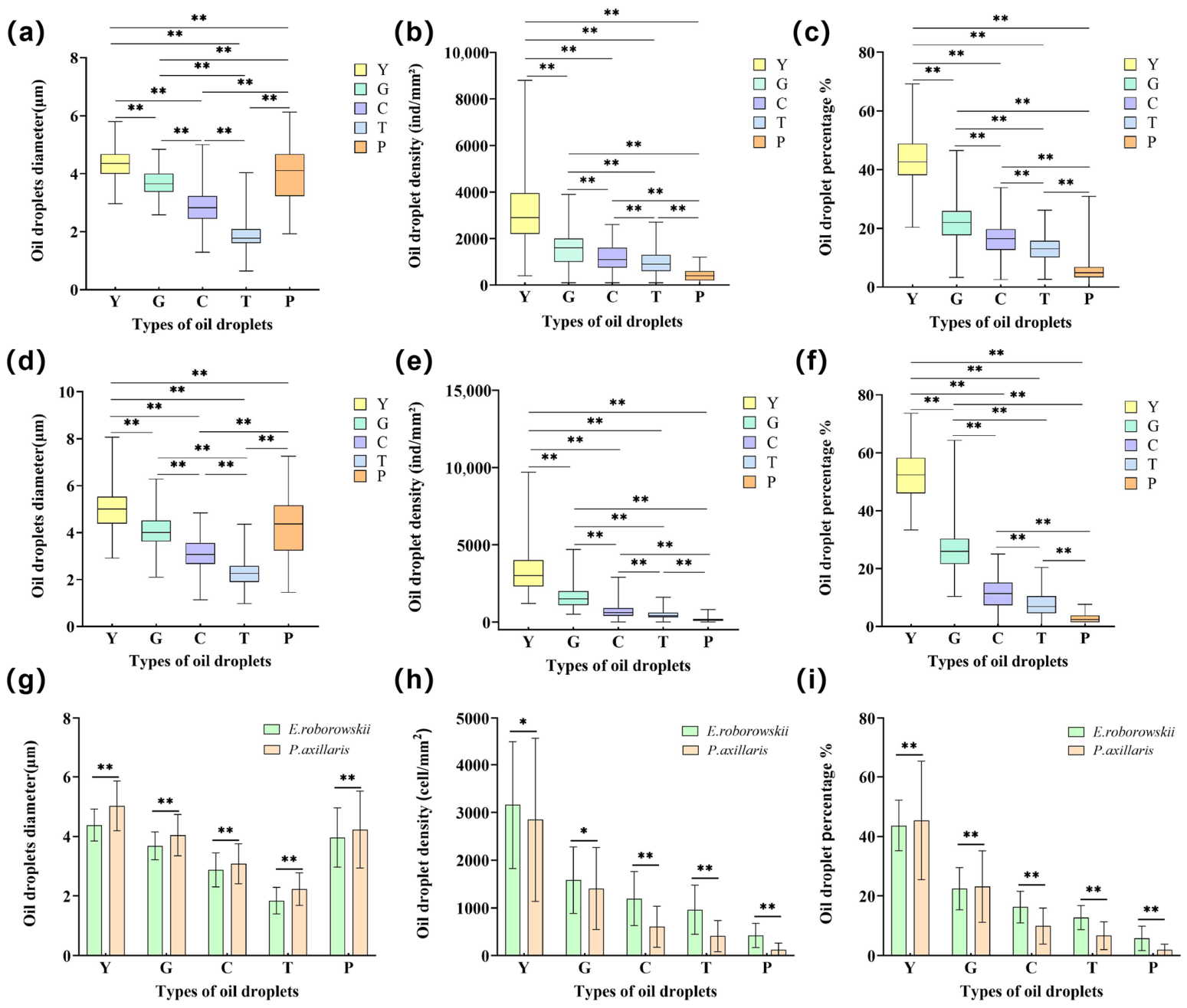
P. axillaris, we discovered five different types of colored oil droplets (yellow, green, colorless, transparent, and double-cone droplets) along with diffuse yellow pigment (YP), aligning with findings in other lizard species [
18]. Prior research suggests that the various types of single-cone oil droplets (Y-type, G-type, T-type, and C-type) and P-type double-cone oil droplets correspond to specific photoreceptors (LWS, MWS, UVS, SWS1, and LWS double-cone) [
12,
35,
42,
43,
44]. Based on earlier studies, we deduce that the oil droplets in
E. roborowskii and
P. axillaris are linked to cone visual pigments with different spectral sensitivities, indicating that these lizard species likely have an advanced color vision system vital for their foraging activities. Furthermore, the transparent T-type oil droplets in squamate cones permit ultraviolet (UV) wavelengths to pass, suggesting the existence of UV-sensitive photoreceptors in the retinas of both species.
In addition to their hues, oil droplets can be distinguished by their dimensions. Mariani & Leure-Dupree [
45] were pioneers in correlating the coloration of oil droplets with their size in the retinas of pigeons, demonstrating that droplets that capture longer wavelengths tend to be larger than those that capture shorter wavelengths. Our comprehensive analysis of oil droplet sizes, both within and across species, revealed that Y-type and P-type droplets were the largest in both
E. roborowskii and
P. axillaris, followed by G-type and T-type droplets, while C-type droplets were the smallest. The larger droplets were located in the peripheral retina, which has a lower density of photoreceptors, whereas the smaller droplets were found in the central retina, where photoreceptor density is higher. The combination of larger oil droplets and shorter outer segments improves light absorption [
35,
46], potentially accounting for the increased droplet size in the peripheral retina of both species. The double cone droplets have a low carotenoid concentration and absorb light within the 420–480 nm spectrum [
47,
48], which is shorter than that of other oil droplet types. In both species studied, the accessory cones of double cones contained oil droplets that appeared pale green under light microscopy, aligning with the spectral characteristics of MWS cones.
Differences in the density and relative amounts of cones significantly influence how animals perceive colors. In our study of six retinal areas in
E. roborowskii, we observed notable differences in the total number of oil droplets and their types. The central and temporal regions exhibited the highest concentrations of each droplet type, whereas the nasal region had fewer, and the ventral region showed the least amount of double cones. Interestingly,
E. roborowskii displayed a greater density and proportion of oil droplets in the dorsal retina compared to the ventral area, contrasting with the findings for
P. axillaris. This increase in oil droplet density from dorsal to anterior regions corresponds with the existence of a visual streak (VS) in the back of the eye [
35]. According to the Retinal Topography Theory [
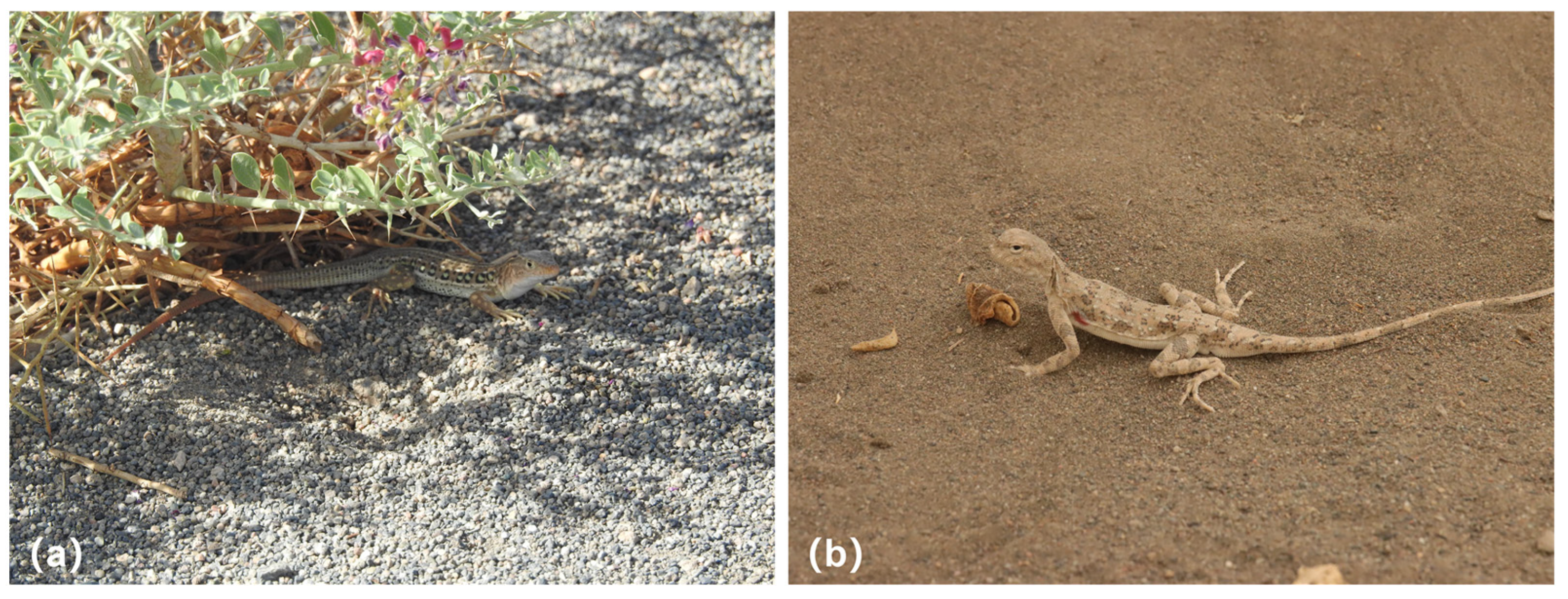
49], this characteristic is common among species that thrive in open habitats, aligning with the ecological context of
P. axillaris in our research. Regions of the retina with a high concentration of photoreceptors are linked to improved spatial resolution, which aids in functions like motion detection and spatial awareness [
35,
41,
50]. The abundance of Y-type oil droplets, which serve as filters for long wavelengths, likely enhances the ability to detect prey in both species.
E. roborowskii is mainly found in shrubland environments, and based on earlier studies, we hypothesize that the increased oil droplet density in its dorsal retina may enhance the contrast and clarity of objects observed on the ground [
51].
The distribution of different types of oil droplets showed notable variation among the six regions of the retina, aligning with the observed density patterns. Each retinal area within a species exhibited differences in the total count of oil droplet types; however, the ratios of these droplet types remained stable across all regions in
Anolis lizards [
12]. This observation highlights the necessity of a balanced cone type ratio for effective visual processing [
12]. Our research indicated that
E. roborowskii had significantly greater relative amounts of C-type, T-type, and P-type oil droplets compared to
P. axillaris, while the latter species exhibited higher proportions of Y-type and G-type droplets. This pronounced difference in oil droplet composition between the two species likely indicates adaptations to varying light environments and visual requirements. The differences in oil droplet ratios among species are influenced by the spectral characteristics of their respective light habitats [
12]. Despite both species being active during the day, their unique microhabitats and foraging behaviors imply that specific visual tasks, rather than merely the surrounding light conditions, are key factors influencing the quantity and ratio of oil droplets.
4.2. Retinal Structural Traits and Their Ecological Adaptations
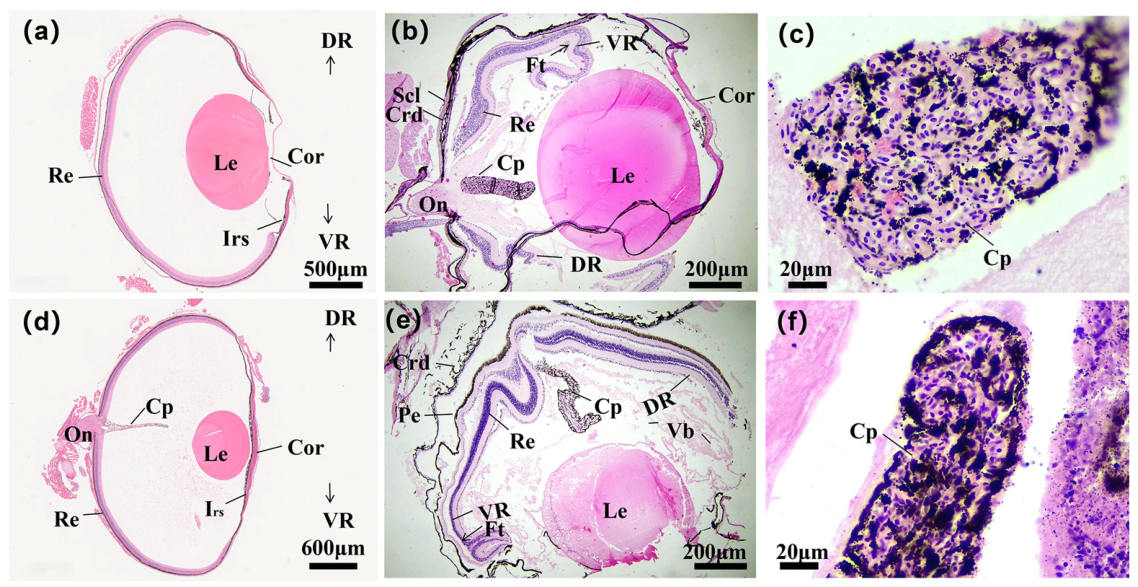
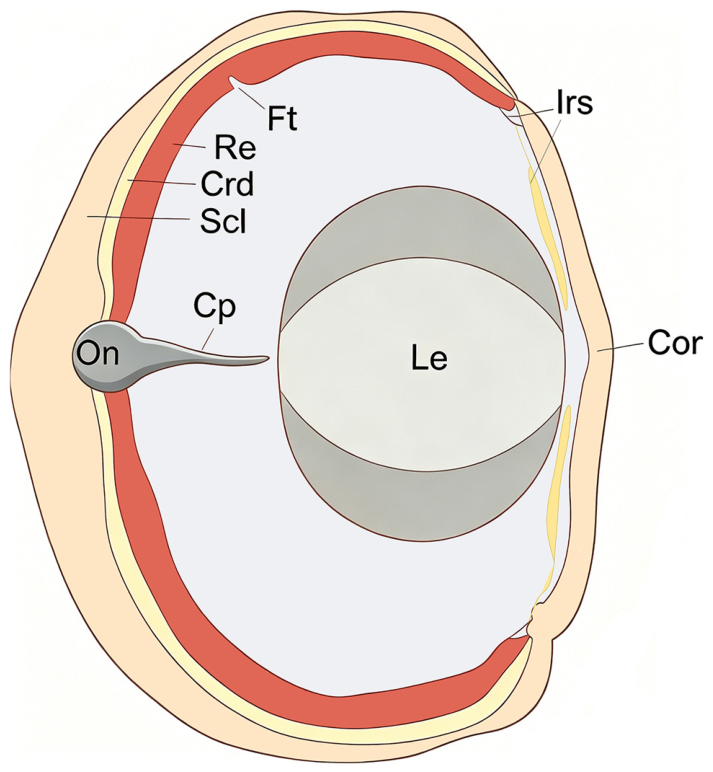
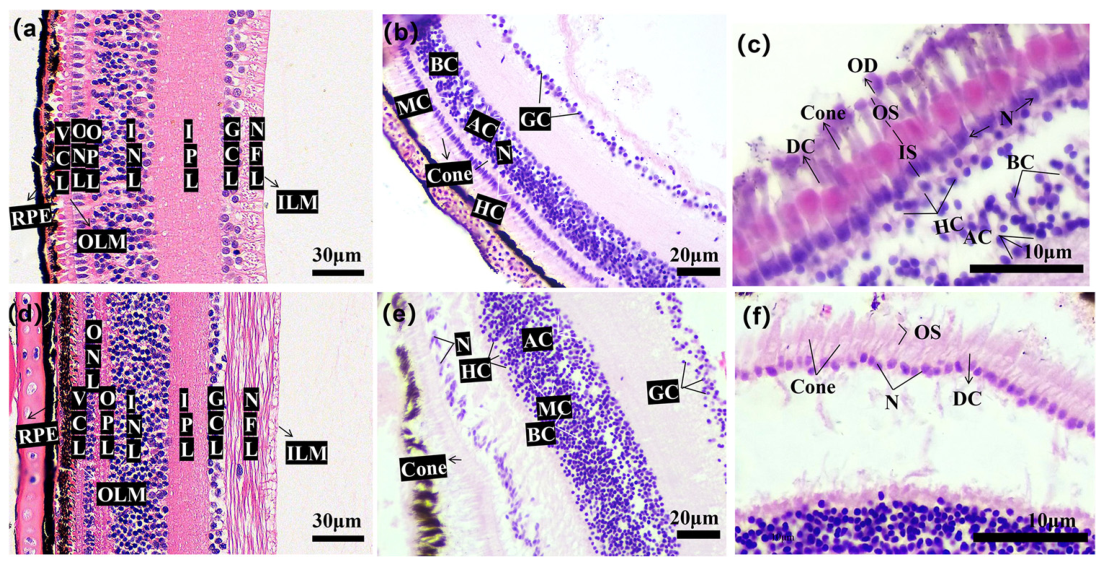
The eye structure of the two lizard species adheres to the fundamental design typical of reptiles, comprising elements such as the cornea, iris, lens, and retina (see
Figure 6a,b), which aligns with findings from other lizard studies [
31]. Research conducted by Yovanovich et al. [
52] on the burrowing lizard
Calyptommatus nicterus revealed that, although its eye is quite small (~600 μm in diameter), its retinal composition closely resembles that of the diurnal lizard
Ameivula ocellifera. Both species exhibit a complete vertebrate retinal structure, including the retinal pigment epithelium (RPE). The RPE in these lizards is densely filled with melanin granules, which effectively absorb stray light and enhance visual contrast, showcasing a common adaptive feature among lizards inhabiting arid environments with intense light conditions [
52]. This suggests that the fundamental arrangement of retinal tissues is remarkably stable, ensuring essential visual capabilities.
Our research discovered a temporal fovea in both
E. roborowskii and
P. axillaris (see
Figure 5b,e). This observation aligns with the traditional theories proposed by Walls [
38] and Röll [
31], which indicate that nocturnal animals often forfeit the fovea to enhance light sensitivity, whereas many daytime lizards exhibit a temporal fovea. Canei et al. [
1] noted that two burrowing psammophilic skinks (
Scincus scincus and
Eumeces schneideri) do not possess a fovea; despite being mainly diurnal, their extended time spent in subterranean sandy environments has resulted in a visual system that favors light sensitivity over sharp visual detail. Consequently, our findings imply that the existence of a temporal fovea in the diurnal lizards
E. roborowskii and
P. axillaris is likely an evolutionary adaptation to facilitate enhanced visual acuity while foraging in daylight.
According to Röll [
31], the temporal fovea is situated in the front part of the lateral eye, aligning with the center of the lizard’s binocular vision. Upon spotting prey, the lizard positions its head and eyes to focus on the target using both eyes, ensuring that the image of the prey within striking range is sharply focused on the temporal fovea [
31]. This feature aligns with the ecological needs of daytime hunting lizards like
E. roborowskii and
P. axillaris. In a similar vein, Nagloo et al. [
53] noted similar retinal features in two species of Australian crocodiles, which have a central fovea and a visual streak. These adaptations enable crocodiles to spot potential prey on the riverbank with excellent spatial resolution while staying hidden. The placement of these retinal adaptations is closely associated with the ecological roles and foraging behaviors of each species.
In our examination of both species, we noted a prominent conus papillaris (Cp) at the optic nerve head (
Figure 5c,f), which is a richly vascularized formation that provides essential nutrients to the non-vascular retina [
31]. New et al. [
5] detailed the Cp in the skink
Tiliqua rugosa, highlighting an intricate arrangement of capillaries and larger blood vessels mixed with melanocytes and connective tissue, aligning with our findings in the two lizard species.
Notably, the IPL of
E. roborowskii was significantly thicker than that of
P. axillaris, suggesting a more complex neuronal network to support the detection of moving insect prey during active foraging [
14,
53]. The developmental degree of the NFL exhibits interspecific variations consistent with those of the ONL, with well-defined thick parallel fiber bundles observed in
P. axillaris relative to
E. roborowskii. This implies that ganglion cells in
P. axillaris possess more abundant axons, enabling more efficient transmission of visual signals toward the central nervous system, an adaptive feature matching its behavioral traits of rapid locomotion, predation, and predator avoidance [
1].
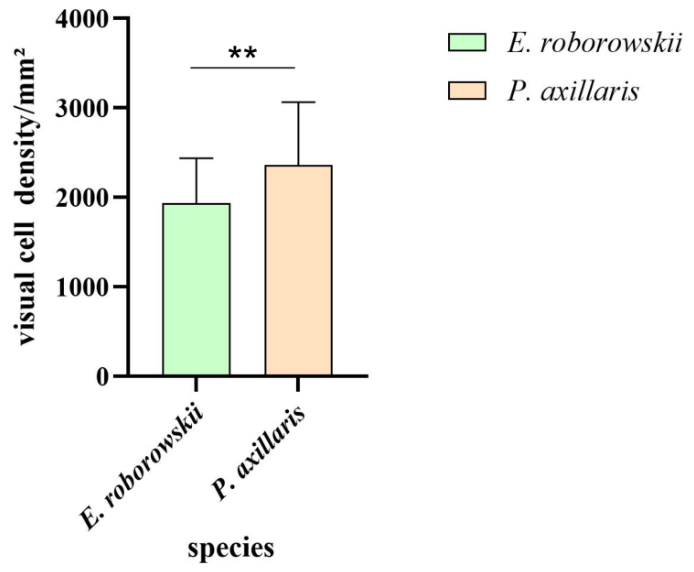
No notable statistical differences were found in the overall retinal thickness between the two lizard species. Upon analyzing the retinal layers, the INL and the IPL comprised the largest portions, with the INL measuring between 21.75% and 23.90% and the IPL ranging from 23.36% to 28.00%. The IPL serves as the main area for synaptic integration among BC, AC, and GC, and its thickness is closely linked to the number of synapses and the density of neural circuits. A thicker IPL indicates a greater capacity for synaptic integration and a more sophisticated processing of visual information [
54]. Interestingly, the IPL in
E. roborowskii was significantly thicker compared to that in
P. axillaris, implying a more intricate neuronal network that aids in detecting moving insect prey during active foraging [
14,
53]. The development of the NFL shows interspecific differences that align with those of the ONL, with
P. axillaris displaying well-defined, thick parallel fiber bundles in contrast to
E. roborowskii. This suggests that ganglion cells in
P. axillaris have a higher number of axons, facilitating more effective transmission of visual signals to the central nervous system, which is an adaptive trait suited to its behaviors of swift movement, hunting, and evading predators [
1].
4.3. Photoreceptor Arrangement and Ultrastructure
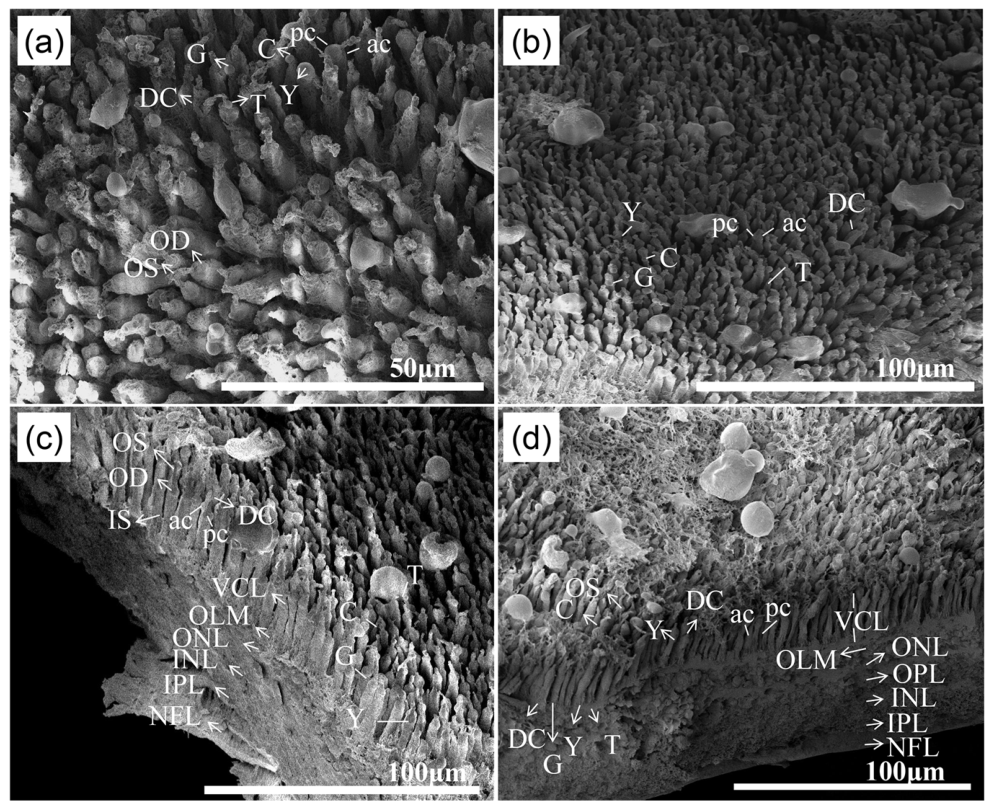
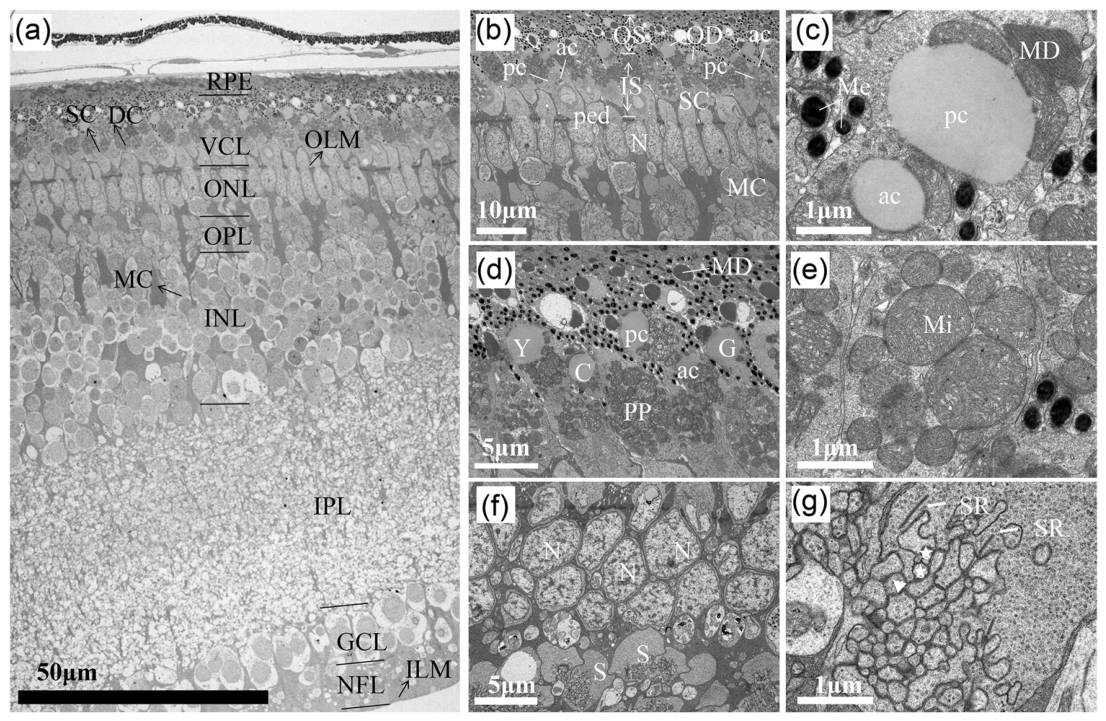
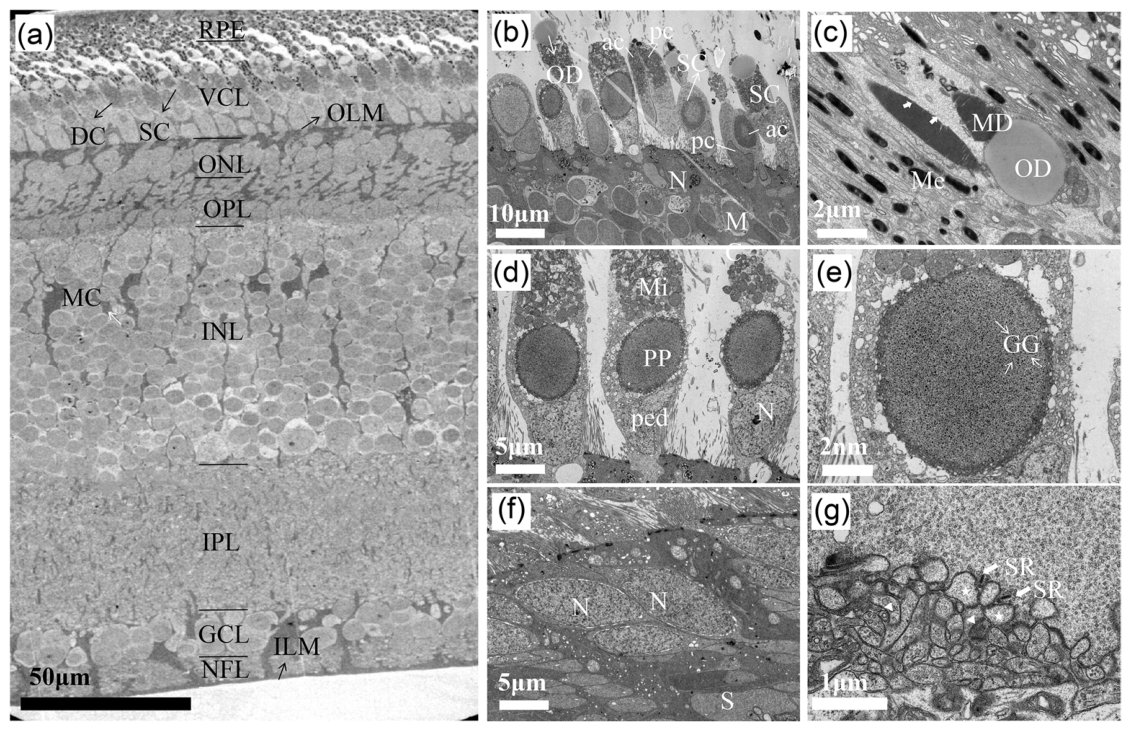
Our study revealed five unique types of cones in the retinas of the daytime lizards
E. roborowskii and
P. axillaris, categorized by the color of their oil droplets: yellow (Y), green (G), colorless (C), and transparent (T) single cones, along with double cones (P) (see
Figure 7). These cones did not form a regular geometric pattern. A similar observation was made by Barbour et al. [
15] in the daytime lizard
Ctenophorus ornatus, which exhibited a ratio of double cones to single cones of approximately 1:4, lacking a highly organized mosaic and featuring double cones mixed among single cones. This configuration might enhance the uniformity of light sampling by photoreceptors, rather than facilitating specialized spatial frequency channels [
15]. In
C. ornatus, Barbour et al. [
15] noted that the principal and accessory cones of the double cones are intertwined, with the accessory cone possessing a shorter inner segment, resulting in the outer segments of both components rarely appearing in the same longitudinal section. This could account for the fragmented look of double cone outer segments observed in our TEM studies. The exact function of double cones is still a topic of discussion. Barbour et al. [
15] proposed that they might play a role in motion detection in lizards, akin to the function of double cones in birds, which are recognized for their role in motion perception [
32]. As typical diurnal desert lizards,
E. roborowskii and
P. axillaris are active during the day when light is plentiful and depend solely on photopic vision. Their short, conical outer segments reduce self-screening of visual pigments, enhance the signal-to-noise ratio, and allow for more effective light focusing onto the outer segment through the ellipsoid [
13]. This structural characteristic aligns with the adaptation of these two diurnal lizard species to fluctuating ambient light conditions.
The ellipsoid located in the inner segment of photoreceptor cells consists of densely arranged mitochondria and is essential for energy generation and light detection [
15]. In our study of
E. roborowskii and
P. axillaris, we noted a variation in mitochondrial dimensions within the ellipsoid, with the central region containing larger mitochondria and the outer areas housing smaller ones. This arrangement aligns with findings from El-Bakary et al. [
14] regarding the African five-lined skink and could create a gradient in refractive index that improves light delivery to the visual pigment layer in the outer segment.
Elevated mitochondrial concentrations in the ellipsoid of E. roborowskii could enhance light absorption and processing in bushy environments. Conversely, the advanced paraboloid structure of P. axillaris allows for adjustments in the angle and strength of incoming light in exposed areas with high sunlight exposure. The structural differences in ellipsoids and paraboloids between these two lizard species may indicate visual adaptations that align with their unique microhabitats.
4.4. Limitations and Future Perspectives
This research conducted a thorough comparison of the retinal structure and ultrastructure of two lizard species that coexist in the same habitat, yielding essential baseline information for studies on visual adaptation in reptiles inhabiting arid environments. However, the study faced several challenges due to the limitations of field sampling wild lizards. Owing to the limited availability of wild populations of the target species, the present study was conducted with a relatively modest sample size, which might to a certain degree affect the statistical power of the analyses [
41,
55]. Additionally, the nature of field collection hindered the ability to control for confounding factors such as sex, age, body weight, and the season of sampling among individuals [
37]. The lack of in situ measurements of ambient light in their microhabitats means that the proposed relationship between retinal structure and local light conditions is based solely on morphological data rather than confirmed by environmental field data [
56,
57].
Furthermore, our analysis of phenotypic variation is based only on light and electron microscopy; without additional assessments of opsin expression, spectral sensitivity, and visual performance, the adaptive importance of retinal differences cannot be fully understood at the molecular and functional levels. Given the significant genetic divergence between the two species studied, this research primarily emphasizes retinal adaptations driven by microhabitat conditions rather than disentangling phylogenetic influences. The concepts of phylogenetic history and habitat adaptation are separate areas of study that do not contradict each other [
58], which is why phylogenetic effects were not the main focus of this research. Despite the limitations associated with field sampling, this study contributes valuable baseline data on the retinal microstructure and ultrastructure of the two desert lizard species, serving as a useful reference for future related research. Subsequent studies could further explore the evolutionary processes behind retinal light adaptation by broadening sampling efforts, standardizing individual biological factors, performing in situ light assessments, integrating molecular and functional analyses, and incorporating phylogenetic studies [
3].