

Folate as a Key Regulator of Animal Intestinal Homeostasis: From Metabolism to Microbiota and Barrier Function


Simple Summary
Abstract
1. Introduction
2. Review Methodology
3. Folate Metabolism and Intestinal Homeostasis: From Absorption to Microbial Crosstalk
3.1. Folate Chemistry and One-Carbon Metabolism
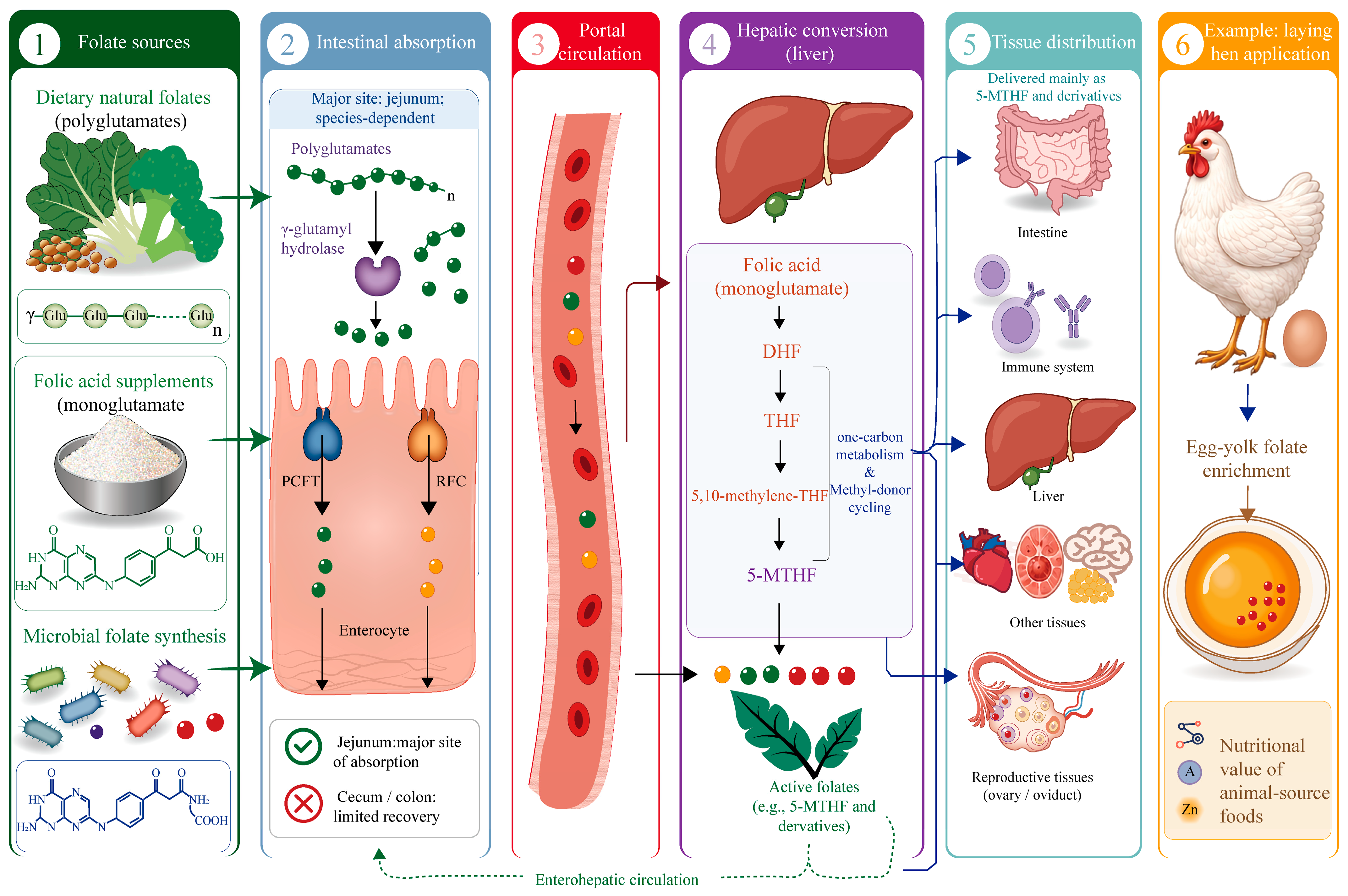
3.2. Intestinal Folate Absorption and Systemic Distribution
3.3. Microbiota-Derived Folate and Host Utilization
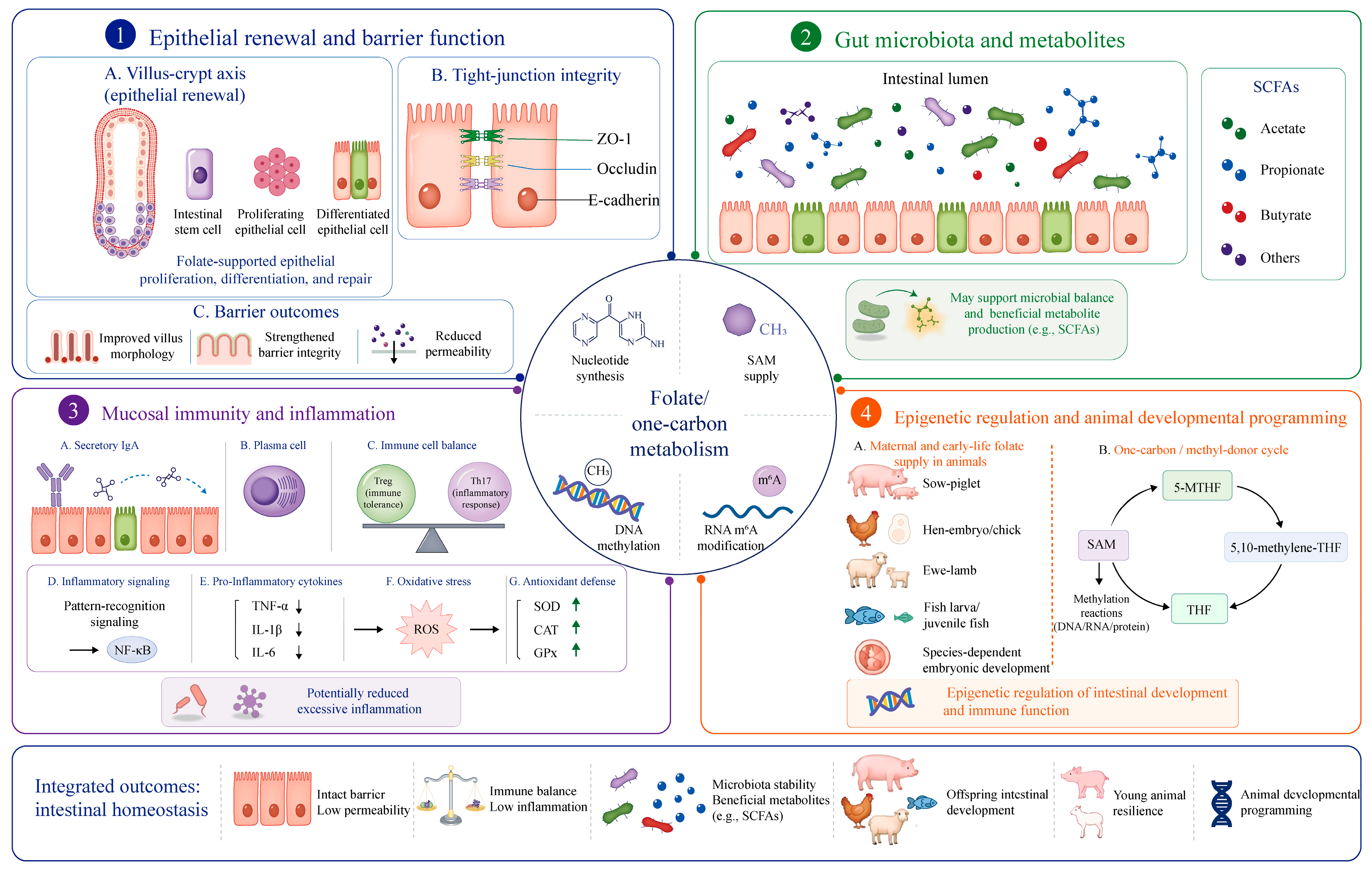
4. Folate and Intestinal Homeostasis: From Epithelial Renewal to Immune-Microbial Regulation
4.1. Epithelial Renewal and Barrier Function
4.2. Gut Microbiota and Microbial Metabolites
4.3. Mucosal Immunity and Inflammatory Responses
4.4. Epigenetic Regulation and Developmental Programming
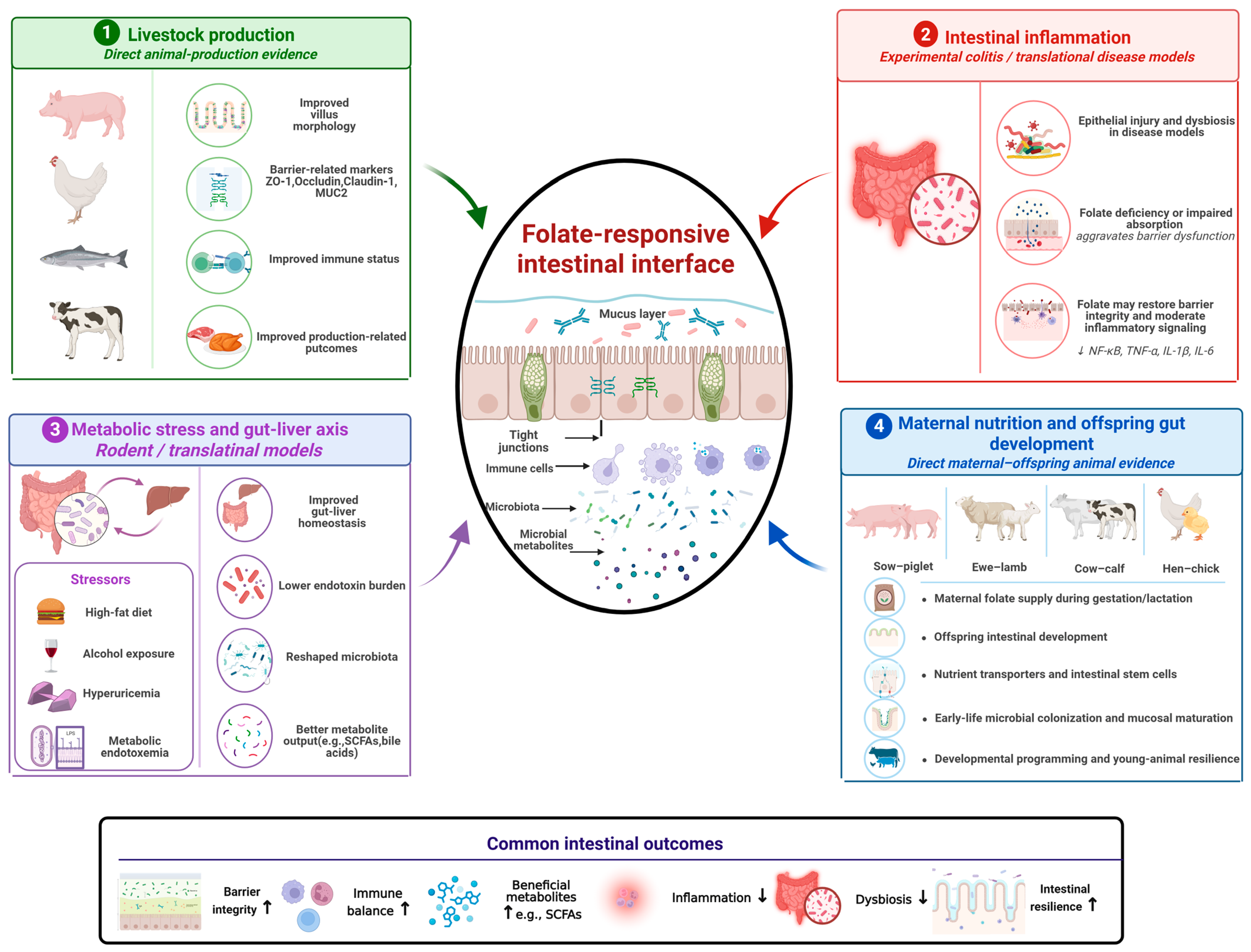
5. Folate and Animal Intestinal Health in Physiological and Pathological Contexts
5.1. Gut Health and Nutritional Effects in Livestock
5.2. Intestinal Inflammation and Mucosal Injury
5.3. Metabolic Stress and Gut–Liver Axis Function
5.4. Maternal Nutrition and Offspring Intestinal Development
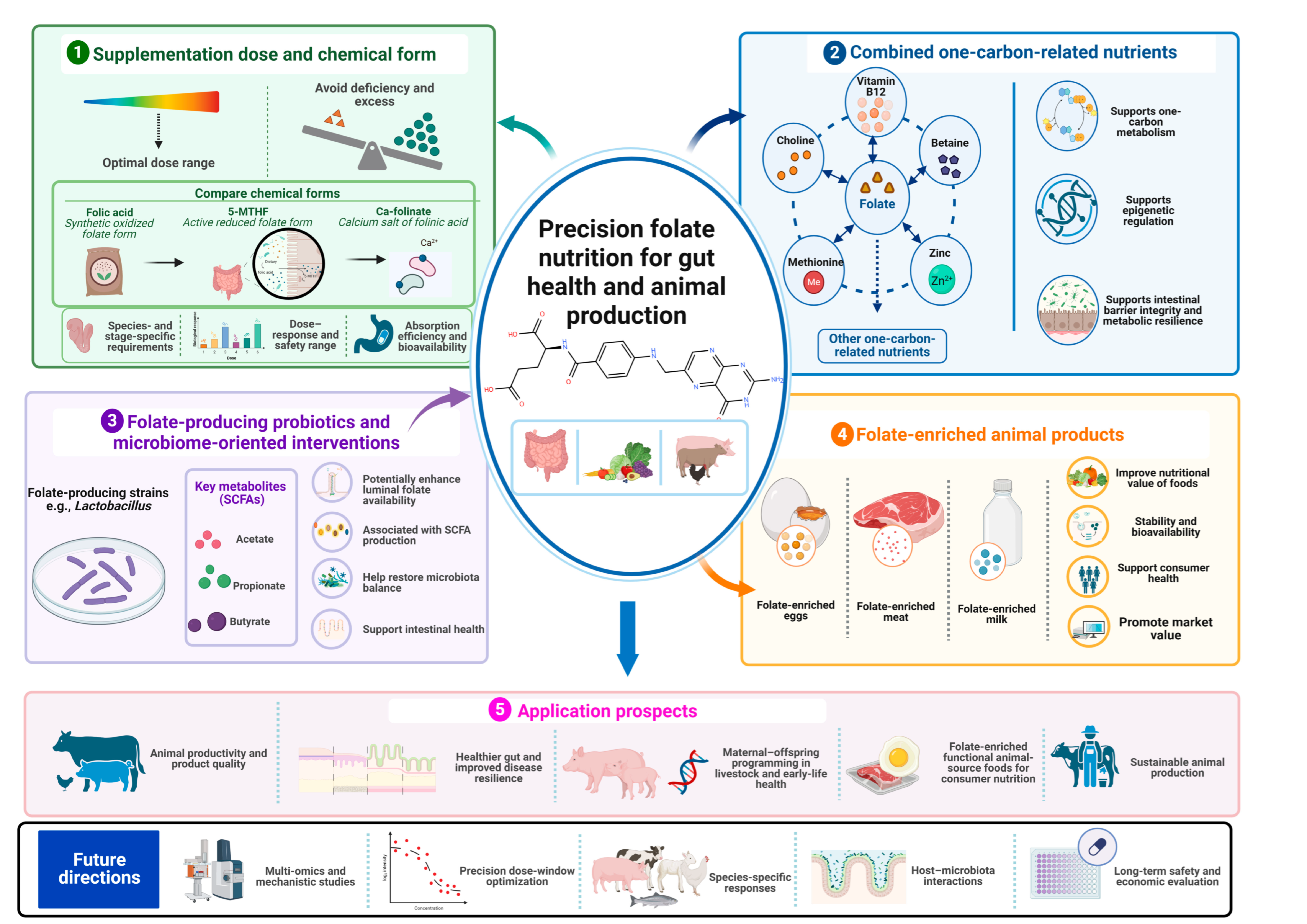
6. Nutritional Regulation Strategies and Application Prospects
6.1. Supplementation Level and Chemical Form
6.2. Combined Supplementation with Vitamin B12 and Other Methyl Donors
6.3. Folate-Producing Probiotics and Microecological Regulation
6.4. Development of Folate-Enriched Animal Products
7. Conclusions and Future Directions
Author Contributions
Funding
Institutional Review Board Statement
Informed Consent Statement
Data Availability Statement
Conflicts of Interest
References
- Samaniego-Vaesken, M.L.; Morais-Moreno, C.; Carretero-Krug, A.; Puga, A.M.; Montero-Bravo, A.M.; Partearroyo, T.; Gregorio, V.M. Supplementation with folic acid or 5-methyltetrahydrofolate and prevention of neural tube defects: An evidence-based narrative review. Nutrients 2024, 16, 3154. [Google Scholar] [CrossRef] [Scilit] [PubMed]
- Hou, Z.; Gangjee, A.; Matherly, L.H. The evolving biology of the proton-coupled folate transporter: New insights into regulation, structure, and mechanism. FASEB J. 2022, 36, e22164. [Google Scholar] [CrossRef] [Scilit]
- Crider, K.S.; Yang, T.P.; Berry, R.J.; Bailey, L.B. Folate and DNA methylation: A review of molecular mechanisms and the evidence for folate’s role. Adv. Nutr. 2012, 3, 21–38. [Google Scholar] [CrossRef] [Scilit]
- Clare, C.E.; Brassington, A.H.; Kwong, W.Y.; Sinclair, K.D. One-carbon metabolism: Linking nutritional biochemistry to epigenetic programming of long-term development. Annu. Rev. Anim. Biosci. 2019, 7, 263–287. [Google Scholar] [CrossRef] [Scilit]
- Maruvada, P.; Stover, P.J.; Mason, J.B.; Bailey, R.L.; Davis, C.D.; Field, M.S.; Finnell, R.H.; Garza, C.; Green, R.; Gueant, J.L.; et al. Knowledge gaps in understanding the metabolic and clinical effects of excess folates/folic acid: A summary, and perspectives, from an NIH workshop. Am. J. Clin. Nutr. 2020, 112, 1390S–1403S. [Google Scholar] [CrossRef] [Scilit]
- Matherly, L.H.; Schneider, M.; Gangjee, A.; Hou, Z. Biology and therapeutic applications of the proton-coupled folate transporter. Expert Opin. Drug Metab. Toxicol. 2022, 18, 695–706. [Google Scholar] [CrossRef] [Scilit] [PubMed]
- Zhao, R.; Aluri, S.; Goldman, I.D. The proton-coupled folate transporter (PCFT-SLC46A1) and the syndrome of hereditary folate malabsorption. Mol. Aspects Med. 2017, 53, 57–72. [Google Scholar] [CrossRef] [Scilit] [PubMed]
- Rossi, M.; Amaretti, A.; Raimondi, S. Folate production by probiotic bacteria. Nutrients 2011, 3, 118–134. [Google Scholar] [CrossRef] [Scilit]
- Engevik, M.A.; Morra, C.N.; Roth, D.; Engevik, K.; Spinler, J.K.; Devaraj, S.; Crawford, S.E.; Estes, M.K.; Kalkum, M.; Versalovic, J. Microbial metabolic capacity for intestinal folate production and modulation of host folate receptors. Front. Microbiol. 2019, 10, 2305. [Google Scholar] [CrossRef] [Scilit]
- Bai, Y.; Wang, R.; Yang, Y.; Li, R.; Wu, X. Folic acid absorption characteristics and effect on cecal microbiota of laying hens. Front. Vet. Sci. 2021, 8, 720851. [Google Scholar] [CrossRef] [Scilit]
- Zhao, C.X.; Wang, B.W.; Zhang, M.A.; Fan, W.L.; Wang, B.H.; Yue, B.; Kong, M. Effects of vitamin B12 and folic acid on production performance, serum biochemical and immune indices, apparent nutrient utilization and intestinal morphology of breeder geese. Chin. J. Anim. Nutr. 2025, 37, 1047–1058. [Google Scholar]
- Cheng, M.M.; Zhang, T.R.; Wang, B.W.; Kong, M.; Zhang, M.; Yue, B.; Ge, W.H. Effects of dietary folic acid and vitamin B12 supplementation on cecal microbiota structure in goslings. Chin. J. Anim. Nutr. 2018, 30, 2987–2996. [Google Scholar]
- Wang, L.; Zou, L.; Li, J.; Yang, H.; Yin, Y. Effect of dietary folate level on organ weight, digesta pH, short-chain fatty acid concentration, and intestinal microbiota in weaned piglets. J. Anim. Sci. 2021, 99, skab015. [Google Scholar] [CrossRef] [Scilit]
- Wang, Y.; Jiang, W.; Wu, P.; Liu, Y.; Ma, Y.; Jin, X.; Ren, M.; Feng, L.; Zhou, X. Folic acid improves intestinal function in grass carp (Ctenopharyngodon idella): Revealing a new perspective of DNA methyltransferases and PP2A-p38 signaling pathway in intestinal epithelial function. Anim. Nutr. 2025, 23, 246–256. [Google Scholar] [CrossRef] [Scilit]
- He, Q.; Zou, T.; Chen, J.; He, J.; Jian, L.; Xie, F.; You, J.; Wang, Z. Methyl-donor micronutrient for gestating sows: Effects on gut microbiota and metabolome in offspring piglets. Front. Nutr. 2021, 8, 675640. [Google Scholar] [CrossRef] [Scilit]
- Zhang, Y.; Zhang, X.; Chen, J.; Jiang, S.; Han, Y.; Du, H. Maternal folic acid supplementation improves the intestinal health of offspring porcine by promoting the proliferation and differentiation of intestinal stem cells. Animals 2023, 13, 3092. [Google Scholar] [CrossRef] [Scilit] [PubMed]
- Qiu, A.; Jansen, M.; Sakaris, A.; Min, S.H.; Chattopadhyay, S.; Tsai, E.; Sandoval, C.; Zhao, R.; Akabas, M.H.; Goldman, I.D. Identification of an intestinal folate transporter and the molecular basis for hereditary folate malabsorption. Cell 2006, 127, 917–928. [Google Scholar] [CrossRef] [Scilit]
- Visentin, M.; Diop-Bove, N.; Zhao, R.; Goldman, I.D. The intestinal absorption of folates. Annu. Rev. Physiol. 2014, 76, 251–274. [Google Scholar] [CrossRef] [Scilit] [PubMed]
- Lakoff, A.; Fazili, Z.; Aufreiter, S.; Pfeiffer, C.M.; Connolly, B.; Gregory, J.F., 3rd; Pencharz, P.B.; O’Connor, D.L. Folate is absorbed across the human colon: Evidence by using enteric-coated caplets containing 13C-labeled [6S]-5-formyltetrahydrofolate. Am. J. Clin. Nutr. 2014, 100, 1278–1286. [Google Scholar] [CrossRef] [Scilit] [PubMed]
- Camilo, E.; Zimmerman, J.; Mason, J.B.; Golner, B.; Russell, R.; Selhub, J.; Rosenberg, I.H. Folate synthesized by bacteria in the human upper small intestine is assimilated by the host. Am. J. Clin. Nutr. 1996, 64, 878–881. [Google Scholar] [CrossRef] [Scilit]
- Tactacan, G.B.; Rodriguez-Lecompte, J.C.; Karmin, O.; House, J.D. Functional characterization of folic acid transport in the intestine of the laying hen using the everted intestinal sac model. Poult. Sci. 2011, 90, 83–90. [Google Scholar] [CrossRef] [Scilit] [PubMed]
- Tactacan, G.B.; Rodriguez-Lecompte, J.C.; House, J.D. The adaptive transport of folic acid in the intestine of laying hens with increased supplementation of dietary folic acid. Poult. Sci. 2012, 91, 121–128. [Google Scholar] [CrossRef] [Scilit]
- Hebert, K.; House, J.D.; Guenter, W. Effect of dietary folic acid supplementation on egg folate content and the performance and folate status of two strains of laying hens. Poult. Sci. 2005, 84, 1533–1538. [Google Scholar] [CrossRef] [Scilit]
- Altic, L.; McNulty, H.; Hoey, L.; McAnena, L.; Pentieva, K. Validation of folate-enriched eggs as a functional food for improving folate intake in consumers. Nutrients 2016, 8, 777. [Google Scholar] [CrossRef] [Scilit] [PubMed]
- Gu, L.P.; Yang, Y.; McClements, D.J.; Dong, S.J.; Liu, Y.F.; Li, J.H.; Chang, C.H.; Yang, Y.J.; Su, Y.J. Preparation and characterization of folate-enriched eggs and egg yolk powders. J. Agric. Food Res. 2022, 8, 100309. [Google Scholar] [CrossRef] [Scilit]
- Zhao, J.; Lu, Z.; Wu, J.; Zhe, Y. Effects of folic acid on body folate status, ovarian function, and organ indexes of offspring during embryonic stage. Front. Vet. Sci. 2025, 12, 1564592. [Google Scholar] [CrossRef] [Scilit]
- Putnam, E.E.; Goodman, A.L. B vitamin acquisition by gut commensal bacteria. PLoS Pathog. 2020, 16, e1008208. [Google Scholar] [CrossRef] [Scilit]
- Uebanso, T.; Mawatari, K.; Takahashi, A. Functional roles of B-vitamins in the gut and gut microbiome. Mol. Nutr. Food Res. 2020, 64, e2000426. [Google Scholar] [CrossRef] [Scilit]
- Mahara, F.A.; Nuraida, L.; Lioe, H.N.; Nurjanah, S. The occurrence of folate biosynthesis genes in lactic acid bacteria from different sources. Food Technol. Biotechnol. 2023, 61, 226–237. [Google Scholar] [CrossRef] [Scilit]
- Pompei, A.; Cordisco, L.; Amaretti, A.; Zanoni, S.; Raimondi, S.; Matteuzzi, D.; Rossi, M. Administration of folate-producing bifidobacteria enhances folate status in Wistar rats. J. Nutr. 2007, 137, 2742–2746. [Google Scholar] [CrossRef] [Scilit] [PubMed]
- Levit, R.; Savoy de Giori, G.; de Moreno de LeBlanc, A.; LeBlanc, J.G. Folate-producing lactic acid bacteria reduce inflammation in mice with induced intestinal mucositis. J. Appl. Microbiol. 2018, 125, 1494–1501. [Google Scholar] [CrossRef] [Scilit]
- Liu, M.; Chen, Q.; Sun, Y.; Zeng, L.; Wu, H.; Gu, Q.; Li, P. Probiotic potential of a folate-producing strain Latilactobacillus sakei LZ217 and its modulation effects on human gut microbiota. Foods 2022, 11, 234. [Google Scholar] [CrossRef] [Scilit] [PubMed]
- Zheng, X.; Xia, C.; Liu, M.; Wu, H.; Yan, J.; Zhang, Z.; Huang, Y.; Gu, Q.; Li, P. Role of folic acid in regulating gut microbiota and short-chain fatty acids based on an in vitro fermentation model. Appl. Microbiol. Biotechnol. 2024, 108, 40. [Google Scholar] [CrossRef] [Scilit]
- Zhang, S.; Cheng, T.; Chen, Y.; Wang, M.; Wang, G.; Aa, J. Folate attenuates ulcerative colitis via PI3K/AKT/NF-kappaB/MLCK axis inhibition to restore intestinal barrier integrity. Biology 2025, 14, 1573. [Google Scholar] [CrossRef] [Scilit]
- Sun, X.; Wang, C.; Li, S.; Liu, X.; Li, Y.; Wang, Y.; Niu, Y.; Ren, Z.; Yang, X.; Yang, X.; et al. Folic acid alleviates the negative effects of dexamethasone induced stress on production performance in Hyline Brown laying hens. Anim. Nutr. 2024, 20, 54–65. [Google Scholar] [CrossRef] [Scilit]
- Ciappio, E.D.; Liu, Z.; Brooks, R.S.; Mason, J.B.; Bronson, R.T.; Crott, J.W. Maternal B vitamin supplementation from preconception through weaning suppresses intestinal tumorigenesis in Apc1638N mouse offspring. Gut 2011, 60, 1695–1702. [Google Scholar] [CrossRef] [Scilit]
- McKay, J.A.; Wong, Y.K.; Relton, C.L.; Ford, D.; Mathers, J.C. Maternal folate supply and sex influence gene-specific DNA methylation in the fetal gut. Mol. Nutr. Food Res. 2011, 55, 1717–1723. [Google Scholar] [CrossRef] [Scilit]
- Song, B.; Yu, L.; Liu, X.; Goswami, N.; Gong, R.; Ren, Z. Exploring optimal folic acid supplementation levels for lactating-pregnant rabbit does with different litter size. J. Anim. Sci. 2024, 102, skae340. [Google Scholar] [CrossRef] [Scilit]
- Girard, C.L.; Matte, J.J. Folic acid and vitamin B12 requirements of dairy cows: A concept to be revised. Livest. Prod. Sci. 2005, 98, 123–133. [Google Scholar] [CrossRef] [Scilit]
- Girard, C.L.; Lapierre, H.; Matte, J.J.; Lobley, G.E. Effects of dietary supplements of folic acid and rumen-protected methionine on lactational performance and folate metabolism of dairy cows. J. Dairy Sci. 2005, 88, 660–670. [Google Scholar] [CrossRef] [Scilit] [PubMed]
- Preynat, A.; Lapierre, H.; Thivierge, M.C.; Palin, M.F.; Cardinault, N.; Matte, J.J.; Desrochers, A.; Girard, C.L. Effects of supplementary folic acid and vitamin B12 on hepatic metabolism of dairy cows according to methionine supply. J. Dairy Sci. 2010, 93, 2130–2142. [Google Scholar] [CrossRef] [Scilit] [PubMed]
- González-Montaña, J.R.; Escalera-Valente, F.; Alonso, A.J.; Lomillos, J.M.; Robles, R.; Alonso, M.E. Relationship between vitamin B12 and cobalt metabolism in domestic ruminants: An update. Animals 2020, 10, 1855. [Google Scholar] [CrossRef] [Scilit] [PubMed]
- Sinclair, K.D.; Allegrucci, C.; Singh, R.; Gardner, D.S.; Sebastian, S.; Bispham, J.; Thurston, A.; Huntley, J.F.; Rees, W.D.; Maloney, C.A.; et al. DNA methylation, insulin resistance, and blood pressure in offspring determined by maternal periconceptional B vitamin and methionine status. Proc. Natl. Acad. Sci. USA 2007, 104, 19351–19356. [Google Scholar] [CrossRef] [Scilit]
- Syring, J.G.; Crouse, M.S.; Entzie, Y.L.; King, L.E.; Hirchert, M.R.; Ward, A.K.; Reynolds, L.P.; Borowicz, P.P.; Dahlen, C.R.; Caton, J.S. One-carbon metabolite supplementation increases vitamin B12, folate, and methionine cycle metabolites in beef heifers and fetuses in an energy dependent manner at day 63 of gestation. J. Anim. Sci. 2024, 102, skae202. [Google Scholar] [CrossRef] [Scilit] [PubMed]
- Pan, Y.; Liu, Y.; Guo, H.; Jabir, M.S.; Liu, X.; Cui, W.; Li, D. Associations between folate and vitamin B12 levels and inflammatory bowel disease: A meta-analysis. Nutrients 2017, 9, 382. [Google Scholar] [CrossRef] [Scilit]
- Halsted, C.H.; Gandhi, G.; Tamura, T. Sulfasalazine inhibits the absorption of folates in ulcerative colitis. N. Engl. J. Med. 1981, 305, 1513–1517. [Google Scholar] [CrossRef] [Scilit]
- Swinson, C.M.; Perry, J.; Lumb, M.; Levi, A.J. Role of sulphasalazine in the aetiology of folate deficiency in ulcerative colitis. Gut 1981, 22, 456–461. [Google Scholar] [CrossRef] [Scilit]
- Ratajczak, A.E.; Szymczak-Tomczak, A.; Rychter, A.M.; Zawada, A.; Dobrowolska, A.; Krela-Kaźmierczak, I. Does folic acid protect patients with inflammatory bowel disease from complications? Nutrients 2021, 13, 4036. [Google Scholar] [CrossRef] [Scilit]
- Williams, E.A. Folate, colorectal cancer and the involvement of DNA methylation. Proc. Nutr. Soc. 2012, 71, 592–597. [Google Scholar] [CrossRef] [Scilit]
- Li, T.; Yin, L.; Li, Y.; Huang, L.; Zhang, K.; Wang, H.; Xu, D.; Yan, J.; Huang, G. Folate exposures and risk of colorectal cancer: An umbrella review of meta-analyses of observational studies and randomized controlled trials. BMJ Open 2025, 15, e103637. [Google Scholar] [CrossRef] [Scilit]
- Carrier, J.; Medline, A.; Sohn, K.J.; Choi, M.; Martin, R.; Hwang, S.W.; Kim, Y.I. Effects of dietary folate on ulcerative colitis-associated colorectal carcinogenesis in the interleukin 2- and beta(2)-microglobulin-deficient mice. Cancer Epidemiol. Biomark. Prev. 2003, 12, 1262–1267. [Google Scholar]
- Khalighi Sikaroudi, M.; Soltani, S.; Kolahdouz-Mohammadi, R.; Imanifard, R.; Abdollahi, S.; Shahinfar, H.; Mohammadi Farsani, G. The association between dietary folate intake and risk of colorectal cancer incidence: A systematic review and dose-response meta-analysis of cohort studies. Heliyon 2024, 10, e33564. [Google Scholar] [CrossRef] [Scilit]
- Zhang, H.; Wang, Y.; Zhang, X.; Zhang, L.; Zhao, X.; Xu, Y.; Wang, P.; Liang, X.; Xue, M.; Liang, H. Maternal folic acid supplementation during pregnancy prevents hepatic steatosis in male offspring of rat dams fed high-fat diet, which is associated with the regulation of gut microbiota. Nutrients 2023, 15, 4726. [Google Scholar] [CrossRef] [Scilit]
- Zhang, H.; Zuo, Y.; Zhao, H.; Zhao, H.; Wang, Y.; Zhang, X.; Zhang, J.; Wang, P.; Sun, L.; Zhang, H.; et al. Folic acid ameliorates alcohol-induced liver injury via gut-liver axis homeostasis. Front. Nutr. 2022, 9, 989311. [Google Scholar] [CrossRef] [Scilit] [PubMed]
- Li, W.; Tang, R.; Ma, F.; Ouyang, S.; Liu, Z.; Wu, J. Folic acid supplementation alters the DNA methylation profile and improves insulin resistance in high-fat-diet-fed mice. J. Nutr. Biochem. 2018, 59, 76–83. [Google Scholar] [CrossRef] [Scilit]
- Chen, S.; Yang, M.; Wang, R.; Fan, X.; Tang, T.; Li, P.; Zhou, X.; Qi, K. Suppression of high-fat-diet-induced obesity in mice by dietary folic acid supplementation is linked to changes in gut microbiota. Eur. J. Nutr. 2022, 61, 2015–2031. [Google Scholar] [CrossRef] [Scilit] [PubMed]
- Zhang, H.; Zhang, L.; Zhao, X.; Ma, Y.; Sun, D.; Bai, Y.; Liu, W.; Liang, X.; Liang, H. Folic acid prevents high-fat diet-induced postpartum weight retention in rats, which is associated with a reduction in endoplasmic reticulum stress-mediated hepatic lipogenesis. Nutrients 2024, 16, 4377. [Google Scholar] [CrossRef] [Scilit]
- Sun, X.; Wen, J.; Guan, B.; Li, J.; Luo, J.; Li, J.; Wei, M.; Qiu, H. Folic acid and zinc improve hyperuricemia by altering the gut microbiota of rats with high-purine diet-induced hyperuricemia. Front Microbiol. 2022, 13, 907952. [Google Scholar] [CrossRef] [Scilit]
- Barkow, B.; Matte, J.J.; Bohme, H.; Flachowsky, G. Influence of folic acid supplements on the carry-over of folates from the sow to the piglet. Br. J. Nutr. 2001, 85, 179–184. [Google Scholar] [CrossRef] [Scilit] [PubMed]
- Lin, X.K. Preliminary Exploration of the Role of High-Dose Folic Acid Supplementation During Pregnancy and Offspring Colonic EDNRB Expression in the Pathogenesis of Hirschsprung Disease. Ph.D. Thesis, Huazhong University of Science and Technology, Wuhan, China, 2010. (In Chinese with English abstract). [Google Scholar]
- Du, C.X. Study on the Role and Mechanism of Folic Acid in Hirschsprung Disease Through Regulating m6A Methylation. Ph.D. Thesis, Nanjing Medical University, Nanjing, China, 2024. (In Chinese with English abstract). [Google Scholar]
- Jiang, Y.; Zhao, J.; Jiang, T.; Ge, L.; Zhou, F.; Chen, Z.; Lei, Y.; Huang, S.; Xia, B. Genetic polymorphism of methylenetetrahydrofolate reductase G1793A, hyperhomocysteinemia, and folate deficiency correlate with ulcerative colitis in central China. J. Gastroenterol. Hepatol. 2010, 25, 1618–1623. [Google Scholar] [CrossRef] [Scilit] [PubMed]
- Yu, A.C.; Deng, Y.H.; Long, C.; Sheng, X.H.; Wang, X.G.; Xiao, L.F.; Lv, X.Z.; Chen, X.N.; Chen, L.; Qi, X.L. High dietary folic acid supplementation reduced the composition of fatty acids and amino acids in fortified eggs. Foods 2024, 13, 1048. [Google Scholar] [CrossRef] [Scilit]
- Bailey, S.W.; Ayling, J.E. The extremely slow and variable activity of dihydrofolate reductase in human liver and its implications for high folic acid intake. Proc. Natl. Acad. Sci. USA 2009, 106, 15424–15429. [Google Scholar] [CrossRef] [Scilit]
- Kelly, P.; McPartlin, J.; Goggins, M.; Weir, D.G.; Scott, J.M. Unmetabolized folic acid in serum: Acute studies in subjects consuming fortified food and supplements. Am. J. Clin. Nutr. 1997, 65, 1790–1795. [Google Scholar] [CrossRef] [Scilit] [PubMed]
- Bagheri, S.; Janmohammadi, H.; Maleki, R.; Ostadrahimi, A.; Kianfar, R. Laying hen performance, egg quality improved and yolk 5-methyltetrahydrofolate content increased by dietary supplementation of folic acid. Anim. Nutr. 2019, 5, 130–133. [Google Scholar] [CrossRef] [Scilit] [PubMed]
- Pompei, A.; Cordisco, L.; Amaretti, A.; Zanoni, S.; Matteuzzi, D.; Rossi, M. Folate production by bifidobacteria as a potential probiotic property. Appl. Environ. Microbiol. 2007, 73, 179–185. [Google Scholar] [CrossRef] [Scilit] [PubMed]
- Laino, J.E.; del Valle, M.J.; de Giori, G.S.; LeBlanc, J.G. Production of natural folates by lactic acid bacteria starter cultures isolated from artisanal Argentinean yogurts. Can. J. Microbiol. 2012, 58, 581–588. [Google Scholar] [CrossRef] [Scilit]




| Folate Form | Stability | Absorption and Metabolism | Advantages | Limitations | Relevance to Animal Feed |
|---|---|---|---|---|---|
| Folate | Less stable; sensitive to heat, oxidation, processing, and storage | Usually polyglutamates; requires deconjugation for absorption; enter one-carbon metabolism after conversion to active forms | Naturally present in feed ingredients; biologically relevant reduced forms | Variable content/bioavailability; processing degradation | Important folate source; hard to quantify in formulated diets |
| Folic acid | High chemical stability; suitable for premixes and feed processing | Synthetic oxidized monoglutamate; requires reduction and conversion before entering active folate pools | Cost-effective, stable, and widely used in supplementation and enrichment studies | High intake yields no extra benefit and risks folic acid buildup or metabolic disruption | Primary supplement for poultry, pigs, fish, and potentially ruminants |
| 5-MTHF | Less stable than folic acid but a major circulating active folate form | Enter methyl-donor metabolism more directly; linked to methionine cycling and SAM generation | Potentially higher biological relevance for methylation-related outcomes | Costly; limited feed evidence; stability unproven | Promising for precision nutrition, reproduction, and developmental programming |
| Microbiota-derived folate | Depends on microbial strain, intestinal site, substrate availability, and microbial competition | Lumen-produced; utilization depends on site, form, and absorptive capacity | Links diet, microbiota, SCFA production, and host folate status | Microbial production does not necessarily equal absorption or systemic methyl-donor contribution | Relevant to gut health, but its quantitative contribution remains unclear |
| Folate-producing probiotics | Strain-specific; viability during feed processing, storage, and gastrointestinal transit | Produce folate in situ while affecting microbial ecology and fermentation | Dual potential: endogenous folate supply and probiotic effects | Requires strain screening, safety evaluation, gastrointestinal survival testing, and host-utilization validation | Potentially useful for weaning stress, reproductive animals, aquaculture juveniles, gut inflammation, and microbiota-targeted feeding |
| Species | Reference | Model/Stage | Intervention | Dose and Duration | Key Outcomes | Key Conclusion |
|---|---|---|---|---|---|---|
| Laying hens | [10] | Folate absorption/cecal microbiota | Folic acid | 0, 1, 6, and 24 mg/kg feed; 8 weeks | Serum folate plateaued at 6 mg/kg; microbiota and folate transport/conversion genes were altered. | 6 mg/kg folic acid supported egg folate enrichment without obvious adverse effects. |
| Laying hens | [23] | Egg folate enrichment/strain comparison | Crystalline folic acid | 0, 2, 4, 8, 16, 32, 64, and 128 mg/kg diet; 21 d | No intestinal endpoints; egg and plasma folate increased, homocysteine decreased, laying performance unchanged. | Folic acid enriched egg folate, with deposition largely saturated at ≥2 mg/kg diet. |
| Breeder geese | [11] | 34-week-old laying Wulong breeder geese; 2 × 3 factorial dietary folic acid × vitamin B12 trial | Dietary folic acid + vitamin B12 | Folic acid: 0.5 or 2.0 mg/kg diet; vitamin B12: 15, 25, or 75 μg/kg diet; 1-week pretrial followed by 18-week feeding trial | Jejunal morphology, serum immunoglobulins, and crude protein utilization responded to folic acid and vitamin B12. | Combined folic acid and vitamin B12 supported jejunal structure, immunity, and nutrient utilization. |
| Goslings | [12] | 1-day-old Wulong goslings; cecal microbiota and growth performance | Folic acid + vitamin B12 | Folic acid: 0.55 or 2.50 mg/kg diet; vitamin B12: 0.009, 0.018, or 0.036 mg/kg diet; 4 weeks | Folic acid plus vitamin B12 improved growth, microbial richness, and cecal microbial composition. | The combination may improve gosling growth partly by optimizing cecal microbiota. |
| Weaned piglets | [13] | Weaning/early growth | Dietary folic acid | 0, 3, 9, and 18 mg/kg diet; 14 d | Folic acid altered pH, increased cecal acetate and valerate, and enriched Lactobacillus species. | Dietary folic acid improved gut conditions and microbial fermentation. |
| Grass carp | [14] | Subadult grass carp; intestinal epithelial function and barrier regulation | Folic acid | 0.57, 1.11, 1.53, 2.08, 2.64, and 3.15 mg/kg diet; 8 weeks | Folic acid improved intestinal development, goblet cells, barrier markers, folate/methionine metabolism. | Folic acid strengthened intestinal epithelial function and barrier integrity. |
| Offspring piglets | [16] | Maternal folic acid supplementation during gestation and lactation; offspring at weaning | Maternal folic acid supplementation | Sows received basal diet or 15 mg/kg folic acid from gestation to lactation until piglet weaning at 35 d | Maternal folic acid improved offspring villus development, nutrient transporters, ZO-1, cytokine profile, and stem-cell markers. | Maternal folic acid promoted offspring intestinal development and epithelial renewal. |
| Rabbit does | [38] | Lactating-pregnant Hyplus rabbit does under a 49 d breeding model; different litter sizes | Folic acid | 0, 15, 30, and 45 mg/kg diet during lactation-pregnancy breeding cycle | Folic acid affected kit growth, reproductive hormones, and fecal taxa related to fiber degradation and anti-inflammatory function. | Folic acid supported reproduction, kit growth, and microbial function, with dose depending on litter size. |
| Dairy cows | [40] | Multiparous Holstein cows during lactation; folate metabolism and methyl-donor balance | Dietary folic acid ± rumen-protected methionine | Folic acid: 0, 3, or 6 mg/kg BW per day; rumen-protected methionine: 0 or 18 g/day; 305 d lactation | No direct intestinal endpoints; folic acid increased serum/milk folate and affected one-carbon metabolites. | This supports folate–methionine–B12 interactions, but ruminant intestinal evidence remains limited. |
Disclaimer/Publisher’s Note: The statements, opinions and data contained in all publications are solely those of the individual author(s) and contributor(s) and not of MDPI and/or the editor(s). MDPI and/or the editor(s) disclaim responsibility for any injury to people or property resulting from any ideas, methods, instructions or products referred to in the content. |
© 2026 by the authors. Licensee MDPI, Basel, Switzerland. This article is an open access article distributed under the terms and conditions of the Creative Commons Attribution (CC BY) license.
Share and Cite
Zheng, Y.; Xu, Y.; Wen, X.; Qiao, X.; Yao, T.; Wei, L.; Du, H. Folate as a Key Regulator of Animal Intestinal Homeostasis: From Metabolism to Microbiota and Barrier Function. Animals 2026, 16, 1744. https://doi.org/10.3390/ani16111744
Zheng Y, Xu Y, Wen X, Qiao X, Yao T, Wei L, Du H. Folate as a Key Regulator of Animal Intestinal Homeostasis: From Metabolism to Microbiota and Barrier Function. Animals. 2026; 16(11):1744. https://doi.org/10.3390/ani16111744
Chicago/Turabian StyleZheng, Yi, Yecheng Xu, Xin Wen, Xi Qiao, Tianzhao Yao, Linlin Wei, and Huahua Du. 2026. "Folate as a Key Regulator of Animal Intestinal Homeostasis: From Metabolism to Microbiota and Barrier Function" Animals 16, no. 11: 1744. https://doi.org/10.3390/ani16111744
APA StyleZheng, Y., Xu, Y., Wen, X., Qiao, X., Yao, T., Wei, L., & Du, H. (2026). Folate as a Key Regulator of Animal Intestinal Homeostasis: From Metabolism to Microbiota and Barrier Function. Animals, 16(11), 1744. https://doi.org/10.3390/ani16111744