Article

Replacing Dietary Roughage with Barley Hay Affects Rumen Fermentation, Microbial Community, Serum Immune and Antioxidant Status in Sheep


1
Key Laboratory of Animal Nutrition and Feed Science, College of Animal Science, Inner Mongolia Agricultural University, Zhaowuda Road 306, Saihan District, Hohhot 010008, China
2
Institute of Crop Science, Inner Mongolia Academy of Agriculture and Animal Husbandry Sciences, Hohhot 010018, China
*
Authors to whom correspondence should be addressed.
These authors contributed equally to this work.
Animals 2026, 16(10), 1565; https://doi.org/10.3390/ani16101565
Submission received: 11 April 2026 / Revised: 14 May 2026 / Accepted: 20 May 2026 / Published: 21 May 2026
(This article belongs to the Section Animal Nutrition)

Simple Summary

Feeding sheep traditional forage, such as corn stalks, often provides limited nutritional value, which can hinder the animals’ growth and immune health. This study investigated whether replacing these traditional feeds with barley hay could improve sheep health. We fed forty-five young sheep diets where barley hay replaced 25%, 50%, 75%, and 100% of their usual roughage. Our findings revealed that barley hay is an excellent dietary choice because it facilitates the proliferation of fiber-degrading microbes within the sheep gut, which enhances feed digestion efficiency. Furthermore, this diet enhanced natural immunity, which was confirmed by increased concentrations of protective serum proteins. Although adjusting to new feed can sometimes cause minor stress to the body, feeding the sheep a diet consisting entirely of barley hay proved to be the most effective strategy. This approach significantly improved the sheep’s digestion and immune strength without causing lasting health issues. Using barley hay as a primary feed source offers a practical and natural way for farmers to enhance the overall health and productivity of their livestock, ultimately contributing to more sustainable sheep farming practices.

Abstract

Barley hay (BH), characterized by high crude protein, neutral detergent fiber, and various bioactive compounds, is hypothesized to optimize ruminal microbiota and enhance systemic immune responses in sheep. This study assessed how the graded substitution of traditional forage with BH impacts ruminal fermentation, microbiota composition, and blood immune and antioxidant status in sheep. Forty-five male Dorper × Small-tailed Han crossbred lambs (aged 110 ± 10 days, BW 33.93 ± 1.11 kg) were stratified into five cohorts (n = 9 each), including a control (CON) and four experimental groups (BH25, BH50, BH75, and BH100), where BH replaced 25%, 50%, 75%, and 100% of their forage mixture, respectively. Results showed that BH supplementation consistently increased ruminal acetate concentrations. Specifically, BH75 and BH100 significantly enhanced the acetate-to-propionate ratio (p < 0.05) and concurrently reduced NH3-N concentrations in BH50 and BH100 (p < 0.05). Regarding ruminal microbiota, BH treatment did not alter alpha diversity but significantly enriched fiber-degrading bacteria, including Clostridia, Bacteroidales, and Prevotella, whereas the CON group favored Eubacterium. Blood analysis indicated a time-dependent modulation of immune and antioxidant markers. At day 30, BH treatment resulted in elevated immunoglobulin A (IgA), immunoglobulin G (IgG), interleukin-6 (IL-6), and malondialdehyde (MDA) levels (p < 0.05), whereas catalase (CAT) concentrations were markedly reduced (p < 0.05). By day 60, BH continued to enhance IgA, IgG, and IL-6 levels; meanwhile, tumor necrosis factor α (TNF-α) levels were up-regulated by BH25-BH75 (p < 0.05), while supplementation with BH75 and BH100 led to a decline in interleukin-4 (IL-4), CAT, and interleukin-10 (IL-10) (p < 0.05). Correlation analysis showed that a positive correlation was observed between total volatile fatty acids and Prevotella UCG-003/001, which conversely displayed a negative relationship with IgM. The norank f Eubacterium coprostanoligenes group showed an inverse association with valerate and IgG, but a positive correlation with interleukin-1β (IL-1β). In parallel, the norank f Bacteroidales RF16 group exhibited an inverse association with NH3-N and CAT, while unclassified c Clostridia was positively correlated with IL-1β. In conclusion, BH substitution modulates ruminal fermentation and immune responses by enriching fiber-degrading bacteria, though it may trigger oxidative stress. Given that BH100 maximized acetate and immunoglobulin production while minimizing MDA levels, complete replacement appears superior to partial substitution.

1. Introduction

The rapid development of global sheep farming is currently hampered by a critical scarcity of premium-quality roughage. While conventional roughages such as corn stover and Leymus chinensis are widely utilized due to their low cost, they are inherently limited by poor crude protein content and high lignification [1]. These nutritional deficiencies impede rumen microbial degradation efficiency, ultimately compromising the growth performance of the animals [2,3]. Furthermore, mutton sheep during the intensive fattening phase face heightened metabolic demands, making them particularly vulnerable to oxidative stress and metabolic disorders if the nutrient supply is inadequate [4]. Consequently, identifying sustainable alternative roughages capable of simultaneously optimizing rumen fermentation and safeguarding host health remains a paramount objective in modern ruminant nutrition.
Barley (Hordeum vulgare L.) is receiving increasing attention as a promising alternative feed source. Unlike conventional feedstuffs like cereal straw and ryegrass, whole-plant barley hay offers a superior crude protein level and a more balanced neutral detergent fiber (NDF) composition. In addition, it is rich in key bioactive compounds, especially β-glucans and plant polyphenols [5,6]. The β-glucans in barley are unique water-soluble dietary fibers that resist degradation in the upper digestive tract and act as prebiotics—either reaching the hindgut or being fermented by specific microbes in the rumen [7,8]. Its abundant polyphenols, including flavonoids and phenolic acids, contribute to barley’s biological potential [9,10,11]. Previous studies have shown that β-glucans can serve as effective immune modulators by stimulating macrophages and lymphocytes, thereby activating both mucosal and systemic immune responses [12,13]. Meanwhile, plant-derived polyphenols or their extracts can significantly improve oxidative status and stress resilience in animals, ultimately benefiting growth and health [14,15]. For ruminants, feeding barley-based diets can modify the rumen environment and enhance fiber digestibility [16]. However, a comprehensive evaluation of how sustained substitution of traditional roughages with barley hay (BH) impacts the intricate interplay between the ruminal microbiota, host immune responses, and oxidative health remains to be elucidated.
The rumen microbiome serves as a central hub driving host metabolism in ruminants, as their physiological responses largely depend on the extent to which these microbes ferment dietary substrates. Dietary fiber profile serves as a key determinant in sculpting the composition of the ruminal microbial ecosystem [17]. Consequently, the specific fiber profile of barley hay contains a relatively high proportion of readily fermentable carbohydrates, which may selectively enrich certain fiber-degrading bacteria, such as Bacteroidota and Firmicutes [18], thereby altering the profile of volatile fatty acids (VFA) [19]. These key metabolic products could, in turn, further influence systemic immune function and antioxidant status in meat sheep [20,21].
Therefore, we hypothesize that replacing traditional roughage with BH will reshape the rumen microbiota, optimize fermentation efficiency, and consequently modulate host immunity and antioxidant status in mutton sheep. Accordingly, we evaluated how graded substitution of BH at 0%, 25%, 50%, 75%, and 100% levels replacing the basal roughage on rumen fermentation parameters, core rumen microbiota, and serum immune and antioxidant markers in meat sheep. We anticipate that these findings will establish a theoretical framework for utilizing barley hay within ruminant diets to balance metabolic efficiency and host health.

2. Materials and Methods

2.1. Ethics Statement

All animal procedures in this trial strictly followed the “Guiding Opinions on the Humane Treatment of Laboratory Animals” (Ministry of Science and Technology of China, 2006).

2.2. Study Site and Material Preparation

The trial took place between November 2023 and January 2024 at Fuchuan Husbandry Technology Co., Ltd. (Bayannur, Inner Mongolia, China). The Mengpimay No. 5 barley hay used was supplied by the Inner Mongolia Academy of Agricultural and Animal Husbandry Sciences.

2.3. Experimental Design and Animal Management

Forty-five healthy, weaned Dorper × Small-tailed Han crossbred male lambs (110 ± 10 days; BW = 33.93 ± 1.11 kg) were allocated into five experimental cohorts. Each cohort consisted of three replicate pens, each housing three lambs. Lambs were group-housed and group-fed within their respective pens. This experimental design, comprising 9 individual sheep per treatment group (distributed across 3 replicate pens), strictly complies with biostatistical principles. It ensures adequate biological replication and statistical power, particularly for accounting for individual variations in the downstream rumen microbiome analyses. The control (CON) received a basal diet, while the other four cohorts (BH25, BH50, BH75, and BH100) received diets with 25%, 50%, 75%, and 100% of the forage replaced by BH, respectively. To strictly isolate the specific effects of BH and eliminate confounding factors from dietary variations, all experimental diets were meticulously formulated to be isocaloric and isonitrogenous. Consequently, the varying inclusion level of BH was maintained as the sole independent variable across the experimental groups. The 75-day study involved a 15-day adaptation phase, followed by a 60-day experimental recording phase. Lambs were kept in indoor facilities with daily hygiene maintenance and constant access to clean water. Total mixed rations (TMR) were provided twice daily at 08:00 and 16:00. Dietary formulation was designed to align with the Nutrient Requirements of Mutton Sheep (NY/T 816-2021) [22] while accounting for regional feeding practices. Comprehensive details regarding ingredient and nutrient composition are provided in Table 1 and Table 2.

2.4. Sample Collection

2.4.1. Feed Sampling

Feed samples were routinely gathered throughout the experiment and kept at −20 °C until chemical analysis.

2.4.2. Rumen Fluid Collection

At the experiment’s conclusion, rumen fluid was obtained from each lamb using an oral stomach tube fitted with a metal strainer (A1164K, Wuhan Anscitech Farming Technology Co., Ltd., Wuhan, China). After discarding the initial 100 mL to prevent salivary contamination, we collected 200 mL of ruminal fluid per animal. A sub-sample was instantly snap-frozen in liquid nitrogen for future microbial analysis. The rest was filtered using four layers of cheesecloth. Filtrate pH was recorded immediately using a portable meter (PHS-3C, Shanghai Osterol Industrial Co., Shanghai, China). Finally, the remaining filtered rumen fluid was aliquoted and frozen in liquid nitrogen for subsequent ammonia nitrogen (NH3-N) and VFA quantification.

2.4.3. Serum Sampling

On experimental days 30 and 60, lambs underwent a 12 h overnight fast with water deprivation. Before morning feeding, 10 mL of blood was collected from the jugular vein into non-anticoagulant vacuum tubes (Huabo Medical Instruments Co., Ltd., Nanjing, China). Samples were kept at room temperature for 40 min to allow clotting, then centrifuged (13,000× g, 10 min) for serum separation. The serum was transferred into Eppendorf tubes and stored at −20 °C until antioxidant capacity evaluation.

2.5. Chemical and Biological Analyses

2.5.1. Feed Chemical Composition

Dried and ground feed samples were analyzed for chemical composition. Contents of CP, Ca, and P were measured following the protocols established by the AOAC [24] (CP: method 990.03; Ca: 968.05; P: 975.16). Fiber fractions (NDF and ADF) were analyzed using an ANKOM A200i system (ANKOM Technology, Macedon, NY, USA) according to standard methods 2002.04 and 973.19.

2.5.2. Rumen Fermentation Parameters

Ruminal NH3-N levels were measured via the colorimetric assay of Broderick and Kang. VFA profiles were analyzed according to Matra et al. Briefly, VFA concentrations were quantified via gas chromatography (GC-2014, Shimadzu, Kyoto, Japan) with a flame ionization detector (FID) and a capillary column (60 m × 0.25 mm × 0.50 μm). Analytical conditions were optimized: nitrogen was used as carrier gas (1.74 mL/min; linear velocity: 32.6 cm/s; split ratio: 40:1). The oven temperature was 180 °C, the injection port was 220 °C, and the detector was 250 °C. Gas flow rates were adjusted to 55, 40, and 3 mL/min for hydrogen, air, and makeup gas, respectively.

2.5.3. Rumen Microbiota Sequencing

To facilitate cell lysis, rumen fluid samples underwent lyophilization and grinding. We isolated genomic DNA utilizing the E.Z.N.A.® Soil DNA Kit (Omega Bio-tek, Norcross, GA, USA), strictly adhering to the manufacturer’s manual. DNA purity and yield were evaluated through 1% agarose gel electrophoresis and NanoDrop 2000 spectrophotometry. Primers 338F (5′-ACTCCTACGGGAGGCAGCAG-3′) and 806R (5′-GGACTACHVGGGTWTCTAAT-3′) were employed to amplify the bacterial 16S rRNA gene (V3–V4 region). PCR thermal cycling comprised an initial denaturation at 95 °C for 3 min, followed by 27 cycles (95 °C for 30 s, 55 °C for 30 s, and 72 °C for 30 s), and a final extension at 72 °C for 10 min. Amplicons were verified by gel electrophoresis, excised, and purified. Subsequently, sequencing was performed on the Illumina MiSeq PE250 platform (Majorbio, Shanghai, China). Raw sequences were processed via the QIIME2 pipeline to generate ASVs, and taxonomic classification was conducted referencing the Silva 138 database.

2.5.4. Serum Immune and Antioxidant Parameters

We measured serum immune and antioxidant markers utilizing commercial ELISA kits (Jiangsu Meimian Industrial Co., Ltd., Yancheng, China) following the provided protocols. Immune markers quantified included immunoglobulin levels (IgA, IgG, IgM), interleukins (IL-1β, IL-4, IL-6, IL-10), and tumor necrosis factor-α (TNF-α). Antioxidant metrics determined were total antioxidant capacity (T-AOC), superoxide dismutase (SOD), catalase (CAT), glutathione peroxidase (GSH-Px), and malondialdehyde (MDA) content.

2.6. Data Analysis

Data normality was checked via the Shapiro–Wilk test before statistical processing. We performed one-way ANOVA on rumen fermentation and serum parameters using SAS 9.21 (SAS Institute Inc., Raleigh, NC, USA), with Duncan’s multiple range test for post hoc comparisons. Significance was defined at p < 0.05, high significance at p < 0.01, and a statistical trend at 0.05 ≤ p < 0.10.

3. Results

3.1. Effects of Dietary Barley Hay Proportion on Rumen Fermentation in Lambs

The impact of barley hay substitution on ruminal fermentation is summarized in Table 3. All barley hay treatments significantly increased acetate concentration (p < 0.05) compared with the control, with no significant differences among treatment groups. Similarly, the acetate to propionate (A:P) ratio was elevated across all substitution levels, peaking in the BH75 group (p < 0.05). Additionally, all treated lambs exhibited lower NH3-N levels than the control, with the lowest values observed in the BH50 group (p < 0.05).

3.2. Microbial Community Composition

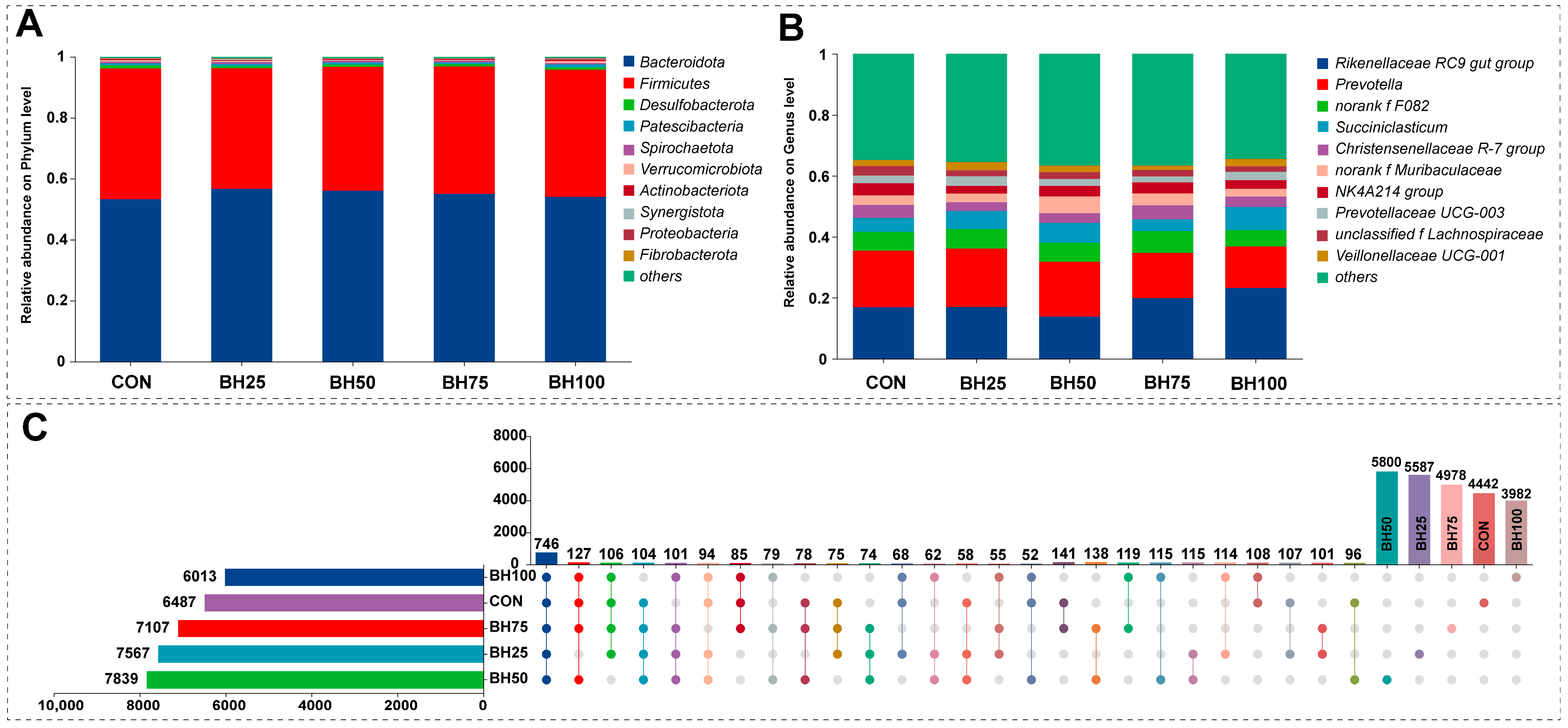
Figure 1 displays the composition of the ruminal microbiota. At the phylum level (Figure 1A), Bacteroidota and Firmicutes were dominant, collectively exceeding 90% in all groups, followed by Desulfobacterota, Patescibacteria, Spirochaetota, Verrucomicrobiota, Actinobacteriota, Synergistota, Proteobacteria, and Fibrobacterota.
Among the top 10 genera (Figure 1B), microbial composition was similar across groups. Dominant genera, ranked by relative abundance, included Rikenellaceae RC9 gut group, Prevotella, norank f F082, Succiniclasticum, Christensenellaceae R-7 group, norank f Muribaculaceae, NK4A214 group, Prevotellaceae UCG-003, unclassified f Lachnospiraceae, and Veillonellaceae UCG-001.
Figure 1C (UpSet plot) details the distribution of taxa beyond the top 10. Total taxon counts across groups were as follows: 7839 (BH50), 7567 (BH25), 7107 (BH75), 6487 (CON), and 6013 (BH100). Regarding unique taxa, BH50 had the highest count (5800), followed by BH25 (5587), BH75 (4978), CON (4442), and BH100 (3982). Furthermore, intersection analysis identified 746 taxa common to both CON and all BH-treated groups (core microbiota) and 101 taxa unique to all BH treatment groups. Pairwise shared taxa between CON and specific BH groups were 141 (BH75), 108 (BH100), 107 (BH25), and 50 (BH50).

3.3. Community Diversity Analysis

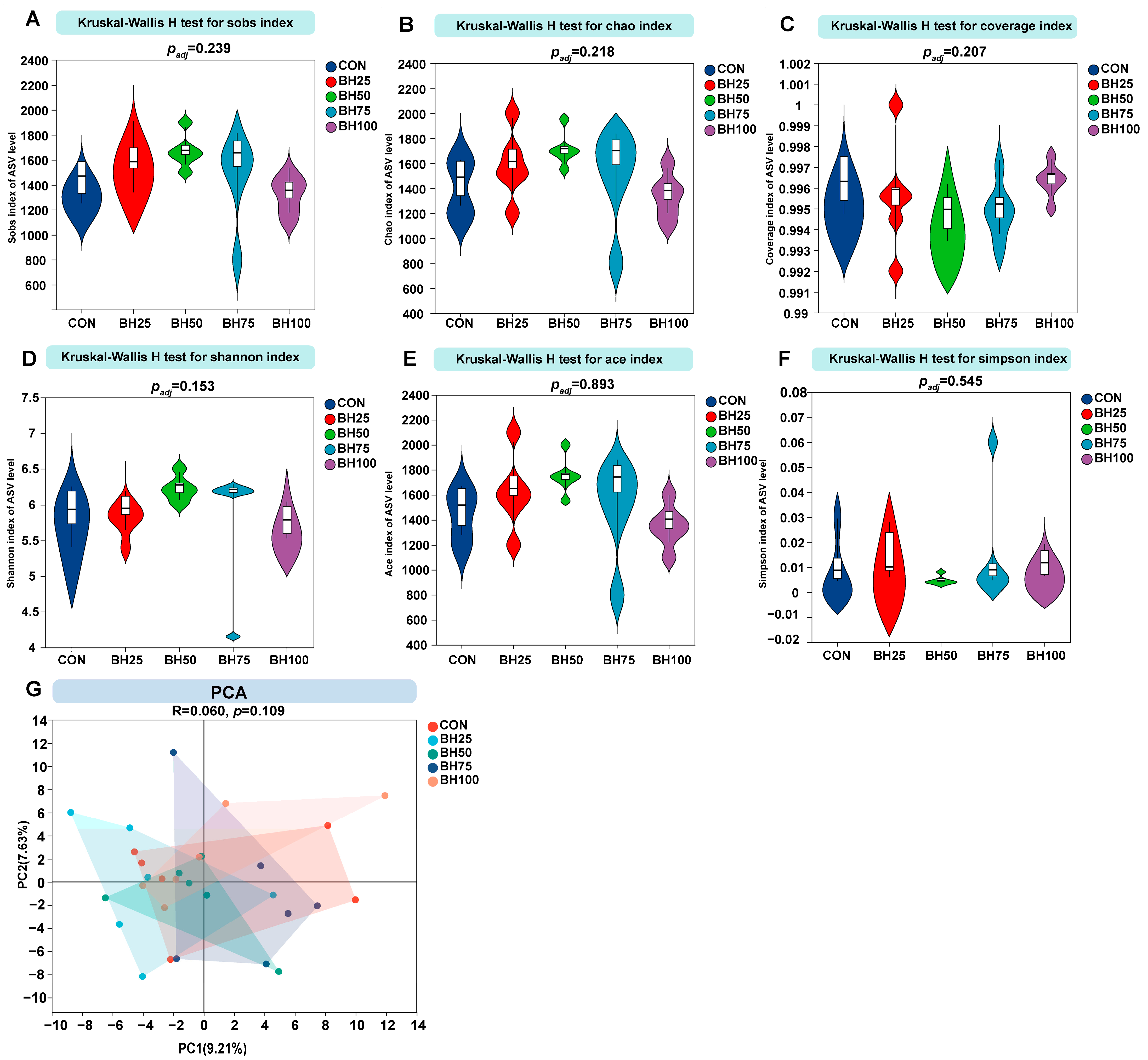
Table 4 and Figure 2A–F summarize the alpha diversity response to dietary barley hay substitution. As shown in Table 4, the richness estimators, including Sobs, Chao, and Ace, exhibited a non-linear response to increasing BH inclusion levels. Numerically, the highest species richness was observed in the BH50 group, where Sobs, Chao, and Ace index reached their peak compared to the CON and other BH treatment groups. However, Kruskal–Wallis H tests indicated these differences were not significant (Adjusted p > 0.05). The violin plots (Figure 2A,B,E) further illustrate the substantial overlap in distribution and median values across all BH treatment groups. The Shannon diversity index (Figure 2D) showed a slight upward trend in the BH group compared to the CON group, but the overall difference remained non-significant. Similarly, the Simpson index (Figure 2F), which measures evenness, remained stable across all treatments. The Coverage index (Figure 2C) remained consistently at 1.00 for all samples across the five groups. Similar coverage indices confirmed that sequencing depth was sufficient to capture the vast majority of the microbial taxa present in the samples.
We evaluated overall microbial community structure via ASV-level Principal Component Analysis (PCA) (Figure 2G). The first two principal components, PC1 and PC2, explained 9.21% and 7.63% of the total variance, respectively, accounting for a cumulative total of 16.84%. Visual inspection of the PCA plot reveals a substantial overlap among the convex hulls of all groups, with individual sample points from different treatments interspersed without forming distinct, isolated clusters. Statistical analysis supported these visual observations, yielding an R-value of 0.060 and a p-value of 0.109. Since the p-value exceeded the standard significance threshold (p > 0.05), this suggests that barley hay substitution did not significantly alter the global microbial community structure of the microbial community, suggesting a high degree of stability in the gastrointestinal ecosystem across all treatment levels.

3.4. Differential Abundance Analysis

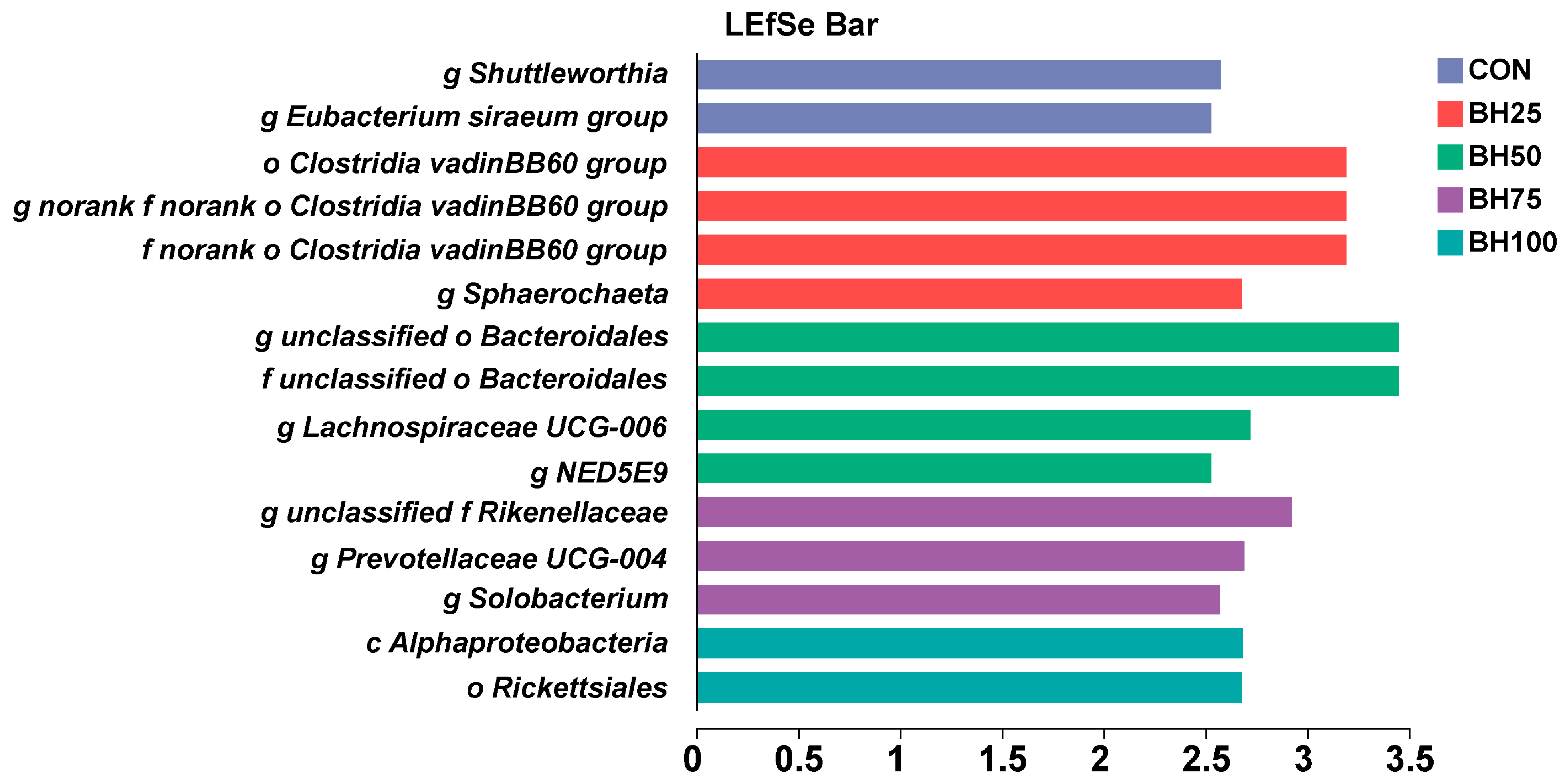
We used LEfSe to identify microbial taxa significantly enriched in each group (LDA > 2.0; Figure 3). Across the five groups, 15 biomarkers were identified. Specifically, the CON group was enriched in the Shuttleworthia and Eubacterium siraeum groups. Biomarkers in the BH25 group primarily belonged to the Clostridia vadinBB60 group and Sphaerochaeta. The BH50 group showed enrichment in Bacteroidales, Lachnospiraceae UCG-006, and NED5E9. The BH75 group was enriched in Rikenellaceae, Prevotellaceae UCG-004, and Solobacterium, while the BH100 group was characterized by Alphaproteobacteria and Rickettsiales.

3.5. Effects of Dietary Barley Hay Proportion on Serum Immune Levels in Lambs

As indicated in Table 5, all BH inclusion groups displayed elevated IgA concentrations on day 30 (p < 0.001). Relative to CON, IgG levels significantly peaked in BH50 and BH75 (p < 0.001). IL-4 increased in BH25 and BH50 (p < 0.05) but remained stable in BH75 and BH100. BH inclusion uniformly increased IL-6, with BH50 and BH75 recording higher levels than BH25 and BH100 (p < 0.001). Additionally, the BH100 group reached the highest IL-10 levels across all groups (p < 0.05).
On day 60, IgA concentrations peaked in the BH75 group, with CON registering the lowest levels (p < 0.001). IgG levels in BH50 and BH75 significantly exceeded those in CON, BH25, and BH100 (p < 0.05), while BH100 showed no significant differences from CON. Regarding IL-4, levels were significantly higher in BH75 and BH100 than in other groups (p < 0.001). IL-6 levels in all BH treatments surpassed CON, with the highest values observed in the BH75 group. Finally, all BH treatments except BH100 induced higher TNF-α concentrations compared to CON (p < 0.001).

3.6. Effects of Dietary Barley Hay Proportion on Serum Antioxidant Levels in Lambs

Table 6 displays the impact of BH inclusion on serum antioxidant status. On day 30, serum CAT levels in all BH treatment groups were significantly lower than those in the CON group (p < 0.05). Conversely, serum MDA levels were significantly elevated across all BH groups compared with CON (p < 0.05).
On day 60, a similar trend was observed for CAT; BH inclusion consistently decreased CAT levels relative to CON, with the lowest value recorded in the BH25 group (p < 0.001). Furthermore, BH75 exhibited higher serum MDA than both CON and BH25 groups (p < 0.05).

3.7. Impacts of Key Rumen Microbiota on Fermentation Parameters, Serum Immunity, and Antioxidant Indices

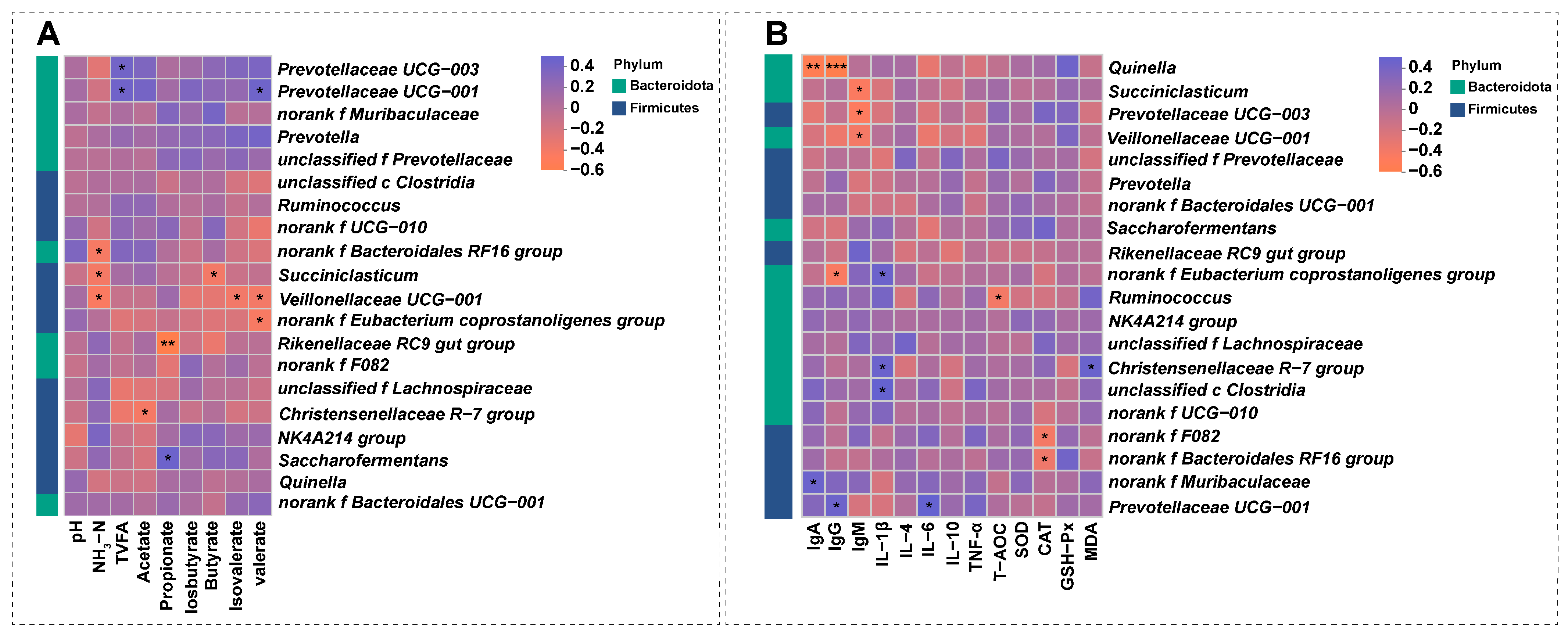
Spearman correlation heatmaps were generated to evaluate the associations between the top 20 microbial genera and ruminal fermentation parameters (Figure 4A). Prevotellaceae UCG-003 was positively correlated with TVFA. Prevotellaceae UCG-001 was positively correlated with TVFA and valerate. Saccharofermentans was positively correlated with acetate. In contrast, norank f Bacteroidales RF16 group, Succiniclasticum, and Veillonellaceae UCG-001 were negatively correlated with NH3-N. The Christensenellaceae R-7 group was negatively correlated with acetate. The Rikenellaceae RC9 gut group was highly negatively correlated with propionate. Succiniclasticum was negatively correlated with butyrate. Veillonellaceae UCG-001 was negatively correlated with isovalerate and valerate. The norank f Eubacterium coprostanoligenes group was negatively correlated with valerate.
As shown in Figure 4B, the correlations between serum immune and antioxidant indices and the rumen top 20 microbial communities showed several notable associations. Among the immunoglobulins, IgA was significantly negatively correlated with Quinella but positively correlated with norank f Muribaculaceae. Similarly, IgG showed negative correlations with both Quinella and norank f Eubacterium coprostanoligenes group, but was positively correlated with Prevotella UCG-001. In contrast, IgM had negative correlations with Succiniclasticum, Prevotellaceae UCG-003, and Veillonellaceae UCG-001, while showing positive correlations with norank f Eubacterium coprostanoligenes group, Christensenellaceae R-7 group, and unclassified c Clostridia. For the inflammatory marker, IL-6 was positively correlated with Prevotellaceae UCG-001. Regarding the antioxidant indices, T-AOC was negatively correlated with Ruminococcus, and CAT showed negative correlations with both norank f F082 and norank f Muribaculaceae. Notably, MDA, an indicator of oxidative stress, was positively correlated with the Christensenellaceae R-7 group.

4. Discussion

4.1. Impact of Barley Hay Substitution on Ruminal Fermentation and Nitrogen Efficiency

Ruminal fermentation parameters are indicators of the host’s metabolic status and the efficiency of dietary energy utilization [25,26]. In this study, the substitution of conventional forage (corn stover and Leymus chinensis) with BH significantly reshaped the VFA profile, most notably by increasing acetate concentrations and the acetate-to-propionate ratio. This shift is likely attributable to the unique physicochemical structure of the BH fiber [27]. Unlike the highly lignified cellulose found in corn stover, BH contains a higher proportion of hemicellulose and pectin, which are more accessible to microbial cellulolytic enzymes [28]. According to Beauchemin [29], the fermentation of these specific structural carbohydrates inherently favors the acetogenic pathway. Our findings align with Guo et al. [30], who demonstrated that replacing low-quality roughage with high-quality forage enhances TVFA production, thereby increasing the supply of metabolizable energy for host growth and lactation.
In this study, a notable finding was the significant reduction in NH3-N levels in the BH groups, with the BH50 group reaching the lowest concentrations. In the rumen, NH3-N concentration is the net result of dietary protein degradation and microbial nitrogen uptake [31]. The reduction observed here is consistent with the “energy-nitrogen synchronization” theory. As proposed by Brassard et al. [32,33,34], when the degradation rate of carbohydrates matches the release of nitrogen from dietary protein, microbial protein synthesis is maximized, leaving less residual ammonia in the rumen fluid. The fermentable carbohydrates in BH, particularly the water-soluble sugars and non-starch polysaccharides, likely provided the immediate energy required by microbes to incorporate ammonia into microbial biomass [35,36]. This mechanism is crucial for improving nitrogen retention efficiency, a key goal in sustainable ruminant production to reduce environmental nitrogen excretion [37]. Furthermore, the stability of ruminal pH across all groups, despite higher VFA production, suggests that BH substitution maintains a robust buffering capacity. As noted by Nocek and Russell [38,39], the physical effectiveness of fiber in barley hay may stimulate rumination and saliva secretion, which counteract the acidifying effect of rapid fermentation.

4.2. Microbiota Remodeling as a Driver of Altered Metabolic Pathways

The shifts in fermentation products are closely associated with the structural and functional restructuring of the ruminal microbial community [40]. Our 16S rRNA sequencing data revealed that BH substitution did not merely alter the abundance of core phyla but specifically enriched functional genera known to be involved in complex fiber degradation [41]. For instance, the significant enrichment of Prevotellaceae UCG-003 and Saccharofermentans in the BH groups is a key finding. Prevotellaceae are renowned for their high genetic plasticity and diverse enzymatic repertoire, allowing them to degrade a wide range of non-cellulosic polysaccharides such as hemicellulose and pectin [42,43]. In the context of BH inclusion, which provides a distinct matrix of structural and readily fermentable carbohydrates, the enrichment of these taxa highlights a targeted microbial adaptation [44]. Previous studies suggest that Prevotellaceae UCG-003 acts as a primary degrader of the plant cell wall integrity [45], which may increase the accessibility of downstream substrates for secondary fermenters like Saccharofermentans [44,45,46,47]. By accelerating the ruminal turnover rate of these liberated carbohydrates, this targeted microbial consortium efficiently maximizes the conversion of dietary carbon into the ruminal VFA pool [48]. Consequently, the positive correlation between these enriched taxa and TVFA production supports their potential role as primary drivers of enhanced energy extraction specifically adapted to the BH-based diet.
The LEfSe analysis elucidated a distinct successional trajectory of the ruminal microbiome driven by the progressive substitution of highly lignified roughage with highly digestible BH [49]. In the BH50 group, the pronounced enrichment of Bacteroidales and Lachnospiraceae UCG-006 suggests an adaptive expansion of functionally versatile degraders targeting moderately degradable plant cell wall polymers, a hallmark of a mature and efficient fibrolytic ecosystem [50]. As the BH inclusion rate increased (BH75), the microbial community pivoted towards a highly specialized consortium characterized by the co-enrichment of Rikenellaceae and Prevotellaceae UCG-004 [51]. Notably, the Rikenellaceae RC9 gut group, a key biomarker identified in our study, exhibited a robust negative correlation with ruminal propionate and a strong positive association with the acetate-to-propionate ratio [52]. This distinct correlative pattern provides a mechanistic explanation for the observed fermentation shift: rather than merely suppressing the propionate pathway, the high-quality, readily fermentable fiber in BH predominantly stimulates the proliferation of Rikenellaceae, thereby promoting the acetate-yielding pathways [53]. Furthermore, the concurrent shifts in taxa such as Veillonellaceae and Succiniclasticum, which participate in converting succinate to propionate [54,55], indicate that BH substitution appears to modulate the complex cross-feeding networks within the rumen. This metabolic rewiring transforms the rumen fermentation pattern from a slow-degrading state typical of recalcitrant stover to a highly dynamic, fiber-focused, and acetate-dominant system. This shift closely corresponds to the thermodynamic changes observed in hydrogen-utilizing pathways during the transition to high-quality forage diets [56,57].

4.3. Linking Ruminal Changes to Host Immunity and Antioxidant Status

The modulation of the rumen ecosystem by BH substitution exerts a notable influence on the systemic physiological health of the animal, highlighting a critical “rumen-blood” axis of regulation [58]. The introduction of highly fermentable forage is generally presumed to be beneficial, and our results reflect this through enhanced humoral immune markers, specifically the elevations in IgA and IgG [59]. This immune-enhancing effect can be partially attributed to bioactive compounds naturally abundant in barley, such as β-glucans and specific polyphenols [60]. As biological response modifiers, β-glucans can bind to Dectin-1 receptors on intestinal immune cells, triggering a cascade that enhances humoral immunity [61]. This is further augmented by the altered microbiome, where robust positive correlations between Prevotellaceae UCG-003 and Prevotellaceae UCG-001 and TVFA imply their involvement in active fermentation [62]. The resulting influx of VFAs into the bloodstream likely acts via G-protein-coupled receptors, such as GPR41 and GPR43, to further prime the gut-associated lymphoid tissue (GALT) [63,64,65]. However, specific microbial shifts act as nuanced regulators rather than simple enhancers; for instance, the rapid proliferation of Quinella—often a signature of high-efficiency fermentation [66]—exhibited a significant negative correlation with IgA and IgG, suggesting that its excessive expansion might be related to shifts in specific mucosal immune pathways, though the exact mechanisms require further investigation [67].
Despite these immune benefits, our results revealed a paradoxical effect dependent on the substitution dose concerning host physiological homeostasis. While specific immunological barriers (IgA, IgG) were strengthened, an evident perturbation involving both oxidative stress and mild systemic inflammation was observed. This was evidenced by a significant decline in serum CAT activity and a concomitant elevation in MDA levels, coupled with notable increases in the pro-inflammatory cytokines IL-6 and TNF-α, particularly in groups with elevated inclusion of BH.
This coupled phenomenon, often identified as metabolic oxidative burden [68], may be associated with specific underlying mechanisms. The superior degradability and rapid fermentation rate of BH could potentially facilitate a surge in nutrient flux to the liver and peripheral tissues [69]. As cellular mitochondria accelerate ATP synthesis to match this heightened metabolic rate, this process is likely to be accompanied by a concurrent transient rise in reactive oxygen species (ROS) leakage. The excessive ROS not only may potentially challenge the endogenous antioxidant defense system [70,71], but also serves as a potent signaling trigger that activates inflammatory cascades, thereby potentially stimulating the release of IL-6 and TNF-α.
The correlation analysis suggests a potential mechanistic link. While the Christensenellaceae R-7 group was positively correlated with MDA, which may imply its possible association with the robust energy metabolism that generates reactive oxygen species [72,73], it simultaneously exhibited a negative correlation with pathways promoting inflammation. Christensenellaceae are widely regarded as markers of health [74], and their enrichment could potentially contribute to mitigating the systemic subclinical inflammation that is frequently associated with oxidative stress and diets dense in energy [75].

4.4. Limitations and Future Perspectives

Although the findings of this study provide important insights into the effects of replacing BH, the current research has some limitations. The short trial period may limit our ability to assess long-term changes in the rumen ecosystem. Because ruminants have high metabolic plasticity, the lack of long-term data means we cannot yet confirm whether the initial improvements in nitrogen utilization last across multiple production cycles or during key physiological transitions.
In addition, the specific metabolic pathways activated by BH replacement, especially those linked to the breakdown of β-glucans and the synthesis of volatile fatty acids, are still not fully understood. Future studies should use advanced methods such as shotgun metagenomics to move from basic taxonomic identification to true functional profiling.
Furthermore, the exact mechanisms behind the physiological changes seen at higher levels of BH inclusion remain unclear in our dataset. While we observed an increase in MDA levels and a decrease in CAT activity, our study did not measure intracellular reactive oxygen species or mitochondrial function in ruminal epithelial cells. Therefore, the hypothesis that rapid volatile fatty acid production causes metabolic oxidative stress still needs further validation.

5. Conclusions

Overall, substituting traditional forage with barley hay (BH) modulates ruminal fermentation and systemic immunity by enriching beneficial fiber-degrading bacteria. Although higher BH inclusion levels induced alterations in the antioxidant system, the 100% BH substitution (BH100) achieved an optimal physiological balance among the treatments. Specifically, BH100 proved superior by maximizing acetate and immunoglobulin production without causing severe oxidative detriment. Furthermore, BH inclusion facilitated a shift toward beneficial microbial taxa without negatively impacting alpha diversity. Consequently, the complete replacement of traditional forage with BH serves as a viable and promising nutritional strategy to optimize ruminal fermentation and enhance immunity in meat sheep, provided that the animals’ antioxidant status is appropriately monitored.

Author Contributions

Conceptualization, Z.L., C.B. and Y.Z.; methodology, L.H. and K.E.; software, L.H.; validation, X.W., G.H. and Q.C.; formal analysis, G.H. and Q.C.; investigation, K.E.; resources, C.A.; data curation, C.B.; writing—original draft preparation, X.W. and X.L.; writing—review and editing, X.W., X.L., G.H., K.E., C.B., Q.C. and Y.Z.; visualization, Q.C.; supervision, Y.Z.; project administration, C.A.; funding acquisition, C.A. and Z.L. All authors have read and agreed to the published version of the manuscript.

Funding

This research was funded by the China Agriculture Research System of MOF and MARA, number: CARS-05-02A-12.

Institutional Review Board Statement

All procedures used in this study were approved by the Guiding Opinions on the Humane Treatment of Laboratory Animals (No. Guokefacaizi 2006-398).

Informed Consent Statement

Not applicable.

Data Availability Statement

The original contributions presented in this study are included in the article. Further inquiries can be directed to the corresponding authors.

Acknowledgments

During the preparation of this manuscript, the authors used Gemini 3 Pro for the purpose of improving grammar and expression. The authors have reviewed and edited the output and take full responsibility for the content of this publication.

Conflicts of Interest

The authors declare no conflicts of interest.

References

  1. Wang, Y.Q.; Luo, Y.; Luo, L.L.; Zhang, H.; Liao, Y.C.; Guo, C.L. Enhancement of the nutritional value of fermented corn stover as ruminant feed using the fungi Pleurotus spp. Sci. Rep. 2021, 11, 11961. [Google Scholar] [CrossRef]
  2. Van Soest, P.J. Nutritional Ecology of the Ruminant, 2nd ed.; Cornell University Press: Ithaca, NY, USA, 1994; p. 476. [Google Scholar]
  3. Liu, K.Z.; Zhang, Y.D.; Yu, Z.T.; Xu, Q.B.; Zheng, N.; Zhao, S.G.; Huang, G.X.; Wang, J.Q. Ruminal microbiota–host interaction and its effect on nutrient metabolism. Anim. Nutr. 2021, 7, 49–55. [Google Scholar] [CrossRef]
  4. Avellaneda, Y.; Mancipe, E.; Vargas, J.; Manriquez, D. Energy and Protein Requirements of Growing Lambs in Colombian Highlands. Animals 2024, 14, 2117. [Google Scholar] [CrossRef]
  5. Thatiparthi, J.; Dodoala, S.; Koganti, B.; Kvsrg, P. Barley grass juice (Hordeum vulgare L.) inhibits obesity and improves lipid profile in high fat diet-induced rat model. J. Ethnopharmacol. 2019, 238, 111843. [Google Scholar] [CrossRef]
  6. Zhu, Y.; Li, T.; Fu, X.; Abbasi, A.M.; Zheng, B.S.; Li, R.H. Phenolics content, antioxidant and antiproliferative activities of dehulled highland barley (Hordeum vulgare L.). J. Funct. Foods 2015, 19, 439–450. [Google Scholar] [CrossRef]
  7. Adom, K.K.; Sorrells, M.E.; Liu, R.H. Phytochemical profiles and antioxidant activity of wheat varieties. J. Agric. Food Chem. 2003, 51, 7825–7834. [Google Scholar] [CrossRef]
  8. Shahidi, F.; Chandrasekara, A. Millet grain phenolics and their role in disease risk reduction and health promotion: A review. J. Funct. Foods 2013, 5, 570–581. [Google Scholar] [CrossRef]
  9. Liu, R.H. Whole grain phytochemicals and health. J. Cereal Sci. 2007, 46, 207–219. [Google Scholar] [CrossRef]
  10. Shewry, P.R.; Pirronen, V.; Lampi, A.M.; Nyström, L.; Li, L.; Rakszegi, M.; Fraś, A.; Boros, D.; Gebruers, K.; Courtin, C.M.; et al. Phytochemical and Fiber Components in Oat Varieties in the HEALTHGRAIN Diversity Screen. J. Agric. Food Chem. 2008, 56, 9777–9784. [Google Scholar] [CrossRef] [PubMed]
  11. Gómez-Caravaca, A.M.; Verardo, V.; Berardinelli, A.; Marconi, E.; Caboni, M.F. A chemometric approach to determine the phenolic compounds in different barley samples by two different stationary phases: A comparison between C18 and pentafluorophenyl core shell columns. J. Chromatogr. A 2014, 1355, 134–142. [Google Scholar] [CrossRef]
  12. Chan, G.C.F.; Chan, W.K.; Sze, D.M.Y. The effects of beta-glucan on human immune and cancer cells. J. Hematol. Oncol. 2009, 2, 25. [Google Scholar] [CrossRef] [PubMed]
  13. Brown, G.D.; Gordon, S. Immune recognition. A new receptor for beta-glucans. Nature 2001, 413, 36–37. [Google Scholar] [CrossRef]
  14. Wang, X.Y.; Bai, C.; Khas, E.; Zheng, Y.K.; Cao, Q.N.; Han, G.L.; Ao, C.J. Allium mongolicum Regel Enhances Serum Immunity, Antioxidant, and Biochemical Indicators of Meat Sheep Achieved by Rumen Microbiota Regulation. Animals 2025, 15, 2491. [Google Scholar] [CrossRef]
  15. Waghorn, G.C.; McNabb, W.C. Consequences of plant phenolic compounds for productivity and health of ruminants. Proc. Nutr. Soc. 2003, 62, 383–392. [Google Scholar] [CrossRef]
  16. Benninghoff, J.; Paschke-Beese, M.; Südekum, K.H. In situ and in vitro ruminal degradation of maize grain and untreated or xylose-treated wheat, barley and rye grains. Anim. Feed Sci. Technol. 2015, 210, 86–93. [Google Scholar] [CrossRef]
  17. Huws, S.A.; Creevey, C.J.; Oyama, L.B.; Mizrahi, I.; Denman, S.E.; Popova, M.; Muñoz-Tamayo, R.; Forano, E.; Waters, S.M.; Hess, M. Addressing Global Ruminant Agricultural Challenges Through Understanding the Rumen Microbiome: Past, Present, and Future. Front. Microbiol. 2018, 9, 2161. [Google Scholar] [CrossRef]
  18. Filnt, H.J.; Bayer, E.A.; Rincon, M.T.; Lamed, R.; White, B.A. Polysaccharide utilization by gut bacteria: Potential for new insights from genomic analysis. Nat. Rev. Microbiol. 2008, 6, 121–131. [Google Scholar] [CrossRef]
  19. Myer, P.R.; Smith, T.P.L.; Wells, J.E.; Kuehn, L.A.; Freetly, H.C. Changes in the rumen microbiome from steers differing in feed efficiency. PLoS ONE 2015, 10, e0129174. [Google Scholar] [CrossRef] [PubMed]
  20. Corrêa-Oliveira, R.; Fachi, J.L.; Vieira, A.; Sato, F.T.; Vinolo, M.A.R. Regulation of immune cell function by short-chain fatty acids. Clin. Transl. Immunol. 2016, 5, e73. [Google Scholar] [CrossRef] [PubMed]
  21. Roediger, W.E.W. Utilization of nutrients by isolated epithelial cells of the rat colon. Gastroenterology 1982, 83, 424–429. [Google Scholar] [CrossRef]
  22. NY/T 816-2021; Nutrient Requirements of Mutton Sheep. Ministry of Agriculture and Rural Affairs (MARA): Beijing, China, 2021.
  23. Ding, H.; Liu, W.J.; Khas, E.; Du, H.X.; Ao, C.J. Effects of dietary supplementation with Allium mongolicum Regel extracts on growth performance, serum metabolites, immune responses, antioxidant status, and meat quality of lambs. Anim. Nutr. 2021, 7, 530–538. [Google Scholar] [CrossRef]
  24. AOAC. Official Methods of Analysis, 18th ed.; Association of Official Agricultural Chemists: Gaithsburg, MD, USA, 2005. [Google Scholar]
  25. Plante-Dubé, M.; Sylvestre, C.; Bourassa, R.; Luimes, P.; Toral, P.G.; Buczinski, S.; Castonguay, F.; Gervais, R. Energy metabolism and ruminal fermentation of prolific ewes in response to scheduled increase, relative to lambing, of dietary energy source and concentration. Animal 2025, 19, 101691. [Google Scholar] [CrossRef] [PubMed]
  26. Wang, Q.Y.; Wang, Y.C.; Wang, X.; Dai, C.P.; Tang, W.S.; Li, J.Z.; Huang, P.F.; Li, Y.L.; Ding, X.Q.; Huang, J.; et al. Effects of dietary energy levels on rumen fermentation, microbiota, and gastrointestinal morphology in growing ewes. Food Sci. Nutr. 2020, 8, 6621–6632. [Google Scholar] [CrossRef]
  27. Liu, Y.A.; Jia, Y.Q.; Wu, Y.Y.; Zhang, H.J.; Ren, F.Y.; Zhou, S.M. Review on mechanisms of hypoglycemic effects of compounds from highland barley and potential applications. Food Funct. 2024, 15, 11365–11382. [Google Scholar] [CrossRef]
  28. Zhu, F.M.; Du, B.; Xu, B.J. Superfine grinding improves functional properties and antioxidant capacities of bran dietary fibre from Qingke (hull-less barley) grown in Qinghai-Tibet Plateau, China. J. Cereal Sci. 2015, 65, 43–47. [Google Scholar] [CrossRef]
  29. Beauchemin, K.A. Invited review: Current perspectives on eating and rumination activity in dairy cows. J. Dairy Sci. 2018, 101, 4762–4784. [Google Scholar] [CrossRef] [PubMed]
  30. Guo, C.; Wu, Y.Q.; Li, S.L.; Cao, Z.J.; Wang, Y.J.; Mao, J.; Shi, H.T.; Shi, R.H.; Sun, X.G.; Zheng, Y.H. Effects of Different Forage Types on Rumen Fermentation, Microflora, and Production Performance in Peak-Lactation Dairy Cows. Fermentation 2022, 8, 507. [Google Scholar] [CrossRef]
  31. Bach, A.; Calsamiglia, S.; Stern, M.D. Nitrogen Metabolism in the Rumen. J. Dairy Sci. 2005, 88, E9–E21. [Google Scholar] [CrossRef]
  32. Rosmalia, A.; Permana, I.G.; Despal, D. Synchronization of rumen degradable protein with non-fiber carbohydrate on microbial protein synthesis and dairy ration digestibility. Vet. World 2022, 15, 252–261. [Google Scholar] [CrossRef]
  33. Seo, J.K.; Kim, M.H.; Yang, J.Y.; Lee, C.H.; Kim, K.H.; Ha, J.K. Effects of synchronicity of carbohydrate and protein degradation on rumen fermentation characteristics and microbial protein synthesis. Asian-Australas. J. Anim. Sci. 2013, 26, 358–365. [Google Scholar] [CrossRef]
  34. Brassard, M.E.; Chouinard, P.Y.; Berthiaume, R.; Tremblay, G.F.; Gervais, R.; Martineau, R.; Mars, D.C. Effects of grain source, grain processing, and protein degradability on rumen kinetics and microbial protein synthesis in Boer kids. J. Anim. Sci. 2015, 93, 5355–5366. [Google Scholar] [CrossRef]
  35. Coker, J.K.; Moyne, O.; Rodionov, D.A.; Zengler, K. Carbohydrates great and small, from dietary fiber to sialic acids: How glycans influence the gut microbiome and affect human health. Gut Microbes 2021, 13, 1869502. [Google Scholar] [CrossRef]
  36. Alqurashi, R.M.; Al-Mssallem, M.Q.; Al-Majed, A.W.; Almaghasla, M.I.; Alarifi, A.W. Comparative modulation of the gut microbiota by date-derived products and refined sugar: A 16S rRNA gene taxonomic profile in healthy rats. Front. Microbiol. 2026, 17, 1762458. [Google Scholar] [CrossRef] [PubMed]
  37. Hristov, A.N.; Oh, J.; Firkins, J.L.; Dijkstra, J.; Kebreab, E.; Waghorn, G.; Makkar, H.P.S.; Adesogan, A.T.; Yang, W.; Lee, C.; et al. Special topics—Mitigation of methane and nitrous oxide emissions from animal operations: I. A review of enteric methane mitigation options. J. Anim. Sci. 2013, 91, 5045–5069. [Google Scholar] [CrossRef]
  38. Nocek, J.E.; Russell, J.B. Protein and Energy as an Integrated System. Relationship of Ruminal Protein and Carbohydrate Availability to Microbial Synthesis and Milk Production. J. Dairy Sci. 1988, 71, 2070–2107. [Google Scholar] [CrossRef]
  39. Mertens, D.R. Creating a System for Meeting the Fiber Requirements of Dairy Cows. J. Dairy Sci. 1997, 80, 1463–1481. [Google Scholar] [CrossRef] [PubMed]
  40. Jami, E.; Mizrahi, I. Composition and similarity of bovine rumen microbiota across individual animals. PLoS ONE 2012, 7, e33306. [Google Scholar] [CrossRef]
  41. Li, F.Y.; Guan, L.L. Metatranscriptomic Profiling Reveals Linkages between the Active Rumen Microbiome and Feed Efficiency in Beef Cattle. Appl. Environ. Microbiol. 2017, 83, e00061-17. [Google Scholar] [CrossRef]
  42. Fernando, S.C.; Purvis, H.T., 2nd; Najar, F.Z.; Sukharnikov, L.O.; Krehbiel, C.R.; Nagaraja, T.G.; Roe, B.A.; Desilva, U. Rumen microbial population dynamics during adaptation to a high-grain diet. Appl. Environ. Microbiol. 2010, 76, 7482–7490. [Google Scholar] [CrossRef] [PubMed]
  43. Kittelmann, S.; Seedorf, H.; Walters, W.A.; Clemente, J.C.; Knight, R.; Gordon, J.I.; Janssen, P.H. Simultaneous amplicon sequencing to explore co-occurrence patterns of bacterial, archaeal and eukaryotic microorganisms in rumen microbial communities. PLoS ONE 2013, 8, e47879. [Google Scholar] [CrossRef]
  44. Newbold, C.J.; Ramos-Morales, E. Review: Ruminal microbiome and microbial metabolome: Effects of diet and ruminant host. Animal 2020, 14, s78–s86. [Google Scholar] [CrossRef] [PubMed]
  45. Fang, X.Y.; Wang, Z.Y.; Chen, Q.R.; Du, Y.Q.; Sun, H.W.; Liu, H.Y.; Feng, Y.; Li, Z.Y.; Teng, T.; Shi, B.M. Protective effect of the branched short-chain fatty acid isobutyrate on intestinal damage in weaned piglets through intestinal microbiota remodeling. J. Sci. Food Agric. 2025, 105, 1556–1568. [Google Scholar] [CrossRef]
  46. Betancur-Murillo, C.L.; Aguilar-Marín, S.B.; Jovel, J. Prevotella: A Key Player in Ruminal Metabolism. Microorganisms 2022, 11, 1. [Google Scholar] [CrossRef]
  47. Rabee, A.E.; Sayed Alahl, A.A.; Lamara, M.; Ishaq, S.L. Fibrolytic rumen bacteria of camel and sheep and their applications in the bioconversion of barley straw to soluble sugars for biofuel production. PLoS ONE 2022, 17, e0262304. [Google Scholar] [CrossRef]
  48. Souza, J.M.; Ribeiro, P.H.C.; Millen, D.D. Review: Shifts of rumen microbiota by feeding non-fibrous carbohydrates to improve cattle performance. Front. Microbiol. 2026, 17, 1735296. [Google Scholar] [CrossRef]
  49. Segura-Wang, M.; Grabner, N.; Koestelbauer, A.; Klose, V.; Ghanbari, M. Genome-Resolved Metagenomics of the Chicken Gut Microbiome. Front. Microbiol. 2021, 12, 726923. [Google Scholar] [CrossRef]
  50. Henderson, G.; Cox, F.; Ganesh, S.; Jonker, A.; Young, W.; Collaborators, G.R.C.; Janssen, P.H. Rumen microbial community composition varies with diet and host, but a core microbiome is found across a wide geographical range. Sci. Rep. 2015, 5, 14567. [Google Scholar] [CrossRef]
  51. Jami, E.; White, B.A.; Mizrahi, I. Potential Role of the Bovine Rumen Microbiome in Modulating Milk Composition and Feed Efficiency. PLoS ONE 2014, 9, e85423. [Google Scholar] [CrossRef] [PubMed]
  52. Petri, R.M.; Schwaiger, T.; Penner, G.B.; Beauchemin, K.A.; Forster, R.J.; Mckinnon, J.J.; McAllister, T.A. Characterization of the core rumen microbiome in cattle during transition from forage to concentrate as well as during and after an acidotic challenge. PLoS ONE 2013, 8, e83424. [Google Scholar] [CrossRef] [PubMed]
  53. Krautkramer, K.A.; Fan, J.; Bäckhed, F. Gut microbial metabolites as multi-kingdom intermediates. Nat. Rev. Microbiol. 2021, 19, 77–94. [Google Scholar] [CrossRef]
  54. Hiebl, C.; Pinner, D.; Konegger, H.; Steger, F.; Mohamed, D.; Fuchs, W. Enhancing Gas Fermentation Efficiency via Bioaugmentation with Megasphaera sueciensis and Clostridium carboxidivorans. Bioengineering 2025, 12, 470. [Google Scholar] [CrossRef] [PubMed]
  55. Ahmed, E.; Yano, R.; Fujimori, M.; Kand, D.; Hanada, M.; Nishida, T.; Fukuma, N. Impacts of Mootral on Methane Production, Rumen Fermentation, and Microbial Community in an in vitro Study. Front. Vet. Sci. 2021, 7, 623817. [Google Scholar] [CrossRef]
  56. Wolin, M.J.; Miller, T.L.; Stewart, C.S. Microbe-microbe interactions. In The Rumen Microbial Ecosystem, 2nd ed.; Hobson, P.N., Stewart, C.S., Eds.; Springer: Dordrecht, The Netherlands, 1997; pp. 467–491. [Google Scholar]
  57. Hungate, R.E. The Rumen and Its Microbes; Academic Press (Elsevier): New York, NY, USA, 2013. [Google Scholar]
  58. Plaizier, J.C.; Krause, D.O.; Gozho, G.N.; McBride, B.W. Subacute ruminal acidosis in dairy cows: The physiological causes, incidence and consequences. Vet. J. 2008, 176, 21–31. [Google Scholar] [CrossRef]
  59. Zebeli, Q.; Dijkstra, J.; Tafaj, M.; Steingass, H.; Ametaj, B.N.; Drochner, W. Modeling the adequacy of dietary fiber in dairy cows based on the responses of ruminal pH and milk fat production to composition of the diet. J. Dairy Sci. 2008, 91, 2046–2066. [Google Scholar] [CrossRef]
  60. Choct, M. Enzymes for the feed industry: Past, present and future. World Poult. Sci. J. 2006, 62, 5–16. [Google Scholar] [CrossRef]
  61. Tsoni, S.V.; Brown, G.D. beta-Glucans and dectin-1. Ann. N. Y. Acad. Sci. 2008, 1143, 45–60. [Google Scholar] [CrossRef]
  62. Bekele, A.Z.; Koike, S.; Kobayashi, Y. Genetic diversity and diet specificity of ruminal Prevotella revealed by 16S rRNA gene-based analysis. FEMS Microbiol. Lett. 2010, 305, 49–57. [Google Scholar] [CrossRef]
  63. Lee, D.H.; Kim, M.T.; Han, J.H. GPR41 and GPR43: From development to metabolic regulation. Biomed. Pharmacother. 2024, 175, 116735. [Google Scholar] [CrossRef] [PubMed]
  64. Zhang, D.; Jian, Y.P.; Zhang, Y.N.; Li, Y.; Gu, L.T.; Sun, H.H.; Liu, M.D.; Zhou, H.L.; Wang, Y.S.; Xu, Z.X. Short-chain fatty acids in diseases. Cell Commun. Signal. 2023, 21, 212. [Google Scholar] [CrossRef]
  65. Tao, Z.P.; Wang, Y. The health benefits of dietary short-chain fatty acids in metabolic diseases. Crit. Rev. Food Sci. Nutr. 2025, 65, 1579–1592. [Google Scholar] [CrossRef] [PubMed]
  66. Kumar, S.; Altermann, E.; Leahy, S.C.; Jauregui, R.; Jonker, A.; Henderson, G.; Kittelmann, S.; Attwood, G.T.; Kamke, J.; Waters, S.M. Genomic insights into the physiology of Quinella, an iconic uncultured rumen bacterium. Nat. Commun. 2022, 13, 6240. [Google Scholar] [CrossRef]
  67. Trevisi, E.; Amadori, M.; Cogrossi, S.; Razzuoli, E.; Bertoni, G. Metabolic stress and inflammatory response in high-yielding, periparturient dairy cows. Res. Vet. Sci. 2012, 93, 695–704. [Google Scholar] [CrossRef] [PubMed]
  68. Lykkesfeldt, J.; Svendsen, O. Oxidants and antioxidants in disease: Oxidative stress in farm animals. Vet. J. 2007, 173, 502–511. [Google Scholar] [CrossRef]
  69. Huntington, G.B. Starch utilization by ruminants: From basics to the bunk. J. Anim. Sci. 1997, 75, 852–867. [Google Scholar] [CrossRef] [PubMed]
  70. Halliwell, B.; Gutteridge, J.M.C. Free Radicals in Biology and Medicine, 5th ed.; Oxford University Press: Oxford, UK, 2015. [Google Scholar]
  71. Bernabucci, U.; Ronchi, B.; Lacetera, N.; Nardone, A. Influence of body condition score on relationships between metabolic status and oxidative stress in periparturient dairy cows. J. Dairy Sci. 2005, 88, 2017–2026. [Google Scholar] [CrossRef]
  72. Harlow, B.E.; Flythe, M.D.; Aiken, G.E. Biochanin A improves fibre fermentation by cellulolytic bacteria. J. Appl. Microbiol. 2018, 124, 58–66. [Google Scholar] [CrossRef] [PubMed]
  73. Jiang, C.X.; Ding, L.M.; Dong, Q.M.; Wang, X.J.; Wei, H.Y.; Hu, C.S.; Ma, C.F.; Zhou, Y.Q.; Degen, A.A. Effects of root extracts of three traditional Chinese herbs as dietary supplements on dry matter intake, average daily gain, rumen fermentation and ruminal microbiota in early weaned yak calves. Anim. Feed Sci. Technol. 2021, 278, 115002. [Google Scholar] [CrossRef]
  74. Zhou, D.; Pan, Q.; Xin, F.Z.; Zhang, R.N.; He, C.X.; Chen, G.Y.; Liu, C.; Chen, Y.W.; Fan, J.G. Sodium butyrate attenuates high-fat diet-induced steatohepatitis in mice by improving gut microbiota and gastrointestinal barrier. World J. Gastroenterol. 2017, 23, 60–75. [Google Scholar] [CrossRef]
  75. Ma, N.; Abaker, J.A.; Wei, G.; Chem, H.; Shen, X.; Chang, G. A high-concentrate diet induces an inflammatory response and oxidative stress and depresses milk fat synthesis in the mammary gland of dairy cows. J. Dairy Sci. 2022, 105, 5493–5505. [Google Scholar] [CrossRef]
Figure 1. Characterization of Rumen Microbial Composition. (A,B) Stacked bar plots of dominant microbial taxa at phylum (A) and genus levels (B). The X-axis indicates samples, while the Y-axis denotes relative abundance. Colors signify distinct taxa, with segment height reflecting their respective proportions. (C) UpSet plot of microbial communities. The left horizontal bars show total taxon counts per group. In the matrix, isolated dots denote unique taxa, whereas connected dots signify intersections between groups. The vertical bars above the matrix represent the number of taxa within each corresponding intersection. BH25, BH50, BH75, and BH100 denote barley hay substitution levels of 25%, 50%, 75%, and 100%, respectively.
Animals 16 01565 g001
Figure 2. Rumen microbial diversity analysis. (AF) Alpha diversity indices: Sobs (A), Chao (B), Coverage (C), Shannon (D), Ace (E), and Simpson (F). The X-axis displays groups, while the Y-axis shows corresponding diversity indices. (G) Beta diversity via PCA. Axes denote principal components (PC1, PC2) with variance contribution percentages. Samples are differentiated by color and shape; proximity between points indicates similarity in microbial community composition. BH25–BH100 represent barley hay inclusion levels of 25–100%.
Animals 16 01565 g002
Figure 3. Linear Discriminant Analysis (LDA) of differentially abundant taxa. The bar plot displays taxa with significant inter-group differences identified via LEfSe. LDA scores (log10) quantify the contribution of specific taxa to inter-group dissimilarities; higher scores indicate a more substantial influence on community differences.
Animals 16 01565 g003
Figure 4. Correlation analysis of key rumen microbiota and physiological parameters. (A) Heatmap showing the correlations between key rumen microbial taxa and fermentation parameters. (B) Heatmap showing the correlations between key rumen microbial taxa and blood immune and antioxidant indices. The X-axis and Y-axis represent fermentation/serum parameters and microbial taxa, respectively. The color gradient indicates the Spearman correlation coefficient (R-value), with the scale shown in the legend on the right. Statistical significance is indicated by asterisks: *, ** and *** indicate p ≤ 0.05, p ≤ 0.01 and p ≤ 0.001, respectively.
Animals 16 01565 g004
Table 1. Ingredient composition and nutrient levels of the experimental diets (DM, %).
Items 1Treatments 2
CONBH25BH50BH75BH100
Ingredients
Barley Hay 10.3020.6030.9041.19
Leymus chinensis10.217.665.102.55
Corn Stover30.9822.2315.497.75
Commercial Diet38.4739.0139.5540.0940.63
Corn Silage19.3218.7818.2417.6917.16
Limestone0.120.120.120.120.12
NaCl0.300.300.300.300.30
Sodium Bicarbonate0.200.200.200.200.20
Premix0.400.400.400.400.40
Total100.00100.00100.00100.00100.00
Nutrient Levels
Metabolic Energy (MJ, kg)14.9114.8614.5614.3714.34
CP13.6213.7914.0514.2114.67
ADF23.8624.4326.0126.5827.15
NDF43.8745.2446.6147.9849.35
Ca1.181.191.211.221.24
P0.610.600.590.580.57
1 Commercial diet, the basal diet used in this study was an on-farm custom-mixed diet routinely fed to meat sheep. The premix provided the following per kg of food: 3100 IU of VA; 1300 IU of VD3; 22 IU of VE; 24 mg of Fe; 8 mg of Cu; 0.1 mg of Co; 30 mg of Mn; 0.35 mg of Se; 30 mg of Zn; 0.45 mg of I. Metabolizable energy values were determined following the calculation method of Ding et al. [23], while the other nutrient levels are measured values. CP—crude protein; ADF—acid detergent fiber; NDF—neutral detergent fiber; Ca—calcium; P—phosphorus. 2 BH25, BH50, BH75, and BH100 represent the replacement of 25%, 50%, 75%, and 100% of the basal roughage (a mixture of corn stover and Leymus chinensis) with barley green hay, respectively.
Table 2. Nutrient profiles of the forage sources used in the experimental diets (DM, %).
Nutrient Levels 1Barley HeyCorn StoverLeymus chinensis
Metabolic energy (MJ/kg)12.7713.3113.88
CP8.504.208.44
ADF34.3024.9329.07
NDF54.7860.0157.69
Ca0.330.280.35
P0.230.130.15
1 Metabolizable energy values were determined following the calculation method of Ding et al. [23], while the other nutrient levels are measured values. CP—crude protein; ADF—acid detergent fiber; NDF—neutral detergent fiber; Ca—calcium; P—phosphorus.
Table 3. Effects of replacing dietary forage with barley hay on ruminal fermentation characteristics in lambs.
Items 1Treatments 2SEMp-Value
CONBH25BH50BH75BH100
pH6.656.686.706.826.720.150.938
Acetate, mmol/L 15.40 b29.06 a34.28 a29.89 a36.37 a4.160.014
Propionate, mmol/L7.877.307.364.496.390.850.068
Butyrate, mmol/L5.983.445.574.343.830.730.087
Isobutyrate, mmol/L0.580.500.580.630.640.090.853
Valerate, mmol/L0.540.480.540.580.510.070.897
Isovalerate, mmol/L1.110.871.051.081.070.140.781
A:P2.13 b4.40 ab4.65 ab6.66 a6.37 a0.890.010
TVFA, mmol/L31.4741.6549.3841.0148.814.920.100
NH3-N, mg/dL2.98 a2.63 abc2.33 c2.84 ab2.44 bc0.150.033
1 A:P—the acetate to propionate ratio; TVFA—total volatile fatty acids; NH3-N—ammonia nitrogen. 2 BH25, BH50, BH75, and BH100 indicate the substitution of dietary forage with barley hay at levels of 25%, 50%, 75%, and 100%, respectively. Means with different superscript letters differ significantly (p < 0.05) or highly significantly (p < 0.01).
Table 4. Results of alpha-diversity indices among treatment groups.
EstimatorsTreatments 1Adjusted
p-Value
CONBH25BH50BH75BH100
Ace1493.441673.061768.951608.751405.270.239
Chao1465.06511637.721726.151572.161378.360.218
Sobs1443.001611.171693.171540.171356.830.207
Shannon5.895.956.255.885.790.153
Coverage1.001.001.001.001.000.893
Simpson0.010.020.010.020.010.545
1 BH25, BH50, BH75, and BH100 indicate the substitution of dietary forage with barley hay at levels of 25%, 50%, 75%, and 100%, respectively.
Table 5. Effects of replacing dietary forage with barley hay on serum immune parameters in lambs.
Items 1Treatments 2SEMp-Value
CONBH25BH50BH75BH100
day 30
IgA, μg/mL91.83 c94.23 bc109.49 a113.41 a101.07 b1.76<0.001
IgG, μg/mL1277.10 b1279.02 b1392.59 a1395.98 a1311.30 b22.99<0.001
IgM, μg/mL12.5212.7112.4812.9812.370.200.224
IL-1β, ng/L116.06117.43115.10121.41120.381.770.079
IL-4, pg/mL132.15 a130.09 a129.88 a124.32 b122.16 b1.840.003
IL-6, ng/L102.95 c132.64 b145.55 a149.93 a127.60 b0.77<0.001
IL-10, ng/L203.27 a200.11 a202.21 a193.17 a182.60 b3.460.001
TNF-α, ng/L1080.261111.431102.491109.291067.0320.810.490
day 60
IgA, μg/mL93.04 d94.95 cd107.38 b114.63 a99.68 c1.65<0.001
IgG, μg/mL1271.97 b1288.64 b1364.36 a1360.68 a1288.64 ab21.560.013
IgM, μg/mL12.2212.6112.2712.6112.100.150.075
IL-1β, ng/L117.75117.67112.47117.54119.092.970.575
IL-4, pg/mL132.36 a131.66 a132.75 a123.57 b122.70 b1.66<0.001
IL-6, ng/L103.17 d135.08 c141.51 b148.93 a130.54 c0.89<0.001
IL-10, ng/L203.77 a199.35 a204.39 a186.31 b184.20 b2.70<0.001
TNF-α, ng/L1020.59 b1114.39 a1115.52 a1105.74 a1032.93 b18.29<0.001
1 IgA—immunoglobulin A; IgG—immunoglobulin G; IgM—immunoglobulin M; IL-1β—interleukin-1β; IL-4—interleukin-4; IL-6—interleukin-6; IL-10—interleukin-10; TNF-α—tumor necrosis factor α. 2 BH25, BH50, BH75, and BH100 indicate the substitution of dietary forage with barley hay at levels of 25%, 50%, 75%, and 100%, respectively. Means with different superscript letters differ significantly (p < 0.05) or highly significantly (p < 0.01).
Table 6. Effects of replacing dietary forage with barley hay on serum antioxidant parameters in lambs.
Items 1Treatments 2SEMp-Value
CONBH25BH50BH75BH100
day 30
T-AOC, U/mL7.837.607.647.697.710.100.559
SOD, pg/mL233.22224.11226.87213.62222.224.440.062
CAT, ng/L210.14 a190.42 b192.04 b197.58 b190.89 b3.490.002
GSH-Px, pmol/mL63.1661.0261.9760.0060.891.120.350
MDA, nmol/mL10.64 b11.14 a11.32 a11.43 a11.09 a0.340.006
day 60
T-AOC, U/mL7.837.577.657.487.670.110.271
SOD, pg/mL232.81219.05226.77217.49224.113.920.070
CAT, ng/L219.85 a186.66 c191.26 bc187.83 bc198.70 b3.72<0.001
GSH-Px, pmol/mL62.3059.7862.0759.0860.301.040.148
MDA, nmol/mL10.89 b10.84 b11.39 ab11.68 a11.15 ab0.460.020
1 T-AOC—total antioxidant capacity; SOD—superoxide dismutase; CAT—catalase; GSH-Px—glutathione peroxidase; MDA—malondialdehyde. 2 BH25, BH50, BH75, and BH100 indicate the substitution of dietary forage with barley hay at levels of 25%, 50%, 75%, and 100%, respectively. Means with different superscript letters differ significantly (p < 0.05) or highly significantly (p < 0.01).
Disclaimer/Publisher’s Note: The statements, opinions and data contained in all publications are solely those of the individual author(s) and contributor(s) and not of MDPI and/or the editor(s). MDPI and/or the editor(s) disclaim responsibility for any injury to people or property resulting from any ideas, methods, instructions or products referred to in the content.