1. Introduction
In modern lamb production systems, improving meat quality, particularly meat flavor, while maintaining production efficiency has become a key research focus. Compared with traditional grazing systems, intensive feeding conditions, characterized by reduced physical activity and high-concentrate diets, often lead to alterations in meat quality [
1,
2]. In parallel, antibiotic feed additives have historically been used in livestock production to improve feed efficiency, reduce the incidence of subclinical diseases, and stabilize animal performance under intensive production conditions [
3,
4]. However, the long-term use of antibiotics has raised increasing concerns regarding drug residues in animal products and the emergence of antimicrobial resistance, which may threaten both animal and public health. Consequently, the use of antibiotic growth promoters has been restricted or banned in many countries [
3,
4]. Although acceptable productive performance can still be achieved in antibiotic-free systems through optimized management and nutrition strategies, natural feed additives with multiple bioactive functions are receiving increasing attention as sustainable alternatives. Under these circumstances, plant-derived bioactive compounds, owing to their natural origin and diverse physiological functions, have emerged as promising alternatives to antibiotics for improving growth efficiency and meat quality [
5,
6,
7].
Meat flavor is the result of complex interactions among multiple components, among which amino acids not only determine protein nutritional properties but also serve as important precursors for flavor formation [
8,
9,
10]. Based on their forms in muscle, amino acids can be classified into protein-bound (hydrolyzed amino acids) and free amino acids (FAAs). The former are mainly derived from structural proteins and generally remain relatively stable, showing limited responsiveness to short-term nutritional interventions [
11,
12,
13]. In contrast, FAAs play a more direct role in flavor perception. Different FAAs contribute to distinct taste attributes [
8,
10,
14]. Moreover, during thermal processing, FAAs participate in Maillard reactions and Strecker degradation, leading to the formation of various volatile compounds, including ketones, aldehydes, and sulfur-containing substances, thereby contributing to the characteristic flavor profile of lamb meat [
15,
16,
17]. In addition to amino acid-derived compounds, lipid oxidation products and fatty acid composition also contribute substantially to meat aroma and flavor development. Moreover, interactions between lipid-derived volatiles and Maillard reaction products jointly shape the final sensory characteristics of cooked meat [
17]. Compared with the relatively stable composition of structural proteins, FAA profiles are considered more responsive to nutritional regulation and, therefore, may represent an important target for improving lamb meat flavor quality.
Plant essential oils, as typical plant secondary metabolites, possess multiple biological activities, including antioxidant capacities, anti-inflammatory effects, and broad-spectrum antimicrobial efficacy [
18,
19,
20,
21]. In ruminant animals, previous work has indicated that essential oils can regulate rumen fermentation patterns and alter microbial community structure, thereby improving nutrient digestibility and utilization [
22,
23,
24]. Most previous studies on essential oils in livestock production have mainly focused on animal health, antioxidant status, rumen fermentation, and productive performance, whereas comparatively less attention has been given to their effects on meat flavor-related components. Importantly, the metabolic effects of essential oils are not limited to energy metabolism but may also influence nitrogen metabolism. Previous studies have suggested that plant-derived active compounds can reduce excessive amino acid deamination, improve the efficiency of microbial protein synthesis, and enhance amino acid utilization and partitioning within the host [
25,
26]. In addition, essential oils may alter lipid metabolism and fatty acid deposition, including changes in unsaturated fatty acid profiles, which could further affect meat flavor characteristics [
7,
19]. Through these combined effects on rumen fermentation, oxidative status, protein turnover, and nutrient metabolism, plant-derived additives may ultimately influence the accumulation of flavor-related compounds in muscle tissue, including FAAs [
27,
28]. Consistent with this possibility, several studies in poultry and ruminants have reported that plant-based additives can increase the concentrations of certain flavor-related FAAs in muscle, thereby contributing to improved sensory quality of meat [
7,
12,
29].
Allium mongolicum Regel, a perennial
Allium species widely distributed in arid grassland regions, is rich in bioactive compounds such as polysaccharides, flavonoids, and volatile essential oils [
30,
31]. Previous studies have demonstrated that supplementation with
Allium mongolicum Regel or its extracts can improve growth performance, antioxidant capacity, and meat quality in lambs, goats, and beef cattle to varying extents [
7,
32,
33,
34,
35,
36]. In terms of flavor regulation, existing research has primarily focused on its ability to reduce the accumulation of branched-chain fatty acids, thereby alleviating the characteristic mutton odor [
37,
38,
39]. However, compared with lipid-derived flavor compounds, information regarding taste-related components, particularly FAA profiles in the
longissimus thoracis (LT) muscle, remains limited. In addition, our previous study demonstrated that dietary supplementation with
Allium mongolicum Regel essential oil (AMO) at a comparable dosage (approximately 56 mg/d per lamb) improved rumen fermentation characteristics and feed digestibility in finishing lambs [
22], suggesting a potential metabolic link between rumen regulation and muscle nutrient deposition.
Therefore, we hypothesized that dietary supplementation with AMO could improve meat quality and alter flavor-related FAA profiles in the LT through the modulation of rumen fermentation and nutrient metabolism. Accordingly, the present study was conducted to evaluate the effects of dietary AMO supplementation on growth performance, meat quality, and amino acid profiles in the LT of finishing lambs.
4. Discussion
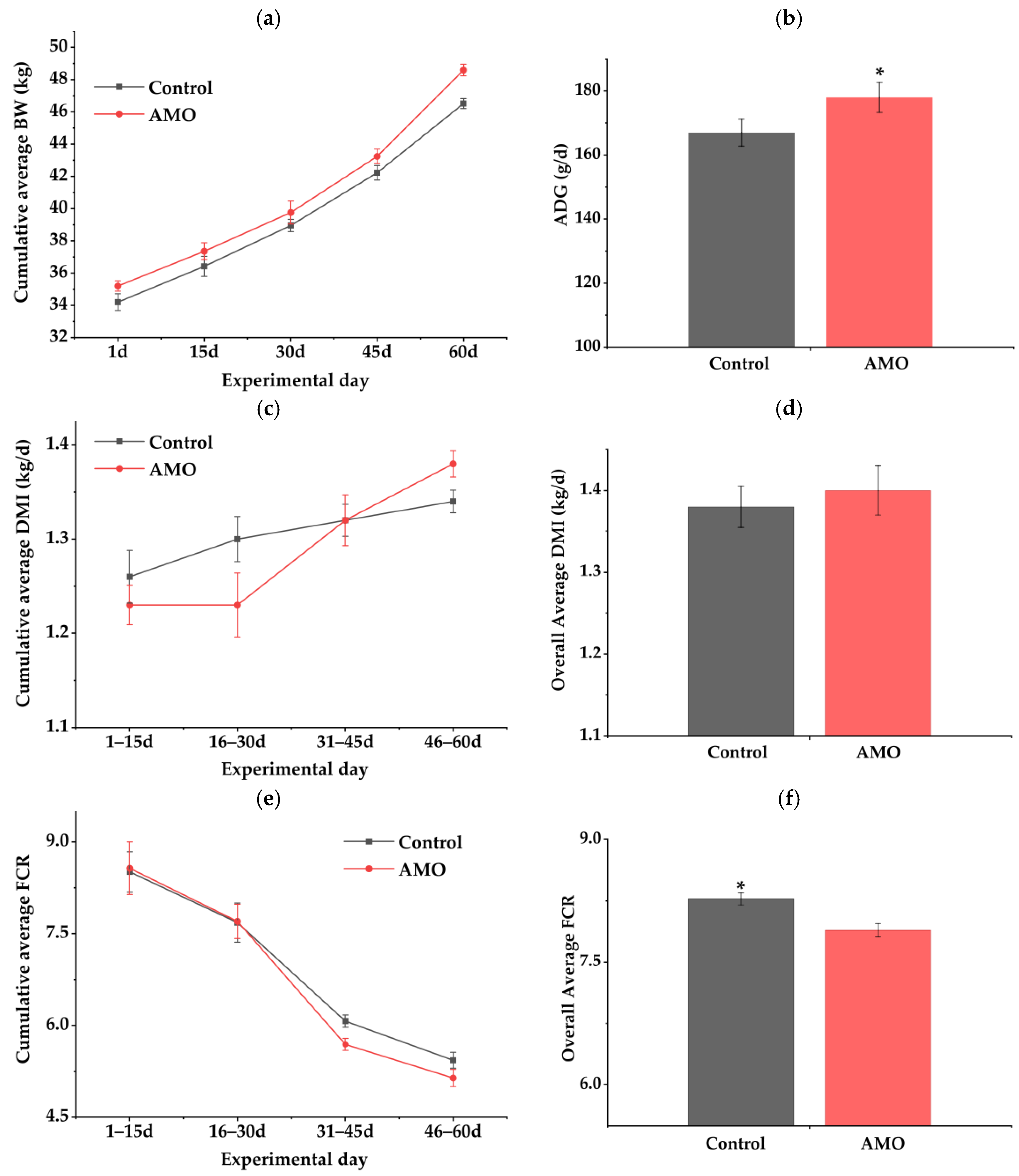
Non-antibiotic feed additives, including plant essential oils and other plant-derived bioactive compounds, have often been reported to have no significant effects on feed intake or final body weight but can improve ADG and FCR [
12,
19,
52]. A similar pattern was observed in the present study, suggesting that the improvement in growth performance may be associated with enhanced feed utilization efficiency rather than increased feed intake. Previous studies have shown that supplementation with different forms of
Allium mongolicum Regel, including dried powder, water-soluble extracts, and flavonoid preparations, can improve ADG and FCR in finishing lambs to varying extents [
34,
35,
37], which is consistent with the findings of the present study. Although ADG was significantly improved by AMO supplementation, no significant difference was observed in final body weight. This discrepancy may be related to the relatively short experimental period and the inherent variation in body weight among individual animals. Similar patterns have been reported in studies evaluating plant-derived feed additives in ruminants, where improvements in growth efficiency did not always translate into significant differences in final body weight [
12,
52].
Previous studies have suggested that
Allium-derived additives and other plant essential oils may improve growth performance by modulating rumen fermentation patterns, particularly enhancing propionate production and improving antioxidant and immune status [
7,
19,
53,
54]. These changes may contribute to improved nutrient utilization and muscle deposition. However, inconsistent effects on ADG and FCR have also been reported for different forms of
Allium mongolicum extracts [
33,
55], which may be related to differences in extract composition, bioactive constituents, and supplementation levels. In the present study, the AMO preparation contained a relatively high proportion of volatile compounds, which may be associated with its positive effects on growth efficiency. However, the underlying mechanisms require further investigation. In addition, further studies evaluating multiple supplementation levels are warranted to better characterize dose-dependent responses of AMO in finishing lambs.
Although AMO did not significantly affect final body weight, it increased GR value and loin muscle area, indicating potential improvements in lean tissue deposition and carcass composition. Similar effects have been reported for
Allium mongolicum extracts and other plant-derived additives in finishing lambs [
12,
35,
37]. One possible explanation is that plant-derived bioactive compounds alter rumen fermentation patterns, thereby improving energy utilization and supporting muscle deposition [
19,
22,
53]. These findings suggest that AMO may be associated with nutrient partitioning toward lean tissue accretion rather than fat deposition.
In addition, AMO supplementation significantly reduced drip loss in the LT muscle, suggesting a potential improvement in meat water-holding capacity. Drip loss is closely associated with muscle cell membrane integrity and oxidative stability. Previous studies have demonstrated that
Allium mongolicum and its extracts possess considerable antioxidant activity and can improve systemic antioxidant status in finishing lambs [
31,
56]. Therefore, the reduced drip loss observed in the present study may be partly associated with improved oxidative status and reduced muscle cell damage. The underlying mechanisms require further investigation.
Dietary supplementation with AMO did not significantly affect the hydrolyzed amino acid composition of the LT muscle, which is consistent with previous studies showing that protein-bound amino acid profiles in muscle are relatively stable under different nutritional interventions [
7,
11,
13]. Similarly, essential amino acid scores and essential amino acid index remained unchanged between treatments, indicating that AMO did not alter the overall nutritional quality of muscle protein. These findings suggest that the effects of AMO were not associated with changes in structural protein composition but may be related to alterations in metabolically active amino acid pools, such as FAAs.
In contrast to the hydrolyzed amino acid profile, AMO supplementation significantly increased the concentrations of total FAA and total essential FAA in the LT muscle. FAAs are metabolically active compounds involved in protein turnover and muscle metabolism [
57,
58,
59]. Previous studies have suggested that plant-derived bioactive compounds may increase amino acid availability by modulating rumen fermentation, reducing excessive amino acid deamination, and enhancing microbial protein synthesis [
27,
28]. Similar increases in muscle FAA concentrations have also been reported following supplementation with other plant-derived additives, including
Cannabis sativa residues and thyme essential oil [
12,
29,
60]. Therefore, the elevated FAA levels observed in the present study may be associated with improved amino acid utilization and metabolic regulation.
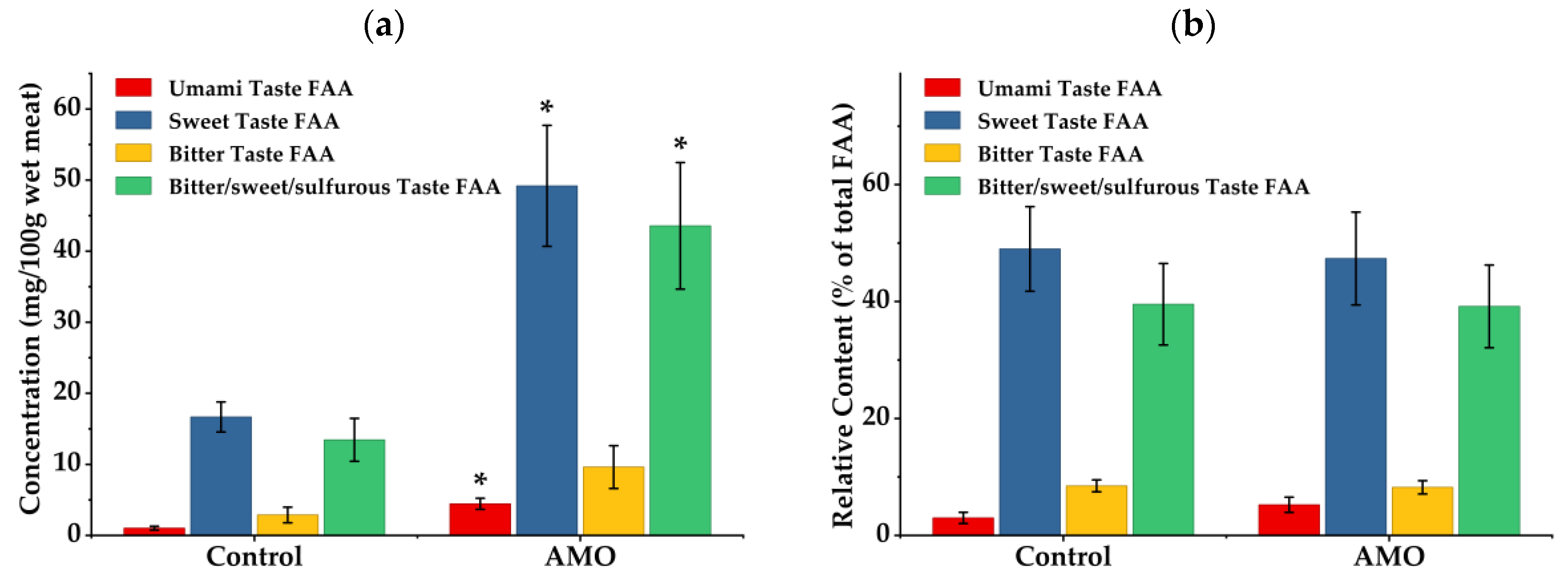
From the perspective of meat quality, FAAs are key precursors determining flavor characteristics, and their variation has a direct impact on sensory attributes. Different FAA contribute to distinct taste modalities: glutamic acid and aspartic acid are primarily associated with umami taste, glycine and alanine contribute to sweetness, whereas BCAAs, such as valine, leucine, and isoleucine, are closely related to bitterness and subsequent flavor formation [
8,
10,
14]. In the current study, AMO significantly enhanced the concentrations of several flavor-related amino acids, including alanine, glutamic acid, glycine, and BCAA. Correspondingly, the total levels of umami, sweet, and bitter/sweet/sulfurous taste FAAs were also markedly elevated, suggesting that AMO enhances the reservoir of flavor precursors in lamb meat. Furthermore, during thermal processing, FAAs can undergo Maillard reactions and Strecker degradation, leading to the formation of various volatile compounds. For example, sulfur-containing compounds derived from methionine and aldehydes generated from BCAAs are known to play important roles in the characteristic flavor of lamb [
15,
16,
17,
61]. Although the relative proportions of different taste-related amino acids within total FAA were not significantly altered in this study, the increase in their absolute concentrations may still contribute to enhanced flavor intensity and overall sensory quality. Collectively, these findings suggest that AMO may improve the flavor potential of lamb meat by selectively elevating FAA levels, without altering the fundamental nutritional value of muscle protein, which may represent one of the mechanisms underlying its beneficial effects on meat quality.



 ,
,