1. Introduction
The Pacific white shrimp (
Penaeus vannamei) is widely cultivated around the world due to its rapid growth, strong resistance to disease and environmental stress, and broad salinity tolerance [
1]. The continued expansion of this industry depends heavily on the development of more cost-effective feeds, as feed accounts for 40–60% of total production costs [
2]. Protein is the core nutritional component supporting shrimp growth and development, and both its source and utilization efficiency directly influence economic returns and environmental sustainability in aquaculture. Fishmeal has long served as the primary protein source in shrimp feeds due to its comprehensive nutrient profile and high palatability, with inclusion levels in commercial diets typically exceeding 20% [
3]. However, increasing pressure on global fishmeal supplies and sustained price increases have made the development of fishmeal replacement technologies an urgent priority for the sustainable development of the aquaculture industry [
4,
5]. Plant protein sources, such as soybean meal and peanut meal, are considered ideal alternatives to fishmeal due to their low cost and stable supply, and have already been incorporated into commercial feeds [
6].
Although previous studies have demonstrated that reducing fishmeal inclusion to 5% in
P. vannamei diets does not significantly impair growth performance, completely replacing fishmeal with plant protein sources remains challenges [
1]. Using multiple families of
P. vannamei, Dai et al. [
7]. reported that when shrimp were fed a plant-based (fishmeal-free) diet, they exhibited significantly higher residual feed intake (RFI) and lower average daily weight gain (ADG) compared to those fed a fishmeal-based diet, suggesting that plant-based diets may reduce yields. Moreover, genetic correlations between diets for RFI and ADG were moderate to low (0.646 and 0.296, respectively), indicating pronounced genotype-by-diet interactions. These findings reveal substantial family-level variation in response to plant-based diet. Exploiting such family-level variation through genetic improvement therefore holds promise for developing shrimp strains with enhanced utilization efficiency of plant-based diets, thereby reducing production costs and promoting aquaculture sustainability.
To this end, unraveling the systemic adaptive mechanisms of
P. vannamei under nutritional stress induced by plant-based diets has become a key research focus. Previous studies have explored shrimp responses to plant protein diets at physiological and molecular levels. For instance, replacing fishmeal with different soybean meal sources (fermented soybean meal and conventional soybean meal at 8% inclusion rates) has been shown to affect growth performance, enzyme activities, and the expression of key immune-related genes in
P. vannamei, with stress responses induced by antigenic proteins identified as an important factor limiting feed utilization efficiency [
8]. Similarly, replacing 50% of soybean meal with fermented rapeseed meal resulted in significantly increased residual feed and feed loss in
P. vannamei, and transcriptomic analyses revealed corresponding changes in related signaling pathways [
9]. However, the systemic, multi-tissue molecular regulatory mechanisms underlying the response of
P. vannamei to nutritional stress caused by plant-based diets remain largely unresolved. Feed utilization efficiency represents the integrated outcome of a series of complex physiological processes, including digestion, absorption, metabolism, and energy allocation, and can serve as an ideal link between macroscopic phenotypic responses to nutritional stress and their underlying molecular mechanisms [
10].
Weighted gene co-expression network analysis (WGCNA) is a powerful systems biology approach that enables the identification of gene modules exhibiting highly coordinated expression patterns associated with target traits from transcriptomic data, making it particularly well suited for elucidating the molecular mechanisms underlying complex traits [
11,
12]. This approach has been successfully applied to investigate stress-related biological responses in various aquatic species, highlighting its utility in identifying key pathways and core regulatory genes. For example, WGCNA has been used to reveal strong negative correlations between specific metabolites within co-expression modules and the gut microbiota in
P. vannamei under pesticide exposure, demonstrating its potential for linking metabolic responses with microbial community changes [
13]. In addition, WGCNA-based analyses have systematically characterized gene expression dynamics in the gills and hepatopancreas of
Macrobrachium rosenbergii under hypoxia–reoxygenation stress, identifying key modules and candidate genes involved in stress adaptation and metabolic regulation, including those associated with the HIF-1 signaling pathway [
14]. Similarly, WGCNA has been applied to investigate thermal tolerance in the Manila clam (
Ruditapes philippinarum), identifying multiple gene modules significantly associated with temperature and revealing key molecular mechanisms related to cellular metabolism, apoptosis, and endoplasmic reticulum stress [
15]. Despite the broad applicability of WGCNA in stress-related studies, to date, no studies have employed this approach to systematically analyze feed utilization efficiency in
P. vannamei fed plant-based diets.
In this study, P. vannamei were reared under a plant-based diet to systematically evaluate their feed utilization efficiency. Multi-tissue transcriptome sequencing was performed on key metabolic and digestive organs, including the hepatopancreas, intestine, and muscle. By applying multi-tissue WGCNA, we identified co-expression modules significantly associated with feed utilization efficiency and further screened key candidate genes potentially regulating the utilization efficiency of plant-based diets. Collectively, this study aims to systematically elucidate the molecular genetic basis underlying the adaptation of P. vannamei to plant-based diets, thereby providing a theoretical foundation for the genetic breeding of shrimp strains with enhanced utilization efficiency of plant-based diets.
2. Materials and Methods
2.1. Experimental Design
In this study, a plant-based (fishmeal-free) diet was formulated using soybean meal and peanut meal as fishmeal replacements (0% fishmeal, 38% crude protein) for the feeding experiment. The experimental pelleted diets were prepared following the methods described by Xu et al. [
16]. The ingredients and proximate composition of the experimental diet are presented in
Table 1. Experimental
P. vannamei were obtained from a commercial fast-growing strain. After being purchased at the post-larval (PL5) stage, shrimp were reared in circular culture tanks with a water volume of 2 m
3. When the shrimp reached a body length of 6–8 cm, a total of 480 individuals were selected for the feeding experiment. The experiment was conducted using a recirculating aquaculture system equipped with individual culture units (20 cm × 15 cm × 10 cm, length × width × height). Each shrimp was housed individually in a separate culture unit. Water flowed through the entire system, but each unit was physically isolated from the others by solid side walls, so no direct contact between adjacent units occurred except for water exchange. A specially designed mesh installed at the bottom of each unit allowed feces to pass through while retaining feed particles. The experiment was carried out at the Whiteleg Shrimp Breeding Center of BLUP Aquabreed Co., Ltd., located in Weifang, Shandong Province, China.
2.2. Feeding Trial and Data Collection
Before the formal experiment, all shrimp underwent a one-week acclimation period during which they were fed a commercial fishmeal-based feed. During the trial, a separate plastic tube was prepared for each shrimp to hold its pelleted feeds. Shrimp were fed three times daily at 09:00, 14:00, and 18:00. The amount of diet per meal was carefully controlled to ensure consumption within half an hour. Any uneaten pellets were collected in a separate container half an hour after each feeding and then dried until a stable weight was achieved. Approximately 80% of the seawater in the tanks was exchanged daily, and the temperature was maintained at 27 ± 1 °C (mean ± SD), with salinity kept at approximately 30. In addition, dissolved oxygen was maintained at 6.0–7.0 mg/L through continuous aeration, and the photoperiod was set to follow the natural photoperiod (lights on from dawn to dusk). Molts and dead shrimp were removed daily.
The feeding trial was conducted from 27 September 2024 to 7 November 2024 and lasted for 42 days. One day before the experiment, the initial body weight (
) and initial feed weight (
) of each shrimp were recorded. At the end of the experiment, the harvest body weight (
), remaining feed weight (
), and total uneaten feed weight (
) of surviving shrimp were measured. Because sex could only be determined for a subset of individuals at the end of the experiment, sex information was not collected. ADG and daily feed intake (DFI) were calculated as follows:
was used as the indicator of feed utilization efficiency. RFI was defined as the difference between the actual amount of feed intake and the expected feed intake. As energy intake from feed during the shrimp growth stage is primarily allocated to growth and maintenance, expected DFI was estimated using a nonlinear approximation model as follows:
where
is the mid-weight (
+
),
is the metabolic mid-weight,
and
are as described above, and b
1, b
2 and b
3 are partial regression coefficients. With observed DFI serving as the dependent variable, the coefficients were derived using the nonlinear regression procedure nls implemented in R (version 4.2.3).
RFI was calculated as observed DFI minus expected DFI. A negative RFI means an animal consumes less feed than expected, while a positive RFI indicates higher feed intake. Animals with low RFI are more efficient, and those with high RFI are less efficient.
2.3. Transcriptome Sequencing
After the feeding trial, 50 individuals exhibiting clear differences in RFI were selected based on the RFI distribution of all surviving shrimp. For each individual, intestine, hepatopancreas, and muscle tissues were collected. Total RNA was extracted from all samples using TRIzol reagent (Invitrogen, Carlsbad, CA, USA). RNA purity and concentration were evaluated using a NanoDrop 2000 spectrophotometer (Thermo Scientific, Waltham, MA, USA), and RNA integrity was assessed using an Agilent 2100 Bioanalyzer (Agilent Technologies, Santa Clara, CA, USA).
For RNA samples that passed quality control, mRNA was enriched using Oligo (dT) magnetic beads to ensure high-quality mRNA. The enriched mRNA was fragmented for subsequent cDNA synthesis. First-strand cDNA was synthesized using random hexamer primers, followed by second-strand cDNA synthesis. cDNA libraries were constructed via adapter ligation and PCR amplification, and library quality was assessed using an Agilent 2100 Bioanalyzer. Qualified libraries were sequenced on an Illumina NovaSeq 6000 platform (Illumina, San Diego, CA, USA) to generate 150 bp paired-end reads. Library preparation and sequencing were conducted by Qingdao OE Biotech Co., Ltd., Qingdao, China.
Raw reads were subjected to quality control using fastp (version 0.23.4) [
17] to obtain clean reads. Following genome index construction, clean reads were aligned to the reference genome (GCF_003789085.1, NCBI) [
18] using HISAT2 (version 2.2.1) [
19] to obtain genomic alignment information and sample-specific sequence features. Read counts mapped to protein-coding genes were obtained using HTSeq-count (version 2.0.1) [
20], generating a raw expression matrix. Gene expression levels were calculated using the transcripts per million (TPM) method to normalize for gene length and sequencing depth, resulting in gene expression profiles suitable for subsequent analyses.
2.4. Construction of Weighted Gene Co-Expression Networks
Genes with low expression or low variability were filtered out based on the following criteria: mean TPM > 3, detection rate (proportion of samples with TPM > 0) > 60%, and coefficient of variation > 0.2, and the retained genes were used for WGCNA. Weighted gene co-expression networks were constructed using the WGCNA package (version 1.73) in R. Hierarchical clustering of samples was performed using the hclust function to assess sample relationships and identify potential outliers. To construct co-expression networks that satisfied scale-free topology criteria, the pickSoftThreshold function was used to determine the optimal soft-thresholding power, ensuring that the scale-free topology fit index (R2) reached a stable level while maintaining reasonable mean connectivity. Different soft-thresholding powers were applied for different tissues to ensure that each network exhibited appropriate scale-free topology characteristics. Based on the selected thresholds, the blockwiseModules function was used to construct co-expression networks and identify gene modules via dynamic tree cutting. The minimum module size was set to 50 genes. The first principal component of each module was calculated as the module eigengene (ME), representing the overall expression pattern of genes within that module. Modules with similar expression patterns were merged using a module merging threshold of 0.15. Within each tissue, every module was assigned a distinct color.
2.5. Identification of Trait-Specific Modules and Hub Genes
Pearson correlation coefficients (r) and corresponding p-values between module eigengenes and RFI were then calculated. Modules with an absolute correlation coefficient greater than 0.4 were defined as RFI-associated trait-specific modules. Gene connectivity within each module was calculated using the WGCNA package in R. Using the topological overlap matrix (TOM) obtained from the network construction step, the intra-module connectivity of a gene was defined as follows: first, a soft-thresholding power transformation was applied to the correlation coefficients between genes; then, for a given gene, the sum of the weighted edge strengths between it and all other genes within the same module was calculated. This metric reflects the centrality of that gene in the co-expression network. Generally, larger modules contain more genes, and the average connectivity per gene tends to be higher due to the greater number of neighbors. Since connectivity is a sum-based metric, genes in larger modules naturally tend to have higher absolute connectivity values. Functional annotation of module genes was performed based on the NCBI database. In each trait-specific module, the top five genes with functional annotations and the highest connectivity values were selected as hub genes.
2.6. Validation of Hub Genes
To validate the association between hub genes and RFI under a plant-based diet, an independent feeding experiment was conducted. In 2025, 30 newly established families were selected, and 15 individuals (6–8 cm body length) from each family were used, resulting in a total of 450 shrimp for RFI evaluation. The experiment was conducted from 17 July 2025 to 27 August 2025, lasting 42 days. Feeding management and trait measurement procedures were consistent with those described in
Section 2.2. After the experiment, RFI phenotypes were calculated for all surviving shrimp. Based on the RFI distribution, 125 individuals with pronounced phenotypic differences were selected as the validation population. These individuals were ranked according to RFI values, and the 30 shrimp with the highest RFI values and the 30 shrimp with the lowest RFI values were defined as the low feed efficiency group and the high feed efficiency group, respectively. Intestine, hepatopancreas, and muscle tissues were collected from each individual, resulting in 30 samples per tissue type. All tissue samples were processed following the standardized procedures described in
Section 2.3 for total RNA extraction, quality assessment, library construction, transcriptome sequencing, and TPM-based expression quantification.
For each hub gene, the normality of expression values within the high and low RFI groups were assessed using the Shapiro–Wilk test, and homogeneity of variances between the two groups were assessed using Levene’s test. If both assumptions were met for a given gene, an independent-sample t-test was applied; otherwise, the Mann–Whitney U test was used. Log2-transformed fold changes (log2FCs) were calculated for the low feed efficiency group relative to the high feed efficiency group. To control for multiple hypothesis testing, p-values were adjusted using the false discovery rate (FDR) method. To retain a broader set of candidate genes for subsequent molecular studies, adjusted p-values (q) < 0.1 were considered statistically significant. For the genes that were validated as significant, Pearson correlation analysis between their expression levels and ADG was conducted using all 60 individuals from both the high and low RFI groups, with p < 0.05 considered statistically significant.
3. Results
3.1. Descriptive Statistics of Phenotypes
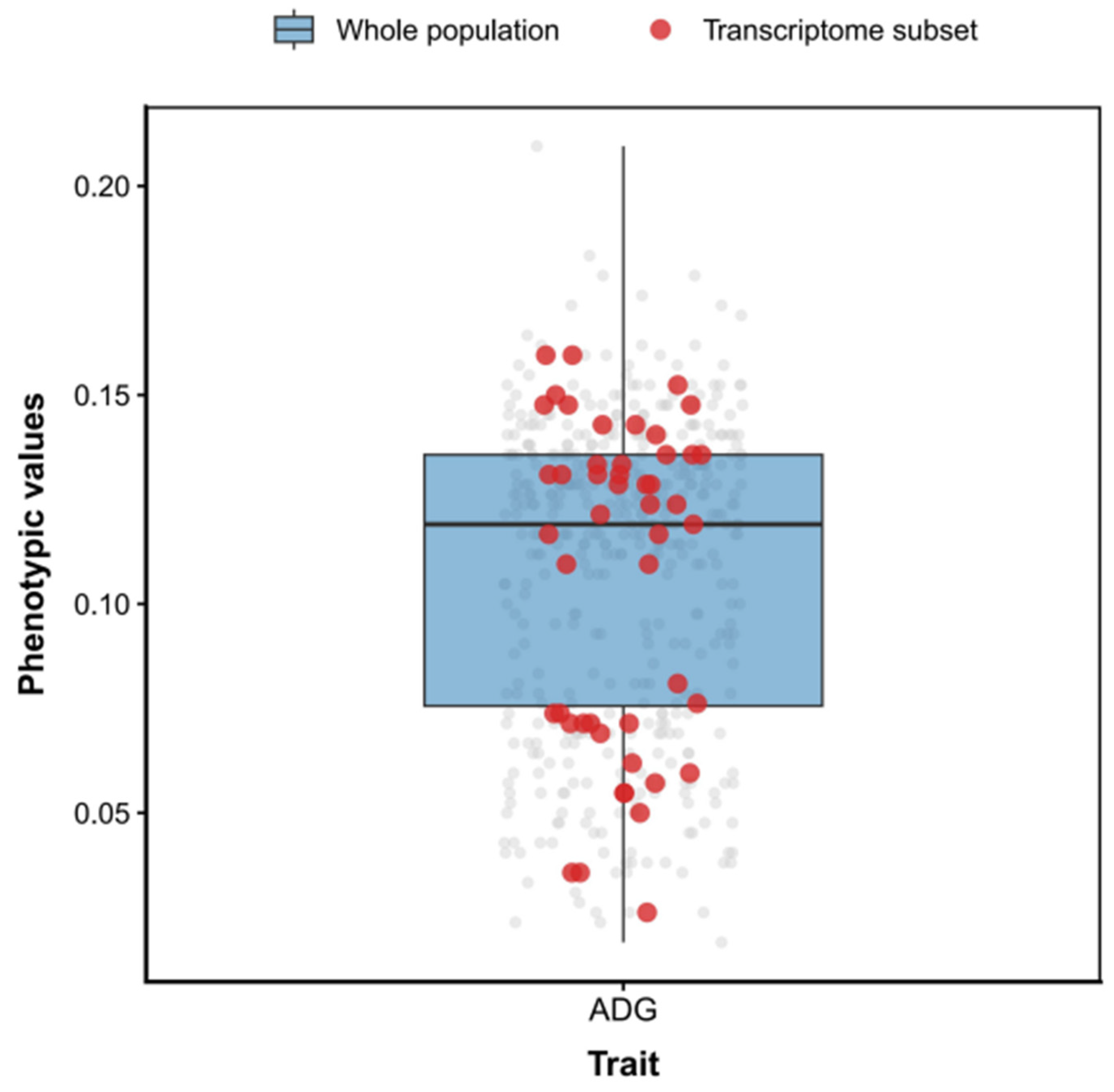
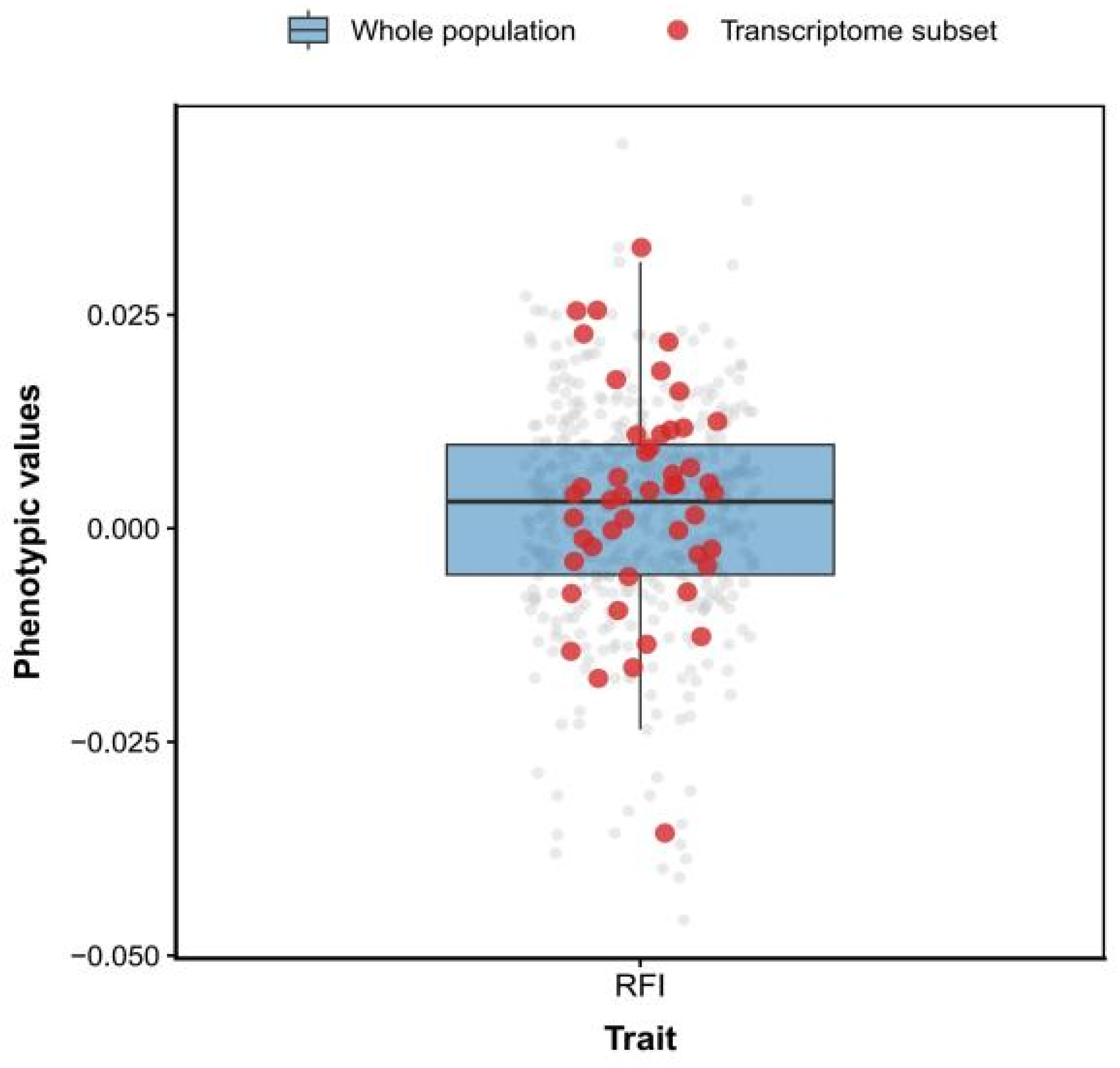
At the end of the experiment, a total of 468 individuals were harvested. ADG values for the entire population ranged from 0.019 to 0.210 g/d (
Figure 1), with a mean of 0.109 g/d, while RFI ranged from −0.046 to 0.045 g/d (
Figure 2), with a mean of 0.002 g/d. In the subset of 50 individuals selected for transcriptome sequencing, ADG ranged from 0.026 to 0.160 g/d (
Figure 1), with an average of 0.105 g/d, and RFI ranged from −0.036 to 0.033 g/d (
Figure 2), with an average of 0.003 g/d. The selected 50 individuals largely cover the main variation range of the whole population in both ADG and RFI phenotypes, making them suitable for subsequent WGCNA.
3.2. Transcriptome Sequencing Statistics Across Tissues
Transcriptome sequencing of intestinal tissue from 50 individuals yielded 328.47 Gb of clean data, with per-individual data ranging from 5.87 to 7.06 Gb. The proportion of Q30 bases ranged from 95.79% to 97.58%, with an average GC content of 46.55%. Genome alignment rates ranged from 85.24% to 89.15%, resulting in the detection of 21,010 genes. For hepatopancreas tissue, sequencing generated 328.80 Gb of clean data, with per-individual data ranging from 5.93 to 7.06 Gb. Q30 bases ranged from 97.35% to 98.16%, with an average GC content of 48.74%. Genome alignment rates ranged from 85.97% to 89.47%, yielding 20,874 genes. For muscle tissue, sequencing produced 332.14 Gb of clean data, with per-individual data ranging from 5.91 to 7.06 Gb. Q30 bases ranged from 96.57% to 98.50%, with an average GC content of 52.30%. Genome alignment rates ranged from 76.93% to 92.72%, resulting in the identification of 19,188 genes.
3.3. Co-Expression Network Construction and Module Detection
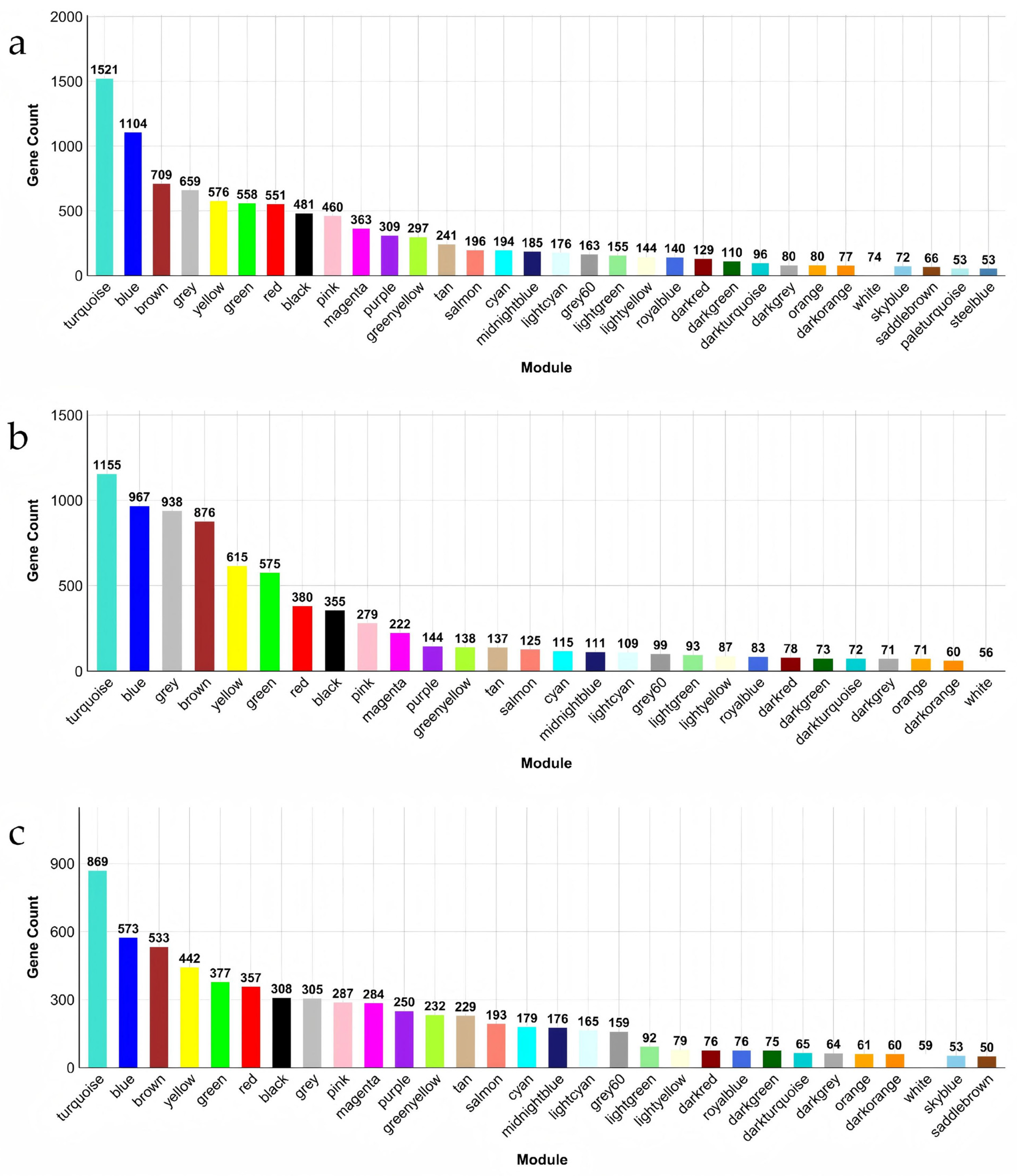
Prior to WGCNA, gene filtering was performed for each tissue. After quality control, 10,072 genes in the intestine, 8084 genes in the hepatopancreas, and 6728 genes in the muscle were retained. For the intestine, a soft-thresholding power of 5 was applied, resulting in 32 co-expression modules (
Figure 3a). The turquoise module contained the largest number of genes (1521), whereas the steel blue module contained the fewest (53), with 659 genes remaining unassigned (gray module). For the hepatopancreas, a soft-thresholding power of 6 yielded 28 modules (
Figure 3b), with the turquoise module containing the most genes (1155) and the white module the fewest (56), with 938 genes remaining unassigned. For the muscle, a soft-threshold power of 5 produced 30 modules (
Figure 3c), with the turquoise module containing 869 genes and the saddle brown module the fewest (50), and 305 genes remaining unassigned.
3.4. Identification of Trait-Specific Modules
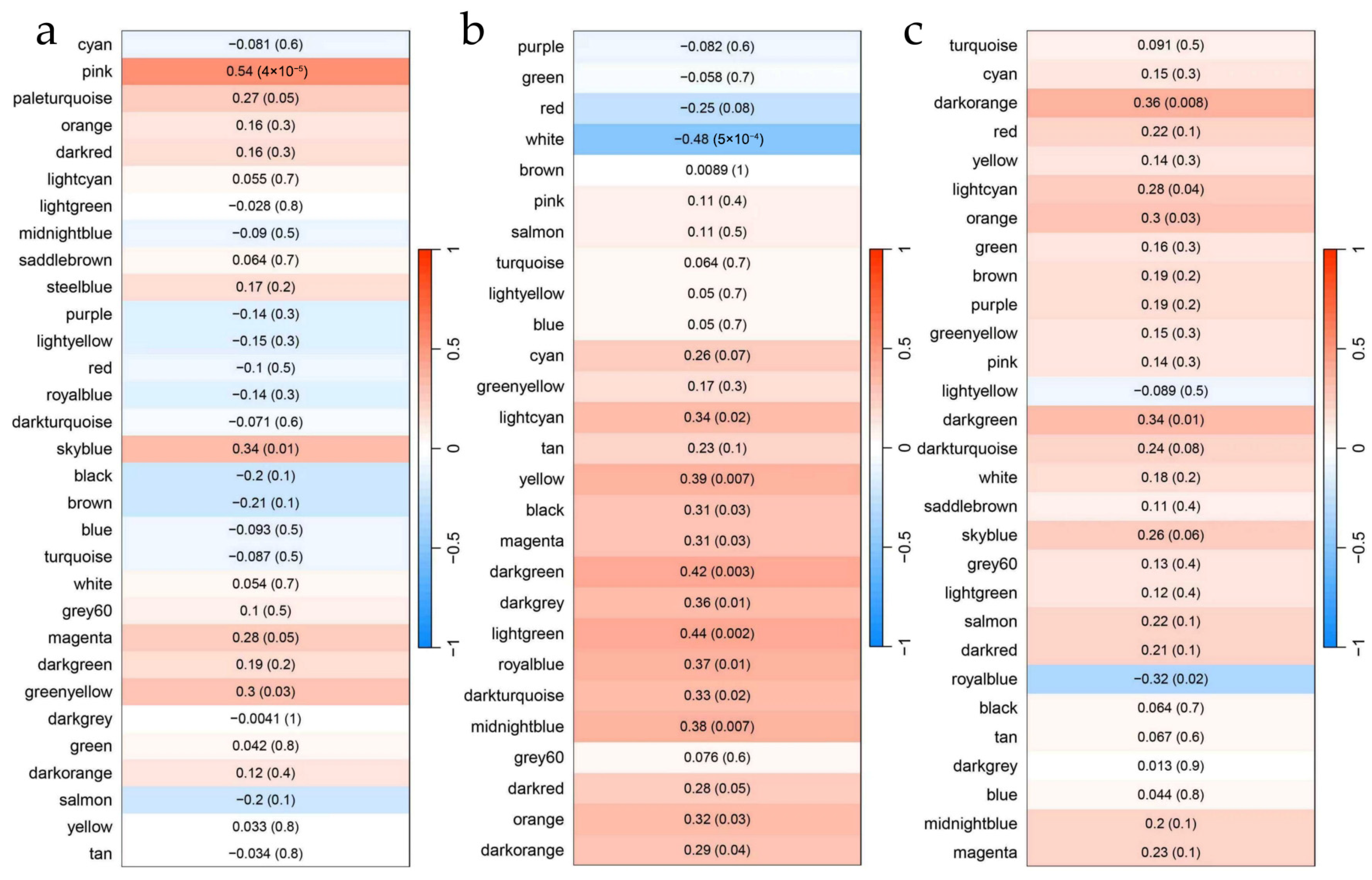
Correlation heatmaps between tissue-specific modules and RFI (
Figure 4) indicated that, in the intestine, module–RFI correlation coefficients ranged from −0.21 to 0.54. Only the pink module met the significance threshold (|r| > 0.4,
p < 0.05), with a correlation coefficient of 0.54 (
p = 4.0 × 10
−5). In the hepatopancreas, module–RFI correlations ranged from −0.48 to 0.44, and three modules satisfied the criteria: white (r = −0.48,
p = 5.0 × 10
−4), dark green (r = 0.42,
p = 0.003), and light green (r = 0.44,
p = 0.002). In contrast, no modules in the muscle exhibited |r| > 0.4 with
p < 0.05. In summary, four RFI-specific modules were identified across tissues.
3.5. Screening of Hub Genes
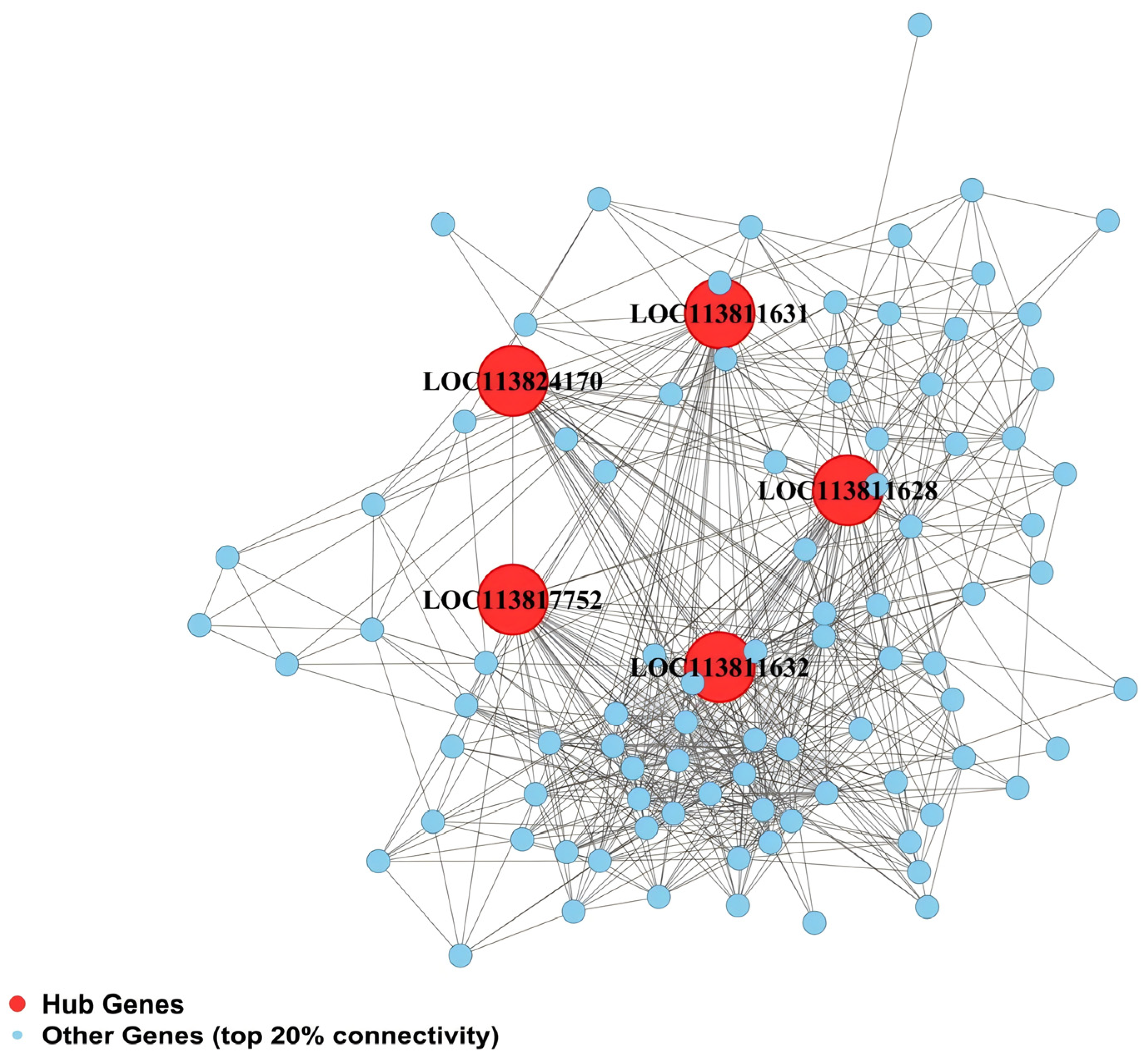
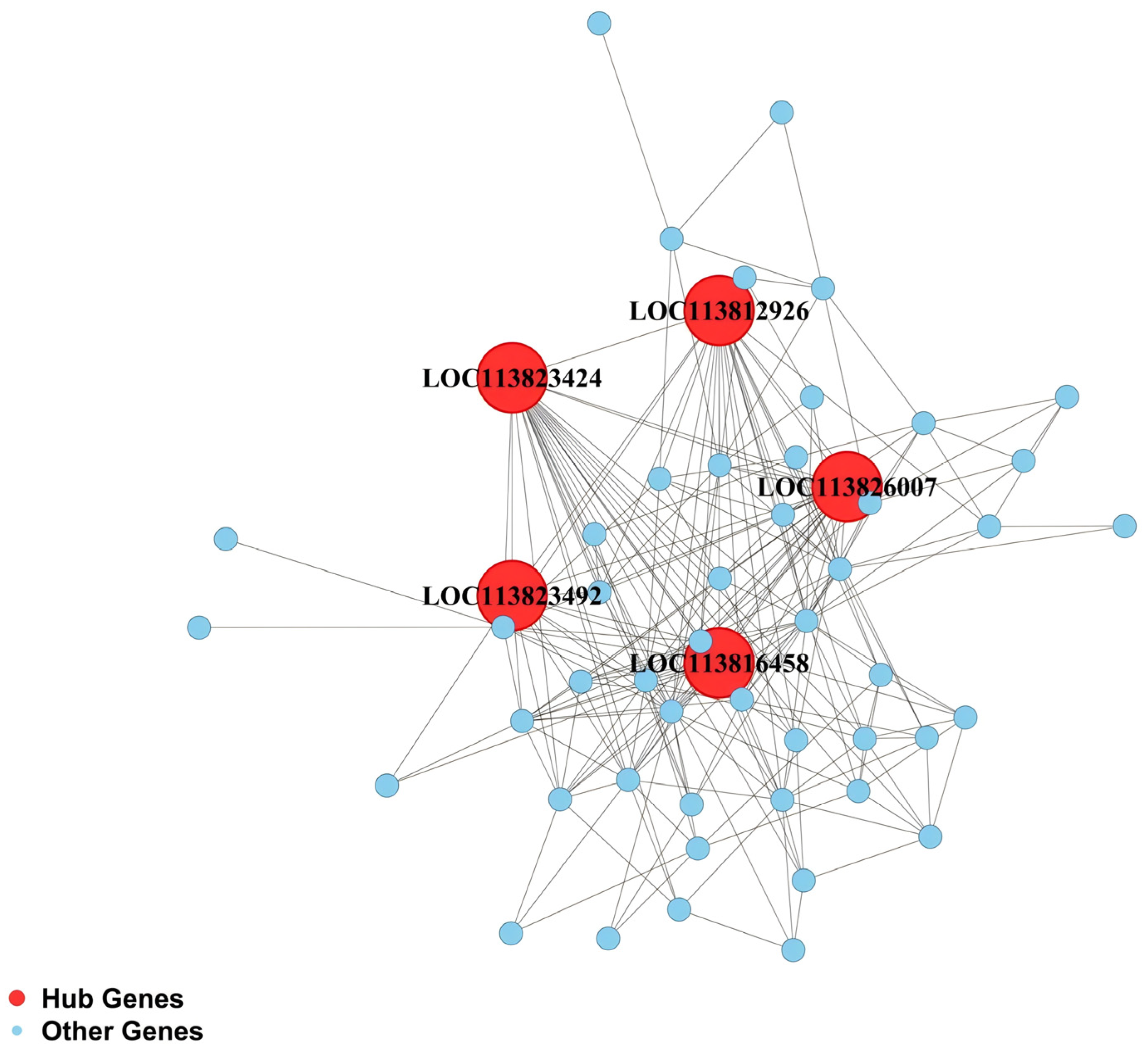
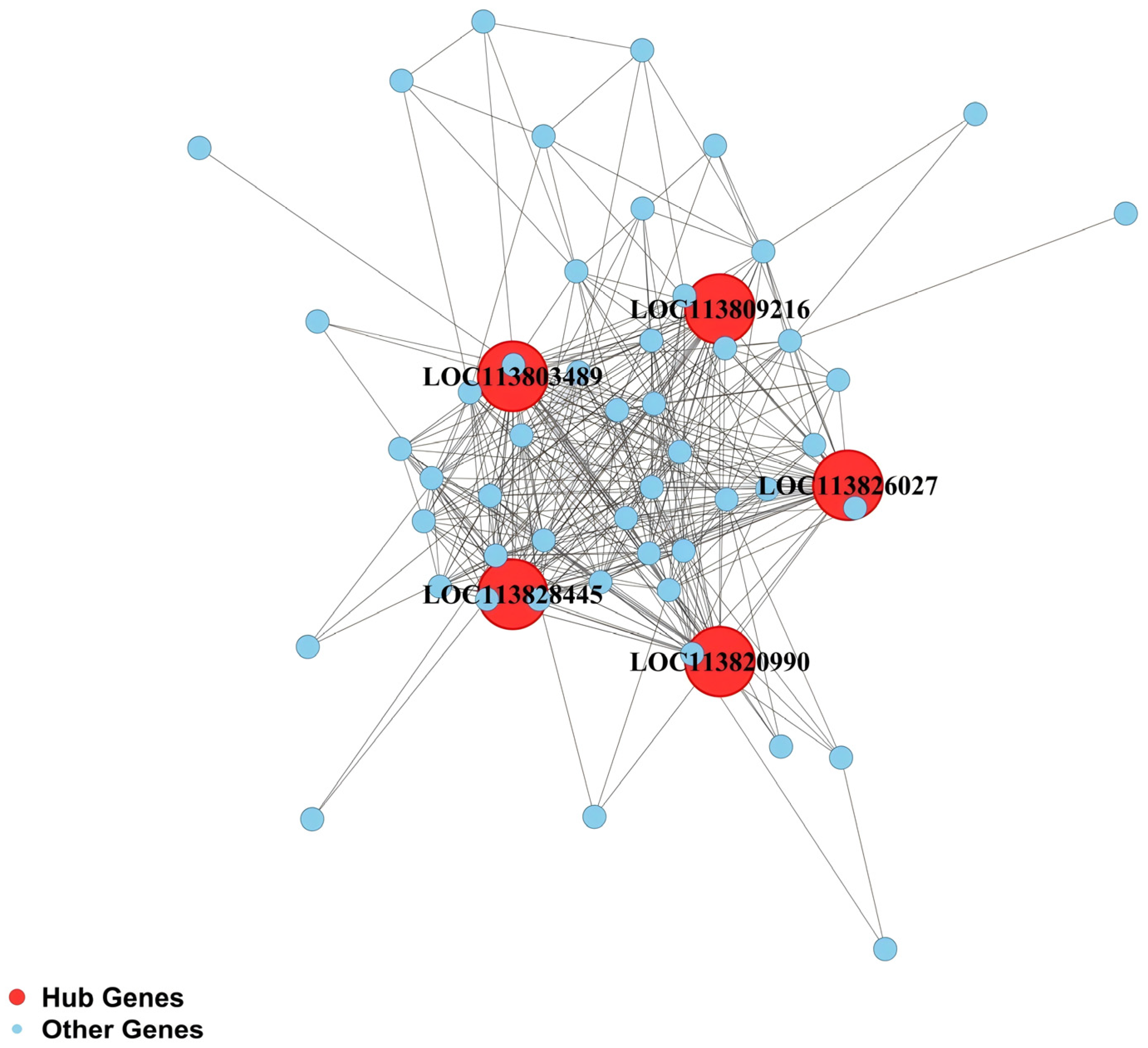
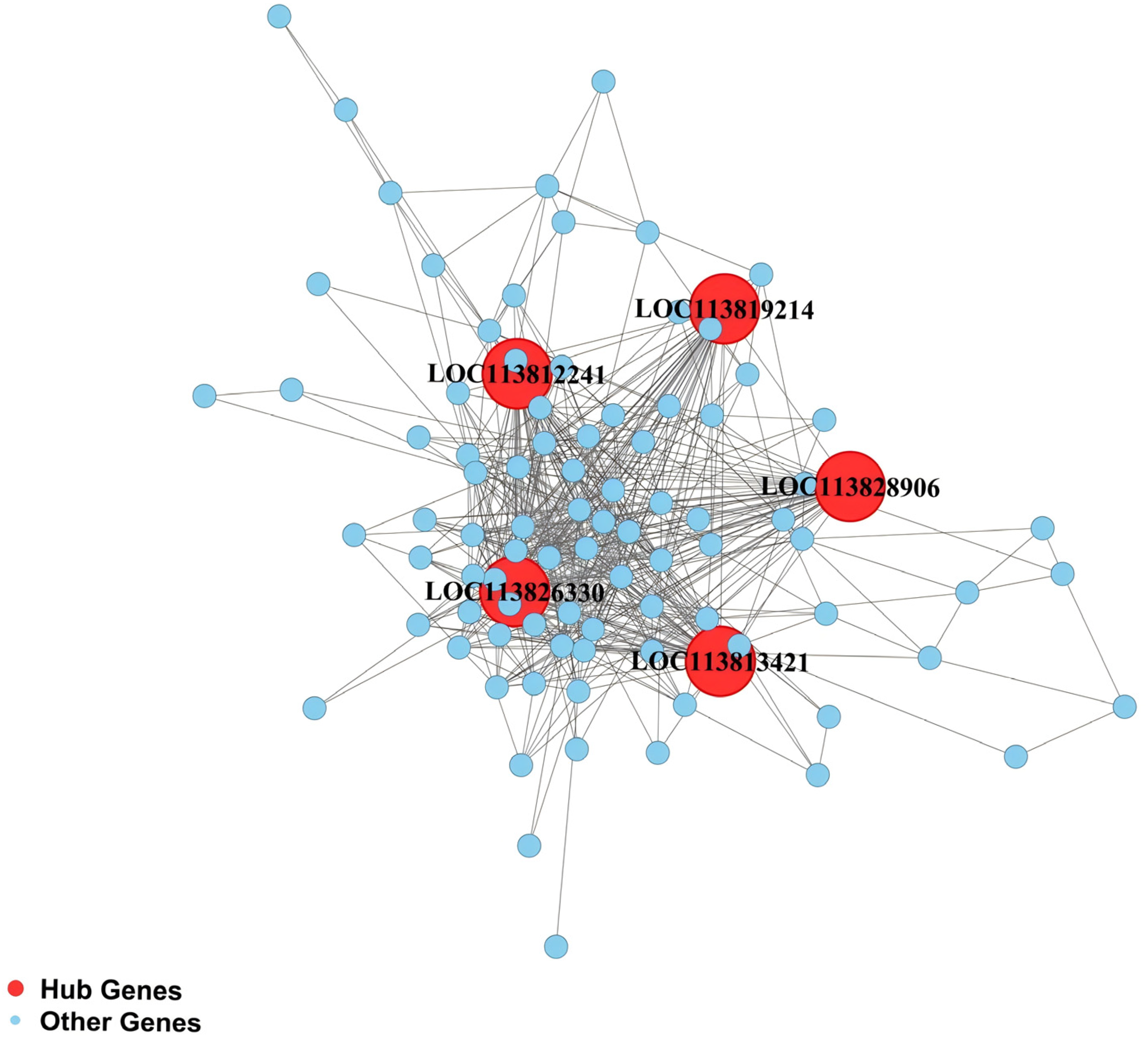
Gene connectivity analysis was performed for the four RFI-specific modules to construct hub gene co-expression networks, and the top five hub genes per module were identified (
Figure 5,
Figure 6,
Figure 7 and
Figure 8), yielding 20 functionally annotated hub genes (
Table 2).
In the intestine pink module, five hub genes were identified, primarily involved in cellular energy metabolism and mitochondrial function. LOC113824170 and LOC113811631 encode mitochondrial inner membrane translocase subunits Tim13 and TIM50-C, respectively, coordinating mitochondrial protein import. LOC113811632 encodes ketohexokinase, which participates in sugar metabolism. LOC113811628 encodes a 2-oxoglutarate and iron-dependent oxygenase domain-containing protein 3, potentially involved in redox regulation. LOC113817752 encodes a NAP domain-containing SET protein, generally involved in chromatin modification and gene expression regulation.
In the hepatopancreas, hub genes in the white module are implicated in mitochondrial function, transcriptional regulation, and signal transduction. LOC113826007 encodes replication in mitochondria 2, which regulates mitochondrial DNA replication. LOC113812926 and LOC113823492 encode zinc finger protein 836 and BTB/POZ domain-containing protein 6, respectively, likely functioning as transcriptional regulators. LOC113823424 encodes MAP kinase-interacting serine/threonine-protein kinase 1, which is involved in MAPK pathway regulation. LOC113816458 encodes protein fem-1 homolog C, which may participate in cell differentiation and signal transduction.
Hub genes in the dark green module are highly enriched in the V-type proton ATPase (V-ATPase) complex. These include LOC113826027 (21 kDa proteolipid subunit c′′), LOC113809216 (subunit D), LOC113803489 (subunit VhaSFD), LOC113828445 (subunit Vha44), and LOC113820990 (ribonuclease kappa-B). The first four genes encode components of the core V-ATPase complex, which maintains intracellular pH homeostasis, lysosomal function, and vesicle transport.
Hub genes in the light green module are broadly involved in lipid metabolism and protein modification. These include LOC113828906 (sphingomyelin phosphodiesterase), LOC113819214 (neutral ceramidase), LOC113812241 (pantetheinase), LOC113826330 (astacin, a metalloprotease), and LOC113813421 (palmitoyl-protein thioesterase 1). These genes are collectively involved in the regulation of lipid turnover, sphingolipid metabolism, and protein deacylation processes.
Figure 5.
Co-expression regulatory network of hub genes in the intestine pink module.
Figure 5.
Co-expression regulatory network of hub genes in the intestine pink module.
Figure 6.
Co-expression regulatory network of hub genes in the hepatopancreas white module.
Figure 6.
Co-expression regulatory network of hub genes in the hepatopancreas white module.
Figure 7.
Co-expression regulatory network of hub genes in the hepatopancreas dark green module.
Figure 7.
Co-expression regulatory network of hub genes in the hepatopancreas dark green module.
Figure 8.
Co-expression regulatory network of hub genes in the hepatopancreas light green module.
Figure 8.
Co-expression regulatory network of hub genes in the hepatopancreas light green module.
Table 2.
Hub genes in RFI-specific modules.
Table 2.
Hub genes in RFI-specific modules.
| Tissue | Module | Hub Gene | Connectivity | Description |
|---|
| Intestine | pink | LOC113824170 | 62.1 | mitochondrial import inner membrane translocase subunit Tim13 |
| | | LOC113811632 | 61.6 | ketohexokinase |
| | | LOC113811631 | 60.6 | mitochondrial import inner membrane translocase subunit TIM50-C |
| | | LOC113811628 | 60.3 | 2-oxoglutarate and iron-dependent oxygenase domain-containing protein 3 |
| | | LOC113817752 | 60.1 | NAP domain-containing protein SET |
| hepatopancreas | white | LOC113826007 | 3.566 | replication in mitochondria 2 |
| | | LOC113812926 | 2.745 | zinc finger protein 836 |
| | | LOC113823424 | 2.445 | MAP kinase-interacting serine/threonine-protein kinase 1 |
| | | LOC113823492 | 2.370 | BTB/POZ domain-containing protein 6 |
| | | LOC113816458 | 2.294 | protein fem-1 homolog C |
| | dark green | LOC113826027 | 14.218 | V-type proton ATPase 21 kDa proteolipid subunit c′′ |
| | | LOC113809216 | 13.561 | V-type proton ATPase subunit D |
| | | LOC113803489 | 13.404 | V-type proton ATPase subunit VhaSFD |
| | | LOC113828445 | 12.405 | V-type proton ATPase subunit Vha44 |
| | | LOC113820990 | 11.617 | ribonuclease kappa-B |
| | light green | LOC113828906 | 5.321 | sphingomyelin phosphodiesterase |
| | | LOC113819214 | 4.611 | neutral ceramidase |
| | | LOC113812241 | 4.286 | pantetheinase |
| | | LOC113826330 | 3.848 | astacin |
| | | LOC113813421 | 3.308 | Palmitoyl-protein thioesterase 1 |
3.6. Hub Gene Expression Pattern
In the validation population, RFI in the high feed efficiency group ranged from −0.089 to −0.004 g/d (mean: −0.017 g/d), while that in the low feed efficiency group ranged from 0.006 to 0.034 g/d (mean: 0.017 g/d), showing a highly significant difference between the two groups (
p < 0.001). Comparison of hub gene expression between groups revealed that most genes were upregulated in the high feed efficiency group (
Table 3), with seven genes exhibiting
q-values < 0.1. Notably, all intestinal candidate genes were validated, whereas only
LOC113809216 and
LOC113820990 among the hepatopancreas genes met this criterion. Furthermore, no significant correlations between gene expression and ADG were detected for six of the seven genes (
p > 0.05, see
Table 4), with the exception of
LOC113811632 (r = 0.350,
p = 0.006).
4. Discussion
In this study, seven hub genes closely associated with feed utilization efficiency in P. vannamei fed a plant-based diet were identified through WGCNA and validated in an independent population. Among these, five genes originated from the intestine pink module (LOC113811628, LOC113811631, LOC113824170, LOC113817752, LOC113811632), and two genes were derived from the hepatopancreas dark green module (LOC113809216, LOC113820990). Notably, only one intestinal gene (LOC113811632) showed a significant correlation with ADG. The absence of significant correlations with ADG for the remaining six genes (p > 0.05) suggests that most of these genes are specifically related to feed utilization efficiency under plant-based diets rather than to growth regulation. In contrast, no co-expression module significantly associated with RFI was identified in the muscle tissue (|r| < 0.4). As an effector tissue primarily involved in locomotion rather than metabolic regulation, muscle may be less responsive to changes in feed utilization efficiency compared with metabolically active tissues such as the intestine and hepatopancreas. Additionally, the magnitude of gene expression differences in muscle may be relatively subtle, falling below the detection threshold set in this study. Moreover, transcriptomic variation in muscle may be predominantly driven by other factors (e.g., physical activity, individual body size) rather than directly reflecting differences in feed efficiency. The possibility of limited statistical power cannot be completely excluded, with a sample size of 50 individuals per tissue in this study. The identification of trait-specific modules and hub genes in the intestine and hepatopancreas provides valuable insights into the molecular mechanisms underlying shrimp adaptation to plant-based diets, including mitochondrial function, carbohydrate metabolism, ion transport, and nucleic acid metabolism. The functional mechanisms and regulatory logic of these hub genes are discussed below.
4.1. Mitochondrial Function and Protein Import
LOC113824170 and
LOC113811631 encode the mitochondrial inner membrane translocase subunits Tim13 and TIM50-C, respectively. Both are core components of the TIM complex, which is essential for importing nuclear-encoded proteins into the mitochondrial inner membrane. The integrity and functional efficiency of the TIM complex directly determine mitochondrial protein import rates, thereby influencing overall mitochondrial function [
21]. As the cellular hub of energy metabolism, mitochondrial stability and oxidative phosphorylation efficiency are crucial for maintaining cellular energy status [
22]. In the high feed efficiency group, these genes were significantly upregulated in the intestine (log
2FC = −0.343 and −0.508,
q < 0.1). This suggests that intestinal cells may enhance mitochondrial protein import capacity to optimize mitochondrial structure and function, thereby providing sufficient energy to support the digestion and absorption of plant-based nutrients. Studies in yeast have confirmed that the TIM23 complex serves as the main translocase for matrix proteins [
23], and proteomic evidence indicates that TIM complex subunit expression positively correlates with mitochondrial respiratory chain assembly efficiency [
24]. Collectively, upregulation of TIM complex-related genes may enhance mitochondrial protein import capacity in the intestine, potentially supporting the increased energy demands associated with digesting and absorbing plant-based nutrients. This suggests that these genes may play a role in the adaptive response of
P. vannamei to plant-based diets.
4.2. Carbohydrate Metabolism and Energy Supply
LOC113811632 encodes ketohexokinase, a rate-limiting enzyme in fructose metabolism that directly influences cellular fructose utilization and energy supply [
25]. Plant-based diets contain complex carbohydrates that must be catabolized to generate energy; therefore, enhanced activity of carbohydrate metabolism enzymes may be beneficial for energy production. In the present study,
LOC113811632 was significantly upregulated in the high feed efficiency group (log
2FC = −0.384,
q < 0.1), suggesting a potential role in carbohydrate utilization. This interpretation is supported by previous findings that upregulation of carbohydrate metabolism-related genes improves the utilization of plant-based diets in shrimp [
9]. Moreover, studies in
P. vannamei have shown that the regulation of glycolytic enzymes, including hexokinase, plays a critical role in metabolic adaptation to varying nutritional and environmental conditions [
26]. Collectively, these lines of evidence suggest that upregulation of ketohexokinase may enhance intestinal catabolism of carbohydrates from plant-based diets, thereby contributing to energy supply and supporting nutrient absorption in
P. vannamei.
LOC113811628 encodes 2-oxoglutarate and iron-dependent oxygenase domain-containing protein 3, which was significantly upregulated in the high feed efficiency group (log
2FC = −0.624,
q < 0.1). This protein family participates in cellular redox regulation and amino acid metabolism, relying on 2-oxoglutarate and iron as cofactors [
27]. Plant-based diets often contain anti-nutritional factors that can induce oxidative stress in the intestine. Upregulation of
LOC113811628 may help maintain redox homeostasis in intestinal cells, mitigating oxidative stress and thereby improving nutrient metabolic efficiency. In crustaceans, adaptive responses to dietary and environmental changes are closely linked to the regulation of metabolic enzymes [
28,
29], supporting the potential role of this gene in facilitating adaptation to plant-based diets.
4.3. Epigenetic Regulation of Metabolic Adaptation
LOC113817752 encodes a SET protein containing a NAP domain, a member of the histone methyltransferase family. SET proteins catalyze methylation of specific lysine residues on histone H3, altering chromatin structure and regulating gene transcription, thereby participating in metabolic regulation and responses to environmental changes [
30]. In the high feed efficiency group,
LOC113817752 was significantly upregulated (log
2FC = −0.279,
q < 0.1). Notably, its expression pattern was coordinated with that of mitochondrial metabolism-related genes, raising the possibility that this SET protein may be involved in epigenetic regulation of genes relevant to mitochondrial function. Although direct targets of this SET protein remain to be identified, and its functional role in feed efficiency requires further validation, its upregulation in high-efficiency individuals is consistent with a potential role in modulating metabolic gene expression in response to plant-based diets.
4.4. V-ATPase Function in Ion Transport and Lysosomal Digestion
LOC113809216 encodes the D subunit of V-ATPase, a proton pump widely present in eukaryotic endomembrane systems. V-ATPase establishes transmembrane proton gradients via ATP hydrolysis, driving ion and nutrient transport [
31]. In arthropods, V-ATPase can serve as a central energy and ion transporter, particularly in intestinal epithelia [
32]. Notably,
LOC113809216 is located within the hepatopancreatic dark green module, which is also enriched with other core V-ATPase subunits, suggesting coordinated regulation of intracellular pH homeostasis and lysosomal function. Under plant-based diets, shrimp require enhanced digestion and absorption of dietary proteins. V-ATPase acidifies lysosomal compartments, increasing protease activity and facilitating the hydrolysis of dietary proteins, while also participating in membrane fusion and metabolic sensing [
33]. In this study,
LOC113809216 was significantly upregulated in the high feed efficiency group (log
2FC = −0.232,
q < 0.1), supporting its key role in nutrient metabolism adaptation.
LOC113820990 encodes ribonuclease kappa-B, which was significantly upregulated in the high feed efficiency group (log
2FC = −0.288,
q < 0.1). This gene co-localizes with core V-ATPase subunits in the hepatopancreatic dark green module, suggesting a potential functional interaction. V-ATPase-generated proton gradients are essential for lysosomal digestion and secondary active transport of nutrients [
34]. Studies in insects have shown that disruption of V-ATPase subunits impairs survival, development, and gut function [
35,
36]. Therefore,
LOC113820990 may cooperate with V-ATPase to regulate autophagy and hepatopancreatic physiology, ultimately influencing nutrient metabolism and feed efficiency in
P. vannamei.
4.5. The Application Prospects of Candidate Genes
The seven hub genes identified in this study serve as candidate targets for marker-assisted selection (MAS) for feed utilization efficiency in P. vannamei fed a plant-based diet. These genes were validated in an independent population and exhibit tissue-specific expression patterns (intestine and hepatopancreas), making them suitable for development as functional molecular markers in breeding programs. For practical implementation, SNP sites within or linked to these genes could be prioritized for developing genotyping assays to assist in the evaluation of feed efficiency in candidate individuals fed plant-based diets during early selection. It should be noted that further validation in larger populations and across different genetic backgrounds is required before commercial application. Additionally, future studies incorporating a fishmeal-based control are warranted to determine whether these genes specifically mediate adaptation to plant-protein diets or reflect general feed efficiency mechanisms. Overall, this study provides valuable molecular resources for breeding shrimp lines with improved feed efficiency under plant-based feeding regimes.
5. Conclusions
Through WGCNA, this study identified seven hub genes significantly associated with RFI in P. vannamei under a plant-based (fishmeal-free) diet, with five in the intestine (LOC113811628, LOC113811631, LOC113824170, LOC113817752, LOC113811632) and two in the hepatopancreas (LOC113809216, LOC113820990). Functional annotation indicates that these genes are involved in processes including mitochondrial protein transport, fructose metabolism, redox homeostasis, epigenetic modification, proton pump function, and nucleic acid metabolism. Their coordinated expression suggests a potential intestine–hepatopancreas molecular network that may contribute to enhanced energy supply, nutrient transport, and cellular homeostasis under plant-based feeding conditions. These findings provide candidate genes and mechanistic insights that may inform the development of plant-protein-based feeds and support genetic improvement strategies for feed efficiency in shrimp.



 and
and