Article

Rosmarinic Acid Ameliorates PM2.5-Induced Alterations in Gut Microbiota and Intestinal Inflammation in Broilers

Institute of Animal Husbandry and Veterinary Science, Henan Academy of Agricultural Sciences, Zhengzhou 450002, China
*
Author to whom correspondence should be addressed.
Animals 2026, 16(10), 1428; https://doi.org/10.3390/ani16101428
Submission received: 17 March 2026 / Revised: 10 April 2026 / Accepted: 6 May 2026 / Published: 7 May 2026

Simple Summary

Exposure to airborne fine particulate matter (PM2.5) is a growing health concern not only for respiratory health but also for intestinal function. In this study, we investigated whether dietary supplementation with rosmarinic acid, a natural plant compound with known bioactive properties, could protect broilers from intestinal injury caused by inhaled PM2.5. Our results showed that PM2.5 exposure triggered intestinal inflammation and weakened the gut barrier in broilers. However, adding rosmarinic acid to their diet effectively reduced this inflammation, helped maintain intestinal integrity lining, and favorably modulated the gut microbiota composition by increasing beneficial bacteria like Lactobacillus. These findings suggest that rosmarinic acid has the potential to serve as a valuable dietary strategy to counteract the harmful effects of air pollution on intestinal health in poultry, offering new insights into the protective mechanisms involving the gut–lung axis.

Abstract

(1) Airborne fine particulate matter (PM2.5) poses a growing threat to poultry production by impairing intestinal health, disturbing microbial balance, and reducing growth performance. Rosmarinic acid (RA), a natural polyphenol with antioxidant, anti-inflammatory, and gut microbiota-regulating properties, can effectively maintain intestinal homeostasis. To date, its protective effects against PM2.5-induced intestinal injury in broilers remain largely unclear. This study investigated whether dietary RA supplementation mitigates intestinal damage and microbiota dysbiosis caused by PM2.5 in broilers and explored the related mechanisms. (2) A total of 144 21-day-old broilers were randomly allocated to three groups, control (CON), PM2.5 exposure (PM), and PM2.5 exposure plus rosmarinic acid (RA), with six replicates of eight broilers each. (3) Results indicated that PM2.5 exposure severely impaired growth performance, whereas dietary RA significantly increased average daily feed intake and average daily gain, decreased the feed-to-gain ratio, and elevated final body weight in broilers. RA significantly attenuated PM2.5-induced intestinal inflammation, as evidenced by reduced expression of inflammatory cytokines (IL-6 and IFN-γ) and downregulation of key components in the TLR4 signaling pathway (TLR4, MyD88, and NF-κB). Inhaled PM2.5 exposure impaired the intestinal epithelial barrier, marked by decreased mRNA levels of MUC2 and CLDN1 and increased caspase3 expression. Dietary RA treatment effectively restored these indicators, suggesting its role in maintaining epithelial integrity. Furthermore, RA reshaped the gut microbiota structure, altering both α- and β-diversity. Notably, RA led to a higher proportion of potentially health-promoting bacterial taxa, including Lactobacillus, V9D2013_group, and Oscillospirales, while reducing opportunistic pathogens like Shuttleworthia. (4) In conclusion, RA alleviates PM2.5-induced intestinal inflammation, reinforces the epithelial barrier, and modulates the intestinal microbiota in broilers, likely through inhibition of the TLR4/NF-κB signaling. These findings reveal a novel mechanism by which RA mitigates pollutant-induced intestinal injury via gut microbiota modulation and TLR4/NF-κB suppression, offering new insights into the gut–lung axis in avian species.

1. Introduction

Epidemiological evidence links ambient air pollution to increased disease risk in humans and animals, with fine particulate matter (PM2.5)—a major airborne pollutant—threatening both environmental quality and public health, as well as livestock production [1]. Intensive poultry operations contribute ~50% of agricultural PM emissions [2], and commercial broiler houses (especially litter-based systems) have higher PM levels than swine or cattle barns. Even modern environmentally controlled facilities frequently exceed PM safety standards, with concentrations rising with broiler age and varying by season [3]. Beyond well-documented respiratory harm [4], it also adversely affects gastrointestinal health, correlating with disorders like inflammatory bowel disease and intestinal infections [5,6]. For broilers, elevated PM impairs immunity, reduces growth, and increases mortality, directly threatening production efficiency despite advanced housing technology.
Gut microbiota serves as a critical homeostatic regulator for maintaining host health. By preserving intestinal barrier integrity, modulating immune responses, and suppressing pathogen colonization, it establishes a complex and dynamic interactive network with the host, thereby promoting intestinal homeostasis and overall physiological balance [7,8]. Disruptions to the gut microbial ecosystem have been causally linked to disease development triggered by inhaled environmental pollutants [9,10]. Through mucociliary clearance, PM2.5 particles enter the intestine, where they disrupt gut microbiota by selectively enriching or depleting specific microbial taxa [11,12]. Evidence suggests that exposure to PM2.5 impairs intestinal barrier function [13,14], induces oxidative stress [15], and activates inflammatory pathways, notably the TLR4/NF-κB signaling cascade, orchestrating the secretion of key pro-inflammatory cytokines, namely Interleukin-6 (IL-6), Tumor Necrosis Factor-α (TNF-α), and Interleukin-1β (IL-1β) [14]. These cascading effects further disrupt the structure and function of the gut microbial ecosystem [11,12,16]. Given the established role of gut dysbiosis in driving disease progression through its influence on host metabolism, immune regulation, and inflammation [17], the gut microbiota has emerged as a promising therapeutic target for mitigating pollutant-induced toxicity [9,18]. Nevertheless, whether dietary supplementation with feed additives can alleviate intestinal inflammation and restore microbial homeostasis in broilers under PM2.5 exposure remains a question that requires further clarification.
Rosmarinic acid (RA) is a naturally occurring phenolic acid found in numerous plant species [19]. Studies have demonstrated that RA possesses antioxidant [20], anti-inflammatory [21], anti-allergic [22], anti-tumor [23], neuroprotective [24], and hepatoprotective [25] properties. Phytochemicals including RA exert intestinal protective effects by modulating the TLR/NF-κB inflammatory pathway and tight junction proteins. RA inhibits oxidative stress and inflammation by regulating the TLR4/NF-κB pathway [26,27,28] and suppresses the secretion of IL-1β, TNF-α, and IL-6 in LPS-induced acute lung injury [29]. In broilers, various plant extracts improve intestinal barrier function and alleviate inflammation in different intestinal segments: mint leaf extract restores Claudin-5 and NF-κB expression under heat stress [30]; pomegranate peel, Sophora flavescens, and Artemisia annua extracts increase Claudin-2 and reduce inflammatory cytokines [31]; a mixture of oregano, clove, and cinnamaldehyde upregulates mucin 2 and ZO-1, enhances ileal morphology, and downregulates IL-1β and IL-8 [32]; clove extract relieves Salmonella enteritidis-induced intestinal damage and elevates Occludin expression [33]; and astragalus polysaccharide improves intestinal morphology, upregulates tight junction proteins, inhibits pro-inflammatory cytokines, and optimizes gut microbiota [34]. Furthermore, research suggests that given this pharmacological profile, RA holds promise as a therapeutic agent for managing respiratory diseases, including allergic rhinitis [19,35,36]. Despite its well-established anti-inflammatory and barrier-protective effects, whether RA can ameliorate environmental pollutant-induced intestinal toxicity has yet to be investigated. Thus, it was hypothesized that RA would ameliorate PM2.5-induced intestinal damage.
To address this, a PM2.5-exposed broiler model was used to investigate the protective effects of RA on gastrointestinal health under PM2.5 exposure. This investigation focused on delineating its impacts on key endpoints: gut microbiota structure, intestinal inflammatory status, epithelial barrier function, and the TLR4/NF-κB signaling pathway. Broilers were selected as a relevant agricultural animal model susceptible to ambient air pollution to characterize intestinal responses and explore potential associations within the avian gut–lung axis.

2. Materials and Methods

2.1. Animal Ethics

This study was approved by the Animal Ethics Committee of Animal Husbandry and Veterinary Science, Henan Academy of Agricultural Sciences (Approval No. IACUC-20250915003). All procedures were performed in strict accordance with the Institute‘s Animal Care guidelines (Zhengzhou, China).

2.2. Animal Experiment

A total of 200 one-day-old male Arbor Acres (AA) broiler chicks were purchased and fed a corn–soybean meal-based diet formulated to meet the Aviagen Arbor Acres Broiler Nutrition Specifications (2022) during the starter phase (days 1–21) and grower phase (days 22–42) (Table 1). At 14 days of age, 144 broilers with similar body weight were randomly allocated to three groups, control (CON), PM2.5 exposure (PM), and PM2.5 exposure plus rosmarinic acid (RA), with six replicates of eight broilers each. The broilers were acclimatized in an artificial environmental control room for one week prior to the start of the experiment. The experimental phase began at 22 days of age, during which the exposure groups were transferred to three identical controlled rooms. In the PM and RA groups, PM2.5 (NIST 1649b) was administered at a concentration of 1000 µg/m3 for two hours daily via a liquid aerosol generator (NSF-6A, TOW, Shanghai, China), while the CON group was exposed to sterile saline under the same conditions. For the RA group, we supplemented the basal diet with 200 mg/kg of rosmarinic acid (10% purity, supplied by Hunan Yike Biological Technology Co., Ltd., Changsha, China). The PM2.5 concentration was monitored in real time throughout the exposure period (IDG100-TSP monitor, Shenzhen Weiliano Technology Co., Ltd., Shenzhen, China). The whole experiment process lasted for 21 days. Broilers were reared and managed according to the “AA Broiler Management Manual”, with free access to feed and water, and received continuous light for 24 h per day.

2.3. PM2.5 Exposure Protocol

Daily PM2.5 exposure was carried out from 8:00 to 10:00 (2 h per day) for the duration of the experiment. Before each exposure, broilers were moved individually into separate exposure chambers (1.2 m × 1.0 m × 0.5 m). Aerosols of physiological saline or PM2.5 were generated using an NSF-6A liquid aerosol system (Shanghai TOW, Shanghai, China) for whole-body inhalation. This generator uses a micro-air compressor to push high-speed airflow through the sample bottle nozzle, creating shear forces that atomize the liquid into aerosols. Larger particles are removed by inertial impaction, yielding stable aerosols with a main particle size of 2–3 μm and adjustable concentration. Airflow rate was set at 0.5 mL/min, with the nozzle directed toward the back of the birds to ensure efficient inhalation. Feed and water were covered during exposure to prevent PM2.5 deposition and accidental ingestion. Temperature and humidity in the exposure chambers matched the ambient conditions of the poultry house (range: 22~26 °C, 55%~65% RH), and the use of individual chambers eliminated cross-contamination between treatment groups.

2.4. Sample Collection and Preparation

On day 21 post-exposure, all broilers were weighed, and then from each replicate, one broiler with a weight close to the average was randomly chosen for wing vein blood collection. The blood obtained from the wing vein was centrifuged at 3000 r/min and preserved at −20 °C for further analysis. Following this, euthanasia was performed by cervical dislocation. Approximately 2 cm segments of the mid-ileum were dissected, rinsed gently with ice-cold PBS to remove intestinal contents, fixed in 4% paraformaldehyde, and stored at 4 °C for histological analysis. Cecal tissue and contents were collected and then rapidly frozen in liquid nitrogen before being stored at −80 °C for further analysis.

2.5. Growth Performance Measurement

Calculations of average daily gain (ADG), average daily feed intake (ADFI), and feed-to-gain ratio (F/G) were based on body weight and feed intake recorded weekly throughout the experimental period. Mortality was checked daily, and no mortality occurred during the entire trial. Therefore, no data correction was necessary.

2.6. Quantitative Real-Time PCR (qPCR)

RT-PCR analysis of cecal tissues was performed to assess the expression of key inflammatory markers (IL-1β, IL-6, IL-10, IFN-γ, TNF-α) and components of the TLR4 signaling pathway (TLR4, MyD88, and NF-κB p65), as well as the expression of cecal barrier junction proteins Claudin-1 (CLDN1) and Mucin 2 (MUC2) mRNA, and also Caspase3.
Table 2 shows the primer sequences designed for each gene. Around 100 mg of cecal tissue was treated with an Imagene tissue RNA rapid extraction kit (Catalog No. RE129) for the preparation of RNA samples, and the specific methods are as follows. The RNA, which was extracted, had its concentration measured by means of Nanodrop Lite (Thermo Scientific, Waltham, MA, USA). After that, the All-in-One First Strand Synthesis Master Mix (Kemix, Beijing, China) was utilized for cDNA synthesis. On a two-step real-time PCR system with a LightCycler 96 (Roche, Basel, Switzerland), 2×SYBR Green qPCR Premix (Kemix, Beijing, China) was utilized to carry out RT-qPCR. Using GAPDH as the internal reference, relative mRNA expression levels were determined by the 2−ΔΔCt method.

2.7. 16S rRNA Sequencing and Bioinformatics Analysis of Gut Microbiota

We extracted microbial DNA from cecal samples using the E.Z.N.A.® Soil DNA Kit (Omega Bio-tek, Norcross, GA, USA). DNA quality and concentration were assessed by gel electrophoresis and NanoDrop® ND-2000. The V3-V4 region of the 16S rRNA gene was amplified with primers 338F and 806R on an ABI GeneAmp® 9700 thermocycler (Applied Biosystems, Foster city, CA, USA). Purified amplicons from individually barcoded libraries were pooled and sequenced on the Illumina MiSeq platform following [37]. Raw data were processed on the Majorbio Cloud platform (https://cloud.majorbio.com) for diversity and correlation analyses. The raw sequences are accessible via NCBI SRA (BioProject ID PRJNA1413382).

2.8. Histological Examination of Ileum (H&E Staining)

Collected ileal tissues were flushed with ice-cold saline to remove luminal contents and fixed in 4% paraformaldehyde for at least 48 h. Then we processed fixed specimens through graded ethanol dehydration, xylene clearing, and paraffin embedding. Subsequently, 5 μm serial sections were cut, stained with H&E following deparaffinization and rehydration, and mounted with neutral balsam.
Morphological changes were observed and images were captured using a light microscope (BX53, Olympus, Tokyo, Japan). Five to ten randomly selected fields per section were examined at ×200 magnification.

2.9. Detection of TLR4, MyD88, and NF-κB Protein Expression in Cecal Tissue by ELISA

For ELISA analysis, −80 °C preserved cecal samples were homogenized in ice-cold PBS (1:9 w/v) and centrifuged (5000× g, 10 min). The resulting supernatants were assayed for total protein using a BCA kit, and for TLR4, MyD88, and NF-κB concentrations using commercial chicken ELISA kits, both from Nanjing Jiancheng Bioengineering Institute (Nanjing, China). All steps followed the manufacturer’s protocols.
The detailed information of the ELISA kits was as follows: Chicken Toll Like Receptor 4 (TLR4) ELISA Kit (Catalog No. H449, Lot No. 202511, Exp. 202604), Chicken Myeloid Differentiation Factor 88 (MYD88) ELISA Kit (Catalog No. H726, Lot No. 202511, Exp. 202604), and Chicken Nuclear Factor κB (NF-κB) ELISA Kit (Catalog No. H724, Lot No. 202511, Exp. 202604).

2.10. Statistical Analysis

The expression data of TLR4, MyD88, MUC2, NF-κB, Caspase-3, CLDN1, IL-10, IL-1β, IFN-γ, IL-6, TNF-α, ADFI, ADG, F/G, and FBW are reported as mean ± standard error (SE). For qPCR-derived gene expression, statistical comparisons were performed on ΔCt values, which were confirmed to be normally distributed and homogeneous in variance by Shapiro–Wilk and Levene’s tests, respectively. Statistical significance was determined using SPSS 26.0, with a threshold of p < 0.05. One-way ANOVA was conducted, and if significant overall differences among groups were detected, pairwise comparisons were further analyzed using the LSD test with Tukey’s test. Relevant graphs were generated using GraphPad Prism 5.0 software.

3. Results

3.1. RA Ameliorates PM2.5-Induced Impairment of Growth Performance

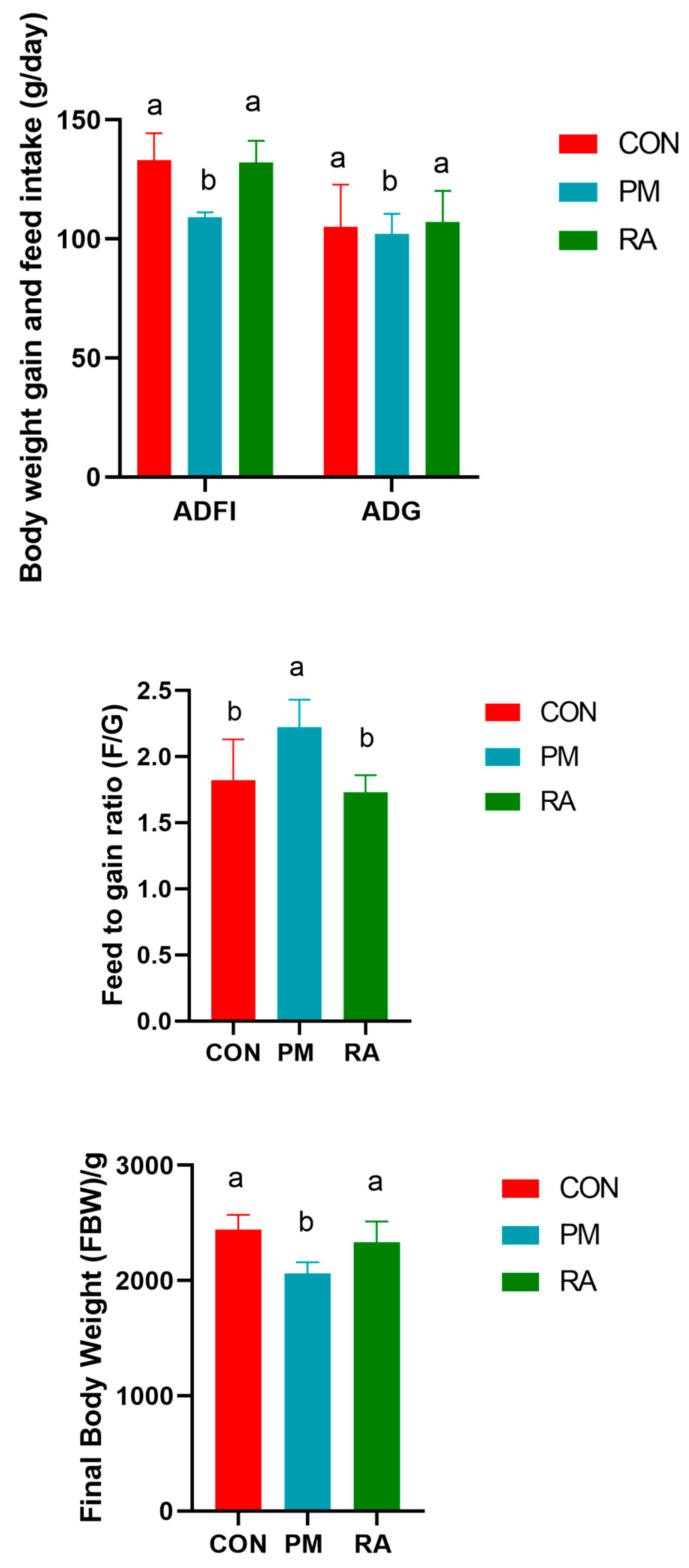
As shown in Figure 1, dietary supplementation with RA significantly improved growth performance relative to that observed in the PM2.5 exposure group (p < 0.05). Specifically, the RA group exhibited a marked increase (p < 0.05) in average daily feed intake (ADFI) and average daily gain (ADG), alongside a lower (p < 0.05) feed-to-gain ratio (F/G). Consequently, the final body weight of RA-treated broilers at 42 days of age was also significantly greater (p < 0.05).

3.2. RA Attenuates PM2.5-Induced Intestinal Barrier Dysfunction

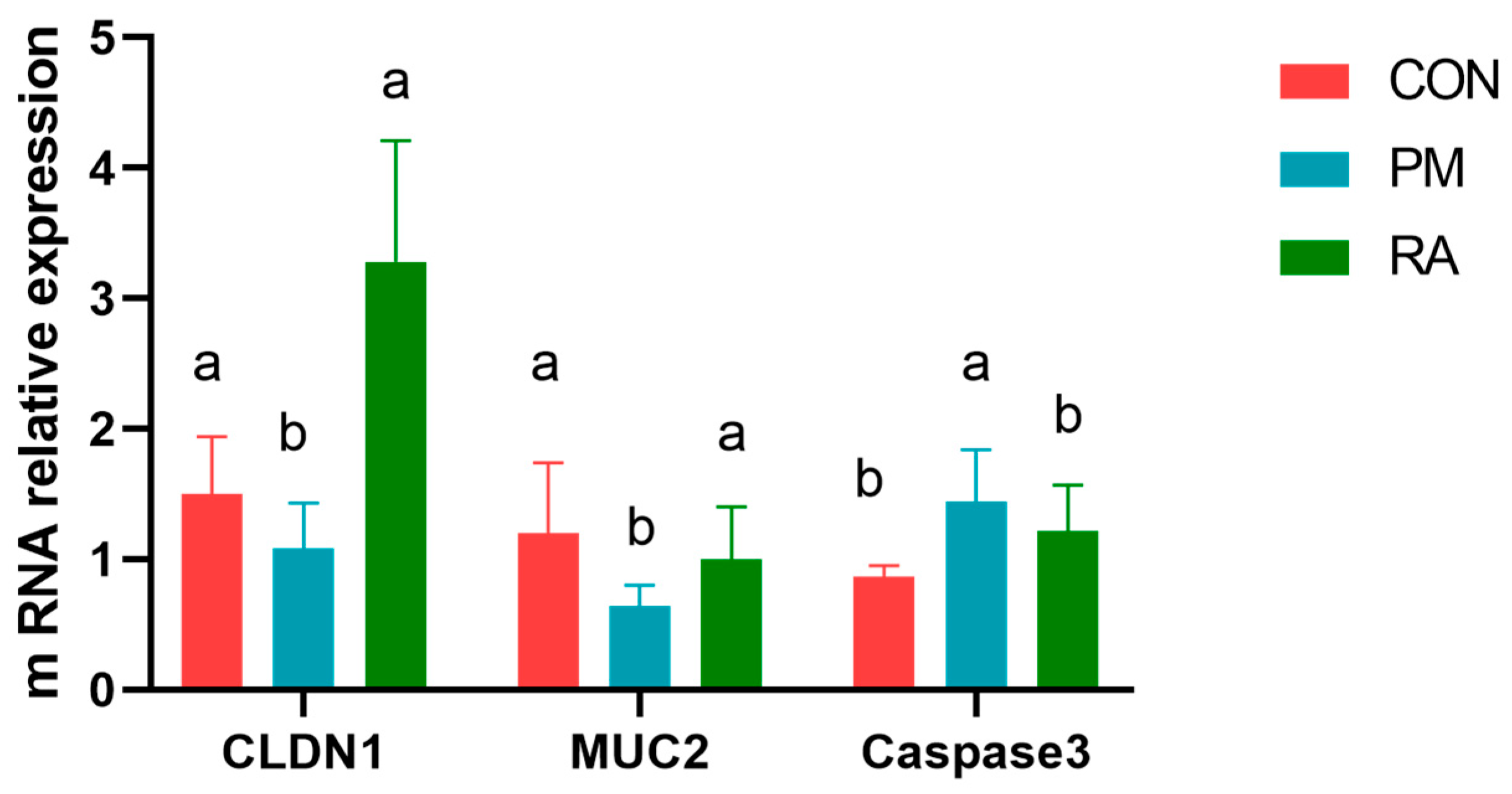
As shown in Figure 2, dietary supplementation with RA significantly counteracted the adverse effects of PM2.5 exposure on the intestinal barrier. The mRNA expression levels of the tight junction gene CLDN1 and the mucin gene MUC2 were upregulated (p < 0.05) in the RA-treated group relative to PM2.5 exposure. Conversely, the expression of the apoptosis-related gene caspase3 was downregulated (p < 0.05) by RA treatment. These results indicate that RA effectively restored the expression of key intestinal barrier components and reduced epithelial cell apoptosis induced by PM2.5.

3.3. Histopathological Changes

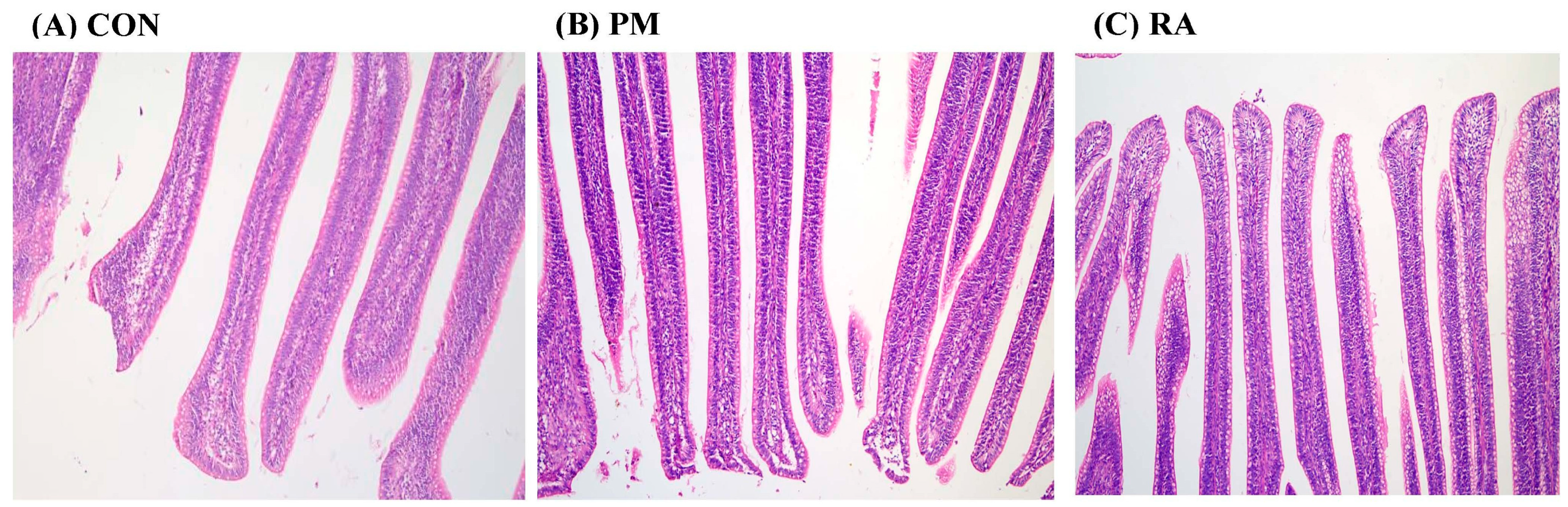
H&E staining results showed that the CON group (Figure 3A) exhibited intact and neatly arranged ileal villi, a continuous mucosal barrier, and no inflammatory infiltration or edema. In contrast, the PM2.5-exposed group (Figure 3B) exhibited severe pathological damage in the ileum, characterized by villus fusion and shedding, complete disruption of villus architecture, extensive inflammatory infiltration, marked edema, and severe impairment of the mucosal barrier. Compared with the PM2.5 group, RA treatment significantly attenuated these histopathological alterations, with only mild inflammatory infiltration, slight edema, and a largely intact mucosal barrier (Figure 3C). These observations indicate that RA effectively alleviates PM2.5-induced ileal tissue damage.

3.4. Biomarkers of Cytokine Expression

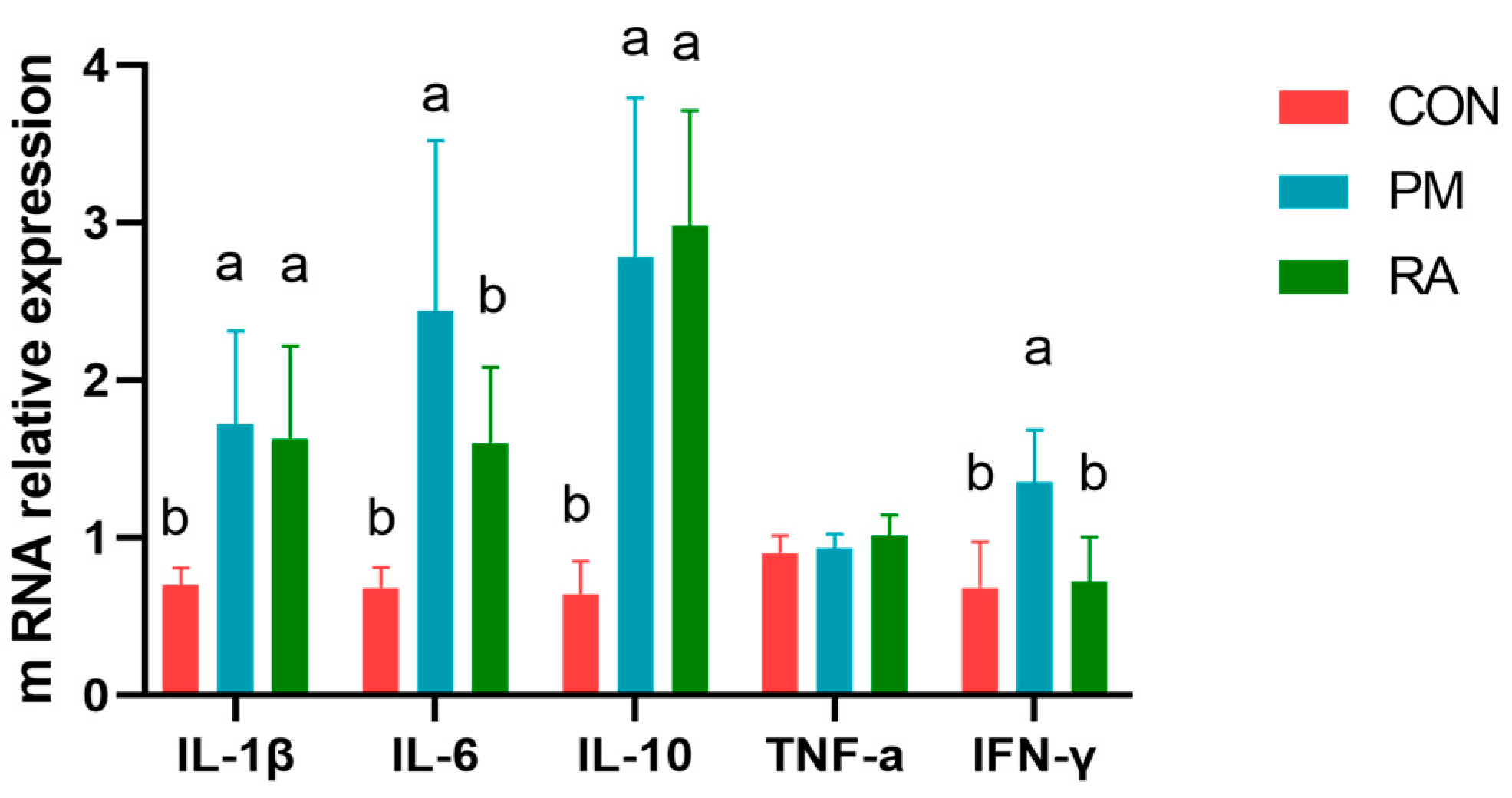
As shown in Figure 4, compared to the PM2.5-exposed group, RA decreased the IL-6 and IFN-γ expression (p < 0.05) in cecal tissues of broiler chickens under PM2.5 exposure. TNF-α, IL-1β, and IL-10 expression levels did not differ significantly (p > 0.05) between PM and RA groups.

3.5. TLR4 Signal Pathway

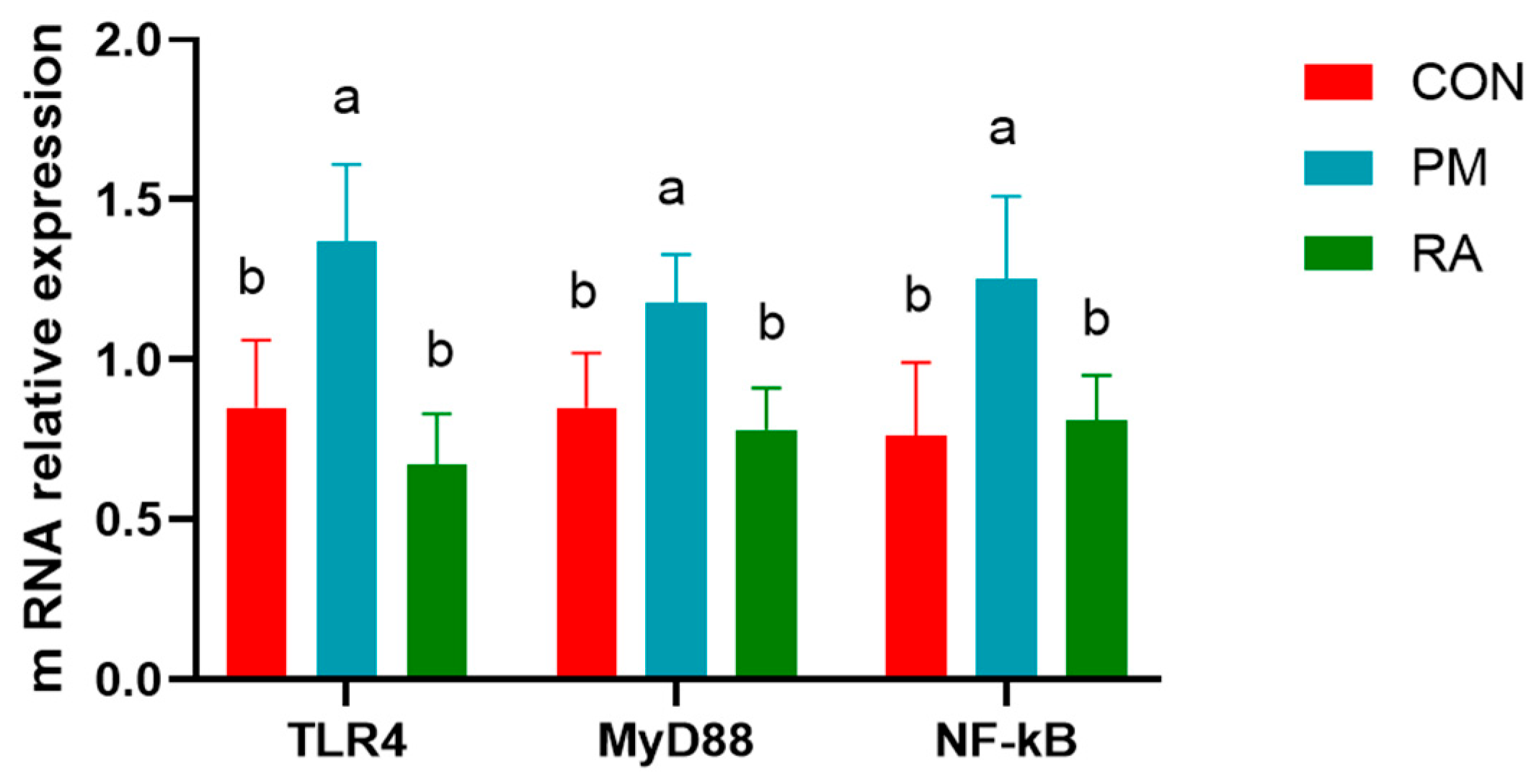
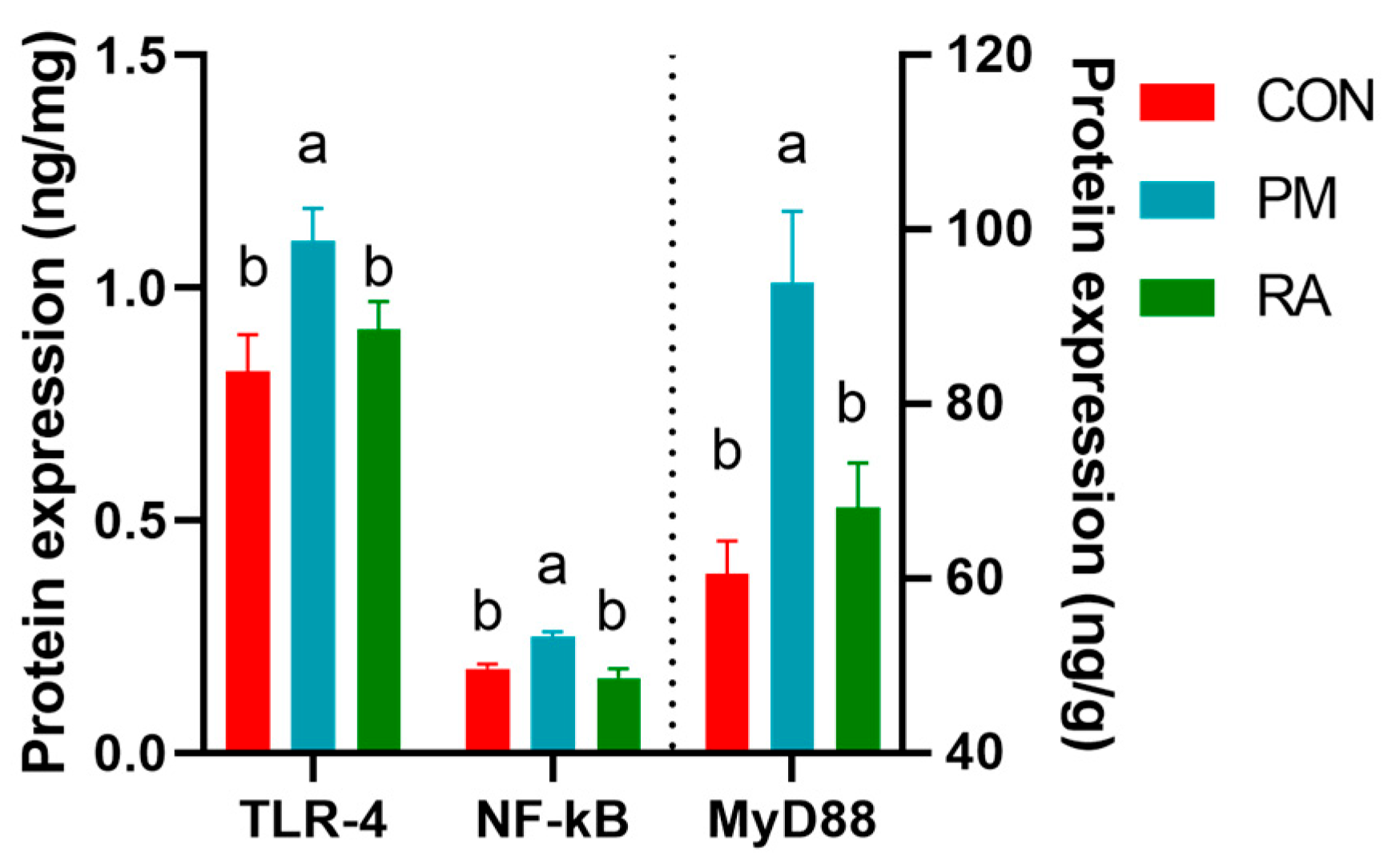
As shown in Figure 5 and Figure 6, dietary supplementation with RA significantly suppressed TLR4/NF-κB signaling following PM2.5 exposure. Compared to the PM2.5-exposed group, the RA-treated group exhibited lower (p < 0.05) mRNA expression and protein levels of key pathway components, including TLR4 signaling elements (MyD88, NF-κB). These data demonstrate that RA alleviates PM2.5-induced intestinal inflammation, at least in part, through suppression of the TLR4/MyD88/NF-κB signaling axis.

3.6. Alpha Diversity

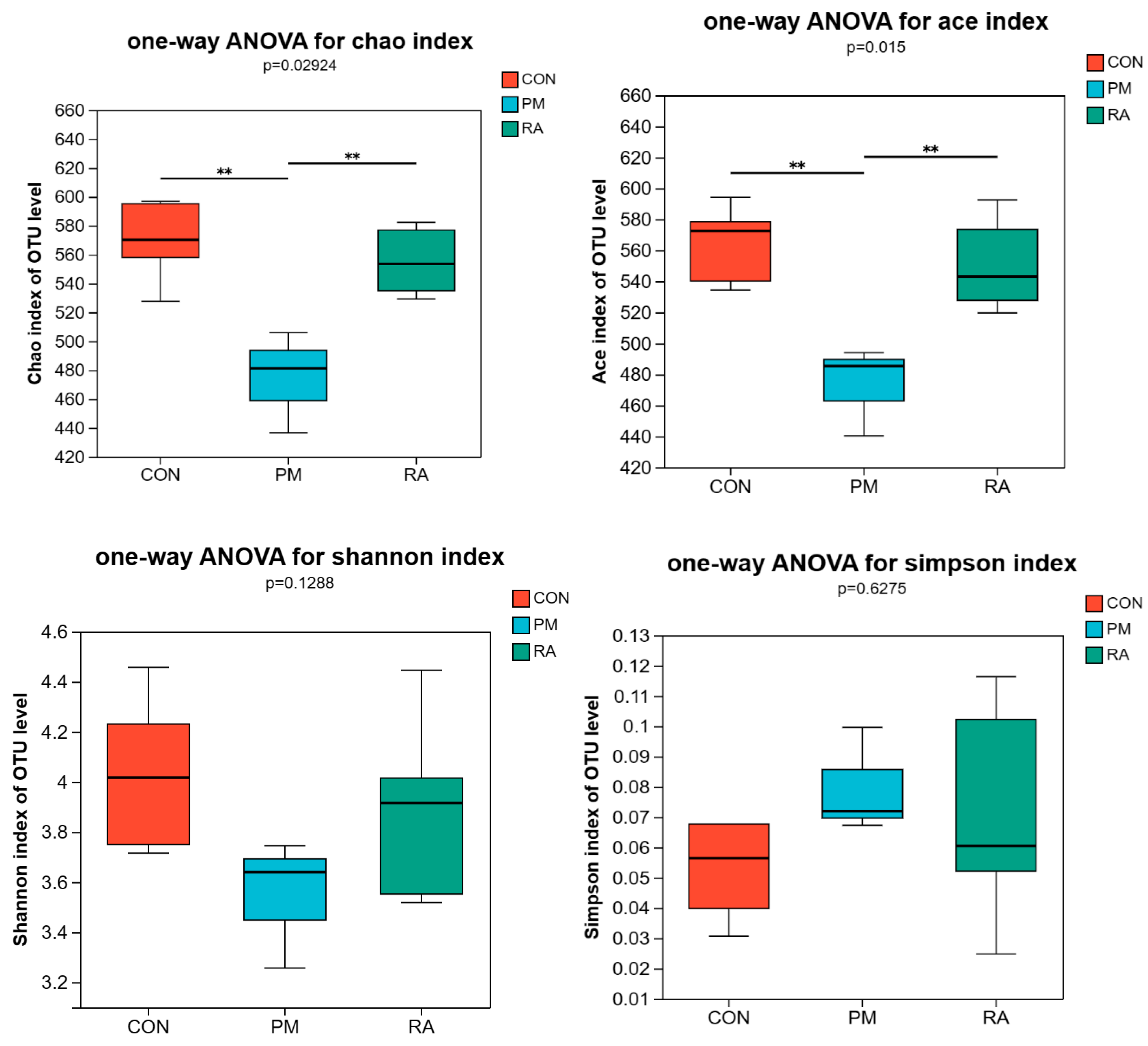
The indices of Chao, Shannon, Ace, and Simpson were analyzed to evaluate the α-diversity of the gut microbiota. The indicators of gut microbiota’s α-diversity in broilers are presented in Figure 7. CON and RA groups were increased (p < 0.05) regarding the Ace and Chao indices compared to the PM2.5-exposed group. Moreover, no significant difference were found among the CON, PM2.5-exposed, and RA groups in Shannon and Simpson indices (p > 0.05).

3.7. Beta Diversity

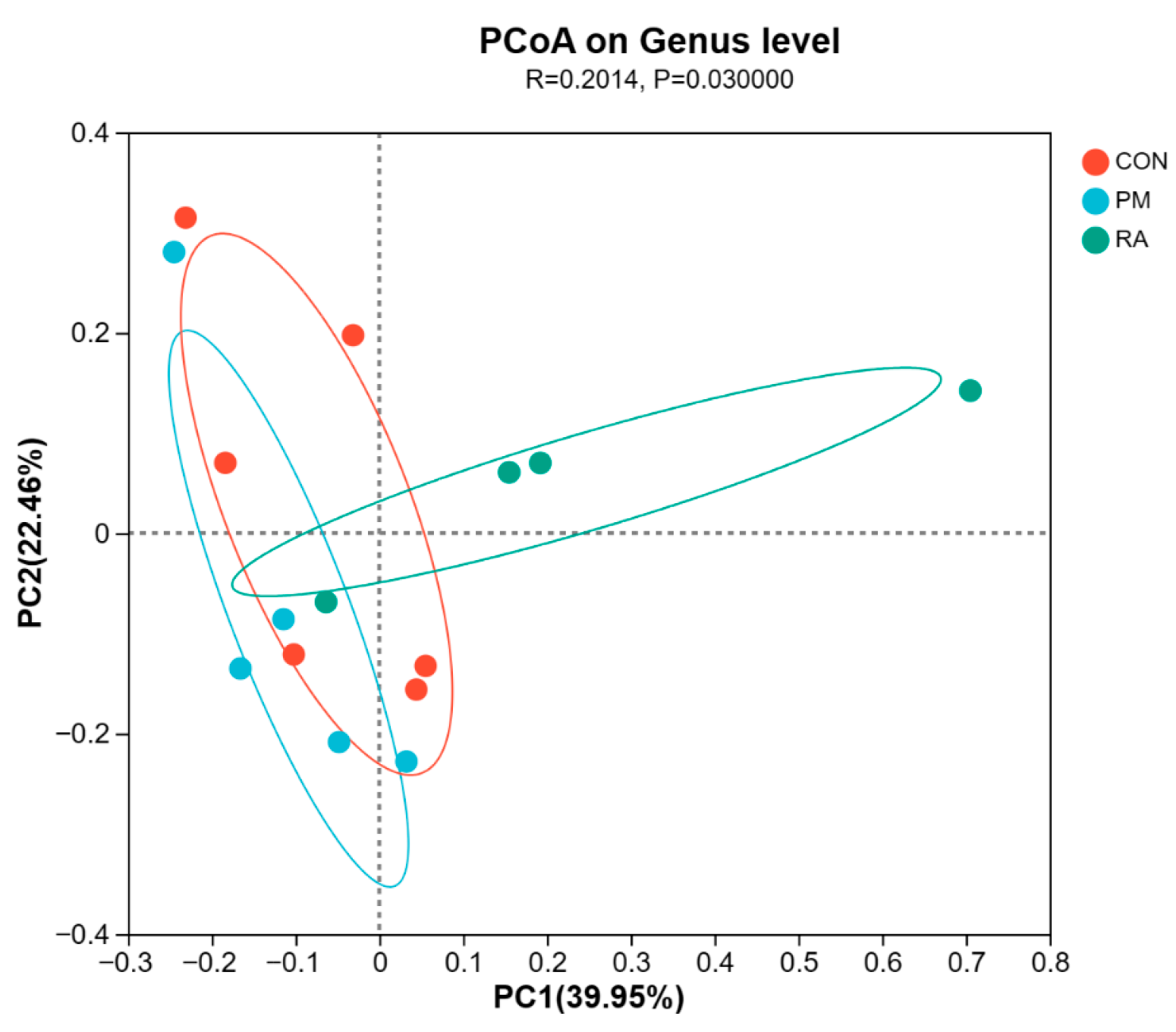
To assess beta diversity of the gut microbiota, we performed Principal Coordinate Analysis (PCoA) based on Bray–Curtis distances for visualization (Figure 8), which was complemented by analysis of similarities (ANOSIM) for statistical validation. The ANOSIM revealed a statistically significant distinction in the overall bacterial community profiles among the three groups (R = 0.2014, p = 0.03).

3.8. Microbiota Composition

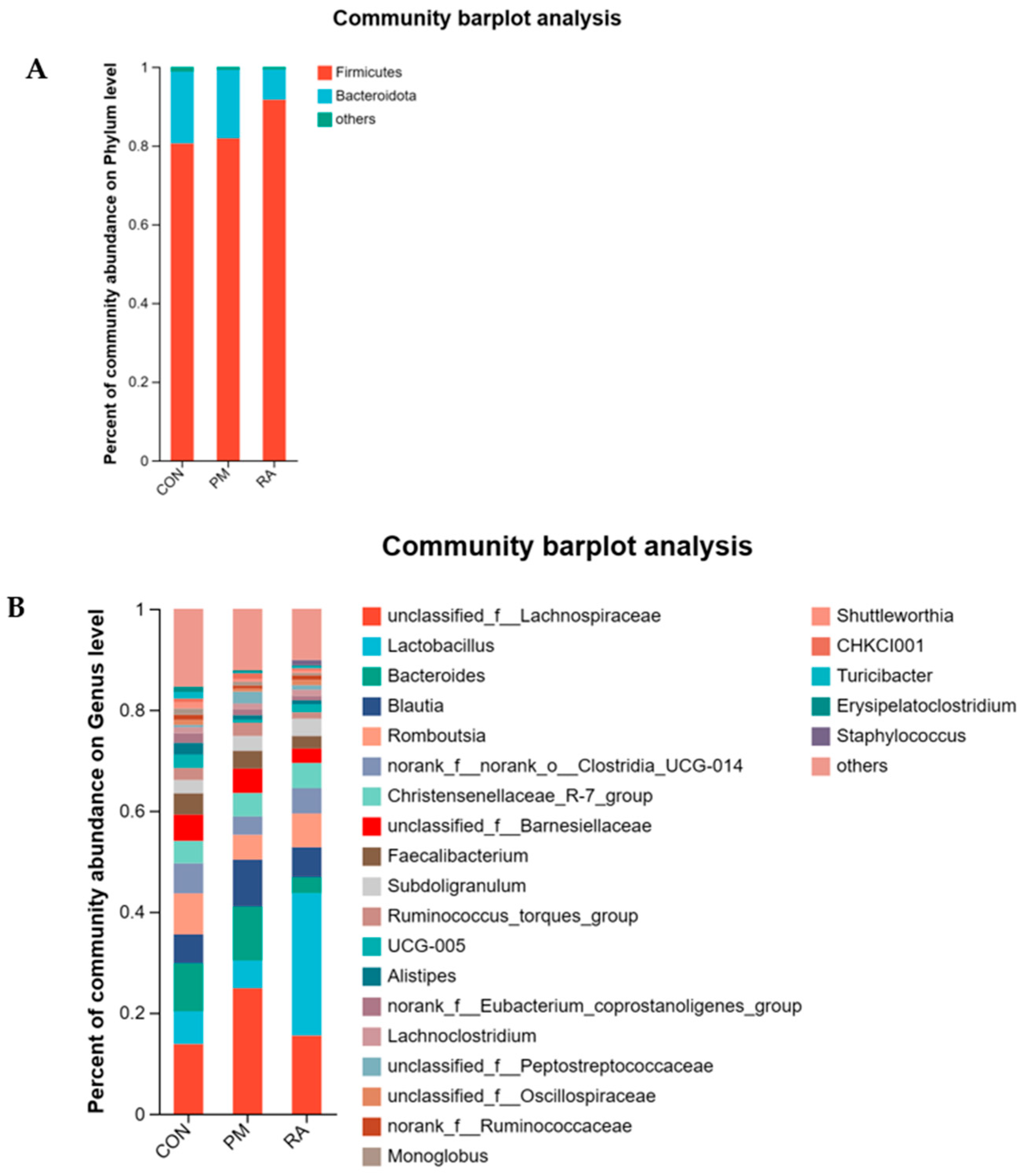
Then, the microbial species and their relative abundances were studied in line with the OTU from the phylum to genus levels. The dominant ones were Firmicutes and Bacteroidetes in each group on the phylum scale. RA-group levels of Bacteroidetes were 7.63% ± 0.31%, compared to 17.38% ± 1.68% in the PM2.5-exposed group, while the relative abundance of Firmicutes in the RA group was 91.68% ± 5.21%, compared to 81.85% ± 2.38% in the PM2.5-exposed group (Figure 9A).
In addition, 24 genera (unclassified_f_Lachnospiraceae, Lactobacillus, Bacteroides, Blautia, Romboutsia, norank_f_norank_o_Clostridia_UCG-014, Christensenellaceae_R-7_group, unclassified_f_Barnesiellaceae, Faecalibacterium, Subdoligranulum, Ruminococcus_torques_group, UCG-005, Alistipes, norank_f_Eubacterium_coprostanoligenes_group, Lachnoclostridium, unclassified_f_Peptostreptococcaceae, unclassified_f_Oscillospiraceae, norank_f_Ruminococcaceae, Monoglobus, Shuttleworthia, CHKCI001, Turicibacter, Erysipelatoclostridium, Staphylococcus) were recognized (Figure 9B). Among the 24 genera identified, certain species like those of Bacteroides, Romboutsia, and Lactobacillus were most prominent in the CON group, while Blautia had a higher proportion in the PM2.5-exposed group. The microbial composition of the RA group diverged from that in the group with PM2.5 exposure. The proportion of Lactobacillus in the RA group was significantly elevated relative to both CON and PM2.5-exposed groups. These results indicate the beneficial effect of RA on the levels of several genera, which were influenced by PM2.5.

3.9. Key Phylotypes

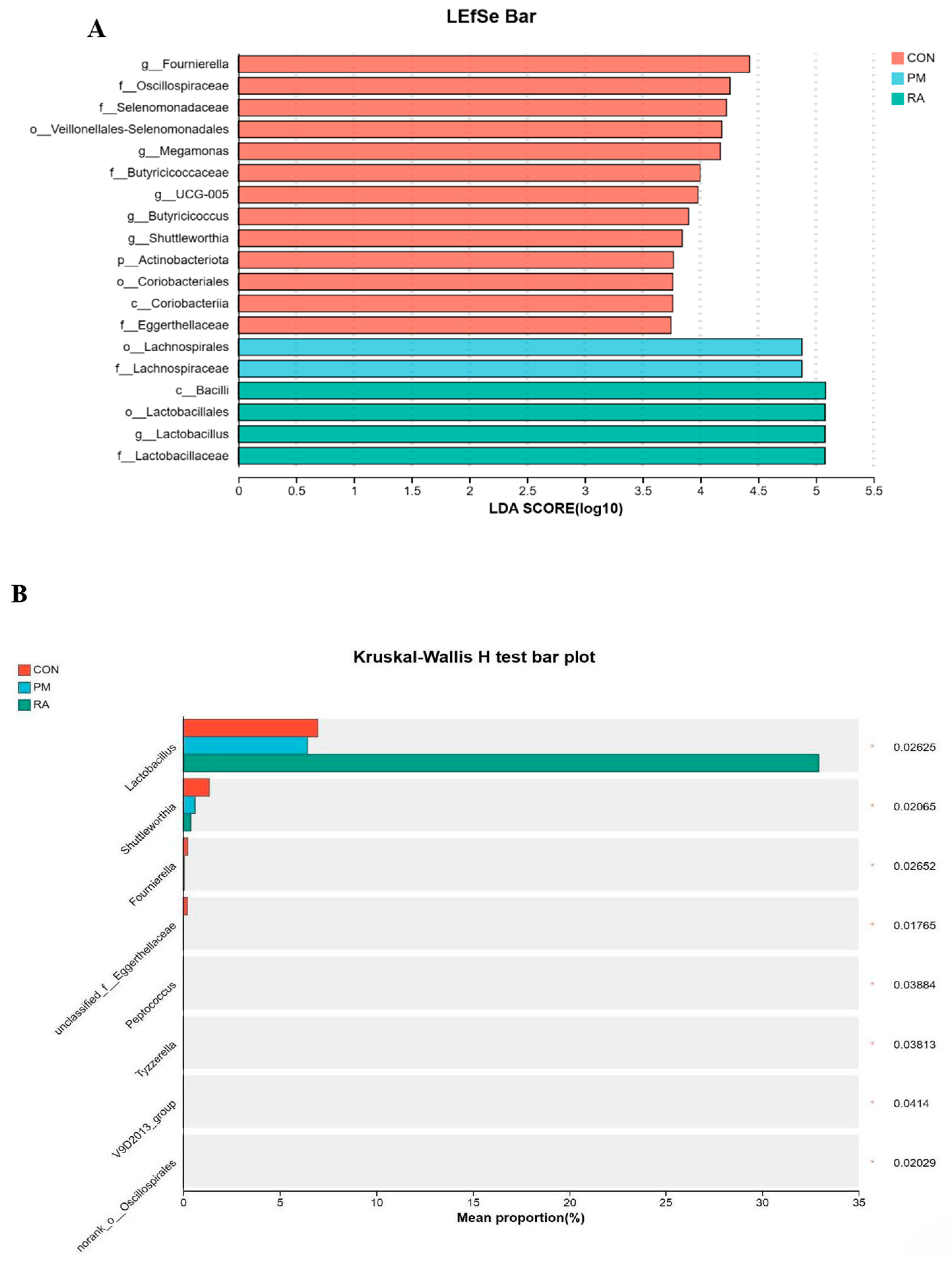
In order to gain deeper insight into how RA impacts the characteristic bacteria in broilers exposed to PM2.5, we identified bacterial taxa with differential abundance among treatments using the linear discriminant analysis effect size (LEfSe) analysis. As depicted in Figure 10A, Fournierella, Oscillospiraceae, Selenomonadaceae, Veillonellales-Selenomonadales, Megamonas, Butyricicoccaceae, Ucg-005, Butyricicoccus, Shuttleworthia, Actinobacteriota, Coriobacteriales, and Eggerthellaceae were overrepresented in the CON group, and Lachnospirales and Lachnospiraceae were overrepresented in the PM2.5-exposed group, while Bacilli, Lactobacillales, Lactobacillus, and Lactobacillaceae were enriched in the RA group.
In addition, to further compare the difference among the three groups, the Kruskal–Wallis H test was used to analyze the difference in bacteria. As shown in Figure 10B, there were significant differences in Lactobacillus, Shuttleworthia, Foumierella, Peptococcus, Tyzzerella, V9D2013_group, and norank_f_norank_o_Oscillospirales among the three groups.

4. Discussion

In this study, it was demonstrated that RA modifies the gut microbiota profile. It increases the quantity of health-promoting bacteria while reducing that of harmful bacteria. Moreover, it lessens the intestinal and systemic inflammatory responses and safeguards the gut epithelial barrier when exposed to PM2.5. Mechanistically, RA alleviates PM2.5-induced gut disorder, possibly by targeting the gut microbiota and regulating the TLR4 signaling pathway.
It has been documented in studies that RA mitigates symptoms in AR rat models exposed to PM2.5, an effect mechanistically related to the regulation of the NF-κB pathway and the rebalancing of Th1/Th2 [38]. Moreover, studies in a murine model of asthma have shown that RA could delay the development of airway inflammation [39]. In addition, the extensive study has demonstrated that RA could restructure the gut microbiota in mice with colitis by promoting the core microbiota and mediating the overexpression of inflammasomes [40]. The above studies indicated that RA can alleviate the inflammation in some respiratory diseases and also alleviate colitis by reshaping the microbiota; however, it is still unknown whether RA has a protective role against gut injury by optimizing the gut microbiota and reducing inflammation under PM2.5 exposure.
The gut is a complex ecosystem that is made up of immune cells, a mucus layer, resident microbiota, etc. Under normal circumstances, the gut’s immune system maintains tolerance and regulates appropriate immune responses to pathogens and gut microbes. Research has shown that the gut is also the target organ attacked by inhaled environmental pollutants, such as ammonia [37], leading to fluctuations in gut microbiota, inflammation, and pathological damage. It has recently been considered that gut microbiota is a key element in immune system activation, and the imbalance in the host–microbe interaction has a strong association with air pollutants. The gut microbiome may provide solutions for intestinal damage caused by air pollutants. In the current study, RA intervention significantly increased the estimated species richness (Ace and Chao indices) of the gut microbiota, whereas no marked changes were found in the Simpson and Shannon indices. These findings suggest that RA may primarily promote the colonization or recovery of certain rare species without substantially altering the overall structure of the dominant microbial communities. This provides a clue for further elucidating how RA alleviates PM2.5-induced damage by fine-tuning the microbiota rather than through overall restructuring.
Importantly, RA modified the structure and composition of gut microbiota under PM2.5 exposure. Our results showed that RA increased the Firmicutes abundance and decreased the Bacteroides abundance compared with the PM group. Research has confirmed that Firmicutes are related to the degradation and anti-inflammatory effects of cellulose [41], while Bacteroidetes belong to Gram-negative bacteria, which may become conditional pathogens under certain conditions (such as damaged intestinal barrier, imbalanced microbial community structure, decreased body resistance, etc.) [42]. At the genus level, RA significantly increased the Lactobacillus abundance. Lactobacillus is usually considered a potential probiotic beneficial for intestinal health, which has the function of improving the intestinal microbiota, enhancing intestinal barrier function and the body’s immune system [43]. Oscillospira is considered a potential SCFA-producing genus, capable of generating butyrate and other short-chain fatty acids, making it a key candidate biomarker for the selection of next-generation probiotics [16]. V9D2013_group was also found to be capable of butyrate production [44,45]. Studies have shown that intestinal infections induced by Eimeria tenella [46] or Salmonella typhimurium [47] in broilers increase the abundance of Shuttleworthia, indicating that Shuttleworthia may be a harmful bacterium [48]. Our results suggest that the RA increased the relative abundance of potential probiotics such as Lactobacilli, V9D2013_group, and Oscillospirale abundance in cecal contents, reduced the relative abundance of opportunistic pathogenic bacteria in Shuttleworthia, and optimized the structure of the cecal microbiota.
It has been demonstrated by a great number of studies that the colonization of specific probiotics like Lactobacillus and Bifidobacterium is able to cause an increase in the concentration of SCFAs. This is helpful for relieving intestinal inflammatory reactions, enhancing the mucosal barrier function, and withstanding the invasion of pathogens [49,50]. The gut microbiota can form a microbial barrier, which is among the four main barriers for gut barrier function and is crucial for intestinal health. In this research, the quantity of lactic acid bacteria in the RA group showed a significant rise, which means that RA is able to relieve the intestinal mucosal damage induced by PM2.5, decrease intestinal permeability, and strengthen intestinal barrier function. The epithelial barrier can be regulated by Claudin1. It safeguards the intestinal barrier function and stops pathogens and harmful substances from migrating and invading the cell membrane in the intestine [51].
The mucosal barrier consists of an outer mucus layer, primarily formed by goblet cell-derived MUC2 mucin, and an inner single-layer epithelium [52]. Barrier function is tightly controlled by tight junctions (TJs), the key intercellular structures regulating paracellular permeability [53]. Under stress conditions—such as heat stress or pathogenic infection—impairment of these components compromises barrier integrity, which can reduce growth performance and increase disease susceptibility in broilers, as underscored by foundational research on poultry gut immunity and barrier health [54]. Claudin-1 is widely recognized as a critical biomarker of intestinal barrier integrity in broilers facing both pathogenic and environmental stressors [55,56]. Similarly, MUC2 not only constitutes a structural barrier but also plays a central role in mediating host–microbe interactions in stressed poultry [57,58]. Supporting its functional importance, MUC2-deficient mice exhibit elevated pro-inflammatory cytokine production and are prone to spontaneous colitis [59]. Numerous studies have demonstrated that phytobiotics effectively improve intestinal barrier function in broilers. At the molecular level, plant extracts such as mint leaf have been shown to restore Claudin-5 and NF-κB expression in heat-stressed broilers [30], while resveratrol, oregano, clove, and cinnamaldehyde can upregulate the expression of critical tight junction proteins including CLDN1, Occludin (OCLN), ZO-1, and mucin 2 [32,60]. At the tissue level, these bioactive compounds also enhance intestinal villus height and the villus height-to-crypt depth ratio, thereby strengthening the intestinal mucosal barrier [34]. Furthermore, plant extracts can increase the abundance and diversity of the intestinal microbiota, stabilize gut homeostasis, and further preserve barrier integrity and intestinal morphology [61]. In the present study, RA significantly increased the expression of CLDN1 and MUC2 genes compared to the PM2.5-exposed group. This finding suggests that RA enhances intestinal barrier function in broilers under particulate matter stress. Although short-chain fatty acid (SCFA) concentrations were not directly quantified here, the observed increase in SCFA-associated microbiota abundance—Lactobacillus, Oscillospiraceae, and V9D2013_group—offers a plausible microbial explanation for the improved barrier function and attenuated inflammatory response. We hypothesize that RA promotes a gut microbiota profile conducive to SCFA synthesis, particularly butyrate, which is known to support epithelial integrity [62,63] and mitigate inflammation [64,65]. Thus, enriching SCFA-producing bacteria may represent one of the indirect mechanisms through which RA alleviates intestinal injury.
The level of intestinal inflammatory factors reflects the local immune status, where the pro-/anti-inflammatory cytokine balance maintains gut homeostasis. The inflammatory response is largely governed by the signaling cascade initiated and propagated by key pro-inflammatory cytokines, notably IL-1β, IL-6, and TNF-α [66,67,68]. In poultry, these cytokines are similarly involved in intestinal immune responses and are associated with disease states such as necrotic enteritis and coccidial infection [69,70]. Critical for immune homeostasis, cytokines such as IL-10 play a vital role in dampening inflammatory responses and orchestrating the process of tissue regeneration [71,72], an effect that has also been validated in avian inflammatory models [73]. Multiple phytobiotics can alleviate intestinal inflammation by regulating gene expression in the TLR/NF-κB pathway. Quercetin inhibits excessive activation of the TLR-MyD88-NF-κB pathway, upregulates AvBD expression, and modulates the gut microbiota to lower mortality in broilers [74]. Protocatechuic acid blocks abnormal activation of the TLR4/p38 MAPK and NF-κB pathways, thereby relieving oxidative stress and inflammatory imbalance caused by heat stress [75]. Dietary IA alleviates LPS-induced intestinal injury by balancing the TLR4/MyD88/NF-κB inflammatory pathway and the Nrf2 antioxidant pathway [76]. MCE reduces overexpression of jejunal TLR2 and the release of IFN-γ and IL-17, repairs the intestinal barrier, and restores microecological homeostasis [77]. Isoquinoline alkaloids inhibit the TLR-MyD88-NF-κB signaling axis, mitigate cecal inflammation, and upregulate antioxidant and barrier-related genes in the duodenum [78]. Our results suggest that dietary supplementation with RA significantly downregulated IL-6 and IFN-γ levels in the intestines of PM2.5-exposed broilers, indicating that RA may alleviate cecal inflammation by inhibiting the secretion of key inflammatory mediators. This effect may be related to the pharmacological activity of RA and its modulation of the gut microbiota. In poultry research, certain plant extracts have been reported to improve intestinal health by shifting the balance from a pro-inflammatory to an anti-inflammatory milieu by dampening key cytokines [79,80]. Mechanistically, RA mediates its anti-inflammatory effects through the suppression of the TLR4/NF-κB signaling cascade. In the present study, intestinal TLR4, MyD88, and NF-κB levels were markedly reduced by RA in broilers following PM2.5 exposure. This aligns with observations in poultry, where other natural products confer protection by alleviating intestinal inflammation and enhancing barrier integrity by suppressing the TLR4/NF-κB axis [81,82,83]. Taken together, these results suggest that RA may mitigate PM2.5-induced intestinal inflammation in broilers by suppressing the TLR4/NF-κB pathway and modulating the gut microbiota.
In addition, the present study also reveals that RA significantly alleviates the decline in growth performance of broilers induced by PM2.5 exposure. Dietary supplementation with RA notably increased the ADFI and ADG of broilers, while significantly reducing the F/G, ultimately leading to a significant improvement in body weight at 42 days of age. These results indicate that RA not only effectively counteracts the growth suppression potentially caused by PM2.5 but also actively improves feed conversion efficiency. We hypothesize that this improvement in growth performance is not an isolated phenomenon but is likely closely related to the optimized intestinal microbiota structure and alleviated systemic inflammation observed in this study. Specifically, the enrichment of beneficial bacteria such as Lactobacillus in the intestine following RA intervention is typically associated with enhanced intestinal barrier function, increased SCFA production, and improved nutrient digestion and absorption efficiency. Concurrently, the downregulation of key inflammatory pathway factors related to TLR4/NF-κB observed in the RA group indicates a mitigation of systemic low-grade inflammation. Under PM2.5-induced stress conditions, animals often need to allocate more energy toward immune responses, thereby diverting resources away from growth. Therefore, RA may effectively reduce the “immune–metabolic cost” triggered by environmental stress through the “microbiota–immune–metabolism” axis, directing more energy and nutrients toward protein deposition and muscle growth. This directly explains the synergistic improvement of increased ADG and decreased F/G. This approach stabilizes and enhances broiler performance in suboptimal health environments by modulating host intestinal health and immune balance, rather than relying on exogenous antibiotics or growth promoters, aligning with the current trend in animal husbandry toward green and healthy farming practices.
While this study provides valuable insights into the protection of RA in gut health under PM2.5 exposure, it is not without limitations. First, the sample sizes for slaughter performance and key assays (n = 6 per group) were limited by housing and welfare considerations, which may affect the detection of subtle effects. Second, the experimental design lacked a standalone RA control group, which prevents us from distinguishing the baseline effects of RA alone from its interactive effects under PM2.5 exposure; this limits the mechanistic interpretation of RA as a protective agent, particularly given its well-documented antioxidant properties. Third, the present study did not directly measure PM2.5 in cecal contents or feces, making it impossible to definitively distinguish between systemic effects originating from pulmonary exposure and local effects caused by direct ingestion and accumulation of PM2.5 in the gastrointestinal tract—particularly relevant given that ingestion is a physiologically plausible exposure route in poultry. Furthermore, the present study demonstrates strong associations between RA supplementation, microbial shifts, immune modulation, and improved growth, but cannot establish definitive causality. Future work employing larger cohorts and direct mechanistic approaches—such as fecal microbiota transplantation, microbiota depletion models, or TLR4-specific inhibitors—is needed to elucidate causal pathways within the gut–immune–growth axis and to validate these findings under varied real-world conditions.

5. Conclusions

In conclusion, the present study demonstrates that dietary rosmarinic acid (RA) plays a pivotal protective role in alleviating PM2.5-induced intestinal impairment in broilers. Specifically, RA effectively maintains intestinal barrier integrity under PM2.5 exposure, which is directly supported by the upregulated mRNA expression of the tight junction protein gene CLDN1 and the mucin gene MUC2—key mediators of intestinal epithelial barrier function. Furthermore, RA exerts a potent anti-inflammatory effect by suppressing the TLR4 signaling pathway, as evidenced by the downregulated expression of TLR4 pathway-related genes and pro-inflammatory cytokines (IL-6 and IFN-γ). At the gut microbial level, RA also functions as a critical modulator: it enhances the relative abundance of beneficial probiotics (e.g., Lactobacillus, V9D2013_group, and Oscillospirale) while reducing the colonization of opportunistic pathogens such as Shuttleworthia in the cecum. Collectively, these findings confirm that RA mitigates PM2.5-induced intestinal injury and microbiota dysbiosis in broilers through synergistically regulating intestinal barrier function, inflammatory response, and gut microbial homeostasis.

Author Contributions

Conceptualization, Y.Z. and S.L.; methodology, Y.Z.; software, Y.Z.; validation, B.X., W.D., L.W. and S.L.; formal analysis, Y.Z.; investigation, Y.Z., B.X. and L.W.; resources, Y.Z.; data curation, Y.Z. and B.X.; writing—original draft preparation, Y.Z.; writing—review and editing, Y.Z., B.X., W.D., L.W. and S.L.; visualization, Y.Z.; supervision, S.L.; project administration, B.X.; funding acquisition, S.L. and Y.Z. All authors have read and agreed to the published version of the manuscript.

Funding

This research was funded by the Outstanding Youth Science and Technology Fund of Henan Academy of Agricultural Sciences (2024YQ02); Henan Natural Science Foundation of China Youth Program (242300420494); China Agriculture Research System of MOF and MARA (CARS-41); Doctoral Innovation Project of Henan Academy of Agricultural Sciences (No. 2026BX51).

Institutional Review Board Statement

The study was conducted according to the guidelines of the Declaration of Helsinki, and approved by the Institutional Ethics Committee of Experiment Animal Welfare and Ethical at the Henan Academy of Agricultural Sciences, Institute of Animal Science (NO: IACUC-20250915003, approval date 15 September 2025).

Informed Consent Statement

Not applicable.

Data Availability Statement

The original contributions presented in this study are included in the article material. Further inquiries can be directed to the corresponding author.

Conflicts of Interest

The authors declare no conflicts of interest.

References

  1. Pope, C.A.; Turner, M.C.; Burnett, R.T.; Jerrett, M.; Gapstur, S.M.; Diver, W.R.; Krewski, D.; Brook, R.D. Relationships between fine particulate air pollution, cardiometabolic disorders, and cardiovascular mortality. Circ. Res. 2015, 116, 108–115. [Google Scholar] [CrossRef]
  2. Kaasik, A.; Maasikmets, M. Concentrations of airborne particulate matter, ammonia and carbon dioxide in large scale uninsulated loose housing cowsheds in Estonia. Biosyst. Eng. 2013, 114, 223–231. [Google Scholar] [CrossRef]
  3. Cambra-López, M.; Aarnink, A.J.A.; Zhao, Y.; Calvet, S.; Torres, A.G. Airborne particulate matter from livestock production systems: A review of an air pollution problem. Environ. Pollut. 2010, 158, 1–17. [Google Scholar] [CrossRef]
  4. Shen, D.; Guo, Z.; Huang, K.; Dai, P.; Jin, X.; Li, Y.; Li, C. Inflammation-associated pulmonary microbiome and metabolome changes in broilers exposed to particulate matter in broiler houses. J. Hazard. Mater. 2022, 421, 126710. [Google Scholar] [CrossRef] [PubMed]
  5. Feng, J.; Cavallero, S.; Hsiai, T.; Li, R. Impact of air pollution on intestinal redox lipidome and microbiome. Free Radic. Biol. Med. 2020, 151, 99–110. [Google Scholar] [CrossRef]
  6. Pambianchi, E.; Pecorelli, A.; Valacchi, G. Gastrointestinal tissue as a “new” target of pollution exposure. IUBMB Life 2022, 74, 62–73. [Google Scholar] [CrossRef]
  7. Ducatelle, R.; Goossens, E.; Eeckhaut, V.; Van Immerseel, F. Poultry gut health and beyond. Anim. Nutr. 2023, 13, 240–248. [Google Scholar] [CrossRef]
  8. Wickramasuriya, S.S.; Park, I.; Lee, K.; Lee, Y.; Kim, W.H.; Nam, H.; Lillehoj, H.S. Role of physiology, immunity, microbiota, and infectious diseases in the gut health of poultry. Vaccines 2022, 10, 172. [Google Scholar] [CrossRef]
  9. Ma, W.; Xiong, X.; Tian, Z.; Li, L.; Huang, Y. Environmental pollutants and the gut microbiota: Mechanistic links from exposure to systemic disease. Front. Microbiol. 2026, 17, 1737229. [Google Scholar] [CrossRef] [PubMed]
  10. Hou, R.; Jin, X.; Feng, J.; Xue, J.; Chen, C.; Zou, Y.; Xu, X.; Yu, K.; Qian, P.Y.; Zhang, W.; et al. Deciphering the universal role of gut microbiota in pollutant transformation. ISME J. 2025, 19, wraf215. [Google Scholar] [CrossRef] [PubMed]
  11. Liu, Y.; Wang, T.; Si, B.; Du, H.; Liu, Y.; Waqas, A.; Huang, S.; Zhao, G.; Chen, S.; Xu, A. Intratracheally instillated diesel PM2.5 significantly altered the structure and composition of indigenous murine gut microbiota. Ecotoxicol. Environ. Saf. 2021, 210, 111903. [Google Scholar] [CrossRef]
  12. Shan, S.; Xiong, Y.; Guo, J.; Liu, M.; Gao, X.; Fu, X.; Zeng, D.; Song, C.; Zhang, Y.; Cheng, D.; et al. Effect of an inulin-type fructan from Platycodon grandiflorum on the intestinal microbiota in rats exposed to PM2.5. Carbohydr. Polym. 2022, 283, 119147. [Google Scholar] [CrossRef]
  13. Gao, W.; Lin, W.; Tian, M.; Fan, S.; Edwards, S.; Tran, J.; Li, Y.; Rao, X. Ambient particulate matter exposure impairs gut barrier integrity and disrupts goblet cell function. Biomedicines 2025, 13, 1825. [Google Scholar] [CrossRef] [PubMed]
  14. Yan, K.; Wang, S.; Wang, M.; Yao, Y.; Liu, X.; Song, J.; Chen, Y.; Chen, Y.; Qi, R.; Zhou, X.; et al. Modulating gut microbiota with SCFAs and high-fiber diets to mitigate PM2.5-induced hypertension in mice. Ecotoxicol. Environ. Saf. 2025, 302, 118696. [Google Scholar] [CrossRef] [PubMed]
  15. Liao, R.; Zhang, Q.; Lu, Y.; Huang, F.; Cao, W.; Li, M.; Zhou, L.; Li, Y. Fine particulate matter (PM2.5) disrupts intestinal barrier function by inducing oxidative stress and PI3K/AKT-mediated inflammation in Caco-2 cells. Int. J. Mol. Sci. 2025, 26, 8271. [Google Scholar] [CrossRef]
  16. Yang, J.; Li, Y.; Wen, Z.; Liu, W.; Meng, L.; Huang, H. Oscillospira—A candidate for the next-generation probiotics. Gut Microbes 2021, 13, 1987783. [Google Scholar] [CrossRef]
  17. Garcia-Penarrubia, P.; Ruiz-Alcaraz, A.J.; Martinez-Esparza, M.; Marin, P.; Machado-Linde, F. Hypothetical roadmap towards endometriosis: Prenatal endocrine-disrupting chemical pollutant exposure, anogenital distance, gut-genital microbiota and subclinical infections. Hum. Reprod. Update 2020, 26, 214–246. [Google Scholar] [CrossRef] [PubMed]
  18. Chen, L.; Ahmad, M.; Li, J.; Li, J.; Yang, Z.; Hu, C. Gut microbiota manipulation to mitigate the toxicities of environmental pollutants. Aquat. Toxicol. 2025, 285, 107425. [Google Scholar] [CrossRef]
  19. Kim, G.; Park, Y.S.; Jin, Y.; Park, C. Production and applications of rosmarinic acid and structurally related compounds. Appl. Microbiol. Biotechnol. 2015, 99, 2083–2092. [Google Scholar] [CrossRef]
  20. Hasanein, P.; Seifi, R. Beneficial effects of rosmarinic acid against alcohol-induced hepatotoxicity in rats. Can. J. Physiol. Pharmacol. 2018, 96, 32–37. [Google Scholar] [CrossRef]
  21. Değer, U.; Çavuş, Y. Investigation of the role of rosmarinic acid treatment in regulating inflammation, cell damage, and angiogenesis in rat ovarian torsion and detorsion models. Acta Cir. Bras. 2020, 35, e202000304. [Google Scholar] [CrossRef] [PubMed]
  22. Mahmoud, A.; Mohamed, E.A.E.; Mayada, R.F.; Marappan, G.; Kumaragurubaran, K.; Yashpal, S.M.; Kuldeep, D. Rosmarinic acid: Modes of action, medicinal values and health benefits. Anim. Health Res. Rev. 2017, 18, 167–176. [Google Scholar]
  23. Messeha, S.S.; Zarmouh, N.O.; Asiri, A.; Soliman, K. Rosmarinic acid-induced apoptosis and cell cycle arrest in triple-negative breast cancer cells. Eur. J. Pharmacol. 2020, 885, 173419. [Google Scholar] [CrossRef]
  24. Runxiao, L.; Lili, D.; Xueyong, L.; Fenghua, Z.; Zhiqiang, Z.; Lixin, Z. Rosmarinic acid attenuates inflammatory responses through inhibiting HMGB1/TLR4/NF-κB signaling pathway in a mouse model of Parkinson’s disease. Life Sci. 2019, 223, 158–165. [Google Scholar]
  25. Khalaf, A.A.; Hassanen, E.I.; Ibrahim, M.A.; Tohamy, A.F.; Aboseada, M.A.; Hassan, H.M.; Zaki, A.R. Rosmarinic acid attenuates chromium-induced hepatic and renal oxidative damage and DNA damage in rats. J. Biochem. Mol. Toxicol. 2020, 34, e22579. [Google Scholar] [CrossRef] [PubMed]
  26. Taravat, M.; Asadpour, R.; Jozani, R.J.; Fattahi, A.; Khordadmehr, M. Enhanced anti-inflammatory effect of rosmarinic acid by encapsulation and combination with the exosome in mice with LPS-induced endometritis through suppressing the TLR4-NLRP3 signaling pathway. J. Reprod. Immunol. 2023, 159, 103992. [Google Scholar] [CrossRef]
  27. Jin, B.R.; Chung, K.S.; Hwang, S.; Hwang, S.N.; Rhee, K.J.; Lee, M.; An, H.J. Rosmarinic acid represses colitis-associated colon cancer: A pivotal involvement of the TLR4-Mediated NF-κB-STAT3 axis. Neoplasia 2021, 23, 561–573. [Google Scholar] [CrossRef]
  28. Ma, Z.; Lu, Y.; Yang, F.; Li, S.; He, X.; Gao, Y.; Zhang, G.; Ren, E.; Wang, Y.; Kang, X. Rosmarinic acid exerts a neuroprotective effect on spinal cord injury by suppressing oxidative stress and inflammation via modulating the Nrf2/HO-1 and TLR4/NF-κB pathways. Toxicol. Appl. Pharmacol. 2020, 397, 115014. [Google Scholar] [CrossRef] [PubMed]
  29. Chu, X.; Ci, X.; He, J.; Jiang, L.; Wei, M.; Cao, Q.; Guan, M.; Xie, X.; Deng, X.; He, J. Effects of a natural prolyl oligopeptidase inhibitor, rosmarinic acid, on lipopolysaccharide-induced acute lung injury in mice. Molecules 2012, 17, 3586–3598. [Google Scholar] [CrossRef]
  30. Feng, B.; Wang, H.; Elokil, A.; Elsharkawy, M.; Huang, X.; Li, K.; Wang, S.; Zhang, Y.; Xia, W.; Jin, C.; et al. Dietary supplementation with mint leaf powder alleviates leaky gut by regulating tight junction protein (TJs) expression in heat-stressed broilers. J. Agric. Food Res. 2025, 24, 102495. [Google Scholar] [CrossRef]
  31. Zhang, R.; Yang, J.; Wang, Q.; Hu, D.; Zhao, Q.; Zhu, S.; Qiao, Y.; Zhao, F.; Wang, Z.; Wang, J.; et al. Comparative efficacy of plant extracts and probiotics on growth and gut health in chickens with necrotic enteritis. Animals 2024, 14, 3312. [Google Scholar] [CrossRef]
  32. Sampath, V.; Pineda, L.; Hambrecht, E.; Kim, I. Synergistic blend of natural essential oils improved growth performance and gut barrier integrity in broilers by alleviating intestinal inflammation. Poult. Sci. 2025, 104, 105783. [Google Scholar] [CrossRef]
  33. Feng, Y.; Lv, Y.; Chen, H.; Lu, Z.; Zhang, S.; Gao, C. Protection of clove extract against salmonella enteritidis-induced intestinal dysfunction in broilers through JAK2/STAT3-mediated stem cell activation. Poult. Sci. 2026, 105, 106326. [Google Scholar] [CrossRef]
  34. Liu, Z.; Zhang, H.; Chen, X.; Yu, W.; Li, S.; Kang, L.; Li, S.; Jiang, Y.; Zhou, X. The effects of fermented astragalus polysaccharides on the growth performance, antioxidant capacity and intestinal health of broilers. Front. Vet. Sci. 2025, 12, 1530117. [Google Scholar] [CrossRef] [PubMed]
  35. Zhu, F.; Asada, T.; Sato, A.; Koi, Y.; Nishiwaki, H.; Tamura, H. Rosmarinic acid extract for antioxidant, antiallergic, and α-glucosidase inhibitory activities, isolated by supramolecular technique and solvent extraction from Perilla leaves. J. Agric. Food Chem. 2014, 62, 885–892. [Google Scholar] [CrossRef]
  36. Babaei, M.; Borja, Z.G.M.; Chen, X.; Bjerre, C.H.; Kristensen, M.; Nielsen, J.; Borodina, I. Metabolic engineering of Saccharomyces cerevisiae for rosmarinic acid production. ACS Synth. Biol. 2020, 9, 1978–1988. [Google Scholar] [CrossRef]
  37. Zhou, Y.; Zhang, M.; Zhao, X.; Feng, J. Ammonia exposure induced intestinal inflammation injury mediated by intestinal microbiota in broiler chickens via TLR4/TNF-alpha signaling pathway. Ecotoxicol. Environ. Saf. 2021, 226, 112832. [Google Scholar] [CrossRef] [PubMed]
  38. Zhou, L.; Huang, Y.; Han, Z.; Wang, J.; Sun, N.; Zhang, R.; Dong, W.; Deng, C.; Zhuang, G. Effects of rosmarinic acid on the inflammatory response in allergic rhinitis rat models after PM2.5 exposure. J. Clin. Lab. Anal. 2022, 36, e24316. [Google Scholar] [CrossRef]
  39. Liang, Z.; Nie, H.; Xu, Y.; Peng, J.; Zeng, Y.; Wei, Y.; Wen, X.; Qiu, J.; Zhong, W.; Deng, X.; et al. Therapeutic effects of rosmarinic acid on airway responses in a murine model of asthma. Int. Immunopharmacol. 2016, 41, 90–97. [Google Scholar] [CrossRef]
  40. Wang, Q.; Xu, K.; Cai, X.; Wang, C.; Cao, Y.; Xiao, J. Rosmarinic acid restores colonic mucus secretion in colitis mice by regulating gut microbiota-derived metabolites and the activation of inflammasomes. J. Agric. Food Chem. 2023, 71, 4571–4585. [Google Scholar] [CrossRef] [PubMed]
  41. Turnbaugh, P.J.; Ley, R.E.; Mahowald, M.A.; Magrini, V.; Mardis, E.R.; Gordon, J.I. An obesity-associated gut microbiome with increased capacity for energy harvest. Nature 2006, 444, 1027–1031. [Google Scholar] [CrossRef]
  42. Chen, T.S.; Kuo, C.H.; Battsengel, S.; Pan, L.F.; Day, C.H.; Shen, C.Y.; Chung, L.C.; Padma, V.V.; Yao, C.K.; Lin, Y.M.; et al. Adipose-derived stem cells decrease cardiomyocyte damage induced by Porphyromonas gingivalis endotoxin through suppressing hypertrophy, apoptosis, fibrosis, and MAPK markers. Environ. Toxicol. 2018, 33, 508–513. [Google Scholar] [CrossRef] [PubMed]
  43. Peng, Z.; Zeng, D.; Wang, Q.; Niu, L.; Ni, X.; Zou, F.; Yang, M.; Sun, H.; Zhou, Y.; Liu, Q.; et al. Decreased microbial diversity and Lactobacillus group in the intestine of geriatric giant pandas (Ailuropoda melanoleuca). World J. Microbiol. Biotechnol. 2016, 32, 79. [Google Scholar] [CrossRef]
  44. Hao, Y.; Ji, Z.; Shen, Z.; Xue, Y.; Zhang, B.; Yu, D.; Liu, T.; Luo, D.; Xing, G.; Tang, J.; et al. Increase Dietary Fiber Intake Ameliorates Cecal Morphology and Drives Cecal Species-Specific of Short-Chain Fatty Acids in White Pekin Ducks. Front. Microbiol. 2022, 13, 853797. [Google Scholar] [CrossRef]
  45. Yan, X.; Zhang, H.; Lin, A.; Su, Y. Antagonization of Ghrelin Suppresses Muscle Protein Deposition by Altering Gut Microbiota and Serum Amino Acid Composition in a Pig Model. Biology 2022, 11, 840. [Google Scholar] [CrossRef]
  46. Chen, H.L.; Zhao, X.Y.; Zhao, G.X.; Huang, H.B.; Li, H.R.; Shi, C.W.; Yang, W.T.; Jiang, Y.L.; Wang, J.Z.; Ye, L.P.; et al. Dissection of the cecal microbial community in chickens after Eimeria tenella infection. Parasites Vectors 2020, 13, 56. [Google Scholar] [CrossRef] [PubMed]
  47. Khan, S.; Chousalkar, K.K. Salmonella Typhimurium infection disrupts but continuous feeding of Bacillus based probiotic restores gut microbiota in infected hens. J. Anim. Sci. Biotechnol. 2020, 11, 29. [Google Scholar] [CrossRef]
  48. Wan, F.; Deng, F.L.; Chen, L.; Zhong, R.Q.; Wang, M.Y.; Yi, B.; Liu, L.; Zhao, H.B.; Zhang, H.F. Long-term chemically protected sodium butyrate supplementation in broilers as an antibiotic alternative to dynamically modulate gut microbiota. Poult. Sci. 2022, 101, 102221. [Google Scholar] [CrossRef]
  49. Grander, C.; Adolph, T.E.; Wieser, V.; Lowe, P.; Wrzosek, L.; Gyongyosi, B.; Ward, D.V.; Grabherr, F.; Gerner, R.R.; Pfister, A.; et al. Recovery of ethanol-induced Akkermansia muciniphila depletion ameliorates alcoholic liver disease. Gut 2018, 67, 891–901. [Google Scholar] [CrossRef]
  50. Lew, L.C.; Hor, Y.Y.; Yusoff, N.; Choi, S.B.; Yusoff, M.; Roslan, N.S.; Ahmad, A.; Mohammad, J.; Abdullah, M.; Zakaria, N.; et al. Probiotic Lactobacillus plantarum P8 alleviated stress and anxiety while enhancing memory and cognition in stressed adults: A randomised, double-blind, placebo-controlled study. Clin. Nutr. 2019, 38, 2053–2064. [Google Scholar] [CrossRef] [PubMed]
  51. Pope, J.L.; Bhat, A.A.; Sharma, A.; Ahmad, R.; Krishnan, M.; Washington, M.K.; Beauchamp, R.D.; Singh, A.B.; Dhawan, P. Claudin-1 regulates intestinal epithelial homeostasis through the modulation of Notch-signalling. Gut 2014, 63, 622–634. [Google Scholar] [CrossRef] [PubMed]
  52. Kufe, D.W. Mucins in cancer: Function, prognosis and therapy. Nat. Rev. Cancer 2009, 9, 874–885. [Google Scholar] [CrossRef]
  53. Singh, A.B.; Sharma, A.; Dhawan, P. Claudin family of proteins and cancer: An overview. J. Oncol. 2010, 2010, 541957. [Google Scholar] [CrossRef] [PubMed]
  54. Broom, L.J.; Kogut, M.H. Gut immunity: Its development and reasons and opportunities for modulation in monogastric production animals. Anim. Health Res. Rev. 2018, 19, 46–52. [Google Scholar] [CrossRef]
  55. Gilani, S.; Chrystal, P.V.; Barekatain, R. Current experimental models, assessment and dietary modulations of intestinal permeability in broiler chickens. Anim. Nutr. 2021, 7, 801–811. [Google Scholar] [CrossRef]
  56. Rostagno, M.H. Effects of heat stress on the gut health of poultry. J. Anim. Sci. 2020, 98, skaa090. [Google Scholar] [CrossRef] [PubMed]
  57. Zha, P.; Liu, X.; Qin, Z.; Xue, Y.; Tan, Z.; Chen, Y.; Zhou, Y. Zinc-loaded montmorillonite alleviates avian pathogenic Escherichia coli-induced intestinal barrier damage in broiler chickens. J. Anim. Sci. 2025, 103, skaf327. [Google Scholar] [CrossRef]
  58. Huang, L.; Luo, L.; Zhang, Y.; Wang, Z.; Xia, Z. Effects of the dietary probiotic, Enterococcus faecium NCIMB11181, on the intestinal barrier and system immune status in Escherichia coli O78-challenged broiler chickens. Probiotics Antimicrob. Proteins 2019, 11, 946–956. [Google Scholar] [CrossRef]
  59. Van der Sluis, M.; De Koning, B.A.; De Bruijn, A.C.; Velcich, A.; Meijerink, J.P.; Van Goudoever, J.B.; Buller, H.A.; Dekker, J.; Van Seuningen, I.; Renes, I.B.; et al. Muc2-deficient mice spontaneously develop colitis, indicating that MUC2 is critical for colonic protection. Gastroenterology 2006, 131, 117–129. [Google Scholar] [CrossRef]
  60. Yang, C.; Luo, P.; Chen, S.J.; Deng, Z.C.; Fu, X.L.; Xu, D.N.; Tian, Y.B.; Huang, Y.M.; Liu, W.J. Resveratrol sustains intestinal barrier integrity, improves antioxidant capacity, and alleviates inflammation in the jejunum of ducks exposed to acute heat stress. Poult. Sci. 2021, 100, 101459. [Google Scholar] [CrossRef]
  61. Xu, D.; Wang, X.; Hou, X.; Wang, X.; Shi, W.; Hu, Y. The effect of lonicerae flos and rhizoma curcumae longae extract on the intestinal development and function of broilers. Poult. Sci. 2024, 103, 104225. [Google Scholar] [CrossRef]
  62. Louis, P.; Hold, G.L.; Flint, H.J. The gut microbiota, bacterial metabolites and colorectal cancer. Nat. Rev. Microbiol. 2014, 12, 661–672. [Google Scholar] [CrossRef]
  63. Firoozi, D.; Masoumi, S.J.; Hosseini Asl, S.M.K.; Fararouei, M.; Jamshidi, S. Effects of short chain fatty acid-butyrate supplementation on the disease severity, inflammation, and psychological factors in patients with active ulcerative colitis: A double-blind randomized controlled trial. J. Nutr. Metab. 2025, 2025, 3165876. [Google Scholar] [CrossRef]
  64. Li, M.; Wang, T.; Yuan, M. Molecular mechanism of butyrate modulating Treg/Th17 balance in UC through cAMP-PKA/mTOR axis. Immunol. Investig. 2025, 54, 1501–1523. [Google Scholar] [CrossRef]
  65. Bordonaro, M.; Drago, E.; Atamna, W.; Lazarova, D.L. Comprehensive suppression of all apoptosis-induced proliferation pathways as a proposed approach to colorectal cancer prevention and therapy. PLoS ONE 2014, 9, e115068. [Google Scholar] [CrossRef]
  66. Guha, M.; Mackman, N. LPS induction of gene expression in human monocytes. Cell. Signal. 2001, 13, 85–94. [Google Scholar] [CrossRef]
  67. Tanaka, T.; Narazaki, M.; Masuda, K.; Kishimoto, T. Regulation of IL-6 in Immunity and Diseases. In Regulation of Cytokine Gene Expression in Immunity and Diseases; Advances in Experimental Medicine and Biology; Springer: Dordrecht, The Netherlands, 2016; Volume 941, pp. 79–88. [Google Scholar]
  68. Ma, K.; Zhang, H.; Baloch, Z. Pathogenetic and Therapeutic Applications of Tumor Necrosis Factor-alpha (TNF-alpha) in Major Depressive Disorder: A Systematic Review. Int. J. Mol. Sci. 2016, 17, 733. [Google Scholar] [CrossRef]
  69. Gregorich, J.L.; Lilburn, M.S.; Shanmugasundaram, R. Effects of induced moisture loss in chicken embryos at embryonic day 18 and post-hatch immune response during salmonella enteritidis lipopolysaccharide challenge in Broilers. Front. Physiol. 2022, 13, 820349. [Google Scholar] [CrossRef]
  70. Emami, N.K.; Calik, A.; White, M.B.; Young, M.; Dalloul, R.A. Necrotic enteritis in broiler chickens: The role of tight junctions and mucosal immune responses in alleviating the effect of the disease. Microorganisms 2019, 7, 231. [Google Scholar] [CrossRef]
  71. Meunier, D.; Corona-Torres, R.; Boulton, K.; Wu, Z.; Ballantyne, M.; Glendinning, L.; Ahmad, A.A.; Borowska, D.; Taylor, L.; Vervelde, L.; et al. Interleukin 10 controls the balance between tolerance, pathogen elimination, and immunopathology in birds. eLife 2025, 14, RP106252. [Google Scholar] [CrossRef]
  72. Han, H.; Zhang, J.; Chen, Y.; Shen, M.; Yan, E.; Wei, C.; Yu, C.; Zhang, L.; Wang, T. Dietary taurine supplementation attenuates lipopolysaccharide-induced inflammatory responses and oxidative stress of broiler chickens at an early age. J. Anim. Sci. 2020, 98, skaa311. [Google Scholar] [CrossRef]
  73. Choi, J.; Kim, W. Interactions of Microbiota and Mucosal Immunity in the Ceca of Broiler Chickens Infected with Eimeria tenella. Vaccines 2022, 10, 1941. [Google Scholar] [CrossRef] [PubMed]
  74. Ying, L.; Wu, H.; Zhou, S.; Lu, H.; Ding, M.; Wang, B.; Wang, S.; Mao, Y.; Xiao, F.; Li, Y. Toll-like receptors signaling pathway of quercetin regulating avian beta-defensin in the ileum of broilers. Front. Cell Dev. Biol. 2022, 10, 816771. [Google Scholar] [CrossRef] [PubMed]
  75. Wang, S.; Wang, X.; Gao, Y.; Fu, Y.; Han, Z.; Xu, P.; Tang, J. Protocatechuic acid attenuates intestinal inflammation through TLR4/p38 and NF-κB pathways in heat-stressed broilers. Poult. Sci. 2024, 103, 104424. [Google Scholar] [CrossRef]
  76. Liu, Y.; Han, K.; Liu, H.; Jia, G.; Comer, L.; Wang, G.; Pan, Z.; Zhao, Y.; Jiang, S.; Jiao, N.; et al. Macleaya cordata isoquinoline alkaloids attenuate Escherichia coli lipopolysaccharide-induced intestinal epithelium injury in broiler chickens by co-regulating the TLR4/MyD88/NF-κB and Nrf2 signaling pathways. Front. Immunol. 2024, 14, 1335359. [Google Scholar] [CrossRef]
  77. Song, B.; He, J.; Pan, X.; Kong, L.; Xiao, C.; Keerqin, C.; Song, Z. Dietary macleaya cordata extract supplementation improves the growth performance and gut health of broiler chickens with necrotic enteritis. J. Anim. Sci. Biotechnol. 2023, 14, 113. [Google Scholar] [CrossRef]
  78. Paraskeuas, V.V.; Brouklogiannis, I.; Pastor, A.; Mountzouris, K.C. Effects of an isoquinoline alkaloids blend on the expression of genes relevant for antioxidant capacity, barrier integrity and inflammation along the broiler gut. J. Anim. Physiol. Anim. Nutr. 2026, 110, 1–12. [Google Scholar] [CrossRef]
  79. Wang, X.; Zhang, T.; Li, W.; Zhang, M.; Zhao, L.; Wang, N.; Zhang, X.; Zhang, B. Dietary supplementation with Macleaya cordata extract alleviates intestinal injury in broiler chickens challenged with lipopolysaccharide by regulating gut microbiota and plasma metabolites. Front. Immunol. 2024, 15, 1414869. [Google Scholar] [CrossRef]
  80. Tran, H.L.; Chen, Y.S.; Hung, H.W.; Shih, B.L.; Lee, T.Y.; Yen, C.H.; Lin, J.B. Diet supplementation with prinsepiae nux extract in broiler chickens: Its effect on growth performance and expression of antioxidant, pro-inflammatory, and heat shock protein genes. Animals 2023, 14, 73. [Google Scholar] [CrossRef]
  81. Li, P.; Guo, C.; Tong, W.; Han, S.; Sun, X.; Xiao, L.; Hu, Q.; Hou, Y.; Ding, B.; Yi, D. Dietary supplementation with farnesol confers a protective effect on the intestine of broiler chickens challenged with lipopolysaccharide by reshaping intestinal flora structure and regulating TLR4/NF-κB signaling pathway. Poult. Sci. 2025, 104, 104942. [Google Scholar] [CrossRef]
  82. Liu, H.; Meng, H.; Du, M.; Lv, H.; Wang, Y.; Zhang, K. Chlorogenic acid ameliorates intestinal inflammation by inhibiting NF-κB and endoplasmic reticulum stress in lipopolysaccharide-challenged broilers. Poult. Sci. 2024, 103, 103586. [Google Scholar] [CrossRef] [PubMed]
  83. Xu, X.; Li, K.; Liu, Q.; Zhang, H.; Li, L. Epigallocatechin gallate alleviates lipopolysaccharide-Induced intestinal inflammation in wenchang chicken by inhibiting the TLR4/MyD88/NF-κB signaling pathway. Vet. Sci. 2025, 12, 225. [Google Scholar] [CrossRef]
Figure 1. Dietary rosmarinic acid (RA) ameliorates PM2.5-induced impairment of growth performance. Values with different superscripts (a, b) differ significantly (p < 0.05).
Animals 16 01428 g001
Figure 2. Dietary rosmarinic acid (RA) improved the gut barrier function in broilers exposed to PM2.5. a, b: means differ significantly (p < 0.05).
Animals 16 01428 g002
Figure 3. Effects of rosmarinic acid (RA) on PM2.5-induced histopathological changes in the broiler ileum (H&E staining; scale bar = 100 µm).
Animals 16 01428 g003
Figure 4. Effects of rosmarinic acid (RA) on the expression of biomarkers of cytokines in broilers exposed to PM2.5. a, b: means differ significantly (p < 0.05).
Animals 16 01428 g004
Figure 5. Effects of rosmarinic acid (RA) on the mRNA expression of the TLR4 signaling pathway in broilers exposed to PM2.5. a, b: means differ significantly (p < 0.05).
Animals 16 01428 g005
Figure 6. Effects of rosmarinic acid (RA) on the protein levels of the TLR4 signaling pathway in broilers exposed to PM2.5. a, b: means differ significantly (p < 0.05).
Animals 16 01428 g006
Figure 7. Dietary rosmarinic acid (RA) restores PM2.5-induced alterations in the α-diversity of gut microbiota in broilers. ** p < 0.01.
Animals 16 01428 g007
Figure 8. Principal Coordinate Analysis (PCoA) of gut microbial community structure (β-diversity) in broilers among the three experimental groups. The red, blue, and green ellipses are 95% confidence ellipses for the CON, PM, and RA groups, respectively, to visually show the separation and clustering of microbial community structures across the three groups.
Animals 16 01428 g008
Figure 9. Alterations in the gut microbial composition of broilers at the phylum and genus levels in response to PM2.5 exposure and RA intervention. (A) Relative abundance of the top 10 bacterial phyla across the three experimental groups. (B) Relative abundance of the top 50 bacterial genera across the three experimental groups.
Animals 16 01428 g009
Figure 10. The gut microbiota in PM2.5-exposure broilers had their key phylotypes modulated by RA. (A): Linear discriminant analysis effect sizes (LEfSe) of microbial taxa are differentially abundant across three experimental groups (CON, RM, RA). Bars represent taxa with an LDA score (log10) > 2.0, colored by their associated group (CON: red; RM: cyan; RA: green). Taxonomic levels are indicated by prefixes (g: genus, f: family, o: order, p: phylum, c: class). (B): Kruskal–Wallis H test bar plot comparing the mean proportion (%) of specific microbial taxa across three experimental groups (CON: red, RM: blue, RA: green). Bars represent the mean relative abundance of each taxon, while the right-hand column displays the corresponding p-values from the Kruskal–Wallis test.
Animals 16 01428 g010
Table 1. Ingredients and nutrients of the basal diet (%, as-fed basis).
Items1 to 3 Weeks4 to 6 Weeks
Ingredients
Corn58.6161.31
Soybean meal33.4830.49
Soybean oil3.604.49
Limestone1.321.34
CaHPO41.751.40
NaCl0.290.30
Lys0.240.14
Met0.270.13
Choline chloride0.200.17
Premix (1)0.240.23
Total100.00100.00
Nutrient levels
ME/(MJ/kg) (2)12.3512.89
CP20.7619.44
Ca1.080.98
AP0.640.58
Met0.470.44
(1) The premix was given for 1–3 wk provided the following nutrients per kilogram of diet: Vitamin A, 12,500 IU; Vitamin D3, 3750 IU; Vitamin E, 16 IU; Vitamin K3, 2.0 mg; Vitamin B1, 2.5 mg; Vitamin B2, 8 mg; Vitamin B6, 2.5 mg; Vitamin B12, 0.015 mg, Panthoenic acid calcium, 12.5 mg; Nicotinic acid, 32.5 mg; Folic acid, 1.25 mg; Biotin, 0.125 mg; Choline, 700 mg; Zn (ZnSO4·7H2O), 60 mg; Fe (FeSO4·7H2O), 80 mg; Cu (CuSO4·5H2O), 8 mg; Mn (MnSO4·H2O), 110 mg; I (KI), 0.35 mg; Se (Na2SeO3), 0.15 mg. The premix was given for 4–6 wk provided the following nutrients per kilogram of diet: Vitamin A, 10,000 IU; Vitamin D3, 3400 IU; Vitamin E, 16 IU; Vitamin K3, 2.0 mg; Vitamin B1, 2.0 mg; Vitamin B2, 6.4 mg; Vitamin B6, 2.0 mg; Vitamin B12, 0.012 mg; pantothenic acid calcium, 10 mg; nicotinic acid, 26 mg; folic acid, 1 mg; biotin, 0.1 mg; choline, 500 mg; Zn (ZnSO4·7H2O), 40 mg; Fe (FeSO4·7H2O), 80 mg; Cu (CuSO4·5H2O), 8 mg; Mn (MnSO4·H2O), 80 mg; I (KI), 0.35 mg; Se (Na2SeO3), 0.15 mg. (2) metabolizable energy was calculated, whereas the others were measured.
Table 2. The primer sequence of the target gene.
Target GenePrimer Sequence (5′ to 3′)LengthLogin ID
GAPDHF:TGAAAGTCGGAGTCAACGGAT230 bpNM_204305.1
R:ACGCTCCTGGAAGATAGTGAT
TLR4F:ACGGAAGGCTTTGGTTGGGATT184 bpNM_001030693.1
R:GATGTTGCTATCTGGTGCTTGGAA
MyD88F: TCTGGTGACTGTGGAGCAAGGAA206 bpNM_001030962.4
R: CCGCTTGTAGGAAGGCACTAATGG
NF-κBF: TCATCCACCGCCGCCACATT232 bpNM_205129.1
R: GGCTGAGGAAGGCACTGAAGTC
IL-1βF:AGAAGAAGCCTCGCCTGGAT131 bpNM_204524.1
R:CCTCCGCAGCAGTTTGGT
IFN-γF:AGTCAAAGCCGCACATCAAACAC133 bpNM_205149.1
R:CGCTGGATTCTCAAGTCGTTCATC
TNF-αF:GGACAGCCTATGCCAACAAG168 bpNM_204267.1
R:ACACGACAGCCAAGTCAACG
IL-6F:CCTCCTCGCCAATCTGAAGTCA210 bpNM_204628.1
R:AACGGAACAACACTGCCATCTG
IL-10F:ATCCAACTGCTCAGCTCTGAACTG101 bpNM_001004414.2
R:GGCAGGACCTCATCTGTGTAGAAG
CLDN1F:GACCAGGTGAAGAAGATGCGGATG107 bpNM_001013611.2
R:CGAGCCACTCTGTTGCCATACC
MUC2F:AGGTAATTGTCTGGCCGTGG 111 bpNM_001318434.1
R:GTGGTTGTACCTTCGGTGCT
Caspase3F:CGCAGAGTGGCAGAATATGAATCC220 bpNM_204725.1
R:ATGGCAGTGAACAGCAAGTCAGA
Disclaimer/Publisher’s Note: The statements, opinions and data contained in all publications are solely those of the individual author(s) and contributor(s) and not of MDPI and/or the editor(s). MDPI and/or the editor(s) disclaim responsibility for any injury to people or property resulting from any ideas, methods, instructions or products referred to in the content.