
Consumer Acceptance of Sustainable Dog Diets: A Survey of 2639 Dog Guardians



Simple Summary
Abstract
1. Introduction
1.1. Sustainable Alternatives to Conventional Meat-Based Dog Food
1.2. Research Questions
- (1)
- Current diets:
- What feeding patterns exist among dog guardians?
- What factors do dog guardians find important when choosing dog diets?
- (2)
- Alternative diets:
- What proportion of dog guardians currently feeding meat-based (conventional or raw) dog food would realistically be willing to choose more sustainable alternatives?
- For those willing, what characteristics would the alternative diets need to provide in order to be chosen?
- (3)
- Information sources: Where do dog guardians source information about dog diets from?
2. Materials and Methods
2.1. Survey Design and Distribution
2.2. Statistical Analysis
2.3. Research Ethics
3. Results
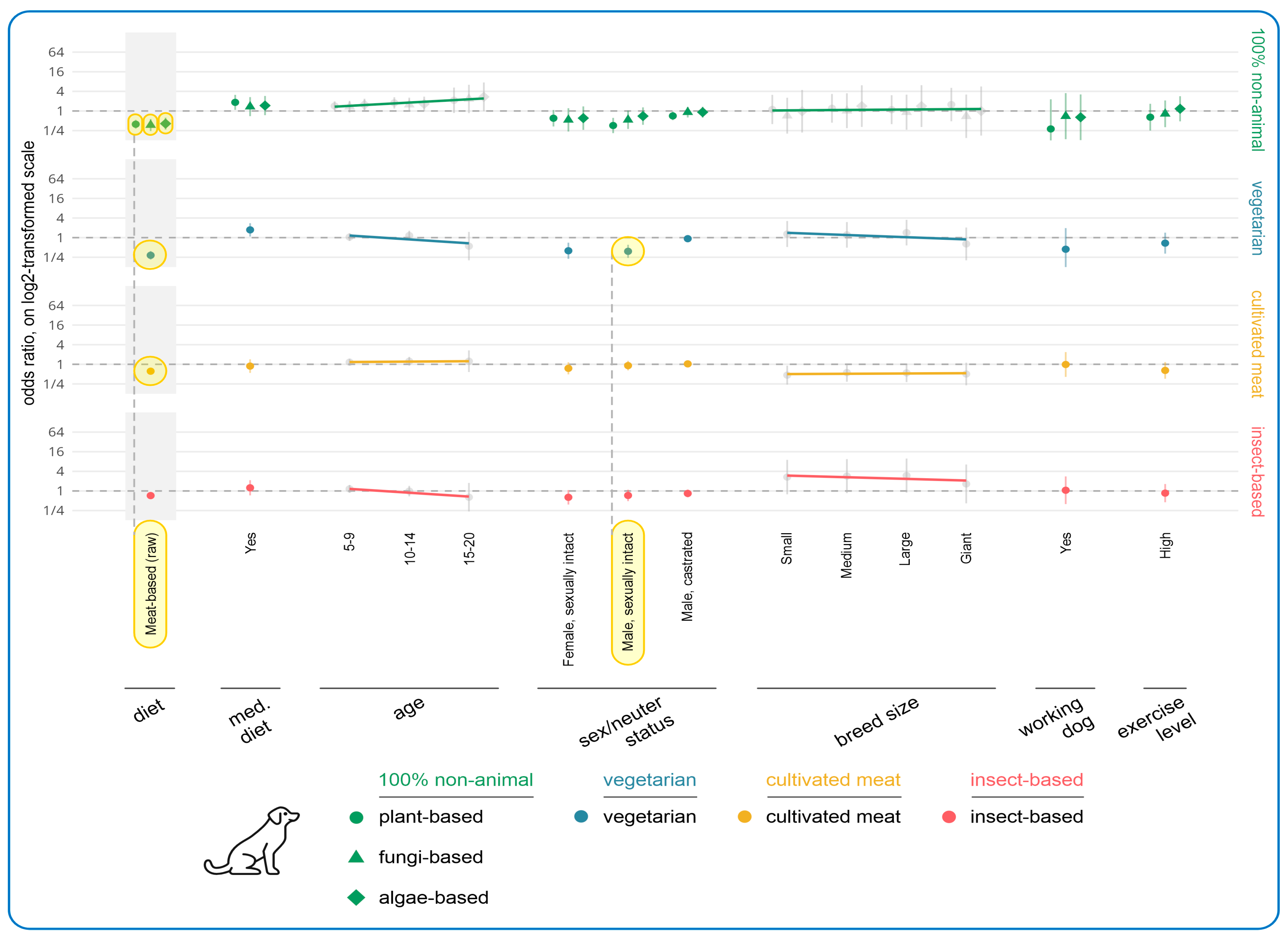
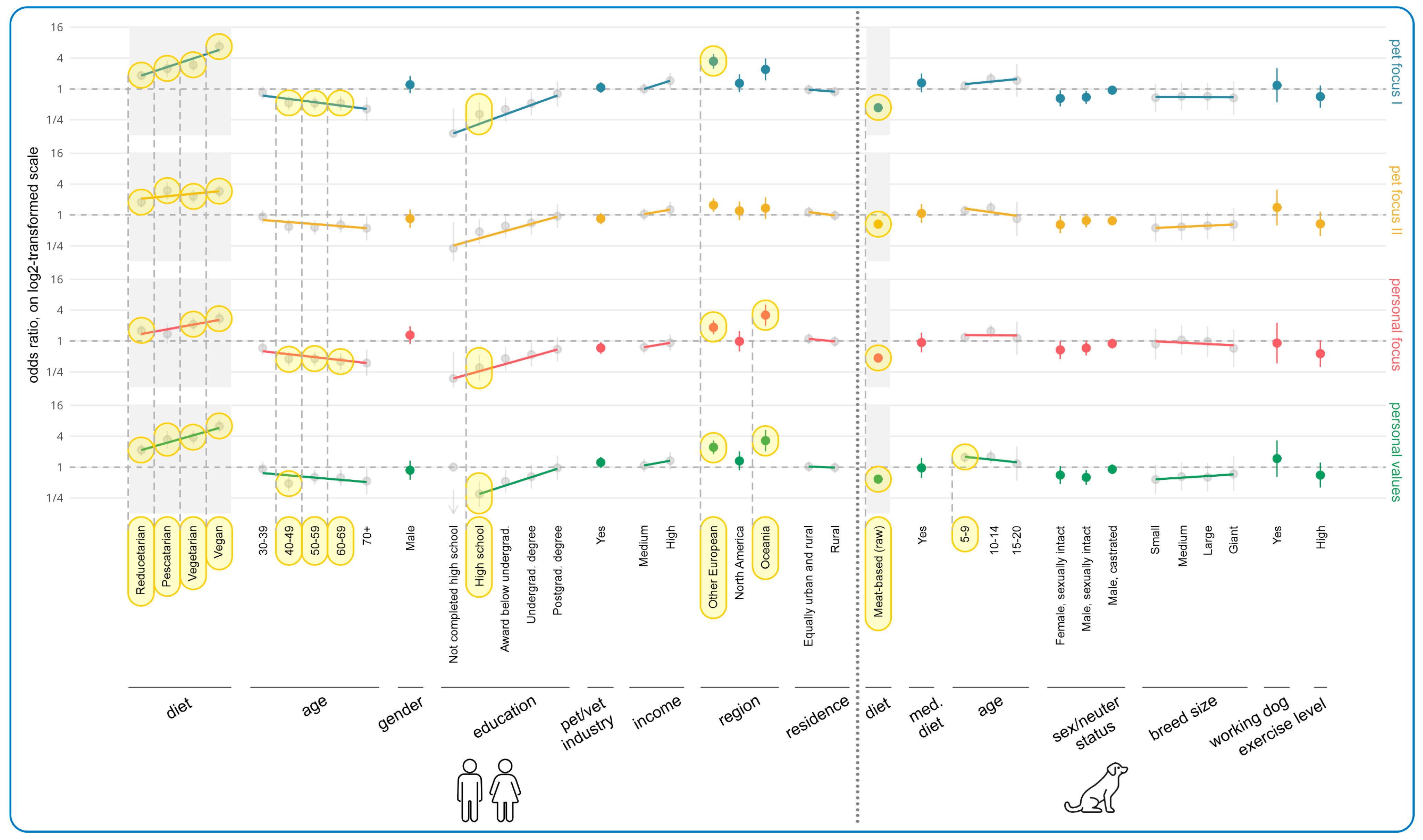
- Effect = significant association after multiple testing correction.
- Trend = significant association prior to multiple testing correction.
- No trend = no significant association prior to multiple testing correction.
- Explorative tendency = an association arising from explorative analyses only.
- Tendency = general pattern.
3.1. Human and Dog Demographic Characteristics
3.2. Current Feeding Patterns and Purchasing Determinants
3.2.1. Current Feeding Patterns
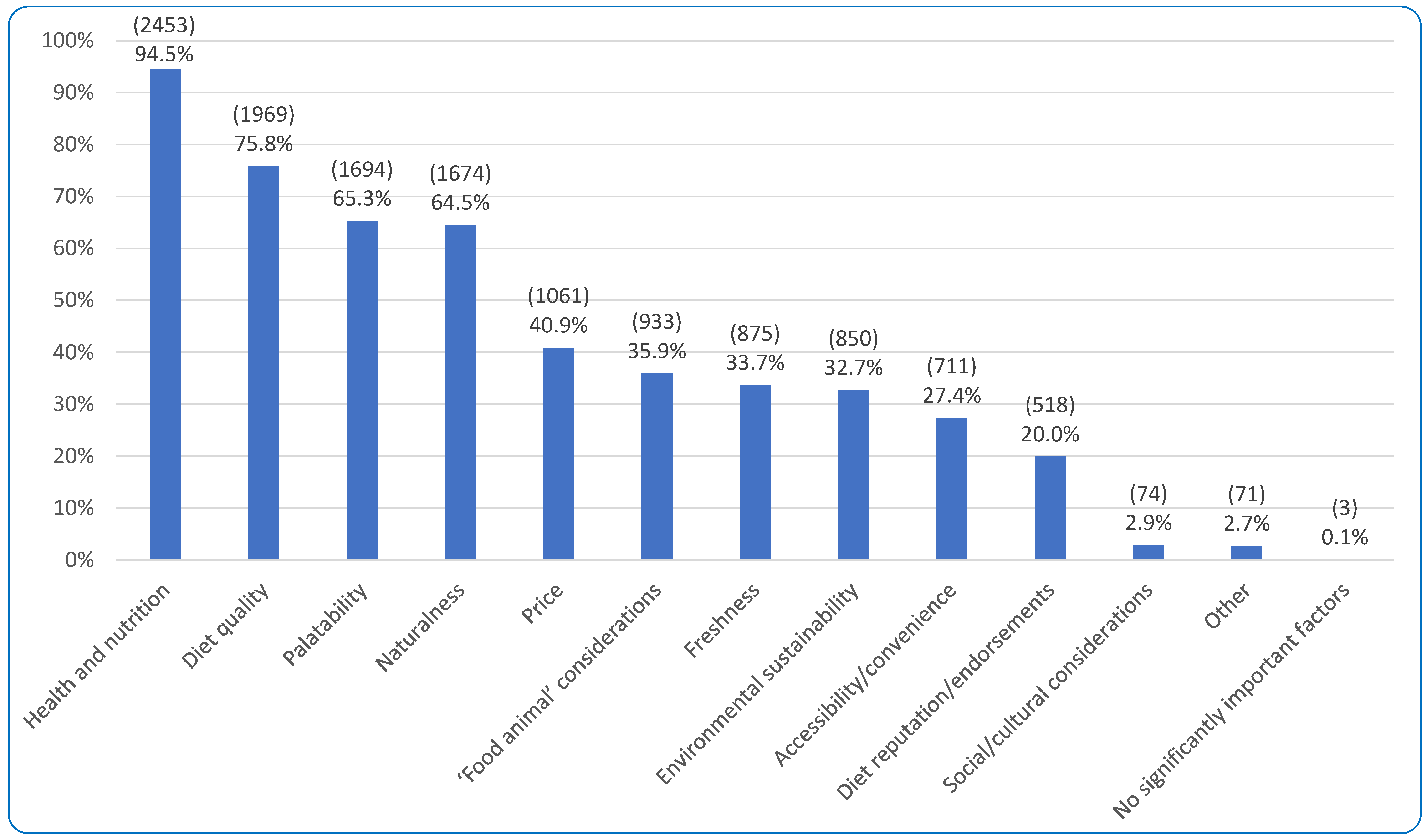
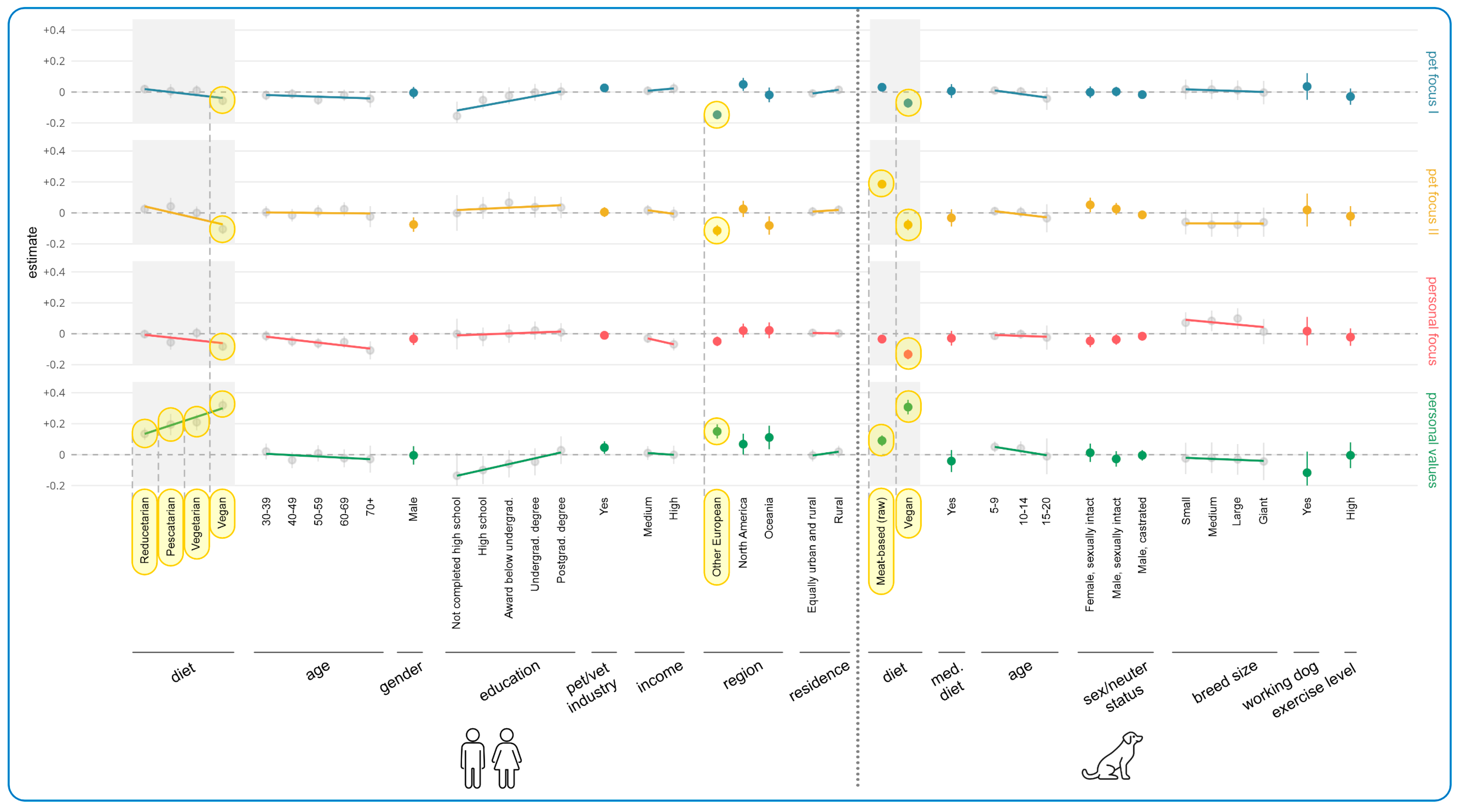
3.2.2. Current Diet Purchasing Determinants
3.3. Acceptance and Essential Characteristics of More Sustainable Dog Diets
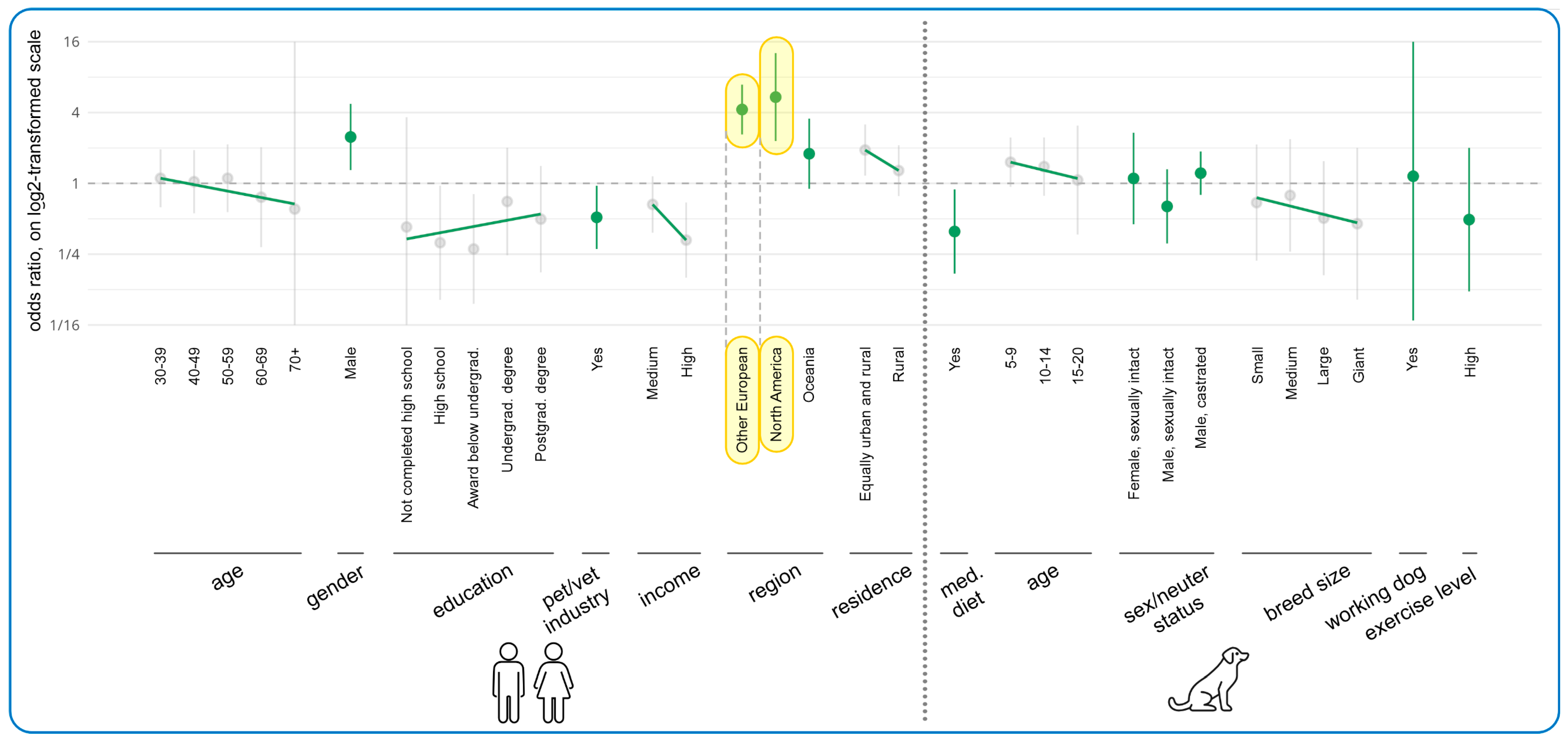
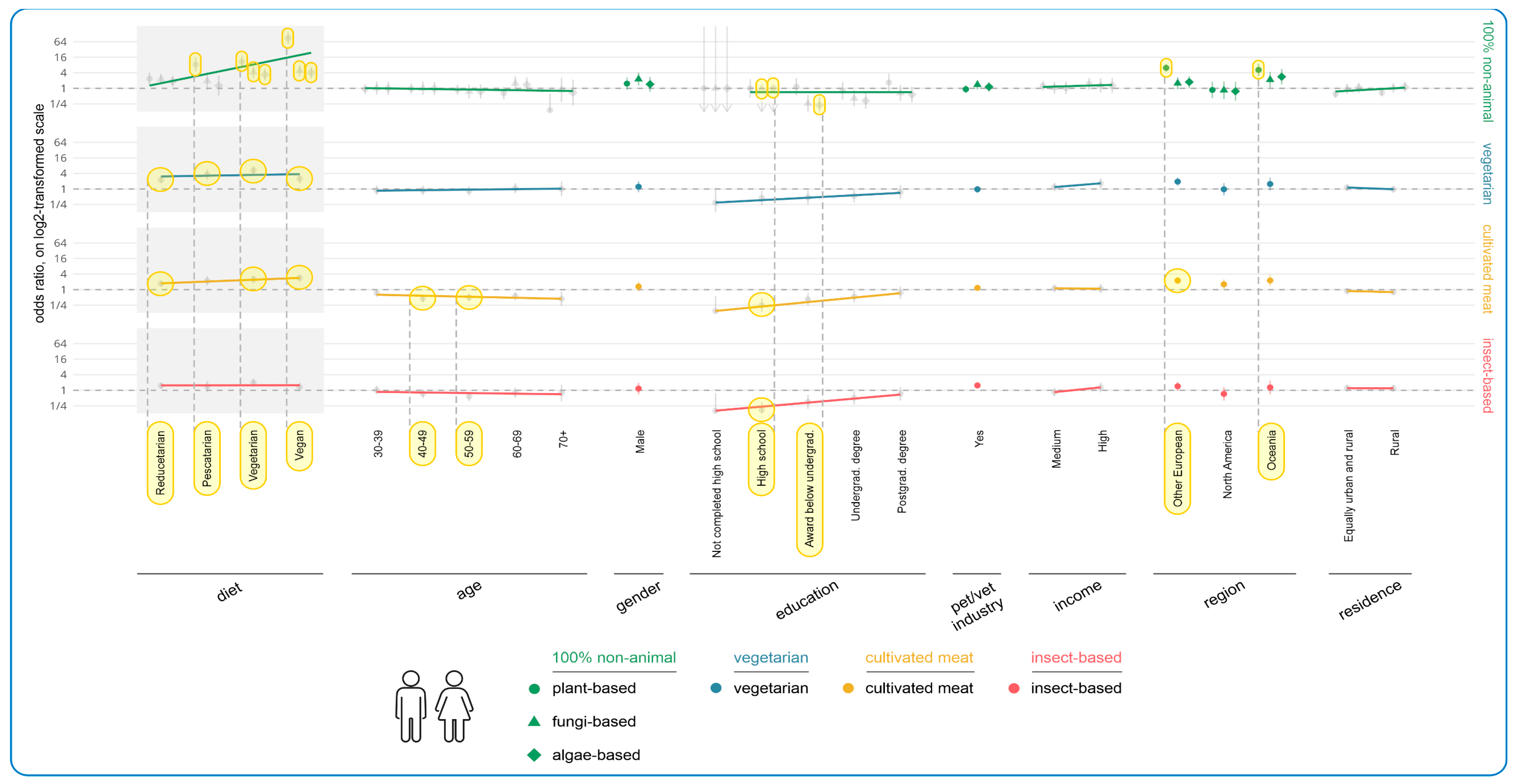
3.3.1. Acceptance of More Sustainable Dog Diets
3.3.2. Essential Characteristics of Alternative Dog Diets
3.4. Dog Diet Information Sources
4. Discussion
4.1. Current Feeding Practices and Purchasing Determinants
4.2. Acceptance and Essential Characteristics of More Sustainable Dog Diets
4.3. Dog Diet Information Sources
4.4. Limitations
4.5. Recommendations
5. Conclusions
Supplementary Materials
Author Contributions
Funding
Institutional Review Board Statement
Informed Consent Statement
Data Availability Statement
Acknowledgments
Conflicts of Interest
References
- Euromonitor International. Pet Population Data—Global; Pet Care Industry edition; Euromonitor International: Seoul, Republic of Korea, 2025. [Google Scholar]
- Nestle. Leading the Way in Pet Care. 2024. Available online: https://www.nestle.com/sites/default/files/2024-11/capital-markets-day-2024-petcare.pdf (accessed on 7 October 2025).
- Shahbandeh, M. Number of Pet Dogs in Europe from 2010 to 2022. Statista. 2024. Available online: https://www.statista.com/statistics/515579/dog-population-europe/ (accessed on 7 October 2025).
- China Pet Market. China Pet Population and Ownership 2022 Update. 2023. Available online: https://www.chinapetmarket.com/industry-news/china-pet-population-and-ownership-2022-update/ (accessed on 7 October 2025).
- Grand View Research. Dog Food Market Size, Share & Trends Analysis Report. 2023. Available online: https://www.grandviewresearch.com/industry-analysis/dog-food-market-report (accessed on 7 October 2025).
- AAFCO. FAQs: Do Meat Byproducts Ever Contain Matter from Diseased or Disabled Animals? 2023. Available online: https://www.aafco.org/consumers/understanding-pet-food/frequently-asked-questions/ (accessed on 7 October 2025).
- Carrión, P.; Thompson, L. Pet food. In Food Safety Management; Andersen, V., Lelieveld, H., Motarjemi, Y., Eds.; Academic Press: London, UK, 2023; pp. 363–383. ISBN 9780123815040. [Google Scholar]
- AVMA. Recall and Safety Alerts. 2024. Available online: https://www.avma.org/news/recalls-alerts (accessed on 7 October 2025).
- White, B.L. Insights-driven development of humanized foods for pets. Meat Muscle Biol. 2022, 6, 1–12. [Google Scholar] [CrossRef]
- Knight, A. The relative benefits for environmental sustainability of vegan diets for dogs, cats and people. PLoS ONE 2023, 18, e0291791. [Google Scholar] [CrossRef]
- Xu, X.; Sharma, P.; Shu, S.; Lin, T.S.; Ciais, P.; Tubiello, F.N.; Smith, P.; Campbell, N.; Jain, A.K. Global greenhouse gas emissions from animal-based foods are twice those of plant-based foods. Nat. Food 2021, 2, 724–732. [Google Scholar] [CrossRef]
- Poore, J.; Nemecek, T. Reducing food’s environmental impacts through producers and consumers. Science 2018, 360, 987–992. [Google Scholar] [CrossRef]
- Nicholles, B.; Knight, A. The environmental sustainability of meat-based versus vegan pet food. Front. Sustain. Food Syst. 2025, 9, 1569372. [Google Scholar] [CrossRef]
- Okin, G.S. Environmental impacts of food consumption by dogs and cats. PLoS ONE 2017, 12, e0181301. [Google Scholar] [CrossRef]
- Gómez-Leal, R.; Costa, A.; Megías-Robles, A.; Fernández-Berrocal, P.; Faria, L. Relationship between emotional intelligence and empathy towards humans and animals. PeerJ 2021, 9, e11274. [Google Scholar] [CrossRef] [PubMed]
- Dodd, S.A.S.; Cave, N.J.; Adolphe, J.L.; Shoveller, A.K.; Verbrugghe, A. Plant-based (vegan) diets for pets: A survey of pet owner attitudes and feeding practices. PLoS ONE 2019, 14, e0210806. [Google Scholar] [CrossRef]
- Rothgerber, H. A meaty matter. Pet diet and the vegetarian’s dilemma. Appetite 2013, 68, 76–82. [Google Scholar] [CrossRef]
- Milburn, J. The animal lovers’ paradox? On the ethics of “pet food”. In Pets and People; Overall, C., Ed.; Oxford University Press: Oxford, UK, 2017; pp. 187–202. [Google Scholar] [CrossRef]
- Rothgerber, H.; Rosenfeld, D. Meat-related cognitive dissonance: The social psychology of eating animals. Soc. Personal. Psychol. Compass 2021, 15, e12592. [Google Scholar] [CrossRef]
- Meeker, D.; Meisinger, J. Rendered ingredients significantly influence sustainability, quality, and safety of pet food. J. Anim. Sci. 2015, 93, 835–847. [Google Scholar] [CrossRef]
- Carroll, S.G. Cats and Dogs Could Face Food Shortage Under Draft EU Law on Green Jet Fuels. Euractiv. 2022. Available online: https://www.euractiv.com/section/biofuels/news/cats-and-dogs-could-face-food-shortage-under-draft-eu-law-on-green-jet-fuels/ (accessed on 7 October 2025).
- Lambert, H.; Elwin, A.; D’Cruze, N. Wouldn’t hurt a fly? A review of insect cognition and sentience in relation to their use as food and feed. Appl. Anim. Behav. Sci. 2021, 243, 105432. [Google Scholar] [CrossRef]
- Alexander, P.; Brown, C.; Arneth, A.; Dias, C.; Finnigan, J.; Moran, D.; Rounsevell, M.D.A. Could consumption of insects, cultured meat or imitation meat reduce global agricultural land use? Glob. Food Secur. 2017, 15, 22–32. [Google Scholar] [CrossRef]
- Tomasik, B. Eating Insects is Usually Less Efficient Than Eating Plants. Essays on Reducing Suffering. 2017. Available online: https://reducing-suffering.org/eating-insects-usually-less-efficient-eating-plants/ (accessed on 7 October 2025).
- Meatly. Meatly Launches World’s First Cultivated Pet Food! 2025. Available online: https://meatly.pet/meatly-launches-worlds-first-cultivated-pet-food/ (accessed on 7 October 2025).
- JustBeKind, 2025. Microbell Bundle. 2025. Available online: https://justbekind.co.uk/products/microbell-bundle-special (accessed on 14 October 2025).
- Lähteenmäki-Uutela, A.; Rahikainen, M.; Lonkila, A.; Yang, B. Alternative proteins and EU food law. Food Control 2021, 130, 108336. [Google Scholar] [CrossRef]
- Su, B.; Martens, P. Environmental impacts of food consumption by companion dogs and cats in Japan. Ecol. Indic. 2018, 93, 1043–1049. [Google Scholar] [CrossRef]
- Data Bridge Market Research. Global Vegan Dog Food Market Size, Share, and Trends Analysis Report—Industry Overview and Forecast to 2032. 2025. Available online: https://www.databridgemarketresearch.com/reports/global-vegan-dog-food-market (accessed on 7 October 2025).
- People for the Ethical Treatment of Animals (PETA) PETA survey. In Vegan Canine Diets; Knight, A., Ed.; 1994; Available online: https://sustainablepetfood.info/vegetarian-canine-diets/ (accessed on 7 October 2025).
- Brown, W.Y.; Vanselow, B.A.; Redman, A.J.; Pluske, J.R. An experimental meat-free diet maintained haematological characteristics in sprint-racing sled dogs. Br. J. Nutr. 2009, 102, 1318–1323. [Google Scholar] [CrossRef] [PubMed]
- Semp, P. Vegan Nutrition of Dogs and Cats. Master’s Thesis, Veterinary University of Vienna, Wien, Vienna, 2014. Available online: https://www.vetmeduni.ac.at/hochschulschriften/diplomarbeiten/AC12256171.pdf (accessed on 7 October 2025).
- Kiemer, L.A. Vegan Diet and Its Effects on the Dog’s Health. Master’s Thesis, Lithuanian University of Health Sciences, Kaunas, Lithuania, 2019. Available online: https://sustainablepetfood.info/wp-content/uploads/2024/07/Dog-health-Kiemer-2019.pdf (accessed on 7 October 2025).
- Cavanaugh, S.M.; Cavanaugh, R.P.; Gilbert, G.E.; Leavitt, E.L.; Ketzis, J.K.; Vieira, A.B. Short-term amino acid, clinicopathologic, and echocardiographic findings in healthy dogs fed a commercial plant-based diet. PLoS ONE 2021, 16, e0258044. [Google Scholar] [CrossRef]
- Davies, M. Reported health benefits of a vegan dog food–a Likert scale-type survey of 100 guardians. Arch. Clin. Biomed. Res. 2022, 6, 889–905. [Google Scholar] [CrossRef]
- Dodd, S.A.S.; Khosa, D.; Dewey, C.; Verbrugghe, A. Owner perception of health of North American dogs fed meat-or plant-based diets. Res. Vet. Sci. 2022, 149, 36–46. [Google Scholar] [CrossRef]
- Knight, A.; Huang, E.; Rai, N.; Brown, H. Vegan versus meat-based dog food: Guardian-reported indicators of health. PLoS ONE 2022, 17, e0265662. [Google Scholar] [CrossRef]
- Dodd, S.A.S.; Adolphe, J.; Dewey, C.; Khosa, D.; Abood, S.K.; Verbrugghe, A. Efficacy of vitamin D2 in maintaining serum total vitamin D concentrations and bone mineralisation in adult dogs fed a plant-based (vegan) diet in a 3-month randomised trial. Br. J. Nutr. 2024, 131, 391–405. [Google Scholar] [CrossRef] [PubMed]
- Linde, A.; Lahiff, M.; Krantz, A.; Sharp, N.; Ng, T.T.; Melgarejo, T. Domestic dogs maintain clinical, nutritional, and hematological health outcomes when fed a commercial plant-based diet for a year. PLoS ONE 2024, 19, e0298942. [Google Scholar] [CrossRef]
- Knight, A.; Bauer, A.; Brown, H.J. Vegan versus meat-based dog food: Guardian-reported health outcomes in 2,536 dogs, after controlling for canine demographic factors. Heliyon 2024, 10, e35578. [Google Scholar] [CrossRef]
- Domínguez-Oliva, A.; Mota-Rojas, D.; Semendric, I.; Whittaker, A.L. The impact of vegan diets on indicators of health in dogs and cats: A systematic review. Vet. Sci. 2023, 10, 52. [Google Scholar] [CrossRef]
- UK Pet Food. Vegetarian and Vegan Diets Factsheet. 2023. Available online: https://www.ukpetfood.org/resource/uk-pet-food-nutrition-guide---veg-vegan-diets-pdf.html (accessed on 7 October 2025).
- BVA. BVA Policy Position on Diet Choices for Cats and Dogs. 2024. Available online: https://www.pdsa.org.uk/what-we-do/pdsa-animal-wellbeing-report/paw-report-2023/cats (accessed on 7 October 2025).
- O’Brien, J.S.; Tolbert, M.K.; Dog Aging Project Consortium; Ruple, A. Dog and owner demographics impact dietary choices in Dog Aging Project cohort. J. Am. Vet. Med. Assoc. 2024, 262, 1676–1685. [Google Scholar] [CrossRef]
- Schleicher, M.; Cash, S.B.; Freeman, L.M. Determinants of pet food purchasing decisions. Can. Vet. J. 2019, 60, 644–650. [Google Scholar]
- Dodd, S.A.S.; Cave, N.J.; Abood, S.; Shoveller, A.K.; Adolphe, J.L.; Verbrugghe, A. An observational study of pet feeding practices and how these have changed between 2008 and 2018. VetRecord 2020, 186, 643. [Google Scholar] [CrossRef] [PubMed]
- Naughton, V.; Grzelak, T.; Mulhern, M.S.; Moffett, R.C.; Naughton, P.J. Caring practices of pet cat and dog owners in Northern Ireland vs potential implications for animals’ health and welfare. Anim. Welf. 2021, 30, 131–144. [Google Scholar] [CrossRef]
- Knight, A.; Bauer, A.; Brown, H. Vegan versus meat-based cat food: Guardian-reported health outcomes in 1,369 cats, after controlling for feline demographic factors. PLoS ONE 2023, 18, e0284132. [Google Scholar] [CrossRef] [PubMed]
- Knight, A.; Satchell, L. Vegan versus meat-based pet foods: Owner-reported palatability behaviours and implications for canine and feline welfare. PLoS ONE 2021, 16, e0253292. [Google Scholar] [CrossRef]
- Online Surveys. About Online Surveys. 2024. Available online: https://www.onlinesurveys.ac.uk/about/ (accessed on 3 January 2021).
- Mace, J.L.; Bauer, A.; Knight, A.; Nicholles, B. Consumer acceptance of sustainable cat diets: A survey of 1380 cat guardians. Animals 2025, in press. [Google Scholar]
- Fahrmeir, L.; Knieb, T.; Lang, S.; Marx, B. (Eds.) Generalized linear models. In Regression: Models, Methods and Applications; Springer: Berlin/Heidelberg, Germany, 2013; pp. 269–324. [Google Scholar]
- Holm, S. A simple sequentially rejective multiple test procedure. Scand. J. Stat. 1979, 6, 65–70. [Google Scholar]
- Hosmer, D.W., Jr.; Lemeshow, S.; Sturdivant, R.X. Applied Logistic Regression; John Wiley & Sons: Hoboken, NJ, USA, 2013. [Google Scholar]
- Ozili, P.K. The acceptable R-square in empirical modelling for social science research. In Social Research Methodology and Publishing Results: A Guide to Non-Native English Speakers; IGI Global: Palmdale, Pennsylvania, 2023; pp. 134–143. [Google Scholar]
- R Core Team. R: A Language and Environment for Statistical Computing. 2024. Available online: https://www.R-project.org/ (accessed on 7 October 2025).
- Wood, S.N. Generalized Additive Models: An Introduction with R, 2nd ed.; Chapman and Hall/CRC: Boca Raton, FL, USA, 2017. [Google Scholar]
- Sachs, M.C. plotROC: A Tool for Plotting ROC Curves. J. Stat. Softw. 2017, 79, 1–19. [Google Scholar] [CrossRef]
- Scallan, S. RKE Ethics Policy and Procedures; University of Winchester: Winchester, UK, 2019. [Google Scholar]
- Hunter, A.R.; Murison, P.J. Pet feeding practices: A survey of dog and cat owners’ current feeding practices, attitudes, and motivations within the UK. Pets 2025, 2, 20. [Google Scholar] [CrossRef]
- APPA. The 2017–2018 APPA National Pet Owners Survey Debut. 2018. Available online: https://www.almendron.com/tribuna/wp-content/uploads/2018/06/gpe2017-npos-seminar.pdf (accessed on 7 October 2025).
- Lyu, Y.; Wu, C.; Li, L.; Pu, J. Current evidence on raw meat diets in pets: A natural symbol, but a nutritional controversy. Animals 2025, 15, 293. [Google Scholar] [CrossRef]
- Wilson, S.A.; Villaverde, C.; Fascetti, A.J.; Larsen, A.J. Evaluation of the nutritional adequacy of recipes for home-prepared maintenance diets for cats. JAVMA 2019, 254, 1172–1179. [Google Scholar] [CrossRef]
- Oven, A.; Yoxon, B.; Milburn, J. Investigating the market for cultivated meat as pet food: A survey analysis. PLoS ONE 2022, 17, e0275009. [Google Scholar] [CrossRef] [PubMed]
- Mace, J.L.; Knight, A. From the backyard to our beds: The spectrum of care, attitudes, relationship types, and welfare in non-commercial chicken care. Animals 2024, 14, 288. [Google Scholar] [CrossRef] [PubMed]
- Weisberg, Y.J.; De Young, C.G.; Hirsh, J.B. Gender differences in personality across the ten aspects of the Big Five. Front. Psychol. 2011, 2, 178. [Google Scholar] [CrossRef]
- Modlinska, K.; Adamczyk, D.; Maison, D.; Pisula, W. Gender differences in attitudes to vegans/vegetarians and their food preferences, and their implications for promoting sustainable dietary patterns: A systematic review. Sustainability 2020, 12, 6292. [Google Scholar] [CrossRef]
- Gopnik, A.; Griffiths, T.L.; Lucas, C.G. When younger learners can be better (or at least more open-minded) than older ones. Curr. Dir. Psychol. Sci. 2015, 24, 87–92. [Google Scholar] [CrossRef]
- KBV Research. Europe Vegan Pet Food Market. 2022. Available online: https://www.kbvresearch.com/europe-vegan-pet-food-market/ (accessed on 7 October 2025).
- FMI. Vegan Dog Food Market Trends—Nutrition & Consumer Demand 2025 to 2035. Future Market Insights. 2025. Available online: https://www.futuremarketinsights.com/reports/vegan-dog-food-market (accessed on 7 October 2025).
- Arachchige, K.A.L. The Factors Influencing Brand Loyalty in Purchasing Pet Food in New Zealand. Master’s Thesis, Southern Institute of Technology (SIT), Invercargill, New Zealand, 2022. Available online: https://www.researchbank.ac.nz/server/api/core/bitstreams/539f29f3-0156-468b-880d-1db85fa030ae/content (accessed on 14 October 2025).
- McCormick, W. How Do Human Choices Influence the Feeding of Their Dogs? 2020. Available online: https://pure.northampton.ac.uk/ws/portalfiles/portal/8710580/McCormick_Wanda_2020_How_do_human_choices_influence_the_feeding_of_their_dogs.pdf (accessed on 7 October 2025).
- Banton, S.; Baynham, A.; Pezzali, J.G.; Von Massow, M.; Shoveller, A.K. Grains on the brain: A survey of dog owner purchasing habits related to grain-free dry dog foods. PLoS ONE 2021, 16, e0250806. [Google Scholar] [CrossRef]
- Simonsen, J.E.; Fasenko, G.M.; Lillywhite, J.M. The value-added dog food market: Do dog owners prefer natural or organic dog foods? J. Agric. Sci. 2014, 6, 86. [Google Scholar] [CrossRef]
- Silva, D.; Júnior, F.M.C.; Rocha-Silva, M.; de Oliveira, S.T.L.; dos Santos Couto, M.S.; Sena, C.D.N.C. Socioeconomic profile of pet guardians and motivating factors in the purchase of pet food. Rev. Acad. Ciênc. Piauí 2024, 4, e412410. [Google Scholar] [CrossRef]
- van Prooijen, A.M.; Smeets, A.E.M.J.; Yang, K.X.; Hoppezak, P. Consumer considerations of carbon paw prints in evaluations of dog food products. Soc. Anim. 2024, 51, 1–22. [Google Scholar] [CrossRef]
- Baker, C. Humane dog food? caring and killing in the certified humane dog food value chain. Environ. Plan. E Nat. Space 2024, 7, 311–329. [Google Scholar] [CrossRef]
- Rombach, M.; Dean, D.L. It keeps the good boy healthy from nose to tail: Understanding pet food attribute preferences of US consumers. Animals 2021, 11, 3301. [Google Scholar] [CrossRef]
- International Longevity Centre UK. Maximising the Longevity Dividend. ILC UK. 2019. Available online: https://ilcuk.org.uk/wp-content/uploads/2019/12/Maximising-the-longevity-dividend.pdf (accessed on 7 October 2025).
- Craig, J.M. Raw feeding in dogs and cats. Companion Anim. 2019, 24, 578–584. [Google Scholar] [CrossRef]
- Serra-Castelló, C.; Possas, A.; Jofré, A.; Garriga, M.; Bover-Cid, S. High pressure processing to control Salmonella in raw pet food without compromising the freshness appearance: The impact of acidulation and frozen storage. Food Microbiol. 2023, 109, 104139. [Google Scholar] [CrossRef] [PubMed]
- Biteau, C.; Bry-Chevalier, T.; Crummett, D.; Ryba, R.; St Jules, M. Is turning food waste into insect feed an uphill climb? A review of persistent challenges. Sustain. Prod. Consum. 2024, 49, 492–501. [Google Scholar] [CrossRef]
- Gibbons, M.; Crump, A.; Barrett, M.; Sarlak, S.; Birch, J.; Chittka, L. Can insects feel pain? A review of the neural and behavioural evidence. Adv. Insect Physiol. 2022, 63, 155–229. [Google Scholar] [CrossRef]
- Pinney, J.; Costa-Font, M. A model for consumer acceptance of insect-based dog foods among adult UK dog owners. Animals 2024, 14, 1021. [Google Scholar] [CrossRef]
- The Vegan Society. Vegan Animal Care Report: Consumer Motivations, Barriers and Market Potential. 2022. Available online: https://www.vegansociety.com/sites/default/files/uploads/downloads/Vegan%20Animal%20Care%20Report%202022%20Final.pdf (accessed on 7 October 2025).
- Morgan, G.; Williams, N.; Schmidt, V.; Cookson, D.; Symington, C.; Pinchbeck, G. A dog’s dinner: Factors affecting food choice and feeding practices for UK dog owners feeding raw meat-based or conventional cooked diets. Prev. Vet. Med. 2022, 208, 105741. [Google Scholar] [CrossRef] [PubMed]
- Ofcom. OnlineNation: 2024 Report. 2024. Available online: https://www.ofcom.org.uk/siteassets/resources/documents/research-and-data/online-research/online-nation/2024/online-nation-2024-report.pdf?v=386238 (accessed on 7 October 2025).
- Morgan, S.K.; Willis, S.; Shepherd, M.L. Survey of owner motivations and veterinary input of owners feeding diets containing raw animal products. PeerJ 2017, 5, e3031. [Google Scholar] [CrossRef] [PubMed]
- Golzar, J.; Noor, S.; Tajik, O. Convenience sampling. Int. J. Educ. Lang. Stud. 2022, 1, 72–77. [Google Scholar] [CrossRef]



| Percentage | Frequency | |
|---|---|---|
| CONTINENTAL REGION | ||
| UK | 71.6% | 1858 |
| Other European | 15.0% | 389 |
| North America | 5.7% | 149 |
| Australia/New Zealand/Oceania | 4.5% | 116 |
| South America | 1.7% | 43 |
| Asia | 0.9% | 24 |
| Other | 0.4% | 10 |
| Africa | 0.3% | 7 |
| HIGHEST EDUCATIONAL LEVEL | ||
| Did not complete high school | 1.7% | 43 |
| High school or equivalent | 18.3% | 474 |
| College or University award < undergrad | 28.7% | 745 |
| University undergraduate degree | 28.3% | 735 |
| Postgrad < doctorate | 19.6% | 508 |
| Doctoral degree | 3.5% | 91 |
| AGE CATEGORY | ||
| 18–19 | 0.7% | 17 |
| 20–29 | 15.0% | 389 |
| 30–39 | 21.0% | 546 |
| 40–49 | 20.6% | 536 |
| 50–59 | 23.0% | 596 |
| 60–69 | 15.4% | 401 |
| 70+ | 4.3% | 111 |
| HUMAN DIET | ||
| Omnivore | 40.2% | 1044 |
| Reducetarian | 21.6% | 562 |
| Pescatarian | 5.1% | 133 |
| Vegetarian | 10.1% | 263 |
| Vegan | 22.1% | 574 |
| Other | 0.8% | 20 |
| Percentage | Frequency | |
|---|---|---|
| CURRENT DOG DIET | ||
| Meat-based—conventional | 52.3% | 1359 |
| Meat-based—raw | 31.9% | 829 |
| Vegan | 12.8% | 333 |
| Vegetarian | 1.3% | 34 |
| Mixture | 0.7% | 17 |
| Unsure | 0.4% | 10 |
| Meat-based—cultivated | 0.3% | 7 |
| Insect-based | 0.2% | 6 |
| Fungi-based | 0.0% | 1 |
| ACCEPTANCE OF MORE SUSTAINABLE DOG DIET | ||
| None of the options | 56.8% | 1231 |
| Meat-based—cultivated | 24.4% | 529 |
| Vegetarian | 16.6% | 359 |
| Insect-based | 15.5% | 336 |
| Vegan | 13.4% | 290 |
| Fungi-based | 7.1% | 153 |
| Algae-based | 6.7% | 146 |
| Percentage | Frequency | |
|---|---|---|
| SOURCE OF MAJORITY OF DOG FOOD | ||
| Direct from the manufacturer | 25.6% | 664 |
| Ordered online | 25.0% | 648 |
| Pet store | 23.9% | 620 |
| Other store | 11.0% | 285 |
| Diet is 50% or more homemade | 9.8% | 254 |
| Other | 2.5% | 66 |
| Veterinary clinic | 2.3% | 59 |
| DOG FOOD CONSISTENCY | ||
| Commercial dry kibble | 37.6% | 976 |
| Commercial raw | 24.1% | 626 |
| An equal mix of dry food, with moist or raw | 14.7% | 382 |
| Commercial canned/pouch | 6.9% | 178 |
| Home-prepared cooked | 5.7% | 149 |
| Home-prepared raw | 5.2% | 136 |
| Commercial dry premix (for use with additional items) | 2.4% | 62 |
| Other | 2.0% | 51 |
| Human food | 1.4% | 36 |
| % COMMERCIAL | ||
| 100% | 24.8% | 643 |
| 75–99% | 46.3% | 1202 |
| 50–74% | 12.4% | 322 |
| 25–49% | 4.9% | 126 |
| 5–24% | 3.9% | 101 |
| 0–4% | 7.8% | 202 |
| Percentage | Frequency | |
|---|---|---|
| FREQUENCY OF SNACKS/TREATS | ||
| More than once a day | 48.9% | 1160 |
| Once a day | 34.5% | 817 |
| More than once a week but less than once a day | 13.8% | 327 |
| Once a week | 1.7% | 41 |
| Less than once a week | 1.1% | 26 |
| TYPE OF TREAT | ||
| Vegetables or fruit | 56.6% | 1342 |
| Other commercial treats | 50.5% | 1197 |
| Dental/oral bars or chewable sticks | 48.7% | 1154 |
| Human food prepared at home | 38.8% | 921 |
| Raw meat or bones | 32.1% | 762 |
| Other | 10.4% | 246 |
| Human food from other sources | 8.3% | 197 |
| Frequency | |
|---|---|
| ADVICE | |
| Senior food/prescription/food for specific ailment | 53 |
| Particular food brands (e.g., Royal Canin, Hill’s, Chappie—often what veterinarians stock). | 47 |
| Add supplements (e.g., fiber, B vitamins, ‘good’ fats, calcium) | 46 |
| Reduce intake, implement weight controls, reduce fat, portion controls | 44 |
| Hypoallergenic diet | 37 |
| Kibble (often what veterinarians stock) | 29 |
| Against raw | 28 |
| Elimination diet | 17 |
| Raw | 17 |
| Bland/simple diet (often based around fish, chicken, rice) | 17 |
| Miscellaneous (blood tests, reduce crude ash ratio, tailor-made recipes, no sugar, low salt, low milk, no apple/banana, pH test of urine, follow Chinese Medicine, do not alter food as it is a genetic problem) | 12 |
| Commercial, balanced dog food (often what veterinarians stock) | 10 |
| Vegan is acceptable | 10 |
| Own research as I am a vet | 8 |
| Grain-free | 7 |
| Against vegan | 7 |
| Moderate/low protein | 6 |
| Tips to increase eating and weight | 6 |
| Avoid grain-free | 5 |
| Home-cooked vegan food | 4 |
| Increase protein | 4 |
| Specific ratios of protein, fats, carbs | 3 |
| Hydrolyzed food | 3 |
| Against particular brands (Acana Orijen) | 2 |
| Add egg/yogurt | 2 |
| Premium dog foods | 2 |
| Against home-cooked | 1 |
| Avoid standard commercial foods | 1 |
Disclaimer/Publisher’s Note: The statements, opinions and data contained in all publications are solely those of the individual author(s) and contributor(s) and not of MDPI and/or the editor(s). MDPI and/or the editor(s) disclaim responsibility for any injury to people or property resulting from any ideas, methods, instructions or products referred to in the content. |
© 2025 by the authors. Licensee MDPI, Basel, Switzerland. This article is an open access article distributed under the terms and conditions of the Creative Commons Attribution (CC BY) license (https://creativecommons.org/licenses/by/4.0/).
Share and Cite
Mace, J.L.; Bauer, A.; Knight, A.; Nicholles, B. Consumer Acceptance of Sustainable Dog Diets: A Survey of 2639 Dog Guardians. Animals 2025, 15, 2988. https://doi.org/10.3390/ani15202988
Mace JL, Bauer A, Knight A, Nicholles B. Consumer Acceptance of Sustainable Dog Diets: A Survey of 2639 Dog Guardians. Animals. 2025; 15(20):2988. https://doi.org/10.3390/ani15202988
Chicago/Turabian StyleMace, Jenny L., Alexander Bauer, Andrew Knight, and Billy Nicholles. 2025. "Consumer Acceptance of Sustainable Dog Diets: A Survey of 2639 Dog Guardians" Animals 15, no. 20: 2988. https://doi.org/10.3390/ani15202988
APA StyleMace, J. L., Bauer, A., Knight, A., & Nicholles, B. (2025). Consumer Acceptance of Sustainable Dog Diets: A Survey of 2639 Dog Guardians. Animals, 15(20), 2988. https://doi.org/10.3390/ani15202988