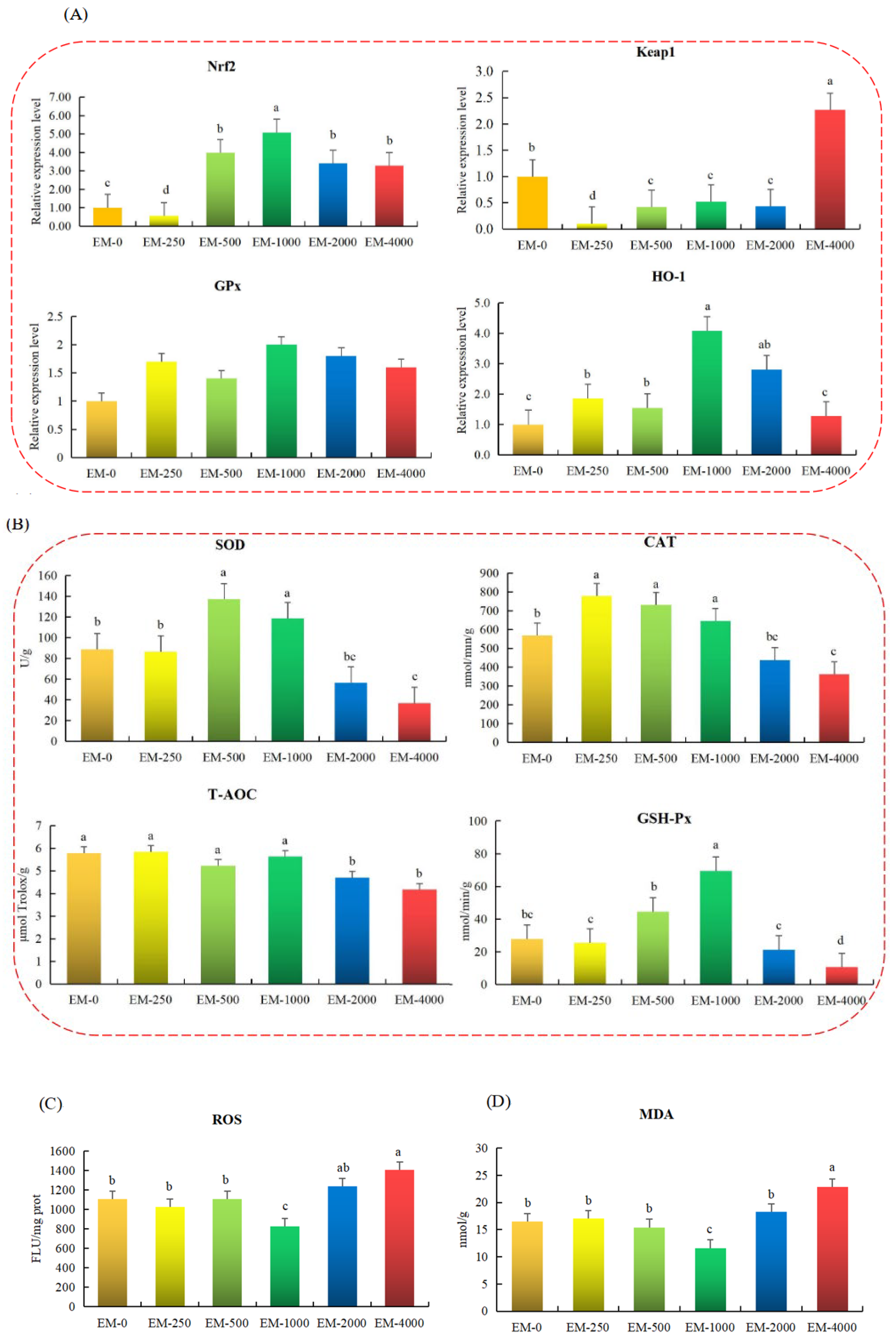
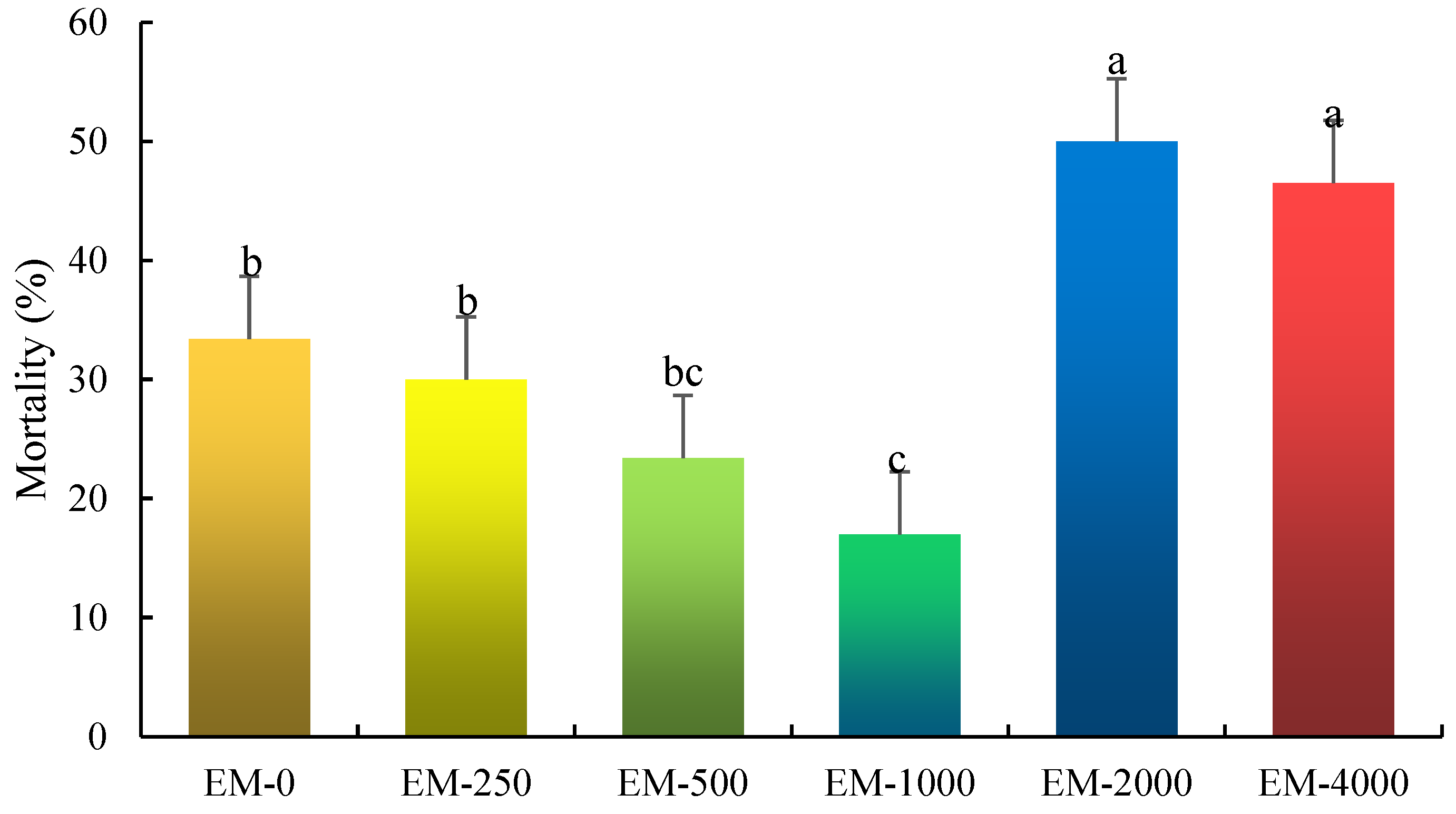
Emodin Improves Juvenile Largemouth Bass (Micropterus salmoides) Liver Health Through Nrf2/NF-κB Pathway and Fat Metabolism: Growth Performance, Immune Response and Resistance Against Aeromonas veronii Infection

Simple Summary
Abstract
1. Introduction
2. Materials and Methods
2.1. Animals and Fish Welfare
2.2. Diet Preparation
2.3. Experimental Design and Management
2.4. Sample Collection
2.5. Growth Performance
2.6. Histopathological Examination
2.7. Biochemical Analysis
2.8. Quantitative Real-Time PCR Analysis

| Genes | Primer Sequences (5′→3′) | Product Size (bp) | Efficiency (%) | R2 Value | Tm (°C) | Source |
|---|---|---|---|---|---|---|
| β-actin | (F) TCCTCGGTATGGAGTCTTG | 187 | 99.59 | 0.9971 | 60 | XM_038712920.1 |
| (R) GTCAGCGATTCCAGGGTA | ||||||
| Nrf2 | (F) CAGACAGTTCCTTTGCAGGC | 188 | 99.83 | 0.9916 | 60 | XM_038720536.1 |
| (R) AGGGACAAAAGCTCCATCCA | ||||||
| Keap1 | (F) CAGCATTACATGGCCGCATC | 168 | 100.74 | 0.9920 | 59 | XM_038713667.1 |
| (R) CTTCTCTGGGTCGTAAGACTCC | ||||||
| GPx | (F) CCCTGCAATCAGTTTGGACA | 124 | 95.70 | 0.9919 | 60 | MK614713.1 |
| (R) TTGGTTCAAAGCCATTCCCT | ||||||
| HO-1 | (F) ATCGGAGCAGATTAAGGC | 249 | 99.59 | 0.9973 | 60 | XM_038694281.1 |
| (R) TTGTACTGTGGCAGGGTG | ||||||
| PPARα | (F) CCACCGCAATGGTCGATATG | 108 | 94.71 | 0.9927 | 60 | XM_038705497.1 |
| (R) TGCTGTTGATGGACTGGGAAA | ||||||
| ACO | (F) GGAGGTTATTGTTTCGGTTCT | 99 | 97.54 | 0.9918 | 59 | RNA-seq by Xu et al. (2024) [26] |
| (R) GCCTTCTTTTGGTCTTTTCTG | ||||||
| CPT1 | (F) GAATGGGGTAATGACTGGTGTG | 217 | 99.48 | 0.9936 | 60 | XM_038705335.1 |
| (R) TCGACTGATTGGTATGTGTTGG | ||||||
| FAS | (F) AGGCTGAGTGGGAGAAGGTG | 169 | 101.67 | 0.9949 | 60 | RNA-seq by Xu et al. (2024) [26] |
| (R) GACGGCGACAAAGAAAGAGG | ||||||
| ACC | (F) ATCCCTCTTTGCCACTGTTG | 208 | 96.58 | 0.9914 | 60 | RNA-seq by Xu et al. (2024) [26] |
| (R) GAGGTGATGTTGCTCGCATA | ||||||
| DGAT1 | (F) TGCGTTCGTTCTTGGTTCT | 173 | 99.76 | 0.9950 | 60 | RNA-seq by Xu et al. (2024) [26] |
| (R) GCATGGGCATGTTTGTGAC | ||||||
| IL-1β | (F) CGTGACTGACAGCAAAAAGAGG | 96 | 96.54 | 0.9978 | 60 | XM_038733429.1 |
| (R) GATGCCCAGAGCCACAGTTC | ||||||
| IL-8 | (F) CGTTGAACAGACTGGGAGAGATG | 211 | 101.27 | 0.9954 | 60 | XM_038704088.1 |
| (R) AGTGGGATGGCTTCATTATCTTGT | ||||||
| IL-10 | (F) CGGCACAGAAATCCCAGAGC | 109 | 107.18 | 0.9931 | 50 | XM_038696252.1 |
| (R) CAGCAGGCTCACAAAATAAACATCT | ||||||
| TNF-α | (F) CTTCGTCTACAGCCAGGCATCG | 145 | 101.51 | 0.9917 | 60 | XM_038710731.1 |
| (R) TTTGGCACACCGACCTCACC | ||||||
| TGF-β | (F) GCTTCAGTTTCGGCATTT | 128 | 94.27 | 0.9955 | 60 | XM_038693206.1 |
| (R) TCTCCGTGGAGCGTTTT |
2.9. Challenge Test
2.10. Statistics Analysis
3. Results
3.1. Growth Performance
3.2. Liver Histology
3.3. Hepatic Lipid Metabolism
3.4. Hepatic Antioxidant Capacity
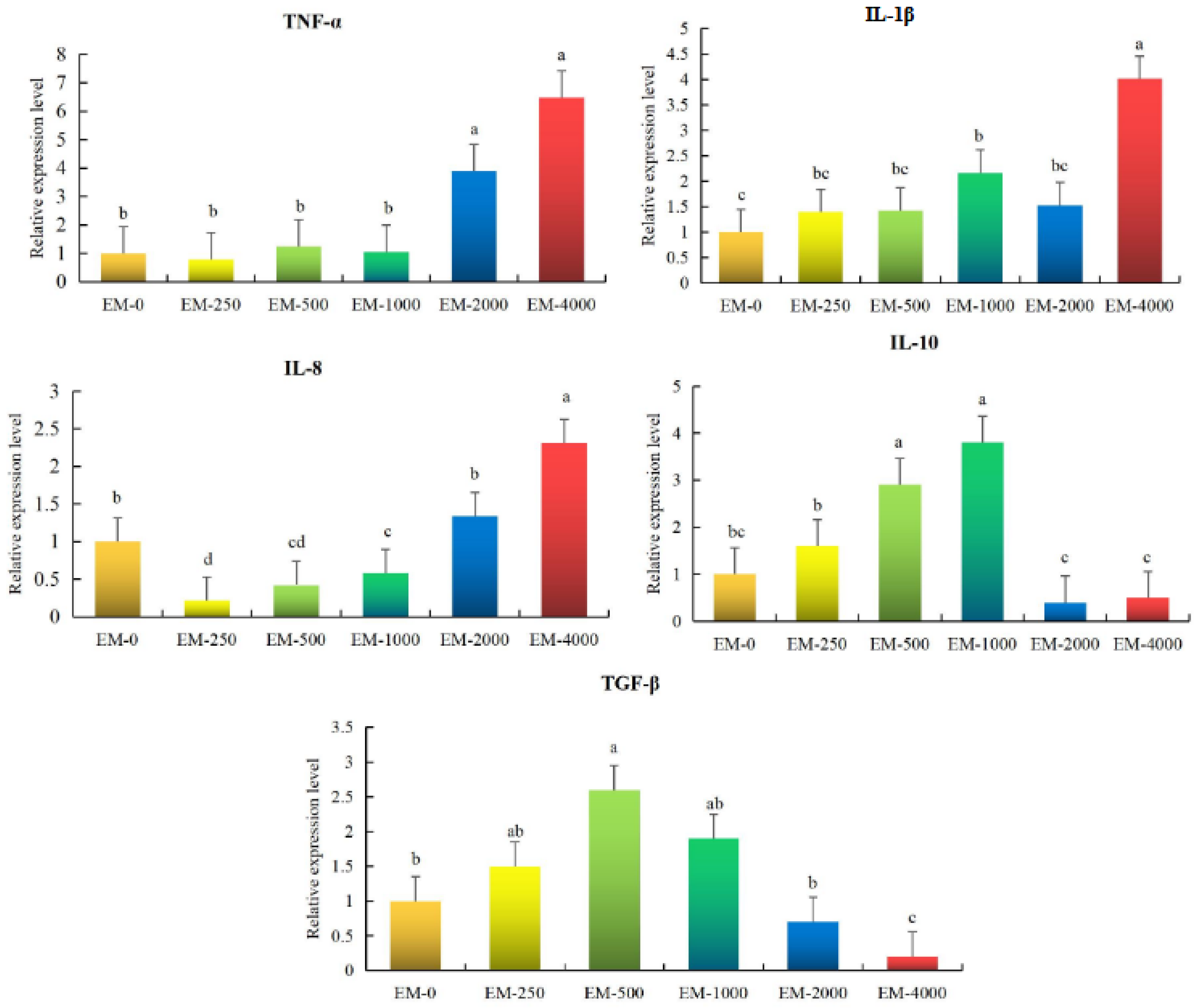
3.5. Hepatic Inflammation Response
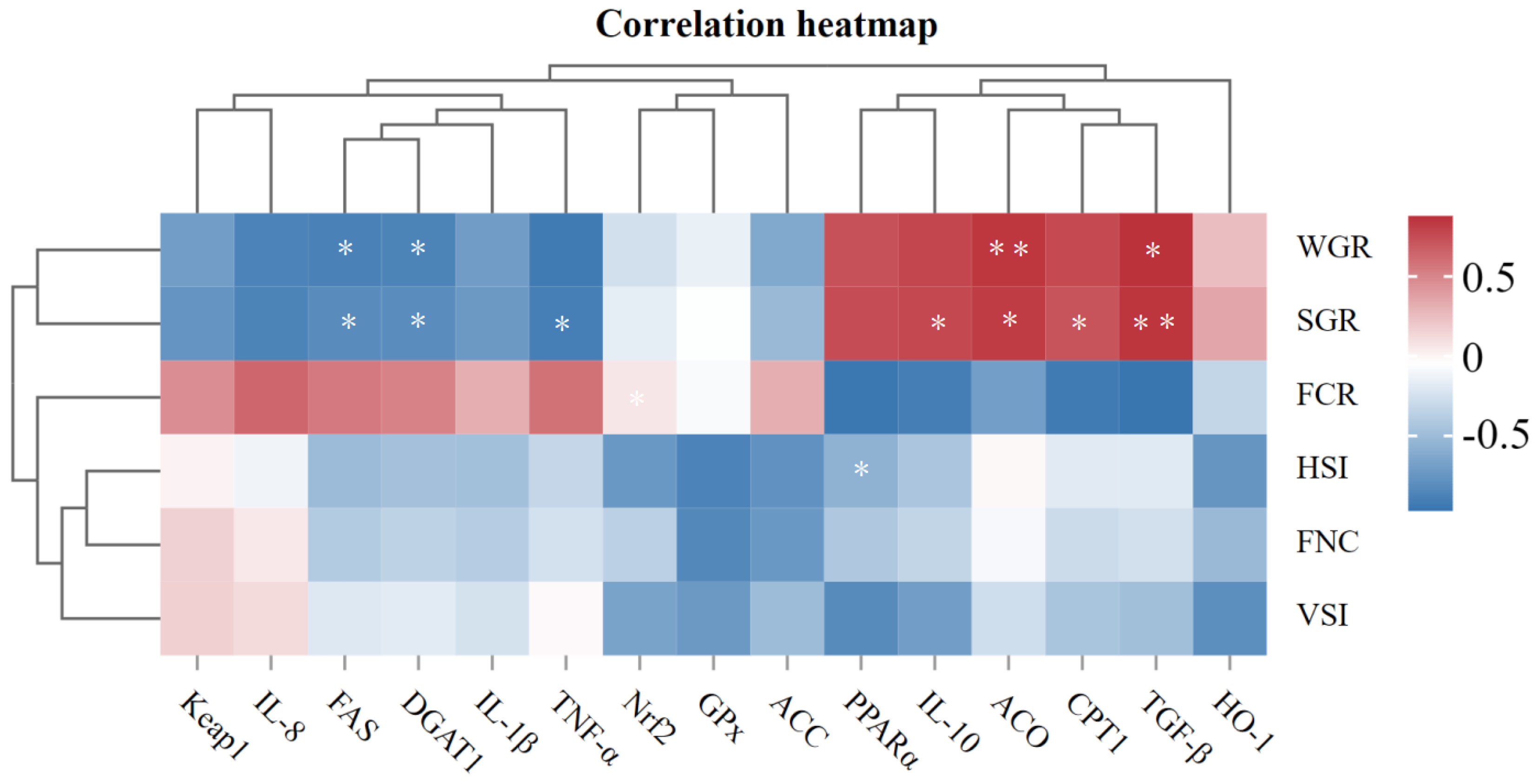
3.6. Correlation Analysis Between Immune-Related Genes Expression and Growth Indices
3.7. Challenge Test
4. Discussion
5. Conclusions
Author Contributions
Funding
Institutional Review Board Statement
Informed Consent Statement
Data Availability Statement
Conflicts of Interest
References
- Troell, M.; Naylor, R.L.; Metian, M.; Beveridge, M.; Tyedmers, P.H.; Folke, C.; Arrow, K.J.; Barrett, S.; Crépin, A.-S.; Ehrlich, P.R.; et al. Does aquaculture add resilience to the global food system? Proc. Natl. Acad. Sci. USA 2014, 111, 13257–13263. [Google Scholar] [CrossRef] [Scilit] [PubMed]
- Assefa, A.; Abunna, F. Maintenance of fish health in aquaculture: Review of epidemiological approaches for prevention and control of infectious disease of fish. Vet. Med. Int. 2018, 2018, 5432497. [Google Scholar] [CrossRef] [Scilit] [PubMed]
- Devi, G.; Harikrishnan, R.; Paray, B.A.; Al-Sadoon, M.K.; Hoseinifar, S.H.; Balasundaram, C. Effects of aloe-emodin on innate immunity, antioxidant and immune cytokines mechanisms in the head kidney leucocytes of Labeo rohita against Aphanomyces invadans. Fish Shellfish Immunol. 2019, 87, 669–678. [Google Scholar] [CrossRef] [Scilit] [PubMed]
- Semwal, R.; Semwal, D.; Combrinck, S.; Viljoen, A. Emodin—A natural anthraquinone derivative with diverse pharmacological activities. Phytochemistry 2021, 190, 112854. [Google Scholar] [CrossRef] [Scilit]
- Li, Q.; Gao, J.; Pang, X.; Chen, A.; Wang, Y. Molecular mechanisms of action of emodin: As an anti-cardiovascular disease drug. Front. Pharmacol. 2020, 11, 559607. [Google Scholar] [CrossRef] [Scilit]
- Chen, C.J.; Lin, Z.M.; Liu, W.B.; Hu, Q.; Wang, J.; Zhuang, X.Y.; Guan, S.J.; Wu, X.T.; Hu, T.T.; Quan, S.J.; et al. Emodin accelerates diabetic wound healing by promoting anti-inflammatory macrophage polarization. Eur. J. Pharmacol. 2022, 936, 175329. [Google Scholar] [CrossRef] [Scilit]
- Wu, P.F.; Xiao, Y.; Qing, L.M.; Mi, Y.N.; Tang, J.Y.; Cao, Z.M.; Huang, C.X. Emodin activates autophagy to suppress oxidative stress and pyroptosis via mTOR-ULK1 signaling pathway and promotes multi-territory perforator flap survival. Biochem. Biophys. Res. Commun. 2024, 704, 149688. [Google Scholar] [CrossRef] [Scilit]
- Jiang, J.X.; Pan, H.J.; Chang, O.Q.; Zhang, D.F.; Xie, J.; Ren, Y.; Wang, L.; Kang, J.L.; Wang, Y.J.; Shi, C.B. Effects of aloe-emodin on growth performance, biochemical parameters, and histopathology of goldfish (Carassius auratus). Aquaculture 2022, 550, 737891. [Google Scholar] [CrossRef] [Scilit]
- Dawit, A.; Sun, C.X.; Liu, B.; Rebecca, W.M.; Ngoepe, T.K.; Zhou, Q.L.; Zhu, L.; Zhang, H.M. Combined effects of emodin and Clostridium butyricum on growth and non-specific immunity of giant freshwater prawns, Macrobrachium rosenbergii. Aquaculture 2020, 525, 735281. [Google Scholar] [CrossRef] [Scilit]
- Zhao, Z.X.; Liu, B.; Ge, X.P.; Li, Z.Y.; Yang, X.; Zhou, Z.; Zhao, F. Emodin attenuates CY-induced oxidative injury in PBLs of the blunt snout bream (Megalobrama amblycephala) through the Nrf2-Keap1 signaling pathway. Aquaculture 2021, 545, 737201. [Google Scholar] [CrossRef] [Scilit]
- Chen, J.J.; Wu, S.S.; Wu, R.; Ai, H.H.; Lu, X.R.; Wang, J.Q.; Luo, Y.J.; Li, L.J.; Cao, J.L. Essential oil from Artemisia argyi alleviated liver disease in zebrafish (Danio rerio) via the gut-liver axis. Fish Shellfish Immunol. 2023, 140, 108962. [Google Scholar] [CrossRef] [Scilit] [PubMed]
- Castro, R.; Abos, B.; Pignatelli, J.; von Gersdorff Jorgensen, L.; Gonzalez Granja, A.; Buchmann, K.; Tafalla, C. Early immune responses in rainbow trout liver upon viral hemorrhagic septicemia virus (VHSV) infection. PLoS ONE 2014, 9, e111084. [Google Scholar] [CrossRef] [Scilit] [PubMed]
- Cai, S.Y.; Boyer, J.L. The role of inflammation in the mechanisms of bile acid induced liver damage. Dig. Dis. 2017, 35, 232–234. [Google Scholar] [CrossRef] [Scilit]
- Shahjahan, M.; Taslima, K.; Rahman, M.S.; Al-Emran, M.; Alam, S.I.; Faggio, C. Effects of heavy metals on fish physiology—A review. Chemosphere 2022, 300, 134519. [Google Scholar] [CrossRef] [Scilit] [PubMed]
- Jia, X.W.; Yu, H.Y.; Du, B.; Shen, Y.B.; Gui, L.; Xu, X.Y.; Li, J.L. Incorporating Lycium barbarum residue in diet boosts survival, growth, and liver health in juvenile grass carp (Ctenopharyngodon idellus). Fish Shellfish Immunol. 2024, 149, 109573. [Google Scholar] [CrossRef] [Scilit]
- Cao, Q.Q.; Zhao, J.; Yan, M.Y.; Luo, Z.; Luo, F.; Feng, L.; Jiang, W.D.; Wu, P.; Wang, Y.; Li, D.B.; et al. Vitamin D3 activates the innate immune response and xenophagy against Nocardia seriolae through the VD receptor in liver of largemouth bass (Micropterus salmoides). Aquaculture 2024, 578, 740008. [Google Scholar] [CrossRef] [Scilit]
- Ministry of Agriculture and Rural Affairs Fishery Administration Bureau. China Fishery Statistics Yearbook; China Agriculture Press: Beijing, China, 2024.
- Xu, H.; Xu, R.; Wang, X.; Liang, Q.; Zhang, L.; Liu, J.; Wei, J.; Lu, Y.; Yu, D. Co-infections of Aeromonas veronii and Nocardia seriolae in largemouth bass (Micropterus salmoides). Microb. Pathog. 2022, 173, 105815. [Google Scholar] [CrossRef] [Scilit]
- Chi, Y.; Jiao, H.; Ran, J.; Xiong, C.; Wei, J.; Ozdemir, E.; Wu, R. Construction and efficacy of Aeromonas veronii mutant △hcp as a live attenuated vaccine for the largemouth bass (Micropterus salmoides). Fish Shellfish Immunol. 2023, 136, 108694. [Google Scholar] [CrossRef] [Scilit]
- Hoai, T.D.; Trang, T.T.; Van Tuyen, N.; Giang, N.T.H.; Van Van, K. Aeromonas veronii caused disease and mortality in channel catfish in Vietnam. Aquaculture 2019, 513, 734425. [Google Scholar] [CrossRef] [Scilit]
- Zhang, C.; Hu, Q.Y.; Feng, L.; Wu, P.; Liu, Y.; Kuang, S.Y.; Tang, L.; Li, J.; Zhou, X.Q.; Jiang, W.D. Isalo scorpion cytotoxic peptide (IsCT) improved the physical barrier of the intestine on on-growing grass carp (Ctenopharyngodon idella). Aquaculture 2023, 577, 739895. [Google Scholar] [CrossRef] [Scilit]
- De Tolla, L.J.; Srinivas, S.; Whitaker, B.R.; Andrews, C.; Hecker, B.; Kane, A.S.; Reimschuessel, R. Guidelines for the care and use of fish in research. ILAR J. Instit. Laborat. Anim. Res. Nat. Res. Council 1995, 37, 159–173. [Google Scholar] [CrossRef] [Scilit]
- Torrecillas, S.; Montero, D.; Caballero, M.J.; Robaina, L.; Zamorano, M.J.; Sweetman, J.; Izquierdo, M. Effects of dietary concentrated mannan oligosaccharides supplementation on growth, gut mucosal immune system and liver lipid metabolism of European sea bass (Dicentrarchus labrax) juveniles. Fish Shellfish Immunol. 2015, 42, 508–516. [Google Scholar] [CrossRef] [Scilit] [PubMed]
- Zhao, Z.X.; Zhang, X.B.; Zhao, F.; Luo, T.X. Microbiome–Metabolomics Analysis Insight into the Effects of Starvation and Refeeding on Intestinal Integrity in the Juvenile Largemouth Bass (Micropterus salmoides). Int. J. Mol. Sci. 2024, 25, 12500. [Google Scholar] [CrossRef] [Scilit] [PubMed]
- Livak, K.J.; Schmittgen, T.D. Analysis of relative gene expression data using real-time quantitative PCR and the 2−ΔΔCT method. Methods 2001, 25, 402–408. [Google Scholar] [CrossRef] [Scilit]
- Xu, J.M.; Gao, W.R.; Liang, P.; Cai, G.H.; Yang, H.L.; Lin, J.B.; Sun, Y.Z. Pleurotus eryngii root waste and soybean meal co-fermented protein improved the growth, immunity, liver and intestinal health of largemouth bass (Micropterus salmoides). Fish Shellfish Immunol. 2024, 149, 109551. [Google Scholar] [CrossRef] [Scilit]
- Zhu, X.; Qian, Q.; Wu, C.; Zhu, Y.; Gao, X.; Jiang, Q.; Wang, J.; Liu, G.; Zhang, X. Pathogenicity of Aeromonas veronii causing mass mortality of largemouth bass (Micropterus salmoides) and its induced host immune response. Microorganisms 2022, 10, 1198. [Google Scholar] [CrossRef] [Scilit]
- Giri, S.S.; Jai Suda, S.; Sukumaran, V.; Park, S.C. Dietary emodin affects the growth performance, immune responses, and disease resistance of Labeo rohita against Aeromonas hydrophila. Aquac. Int. 2016, 24, 85–99. [Google Scholar] [CrossRef] [Scilit]
- Zhang, Y.Y.; Liu, B.; Ge, X.P.; Liu, W.B.; Xie, J.; Ren, M.; Cui, Y.T.; Xia, S.L.; Chen, R.; Zhou, Q.; et al. The influence of various feeding patterns of emodin on growth, non-specific immune responses, and disease resistance to Aeromonas hydrophila in juvenile Wuchang bream (Megalobrama amblycephala). Fish Shellfish Immunol. 2014, 36, 187–193. [Google Scholar] [CrossRef] [Scilit]
- Yang, G.; Qiu, H.; Yu, R.; Xiong, L.; Yan, Q.; Wen, C.; Peng, Q. Dietary supplementation of β-glucan, inulin and emodin modulates antioxidant response and suppresses intestinal inflammation of grass carp (Ctenopharyngodon idellus). Anim. Feed Sci. Technol. 2021, 272, 114789. [Google Scholar] [CrossRef] [Scilit]
- Shen, Y.T.; Zhu, C.B.; Ding, Z.L.; Gu, J.J.; Qian, S.C.; Yang, S.; Fei, H. Positive effect of dietary emodin on growth, antioxidant capacity, inflammatory response, intestinal microbiota and resistance of Micropterus salmoides against MSRV infection. Anim. Feed Sci. Technol. 2024, 310, 115922. [Google Scholar] [CrossRef] [Scilit]
- Li, J.M.; Ding, L.L.; Song, B.A.; Xiao, X.; Qi, M.; Yang, Q.L.; Yang, Q.M.; Tang, X.W.; Wang, Z.T.; Yang, L. Emodin improves lipid and glucose metabolism in high fat diet-induced obese mice through regulating SREBP pathway. Eur. J. Pharmacol. 2016, 770, 99–109. [Google Scholar] [CrossRef] [Scilit] [PubMed]
- Yan, J.; Liao, K.; Wang, T.J.; Mai, K.S.; Xu, W. Dietary Lipid Levels Influence Lipid Deposition in the Liver of Large Yellow Croaker (Larimichthys crocea) by Regulating Lipoprotein Receptors, Fatty Acid Uptake and Triacylglycerol Synthesis and Catabolism at the Transcriptional Level. PLoS ONE 2015, 10, e0129937. [Google Scholar] [CrossRef] [Scilit] [PubMed]
- Eaton, S. Control of mitochondrial β-oxidation flux. Prog. Lipid Res. 2002, 41, 197–239. [Google Scholar] [CrossRef] [Scilit] [PubMed]
- Ameer, F.; Scandiuzzi, L.; Hasnain, S.; Kalbacher, H.; Zaidi, N. De novo lipogenesis in health and disease. Metabolism 2014, 63, 895–902. [Google Scholar] [CrossRef] [Scilit]
- Yen, C.L.E.; Stone, S.J.; Koliwad, S.; Harris, C.; Farese, R.V. Thematic review series: Glycerolipids. DGAT enzymes and triacylglycerol biosynthesis. J. Lipid Res. 2008, 49, 2283–2301. [Google Scholar] [CrossRef] [Scilit]
- Xue, J.F.; Ding, W.J.; Liu, Y. Anti-diabetic effects of emodin involved in the activation of PPARγ on high-fat diet-fed and low dose of streptozotocin-induced diabetic mice. Fitoterapia 2010, 81, 173–177. [Google Scholar] [CrossRef] [Scilit]
- Tsuduki, T.; Kikuchi, I.; Kimura, T.; Nakagawa, K.; Miyazawa, T. Intake of mulberry 1-deoxynojirimycin prevents diet-induced obesity through increases in adiponectin in mice. Food Chem. 2013, 139, 16–23. [Google Scholar] [CrossRef] [Scilit]
- Li, H.X.; Jo, E.; Myung, C.S.; Kim, Y.H.; Yang, S.Y. Lipolytic effect of compounds isolated from leaves of mulberry (Morus alba L.) in 3T3-L1 adipocytes. Nat. Prod. Res. 2018, 32, 1963–1966. [Google Scholar] [CrossRef] [Scilit]
- Chen, X.L.; Liu, H.; Liu, S.P.; Zhang, Z.F.; Li, X.; Mao, J. Excessive dietary iron exposure increases the susceptibility of largemouth bass (Micropterus salmoides) to Aeromonas hydrophila by interfering with immune response, oxidative stress, and intestinal homeostasis. Fish Shellfish Immunol. 2024, 147, 109430. [Google Scholar] [CrossRef] [Scilit]
- Sun, Y.; Yin, Y.; Zhang, J.; Yu, H.; Wang, X.; Wu, J.; Xue, Y. Hydroxyl radical generation and oxidative stress in Carassius auratus liver, exposed to pyrene. Ecotoxicol. Environ. Saf. 2008, 71, 446–453. [Google Scholar] [CrossRef] [Scilit]
- Zhang, L.; Chen, Y.; Zhou, Z.; Wang, Z.; Fu, L.; Zhang, L.; Xu, C.; Loor, J.J.; Wang, G.; Zhang, T.; et al. Vitamin C injection improves antioxidant stress capacity through regulating blood metabolism in post-transit yak. Sci. Rep. 2023, 13, 10233. [Google Scholar] [CrossRef] [Scilit] [PubMed]
- Liu, F.; Shi, H.Z.; Guo, Q.S.; Yu, Y.B.; Wang, A.M.; Lv, F.; Shen, W.B. Effects of astaxanthin and emodin on the growth, stress resistance and disease resistance of yellow catfish (Pelteobagrus fulvidraco). Fish Shellfish Immunol. 2016, 51, 125–135. [Google Scholar] [CrossRef] [Scilit] [PubMed]
- Luo, K.; Li, X.; Wang, L.; Rao, W.; Wu, Y.; Liu, Y.; Pan, M.; Huang, D.; Zhang, W.; Mai, K. Ascorbic acid regulates the immunity, antioxidant and apoptosis in abalone Haliotis discus hannai Ino. Antioxidants 2021, 10, 1449. [Google Scholar] [CrossRef] [Scilit]
- Horie, Y.; Suzuki, T.; Inoue, J.; Iso, T.; Wells, G.; Moore, T.; Mizushima, T.; Dinkova-Kostova, A.; Kasai, T.; Kamei, T.; et al. Molecular basis for the disruption of Keap1-Nrf2 interaction via Hinge & Latch mechanism. Commun. Biol. 2021, 4, 576. [Google Scholar] [CrossRef] [Scilit]
- Jadeja, R.N.; Upadhyay, K.K.; Devkar, R.V.; Khurana, S. Naturally occurring Nrf2 activators: Potential in treatment of liver injury. Oxid. Med. Cell. Longev. 2016, 13, 3453926. [Google Scholar] [CrossRef] [Scilit]
- Quinti, L.; Naidu, S.; Träger, U.; Chen, X.; Kegel-Gleason, K.; Lleres, D.; Connolly, C.; Chopra, V.; Low, C.; Moniot, S.; et al. KEAP1-modifying small molecule reveals muted NRF2 signaling responses in neural stem cells from Huntington’s disease patients. Proc. Natl. Acad. Sci. USA 2017, 114, 4676–4685. [Google Scholar] [CrossRef] [Scilit]
- Shi, Y.; Zhong, L.; Fan, Y.; Zhang, J.; Dai, J.; Zhong, H.; Fu, G.; Hu, Y. Taurine inhibits hydrogen peroxide-induced oxidative stress, inflammatory response and apoptosis in liver of Monopterus albus. Fish Shellfish Immunol. 2022, 128, 536–546. [Google Scholar] [CrossRef] [Scilit]
- Ren, Y.; Men, X.; Yu, Y.; Li, B.; Zhou, Y.; Zhao, C. Effects of transportation stress on antioxidation, immunity capacity and hypoxia tolerance of rainbow trout (Oncorhynchus mykiss). Aquacult. Rep. 2022, 22, 100940. [Google Scholar] [CrossRef] [Scilit]
- Deka, K.; Li, Y. Transcriptional regulation during aberrant activation of NF-κB signaling in cancer. Cells 2023, 12, 788. [Google Scholar] [CrossRef] [Scilit]
- Gao, J.S.; Li, Y.S.; Chen, J.H.; Feng, W.; Bu, J.C.; Lu, Z.X.; Wang, J.D. Emodin ameliorates acute radiation proctitis in mice by regulating AKT/MAPK/NF-κB/VEGF pathways. Int. Immunopharmacol. 2024, 132, 111945. [Google Scholar] [CrossRef] [Scilit]
- Song, C.Y.; Liu, B.; Li, H.X.; Tang, Y.K.; Ge, X.P.; Liu, B.; Xu, P. Protective Effects of Emodin on Oxidized Fish Oil-Induced Metabolic Disorder and Oxidative Stress through Notch-Nrf2 Crosstalk in the Liver of Teleost Megalobrama amblycephala. Antioxidants 2022, 11, 1179. [Google Scholar] [CrossRef] [Scilit]
- Dinarello, C.A. Interleukin-1 in the pathogenesis and treatment of inflammatory diseases. Blood 2011, 117, 3720–3732. [Google Scholar] [CrossRef] [Scilit] [PubMed]
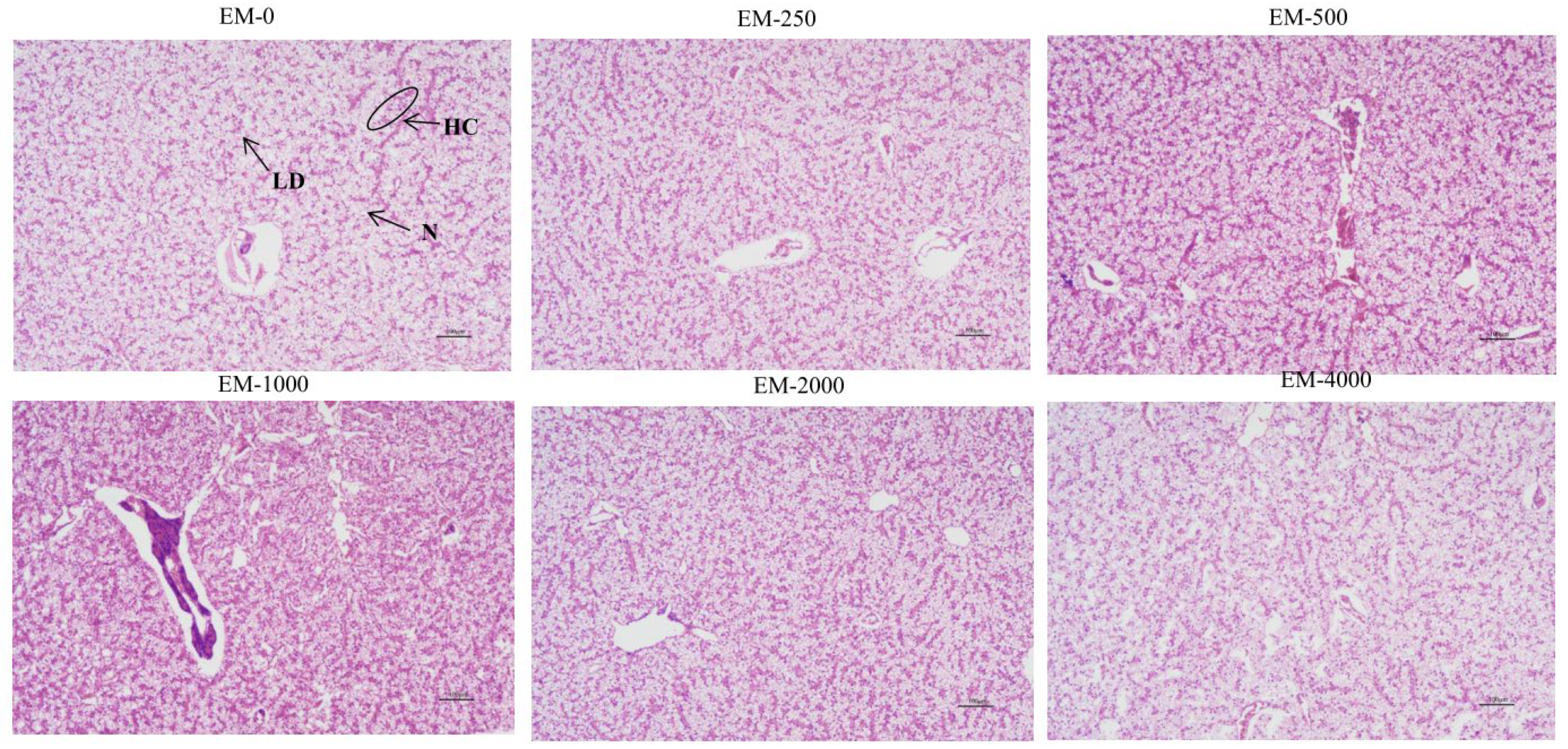
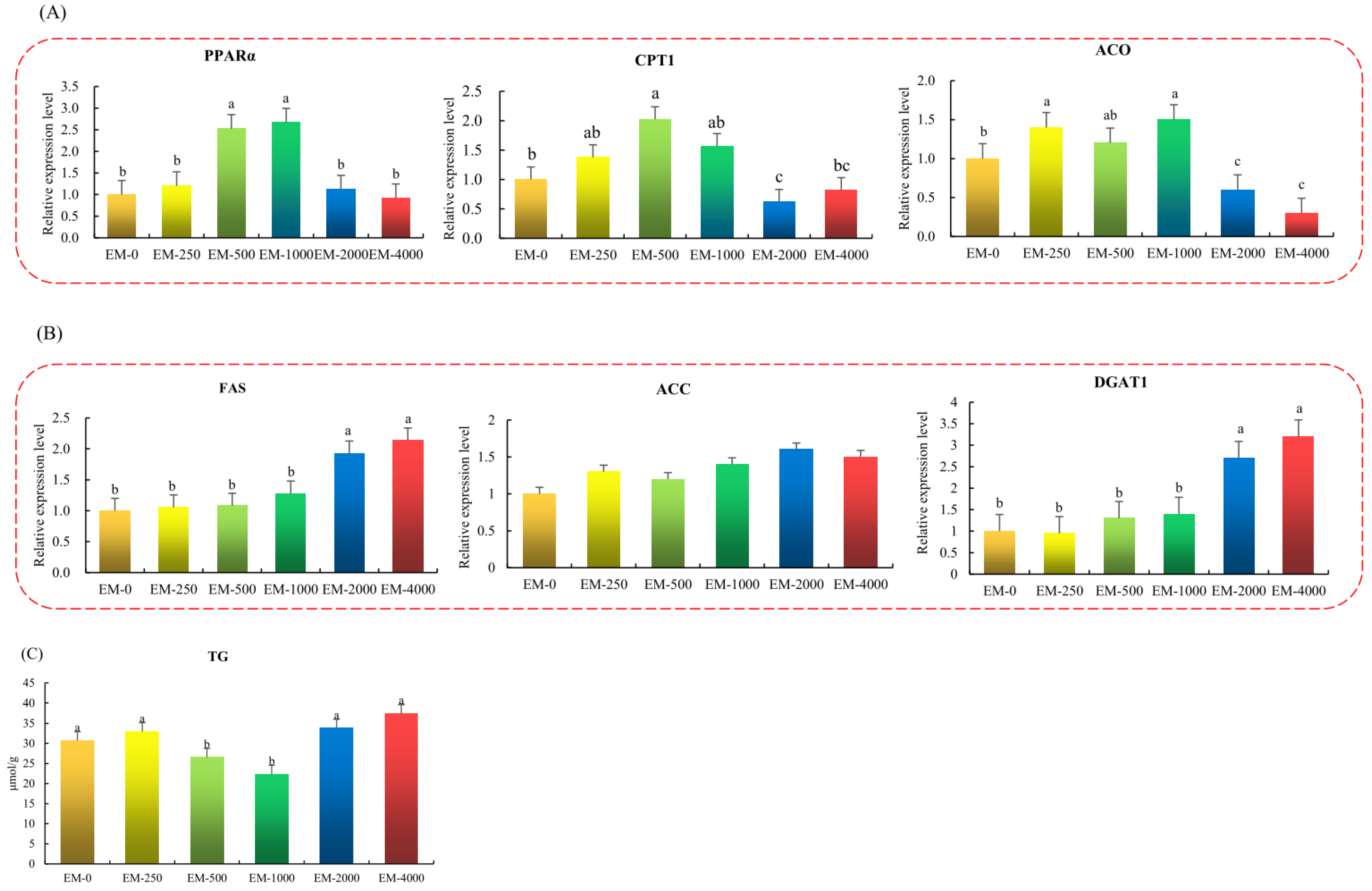


| g kg−1 | |
|---|---|
| Fish meal a | 500.00 |
| Chicken meal | 100.00 |
| Soybean meal | 50.00 |
| Soy protein concentrate | 52.00 |
| Wheat flour | 100.00 |
| Vital gluten flour | 25.00 |
| Microcrystalline cellulose | 85.00 |
| Soybean oil | 15.00 |
| Soybean phospholipid | 10 |
| Fish oil | 20.00 |
| Ca(H2PO4)2 | 20.00 |
| Choline chloride | 3.00 |
| Mineral premix * | 10.00 |
| Vitamin premix ** | 10.00 |
| Total | 1000 |
| Proximate composition (% dry matter) | |
| Crude protein | 47.42 |
| Crude lipid | 10.80 |
| Moisture | 9.75 |
| Item | EM-0 | EM-250 | EM-500 | EM-1000 | EM-2000 | EM-4000 |
|---|---|---|---|---|---|---|
| WGR (%) | 268.33 ± 35.52 a | 265.68 ± 46.43 a | 272.41 ± 39.76 a | 271.58.67 ± 41.51 a | 260.60 ± 48.77 b | 254.02 ± 36.13 c |
| SGR (%) | 2.17 ± 0.17 ab | 2.16 ± 0.25 ab | 2.19 ± 0.13 a | 2.19 ± 0.15 a | 2.15 ± 0.11 b | 2.11 ± 0.19 c |
| FCR | 1.38 ± 0.09 ab | 1.38 ± 0.12 ab | 1.26 ± 0.07 c | 1.30 ± 0.06 c | 1.40 ± 0.16 a | 1.42 ± 0.20 a |
| HSI (%) | 2.28 ± 0.24 a | 2.03 ± 1.17 a | 1.88 ± 0.28 b | 1.69 ± 1.33 c | 1.82 ± 0.65 b | 1.86 ± 0.84 b |
| VSI (%) | 11.63 ± 1.76 a | 11.24 ± 2.44 a | 10.38 ± 2.63 b | 9.84 ± 3.45 c | 10.63 ± 2.36 ab | 10.88 ± 3.38 ab |
| FNC (g/cm3) | 2.93 ± 1.06 | 2.02 ± 0.93 | 2.02 ± 1.13 | 1.99 ± 0.74 | 2.05 ± 0.52 | 2.07 ± 1.17 |
| SR (%) | 100 | 100 | 100 | 100 | 100 | 100 |
Disclaimer/Publisher’s Note: The statements, opinions and data contained in all publications are solely those of the individual author(s) and contributor(s) and not of MDPI and/or the editor(s). MDPI and/or the editor(s) disclaim responsibility for any injury to people or property resulting from any ideas, methods, instructions or products referred to in the content. |
© 2025 by the authors. Licensee MDPI, Basel, Switzerland. This article is an open access article distributed under the terms and conditions of the Creative Commons Attribution (CC BY) license (https://creativecommons.org/licenses/by/4.0/).
Share and Cite
Zhao, Z.; Zhao, F.; Luo, T.; Zhou, Z.; Zhang, X. Emodin Improves Juvenile Largemouth Bass (Micropterus salmoides) Liver Health Through Nrf2/NF-κB Pathway and Fat Metabolism: Growth Performance, Immune Response and Resistance Against Aeromonas veronii Infection. Animals 2025, 15, 178. https://doi.org/10.3390/ani15020178
Zhao Z, Zhao F, Luo T, Zhou Z, Zhang X. Emodin Improves Juvenile Largemouth Bass (Micropterus salmoides) Liver Health Through Nrf2/NF-κB Pathway and Fat Metabolism: Growth Performance, Immune Response and Resistance Against Aeromonas veronii Infection. Animals. 2025; 15(2):178. https://doi.org/10.3390/ani15020178
Chicago/Turabian StyleZhao, Zhenxin, Fei Zhao, Tianxun Luo, Zhou Zhou, and Xianbo Zhang. 2025. "Emodin Improves Juvenile Largemouth Bass (Micropterus salmoides) Liver Health Through Nrf2/NF-κB Pathway and Fat Metabolism: Growth Performance, Immune Response and Resistance Against Aeromonas veronii Infection" Animals 15, no. 2: 178. https://doi.org/10.3390/ani15020178
APA StyleZhao, Z., Zhao, F., Luo, T., Zhou, Z., & Zhang, X. (2025). Emodin Improves Juvenile Largemouth Bass (Micropterus salmoides) Liver Health Through Nrf2/NF-κB Pathway and Fat Metabolism: Growth Performance, Immune Response and Resistance Against Aeromonas veronii Infection. Animals, 15(2), 178. https://doi.org/10.3390/ani15020178