


Novel Aspects of the Physiology of Pregnancy in Domestic Ruminants


Simple Summary
Abstract
1. Introduction
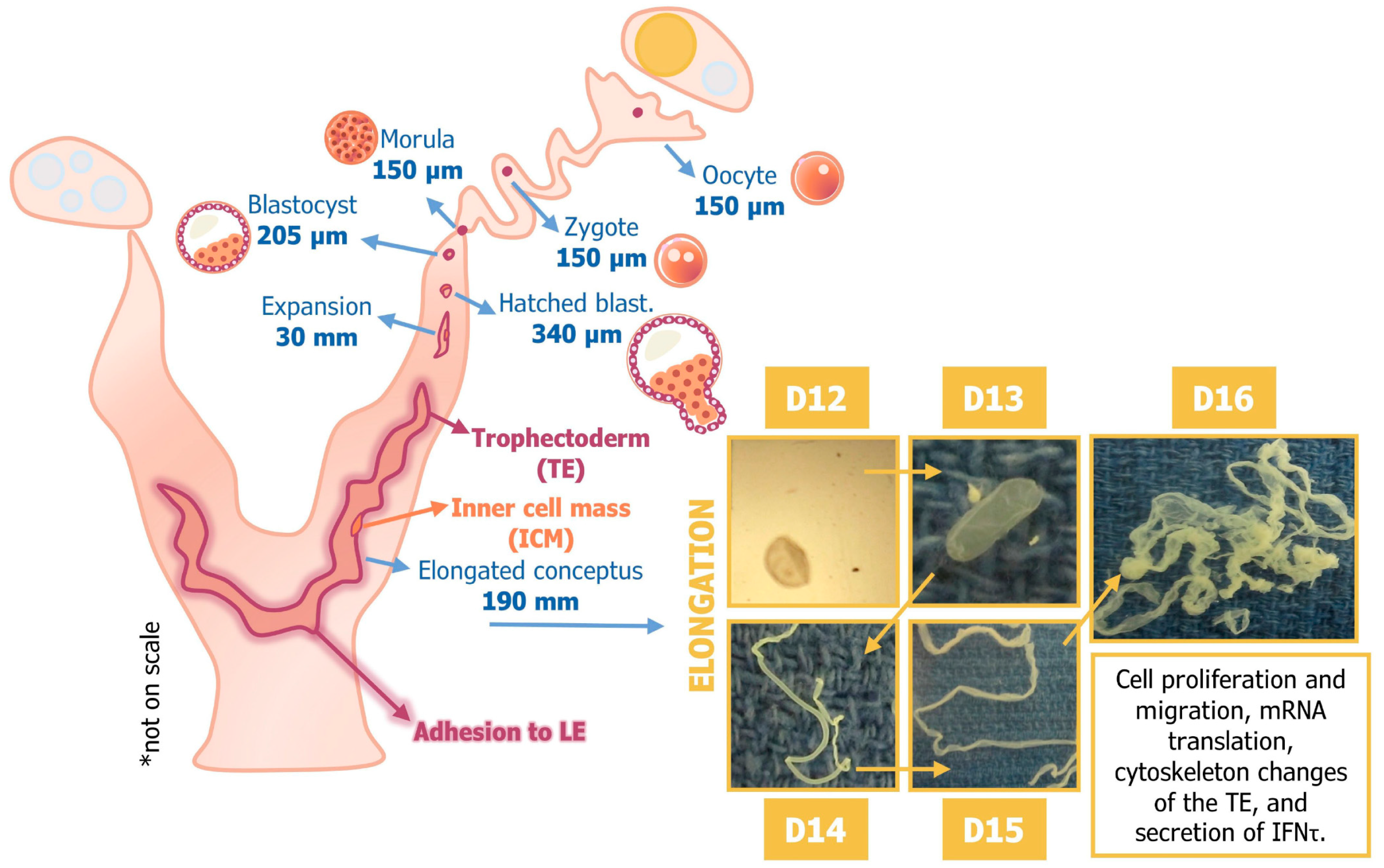
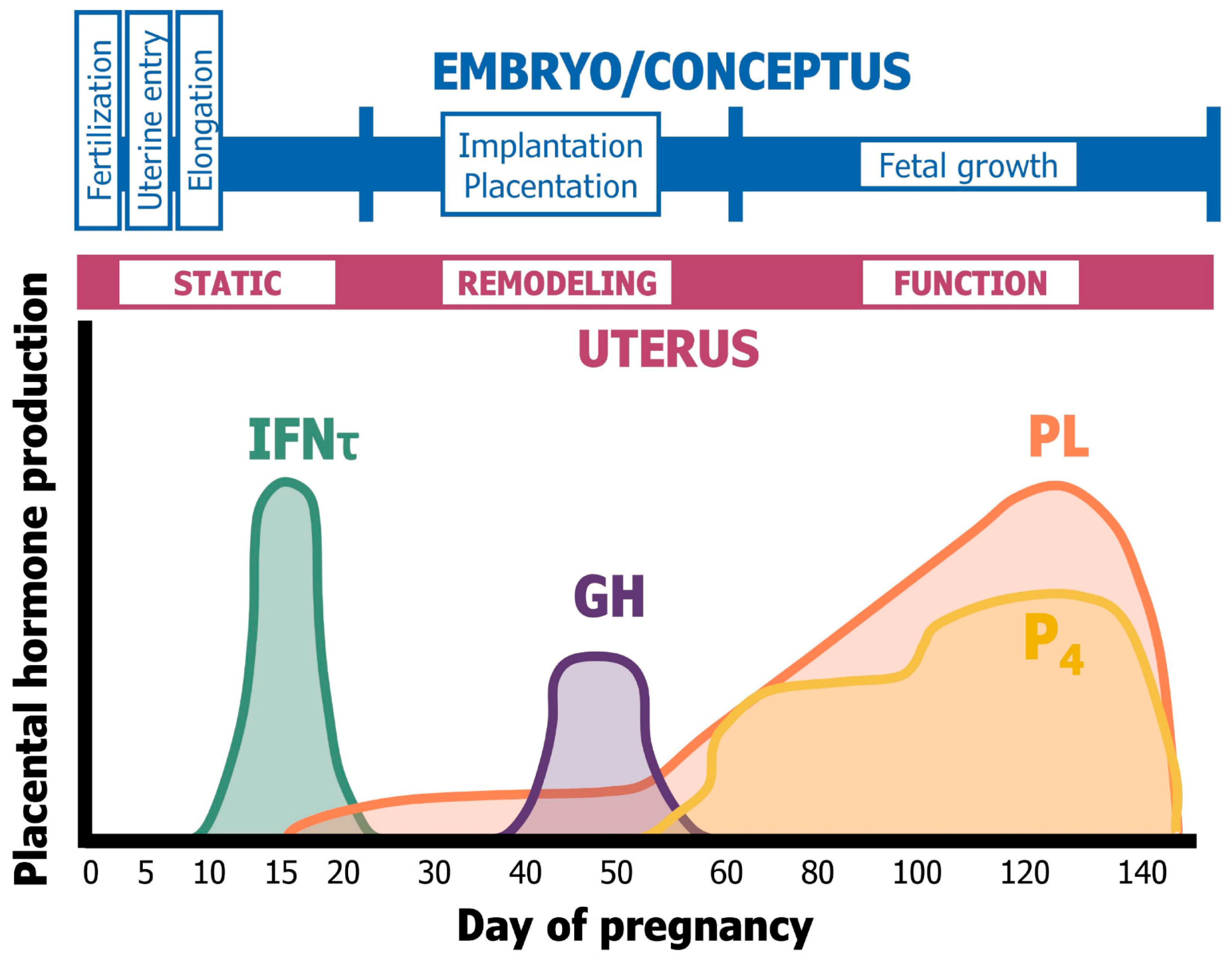
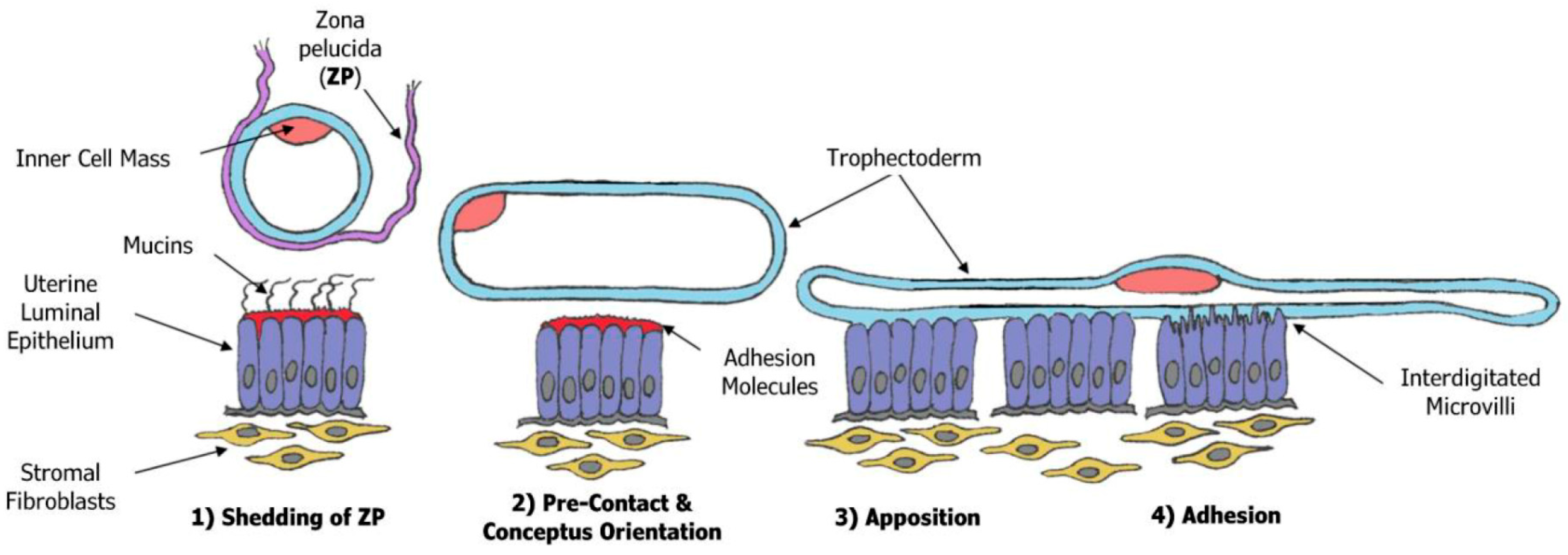
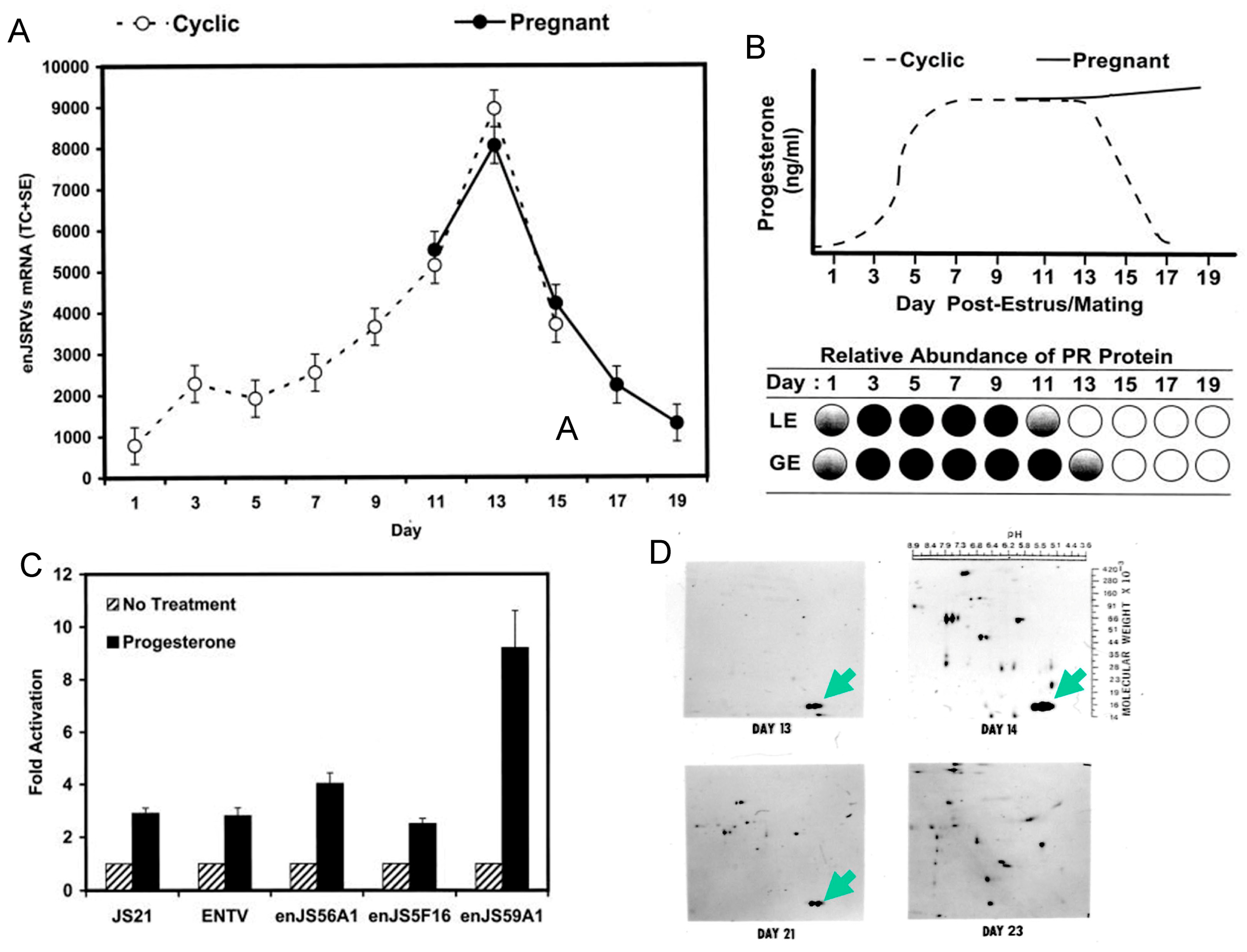
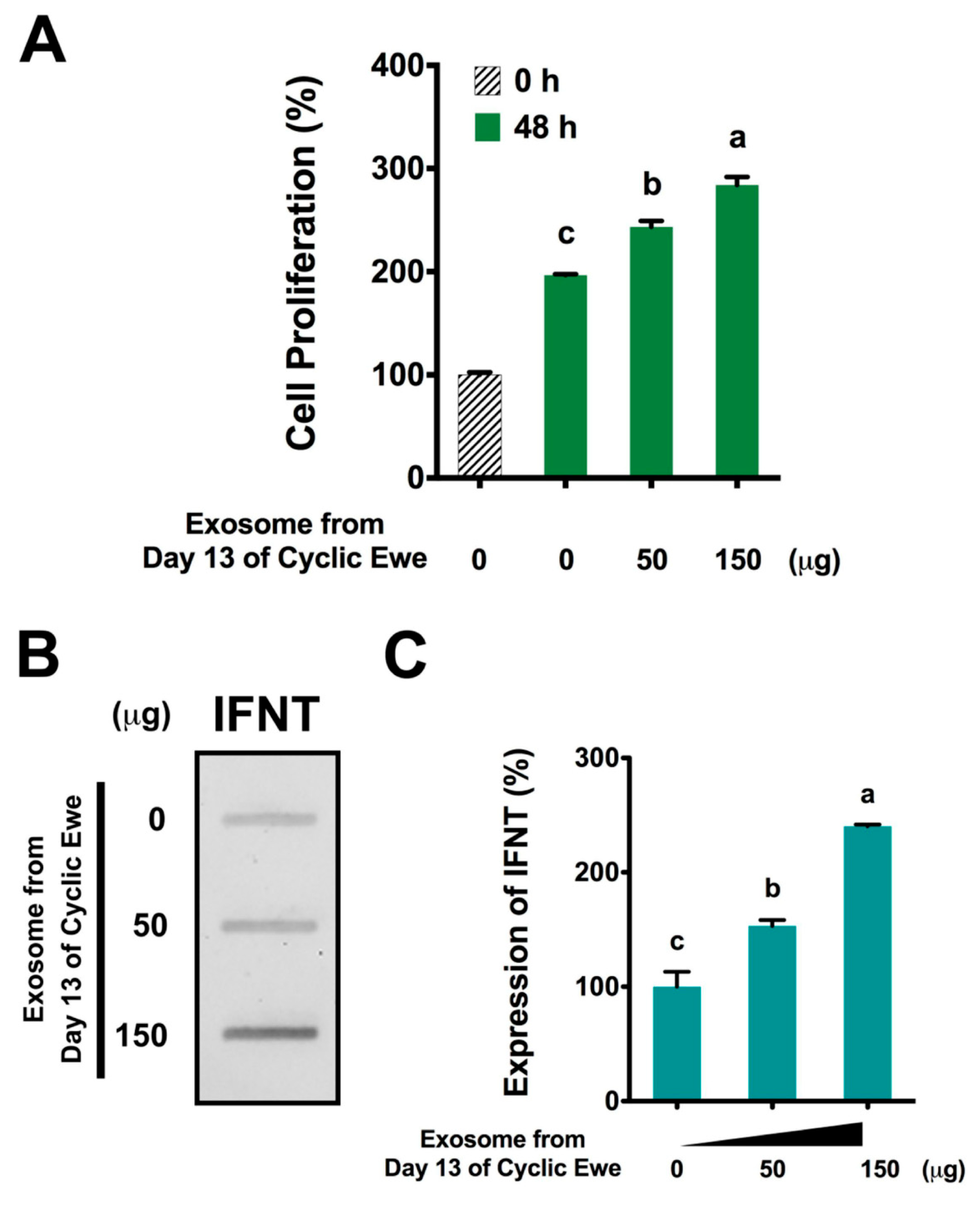
2. Interferon Tau (IFNT) and Its Various Roles
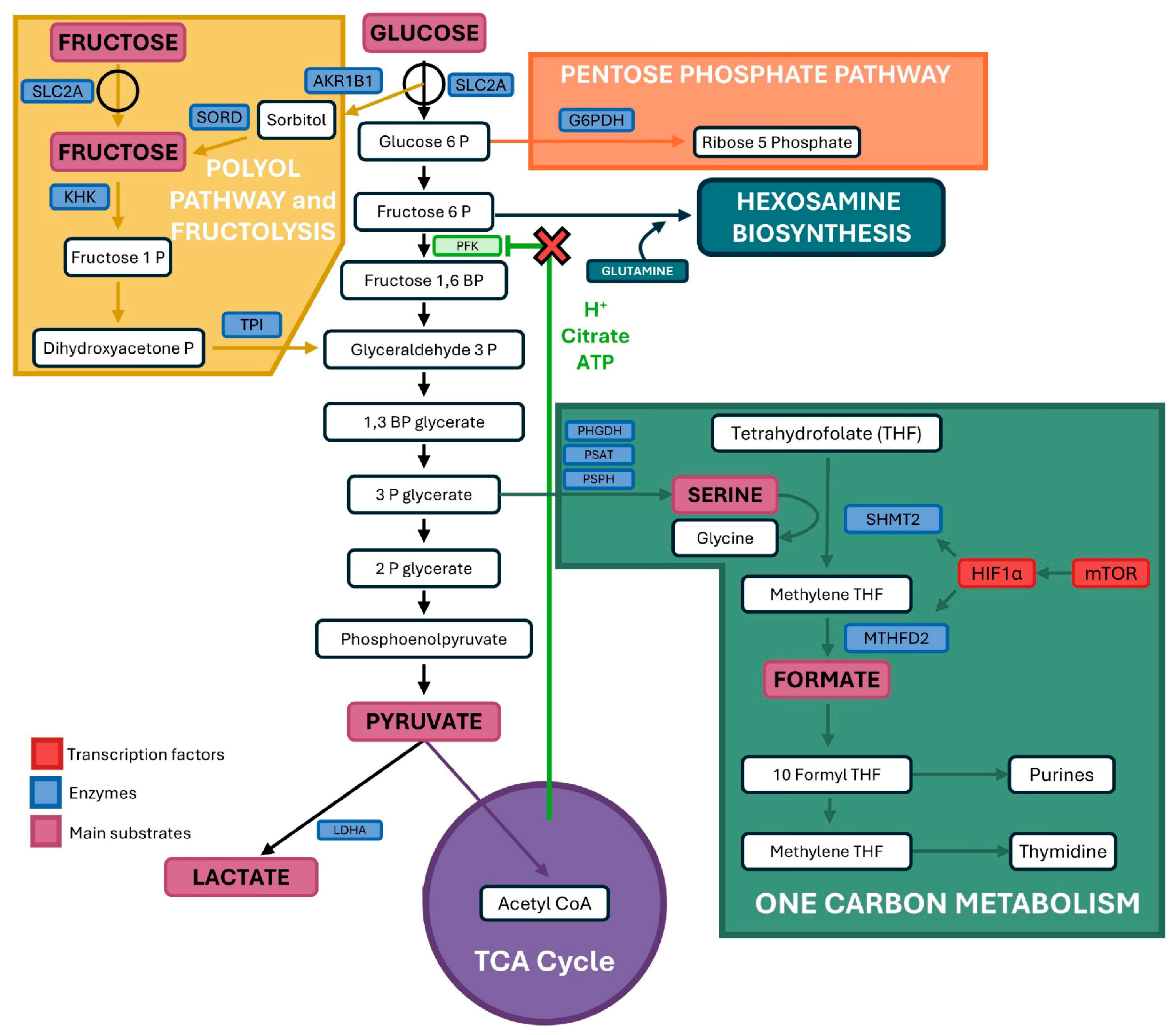
3. Unique Metabolic Pathways in Placentae of Ungulates
4. Summary and Conclusions
Author Contributions
Funding
Institutional Review Board Statement
Data Availability Statement
Acknowledgments
Conflicts of Interest
References
- Bazer, F.W.; Ott, T.L.; Spencer, T.E. Endocrinology of the transition from recurring estrous cycles to the establishment of pregnancy. In Endocrinology of Pregnancy; Bazer, F.W., Ed.; Humana Press: Totawa, NJ, USA, 1998; pp. 1–34. [Google Scholar]
- Bazer, F.W. Contributions of an animal scientist to reproductive biology. Biol. Reprod. 2011, 85, 228–242. [Google Scholar] [CrossRef] [PubMed]
- Spencer, T.E.; Johnson, G.A.; Bazer, F.W.; Burghardt, R.C.; Palmarini, M. Pregnancy recognition and conceptus implantation in domestic ruminants: Roles of progesterone, interferons and endogenous retroviruses. Reprod. Fertil. Dev. 2007, 19, 65–78. [Google Scholar] [CrossRef]
- Johnson, G.A.; Bazer, F.W.; Burghardt, R.C.; Wu, G.; Seo, H.; Kramer, A.C.; McLendon, B.A. Cellular events during ovine im-plantation and impact for gestation. Anim. Reprod. 2018, 15 (Suppl. 1), 843–855. [Google Scholar] [CrossRef]
- Bazer, F.W.; Thatcher, W.W. Historical Aspects: Chronicling the discovery of IFNT. Reproduction 2017, 154, F11–F20. [Google Scholar] [CrossRef] [PubMed]
- Spencer, T.E.; Johnson, G.A.; Bazer, F.W.; Burghardt, R.C. Implantation mechanisms: Insights from the sheep. Reproduction 2004, 128, 657–668. [Google Scholar] [CrossRef]
- Spencer, T.E.; Bazer, F.W. Biology of progesterone action during pregnancy recognition and maintenance of pregnancy. Front. Biosci. 2002, 7, 1879–1887. [Google Scholar] [CrossRef]
- Chen, C.; Spencer, T.E.; Bazer, F.W. Expression of hepatocyte growth factor and its receptor c-met in the ovine uterus. Biol. Reprod. 2000, 62, 1844–1850. [Google Scholar] [CrossRef]
- Chen, C.; Spencer, T.E.; Bazer, F.W. Fibroblast growth factor-10: A stromal mediator of epithelial function in the uterus and conceptus. Biol. Reprod. 2000, 63, 959–966. [Google Scholar] [CrossRef]
- Satterfield, M.C.; Hayashi, K.; Song, G.; Black, S.G.; Bazer, F.W.; Spencer, T.E. Progesterone regulates FGF10, MET, IGFBP1, and IGFBP3 in the endometrium of the ovine uterus. Biol. Reprod. 2008, 79, 1226–1236. [Google Scholar] [CrossRef] [PubMed][Green Version]
- Bazer, F.W.; Spencer, T.E.; Johnson, G.A. Interferons and uterine receptivity. Semin. Reprod. Med. 2009, 27, 90–102. [Google Scholar] [CrossRef]
- Platanias, L.C. Mechanisms of type-I- and type-II-interferon-mediated signalling. Nat. Rev. Immunol. 2005, 5, 375–386. [Google Scholar] [CrossRef]
- Choi, Y.; Johnson, G.A.; Burghardt, R.C.; Berghman, L.R.; Joyce, M.M.; Taylor, K.M.; Stewart, M.D.; Bazer, F.W.; Spencer, T.E. Interferon regulatory factor two restricts expression of interferon stimulated genes to the endometrial stroma and glandular epithelium of the ovine uterus. Biol. Reprod. 2001, 65, 1038–1049. [Google Scholar] [CrossRef]
- Thatcher, W.W.; Guzeloglu, A.; Mattos, R.; Binelli, M.; Hansen, T.R.; Pru, J.K. Uterine-conceptus interactions and reproductive failure in cattle. Theriogenology 2001, 56, 1435–1450. [Google Scholar] [CrossRef] [PubMed]
- Newton, G.R.; Ott, T.L.; Woldesenbet, S.; Shelton, A.M.; Bazer, F.W. Biochemical and immunological properties of related small ruminant trophoblast interferons. Theriogenology 1996, 46, 703–716. [Google Scholar] [CrossRef]
- Renegar, R.H.; Bazer, F.W.; Roberts, R.M. Placental transport and distribution of uteroferrin in the fetal pig. Biol. Reprod. 1982, 27, 1247–1260. [Google Scholar] [CrossRef] [PubMed]
- Johnson, G.A.; Bazer, F.W.; Seo, H.; Burghardt, R.C.; Wu, G.; Pohler, K.G.; Cain, J.W. Understanding placentation in ruminants: A review focusing on cows and sheep. Reprod. Fertil. Dev. 2023, 36, 93–111. [Google Scholar] [CrossRef]
- Gray, C.A.; Bartol, F.F.; Tarleton, B.J.; Wiley, A.A.; Johnson, G.A.; Bazer, F.W.; Spencer, T.E. Developmental biology of uterine glands. Biol. Reprod. 2001, 65, 1311–1323. [Google Scholar] [CrossRef] [PubMed]
- Spencer, T.E.; Gray, A.; Johnson, G.A.; Taylor, K.M.; Gertler, A.; Gootwine, E.; Ott, T.L.; Bazer, F.W. Effects of recombinant ovine interferon tau, placental lactogen, and growth hormone on the ovine uterus. Biol. Reprod. 1999, 61, 1409–1418. [Google Scholar] [CrossRef]
- Johnson, G.A.; Burghardt, R.C.; Bazer, F.W. Osteopontin: A leading candidate adhesion molecule for implantation in pigs and sheep. J. Anim. Sci. Biotechnol. 2014, 5, 56. [Google Scholar] [CrossRef]
- Kelly, P.A.; Robertson, H.A.; Friesen, H.G. Temporal pattern of placental lactogen and progesterone secretion in sheep. Nature 1974, 248, 435–437. [Google Scholar] [CrossRef]
- Stewart, M.D.; Johnson, G.A.; Gray, C.A.; Burghardt, R.C.; Schuler, L.A.; Joyce, M.M.; Bazer, F.W.; Spencer, T.E. Prolactin receptor and uterine milk protein expression in the ovine endometrium during the estrous cycle and pregnancy. Biol. Reprod. 2000, 62, 1779–1789. [Google Scholar] [CrossRef]
- Noel, S.; Herman, A.; Johnson, G.A.; Gray, C.A.; Stewart, M.D.; Bazer, F.W.; Gertler, A.; Spencer, T.E. Ovine placental lactogen specifically binds to endometrial glands of the ovine uterus. Biol. Reprod. 2003, 68, 772–780. [Google Scholar] [CrossRef][Green Version]
- Song, G.; Bazer, F.W.; Wagner, G.F.; Spencer, T.E. Stanniocalcin (STC) in the endometrial glands of the ovine uterus: Regulation by progesterone and placental hormones. Biol. Reprod. 2006, 74, 913–922. [Google Scholar] [CrossRef][Green Version]
- Guilbault, L.A.; Thatcher, W.W.; Collier, R.J.; Wilcox, C.J. Periparturient endocrine changes of conceptus and maternal units in Holstein heifers bearing genetically different conceptuses. J. Anim. Sci. 1985, 61, 1505–1515. [Google Scholar] [CrossRef] [PubMed]
- Kann, G.; Delobelle-Deroide, A.; Belair, L.; Gertler, A.; Djiane, J. Demonstration of in vivo mammogenic and lactogenic effects of recombinant ovine placental lactogen and mammogenic effect of recombinant ovine GH in ewes during artificial induction of lactation. J. Endocrinol. 1999, 160, 365–377. [Google Scholar] [CrossRef] [PubMed][Green Version]
- Guillomot, M.; Fléchon, J.-E.; Wintenberger-Torres, S. Conceptus attachment in the Ewe: An ultrastructural study. Placenta 1981, 2, 169–182. [Google Scholar] [CrossRef] [PubMed]
- Bazer, F.W.; Burghardt, R.C.; Johnson, G.A.; Spencer, T.E.; Wu, G. Mechanisms for the establishment and maintenance of pregnancy: Synergies from scientific collaborations. Biol. Reprod. 2018, 99, 225–241. [Google Scholar] [CrossRef]
- Johnson, G.A.; Burghardt, R.C.; Spencer, T.E.; Bazer, F.W. Muc-1, integrin and osteopontin expression during the implantation cascade in sheep. Biol. Reprod. 2001, 65, 820–828. [Google Scholar] [CrossRef]
- Burghardt, R.C.; Burghardt, J.R.; Taylor, J.D.; Reeder, A.T.; Nguen, B.T.; Spencer, T.E.; Bayless, K.J.; Johnson, G.A. Enhanced focal adhesion assembly reflects increased mechanosensation and mechanotransduction at maternal–conceptus interface and uterine wall during ovine pregnancy. Reproduction 2009, 137, 567–582. [Google Scholar] [CrossRef]
- Johnson, G.A.; Burghardt, R.C.; Bazer, F.W.; Seo, H.; Cain, J.W. Integrins and their potential roles in mammalian pregnancy. J. Anim. Sci. Biotechnol. 2023, 14, 115–133. [Google Scholar] [CrossRef]
- Johnson, G.A.; Minela, T.; Seo, H.; Bazer, F.W.; Burghardt, R.C.; Wu, G.; Pohler, K.G.; Stenhouse, C.; Cain, J.W.; Seekford, Z.; et al. Conceptus elongation, implantation, and early placental development in species with central implantation: Pigs, sheep, and cows. Biomolecules 2025, 14, 1037. [Google Scholar] [CrossRef]
- Seo, H.; Melo, G.D.; Oliveira, R.V.; Franco-Johannsen, F.A.; Bazer, F.W.; Pohler, K.G.; Johnson, G.A. Immunohistochemical examination of the utero-placental interface of cows on days 21, 31, 40, and 67 of gestation. Reproduction 2024, 167, e230444. [Google Scholar]
- Johnson, G.A.; Burghardt, R.C.; Joyce, M.M.; Spencer, T.E.; Bazer, F.W.; Gray, C.A.; Pfarrer, C. Osteopontin is synthesized by uterine glands and a 45-kDa cleavage fragment is localized at the uterine-placental interface throughout ovine pregnancy. Biol. Reprod. 2003, 69, 92–98. [Google Scholar] [CrossRef]
- Gray, C.A.; Adelson, D.L.; Bazer, F.W.; Burghardt, R.C.; Meeusen, E.N.; Spencer, T.E. Discovery and characterization of an epithelial-specific galectin in the endometrium that forms crystals in the trophectoderm. Proc. Natl. Acad. Sci. USA 2004, 101, 7982–7987. [Google Scholar] [CrossRef]
- Johnson, G.A.; Spencer, T.E.; Burghardt, R.C.; Taylor, K.M.; Gray, C.A.; Bazer, F.W. Progesterone modulation of osteopontin gene expression in the ovine uterus. Biol. Reprod. 2000, 62, 1315–1321. [Google Scholar] [CrossRef]
- Kim, J.; Erikson, D.W.; Burghardt, R.C.; Spencer, T.E.; Wu, G.; Bayless, K.J.; Johnson, G.A.; Bazer, F.W. Secreted phosphoprotein 1 binds integrins to initiate multiple cell signaling pathways, including FRAP1/mTOR, to support attachment and force-generated migration of trophectoderm cells. Matrix Biol. 2010, 29, 369–382. [Google Scholar] [CrossRef]
- Wang, X.; Li, D.; Wu, G.; Bazer, F.W. Functional roles of fructose: Crosstalk between O-linked glycosylation and phosphorylation of Akt-TSC2-MTOR cell signaling cascade. Biol. Reprod. 2016, 95, 102. [Google Scholar] [CrossRef] [PubMed]
- Seo, H.; Bazer, F.W.; Burghardt, R.C.; Johnson, G.A. Immunohistochemical examination of trophoblast syncytialization during early placentation in sheep. Int. J. Mol. Sci. 2019, 20, 4530. [Google Scholar] [CrossRef]
- Seo, H.; Bazer, F.W.; Johnson, G.A. Early syncytialization of the ovine placenta revisited. Results Probl. Cell Differ. 2024, 71, 127–142. [Google Scholar] [PubMed]
- Wooding, F.B. Role of binucleate cells in fetomaternal cell fusion at implantation in the sheep. Am. J. Anat. 1984, 170, 233–250. [Google Scholar] [CrossRef] [PubMed]
- Haeger, J.D.; Hambruch, N.; Dantzer, V.; Hoelker, M.; Schellander, K.; Klisch, K.; Pfarrer, C. Changes in endometrial ezrin and cytokeratin 18 expression during bovine implantation and in caruncular endometrial spheroids in vitro. Placenta 2015, 36, 821–831. [Google Scholar] [CrossRef] [PubMed]
- Stouffer, R.L.; Bishop, C.V.; Bogan, R.L.; Xu, F.; Hennebold, J.D. Endocrine and local control of the primate corpus luteum. Reprod. Biol. 2013, 13, 259–271. [Google Scholar] [CrossRef]
- Hearn, J.P.; Webley, G.E.; Gidley-Baird, A.A. Chorionic gonadotrophin and embryo-maternal recognition during the pe-riimplantation period in primates. J. Reprod. Fertil. 1991, 92, 497–509. [Google Scholar] [CrossRef][Green Version]
- Roberts, R.M.; Ezashi, T.; Rosenfeld, C.S.; Ealy, A.D.; Kubisch, H.M. Evolution of the interferon tau genes and their promoters, and maternal-trophoblast interactions in control of their expression. Reprod Suppl. 2003, 61, 239–251. [Google Scholar] [PubMed]
- Palmarini, M.; Gray, C.A.; Carpenter, K.; Fan, H.; Bazer, F.W.; Spencer, T.E. Expression of endogenous beta retroviruses in the ovine uterus: Effects of neonatal age, estrous cycle, pregnancy and progesterone. J. Virol. 2001, 75, 1319–1327. [Google Scholar] [CrossRef]
- Dunlap, K.A.; Palmarini, M.; Adelson, D.L.; Spencer, T.E. Sheep endogenous betaretroviruses (enJSRVs) and the hyaluronidase 2 (HYAL2) receptor in the ovine uterus and conceptus. Biol. Reprod. 2005, 73, 271–279. [Google Scholar] [CrossRef]
- Black, S.G.; Arnaud, F.; Burghardt, R.; Satterfield, M.C.; Fleming, J.A.; Long, C.R.; Hanna, C.; Murphy, L.; Biek, R.; Palmarini, M.; et al. Viral particles of endogenous betaretroviruses are released in the sheep uterus and infect the conceptus trophectoderm in a transspecies embryo transfer model. J. Virol. 2010, 84, 9078–9085. [Google Scholar] [CrossRef]
- Farin, C.E.; Imakawa, K.; Roberts, R.M. In situ localization of mRNA for the interferon, ovine trophoblast protein-1, during early embryonic development of the sheep. Mol. Endocrinol. 1989, 3, 1099–1107. [Google Scholar] [CrossRef]
- Ashworth, C.J.; Bazer, F.W. Changes in ovine conceptus and endometrial function following asynchronous embryo transfer or administration of progesterone. Biol. Reprod. 1989, 4, 425–433. [Google Scholar] [CrossRef]
- Ruiz-González, I.; Xu, J.; Wang, X.; Burghardt, R.C.; Dunlap, K.A.; Bazer, F.W. Exosomes, endogenous retroviruses and toll-like receptors: Pregnancy recognition in ewes. Reproduction 2015, 149, 281–291. [Google Scholar] [CrossRef] [PubMed]
- Ruiz-González, I.; Minten, M.; Wang, X.; Dunlap, K.A.; Bazer, F.W. Involvement of TLR7 and TLR8 in conceptus development and establishment of pregnancy in sheep. Reproduction 2015, 149, 305–316. [Google Scholar] [CrossRef]
- Guilbert, L.; Robertson, S.A.; Wegmann, T.G. The trophoblast as an integral component of a macrophage-cytokine network. Immunol. Cell Biol. 1993, 71, 49–57. [Google Scholar] [CrossRef]
- Kwon, H.; Spencer, T.E.; Bazer, F.W.; Wu, G. Developmental changes of amino acids in ovine fetal fluids. Biol. Reprod. 2003, 68, 1813–1820. [Google Scholar] [CrossRef] [PubMed]
- Olivarez, M.A. Effects of Dietary Supplementation of Creatine During Gestation on the Uterine-Placental Interface in Gilts on Days 60 and 90 of Gestation. Master’s Thesis, Texas A&M University, College Station, TX, USA, 2025. [Google Scholar]
- Johnson, G.A.; Bazer, F.W.; Burghardt, R.C.; Seo, H.; Wu, G.; Cain, J.W.; Pohler, K.G. The history of interferon-stimulated genes in pregnant cattle, sheep, and pigs. Reproduction 2024, 168, e240130. [Google Scholar] [CrossRef]
- Bazer, F.W.; Wu, G.; Johnson, G.A. Fructose metabolism is unregulated in cancers and placentae. Exp. Biol. Med. 2024, 249, 10200. [Google Scholar] [CrossRef]
- Moses, R.M.; Kramer, A.C.; Seo, H.; Wu, G.; Johnson, G.A.; Bazer, F.W. A role for fructose metabolism in development of sheep and pig conceptuses. Adv. Exp. Med. Biol. 2022, 1345, 49–62. [Google Scholar]
- Davenport, K.M.; Ortega, M.S.; Johnson, G.A.; Seo, H.; Spencer, T.E. Review: Implantation and placentation in ruminants. Animal 2023, 17 (Suppl. 1), 100796. [Google Scholar] [CrossRef]
- Dorniak, P.; Bazer, F.W.; Spencer, T.E. Prostaglandins regulate conceptus elongation and mediate effects of interferon tau on the ovine uterine endometrium. Biol. Reprod. 2011, 84, 1119–1127. [Google Scholar] [CrossRef] [PubMed]
- Dorniak, P.; Bazer, F.W.; Spencer, T.E. Biological role of interferon tau in endometrial function and conceptus elongation. J. Anim. Sci. 2013, 91, 1627–1638. [Google Scholar] [CrossRef] [PubMed]
- Lewis, G.S.; Waterman, R.A. Metabolism of arachidonic acid in vitro by ovine conceptuses recovered during early pregnancy. Prostaglandins 1985, 30, 263–283. [Google Scholar] [CrossRef]
- Charpigny, G.; Reinaud, P.; Tamby, J.; Créminon, C.; Guillomot, M. Cyclooxygenase-2 unlike cyclooxygenase-1 is highly expressed in ovine embryos during the implantation period. Biol. Reprod. 1997, 57, 1032–1040. [Google Scholar] [CrossRef]
- Marcus, G.J. Prostaglandin formation by the sheep embryo and endometrium as an indication of maternal recognition of pregnancy. Biol. Reprod. 1981, 25, 56–64. [Google Scholar] [CrossRef]
- Arosh, J.A.; Banu, S.K.; McCracken, J.A. Novel concepts on the role of prostaglandins on luteal maintenance and maternal recognition and establishment of pregnancy in ruminants. J. Dairy Sci. 2016, 99, 5926–5940. [Google Scholar] [CrossRef] [PubMed]
- Hara, K.; Shirasuna, K.; Usui, F.; Karasawa, T.; Mizushina, Y.; Kimura, H.; Kawashima, A.; Ohkuchi, A.; Matsuyama, S.; Kimura, K.; et al. Interferon-tau attenuates uptake of nanoparticles and secretion of interleukin-1beta in macrophages. PLoS ONE 2014, 9, e113974. [Google Scholar] [CrossRef]
- Martal, J.; Chêne, N.; Camous, S.; Huynh, L.; Lantier, F.; Hermier, P.; L’Haridon, R.; Charpigny, G.; Charlier, M.; Chaouat, G. Recent developments and potentialities for reducing embryo mortality in ruminants: The role of IFN-t and other cytokines in early pregnancy. Reprod. Fertil. Dev. 1997, 9, 355–380. [Google Scholar] [CrossRef]
- Assal-Meliani, A.; Kinsky, R.; Martal, J.; Chaouat, G. In vivo immunosuppressive effects of recombinant ovine interferon-tau (trophoblastin): R.oTP (r.oIFN-tau) inhibits local GVH reaction in mice (PLN assay), prevents fetal resorptions, and favors embryo survival and implantation in the CBA/J x DBA/2 mice combination. Am. J. Reprod. Immunol. 1995, 33, 267–275. [Google Scholar]
- Chaouat, G.; Assal-Meliani, A.; Martal, J.; Raghupathy, R.; Elliott, J.F.; Mosmann, T.; Wegmann, T.G. IL-10 prevents naturally occurring fetal loss in the CBA x DBA/2 mating combination, and local defect in IL-10 production in this abortion-prone combination is corrected by in vivo injection of IFN-tau. J. Immunol. 1995, 154, 4261–4268. [Google Scholar] [CrossRef]
- Tuo, W.; Brown, W.C.; Rogers, E.; Zhu, D.; Lin, G.; Smith, R.; Bazer, F.W. Trophoblast IFN-τ differentially induces lymphopenia and neutropenia in lambs. J. Interf. Cytokine Res. 1998, 18, 731–737. [Google Scholar] [CrossRef]
- Feng, X.; Yang, C.; Wang, T.; Zhang, J.; Zhou, H.; Ma, B.; Xu, M.; Deng, G. IFN-τ maintains immune tolerance by promoting m2 macrophage polarization via modulation of Bta-miR-30b-5p in early uterine pregnancy in dairy cows. Cells 2025, 14, 87. [Google Scholar] [CrossRef] [PubMed]
- Hansen, T.R.; Sinedino, L.D.P.; Spencer, T.E. Paracrine and endocrine actions of interferon tau (IFNT). Reproduction 2017, 154, F45–F59. [Google Scholar] [CrossRef] [PubMed]
- Guzeloglu, A.; Bishop, J.V.; Van Campen, H.; Plewes, M.R.; Gonzalez-Berrios, C.L.; Kincade, J.N.; Davis, J.S.; Hansen, T.R. Interferon-tau infusion into the ovine corpus luteum delays luteolysis. Biol. Reprod. 2024, 111, 667–677. [Google Scholar] [CrossRef]
- Meidan, R.; Basavaraja, R. Interferon-Tau regulates a plethora of functions in the corpus luteum. Domest. Anim. Endocrinol. 2022, 78, 106671. [Google Scholar] [CrossRef]
- Johnson, G.A.; Seo, H.; Bazer, F.W.; Wu, G.; Kramer, A.; McLendon, B.; Cain, J. Metabolic pathways utilized by the porcine conceptus, uterus, and placenta. Mol. Reprod. Dev. 2023, 90, 673–683. [Google Scholar] [CrossRef] [PubMed]
- Gardner, D.K. Lactate production by the mammalian blastocyst: Manipulating the microenvironment for uterine implantation and invasion? Bioessays 2015, 37, 364–371. [Google Scholar] [CrossRef]
- Mirtschink, P.; Krishnan, J.; Grimm, F.; Sarre, A.; Hörl, M.; Kayikci, M.; Fankhauser, N.; Christinat, Y.; Cortijo, C.; Feehan, O.; et al. HIF-driven SF3B1 induces KHK-C to enforce fructolysis and heart disease. Nature 2015, 5, 444–449. [Google Scholar] [CrossRef] [PubMed]
- Wu, G.; Bazer, F.W.; Johnson, G.A.; Hou, Y.Q. Board-Invited Review: Arginine nutrition and metabolism in growing, gestating and lactating swine. J. Anim. Sci. 2018, 96, 5035–5051. [Google Scholar] [CrossRef]
- Wu, G.; Bazer, F.W.; Satterfield, M.C.; Li, X.; Wang, X.; Johnson, G.A.; Burghardt, R.C.; Dai, Z.; Wang, J.; Wu, Z. Impacts of arginine nutrition on embryonic and fetal development in mammals. Amino Acids 2013, 45, 241–256. [Google Scholar] [CrossRef]
- Wu, G.; Bazer, F.W.; Davis, T.A.; Kim, S.W.; Li, P.; Rhoads, J.M.; Satterfield, M.C.; Smith, S.B.; Spencer, T.E.; Yin, Y. Arginine metabolism and nutrition in growth, health and disease. Amino Acids 2009, 37, 153–168. [Google Scholar] [CrossRef] [PubMed]
- Wu, G.; Bazer, F.W.; Johnson, G.A.; Satterfield, M.C.; Washburn, S.E. Metabolism and nutrition of L-glutamate and L-glutamine in ruminants. Animals 2024, 14, 1788. [Google Scholar]
- Wu, G.; Bazer, F.W.; Satterfield, M.C.; Gilbreath, K.R.; Posey, E.A.; Sun, Y.X. L-Arginine nutrition and metabolism in ruminants. Adv. Exp. Med. Biol. 2022, 1354, 177–206. [Google Scholar]
- Wu, G.; Bazer, F.W.; Cudd, T.A.; Fajt, V.; Jobgen, W.S.; Kim, S.W.; Lassala, A.; Li, P.; Matis, J.H.; Meininger, C.J.; et al. Pharmacokinetics of arginine and the safety of its supplementation in animals. J. Nutr. 2007, 137, 652–656. [Google Scholar] [CrossRef]
- Wu, G.; Bazer, F.W.; Davis, T.A.; Johnson, G.A.; Kim, S.W.; Knabe, D.A.; Spencer, T.E.; Yin, Y.L. Important roles for argi-nine-family amino acids in swine nutrition and production. Livest. Sci. 2007, 112, 8–22. [Google Scholar] [CrossRef]
- Wang, X.; Johnson, G.A.; Burghardt, R.C.; Wu, G.; Bazer, F.W. Uterine histotroph and conceptus development. I. Cooperative effects of arginine and secreted phosphoprotein 1 on proliferation of ovine trophectoderm cells via activation of the PDK1-Akt/PKB-TSC2-MTORC1 signaling cascade. Biol. Reprod. 2015, 92, 51. [Google Scholar] [CrossRef]
- Wang, X.; Burghardt, R.C.; Romero, J.J.; Hansen, T.R.; Wu, G.; Bazer, F.W. Functional roles of arginine during the pe-ri-implantation period of pregnancy. III. Arginine stimulates proliferation and interferon tau production by ovine trophecto-derm cells via nitric oxide and polyamine-TSC2-MTOR signaling pathways. Biol. Reprod. 2015, 91, 1–10. [Google Scholar]
- Wang, X.; Frank, J.W.; Xu; Dunlap, K.A.; Satterfield, M.C.; Burghardt, R.C.; Romero, J.J.; Hansen, T.R.; Wu, G.; Bazer, F.W. Functional role of arginine during the peri-implantation period of pregnancy. II. Consequences of loss of function of nitric oxide synthase nos3 mRNA in ovine conceptus trophectoderm. Biol. Reprod. 2014, 91, 1–10. [Google Scholar] [CrossRef] [PubMed]
- Wang, X.; Ying, W.; Dunlap, K.A.; Lin, G.; Satterfield, M.C.; Burghardt, R.C.; Wu, G.; Bazer, F.W. Arginine decarboxylase and agmatinase: An alternative pathway for de novo biosynthesis of polyamines for development of mammalian conceptuses. Biol. Reprod. 2014, 90, 1–15. [Google Scholar] [CrossRef] [PubMed]
- Wang, X.; Frank, J.W.; Little, D.R.; Dunlap, K.A.; Satterfield, M.C.; Burghardt, R.C.; Hansen, T.R.; Wu, G.; Bazer, F.W. Functional role of arginine during the peri-implantation period of pregnancy. I. Consequences of loss of function of arginine transporter SLC7A1 mRNA in ovine conceptus trophectoderm. FASEB J. 2014, 28, 2852–2863. [Google Scholar] [CrossRef]
- Wang, X.; Wu, G.; Burghardt, R.C.; Johnson, G.A.; Bazer, F.W. Uterine histotroph and conceptus development. II. Arginine and secreted phosphoprotein 1 cooperatively stimulate migration and adhesion of ovine trophectoderm cells via focal adhesion-MTORC2 mediated cytoskeleton reorganization. Biol. Reprod. 2016, 95, 71. [Google Scholar] [CrossRef] [PubMed]
- Frank, J.W.; Steinhauser, C.B.; Wang, X.; Burghardt, R.C.; Bazer, F.W.; Johnson, G.A. Loss of ITGB3 in ovine conceptuses decreases conceptus expression of NOS3 and SPP1: Implications for the developing placental vasculature. Biol. Reprod. 2021, 104, 657–668. [Google Scholar] [CrossRef]
- Lenis, Y.Y.; Elmetwally, M.A.; Maldonado-Estrada, J.G.; Bazer, F.W. Physiological importance of polyamines. Zygote 2017, 25, 244–255. [Google Scholar] [CrossRef]
- Lenis, Y.Y.; Johnson, G.A.; Wang, X.; Tang, W.W.; Dunlap, K.A.; Satterfield, M.C.; Wu, G.; Hansen, T.R.; Bazer, F.W. Functional roles of ornithine decarboxylase and arginine decarboxylase during the peri-implantation period of pregnancy in sheep. J. Anim. Sci. Biotechnol. 2018, 9, 306–318. [Google Scholar] [CrossRef] [PubMed]
- Lenis, Y.Y.; Elmetwally, M.A.; Tang, W.; Satterfield, M.C.; Dunlap, K.; Wu, G.; Bazer, F.W. Functional roles of agmatinase during the peri-implantation period of pregnancy in sheep. Amino Acids 2018, 50, 293–308. [Google Scholar] [CrossRef] [PubMed]
Disclaimer/Publisher’s Note: The statements, opinions and data contained in all publications are solely those of the individual author(s) and contributor(s) and not of MDPI and/or the editor(s). MDPI and/or the editor(s) disclaim responsibility for any injury to people or property resulting from any ideas, methods, instructions or products referred to in the content. |
© 2025 by the authors. Licensee MDPI, Basel, Switzerland. This article is an open access article distributed under the terms and conditions of the Creative Commons Attribution (CC BY) license (https://creativecommons.org/licenses/by/4.0/).
Share and Cite
Bazer, F.W.; Minela, T.; Johnson, G.A. Novel Aspects of the Physiology of Pregnancy in Domestic Ruminants. Animals 2025, 15, 2672. https://doi.org/10.3390/ani15182672
Bazer FW, Minela T, Johnson GA. Novel Aspects of the Physiology of Pregnancy in Domestic Ruminants. Animals. 2025; 15(18):2672. https://doi.org/10.3390/ani15182672
Chicago/Turabian StyleBazer, Fuller W., Thainá Minela, and Gregory A. Johnson. 2025. "Novel Aspects of the Physiology of Pregnancy in Domestic Ruminants" Animals 15, no. 18: 2672. https://doi.org/10.3390/ani15182672
APA StyleBazer, F. W., Minela, T., & Johnson, G. A. (2025). Novel Aspects of the Physiology of Pregnancy in Domestic Ruminants. Animals, 15(18), 2672. https://doi.org/10.3390/ani15182672

