Environmental Application of a Bacteriophage Cocktail Reduces Antibiotic-Resistant Escherichia coli in Poultry Litter Without Disrupting Gut Microbiota
by
 , , , , , , and
Marta Kuźmińska-Bajor
1,* ,
,
Maciej Kuczkowski
2,
Damian Konkol
3,
Mariusz Korczyński
3 ,
,
Magdalena Rakicka-Pustułka
1,
Sylwia Kozioł
4,
Ludwika Tomaszewska-Hetman
1 and
Anita Rywińska
1 1
Department of Biotechnology and Food Microbiology, Wroclaw University of Environmental and Life Sciences, 37 Chełmońskiego St., 51-630 Wroclaw, Poland
2
Department of Epizootiology and Clinic of Birds and Exotic Animals, Wroclaw University of Environmental and Life Sciences, 45 Grunwaldzki Sq., 50-366 Wroclaw, Poland
3
Department of Animal Nutrition and Feed Sciences, Wroclaw University of Environmental and Life Sciences, 38D Chełmońskiego St., 51-630 Wroclaw, Poland
4
Department of Biophysics, Faculty of Biotechnology, University of Wroclaw, Joliot-Curie 14a, 50-387 Wroclaw, Poland
*
Author to whom correspondence should be addressed.
Animals 2025, 15(17), 2525; https://doi.org/10.3390/ani15172525
Submission received: 21 July 2025
/
Revised: 22 August 2025
/
Accepted: 26 August 2025
/
Published: 27 August 2025
(This article belongs to the Section Poultry)
Simple Summary
The spread of antimicrobial-resistant (AMR) Escherichia coli strains in poultry farming is a significant challenge for animal health, food safety, and public health. Traditional antibiotic treatments are becoming less effective due to increasing resistance, highlighting the urgent need for alternative control strategies. Bacteriophages are viruses that specifically infect and kill bacteria and represent a promising tool to combat resistant bacteria without harming beneficial microorganisms or contributing to resistance development. In this study, four bacteriophages, UPWr_E1, UPWr_E2, UPWr_E3, and UPWr_E4, previously characterized for their activity against avian pathogenic E. coli (APEC), were tested for their efficacy in reducing drug-resistant E. coli populations in poultry litter. The results demonstrated that phage treatment significantly decreased the number of resistant bacteria in the litter environment, which is a critical reservoir for the spread of AMR in poultry farms. By reducing bacterial loads in the litter, phage application may improve farm hygiene and decrease the risk of resistant bacteria transmission between animals and to humans. These findings support the potential of phage therapy as a complementary or alternative approach to antibiotics in poultry production, contributing to sustainable farming practices and helping to mitigate the global AMR crisis.
Abstract
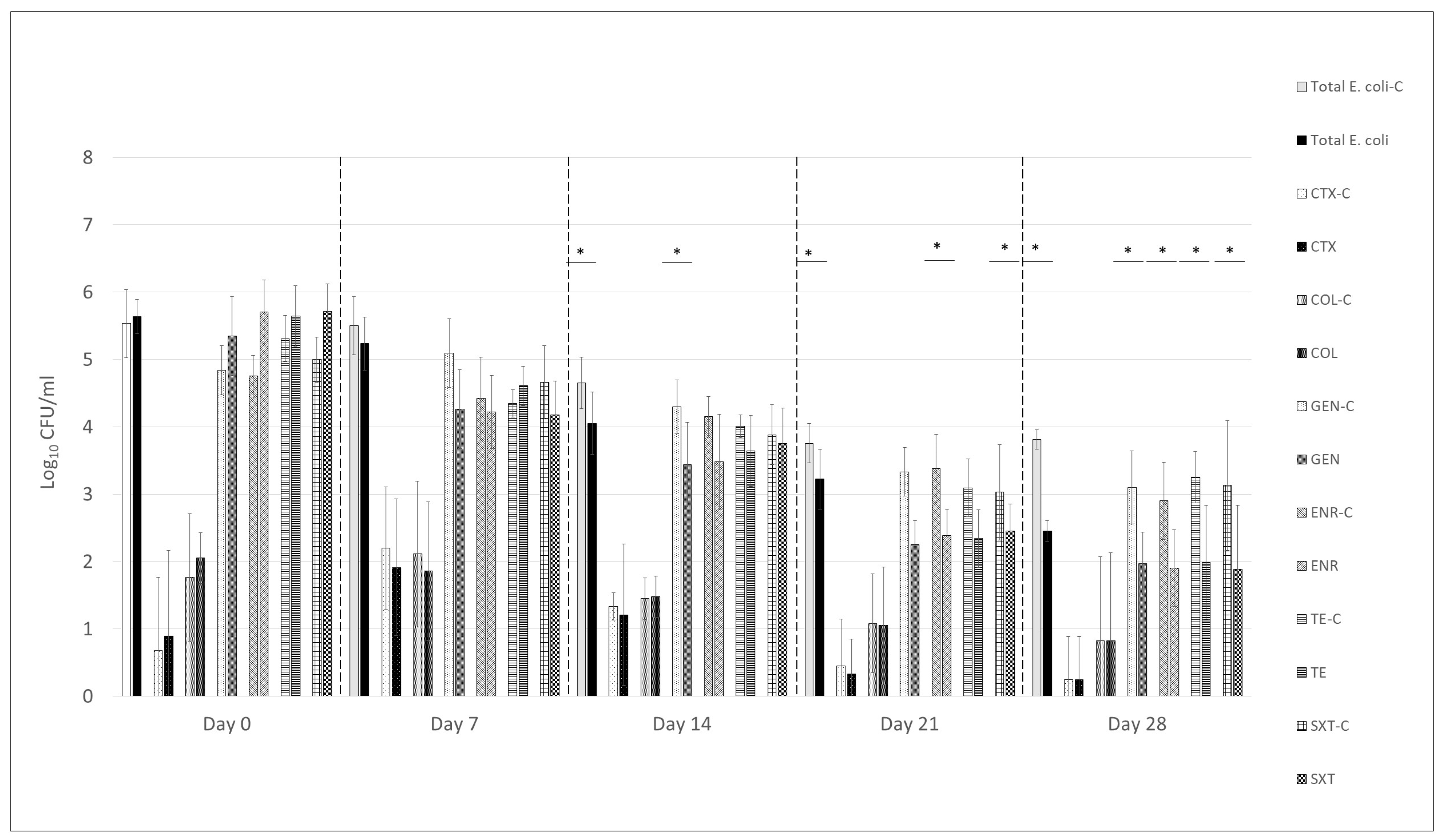
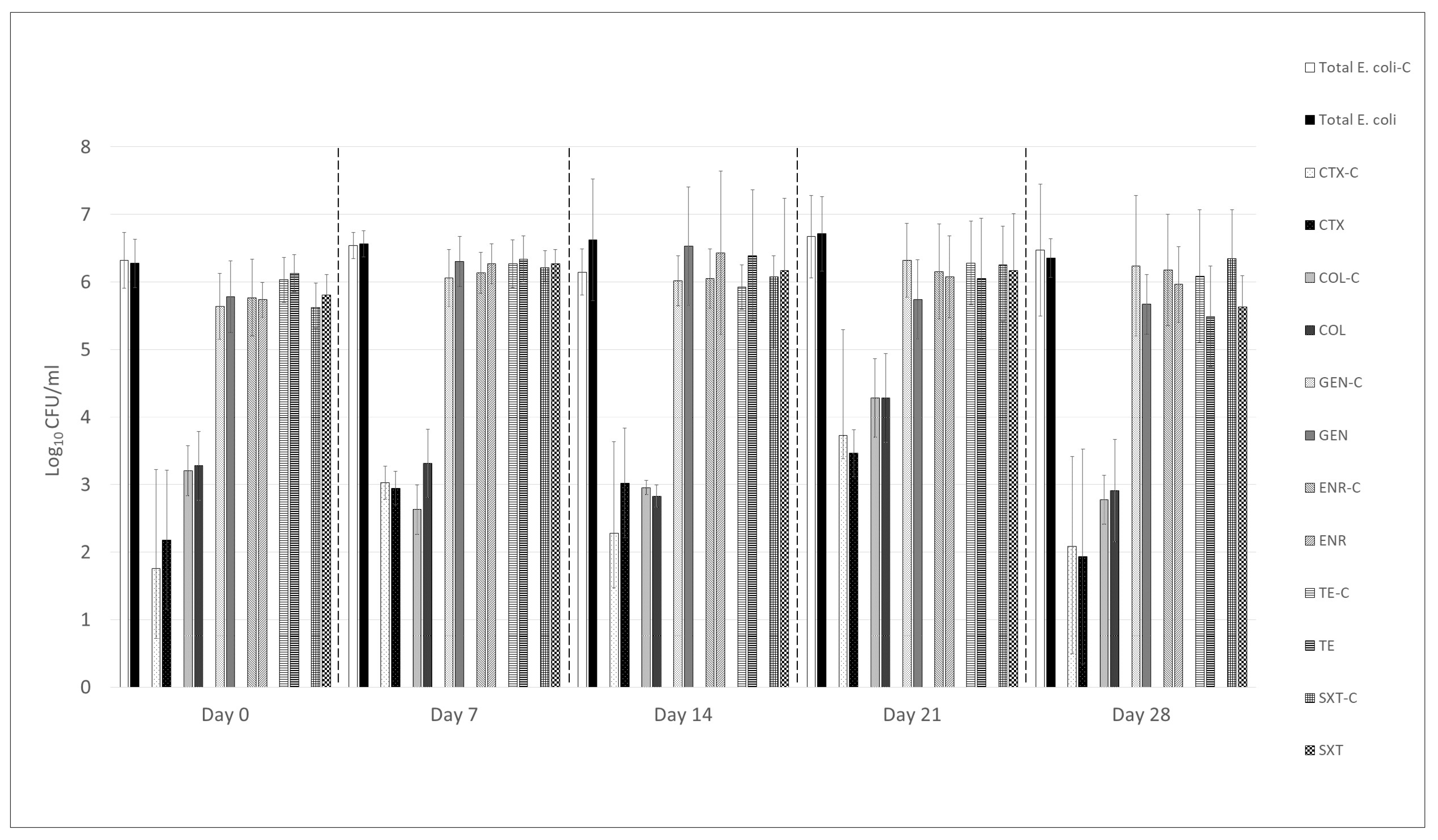
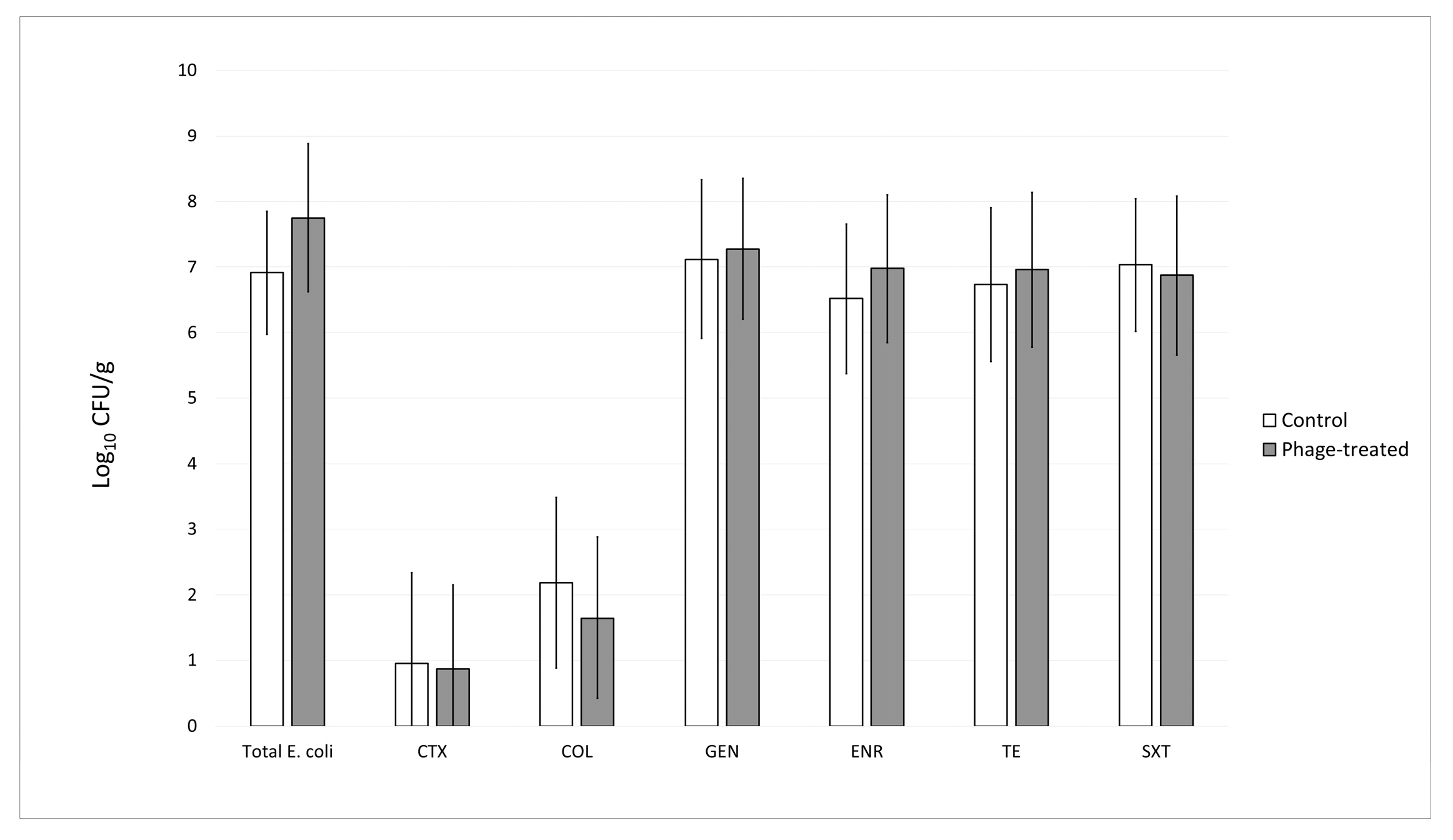
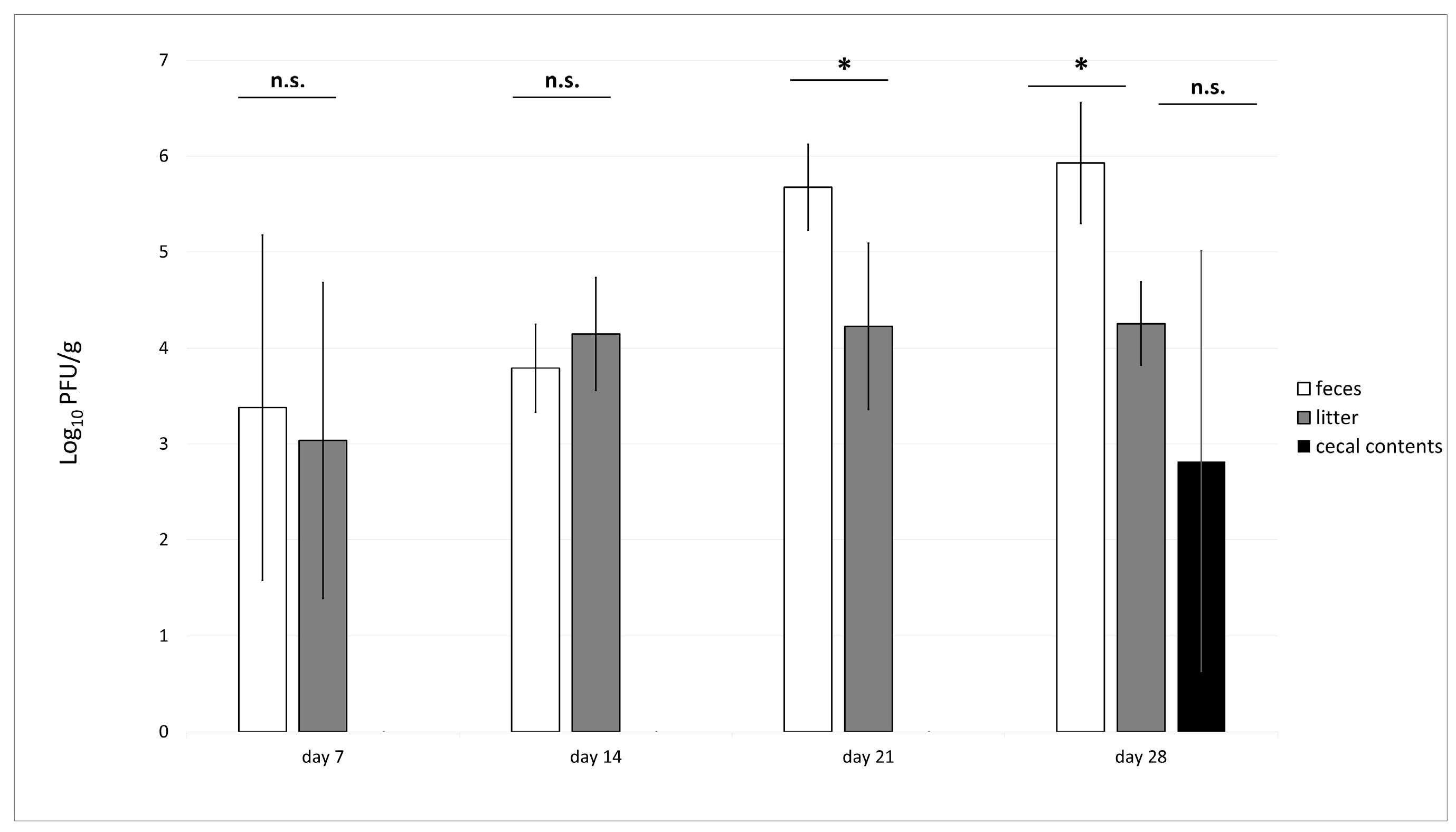
The increasing demand for poultry meat calls for sustainable production methods that address animal welfare and combat antimicrobial resistance (AMR). Commensal Escherichia coli serve as reservoirs of resistance genes that may transfer to pathogens, facilitating AMR spread in agriculture. This study evaluated the efficacy of a bacteriophage cocktail, UPWr_E, applied as a litter spray to reduce total and antibiotic-resistant E. coli in broiler chicken rearing. The cocktail, containing four lytically active phages, was administered for four weeks. Microbiological analyses of litter, feces, and cecal contents showed a significant reduction in total E. coli by 3.2 log10 CFU/g in litter and a decrease in resistant strains to gentamicin, enrofloxacin, tetracycline, and sulfamethoxazole–trimethoprim, compared to controls. No significant changes occurred in E. coli loads in feces or cecal contents, indicating limited impact on the number of commensal E. coli in cecal contents. Phages remained detectable and stable in litter and feces throughout the study. These findings demonstrate the potential of phage therapy as a targeted, environmentally friendly approach to control AMR reservoirs in poultry farming. Incorporating phage-based treatments into AMR management strategies could improve food safety and promote sustainable animal production.
Keywords:
E. coli; AMR; bacteriophages; phage treatment; broiler chickens; litter