De Novo Assembly, Characterization and Comparative Transcriptome Analysis of the Mature Gonads in Megalobrama terminalis

 , and
, and
Simple Summary
Abstract
1. Introduction
2. Materials and Methods
2.1. Sampling
2.2. RNA Extraction and cDNA Library Construction
2.3. Library Sequencing, De Novo Assembly, and Annotation
2.4. Identification of Differentially Expressed Genes and Enrichment Analysis
2.5. Validation of DEGs Using Quantitative Real-Time PCR
2.6. Gonadal Histology
3. Results
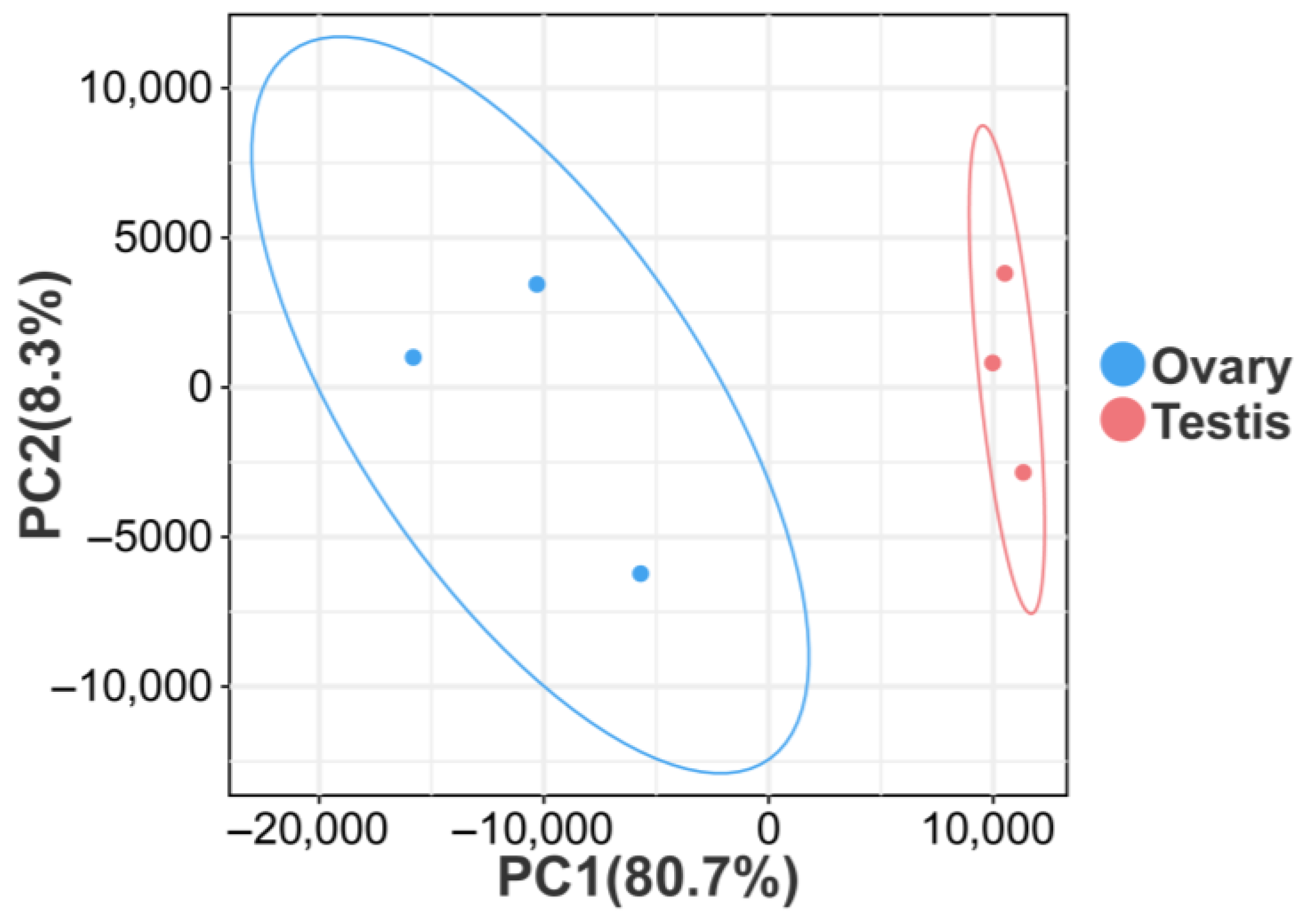
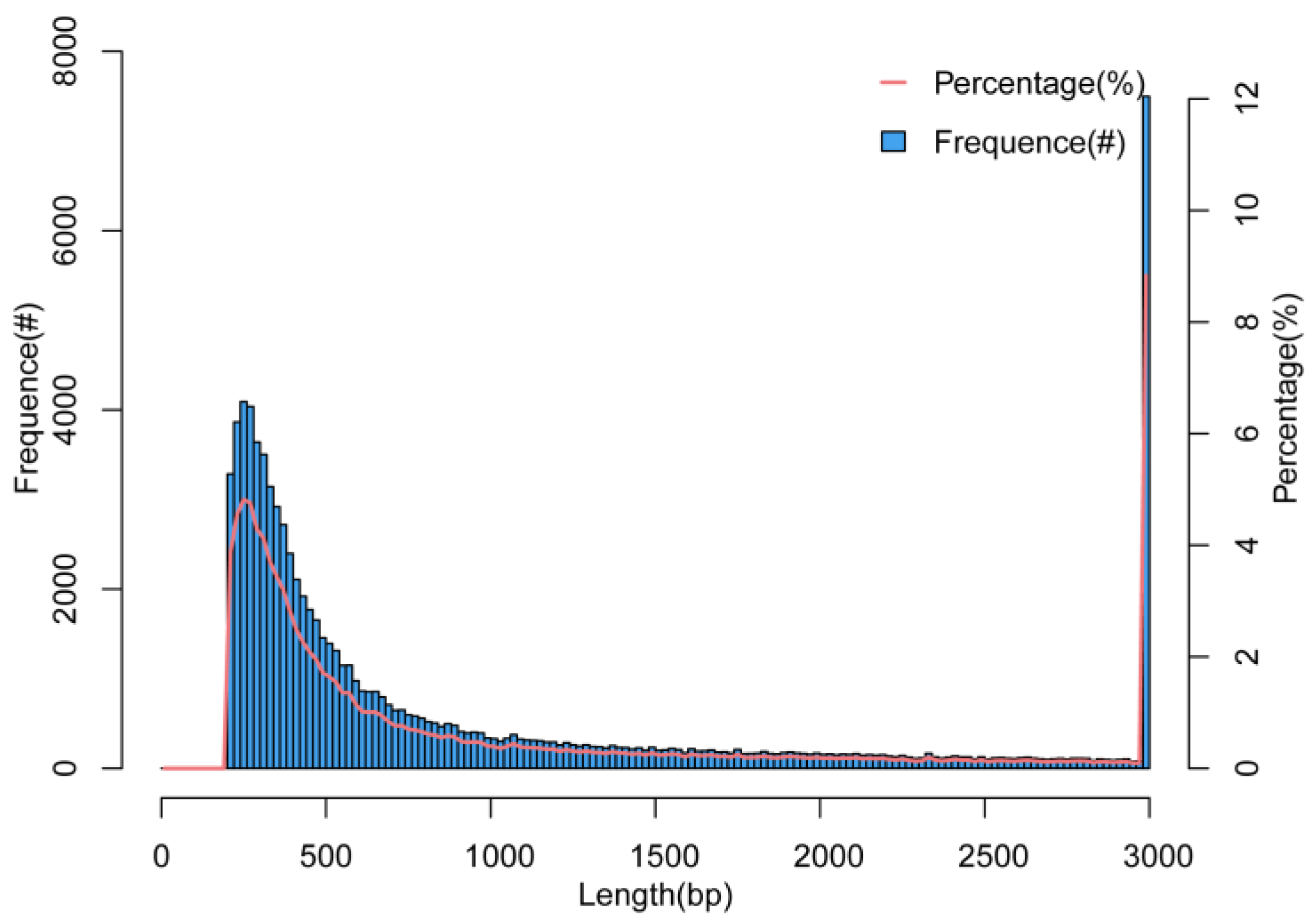
3.1. Overview of Transcriptome Assembly Quality
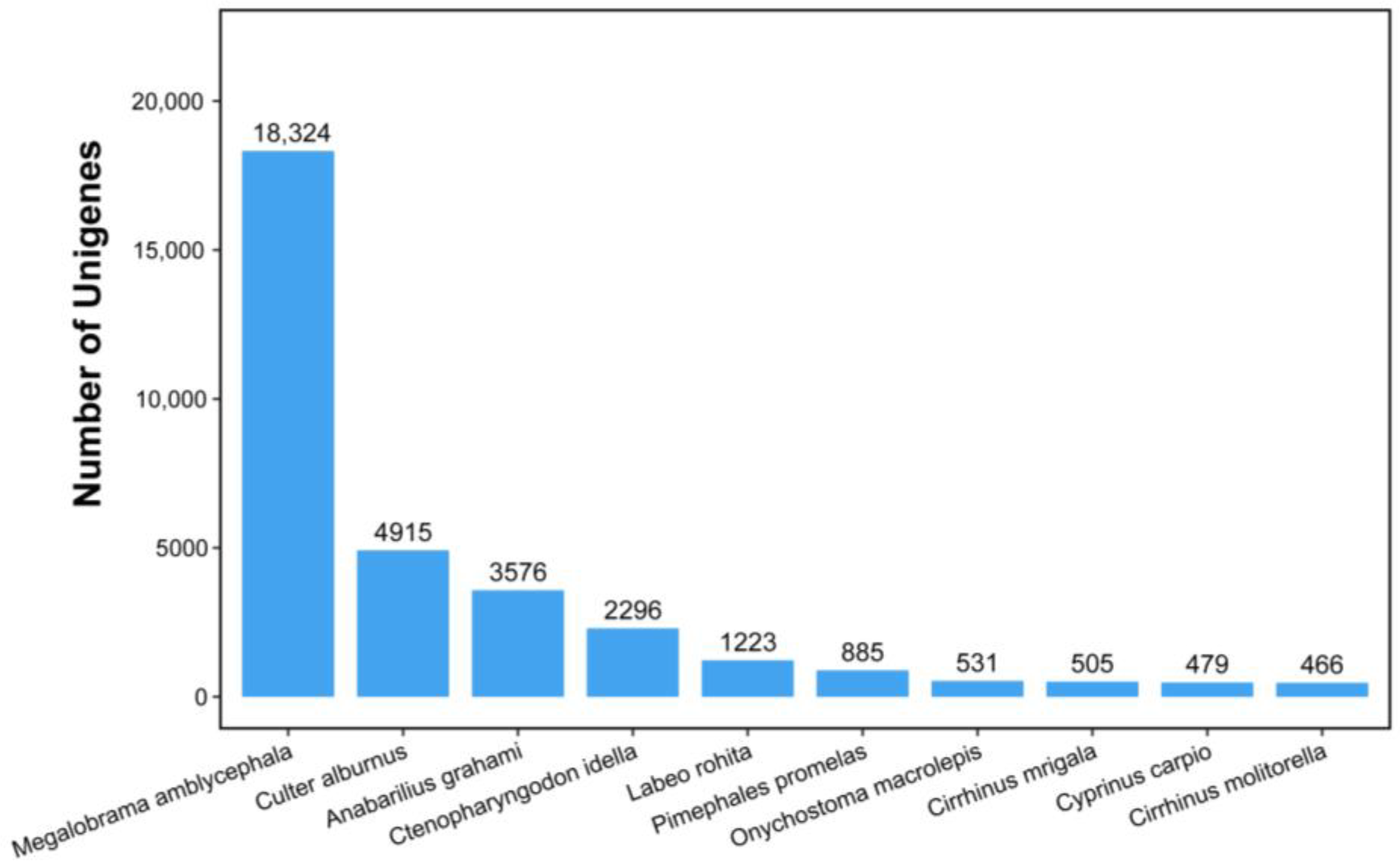
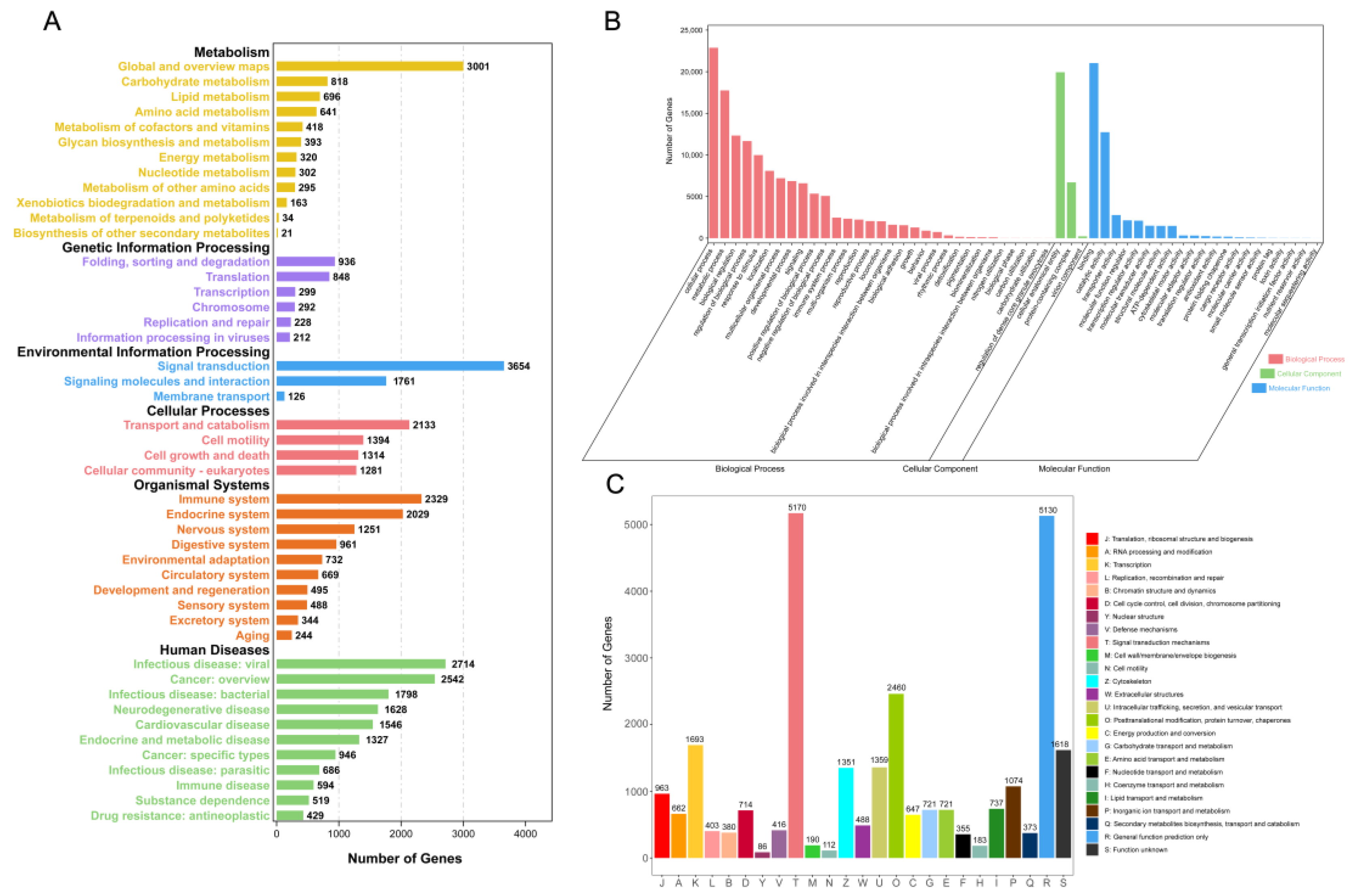
3.2. Unigene Annotation
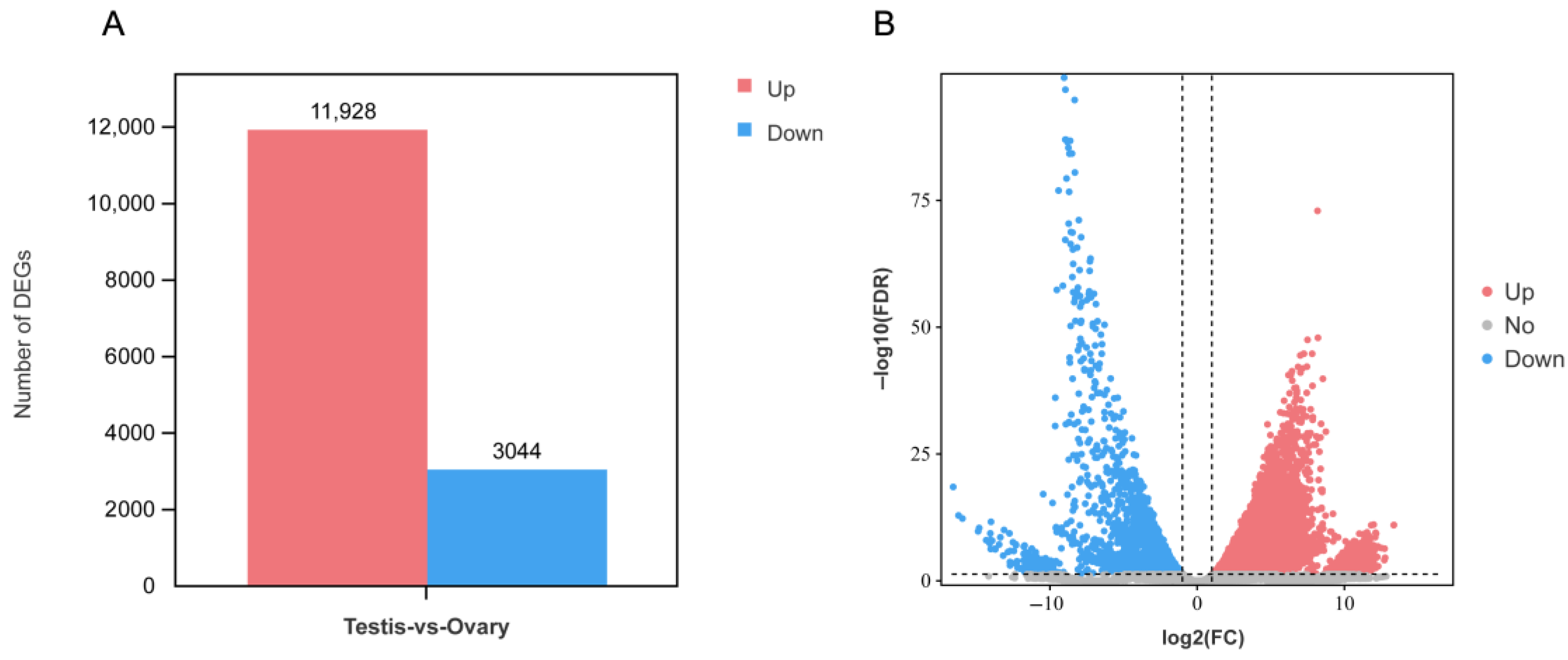
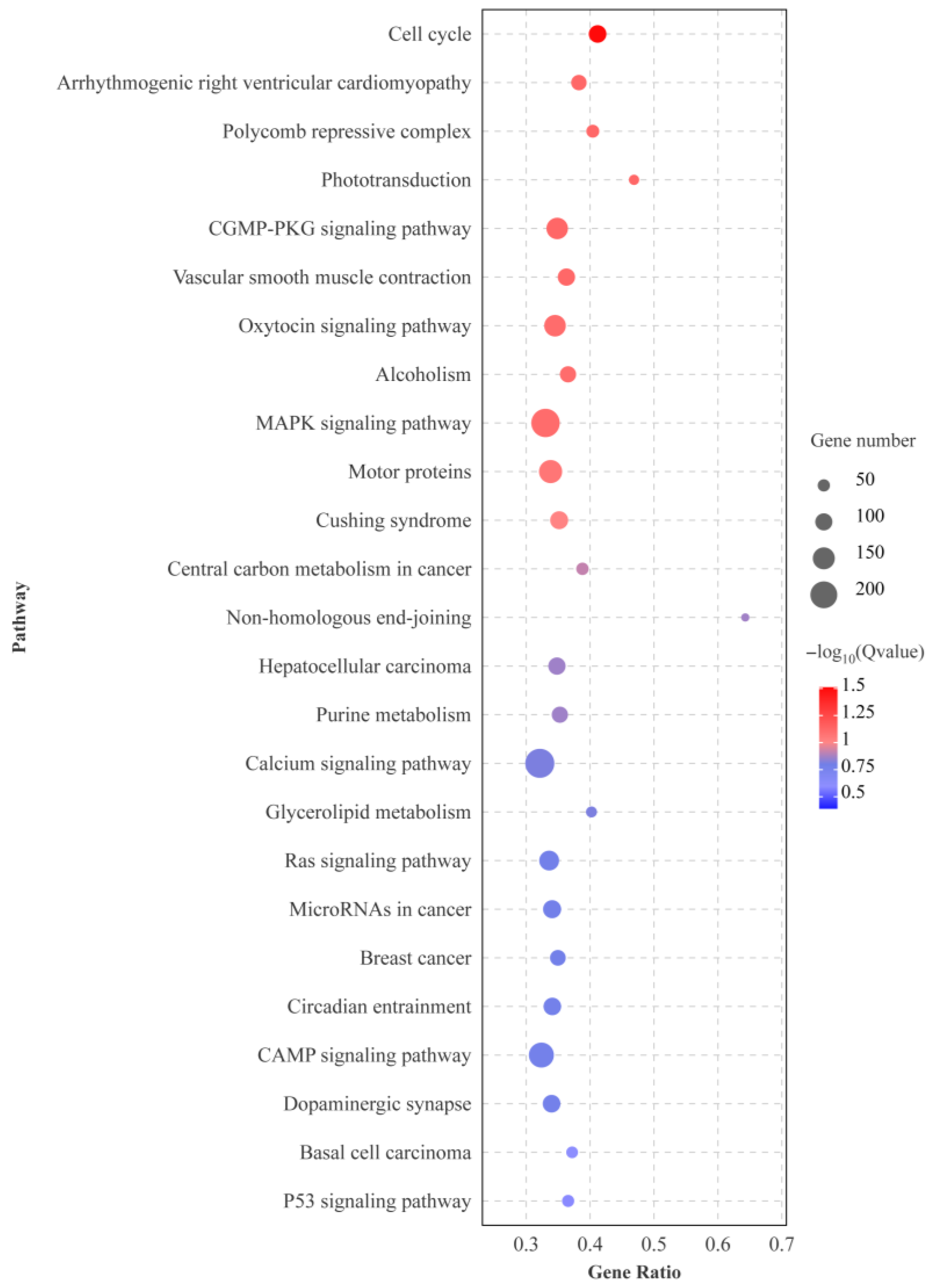
3.3. Differential Expression Analysis
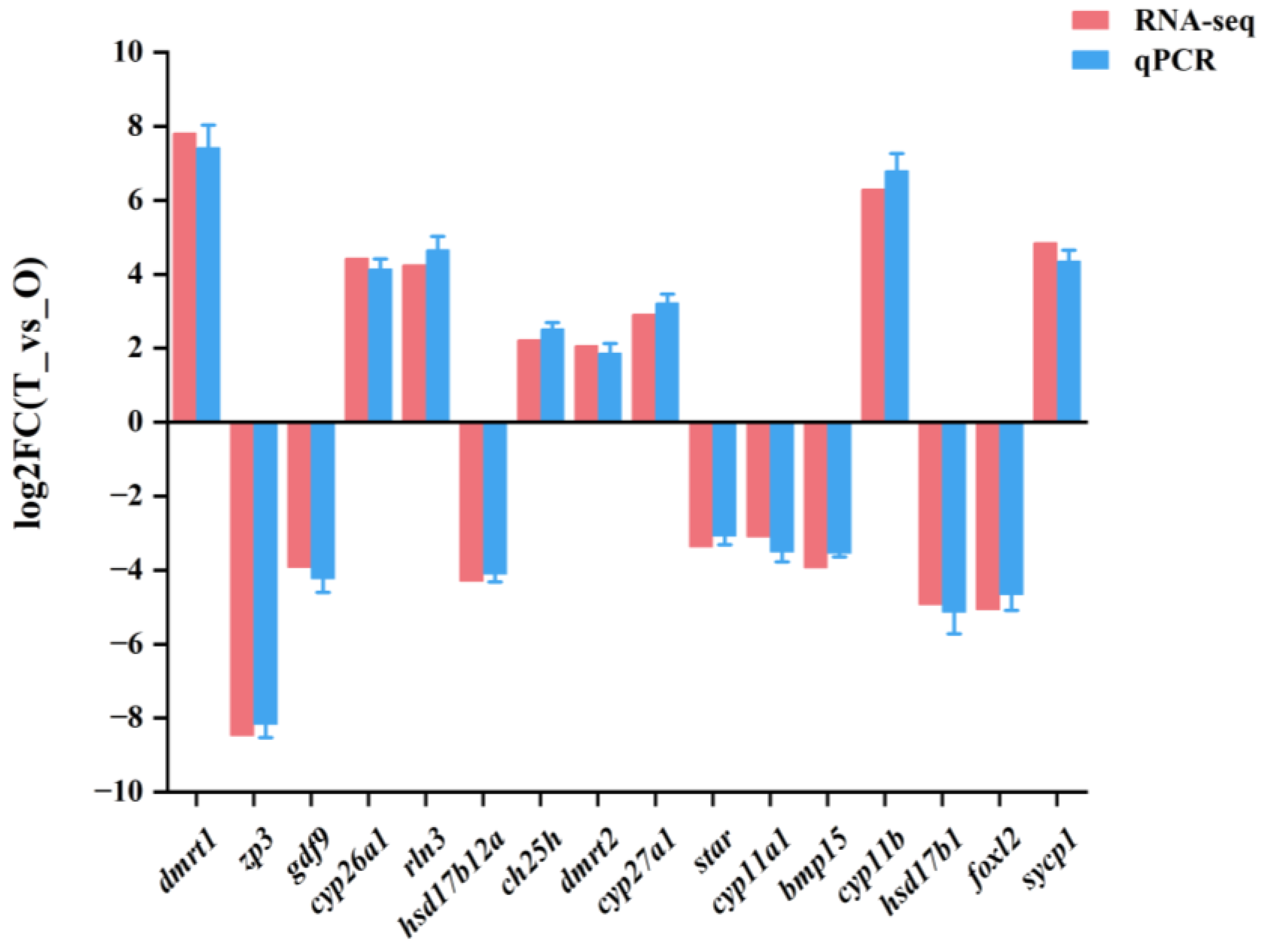
3.4. Validation of Transcriptomic Data by qRT-PCR
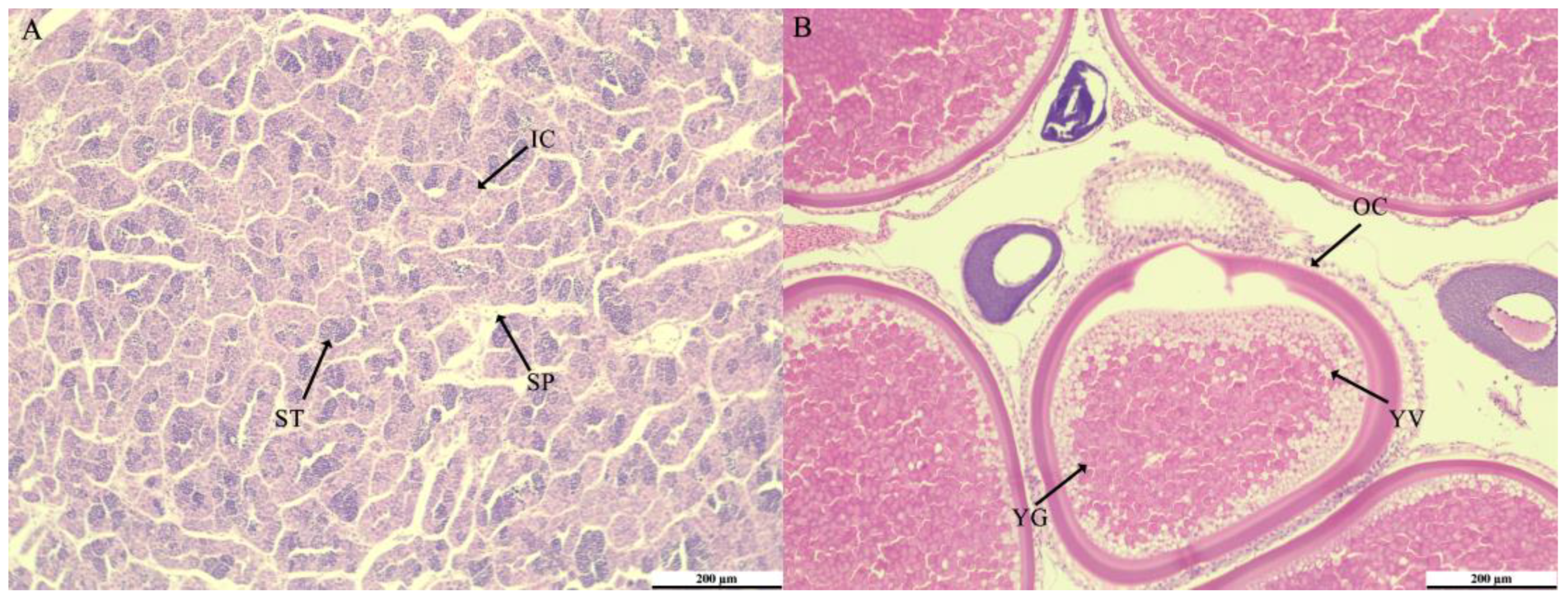
3.5. Gonadal Histology Analysis
4. Discussion
4.1. DEGs Involved in Steroidogenesis
4.2. DEGs Involved in Gonadal Differentiation and Development
4.3. DEGs Involved in Gametogenesis and Gamete Maturation
5. Conclusions
Supplementary Materials
Author Contributions
Funding
Institutional Review Board Statement
Informed Consent Statement
Data Availability Statement
Conflicts of Interest
References
- Chen, J. Population Genetics of Megalobrama Based on Whole Genome Resequencing; Huangzhong Agricultural University: Wuhan, China, 2021; (In Chinese with English Abstract). [Google Scholar]
- Lai, R.; Zhang, X.; Li, Y.; Wu, J.; Yang, D.; Wang, W. Comparison and phylogenetic analysis of mitochondrial genomes of Megalobrama. J. Fish. China 2014, 38, 1–14, (In Chinese with English Abstract). [Google Scholar]
- Gong, D.; Wang, X.; Yang, J.; Liang, J.; Tao, M.; Hu, F.; Wang, S.; Liu, Z.; Tang, C.; Luo, K.; et al. Protection and utilization status of Parabramis and Megalobrama germplasm resources. Reprod. Breed. 2023, 3, 26–34. [Google Scholar] [CrossRef]
- Hu, X.; Luan, P.; Cao, C.; Li, C.; Jia, Z.; Ge, Y.; Shang, M.; Wang, S.; Meng, Z.; Tong, J.; et al. Characterization of the mitochondrial genome of Megalobrama terminalis in the Heilong River and a clearer phylogeny of the genus Megalobrama. Sci. Rep. 2019, 9, 8509. [Google Scholar] [CrossRef] [PubMed]
- Liu, K.; Xie, N. Full-length transcriptome assembly of black amur bream (Megalobrama terminalis) as a reference resource. Mol. Biol. Rep. 2024, 51, 1101. [Google Scholar] [CrossRef] [PubMed]
- Gao, Z.; Luo, W.; Liu, H.; Zeng, C.; Liu, X.; Yi, S.; Wang, W.; Fuentes, J. Transcriptome analysis and SSR/SNP markers information of the blunt snout bream (Megalobrama amblycephala). PLoS ONE 2012, 7, e42637. [Google Scholar] [CrossRef] [PubMed]
- Xu, W.; Xiong, B. Research progress of Megalobrama in China. J. Hydroecology 2008, 29, 7–11, (In Chinese with English Abstract). [Google Scholar]
- Liu, Y.; Li, X.; Li, Y.; Yang, G.; Xu, T. Histological study on gonad development of Megalobrama terminalis. South China Fish. Sci. 2019, 15, 113–118, (In Chinese with English Abstract). [Google Scholar]
- Tan, X.; Li, X.; Chang, J.; Tao, J. Acoustic observation of the spawning aggregation of Megalobrama hoffmanni in the Pearl River. J. Freshw. Ecol. 2009, 24, 293–299. [Google Scholar] [CrossRef]
- Liu, Y.; Li, X.; Li, Y.; Chen, W.; Li, J.; Zhu, S. Reproductive biology and strategy of Megalobrama terminalis of Xijiang River. J. Lake Sci. 2021, 33, 232–241, (In Chinese with English Abstract). [Google Scholar] [CrossRef]
- Chen, J.; Liu, H.; Gooneratne, R.; Wang, Y.; Wang, W. Population genomics of Megalobrama provides insights into evolutionary history and dietary adaptation. Biology 2022, 11, 186. [Google Scholar] [CrossRef] [PubMed]
- Liu, K.; Xie, N.; Wang, Y.; Liu, X. Extensive mitogenomic heteroplasmy and its implications in the phylogeny of the fish genus Megalobrama. 3 Biotech 2023, 13, 115. [Google Scholar] [CrossRef] [PubMed]
- Luo, C.; Tan, X.; Weng, S. Genetic diversity of Megalobrama terminalis based on mtDNA CO I sequences. Mar. Fish. 2025, 47, 1–9. [Google Scholar]
- Yang, Q.; Wang, Y.; Li, G.; Huang, X.; Zheng, L.; Peng, M.; Cao, Y.; Wang, X. Effect of dietary supplementation Ampelopsis grossedentata extract on growth performance and muscle nutrition of Megalobrama hoffmanni by gut bacterial mediation. Heliyon 2024, 10, e29008. [Google Scholar] [CrossRef] [PubMed]
- Wang, Y.; Mai, Y.; Li, H.; Zheng, L.; Wang, X. Comparative analysis of the effects of dietary supplementation with Ampelopsis grossedentata extract and dihydromyricetin on growth performance, muscle quality, and gut microbiota of Megalobrama hoffmanni. Aquaculture 2025, 598, 742049. [Google Scholar] [CrossRef]
- Study on Artificial Propagation and Culture Technology of Megalobrama terminalis; Pearl River Fisheries Research Institute: Guangzhou, China, 2007; (In Chinese with English Abstract).
- Lin, X.; Chen, J.; Chen, L. Large scale breeding technology of hybrid Megalobrama (Megalobrama hoffmannii♂ × Megalobrama amblycephala♀). Sci. Fish Farming 2014, 11, 8–10, (In Chinese with English Abstract). [Google Scholar]
- Hang, Y.; Guang, G.; Hong, Y. Insights of sex determination and differentiation from medaka as a teleost model. Hereditas 2017, 39, 441–454, (In Chinese with English Abstract). [Google Scholar]
- Li, Y.; Wu, L.; Li, X. Research Progress on sex determination and differentiation related genes in teleost fishes. J. Henan Norm. Univ. 2017, 45, 72–78, (In Chinese with English Abstract). [Google Scholar]
- Xu, G.; Bao, M.; Du, F.; Xu, P. Research Progress on gonad development and spawning types of fish. J. Yangtze Univ. 2017, 14, 43–48, (In Chinese with English Abstract). [Google Scholar]
- Metzker, M.L. Sequencing technologies—The next generation. Nat. Rev. Genet. 2010, 11, 31–46. [Google Scholar] [CrossRef] [PubMed]
- Liu, S.; Han, C.; Zhang, Y. De novo assembly, characterization and comparative transcriptome analysis of gonads reveals sex-biased genes in Coreoperca whiteheadi. Comp. Biochem. Physiol. Part D Genom. Proteom. 2023, 47, 101115. [Google Scholar] [CrossRef] [PubMed]
- Liu, S.; Lian, Y.; Song, Y.; Chen, Q.; Huang, J. De Novo Assembly, Characterization and Comparative Transcriptome Analysis of the Gonads of Jade Perch (Scortum barcoo). Animals 2023, 13, 2254. [Google Scholar] [CrossRef] [PubMed]
- Huang, X.; Huang, Z.; Li, Q.; Li, W.; Han, C.; Yang, Y.; Lin, H.; Wu, Q.; Zhou, Y. De Novo Assembly, Characterization, and Comparative Transcriptome Analysis of Mature Male and Female Gonads of Rabbitfish (Siganus oramin) (Bloch & Schneider, 1801). Animals 2024, 14, 1346. [Google Scholar] [CrossRef] [PubMed]
- Han, C.; Huang, W.; Peng, S.; Zhou, J.; Zhan, H.; Zhang, Y.; Li, W.; Gong, J.; Li, Q. De Novo Assembly, characterization and comparative transcriptome analysis of the mature gonads in Spinibarbus hollandi. Animals 2022, 13, 166. [Google Scholar] [CrossRef] [PubMed]
- Martins, T.; Valentim, A.; Pereira, N.; Antunes, L.M. Anaesthetics and analgesics used in adult fish for research: A review. Lab. Anim. 2019, 53, 325–341. [Google Scholar] [CrossRef] [PubMed]
- Grabherr, M.G.; Haas, B.J.; Yassour, M.; Levin, J.Z.; Thompson, D.A.; Amit, I.; Adiconis, X.; Fan, L.; Raychowdhury, R.; Zeng, Q.; et al. Full-length transcriptome assembly from RNA-Seq data without a reference genome. Nat. Biotechnol. 2011, 29, 644. [Google Scholar] [CrossRef] [PubMed]
- Simão, F.A.; Waterhouse, R.M.; Ioannidis, P.; Kriventseva, E.V.; Zdobnov, E.M. BUSCO: Assessing genome assembly and annotation completeness with single-copy orthologs. Bioinformatics 2015, 31, 3210–3212. [Google Scholar] [CrossRef] [PubMed]
- Wen, G. A simple process of RNA-sequence analyses by Hisat2, Htseq and DESeq2. In Proceedings of the 2017 International Conference on Biomedical Engineering and Bioinformatics, Bangkok, Thailand, 14–16 September 2017; pp. 11–15. [Google Scholar]
- Li, B.; Dewey, C.N. RSEM: Accurate transcript quantification from RNA-Seq data with or without a reference genome. BMC Bioinform. 2011, 12, 323. [Google Scholar] [CrossRef] [PubMed]
- Robinson, M.D.; McCarthy, D.J.; Smyth, G.K. edgeR: A Bioconductor package for differential expression analysis of digital gene expression data. Bioinformatics 2010, 26, 139–140. [Google Scholar] [CrossRef] [PubMed]
- Livak, K.J.; Schmittgen, T.D. Analysis of relative gene expression data using real-time quantitative PCR and the 2−ΔΔCT method. Methods 2001, 25, 402–408. [Google Scholar] [CrossRef] [PubMed]
- Rajakumar, A.; Senthilkumaran, B. Steroidogenesis and its regulation in teleost-a review. Fish. Physiol. Biochem. 2020, 46, 803–818. [Google Scholar] [CrossRef] [PubMed]
- Morii, M.; Hebiguchi, T.; Watanabe, R.; Yoshino, H.; Mezaki, Y. Cloning and Characterization of Cyp7a1 and Cyp27a1 Genes from the Non-Parasitic Japanese Lamprey Lethenteron reissneri. Zool. Sci. 2023, 40, 208–218. [Google Scholar] [CrossRef] [PubMed]
- Xu, H.; Sun, B.; Jia, L.; Wei, Y.; Liao, Z.; Liang, M. Cloning and characterization of cholesterol 25-hydroxylase (ch25h) from a marine teleost, Chinese tongue sole (Cynoglossus semilaevis), and its gene expressions in response to dietary arachidonic acid. Front. Mar. Sci. 2020, 6, 800. [Google Scholar] [CrossRef]
- Shih, M.-C.M.; Chiu, Y.-N.; Hu, M.-C.; Guo, I.-C.; Chung, B.-C. Regulation of steroid production: Analysis of Cyp11a1 promoter. Mol. Cell. Endocrinol. 2011, 336, 80–84. [Google Scholar] [CrossRef] [PubMed]
- Goetz, F.W.; Norberg, B.; McCauley, L.A.; Iliev, D.B. Characterization of the cod (Gadus morhua) steroidogenic acute regulatory protein (StAR) sheds light on StAR gene structure in fish. Comp. Biochem. Physiol. Part B Biochem. Mol. Biol. 2004, 137, 351–362. [Google Scholar] [CrossRef] [PubMed]
- Yu, X.; Wu, L.; Xie, L.; Yang, S.; Charkraborty, T.; Shi, H.; Wang, D.; Zhou, L. Characterization of two paralogous StAR genes in a teleost, Nile tilapia (Oreochromis niloticus). Mol. Cell. Endocrinol. 2014, 392, 152–162. [Google Scholar] [CrossRef] [PubMed]
- Melamed, P.; Sherwood, N. Hormones and Their Receptors in Fish Reproduction; World Scientific: Singapore, 2005. [Google Scholar]
- Suzuki, H.; Ozaki, Y.; Ijiri, S.; Gen, K.; Kazeto, Y. 17β-Hydroxysteroid dehydrogenase type 12a responsible for testicular 11-ketotestosterone synthesis in the Japanese eel, Anguilla japonica. J. Steroid Biochem. Mol. Biol. 2020, 198, 105550. [Google Scholar] [CrossRef] [PubMed]
- Suzuki, H.; Ito, R.; Ozaki, Y.; Kazeto, Y. Three types of 17β-hydroxysteroid dehydrogenases involved in Japanese eel ovarian steroidogenesis. Gen. Comp. Endocrinol. 2025, 365, 114697. [Google Scholar] [CrossRef] [PubMed]
- Schiffer, L.; Anderko, S.; Hannemann, F.; Eiden-Plach, A.; Bernhardt, R. The CYP11B subfamily. J. Steroid Biochem. Mol. Biol. 2015, 151, 38–51. [Google Scholar] [CrossRef] [PubMed]
- Meng, L.; Yu, H.; Ni, F.; Niu, J.; Liu, X.; Wang, X. Roles of two cyp11 genes in sex hormone biosynthesis in Japanese flounder (Paralichthys olivaceus). Mol. Reprod. Dev. 2020, 87, 53–65. [Google Scholar] [CrossRef] [PubMed]
- Zhai, G.; Shu, T.; Xia, Y.; Lu, Y.; Shang, G.; Jin, X.; He, J.; Nie, P.; Yin, Z. Characterization of sexual trait development in cyp17a1-deficient zebrafish. Endocrinology 2018, 159, 3549–3562. [Google Scholar] [CrossRef] [PubMed]
- Xie, Y.; Wu, C.; Li, Z.; Wu, Z.; Hong, L. Early gonadal development and sex determination in mammal. Int. J. Mol. Sci. 2022, 23, 7500. [Google Scholar] [CrossRef] [PubMed]
- Vainio, S.; Heikkilä, M.; Kispert, A.; Chin, N.; McMahon, A.P. Female development in mammals is regulated by Wnt-4 signalling. Nature 1999, 397, 405–409. [Google Scholar] [CrossRef] [PubMed]
- Marshall Graves, J.A. Interactions between SRY and SOX genes in mammalian sex determination. Bioessays 1998, 20, 264–269. [Google Scholar] [CrossRef]
- Devlin, R.H.; Nagahama, Y. Sex determination and sex differentiation in fish: An overview of genetic, physiological, and environmental influences. Aquaculture 2002, 208, 191–364. [Google Scholar] [CrossRef]
- Han, C.; Wang, C.; Ouyang, H.; Zhu, Q.; Huang, J.; Han, L.; Li, S.; Li, G.; Lin, H.; Zhang, Y. Characterization of dmrts and their potential role in gonadal development of mandarin fish (Siniperca chuatsi). Aquac. Rep. 2021, 21, 100802. [Google Scholar] [CrossRef]
- Sreenivasan, R.; Jiang, J.; Wang, X.; Bártfai, R.; Kwan, H.Y.; Christoffels, A.; Orbán, L. Gonad differentiation in zebrafish is regulated by the canonical Wnt signaling pathway. Biol. Reprod. 2014, 90, 45. [Google Scholar] [CrossRef] [PubMed]
- Zhu, Y.; Cui, Z.; Yang, Y.; Xu, W.; Shao, C.; Fu, X.; Li, Y.; Chen, S. Expression analysis and characterization of dmrt2 in Chinese tongue sole (Cynoglossus semilaevis). Theriogenology 2019, 138, 1–8. [Google Scholar] [CrossRef] [PubMed]
- Jiang, N.; Jin, X.; He, J.; Yin, Z. The roles of follistatin 1 in regulation of zebrafish fecundity and sexual differentiation. Biol. Reprod. 2012, 87, 54. [Google Scholar] [CrossRef] [PubMed]
- Georges, A.; Auguste, A.; Bessière, L.; Vanet, A.; Todeschini, A.-L.; A Veitia, R. FOXL2: A central transcription factor of the ovary. J. Mol. Endocrinol. 2014, 52, R17–R33. [Google Scholar] [CrossRef] [PubMed]
- Fan, Z.; Zou, Y.; Liang, D.; Tan, X.; Jiao, S.; Wu, Z.; Li, J.; Zhang, P.; You, F. Roles of forkhead box protein L2 (foxl2) during gonad differentiation and maintenance in a fish, the olive flounder (Paralichthys olivaceus). Reprod. Fertil. Dev. 2019, 31, 1742–1752. [Google Scholar] [CrossRef] [PubMed]
- Crespo, B.; Lan-Chow-Wing, O.; Rocha, A.; Zanuy, S.; Gómez, A. foxl2 and foxl3 are two ancient paralogs that remain fully functional in teleosts. Gen. Comp. Endocrinol. 2013, 194, 81–93. [Google Scholar] [CrossRef] [PubMed]
- Paulini, F.; Melo, E.O. The role of oocyte-secreted factors GDF9 and BMP15 in follicular development and oogenesis. Reprod. Domest. Anim. 2011, 46, 354–361. [Google Scholar] [CrossRef] [PubMed]
- Feng, R.; Fang, L.; Cheng, Y.; He, X.; Jiang, W.; Dong, R.; Shi, H.; Jiang, D.; Sun, L.; Wang, D. Retinoic acid homeostasis through aldh1a2 and cyp26a1 mediates meiotic entry in Nile tilapia (Oreochromis niloticus). Sci. Rep. 2015, 5, 10131. [Google Scholar] [CrossRef] [PubMed]
- Rodríguez-Marí, A.; Cañestro, C.; BreMiller, R.A.; Catchen, J.M.; Yan, Y.-L.; Postlethwait, J.H.; Orban, L. Retinoic acid metabolic genes, meiosis, and gonadal sex differentiation in zebrafish. PLoS ONE 2013, 8, e73951. [Google Scholar] [CrossRef] [PubMed]
- Li, M.; Feng, R.; Ma, H.; Dong, R.; Liu, Z.; Jiang, W.; Tao, W.; Wang, D. Retinoic acid triggers meiosis initiation via stra8-dependent pathway in Southern catfish, Silurus meridionalis. Gen. Comp. Endocrinol. 2016, 232, 191–198. [Google Scholar] [CrossRef] [PubMed]
- Billmyre, K.K.; Kesler, E.A.; Tsuchiya, D.; Corbin, T.J.; Weaver, K.; Moran, A.; Yu, Z.; Adams, L.; Delventhal, K.; Durnin, M.; et al. SYCP1 head-to-head assembly is required for chromosome synapsis in mouse meiosis. Sci. Adv. 2023, 9, eadi1562. [Google Scholar] [CrossRef] [PubMed]
- Olaya, I.; Yilmaz, I.N.; Nour-Kasally, N.; Draper, B.W.; Burgess, S.M. Zebrafish lack a strong meiotic checkpoint response to defects in chromosome synapsis. bioRxiv 2025. [Google Scholar] [CrossRef]
- de Vries, S.S.; Baart, E.B.; Dekker, M.; Siezen, A.; de Rooij, D.G.; de Boer, P.; Riele, H.T. Mouse MutS-like protein Msh5 is required for proper chromosome synapsis in male and female meiosis. Genes Dev. 1999, 13, 523–531. [Google Scholar] [CrossRef] [PubMed]
- Yang, L.; Li, Y.; Wu, Y.; Sun, S.; Song, Q.; Wei, J.; Sun, L.; Li, M.; Wang, D.; Zhou, L. Rln3a is a prerequisite for spermatogenesis and fertility in male fish. J. Steroid Biochem. Mol. Biol. 2020, 197, 105517. [Google Scholar] [CrossRef] [PubMed]
- Feng, C.-W.A.; Spiller, C.; Merriner, D.J.; O’bRyan, M.K.; Bowles, J.; Koopman, P. SOX30 is required for male fertility in mice. Sci. Rep. 2017, 7, 17619. [Google Scholar] [CrossRef] [PubMed]
- Roy, A.; Lin, Y.-N.; Agno, J.E.; DeMayo, F.J.; Matzuk, M.M. Absence of tektin 4 causes asthenozoospermia and subfertility in male mice. FASEB J. 2007, 21, 1013–1025. [Google Scholar] [CrossRef] [PubMed]
- Zhou, J.; Stein, P.; Leu, N.A.; Chmátal, L.; Xue, J.; Ma, J.; Huang, X.; Lampson, M.A.; Schultz, R.M.; Wang, P.J. Accelerated reproductive aging in females lacking a novel centromere protein SYCP2L. Hum. Mol. Genet. 2015, 24, 6505–6514. [Google Scholar] [CrossRef] [PubMed]



| Gene ID | Gene | Sequence (5′-3′) | Product Size (bp) |
|---|---|---|---|
| Unigene0048221 | β-actin | F: ACCACGGCCGAAAGAGAAAT | 97 |
| R: AAGATGAGGCAGCAGTTCCC | |||
| Unigene0006630 | cyp27a1 | F: GATTGTTGTGCGTGCACTGT | 135 |
| R: AGCGCTGAGGAATACGGATG | |||
| Unigene0010781 | ch25h | F: TGGGCTGCCACCCATTTAG | 99 |
| R: GATGCAGTGCCCAAGGAAAG | |||
| Unigene0002701 | cyp11a1 | F: GGTCTGTACGCTATGGGTCG | 102 |
| R: CAGGCTCCTGAAGTAGTGGC | |||
| Unigene0056686 | star | F: TGGTTACACACGAGGTGTCG | 115 |
| R: GCAGCTCCGCCCAAATAAAC | |||
| Unigene0029504 | hsd17b12a | F: GCTGGCGTTGTTTCTGTTGT | 130 |
| R: TTTCCCAATCCCATCCGTGG | |||
| Unigene0059133 | hsd17b1 | F: ACGGACGAATCCTTGTGACC | 112 |
| R: ATAGCCAGGCTCTCACATGC | |||
| Unigene0098050 | cyp11b | F: AGGACTTCTGCCGTTCACTG | 140 |
| R: TTCTCCGTACAGAACGTGGC | |||
| Unigene0097311 | dmrt1 | F: AACCACGGATTCGTGTCTCC | 106 |
| R: CCATGACCCGCTGTCTTTCA | |||
| Unigene0055493 | dmrt2 | F: GCAGGTAGATGTGACCCACC | 107 |
| R: CTGGAGCTTCATCCGTCCTC | |||
| Unigene0061978 | foxl2 | F: ATAACTCGTGGTCTCCTGCG | 126 |
| R: TCTGCACACGCGAATATGGG | |||
| Unigene0081098 | cyp26a1 | F: AATTGGGCATCTACTCGCCT | 142 |
| R: TCAAAGGTTTTGAGCGCCAC | |||
| Unigene0045041 | sycp1 | F: GCTGAAGTCAACGCAAGCAA | 128 |
| R: GAAACGGGTGTCCTCAAGGT | |||
| Unigene0030921 | rln3 | F: ACCGAGAGACTTCGGAGTGA | 124 |
| R: ATACGAGTCCAGGAGCCAGT | |||
| Unigene0005965 | gdf9 | F: TGTACCTCAACGACACCAGC | 146 |
| R: GGTGCCCTTTAGGGTTCCTC | |||
| Unigene0002552 | bmp15 | F: TCACTGGATCATTGCACCCC | 94 |
| R: GTGGTTGGGCGAATTGTAGC | |||
| Unigene0089400 | zp3 | F: CAGTGGCAAAACTGACGTGG | 95 |
| R: GTTGGGAGGGATAGGATGCG |
| Sample | Reads Number | Total Base | Q20(%) | Q30(%) | GC Content(%) |
|---|---|---|---|---|---|
| ovary-1 | 53,679,572 | 7,989,217,225 | 99.26 | 97.29 | 46.52 |
| ovary-2 | 44,297,662 | 6,605,257,416 | 99.27 | 97.35 | 45.90 |
| ovary-3 | 43,255,124 | 6,449,759,681 | 99.27 | 97.34 | 46.73 |
| testis-1 | 50,405,048 | 7,516,704,077 | 99.31 | 97.49 | 45.78 |
| testis-2 | 38,698,706 | 5,779,517,823 | 99.26 | 97.31 | 45.81 |
| testis-3 | 45,877,336 | 6,839,458,852 | 99.28 | 97.39 | 45.63 |
| Mean | 46,035,575 | 6,863,319,179 | 99.28 | 97.36 | 46.06 |
| Total | 276,213,448 | 41,179,915,074 |
| Type | Database | Number |
|---|---|---|
| Assembly | Gene number (#) | 84,886 |
| Total length (nt) | 92,262,782 | |
| Average length (nt) | 1086 | |
| Max length (nt) | 20,142 | |
| Min length (nt) | 201 | |
| N50 (nt) | 2238 | |
| Total number of unigenes | 42,322 | |
| Unigenes match against Nr | 40,529 | |
| Annotation | Unigenes match against SwissProt | 25,877 |
| Unigenes match against KEGG | 25,801 | |
| Unigenes match against GO | 25,055 | |
| Unigenes match against KOG | 20,139 |
| ID | log2(FC) | p-Value | FDR | Nr Annotation | Gene Name |
|---|---|---|---|---|---|
| Unigene0091813 | 1.644 | 3.31 × 10⁻⁴ | 3.05 × 10⁻³ | adenylate cyclase type 5 | adcy5 |
| Unigene0050831 | 2.933 | 6.84 × 10⁻⁷ | 1.27 × 10⁻⁵ | apolipoprotein Eb | apoeb |
| Unigene0081017 | 4.638 | 1.39 × 10⁻⁴ | 1.42 × 10⁻³ | beta-carotene oxygenase1 like | bco1 |
| Unigene0093028 | 7.066 | 1.15 × 10⁻³⁴ | 6.04 × 10⁻³² | beta-carotene oxygenase 2b | bco2b |
| Unigene0002552 | −3.939 | 4.31 × 10⁻²⁰ | 6.08 × 10⁻¹⁸ | bone morphogenetic protein 15 | bmp15 |
| Unigene0032803 | 6.471 | 9.54 × 10⁻¹⁶ | 7.84 × 10⁻¹⁴ | bone morphogenetic protein 8 A-like | bmp8a |
| Unigene0010781 | 2.219 | 5.12 × 10⁻³ | 3.17 × 10⁻² | cholesterol 25-hydroxylase-like protein | ch25h |
| Unigene0002701 | −3.099 | 4.51 × 10⁻⁶ | 6.92 × 10⁻⁵ | cholesterol side-chain cleavage enzyme, mitochondrial | cyp11a1 |
| Unigene0098050 | 6.293 | 7.30 × 10⁻¹⁴ | 4.69 × 10⁻¹² | cytochrome P45011B, mitochondrial | cyp11b |
| Unigene0047166 | −2.829 | 4.12 × 10⁻⁶ | 6.40 × 10⁻⁵ | teroid 17-alpha-hydroxylase/17, 20lyase | cyp17a1 |
| Unigene0004230 | −5.369 | 1.48 × 10⁻¹⁴ | 1.04 × 10⁻¹² | Aromatase | cyp19a1a |
| Unigene0081098 | −4.427 | 2.00 × 10⁻³¹ | 8.18 × 10⁻²⁹ | cytochrome P45026A1 | cyp26a1 |
| Unigene0061096 | 6.182 | 4.75 × 10⁻⁶ | 7.23 × 10⁻⁵ | cytochrome P45026C1 | cyp26b1 |
| Unigene0006630 | 2.913 | 7.94 × 10⁻⁵ | 8.72 × 10⁻⁴ | sterol 26-hydroxylase, mitochondrial | cyp27a1 |
| Unigene0026663 | 2.404 | 5.64 × 10⁻⁸ | 1.32 × 10⁻⁶ | daz-associated protein 1 | dazap1 |
| Unigene0052997 | 2.326 | 4.64 × 10⁻⁶ | 7.07 × 10⁻⁵ | deleted in azoospermia-like | dazl |
| Unigene0059765 | −1.266 | 3.88 × 10⁻⁴ | 3.50 × 10⁻³ | putative ATP-dependent RNA helicase DDX5 | ddx5 |
| Unigene0055695 | −2.318 | 3.91 × 10⁻⁸ | 9.44 × 10⁻⁷ | probable ATP-dependent RNA helicase DDX52 | ddx52 |
| Unigene0097311 | 7.810 | 1.39 × 10−48 | 1.74 × 10−45 | doublesex-and mab-3-related transcription factor 1 | dmrt1 |
| Unigene0055493 | 2.063 | 7.38 × 10⁻³ | 4.29 × 10⁻² | doublesex-and mab-3-related transcription factor 2b | dmrt2 |
| Unigene0010711 | 6.154 | 1.57 × 10⁻⁷ | 3.36 × 10⁻⁶ | doublesex-and mab-3-related transcription factor 3a | dmrt3a |
| Unigene0090348 | −3.991 | 3.16 × 10⁻¹¹ | 1.34 × 10⁻⁹ | estrogen receptor | esr1 |
| Unigene0083632 | 5.411 | 1.27 × 10⁻⁴ | 1.31 × 10⁻³ | fibroblast growth factor 10b | fgf10 |
| Unigene0097340 | 3.638 | 2.46 × 10⁻⁹ | 7.47 × 10⁻⁸ | fibroblast growth factor 12 | fgf12 |
| Unigene0053217 | 2.282 | 3.88 × 10⁻³ | 2.51 × 10⁻² | fibroblast growth factor 13 | fgf13 |
| Unigene0054944 | 4.554 | 1.83 × 10⁻¹³ | 1.11 × 10⁻¹¹ | fibroblast growth factor 14 | fgf14 |
| Unigene0045081 | 3.597 | 4.88 × 10⁻⁴ | 4.26 × 10⁻³ | fibroblast growth factor 18a | fgf18 |
| Unigene0020029 | 6.452 | 8.78 × 10⁻⁵ | 9.51 × 10⁻⁴ | fibroblast growth factor 20a | fgf20 |
| Unigene0012888 | 7.288 | 3.04 × 10⁻⁶ | 4.87 × 10⁻⁵ | fibroblast growth factor 5 | fgf5 |
| Unigene0015061 | 4.718 | 2.15 × 10⁻⁴ | 2.09 × 10⁻³ | fibroblast growth factor 7 | fgf7 |
| Unigene0056515 | 3.222 | 7.83 × 10⁻⁶ | 1.13 × 10⁻⁴ | fibroblast growth factor 8 | fgf8a |
| Unigene0043775 | 9.758 | 2.25 × 10⁻⁴ | 2.17 × 10⁻³ | fibroblast growth factor 8b | fgf8b |
| Unigene0061978 | −5.061 | 4.58 × 10⁻¹¹ | 1.89 × 10⁻⁹ | forkhead box protein L2a | foxl2 |
| Unigene0067956 | 3.596 | 1.22 × 10⁻³ | 9.36 × 10⁻³ | Follistatin a | fsta |
| Unigene0005965 | −3.924 | 6.18 × 10⁻¹⁹ | 7.55 × 10⁻¹⁷ | growth/differentiation factor 9 | gdf9 |
| Unigene0036772 | 2.372 | 4.96 × 10⁻⁶ | 7.51 × 10⁻⁵ | 3-hydroxy-3-methylglutaryl-CoA reductase-A | hmgcr |
| Unigene0059133 | −4.930 | 4.35 × 10⁻²⁴ | 9.78 × 10⁻²² | estradiol 17-beta-dehydrogenase 1 | hsd17b1 |
| Unigene0029504 | −4.299 | 4.34 × 10⁻²⁸ | 1.35 × 10⁻²⁵ | very-long-chain 3-oxoacyl-CoA reductase-A | hsd17b12a |
| Unigene0078112 | 2.075 | 3.52 × 10⁻³ | 2.32 × 10⁻² | branched-chain-amino-acid aminotransferase, mitochondrial | hsd17b14 |
| Unigene0094765 | −2.010 | 7.06 × 10⁻⁷ | 1.31 × 10⁻⁵ | low-density lipoprotein receptor adapter protein 1a | ldlrap1 |
| Unigene0089025 | 8.417 | 2.24 × 10⁻³⁴ | 1.15 × 10⁻³¹ | mutS protein homolog 5 | msh5 |
| Unigene0090761 | 2.502 | 1.61 × 10⁻⁴ | 1.62 × 10⁻³ | nuclear receptor subfamily 1, group D, member 4a | nr1d4a |
| Unigene0091665 | 2.127 | 5.11 × 10⁻⁷ | 9.77 × 10⁻⁶ | glucocorticoid receptor | nr3c1 |
| Unigene0076031 | 1.698 | 2.07 × 10⁻³ | 1.48 × 10⁻² | mineralocorticoid receptor | nr3c2 |
| Unigene0045148 | 4.184 | 1.23 × 10⁻⁷ | 2.70 × 10⁻⁶ | proprotein convertase subtilisin/kexintype5 | pcsk5 |
| Unigene0030921 | 4.250 | 4.48 × 10⁻⁶ | 6.88 × 10⁻⁵ | prorelaxin H1 | rln3 |
| Unigene0003816 | 1.493 | 4.63 × 10⁻³ | 2.91 × 10⁻² | retinoid x receptor, beta | rxrba |
| Unigene0057144 | 2.052 | 1.87 × 10⁻³ | 1.35 × 10⁻² | retinoic acid receptor RXR-beta-B | rxrbb |
| Unigene0060296 | 5.630 | 7.98 × 10⁻²⁷ | 2.23 × 10⁻²⁴ | transcription factor SOX-30-like | sox30 |
| Unigene0056686 | −3.370 | 2.19 × 10⁻⁷ | 4.56 × 10⁻⁶ | steroidogenic acute regulatory protein, mitochondrial | star |
| Unigene0045041 | 4.845 | 2.12 × 10⁻¹³ | 1.27 × 10⁻¹¹ | synaptonemal complex protein 1 | sycp1 |
| Unigene0013279 | −7.954 | 3.33 × 10−60 | 7.20 × 10−57 | synaptonemal complex protein 2-like | sycp2l |
| Unigene0034578 | 10.693 | 2.07 × 10⁻⁷ | 4.32 × 10⁻⁶ | tektin-4 | tekt4 |
| Unigene0008414 | 2.868 | 7.65 × 10⁻⁵ | 8.44 × 10⁻⁴ | transforming growth factor beta-2 proprotein | tgf-β2 |
| Unigene0068547 | −1.109 | 3.88 × 10⁻³ | 2.51 × 10⁻² | transforming growth factor beta receptor-associated protein 1 homolog | tgf-βrap1 |
| Unigene0089400 | −8.467 | 4.99 × 10−73 | 2.22 × 10−69 | zona pellucida sperm-binding protein 3-like | zp3 |
| Unigene0017634 | −8.647 | 8.75 × 10−47 | 9.72 × 10−44 | zona pellucida sperm-binding protein 4-like | zp4 |
Disclaimer/Publisher’s Note: The statements, opinions and data contained in all publications are solely those of the individual author(s) and contributor(s) and not of MDPI and/or the editor(s). MDPI and/or the editor(s) disclaim responsibility for any injury to people or property resulting from any ideas, methods, instructions or products referred to in the content. |
© 2025 by the authors. Licensee MDPI, Basel, Switzerland. This article is an open access article distributed under the terms and conditions of the Creative Commons Attribution (CC BY) license (https://creativecommons.org/licenses/by/4.0/).
Share and Cite
Zhou, Y.; Liang, W.; Wang, K.; Zheng, P.; Lin, S.; Yang, H.; Cai, G.; Deng, Z.; Han, C.; Li, Q. De Novo Assembly, Characterization and Comparative Transcriptome Analysis of the Mature Gonads in Megalobrama terminalis. Animals 2025, 15, 2184. https://doi.org/10.3390/ani15152184
Zhou Y, Liang W, Wang K, Zheng P, Lin S, Yang H, Cai G, Deng Z, Han C, Li Q. De Novo Assembly, Characterization and Comparative Transcriptome Analysis of the Mature Gonads in Megalobrama terminalis. Animals. 2025; 15(15):2184. https://doi.org/10.3390/ani15152184
Chicago/Turabian StyleZhou, Yicheng, Weiqian Liang, Kaifeng Wang, Peng Zheng, Shengyue Lin, Haiying Yang, Guojun Cai, Ziyan Deng, Chong Han, and Qiang Li. 2025. "De Novo Assembly, Characterization and Comparative Transcriptome Analysis of the Mature Gonads in Megalobrama terminalis" Animals 15, no. 15: 2184. https://doi.org/10.3390/ani15152184
APA StyleZhou, Y., Liang, W., Wang, K., Zheng, P., Lin, S., Yang, H., Cai, G., Deng, Z., Han, C., & Li, Q. (2025). De Novo Assembly, Characterization and Comparative Transcriptome Analysis of the Mature Gonads in Megalobrama terminalis. Animals, 15(15), 2184. https://doi.org/10.3390/ani15152184