Circadian Corticosterone Profile in Laying Hens (Gallus gallus domesticus)

1
Clinic for Birds, Small Mammals, Reptiles and Ornamental Fish, Ludwig-Maximilians-Universität München, 85764 Oberschleißheim, Germany
2
Max Planck Institute for Biological Intelligence, 82319 Starnberg, Germany
*
Author to whom correspondence should be addressed.
Animals 2024, 14(6), 873; https://doi.org/10.3390/ani14060873
Submission received: 24 January 2024
/
Revised: 7 March 2024
/
Accepted: 11 March 2024
/
Published: 12 March 2024
(This article belongs to the Section Poultry)
Simple Summary
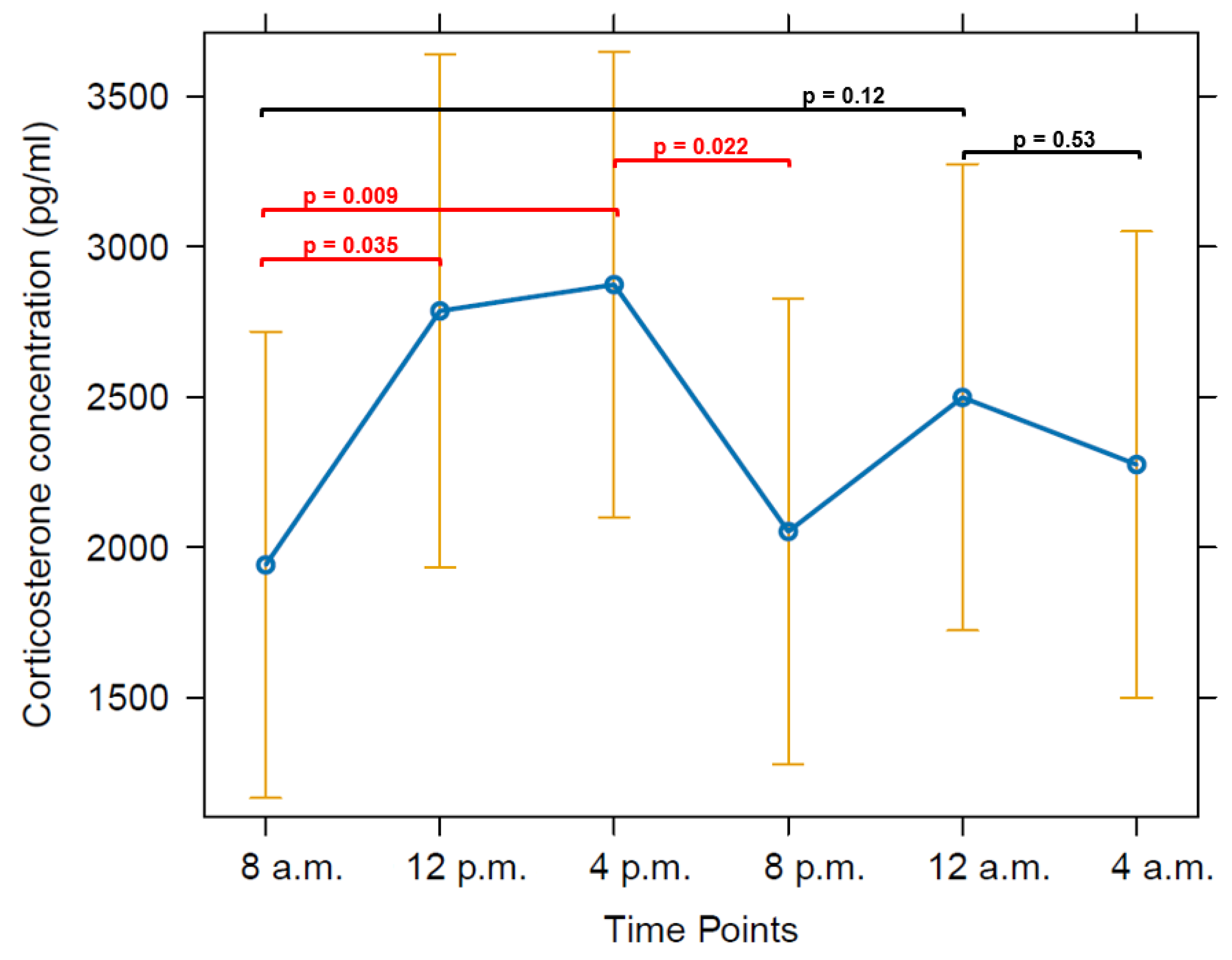
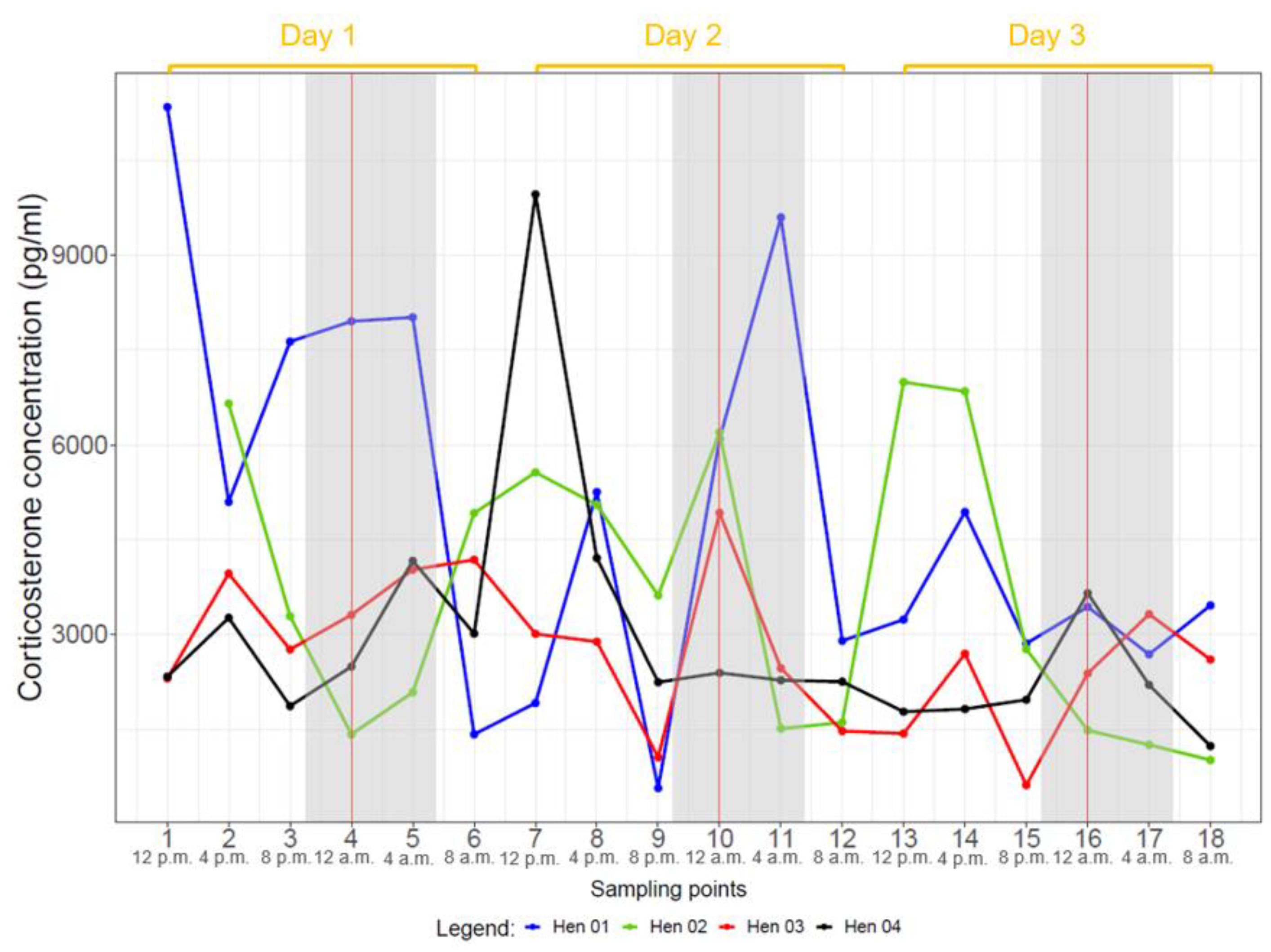
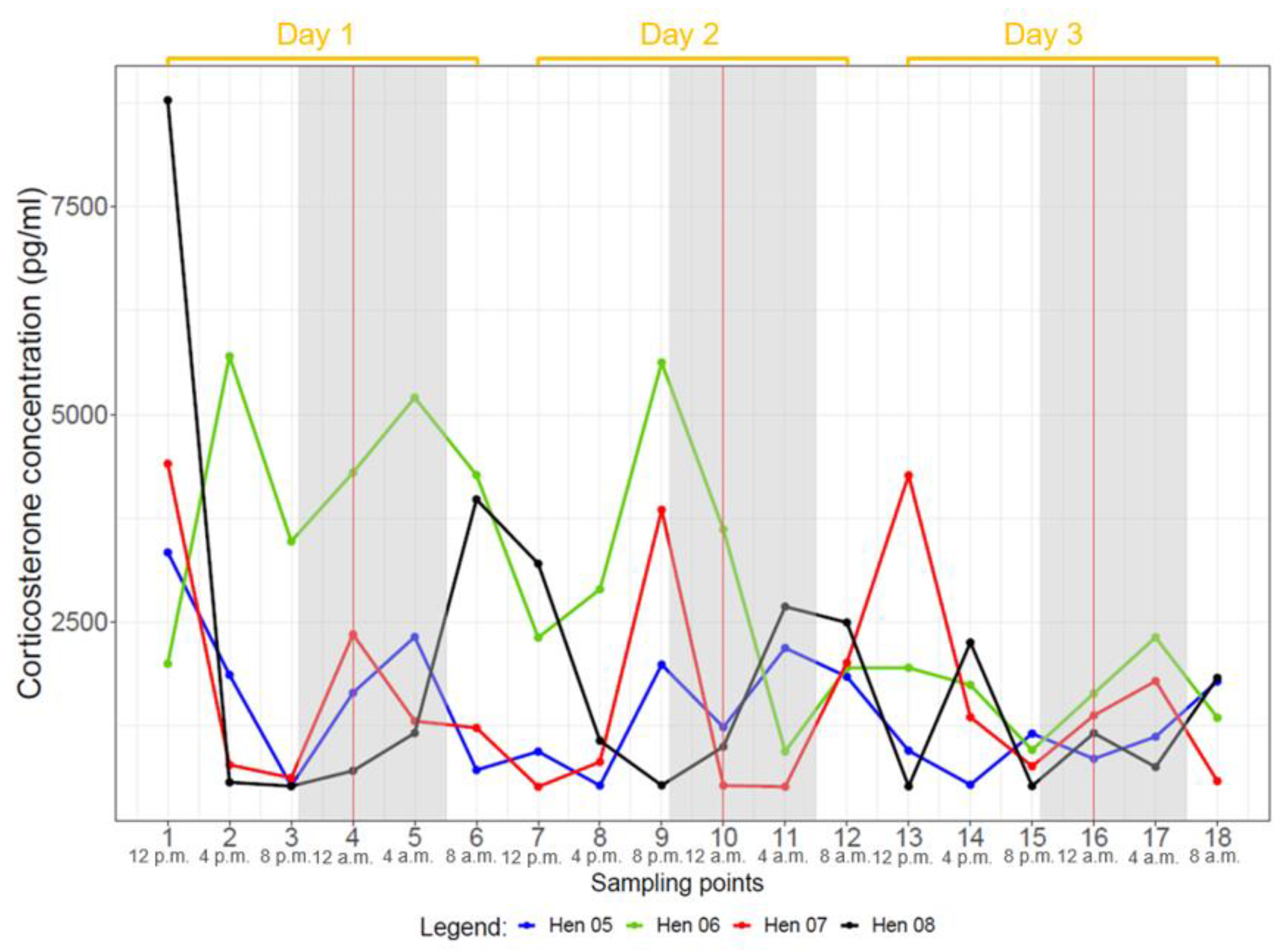
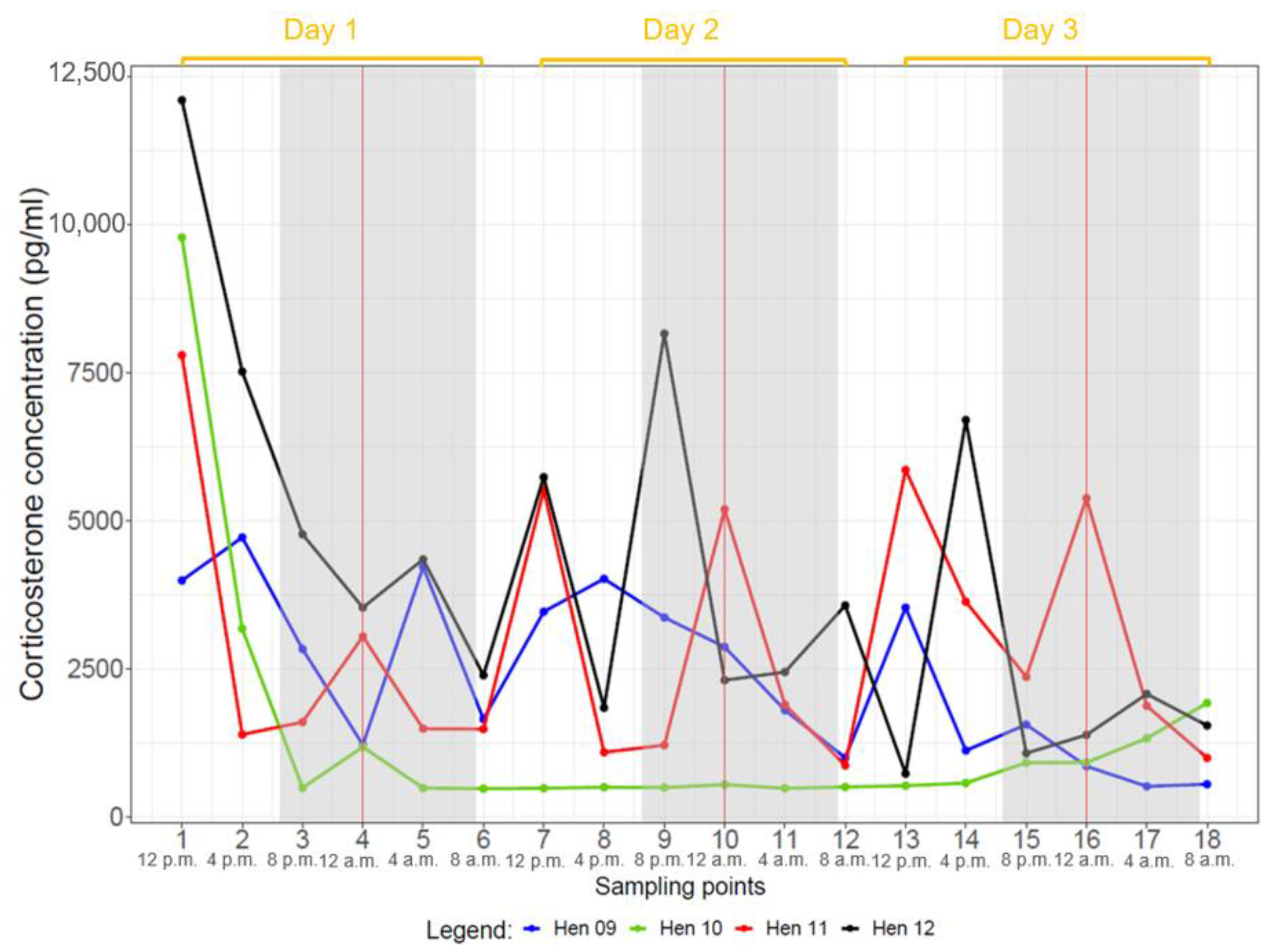
Blood corticosterone concentrations are frequently used to evaluate stress responses in birds. Therefore, knowledge about physiological concentrations and daily fluctuations of this “stress hormone” is necessary. Corticosterone fluctuations in socially acting chickens are largely unknown, and we aimed to verify the presence of a daily rhythm. Therefore, blood samples were taken at intervals of four hours via a vein catheter over a period of three days from a total of 12 laying hens housed in groups of four in an enriched environment while video and audio recording their social interactions. Prior to the experimental phase, all hens were medically trained via adaption to repeated handling to reduce their stress reaction. In most hens, corticosterone showed a circadian course with two elevations per day. Statistical analysis revealed a significant peak during daytime (between 12:00 p.m. and 04:00 p.m.), and a tendency for a second peak during the night (12:00 a.m.). Further studies are necessary to elucidate the underlying control mechanisms, light and seasonal influences as well the function of the nightly corticosterone peak.
Abstract
Measurement of blood corticosterone concentrations has been established as an indicator for assessment of acute distress. Therefore, knowledge on physiological fluctuations is required, but previous studies allow little conclusion on daily fluctuations in domestic chickens (Gallus gallus domesticus). To verify the presence of a circadian corticosterone rhythm in socialized chickens, blood samples were taken at four-hour intervals from 12 laying hens kept in groups of four over three days, each. Prior to experiments, hens were adapted to repeated handling for stress reduction. Corticosterone concentration was determined using radioimmunoassay. Blood sampling time and duration were recorded, and audio and video recordings were analyzed to assess the impact of behavior on corticosterone concentrations. Despite individual fluctuations, most hens showed a circadian course with two peaks per day. Statistics revealed a significant peak during the day (between 12:00 p.m. and 04:00 p.m.) and a tendency for a second peak at night (12:00 a.m.). The daily corticosterone peak was not explained by daytime social stress and needs to be seen as an endophenotype. The role of nightly corticosterone production has to be investigated in further studies. There might be a relation between corticosterone and reproduction since the only hen not showing peaks was not laying eggs.
Keywords:
circadian; chickens; corticosterone; physiology; chicken social interactions