Dolphin-WET—Development of a Welfare Evaluation Tool for Bottlenose Dolphins (Tursiops truncatus) under Human Care
by
 , , , , , , , , and
Katrin Baumgartner
1,*,
Tim Hüttner
1,*,
Isabella L. K. Clegg
2,
Manuel Garcia Hartmann
3,
Daniel Garcia-Párraga
4,
Xavier Manteca
5,
Birgitta Mercera
6,
Tania Monreal-Pawlowsky
7,
Cristina Pilenga
8,
Kerstin Ternes
9,
Oriol Tallo-Parra
5,
Ruta Vaicekauskaite
10,
Lorenzo von Fersen
1,
Lisa Yon
11 and
Fabienne Delfour
12,13,* 1
Behavioral Ecology and Conservation Lab, Nuremberg Zoo, 90480 Nuremberg, Germany
2
Animal Welfare Expertise, Winchester SO22 6QU, UK
3
MarLab, 06250 Mougins, France
4
Fundación Oceanográfic de la Comunitat Valenciana, 46013 Valencia, Spain
5
Animal Welfare Education Centre (AWEC), Veterinary Faculty, Universitat Autònoma de Barcelona, 08193 Barcelona, Spain
6
Parc Astérix, 60128 Plailly, France
7
International Zoo Veterinary Group, Keighley BD21 4NQ, UK
8
Zoomarine Italia, 00071 Rome, Italy
9
Zoo Duisburg, 47058 Duisburg, Germany
10
Fox Consulting, 67500 Haguenau, France
11
Faculty of Medical & Health Sciences, School of Veterinary Medicine and Science, The University of Nottingham, Sutton Bonington, Leicestershire LE12 5RD, UK
12
Ecole Nationale Vétérinaire de Toulouse, 31076 Toulouse, France
13
Animaux et Compagnies, 31500 Toulouse, France
*
Authors to whom correspondence should be addressed.
Animals 2024, 14(5), 701; https://doi.org/10.3390/ani14050701
Submission received: 30 December 2023
/
Revised: 5 February 2024
/
Accepted: 14 February 2024
/
Published: 23 February 2024
(This article belongs to the Special Issue Advances in Marine Mammal Cognition and Cognitive Welfare)
Simple Summary
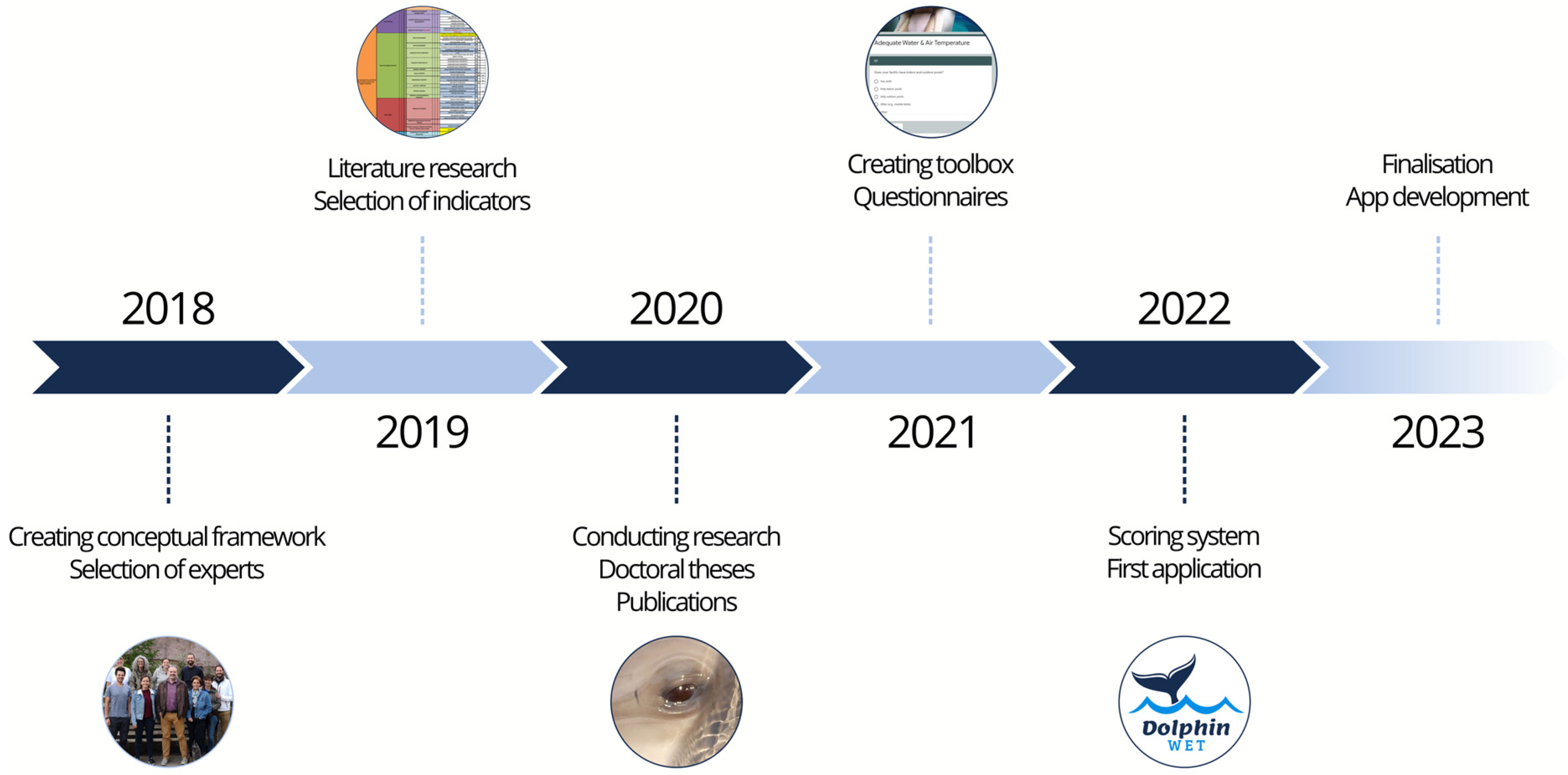
The welfare committee of the European Association for Aquatic Mammals (EAAM) set up a group of experts on welfare science, cetacean biology, and zoo animal medicine across Europe to develop a comprehensive tool to evaluate the welfare of bottlenose dolphins (Tursiops truncatus) under human care named Dolphin-WET. The tool encompasses 49 indicators (i.e., 37 animal-based and 12 resource-based indicators) inspired by Mellor’s Five Domains Model and the Welfare Quality®. The Dolphin-WET is a species-specific and individual-based welfare assessment tool that provides a holistic approach to evaluating bottlenose dolphins’ welfare.
Abstract
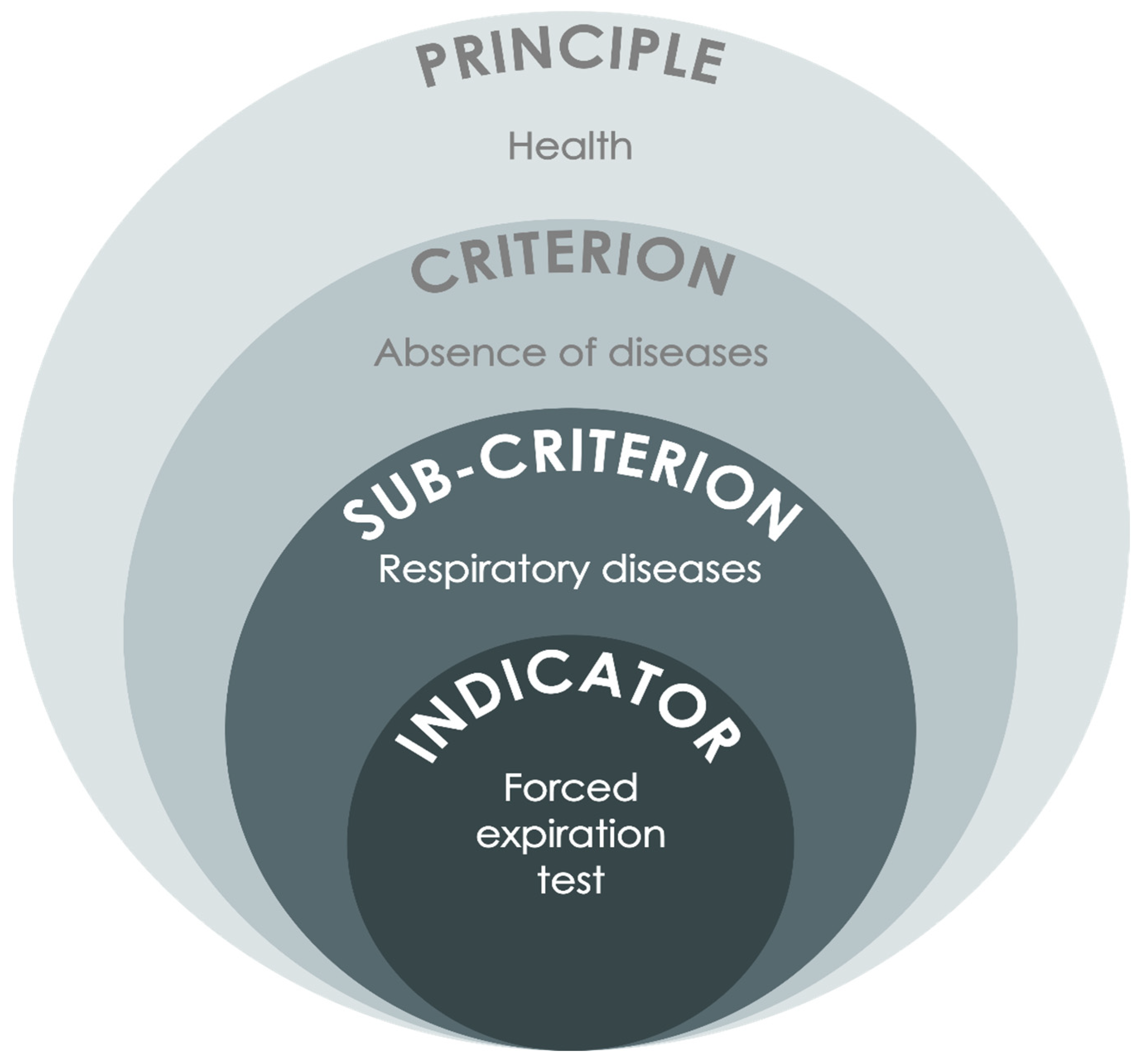
Ensuring high standards of animal welfare is not only an ethical duty for zoos and aquariums, but it is also essential to achieve their conservation, education, and research goals. While for some species, animal welfare assessment frameworks are already in place, little has been done for marine animals under human care. Responding to this demand, the welfare committee of the European Association for Aquatic Mammals (EAAM) set up a group of experts on welfare science, cetacean biology, and zoo animal medicine across Europe. Their objective was to develop a comprehensive tool to evaluate the welfare of bottlenose dolphins (Tursiops truncatus), named Dolphin-WET. The tool encompasses 49 indicators that were either validated through peer review or management-based expertise. The first of its kind, the Dolphin-WET is a species-specific welfare assessment tool that provides a holistic approach to evaluating dolphin welfare. Inspired by Mellor’s Five Domains Model and the Welfare Quality®, its hierarchical structure allows for detailed assessments from overall welfare down to specific indicators. Through combining 37 animal-based and 12 resource-based indicators that are evaluated based on a two- or three-level scoring, the protocol offers a detailed evaluation of individual dolphins. This approach allows for regular internal monitoring and targeted welfare management, enabling caretakers to address specific welfare concerns effectively.