Patterns of Equine Small Strongyle Species Infection after Ivermectin Intervention in Thailand: Egg Reappearance Period and Nemabiome Metabarcoding Approach
by
 , , ,
, , ,
Mohamed H. Hamad
1,2,3 ,
,
Sk Injamamul Islam
1,3 ,
,
Wanarit Jitsamai
4,
Teerapol Chinkangsadarn
5,
Darm Naraporn
6,
Suraseha Ouisuwan
6 and
Piyanan Taweethavonsawat
3,7,* 1
The International Graduate Program of Veterinary Science and Technology (VST), Faculty of Veterinary Science, Chulalongkorn University, Bangkok 10330, Thailand
2
Department of Animal Infectious Diseases, Faculty of Veterinary Medicine, Zagazig University, Zagazig 44511, Egypt
3
Parasitology Unit, Department of Veterinary Pathology, Faculty of Veterinary Science, Chulalongkorn University, Bangkok 10330, Thailand
4
Department of Parasitology and Entomology, Faculty of Public Health, Mahidol University, Bangkok 10400, Thailand
5
Department of Surgery, Faculty of Veterinary Science, Chulalongkorn University, Bangkok 10330, Thailand
6
Horse Farm and Laboratory Animal Breeding Center, Queen Saovabha Memorial Institute, The Thai Red Cross Society, Hua-Hin 77110, Thailand
7
Biomarkers in Animals Parasitology Research Unit, Chulalongkorn University, Bangkok 10330, Thailand
*
Author to whom correspondence should be addressed.
Animals 2024, 14(4), 574; https://doi.org/10.3390/ani14040574
Submission received: 28 December 2023
/
Revised: 7 February 2024
/
Accepted: 7 February 2024
/
Published: 8 February 2024
(This article belongs to the Section Equids)
Simple Summary
Anthelmintic resistance has become a global concern due to the ill-informed use of deworming medications to control parasitic infections in horses. In Thailand, ivermectin has been the primary drug for deworming horses over an extended period. However, there are no available data on the use of ivermectin for treating strongyle infections in domesticated horses in Thailand. The study objectives were to evaluate the performance of ivermectin in treating strongyle infections, employ high-throughput sequencing to explore variations in infection patterns among species, and identify the species responsible for early egg shedding. The findings demonstrated that ivermectin successfully eliminated adult strongyle parasites within two weeks. However, the period for egg reappearance unexpectedly shortened to 6 weeks post-treatment. This early egg shedding was primarily associated with certain species, indicating different reemerging patterns. The information gained is valuable for developing effective strategies to control strongyle infections in horses, contributing to the overall well-being of these animals and the sustainability of equine healthcare.
Abstract
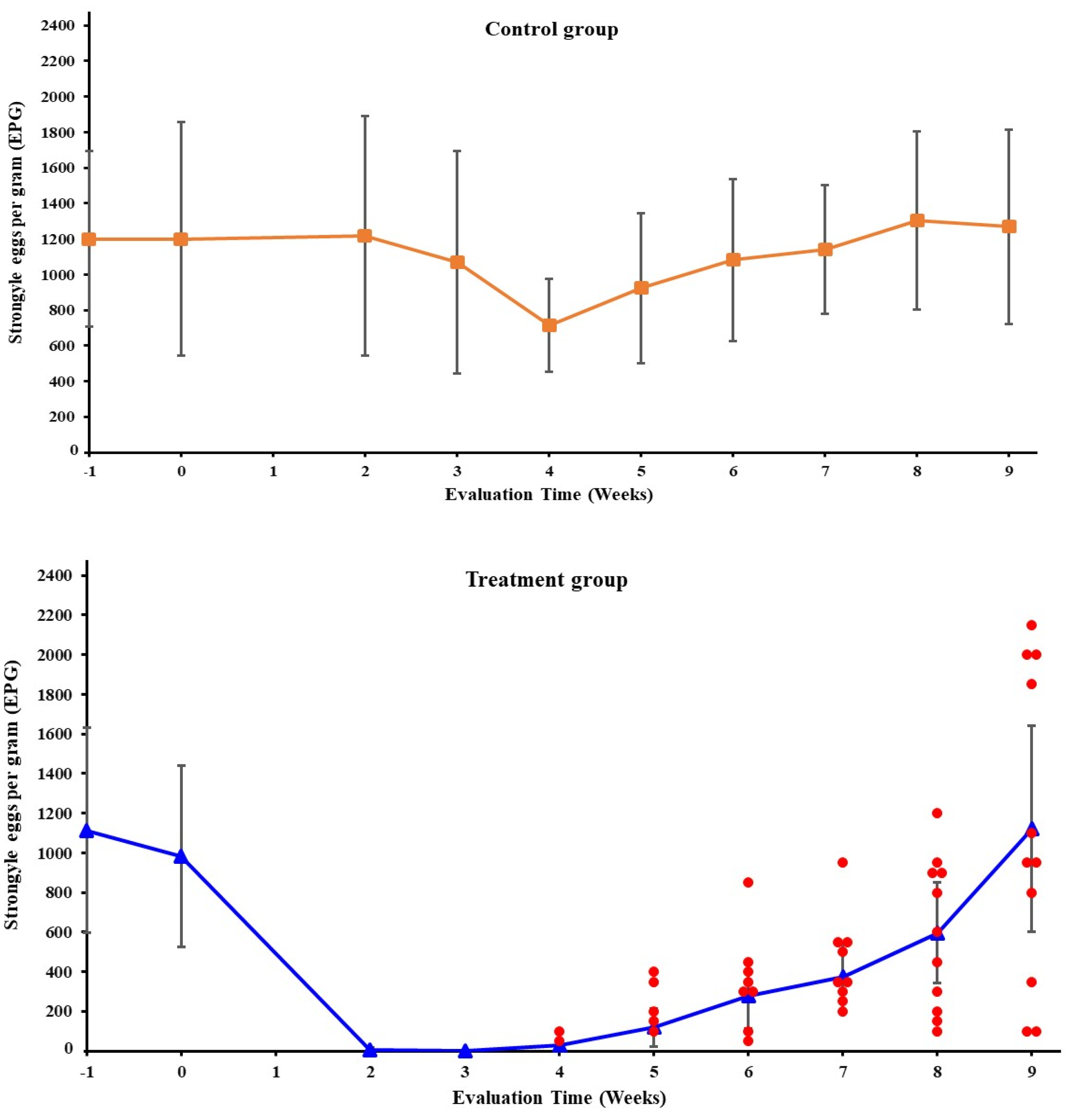
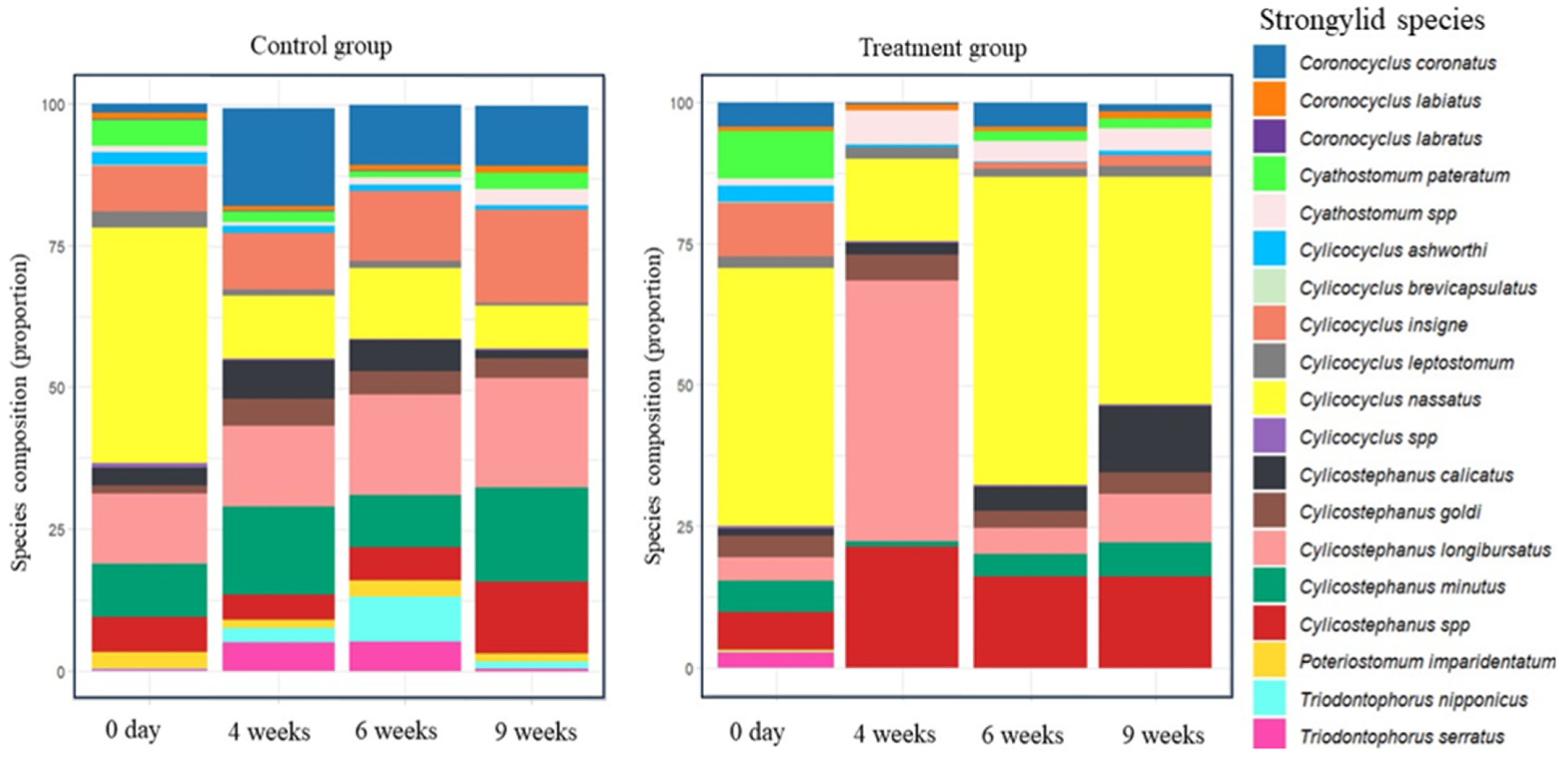
The indiscriminate use of anthelmintics to control parasitic nematodes in horses has led to the emergence of anthelmintic resistance worldwide. However, there are no data available on using ivermectin for treating strongyle infections within domesticated horses in Thailand. Therefore, this study aimed to use the fecal egg count reduction (FECR) test to determine the strongylid egg reappearance period (ERP). Additionally, the nemabiome metabarcoding approach is incorporated to study patterns of strongyle species infection following ivermectin treatment. The study results indicate that, although ivermectin effectively eliminated adult strongyle parasites within two weeks post-treatment, the ERP was shortened to 6 weeks post-treatment with a mean FECR of 70.4% (95% CI 46.1–84.0). This potentially indicates a recent change in drug performance. In addition, nemabiome metabarcoding revealed that strongyle species have different levels of susceptibility in response to anthelmintic drugs. The reduction in ERP was associated with the early reappearance of specific species, dominated by Cylicostephanus longibursatus and Cylicocyclus nassatus, indicating the lower susceptibility of these species. In contrast, Poteriostomum imparidentatum, Triodontophorus nipponicus, and Triodontophorus serratus were not found post-treatment, indicating the high level of susceptibility of these species. This information is vital for comprehending the factors contributing to the emergence of resistance and for devising strategies to manage and control strongyle infections in horses.
Keywords:
ivermectin; egg reappearance period; strongyle; ITS-2 metabarcoding; horse