Energy Metabolite, Immunity, Antioxidant Capacity, and Rumen Microbiota Differences Between Ewes in Late Gestation Carrying Single, Twin, and Triplet Fetuses
by
Jiaxin Chen
†,
Chunhui Duan
†,
Sicong Yue
,
Xiaona Liu
,
Jinhui Li
,
Yingjie Zhang
* and
Yueqin Liu
* College of Animal Science and Technology, Hebei Agricultural University, Baoding 071000, China
*
Authors to whom correspondence should be addressed.
†
These authors contributed equally to this work.
Animals 2024, 14(22), 3326; https://doi.org/10.3390/ani14223326
Submission received: 17 October 2024
/
Revised: 15 November 2024
/
Accepted: 16 November 2024
/
Published: 19 November 2024
(This article belongs to the Special Issue Nutrient Utilization, Requirements and Nutrigenomics in Sheep and Goats)
Simple Summary
Multi-fetal ewes are more likely to suffer from metabolic disorders and pregnancy toxemia than single-fetal ewes in late gestation. The differences in the energy metabolites, immunity, antioxidant capacity, and rumen microbiota of ewes with different numbers of fetuses are unclear. This study found that triplet-fetal ewes were characterized by a lower BCS and antioxidant capacity, and were prone to the triggering of inflammatory responses. With the increase in fetal number, the concentration of BHBA increased, and that of glucose decreased; the relative abundance of Firmicutes was lower, while that of Bacteroidota was higher in triplet-fetal ewes. The differences in the rumen microbiota may be due to differences in the utilization of feed materials by ewes with different numbers of fetuses; multi-fetal ewes tend to ingest more grain-based feed to meet their energy requirements. Therefore, special nutritional strategies and refined feeding management approaches should be developed to meet the physiological requirements of multi-fetal ewes.
Abstract
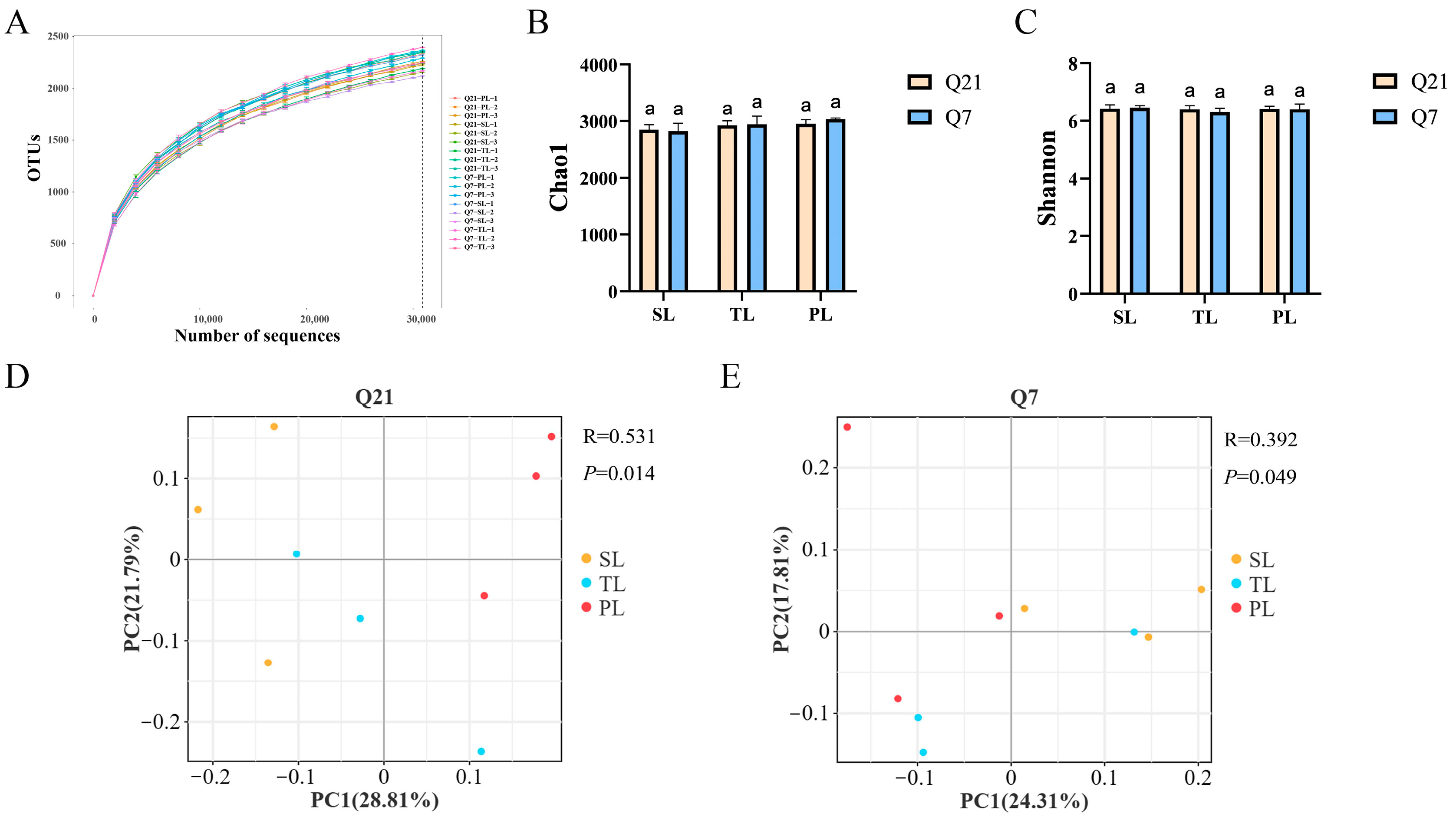
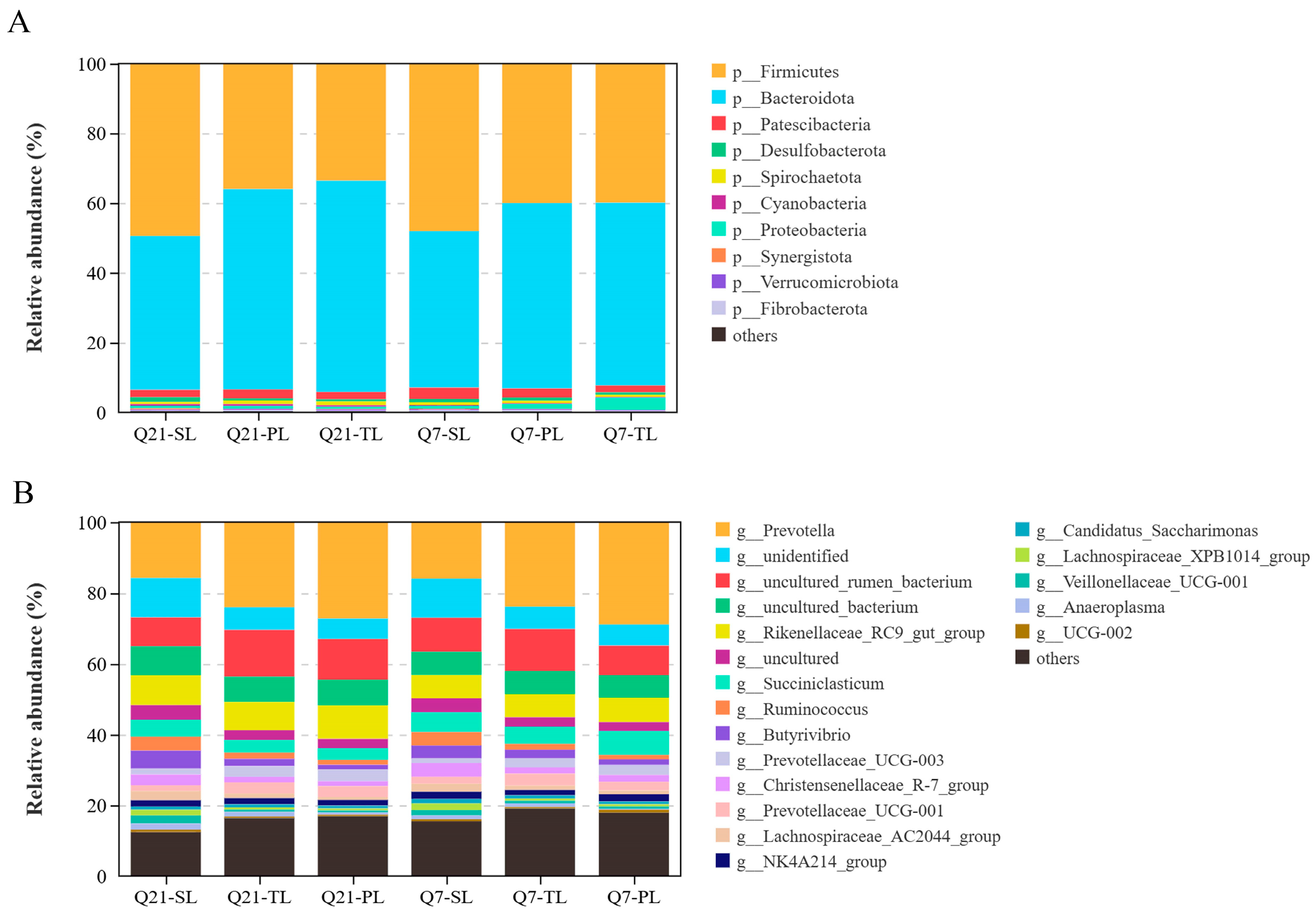
The objective of this study was to investigate the differences in the energy metabolites, immunity, antioxidant capacity, and rumen microbiota of ewes with different numbers of fetuses. Thirty healthy ewes were selected and divided into single- (SL, n = 10), twin- (TL, n = 10), and triplet-fetal (PL, n = 10) ewes according to the number of fetuses. Sampling was carried out on days 21 (Q21) and 7 (Q7) before lambing. The results show no differences (p > 0.05) in the DMI and BW of ewes with different numbers of fetuses, and the body condition score (BCS) of PL ewes was lower (p < 0.05) than that of SL ewes. The concentrations of β-hydroxybutyric acid (BHBA), non-esterified fatty acids (NEFA), interleukin-2 (IL-2), interleukin-6 (IL-6), and tumor necrosis factor α (TNF-α) in the PL ewes were higher (p < 0.05), while the glucose (Glu), triglyceride (TG), total cholesterol (TC), superoxide dismutase (SOD), glutathione peroxidase (GSH-Px), and total antioxidant capacity (T-AOC) values were lower (p < 0.05) than those of the SL ewes. ANOSIM analysis showed that the rumen bacterial structure of the SL, TL, and PL ewes was different on days Q21 and Q7. The relative abundance of Firmicutes and Bacteroidota in the rumen was affected (p < 0.05) by the number of fetuses: the relative abundance of Firmicutes (Ruminococcus, Butyrivibrio, Christensenellaceae_R-7_group, Lachnospiraceae_AC2044_group, Lachnospiraceae_XPB1014_group, and Anaeroplasma) was higher (p < 0.05), while that of Bacteroidota (Prevotella, Prevotellaceae_UCG-003, and Prevotellaceae_UCG-001) was lower (p < 0.05) in the SL ewes than in the PL ewes. In summary, the rumen microbial structure and energy metabolites of ewes in late gestation with different numbers of fetuses were different. Triplet-fetal ewes were characterized by lower BCS and antioxidant capacity and were prone to the triggering of inflammatory responses.