


Lesion Localization and Pathological Diagnosis of Ovine Pulmonary Adenocarcinoma Based on MASK R-CNN
 , ,
, ,  ,
,
Simple Summary
Abstract
1. Introduction
2. Materials and Methods
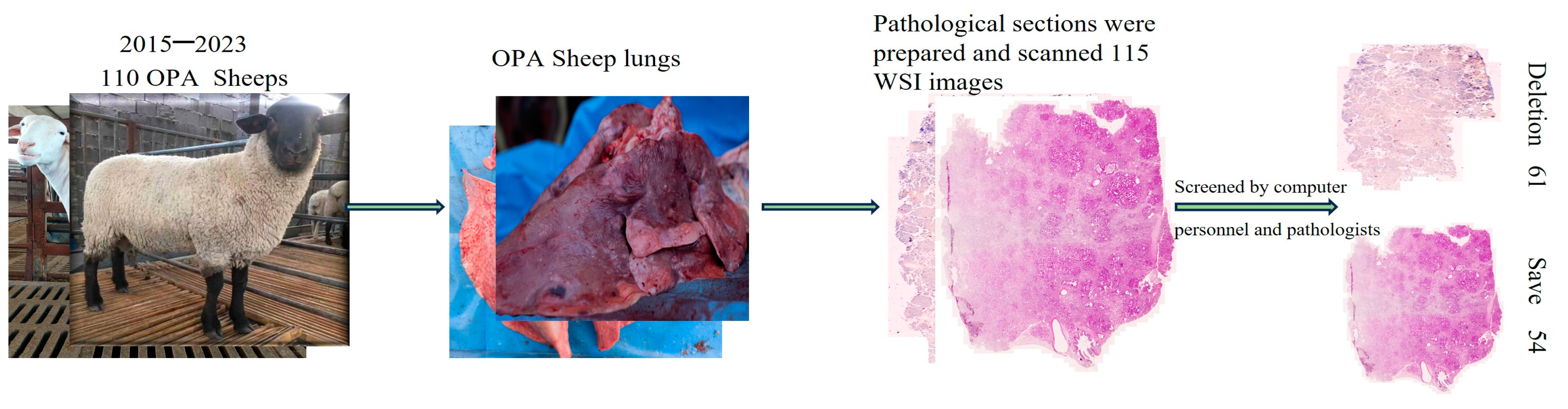
2.1. Pathological Image Sources of OPA
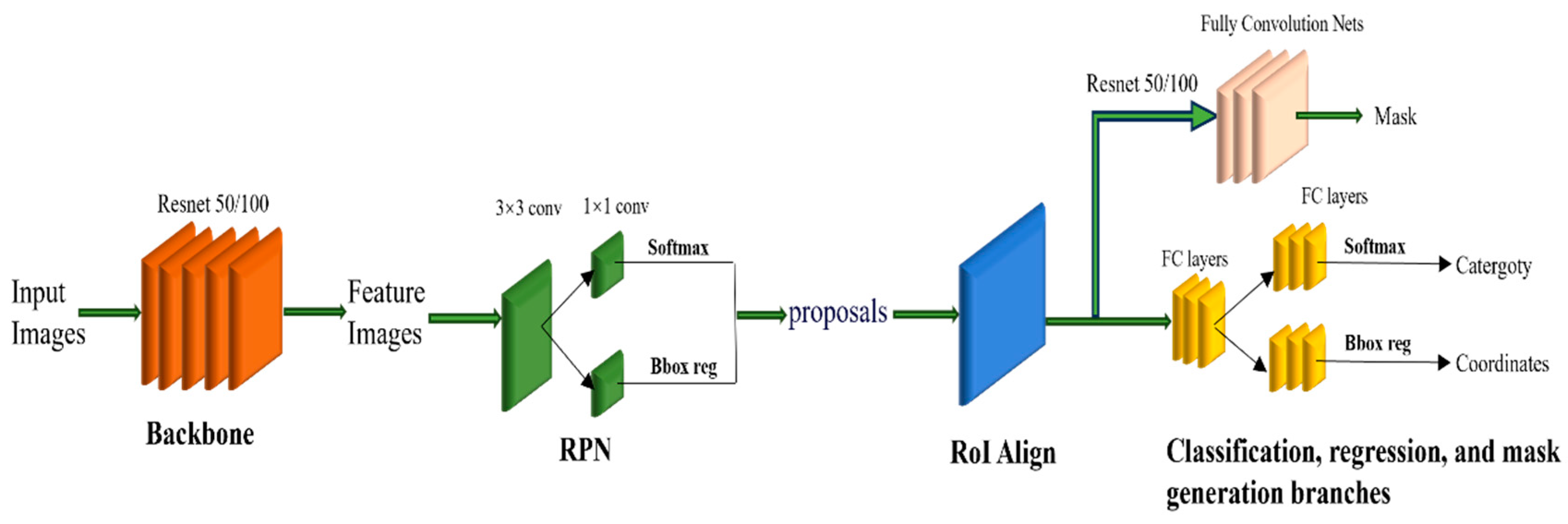
2.2. Mask R-CNN Algorithm
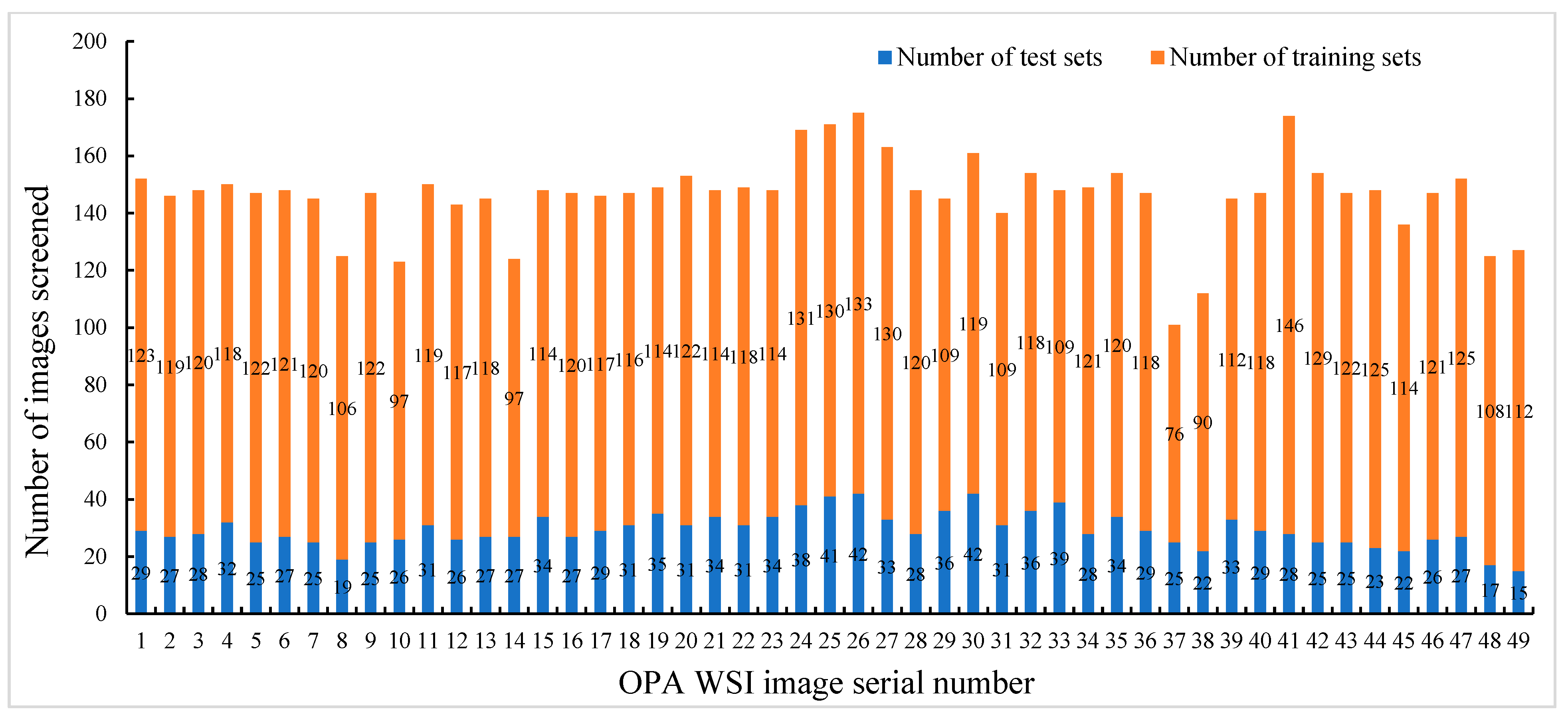
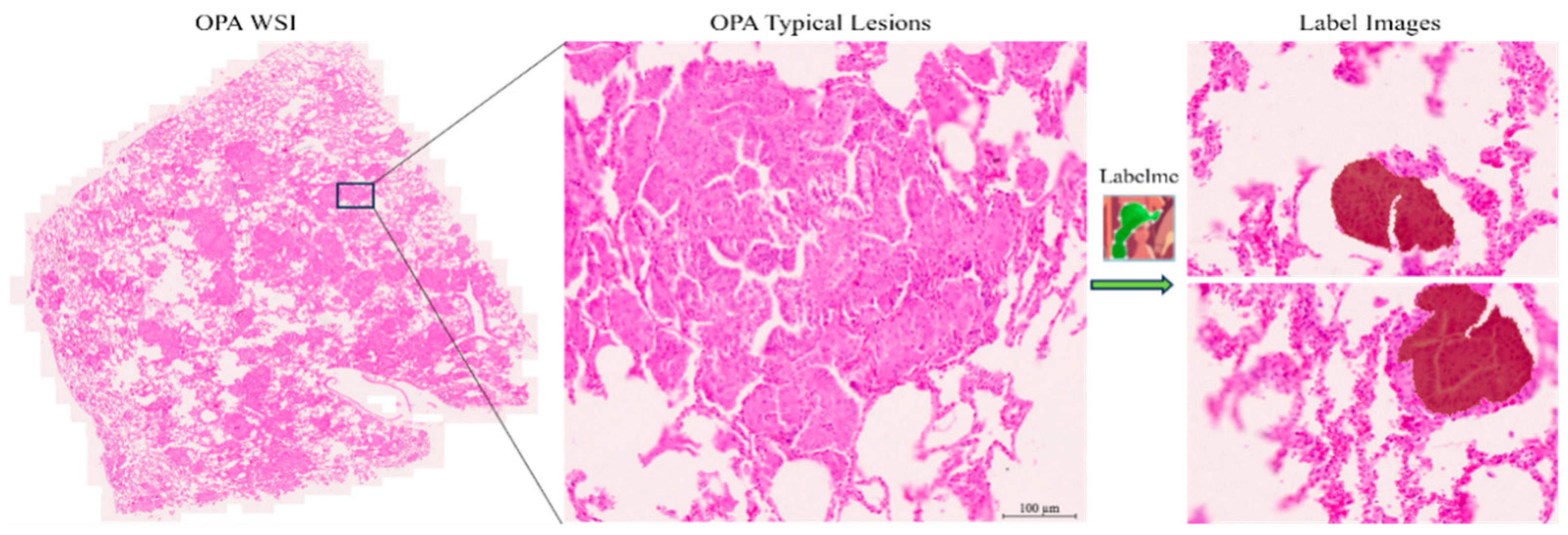
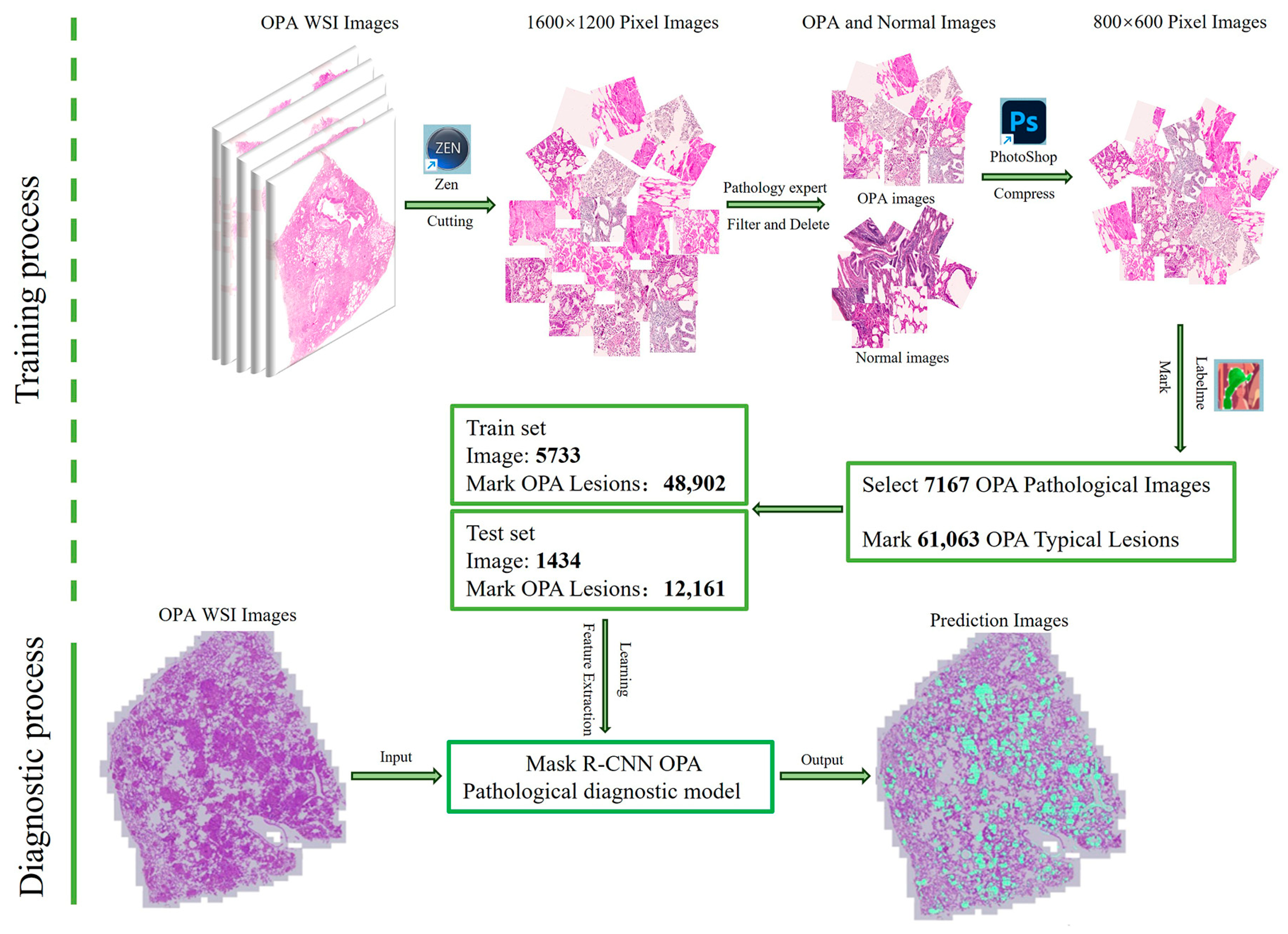
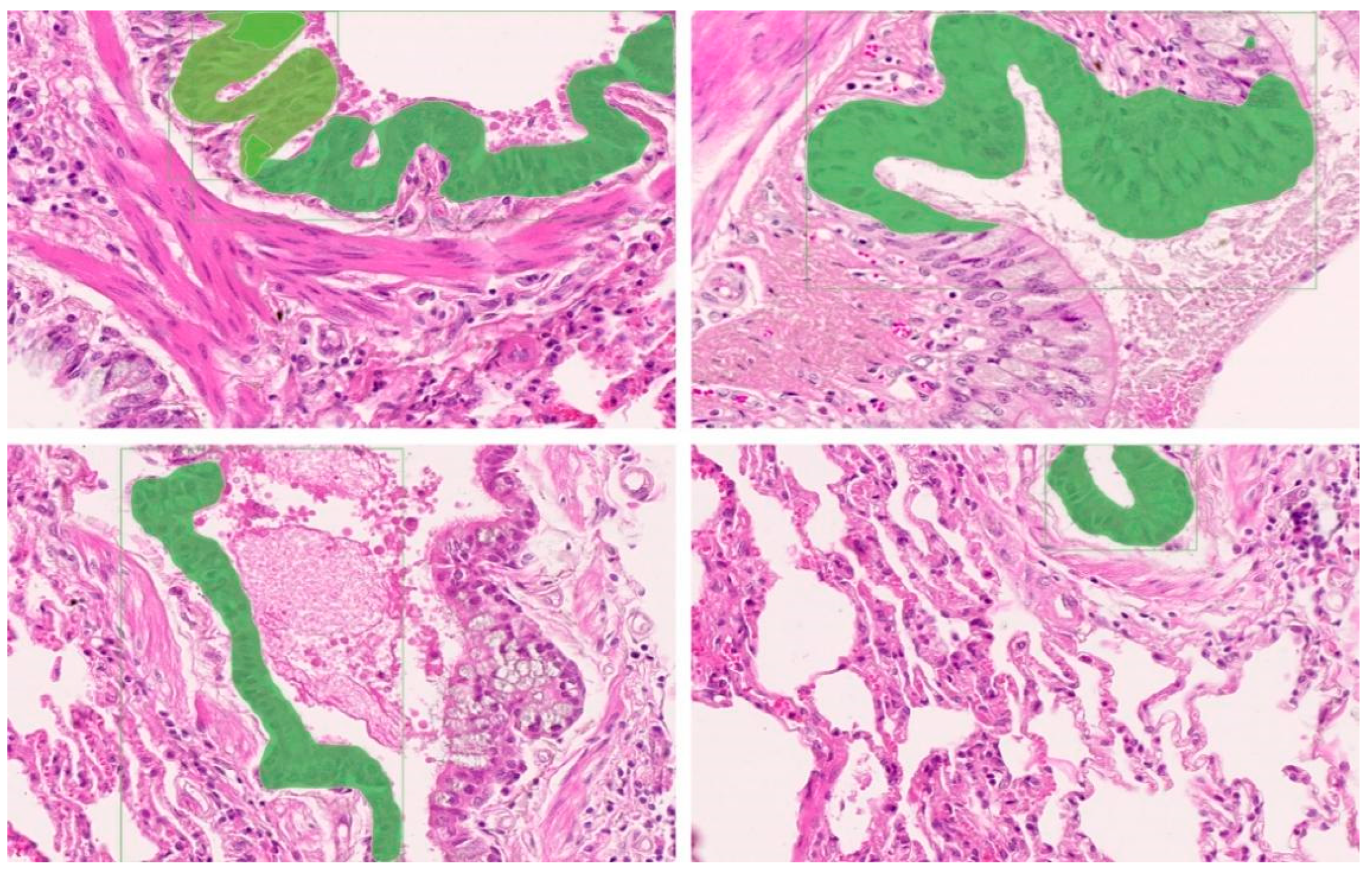
2.3. Establishment of the Training Dataset for the Mask R-CNN OPA Pathological Diagnostic Model
2.4. Training of the Mask R-CNN OPA Pathological Diagnostic Model
2.5. Performance Evaluation Metrics of Mask R-CNN OPA Pathological Diagnostic Model
2.6. Anti-Peeking Image Validation
2.7. Evaluation of Mask R-CNN Model Performance in OPA Pathological Image Diagnosis
3. Results
3.1. Model Training Environment and Parameters
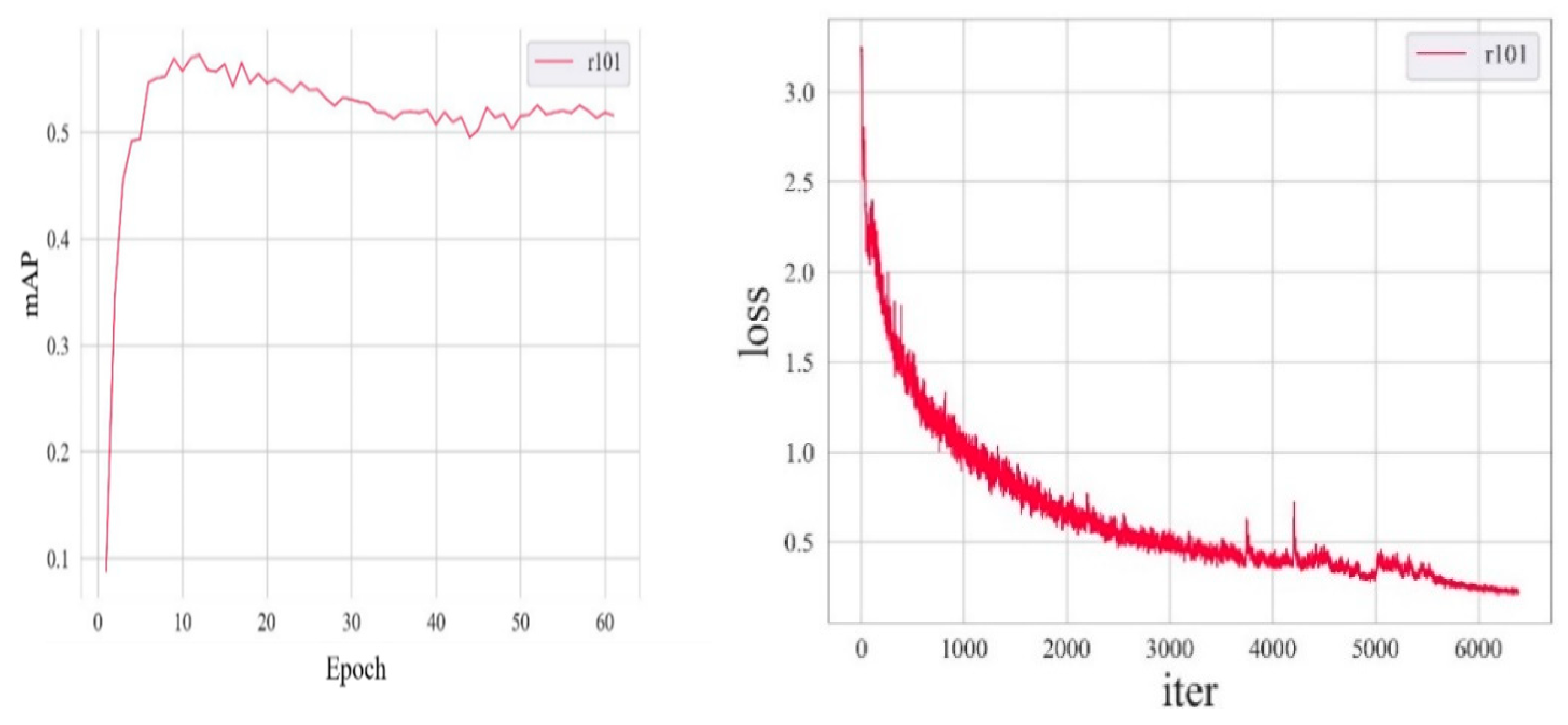
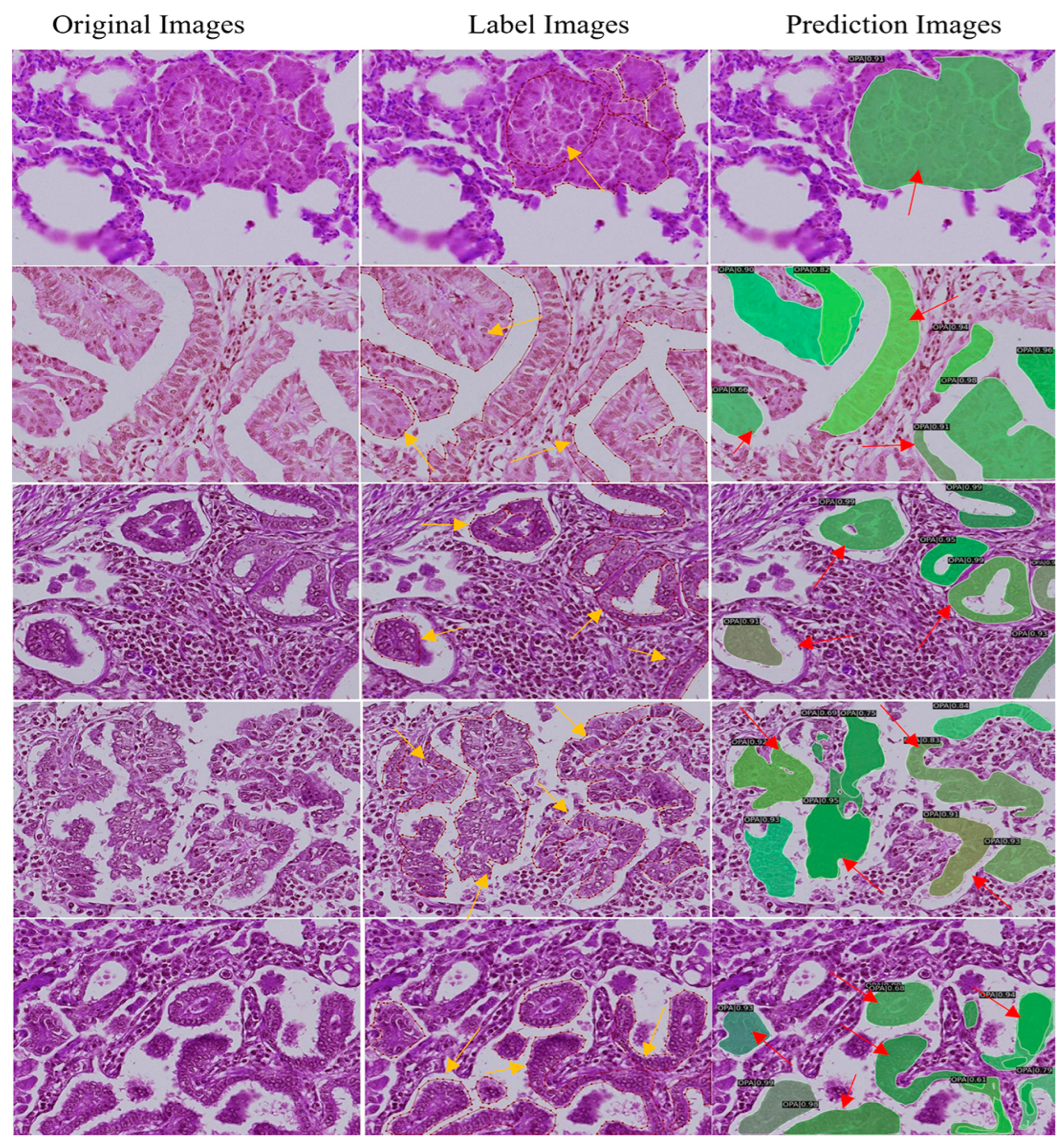
3.2. Training Results of Mask R-CNN OPA Pathological Diagnostic Model
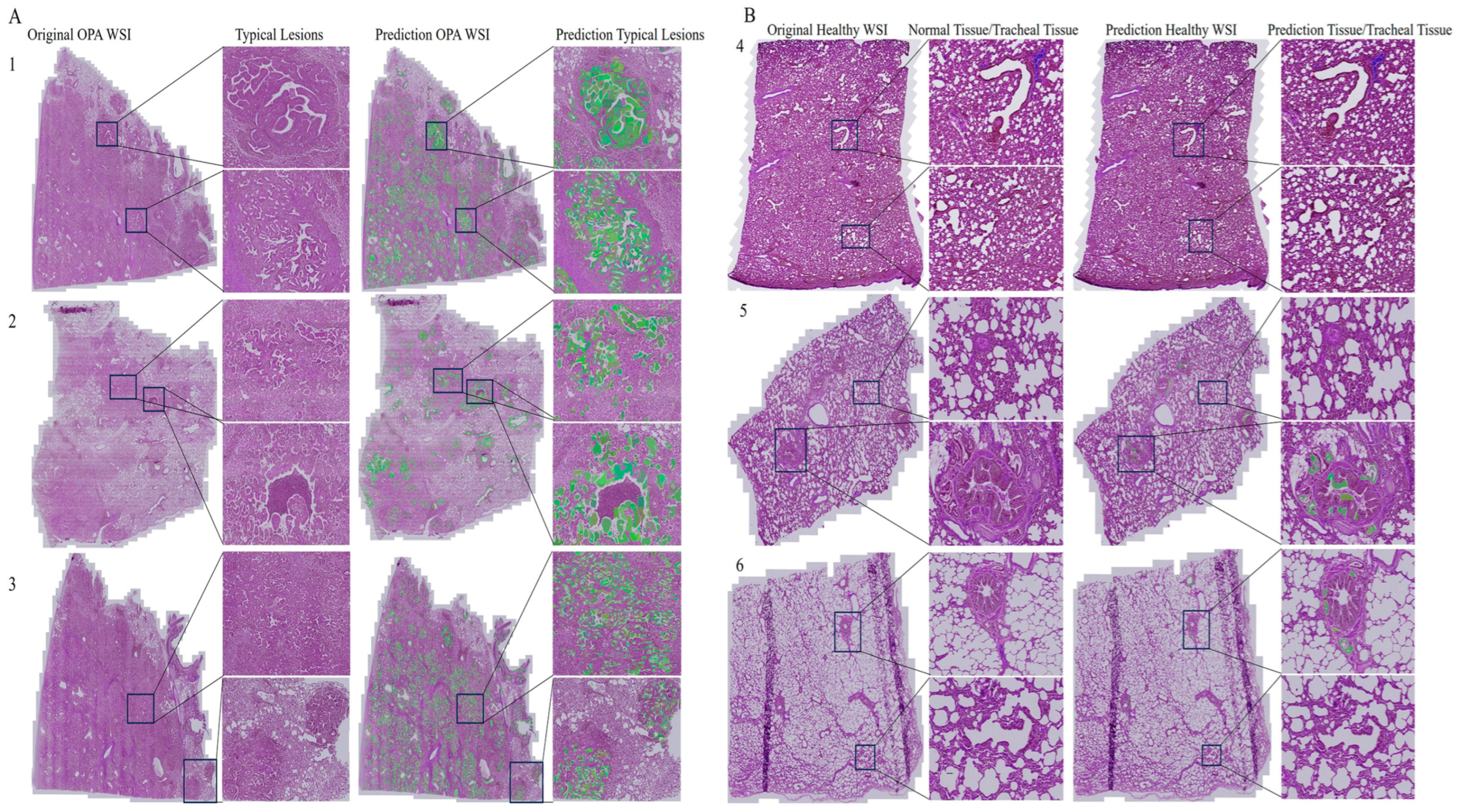
3.3. Mask R-CNN OPA Pathological Diagnostic Model Anti-Peeking Verification Results
3.4. Comparison of Mask R-CNN OPA Pathological Diagnostic Model with Pathologist Diagnoses
4. Discussion
5. Conclusions
Author Contributions
Funding
Institutional Review Board Statement
Informed Consent Statement
Data Availability Statement
Acknowledgments
Conflicts of Interest
References
- Zhang, L.; Yang, H.; Duan, X.; Li, H.; Xu, S.; Chen, H.; Liu, S. Modulation of autophagy affected tumorigenesis induced by the envelope glycoprotein of JSRV. Virology 2024, 594, 110059. [Google Scholar] [CrossRef]
- Griffiths, D.J.; Martineau, H.M.; Cousens, C. Pathology and pathogenesis of ovine pulmonary adenocarcinoma. J. Comp. Pathol. 2010, 142, 260–283. [Google Scholar] [CrossRef] [PubMed]
- Zhang, K.; Kong, H.; Liu, Y.; Shang, Y.; Wu, B.; Liu, X. Diagnosis and phylogenetic analysis of ovine pulmonary adenocarcinoma in China. Virus Genes 2014, 48, 64–73. [Google Scholar] [CrossRef] [PubMed]
- Shi, W.; Jia, S.; Guan, X.; Yao, X.; Pan, R.; Huang, X.; Xu, Y. A survey of jaagsiekte sheep retrovirus (JSRV) infection in sheep in the three northeastern provinces of China. Arch. Virol. 2021, 166, 831–840. [Google Scholar] [CrossRef]
- Lewis, F.I.; Brulisauer, F.; Cousens, C.; McKendrick, I.J.; Gunn, G.J. Diagnostic accuracy of PCR for Jaagsiekte sheep retrovirus using field data from 125 Scottish sheep flocks. Vet. J. 2011, 187, 104–108. [Google Scholar] [CrossRef]
- De Las Heras, M.; Ortin, A.; Salvatori, D.; de Villareal, M.P.; Cousens, C.; Ferrer, L.M.; Sharp, J.M. A PCR technique for the detection of Jaagsiekte sheep retrovirus in the blood suitable for the screening of ovine pulmonary adenocarcinoma in field conditions. Res. Vet. Sci. 2005, 79, 259–264. [Google Scholar] [CrossRef] [PubMed]
- Rosato, G.; Abril, C.; Hilbe, M.; Seehusen, F. A Combined Approach for Detection of Ovine Small Ruminant Retrovirus Co-Infections. Viruses 2023, 15, 376. [Google Scholar] [CrossRef]
- Yousem, S.A.; Finkelstein, S.D.; Swalsky, P.A.; Bakker, A.; Ohori, N.P. Absence of Jaagsiekte sheep retrovirus DNA and RNA in bronchioloalveolar and conventional human pulmonary adenocarcinoma by PCR and RT-PCR analysis. Hum. Pathol. 2001, 32, 1039–1042. [Google Scholar] [CrossRef]
- Liu, Y.; Zhang, Y.F.; Sun, X.L.; Liu, S.Y. Detection of Jaagsiekte sheep retrovirus in the peripheral blood during the pre-clinical period of ovine pulmonary adenomatosis. Genet. Mol. Res. 2016, 15, gmr.15038521. [Google Scholar] [CrossRef]
- Liu, R.; Zhang, L.; Liu, S.Y. Establishment of real-time fluorescence RPA detection method for exogenous ovine pulmonary adenomas virus. Chin. J. Vet. Sci. 2023, 43, 278–284. [Google Scholar]
- Mahmoud, N.A.; Elshafei, A.M.; Almofti, Y.A. A novel strategy for developing vaccine candidate against Jaagsiekte sheep retrovirus from the envelope and gag proteins: An in-silico approach. BMC Vet. Res. 2022, 18, 343. [Google Scholar] [CrossRef]
- Toma, C.; Balteanu, V.A.; Tripon, S.; Trifa, A.; Rema, A.; Amorim, I.; Taulescu, M. Exogenous Jaagsiekte Sheep Retrovirus type 2 (exJSRV2) related to ovine pulmonary adenocarcinoma (OPA) in Romania: Prevalence, anatomical forms, pathological description, immunophenotyping and virus identification. BMC Vet. Res. 2020, 16, 296. [Google Scholar] [CrossRef]
- Huss, R.; Coupland, S.E. Software-assisted decision support in digital histopathology. J. Pathol. 2020, 250, 685–692. [Google Scholar] [CrossRef]
- Zarella, M.D.; Bowman, D.; Aeffner, F.; Farahani, N.; Xthona, A.; Absar, S.F.; Hartman, D.J. A Practical Guide to Whole Slide Imaging: A White Paper From the Digital Pathology Association. Arch. Pathol. Lab. Med. 2019, 143, 222–234. [Google Scholar] [CrossRef] [PubMed]
- Cui, M.; Zhang, D.Y. Artificial intelligence and computational pathology. Lab. Investig. 2021, 101, 412–422. [Google Scholar] [CrossRef] [PubMed]
- Shafi, S.; Parwani, A.V. Artificial intelligence in diagnostic pathology. Diagn. Pathol. 2023, 18, 109. [Google Scholar] [CrossRef] [PubMed]
- Wang, X.; Janowczyk, A.; Zhou, Y.; Thawani, R.; Fu, P.; Schalper, K.; Madabhushi, A. Prediction of recurrence in early stage non-small cell lung cancer using computer extracted nuclear features from digital H&E images. Sci. Rep. 2017, 7, 13543. [Google Scholar]
- Pan, J.; Hong, G.; Zeng, H.; Liao, C.; Li, H.; Yao, Y.; Lin, T. An artificial intelligence model for the pathological diagnosis of invasion depth and histologic grade in bladder cancer. J. Transl. Med. 2023, 21, 42. [Google Scholar] [CrossRef]
- Song, J.H.; Hong, Y.; Kim, E.R.; Kim, S.H.; Sohn, I. Utility of artificial intelligence with deep learning of hematoxylin and eosin-stained whole slide images to predict lymph node metastasis in T1 colorectal cancer using endoscopically resected specimens; prediction of lymph node metastasis in T1 colorectal cancer. J. Gastroenterol. 2022, 57, 654–666. [Google Scholar]
- Nagamori, Y.; Hall Sedlak, R.; DeRosa, A.; Pullins, A.; Cree, T.; Loenser, M.; Goldstein, R. Evaluation of the VETSCAN IMAGYST: An in-clinic canine and feline fecal parasite detection system integrated with a deep learning algorithm. Parasit. Vectors 2020, 13, 346. [Google Scholar] [CrossRef]
- Kozlowski, C.; Brumm, J.; Cain, G. An Automated Image Analysis Method to Quantify Veterinary Bone Marrow Cellularity on H&E Sections. Toxicol. Pathol. 2018, 46, 324–335. [Google Scholar]
- Banzato, T.; Wodzinski, M.; Burti, S.; Osti, V.L.; Rossoni, V.; Atzori, M.; Zotti, A. Automatic classification of canine thoracic radiographs using deep learning. Sci. Rep. 2021, 11, 3964. [Google Scholar] [CrossRef] [PubMed]
- Zhang, X.; Li, Y.; Zhang, Y.; Yao, Z.; Zou, W.; Nie, P.; Yang, L. A New Method to Detect Buffalo Mastitis Using Udder Ultrasonography Based on Deep Learning Network. Animals 2024, 14, 707. [Google Scholar] [CrossRef] [PubMed]
- Themistokleous, K.S.; Sakellariou, N.; Kiossis, E. A deep learning algorithm predicts milk yield and production stage of dairy cows utilizing ultrasound echotexture analysis of the mammary gland. Comput. Electron. Agr. 2022, 198, 106992. [Google Scholar] [CrossRef]
- Ahmed, A.A.; Abouzid, M.; Kaczmarek, E. Deep Learning Approaches in Histopathology. Cancers 2022, 14, 5264. [Google Scholar] [CrossRef] [PubMed]
- Fragoso-Garcia, M.; Wilm, F.; Bertram, C.A.; Merz, S.; Schmidt, A.; Donovan, T.; Klopfleisch, R. Automated diagnosis of 7 canine skin tumors using machine learning on H&E-stained whole slide images. Vet. Pathol. 2023, 60, 865–875. [Google Scholar]
- He, K.; Gkioxari, G.; Dollar, P.; Girshick, R. Mask R-CNN. IEEE Trans. Pattern Anal. Mach. Intell. 2020, 42, 386–397. [Google Scholar] [CrossRef]
- Freitas, N.R.; Vieira, P.M.; Tinoco, C.; Anacleto, S.; Oliveira, J.F.; Vaz, F.; Lima, C.S. Multiple mask and boundary scoring R-CNN with cGAN data augmentation for bladder tumor segmentation in WLC videos. Artif. Intell. Med. 2024, 147, 102723. [Google Scholar] [CrossRef]
- Hwang, J.H.; Kim, H.J.; Park, H.; Lee, B.S.; Son, H.Y.; Kim, Y.B.; Cho, J.W. Implementation and Practice of Deep Learning-Based Instance Segmentation Algorithm for Quantification of Hepatic Fibrosis at Whole Slide Level in Sprague-Dawley Rats. Toxicol. Pathol. 2022, 50, 186–196. [Google Scholar] [CrossRef]
- Altini, N.; Rossini, M.; Turkevi-Nagy, S.; Pesce, F.; Pontrelli, P.; Prencipe, B.; Becker, J.U. Performance and limitations of a supervised deep learning approach for the histopathological Oxford Classification of glomeruli with IgA nephropathy. Comput. Methods Programs Biomed. 2023, 242, 107814. [Google Scholar] [CrossRef]
- Dai, X.; Lei, Y.; Wynne, J.; Janopaul-Naylor, J.; Wang, T.; Roper, J.; Yang, X. Synthetic CT-aided multiorgan segmentation for CBCT-guided adaptive pancreatic radiotherapy. Med. Phys. 2021, 48, 7063–7073. [Google Scholar] [CrossRef] [PubMed]
- Wang, J.; Zhou, J.; Wang, M. Pan-cancer image segmentation based on feature pyramids and Mask R-CNN framework. Med. Phys. 2024, 51, 5427–5440. [Google Scholar] [CrossRef]
- Baek, E.B.; Lee, J.; Hwang, J.H.; Park, H.; Lee, B.S.; Kim, Y.B.; Cho, J.W. Application of multiple-finding segmentation utilizing Mask R-CNN-based deep learning in a rat model of drug-induced liver injury. Sci. Rep. 2023, 13, 17555. [Google Scholar] [CrossRef]
- Rho, J.; Shin, S.M.; Jhang, K.; Lee, G.; Song, K.H.; Shin, H.; Na, K.; Kwon, H.J.; Son, H.Y. Deep learning-based diagnosis of feline hypertrophic cardiomyopathy. PLoS ONE 2023, 18, e0280438. [Google Scholar] [CrossRef] [PubMed]

| Image | Label | |
|---|---|---|
| Training Set | 5733 | 48,902 |
| Test Set | 1434 | 12,161 |
| Project | Method |
|---|---|
| Accuracy | Correct identification number/All images |
| Sensitivity | Correctly identify OPA/Real OPA |
| Specificity | Correctly identify non-OPA/Real non-OPA |
| Compliance rate | Mask R-CNN Model recognition correct identification number/Pathologist recognition correct identification number |
| Hyperparameters | Value |
|---|---|
| Learning_ Rate | 0.02 |
| Learning_ Momentum | 0.9 |
| Weight_ Decay | 0.0001 |
| Batch_ Size | 96 |
| Max_ Epochs | 65 |
| Warm up learning rate schedule | LinearLR(Epoch 1–5) |
| Main learning rate scheduler | LinearLR(Epoch 6–65) |
| Epoch | mASp | ASe |
|---|---|---|
| 1 | 0.087 | 0.415 |
| 2 | 0.347 | 0.586 |
| 3 | 0.455 | 0.647 |
| 4 | 0.492 | 0.666 |
| 5 | 0.493 | 0.668 |
| 6 | 0.547 | 0.734 |
| 7 | 0.551 | 0.736 |
| 8 | 0.552 | 0.722 |
| 9 | 0.569 | 0.744 |
| 10 | 0.557 | 0.737 |
| 11 | 0.569 | 0.744 |
| 12 | 0.573 | 0.745 |
| 13 | 0.558 | 0.723 |
| 14 | 0.557 | 0.727 |
| 15 | 0.564 | 0.740 |
| Correctly Identify OPA/Real OPA | Correctly Identify Non-OPA/Real Non-OPA | Accuracy | Sensitivity | Specificity | Compliance Rate | |
|---|---|---|---|---|---|---|
| Mask R-CNN model | 200/200 | 264/300 | 92.8% | 100% | 88% | |
| Junior Pathologist | 172 ± 3.51/200 | 269 ± 4.04/300 | 88.2% | 86% | 89.6% | 100% |
| Senior Pathologist | 192 ± 3.05/200 | 289 ± 2.64/300 | 96.2% | 96% | 96.3% | 96.5% |
Disclaimer/Publisher’s Note: The statements, opinions and data contained in all publications are solely those of the individual author(s) and contributor(s) and not of MDPI and/or the editor(s). MDPI and/or the editor(s) disclaim responsibility for any injury to people or property resulting from any ideas, methods, instructions or products referred to in the content. |
© 2024 by the authors. Licensee MDPI, Basel, Switzerland. This article is an open access article distributed under the terms and conditions of the Creative Commons Attribution (CC BY) license (https://creativecommons.org/licenses/by/4.0/).
Share and Cite
Chen, S.; Zhang, P.; Duan, X.; Bao, A.; Wang, B.; Zhang, Y.; Li, H.; Zhang, L.; Liu, S. Lesion Localization and Pathological Diagnosis of Ovine Pulmonary Adenocarcinoma Based on MASK R-CNN. Animals 2024, 14, 2488. https://doi.org/10.3390/ani14172488
Chen S, Zhang P, Duan X, Bao A, Wang B, Zhang Y, Li H, Zhang L, Liu S. Lesion Localization and Pathological Diagnosis of Ovine Pulmonary Adenocarcinoma Based on MASK R-CNN. Animals. 2024; 14(17):2488. https://doi.org/10.3390/ani14172488
Chicago/Turabian StyleChen, Sixu, Pei Zhang, Xujie Duan, Anyu Bao, Buyu Wang, Yufei Zhang, Huiping Li, Liang Zhang, and Shuying Liu. 2024. "Lesion Localization and Pathological Diagnosis of Ovine Pulmonary Adenocarcinoma Based on MASK R-CNN" Animals 14, no. 17: 2488. https://doi.org/10.3390/ani14172488
APA StyleChen, S., Zhang, P., Duan, X., Bao, A., Wang, B., Zhang, Y., Li, H., Zhang, L., & Liu, S. (2024). Lesion Localization and Pathological Diagnosis of Ovine Pulmonary Adenocarcinoma Based on MASK R-CNN. Animals, 14(17), 2488. https://doi.org/10.3390/ani14172488

