Early Evidence of Post-Mortem Fetal Extrusion in Equids: A Case from the Western Zhou Period (1045–771 BC) Site of Yaoheyuan in Northwestern China

 ,
,
Abstract
Simple Summary
Abstract
1. Introduction
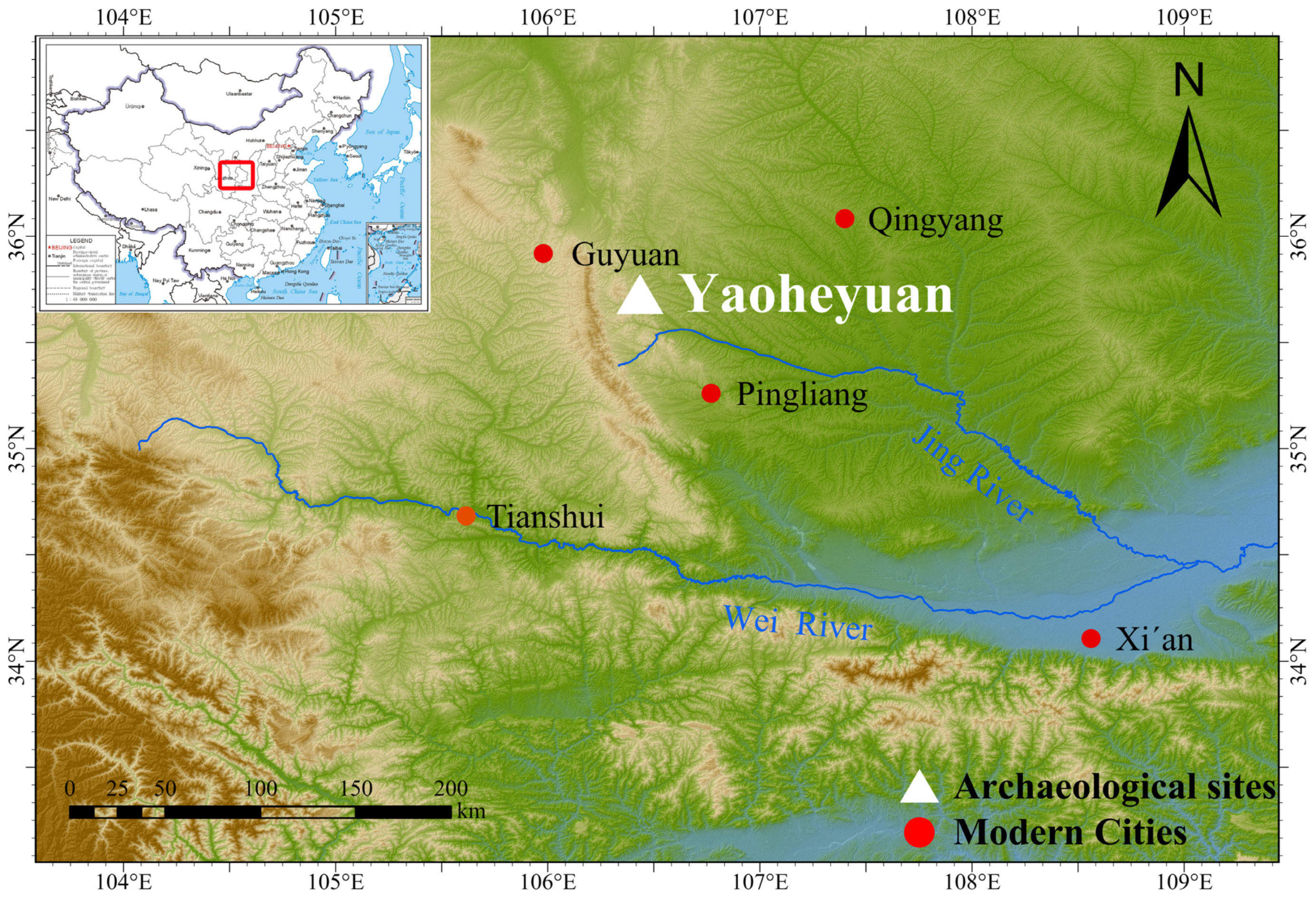
2. The Site of Yaoheyuan and the Chariot-Horse Pit CMK2
2.1. Yaoheyuan
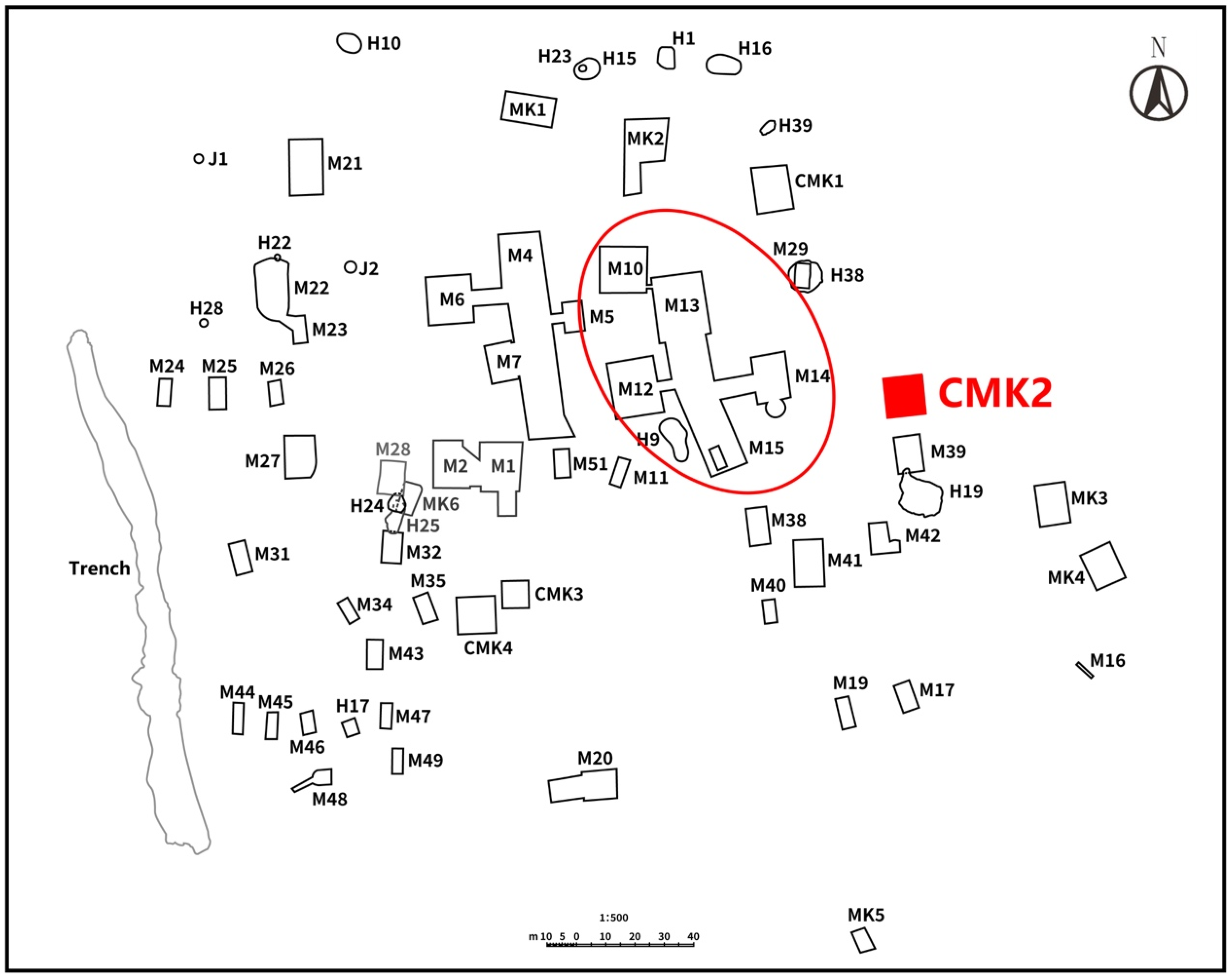
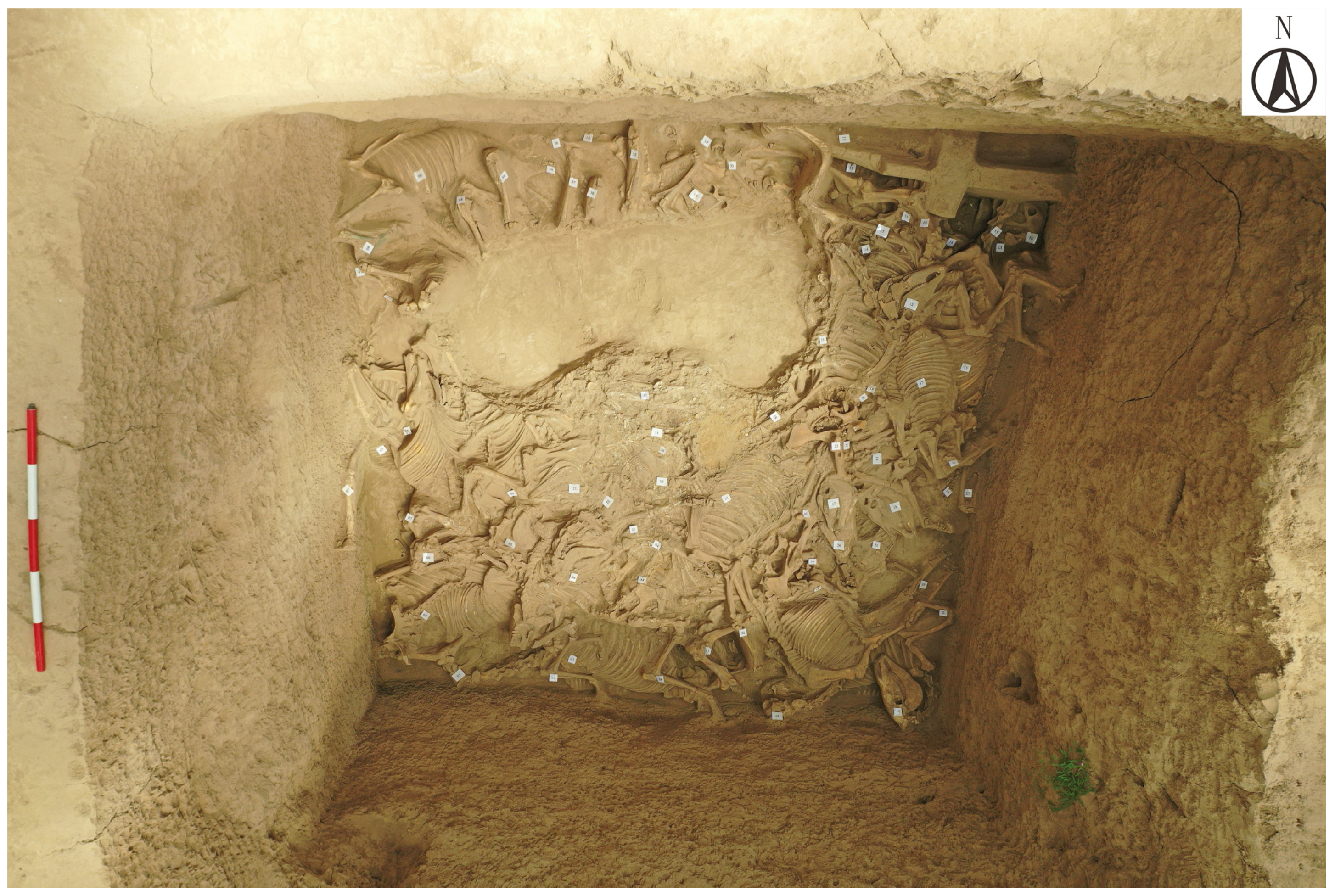
2.2. The Chariot-Horse Pit
3. Materials and Methods
3.1. On-Site Extraction
3.2. The Zooarchaeological Analysis
4. Results
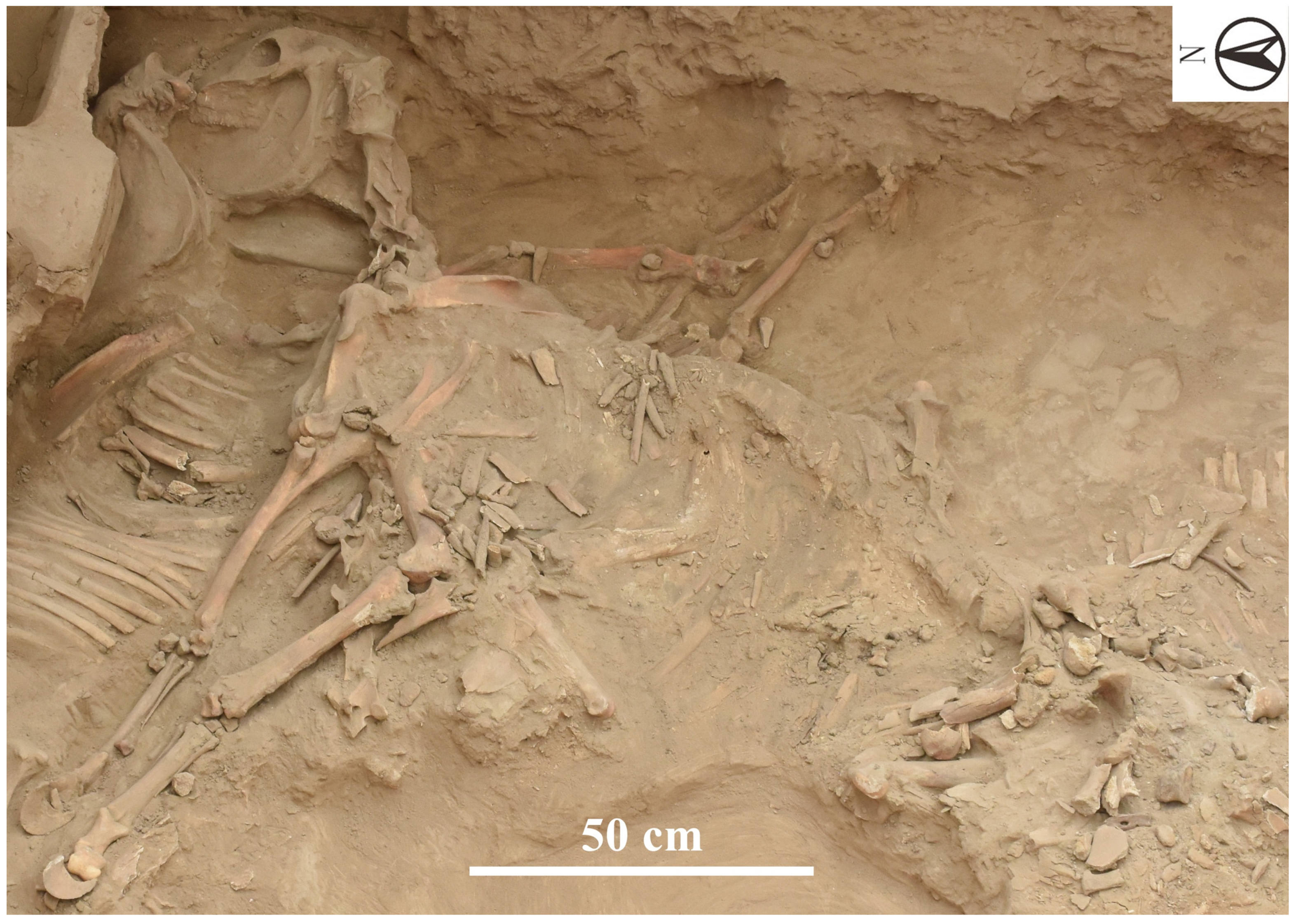
4.1. Horse Remains in CMK2
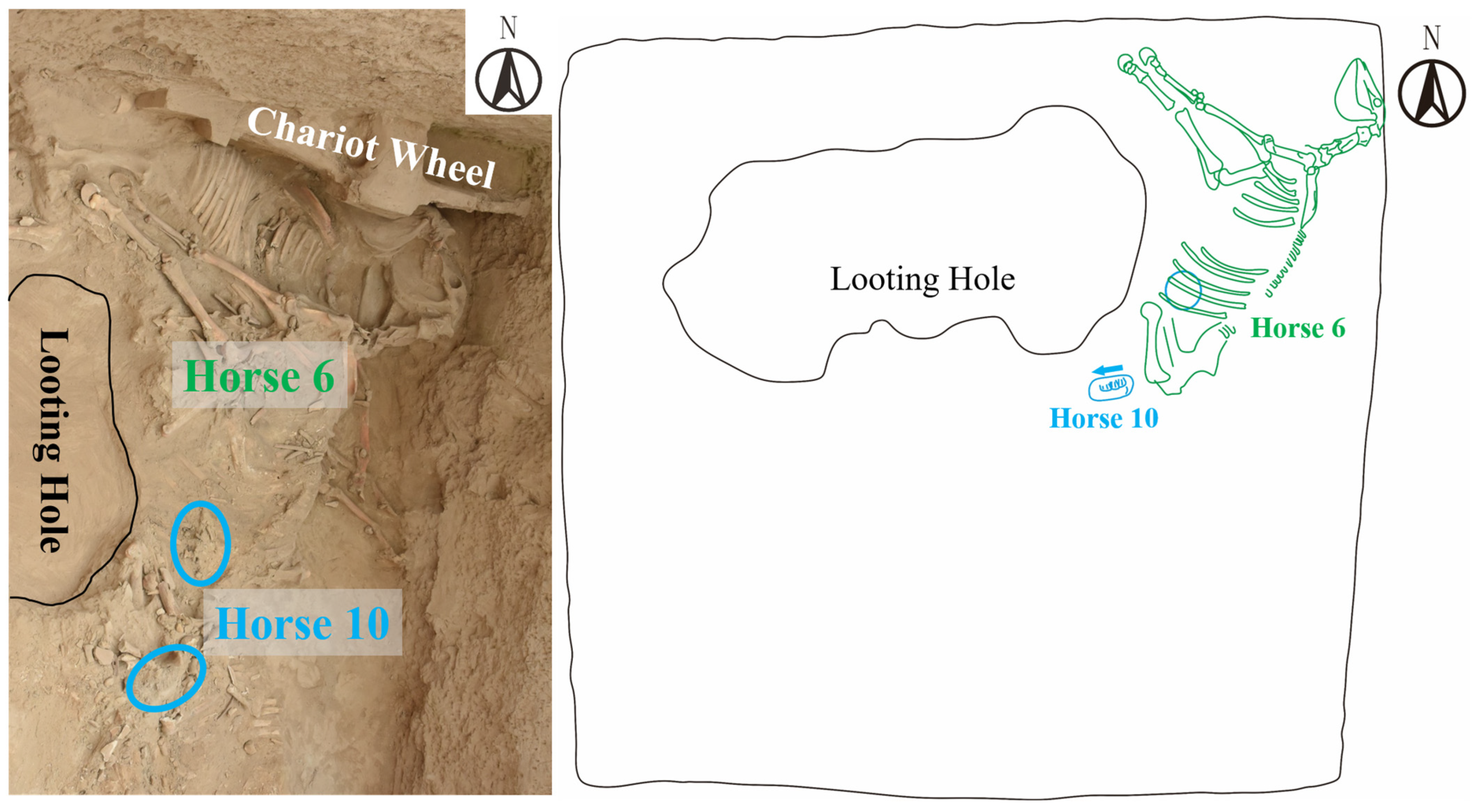
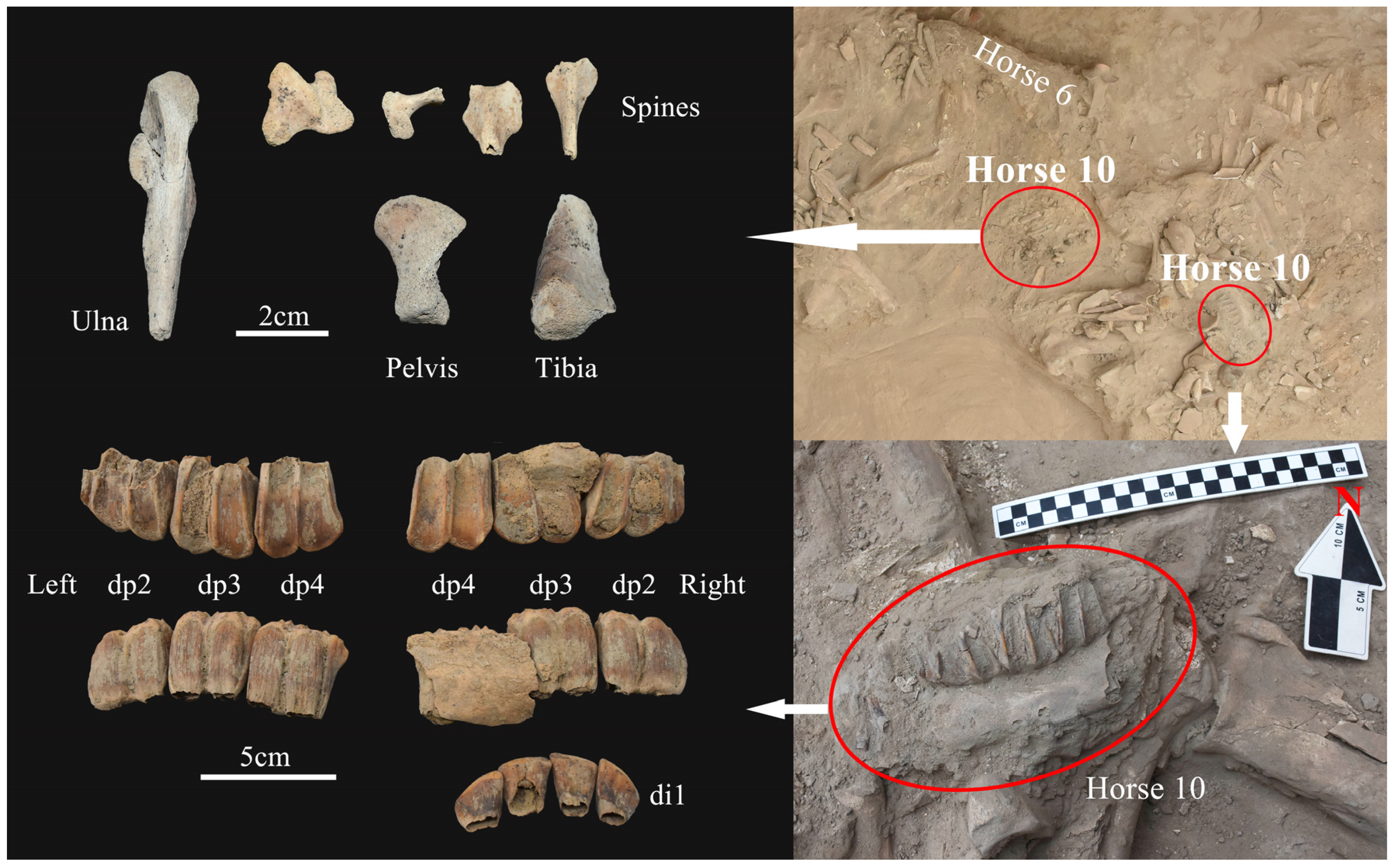
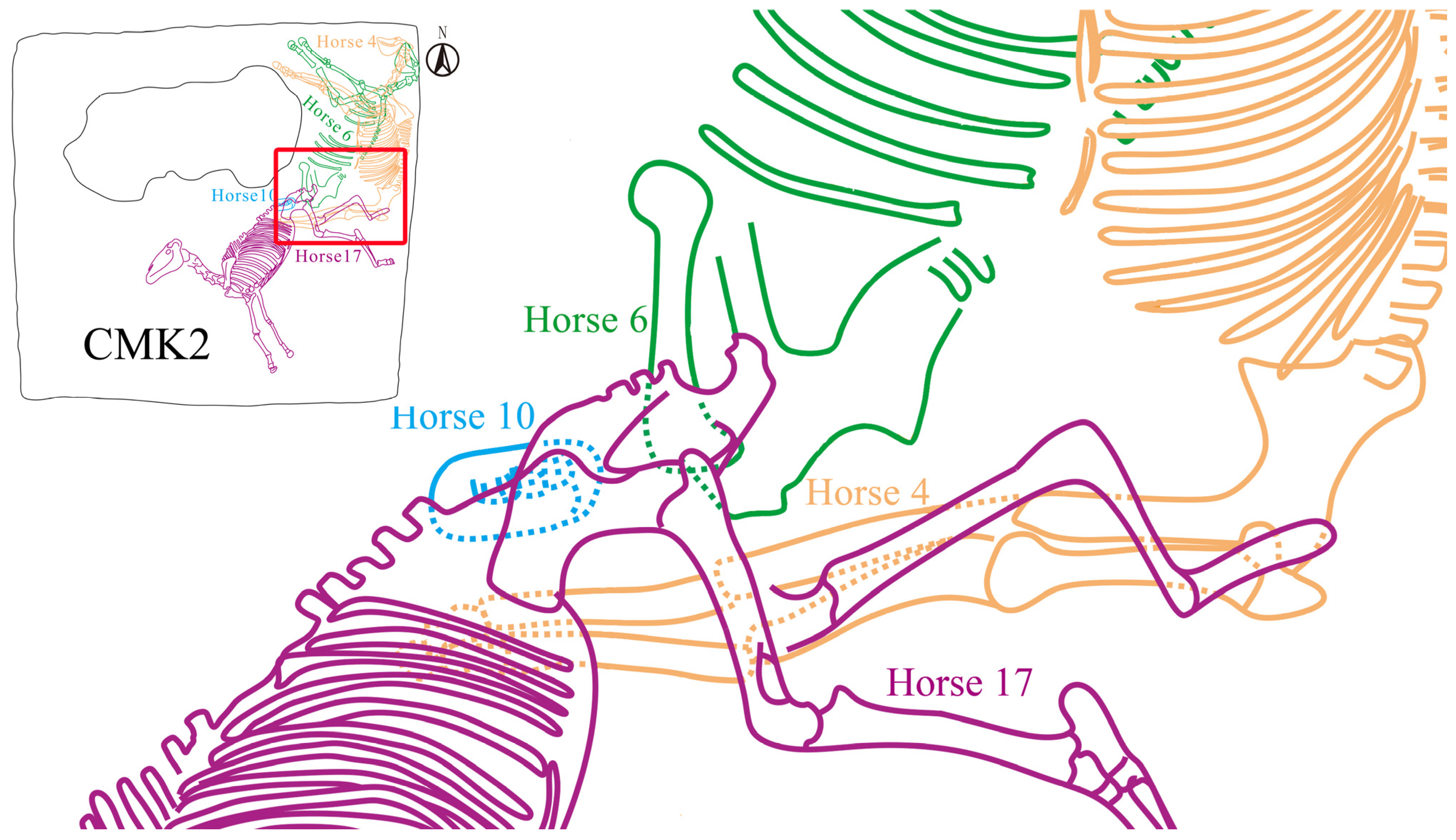
4.2. Horse 6 and Horse 10
4.3. Ancient DNA Analysis
5. Discussion
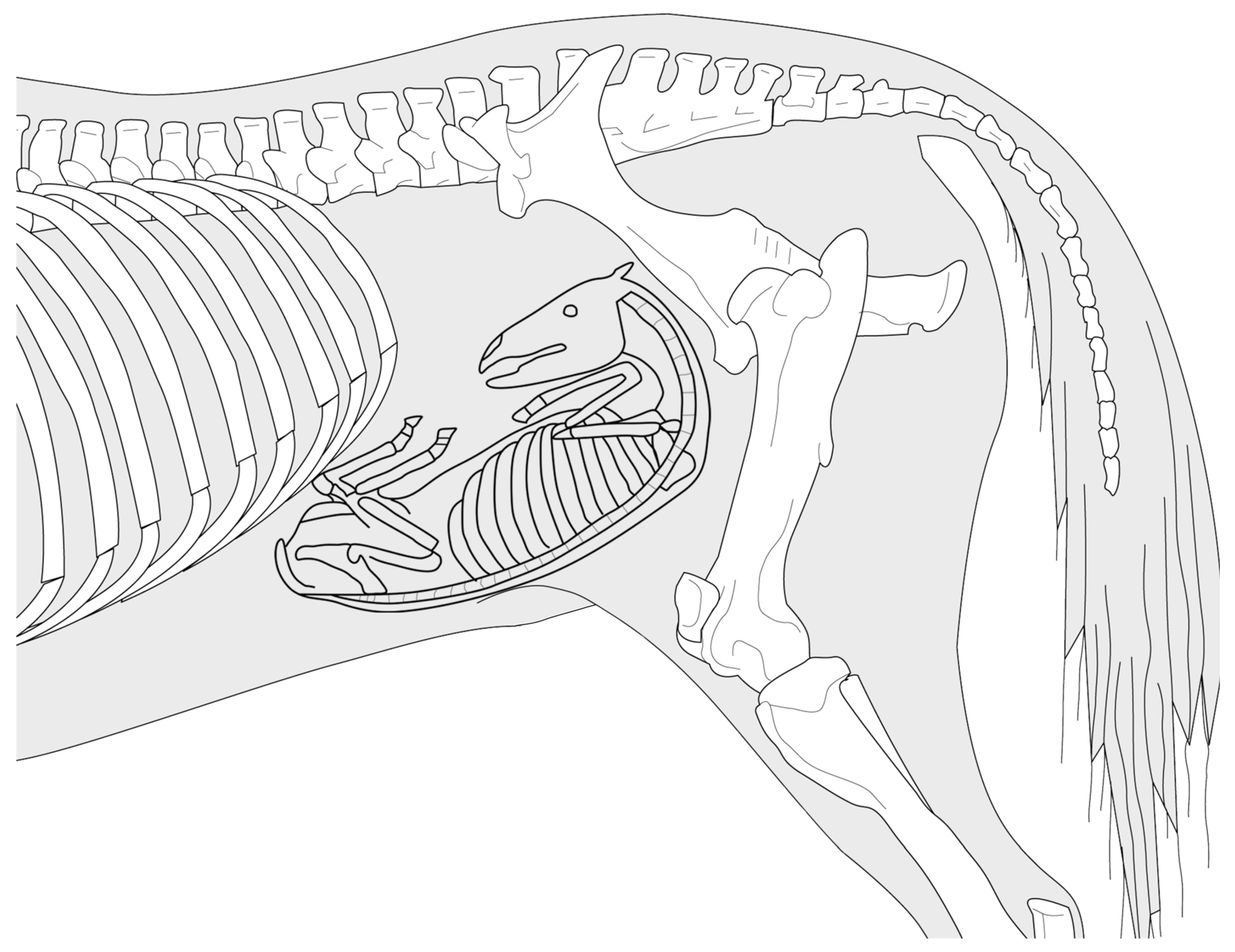
5.1. Post-Mortem Fetal Extrusion
5.2. The Season of Horse Interment
6. Conclusions
Author Contributions
Funding
Institutional Review Board Statement
Informed Consent Statement
Data Availability Statement
Acknowledgments
Conflicts of Interest
References
- Cunningham, F.G.; Williams, J.W. Williams Obstetrics, 23rd ed.; McGraw-Hill Medical: New York, NY, USA, 2010. [Google Scholar]
- Guan, D. (Ed.) Fayixue Cidian; Huaxuegongye Chubanshe: Beijing, China, 2009; p. 355. (In Chinese) [Google Scholar]
- Friedrich, S.; Klaus, P.; Michael, T. Postmortem fetal extrusion in a case of maternal heroin intoxication. Forensic Sci. Med. Pathol. 2005, 1, 273–276. [Google Scholar]
- Lasso, E.; Santos, M.; Rico, A.; Pachar, J.V.; Lucena, J. Postmortem fetal extrusion. Cuad. Med. Forense 2009, 55, 77–81. [Google Scholar]
- Augias, A.; Prot, E.; Etchemendigaray, C.; Gourevitch, D.; Nogel Jaeger, J.; Herve, C.; Charlier, P. Post-mortem fetal expulsion: Forensic anthropology lessons from the archaeological field. La Rev. Médecine Légale 2015, 6, 132–136. [Google Scholar] [CrossRef]
- Angela, R.L.; Vladimir, I.B.; Andrzej, W.W. Death by twins: A remarkable case of dystocic childbirth in early Neolithic Siberia. Antiquity 2015, 89, 23–38. [Google Scholar]
- Sandro, S.S.; Patrizia, E.; Vito, S. Un caso di parto in tomba: L’analisi antropologica dei resti scheletrici della sepoltura di età romana rinvenuta in via G. De Giosa. In Norba-Conversano. Archeologia e Storia Della Città e del Territorio; Angela, C., L’Abbate, V., Eds.; Mario Adda Editore: Bari, Italy, 2013; pp. 377–384. [Google Scholar]
- Viva, S.; Cantini, F.; Fabbri, P.F. Post-mortem fetal extrusion: Analysis of a coffin birth case from an early medieval cemetery along the Via Francigena in Tuscany (Italy). J. Archaeol. Sci. Rep. 2020, 32, 102419. [Google Scholar] [CrossRef]
- Rascón Pérez, J.; Cambra-Moo, O.; Gonzàlez Martin, A. A multidisciplinary approach reveals an extraordinary double inhumation in the osteoarchaeological record. J. Taphon. 2007, 5, 91–101. [Google Scholar]
- Väre, T.; Lipkin, S.; Kallio-Seppä, T.; Tranberg, A.; Junno, J. Possible case of partial postmortem fetal extrusion: Preliminary observations on the mummified remains of a turn-of-the-19th-century noblewoman in Finland. Int. J. Osteoarchaeol. 2021, 31, 1280–1284. [Google Scholar] [CrossRef]
- Appleby, J.; Seetah, T.K.; Calaon, D.; Čaval, S.; Pluskowski, A.; Lafleur, J.F.; Janoo, A.; Teelock, V. The Non-Adult Cohort from Le Morne Cemetery, Mauritius: A snap shot of early life and death after abolition. Int. J. Osteoarchaeol. 2012, 24, 737–746. [Google Scholar] [CrossRef]
- Wells, C. Ancient obstetric hazards and female mortality. Bull. N. Y. Acad. Med. 1975, 51, 1235–1249. [Google Scholar] [CrossRef][Green Version]
- Lewis, M.E. The Bioarchaeology of Children: Perspectives from Biological and Forensic Anthropology; Cambridge University Press: Cambridge, UK, 2007. [Google Scholar]
- Shaughnessy, E. Western Zhou history. In Cambridge History of Ancient China; Loewe, M., Shaughnessy, E., Eds.; Cambridge University Press: Cambridge, UK, 1999; pp. 292–351. [Google Scholar]
- Liu, X. An archaeological perspective of the Western Zhou domain. Archaeol. Res. Asia 2020, 23, 100159. [Google Scholar] [CrossRef]
- Li, F. Landscape and Power in Early China: The Crisis and Fall of the Western Zhou, 1045–1771 BC; Cambridge University Press: Cambridge, UK, 2006. [Google Scholar]
- Shelach-Lavi, G. The Archaeology of Early China: From Prehistory to the Han Dynasty; Cambridge University Press: Cambridge, UK, 2015. [Google Scholar]
- Luo, F. Political and cultural complexity in north-west China during the Western Zhou Period (1045–771 BC): New evidence from Yaoheyuan. Antiquity 2023, 97, 1156–1172. [Google Scholar] [CrossRef]
- Ma, Q. Zhou Wangchao Xibei Bianjiang De Xin Faxian: Ningxia Pengyang Yaoheyuan Xizhou Yi Zhi. Dazhong Kaogu 2020, 2, 19–24. (In Chinese) [Google Scholar]
- Ningxia, H.Z.W.K.Y.; Pengyangxian, W.G. Ningxia Pengyangxian Yaoheyuan Xizhou Yizhi. Kaogu 2021, 8, 3–22. (In Chinese) [Google Scholar]
- Bronk Ramsey, C. 2021. OxCal v.4.4 [software]. Available online: https://c14.arch.ox.ac.uk/oxcal.html (accessed on 10 July 2024).
- Reimer, P.J.; Austin, W.E.; Bard, E.; Bayliss, A.; Blackwell, P.G.; Ramsey, C.B.; Butzin, M.; Cheng, H.; Edwards, R.L.; Friedrich, M.; et al. The IntCal20 Northern Hemisphere radiocarbon age calibration curve (0–55 cal kBP). Radiocarbon 2020, 62, 725–757. [Google Scholar] [CrossRef]
- Rawson, J.; Huan, L.; Taylor, W.T.T. Seeking horses: Allies, clients and exchanges in the Zhou period (1045–221BC). J. World Prehist. 2021, 34, 489–530. [Google Scholar] [CrossRef]
- Lu, L. Chariot and horse burial in ancient China. Antiquity 1993, 67, 824–838. [Google Scholar]
- Wu, H.-Y. Chariots in Early China: Origins, Cultural Interaction, and Identity (BAR International Series 2457); Archaeopress: Oxford, UK, 2013. [Google Scholar]
- Zhang, L. Luelun Fenghao Diqu Zizhou Shiqi Chema Maizang De Tedian. Zhongguo Lishi Wenwu 2010, 5, 47–56. (In Chinese) [Google Scholar]
- Zhongguo Renmin Jiefangjun Shouyi Daxue Bianzhu (Ed.) Mati Jiepou Tupu; Jilin Renmin Chubanshe: Changchun, China, 1970. (In Chinese) [Google Scholar]
- Xie, C. Zhongguo Yangma Shi; Kexue Chubanshe: Beijing, China, 1959. (In Chinese) [Google Scholar]
- Hayashida, S.; Yamauchi, C. Deduction of withers height from the length of the bone in the horse. Bull. Fac. Agric. Kagoshima Univ. 1957, 6, 146–156. [Google Scholar]
- May, E. Widerristhöhe und Langknochenmasse bei Pferden: Ein immer noch aktuelles Problem. Z. Für Säugetierkunde 1985, 50, 368–382. [Google Scholar]
- Onar, V.; Pazvant, G.; Pasicka, E.; Armutak, A.; Alpak, H. Byzantine horse skeletons of Theodosius Harbour: 2. Withers height estimation. Revue. Méd. Vét. 2015, 166, 30–42. [Google Scholar]
- Li, Y.; Ma, Q.; Wu, Y.; Zhang, C.; Luo, F. Zangyi Yu Zangsu: Yaoheyuan Yizhi Erhao Chemakeng Suizang Mapi Yanjiu. N. Engl. J. Med. 2023; in press. (In Chinese) [Google Scholar]
- De Grossi Mazzorin, J.; Riedel, A.; Tagliacozzo, A. Horse remains in Italy from the Eneolithic to the Roman period. In Proceedings of the XIII International Congress of the UISPP; Peretto, C., Giunchi, C., Eds.; ABACO: Forlí, Italy, 1998; pp. 87–92. [Google Scholar]
- Spassov, N.; Iliev, N.; Hristova, L. Typology of Thracian horses according to osteological analysis of skeletal remains and depictions from the antiquity. Hist. Nat. Bulg. 2018, 25, 15–24. [Google Scholar]
- Soana, S.; Gundi, G.; Bertoni, G. The teeth of the horse: Evolution and anatomo-morphological and radiographic study of their development in the foetus. Anat. Histol. Embryol. 1999, 28, 273–280. [Google Scholar] [CrossRef] [PubMed]
- Zhongguo Nongye Baike Quanshu Xumuye Juan Bianji Weiyuanhui (Ed.) Zhongguo Nongye Baike Quanshu, Xumuye Juan; Nongye Chubanshe: Beijing, China, 1996. (In Chinese)
- Malgosa, A.; Alesan, A.; Safont, S.; Safont, S.; Ballbé, M.; Ayala, M.M. A dystocic childbirth in the Spanish Bronze Age. Int. J. Osteoarchaeol. 2004, 14, 98–103. [Google Scholar] [CrossRef]
- Clark, A.M.; Worrell, M.B.; Pless, J.E. Postmortem changes in soft tissues. In Forensic Taphonomy: The Postmortem Fate of Human Remains; Haglund, W.D., Sorg, M.H., Eds.; CRC Press: Boca Raton, FL, USA, 1999; pp. 151–164. [Google Scholar]
- Charlier, P.; Durigon, M. L’apport de la médecine légale à la paléopathologie. In Ostéo-Archéologie et Techniques Médico-Légales: Tendances et Perspectives. Pour un Manuel Pratique de Paléopathologie Humaine; Charlier, P., Ed.; De Boccard: Paris, France, 2008. [Google Scholar]
- Jeffcott, L.B.; Rossdale, P.D. A radiographic study of the fetus in late pregnancy and during foaling. J. Reprod. Fertil. 1979, 27, 563–569. [Google Scholar]
- Dong, W. Renshen He Fenmian. Caoshi Jiachu 1984, 1, 114–130. (In Chinese) [Google Scholar]
- Beythien, E.; Aurich, C.; Wulf, M.; Aurich, J. Effects of season on placental, foetal and neonatal development in horses. Theriogenology 2017, 97, 98–103. [Google Scholar] [CrossRef]
- Gansu Nongye Daxue Xumuxi Maniuxue Jiaoyanzu Zhubian (Ed.) Zhongguo Nongye Baike Quanshu, Xumuye Juan; Gansu Nongye Chubanshe: Lanzhou, China, 1959; p. 285. (In Chinese) [Google Scholar]
- Hu, Q. Luelun Xizhou De Ma Yu Mazheng, Yi Chutu Wenxian Wei Zhongxin De Kaocha. Zhongguo Nongshi 2024, 43, 15–27. (In Chinese) [Google Scholar]
- Xu, Z.; Chang, P. Zhouli; Zhonghua Shuju: Beijing, China, 2014. (In Chinese) [Google Scholar]
- Wu, X. Shangzhou Shiqi Chema Maizang Yanjiu; Kexue Chubanshe: Beijing, China, 2009. (In Chinese) [Google Scholar]
- Hu, P.; Zhang, M. Liji; Zhonghua Shuju: Beijing, China, 2017. (In Chinese) [Google Scholar]
- Cattaneo, C.; Grandi, M. Antropologia e Odontologia Forense: Guida allo Studio dei Resti Umani: Testo Atlante; Monduzzi Editoriale: Bologna, Italy, 2004. [Google Scholar]





| Humerus | Radius | Metacarpal | Mean Value | |
|---|---|---|---|---|
| GL (Greatest Lenth) | 28.9 | 34.4 | 22.5 | |
| Hayashida and Yamauchi’s method | 135.1 | 140.9 | 137.4 | 137.8 |
| May’s method | 133.9 | 141.4 | 137.3 | 137.5 |
| Mean withers height | 137.7 | |||
Disclaimer/Publisher’s Note: The statements, opinions and data contained in all publications are solely those of the individual author(s) and contributor(s) and not of MDPI and/or the editor(s). MDPI and/or the editor(s) disclaim responsibility for any injury to people or property resulting from any ideas, methods, instructions or products referred to in the content. |
© 2024 by the authors. Licensee MDPI, Basel, Switzerland. This article is an open access article distributed under the terms and conditions of the Creative Commons Attribution (CC BY) license (https://creativecommons.org/licenses/by/4.0/).
Share and Cite
Huang, Z.; Ma, Q.; Zhang, C.; Cheng, R.; Hou, F.; Wu, Y.; Luo, F.; Li, Y. Early Evidence of Post-Mortem Fetal Extrusion in Equids: A Case from the Western Zhou Period (1045–771 BC) Site of Yaoheyuan in Northwestern China. Animals 2024, 14, 2106. https://doi.org/10.3390/ani14142106
Huang Z, Ma Q, Zhang C, Cheng R, Hou F, Wu Y, Luo F, Li Y. Early Evidence of Post-Mortem Fetal Extrusion in Equids: A Case from the Western Zhou Period (1045–771 BC) Site of Yaoheyuan in Northwestern China. Animals. 2024; 14(14):2106. https://doi.org/10.3390/ani14142106
Chicago/Turabian StyleHuang, Zexian, Qiang Ma, Chengrui Zhang, Ruoxin Cheng, Furen Hou, Yi Wu, Feng Luo, and Yue Li. 2024. "Early Evidence of Post-Mortem Fetal Extrusion in Equids: A Case from the Western Zhou Period (1045–771 BC) Site of Yaoheyuan in Northwestern China" Animals 14, no. 14: 2106. https://doi.org/10.3390/ani14142106
APA StyleHuang, Z., Ma, Q., Zhang, C., Cheng, R., Hou, F., Wu, Y., Luo, F., & Li, Y. (2024). Early Evidence of Post-Mortem Fetal Extrusion in Equids: A Case from the Western Zhou Period (1045–771 BC) Site of Yaoheyuan in Northwestern China. Animals, 14(14), 2106. https://doi.org/10.3390/ani14142106