How Do Dogs Behave When Presented with Situations of Different Emotional Valences?


1
Institute of Biosciences, University of São Paulo, São Paulo 05508-090, Brazil
2
School of Psychology, University of Lincoln, Lincoln LN6 7TS, UK
3
Department of Life Sciences, University of Lincoln, Lincoln LN6 7TS, UK
4
Institute of Psychology, University of São Paulo, São Paulo 05508-030, Brazil
*
Author to whom correspondence should be addressed.
Animals 2023, 13(6), 1027; https://doi.org/10.3390/ani13061027
Submission received: 1 February 2023
/
Revised: 28 February 2023
/
Accepted: 9 March 2023
/
Published: 11 March 2023
(This article belongs to the Special Issue Ethological Approach to Emotional Lives of Companion Animals)
Simple Summary
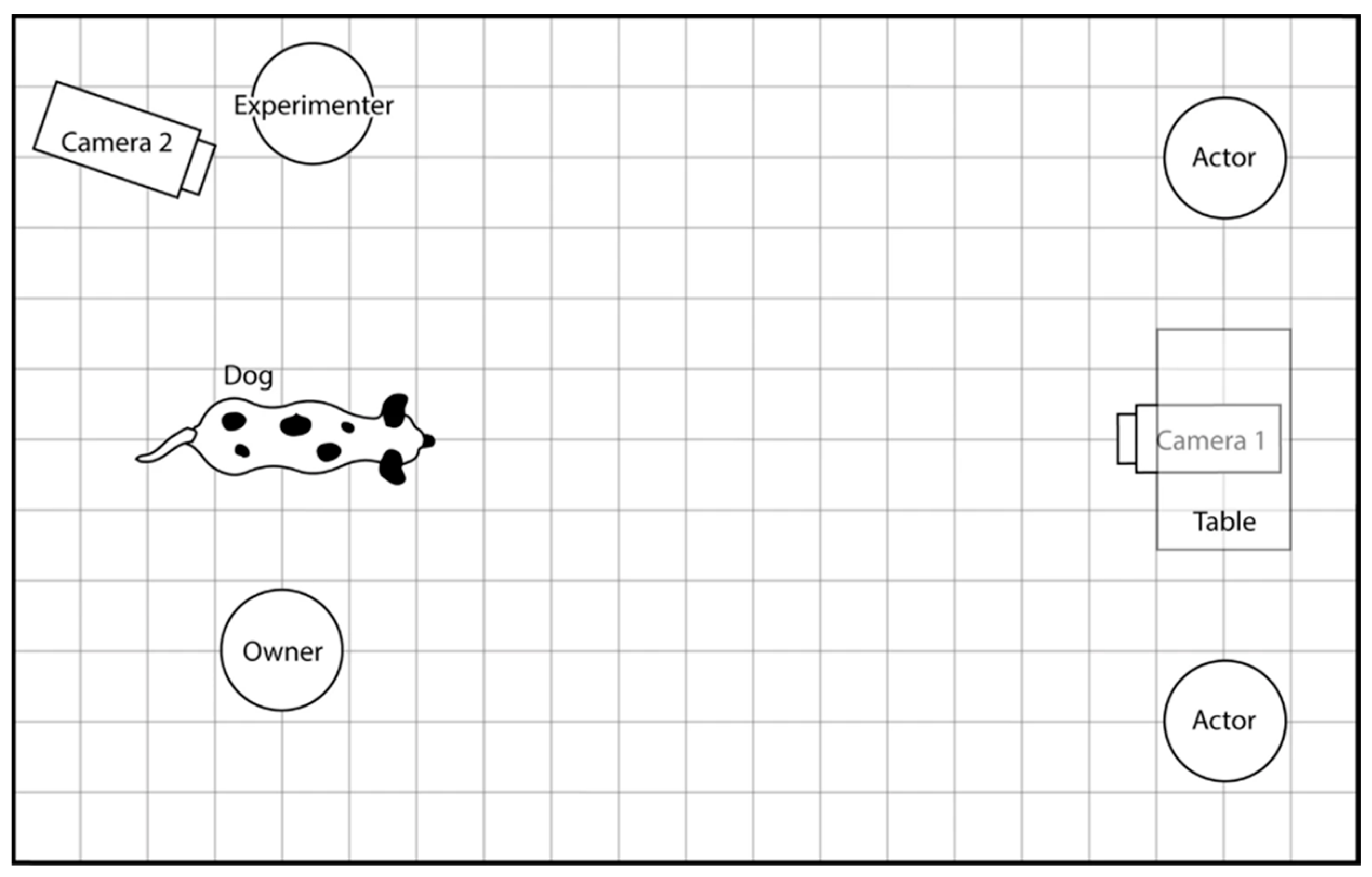
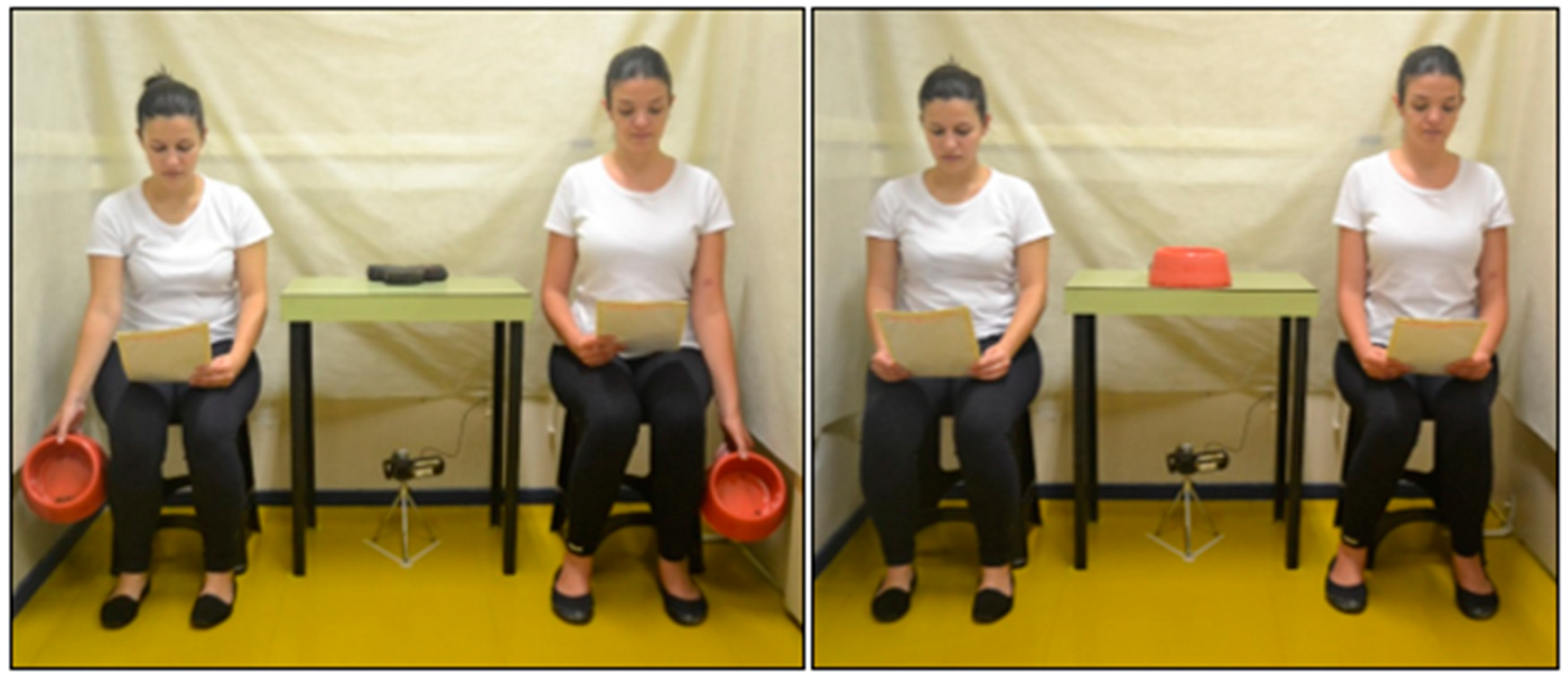
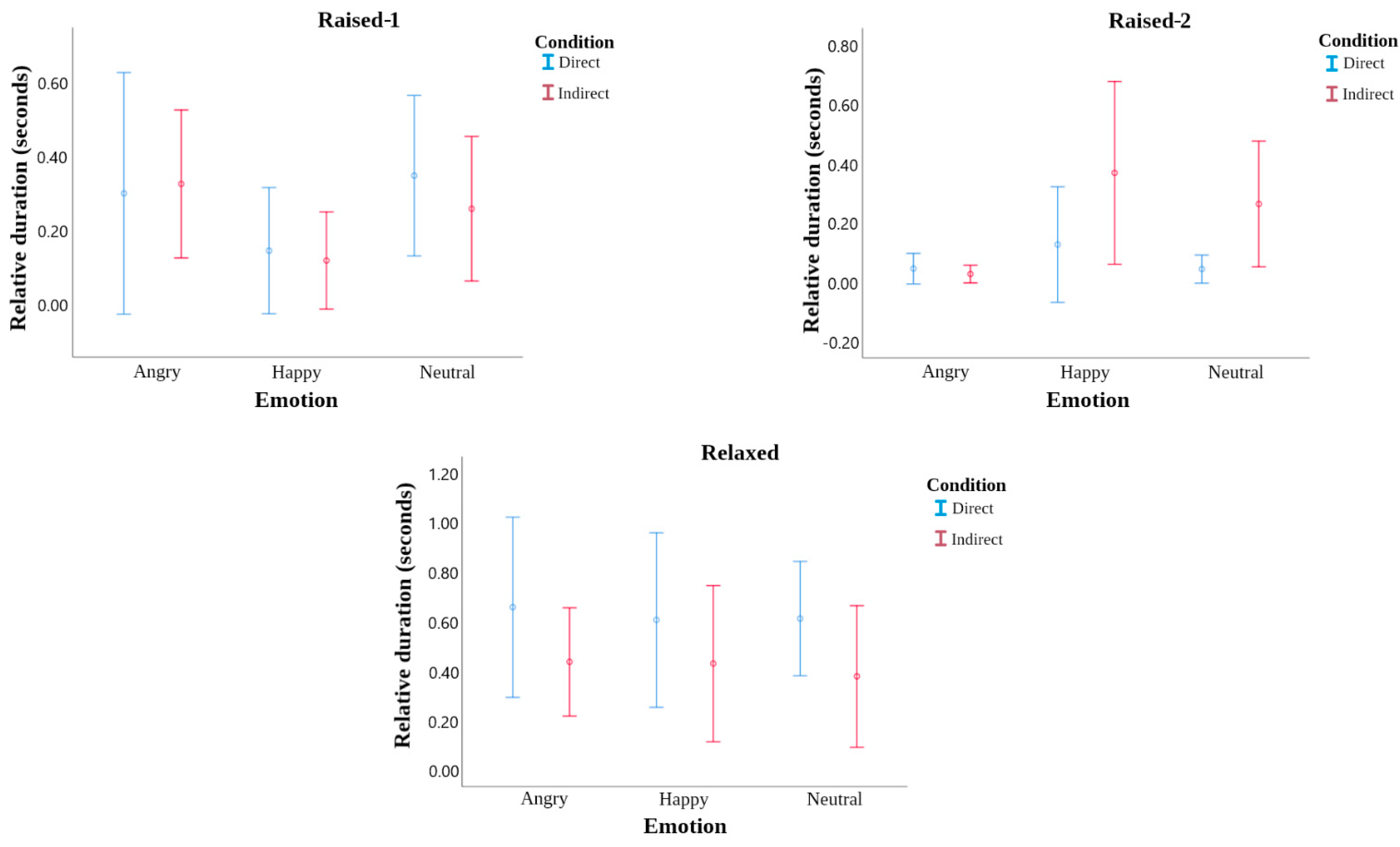
Understanding how dogs behave in different situations is an important question in the dog–human relationship. In fact, it is not yet fully understood how their behaviours might be linked to their emotional state, which generates obstacles to communication between species. The aim of this study was to investigate how different emotions (positive, negative and neutral) affect dogs’ behaviour by using an experimental setup from previous research. In the current study, dogs were exposed to a specific emotional expression from one of two actors in a room where there was food available in two ways: directly or indirectly (dogs needed the human for help). Our results show that, in positive conditions, dogs tend to explore the environment more than in negative ones, and there are two behaviours that arise that might indicate their search for information and possibly a positive emotional reaction in this situation: their tail raised between 90° and 180° and physical contact during sniffing. This study should encourage more research on the link between behaviour and emotional states in dogs.
Abstract
Dogs are good models for studying behaviour and cognition as they have complex social capabilities. In the current study, we observed how human emotional valences (positive, neutral and negative) affected aspects of dogs’ behaviour. We expected that dogs would exhibit more approaching behaviours in the positive condition and more signs of avoidance in the negative one. We analysed videos of 70 adult pet dogs of various breeds taken from an experiment in which one of two actors expressed an emotion and dogs could freely explore the environment for 30 s. Our results show that dogs exhibit differential behaviour when presented with different emotional valences. Two behaviours arose that might be linked to a reciprocal positive emotional state in dogs: tail raised between 90° and 180° and physical contact during sniffing. These behaviours are associated with an active search for information. In the positive conditions, dogs were more willing to explore the social environment and gather information from the actors.
Keywords:
behaviour; Canis familiaris; cognition; emotion; social cognition; valence