Interactions between Humans and Dogs during the COVID-19 Pandemic: Recent Updates and Future Perspectives

1
Department of Agricultural and Biological Engineering, Purdue University, West Lafayette, IN 47907, USA
2
Department of Medicine and Infectious Diseases, Faculty of Veterinary Medicine, Cairo University, Giza 12211, Egypt
3
Krishi Inc., West Lafayette, IN 47906, USA
4
Weldon School of Biomedical Engineering, Purdue University, West Lafayette, IN 47907, USA
5
Birck Nanotechnology Center, Purdue University, West Lafayette, IN 47907, USA
*
Author to whom correspondence should be addressed.
Animals 2023, 13(3), 524; https://doi.org/10.3390/ani13030524
Submission received: 13 December 2022
/
Revised: 27 January 2023
/
Accepted: 30 January 2023
/
Published: 2 February 2023
(This article belongs to the Special Issue Susceptibility of Animals to SARS-CoV-2)
Simple Summary
Dogs are considered man’s best friend, with many owners sharing a close relationship with their dogs. This affection increased during the COVID-19 pandemic, as owners spent more time with their canines during the lockdowns and quarantines. During this time, owners noted how their dogs helped reduce their stress and anxiety. Yet, of concern is the known natural infection/transmission of SARS-CoV-2 reported in numerous animals (e.g., cats, minks, deer), necessitating the need to determine if dogs can contract or spread SARS-CoV-2. In this review, we focused on the human–canine interface of COVID-19 and the positives and negatives of this interface. We found that dogs can get COVID-19 from their owners but are asymptomatic when infected—it is unclear if it affects the health of dogs. Research is inconclusive on if dogs can transmit SARS-CoV-2 to their owners. Although dogs could be hosts, they are beneficial beyond just stress relief. Sniffer dogs can rapidly detect COVID-19-positive individuals in crowds, with almost 80% success in distinguishing between positive and negative people. Overall, we emphasize that more research is needed to understand the role of dogs in the interspecies spread and even contraction of SARS-CoV-2.
Abstract
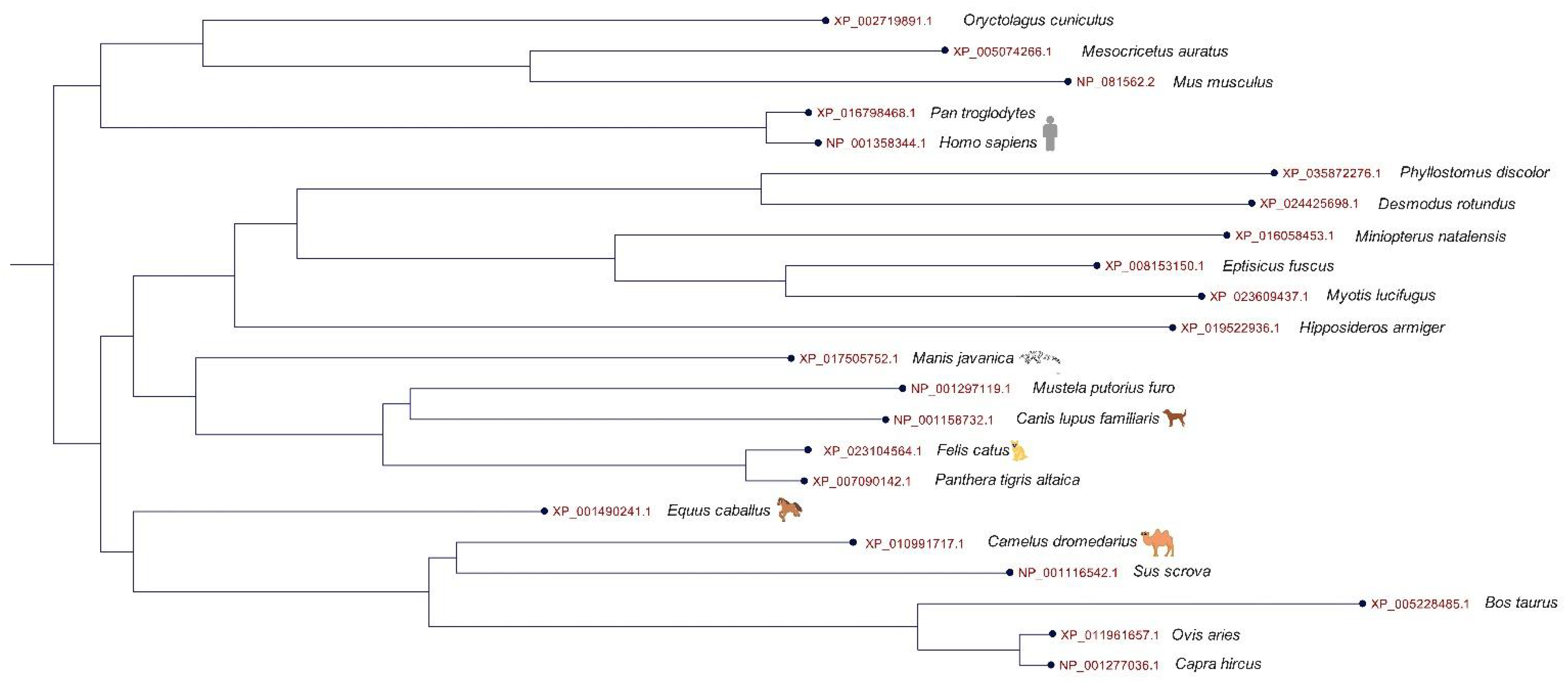
COVID-19 is one of the deadliest epidemics. This pandemic is caused by severe acute respiratory syndrome coronavirus 2 (SARS-CoV-2), but the role of dogs in spreading the disease in human society is poorly understood. This review sheds light on the limited susceptibility of dogs to COVID-19 infections which is likely attributed to the relatively low levels of angiotensin-converting enzyme 2 (ACE2) in the respiratory tract and the phylogenetic distance of ACE2 in dogs from the human ACE2 receptor. The low levels of ACE2 affect the binding affinity between spike and ACE2 proteins resulting in it being uncommon for dogs to spread the disease. To demonstrate the role of dogs in spreading COVID-19, we reviewed the epidemiological studies and prevalence of SARS-CoV-2 in dogs. Additionally, we discussed the use of detection dogs as a rapid and reliable method for effectively discriminating between SARS-CoV-2 infected and non-infected individuals using different types of samples (secretions, saliva, and sweat). We considered the available information on COVID-19 in the human–dog interfaces involving the possibility of transmission of COVID-19 to dogs by infected individuals and vice versa, the human–dog behavior changes, and the importance of preventive measures because the risk of transmission by domestic dogs remains a concern.
Keywords:
SARS-CoV-2; diagnosis; COVID-19; companion; pets; bio-detection; social distancing; infection; epidemiology; ACE2