Unsupervised Domain Adaptation for Mitigating Sensor Variability and Interspecies Heterogeneity in Animal Activity Recognition

1
Department of Artificial Intelligence, The Catholic University of Korea, Bucheon 14662, Republic of Korea
2
School of Computer Science and Information Engineering, The Catholic University of Korea, Bucheon 14662, Republic of Korea
*
Author to whom correspondence should be addressed.
†
These authors contributed equally to this work.
Animals 2023, 13(20), 3276; https://doi.org/10.3390/ani13203276
Submission received: 30 July 2023
/
Revised: 16 October 2023
/
Accepted: 17 October 2023
/
Published: 20 October 2023
(This article belongs to the Special Issue Improving Livestock Productivity and Sustainability: Use of Sensor Data and Livestock Behavior)
Simple Summary
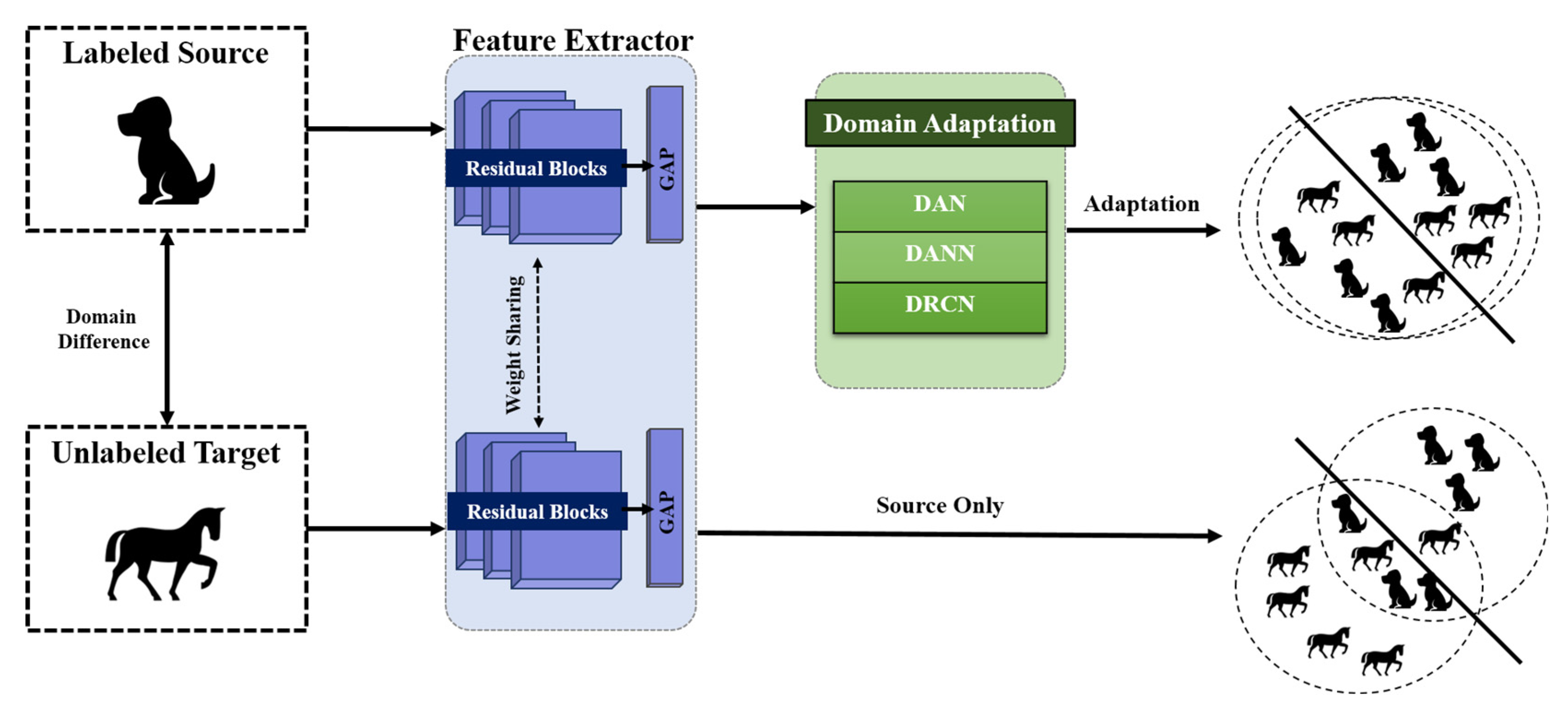
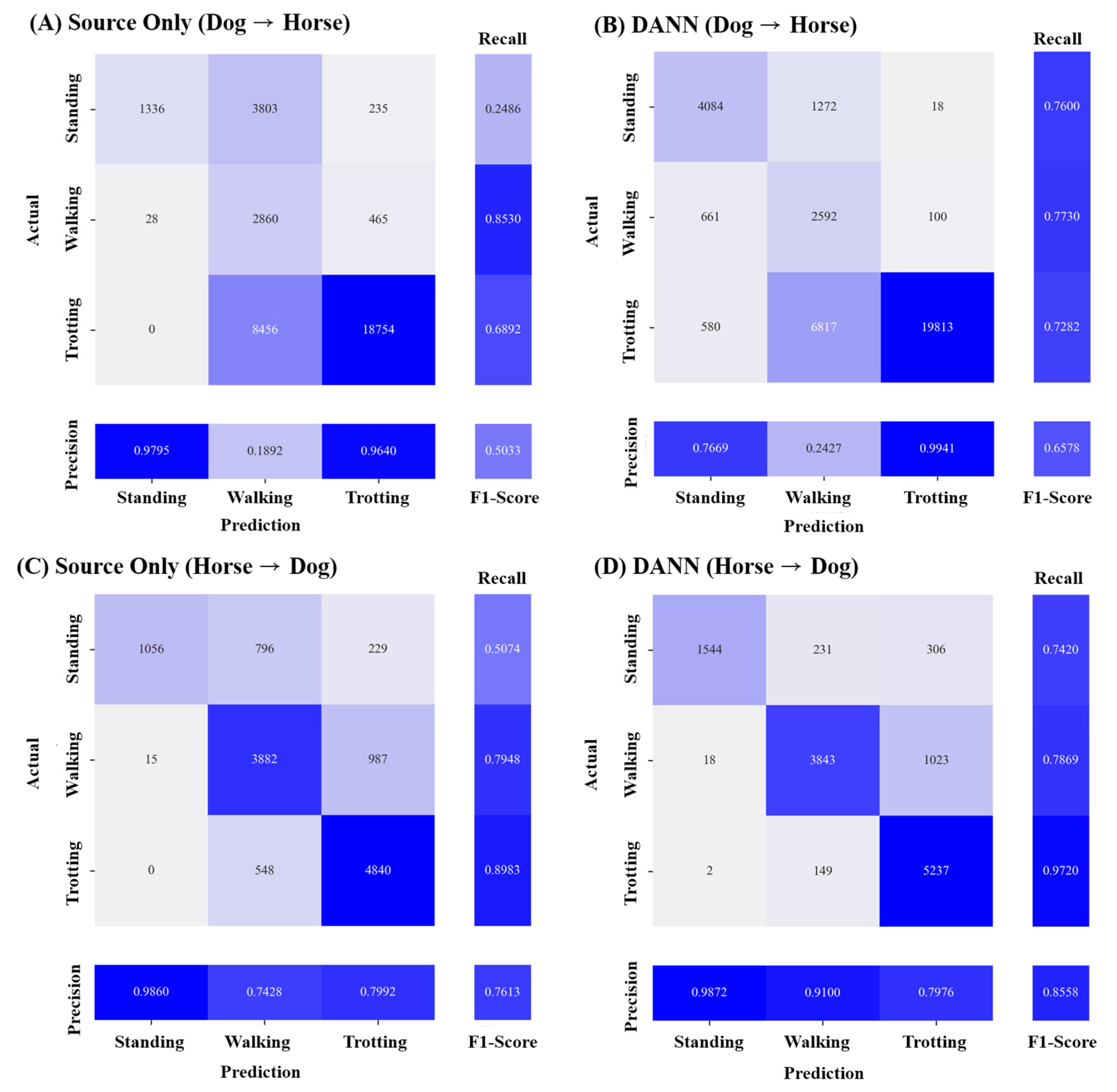
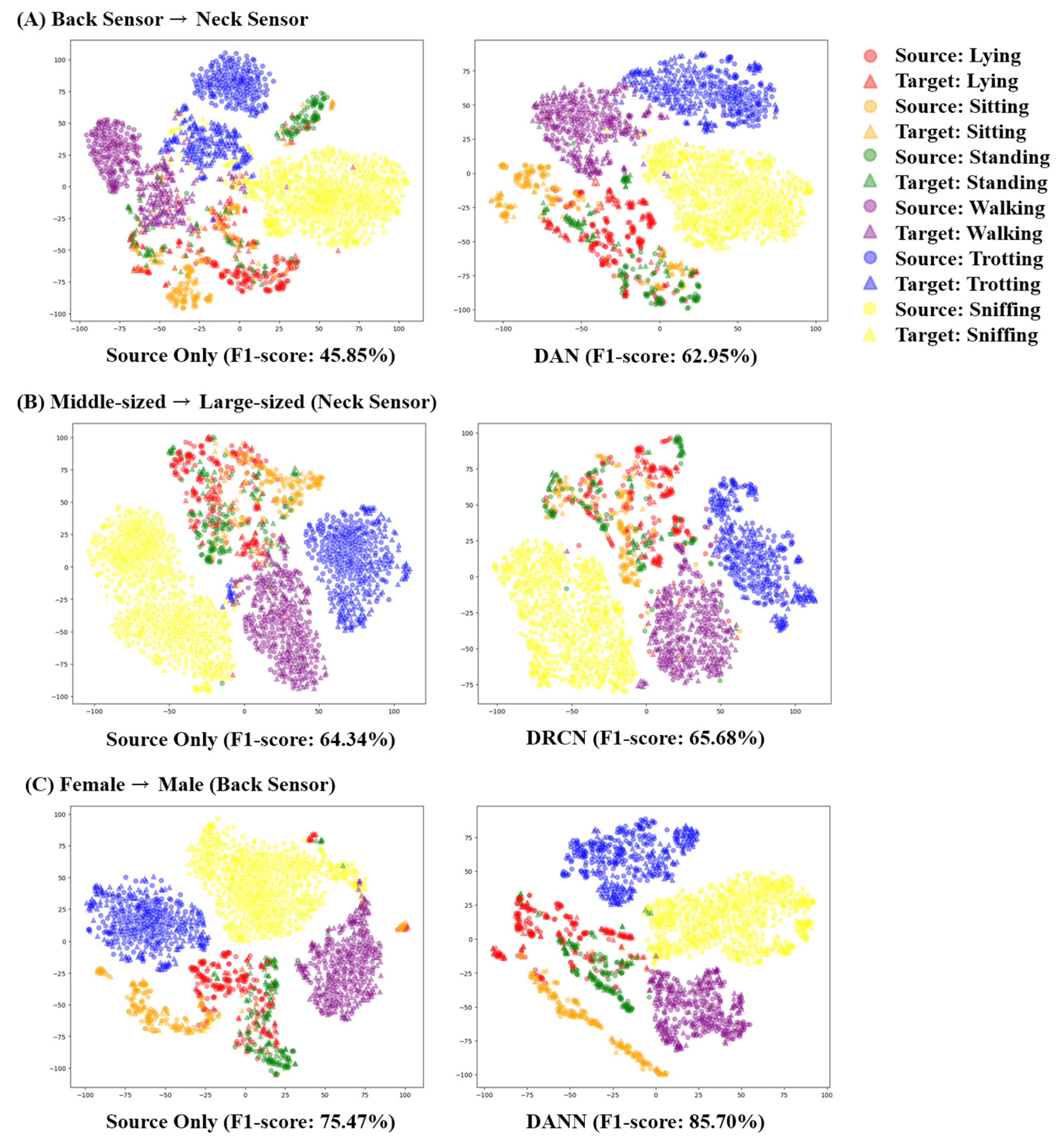
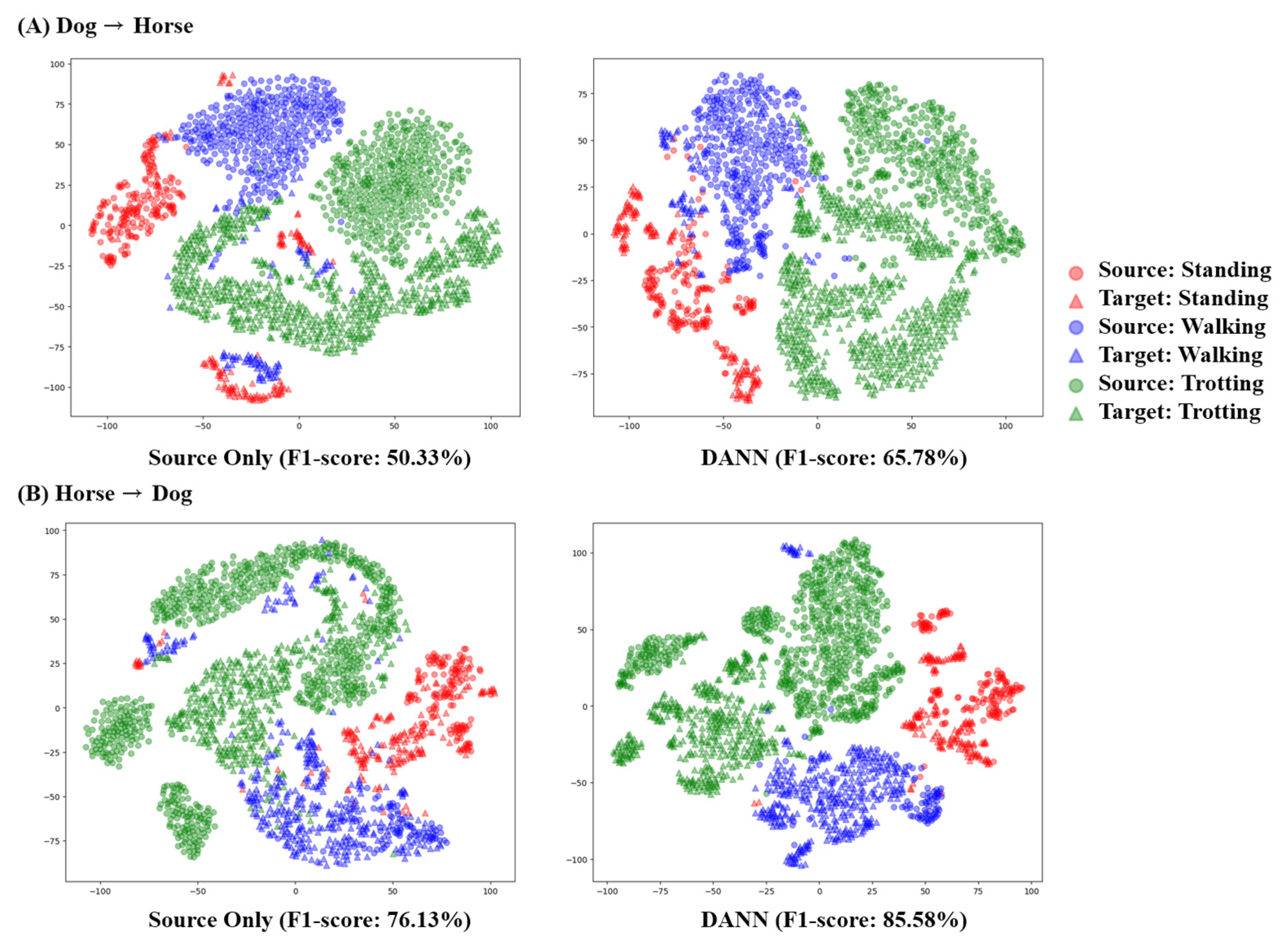
This study aimed to improve animal activity recognition (AAR) using wearable sensor data, which often faces challenges due to sensor variability and individual variability across species. To address this problem, we adopted unsupervised domain adaptation (UDA) techniques to improve the AAR performance. The main objective of UDA is to enable AAR models to perform well on the newly enrolled unlabeled sensor datasets, even when they have different distributions than the pre-trained labeled datasets. The experiments performed with the dog and horse movement sensor datasets demonstrated that UDA significantly improved the classification performance by mitigating sensor variability and individual characteristics such as size, gender, and species. These findings highlight that UDA has practical applications in real-world scenarios where labeled data is scarce in certain measurement environments.
Abstract
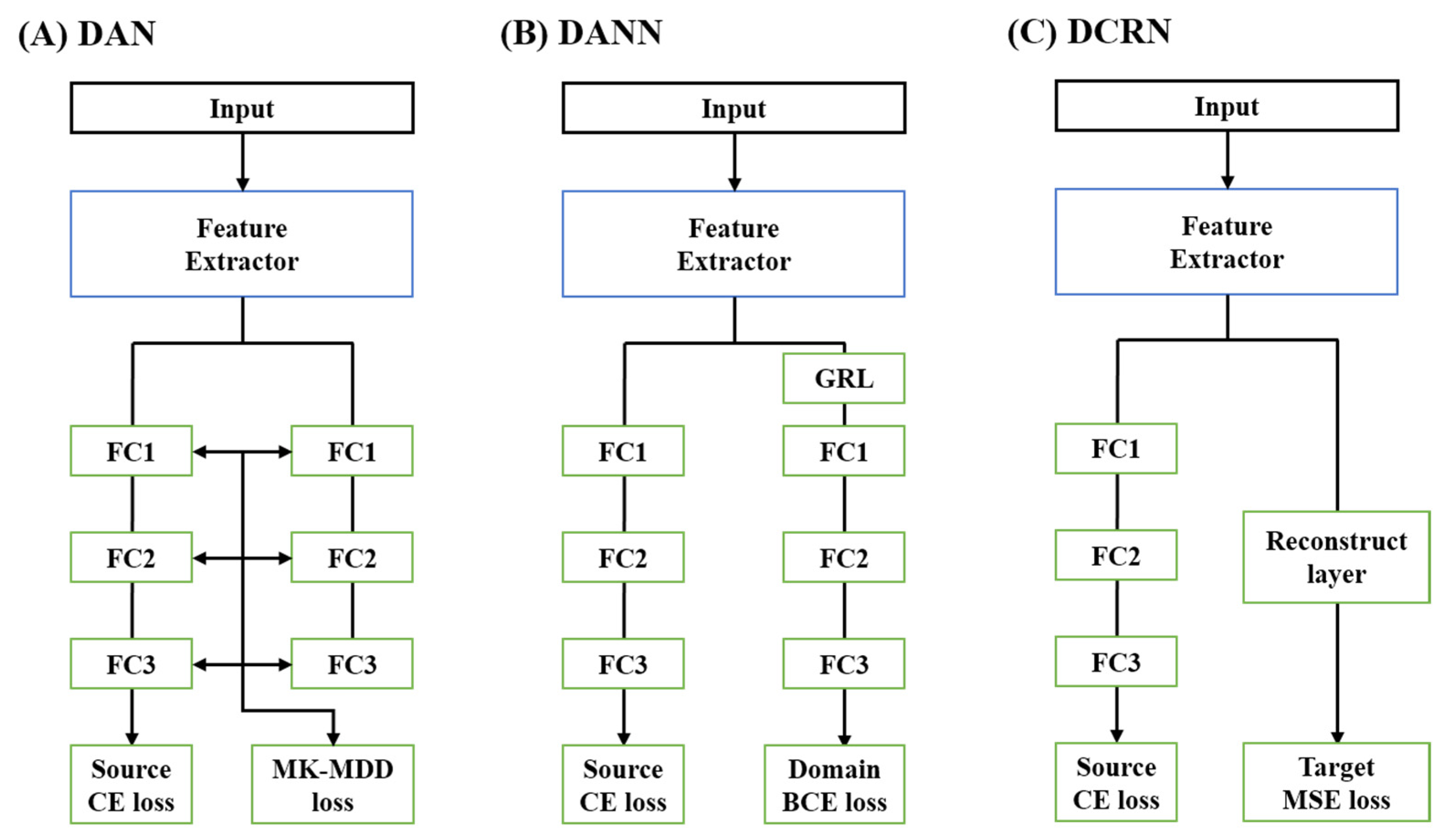
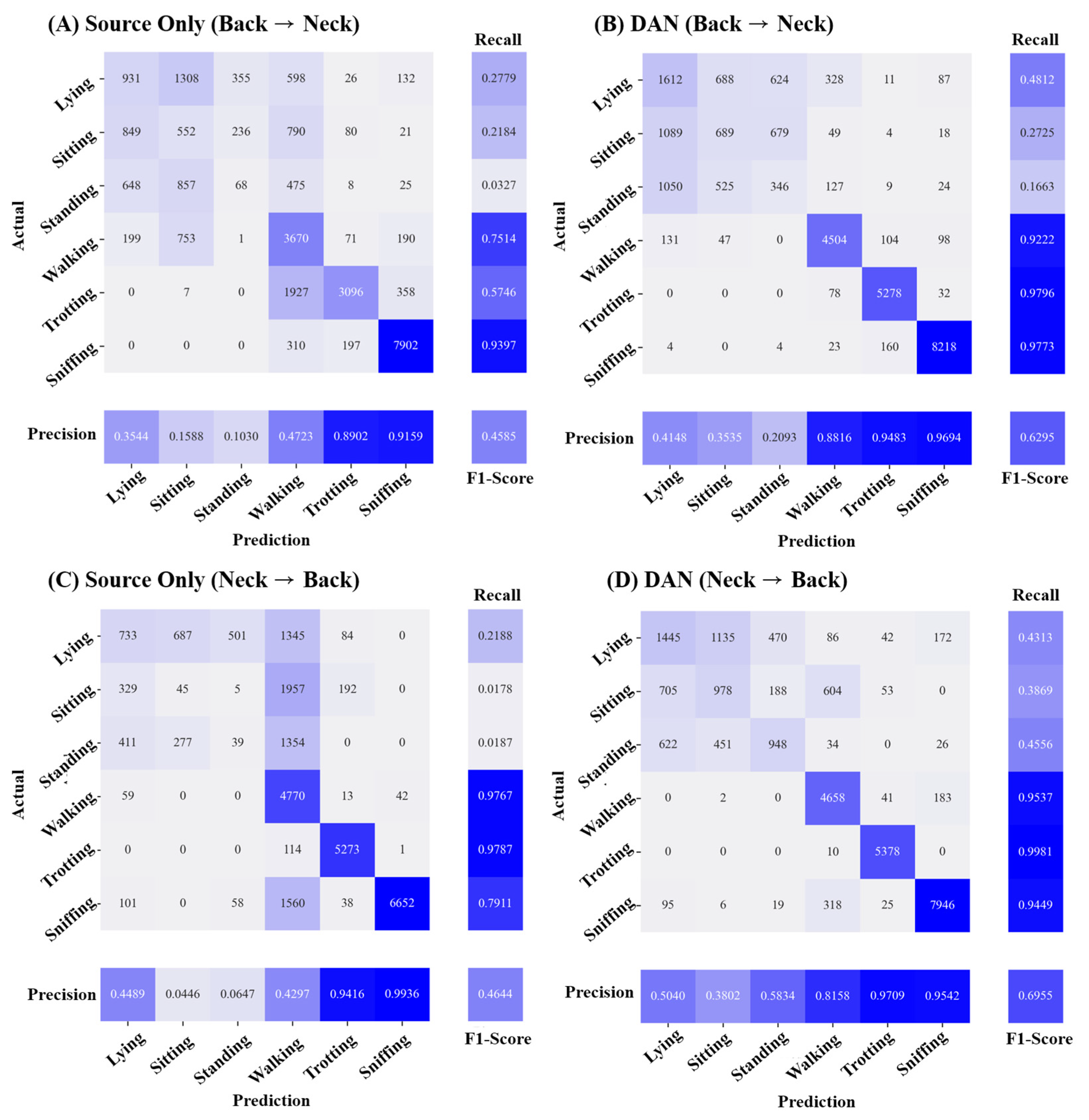
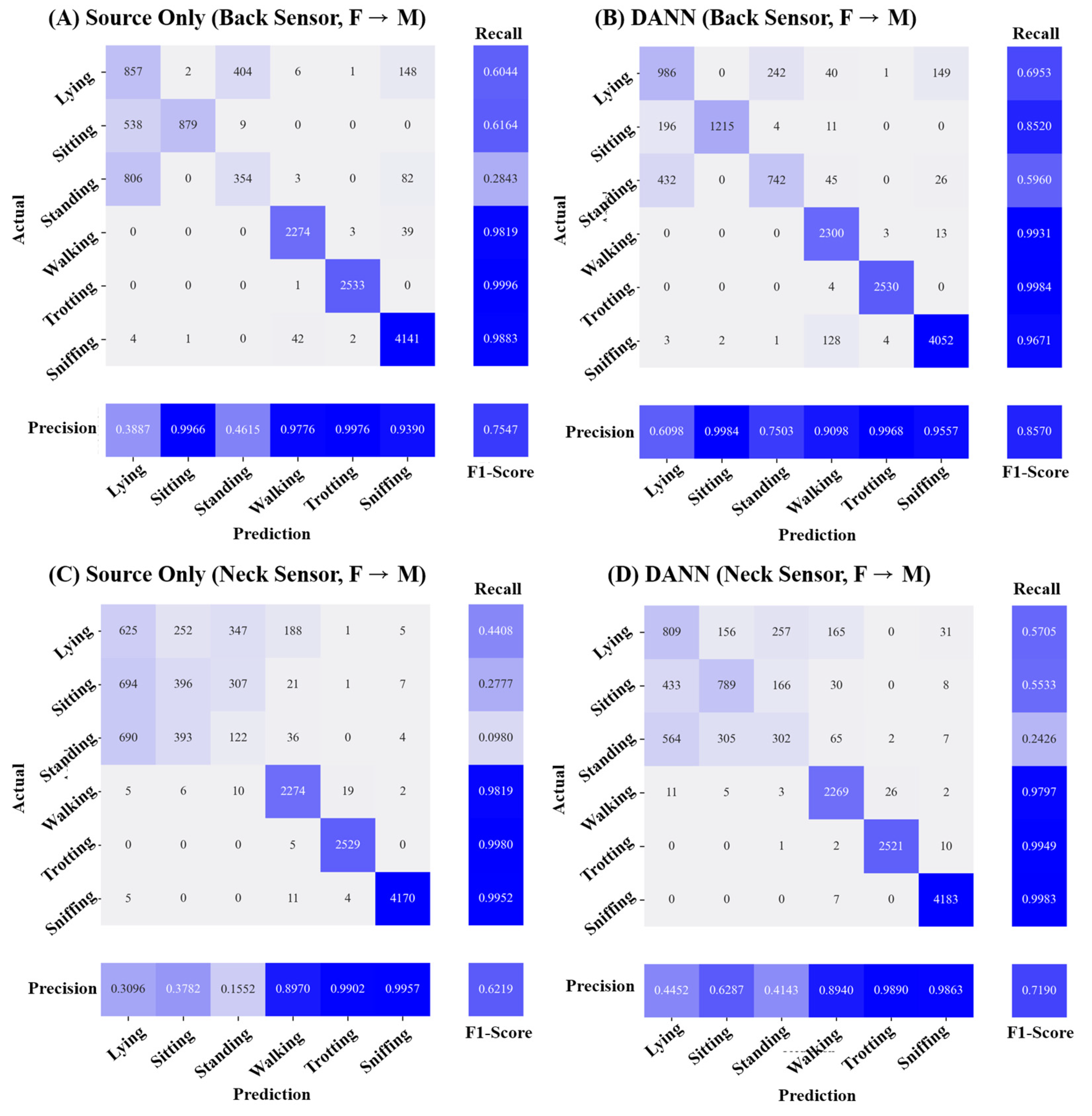
Animal activity recognition (AAR) using wearable sensor data has gained significant attention due to its applications in monitoring and understanding animal behavior. However, two major challenges hinder the development of robust AAR models: domain variability and the difficulty of obtaining labeled datasets. To address this issue, this study intensively investigates the impact of unsupervised domain adaptation (UDA) for AAR. We compared three distinct types of UDA techniques: minimizing divergence-based, adversarial-based, and reconstruction-based approaches. By leveraging UDA, AAR classifiers enable the model to learn domain-invariant features, allowing classifiers trained on the source domain to perform well on the target domain without labels. We evaluated the effectiveness of UDA techniques using dog movement sensor data and additional data from horses. The application of UDA across sensor positions (neck and back), sizes (middle-sized and large-sized), and gender (female and male) within the dog data, as well as across species (dog and horses), exhibits significant improvements in the classification performance and reduced the domain discrepancy. The results highlight the potential of UDA to mitigate the domain shift and enhance AAR in various settings and for different animal species, providing valuable insights for practical applications in real-world scenarios where labeled data is scarce.