Effects of High-Intensity Laser Therapy (HILT) on Skin Surface Temperature and Vein Diameter in Healthy Racehorses with Clipped and Non-Clipped Coat
by
 , , and
Paulina Zielińska
1 ,
,
Maria Soroko-Dubrovina
2,*,
Karolina Śniegucka
2,
Krzysztof Dudek
3 and
Nina Čebulj-Kadunc
4 1
Department of Surgery, Faculty of Veterinary Medicine, Wroclaw University of Environmental and Life Sciences, Plac Grunwaldzki 51, 50-366 Wrocław, Poland
2
Institute of Animal Breeding, Wroclaw University of Environmental and Life Sciences, Chelmonskiego 38C, 51-630 Wrocław, Poland
3
Center for Statistical Analysis, Wroclaw Medical University, Marcinkowskiego 2-6, 50-368 Wrocław, Poland
4
Institute of Preclinical Sciences, Veterinary Faculty, University of Ljubljana, Gerbičeva 60, 1000 Ljubljana, Slovenia
*
Author to whom correspondence should be addressed.
Animals 2023, 13(2), 216; https://doi.org/10.3390/ani13020216
Submission received: 28 November 2022
/
Revised: 14 December 2022
/
Accepted: 3 January 2023
/
Published: 6 January 2023
(This article belongs to the Section Equids)
Simple Summary
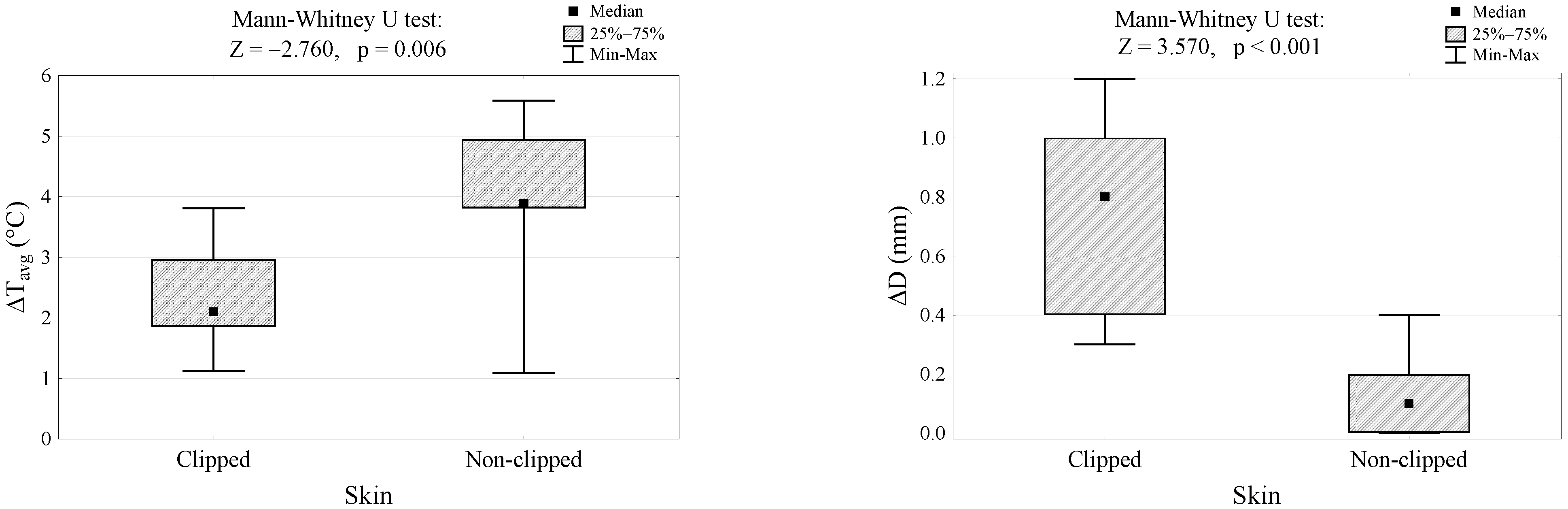
The use of high-intensity laser therapy (HILT) has recently been introduced in equine veterinary medicine. The goal of the research was to evaluate the effects of HILT on skin surface temperature and vein diameter in the carpal joint region in 20 racehorses divided into two groups: with clipped (n = 10) and non-clipped coat (n = 10) in the area of application. The hypothesis was that HILT would lead to a greater increase in skin surface temperature and vein diameter in the clipped coat group than in the non-clipped group. Variations in vein diameter and skin surface temperature were assessed before and after HILT. The HILT treatment resulted in a greater increase in skin surface temperature in the non-clipped coat group horses compared to the clipped group, while vein diameter increased more in the clipped group horses compared to the non-clipped group. Larger increases in skin surface temperature can be achieved with a non-clipped coat. Coat clipping of the treatment area increases vein diameter, while reducing skin surface temperature. Further research is needed to specify the parameters for treatment of skin areas with clipped and non-clipped coat in order to perform effective laser therapy.
Abstract
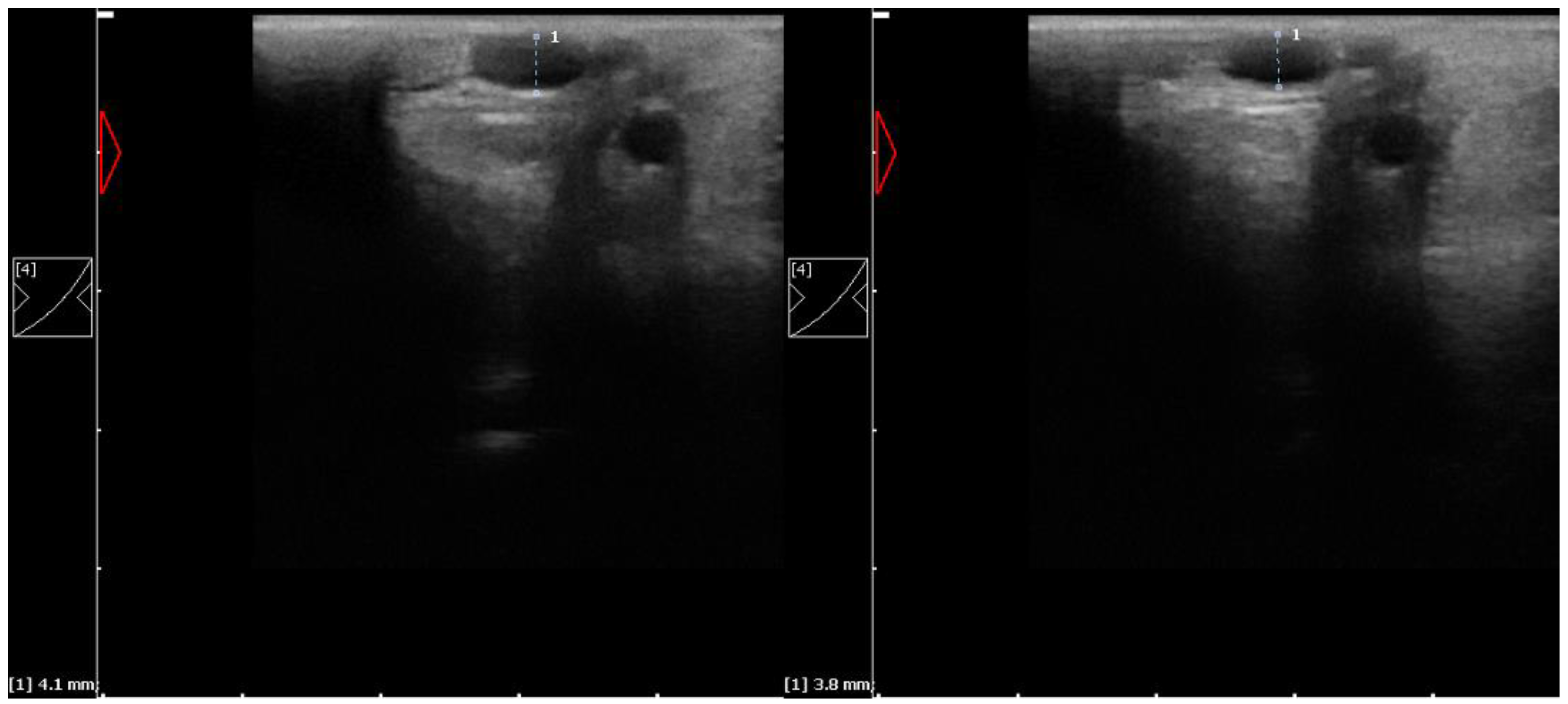
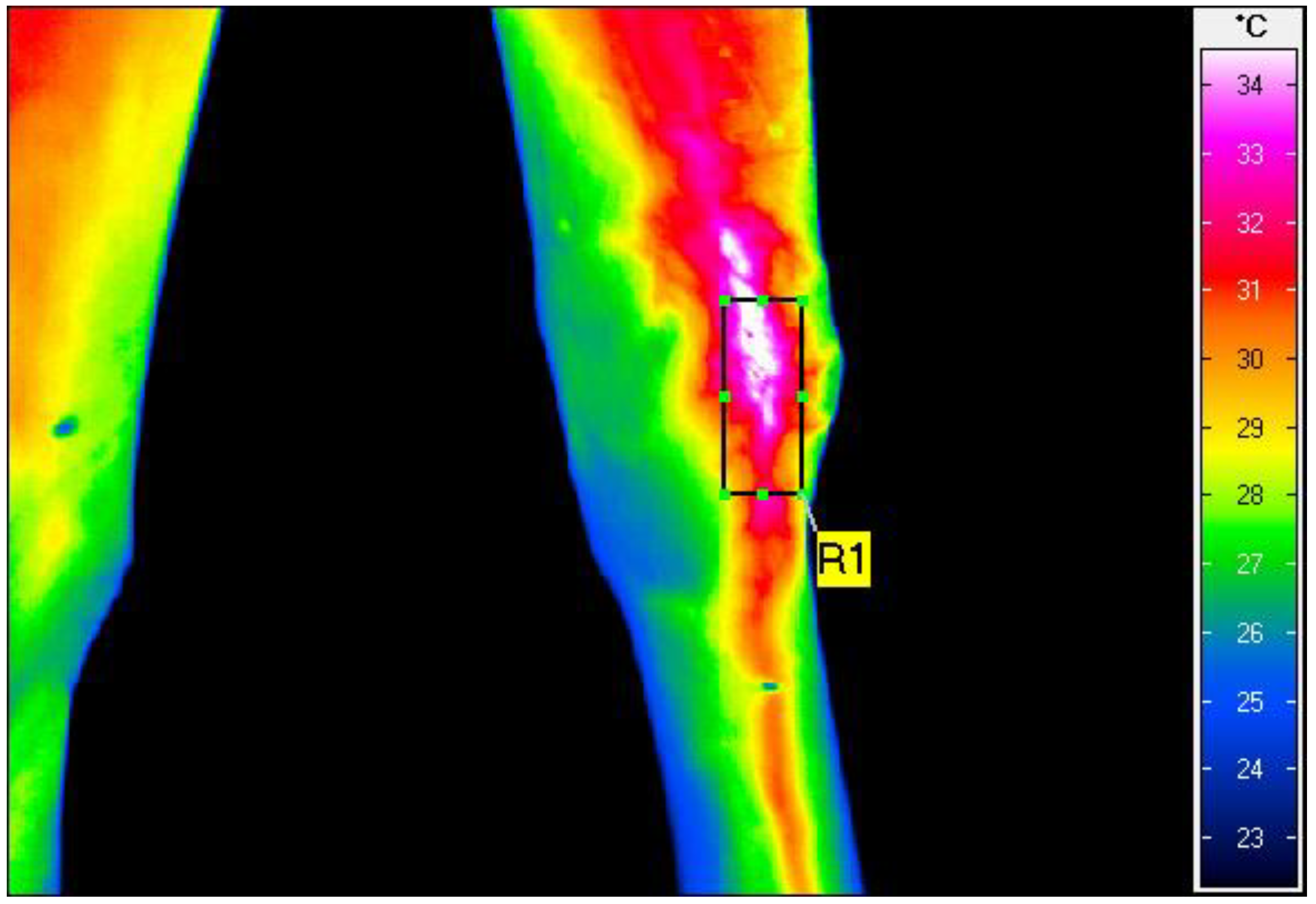
The aim of this study was to investigate the differences in the effects of high-intensity laser therapy (HILT) on skin surface temperature and vein diameter in the carpal joint region in racehorses with clipped and non-clipped treatment areas. The study included 20 Thoroughbreds split into two equal groups: clipped coat and non-clipped coat. Horses underwent thermographic examination to detect changes in skin surface temperature at the medial surface of the carpal joint, followed by ultrasonographic examination to assess changes in the diameter of the medial palmar vein before and after HILT. The increase in skin surface temperature after HILT was significantly lower in the group with clipped coat than in the non-clipped group. The group with clipped coat showed a greater increase in vessel diameter. There was a significantly weak negative correlation between the changes in average skin surface temperature and vein diameter in both groups. In conclusion, an efficient photothermal effect can be achieved in skin with a non-clipped coat and clipping the treatment area increases photobiostimulation of the tissue, while reducing the photothermal effect. Further research is needed to specify the parameters for the treatment of skin with clipped and non-clipped coat in order to perform effective laser therapy.