The Influencing Factors of “Post-African Swine Fever” Pig Farm Biosecurity: Evidence from Sichuan Province, China
by
 ,
,
Huan Wang
1,†,
Meijun Chen
1,†,
Ziyao Guo
1,
Yangyang Shen
1,
Yufan Chen
1,
Ting Luo
1,
Yuying Liu
1,
Jianqiang Li
1,
Fang Wang
1 and
Jiangjun Wan
2,* 1
College of Management, Sichuan Agricultural University, Chengdu 611130, China
2
College of Architecture and Urban-Rural Planning, Sichuan Agricultural University, Chengdu 611830, China
*
Author to whom correspondence should be addressed.
†
These authors contributed equally to this work.
Animals 2023, 13(19), 3053; https://doi.org/10.3390/ani13193053
Submission received: 22 August 2023
/
Revised: 23 September 2023
/
Accepted: 27 September 2023
/
Published: 28 September 2023
(This article belongs to the Special Issue African Swine Fever Virus Transmission and Control: The Role of Wild and Domestic Suids)
Simple Summary
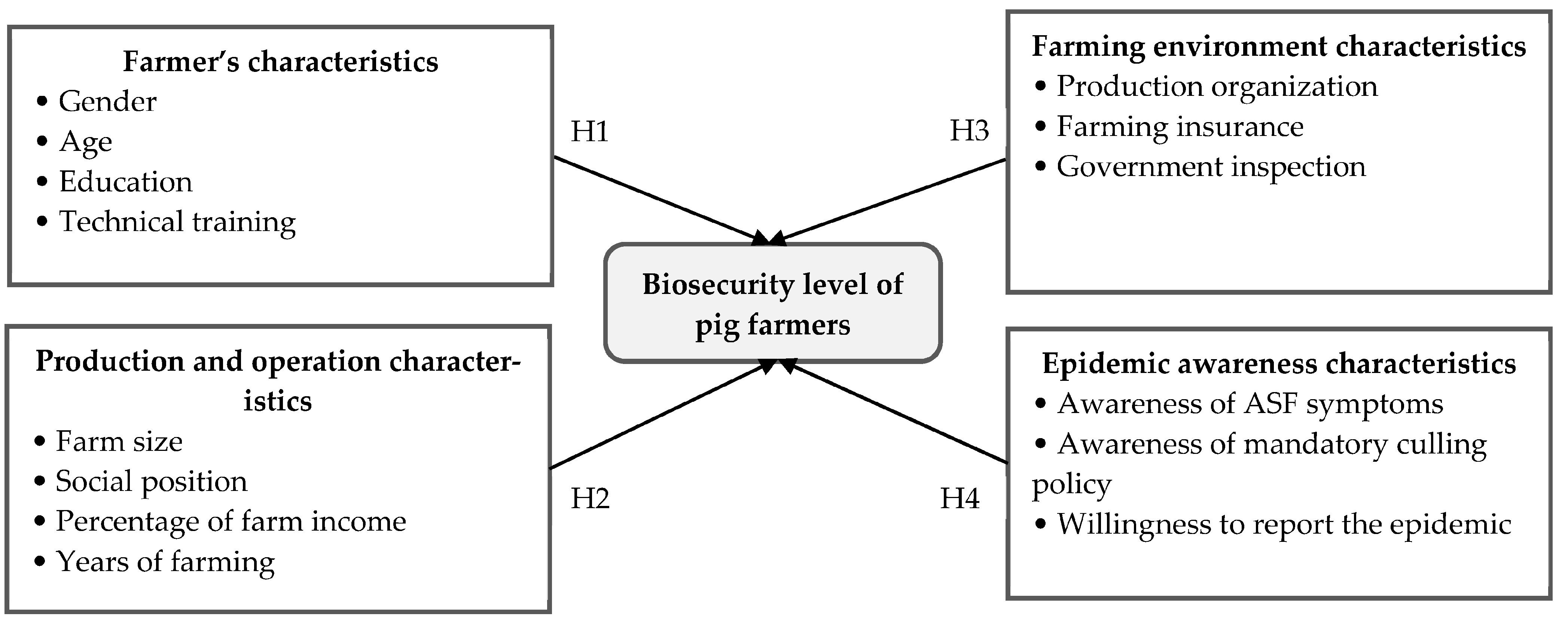
African swine fever (ASF) has a significant impact on the pig industry, leading to drastic fluctuations in the supply and price of live pigs on the market, leading to substantial economic losses for farmers. As China enters the ‘post-ASF’ era of regular epidemic prevention and control, the behavior of farmers becomes crucial for effectively preventing and controlling major animal epidemics. To analyze the current situation and factors influencing farmers’ epidemic prevention and control behaviors, survey data were empirically analyzed. The findings indicate that the overall level of biosecurity in pig farms is low. Additionally, factors such as technical training, farm size, income share, production organization, and government inspection significantly influence farmers’ adoption of biosecurity measures.
Abstract
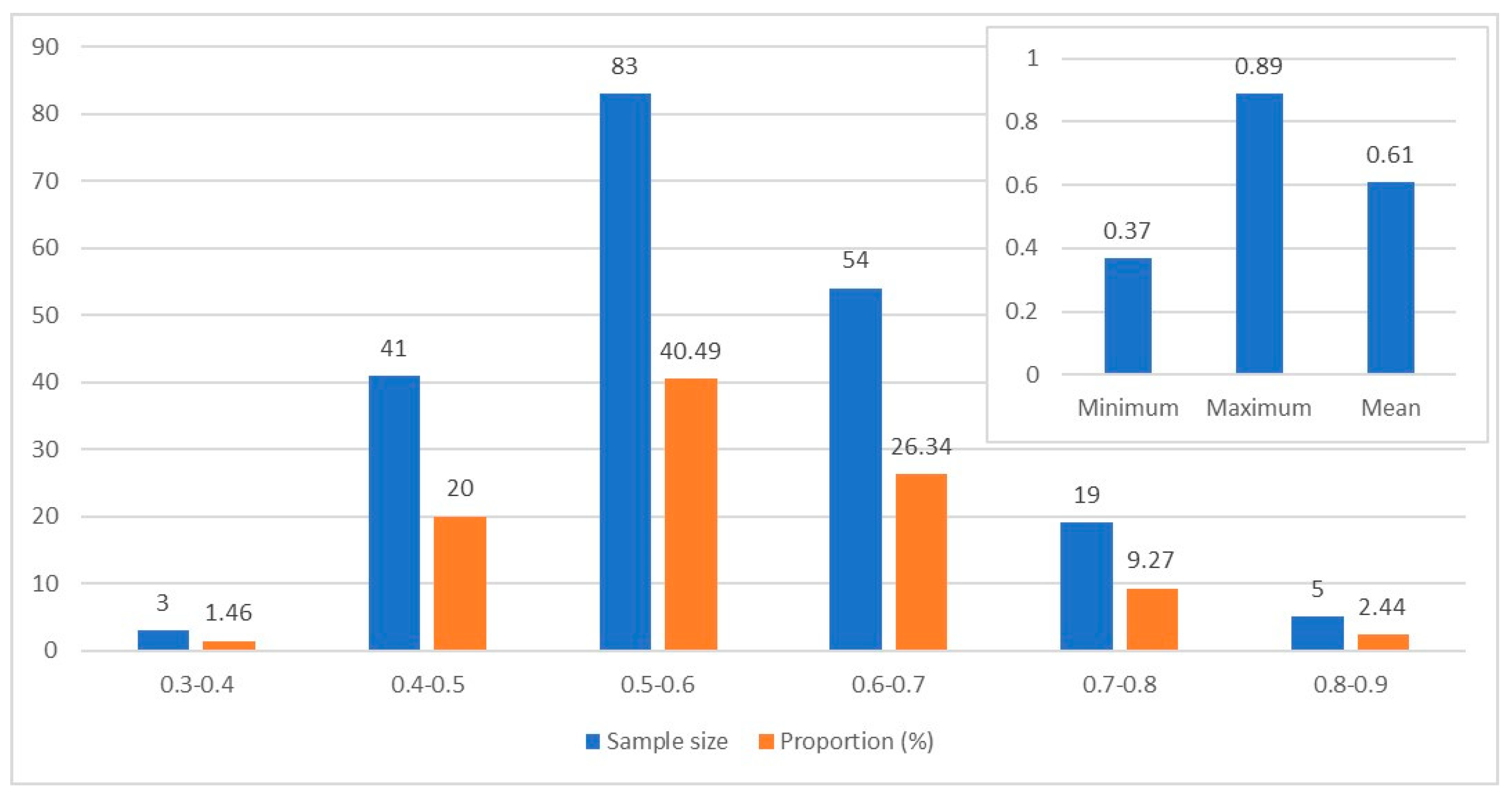
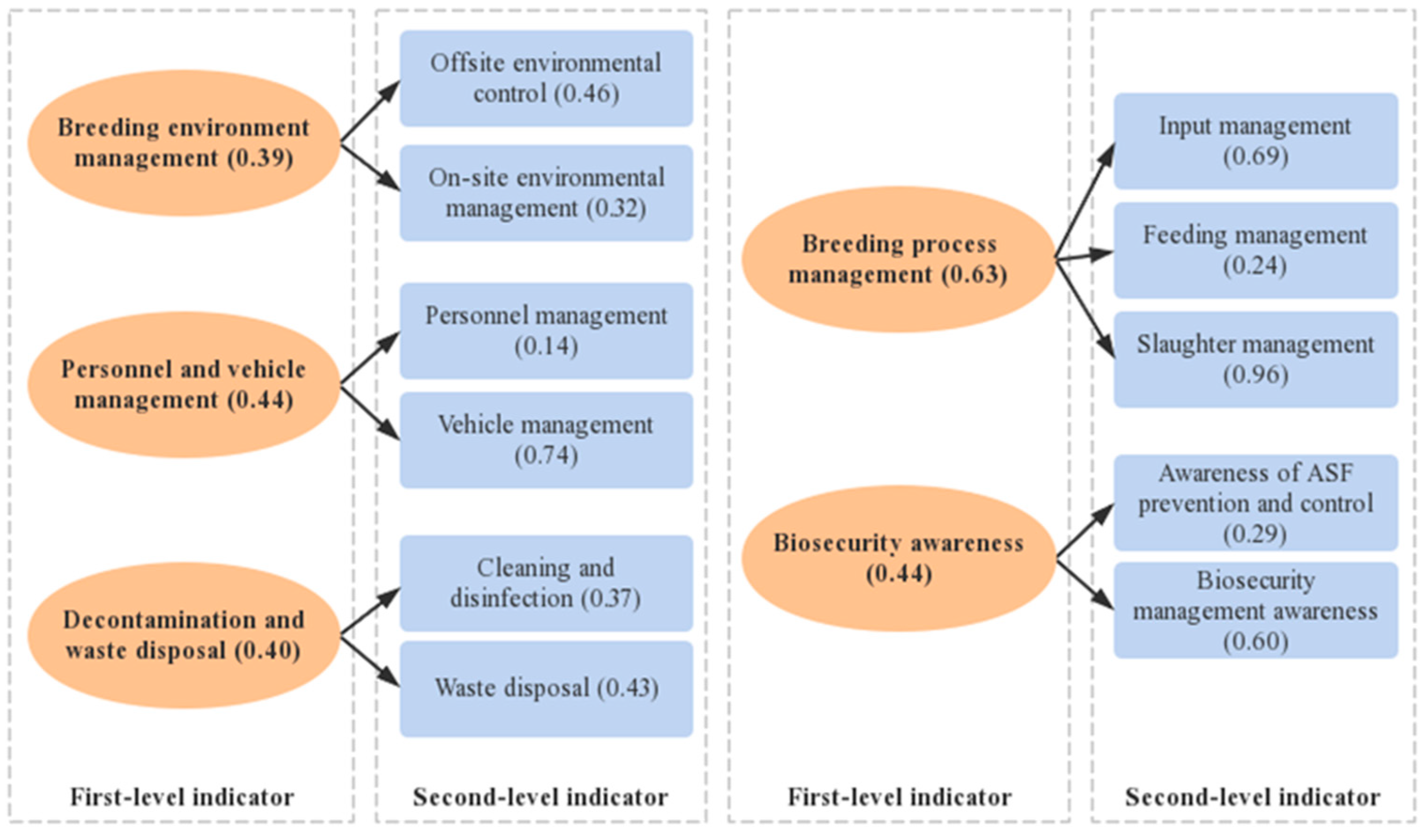
Effective biosecurity measures are crucial in controlling and preventing major pig diseases, ultimately ensuring farm income and social stability. This study extracted data from 205 farmer surveys in Sichuan Province, China, to construct a biosecurity index system for pig farms. The biosecurity levels of pig farms were evaluated using a projection pursuit method to identify weak areas. The Tobit model was then utilized to determine the factors that influenced the biosecurity levels. The results indicated that the overall biosecurity levels of the pig farms were low. The study found that the average biosecurity score among farms was 0.61, with a minimum score of 0.37 and a maximum score of 0.89 (on a scale of 0 to 1). These results suggest that there are significant differences in biosecurity levels among the farms. The study also found that the scores for first-level indicators related to breeding environment management, as well as second-level indicators related to personnel management and awareness of African swine fever prevention and control, were significantly lower than scores for other indicators in the farmers’ biosecurity systems. This study investigated the factors influencing biosecurity on farms and found that technical training, farm size, income share, production organization, and government inspections had a significant impact on the level of biosecurity implemented. This study emphasizes the significance of biosecurity in enhancing pig farm biosecurity and its role in improving farm resilience to major animal diseases like African swine fever. It also provides valuable insights for policymakers to make informed decisions regarding related policies.
Keywords:
pig farmers; biosecurity; African swine fever; influencing factors