Migration Route of Sthenoteuthis oualaniensis in the South China Sea Based on Statolith Trace Element Information
by
 , ,
, ,
Jiangtao Fan
1,2,
Zhou Fang
3,
Shengwei Ma
1,2,
Peng Zhang
1,2,
Xue Feng
1,2 and
Zuozhi Chen
1,2,4,* 
1
South China Sea Fisheries Research Institute, Guangzhou 510300, China
2
Key Laboratory for Sustainable Utilization of Open-Sea Fishery, Ministry of Agriculture and Rural Affairs, Guangzhou 510300, China
3
College of Marine Sciences, Shanghai Ocean University, Shanghai 201306, China
4
Southern Marine Science and Engineering Guangdong Laboratory (Guangzhou), Guangzhou 511458, China
*
Author to whom correspondence should be addressed.
Animals 2023, 13(18), 2811; https://doi.org/10.3390/ani13182811
Submission received: 25 June 2023
/
Revised: 15 August 2023
/
Accepted: 1 September 2023
/
Published: 5 September 2023
(This article belongs to the Section Aquatic Animals)
Simple Summary
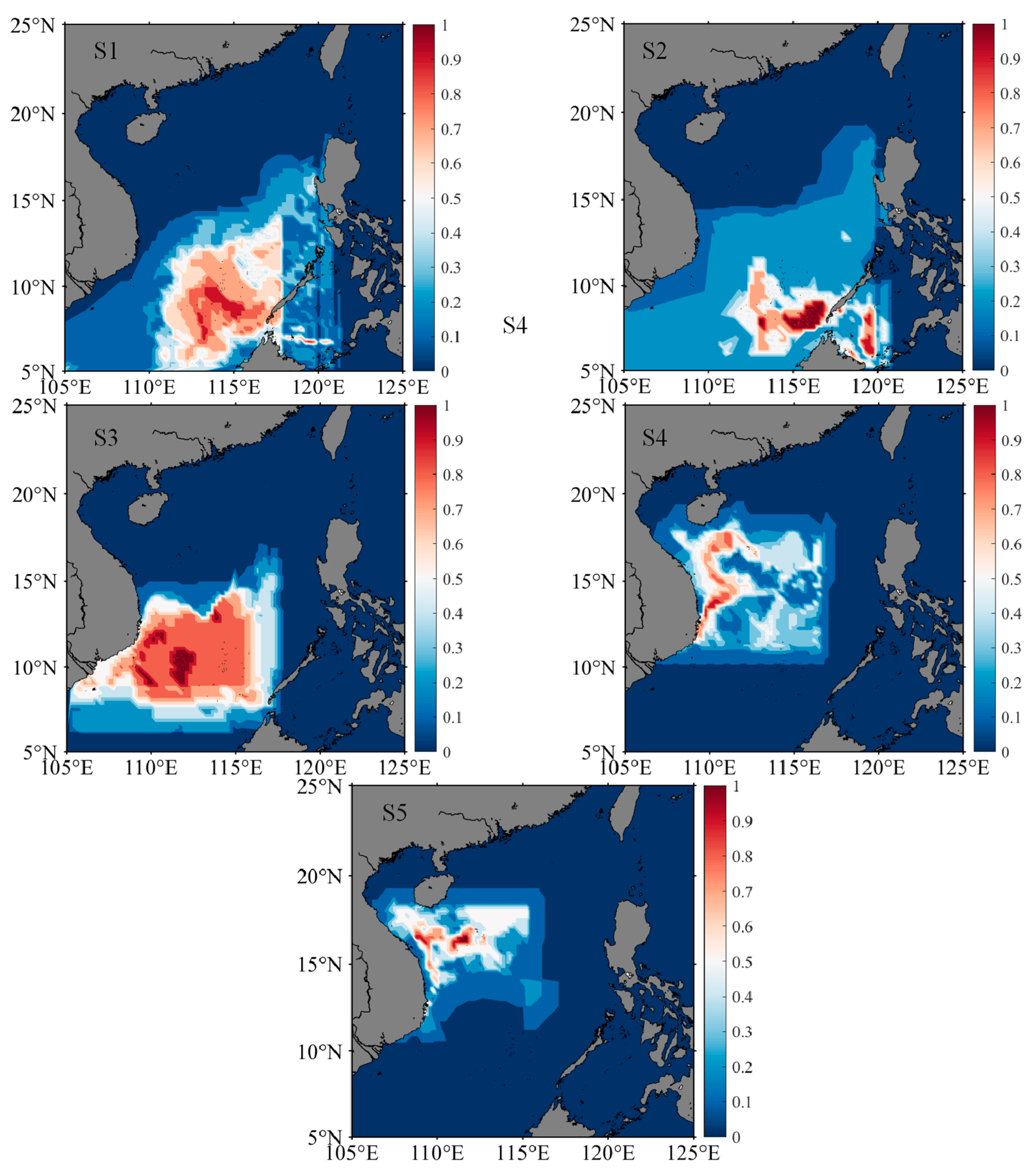
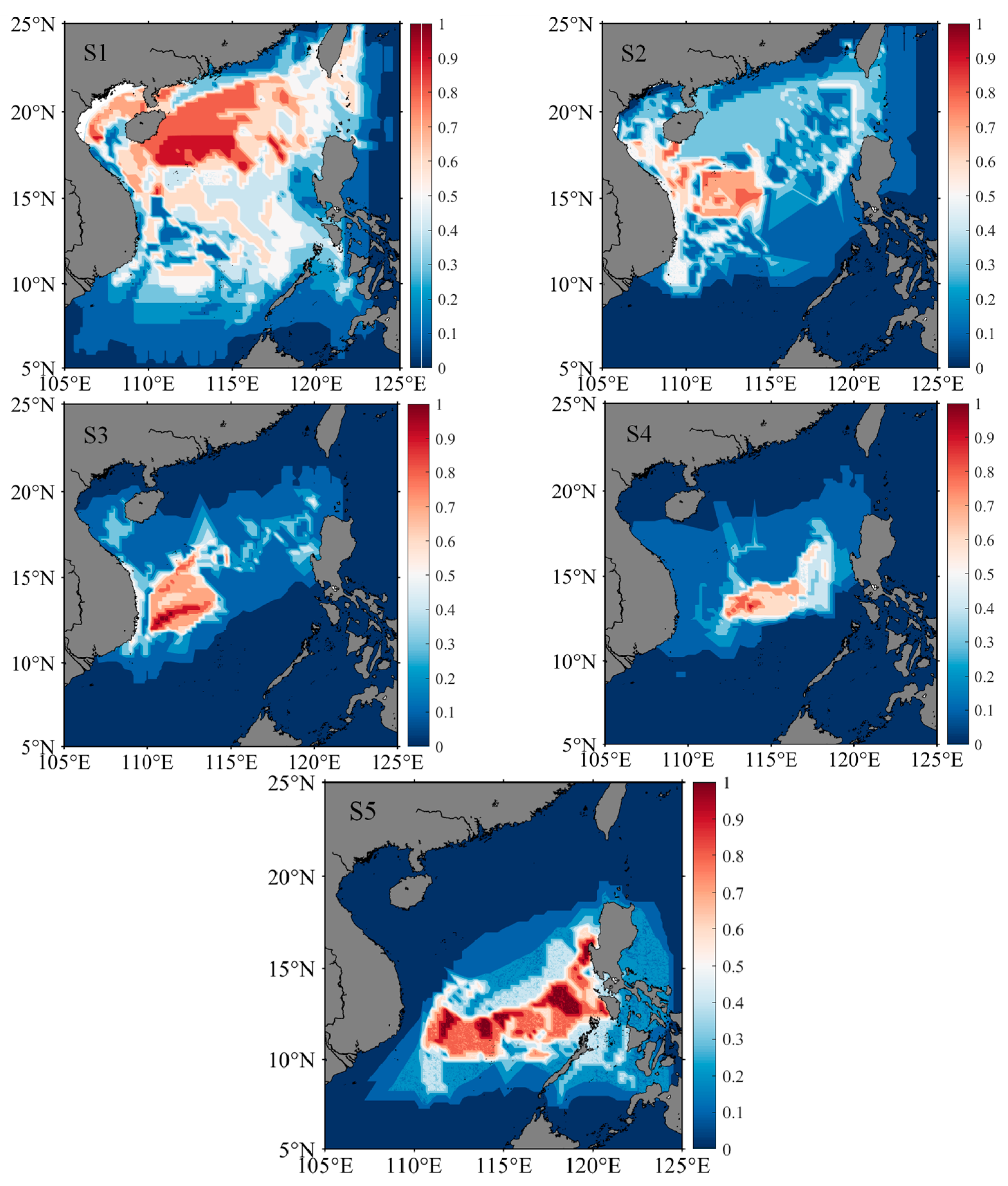
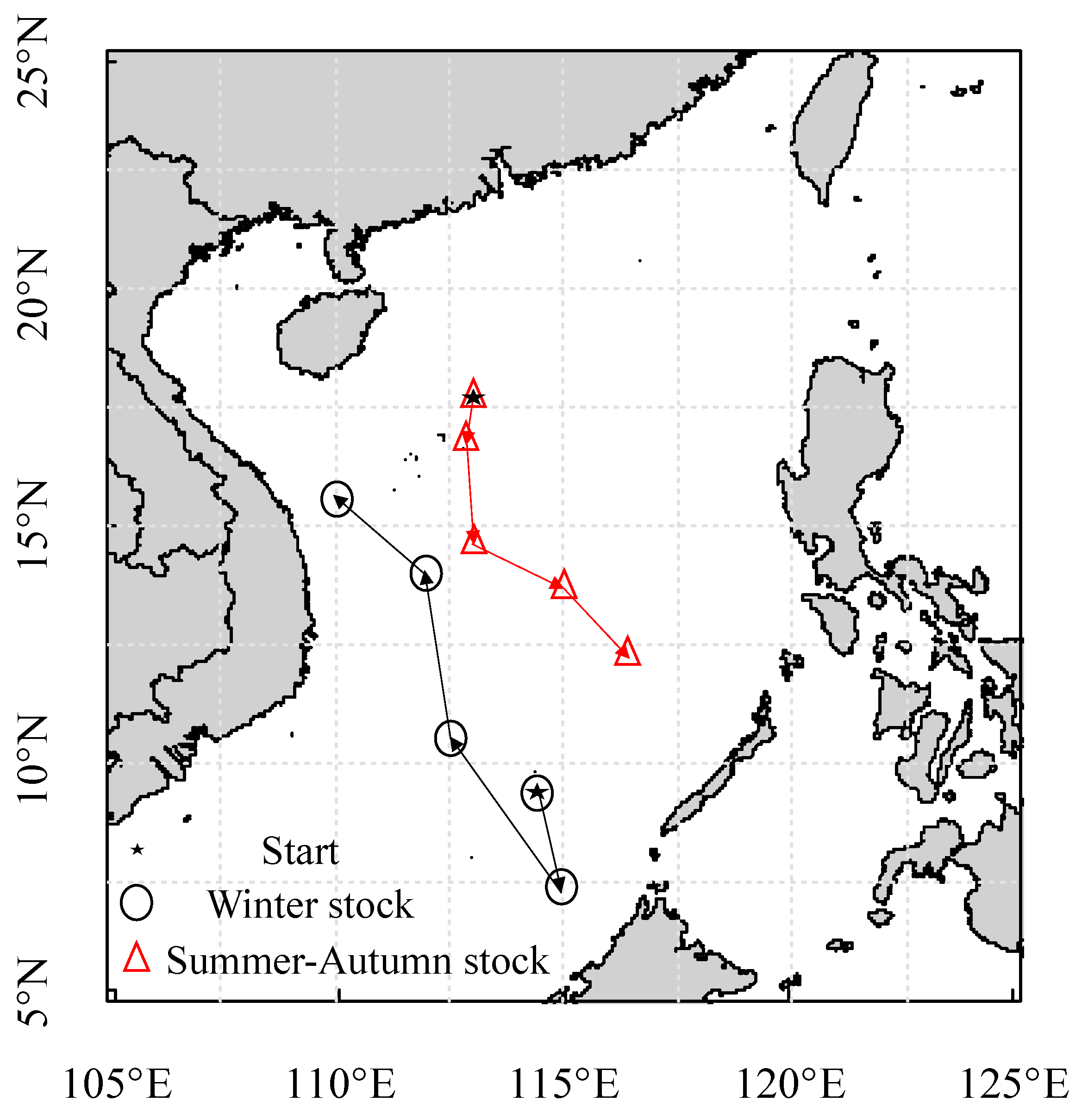
Sthenoteuthis oualaniensis is an economically important cephalopod in the South China Sea. This species demonstrates rapid growth and has a complex population structure and a wide range of migration. It is an important predator and prey in its ecosystem. Statoliths are hard cephalopod tissues, and the biogeochemical information they contain is an effective material for analyzing the characteristics of the organism’s life history. The migration route of S. oualaniensis is not clear. Using a ratio of trace elements to predict and calculate a range of potential habitat sea areas, this study found that the winter stock of S. oualaniensis hatched in the southern South China Sea, and the larvae then migrated northwest during the summer monsoon. The summer–autumn stocks hatched in the northern South China Sea, and the larvae migrated southward under mesoscale closed, anticyclonic circulation in the northern South China Sea. These results provide insight into the migration of S. oualaniensis in the South China Sea.
Abstract
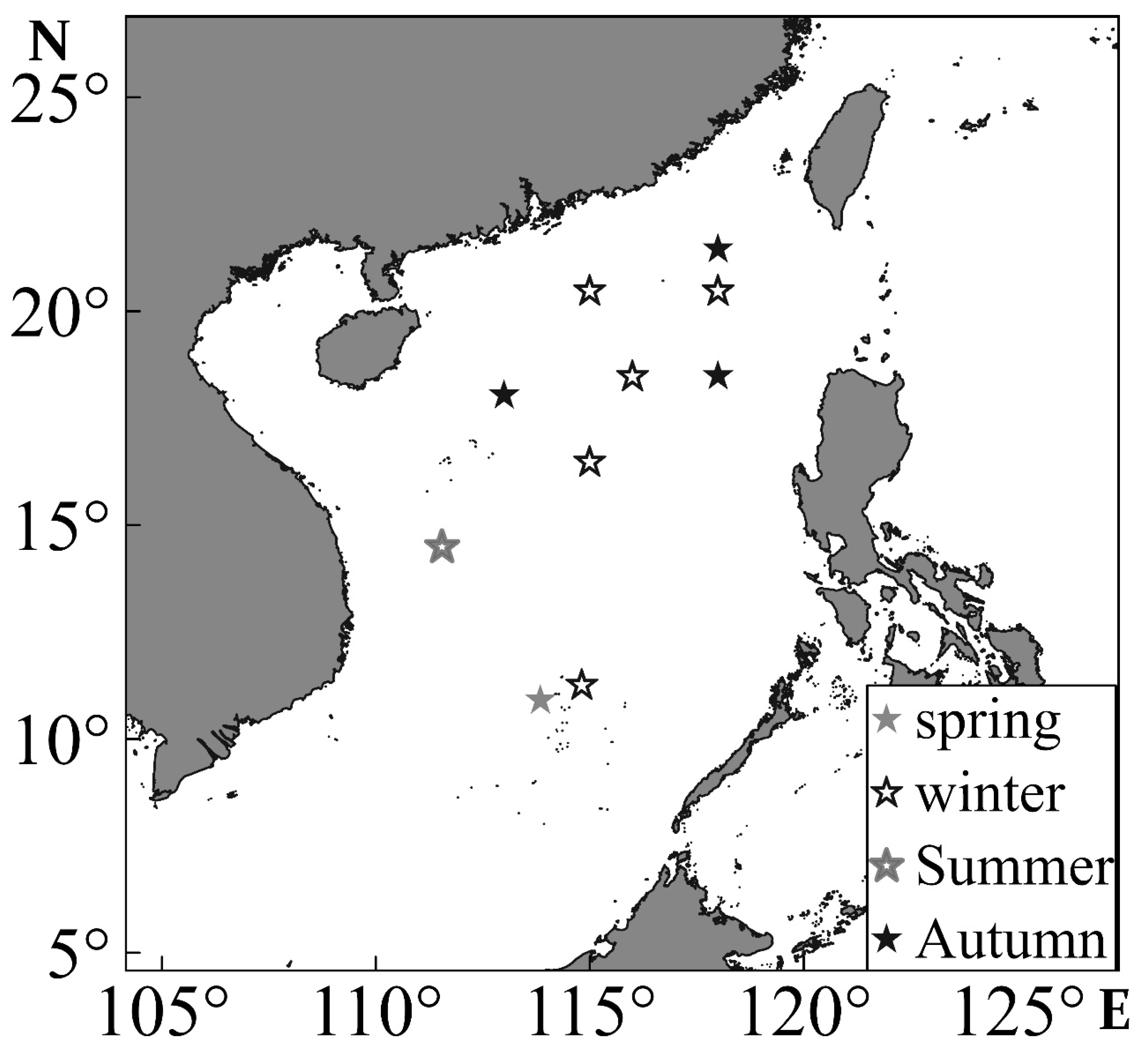
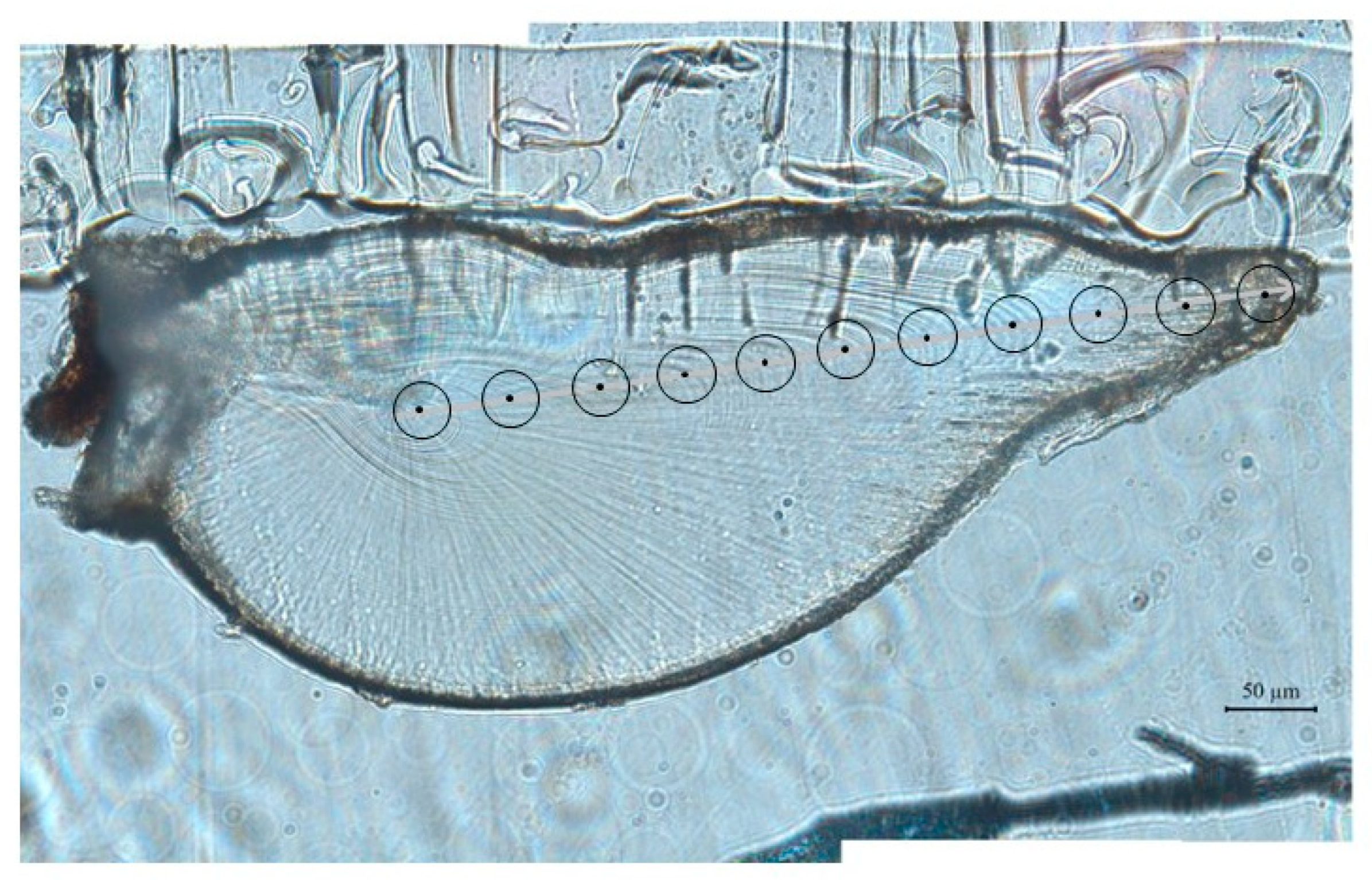
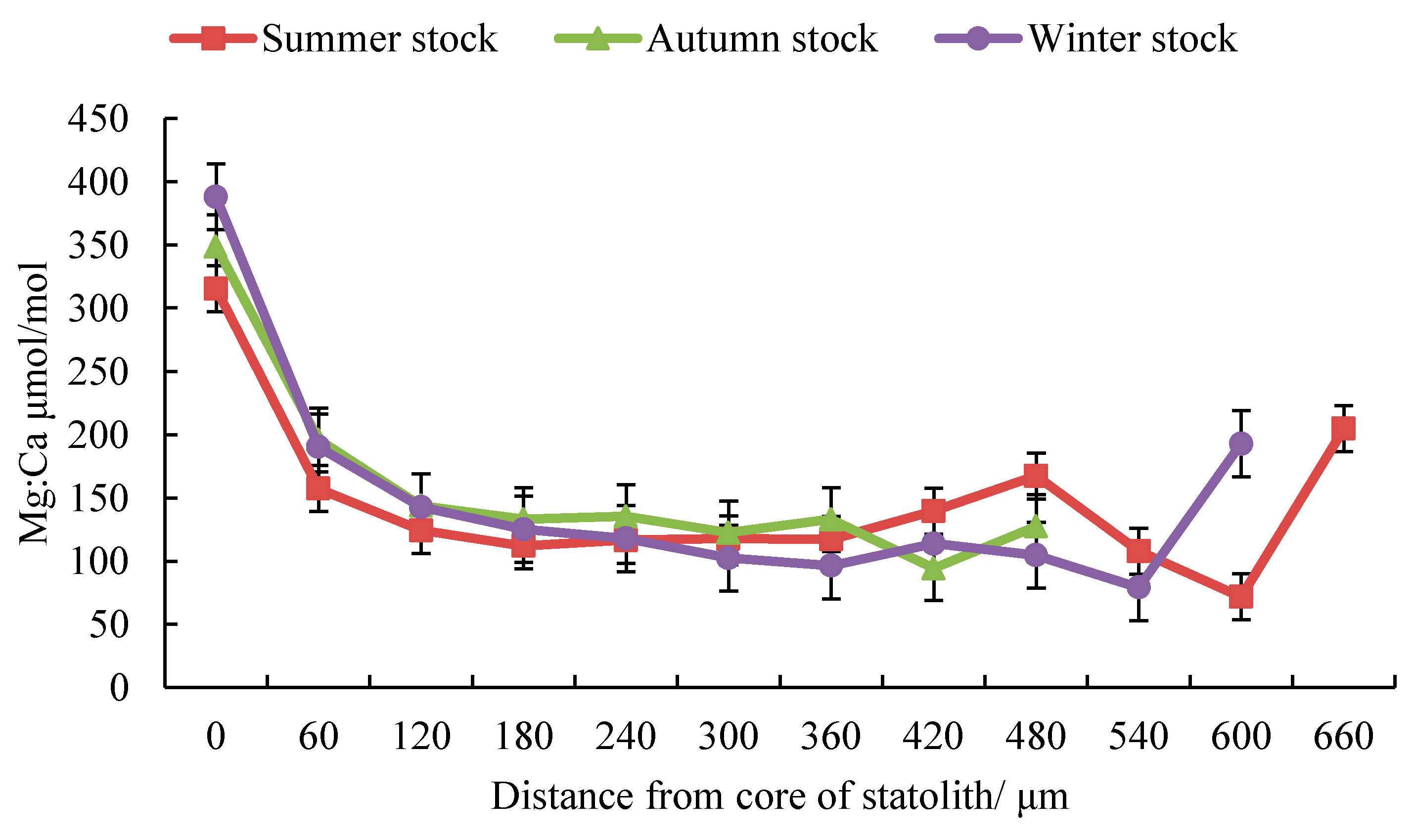
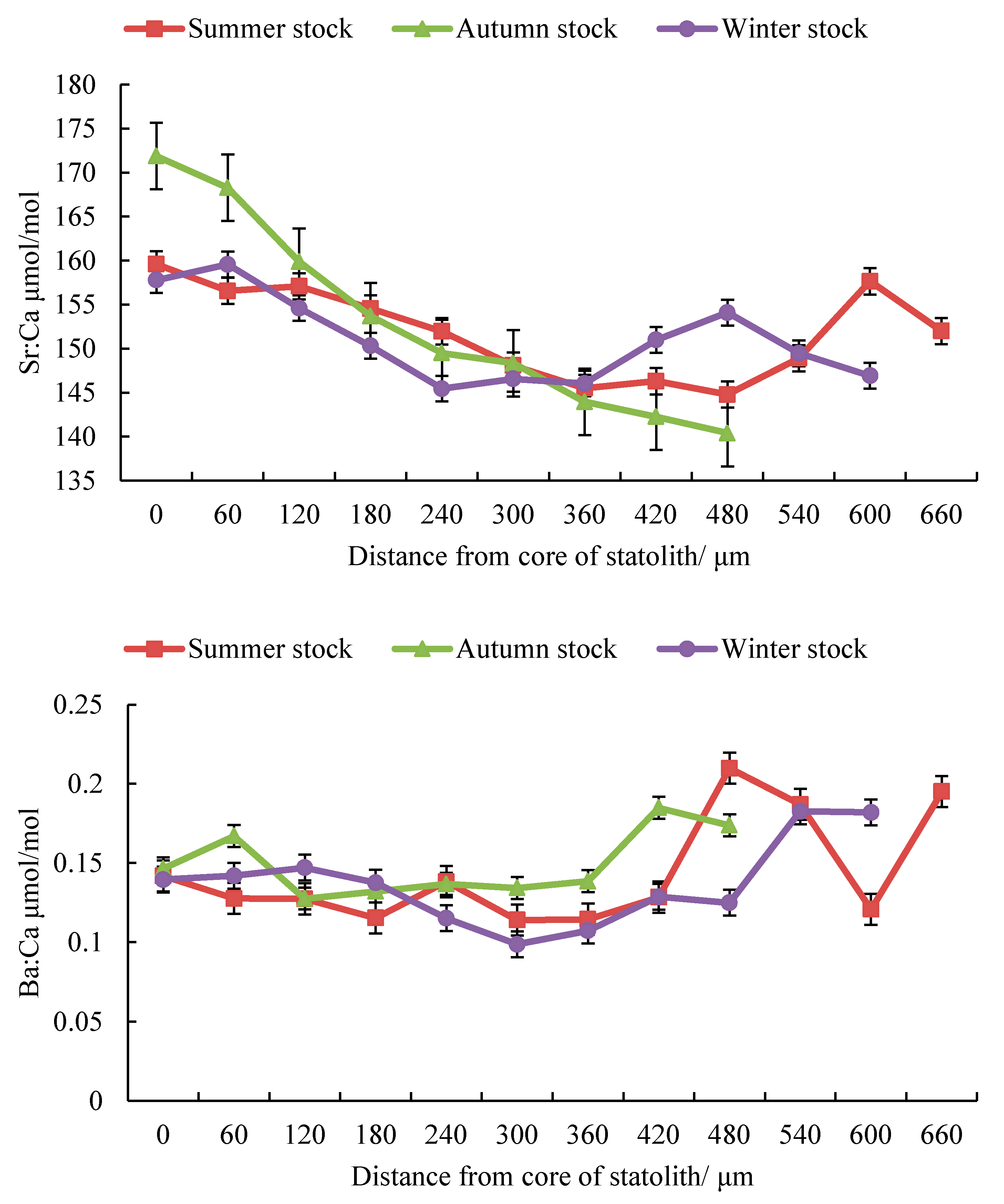
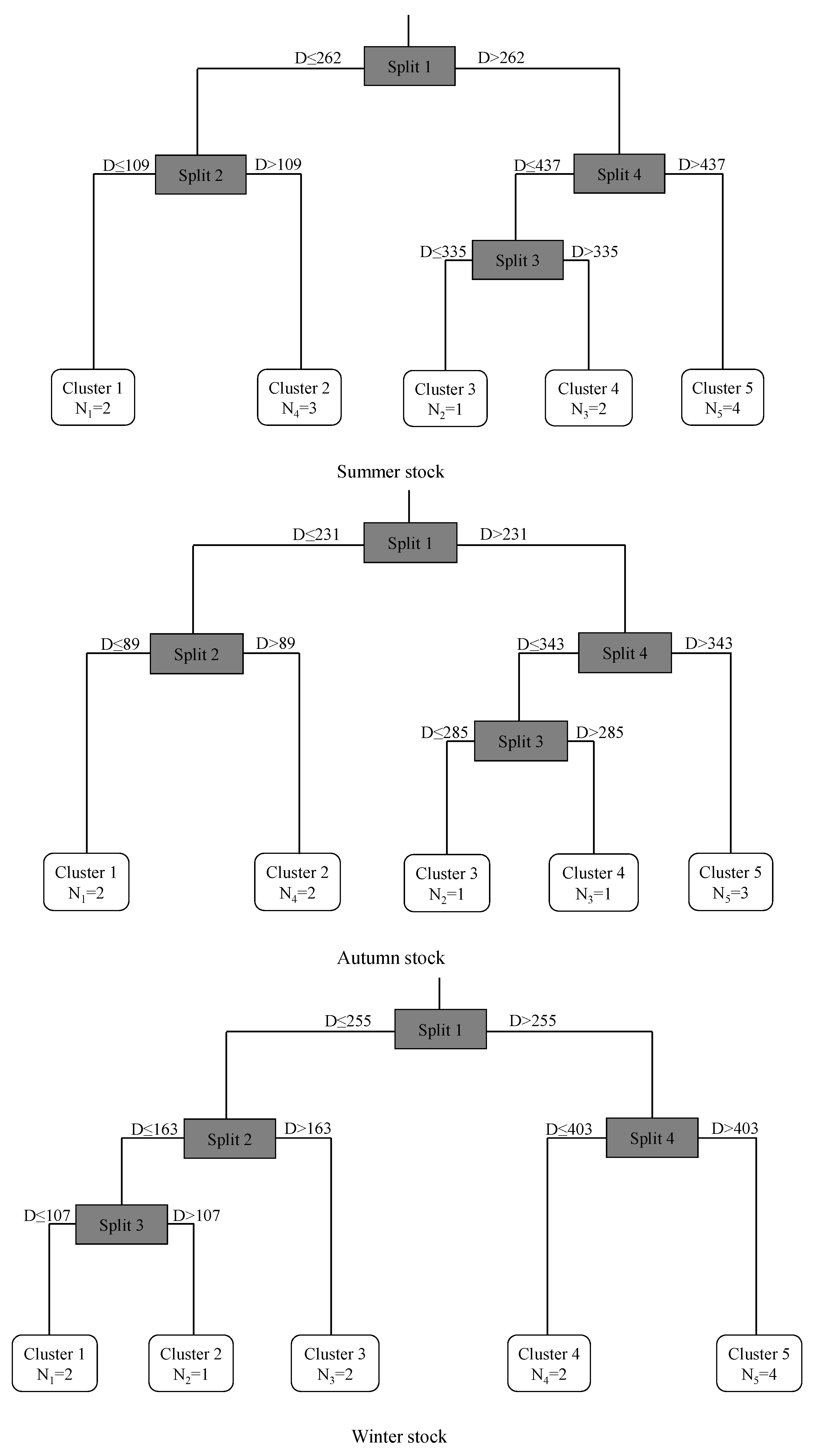
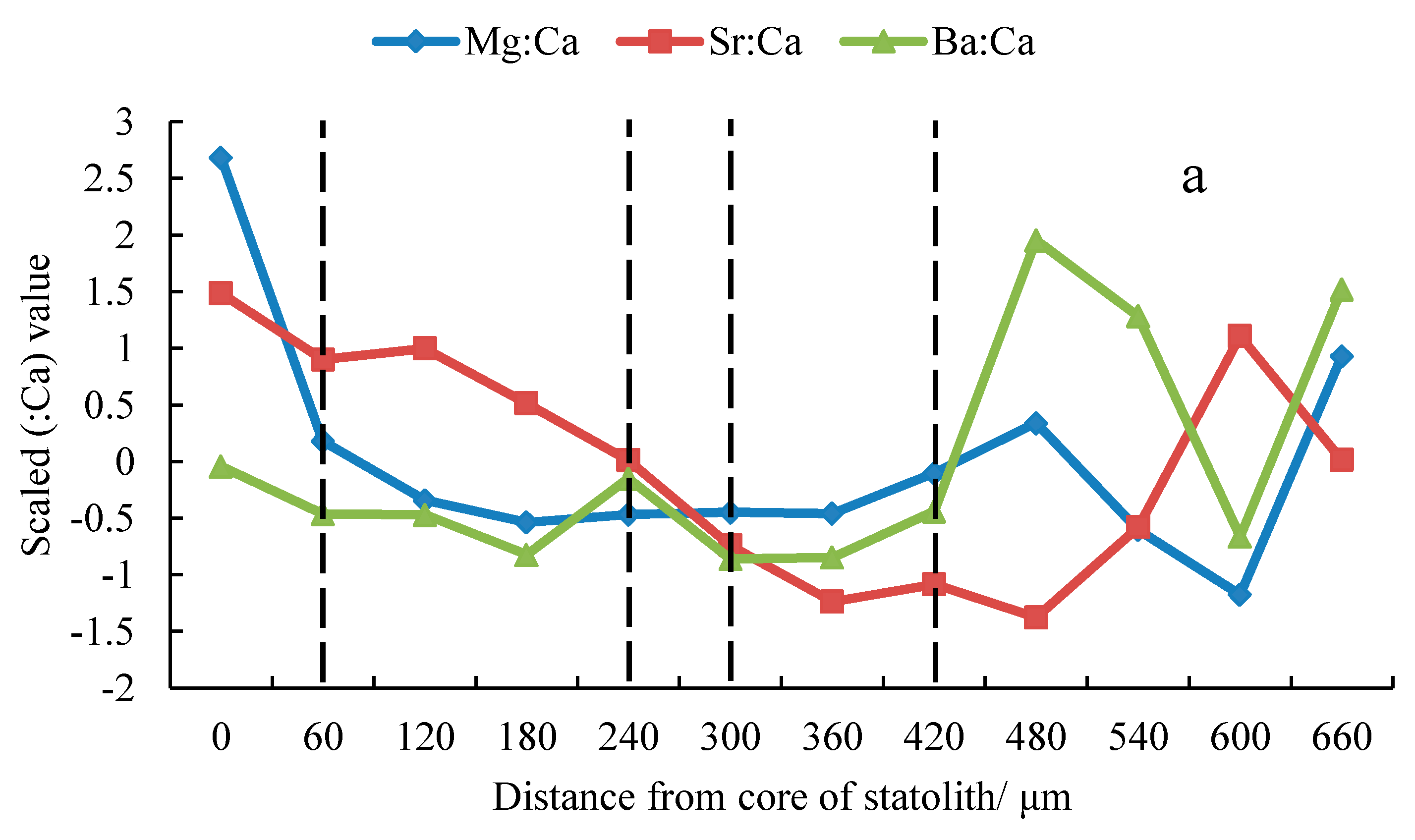
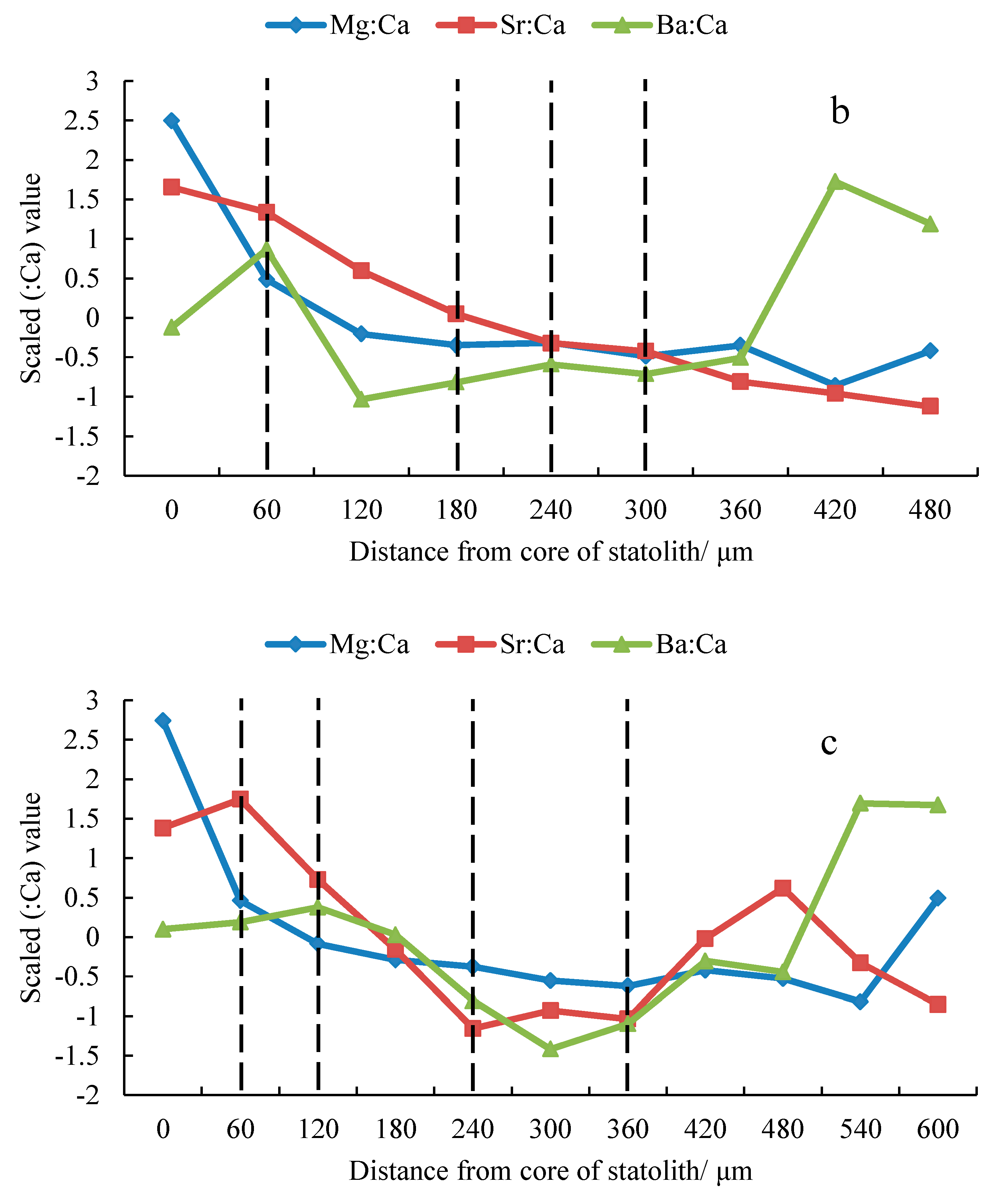
Sthenoteuthis oualaniensis (Lesson, 1830) is a pelagic species with a complex population structure and wide migration range. The trace elements in statoliths are effective indicators for reconstructing the life history of an individual. In this study, the trace elements in statoliths were determined via laser ablation inductively coupled plasma mass spectrometry, and a multiple regression tree (MRT) model was used to trace the migration of S. oualaniensis and identify its potential habitats in the South China Sea. Na, Mg, Fe, Sr, and Ba were the effective trace elements, with significant differences found among stocks (p < 0.05). The MRT was divided into five clusters representing five life history stages. The Mg:Ca and Sr:Ca ratios decreased initially and increased thereafter, and the Mg:Ca, Sr:Ca, and Ba:Ca ratios differed significantly among the stages of the life history in each stock (p < 0.05). The hatching water temperatures for the winter and summer–autumn spawning populations were 28.05–28.88 °C (temperature at 25 m) and 27.15–27.92 °C (temperature at 25 m). The winter stock hatched in the southern South China Sea, and the larvae then migrated northwest during the summer monsoon. The summer–autumn stocks hatched in the northern South China Sea, and the larvae migrated southward under the mesoscale closed anticyclonic circulation in the northern South China Sea. These results provide insight into the migration of S. oualaniensis in the South China Sea.