Biogeographic Origin of Kurixalus (Anura, Rhacophoridae) on the East Asian Islands and Tempo of Diversification within Kurixalus

1
Key Laboratory of Ecology of Rare and Endangered Species and Environmental Protection (Guangxi Normal University), Ministry of Education, Guilin 541004, China
2
Guangxi Key Laboratory of Rare and Endangered Animal Ecology, College of Life Science, Guangxi Normal University, Guilin 541004, China
*
Authors to whom correspondence should be addressed.
†
These authors contributed equally to this work.
Animals 2023, 13(17), 2754; https://doi.org/10.3390/ani13172754
Submission received: 29 June 2023
/
Revised: 31 July 2023
/
Accepted: 7 August 2023
/
Published: 30 August 2023
(This article belongs to the Section Wildlife)
Simple Summary
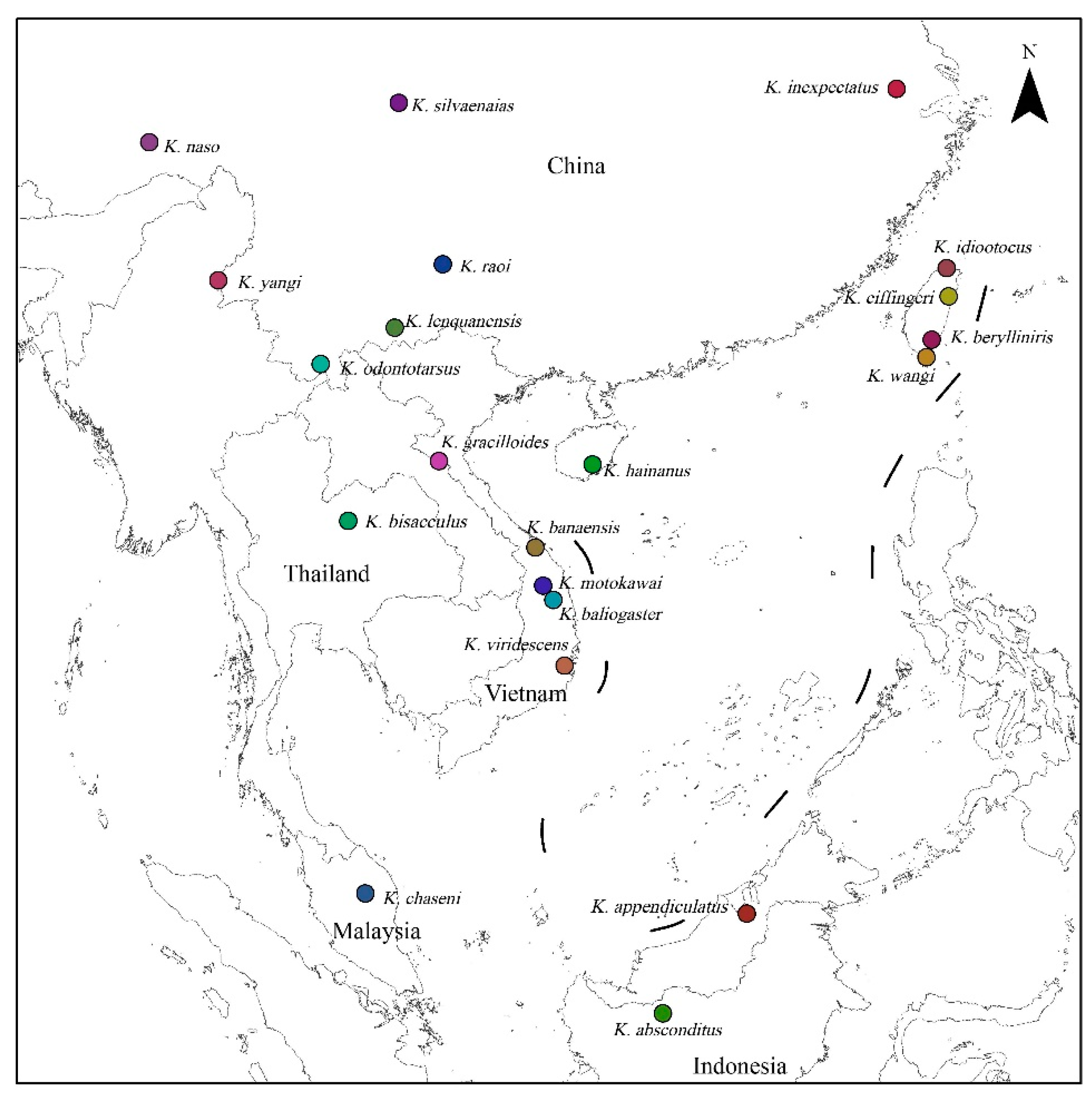
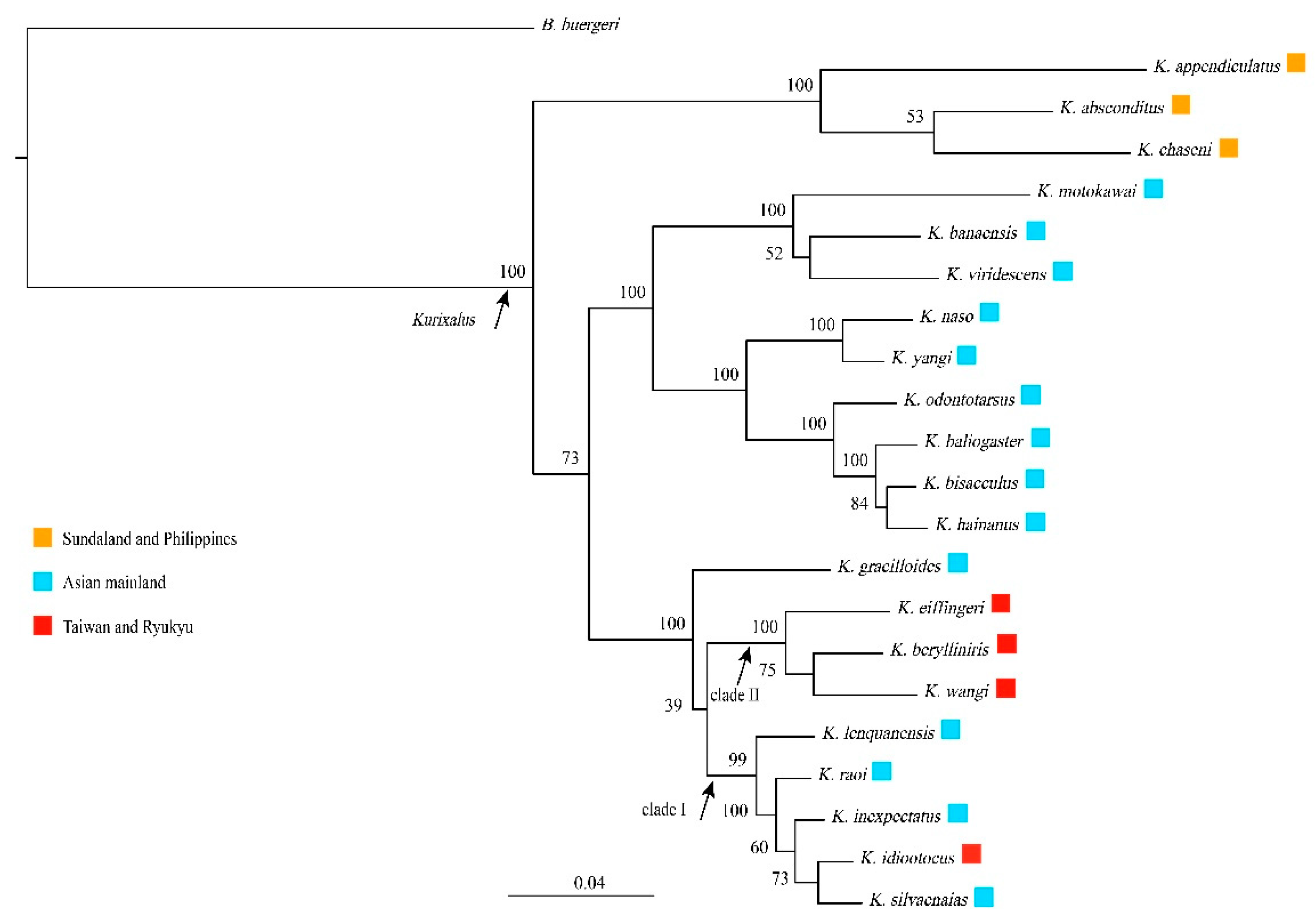
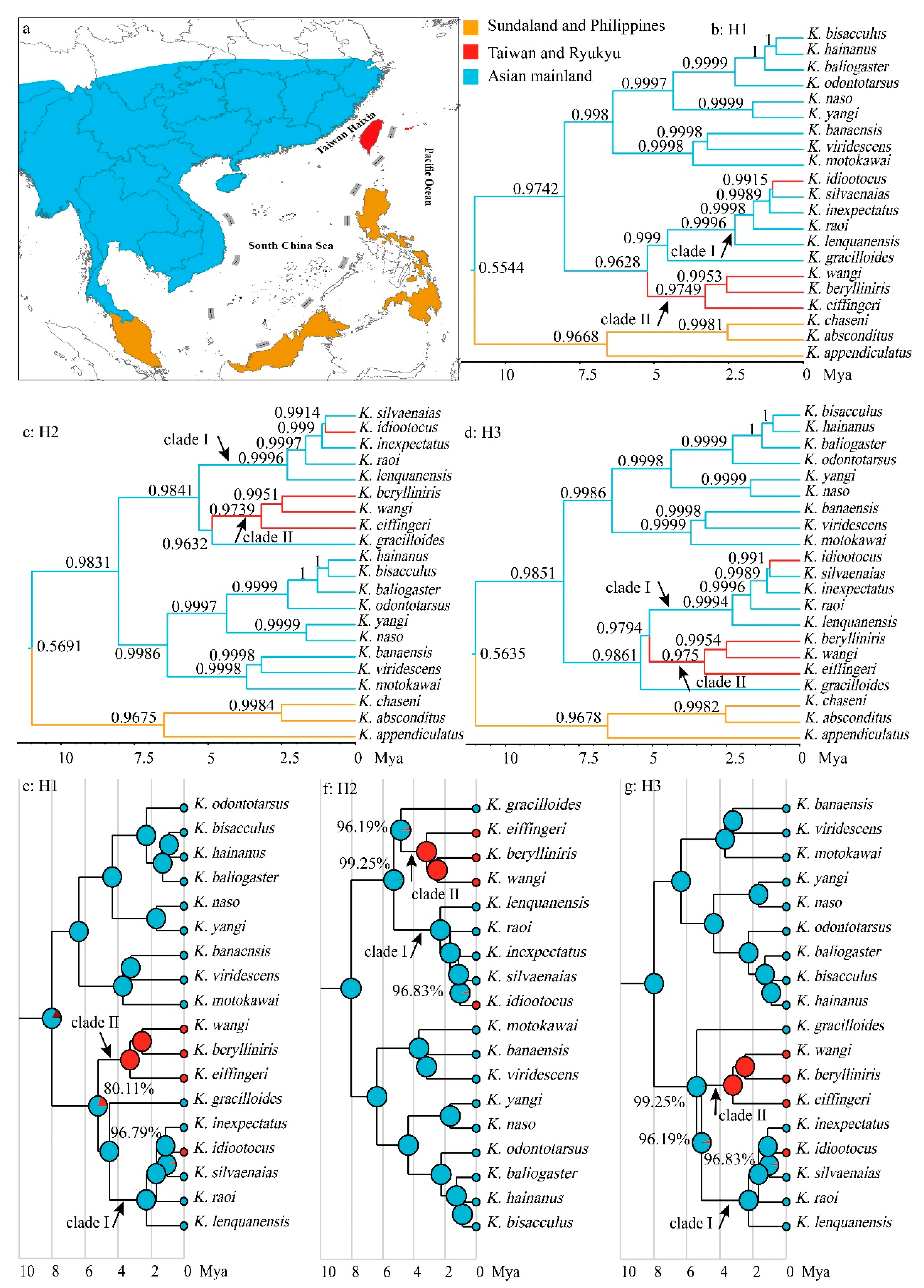
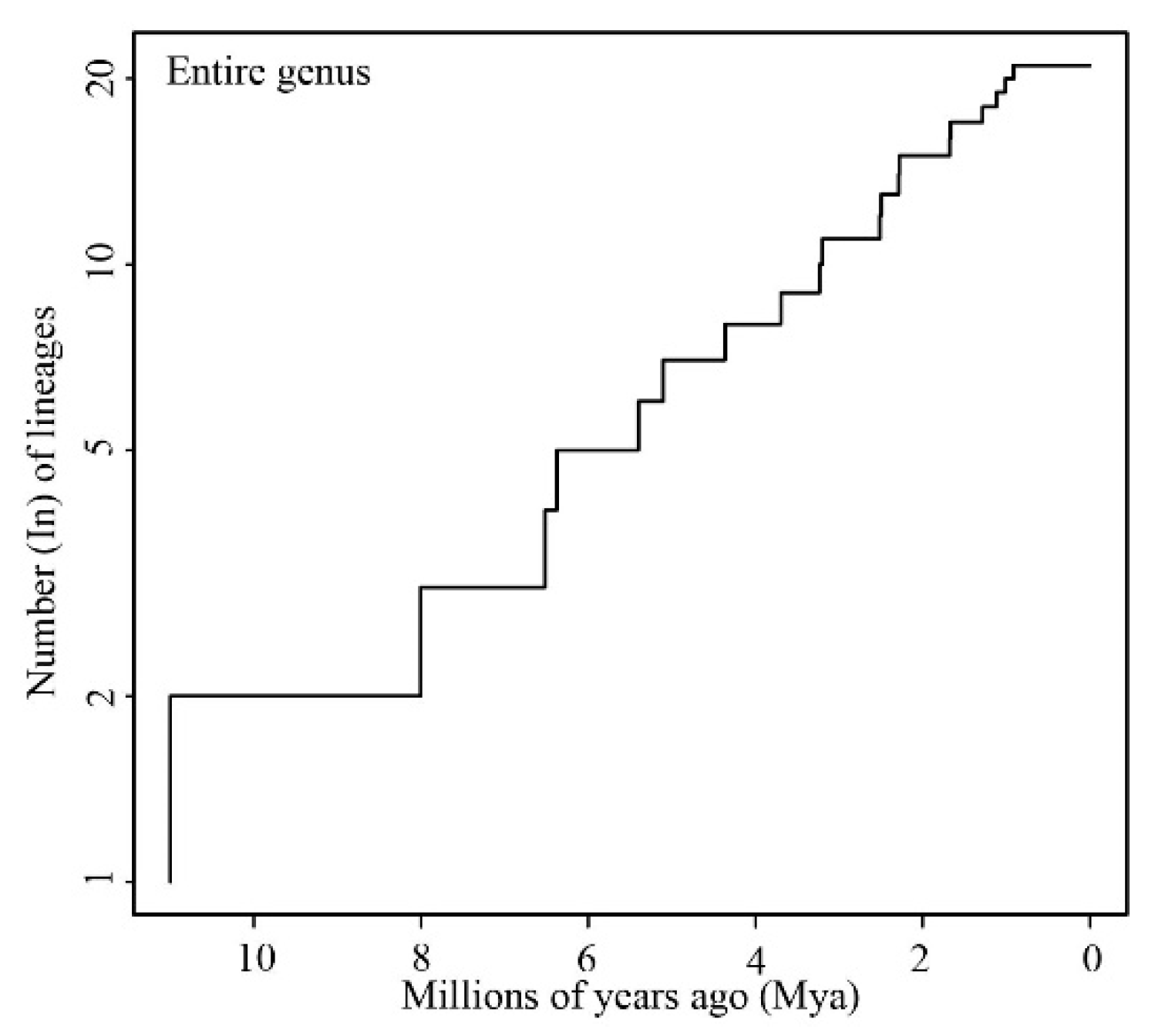
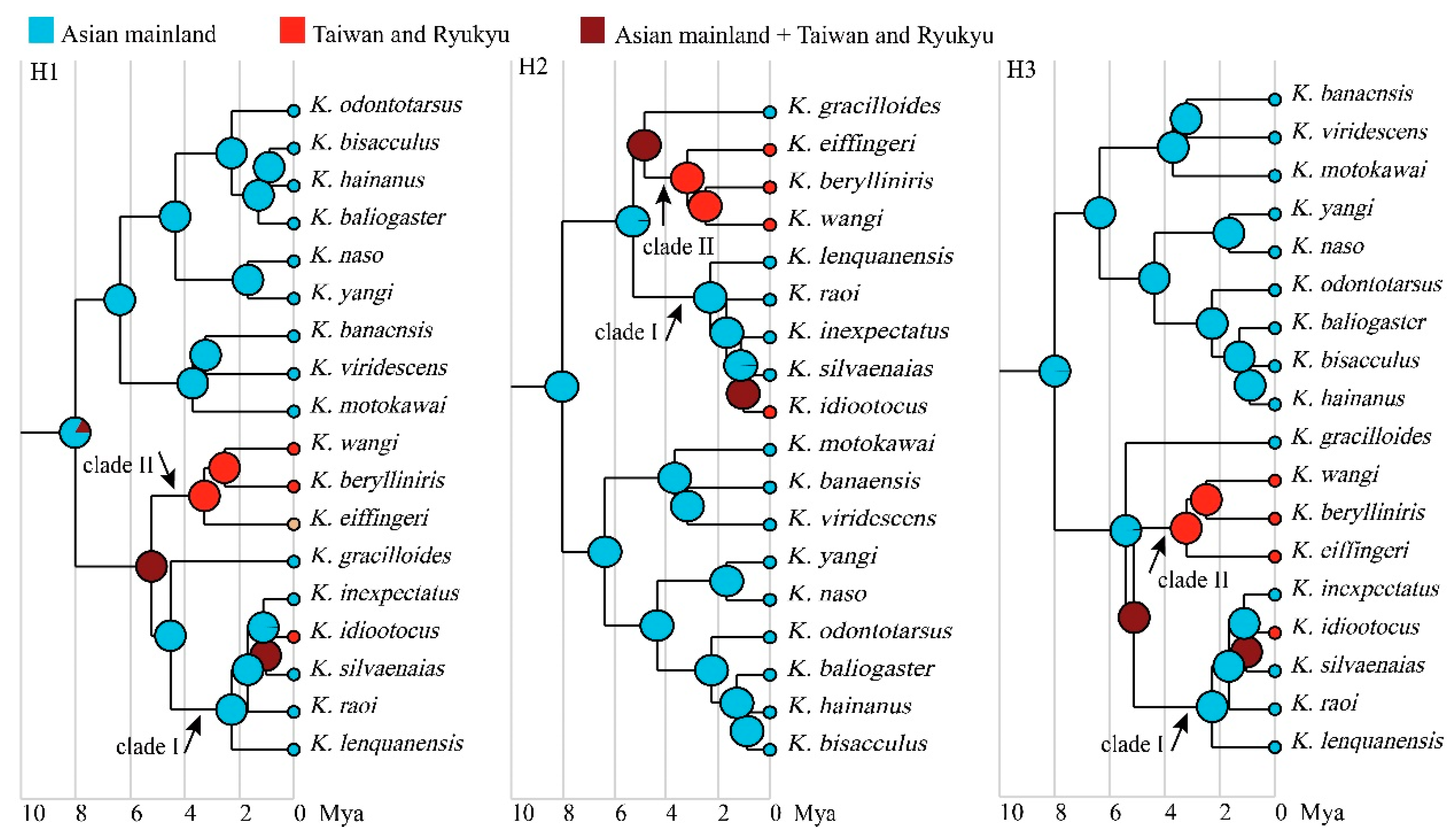
At present, there are two hypotheses about the biogeographic origin of Kurixalus on the East Asian islands. We reconstructed the ancestral distribution of Kurixalus, based on complete sampling and accurate selection of biogeographical analysis models. The results showed that Kurixalus on the East Asian islands have originated from the Asian mainland through two long-distance colonization events (jump dispersal). In addition, the analyses of the tempo of diversification revealed that the diversification rate of Kurixalus showed a slight decreasing trend. The relevant results will help us to comprehensively and accurately understand the geographical origin of Kurixalus and improve our understanding of the origin history of the flora and fauna of Taiwan Island.
Abstract
The ancestral area of Kurixalus on the East Asian islands is under dispute, and two hypotheses exist, namely that distribution occurred only on the Asian mainland (scenario of dispersal) and that wide distribution occurred on both the Asian mainland and the East Asian islands (scenario of vicariance). In this study, we conducted biogeographic analyses and estimated the lineage divergence times based on the most complete sampling of species, to achieve a more comprehensive understanding on the origin of Kurixalus on the East Asian islands. Our results revealed that the process of jump dispersal (founder-event speciation) is the crucial process, resulting in the distribution of Kurixalus on the East Asian islands, and supported the model of the Asian mainland origin: that Kurixalus on the East Asian islands originated from the Asian mainland through two long-distance colonization events (jump dispersal), via the model of vicariance of a widespread ancestor on both the Asian mainland and the East Asian islands. Our results indicated that choices of historical biogeography models can have large impacts on biogeographic inference, and the procedure of model selection is very important in biogeographic analysis. The diversification rate of Kurixaus has slightly decreased over time, although the constant-rate model cannot be rejected.
Keywords:
jump dispersal; mainland origin; Kurixalus; East Asian islands