Exploring the Toxic Effects of ZEA on IPEC-J2 Cells from the Inflammatory Response and Apoptosis


1
College of Veterinary Medicine, Northeast Agricultural University, Harbin 150030, China
2
College of Animal Science and Veterinary Medicine, Sichuan Agricultural University, Chengdu 611130, China
3
Animal Science and Technology College, Beijing University of Agriculture, Beijing 100096, China
*
Authors to whom correspondence should be addressed.
†
These authors contributed equally to this work.
Animals 2023, 13(17), 2731; https://doi.org/10.3390/ani13172731
Submission received: 8 August 2023
/
Revised: 21 August 2023
/
Accepted: 24 August 2023
/
Published: 28 August 2023
(This article belongs to the Special Issue Animal Poisoning Related to Pathology and Toxicology)
Simple Summary
Zearalenone is a fungus that is often found in the ingredients of many animal feeds. Swine, as the animal most sensitive to zearalenone, have more severe symptoms of infection and therefore can cause great economic losses. The intestine is the first line of defence of the organism, so we constructed a model of zearalenone intoxication in swine small intestinal epithelial cell lines and performed various tests. Finally, we found that zearalenone can trigger oxidative stress, induce inflammatory response and apoptosis in porcine small intestinal cells, and finally trigger damage to porcine small intestinal tissues. We believe that the study of the effects of zearalenone on the intestinal tract of swine is of great significance for the prevention of zearalenone infection in swine, as well as for the treatment of infection.
Abstract
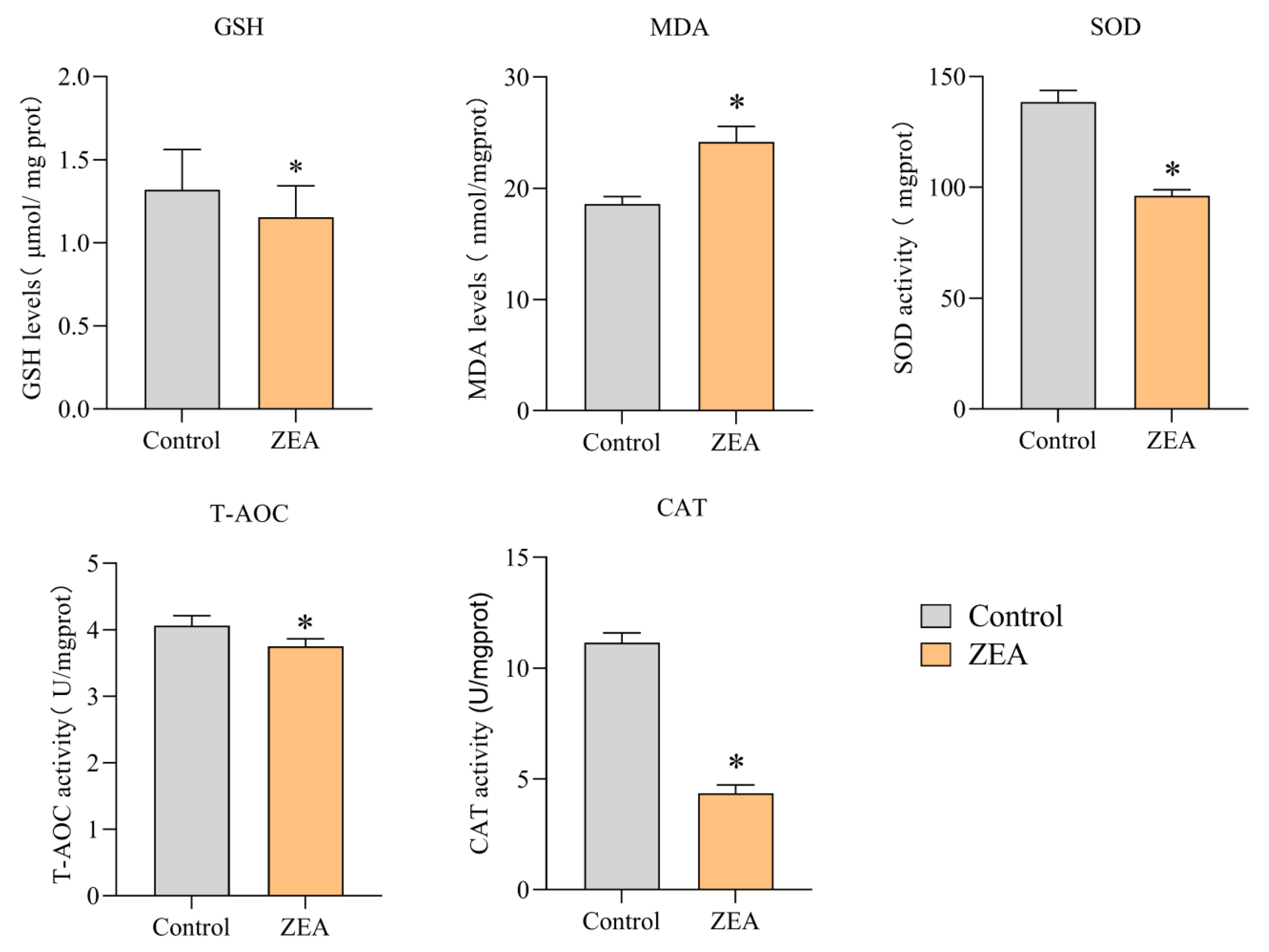
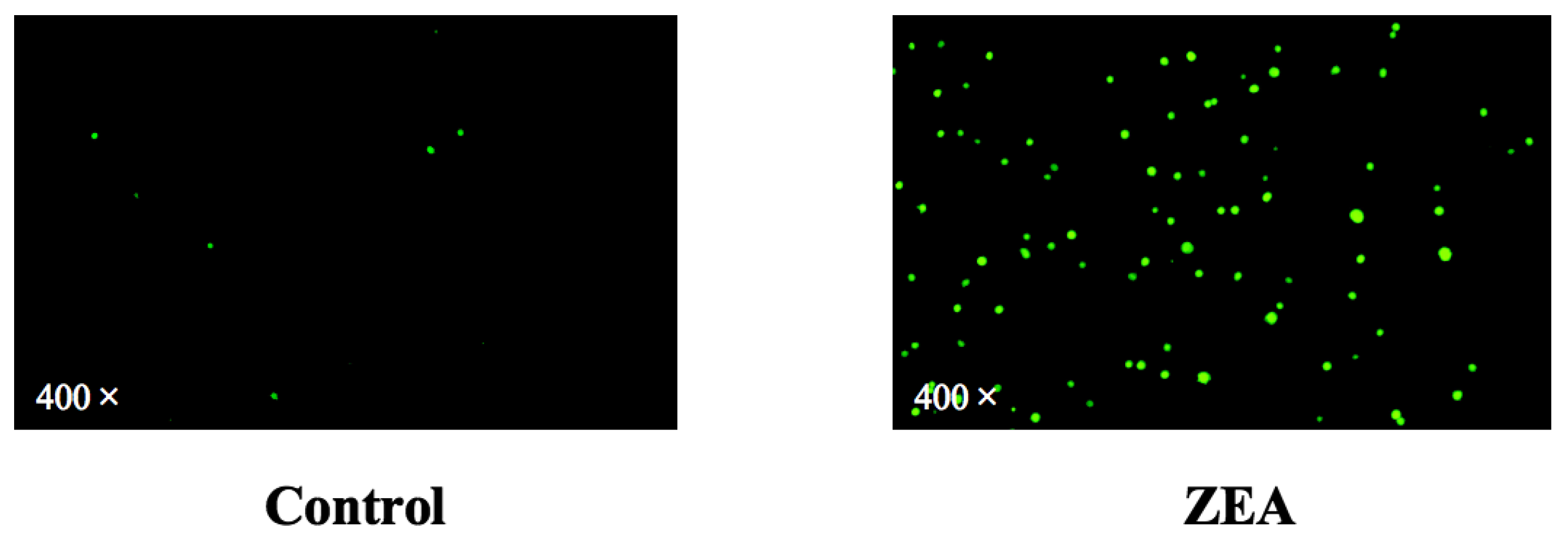
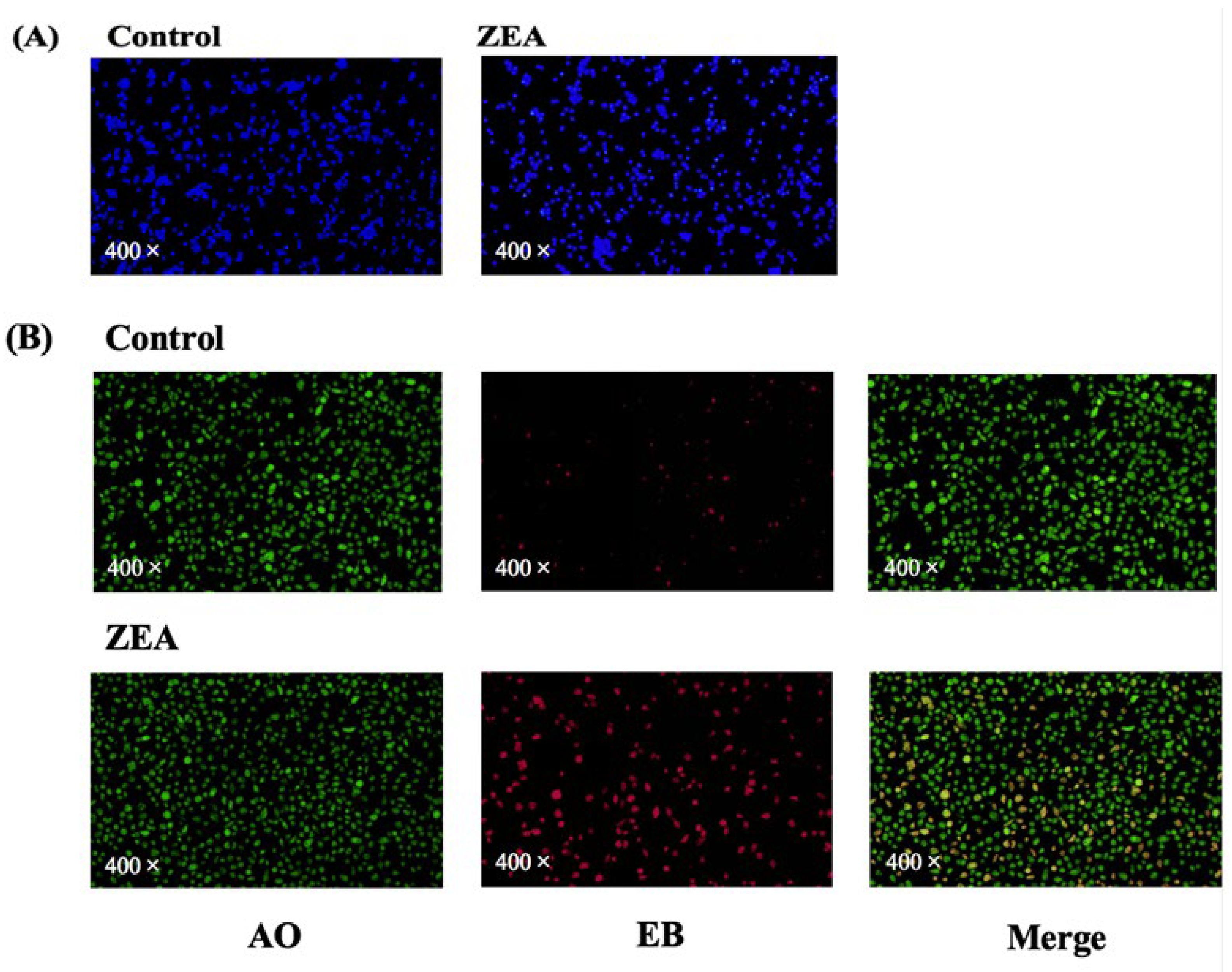
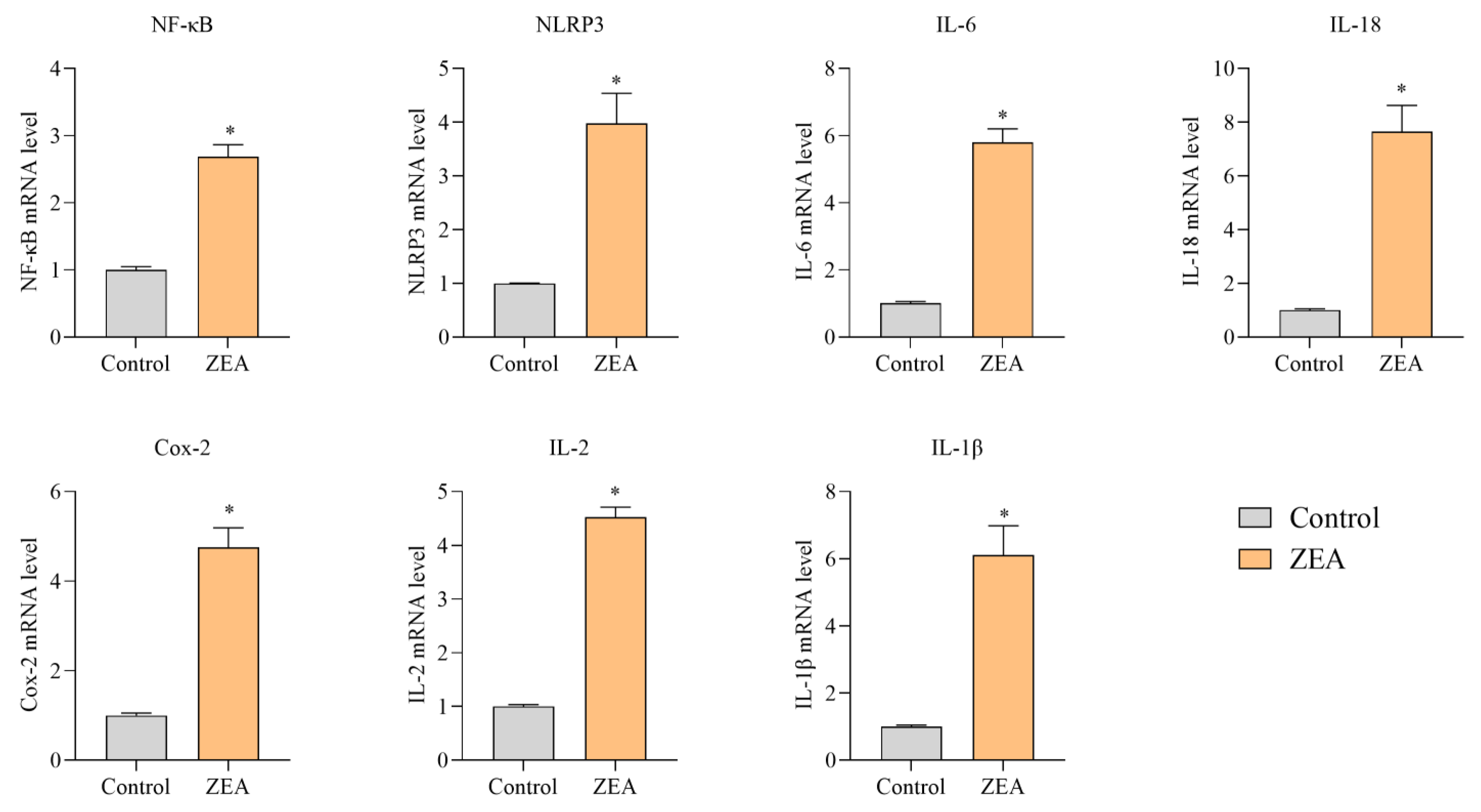
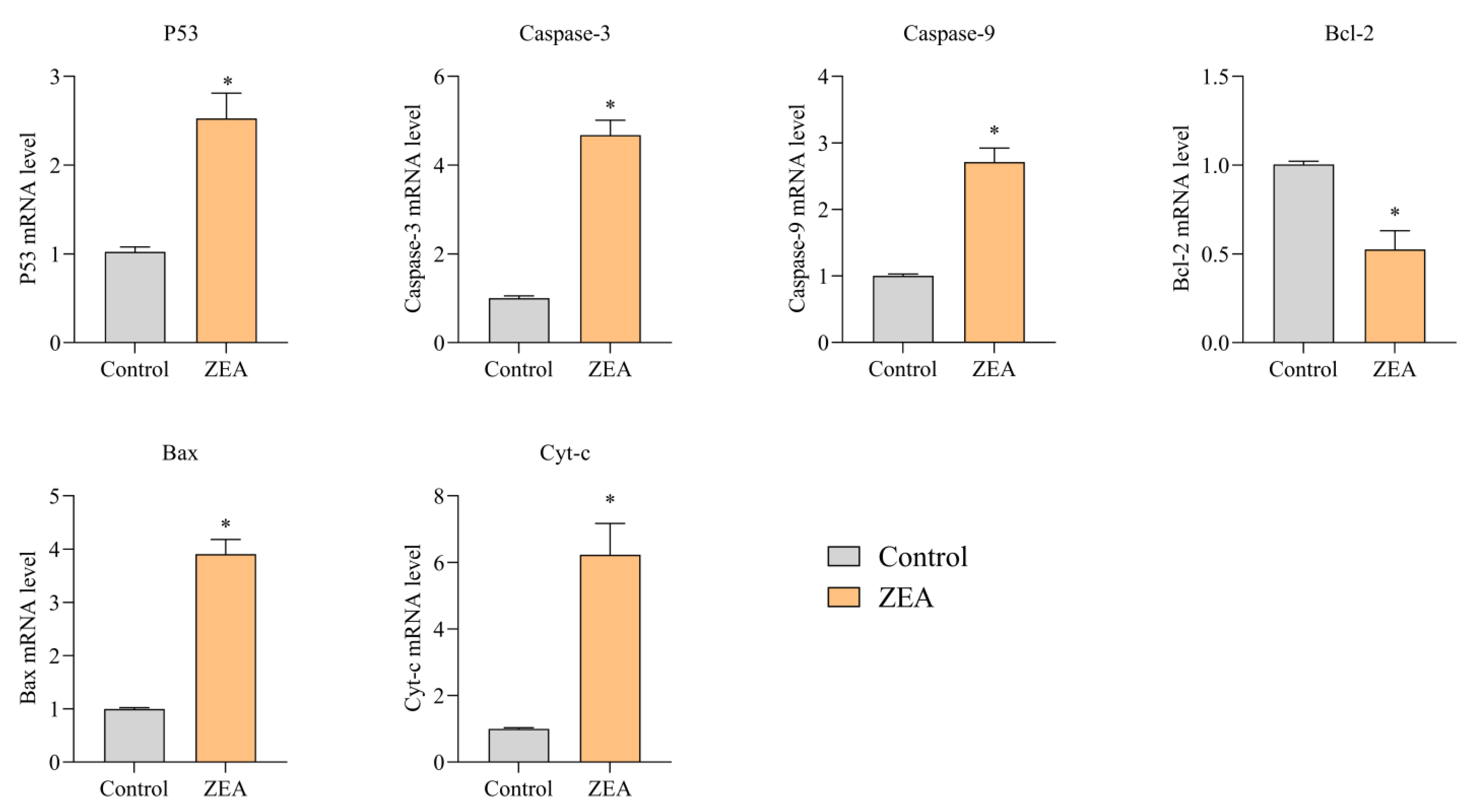
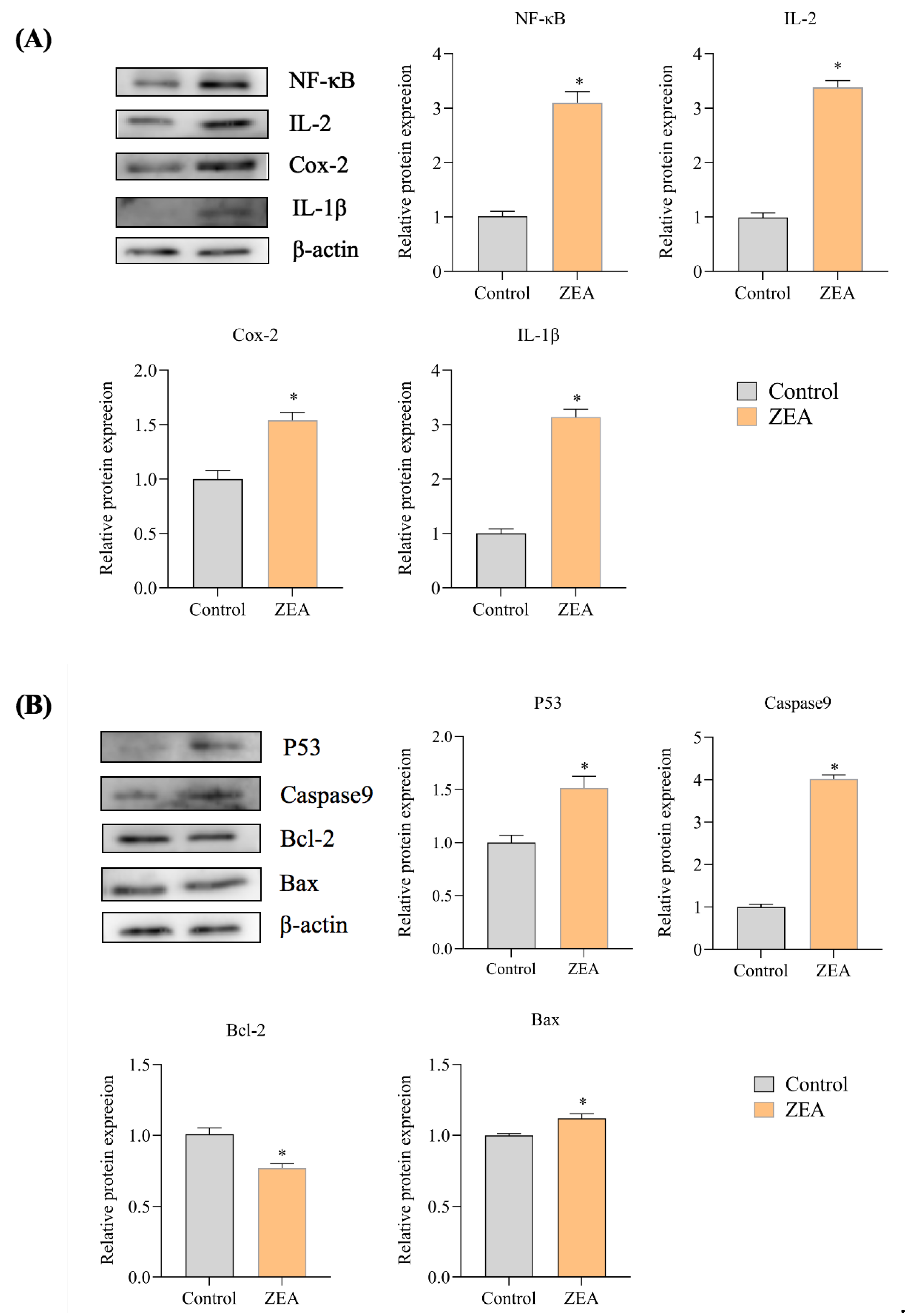
Zearalenone (ZEA) is the most common fungal toxin contaminating livestock and poultry feeding, especially in pigs, causing severe toxic effects and economic losses. However, the mechanism of ZEA damage to the intestine is unknown. We constructed an in vitro model of ZEA toxicity in a porcine small intestinal epithelial cell (IPEC-J2) line. ZEA causes severe oxidative stress in porcine small intestine cells, such as the production of ROS and a significant decrease in the levels of antioxidant enzymes GSH, CAT, SOD, and T-AOC. ZEA also caused apoptosis in porcine small intestine cells, resulting in a significant reduction in protein and/or mRNA expression of apoptosis-related pathway factors such as P53, caspase 3, caspase 9, Bax, and Cyt-c, which in turn caused a significant decrease in protein and/or mRNA expression of inflammatory-related factors such as IL-1β, IL-2, Cox-2, NF-κD, NLRP3, IL-6, and IL -18, which in turn caused a significant increase in protein and/or mRNA expression levels. The final results suggest that ZEA can cause a severe toxic response in porcine small intestine cells, with oxidative stress, apoptotic cell death and inflammatory damage.
Keywords:
zearalenone; IPEC-J2 cells; oxidative stress; apoptosis; inflammatory factors