Ecological Considerations When Designing Mitigation Translocations: An Australian Reptile Case Study
by
 ,
,
Holly S. Bradley
1,*,
Michael D. Craig
2,3,
Sean Tomlinson
4,5,
Adam T. Cross
4,6, 
Michael J. Bamford
2,7 and
Philip W. Bateman
8 1
ARC Centre for Mine Site Restoration, School of Molecular and Life Sciences, Curtin University, Kent Street, Bentley, Perth, WA 6102, Australia
2
School of Biological Sciences, University of Western Australia, Crawley, WA 6009, Australia
3
School of Environmental and Conservation Sciences, Murdoch University, Perth, WA 6150, Australia
4
School of Molecular and Life Sciences, Curtin University, Kent Street, Bentley, Perth, WA 6102, Australia
5
School of Biological Sciences, University of Adelaide, North Terrace, Adelaide, SA 5000, Australia
6
Ecological Health Network, 1330 Beacon St, Suite 355a, Brookline, MA 02446, USA
7
Bamford Consulting Ecologists, 23 Plover Way, Kingsley, WA 6026, Australia
8
Behavioural Ecology Laboratory, School of Molecular and Life Sciences, Curtin University, Kent Street, Bentley, Perth, WA 6102, Australia
*
Author to whom correspondence should be addressed.
Animals 2023, 13(16), 2594; https://doi.org/10.3390/ani13162594
Submission received: 29 June 2023
/
Revised: 1 August 2023
/
Accepted: 3 August 2023
/
Published: 11 August 2023
(This article belongs to the Special Issue Wildlife Translocation: Demographic, Genetic, Disease and Ethical Considerations)
Simple Summary
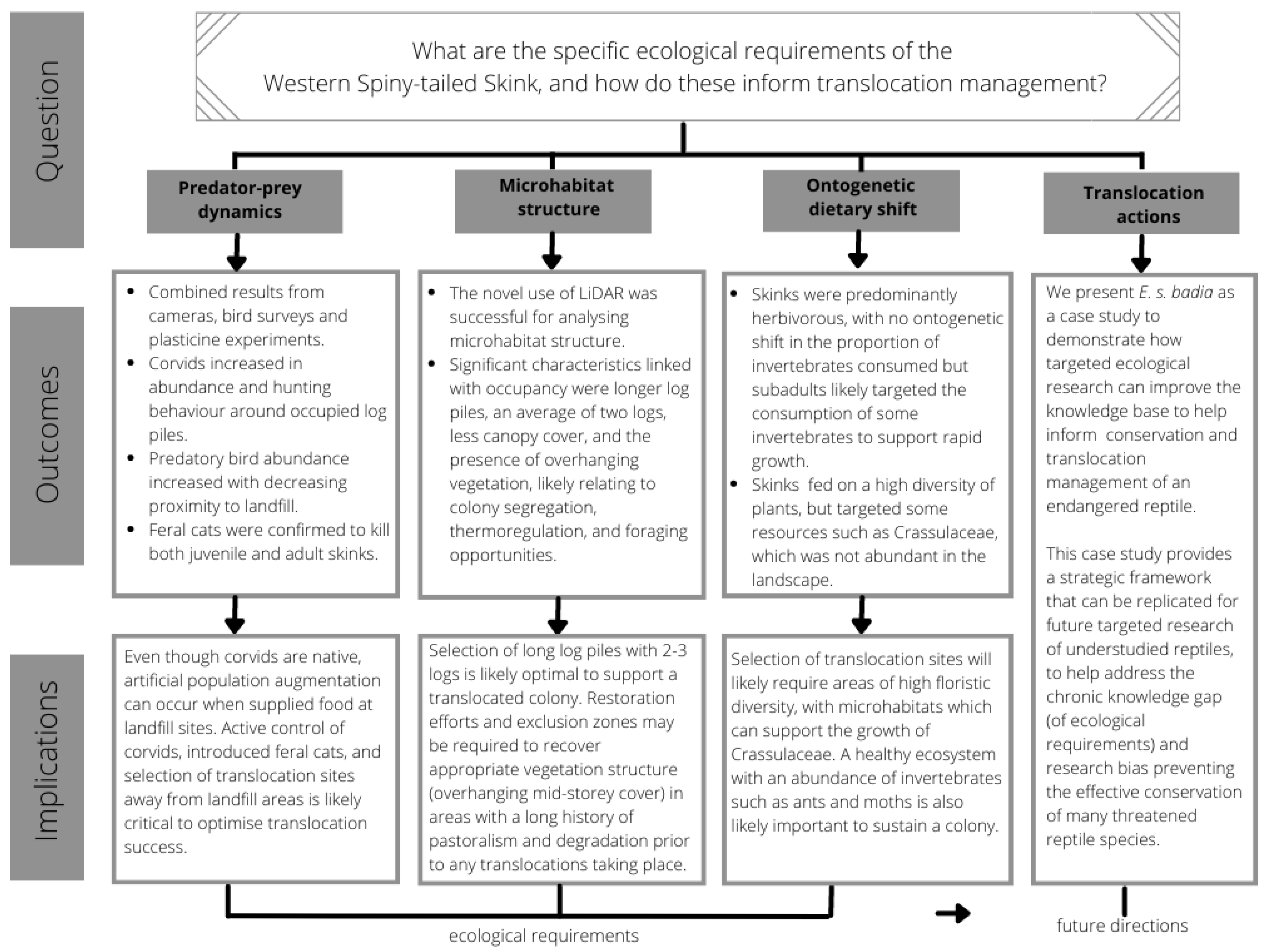
A common method of alleviating impending threats to wildlife populations is to relocate them from danger, which is known as mitigation translocation. However, these translocations have high failure rates because they lack appropriate funding, resources, and a knowledge of species requirements. Here, we use the endangered western spiny-tailed skink (Egernia stokesii badia) as a case study to exemplify how targeted ecological research can be used to help inform translocation planning. We found that the skinks have specific requirements for predator management, foraging and prey availability, and log pile structures, which can all help improve the targeted selection of translocation sites in the future. Application of a similar scientific framework to planning is likely to improve mitigation translocation success for a range of threatened species.
Abstract
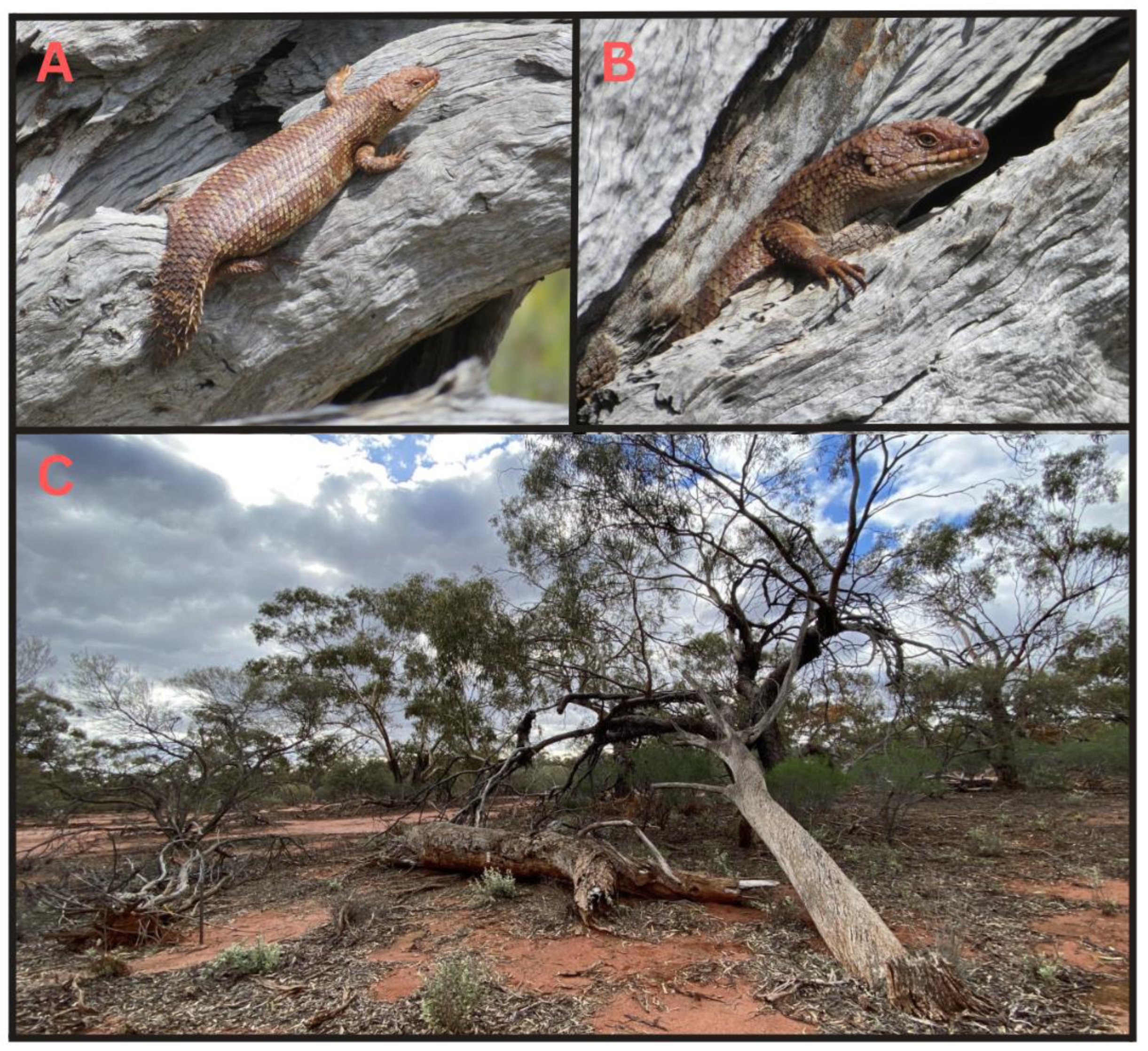
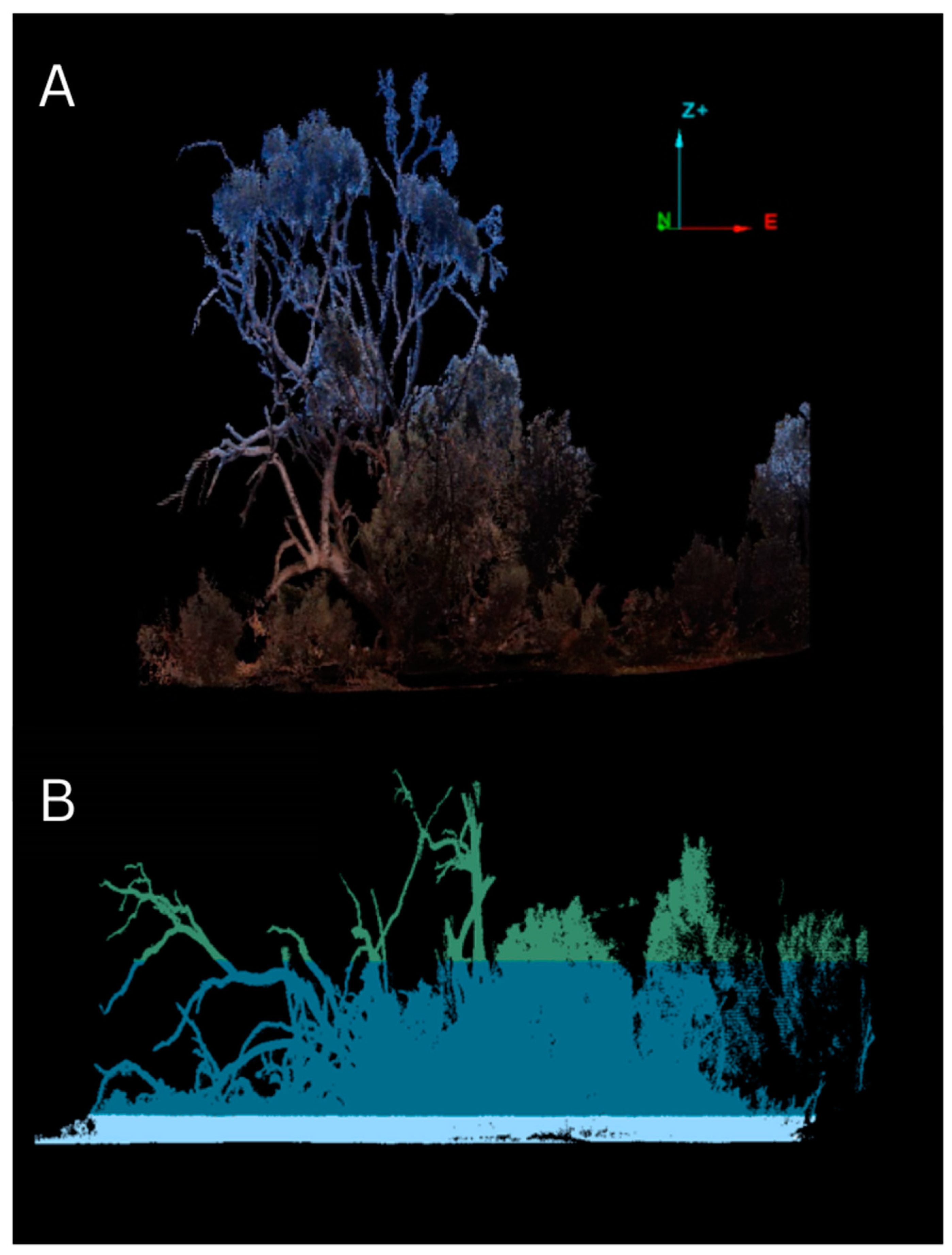
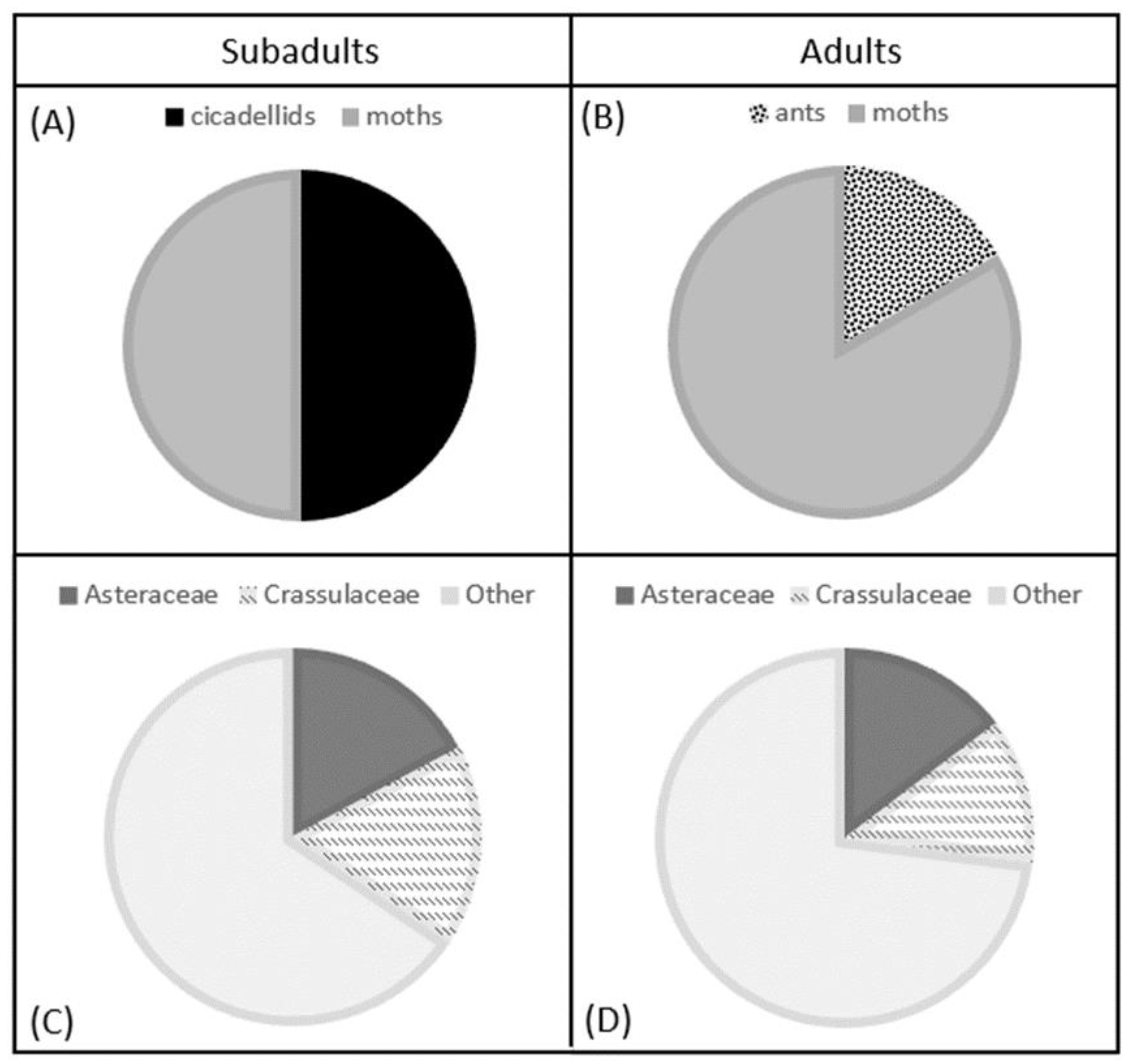
Translocation science has made considerable progress over the last two decades; however, reptile translocations still frequently fail around the world. Major knowledge gaps surround the basic ecology of reptile species, including basic factors such as habitat preference, which have a critical influence on translocation success. The western spiny-tailed skink (Egernia stokesii badia) is used here as a case study to exemplify how empirical research can directly inform on-ground management and future translocation planning. A combination of studies, including LiDAR scanning of microhabitat structures, camera trapping, plasticine replica model experiments and unbounded point count surveys to assess predation risk, and visual and DNA analysis of dietary requirements, were all used to better understand the ecological requirements of E. s. badia. We found that the skinks have specific log pile requirements, both native and non-native predator management requirements, and a largely herbivorous, broad diet, which all influence translocation site selection and management planning. The use of E. s. badia as an Australian case study provides a clear strategic framework for the targeted research of meaningful ecological factors that influence translocation decision-making. Similar approaches applied to other reptile species are likely to fundamentally increase the capacity for effective management, and the likelihood of future successful translocations.
Keywords:
mitigation translocation; reptile; ecology; habitat