Eight-Year Study of Haemogregarina stepanowi Infection in Poached European Pond Turtles (Emys orbicularis) Held in Belgrade Zoo Quarantine
by
 , , ,
, , ,
Sanja Aleksić-Kovačević
1,
Miloš Vučićević
1,*,
József Özvegy
2,
Stefan Jelisić
1,
Biljana Djurdjević
3 ,
,
Jasna Prodanov-Radulović
3,
Milan Došenović
1 and
Darko Marinković
1 1
Faculty of Veterinary Medicine, University of Belgrade, 11000 Belgrade, Serbia
2
Belgrade Zoo, 11000 Belgrade, Serbia
3
Scientific Veterinary Institute “Novi Sad”, Department of Epizootiology, Clinical Diagnostics and DDD, 21000 Novi Sad, Serbia
*
Author to whom correspondence should be addressed.
Animals 2023, 13(15), 2429; https://doi.org/10.3390/ani13152429
Submission received: 15 May 2023
/
Revised: 7 July 2023
/
Accepted: 14 July 2023
/
Published: 27 July 2023
(This article belongs to the Special Issue Health and Disease Monitoring of Turtles and Tortoises)
Simple Summary
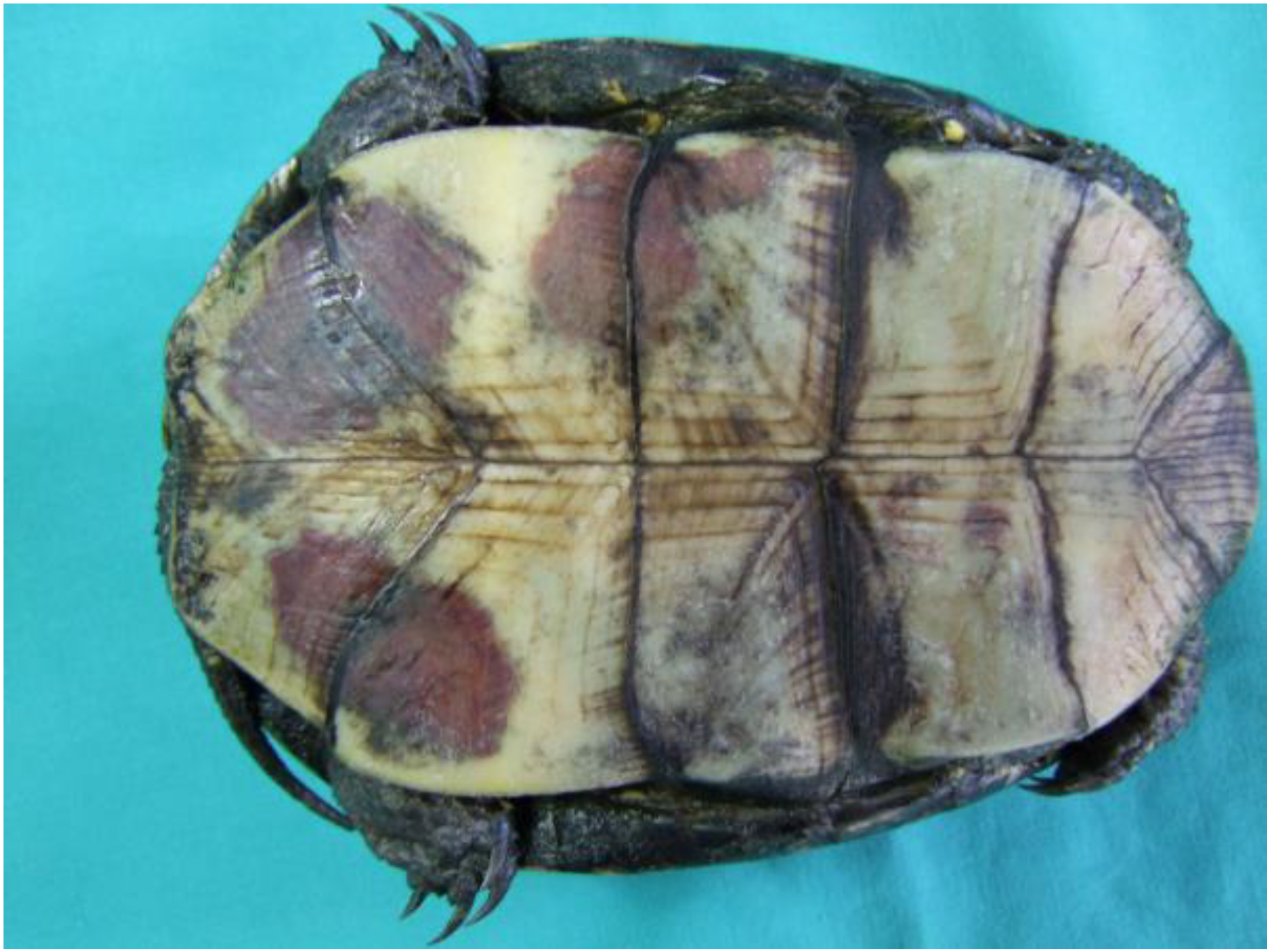
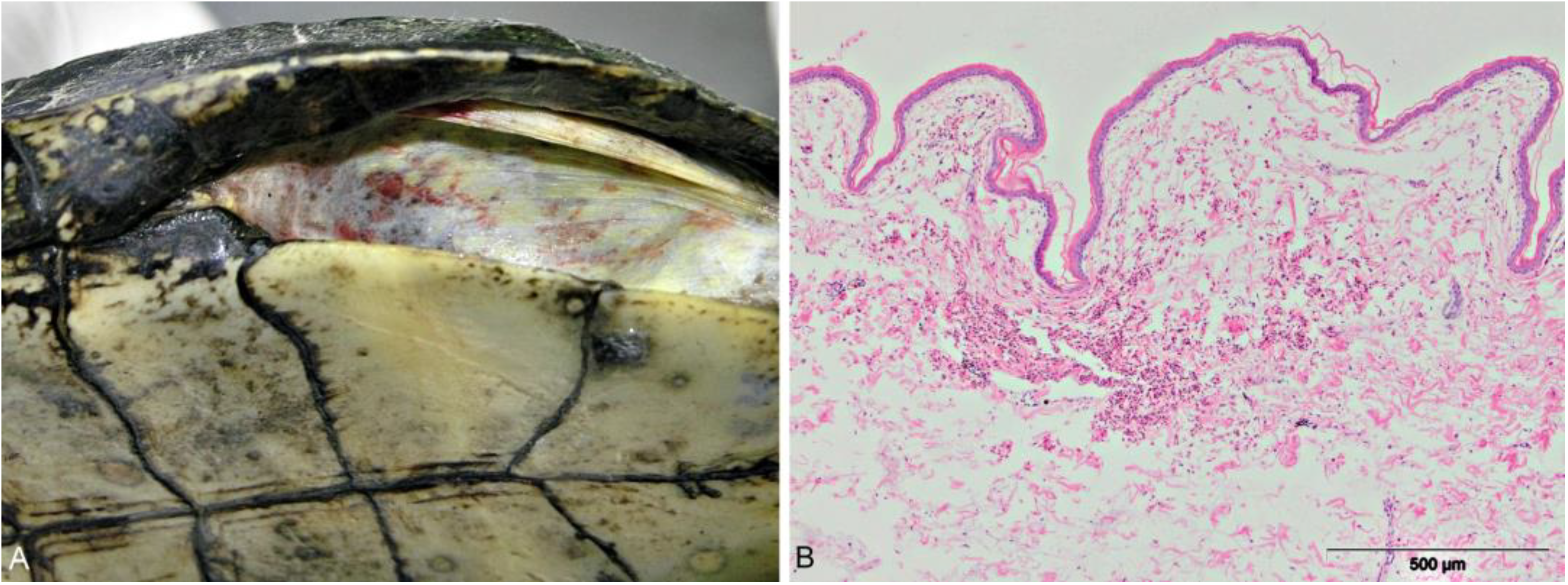
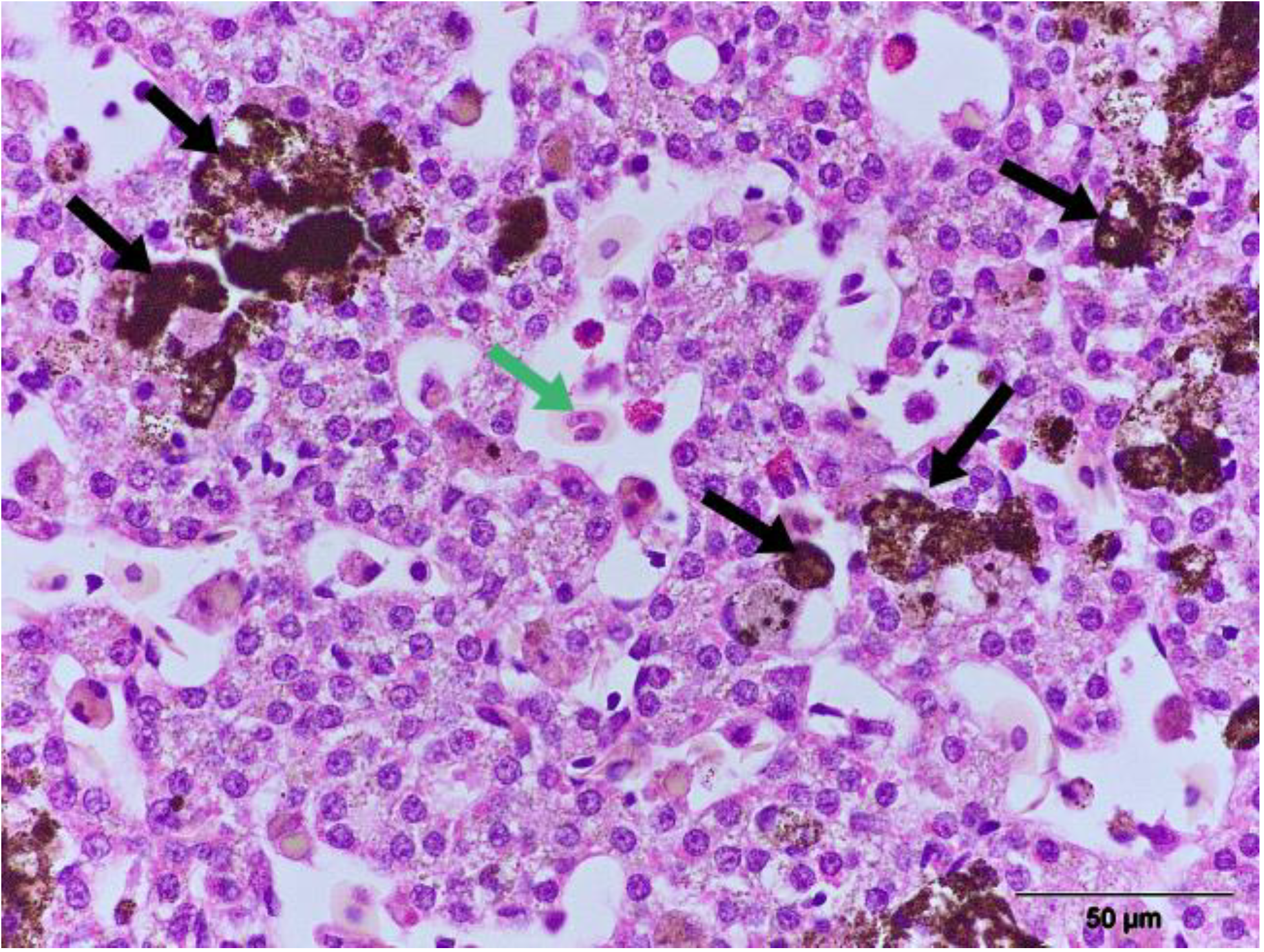
The concept of this investigation emerged when a rapidly increased number of poached European pond turtles in poor health condition, with shell necrosis and massive skin hemorrhages, were temporarily put into a pond that belongs to a quarantine section at Belgrade Zoo. Using cytology as an initial tool, different parasitic stages of hemogregarines have been noticed in the blood smears of the examined animals. Cytological and microscopic examination of the samples proved to be sufficient for establishing the infection, but molecular analyses were used in examining the phylogeny of the blood parasites. Massive hemorrhages in the skin, as well as shell necrosis, were the most prominent findings observed in the turtles. In addition, the lungs, liver, kidneys, and spleen revealed hyperemia and massive hemorrhages, along with the presence of parasitic stages of Haemogregarina stepanowi in tissue samples. Furthermore, the reduced hematocrit value found in the examined population of infected turtles indicated anemia. Over the eight years (2015–2023) of monitoring, the number of diseased and dead turtles has decreased, which could be hypothetically attributed to the elimination of leeches as the definitive host.
Abstract
The eight-year study (2015–2023) was performed on a large sample of poached European pond turtles infected with Haemogregarina stepanowi and held in a pond that belongs to a quarantine section of Belgrade Zoo. The protected species of European pond turtles have been found in poor health, with general weakness, anorexia, and low motility. Comprehensive cytological, hematological, molecular, and postmortem evaluations have been performed. Initially, Diff Quick staining of the blood smears revealed rounded or elongated erythrocytes, often bearing premeront or U-shaped gamont of the hemogregarines inside. The reduced erythrocyte numbers, hemoglobin, and hematocrit values found in the examined population of infected turtles indicated anemia. Macroscopically, shell necrosis and massive skin hemorrhages were the most prominent findings observed in diseased turtles. Microscopically, the lungs, liver, kidneys, and spleen revealed hyperemia, hemorrhages, and the presence of parasitic stages in tissue samples in 31 of 40 necropsied turtles. Cytological and microscopic examination of the samples proved to be sufficient for establishing the infection, but molecular analyses of the 18S sequence were used for phylogenetic studies. Over the years, the number of diseased and dead turtles has decreased, which could be hypothetically attributed to the elimination of leeches as the definitive host.
Keywords:
European pond turtle; Haemogregarina stepanowi; Serbia; zoo quarantine