Assessment of Preference Behavior of Layer Hens under Different Light Colors and Temperature Environments in Long-Time Footage Using a Computer Vision System
by
 , , and
Vanessa Kodaira
1,
Allan Lincoln Rodrigues Siriani
2 ,
,
Henry Ponti Medeiros
3 ,
,
Daniella Jorge De Moura
1,* and
and
Danilo Florentino Pereira
1,4
1
Graduate Program in Agricultural Engineering, Faculty of Agricultural Engineering, Campinas State University, Campinas 13083-875, SP, Brazil
2
Graduate Program in Agribusiness and Development, School of Science and Engineering, São Paulo State University, Tupã 17602-496, SP, Brazil
3
Department of Agricultural and Biological Engineering, University of Florida, Gainesville, FL 32611, USA
4
Department of Management, Development and Technology, School of Science and Engineering, São Paulo State University, Tupã 17602-496, SP, Brazil
*
Author to whom correspondence should be addressed.
Animals 2023, 13(15), 2426; https://doi.org/10.3390/ani13152426
Submission received: 2 July 2023
/
Revised: 22 July 2023
/
Accepted: 26 July 2023
/
Published: 27 July 2023
(This article belongs to the Special Issue Artificial Intelligence Tools to Optimize Livestock Production)
Simple Summary
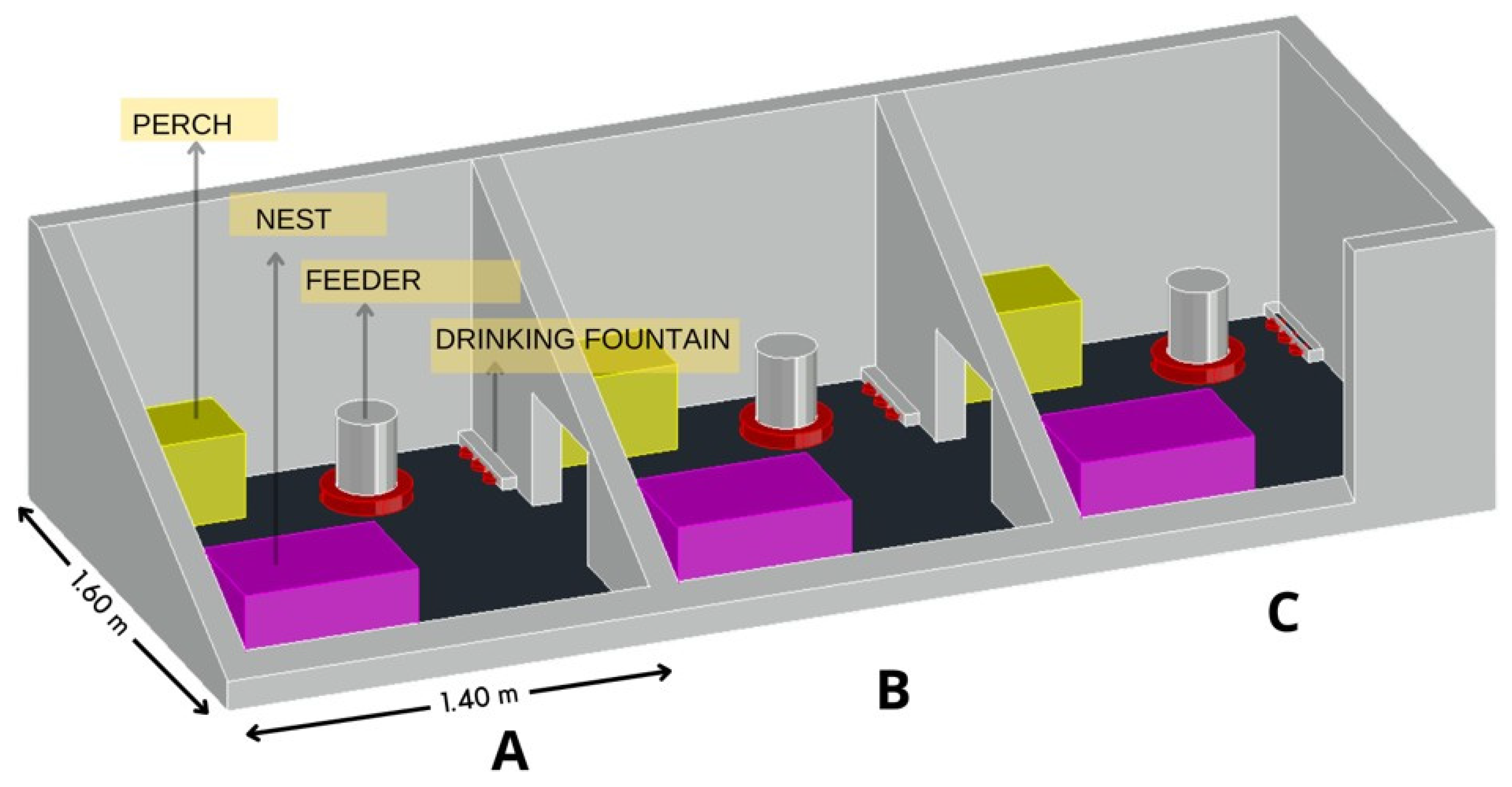
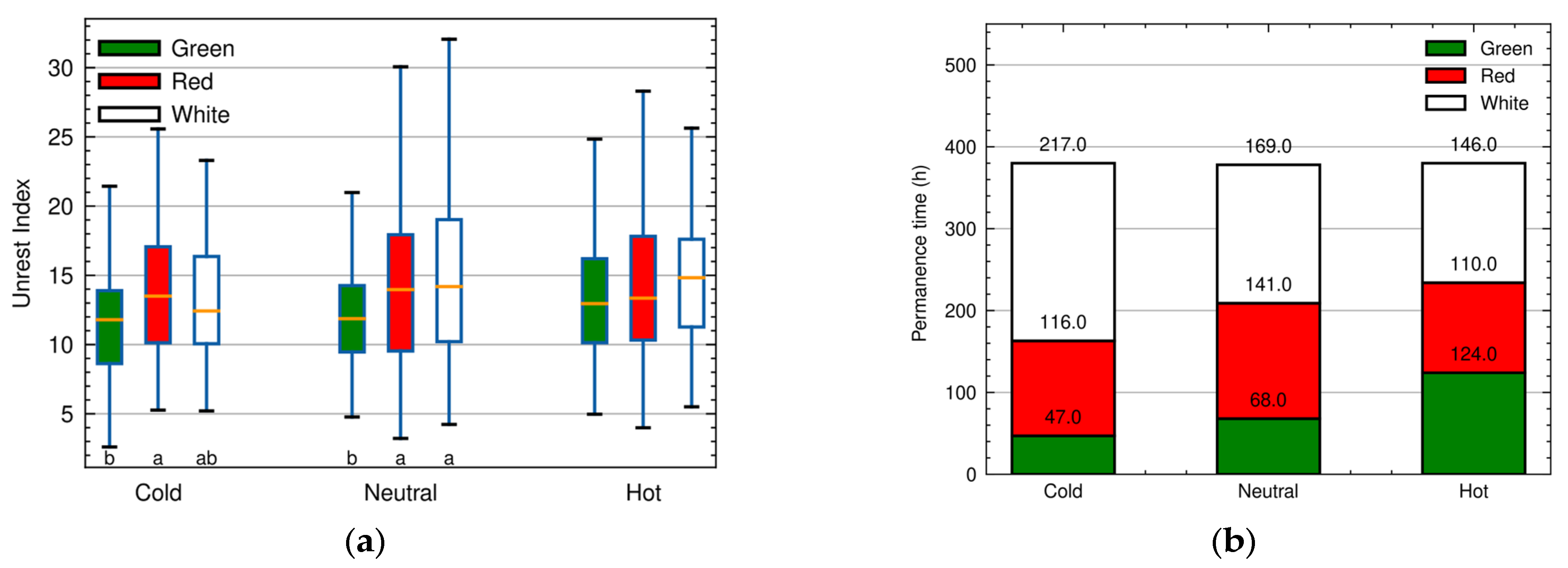
Preference behavior can be an important indicator of animal welfare. The effects of different wavelengths of light on laying hens are not completely known. We performed a preference test with few laying hens with three different light sources (green, red, and white) in three thermal environmental conditions (cold, comfort and heat stress). We recorded video footage during the entire period of the experiment and automatically estimated the permanence of the birds in each room of the Environmental Preference Chamber using YOLO v4. The results showed that birds prefer white and red light under thermal comfort conditions and do not show preference under heat stress conditions.
Abstract
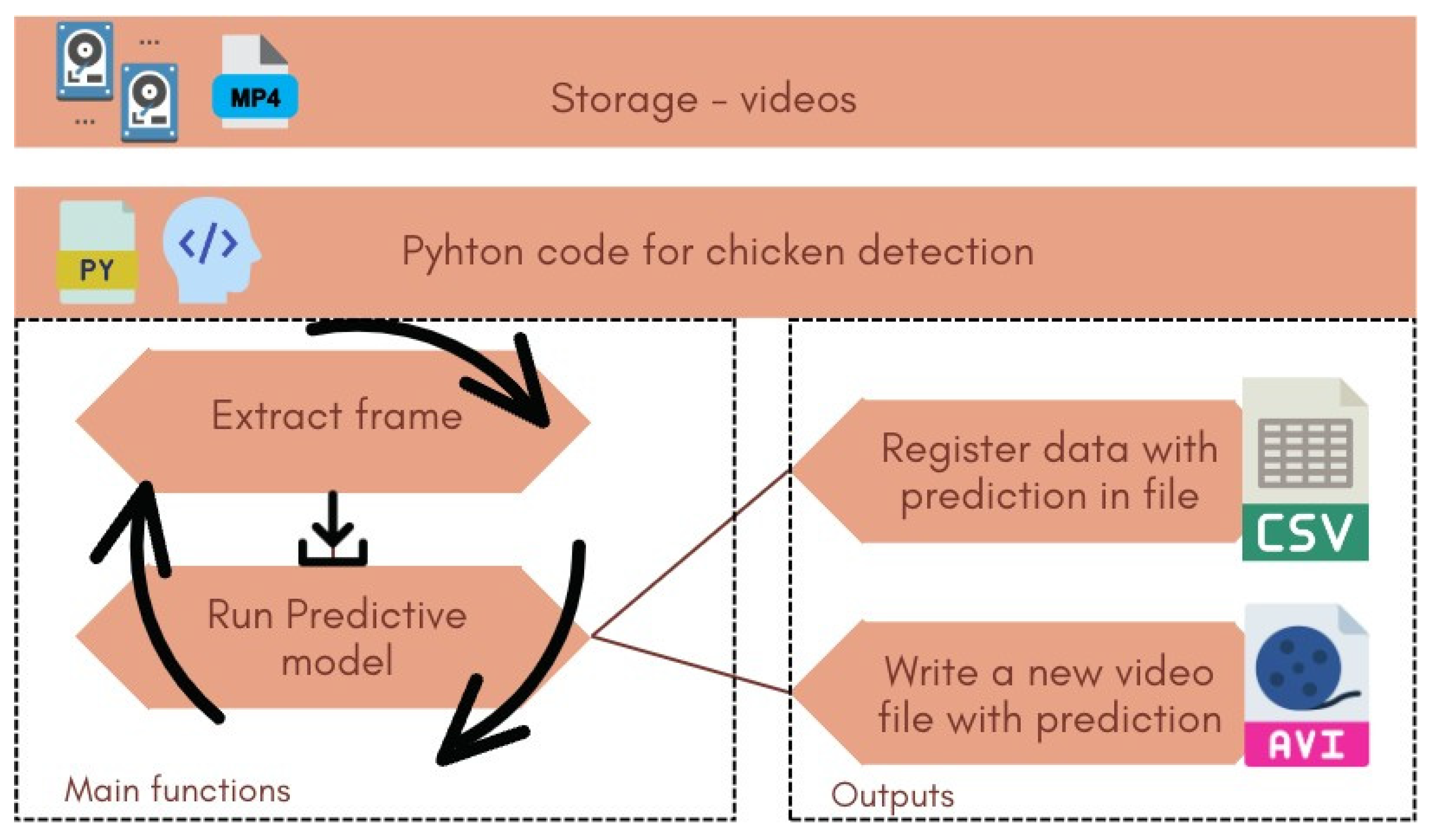
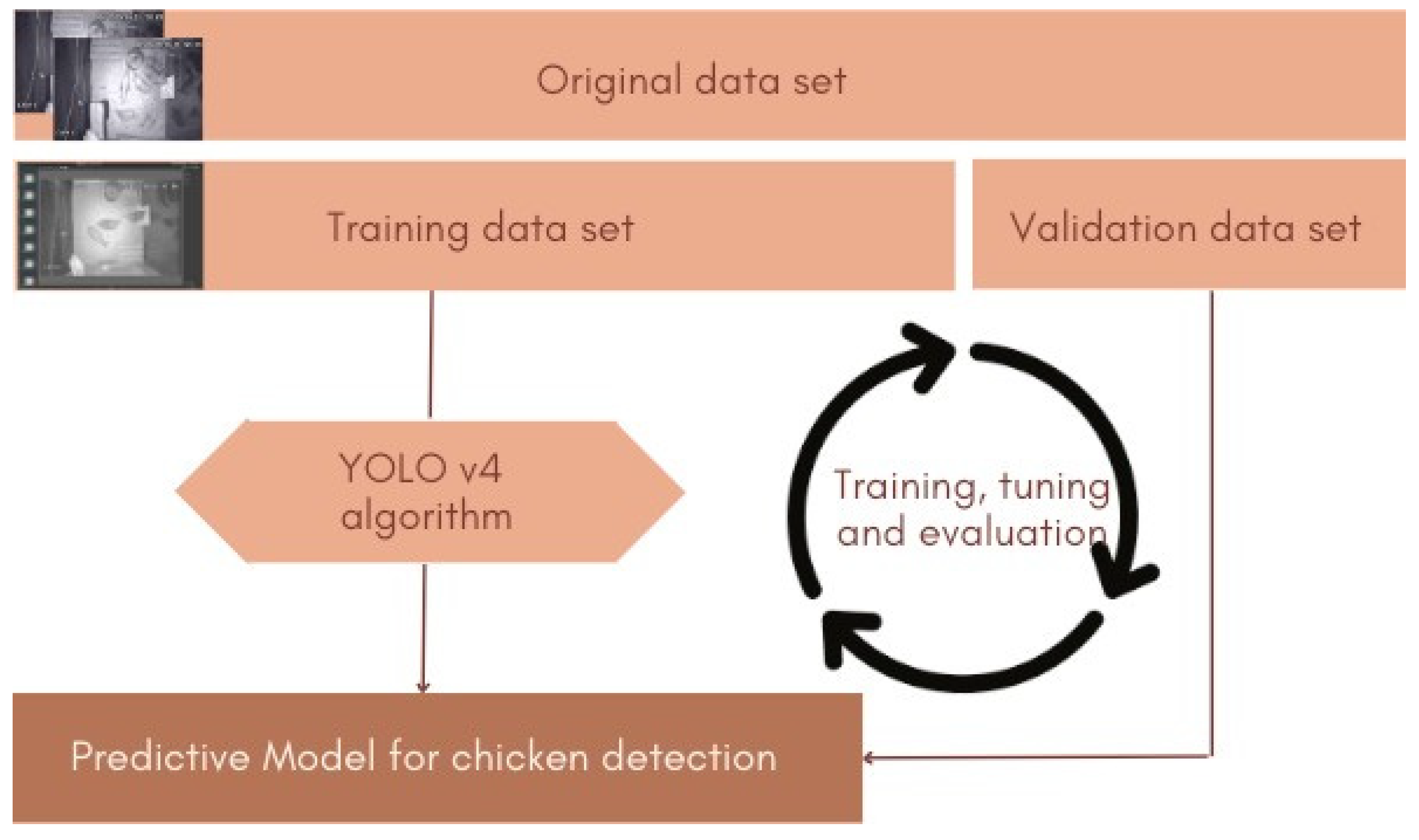
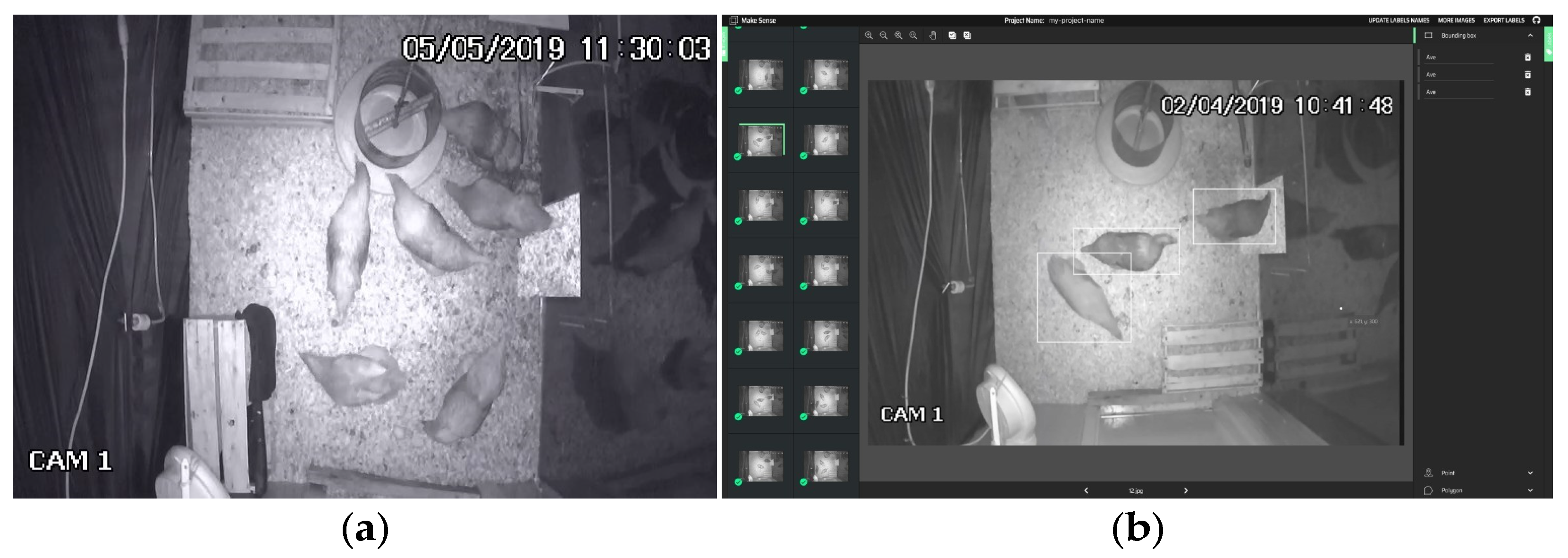
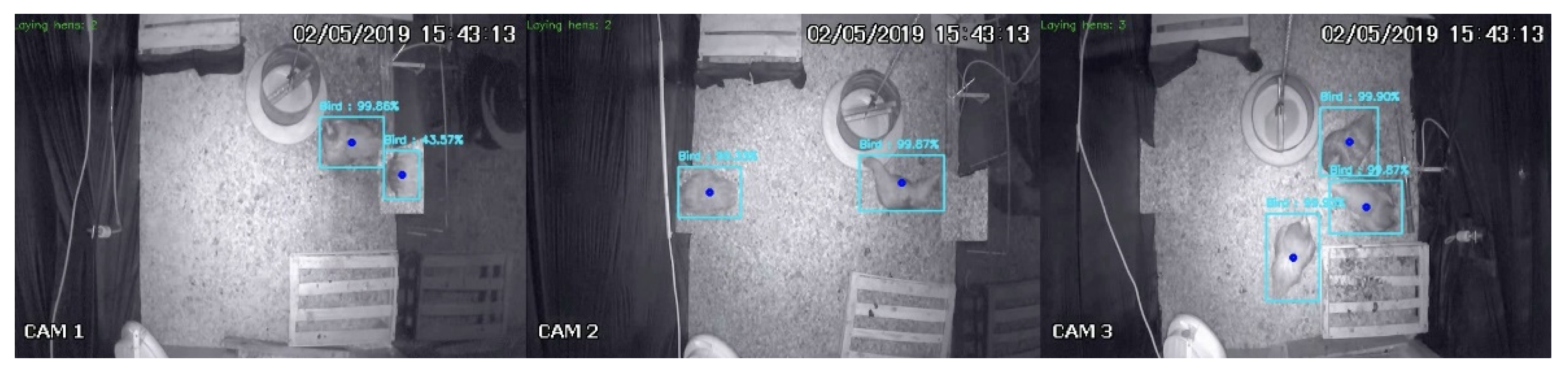
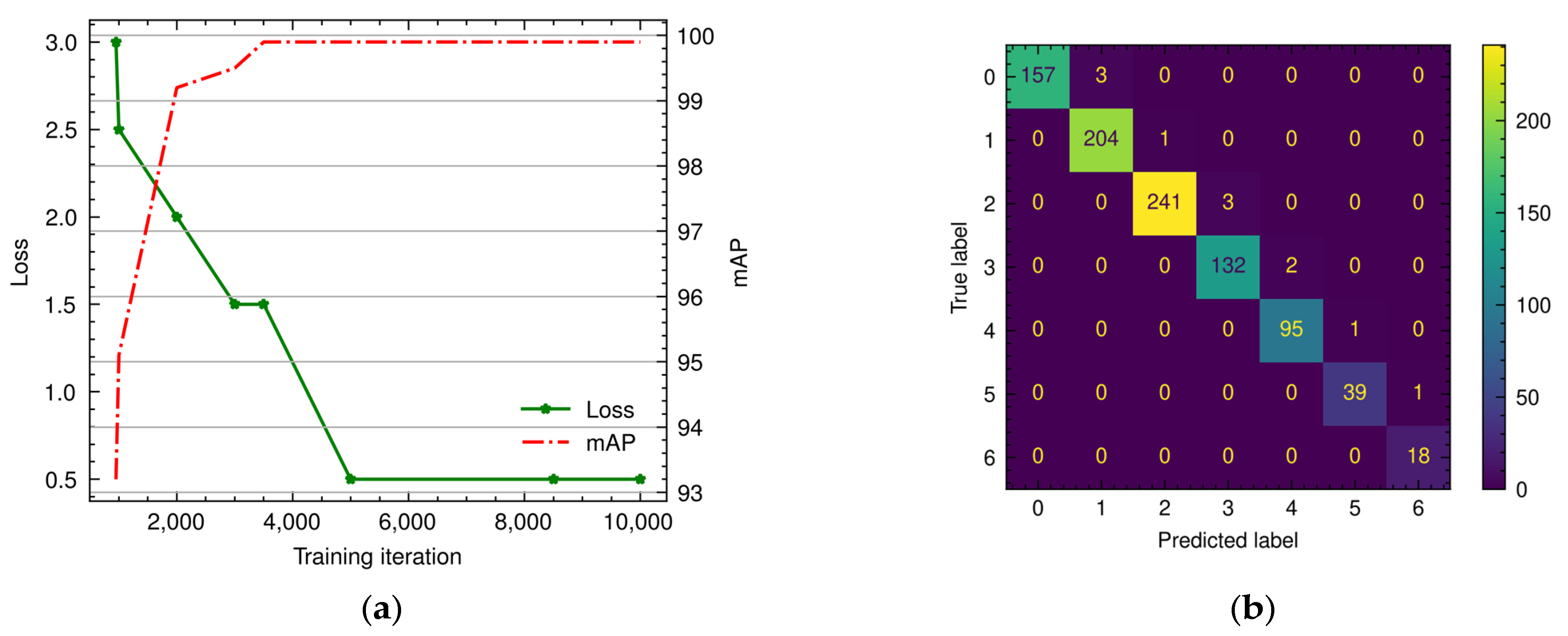
As for all birds, the behavior of chickens is largely determined by environmental conditions. In many production systems, light intensity is low and red feather strains have low contrast with the background, making it impossible to use conventional image segmentation techniques. On the other hand, studies of chicken behavior, even when using video camera resources, depend on human vision to extract the information of interest; and in this case, reduced samples are observed, due to the high cost of time and energy. Our work combined the use of advanced object detection techniques using YOLO v4 architecture to locate chickens in low-quality videos, and we automatically extracted information on the location of birds in more than 648 h of footage. We develop an automated system that allows the chickens to transition among three environments with different illuminations equipped with video cameras to monitor the presence of birds in each compartment, and we automatically count the number of birds in each compartment and determine their preference. Our chicken detection algorithm shows a mean average precision of 99.9%, and a manual inspection of the results showed an accuracy of 98.8%. Behavioral analysis results based on bird unrest index and permanence time indicate that chickens tend to prefer white light and disfavor green light, except in the presence of heat stress when no clear preference can be observed. This study demonstrates the potential of using computer vision techniques with low-resolution, low-cost cameras to monitor chickens in low-light conditions.
Keywords:
environmental stress; precision poultry farming; welfare; YOLO